
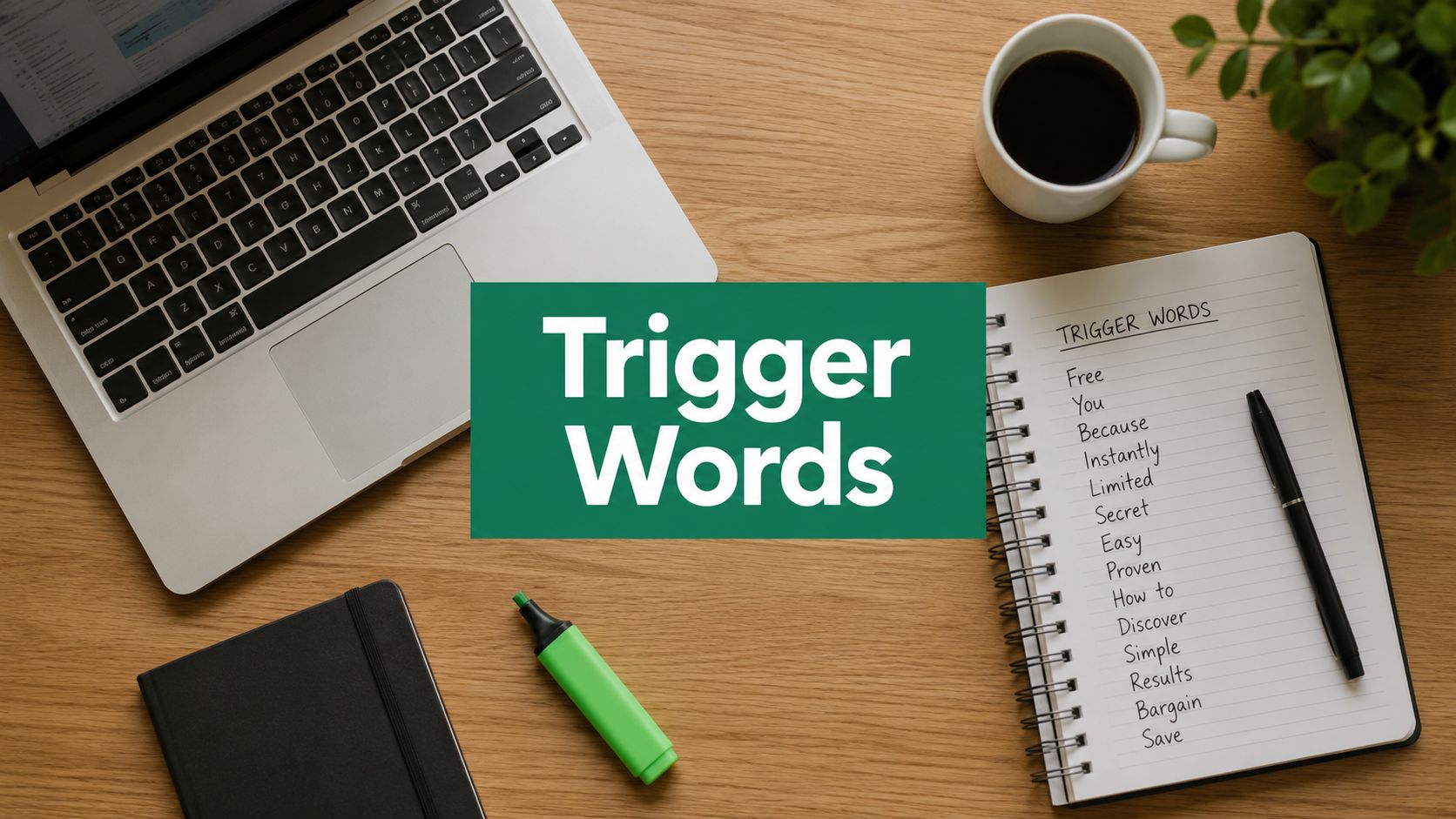
You sent a campaign on Monday. The list was clean, the offer was solid, and the copy looked polished. By Wednesday, the numbers told a different story. Opens were flat, replies were worse, and the only people engaging were unsubscribing or ignoring you completely.
That usually isn't a list problem first. It isn't even always an offer problem. In cold outreach, language often decides whether your message gets a chance at all.
Small word choices change how a prospect feels in the first second. One subject line sounds specific and worth opening. Another sounds mass-blasted and disposable. One opening line lowers friction. Another triggers resistance before the reader reaches your value proposition.
That's where trigger words matter. Used well, they help a cold email feel relevant, timely, and worth attention. Used badly, they make you sound like an infomercial, damage trust, and push your message closer to spam.
Introduction Why Your Emails Are Being Ignored
Most ignored emails share the same flaw. They describe the sender's offer without giving the buyer an immediate emotional reason to care.
A subject line like “Improving Your Sales Process” is technically clear. It's also easy to skip. It asks the prospect to do too much interpretive work. They have to decide whether your message is useful, urgent, credible, or different from every other pitch in their inbox.
A stronger line uses one carefully chosen trigger word to frame the message before the reader thinks too hard about it. “Proven sales process” signals trust. “Hidden sales bottleneck” sparks curiosity. “Missed pipeline” introduces loss aversion. The offer may be the same, but the entry point changes.
Most cold emails don't fail because they're unreadable. They fail because they don't create enough emotional momentum to earn the next click or the next sentence.
That matters more than commonly acknowledged. Buyers scan fast. They judge tone fast. And if your wording feels generic, exaggerated, or manipulative, they move on just as fast.
The practical question isn't whether trigger words work. It's whether you know when to use them, where to place them, and which ones undermine your results. That's the difference between persuasive outreach and noisy outreach.
What Are Trigger Words in Sales and Marketing
Trigger words in sales and marketing are words or short phrases chosen to provoke a psychological reaction that nudges a reader toward action. In cold outreach, they work like verbal shortcuts. Instead of asking a prospect to analyze your message from scratch, they push attention toward a feeling such as curiosity, urgency, trust, exclusivity, or relevance.
In outreach terms, a trigger word is not decoration. It's a cue.
According to BDOW's explanation of trigger words in outreach, trigger words in marketing and cold email are linguistically selected catalysts that bypass conscious deliberation to provoke a specific psychological reaction, such as curiosity or urgency, and they can be split into hard triggers that demand immediate action and soft triggers that subtly shift attitude.
Hard triggers and soft triggers
This distinction is useful in practice because not every email needs pressure.
Hard triggers push for immediate movement. They include language tied to urgency, deadlines, loss, or direct action. These can work when the context supports them, such as event-driven outreach or follow-ups tied to a timely business change.
Soft triggers create interest without forcing a decision. They're usually safer in first-touch cold email because they sound more human and less promotional. Curiosity, credibility, specificity, and relevance all fall into this bucket.
A simple way to understand this:
- Hard trigger example: urgent, now, limited, final
- Soft trigger example: proven, hidden, relevant, practical
For most B2B outreach, soft triggers are the better default. They earn attention without sounding like a late-night ad.
Trigger words in marketing are not the same as trigger words in psychology
This causes confusion because the same phrase exists in two different contexts.
In marketing, trigger words are persuasive tools meant to move someone from passive browsing to active engagement. In psychology, the term often refers to language that can provoke an emotional response linked to trauma or painful memories. That distinction matters because careless wording can create defensiveness instead of interest, especially in a cold email where trust is fragile.
If you're sharpening subject lines and hooks, a good companion read is this set of essential copywriting advice for professionals. The useful part isn't fancy persuasion theory. It's the reminder that good copy reduces friction and makes the next step feel obvious.
What trigger words actually do in an email
They help answer a prospect's silent first questions:
- Why should I open this
- Why should I trust this
- Why should I care now
- Why is this different from the usual pitch
If your wording doesn't answer those quickly, your email gets treated like background noise. If it does, you earn a little attention. In cold outreach, that little bit is often all you need.
The Psychology Behind Why Trigger Words Work
People don't evaluate every email with calm, rational patience. They scan, infer, and react. That's why trigger words work. They connect with mental shortcuts buyers already use when deciding what deserves attention.
Research summarized by Benny's analysis of emotional trigger words notes that 95% of purchase decisions occur below the level of conscious awareness, and trigger words target hardwired mechanisms like scarcity, trust, and curiosity to activate subconscious decision-making systems directly.
A useful mental model for this is buyer behavior under limited attention. This breakdown of the buyer behaviour model helps frame why buyers react to emotional cues long before they fully evaluate your offer.
Here's the core mechanism visually.

Scarcity and loss get attention fast
People are more alert to what they might miss than what they might gain. In outreach, this shows up when a subject line or opening hints that the prospect is overlooking something costly, inefficient, or time-sensitive.
That doesn't mean writing fake urgency. It means framing the downside of inaction clearly. Words tied to scarcity or missed opportunity can create enough tension for the buyer to keep reading.
Examples include language around limited access, missed opportunities, bottlenecks, or gaps. The strongest versions feel grounded in a real business context, not manufactured pressure.
Curiosity closes the information gap
Curiosity is one of the safest and most effective trigger types in cold outreach because it invites attention without demanding compliance.
Words like secret, hidden, overlooked, or unexpected work because they imply incomplete information. The reader feels a small gap between what they know and what they could know. Opening the email becomes the easiest way to close that gap.
This is the same logic behind strong pricing pages and offers. The right framing changes perception before the buyer reviews the full details. If you want to see that principle outside email, this guide to psychological pricing is a useful parallel.
A short explanation of the same idea in practice can help here.
Trust lowers resistance
Trust words don't create excitement as dramatically as scarcity or curiosity, but they reduce skepticism. In B2B outreach, that's often more valuable.
Words such as proven, practical, clear, tested, or specific signal that the message is grounded. They suggest competence instead of hype. This is significant as most cold emails don't lose because the offer is terrible. They lose because the prospect expects the email to waste their time.
Practical rule: If the buyer doesn't trust your framing, they won't evaluate your value.
Social proof and value shape perceived relevance
Some trigger words work by implying validation or usefulness. Terms that signal peer behavior, recognized standards, or clear business value can make a message feel safer to engage with.
The effect is subtle. You're not trying to overpower the reader. You're helping them classify the email quickly. Relevant. Credible. Worth a skim. That first classification is what opens the door.
Trigger Word Categories and Examples for Cold Outreach
Lists of trigger words are easy to publish and hard to use. The problem isn't finding words. The problem is matching the right word to the right situation.
A curiosity trigger works well when your angle reveals an overlooked issue. A trust trigger works better when the buyer has likely seen too many exaggerated claims. An urgency trigger can help in follow-ups, but it can also tank credibility if you use it before you've earned attention.
For cleaner subject line structure, this guide to email subject line best practices is worth keeping nearby while you draft.
Use the category that fits the buying moment
Think about the prospect's state, not just your campaign goal.
- Cold first touch: curiosity, trust, relevance
- Problem-aware outreach: loss aversion, value, specificity
- Warm follow-up: urgency, exclusivity, direct action
- High-resistance audience: low-pressure trust language
If you start with urgency when the buyer doesn't know you, the email feels pushy. If you use only soft language when the buyer already knows the problem is serious, the email feels weak.
Trigger Word Examples for Subject Lines & Email Copy
| Category | Trigger Words | Subject Line Example | Email Body Snippet |
|---|---|---|---|
| Curiosity | hidden, secret, overlooked, discover | Hidden pipeline leak | I noticed a likely gap in how inbound leads are routed after form fills. |
| Trust | proven, practical, tested, clear | Proven way to reduce no-shows | This is a practical fix teams use when booked meetings slip after handoff. |
| Value | faster, simpler, efficient, useful | Simpler lead routing | The goal is a faster path from inquiry to first reply without adding tools. |
| Loss aversion | missed, wasted, leak, gap | Missed demo opportunities | You may be losing qualified interest before sales ever sees it. |
| Exclusivity | selected, private, exclusive, priority | Private idea for outbound | I'm reaching out with a targeted suggestion based on your current motion. |
| Scarcity | limited, closing, final, urgent | Closing the follow-up gap | There's a narrow window after intent signals where reply odds are strongest. |
| Social proof | trusted, standard, adopted, preferred | Preferred outreach fix | This approach aligns with how many teams now tighten first-touch messaging. |
Before and after subject lines
A few examples show the difference better than theory.
| Before | After |
|---|---|
| Quick question | Hidden churn signal |
| Sales improvement idea | Proven outbound fix |
| Following up | Missed follow-up gap |
| Help with lead gen | Simpler lead sourcing |
| Checking in | Relevant idea for hiring outreach |
The “after” versions work better because they frame a reason to care. They don't just announce that an email exists.
Body copy matters just as much
A good trigger word in the subject line gets the open. The body has to carry the same emotional logic without becoming theatrical.
Use lines like these:
- For curiosity: There's an overlooked issue in the current process that may be costing replies.
- For trust: I'll keep this specific and tied to what your team is already doing.
- For value: This usually simplifies the first step without changing your broader workflow.
- For loss aversion: The current setup may be leaving qualified interest untouched.
- For exclusivity: This note is based on a narrow observation, not a generic pitch.
Good trigger words don't feel inserted. They feel native to the buyer's problem.
A simple selection rule
If you're unsure which category to use, start here:
- Use curiosity when the prospect is likely unaware of the issue.
- Use trust when the market is crowded and skepticism is high.
- Use value when the problem is obvious but the solution must feel low-friction.
- Use loss aversion when inaction has a real cost the buyer already understands.
- Use urgency sparingly and only when timing is genuine.
That keeps your outreach persuasive without slipping into spammy language.
The Fine Line Between Persuasion and Manipulation
A trigger word helps when it sharpens relevance. It hurts when it exaggerates, overpromises, or pretends a mass email is somehow exclusive.
That's the line too many teams cross. They hear that words like exclusive, urgent, secret, or guaranteed can lift opens, so they stack several into one subject line and hope intensity will beat indifference. It usually does the opposite. The email starts looking engineered instead of credible.
Data highlighted by Overloop's trigger word analysis says that subject lines with 2–4 words including exactly one trigger word achieve 46% average open rates in B2B, while stacking multiple triggers like “exclusive urgent limited-time secret” increases spam-filter rejection and causes credibility collapse.
This matters even more if your outreach doesn't follow the principles behind permission-based email marketing. When relevance and trust are weak, aggressive wording gets punished faster.

What ethical persuasion looks like
Ethical use of trigger words does four things well:
- Matches the message to reality. If the offer isn't exclusive, don't call it exclusive.
- Creates interest without pressure. Curiosity should invite a read, not corner the buyer.
- Supports a real next step. The email body should deliver on the promise of the subject line.
- Protects long-term trust. One open isn't worth sounding deceptive.
A subject line like “Hidden follow-up gap” can be persuasive and fair if the email points to a credible handoff issue. A line like “Urgent exclusive final notice” is pressure without substance.
What backfires in 2026 outreach
The biggest mistake is stacking triggers. The second biggest is using old-school spam language with no awareness of filtering risk.
One 2025 to 2026 source says words like free, now, and guaranteed can boost open rates up to 60% but also increase AI spam scoring risk when combined with urgency phrases, while curiosity terms and FOMO language can perform strongly without triggering filters in the same way, according to SEO Swarm's 2025 to 2026 trigger word review. Treat that as directional guidance, not a license to chase extremes.
A safer practitioner view looks like this:
| Risk level | What it looks like | Likely result |
|---|---|---|
| Low risk | One credible trigger word tied to a real pain point | Better fit, cleaner opens |
| Medium risk | Repeated urgency or exaggerated exclusivity | Lower trust, more skepticism |
| High risk | Multiple stacked triggers, hype language, mismatch with offer | Spam signals, weak replies, credibility loss |
Negative trigger words are the hidden problem
Not all trigger words persuade. Some trigger defensiveness.
In interpersonal and psychological contexts, words like absolutes such as always and never, or blaming statements built around you, can provoke anger or frustration, as noted in Wiktionary's summary of trigger word usage in psychology. In outreach, that means phrases like “you're missing,” “you never,” or “you need to fix” can make a prospect defensive before they consider your point.
Use observational language instead.
- “I noticed a possible gap”
- “There may be friction in”
- “This could be creating delays”
That sounds collaborative. It keeps the channel open.
If the email makes the prospect feel judged, your trigger word didn't trigger action. It triggered resistance.
How to Test and Measure Trigger Word Impact
Some teams guess. They swap words based on instinct, run one campaign, and call the result a lesson. That isn't testing. It's improvisation.
If you want trigger words to improve reply rates, test them the same way you'd test any other messaging variable. Keep the offer, audience, and send window stable. Change one language element at a time. Then look at what happened.
What to test first
Start with subject lines. They're the cleanest place to isolate trigger word impact.
Empirical A/B test data summarized by Tradewinds' trigger word research shows that subject lines containing words like Secret, Proven, or Exclusive generate 18–22% higher engagement rates, and marketers often use a 5–10% lift in open rates as a success benchmark.
That gives you a practical standard. If a trigger word variant doesn't produce a meaningful lift or hurts downstream quality, it isn't helping.
A simple testing workflow
Use a controlled process:
Pick one category to test
Compare curiosity against trust, or trust against value. Don't test five emotional angles at once.Write close variants
Example: “Proven onboarding fix” versus “Hidden onboarding gap.” Same audience. Same offer. Different trigger.Hold the body copy steady
If you rewrite the entire email, you won't know what caused the change.Run the test long enough to gather a real signal
The same Tradewinds source notes that marketers often run subject line tests for 1–2 weeks across lists of 1,000+ subscribers when validating performance shifts.Track more than opens
A better open rate with weaker replies isn't a win.
Metrics that matter
Focus on a short list:
- Open rate for first signal
- Click-through rate if the email includes a relevant link
- Reply quality to judge commercial value
- Unsubscribes to catch fatigue or over-aggressive language
Tradewinds also notes that when unsubscribes rise significantly, teams should reduce aggressive urgency usage to fewer than two instances per quarter to avoid campaign fatigue. That's a useful warning. A trigger word can increase curiosity while slowly damaging audience trust if used too often.
How to interpret results
Not every positive result deserves to scale.
If “exclusive” lifts opens but replies turn colder, your subject line may be overpromising. If “proven” lifts both opens and reply quality, that's a stronger signal because the emotional frame matched the body copy.
The goal isn't a flashy win in one campaign. It's a repeatable language pattern your audience responds to without distrust. Once you find that pattern, document it and use it across segments with care.
Putting It All Together with Your EmailScout Workflow
Good trigger words don't rescue bad targeting. They amplify good targeting.
That's why the workflow matters. Start with the right contacts, then write with the emotional precision the situation calls for. If you reverse that order, even strong copy gets wasted on the wrong people.
A practical outreach flow looks like this. You identify decision-makers connected to a real business function, shortlist the most relevant contacts, and then draft subject lines that fit their likely awareness level. For a Head of Sales, that may mean loss aversion or trust. For a RevOps lead, clarity and value may work better. For a founder, curiosity often earns the open if the angle is tight.

Here's where teams usually improve fastest:
Build the list around context
A trigger word only works if the underlying message fits the reader. If you're reaching out to broad titles with the same generic angle, even polished copy feels irrelevant.
Narrow the contact list by role, company motion, or visible problem. Then write to that context.
Choose one emotional angle per email
Don't cram curiosity, urgency, exclusivity, and trust into one subject line. Pick the dominant emotion that best matches the buyer's likely mindset.
For example:
- A skeptical buyer may respond better to proven
- A distracted buyer may respond better to hidden
- A problem-aware buyer may respond better to missed
That single decision often cleans up the whole message.
Carry the same promise into the body
If the subject line says “Hidden retention gap,” the first lines of the email should identify the gap quickly and credibly. Don't open with company history, feature lists, or vague compliments.
The best cold emails keep emotional continuity. The subject line creates the reason to open. The first sentence validates the decision. The next lines make the CTA feel low-friction.
When teams get this right, outreach stops sounding like outreach. It starts sounding like a useful observation sent to the right person at the right time.
If you want a faster way to find decision-makers and turn this trigger word framework into real outreach, try EmailScout. It helps you build targeted prospect lists while you browse, so you can spend less time hunting for contacts and more time writing emails that get opened and answered.