Tag: sales outreach

  • How to Find Emails on LinkedIn A Practical Guide

    How to Find Emails on LinkedIn A Practical Guide

    When you're trying to find someone's email on LinkedIn, you've really got two paths you can take: the old-fashioned manual detective work or letting smart technology do the heavy lifting. The manual way means digging through their contact info section and maybe their company website. The faster route? Using a tool like the EmailScout Chrome extension to pull it up with a click.

    Why Finding Emails on LinkedIn Is a Game Changer

    Before we get into the how, let's talk about why this is such a valuable skill for any professional today. This isn't about finding new ways to spam people. It's about forging direct, meaningful connections that cut through all the digital noise. LinkedIn's InMail is fine, but a well-written email just feels more personal and almost always gets more attention.

    Shifting a conversation from a busy social platform to a professional inbox is a smart move for a few key reasons:

    • You Bypass the Clutter: Your message lands in their inbox, away from the constant barrage of connection requests, post notifications, and other distractions on LinkedIn.
    • You Own the Connection: An email address is a direct line you control. It's not dependent on LinkedIn's algorithm or platform changes, making it a permanent asset for your network.
    • It Shows Real Intent: Taking that extra step to find an email shows you’re genuinely interested and professional. That alone can make a huge difference in your response rates.

    This infographic really highlights both the challenge and the massive opportunity on the platform.

    Infographic showing LinkedIn has 1.2 billion members, but less than 10% of users display a public email, while 80% of B2B leads come from the platform.

    The data here shows a classic paradox: LinkedIn is the undisputed king of B2B leads, yet the vast majority of its users keep their contact details private.

    The Strategic Advantage of Email

    The numbers don't lie. With over 1.2 billion members, LinkedIn is the biggest professional playground on the planet. But here's the catch: studies show that less than 10% of profiles actually list a public email address. This reality forces us to get a little more creative, and that's where email discovery becomes an essential skill.

    The real magic isn't just in finding the email; it's about combining the rich professional context from LinkedIn with the direct, personal nature of email. You get deep insights and a private channel all in one.

    Even with its privacy focus, LinkedIn is where 80% of all B2B social media leads come from. That’s a staggering number that proves its value. When you successfully connect a LinkedIn profile to a verified email, you unlock a powerful multi-touchpoint strategy that blows single-channel outreach out of the water. If you want to dig deeper, you can learn more about the latest LinkedIn statistics and what they mean for your strategy. This approach turns a cold message into a warm, well-informed conversation.

    Clever Manual Techniques for Finding Emails

    While automated tools are fast, sometimes a little old-fashioned detective work is all you need. These manual tricks are free, surprisingly effective, and can help you track down almost anyone's email on LinkedIn without touching a third-party tool.

    Start with the Obvious: The Contact Info Section

    The first and easiest place to look is right on someone's profile. You'd be surprised how many people openly share their contact details to make networking easier.

    Just head over to their profile and click the "Contact info" link sitting right under their name and headline. A quick click often reveals their email, website, and maybe even a phone number. It’s a simple win that people often forget to check.

    Magnifying glass over a LinkedIn profile, symbolizing a manual search for contact information.

    Go Deeper Than the Profile Basics

    If the "Contact info" section is a dead end, don't give up. Plenty of users hide their email addresses in other spots on their profile. This is often a deliberate move to avoid automated scrapers while keeping the door open for real people who are paying attention.

    Your next stop should be the "About" section. Read through their summary carefully, because people often get creative with how they write out their email to fool the bots.

    Keep an eye out for patterns like:

    • john.doe [at] company [dot] com
    • jane (at) company.com
    • jane dot doe at company dot com

    This little trick works more often than you'd think, especially for consultants, freelancers, and founders who want you to reach out.

    A person's LinkedIn bio is a personal billboard. If they want to be contacted, they'll often leave clues for anyone willing to look closely. The key is to think like a human, not a machine.

    Tap Into Your First-Degree Connections

    One of LinkedIn's most powerful, and often overlooked, features is the data you can get from your direct connections. If your target is already a 1st-degree connection, you might already have their email without even knowing it.

    If you're looking to do a larger outreach campaign, a good first step is to learn how to export your LinkedIn connections. LinkedIn lets you request an archive of your data, which comes with a handy spreadsheet of your network.

    That file often includes the primary email address your connections used to sign up. It may not always be their professional email, but it's a fantastic starting point that costs you nothing.

    Play the Educated Guessing Game

    When the easy methods don't pan out, it's time to make an educated guess. The good news is that most companies use a standard format for their work emails. All you need is your contact's full name and their company's domain (company.com).

    From there, you can test out the most common patterns:

    • First Name: john@company.com
    • First Initial, Last Name: jdoe@company.com
    • First Name, Last Name: johndoe@company.com
    • First Name.Last Name: john.doe@company.com

    Once you have a few solid guesses, you can use an email verifier (we’ll get to that later) to see which one is correct. It takes a little trial and error, but this approach is a proven way to find just about any email on LinkedIn.

    When your manual detective work hits a dead end, it’s time to call in the tech. Email finder tools and browser extensions are designed to automate the whole discovery process, turning a tedious, multi-step search into a single click.

    https://www.youtube.com/embed/7iKvdmoOX6c

    Think of these tools as your personal research assistant. They plug right into your workflow and do the heavy lifting by cross-referencing massive databases and using smart algorithms to predict and verify professional email addresses.

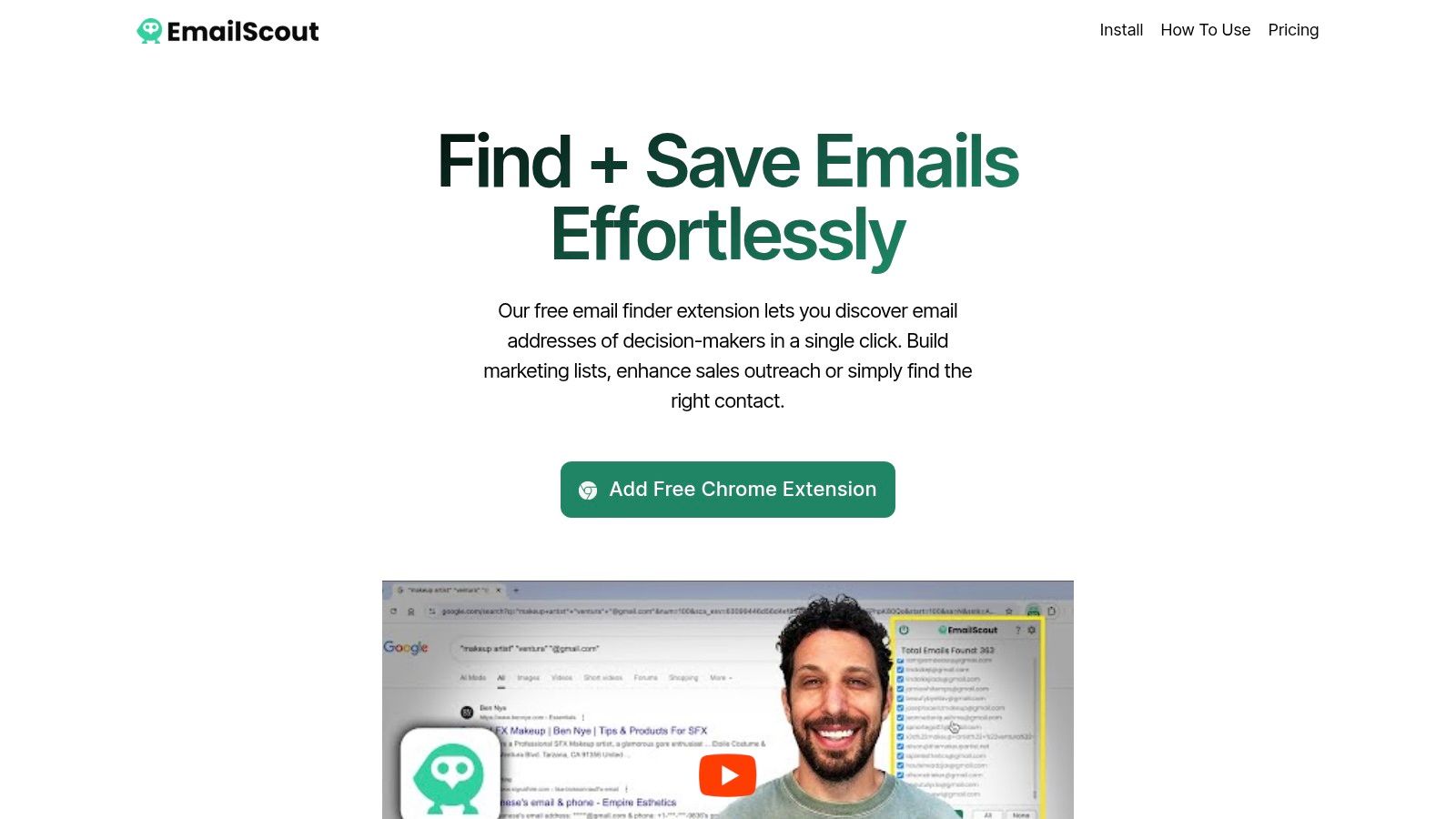
    A perfect example is the EmailScout Chrome extension. When you’re on someone’s LinkedIn profile, the extension wakes up, scours its data for a match, and—if it finds one—serves up a verified email right on the page.

    How These Tools Work Their Magic

    At their core, these tools are masters of pattern recognition and data verification. They take a person’s name and company, then analyze the most likely email formats (like firstname.lastname@company.com or f.lastname@company.com).

    But they don’t stop there. The best tools then ping the company’s mail server to confirm the address is active without actually sending an email. It’s a slick, behind-the-scenes check.

    This process is incredibly efficient and has become a go-to for B2B teams looking for a direct line of communication. In fact, their usage has jumped by over 35% in recent years. With accuracy rates often clearing 70–80% for established companies, it’s easy to see why.

    Installing and Using EmailScout as an Example

    Getting an extension like EmailScout up and running is dead simple. It’s usually a two-click process from the Chrome Web Store.

    Here’s a look at the EmailScout extension page.

    Once it's installed, you’ll see the little EmailScout icon in your browser’s toolbar, ready for action.

    Actually using it is even easier:

    1. Head over to the LinkedIn profile of the person you’re researching.
    2. Click the EmailScout icon.
    3. The tool gets to work, analyzes the profile, and pops up with the email address it found.

    This seamless flow is what makes these extensions so powerful. You can build out an entire prospecting list on the fly without ever having to switch tabs, turning a static profile into a live, actionable lead.

    Choosing the Right Tool for Your Needs

    Of course, not all email finders are the same. The market is packed with options, from simple free tools to massive, enterprise-grade data platforms like ZoomInfo.

    For a deeper look into one of the big players, this a comprehensive guide to ZoomInfo's pricing and features is a great starting point.

    When you’re weighing your options, keep these key factors in mind:

    • Accuracy: How good is the data? Look for tools that offer real-time verification to avoid bounce-backs.
    • Integration: Does it play nice with LinkedIn, Sales Navigator, and your other sales tools?
    • Cost: Do you need a subscription for thousands of searches, or will a pay-as-you-go plan work better?
    • Compliance: Does the tool follow data privacy rules and respect LinkedIn’s terms?

    The best email finder isn’t just about finding an address. It's about finding the right address—one that's verified, actionable, and delivered in a way that fits your workflow. Always prioritize accuracy and ease of use.

    If you’re just getting your feet wet, checking out the best free email finder tool options is a smart move. It gives you a feel for how they work without any financial commitment.

    Ultimately, the right extension should feel like a natural part of your prospecting process—just a whole lot faster.

    Comparing LinkedIn Email Finder Approaches

    To put it all into perspective, let's break down how the manual methods we've discussed stack up against automated tools. Each approach has its place, and knowing when to use which can make all the difference.

    Method Pros Cons Best For
    Manual Search (Guess & Check) Completely free. Time-consuming; high chance of error. Finding a single, high-value contact when you have time.
    Company Website & Contact Page Often provides direct, verified info. Not scalable; many contacts aren't listed publicly. Small businesses or finding general inquiry emails.
    Email Finder Extensions (Automated) Fast and scalable; high accuracy rates. Most have credit limits or subscription costs. Building prospect lists, sales outreach, and recruitment at scale.

    While manual techniques have their moments, especially for a one-off search, nothing beats the efficiency of an automated tool when you need to build lists consistently. They handle the grunt work so you can focus on what really matters: connecting with people.

    You've done the detective work and found what looks like the right email address. But hold on—don't hit "send" just yet.

    Sending an email to a dead address is more than just a waste of time. It actively damages your sender reputation. When your messages bounce, email providers like Gmail and Outlook take notice. A high bounce rate is a huge red flag that you might be a spammer, and it's a fast track to getting all your future emails dumped in the junk folder.

    Verification is the crucial last step that ensures your outreach actually gets where it needs to go.

    An icon showing a checkmark inside an email envelope, symbolizing successful verification.

    Thankfully, you don't have to just cross your fingers and hope for the best. There are a couple of smart, simple ways to confirm an email is legit before you even think about writing your message.

    Use a Free Online Verification Tool

    One of the easiest and most reliable methods is to use a free online email verifier. These web-based tools are surprisingly powerful, running a whole series of background checks to see if an email address is active and can receive mail.

    All you have to do is copy and paste your guessed email into the tool. Within seconds, you'll get a status report, usually labeling the address as "valid," "invalid," or "risky." These tools are a must-have in any professional's outreach toolkit. If you want to dive deeper into the tech behind it, you can learn more about how to validate an email address and what makes these modern checkers so effective.

    A verified email isn't just about deliverability; it's a sign of professionalism. Taking a few extra seconds to check an address shows you respect both the recipient's time and your own sender score.

    Try the Gmail and Outlook Hover Trick

    Here's another great technique that costs nothing and uses the email client you already have open. This little trick is especially effective if your contact's company uses Google Workspace or Microsoft 365.

    It’s incredibly simple:

    1. Open a new email in Gmail or Outlook.
    2. Type the email address you found into the "To:" field.
    3. Now, just hover your mouse over the address. Don't click it.

    If that email is tied to an active Google or Microsoft account, a little contact card will often pop up with the person's name, profile picture, or even their job title. It's a quick, visual confirmation that you've got the right person.

    Watch Out for Catch-All Servers

    Every now and then, a verification tool will give you a "risky" or "accepts all" result. This usually means the company has set up a catch-all server. A catch-all is designed to accept email sent to any address at that domain, which means nothing will ever bounce back.

    While it makes it impossible to be 100% sure a specific inbox exists, it doesn't mean your guess is wrong. The email could still land in a general inbox or even get routed to the right person. It's just a slightly higher risk. You'll have to weigh how important the contact is before deciding to send your message.

    Staying Ethical and Following Best Practices

    Finding an email gives you a direct line to someone's professional life, and that power comes with responsibility. The whole point is to build relationships, not to get yourself blocked. That means respecting the platforms you use and, more importantly, the people you contact.

    For instance, LinkedIn’s terms of service are crystal clear: they strictly prohibit aggressive or large-scale data scraping. Trying to game the system can get your account flagged or even suspended. It's always better to use tools and methods that work with the platform, not against it.

    A person at a desk reviewing ethical guidelines on a computer screen, with icons for GDPR and CAN-SPAM.

    Navigating Data Privacy Laws

    Beyond just playing by LinkedIn's rules, you have to think about data privacy regulations like GDPR in Europe and the CAN-SPAM Act in the U.S. These aren't just polite suggestions—they are laws with serious teeth.

    Here’s a quick rundown of what they demand for professional outreach:

    • Be Transparent: Clearly state who you are and why you're reaching out. No hiding behind a vague subject line or a mysterious company name.
    • Provide Value: Your message needs to offer something relevant to the person you're emailing. A generic, copy-pasted sales pitch just doesn't cut it.
    • Offer an Easy Opt-Out: Every single email must include a clear and simple way for someone to unsubscribe from future messages. No questions asked.

    Getting these fundamentals right is non-negotiable. If you want to dig deeper, our guide on https://emailscout.io/lead-generation-best-practices/ lays out more detailed strategies for staying compliant and effective.

    The core principle of ethical outreach is simple: treat others' inboxes the way you'd want yours to be treated. Respect, relevance, and transparency are your best tools for building trust.

    Tailoring Your Approach

    How effective your outreach is also depends on who you're contacting. For example, professionals aged 25–34 make up a whopping 47% of LinkedIn’s user base—an audience that's generally pretty open to networking.

    But here’s the catch: only about 1% of active users share content weekly, and even fewer list their emails publicly. This means your strategy has to be precise.

    Privacy norms also change depending on where you are in the world. Professionals in North America are often more open to sharing contact details than their counterparts in regions with stricter privacy cultures. This just means what works for a contact in one industry or country might need a little tweaking for another.

    Common Questions About Finding Emails

    When you start digging for emails on LinkedIn, a few questions always pop up. It's totally normal to wonder about the rules, how reliable these tools are, and what to do when you hit a dead end. Let's clear the air so you can move forward with confidence.

    Is It Legal to Find Emails This Way?

    This is the big one, and the answer isn't a simple yes or no—it's layered. Whether it's legal to use an email you found on LinkedIn depends on where you are, where your prospect is, and what you're sending.

    Laws like GDPR in Europe and the CAN-SPAM Act in the U.S. have strict rules about commercial emails. The good news is that B2B outreach for a legitimate business interest is usually fine. The catch? You have to be transparent, offer real value, and give them an easy way to opt out. Always do your homework on the specific rules that apply to you.

    It's also worth noting that using aggressive scraping tools can get you in trouble with LinkedIn's terms of service, which is a separate issue from the law. You could face account penalties for that.

    The bottom line is this: finding the email is just the first step. It's how you use it that matters. Always lead with respect and give people a clear way out.

    How Accurate Are Email Finder Tools?

    A good email finder tool will usually hit an accuracy rate of 70% to 90%. The best ones get there by checking multiple public sources and running a quick verification in real-time to see if the email address is live.

    But nothing's perfect. Accuracy can dip for smaller companies, people with super common names, or businesses that use weird email patterns. That's why it's a smart move to run your list through a separate email verification service, especially before launching a big campaign. It's a simple step that protects your sender reputation by keeping your bounce rate low.

    What if I Still Can't Find an Email?

    So you've tried all the manual tricks and fired up a tool, but you're still coming up empty. Don't give up on the prospect just yet. It's just time to switch gears.

    Forget the email for a minute and go back to the source: LinkedIn itself.

    Send a personalized connection request that gets straight to the point about why you want to connect. If they accept, follow up with a short, value-packed InMail message. The goal is just to start a conversation right there on the platform. More often than not, if you build a little rapport first, they’ll be happy to share their email with you down the line.

    Can an Email Finder Get My Account Banned?

    There’s always a small risk when you use third-party tools, since LinkedIn’s user agreement technically forbids automated data scraping. But top-tier extensions like EmailScout are designed to fly under the radar. They do this by acting more like a human and putting reasonable caps on how many searches you can do at once.

    To play it safe, just follow a few common-sense rules:

    • Steer clear of bots that automate tons of profile visits or connection requests.
    • Don't go crazy with your daily email lookups. Keep it reasonable.
    • Only use trusted, high-quality extensions that are open about how they work.

    Stick with tools that play fair, and you can get the tech advantage without putting your account on the line.


    Ready to stop guessing and start connecting? The EmailScout Chrome extension gives you instant access to verified email addresses right on LinkedIn profiles. Find unlimited emails for free and build your prospect lists in a single click.

    Start Finding Emails for Free with EmailScout

  • how to find email addresses for a company: a practical guide

    how to find email addresses for a company: a practical guide

    Getting the right email address is the quickest way to kick off a meaningful conversation. From my experience, the most effective way to do this is by blending some old-school detective work with the power of modern tools like EmailScout. This combo approach is your best bet for finding accurate, verified contact info every single time.

    Your Game Plan for Finding Company Emails

    A person looking at a digital interface with profiles and data points, symbolizing the process of finding email addresses for a company.

    Knowing how to dig up company email addresses is more than just a neat trick—it’s a core skill for any effective outreach. Whether you're in sales, marketing, or biz dev, landing your message in the right inbox is ground zero for hitting your goals. Just guessing or sticking to one method usually ends in bounced emails and a lot of wasted time.

    The real key is having a system. It all starts with the basics, like spotting the common email patterns companies use, and it always finishes with the most crucial step: verification. This guide lays out a reliable framework that will take you from simple guessing games to a repeatable process for uncovering accurate contact information.

    Building Your Foundational Knowledge

    Before we jump into the specific tactics, let’s cover a few core ideas. Getting these down will make your search process way more effective.

    • Common Email Patterns: Most companies stick to a predictable formula for their employee emails. Think firstname.lastname@company.com or f.lastname@company.com. Recognizing these patterns is your first real clue.
    • The Power of a Blended Approach: The best results always come from mixing manual detective work with automated tools. Manual digging is perfect for those high-value targets, while tools give you speed and scale.
    • Verification Is Everything: An email you find is useless until it's verified. Firing off messages to bad addresses hammers your sender reputation and hurts your overall deliverability.

    This is huge, especially when you consider that 86% of business professionals still prefer email for business communication. With billions of inboxes out there, just understanding basic patterns can give you a massive advantage.

    Remember, the goal isn't just to find an email address—it's to find the right one. Your approach has to be both targeted and accurate, making sure your outreach hits the person who can actually make a decision. For more on this, check out our guide on how to identify a target audience.

    Email Finding Methods At a Glance

    To help you decide which strategy to use, here’s a quick rundown of the main approaches, what they're good for, and how they stack up.

    Method Best For Speed Accuracy
    Manual Search High-value, specific targets where accuracy is critical. Slow High
    Pattern Guessing Finding emails at companies with predictable formats. Moderate Varies
    Social Media Sleuthing Uncovering contacts for social-savvy professionals. Moderate Good
    Using EmailScout Scaling up outreach with fast, verified results. Fast Very High

    This table should give you a good starting point. For one-off, super important contacts, a manual search might be worth the time. But when you need to build a list of dozens or hundreds of leads, a dedicated tool is the only way to go. Ultimately, the best system often involves a mix of these methods.

    Mastering the Art of Manual Searches

    Before you even think about spending a dime on tools, a bit of clever detective work can often unearth the exact email address you need. Manual searching is a seriously underrated skill, but it consistently delivers the goods, especially for high-value targets. It's all about knowing where to look and how to connect the dots that most people miss.

    This approach is perfect when you need to find an email for a specific person with pinpoint accuracy. Think of it less like casting a wide net and more like a targeted investigation. You'll be using a combination of advanced search tricks and social media smarts to find that contact info.

    Leveraging Advanced Google Searches

    Your first stop should always be a well-crafted Google search. I'm not talking about basic queries here—advanced search operators are your secret weapon. These are just simple commands you can tack onto your search to filter the noise and find exactly what you're looking for.

    Try plugging these into Google:

    • (name) + email + (company name)
    • site:company.com + (name) + email
    • "(name)" + "contact" + site:company.com

    These searches basically tell Google to hunt for specific word combinations on a particular website. You’d be surprised how often this digs up staff directories, press releases, or author bios containing the exact email you need.

    Decoding Common Email Patterns

    Most companies don't get too creative with their email formats; they stick to a standardized pattern. Once you figure out that pattern, you can accurately guess the email of almost anyone at the company. This is a fundamental technique and a great starting point for anyone trying to find corporate emails.

    Here are the most common formats you'll run into:

    • First Name: john@company.com
    • First Initial, Last Name: jdoe@company.com
    • First Name, Last Initial: johnd@company.com
    • First Name.Last Name: john.doe@company.com

    If you can find just one employee’s email address—maybe from a press release or the "About Us" page—you've likely cracked the code for the entire organization.

    Pro Tip: Don't just guess one pattern and call it a day. I always create a short list of the top three or four most likely combinations. You can then use a simple verification tool to check which one is valid before you bother hitting send.

    Tapping into Professional Networks

    Professional networks are absolute goldmines for contact information. LinkedIn is the obvious heavyweight here and is incredibly valuable for confirming job titles, names, and even just checking the professional spelling of someone's name.

    Here’s a perfect example of a profile that gives you the key information needed to start your search.

    Screenshot from https://www.linkedin.com/

    This profile provides the person's full name and their current company—the two essential puzzle pieces for deducing their corporate email using the pattern-guessing method we just talked about.

    While most people don't list their email directly on their profile anymore, their activity can leave clues. Check out articles they've written or commented on; their contact info might be in an author bio. Combining the name and company from LinkedIn with the Google search techniques from earlier is a seriously effective strategy.

    Use Email Finder Tools to Work Smarter, Not Harder

    A sleek dashboard of an email finder tool on a laptop screen, showing profiles and verified email addresses, illustrating efficiency.

    Manually digging for emails has its place, especially when you need surgical precision for a handful of high-value contacts. But let’s be real—it just doesn't scale.

    When you're tasked with building a sizable contact list for a big sales campaign or a new marketing push, dedicated email finder tools become your secret weapon. They completely automate the discovery process, shrinking a task that could take days down to just a few minutes.

    These platforms are way more than just glorified search engines. They scan millions of public web pages, tap into professional databases, and use smart algorithms to figure out the correct email format for almost anyone at a specific company.

    The real game-changer is efficiency. Imagine finding 50 verified contacts in the time it would take you to manually hunt down maybe one or two. That’s the kind of leverage a tool like EmailScout gives you.

    How These Tools Find Emails at Scale

    The magic behind these platforms is their ability to churn through massive amounts of data and spot patterns with incredible speed. They aren't just guessing; they’re making highly educated predictions based on multiple data points.

    Here’s a quick look under the hood:

    • Public Data Aggregation: The tools crawl the web for publicly available email addresses—think author bios, conference speaker lists, and company "About Us" pages.
    • Pattern Recognition: They analyze a company’s known email formats (like firstname.lastname@company.com or f.lastname@company.com) to predict the right one for your target contact.
    • Real-Time Verification: The best tools don’t just find an address; they ping the server in real-time to confirm it’s actually deliverable, often giving you a confidence score.

    This one-two punch of finding and verifying is what makes them so essential for serious outreach. If you want to see how different platforms compare, you can check out this breakdown of the best email finder tools.

    To help you understand what to look for, I've put together a quick comparison of the features that really matter in a top-tier tool.

    Key Features of Top Email Finder Tools

    This table breaks down the essential features you'll find in leading email finder tools like EmailScout. Knowing what these do can help you pick the right solution for your specific needs.

    Feature What It Does Why It Matters for Finding Emails
    Bulk Email Finder Uploads a list of names and companies to find emails for all of them at once. Saves countless hours compared to finding emails one by one. It's the key to scaling your outreach.
    Real-Time Verification Checks if an email address is active and can receive mail right before you get it. Drastically reduces your bounce rate, protecting your sender reputation and improving deliverability.
    Chrome Extension Finds emails directly from LinkedIn profiles or company websites as you browse. Perfect for grabbing emails on the fly without breaking your workflow. Super efficient for targeted prospecting.
    API Access Integrates email-finding capabilities directly into your own applications or CRM. Allows you to automate lead enrichment within the tools you already use, creating a seamless process.

    Choosing a tool with the right mix of these features can make a huge difference in how quickly and effectively you can build a high-quality contact list.

    Putting It All Together: Finding Emails in Bulk

    Let’s walk through a real-world scenario. You just got back from a trade show with a list of 100 target companies and the names of the key decision-makers. Finding each email manually would be a nightmare.

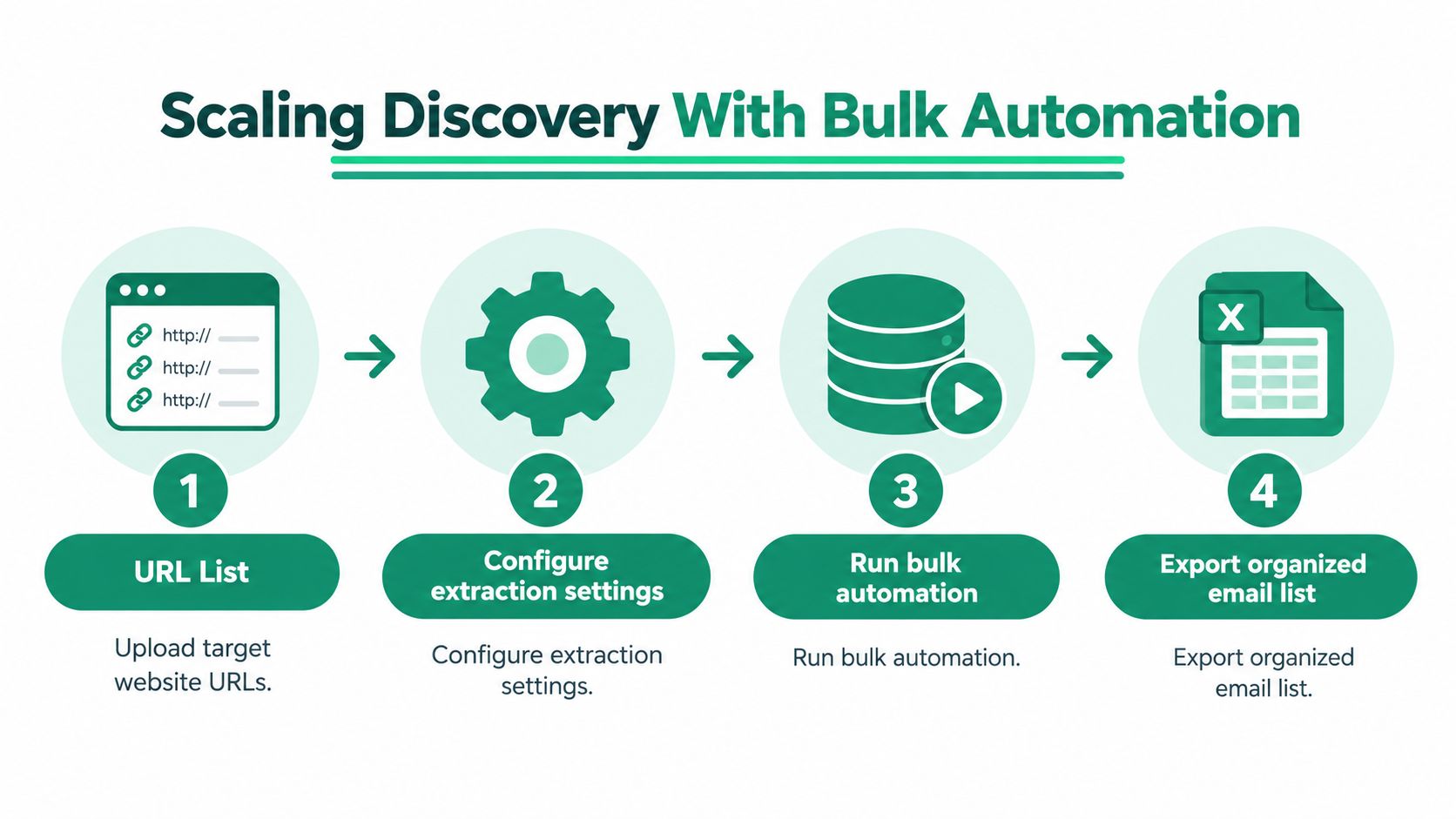
    With a tool like EmailScout, the process is simple. You just upload a CSV file with two columns: Full Name and Company Domain. The platform takes it from there, returning a list enriched with verified email addresses. Done.

    The bottom line is this: these tools transform email discovery from a mind-numbing chore into a real strategic advantage. You spend less time digging for contacts and more time actually talking to them.

    With over 4.6 billion email users worldwide, the digital footprint out there is massive. Tools that can effectively scan that footprint are incredibly powerful, giving you a direct line to the inboxes that matter. This is how you build a robust, accurate contact list that fuels your entire sales and marketing engine.

    Why Email Verification Is Non-Negotiable

    Discovering a potential email is only half the battle. Seriously. The most critical step in learning how to find email addresses for a company is making sure they’re actually deliverable.

    Without verification, you're just sending your carefully crafted message into a black hole and hoping it lands somewhere useful. It’s a surefire way to waste time and effort.

    Sending emails to bad addresses cranks up your bounce rate. Internet Service Providers (ISPs) watch that number like a hawk; a high rate makes you look like a spammer. Before you know it, your sender reputation is shot, and none of your emails are making it to the inbox—even the ones sent to perfectly valid contacts.

    The Anatomy of a Verified Email

    So, what’s the difference between an email you found and one you can actually deliver to? Verification isn't just a simple ping. It's a multi-step process that confirms an address is legitimate and active, and it all happens behind the scenes.

    • Syntax Check: This is the basic first pass. Does the email even look right? It just makes sure the format is correct (like name@domain.com).
    • Domain Validation: Next, the system checks if the domain (company.com) is real and has active mail servers ready to receive email.
    • SMTP Verification: This is the real magic. The verifier has a quick, technical "handshake" with the recipient's mail server to confirm the specific user mailbox exists, all without actually sending an email.

    This robust process is why tools with built-in validation are such game-changers. For instance, EmailScout gives you a confidence score, letting you know the likelihood of deliverability before you even think about hitting send. You can get the full rundown on how this works in our detailed guide on email address verification.

    Protecting Your Outreach Efforts

    Think of it this way: every bounced email is a missed opportunity and a tiny strike against your domain's credibility. You're playing a long game of reputation management, and clean email lists are your best defense.

    The sheer volume of digital communication today makes this non-negotiable. By 2025, we’re looking at 4.83 billion global email users, with daily traffic hitting a staggering 392 billion emails. With that much noise, you have to ensure your message gets through. It’s especially true when you consider that personalization offers a massive $36 ROI for every $1 spent—a figure that highlights why smart businesses invest so heavily in accurate data.

    The bottom line is simple: finding an email address is just the starting point. Verifying it is what protects your reputation, maximizes your ROI, and ensures your carefully crafted message actually gets read.

    Plenty of great resources can help you pick the right solution for your needs. For example, a helpful roundup lists the 12 Best Email Verification Tools to Use in 2025 that can easily slot into your workflow. This is how you build a clean, effective, and reliable contact list that fuels your outreach with certainty.

    Building an Ethical Email Discovery Workflow

    Finding someone's email isn't just a technical problem to solve—it's the first step in building a real relationship. A truly great outreach strategy is built on a solid, ethical system that respects people's privacy while still keeping your pipeline full. The goal here is to get past just doing one-off searches and build a repeatable workflow that mixes smart manual digging with powerful automation.

    This hybrid approach is all about efficiency. It lets you put in the focused, detective-style work for high-value prospects while using tools to handle the broader outreach at scale. You're being smart with your time and making sure every email you send has the best chance of being delivered and welcomed.

    Combining Manual and Automated Methods

    The most effective workflows I've seen don't just stick to one strategy. They build a two-tiered system that flexes based on how important the prospect is.

    • For High-Value Targets: This is where you roll up your sleeves. For that key decision-maker at a company you've been dying to work with, spending 15-20 minutes doing a deep dive with advanced Google searches and LinkedIn snooping is time well spent. The personal effort pays off in accuracy.
    • For Scaled Outreach: When you're trying to reach dozens or even hundreds of potential leads, automation is your best friend. Tools like EmailScout can chew through lists of names and companies in minutes, freeing you up to work on your messaging instead of mind-numbing data entry.

    It's also helpful to see how this discovery process fits into the bigger picture. For a great breakdown of the entire journey from prospect to lead, this automated lead generation workflow guide offers some fantastic context. An integrated view makes every step, from finding the email to the final follow-up, work together seamlessly.

    Staying Compliant with Privacy Regulations

    Let's be clear: ethical outreach is compliant outreach. Regulations like GDPR in Europe and CCPA in California aren't just annoying legal hoops to jump through; they're a roadmap for respecting people's privacy. In a B2B context, that boils down to being transparent and offering genuine value.

    Always stick to these core principles:

    1. Legitimate Interest: Make sure your reason for contacting someone is actually relevant to their job. A software engineer, for example, probably has a legitimate interest in hearing about a new dev tool.
    2. Transparency: Be upfront about who you are and why you're emailing. Tricky subject lines and misleading sender info aren't just bad form—they can land you in serious trouble.
    3. Easy Opt-Out: Every single email you send must have a dead-simple way for the person to unsubscribe. According to the CAN-SPAM Act, if you ignore an opt-out request, you could face penalties of up to $53,088 per email. Yes, you read that right.

    A good workflow isn't just about how fast you can find emails; it's about sustainability. By building ethical practices and compliance into your process from day one, you protect your sender reputation and build trust, making sure your outreach stays effective for years to come.

    This flowchart gives you a bird's-eye view of the simple but essential steps in a modern outreach workflow.

    Infographic about how to find email addresses for a company

    As the visual shows, finding the email is just the start. Verifying it's correct and sending a compliant message are just as crucial for any successful and ethical outreach campaign.

    Common Questions About Finding Emails

    When you're digging for email addresses, a few key questions always pop up. Is this even legal? What's the best way to get accurate results? How do I do this without spending all day on it?

    Getting straight answers to these is crucial. It helps you build a process that's not just effective, but also keeps you on the right side of the rules. Let's tackle the big ones.

    Is It Legal to Find Company Emails for Outreach?

    The short answer: yes, for most B2B outreach, it's perfectly legal. But—and this is a big but—you have to follow the rules.

    Laws like the CAN-SPAM Act in the U.S. and GDPR in Europe are built around the idea of "legitimate business interest." That means you can reach out, as long as you’re not just spamming people.

    Compliance isn't optional. You absolutely must:

    • Provide a clear opt-out: Every single email needs an easy way for someone to say "no thanks."
    • Be transparent: Don't hide who you are or that you're sending a commercial message.
    • Keep it relevant: Make sure your pitch actually relates to their job. Sending a sales pitch for forklift parts to a marketing manager isn't going to cut it.

    Drop the ball on these, and you could face some serious fines. CAN-SPAM, for example, can slap you with penalties up to $53,088 per violation. Do your homework and know the laws for the regions you're targeting before you hit send.

    What Is the Most Accurate Discovery Method?

    Honestly, the most reliable method is a mix of human smarts and good tech.

    If you're chasing a whale—a really high-value prospect—nothing beats a bit of manual detective work. You figure out the company's email pattern, make an educated guess, and then use a verification tool to confirm it. It’s slow, but the accuracy is top-notch.

    But who has time for that at scale? For building bigger lists, a quality email finder that includes real-time verification is your best bet. It gives you the perfect balance of speed and precision.

    A "confidence score" is a handy metric many tools use. It tells you how likely it is that an email is correct and won't bounce. A high score means you can feel good about using that address without dinging your sender reputation.

    How Can I Find Emails in Bulk?

    When you need to find hundreds or thousands of emails, you have to turn to a bulk email discovery tool. It’s the only way to do it efficiently.

    This is exactly what platforms like EmailScout were built for.

    You can upload a list of names and company domains, and the software does the heavy lifting, finding and verifying the emails for you. Many of these tools also have browser extensions that let you pull emails right from LinkedIn profiles or company websites while you browse. It’s a game-changer for building targeted lists without derailing your entire workflow.


    Ready to stop guessing and start connecting? With EmailScout, you can find unlimited verified emails for free and build powerful marketing lists with just one click. Get started with EmailScout today and supercharge your outreach.

  • How to find email on linkedin: The smart way

    How to find email on linkedin: The smart way

    Let's be honest, finding someone's email on LinkedIn is a tough gig. You have to look way beyond what the platform gives you. In fact, a tiny fraction—less than 10% of users—actually list their email publicly. That's why tools like EmailScout are so crucial if you're serious about sales or marketing outreach. It's about skipping the crowded, noisy world of InMail and opening up a direct line of communication.

    Why LinkedIn Emails Are Your Golden Ticket

    A professional holding a golden ticket with a golden ticket with a LinkedIn logo on it, symbolizing access to valuable email contacts.

    In the B2B world, a direct email address is infinitely more valuable than a LinkedIn InMail. While LinkedIn is fantastic for finding the right people, its messaging system is a minefield. It's often ignored, and the response rates can be abysmal. Picture a chaotic networking event where everyone's shouting—it’s nearly impossible to have a real conversation.

    When you move that chat from LinkedIn to their actual email inbox, you're playing a different game. You sidestep all the noise and land in a personal space they check every single day.

    The Power of a Direct Inbox

    A direct email gives you capabilities LinkedIn just can't touch. For starters, you can set up automated follow-up sequences to stay on their radar without doing all the manual work. You can also track opens and clicks, which gives you real-time feedback on how interested they actually are.

    Here’s why a direct email leaves InMail in the dust:

    • Real Personalization: You can craft a message with rich text, images, and attachments—things that are impossible with LinkedIn's stripped-down format.
    • You Own the Relationship: Once you have their email, that connection is yours. You’re no longer at the mercy of a platform's changing rules or algorithms.
    • Better Tracking and Analytics: Email outreach tools give you a ton of data. You know who opened your message, who clicked a link, and who replied. This info is gold for fine-tuning your approach.

    The real win isn't just snagging an email from a LinkedIn profile. It's about building a direct channel that cuts through the clutter and helps you forge a genuine professional connection.

    Bridging the Information Gap

    There's no denying LinkedIn is a beast for B2B lead generation, with over 1 billion members across the globe. But the platform is built to keep you inside its ecosystem. It’s no surprise that industry stats show less than 10% of profiles have a public email address, making a manual search a huge waste of time. You can learn more about these LinkedIn statistics and their impact on prospecting.

    This is exactly where a specialized tool comes in. It bridges that frustrating gap between spotting a perfect prospect on LinkedIn and actually starting a real conversation in their inbox.

    Finding Emails Manually Without Any Tools

    Before you drop any cash on a new tool, it’s worth getting good at the old-school, no-cost ways of digging up an email on LinkedIn. This kind of manual detective work still pays off, especially when you just need to find one person’s contact info, and you need it fast.

    The first place I always check—and you'd be shocked how many people skip this—is the "Contact Info" section. It's right there on their profile page. Just click the link sitting under their name and headline. If they’ve made their email public, boom, there it is.

    Digging Deeper into the Profile

    Okay, so the contact section was a dead end. No worries. Your next move is to scan their entire profile for other breadcrumbs. Lots of professionals will link out to a personal website, a portfolio, or even a blog. Those sites almost always have a dedicated contact page with an email address just waiting for you.

    Also, don't forget to give their "About" section a thorough read. People often drop their email right into their summary, particularly if they’re open to networking or new projects. It’s a quick check that can save you a ton of guesswork.

    My go-to manual technique is combining a prospect's name with their company’s domain. It’s an educated guessing game that pays off more often than not.

    You can actually start testing common email formats by matching their name with their company's website. It takes a bit of trial and error, but most companies follow a predictable pattern.

    • First Name: john@company.com
    • First Initial, Last Name: jdoe@company.com
    • First Name, Last Name: johndoe@company.com
    • First Name.Last Name: john.doe@company.com

    Once you have a few good guesses, pop them into a Google search, making sure to use quotes (like "john.doe@company.com"). If that email has ever been posted publicly, Google will probably find it. This trick works, but it gets tedious when you need to find more than a handful of contacts. If you want to scale this up, you can learn how to scrape thousands of LinkedIn contacts from Google Search and really speed things up.

    Choosing Your LinkedIn Email Finder Tool

    When you've hit a wall with manual detective work, it's time to bring in the big guns. I'm talking about a specialized email finder tool. But picking the right one is less about the flashy marketing and more about what genuinely fits your day-to-day workflow. The market is absolutely flooded with options, so knowing what to look for from the get-go is key to not wasting your time and money.

    The absolute number one factor? Data accuracy. A tool is completely useless if it’s just spitting out emails that bounce. You should be looking for providers that either offer real-time verification or, at the very least, show some kind of confidence score with their results. If they don't, you're just setting yourself up to damage your sender reputation—and that's a headache nobody needs.

    Evaluating Key Features And Pricing

    Next up, you have to think about volume. How many emails are you really going to be looking for? Most of these tools run on a credit-based system, where one credit typically gets you one email lookup. Be honest with yourself here. Are you a solo consultant who just needs a handful of key contacts a week? Or are you running a sales team that needs to find email on LinkedIn for hundreds of leads every month? Your scale will dictate the right plan.

    Another non-negotiable for me is CRM integration. The whole point of these tools is to make your life easier, creating a smooth path from finding a prospect to reaching out. A tool that lets you push a new contact and their email straight into your CRM (think Salesforce or HubSpot) with a single click will save you an unbelievable amount of mind-numbing data entry.

    The best tool isn't just a finder; it's a bridge. It should effortlessly connect LinkedIn prospecting with your existing sales or marketing platforms, making your entire process more efficient.

    This infographic breaks down the high-level decision process pretty well. It shows you when a quick manual search might do the trick versus when a dedicated tool becomes a necessity.

    Infographic about find email on linkedin

    As you can see, while manual checks have their place, automated tools are really the only reliable way to get consistent results, especially when you're doing this at scale.

    It's no surprise that the global demand for these solutions has exploded. The market for LinkedIn email finder tools is projected to rocket to $1.2 billion by 2026. This incredible growth just shows how essential these tools have become for any modern B2B prospecting effort.

    Email Finder Tool Feature Comparison

    To help you sift through the noise, here's a quick comparison of what you can expect from some of the popular tools out there. This table breaks down key features to give you a clearer picture of how they stack up against each other.

    Feature Tool A (e.g., Hunter) Tool B (e.g., Apollo) Tool C (e.g., EmailScout)
    Email Verification Yes (with scores) Yes (Real-time) Yes (Real-time)
    Bulk Finder Yes Yes Yes
    CRM Integration Salesforce, HubSpot Extensive options Zapier integration
    Chrome Extension Yes Yes Yes
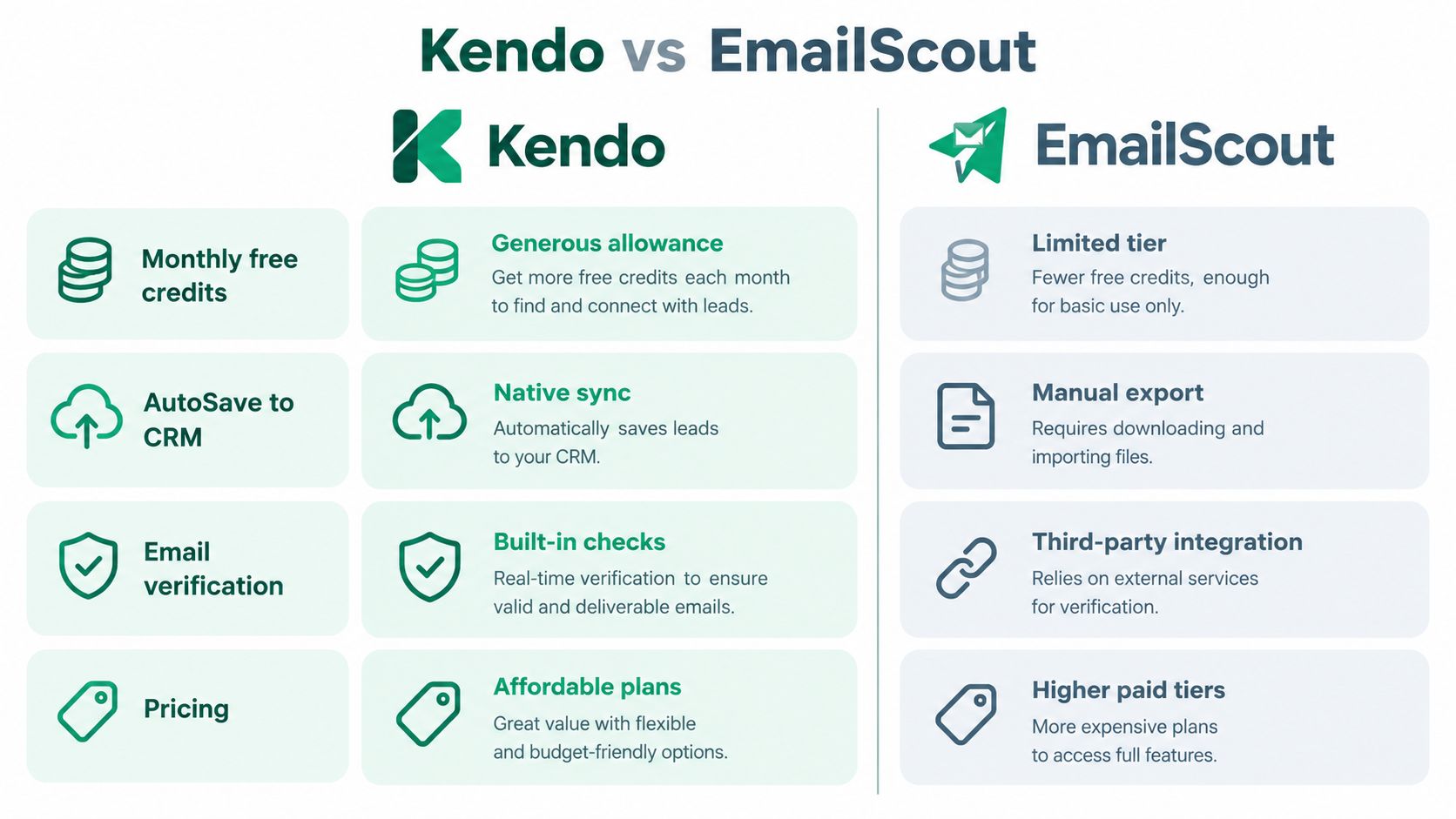
    Free Plan 25 credits/month 50 credits/month Generous free tier
    Data Enrichment Limited Extensive Basic

    Ultimately, the "best" tool depends entirely on your specific needs—whether that's robust CRM connections, a higher volume of free credits, or advanced data enrichment features.

    To really dig in, you can check out our detailed breakdown of the best email finder tools available. It's also worth looking into specialized LinkedIn sourcing Chrome extensions, as many of them bundle email discovery features designed specifically for recruiters and SDRs.

    Using an Email Finder Tool in the Real World

    Theory is one thing, but seeing a tool in action is what really counts. Let's walk through a real-world scenario of using a browser extension like EmailScout to pull an email directly from a LinkedIn profile. It all starts with a quick installation of their Chrome extension.

    Once it's installed, the tool just sits quietly in your browser, ready to go. The real magic begins when you land on a prospect's LinkedIn profile. You'll notice a small, clickable icon pop up on the side of the page—that's your signal that it's ready to do its job.

    Activating the Tool and Reading the Results

    A single click on the EmailScout icon is all it takes. The tool instantly gets to work, but it's not just scraping the page. It's actively cross-referencing multiple data sources behind the scenes to pinpoint the most likely professional email for that person. The whole thing usually takes just a couple of seconds.

    The results then pop up in a clean little overlay, right on top of the LinkedIn page. Here’s what you can expect to see.

    Screenshot from https://www.emailscout.com/

    Notice how it gives you more than just an email? That little "verified" checkmark or confidence score is absolutely critical for protecting your sender reputation.

    A high confidence score means the tool has already validated the email, so it has a very low chance of bouncing. Honestly, this is one of the most important features to look for. It ensures your outreach actually gets delivered. Some tools will even give you a few email variations if they find more than one possibility.

    Finding the email is only half the battle. The crucial next step is ensuring that data flows seamlessly into your outreach workflow, turning a simple contact detail into a tangible sales opportunity.

    From Discovery to Outreach

    Finding the email is just the first step. The best tools get that this data needs to be put to work immediately. That's why many, including EmailScout, build in ways to push this new contact info straight into the other systems you're already using.

    You can get that data moving in a few ways:

    • One-Click CRM Push: Send the contact and their verified email directly to your CRM, like Salesforce or HubSpot. This creates a new lead record on the spot.
    • Export to CSV: If you're building out a larger list, you can save contacts as you browse. Later, just export the whole batch as a CSV file to upload into any outreach platform you want.
    • Zapier Integration: This opens up a world of possibilities. You can create automated workflows to connect with thousands of other apps, like adding the new contact to a specific email sequence in a tool like Mailchimp or Outreach.

    This is what elevates a simple email finder from a neat gadget to a core part of your sales or marketing engine. It cuts out the mind-numbing manual data entry, reduces errors, and dramatically shortens the time between finding a prospect and actually starting a conversation.

    Crafting Outreach That Actually Gets Replies

    A person writing an email that is being opened and read with a positive reaction, symbolizing effective outreach.

    Okay, so you managed to find an email on LinkedIn. That’s the easy part. Now comes the critical mindset shift. Having someone's address isn't a free pass to spam their inbox; it’s an opportunity to start a real, professional conversation. The goal here isn't just to blast out emails—it's to get replies, build relationships, and open doors.

    Effective outreach begins long before you hit "send." It all starts with providing genuine value right out of the gate. Your first message should feel more like a helpful handshake and less like a hard pitch.

    So, instead of immediately asking for their time, try offering them a useful resource or a sharp insight you uncovered about their company or industry. This one simple move instantly separates you from 99% of the noise in their inbox.

    The Non-Negotiables of Ethical Outreach

    Beyond what you write, a few rules are absolutely non-negotiable if you want to protect your professional reputation and stay on the right side of the law. Ignoring these is the quickest way to get your emails flagged as spam and your entire domain blacklisted.

    Here’s what you absolutely must do, every single time:

    • Be Transparent: Clearly state who you are and what company you represent. Any hint of deception will destroy trust before it even has a chance to form.
    • Provide a Simple Opt-Out: Every single email needs a clear, one-click unsubscribe link. This isn't just good practice; it's a core requirement of anti-spam laws like CAN-SPAM and GDPR.
    • Respect Privacy Laws: Get familiar with the basics of regulations like GDPR, especially if you're contacting people in the European Union. Ignorance isn't an excuse.

    The single most powerful change you can make is shifting your approach from "what can I get?" to "what can I give?" This one tweak transforms your outreach from a basic sales tactic into a genuine relationship-building tool.

    Writing Emails That Connect

    Your subject line is your first (and maybe only) impression. Ditch the generic stuff like "Quick Question." You need to spark curiosity with something personal, like "Idea for [Company Name]'s Q3 goals."

    Inside the email itself, keep it tight and focused. The real power isn't just finding the email; it's in crafting high-converting lead generation emails that actually connect with a real person on the other end.

    For a much deeper dive into structuring your messages for maximum impact, check out our complete guide on how to write cold emails that actually work. This is where you'll learn to turn a simple contact into a real conversation.

    Answering Your Top Questions About LinkedIn Emails

    Once you start digging for emails on LinkedIn, a few questions always seem to surface. It's totally normal. Getting a handle on the legal, ethical, and practical sides of this is crucial to doing it right and getting results without burning bridges. Let’s clear up some of the most common concerns I hear all the time.

    Probably the biggest question is about legality. Is this even allowed? For B2B outreach, the answer is generally yes, but with some big caveats. You have to play by the rules, like those laid out in CAN-SPAM and GDPR. This isn’t a free-for-all—your outreach needs to be professional, you must be upfront about who you are, and you absolutely have to give them a clear, easy way to opt out.

    How Accurate Are These Emails, Really?

    Another question I get is about how reliable these email-finding tools are. Let's be real: no tool is 100% perfect. But the good ones consistently hit accuracy rates between 80-95%. They do this by running sophisticated checks and cross-referencing multiple data sources on the fly. My best advice? Go with a tool that gives you some kind of verification status or confidence score. It's the best way to protect your sender reputation from getting torched by a high bounce rate.

    That brings up another great point: should you even be looking for personal or professional emails?

    For any kind of B2B prospecting, the rule is simple and non-negotiable: always stick to professional email addresses. Hitting someone up on their personal @gmail.com address for a business pitch is a fast way to come off as intrusive and unprofessional. It pretty much kills your chances of getting a good response.

    What If a Tool Can't Find an Email?

    Finally, what do you do when your fancy tool comes up empty? It’s going to happen. No email finder is a miracle worker. When you hit a wall, it’s time to put on your detective hat and go back to some of the manual methods we talked about.

    • Check their LinkedIn profile again for a link to a personal website or blog.
    • See if they've written any articles or been quoted in publications.
    • Try a few educated guesses using common email patterns at their company’s domain (firstname.lastname@company.com, f.lastname@company.com, etc.).

    Sometimes, the smartest move is to just find another relevant person at the same company. A quick, polite email asking for a referral to the right person can work wonders and often gets you a warm introduction.


    Ready to stop guessing and start connecting? EmailScout pulls unlimited, verified emails right from LinkedIn profiles with a single click. Try EmailScout for free and see how much faster your outreach can be.

  • how to find company email address: fast, reliable ways

    how to find company email address: fast, reliable ways

    Finding a specific company email address is the first, and most important, step to skipping those generic contact forms and getting straight to the decision-makers. It’s all about turning a cold outreach attempt into a warm conversation by landing your message in the right inbox. Get this right, and you're already halfway to unlocking new sales, partnerships, and collaborations.

    Why Finding the Right Email Is a Game Changer

    Before we jump into the "how," let's talk about the "why." It's easy to overlook just how critical finding the right email address is. In a world drowning in digital noise, a direct line of communication is gold. Those generic "info@" or "contact@" inboxes? They're often black holes, watched over by gatekeepers whose job is to filter you out.

    A professional shaking hands with another, symbolizing a successful business connection.

    The Power of a Direct Connection

    When you have someone's direct email, you gain a massive advantage. You can actually tailor your message to them, referencing their specific role, a recent company win, or something they posted on LinkedIn. That level of personalization just isn't possible when you're filling out a generic web form.

    A targeted email shows you’ve done your homework and that you respect their time. That simple act alone dramatically boosts your chances of getting a response and separates your message from the spam pile.

    A verified email address is more than just a contact detail; it’s an invitation to a direct, professional conversation that can bypass corporate layers and accelerate business goals.

    Building Relationships and Shortening Sales Cycles

    At the end of the day, business is all about relationships. A direct email is the modern version of a personal introduction, opening the door for a real conversation. It's no surprise that email is still the top dog for professional communication. In fact, stats show that about 60% of consumers actually prefer email for brand communications, and that preference holds true deep inside the B2B world. You can dig into more of these email engagement statistics over on OptinMonster.com.

    For sales pros, a direct email can mean a much shorter sales cycle. For marketers, it means a higher shot at a collaboration. For anyone doing outreach, it’s about turning a cold lead into a genuinely warm opportunity.

    Uncovering Emails with Smart Manual Tactics

    Before you jump into sophisticated software, some of the best ways to find a company email address involve a little old-fashioned digital detective work. These basic, no-cost methods are surprisingly effective and often get the job done when you only need to find a couple of key contacts.

    A person using a laptop with magnifying glass icons, representing a search.

    The trick is knowing that most companies use a standard format for all their email addresses. If you have someone's name and their company's domain, you can make a few highly educated guesses.

    Predicting Common Email Patterns

    Let's say you want to reach John Smith at example.com. Instead of searching blindly, you can test a handful of common patterns. Most businesses stick to a single format to keep things consistent across the organization.

    Take a look at the most common formats I see out in the wild.

    Common Business Email Formats to Test

    Format Type Example Structure Likelihood of Use
    First Name john@example.com Common in startups
    First Initial, Last Name jsmith@example.com Very Common
    First Name.Last Name john.smith@example.com Very Common
    Full Name johnsmith@example.com Common

    Once you've got your list of potential addresses, a quick check is all you need. You can pop them into a free email verifier or even just the "To" field in a new Gmail message—hovering over a valid address will often reveal a user profile. For a more detailed walkthrough, our guide on how to find email addresses for free covers even more validation techniques.

    Your best bet is often the simplest one. Guessing based on common patterns is a zero-cost strategy that can land you a correct email in less than a minute.

    Leveraging Social and Web Clues

    LinkedIn is your best friend here. It's the perfect place to confirm the exact spelling of someone's name and their official job title—the two key ingredients for making your educated guesses accurate.

    Also, don't overlook the company's own website. A quick scan of the "About Us" or "Team" page can be a goldmine. Decision-makers are often listed right there, sometimes even with their direct email. If not, you can still grab their names and run them through the patterns we just covered.

    These manual tactics might feel basic, but they're the foundation of any good, targeted outreach.

    Using Specialized Tools for Instant Results

    Let's be honest, hunting for emails one by one is fine when you need a handful of contacts, but it just doesn't scale. If you're building a serious list for a sales campaign, a marketing push, or a recruiting drive, you have to bring in the right tools. This is where specialized email finders completely change the game.

    Services like EmailScout were built for this exact purpose: speed and accuracy. Instead of you playing a guessing game with email patterns, these platforms are designed to scan millions of public data points and internal databases almost instantly. The process is dead simple: you give it a name and a company, and the tool serves up a verified email in seconds.

    The Clear ROI of Automation

    Think about the time you get back. Finding just one person's email manually can eat up anywhere from five minutes to a half-hour if they're particularly hard to track down. A good tool can pull dozens of verified contacts in that same amount of time. That frees you up to focus on what actually moves the needle—writing that perfect outreach message.

    The efficiency boost is massive. It empowers teams to:

    • Build highly targeted prospect lists for sales cadences.
    • Gather contacts for PR opportunities and marketing collaborations.
    • Quickly source candidates for open roles without the manual grunt work.

    For anyone in sales, marketing, or recruiting, the return on investment is immediate. All that time once lost to tedious searching is now spent building relationships and closing deals.

    Here's a quick look at how clean and simple the interface is on an email finder like EmailScout. It really is just a few clicks.

    Screenshot from https://www.emailscout.com/

    This screenshot shows exactly how these tools can pull email addresses right from a professional networking profile, turning a static page into a goldmine of actionable leads. It shifts your whole workflow from a frustrating guessing game to a predictable, data-driven process.

    It's More Than Just Finding Emails

    The best platforms don’t just find emails; they validate them. This is a crucial step that manual searching almost always misses. A solid email finder runs real-time checks to confirm an address is active and can actually receive mail. This single feature drastically cuts down your bounce rate and helps protect your sender reputation.

    For instance, when a tool finds "john.smith@example.com," it's not just confirming the format. It's often pinging the mail server to make sure that inbox actually exists. That extra layer of verification is what keeps your email campaigns healthy and effective. Taking a look at the best email finder tools on the market will give you a better idea of which features line up with your specific outreach goals.

    At the end of the day, using a dedicated tool is about putting your outreach engine on steroids. It's hands-down the most reliable way to find a company email address at scale, making sure you connect with the right person, every time.

    Alright, you've hunted down what looks like the perfect company email address. But hold on—the job's not done yet.

    Finding the address is only half the battle. The next step is absolutely critical: you have to confirm it's actually deliverable. Skipping this check is a surefire way to torpedo your outreach efforts before they even get off the ground.

    A shield icon with a checkmark, symbolizing protection and verification.

    Here’s why. When you send a message to an invalid address, it creates a hard bounce. As your bounce rate climbs, email service providers like Google and Microsoft start paying attention. They see those bounces as a huge red flag—a classic sign of a spammer blasting messages to an old, purchased, or scraped list.

    Why Verification Is Non-Negotiable

    A high bounce rate directly poisons your sender reputation, which is basically a credit score for your email domain. If that score drops, your future emails—even the ones sent to perfectly good addresses—are far more likely to get routed straight to the spam folder. Poof. Gone.

    This is exactly why you need to improve email deliverability by making sure your list is clean. It’s a non-negotiable part of any serious outreach strategy.

    Think of email verification as quality control for your outreach. It ensures your messages have the best possible chance of being read, protecting your brand's reputation with every email you send.

    The quality of your list makes a massive difference. Recent stats show that companies sending over a million emails a month can see inbox placement rates as low as 27%. In contrast, smaller-scale senders often hit over 50%. A clean list really matters.

    The good news is that modern tools like EmailScout often build verification right into their process, confirming an email is active before you even think about hitting "send." Our own guide on how to verify an email address gets into the technical weeds, but the takeaway is simple: always, always verify.

    Ethical Outreach and Best Practices

    Knowing how to find a company email address is one thing; knowing what to do with it is another. Let's be clear: finding an email grants you access, not permission to spam.

    Think of every message you send as an invitation to a professional conversation. It's not just another number to blast in a campaign. This isn't just about good manners—it’s about staying on the right side of the law. Regulations like the CAN-SPAM Act in the U.S. and GDPR in Europe have sharp teeth. Violations can get expensive fast, with potential fines reaching up to $53,088 per email under CAN-SPAM alone.

    Crafting Emails People Actually Read

    The secret to successful outreach is ditching the generic templates. A cold email that gets a reply is one that provides real value upfront and proves you've done your homework on the person and their company.

    Here’s what works:

    • Personalize Beyond Their Name: Go deeper than just Hi {first_name}. Reference a recent project they launched, a smart point they made in a LinkedIn post, or a company milestone. It shows you’re actually paying attention.
    • Lead with Value: Don't just ask for something. Offer a useful insight, share a resource you think they'd appreciate, or propose a solution to a problem you know they're facing.
    • Always Include an Opt-Out: This one is non-negotiable. Making it dead simple for someone to unsubscribe is a legal requirement and a basic sign of respect.

    The goal isn't just to get a response; it's to build a bridge. A thoughtful, well-researched message builds relationships, while a spammy one burns them down permanently.

    The inbox is an incredibly crowded space. With an estimated 376 billion emails sent every single day worldwide, your message has to earn its right to be there. (You can find more on that staggering number over at Hostinger.com). Responsible, respectful outreach is how you stand out for all the right reasons.

    Your Top Email-Finding Questions, Answered

    Even with the best tools in your arsenal, you're bound to have questions when you're on the hunt for a company email address. I get it. Let's walk through some of the most common ones I hear to help you fine-tune your outreach.

    Is It Actually Legal to Find and Use a Company Email for Outreach?

    The short answer is yes, as long as it's for legitimate business-to-business purposes. But—and this is a big but—you have to play by the rules. That means complying with anti-spam laws like CAN-SPAM in the U.S. and GDPR in the E.U.

    These regulations aren't just red tape. They mean your message has to be directly relevant to the person's job, you must clearly state it's an ad, include your physical address, and give them a dead-simple way to opt out. The fines for ignoring these rules are no joke, so always prioritize ethical, transparent communication.

    The golden rule here is simple: respect the inbox. Make your outreach a targeted, valuable proposition, not just another piece of unsolicited junk mail. This protects both you and the person you're trying to reach.

    What’s the Most Reliable Way to Find a Company Email?

    For sheer speed and accuracy, nothing beats a dedicated email finder tool. Manual searching definitely has its moments, especially if you only need one or two emails. But when you need results you can count on, and you need them fast, a specialized tool is the way to go.

    These tools tap into massive databases and use real-time verification to give you accurate results in seconds. The whole point is to spend less time digging for contacts and more time actually connecting with them, especially when you're building out a sales or marketing list.

    What Should I Do If I Just Can’t Find Their Email?

    It happens. Sometimes, an email is just too well-hidden. When you've hit a dead end after trying a few methods, it's time to switch gears.

    A fantastic alternative is to connect with them on a professional network like LinkedIn. Don't just send a cold connection request. Engage with their content first, build a little rapport, and then politely ask for their contact details.

    Another tactic that works more often than you'd think is reaching out to a generic company email, like info@company.com or contact@company.com. A simple, polite message explaining who you're trying to reach and asking to be pointed in the right direction can often get you exactly where you need to go.


    Ready to stop guessing and start connecting? EmailScout gives you the power to find verified email addresses in seconds, directly from your browser. Try it for free and supercharge your outreach today.

  • How to Find a Business Email Address: Proven Methods

    How to Find a Business Email Address: Proven Methods

    Finding a business email often boils down to a bit of smart guesswork, some clever Google search operators, or using a dedicated tool like EmailScout. These aren't just tricks; they're proven ways to get past the generic info@ inboxes and connect directly with the people who make decisions. Getting this right makes your outreach exponentially more effective.

    Why Finding The Right Business Email Still Matters

    In a world buzzing with social media DMs and chatbots, a direct email can feel almost old-school. But here’s the truth: it’s still one of the most powerful and professional ways to kick off a real business conversation. This isn’t about blasting out impersonal, spammy messages. It’s about making a genuine connection with a specific person who can actually move the needle for your business.

    Think about the last time you used a generic "contact us" form. Where did your message go? Most likely, it landed in a crowded, shared inbox, fighting for attention with hundreds of other requests. Knowing how to find a specific business email lets you skip that line completely.

    A targeted email to the right person is the difference between being heard and being ignored. It shows you’ve done your research and respect their time enough to reach out directly.

    This is a critical skill for almost any professional, including:

    • Sales pros who need to connect with key decision-makers.
    • Marketers trying to build relationships for collaborations or guest posts.
    • Job seekers looking to get their resume in front of a hiring manager.
    • Entrepreneurs hunting for partnerships or pitching investors.

    And the numbers don't lie. The financial impact of well-executed email outreach is huge. Email marketing consistently delivers an incredible return, with an average ROI estimated at $36 for every $1 spent. That stat alone shows just how valuable a clean, verified list of contacts is. If you want to dig deeper, check out these B2B email marketing benchmarks to see the full picture.

    Mastering the art of finding and verifying emails gives you a direct line to the people who matter. In this guide, we'll walk through both the clever manual search tactics and the efficient automated tools that will help you build those crucial connections.

    Mastering Manual Search Techniques

    A magnifying glass hovering over a computer screen, symbolizing a digital search for information.

    Before you fire up any automated tools, it’s worth putting on your detective hat. I’m a big believer in getting your hands dirty with manual searching first. It’s a powerful and often overlooked skill that can uncover email addresses with surprising accuracy. Best of all? It’s completely free.

    The trick is to start with a simple, strategic approach to using search engines like Google. By mastering a few key commands, you can cut through the noise and zero in on the exact information you need.

    Harnessing Google Search Operators

    Think of search operators as your secret codes for Google. They tell the search engine to perform a much more specific, targeted search, which is exactly what you need when you're hunting for something as precise as an email address.

    The site: operator is your best friend here. It’s a game-changer because it restricts your search to a single website, letting you comb through a company's domain without any outside distractions.

    Here are a few search strings I use all the time:

    • site:company.com "Jane Doe": This looks for the name "Jane Doe" only on that specific company’s website.
    • site:company.com "Jane Doe" email: Adding the word "email" tells Google to find pages containing both the name and contact-related terms.
    • site:company.com "Jane Doe" contact: Similar to the above, this query helps find contact pages or bios where an email might be listed.

    Pro Tip: Don't forget to try variations of the person's title. A search for "Jane Doe" "VP of Marketing" can yield different results than "Jane Doe" "Marketing Vice President". Combining specific titles with the site: operator is a highly effective strategy.

    Digging Deeper into Company Websites

    While a savvy Google search is a great start, the company’s website itself is a goldmine if you know where to look. Too many people stop at the main contact page, but the real gems are often buried a little deeper.

    Key Places to Check on a Website

    When I'm trying to find an email manually, these are the first pages I check:

    • About Us or Team Page: This is the most obvious first stop. Many companies proudly display their leadership team with bios, and you'll often find direct email addresses included right there.
    • Press Releases or Newsroom: I always check the "Media" or "Press" section. Press releases almost always include a contact person's name, title, and email for media inquiries. This is frequently a high-level marketing or communications manager.
    • Author Bios on Blog Posts: If your prospect has written for the company blog, their author bio at the top or bottom of the article is a prime spot for an email address. This is incredibly common for subject matter experts within an organization.
    • Case Studies and White Papers: Any downloadable PDF is worth a look. These documents are often authored by specific individuals. Look for a byline or a "contact the author" note inside the PDF itself or on the landing page where you downloaded it.

    Try Smart Guessing and Permutation Strategies

    Sometimes, the simplest tricks are the most effective. Instead of diving down a rabbit hole of complex searches, you can often pinpoint a business email address with a bit of smart guesswork. This works surprisingly well because most companies use a standardized, predictable format for their email addresses to keep things consistent.

    A person's hands typing on a laptop with code-like text on the screen, representing generating email permutations.

    The idea is straightforward: find just one confirmed email from the company, and you’ve likely cracked the code for everyone else on the team. If you know the marketing manager's email follows a certain pattern, you can bet the sales director you're trying to reach uses the same one. This turns a wild guess into a calculated move.

    Decoding Common Email Patterns

    Companies usually stick to one of a handful of common patterns. Your first move is to generate a list of the most likely combinations for your contact. Let’s say you’re trying to reach Jane Doe at a company with the domain AcmeCorp.com.

    Your list of potential emails might look something like this:

    • First Name: jane@acmecorp.com
    • First Initial + Last Name: jdoe@acmecorp.com
    • First Name + Last Name Initial: janed@acmecorp.com
    • First Name . Last Name: jane.doe@acmecorp.com
    • Full Name: janedoe@acmecorp.com

    You can spin these up in a simple spreadsheet in a matter of minutes. Just list the most common formats, plug in your contact’s details, and use a quick formula to combine them. Now you have a targeted list to test instead of just guessing randomly.

    Smart guessing isn't about throwing darts in the dark; it's about systematically testing the most probable patterns until you find the one that works. It’s a game of logic, not luck.

    The Critical Verification Step

    Just because you have a list of potential emails doesn't mean your job is done. Sending a message to every single permutation is a terrible idea—it's inefficient and can seriously damage your sender reputation if too many of your emails bounce.

    This is where verification becomes an absolutely essential step. You have to confirm which of your guessed addresses is valid before you hit send.

    Verification ensures your outreach actually lands in an inbox. Globally, email continues to deliver an incredible ROI, pulling in between $36 and $40 for every dollar spent. But that return is completely dependent on deliverability. Some large organizations even report inbox placement rates as low as 27%.

    You can dig into more of these email marketing statistics and their impact. Using a tool to verify your guessed addresses is a small step that protects this massive potential ROI by preventing bounces and keeping your sender score healthy.

    Leveraging Social and Professional Networks

    An image showing logos of social media platforms like LinkedIn and Twitter with network connection lines between them, symbolizing professional networking to find contacts.

    Sometimes your prospect's email is hiding in plain sight. Social and professional networks are way more than just places to connect and share updates—they’re goldmines of information, as long as you know where to look.

    Platforms like LinkedIn and Twitter can be surprisingly effective for finding business emails. You just have to move beyond a surface-level search.

    The trick is to think like a detective. Pay close attention to the details people share about themselves and their work. This method takes a bit more finesse than a simple search, but the payoff is often a direct, personal contact.

    Beyond the LinkedIn Contact Info Button

    Everyone knows to check the "Contact Info" button on a LinkedIn profile. But the real pros know the best clues are often found somewhere else entirely. You can uncover some great hints without even being a first-degree connection.

    Here are a few spots I always check:

    • The "About" Section: You'd be surprised how many professionals drop their email right in their summary. They want recruiters and potential collaborators to find them easily.
    • Profile Banner Image: I've seen countless consultants and founders customize their banner image to include their website and email address. It’s prime real estate, after all.
    • Recent Posts and Articles: If your contact is active, scan their recent posts. They might have shared their contact info while promoting a project or a webinar.

    This kind of manual digging on LinkedIn really works. For a much deeper dive, check out our complete guide on how to find emails on LinkedIn. It's packed with advanced techniques that pick up right where these tips leave off.

    Remember, the goal is to find information that is publicly shared, not to breach privacy. If an email is in their bio or a public post, it's generally considered fair game for professional outreach.

    Using Twitter's Advanced Search

    Twitter (now X) can also be a fantastic source if you know how to use its search features. Lots of users have shared their email address at some point, often using creative spellings to dodge spam bots.

    Your strategy here is to fire up Twitter's Advanced Search and look for tweets from a specific user containing keywords like "email" or "contact."

    Try searching for phrases like:

    • (at) or (dot) instead of "@" and "."
    • jane [at] acme [dot] com
    • email me at
    • reach me at

    Just plug these phrases into the search bar along with the person's Twitter handle in the "From these accounts" field. This can quickly surface old tweets where they shared their details. When you reach out, it’s always good practice to mention where you found their email—it adds context and helps build a little trust from the get-go.

    Automating Your Search With Email Finder Tools

    Manual methods are great when you’re looking for just a handful of contacts, but they simply don’t scale. If you need to find dozens or hundreds of business emails for a sales campaign, you absolutely need automation. This is where email finder tools come in, transforming a painstaking manual chore into something fast and efficient.

    These tools are workhorses. They scrape public data, tap into their own proprietary databases, and run all sorts of permutation algorithms in the background to find and verify emails in seconds. Instead of you sitting there guessing between j.doe@ and jane.doe@, the software does it for you at a massive scale. It's a huge time-saver.

    This infographic breaks down how to pick and use these tools for whatever you’re trying to accomplish.

    Infographic about how to find a business email address

    The main takeaway here is to match the tool to the task. Don't grab a bulk finder for a single lookup, and don’t expect a simple browser extension to handle your 1,000-person prospect list.

    Choosing the Right Type of Tool

    Not all email finders are created equal. I've found they generally fall into three buckets, each built for a different kind of workflow. Figuring out these differences is the first step toward picking the right tool for your goals and budget.

    Here’s a look at the different categories and how you can decide which is best for your specific needs.

    Comparing Email Finder Tool Types

    Tool Type Typical Use Case Pricing Model Example Tools
    Browser Extensions On-the-fly lookups while browsing LinkedIn or company sites. Freemium or monthly subscription. Hunter, Lusha
    Bulk Finders Enriching a spreadsheet of names and companies with email addresses. Credit-based (pay per email) or subscription. VoilaNorbert, FindThatLead
    All-in-One Platforms A complete sales outreach suite with CRM, sequencing, and analytics. Higher-tier monthly or annual subscription. SalesLoft, Outreach

    As you can see, the right choice really hinges on how you plan to use it—whether for quick, individual searches or for building massive campaign lists.

    Let's dig a bit deeper into these categories:

    • Browser Extensions: These are my go-to for on-the-fly prospecting. A tool like EmailScout works as a Chrome extension, letting you pull an email right from a LinkedIn profile or company website with one click. They're perfect for salespeople and recruiters who are actively hunting for leads.
    • Bulk Finders: Got a spreadsheet full of names and companies? A bulk email finder is your best friend. You just upload your list (usually a CSV file), and the service spits it back out, enriched with verified emails. This is the engine for marketing teams building large-scale campaign lists.
    • All-in-One Sales Platforms: Think of these as the complete ecosystem for sales and outreach teams. They bundle email finding with other critical features like CRM integration, email sequencing, and deep analytics. It’s a bigger investment, but you get a ton of power in one place.

    When you're making a choice, it almost always comes down to a trade-off between cost, features, and accuracy. Free tools can be great for occasional use, but I've consistently found that paid options deliver much higher accuracy rates and essential features like real-time verification.

    Key Features to Compare

    It's easy to get lost in the sea of features when you’re evaluating different email finders. In my experience, you should zero in on the metrics that directly impact your campaign’s success. As you start exploring your options, including looking into some of the best free email finder tools, keep these critical factors top of mind.

    Here’s what really moves the needle:

    1. Accuracy and Verification: How good is the data, really? Look for services that give you a confidence score or, even better, perform real-time verification to confirm an email is deliverable before you use it. A tool that boasts 95% accuracy is far more valuable than one with a giant database of unverified, stale contacts.
    2. Pricing Model: Most tools run on a credit-based system, where one credit gets you one email lookup or verification. You’ll want to compare the cost per credit and find out if unused credits roll over to the next month. For heavy users, some platforms offer unlimited plans that can be much more cost-effective.
    3. Integrations: The best tool is one that fits seamlessly into your existing workflow. Check for native integrations with your CRM (like Salesforce or HubSpot), spreadsheet apps (like Google Sheets), and any other sales software you rely on. Good integration saves a ton of time and prevents those annoying manual data entry errors.

    The Crucial Step: Verifying Business Email Addresses

    Finding what you think is the right business email is only half the job. Without verification, you're essentially launching your carefully crafted message into a black hole and just hoping for the best.

    This is a non-negotiable step for any serious outreach campaign. It doesn’t matter if it’s for sales, marketing, or networking—skipping this will sink your efforts.

    Sending emails to unverified addresses racks up a high bounce rate, a massive red flag for email providers like Google and Microsoft. A few bounces might seem harmless, but they add up fast and absolutely tank your sender reputation. A poor reputation means more of your future emails—even the ones sent to valid addresses—will land in spam or get rejected outright.

    A smaller, verified list is always more valuable than a huge, unverified one. Prioritizing quality over quantity protects your domain's health and ensures your messages are actually seen.

    The consequences of skipping verification are severe. Consistently high bounce rates can land your domain on an email blacklist, making it nearly impossible to reach anyone's inbox. That's a nightmare scenario for any business that relies on email.

    Why Verification Is About More Than Just Deliverability

    Beyond just protecting your sender score, verifying business emails has become a crucial security measure. Today, Business Email Compromise (BEC) attacks account for a staggering 73% of all reported cyber incidents.

    Scammers use sophisticated methods to find and exploit business emails for fraudulent activities, like fake wire transfers that average $24,586. Verifying contact information helps ensure you're talking to a real person, not a potential threat. You can dig into more of these business email compromise statistics and their impact on security.

    Fortunately, verifying an email is pretty straightforward. You can use free mail tester tools for a quick spot-check on a single address. For anything more serious, professional services and many email finder tools have verification built right in.

    For a deeper look at the process, check out our guide on how to validate an email address to protect your outreach efforts.

    Common Questions About Finding Business Emails

    When you're first learning how to find business emails, a few questions pop up almost immediately. Let's tackle them head-on so you can feel confident in your outreach.

    Is This Actually Legal to Do?

    Yes, finding and emailing a business address is perfectly legal in most places, including the United States. You just need to play by the rules, like those outlined in the CAN-SPAM Act.

    This means your email must:

    • Have an honest subject line that isn't misleading.
    • Include a clear and simple way for them to opt out.
    • Display your physical business address.

    Just be mindful of where your recipient is located. If you're reaching out to someone in Europe, for instance, you'll need to consider stricter regulations like GDPR.

    What Is the Most Accurate Method?

    There's no single method that's 100% foolproof, but high-quality, paid email finders with real-time verification get you the closest. These tools are so effective because they check multiple data sources at once to confirm an email is active and deliverable.

    For one-off searches, you can't go wrong with a manual approach. Digging through a company's website and LinkedIn profile is still a very reliable—though definitely slower—way to find what you need.

    The best strategy is often a hybrid one. Use automation to build your lists at scale, but double-check your most important, high-value prospects by hand. This mix of speed and precision is what gets the best results.


    Ready to stop guessing and start connecting? The EmailScout Chrome extension finds verified email addresses in a single click, right from LinkedIn or company websites. Try EmailScout for free and streamline your outreach today!

  • How to Find Email Address Fast: Proven Tips & Tools

    How to Find Email Address Fast: Proven Tips & Tools

    Before you even think about paying for a fancy tool, let's talk about the old-school way of finding an email address. It often comes down to smart guesswork, not expensive software.

    The most reliable, cost-free method is learning to predict common email patterns and then using a few simple search tricks to see if you're right. This is a foundational skill that sharpens your intuition and often works where automated tools give up.

    Mastering Manual Email Discovery Techniques

    Think of this as digital detective work. It’s a skill that pays off big time when you're going after high-value contacts or when the automated systems inevitably come up empty. These aren’t just backup plans; they're the bedrock of effective outreach.

    A person using a laptop with code on the screen, representing digital detective work

    The core idea is surprisingly simple: most companies use a standardized format for their email addresses. Your first job is to figure out what that pattern is.

    Predicting Common Email Formats

    Start by jotting down a list of the most likely email combinations for your target. Let’s say you’re trying to reach someone named Jane Doe who works at company.com.

    Your list of educated guesses should look something like this:

    • jane.doe@company.com (First.Last)
    • jdoe@company.com (First Initial + Last)
    • janed@company.com (First + Last Initial)
    • jane@company.com (First Name Only)
    • j.doe@company.com (First Initial.Last)

    This simple, methodical approach gives you a handful of strong possibilities. Now, the trick is to figure out which one is correct without sending a blind email that just bounces back.

    Use Advanced Google Searches

    Google is your best friend here. With a few advanced search operators, you can uncover publicly available emails that confirm a company's pattern. These are just simple commands you add to your search to get laser-focused results.

    For instance, you could try to find an email for another employee at the same company. A search like ("john smith" AND "email") site:company.com might pull up a press release or a blog post mentioning his contact details. Once you find a single valid email, you’ve probably cracked the code for everyone else.

    Another powerful technique is to search for your specific guesses. Try putting one of your predicted emails in quotes, like this: "jane.doe@company.com". If that exact email appears anywhere online—maybe in an author bio, on a conference speaker list, or a personal blog—you've got a direct hit.

    Key Takeaway: The goal isn't just to guess an email address but to find digital proof. A single confirmed email from a company often reveals the pattern for the entire organization, turning a difficult search into a simple one.

    Digging into Websites and Social Profiles

    Sometimes, the answer is hiding in plain sight. Don’t overlook these obvious—but often fruitful—sources:

    • Company 'About Us' or 'Team' Page: You'd be surprised how often key personnel have their contact info listed right here.
    • Author Bios on Blogs: If your contact has written articles for their company or another site, their email might be in their author bio.
    • Personal Websites or Portfolios: Many professionals have a personal site with a contact page. A quick search for their name plus "portfolio" or "website" can lead you straight to their inbox.

    These manual techniques build a powerful foundation. They take a bit of patience, but they are incredibly effective and cost you nothing, making them the perfect first step in any outreach campaign.

    Using Social Networks for Contact Clues

    Professional networks are the obvious first stop when you’re looking up someone’s career history, but they’re also a goldmine for contact information—if you know where to dig. You have to go beyond a simple profile glance to uncover the breadcrumbs people leave behind.

    A person's hand holding a phone displaying social network icons.

    This kind of digital detective work has become a vital skill. Back in 1997, finding an email was a simpler task with only about 10 million users out there. Fast forward to today, and with a projected 4.6 billion users globally by 2025, the sheer volume of online activity actually creates more chances to find what you're looking for.

    Uncovering Emails on LinkedIn

    LinkedIn is where most of us start, but it's easy to miss the hidden gems. Of course, the first place you should check is the "Contact Info" section on a person's profile. You might get lucky and find a direct email, but more often than not, it's either private or completely outdated.

    When that well is dry, it’s time to start looking at their activity. Pay close attention to:

    • Recent Posts and Articles: Professionals sometimes drop their contact details in their long-form posts or while replying to comments.
    • Group Discussions: Check the groups they’re active in. I’ve seen people share their email in a comment thread to move a conversation offline.
    • The Profile 'About' Section: A lot of people put a direct call-to-action right in their summary, something like, "Feel free to reach out to me at myemail@domain.com for collaborations."

    For a much deeper dive, you should check out our guide on https://emailscout.io/find-emails-on-linkedin/.

    Using Twitter for Contact Clues

    Twitter (or X, as it's now called) can be surprisingly useful for finding an email, especially if your target is active on the platform. The bio is your first port of call. Users often put their email right there, sometimes disguised to throw off spam bots (e.g., jane [at] company [dot] com).

    If their bio comes up empty, Twitter's advanced search is your next best friend. You can filter a specific user's entire tweet history for keywords that might give you what you need.

    Pro Tip: Try running search queries like (from:username) "email" or (from:username) "contact me". This is a quick-and-dirty way to sift through thousands of tweets and pinpoint any time they might have shared their contact info. It cuts through all the noise.

    This method takes a bit of patience, but it’s a great way to find publicly available information without being intrusive. It’s about being a smart researcher, not a spammy scraper.

    Look, manual searching is a fantastic skill to have in your back pocket. It's perfect when you're targeting that one C-level executive or a hard-to-find decision-maker. But let's be real—it has a ceiling.

    If your goal is to connect with dozens, or even hundreds, of potential leads, that manual detective work quickly becomes a massive time sink. It’s just not scalable. This is the exact moment you need to pivot and bring in an email finder tool.

    An illustration of a browser extension icon next to a contact list, symbolizing automation.

    These tools are built for one thing: speed and efficiency at scale. Instead of spending hours piecing together clues, you can pull a list of verified contacts in seconds. It’s the difference between trying to chop down a tree with a pocketknife and firing up a chainsaw.

    How Email Finders Completely Change Your Workflow

    Imagine you’re building a prospect list for a new sales campaign. Doing it by hand, you might find five to ten emails in an hour if you're really on a roll.

    Now, picture this: with an email finder extension like EmailScout, the process is totally different. You land on a target company’s website, click the extension icon, and it instantly scans the site and pulls up a list of employee emails tied to that domain.

    What just took you an hour now takes less than a minute.

    This shift from manual grunt work to automated discovery frees you up to focus on what actually matters—crafting personalized outreach that gets replies, instead of getting lost down a research rabbit hole.

    The Real-World Impact: An efficient tool doesn't just save you time; it multiplies your opportunities. Finding emails quickly means you can build bigger, more targeted lists, which directly leads to more conversations and, you guessed it, more conversions.

    The Tech Behind the Magic

    So how do these tools work? They aren’t just pulling names out of a hat. They use a sophisticated, multi-layered approach to find and confirm contact info with impressive accuracy. Behind the scenes, a few key things are happening.

    First, the tool scrapes publicly available data from across the web, looking for any mention of emails connected to a company's domain. Then, it uses pattern matching algorithms to figure out the most common email format the company uses (like first.last@company.com or f.last@company.com).

    The final step is the most important: a server verification check. The tool essentially pings the company's mail server to confirm a specific email address can receive mail, all without actually sending anything. This validation is what helps keep your bounce rate low and protects your sender reputation. If you want to see what's out there, you can check out a detailed breakdown of the best email finder tools on the market today.

    Manual vs. Automated: Which One Should You Use?

    Choosing the right approach comes down to your immediate goals. Neither method is better than the other; they're just different tools for different jobs. Knowing when to use each one is key to an effective outreach strategy.

    Here’s a practical comparison to help you decide which method is right for your situation, weighing the pros, cons, and ideal scenarios for each approach.

    Manual Search vs Email Finder Tools

    Attribute Manual Search Email Finder Tool (e.g., EmailScout)
    Speed Slow and methodical; best for individual targets. Extremely fast; ideal for building lists at scale.
    Scalability Very low; not feasible for hundreds of contacts. High; can find thousands of emails efficiently.
    Cost Free (requires only your time). Typically a subscription, with free tiers available.
    Accuracy Can be very high but requires manual verification. High, with built-in verification to reduce bounce rates.
    Best For Reaching a few high-value, hard-to-find individuals. Sales prospecting, marketing campaigns, and recruitment.

    Ultimately, a smart strategy often involves a mix of both. Use manual techniques for your top-tier, "whale" prospects and lean on an email finder tool to build out the rest of your pipeline with speed and efficiency.

    Navigating the Ethics of Email Outreach

    Finding a valid email address is just the first domino to fall. How you actually use that information is what separates a genuine connection from a one-way ticket to the spam folder—and a damaged brand reputation. It's time to shift your mindset from just collecting contacts to actually starting conversations.

    Responsible outreach isn't just a "nice-to-have" anymore; it's a core business necessity. Get it wrong, and you risk hurting your domain's sending authority, making it harder for any of your messages to get through. The goal is to be a welcome guest in someone's inbox, not an uninvited pest.

    Respecting Boundaries and Regulations

    You don’t need a law degree to navigate regulations like GDPR and the CAN-SPAM Act. At their heart, they boil down to basic principles of respect and transparency. The spirit of these laws is simple: protect people from communication they don't want.

    This infographic breaks down a simple, ethical workflow for your outreach.

    Infographic about how to find email address

    Following a process like this keeps your outreach respectful, compliant, and far more likely to get a positive response.

    From Collection to Conversation

    Here’s the real secret to ethical outreach: personalization. A generic, copy-pasted message blasted to a hundred people feels impersonal because, well, it is. Before you even think about hitting "send," ask yourself: what value am I offering this specific person?

    Mention something about their work, a recent project you admired, or a shared interest you noticed. It's a small step that proves you’ve done your homework and value their time.

    A personalized, value-driven first message is non-negotiable. It proves you see the recipient as a potential partner, not just another name on a list, which dramatically increases your chances of getting a reply.

    This human approach is more critical than ever, especially when you consider the sheer volume of digital noise. Projections estimate we'll see roughly 376.4 billion daily emails by 2025. And with spam making up 46% of all emails in 2023, your first impression has to immediately signal that you're legitimate and relevant. You can discover more email usage trends and projections to get a better sense of the landscape.

    Finally, always—always—provide a clear and easy way for people to opt out. Hiding the unsubscribe link is a shortsighted tactic that only leads to frustration and spam complaints. Making it simple to unsubscribe shows confidence and respects the recipient’s control over their own inbox. It's a simple courtesy that goes a long way in building long-term trust.

    Alright, let's put this into practice. Theory is great, but a repeatable workflow is what gets results.

    Imagine you need to connect with Sarah Jenkins, the Head of Marketing at a hot new tech startup called "Innovate Solutions." Your goal is to find her real email address so you can start a genuine conversation.

    https://www.youtube.com/embed/ZtN5a9s9lFQ

    I always recommend starting with the most direct, manual methods before jumping to any tool. It’s a layered approach that maximizes your chances of a quick win without wasting time.

    Starting With Smart Reconnaissance

    Your first move isn't guessing email patterns—it's gathering intel. A few minutes of strategic Googling can often give you everything you need right away.

    Try a few targeted searches for Sarah's name and her company:

    • "Sarah Jenkins" Innovate Solutions email
    • "S. Jenkins" contact site:innovatesolutions.com
    • "Sarah Jenkins" marketing "press release"

    These kinds of queries can turn up an author bio on the company blog or a mention in a news article where her contact details are listed outright. Seriously, this simple step can solve the puzzle in less than a minute.

    Next, I'd pivot over to LinkedIn for a bit of deeper digging. First, check Sarah’s profile and click on the "Contact Info" section. If that’s a dead end, scan her "About" summary—I’ve found that a surprising number of professionals just list their email right there.

    Still nothing? Take a look at her recent activity. Has she commented on a post or shared an article where she might have dropped her email to take a conversation offline? It happens more often than you think.

    Pivoting to Automated Tools

    If you’ve spent 10-15 minutes on your manual search and come up empty, it's time to work smarter, not harder. This is the perfect moment to bring in an email finder tool like the EmailScout Chrome extension.

    Instead of continuing the hunt yourself, you’d just navigate to the Innovate Solutions website and click the EmailScout icon in your browser.

    The tool instantly gets to work, scanning the domain, checking its own massive database, and running real-time verification checks. Within seconds, it will likely show you a list of employees, including "sarah.jenkins@innovatesolutions.com," conveniently marked as verified.

    This one click transforms a potentially long and frustrating search into a quick, decisive action. And knowing how to find the right email address this efficiently is a game-changer because of just how powerful this channel is.

    With a reported $36 return for every $1 spent, email marketing delivers an incredible 3,500% ROI. Your ability to locate the correct address directly fuels the success of your outreach. You can discover more email engagement statistics to really see its impact.

    Verification and Outreach Prep

    Once you have a promising email, the final step is to make sure it's valid and get your message ready.

    Even if a tool says an email is verified, I always suggest running it through a secondary verification service. It’s an extra layer of confidence that protects your sender reputation from bounces.

    With a confirmed email in hand, your focus shifts to crafting a compelling, personalized message. This is critical. Never send a generic template. Mention a recent company achievement you saw on LinkedIn or reference a blog post she wrote. It shows you’ve done your homework and are genuinely interested in starting a conversation, not just blasting out a sales pitch.

    This thoughtful approach is what turns a cold email into a warm introduction.

    Common Questions About Finding Emails

    Even with the best tools and a solid strategy, you're going to run into questions when you start hunting for email addresses. It just comes with the territory. Let's tackle some of the most common ones I hear so you can keep moving forward with confidence.

    Is It Actually Legal to Find and Email Someone?

    This is easily the number one question, and the answer isn't a simple yes or no—it's all about context. For most business-to-business outreach, finding a publicly listed email and sending a professional, relevant message is completely fine. Laws like CAN-SPAM in the US and GDPR in Europe are really designed to shut down shady, large-scale spam operations, not legitimate business communication.

    The whole game boils down to intent and respect. Is your message genuinely valuable to the person based on their professional role? If so, you're likely in the clear. Just make sure you always give them a dead-simple, one-click way to opt out. Good, ethical outreach isn't just about staying on the right side of the law; it's about building a reputation people trust.

    What Should I Do If I Just Can’t Find an Email Address?

    Hitting a brick wall is frustrating, but it’s definitely not the end of the road. When the usual methods come up empty, it's time to pivot.

    • Switch Up the Channel: A polite, professional message on LinkedIn or even Twitter can work wonders. You're not pitching them right there; you're just asking if they'd be open to a quick email.
    • Find a Colleague: Try to locate an email for someone else in the same department. A brief, respectful note asking if they could point you to the right person (or forward your message) is often very effective.
    • Engage with Their Work: Leave a thoughtful comment on their company's latest blog post or one of their LinkedIn articles. This gets your name on their radar in a natural, non-pushy way.

    Sometimes the best way in is the indirect route. Building a little bit of rapport on another platform can make your email feel a lot warmer and more welcome when you finally do find their address.

    How Accurate Are Email Finder Tools, Really?

    This varies a lot, but top-tier tools like EmailScout often hit accuracy rates well above 95% on their verified emails. They don’t just guess. The process involves cross-referencing public data, spotting common email patterns for that company, and even pinging the server to see if an address is live.

    That said, no tool is infallible. People change jobs, and companies restructure their email formats. A small margin of error is always possible. This is exactly why running your final list through a dedicated verification service is such a crucial last step. To see how that works, check out our guide on how you can validate an email address and keep your sender score high.


    Ready to stop guessing and find verified emails in seconds? EmailScout lets you pull contacts directly from company websites and LinkedIn profiles with a single click. It's time to connect with the right people.

    Find Unlimited Emails for Free with EmailScout

  • How to Find Email by LinkedIn The Smart Way

    How to Find Email by LinkedIn The Smart Way

    Let's be honest: generic cold outreach is a complete waste of time. If you really want to connect with someone, you need to find their email directly from their LinkedIn profile. This one simple move turns a shot-in-the-dark message into a targeted, personal conversation. It's how you get out of the spam folder and start building actual professional relationships.

    Why Finding Emails on LinkedIn Is a Game Changer

    LinkedIn is so much more than a digital resume cabinet. It's a living, breathing ecosystem of professional activity, making it an absolute goldmine for smart prospecting.

    The sheer scale of the platform is staggering. In 2025, LinkedIn is home to over 1.2 billion registered members and saw 1.77 billion website visits in a single month. This isn't just about big numbers; it shows how deeply engaged its user base is. As Sprout Social's LinkedIn statistics confirm, it's the undisputed hub for professional networking.

    This constant activity is the perfect backdrop for your outreach. When you find an email through LinkedIn, you're not just grabbing a contact detail—you're getting critical context.

    The Power of Contextual Outreach

    Imagine sending an email where you can reference a recent article they shared, a project they just completed, or a connection you both have in common. All of a sudden, your message isn't "cold" anymore. It's relevant, timely, and personal.

    This kind of contextual approach has a ridiculously higher chance of getting a response compared to a generic template blasted out to a faceless list. The difference is that your personalization is grounded in real, professional information you found right on their profile.

    The real value isn't just the email address itself, but the context you gain from their profile. This context is what turns a cold email into a warm conversation starter.

    Building Relationships Beyond the Platform

    While LinkedIn messages have their place, they can feel a bit transactional and easily get buried in a sea of notifications. Email is a more direct and professional channel for a real conversation.

    It gives you the space for a more detailed message and quietly signals that you've done your homework. It’s a subtle but powerful way to show you’re genuinely interested.

    Here’s exactly why this strategy works so well:

    • Hyper-Targeted Communication: You can tailor your message based on their specific role, accomplishments, and professional interests you see on their profile.
    • Increased Credibility: Referencing their LinkedIn activity shows you’ve invested time in understanding who they are, which builds immediate trust.
    • Ethical Foundation: This is about quality, not quantity. You're not spamming; you're starting meaningful conversations with the right people for the right reasons.

    Ultimately, using LinkedIn to find emails is a strategic shift. It's about building a foundation for real professional relationships, one thoughtful, context-aware email at a time.

    Your Pre-Search Checklist for Success

    A professional preparing a checklist for a successful project launch, symbolizing readiness for LinkedIn outreach.

    Before you jump in and start hunting for emails, taking a few minutes to prepare can make a massive difference in your results. I’ve seen it time and again: diving into LinkedIn without a clear plan is like sailing without a map. You might find something, but it's rarely what you were actually looking for.

    The most effective outreach always starts with knowing exactly who you're trying to reach. A little bit of prep work here will save you hours of wasted effort and lead to much stronger connections.

    Define Your Ideal Customer Profile

    First things first, you need to lock down your Ideal Customer Profile (ICP). This is way more than just a job title. It's about getting into the nitty-gritty of who gets the most value from what you offer. Without a clear ICP, you’ll burn through credits and time chasing leads who are a poor fit from the start.

    Think about details like:

    • Industry: Which specific sectors are crying out for your solution?
    • Company Size: Are you targeting scrappy startups with 10 employees or enterprise giants with 10,000?
    • Job Title & Seniority: Who's the real decision-maker? A VP of Marketing, a CTO, or a hands-on project manager?
    • Geography: Is your focus local, national, or global?

    Nailing your ICP makes every search sharp and purposeful. It keeps you from getting sidetracked by profiles that seem interesting but don't actually move the needle for your business goals. For those aiming to build large, targeted lists, our guide on how to scrape thousands of LinkedIn contacts from Google search pairs perfectly with a well-defined ICP.

    Polish Your Own LinkedIn Profile

    Think about it: what’s the first thing someone does when they get a cold email from a stranger? They look you up. A half-baked or unprofessional LinkedIn profile can sink your credibility before they even think about hitting "reply."

    Your LinkedIn profile is your digital first impression. Make sure it represents you as a credible, professional, and trustworthy contact. A strong profile supports your outreach efforts and encourages replies.

    Give your own profile a quick audit. Does it have these essentials?

    • Professional Headshot: A clear, friendly photo is non-negotiable. No exceptions.
    • Compelling Headline: Don't just list your job title. Explain the value you bring to the table.
    • Complete "About" Section: This is your chance to tell a story. Highlight your expertise and how you solve problems for people.

    Get Your Toolkit Ready

    Alright, last step before the fun begins. Let's get your primary tool installed and ready to go. The EmailScout Chrome extension is the engine that will power your search, so you'll want it locked and loaded. The good news is it takes less than a minute.

    Just head over to the Chrome Web Store, search for EmailScout, and click "Add to Chrome." Once it's installed, I highly recommend pinning the extension to your browser's toolbar for easy access. That one simple click turns your browser into a serious prospecting machine, ready to find an email from any LinkedIn profile you land on.

    Using EmailScout to Find Emails on LinkedIn

    Alright, you've done the prep work. Now it’s time to put the theory into practice and see just how easy it is to pull an email address right from a LinkedIn profile using a tool built for the job.

    We'll walk through the entire process, starting with snagging a single email and then scaling up to build entire prospect lists without breaking a sweat.

    What I love about using a browser extension like EmailScout is how it slips right into my existing workflow. I don't have to jump over to another tab or manually copy-paste names into a different tool. The contact info I need pops up exactly where I need it, right when I need it.

    Finding an Email on a Single Profile

    Let's kick things off with a classic scenario. You’ve found a key decision-maker you need to talk to—let's say it's the VP of Marketing at a company on your target list. You land on their LinkedIn profile, and your mission is to get their direct professional email to start a real conversation.

    Once EmailScout is installed, this part is almost laughably simple. A small EmailScout button appears directly on their profile page. All it takes is one click.

    The extension immediately gets to work, checking its data sources to find and verify the correct email. In just a few seconds, a verified email appears, ready for you to copy or save.

    Here’s exactly what that looks like in action:

    Screenshot from https://www.emailscout.com/linkedin-email-finder

    As you can see, the tool just becomes part of the LinkedIn interface. It shows you the verified email with a single click, completely killing the guesswork and tedious manual searches.

    This one-click process completely changes the game for prospecting speed. What could have easily eaten up several minutes of searching and guessing email patterns now takes less than five seconds. That means you get to spend your time where it counts: writing a killer outreach message.

    Scaling Up with Bulk Email Finding

    Finding one email is great, but what happens when you need to build a list of 50 or 100 prospects? Clicking into each profile one-by-one would be a nightmare. This is where the bulk-finding feature, used directly on a LinkedIn search results page, becomes an absolute game-changer.

    Imagine you’ve just used LinkedIn’s search filters to build a perfect, hyper-targeted list of leads. Maybe you searched for "Software Engineers" in "Austin, Texas" working at companies with 50-200 employees. Instead of opening every single profile, EmailScout lets you extract the emails from the entire search results page in one go.

    The ability to find emails in bulk directly from a search page is what separates casual prospecting from scalable lead generation. It allows you to build targeted lists in minutes, not hours.

    To get this done, you just run your search on LinkedIn and then click the EmailScout extension icon. It scans all the visible profiles on that page, finding and verifying their emails simultaneously. I've found this feature to be incredibly powerful for:

    • Sales Teams: Quickly building a pipeline of qualified leads for a new campaign.
    • Marketers: Creating a custom audience for a targeted webinar or content promotion.
    • Recruiters: Sourcing a whole slate of potential candidates for a specific role.

    The whole process is built for efficiency. While the tool does its thing in the background, you can keep refining your search or start prepping your outreach sequence. Once it’s done, you have a clean, ready-to-use list of verified emails. This is how you find email addresses on LinkedIn at scale and turn a simple search into a powerful lead-gen asset.

    Comparing Manual Methods to Automated Tools

    So, when it comes to grabbing an email from a LinkedIn profile, you really have two ways to go about it. You can either put on your detective hat and do the legwork yourself, or you can let a specialized tool handle the heavy lifting. Both can get you an email address, but the time, effort, and quality of what you find are worlds apart.

    The Old-School Manual Hunt

    Let's start with the classic, hands-on approach. This usually means clicking into someone's profile, heading straight for the "Contact Info" section, and crossing your fingers. More often than not, it's empty.

    When that fails, you're left playing the guessing game. You start testing common email patterns like first.last@company.com or maybe f.last@company.com. While this method costs nothing but your time, it's a real shot in the dark. It’s a low-odds gamble that gets incredibly frustrating, especially with bigger companies that have unpredictable email formats.

    The Speed and Scale of Automation

    This is where automated tools like EmailScout completely change the game. Instead of a manual treasure hunt that might lead nowhere, you get a direct answer in a single click. These tools tap into massive databases and use smart algorithms to pinpoint the correct professional email address in just a few seconds.

    The biggest win here is scale. Finding ten emails manually could easily eat up an hour of your day. With an automated tool, you could pull a hundred verified emails in a fraction of that time, right from a LinkedIn search results page.

    This infographic lays out the performance gap pretty clearly.

    Infographic comparing the success and accuracy rates of manual vs. tool-assisted LinkedIn email discovery.

    The numbers don't lie. Automation gives you a massive edge, not just in finding an email but in knowing it's actually accurate—which is everything for protecting your sender reputation.

    Why Accuracy is Non-Negotiable

    This is where the two methods really diverge. A manually guessed email is exactly that: a guess. Sending emails to bad addresses racks up your bounce rate, which is a huge red flag for email providers. Do it too often, and your domain's reputation gets torched, landing your future emails in the spam folder.

    Good automated tools, on the other hand, almost always include a verification step. They don't just find a possible email; they confirm it's active and ready to receive messages. This isn't a small detail—it's a critical distinction.

    A quick comparison makes the choice pretty clear.

    Email Finding Methods: Manual vs. Automated

    Factor Manual Methods Automated Tool (EmailScout)
    Speed Slow and tedious; minutes per contact Nearly instant; seconds per contact
    Accuracy Low; based on guesswork and patterns High; uses verification to confirm deliverability
    Scalability Very limited; not practical for large lists Excellent; can find hundreds of emails quickly
    Effort High; requires focused, repetitive work Minimal; often just a single click
    Bounce Rate High risk of bounces, damaging sender score Low risk of bounces, protecting sender score
    Cost Free (in terms of money, not time) Typically requires a subscription, but with high ROI

    Ultimately, using a tool like EmailScout isn't just about saving time; it's about protecting your outreach efforts from the damage that bad data can cause.

    For a single, must-have contact, a manual search might be worth a shot. But if you're serious about building a sales pipeline or running any kind of outreach at scale, an automated tool is essential. If you’re looking at your options, our breakdown of the best free email finder tools is a great place to start. The right tool turns a time-wasting chore into a real strategic advantage.

    Ethical Outreach and Best Practices

    A professional writing a personalized outreach email on a laptop, with a focus on ethical practices and building trust.

    Okay, so you've got the email address. That's the easy part. The real work begins now, and how you use that contact information is what separates a genuine professional from a run-of-the-mill spammer.

    Getting someone's email from their LinkedIn profile is a powerful tool, but it comes with responsibility. Your entire outreach strategy has to be built on a solid foundation of respect, genuine value, and—this is a big one—compliance.

    That means you have to respect privacy and follow the rules of the road, like GDPR and CAN-SPAM. Think of these less as legal hoops to jump through and more as a playbook for building trust. The core principle is simple: don't ever add someone to a marketing list without their explicit permission.

    Crafting Your First Message

    That first email is your one and only shot to make a good impression. If you send a generic, copy-pasted message, you’re practically guaranteeing a one-way trip to their trash folder. Your goal is to show you've actually done your homework.

    Here are a few things that are absolutely non-negotiable:

    • Get Personal (The Right Way): Reference something specific, like an article they just published, a recent promotion you saw, or a connection you have in common. This shows you see them as a person, not just another name on a list.
    • Offer Clear Value: Don't beat around the bush. Tell them what's in it for them, right away. How can you solve a problem they have or help them hit a goal?
    • Keep It Short and Sweet: Nobody has time for a novel. Get straight to the point in a clear, concise, and professional way.

    When you do this, your message stops being an annoying interruption and starts feeling like a welcome opportunity. It's about starting a real conversation, not just firing off a sales pitch.

    Navigating Data Privacy and Reputation

    One of the biggest hurdles in finding emails from LinkedIn is the massive gap between the number of users on the platform and how few of them make their contact info public. In places with strict data protection laws, getting too aggressive with your tactics can seriously damage your reputation. Ethical networking isn't just nice—it's critical for long-term success.

    Protecting your sender reputation is just as crucial as finding the email itself. High bounce rates from unverified addresses can get your domain flagged as spam, making all future outreach efforts invisible.

    This is exactly why you must verify every single email before you hit send. A tool that automatically confirms an address is deliverable is your best friend here. It protects your reputation and makes sure your carefully crafted message actually lands in their inbox.

    For a deeper dive, check out our guide on how to validate an email address. At the end of the day, building trust and protecting your reputation isn't just good ethics—it’s the secret to getting better response rates and building relationships that actually mean something.

    Answering Your Top Questions About Finding Emails on LinkedIn

    Even with a great tool in your corner, you've probably got a few questions. That's a good thing. Let's walk through the most common ones people ask when they start hunting for emails on LinkedIn, so you can move forward feeling completely confident.

    Honestly, knowing the rules of the road is just as important as finding the email itself. Getting these details straight from the beginning ensures your outreach is both effective and professional.

    Is It Actually Legal to Use Emails I Find on LinkedIn?

    This is the big one, and the short answer is yes, as long as you're smart about it. Finding a business email address that’s publicly available isn’t the issue. Where people get into trouble is how they use it.

    Your responsibilities kick in the moment you hit send. You have to comply with regulations like GDPR and CAN-SPAM. This means your outreach must be targeted, professional, and relevant to the person you're contacting. Most importantly, you always have to give them a crystal-clear way to opt out. Never, ever add someone to a marketing newsletter without their direct permission.

    The legality of using a found email really comes down to ethical outreach. Your goal should be to start a one-on-one professional conversation, not to dump someone into a mass-marketing funnel.

    How Accurate Are Tools Like EmailScout, Really?

    Accuracy is everything. Firing off emails to bad addresses racks up your bounce rate, and that’s a fast way to wreck your domain's sending reputation. Before you know it, all your messages are landing in the spam folder.

    Email finders definitely vary in quality, but the top-tier solutions like EmailScout live and die by their accuracy. They don't just take a wild guess based on name patterns. Instead, they cross-reference a ton of different data sources and run real-time verification checks to make sure an email is active before they give it to you. While no tool on earth can promise 100% accuracy on every single search, a quality tool gives you a success rate that blows manual guesswork out of the water and keeps your sender score safe.

    What if I Just Can't Find an Email for Someone?

    It's going to happen. Sometimes an email just isn't out there to be found. But when you hit a dead end, don't just throw in the towel. You've got a few other solid plays you can run.

    • Engage directly on LinkedIn. Send a personalized connection request. If they accept, follow up with a genuine, non-salesy message to build a little rapport before you suggest taking the chat over to email.
    • Look for a colleague. See if you can find the email for someone else in their department. A polite note asking to be pointed in the right direction often works wonders.
    • Use your mutual connections. This is the gold standard. If you know someone in common, ask for a warm introduction. It’s hands-down the most powerful way to get a response.

    Ready to stop guessing and start making real connections? EmailScout lets you find verified email addresses directly from any LinkedIn profile in just one click. Try EmailScout for free today and see what a difference it makes.

  • 6 Powerful Cold Email Example Templates for 2025

    6 Powerful Cold Email Example Templates for 2025

    In a world of overflowing inboxes, the line between a deleted email and a game-changing opportunity is razor-thin. Standard, generic outreach is dead. To succeed, you need more than just a template; you need a strategy. This guide breaks down six battle-tested cold email frameworks designed to cut through the noise and command attention.

    We will move beyond just showing you a cold email example; we'll dissect the psychology behind why they work. Each section offers a deep strategic analysis and actionable takeaways you can apply immediately to your own campaigns. Forget the frustration of sending emails into the void. The difference between a 0.5% reply rate and a 15% reply rate isn't luck, it's the framework.

    This article is your playbook for turning cold outreach into a predictable source of leads and partnerships. You will learn how to structure your message for maximum impact by exploring proven models, including:

    • The Problem-Agitation-Solution (PAS) Formula: Tapping into a prospect's core pain points.
    • The Mutual Connection Referral: Leveraging shared relationships for instant credibility.
    • The Before-After-Bridge (BAB) Method: Painting a clear picture of transformation.
    • The Value-First Teaching Email: Offering immediate insight to build trust.
    • The Personalized Compliment Approach: Using genuine praise to open doors.
    • The Social Proof and Curiosity Email: Creating intrigue with powerful results.

    By the end, you'll have a complete set of tools to craft compelling emails that don't just get opened, they get replies and start meaningful conversations. Let's transform your outreach from a shot in the dark to a predictable pipeline of opportunities.

    1. The Problem-Agitation-Solution (PAS) Cold Email

    The Problem-Agitation-Solution (PAS) framework is a classic copywriting formula that translates with powerful effect into cold email outreach. Instead of leading with your product or service, this approach focuses entirely on the recipient's world. It works by first identifying a highly relevant pain point, then amplifying the negative consequences of that problem, and finally, presenting your solution as the most logical and effective resolution.

    This method is highly effective because it taps into a fundamental psychological trigger: humans are more motivated to avoid pain than to gain pleasure. By first establishing common ground around a shared problem, you build instant rapport and demonstrate that you understand their challenges. This makes your eventual pitch feel less like a sales attempt and more like a helpful suggestion.

    The Strategic Breakdown of PAS

    The PAS framework is more than a simple template; it's a strategic sequence designed to guide a prospect from a state of passive awareness to active interest. It’s a perfect cold email example for audiences who may not be actively searching for a solution but are definitely experiencing the symptoms of a problem.

    • Problem: Start by clearly and concisely stating a specific problem you know your target audience faces. This requires diligent research. For instance, instead of saying "trouble with marketing," a more effective problem statement would be, "Noticing that your e-commerce brand's Cost Per Acquisition on Meta ads has increased by over 30% this quarter?"
    • Agitate: This is where you gently twist the knife. The goal is to connect the problem to real-world, negative business outcomes. This step highlights the consequences of inaction. For example, "This often leads to squeezed profit margins and forces a choice between cutting ad spend or sacrificing profitability, both of which stall growth."
    • Solution: Now, you introduce your product or service as the clear, simple answer. The focus should be on the outcome, not the features. Instead of listing software capabilities, say, "Our clients use our AI-powered ad tool to cut their CPA by an average of 40% in the first 60 days, letting them scale their ad spend profitably."

    Visualizing the PAS Framework

    The power of this framework lies in its logical, step-by-step flow, which guides the prospect's thinking from problem to solution. The following infographic illustrates this simple yet highly effective three-step process.

    Infographic showing key data about The Problem-Agitation-Solution (PAS) Cold Email

    This visualization highlights how each stage builds upon the last, creating a compelling narrative that naturally positions your offer as the hero of the story.

    When to Use the PAS Model

    This model is exceptionally powerful when you have a deep understanding of your ideal customer's pain points. It is particularly well-suited for:

    • Targeting niche industries: When you can identify a specific, pervasive challenge within a particular vertical (e.g., supply chain inefficiencies for manufacturers).
    • Introducing disruptive solutions: If your product solves a problem people have accepted as "the cost of doing business," PAS can reframe it as an urgent, solvable issue.
    • Audiences with clear performance metrics: Roles like HR managers (employee retention rates), marketing heads (ad performance), or operations leaders (efficiency metrics) are perfect for this data-driven approach.

    By focusing on the prospect's pain first, the PAS framework ensures your email earns their attention and positions your solution as an indispensable asset rather than just another product.

    2. The Mutual Connection Referral Email

    The Mutual Connection Referral Email is one of the most effective ways to bypass the "cold" in cold outreach. This approach leverages a shared professional relationship, a mutual acquaintance, or a common background to immediately establish a foundation of trust and credibility. Instead of appearing as a random stranger in the inbox, you arrive with an implicit endorsement from a trusted source, which dramatically increases your chances of getting a positive response.

    This method works because it taps into the power of social proof and referral psychology. A recommendation, even a soft one, from someone the recipient knows and respects, instantly lowers their guard. It’s a powerful strategy that transforms a standard outreach into a warm introduction, making your message feel more like a friendly tip and less like a sales pitch. This makes it an incredibly powerful cold email example for breaking into well-guarded networks.

    The Mutual Connection Referral Email

    The Strategic Breakdown of a Referral Email

    A referral email's success hinges on its ability to quickly and clearly establish the mutual connection and transition smoothly into your reason for reaching out. It's less about a formula and more about leveraging a human connection authentically. This approach is a cornerstone of effective networking and is central to many modern sales prospecting techniques. You can learn more about how this fits into a broader outreach strategy and explore other sales prospecting techniques on emailscout.io.

    • The Opener: Lead immediately with the mutual connection's name in the subject line or the first sentence. For example: "Subject: Introduction via [Mutual Connection's Name]" or "Hi [Prospect Name], [Mutual Connection's Name] suggested I get in touch."
    • Contextualize the Connection: Briefly explain your relationship with the mutual connection. This adds another layer of credibility. A simple line like, "I've been working with Jane on her marketing strategy for the past year," is much more effective than just name-dropping.
    • The Ask: State your purpose clearly and concisely. Since you've already established trust, you can be more direct. For example, "She mentioned you were looking to improve your team's project management workflow, and I had a few ideas I thought would be helpful."

    Visualizing the Referral Framework

    The power of this framework comes from its simplicity and its reliance on a trusted third party to bridge the gap. The following infographic breaks down the core components that make this approach so effective.

    Infographic showing key data about The Mutual Connection Referral Email

    This visualization shows how the mutual connection acts as a critical bridge, turning a cold outreach into a warm, trusted introduction from the very first line.

    When to Use the Referral Model

    This model is your go-to strategy whenever a mutual connection exists, no matter how distant it may seem. It is especially powerful for:

    • High-Value Targets: When trying to reach C-level executives or key decision-makers who have strong gatekeepers and crowded inboxes.
    • B2B Partnerships and Sales: Ideal for forging strategic alliances or selling high-ticket services where trust is a primary decision-making factor.
    • Networking and Career Advancement: Leveraging alumni networks or past colleagues is a classic and highly effective way to open doors for new opportunities.

    Before using this method, always ask your mutual connection for permission to use their name. This not only shows professional courtesy but also gives them a heads-up, strengthening the referral if the prospect decides to verify.

    3. The Before-After-Bridge (BAB) Email

    The Before-After-Bridge (BAB) framework is a powerful storytelling technique that leverages the prospect's aspirations. Instead of focusing solely on pain points, this model paints a vivid picture of two distinct worlds: the prospect's current, less-than-ideal reality (Before) and their desired, successful future (After). Your product or service is then introduced as the simple, direct path connecting these two states (the Bridge).

    This method excels because it taps into the human desire for transformation and progress. By articulating a future state that aligns with the prospect's goals, you shift the conversation from fixing a problem to achieving an ambition. This makes your outreach feel less like a sales pitch and more like a partnership in their success.

    Infographic showing key data about The Before-After-Bridge (BAB) Email

    The Strategic Breakdown of BAB

    The BAB framework guides a prospect on a journey from their current challenges to a future of desired outcomes. It's a fantastic cold email example for services or products that deliver a clear and measurable transformation, making it ideal for inspiring action rather than just solving an immediate issue.

    • Before: Start by describing their current situation in a way that shows you understand their world. Use language and metrics they recognize. For example, "Right now, your team likely spends 10+ hours a week manually reconciling project data across Asana, Slack, and your CRM."
    • After: Paint a picture of what their world could look like. This should be specific, aspirational, and focused on tangible benefits. For instance, "Imagine a world where all that data is automatically synced into a single dashboard, giving you a real-time view of project profitability and freeing up your team to focus on high-value tasks."
    • Bridge: This is where you concisely introduce your solution as the vehicle for this transformation. The key is to present it as the logical link between Before and After. For example, "That's exactly what our integration platform does. We connect your tools in under an hour, creating the unified workflow you're looking for."

    Visualizing the BAB Framework

    The strength of this framework is its clear, linear narrative that appeals to a prospect's ambition. It creates a compelling story where the prospect is the hero and your solution is the tool that enables their triumph. The following infographic illustrates this simple yet highly effective three-step process.

    The Before-After-Bridge (BAB) Email

    This visualization highlights how the framework creates a gap between the prospect's current reality and their potential future, positioning your offer as the essential "bridge" they need to cross it.

    When to Use the BAB Model

    The BAB model is most effective when your solution provides a clear, demonstrable transformation. It's especially well-suited for:

    • Consulting and Coaching Services: When you are selling expertise that leads to personal or business transformation (e.g., a fitness coach helping executives improve their health).
    • SaaS and Technology Products: If your software automates a manual process or provides new capabilities that unlock significant efficiency gains (e.g., workflow optimization).
    • High-Value B2B Services: For offerings that help businesses scale, increase revenue, or fundamentally change how they operate (e.g., a marketing agency promising to double lead generation).

    By focusing on the aspirational 'After' state, the BAB framework turns a simple outreach into an inspiring vision, compelling prospects to learn how you can help them achieve their goals.

    4. The Value-First Teaching Email

    The Value-First Teaching Email flips the traditional sales model on its head. Instead of asking for a meeting or a sale, this approach focuses on providing genuine, actionable value to the recipient with no immediate expectation of reciprocation. It operates on the principle of generosity, establishing your credibility and authority by teaching the prospect something useful about their own industry or challenges.

    This method is highly effective because it immediately changes the dynamic from a sales pitch to a professional consultation. By offering a valuable insight, a new statistic, or a helpful tip, you demonstrate your expertise and build trust before ever mentioning your product or service. The goal is to make the recipient think, "This person really knows what they're talking about."

    The Strategic Breakdown of Value-First

    The Value-First Teaching email is a long-term play, designed to build a relationship and position you as a go-to resource. This cold email example is perfect for winning over skeptical or high-value prospects who are tired of generic sales pitches. It’s about giving before you ask.

    • Lead with an Insight: Start by sharing a valuable piece of information. This could be a new industry trend, a surprising statistic from a recent report, or a common mistake you see others in their role making. For example, "Saw a recent report that B2B SaaS companies using interactive demos in their outreach are seeing a 2x increase in meeting booked rates."
    • Connect it to Their World: Briefly explain why this insight matters specifically to them. Make the connection clear and direct. For example, "Given your role leading sales development at [Company Name], I thought this might be a relevant tactic for hitting your Q4 targets."
    • Offer Without an Ask: The key is to provide the value freely. Instead of asking for a meeting, you simply offer the information. The call-to-action is subtle, often just your name and title, implying that you are the source of this valuable knowledge. A simple closing like, "Hope this helps," is often all that's needed.

    Visualizing the Value-First Framework

    The power of this framework lies in its selfless, educational approach, which builds a foundation of trust and authority before any sales conversation begins.

    This visualization shows how leading with genuine value creates a positive impression, differentiating you from the competition and making future outreach more welcome.

    When to Use the Value-First Model

    This model is a powerful strategy when you are playing the long game and want to establish a reputation as a trusted advisor, not just a vendor. It is particularly well-suited for:

    • Targeting senior executives: High-level decision-makers value their time and appreciate concise, high-impact insights over a hard sell.
    • Complex or high-ticket sales: When the sales cycle is long and requires significant trust and education, this approach lays the perfect groundwork.
    • Highly competitive markets: In a crowded inbox, providing pure value is the best way to stand out and earn the recipient's attention for future conversations.

    By prioritizing the prospect's education over your own sales agenda, the Value-First Teaching email builds a strong foundation of trust that can lead to more meaningful and successful business relationships.

    5. The Personalized Compliment and Insight Email

    The Personalized Compliment and Insight approach is a sophisticated cold email strategy that pivots on genuine, well-researched admiration. Instead of starting with a problem or your product, this method opens with a specific and authentic compliment about the prospect's recent work, an award, a company milestone, or even a insightful piece of content they published. This immediately disarms the recipient, creates a positive emotional connection, and proves you’ve invested time in understanding their world.

    This technique is effective because it moves beyond generic flattery. It demonstrates a high level of personalization and respect, making the recipient more receptive to the subsequent insight or value proposition. By leading with a sincere compliment, you shift the dynamic from a cold pitch to a peer-to-peer conversation, signaling that you are a thoughtful professional, not just another automated sender.

    The Strategic Breakdown of the Compliment and Insight

    This framework is less of a rigid formula and more of an art form, requiring diligent research and a knack for connecting dots. It's an excellent cold email example for high-value targets where a standard template would fall flat. The goal is to build rapport first, then seamlessly bridge that goodwill to a relevant business conversation.

    • Personalized Compliment: Start with a specific, timely, and genuine compliment. Vague praise like "I love your work" is ineffective. Instead, be detailed: "I was impressed with your recent keynote on AI in supply chain management at the XYZ conference, especially your point about predictive analytics reducing spoilage by 15%."
    • Insightful Bridge: This is the crucial transition. You must connect their achievement to a relevant observation or opportunity that you have unique insight into. For example, "Your point on predictive analytics is spot-on. We've seen companies that implement this struggle with data integration from legacy systems, which often caps the potential savings."
    • Solution (The Soft Pitch): Introduce your value proposition not as a hard sell, but as a logical extension of the insight you just shared. Frame it as a way to enhance their success. For example, "We developed a lightweight API that helps companies like yours sync legacy data in real-time, unlocking that full 15% in savings you mentioned."

    Visualizing the Compliment and Insight Framework

    The power of this framework lies in its human-centric, relationship-first approach, which builds a foundation of trust before any business is discussed. The following graphic illustrates how this personalized strategy unfolds.

    The Personalized Compliment and Insight Email

    This visualization shows how a genuine compliment serves as the entry point, leading to a relevant insight that naturally positions your offer as a valuable next step in the prospect's journey. For a deeper dive into the nuances of crafting such messages, you can learn more about how to write effective cold emails on emailscout.io.

    When to Use the Compliment and Insight Model

    This model is a high-effort, high-reward strategy that is best reserved for your most important prospects. It excels in situations such as:

    • Account-Based Marketing (ABM): When targeting key decision-makers at high-value accounts, this level of personalization is almost mandatory to break through the noise.
    • Executive Outreach: C-level executives receive hundreds of emails. A well-researched compliment about a recent funding round, acquisition, or feature in a major publication will stand out.
    • Building Strategic Partnerships: When the goal is collaboration rather than a direct sale, leading with admiration for a potential partner's work sets a collaborative and respectful tone.

    By prioritizing authentic praise and relevant insight, this email strategy shows you're not just trying to sell something; you're trying to build a meaningful business relationship based on mutual respect and value.

    6. The Social Proof and Curiosity Email

    The Social Proof and Curiosity email is a credibility-driven approach that leverages impressive results, customer success stories, or notable client names to build immediate trust. It then pivots to create powerful curiosity, making the prospect wonder how they could achieve similar outcomes. This method combines the psychological principles of social validation and intrigue, proving your value before you even make a direct pitch.

    This technique is effective because it shortcuts the trust-building process. Instead of asking a prospect to believe your claims, you're showing them tangible proof of your success with companies just like theirs. By leading with a specific, impressive result, you frame the conversation around proven value, which dramatically increases the likelihood of getting a response.

    The Strategic Breakdown of Social Proof and Curiosity

    This framework is more than just name-dropping; it’s a strategic sequence designed to make a prospect feel like they are missing out on a proven advantage. This cold email example is ideal for prospects who are motivated by competitive success and tangible, data-backed results.

    • Social Proof: Start with your most compelling, relevant piece of social proof. This should be a specific, metric-driven result achieved for a similar company. For example, "We recently helped [Competitor or Similar Company Name] increase their qualified lead flow by 250% in Q2."
    • Connect and Personalize: Briefly connect this success to the prospect's world. Show them you've done your research and understand their position. A simple line like, "Given your role leading growth at [Prospect's Company], I thought this might be on your radar," works perfectly.
    • Create Curiosity: This is the crucial step. Instead of explaining how you did it, you create a knowledge gap that entices them to reply. Frame the "how" as a unique process or insight. For example, "We accomplished this using a unique 3-step outreach system we developed for B2B SaaS firms."
    • Call to Action (CTA): The CTA should be a low-friction offer to close the curiosity gap. Avoid asking for a 30-minute demo. Instead, offer to share the specific strategy, "Happy to share the one-page strategy brief we used if you're interested."

    Visualizing the Social Proof and Curiosity Framework

    The power of this framework lies in its sequence: prove your value first, then make the prospect curious about the secret behind that value. The following infographic illustrates this effective two-part process.

    This visualization highlights how a strong foundation of proof makes the curiosity-driven CTA almost irresistible, directly impacting your cold email response rate.

    When to Use the Social Proof and Curiosity Model

    This model is exceptionally powerful when you have a library of strong case studies and quantifiable results. It is particularly well-suited for:

    • Competitive Markets: When targeting companies in a competitive industry, showcasing results you achieved for one of their rivals is a powerful motivator.
    • B2B SaaS and Agencies: If you have clear, metric-based results (e.g., increased revenue, reduced costs, improved efficiency), this model provides a perfect showcase.
    • Consulting Services: Consultants can use this to reference successful transformation projects at similar companies, establishing immediate authority and relevance.

    By leading with undeniable proof and then creating an information gap, this email strategy shifts the dynamic from a cold pitch to a valuable insider opportunity.

    Cold Email Strategies Comparison Table

    Email Type Implementation Complexity Resource Requirements Expected Outcomes Ideal Use Cases Key Advantages
    PAS Cold Email Medium Requires problem research 15-25% response rate B2B sales with known industry problems Creates emotional urgency, proven high conversion
    Mutual Connection Referral Email Low to Medium Needs extensive network mapping 30-50% response rate High-value prospects needing trust High open rates, builds immediate credibility
    Before-After-Bridge (BAB) Email Medium Requires understanding goals 18-28% response rate Growth-focused prospects Inspires action via positive future vision
    Value-First Teaching Email High Significant expertise needed 8-15% immediate; higher long-term Complex B2B sales requiring authority Builds trust, positions as thought leader
    Personalized Compliment & Insight Email High Intensive research per prospect 25-40% response rate High-value accounts justifying personalization Creates positive emotional response, highly personal
    Social Proof and Curiosity Email Medium Requires client data and permission 20-35% response rate Prospects benefiting from demonstrated results Builds credibility quickly, drives curiosity

    From Templates to Triumphs: Your Next Steps in Cold Email Mastery

    We have journeyed through a strategic arsenal of six distinct cold email frameworks, moving from the classic Problem-Agitation-Solution model to the curiosity-piquing Social Proof approach. Each cold email example we deconstructed serves not as a rigid script to be copied, but as a flexible blueprint designed for adaptation. The core lesson is this: the most successful outreach is never a one-size-fits-all affair. It’s a calculated, empathetic, and value-driven communication tailored to a specific individual.

    The true power of these templates is unleashed when you stop seeing them as templates and start viewing them as strategic conversation starters. The underlying principles of personalization, value, and relevance are the constants that bridge the gap between your inbox and your prospect's attention.

    Synthesizing the Strategies: From Theory to Action

    The journey from a blank draft to a booked meeting hinges on your ability to internalize the core lessons from each cold email example and apply them dynamically. Let's distill the most critical, cross-functional takeaways that will elevate your entire outreach strategy.

    • Empathy is Your Engine: Every effective framework, from PAS to the Personalized Compliment, is rooted in understanding the prospect's world. Before writing a single word, you must have a clear hypothesis about their challenges, goals, or recent achievements.
    • Value is Your Currency: Whether you're teaching a new concept (Value-First), offering a solution (BAB), or providing social validation (Social Proof), your email must give something of value before you ask for something in return. This builds trust and earns you the right to their time.
    • Specificity is Your Superpower: Vague compliments and generic problem statements are the hallmarks of spam. The difference between an ignored email and a celebrated one often comes down to a single, specific, and well-researched detail that proves you've done your homework.

    Mastering these concepts transforms your cold emailing from a numbers game into a strategic discipline. You’re no longer just sending emails; you’re building bridges, solving problems, and initiating valuable business relationships. The ultimate goal is to make your message feel less like an interruption and more like a welcome, relevant, and timely intervention.

    Your Action Plan for Implementation

    Knowledge without action is merely potential. To turn the insights from each cold email example into tangible results, you need a clear, repeatable process. Here are your next steps to implement what you've learned and start seeing a real impact on your reply rates.

    1. Prospect Persona Deep Dive: Before your next campaign, refine your Ideal Customer Profile (ICP). What are their primary KPIs? What industry news are they reading? What are their biggest professional frustrations right now? Answering these questions is the foundation of effective personalization.
    2. Framework Selection: Review your prospect list. Which framework aligns best with each segment? Is there a strong mutual connection you can leverage? Did their company just achieve something worth complimenting? Match the cold email example to the context for maximum impact.
    3. The "One-Sentence" Personalization Test: For every email you write, challenge yourself to include one sentence that could not possibly apply to any other prospect. This single, hyper-personalized line is often the element that commands a reply.
    4. Track, Test, and Iterate: Don't just send and forget. Track your open rates, reply rates, and conversion rates for each template. A/B test your subject lines and calls to action. Data, not assumptions, should guide the evolution of your outreach strategy.

    By systematically applying these steps, you build a powerful feedback loop. Each campaign becomes an opportunity to learn, refine your approach, and get closer to mastering the art and science of cold outreach. You're not just executing a task; you're building a scalable engine for growth, one thoughtful, strategic email at a time.


    The most brilliant cold email example is useless if it never reaches the right person's inbox. EmailScout eliminates the guesswork by helping you find the verified email addresses of key decision-makers in seconds, directly from their LinkedIn profile or company website. Stop wasting time on research and start building connections with the people who matter by trying EmailScout today.

  • How to Find Business Email Address: Expert Tips & Tricks

    How to Find Business Email Address: Expert Tips & Tricks

    When you're trying to find a business email, it really boils down to three main plays: making an educated guess, getting creative with Google searches, and using a dedicated email finder tool. The real magic happens when you blend all three, letting you zip past the generic info@ black holes and land right in a decision-maker's inbox.

    Why Finding the Right Email Is a Game Changer

    Before we get into the nitty-gritty, let's talk about why this is so important. A direct email isn't just a contact detail; it's your private line to the people who matter. It's how you bypass gatekeepers and avoid those company-wide inboxes that feel like they're managed by no one at all.

    This one small step can completely change your outreach game from a shot in the dark to a well-aimed, strategic move.

    Think about it. A message you send through a website's contact form? It might get filtered, ignored, or just plain lost. A cold call? Good luck getting past the front desk. But a sharp, well-written email that lands directly in the right person's inbox? That gets attention. That invites a real response.

    The Strategic Advantage of Direct Access

    Knowing how to hunt down business email addresses gives you a serious leg up, no matter what your role is. Sales, marketing, recruiting, business development—it all starts with direct communication. It’s the only way to build real relationships and get things done.

    • Bypass Gatekeepers: You're talking straight to the person with the power to say "yes."
    • Improve Personalization: When you know who you’re writing to, you can craft a message that actually resonates instead of sending a one-size-fits-all template.
    • Increase Response Rates: It's simple, really. A personalized email sent to the right person is way more likely to be opened and answered.
    • Boost Campaign ROI: For marketers, a clean, accurate email list is everything. It means fewer bounces and better deliverability.

    This is especially critical in the B2B world, where building a solid pipeline is the name of the game. If you want to go deeper on this, we've got a whole guide on effective B2B lead generation strategies.

    The goal isn't just to send an email; it's to start a conversation. Finding the correct address is the first and most crucial step in making that happen, turning cold outreach into a warm introduction.

    Email's Enduring Importance

    Email just isn't going away. In fact, it's as dominant as ever in the professional world, which only makes accuracy more critical. There are over 4.6 billion email users across the globe, a number that proves this isn't some dying platform—it's the very backbone of how business gets done.

    This massive user base, as highlighted by The Frank Agency, confirms why getting your targeting right is so vital. When you secure a verified address, your message actually has a chance to be part of the conversation instead of just adding to the noise.

    Clever Manual Search Methods That Still Work

    While powerful tools can automate the hunt for contact information, some of the most effective techniques are completely free. All they require is a bit of clever detective work.

    Before you spend a dime, mastering these manual methods can yield surprising results and give you a solid foundation for any outreach campaign. These hands-on strategies are perfect when you just need to find one or two key contacts. It's all about combining educated guessing with strategic searching, turning a tough task into a solvable puzzle.

    The Art of the Educated Guess

    Most companies follow a predictable formula for their email addresses. If you know someone's first name, last name, and the company's domain, you can often piece together their email with a few logical attempts. This is where most manual searches begin.

    Start by listing out the most common combinations. This simple step is often all it takes.

    Some of the most prevalent patterns include:

    • First Name: john@company.com
    • First Initial, Last Name: jdoe@company.com
    • First Name, Last Initial: johnd@company.com
    • First Name.Last Name: john.doe@company.com
    • Full Name: johndoe@company.com

    Pro Tip: Pay attention to the company's culture. A modern tech startup might favor a simple firstname@ structure, while a more traditional corporation often uses a formal firstname.lastname@ format to avoid duplicates.

    Once you have a list of potential emails, don't just start firing off messages. Sending an email to the wrong address results in a hard bounce, which can hurt your sender reputation over time. Instead, use a few discreet methods to test your guesses first.

    Unlocking Clues with Advanced Google Searches

    Google is your best friend here, but you need to go beyond basic queries. By using advanced search operators, you can command Google to perform highly specific searches that uncover email addresses hidden in plain sight. These operators act like filters, narrowing millions of results down to just the ones that matter.

    For instance, if you're trying to find John Doe's email at "Acme Corp," you can combine operators to look for pages that mention his name and potential email patterns—but only on the company's website.

    Here’s a smart Google search query that can dig up hidden contact info:

    Image

    This kind of targeted command tells Google to look only within a specific site for pages containing both the person's name and the "@" symbol. It dramatically increases your chances of finding their email, often on old press releases, author bios, or staff directories you wouldn't find otherwise.

    Mining Professional and Social Networks

    Professional networking sites like LinkedIn are goldmines of information, even if they often hide direct contact details. You just need to know where to look for clues.

    1. Check the "Contact Info" Section: It sounds obvious, but you'd be surprised how many people forget. Sometimes, users list their professional email publicly right on their profile.

    2. Analyze Their Posts and Articles: Has your target published articles on LinkedIn? People often include their contact info in their author bio or at the end of a piece to encourage follow-up conversations.

    3. Look for Company-Wide Patterns: Find other employees from the same company. If you can find just one person's email address, you've likely discovered the pattern they use for everyone. For example, if you find s.jones@company.com, it’s a safe bet that your target, John Doe, is j.doe@company.com.

    This sleuthing work isn't limited to LinkedIn. People sometimes use professional handles on platforms like X (formerly Twitter) and may share their email in their bio. The key is to think like a detective and piece together small clues from multiple sources. It takes more effort than an automated tool, but it’s incredibly effective for precise, high-stakes outreach.

    Using Email Finder Tools for Speed and Scale

    Manual searching is great when you’re zeroing in on a few high-value contacts. But let’s be real—when you need emails for a bigger campaign or just don’t have hours to play digital detective, it's time to call in the specialists. This is where you trade the sniper rifle for a more strategic, wide-net approach.

    Email finder tools are built for one thing: finding accurate business emails, fast. They automate the entire discovery process, using powerful algorithms and massive databases to do in seconds what would take a person ages. For anyone in sales, marketing, or recruiting, these tools aren't just a nice-to-have; they’re a genuine force multiplier.

    How Email Finders Deliver Results

    So, what’s happening under the hood? These tools cross-reference tons of data points. They scan public web data, figure out common email patterns for specific companies, and check everything against their own databases to give you the most likely address.

    This automated approach gives you a few massive advantages:

    • Speed: You can find an email in an instant that might have taken you 30 minutes of digging.
    • Scale: Forget finding one email at a time. Now you can process entire lists of hundreds or even thousands of prospects.
    • Accuracy: Good tools come with built-in verification, which drastically cuts down your bounce rate and protects your sender reputation.

    For example, a tool like EmailScout can plug right into your browser. Here’s a look at how a simple interface can turn a name and a company into a verified contact.

    Image

    This screenshot shows you just how clean and direct modern email finders are. You pop in the details and get a result almost immediately. The real win is turning that scattered info into an actual, usable contact point for your outreach.

    Deciding between manual sleuthing and an automated tool often comes down to balancing your time against your budget and needs.

    Comparing Manual vs Automated Email Finding

    A breakdown of manual search techniques versus automated tools, helping you choose the right approach for your needs.

    Method Best For Speed Cost Accuracy
    Manual Searching High-value, targeted outreach; small lists; budget-conscious users Slow, can take minutes to hours per contact Free (but costs you time) Varies; high potential for error or outdated info
    Automated Tools Large-scale campaigns; building lists quickly; sales & marketing teams Extremely fast, seconds per contact or bulk processing Subscription-based (monthly/yearly) High, often includes real-time verification

    Ultimately, the best strategy often involves a mix of both. Use manual methods for your top-tier prospects and automate the rest to build scale.

    Choosing the Right Type of Tool

    Not all email finder tools are built the same. They usually fall into a few camps, and picking the right one depends entirely on how you work.

    1. Browser Extensions: These are easily the most convenient for day-to-day prospecting. They live in your browser and let you find an email directly from someone’s professional networking profile with a single click. EmailScout is a perfect example of this.

    2. Web Applications: These are more heavy-duty platforms that offer bulk email finding. You can upload a CSV file with names and company domains, and the app will go to work enriching that list with verified emails.

    3. API Integrations: For businesses that need to build email finding directly into their own CRM or other software, an API offers the most flexible and scalable solution.

    Your choice really comes down to your goals. A salesperson who needs to find contacts on the fly will love a browser extension. A marketer gearing up for a big campaign needs a bulk-finding web app. If you want a deeper dive, our guide on the best email finder tools breaks down the top players in the market.
    https://emailscout.io/best-email-finder-tools/

    When to Upgrade from Manual to Automated

    Knowing when to make the jump from manual methods to a dedicated tool is key to working smarter, not harder. While manual searching has its place, a few tell-tale signs suggest it’s time to invest.

    The decision to adopt an email finder tool isn't about replacing manual skills—it's about augmenting them. It's about recognizing that your time is better spent building relationships and crafting compelling messages than on repetitive search tasks.

    Think about making the switch if you’re running into these situations:

    • You need more than 10-15 contacts per week. The time you sink into manual searching starts to deliver diminishing returns pretty quickly.
    • Your outreach list is growing. Trying to manage and verify a large list by hand is not just slow, it's a recipe for mistakes.
    • Your bounce rate is too high. Automated tools with built-in verification give you a layer of quality control that guesswork just can't match.

    A great email finder doesn't just hand you a contact; it gives you confidence. It ensures your message has the best possible shot at landing in the right inbox, freeing you up to focus on what actually matters: making a connection. That’s how you turn contact discovery from a chore into a core part of your growth engine.

    The Non-Negotiable Step of Email Verification

    Image

    So, you've found a promising email address. That's a great start, but the job isn't done. Not even close.

    Sending an email to an unverified address is like shipping a package without confirming the destination exists. It's a gamble that almost never pays off, and it can create a mess of problems for you down the road. This final check is what separates amateur outreach from professional, results-driven communication.

    The High Cost of a High Bounce Rate

    When you send a message to a non-existent email, it "bounces" back. While a few bounces are inevitable, a high bounce rate is a massive red flag for email providers like Gmail and Outlook. It makes you look like a spammer, and that's when the real trouble starts.

    A poor sender reputation isn't just a technical problem—it can cripple your outreach efforts.

    • Your emails land in spam: Even messages to valid addresses get filtered out before they're ever seen.
    • Your delivery rates plummet: Fewer of your emails will even make it to the server, let alone the inbox.
    • You can get blacklisted: In the worst-case scenario, your entire domain can be blocked by providers, shutting down your email campaigns completely.

    A clean, verified email list isn't a "nice-to-have"; it's the bedrock of any successful outreach strategy.

    Layers of Email Verification

    What does it actually mean to verify an email? It’s not just a quick spell-check. A proper verification process involves multiple layers of validation to ensure an inbox is real, active, and ready to receive your message.

    Verification isn't just about avoiding a bounce. It’s a fundamental practice of digital hygiene that protects your sender reputation and ensures your carefully crafted messages have a chance to be read.

    Think of it like confirming a physical address. First, you check the street name and number, then the city and zip code, and finally, you confirm someone is actually there to get the mail.

    • Syntax Check: This is the most basic step, just making sure the email follows the standard name@domain.com format.
    • Domain Check: The next layer confirms the domain (@company.com) is real and has active mail servers configured to receive email.
    • SMTP Handshake: This is the gold standard. The system "pings" the mail server to ask if a specific inbox exists—all without actually sending an email. It’s the most reliable way to confirm deliverability.

    That final handshake gives you the highest level of confidence that your email will land where it's supposed to. If you want to dive deeper into the technical side, check out our complete guide on what email address verification involves.

    Manual Checks vs. Automated Services

    Sure, you could try to do some of this manually. There are free online tools that will ping an address for you. But these methods are slow, clunky, and simply can't perform the deep-level checks you need, especially when you're dealing with more than a handful of contacts.

    This is where automated services, often built directly into tools like EmailScout, are an absolute game-changer. They run through all the necessary checks in seconds, giving you a clear "valid," "invalid," or "risky" status for every contact. It's fast, it's accurate, and it protects your sender reputation from damage.

    Verification also plays a crucial role in security. Business email compromise (BEC) attacks are a massive threat, costing companies an average of $4.89 million per incident. These attacks, which accounted for 73% of all reported cyber incidents in a recent year, often start with a fraudulent email. Verifying your contacts is a small but critical step in making sure you’re talking to who you think you're talking to.

    At the end of the day, skipping verification to save a few seconds is a classic mistake. The potential damage to your sender score and the wasted time on bounced emails far outweigh the tiny effort it takes to get it right. It's the final, make-or-break step in finding a business email address the right way.

    Building a Repeatable Email Finding Workflow

    Knowing a few tricks to find an email is one thing. Building a repeatable system that you can rely on is what separates the pros from the amateurs. A solid workflow takes the guesswork out of the equation, saving you a ton of time and dramatically improving your accuracy. It turns a tedious chore into a predictable, almost automatic process.

    Let's walk through a workflow that I've seen work time and time again. It starts with the quickest, easiest checks and gradually moves to more advanced tactics, always ending with the most important step: verification.

    Start with the Low-Hanging Fruit

    Before you dive into any complex searches, always start with the basics. The goal here is pure efficiency—spend no more than a couple of minutes on these first checks.

    First, head straight to the company's website. The "About Us" or "Team" page is an absolute goldmine. You'd be surprised how often founders, executives, and other key people have their direct emails listed right there.

    Next, pop over to LinkedIn. Find your prospect's profile and look for the "Contact Info" section. It's often locked down, but sometimes you get lucky. These two steps alone can often land you a valid email in under five minutes.

    Escalate to Educated Guessing

    If the easy wins come up empty, it's time to play detective. Most companies use a standard email format, like firstname.lastname@company.com. If you can find just one person's email address from that company, you've likely cracked the code for everyone else.

    A quick Google search using a query like ("john smith" AND "email") site:company.com might pull up an email from an old press release or blog post. Once you find the pattern (e.g., jsmith@company.com or john.s@company.com), you can apply it to your target's name. This educated guess is right more often than not.

    My pro tip? Don't just settle for one guess. Come up with the top three to five most common formats. You'll use this short list in the final verification stage, which seriously boosts your chances of getting a hit.

    Deploy an Email Finder Tool When Needed

    When you've exhausted the manual methods or you need to find contacts at scale, it's time to bring in the heavy hitters. This is where a specialized tool like EmailScout becomes your best friend.

    Instead of sinking another 20 minutes into creative Google dorking, a good tool can often find and verify a contact in seconds. This isn't about giving up; it's about being smart with your time. If a quick manual search fails, an automated tool is simply the most efficient path forward.

    The Final, Crucial Step: Verification

    I can't stress this enough: never skip verification. It doesn't matter how you found the email—off a website, through a clever guess, or from a tool. Sending to unverified addresses is the fastest way to wreck your sender reputation and get your emails sent straight to spam.

    A proper verification process isn't just a simple check. It's a multi-stage technical handshake to confirm an email is actually deliverable.

    Image

    As you can see, a robust check confirms the email format is valid, checks that the domain has active mail servers, and then pings that server to see if the specific inbox actually exists. This is how you get the confidence you need before you hit "send."

    Ultimately, a tight workflow like this directly impacts your bottom line. With email marketing generating anywhere from $36 to $40 for every dollar spent, every verified contact counts. Finding the right email ensures your message lands in the right inbox, which is the first step to achieving that incredible ROI. The latest workplace email statistics just confirm how powerful this channel continues to be.

    Frequently Asked Questions

    When you're digging for email addresses, it’s natural to have questions about the rules, the best methods, and what to do when you hit a dead end. Getting these answers sorted out means you can move forward with confidence, making sure your outreach is both effective and above board. Let's tackle some of the most common questions people ask.

    Is It Actually Legal to Find and Use a Business Email?

    Yes, it is. In places like the United States, finding and using a publicly available business email for commercial outreach is perfectly legal. The important part isn't finding the email, but how you use it. This is where regulations like the CAN-SPAM Act come into play, setting clear rules for any commercial messages you send.

    Your outreach needs to be professional and compliant. That means you absolutely must:

    • Give people a clear, simple way to opt out of future emails.
    • Honor any opt-out request within 10 business days.
    • Include your real physical postal address in your message.
    • Never use tricky subject lines or misleading header info.

    Breaking these rules can bring some hefty penalties, so always make compliance a top priority.

    The spirit of these laws is all about transparency and respecting the person on the other end. You're not barred from reaching out; you just have to do it honestly and give them an easy way out if they're not interested.

    What's the Most Accurate Way to Find an Email?

    Honestly, the most reliable method is a two-step combo: use a great automated tool first, then follow up with a solid verification step. Just guessing patterns might work sometimes, but it's a recipe for a high bounce rate. A quality email finder is your best bet for a starting point, as it scans multiple public sources to pinpoint the most likely address.

    But here’s the thing—no tool is 100% perfect. That's why the final, non-negotiable step is to run that email through a verification service. This check confirms in real-time that the inbox exists and can actually receive mail, giving you the highest possible confidence before you click send.

    How Do I Find Emails for an Entire Company at Once?

    Trying to find emails for a whole company one by one is a massive time-sink. It's just not practical. For a job like that, a dedicated bulk email finder is really the only way to go.

    These services are built for scale. You can usually just upload a CSV file with a list of names and their company domains. The platform will then chew through that list and spit back verified email addresses for your contacts. It turns a task that could take you weeks of manual searching into something that takes just a few minutes—an absolute game-changer for any large sales or marketing push.

    What if I've Tried Everything and Still Can't Find an Email?

    If you've exhausted all your methods and come up empty, there's a good chance that email address is being kept private for a reason. Instead of banging your head against a wall, it's time to switch up your strategy and try a different channel.

    LinkedIn is a fantastic alternative. You can connect with the person and send a short, professional message explaining why you want to get in touch. Another smart move is to contact a colleague in the same department. Politely explain what you need and ask if they could either forward your message or point you to the right person.


    Ready to stop guessing and start connecting? EmailScout gives you the power to find verified business email addresses in a single click, directly from your browser. Try it for free and streamline your outreach today.

  • How to Find Business Email Addresses | Pro Tips & Tricks

    How to Find Business Email Addresses | Pro Tips & Tricks

    Finding a business email address is part art, part science. It's a bit of detective work combined with some clever automation. You can use specialized tools like EmailScout, make educated guesses based on common company patterns, or even dig through social media platforms like LinkedIn. But finding the email is only half the battle; you have to make sure it's the right one.

    Why Accurate Emails Are Your Outreach Superpower

    Before we jump into the "how-to," let's talk about the "why." Getting the right email address isn't just another task on your to-do list. It’s the single most important step that dictates whether your outreach campaign sinks or swims. Nail this, and you've turned a simple numbers game into a real strategic advantage.

    Think about it. Every wrong email is more than a dead end. It’s wasted time, squandered resources, and a potential black mark with email providers. Bounced emails hurt your sender reputation, which means even your legitimate messages to valid addresses might start landing in spam.

    The True Cost of Bad Data

    Bad contact data has a snowball effect, and the costs add up quickly. It’s not just about the one email that didn't get delivered. It's about:

    • Damaged Sender Reputation: High bounce rates are a huge red flag for providers like Gmail and Outlook. They might start thinking you're a spammer, and your domain could end up on a blacklist.
    • Wasted Resources: Your team could be pouring hours into crafting the perfect personalized message, only to send it into a black hole. That's time and talent down the drain.
    • Skewed Campaign Metrics: If your list is full of duds, you can't trust your analytics. Your open and click-through rates will look terrible, leading you to make bad decisions about what's working and what isn't.

    The Power of a Clean Email List

    On the flip side, a clean and verified email list is a goldmine. It's your direct line to the decision-makers you actually need to talk to. Email is still the king of B2B communication—by 2025, there will be 4.6 billion email users worldwide, firing off over 376 billion emails every single day.

    The real goal isn't just to collect a massive list of contacts. It's to build a high-quality list of real connections. That's where you'll see actual business results.

    When you send well-crafted campaigns to accurate addresses, the difference is night and day. We're talking about boosting open rates by up to 30% and increasing click-through rates by a staggering 50%. You can dive deeper into the latest email open rate statistics to see just how much of an impact this makes. It’s all about precision—making sure your hard work actually gets seen.

    Clever Manual Tricks for Finding Elusive Emails

    Image

    While automated tools are fantastic time-savers, sometimes you need to roll up your sleeves and do some old-fashioned digital detective work. Honestly, knowing a few manual tricks can help you unearth business emails that even the best software might miss.

    These methods are totally free, surprisingly effective, and they’ll make you a much sharper researcher.

    Master Advanced Google Searches

    Your first stop should almost always be Google, but most people barely scratch the surface of what it can do. The real power lies in using advanced search operators. Think of them as secret commands that let you slice through the internet's noise to find exactly what you're looking for.

    Instead of just plugging in a name and company, try giving Google more specific instructions.

    Here are a few of my go-to combinations:

    • "[Name]" + email (at) [companydomain.com]
    • site:[companydomain.com] [Name] email
    • "[Name]" + "contact" filetype:pdf

    These commands are incredibly useful. The first one looks for a name alongside their email, while the second limits the search to just the company's website. The third is a personal favorite—it scours PDF files, which often contain contact info in press releases, annual reports, or conference speaker lists.

    The Art of the Educated Guess

    Most companies are predictable. They usually stick to a consistent pattern for their email addresses, and if you can crack that pattern, you can often guess someone's email with a high degree of accuracy. This is a core skill for finding business emails on the fly.

    Start by finding any publicly listed email from that company. It could be a general info@company.com address or an email from a junior employee on a blog post. That's your clue to the format.

    You'll quickly notice common patterns:

    Once you have a few solid guesses, don't just hit "send." Run them through a free email verification tool first. This quick check saves you from getting a bounce-back and helps protect your sender reputation.

    Using Social and Professional Networks

    Professional networks are absolute goldmines for contact information, but you have to know where to look. While most platforms hide direct email addresses to protect user privacy, they often leave a trail of clues.

    LinkedIn is the obvious place to start. A person's profile might not have their email front and center, but always check their bio section, recent posts, or even the company's main "About" page. Professionals looking to network sometimes share their contact details directly. For a much deeper dive, our guide on how to find emails on LinkedIn covers more specific strategies just for that platform.

    Don’t sleep on X (formerly Twitter). Its advanced search is surprisingly powerful. Look for tweets where someone might have shared their email using phrases like "email me at" or by cleverly disguising it with "(at)" and "(dot)" to dodge spam bots.

    By combining these manual techniques, you create a powerful, no-cost system for tracking down the contacts you need. It takes a little more legwork, sure, but the payoff of finding those hard-to-reach decision-makers is always worth it.

    Work Smarter, Not Harder: Using Email Finder Tools

    Manual digging for emails can be satisfying, but let's be honest—it doesn't scale. When you need to find more than a handful of business email addresses, hunting them down one by one is a massive time sink. This is the moment to bring in a dedicated email finder tool.

    These tools are built for one thing: finding and verifying professional email addresses quickly. They sift through mountains of public data from company sites, professional networks, and other online sources to pull the contact information you need, saving you from the tedious guesswork.

    Why Automation Is a Game Changer

    Switching to an email finder tool is about more than just speed; it fundamentally improves your entire outreach process. The difference is night and day.

    • Build Targeted Lists Fast: Forget finding one email at a time. Now you can pull entire lists of prospects from a specific company or industry in minutes.
    • Boost Your Accuracy: The best tools don't just find emails—they verify them. This drastically cuts down your bounce rate and helps protect your all-important sender reputation.
    • Scale Your Outreach Efforts: With a reliable flow of verified leads, your sales and marketing teams can stop hunting and start doing what they do best: connecting with people and closing deals.

    The proof is in the numbers. Over 80% of sales and marketing pros rely on email finders to power their campaigns. It's no wonder, considering companies that automate their follow-ups have seen as much as 320% higher revenue compared to those stuck in the manual grind. For a closer look at these stats, you can explore the full scope of marketing automation's impact.

    Choosing the Right Tool for the Job

    Not all email finders are the same. They come in different shapes and sizes, from handy browser extensions that work right on LinkedIn to powerful web apps designed for bulk searches.

    When you're shopping around, keep these key factors in mind:

    • Accuracy and Verification: Does the tool check if an email is valid in real time? A high accuracy rate is non-negotiable if you want to avoid a trashed sender score.
    • Workflow Integration: How easily does it plug into the way you already work? The best tools feel like a natural extension of your browser or CRM.
    • Pricing: Most tools run on a credit system (one credit = one email), while others offer monthly subscription plans with various feature levels.

    Pro Tip: A good tool pays for itself many times over in saved hours and prevented bounces. Don't just look for the cheapest option—prioritize accuracy and ease of use.

    The chart below gives you a quick snapshot of how a few popular tools stack up, comparing their accuracy and the number of free searches they offer.

    Image

    As you can see, there's often a trade-off between the number of free searches and the promised accuracy. Finding the right balance depends entirely on your needs.

    To help you decide, here’s a quick breakdown of how these different approaches compare.

    Comparing Email Finding Methods

    Factor Manual Techniques Automated Tools
    Speed Slow, one-by-one process Extremely fast, bulk processing
    Scalability Very low; not viable for large lists High; can find thousands of emails
    Accuracy Varies widely; prone to human error Generally high with built-in verification
    Cost "Free" in dollars, but high in time cost Subscription or credit-based fees
    Best For Finding a few high-value contacts Bulk lead generation, sales, and marketing

    Ultimately, choosing the right tool is about putting your lead generation on autopilot. For a more detailed look at our top picks, check out our complete guide to the best email finder tools available today. Investing in the right platform will give your outreach a serious competitive advantage.

    The Unskippable Step of Email Verification

    Image

    Finding what you think is the right email address feels like a small victory, but it's only half the battle. The real win is knowing your message will actually land in someone's inbox. This is where email verification comes in, and frankly, it's a non-negotiable step in any serious outreach effort.

    Skipping verification is like gambling with your sender reputation. Every single bounced email sends a red flag to providers like Gmail and Outlook. Once your bounce rate creeps over 2%, you’re on the fast track to the spam folder. And once you're there, it's incredibly tough to dig your way out.

    Why Bad Emails Are So Damaging

    The fallout from a messy email list isn't just a few failed sends; it can sabotage your entire strategy. Beyond the technical hit to your sender score, you're pouring time and energy into crafting messages that are destined for a black hole.

    Think about the risks:

    • Getting Blacklisted: This is the worst-case scenario. Send too many emails to dead addresses, and your domain or IP can get blacklisted, making it nearly impossible to reach anyone.
    • Wasted Budget: If you're paying for an outreach tool by the contact, every bad email is literally money down the drain.
    • Skewed Campaign Data: High bounce rates wreck your metrics. You can't tell what’s actually working when your open and reply rates are being dragged down by undeliverable addresses.

    How Email Verification Tools Work

    So, what’s happening behind the scenes? Email verification isn’t magic—it’s a quick series of technical checks that a good tool runs in seconds. It’s a far more sophisticated approach than just sending a test email and crossing your fingers.

    Most verification services follow a simple but effective process:

    1. Syntax Check: First, it confirms the email format is even valid (e.g., it looks like name@domain.com).
    2. Domain Check: Next, it verifies the domain actually exists and has mail servers configured to receive email.
    3. Mailbox Check: This is the crucial part. The tool pings the server to confirm that specific user's mailbox exists, all without actually sending an email.

    This gives you a clear verdict—"deliverable" or "undeliverable"—so you can scrub your list before you ever click send. For a deeper dive into the nuts and bolts, our guide on email address verification breaks it all down.

    Key Takeaway: Never assume an email is valid just because the format looks right. Industry data shows that up to 20% of manually sourced emails are bad. Automated validation is the only way to be sure.

    Modern verification services can hit over 90% accuracy, drastically cutting your bounce rate and protecting your reputation.

    Keeping Your List Clean and Healthy

    Verification isn't a one-and-done chore. People switch jobs, companies rebrand, and old inboxes get deactivated all the time. To keep your sender reputation strong and your campaigns effective, think of list cleaning as regular maintenance.

    A good baseline is to re-verify your entire list at least once a quarter. If you're sending a high volume of emails, it's smart to run a verification check before every major campaign. This simple habit ensures your outreach is always built on a solid foundation of clean, reliable data.

    Best Practices for Ethical and Effective Outreach

    Finding someone’s business email is a great start, but what you do with it is what truly matters. This is where you separate a successful outreach campaign from one that ends up in the spam folder. A verified email is just your ticket to the game; how you play determines if you win.

    The real goal isn't just getting an open. It's earning a reply. To do that, you have to shift your mindset from simply "sending an email" to "starting a conversation." Every single message should respect the person's time and their already-cluttered inbox.

    Personalize Beyond Just the First Name

    Let's be honest: dropping [First Name] into a template doesn't cut it anymore. That’s the bare minimum. Real personalization shows you’ve actually done your homework. Before you even think about hitting send, spend two minutes on their profile.

    • Did they just share a fascinating post on LinkedIn? Mention it.
    • Did their company announce a new funding round or product launch? A quick congrats goes a long way.
    • Do you have a mutual connection or belong to the same professional group? That's a perfect, natural icebreaker.

    This tiny bit of effort shows you see them as a person, not just a target. It's no surprise that personalized emails boost click-through rates by an average of 14% and conversions by 10%.

    Always Lead with Value

    The first question anyone asks when a cold email lands is, "What's in it for me?" Don't make them search for the answer. Your opening line needs to offer something useful right away, long before you ask for anything.

    Instead of the tired, "I'd love to tell you about our product," try something that gives, not takes. Offer a unique insight, share a resource you think they'd find helpful, or point to a solution for a problem you've noticed they might have.

    Your outreach should feel like a helpful suggestion, not a sales pitch. The moment it smells like a generic template, you've likely lost your chance for a meaningful engagement.

    Respect Privacy and Stay Compliant

    Smart outreach is ethical outreach, which means it’s also legally sound. You have to be aware of regulations like GDPR in Europe and the CCPA in California. These laws have serious rules about how you collect and use personal data, and that absolutely includes business email addresses.

    While the legal details can get complicated, it all boils down to transparency and respect. For those in the U.S., the CAN-SPAM Act lays out some very clear ground rules:

    1. Be Honest: Your "From," "To," and "Reply-To" fields must be accurate and identify who you are.
    2. Use Clear Subject Lines: Your subject line needs to reflect the content of the message. No tricks.
    3. Provide an Opt-Out: You must include a clear, easy-to-use way for people to unsubscribe.

    Ignoring these rules isn't just sloppy—it can lead to hefty fines. Prioritizing compliance protects your business and, more importantly, builds trust. When you make your outreach human, valuable, and respectful, you're not just sending emails; you're building relationships.

    Common Questions About Finding Emails

    Image

    Even after you've got your strategy down, a few questions always pop up when you're digging for business emails. It's smart to get these sorted out before you go all-in, so you can build your contact lists the right way—ethically and effectively.

    Let’s clear up some of the most common questions I hear.

    Is It Legal to Email Someone I Don't Know?

    This is the big one. The short answer is yes, but there are some important rules you absolutely have to follow. In the U.S., the CAN-SPAM Act is the law of the land for commercial emails, and it doesn't require you to get permission before sending a B2B cold email.

    What it does require is honesty. Your message can't be misleading in any way, and crucially, you must give the person a clear and easy way to opt out of getting more emails from you.

    If you're reaching out to folks in Europe, you have to think about GDPR. The rules there are stricter, though there's a concept called "legitimate interest" that can apply to B2B marketing. When in doubt, always lean toward being transparent and respecting privacy.

    The golden rule here is pretty simple: be upfront about who you are, offer something of real value, and make it incredibly easy for people to say "no thanks." Good outreach is about building trust, not just staying compliant.

    Stick to these principles, and you'll protect your brand's reputation and stay on the right side of the law.

    How Accurate Are Email Finder Tools?

    Accuracy is everything when it comes to an email finder. While no tool is going to be 100% perfect, the top-tier ones consistently hit 90% accuracy or better. They achieve this because they aren't just guessing; they're running real-time verification checks behind the scenes.

    A good tool will typically cross-reference multiple public data sources and ping the company's email server to confirm a specific mailbox actually exists.

    Several things can affect how accurate a tool is:

    • Database Quality: How fresh is the data? Is it updated constantly?
    • Verification Method: Does it just check for a valid format, or does it confirm the email can actually receive mail?
    • The Target Company: Emails at smaller or brand-new companies can be tougher to pin down.

    A high accuracy rate isn't just a nice-to-have; it's a must. It’s your main defense against a high bounce rate, which can seriously damage your sender reputation and land your emails in the spam folder. Always go with a tool that gives you verified, deliverable addresses, not just a long list of maybes.


    Ready to find verified emails in seconds? EmailScout is the powerful Chrome extension that streamlines your outreach, letting you build targeted lists with a single click. Start finding unlimited contacts for free and connect with the right decision-makers today. Get started at https://emailscout.io.