Tag: lead generation

  • How to Find a Company Email Address

    How to Find a Company Email Address

    Figuring out the right company email address is your golden ticket. It's the direct line to the people who actually make decisions. This usually takes a bit of digital detective work—a mix of educated guesses, smart tools, and good old-fashioned website sleuthing. When you get it right, your message lands in a key inbox instead of getting lost in a generic one.

    Why Finding the Right Email Is Still a Game Changer

    In a world buzzing with social media DMs and chatbots, a direct email still cuts through the noise like nothing else. It’s the difference between your message getting dumped into the info@company.com black hole and landing right in front of the one person who can say "yes." This isn't just about scraping up contact info; it's about creating real opportunities.

    The Strategic Value of a Direct Inbox

    Think about it. The last time you needed to reach someone for something important, what did you do? Fire off a LinkedIn message and cross your fingers? Or did you dig in and find their direct email? Going the extra mile shows you've done your homework and respect their time, which seriously bumps up your chances of getting a reply.

    Finding a specific address can be the key that unlocks major wins:

    • Securing Partnerships: A personalized email to the Head of Partnerships can kick off a conversation that a generic contact form just can't.
    • Closing Deals: Any good salesperson knows that reaching the budget holder directly is the fastest way to build rapport and shorten the sales cycle.
    • Landing Interviews: A targeted message to the hiring manager? That’s how you get your resume moved to the top of the stack, bypassing those frustrating automated systems.

    A well-placed email isn't just a message; it's a strategic move. It tells the recipient you’re prepared, respectful, and you know exactly who you need to talk to.

    Email's Enduring Dominance in Business

    Even with all the fancy collaboration platforms out there, email is still the king of professional communication. It’s not even close. Over 376 billion emails fly around the internet every single day, and 91% of professionals rely on it for their daily work.

    The average office worker gets hammered with 121 emails a day. That number alone tells you why your message has to be targeted, relevant, and sent to the right person to have any hope of being read. You can see additional data on the central role of email in business communication if you're curious.

    At the end of the day, the time you spend finding the right email is a direct investment in your own success. The methods we’re about to cover will show you how to cut through the digital noise and build powerful connections, one email at a time.

    Before you pull out your credit card for a fancy email-finding tool, it's worth putting on your detective hat for a few minutes. Honestly, some of the most effective ways to find a company email are totally free—they just require a little bit of smart searching. You'd be surprised how often these manual tricks get you exactly what you need.

    The easiest win is usually right on the company's own website. Your first instinct should be to check the pages designed for information, not just for selling stuff. A lot of companies, especially those dealing with media or partnerships, list key contacts right out in the open.

    Scouring the Corporate Website

    Think beyond the homepage. The real gold is usually buried a few clicks deep.

    • About Us Pages: This is a classic. Leadership bios are common here, and sometimes they'll drop a direct email or at least give you a clue about the company's email format.
    • Team or Leadership Sections: Just like the "About Us" page, this is a prime spot for names, titles, and if you're lucky, an email address.
    • Press Releases or Newsrooms: This is my personal favorite. Official announcements almost always have a media contact person listed, complete with their email and phone number. It's an absolute goldmine.

    This decision tree gives you a simple mental model for when to aim for a direct email versus settling for a general one.
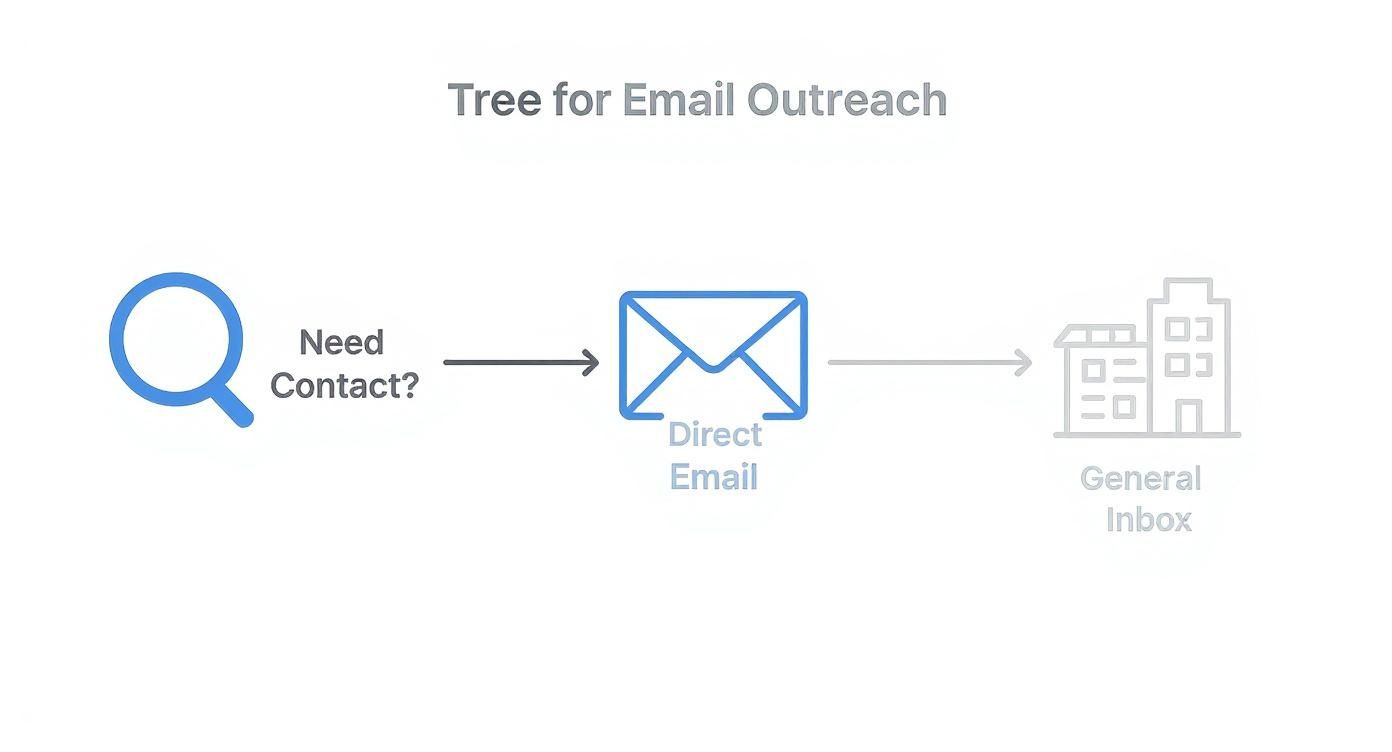
    Infographic about how to find a company email address

    The takeaway here is simple: if you have a specific person in mind, go for their direct email. But if you come up empty-handed after a quick search, a general inbox is a perfectly good fallback. If you want to get more advanced with this, our guide on how to find an email address from a website has a few more tricks up its sleeve.

    Harnessing Social and Search Power

    If the company website is a dead end, don't worry. Your next move is to hit the professional networks and fire up your search engine skills. LinkedIn is an absolute must-have, not just to confirm someone's name and title, but also to spot hidden clues.

    A lot of pros put their email right in the "Contact Info" section of their LinkedIn profile. Some even drop it into their summary to make it easy for people to reach out.

    And never, ever underestimate a well-crafted Google search. Using the right search operators can help you dig up email addresses that Google has indexed but aren't obvious on the company's site.

    Pro Tip: Try combining a person's name and company with common email patterns in your search. For instance, a search like "Jane Doe" AND "Acme Inc" AND (email OR contact) can often pull up their details from a third-party site, like a conference speaker bio.

    Another surprisingly effective trick is to search for a potential email address in quotes, like “jane.doe@acmeinc.com”. This tells Google to find that exact phrase. If it pops up anywhere online, you’ve hit the jackpot. It can feel like a long shot, but when this works, it’s one of the fastest ways to confirm a company email without any special tools.

    Using Email Finder Tools for Rapid Results

    So, you’ve hit a wall with the manual methods. It happens. When digging through websites and social profiles turns up nothing but dead ends, it’s time to bring in the technology.

    This is where email finder tools shine. These are specialized platforms and browser extensions built for one purpose: to unearth professional email addresses in seconds. For anyone in sales, marketing, or business development, they're an absolute game-changer, saving you from hours of tedious digital detective work.

    They work their magic by crawling the web, cross-referencing massive contact databases, and using smart algorithms to predict the most common email patterns at a specific company. This turns a frustrating, manual search into a single click.

    Choosing the Right Tool for Your Workflow

    The market is packed with great options, but they aren't all created equal. Some are designed for nabbing individual emails on the fly, while others are built to process huge prospect lists in bulk. Knowing the difference is key to picking the right one for your workflow.

    Here’s a quick look at some of the most popular choices out there:

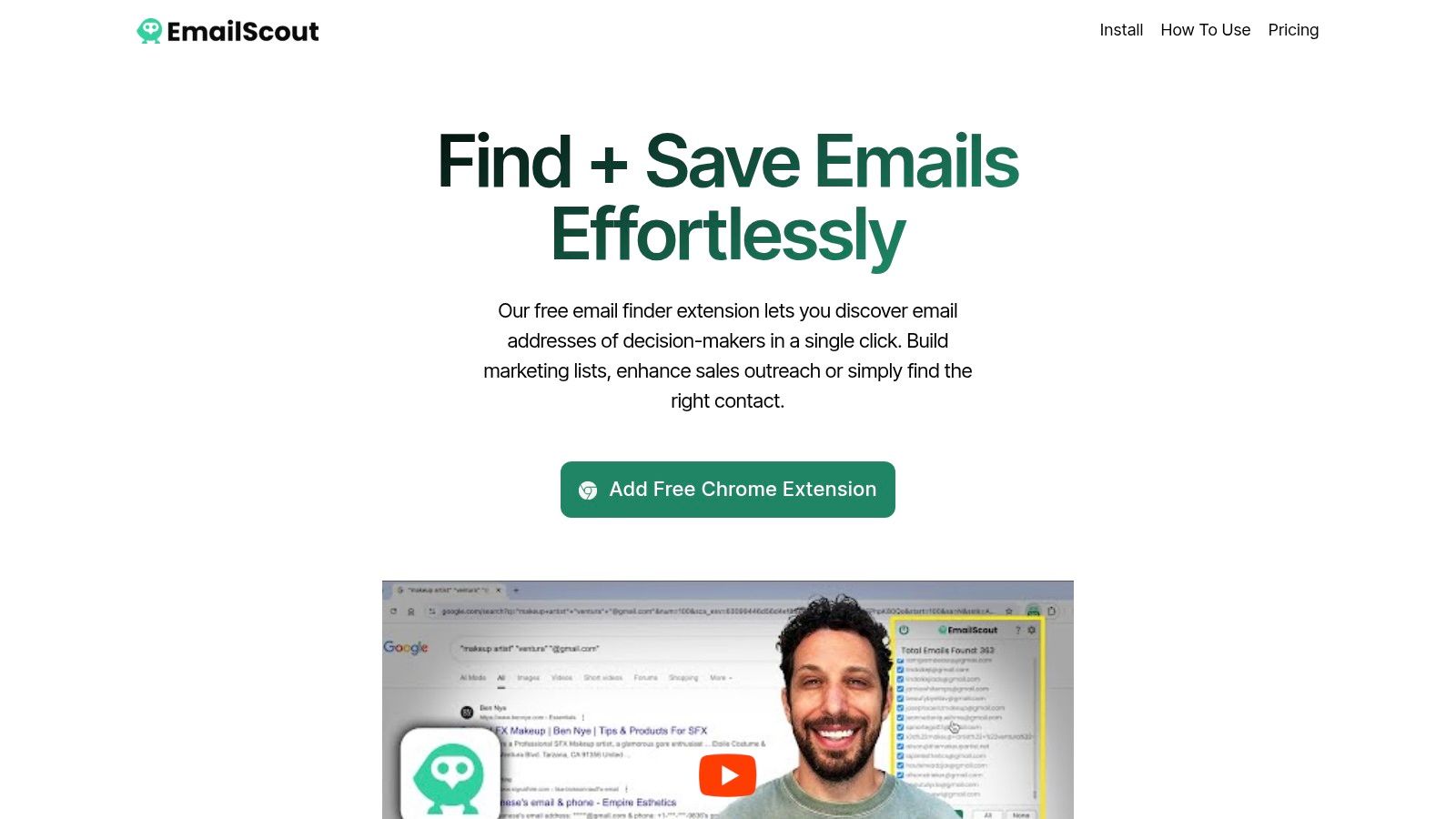
    • EmailScout: Perfect for anyone who needs a powerful, free solution. The Chrome extension lets you grab emails with one click directly from websites and LinkedIn profiles. Its AutoSave feature is also great for building lists as you browse.
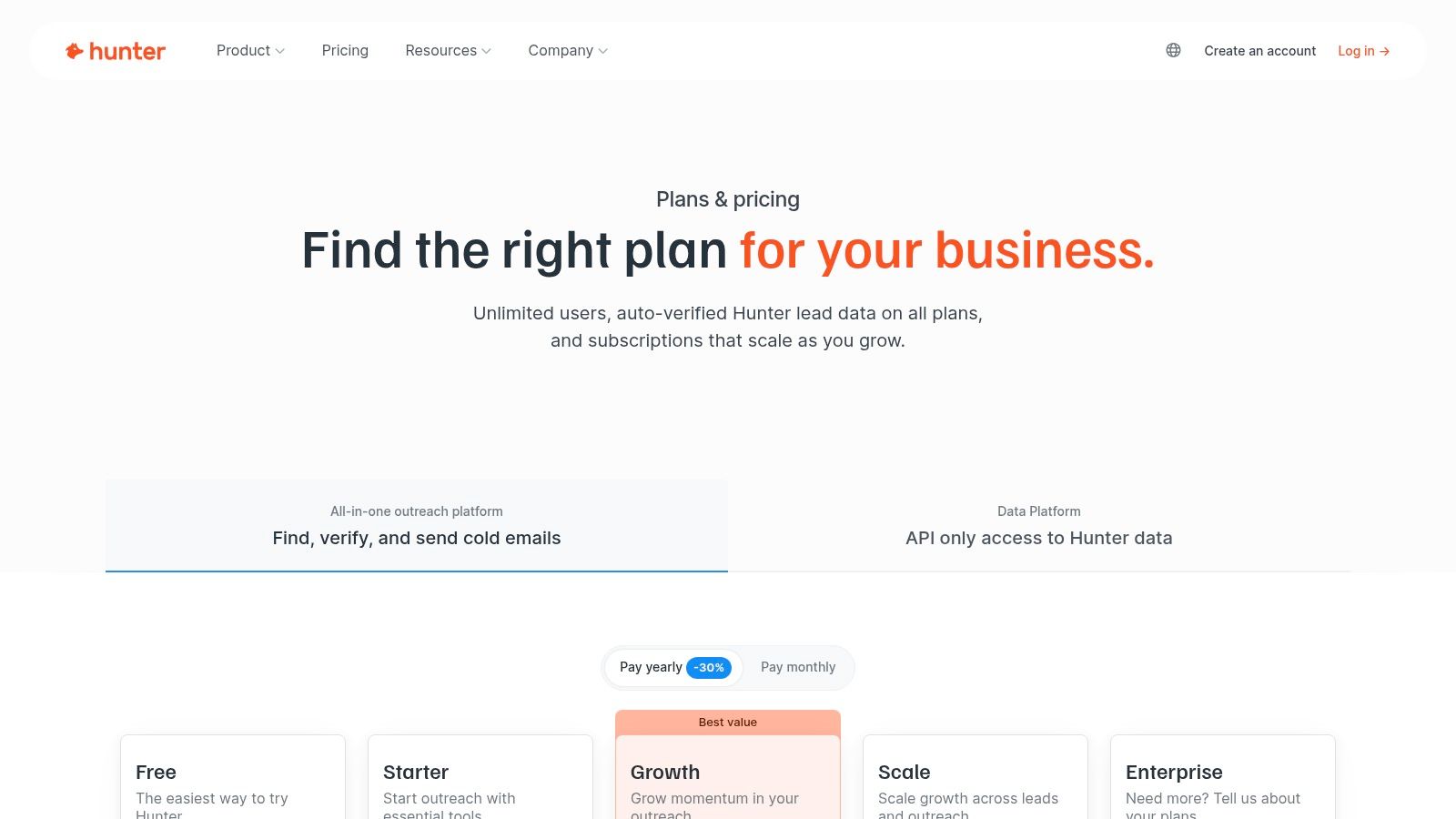
    • Hunter.io: A veteran in the space, known for its killer Domain Search feature. This shows you all the known email addresses tied to a company's website, which is incredibly useful for mapping out entire departments.
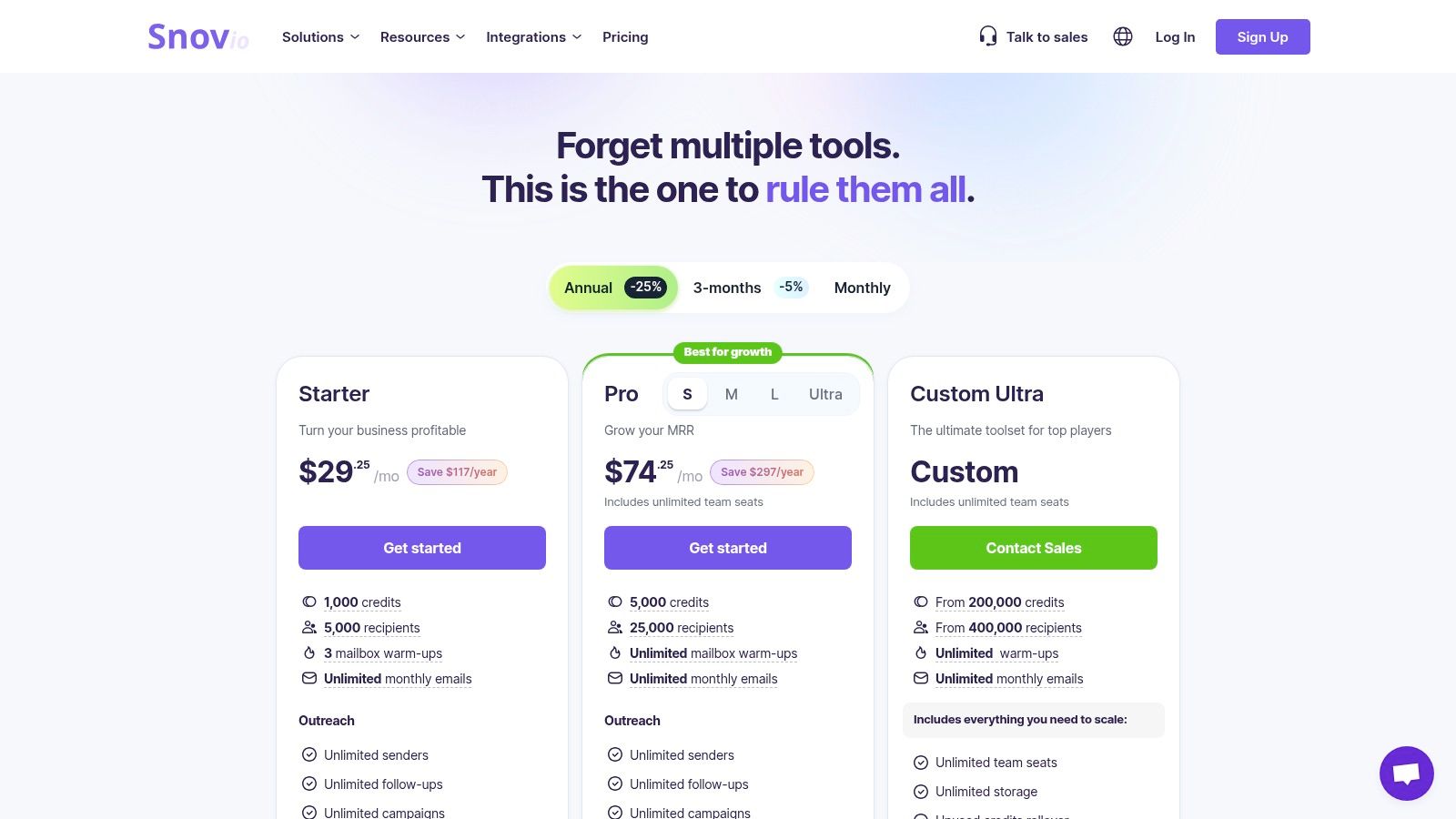
    • Snov.io: This one bills itself as an all-in-one cold outreach platform. It combines an email finder with a verifier and a campaign sender, making it a solid choice for teams that handle the entire outreach process from start to finish.

    These tools aren't just about finding an address; they’re about speed and scale. They empower a single person to accomplish in minutes what would have taken a team hours to do manually.

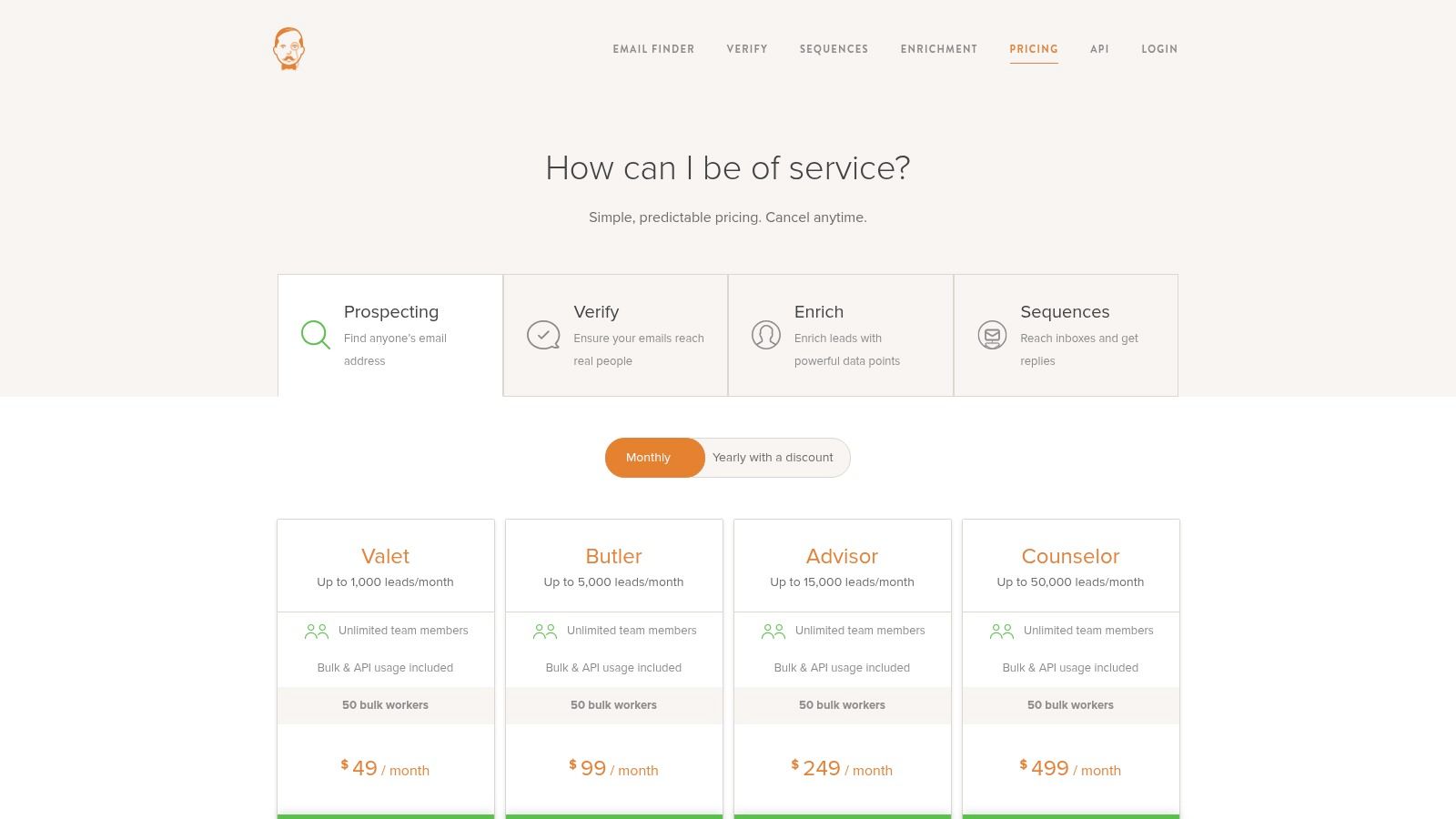
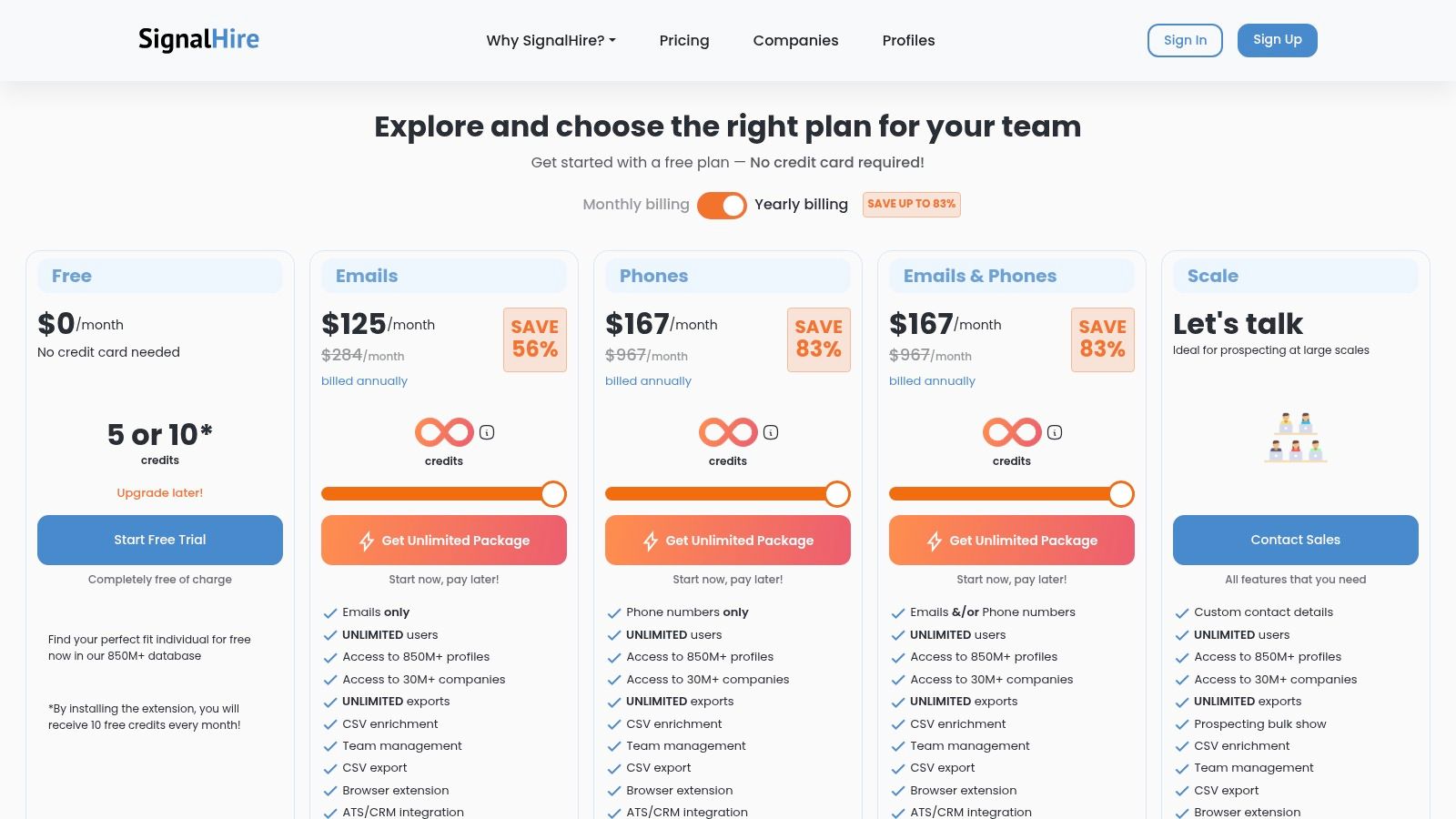
    When you're trying to decide, think about things like accuracy rates, how many free searches you get each month, and whether it integrates with your CRM or other sales tools. To help narrow it down, check out this detailed comparison of the best email finder tools available today.

    A Look at Email Finders in Action

    Let's say you need to contact the marketing manager at a hot new tech startup. With an extension like Hunter.io installed, you just head over to the company’s website and click the little extension icon in your browser.

    Instantly, the tool pops up a list of publicly found emails linked to that domain. It often even sorts them by department and, most importantly, reveals the company's most common email pattern. This not only helps you find your target contact but also gives you the formula to accurately guess other emails at that company.

    These tools are a massive upgrade to your strategy for how to find a company email address.

    The Art of the Educated Guess

    Sometimes, the best tool for finding an email address isn't a complex piece of software—it's just a bit of logic. Most companies, from tiny startups to massive corporations, use a standardized pattern for their email addresses. If you can crack that code, you can figure out just about anyone's email.

    Your starting point is finding a single, valid email address from your target company. This could be from a press release, a team member's LinkedIn, or an old email thread. Think of this one email as your Rosetta Stone; it’s the key to deciphering the entire organization's email structure.

    A person connecting puzzle pieces, symbolizing the process of figuring out an email pattern.

    Uncovering Common Email Patterns

    Once you have a name and a confirmed email, you can work backward to find the pattern. For instance, if you know John Smith's email is jsmith@acme.com, you’ve likely found the formula: first initial + last name.

    Thankfully, most businesses stick to just a handful of common formats. This predictability is your secret weapon.

    • First Initial, Last Name: jsmith@company.com
    • First Name Only: john@company.com
    • First Name, Last Name Initial: johns@company.com
    • Full Name with a Dot: john.smith@company.com
    • Full Name with an Underscore: john_smith@company.com

    This isn't by accident. With nearly 4.5 billion global email users, companies need simple, predictable formats to manage communications. That makes email one of the best channels for outreach—in fact, 60% of consumers prefer brands contact them via email. If you want to dive deeper, you can explore the latest email marketing statistics to see just how powerful it is.

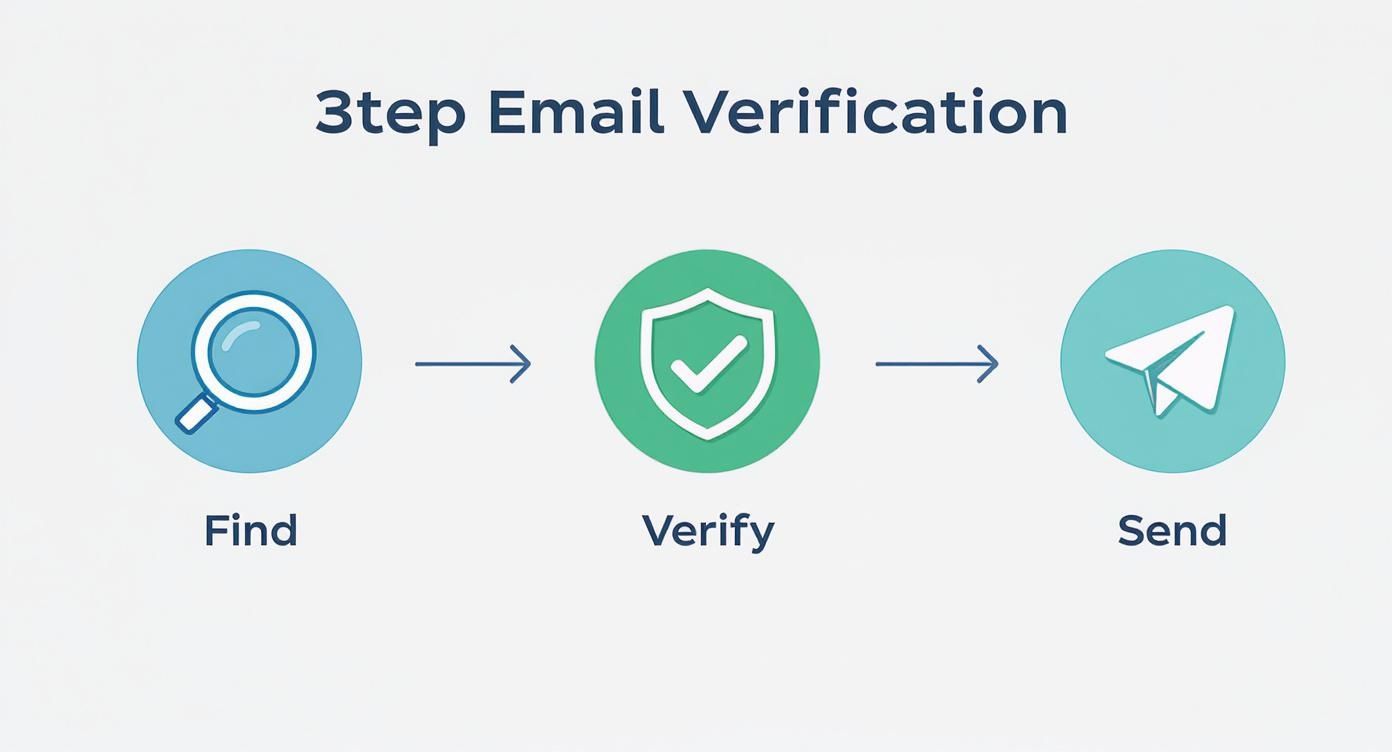
    Hold on, though. The goal isn't to blast every possible combination with emails. The smart move is to generate a list of the most likely variations, then use an email verification tool to see which ones are valid—all without ever hitting "send."

    Generating and Testing Permutations

    Let's say you're trying to reach Sarah Connor at cyberdyne.com. You can start building out the possibilities. And you don't have to do it by hand.

    There are plenty of free online tools known as email permutation generators that will do the heavy lifting for you. Just plug in the first name, last name, and domain, and they’ll spit out a comprehensive list in seconds.

    Your list might look something like this:

    1. sarah.connor@cyberdyne.com
    2. s.connor@cyberdyne.com
    3. sarahc@cyberdyne.com
    4. sconnor@cyberdyne.com

    The final step is crucial: run that list through a free email verifier. These tools will ping the company's server (without sending an email) to check which addresses actually exist and which will just bounce back.

    This two-step process—generate, then verify—is a surprisingly powerful and cost-effective way to turn a wild guess into a confirmed contact.

    How to Verify Emails and Protect Your Reputation
    A shield icon with a checkmark, symbolizing email verification and sender reputation protection.

    Finding what you think is the right email address is a good first step, but your work isn't done. Sending a message to an invalid address isn't just a waste of time—it can actively wreck your sender reputation.

    When your emails bounce, providers like Gmail and Outlook take notice. A high bounce rate is a huge red flag that you might be a spammer, which means your future emails are more likely to get buried in the junk folder or blocked entirely.

    This is exactly why email verification is a step you can't afford to skip. It's the final quality check that makes sure your messages actually land in someone's inbox. A clean email list is everything.

    Understanding Email Verification Statuses

    When you run an email through a verification tool, you'll get more than just a simple "good" or "bad." The status tells you exactly how you should proceed.

    • Valid: This is your green light. The email server confirmed the address exists and is ready to receive mail. You're good to go.
    • Invalid: This one's a dead end. The address is no good, and sending to it will cause a hard bounce. Get it off your list immediately.
    • Catch-All (or Risky): Here's where things get tricky. A catch-all server accepts email for any address at that domain, so it's impossible to know for sure if your contact's inbox is real. Some might be fine, but you're taking a chance.

    Sending to a catch-all address is a calculated risk. If it's a high-value contact, maybe it's worth the gamble. But for any kind of bulk campaign, you're much safer sticking to the addresses confirmed as valid.

    Tools for Reliable Email Verification

    There's no practical way to check emails by hand, which is where dedicated verification services come in. These tools ping email servers to check an address's status without actually sending an email, protecting your reputation while confirming if it's deliverable.

    To keep your sender score high and ensure your emails get through, integrating with reliable email verification services like Briteverify is a smart move.

    Another great approach is to use a tool that finds and verifies emails. Many modern email finders have this built-in, but for a more detailed breakdown, our guide on how to validate an email address covers more specialized options.

    Go Beyond Verification with Data Enrichment

    Once you've confirmed an email is valid, you can really elevate your outreach with data enrichment. This process takes a single data point—like an email address—and uses it to find and add other valuable information. Think job titles, company size, social media profiles, and even location.

    This extra context turns a simple email address into a detailed professional profile. Now, instead of a generic "Hi there," you can personalize your message with details relevant to their specific role or company. This small step can dramatically improve your response rates and turn a cold outreach into a real conversation.

    Turning Your Found Email into a Real Conversation

    So you did it. You found a verified email, and that’s like getting a key to a locked door. But here's the thing: now you have to actually turn that key. The final, most important step is writing an outreach message that gets opened, read, and—most importantly—replied to. This is where your digital detective work becomes a real professional connection.

    This isn’t about blasting out generic templates. Effective outreach is built on genuine personalization. It means going way beyond simple mail-merge fields like [First Name] and showing you’ve actually done your homework. A quick mention of a recent project they led, a company announcement you saw, or a shared connection can instantly set you apart from the dozens of other emails clogging their inbox.

    Crafting a Message That Resonates

    The goal here is simple: provide value, don't just ask for something. Your opening line should immediately show that you understand their world. Frame your message around their needs, challenges, or recent wins before you even think about introducing your own agenda.

    Here are a few ways to approach it:

    • For a Sales Inquiry: Don't lead with your product. Mention a recent company milestone instead. Something like, "Congrats on the successful product launch—I imagine scaling your support team is a top priority right now."
    • For a Networking Request: Pinpoint a specific piece of their work that caught your eye. "I was really impressed by your talk on sustainable logistics at the recent trade show…"
    • For a Partnership Proposal: Connect what you do directly to their stated goals. "I saw your company is expanding into the APAC region, and our distribution network there could help you accelerate that timeline."

    Inbox competition is fierce. The average cold email open rate has dropped to around 27.7%, with replies hovering at a mere 5.1%. But here’s the good news: well-targeted and personalized messages can completely flip those numbers, hitting open rates over 50% and replies between 15-25%. It proves that how you use the email matters just as much as finding it in the first place. You can find more B2B cold email statistics on martal.ca.

    Maintaining Ethical and Legal Standards

    All that hard work goes down the drain if your email gets flagged as spam or, worse, violates regulations. Ethical communication isn't just a nice-to-have; it's a legal requirement that protects your sender reputation and keeps your business compliant.

    Knowing the rules is non-negotiable. Two key regulations you absolutely need to be aware of are:

    1. CAN-SPAM Act: This US law sets the rules for commercial email. The big takeaways? You must provide a clear way for people to opt out and include your valid physical postal address. No exceptions.
    2. GDPR (General Data Protection Regulation): If you're contacting anyone in the European Union, you must have a lawful basis for processing their personal data—which includes their email address.

    These rules all boil down to transparency and consent. Be upfront about who you are and why you're reaching out, and make unsubscribing effortless. To make sure your outreach lands well, using resources like professional email response templates can give you a solid foundation.

    When you combine a verified email with a thoughtful, compliant, and personalized message, you give yourself the best possible chance of starting a real dialogue.


    Ready to stop guessing and start connecting? EmailScout's powerful Chrome extension helps you find verified emails from websites and LinkedIn in a single click, so you can focus on crafting the perfect outreach message. Find unlimited emails for free with EmailScout.
  • How to Look Up Emails and Find Anyone Fast

    How to Look Up Emails and Find Anyone Fast

    Knowing how to track down an email isn't just a technical skill—it's your direct line to real opportunities. When you can bypass a generic contact form and land your message directly in a decision-maker's inbox, you accelerate everything. Sales deals, job interviews, career-changing mentorships… they all start with a direct connection.

    This is about creating meaningful conversations that truly open doors.

    Why Finding the Right Email Is a Superpower

    In a world filled with digital noise, a direct email cuts through. It sidesteps gatekeepers and automated systems, placing your message right in front of the one person who needs to see it.

    Think of it this way: you can either leave a note on a company’s public bulletin board or you can slide a personalized letter under their office door. One gets lost in the crowd; the other commands attention. This skill is the foundation of any effective outreach, whether you're a sales pro chasing a lead, a marketer building partnerships, or a job seeker targeting your dream role.

    The Power of a Direct Connection

    A direct email feels personal because it is. It shows you’ve done your homework and value the recipient's time enough to seek them out. This simple act of preparation can make a huge difference in your response rates. It’s not just about finding an address; it’s about earning the right to start a conversation.

    This is a core component of broader initiatives, like building out effective strategies for business lead generation.

    A targeted email to the right person is infinitely more powerful than a hundred emails to the wrong ones. It’s the foundation of every successful outreach campaign I've ever run.

    To understand why this is so critical, let's look at a quick comparison.

    Direct Email vs Generic Contact Form: A Quick Comparison

    Metric Direct Email Generic Contact Form
    Recipient Directly reaches the intended person. Routed through a general inbox or CRM.
    Personalization High. Tailored to a specific individual. Low. Generic and impersonal.
    Response Rate Significantly higher. Often very low or non-existent.
    Delivery Speed Instant. Can be delayed by hours or days.
    Follow-Up Easy to track and follow up directly. Difficult or impossible to follow up.
    Impression Shows initiative and professionalism. Seen as low-effort and automated.

    The takeaway is clear: for any communication that matters, a direct email is non-negotiable. It’s the difference between a real conversation and a message in a bottle.

    Navigating a World of Digital Communication

    The scale of email is just staggering. The global user base is on track to hit 4.83 billion people by 2025. On any given day, an estimated 376.4 billion messages are sent and received.

    This massive volume cements email as the undisputed center of the professional world. It also means your ability to find the right address is more valuable than ever. If you want to dive deeper into the numbers, you can explore more data on global email usage in this detailed statistics report.

    Alright, let's move from theory into practice. Your main weapon in the hunt for emails is going to be a dedicated finder tool. I'm not just talking about a piece of software with a bunch of features; I'm talking about building a fast, efficient workflow. The whole point is to go from "I need this person's contact info" to having their verified email in just a few seconds.

    The first move is simple: install the EmailScout Chrome extension. Once it's living in your browser, it becomes part of your natural prospecting rhythm, whether you're browsing a company's website or scrolling through LinkedIn.

    Finding Contacts Directly on a Website

    Let's say you're trying to reach the Head of Marketing at a company you're targeting. Forget digging around for a generic "contact us" form. This is where your new tool proves its worth right away.

    Just head over to the company's homepage. With the extension running, you can fire off a domain search. It'll immediately get to work, scanning for any publicly available emails and figuring out the common email patterns for that company.

    Suddenly, a simple website visit becomes an active lead-gen session. The tool will pop up a list of potential contacts—names, job titles, and, of course, their likely email addresses. It's a world away from the old-school method of just guessing.

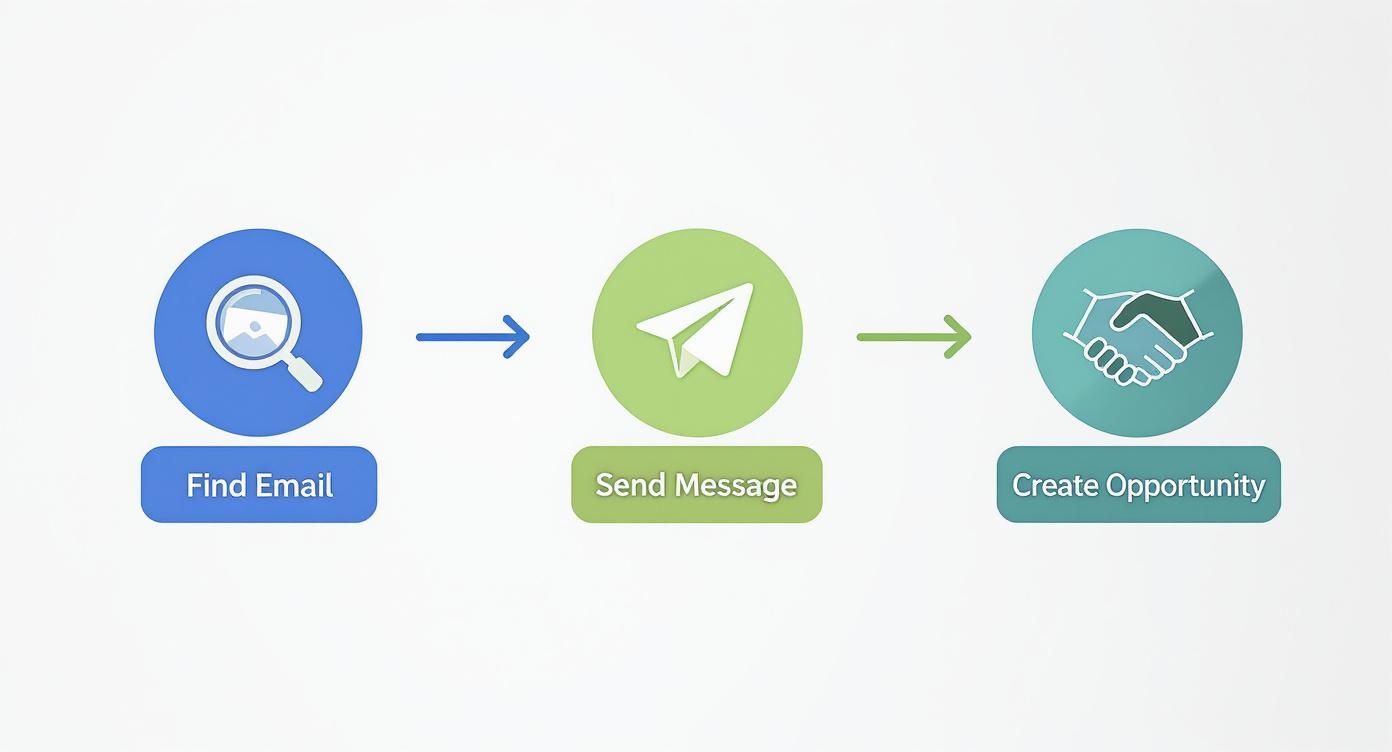
    This simple flow—find an email, send your message, create an opportunity—is the absolute core of effective outreach.

    Infographic about how to look up emails

    As you can see, locking down the right contact is the first and most critical domino to fall. It's what kicks off the entire process of outreach and building a real business relationship.

    Using Social Profiles for Targeted Searches

    Now, let's get more specific. You’ve zeroed in on one particular person on LinkedIn—maybe it's the VP of Sales you've been wanting to pitch. This is where a good extension is truly magical.

    When you're on their LinkedIn profile, the extension will light up, ready to find that person's email with a single click. It instantly cross-references their name and company with its database to pull the most probable address.

    That immediate access is a massive time-saver. No more juggling a dozen tabs or bouncing between different services just to track down one person's contact info.

    The real game-changer with a dedicated email finder is how fast and integrated it is. It lives right where you're already working—on websites and professional profiles—and turns passive browsing into active opportunity hunting.

    Of course, not every tool is built the same. If you're weighing your options, our guide on choosing the https://emailscout.io/best-email-lookup-tool/ breaks down exactly what you should be looking for.

    Interpreting Confidence Scores and Verification Status

    Finding an email is only half the job. Knowing if it will actually land in their inbox is what really counts. EmailScout gives you confidence scores with simple color-coding to help you make the right call.

    Here’s a quick rundown of what you’ll see:

    • Green (Verified): This is the go-ahead. The tool has confirmed the email is active and receiving mail. These contacts should be your top priority.
    • Yellow (Risky/Accept-All): This means you're dealing with a "catch-all" server. The domain accepts any email sent to it, so the tool can't be 100% sure this specific inbox exists. Handle with care.
    • Red (Invalid): Stop. Do not send an email to this address. It's confirmed to be invalid and will bounce, which is bad news for your sender reputation.

    Once you’ve found a high-confidence email, you can save it directly to a prospecting list inside the tool. This keeps all your contacts organized and prepped for your next campaign. After you've built a solid list, the next step is reaching out effectively. To get your messaging and campaigns dialed in, you might want to explore some of the top email outreach tools available.

    Even with the best tools, sometimes you need to go old-school. Think of it as your backup plan—a little manual detective work for those hard-to-find contacts when automated searches hit a wall.

    It's surprising how often the simplest approach works. We'll start with the art of the educated guess, which is way more science than you'd think once you learn the common email patterns companies rely on.

    A person using a magnifying glass on a computer screen, representing a manual search for information.

    Master Common Email Patterns

    Most companies don't get creative with their email addresses; they follow a predictable formula. If you've got a contact's first name, last name, and their company's domain, you can often pinpoint their email just by testing a few standard variations.

    I've seen these patterns work time and time again:

    • First Initial + Last Name: jdoe@company.com (for Jane Doe)
    • First Name . Last Name: jane.doe@company.com
    • First Name Only: jane@company.com (This is more common in smaller startups)
    • Full Name, No Separator: janedoe@company.com

    You can quickly test these combinations with an email verifier or even just by sending a simple, well-written email and seeing if it bounces. For a deeper dive, our guide on how to look up email addresses for free covers even more patterns and tricks.

    Use Advanced Google Searches

    Google is way more than a search engine; it's a powerful reconnaissance tool if you know the right commands. Using advanced search operators helps you cut through the digital noise and zero in on email addresses that are technically public but buried deep online.

    These little commands, often called "dorks," let you narrow your search to specific websites or even file types where contact info loves to hide.

    By combining operators, you're essentially telling Google, "Don't just search the web; search this specific corner of it for this exact piece of information." It turns a broad search into a precision strike.

    For example, you could hunt for a PDF on a company's site that might list contacts, like a press kit or an old conference agenda.

    • site:company.com filetype:pdf "jane doe"
    • "jane doe" "head of marketing" email OR contact

    Another fantastic trick is to search professional networks where people often drop their contact details.

    site:linkedin.com/in "Jane Doe" "Company Name" email

    This tells Google to search only within LinkedIn profiles for your prospect's name, their company, and the word "email." It’s a great way to find a link to a personal portfolio or bio where they might list their address directly.

    Explore Less Obvious Digital Footprints

    Beyond the corporate website and LinkedIn, professionals leave breadcrumbs all over the internet. You just need to know where to look.

    Here are a few often-overlooked goldmines:

    1. Twitter Bios and Posts: Professionals, especially in marketing and tech, frequently put their email or a link to a personal site right in their Twitter bio. You can also use Twitter's advanced search to look for their name alongside terms like (at) or (dot), as people often write out their email this way to fool spam bots.
    2. Personal Blogs or Portfolios: A personal website is your best friend. Head straight for the "About" or "Contact" page. Most people who run their own site are happy to share their email for collaboration or inquiries.
    3. Author Pages: Has your prospect ever written for an industry publication? Check their author bio at the top or bottom of the article. Guest contributors almost always include an email or a link to their personal site to build their network.

    Verify Emails to Protect Your Sender Reputation

    Finding someone's email feels like a win, but it's really just the first play of the game. If you send a message to a bad address, it's not just a wasted effort—it actively damages your ability to reach anyone.

    Internet Service Providers (ISPs) are always watching. They track how many of your emails bounce, and a high bounce rate is a massive red flag.

    When your bounce rate starts to climb, ISPs label you as a low-quality sender. This tanks your sender reputation, making it much more likely that all your future emails, even the ones to perfectly good addresses, will end up in spam or get blocked completely. In the worst-case scenario, your entire domain gets blacklisted, effectively shutting down your email outreach.

    Understanding Verification Statuses

    Email verification is your insurance policy against this. It goes way beyond just checking for an "@" symbol; a proper verification tool confirms that an inbox is real, active, and ready to receive mail.

    When you check an address, you'll usually get one of these results:

    • Valid: This is your green light. The email server has confirmed the address exists. These are the contacts you should prioritize immediately.
    • Invalid: Stop right here. The server confirmed this address doesn't exist. Sending to it will cause a hard bounce, the most damaging kind for your reputation. Delete these from your list.
    • Accept-All (or Catch-All): This one's a bit of a gamble. The company’s server is set up to "catch" all emails sent to their domain, which means a verifier can't be 100% sure if the specific inbox is real. These are risky and have a higher chance of bouncing.

    Think of email verification as quality control for your outreach list. A clean, verified list ensures your messages actually get delivered, protects your reputation, and ultimately leads to better engagement.

    Why Verification Is Non-Negotiable

    The average person gets hammered with 100 to 120 emails every single day, and an astonishing 99% of users check their inbox daily. Your message is already fighting for a sliver of attention. Sending to unverified addresses is like trying to compete with one arm tied behind your back.

    The best strategy is to focus all your initial energy on the 'Valid' emails. For the 'Accept-All' addresses, you could try sending a small, highly personalized test campaign to see how they perform before adding them to a larger send.

    To get started, it's helpful to see how you can validate an email address with a reliable tool. This simple step protects your most valuable asset in email outreach: your ability to consistently reach the inbox.

    Ethical Outreach After You Find the Email

    A person writing a thoughtful email on a laptop, with a warm and professional office setting in the background.

    Okay, you've found the email address. That's the easy part. Now comes the real work: turning that contact information into a meaningful conversation.

    Getting someone's email gives you a direct line, but it doesn't automatically grant you their attention. The goal here isn't to just fire off messages and hope for the best; it's about starting a professional relationship on the right foot.

    Your first email is a critical moment that sets the tone for everything that follows. A lazy, generic message gets you ignored, marked as spam, or worse—it can burn a bridge with a valuable contact for good.

    Crafting a Compelling First Impression

    Your subject line is everything. It's the gatekeeper that decides whether your email gets opened or immediately trashed. Forget the generic, clickbait-style phrases and get straight to providing context and value.

    Instead of a vague subject like "Quick Question," try something that shows you've actually done your homework. For instance, "Loved your recent talk on SaaS growth" or "Idea regarding your new project management feature" instantly tells the recipient this isn't a blast email. It's personalized and relevant to them.

    The best cold emails don't feel cold at all. They feel like the start of a genuine conversation, sparked by shared interests or mutual professional respect. Personalization is the key that unlocks that feeling.

    Once they open it, respect their time. Keep it brief. A good rule of thumb is to write your email, then figure out how to cut it in half. Get to the point quickly, say who you are, why you're reaching out, and what's in it for them. A long, rambling email is a one-way ticket to the trash folder.

    Do's and Don'ts for Ethical Emailing

    Building a solid reputation, one email at a time, requires discipline. The line between being persistent and just being annoying is incredibly thin. Here’s a quick guide to staying on the right side of it.

    What to Do:

    • Mention a real connection. Reference a mutual acquaintance, a recent company win, or an article they wrote. This builds instant rapport.
    • Focus on their needs. Frame your message around a problem you can solve for them, not just a product you're trying to sell.
    • Have a clear, simple call to action. End with a single, easy-to-answer question like, "Is this something you’re currently focused on?"

    What to Avoid:

    • Using a fake name or misleading subject. This kills trust on arrival and runs afoul of regulations like the CAN-SPAM Act.
    • Sending rapid-fire follow-ups. Give people a few business days to respond before sending a gentle nudge. Anything more is just pushy.
    • Attaching unsolicited files. Never send attachments out of the blue. If you need to share something, provide a link instead.

    Ultimately, you want to be a welcome guest in their inbox, not an intruder.

    Still Have Questions About Finding Emails?

    Even with the best tools in hand, a few questions always pop up when you're digging for email addresses. Let's tackle the most common ones so you can move forward with confidence.

    Is It Actually Legal to Look Up Someone's Work Email?

    Yes, it's generally fine to find and use a professional email address you found publicly, as long as it's for legitimate business outreach. The act of finding the email isn't the problem.

    Where people get into trouble is how they use it. Your outreach has to comply with anti-spam laws, like CAN-SPAM in the US or GDPR in Europe. That just means you need to be transparent, offer something of value, and give them a clear, easy way to opt out of hearing from you again.

    How Accurate Are These Email Finder Tools, Really?

    The top-tier email finders are impressively accurate, but no tool is ever going to be perfect. Most of the leading services claim an accuracy rate somewhere between 85% and 98% for the emails they flag as 'verified' or 'valid'.

    That accuracy all comes down to the quality of their data and how smart their prediction algorithms are. This is exactly why you need a tool with a built-in, real-time verification feature. It lets you double-check an email's deliverability right before you send your message, which is crucial for protecting your sender reputation.

    An email finder suggests a probable address. A verifier confirms it's a deliverable one. If you care about your emails actually landing in the inbox, you can't skip that second step.

    What's an "Accept-All" Email Anyway?

    You've probably seen this one before. An "accept-all" or "catch-all" server is set up to receive any email sent to its domain, even if the specific user doesn't exist. For example, it will accept mail for random.name@company.com just in case. This setup makes it impossible for verification tools to know for sure if an inbox is real.

    Sending to these is a gamble because they have a much higher chance of bouncing later. I always recommend prioritizing contacts with a confirmed ‘valid’ status. It’s the best way to maximize your deliverability and make sure your outreach efforts aren't going to waste.


    Ready to stop guessing and start connecting? EmailScout gives you the power to find verified email addresses in seconds, right from your browser. Try EmailScout for free and supercharge your outreach today!

  • Email Extractor From Websites A Modern Guide

    Email Extractor From Websites A Modern Guide

    In a world drowning in digital noise, making a direct connection is everything. An email extractor from a website isn't just some niche gadget anymore; it’s a must-have for any modern sales, marketing, or recruiting team trying to build those connections without wasting time. It takes the soul-crushing work of manual research and turns it into a real strategic edge.

    Why You Need an Email Extractor for Websites

    A person using a laptop with icons representing email extraction and data analysis floating around it.

    Let's be real: hunting for email addresses one by one is a total time-sink. Picture your sales team, hours deep, clicking through "About Us" pages, staff directories, and ancient blog posts just to scrounge up a handful of contacts. That's not just slow—it's a recipe for mistakes and completely unsustainable if you're trying to grow.

    An email extractor just automates the whole thing. It zips through web pages, plucks out publicly available email addresses, and drops them into a clean, ready-to-use list. The whole process takes a fraction of the time. Moving from manual grunt work to smart automation is a complete game-changer.

    The Strategic Edge of Automation

    By putting email discovery on autopilot, you let your team focus on what they're actually good at: building relationships and closing deals. They can ditch the mind-numbing data entry and spend their time on high-value stuff like writing personalized outreach, running product demos, and actually talking to potential customers.

    This switch to automation unlocks some serious benefits:

    • Faster Lead Generation: You can build incredibly targeted prospect lists from industry directories, conference speaker pages, or even competitor websites in minutes, not days.
    • Sky-High Productivity: Your sales and marketing folks can seriously crank up their outreach volume without watering down the quality of their prospect lists.
    • A Real Competitive Advantage: While your competitors are stuck in the manual grind, your team is already connecting with decision-makers and kicking off important conversations.

    The real magic of an email extractor isn't just about finding emails. It's about buying back countless hours of lost productivity so your team can stop being data miners and start being relationship builders.

    The demand for these tools is exploding for a reason. The global email parsing software market, a big piece of this tech, is on track to hit $2.5 billion in 2025. It’s expected to keep growing at a Compound Annual Growth Rate (CAGR) of 15% all the way through 2033. That kind of growth tells you just how much businesses need to automate their data workflows. If you're curious, you can learn more about these market trends and what they mean for business automation.

    Finding Emails Without Automated Tools

    Before you jump straight to automation, learning to find emails by hand is a surprisingly powerful skill. It's the perfect play for those high-stakes projects where one accurate contact is worth more than a hundred generic ones. This is all about precision, not just volume.

    Think of it as digital detective work. Instead of casting a wide, impersonal net, you're on the ground, carefully following clues to find the exact person you need to reach. Honestly, this manual process gives you a much deeper understanding of your prospect’s organization along the way.

    Mastering Google Search Operators

    Your first stop is almost always Google, but I'm not talking about a basic search. Advanced search operators, sometimes called "Google dorking," are your secret weapon here. They let you slice through all the internet noise and pinpoint information that’s publicly available but often hidden from a normal search.

    The real magic happens when you start combining operators to create laser-focused queries. Let's say you're looking for the marketing director at a company called "Innovate Corp."

    You could try a search string like this:

    site:innovatecorp.com "marketing director" email

    This little command tells Google to search only within the innovatecorp.com website for pages that mention both "marketing director" and "email." It’s a simple but incredibly effective way to uncover contact pages or team bios that might hold the address you're after.

    Another great trick is to play the odds and guess common email patterns. Most companies stick to standard formats like firstname.lastname@company.com or firstinitiallastname@company.com. If you know the person's name is Jane Doe, you can search for those specific patterns.

    Give this a shot:

    site:innovatecorp.com "jane.doe@innovatecorp.com"

    Even if that specific email isn't listed outright, this search might just pull up a PDF document or an old press release where it was mentioned, instantly confirming the correct format.

    Exploring Company Websites and Social Profiles

    Company websites themselves are a goldmine, provided you know where to dig. You have to move beyond the main contact form and explore these often-overlooked pages:

    • About Us Pages: These frequently introduce key team members and sometimes, you get lucky with direct contact info.
    • Team Directories: Larger companies might have a full staff directory listing names and titles.
    • Blog Author Bios: If your target has written for the company blog, their bio at the end of the post is a prime spot for an email address.
    • Press Releases or Media Kits: These documents are made for journalists and often include direct contact details for media relations or marketing managers.

    The goal is to think like a journalist. Where would the company put contact information for specific, important inquiries? Following that logic often leads you straight to the right person.

    Professional social media profiles, especially on platforms like LinkedIn, are also worth a look. While you should never use automated tools to scrape these sites (it’s a big violation of their terms of service), you can absolutely check a person’s public profile manually. Many professionals list their work email right in their contact info to make business connections easier.

    For a few more tricks up your sleeve, our guide on how to find an email address from a website breaks down even more manual strategies.

    Putting Your Email Extraction on Autopilot

    When your lead generation needs to scale, manual searching just can't keep up. The time you spend digging through individual websites is time you aren't spending on outreach or closing deals. This is the moment to shift from manual work to smart automation with an email extractor from websites.

    Automated tools do the heavy lifting for you, scanning entire websites or even lists of URLs to pull together contact lists in minutes. We'll use a popular Chrome extension, EmailScout, as our case study to show you just how easy this process can be. It’s a practical way to get from zero to a qualified lead list without getting bogged down in technical details.

    Deciding between manual and automated methods often comes down to balancing precision with volume. If you're targeting a handful of high-value prospects, a manual approach makes sense. But for anything bigger, automation is your friend.

    Infographic about email extractor from websites

    As the decision tree shows, manual methods excel when precision is your top priority. For building larger lists quickly, however, automation is the clear winner.

    Still on the fence? Here’s a quick comparison to help you decide which email extraction method best suits your immediate needs, based on project scale, speed, and cost.

    Manual vs Automated Email Extraction at a Glance

    Factor Manual Extraction Automated Extraction (EmailScout)
    Speed Slow and methodical; minutes per contact. Extremely fast; hundreds of contacts per minute.
    Scale Best for small, highly targeted lists (1-20). Ideal for large-scale lists (100s or 1000s).
    Accuracy High, as each contact is individually verified. High, but may pull in some generic addresses.
    Effort Labor-intensive and requires focused attention. Minimal effort; runs in the background.
    Cost "Free" in terms of money, but costs significant time. Free and paid plans available to fit any budget.

    Ultimately, both methods have their place. But when you need to build a substantial list without spending days on the task, automation is the only practical choice.

    Getting Started with a Chrome Extension

    The first step is adding the tool to your browser. Most email extractors, including EmailScout, are found on the Chrome Web Store. A quick search is all it takes.

    Once you install it, the extension's icon will pop up in your browser's toolbar. That gives you one-click access to its features whenever you need them. The whole setup takes less than a minute.

    The real beauty of a browser extension is how it fits right into your existing workflow. You don't need to juggle different apps or tabs—the tool is always there, right where you're doing your research.

    With the tool installed, you're ready to put it to work.

    A Practical Extraction Scenario

    Let's walk through a real-world example. Imagine you're building a prospect list for a new marketing SaaS product. A great source for leads would be a directory of attendees from a recent industry conference. Manually copying hundreds of names and searching for their emails would take days.

    With an automated tool, the workflow is completely different.

    • First, navigate to the target page. Just open the conference directory webpage in your Chrome browser. This page might list speakers, sponsors, or registered companies.
    • Next, activate the extractor. Click the EmailScout icon in your toolbar. The extension immediately starts scanning the page's code for any email addresses.
    • Finally, review and export. Within seconds, the tool shows you a list of all the emails it found. You can quickly review the list, uncheck any irrelevant ones (like info@ or support@), and export your clean list as a CSV file.

    This simple process transforms a multi-day task into a five-minute job. The speed and efficiency are game-changing, especially when you need to build multiple lists for different campaigns.

    And for those times you've already copied a block of text and just need the emails out of it, a free email extractor online is perfect. Just paste your text and it pulls out the contacts instantly.

    Fine-Tuning Your Extraction Strategy

    While one-click extraction is powerful, the best tools give you more control to get even better results. They come with advanced features to refine your search and ensure you get the highest quality data.

    Consider these powerful options:

    • Bulk URL Extraction: Instead of visiting pages one by one, you can paste a list of URLs into the tool. It will then crawl all of them for you, compiling a master list of contacts from every site.
    • Domain-Level Search: Some extractors can search an entire domain for publicly listed emails, not just the single page you're on. This is perfect for uncovering contacts from various departments within a single company.
    • Auto-Save Functionality: You can set the tool to automatically save emails as you browse. As you click through different websites, it quietly collects contacts in the background, building a list without you having to do anything.

    By using these features, you move beyond simple page scraping and into a more strategic approach. You can build highly targeted, segmented lists based on specific industries or event attendee lists, setting your outreach campaigns up for much greater success.

    Keeping Your Data Clean and Your Outreach Ethical

    Pulling a massive list of emails can feel like you've struck gold, but that's really just the first step. A huge list is worthless if it's packed with bad addresses or if you use it the wrong way. The real work starts after you've gathered all that raw data.

    This is where data hygiene becomes everything. Think of it as quality control for your entire outreach strategy. If you skip this part, you're basically just shouting into the void and torpedoing your sender reputation with services like Google and Outlook.

    The Critical Role of Email Validation

    First thing's first: email validation. This is the process of scrubbing your new list to get rid of typos, old addresses, duplicates, and role-based emails like support@ that are dead ends for real conversations.

    When you send to invalid addresses, you get a high bounce rate. That's a huge red flag for email providers, who use it to spot spammers. A bounce rate over 2% can get your domain flagged, sending all your future emails straight to the spam folder. Good validation is your best defense.

    If you want to get into the nitty-gritty, we have a complete guide that shows you how to validate an email address and keep your sender score safe.

    The goal isn't just to send emails; it's to get them delivered and opened. A clean, validated list of 100 engaged contacts is infinitely more valuable than a sloppy list of 1,000 that gets you blacklisted.

    Navigating the Ethical and Legal Landscape

    Once your list is sparkling clean, you have to think about the ethics and legal rules of outreach. This isn't just about dodging fines—it's about building trust and starting valuable conversations instead of just sending more spam into the world.

    You have to be aware of the regulations that govern commercial email. The two big ones are:

    • GDPR (General Data Protection Regulation): This one's for EU citizens. It requires a legitimate reason for contacting someone and clear rules around consent.
    • CAN-SPAM Act: This is the U.S. law setting the rules for commercial email. It requires an obvious way for people to opt-out and truthful header information.

    To make sure your campaigns are on the right side of the law, it's smart to stay up-to-date on the latest email outreach compliance rules. This isn't formal legal advice, of course, but a responsible approach always includes personalizing your message, offering real value, and making your "unsubscribe" link impossible to miss.

    Turning Extracted Emails into Real Opportunities

    A person analyzing a sales funnel on a digital screen, with email icons flowing into it.

    So, you've used an email extractor from websites and now you're sitting on a fresh list of contacts. That's a great start, but it's just that—a start. A raw list of emails is pure potential, but it’s worthless until you plug it into a smart, actionable strategy.

    Let's bridge the gap between just having data and actually making money from it.

    The real magic happens when you segment that list. Don't just dump everyone into one big bucket. Group your new contacts by industry, their job title, or even the specific website where you found them. Why? Because generic email blasts are a one-way ticket to the spam folder, while targeted messages actually get replies.

    Crafting a Compelling First Impression

    That first email you send is your one shot to make a real connection. Forget about selling right away. Your only goal should be to offer undeniable value right out of the gate.

    Instead of a hard pitch, lead with a genuinely helpful resource, a sharp industry insight you know they'll care about, or a potential solution to a problem you suspect their company is facing.

    A first email that actually works usually includes:

    • A hyper-personalized opening line: Mention something specific you noticed about their company, a recent project, or their role. Prove you did your homework.
    • A clear value proposition: Get straight to the point. How can you help them? Focus on the benefits, not just your product's features.
    • A low-friction call-to-action: Don't ask for a sale. Suggest a quick 15-minute call to share an idea, or offer a useful resource with no strings attached.

    Your first contact should feel less like a sales pitch and more like the beginning of a helpful conversation. The objective is to build trust by demonstrating you understand their world before you ask for anything in return.

    After you've pulled the emails, the next move is figuring out how to generate B2B leads that convert. This knowledge is what turns a simple contact list into a powerful engine for business growth.

    Integrating Contacts into Your Workflow

    To keep those valuable leads from falling through the cracks, your very next step should be importing the list into your Customer Relationship Management (CRM) system. This is non-negotiable if you want to stay organized and track every interaction.

    Once they're in your CRM, you can tag contacts based on your segmentation plan, schedule follow-up tasks so nothing gets missed, and monitor how they're engaging with your outreach. This creates a system. It ensures every single email you extracted gets nurtured properly.

    In the end, turning a list of extracted emails into real business relationships is all about a thoughtful, organized, and value-driven approach. You're not just managing data; you're transforming a list of names into a pipeline of genuine opportunities.

    When you first start digging into email extractors, a few questions pop up almost immediately. It's totally normal. Getting the right answers upfront helps you build your lists confidently and make sure your outreach is both effective and above board.

    Let's clear up some of the most common ones I hear.

    The big one is always about legality. Here’s the deal: extracting email addresses that are publicly listed on websites is generally fine. The real question isn't about collecting the data, but how you use it. Any outreach you do has to play by the rules, like the GDPR in Europe and the CAN-SPAM Act in the U.S.

    The guiding principle is legitimate interest. You should only be contacting people with a relevant business reason, offering something of clear value, and always giving them a simple, obvious way to opt out. Just remember, this isn't formal legal advice—it’s always smart to check in with a legal pro for your specific situation.

    Technical and Practical Concerns

    Another common point of confusion is the difference between an email extractor and an email finder. They sound similar, but they do very different jobs.

    Think of it like this:

    • An Email Extractor is like a net. It scans a webpage and scoops up any email address it can find, like contact@company.com or info@business.net. It’s fantastic for grabbing a bunch of general contacts from a single source.
    • An Email Finder is more like a sniper rifle. You feed it a person's name and a company, and it hunts for that specific individual's email address, often by testing common patterns.

    So, extractors are for casting a wide net on a page, while finders are for zeroing in on a specific person.

    What about social media? I get asked all the time if you can pull emails from sites like LinkedIn. The short answer is a hard no. Trying to scrape social media platforms is a direct violation of their terms of service and a surefire way to get your account banned. Stick to company websites, blogs, and public directories where contact info is openly shared.

    The key takeaway is this: while tools can automate the grunt work of collecting public data, you are always responsible for using it ethically and legally. Focus on genuine outreach, not spam.

    Finally, how do you keep your cold emails from ending up in the spam folder? It all starts with a clean list. Before you send a single message, run your extracted contacts through an email validation tool. This scrubs out the bad addresses that lead to bounces, which can destroy your sender reputation.

    From there, it's all about personalizing your outreach, offering real value, and making your unsubscribe link impossible to miss.


    Ready to automate your lead generation the right way? EmailScout is the powerful yet easy-to-use email extractor from websites that helps you build targeted marketing lists in a single click. Start finding unlimited emails for free.

    Get Started with EmailScout for Free

  • How to Find Emails on LinkedIn A Practical Guide

    How to Find Emails on LinkedIn A Practical Guide

    When you're trying to find someone's email on LinkedIn, you've really got two paths you can take: the old-fashioned manual detective work or letting smart technology do the heavy lifting. The manual way means digging through their contact info section and maybe their company website. The faster route? Using a tool like the EmailScout Chrome extension to pull it up with a click.

    Why Finding Emails on LinkedIn Is a Game Changer

    Before we get into the how, let's talk about why this is such a valuable skill for any professional today. This isn't about finding new ways to spam people. It's about forging direct, meaningful connections that cut through all the digital noise. LinkedIn's InMail is fine, but a well-written email just feels more personal and almost always gets more attention.

    Shifting a conversation from a busy social platform to a professional inbox is a smart move for a few key reasons:

    • You Bypass the Clutter: Your message lands in their inbox, away from the constant barrage of connection requests, post notifications, and other distractions on LinkedIn.
    • You Own the Connection: An email address is a direct line you control. It's not dependent on LinkedIn's algorithm or platform changes, making it a permanent asset for your network.
    • It Shows Real Intent: Taking that extra step to find an email shows you’re genuinely interested and professional. That alone can make a huge difference in your response rates.

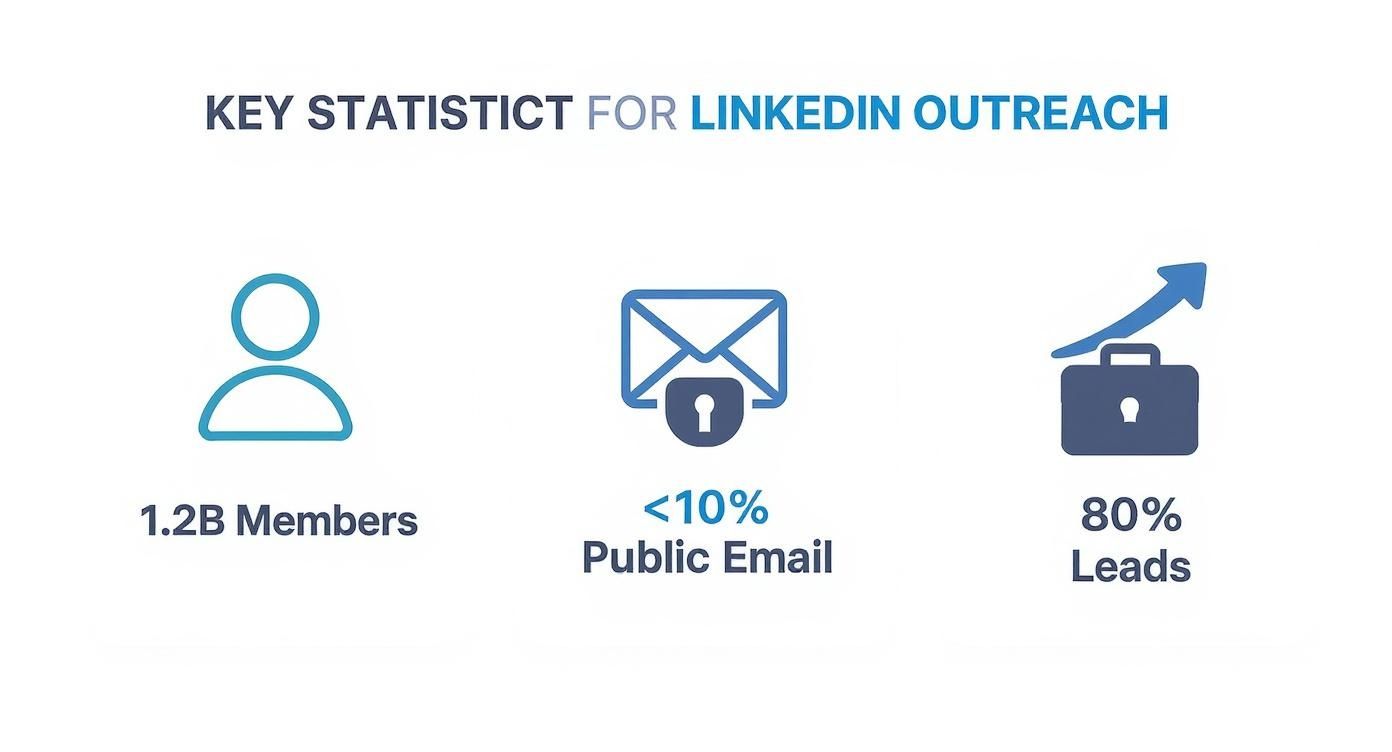
    This infographic really highlights both the challenge and the massive opportunity on the platform.

    Infographic showing LinkedIn has 1.2 billion members, but less than 10% of users display a public email, while 80% of B2B leads come from the platform.

    The data here shows a classic paradox: LinkedIn is the undisputed king of B2B leads, yet the vast majority of its users keep their contact details private.

    The Strategic Advantage of Email

    The numbers don't lie. With over 1.2 billion members, LinkedIn is the biggest professional playground on the planet. But here's the catch: studies show that less than 10% of profiles actually list a public email address. This reality forces us to get a little more creative, and that's where email discovery becomes an essential skill.

    The real magic isn't just in finding the email; it's about combining the rich professional context from LinkedIn with the direct, personal nature of email. You get deep insights and a private channel all in one.

    Even with its privacy focus, LinkedIn is where 80% of all B2B social media leads come from. That’s a staggering number that proves its value. When you successfully connect a LinkedIn profile to a verified email, you unlock a powerful multi-touchpoint strategy that blows single-channel outreach out of the water. If you want to dig deeper, you can learn more about the latest LinkedIn statistics and what they mean for your strategy. This approach turns a cold message into a warm, well-informed conversation.

    Clever Manual Techniques for Finding Emails

    While automated tools are fast, sometimes a little old-fashioned detective work is all you need. These manual tricks are free, surprisingly effective, and can help you track down almost anyone's email on LinkedIn without touching a third-party tool.

    Start with the Obvious: The Contact Info Section

    The first and easiest place to look is right on someone's profile. You'd be surprised how many people openly share their contact details to make networking easier.

    Just head over to their profile and click the "Contact info" link sitting right under their name and headline. A quick click often reveals their email, website, and maybe even a phone number. It’s a simple win that people often forget to check.

    Magnifying glass over a LinkedIn profile, symbolizing a manual search for contact information.

    Go Deeper Than the Profile Basics

    If the "Contact info" section is a dead end, don't give up. Plenty of users hide their email addresses in other spots on their profile. This is often a deliberate move to avoid automated scrapers while keeping the door open for real people who are paying attention.

    Your next stop should be the "About" section. Read through their summary carefully, because people often get creative with how they write out their email to fool the bots.

    Keep an eye out for patterns like:

    • john.doe [at] company [dot] com
    • jane (at) company.com
    • jane dot doe at company dot com

    This little trick works more often than you'd think, especially for consultants, freelancers, and founders who want you to reach out.

    A person's LinkedIn bio is a personal billboard. If they want to be contacted, they'll often leave clues for anyone willing to look closely. The key is to think like a human, not a machine.

    Tap Into Your First-Degree Connections

    One of LinkedIn's most powerful, and often overlooked, features is the data you can get from your direct connections. If your target is already a 1st-degree connection, you might already have their email without even knowing it.

    If you're looking to do a larger outreach campaign, a good first step is to learn how to export your LinkedIn connections. LinkedIn lets you request an archive of your data, which comes with a handy spreadsheet of your network.

    That file often includes the primary email address your connections used to sign up. It may not always be their professional email, but it's a fantastic starting point that costs you nothing.

    Play the Educated Guessing Game

    When the easy methods don't pan out, it's time to make an educated guess. The good news is that most companies use a standard format for their work emails. All you need is your contact's full name and their company's domain (company.com).

    From there, you can test out the most common patterns:

    • First Name: john@company.com
    • First Initial, Last Name: jdoe@company.com
    • First Name, Last Name: johndoe@company.com
    • First Name.Last Name: john.doe@company.com

    Once you have a few solid guesses, you can use an email verifier (we’ll get to that later) to see which one is correct. It takes a little trial and error, but this approach is a proven way to find just about any email on LinkedIn.

    When your manual detective work hits a dead end, it’s time to call in the tech. Email finder tools and browser extensions are designed to automate the whole discovery process, turning a tedious, multi-step search into a single click.

    https://www.youtube.com/embed/7iKvdmoOX6c

    Think of these tools as your personal research assistant. They plug right into your workflow and do the heavy lifting by cross-referencing massive databases and using smart algorithms to predict and verify professional email addresses.

    A perfect example is the EmailScout Chrome extension. When you’re on someone’s LinkedIn profile, the extension wakes up, scours its data for a match, and—if it finds one—serves up a verified email right on the page.

    How These Tools Work Their Magic

    At their core, these tools are masters of pattern recognition and data verification. They take a person’s name and company, then analyze the most likely email formats (like firstname.lastname@company.com or f.lastname@company.com).

    But they don’t stop there. The best tools then ping the company’s mail server to confirm the address is active without actually sending an email. It’s a slick, behind-the-scenes check.

    This process is incredibly efficient and has become a go-to for B2B teams looking for a direct line of communication. In fact, their usage has jumped by over 35% in recent years. With accuracy rates often clearing 70–80% for established companies, it’s easy to see why.

    Installing and Using EmailScout as an Example

    Getting an extension like EmailScout up and running is dead simple. It’s usually a two-click process from the Chrome Web Store.

    Here’s a look at the EmailScout extension page.

    Once it's installed, you’ll see the little EmailScout icon in your browser’s toolbar, ready for action.

    Actually using it is even easier:

    1. Head over to the LinkedIn profile of the person you’re researching.
    2. Click the EmailScout icon.
    3. The tool gets to work, analyzes the profile, and pops up with the email address it found.

    This seamless flow is what makes these extensions so powerful. You can build out an entire prospecting list on the fly without ever having to switch tabs, turning a static profile into a live, actionable lead.

    Choosing the Right Tool for Your Needs

    Of course, not all email finders are the same. The market is packed with options, from simple free tools to massive, enterprise-grade data platforms like ZoomInfo.

    For a deeper look into one of the big players, this a comprehensive guide to ZoomInfo's pricing and features is a great starting point.

    When you’re weighing your options, keep these key factors in mind:

    • Accuracy: How good is the data? Look for tools that offer real-time verification to avoid bounce-backs.
    • Integration: Does it play nice with LinkedIn, Sales Navigator, and your other sales tools?
    • Cost: Do you need a subscription for thousands of searches, or will a pay-as-you-go plan work better?
    • Compliance: Does the tool follow data privacy rules and respect LinkedIn’s terms?

    The best email finder isn’t just about finding an address. It's about finding the right address—one that's verified, actionable, and delivered in a way that fits your workflow. Always prioritize accuracy and ease of use.

    If you’re just getting your feet wet, checking out the best free email finder tool options is a smart move. It gives you a feel for how they work without any financial commitment.

    Ultimately, the right extension should feel like a natural part of your prospecting process—just a whole lot faster.

    Comparing LinkedIn Email Finder Approaches

    To put it all into perspective, let's break down how the manual methods we've discussed stack up against automated tools. Each approach has its place, and knowing when to use which can make all the difference.

    Method Pros Cons Best For
    Manual Search (Guess & Check) Completely free. Time-consuming; high chance of error. Finding a single, high-value contact when you have time.
    Company Website & Contact Page Often provides direct, verified info. Not scalable; many contacts aren't listed publicly. Small businesses or finding general inquiry emails.
    Email Finder Extensions (Automated) Fast and scalable; high accuracy rates. Most have credit limits or subscription costs. Building prospect lists, sales outreach, and recruitment at scale.

    While manual techniques have their moments, especially for a one-off search, nothing beats the efficiency of an automated tool when you need to build lists consistently. They handle the grunt work so you can focus on what really matters: connecting with people.

    You've done the detective work and found what looks like the right email address. But hold on—don't hit "send" just yet.

    Sending an email to a dead address is more than just a waste of time. It actively damages your sender reputation. When your messages bounce, email providers like Gmail and Outlook take notice. A high bounce rate is a huge red flag that you might be a spammer, and it's a fast track to getting all your future emails dumped in the junk folder.

    Verification is the crucial last step that ensures your outreach actually gets where it needs to go.

    An icon showing a checkmark inside an email envelope, symbolizing successful verification.

    Thankfully, you don't have to just cross your fingers and hope for the best. There are a couple of smart, simple ways to confirm an email is legit before you even think about writing your message.

    Use a Free Online Verification Tool

    One of the easiest and most reliable methods is to use a free online email verifier. These web-based tools are surprisingly powerful, running a whole series of background checks to see if an email address is active and can receive mail.

    All you have to do is copy and paste your guessed email into the tool. Within seconds, you'll get a status report, usually labeling the address as "valid," "invalid," or "risky." These tools are a must-have in any professional's outreach toolkit. If you want to dive deeper into the tech behind it, you can learn more about how to validate an email address and what makes these modern checkers so effective.

    A verified email isn't just about deliverability; it's a sign of professionalism. Taking a few extra seconds to check an address shows you respect both the recipient's time and your own sender score.

    Try the Gmail and Outlook Hover Trick

    Here's another great technique that costs nothing and uses the email client you already have open. This little trick is especially effective if your contact's company uses Google Workspace or Microsoft 365.

    It’s incredibly simple:

    1. Open a new email in Gmail or Outlook.
    2. Type the email address you found into the "To:" field.
    3. Now, just hover your mouse over the address. Don't click it.

    If that email is tied to an active Google or Microsoft account, a little contact card will often pop up with the person's name, profile picture, or even their job title. It's a quick, visual confirmation that you've got the right person.

    Watch Out for Catch-All Servers

    Every now and then, a verification tool will give you a "risky" or "accepts all" result. This usually means the company has set up a catch-all server. A catch-all is designed to accept email sent to any address at that domain, which means nothing will ever bounce back.

    While it makes it impossible to be 100% sure a specific inbox exists, it doesn't mean your guess is wrong. The email could still land in a general inbox or even get routed to the right person. It's just a slightly higher risk. You'll have to weigh how important the contact is before deciding to send your message.

    Staying Ethical and Following Best Practices

    Finding an email gives you a direct line to someone's professional life, and that power comes with responsibility. The whole point is to build relationships, not to get yourself blocked. That means respecting the platforms you use and, more importantly, the people you contact.

    For instance, LinkedIn’s terms of service are crystal clear: they strictly prohibit aggressive or large-scale data scraping. Trying to game the system can get your account flagged or even suspended. It's always better to use tools and methods that work with the platform, not against it.

    A person at a desk reviewing ethical guidelines on a computer screen, with icons for GDPR and CAN-SPAM.

    Navigating Data Privacy Laws

    Beyond just playing by LinkedIn's rules, you have to think about data privacy regulations like GDPR in Europe and the CAN-SPAM Act in the U.S. These aren't just polite suggestions—they are laws with serious teeth.

    Here’s a quick rundown of what they demand for professional outreach:

    • Be Transparent: Clearly state who you are and why you're reaching out. No hiding behind a vague subject line or a mysterious company name.
    • Provide Value: Your message needs to offer something relevant to the person you're emailing. A generic, copy-pasted sales pitch just doesn't cut it.
    • Offer an Easy Opt-Out: Every single email must include a clear and simple way for someone to unsubscribe from future messages. No questions asked.

    Getting these fundamentals right is non-negotiable. If you want to dig deeper, our guide on https://emailscout.io/lead-generation-best-practices/ lays out more detailed strategies for staying compliant and effective.

    The core principle of ethical outreach is simple: treat others' inboxes the way you'd want yours to be treated. Respect, relevance, and transparency are your best tools for building trust.

    Tailoring Your Approach

    How effective your outreach is also depends on who you're contacting. For example, professionals aged 25–34 make up a whopping 47% of LinkedIn’s user base—an audience that's generally pretty open to networking.

    But here’s the catch: only about 1% of active users share content weekly, and even fewer list their emails publicly. This means your strategy has to be precise.

    Privacy norms also change depending on where you are in the world. Professionals in North America are often more open to sharing contact details than their counterparts in regions with stricter privacy cultures. This just means what works for a contact in one industry or country might need a little tweaking for another.

    Common Questions About Finding Emails

    When you start digging for emails on LinkedIn, a few questions always pop up. It's totally normal to wonder about the rules, how reliable these tools are, and what to do when you hit a dead end. Let's clear the air so you can move forward with confidence.

    Is It Legal to Find Emails This Way?

    This is the big one, and the answer isn't a simple yes or no—it's layered. Whether it's legal to use an email you found on LinkedIn depends on where you are, where your prospect is, and what you're sending.

    Laws like GDPR in Europe and the CAN-SPAM Act in the U.S. have strict rules about commercial emails. The good news is that B2B outreach for a legitimate business interest is usually fine. The catch? You have to be transparent, offer real value, and give them an easy way to opt out. Always do your homework on the specific rules that apply to you.

    It's also worth noting that using aggressive scraping tools can get you in trouble with LinkedIn's terms of service, which is a separate issue from the law. You could face account penalties for that.

    The bottom line is this: finding the email is just the first step. It's how you use it that matters. Always lead with respect and give people a clear way out.

    How Accurate Are Email Finder Tools?

    A good email finder tool will usually hit an accuracy rate of 70% to 90%. The best ones get there by checking multiple public sources and running a quick verification in real-time to see if the email address is live.

    But nothing's perfect. Accuracy can dip for smaller companies, people with super common names, or businesses that use weird email patterns. That's why it's a smart move to run your list through a separate email verification service, especially before launching a big campaign. It's a simple step that protects your sender reputation by keeping your bounce rate low.

    What if I Still Can't Find an Email?

    So you've tried all the manual tricks and fired up a tool, but you're still coming up empty. Don't give up on the prospect just yet. It's just time to switch gears.

    Forget the email for a minute and go back to the source: LinkedIn itself.

    Send a personalized connection request that gets straight to the point about why you want to connect. If they accept, follow up with a short, value-packed InMail message. The goal is just to start a conversation right there on the platform. More often than not, if you build a little rapport first, they’ll be happy to share their email with you down the line.

    Can an Email Finder Get My Account Banned?

    There’s always a small risk when you use third-party tools, since LinkedIn’s user agreement technically forbids automated data scraping. But top-tier extensions like EmailScout are designed to fly under the radar. They do this by acting more like a human and putting reasonable caps on how many searches you can do at once.

    To play it safe, just follow a few common-sense rules:

    • Steer clear of bots that automate tons of profile visits or connection requests.
    • Don't go crazy with your daily email lookups. Keep it reasonable.
    • Only use trusted, high-quality extensions that are open about how they work.

    Stick with tools that play fair, and you can get the tech advantage without putting your account on the line.


    Ready to stop guessing and start connecting? The EmailScout Chrome extension gives you instant access to verified email addresses right on LinkedIn profiles. Find unlimited emails for free and build your prospect lists in a single click.

    Start Finding Emails for Free with EmailScout

  • how to find email addresses for a company: a practical guide

    how to find email addresses for a company: a practical guide

    Getting the right email address is the quickest way to kick off a meaningful conversation. From my experience, the most effective way to do this is by blending some old-school detective work with the power of modern tools like EmailScout. This combo approach is your best bet for finding accurate, verified contact info every single time.

    Your Game Plan for Finding Company Emails

    A person looking at a digital interface with profiles and data points, symbolizing the process of finding email addresses for a company.

    Knowing how to dig up company email addresses is more than just a neat trick—it’s a core skill for any effective outreach. Whether you're in sales, marketing, or biz dev, landing your message in the right inbox is ground zero for hitting your goals. Just guessing or sticking to one method usually ends in bounced emails and a lot of wasted time.

    The real key is having a system. It all starts with the basics, like spotting the common email patterns companies use, and it always finishes with the most crucial step: verification. This guide lays out a reliable framework that will take you from simple guessing games to a repeatable process for uncovering accurate contact information.

    Building Your Foundational Knowledge

    Before we jump into the specific tactics, let’s cover a few core ideas. Getting these down will make your search process way more effective.

    • Common Email Patterns: Most companies stick to a predictable formula for their employee emails. Think firstname.lastname@company.com or f.lastname@company.com. Recognizing these patterns is your first real clue.
    • The Power of a Blended Approach: The best results always come from mixing manual detective work with automated tools. Manual digging is perfect for those high-value targets, while tools give you speed and scale.
    • Verification Is Everything: An email you find is useless until it's verified. Firing off messages to bad addresses hammers your sender reputation and hurts your overall deliverability.

    This is huge, especially when you consider that 86% of business professionals still prefer email for business communication. With billions of inboxes out there, just understanding basic patterns can give you a massive advantage.

    Remember, the goal isn't just to find an email address—it's to find the right one. Your approach has to be both targeted and accurate, making sure your outreach hits the person who can actually make a decision. For more on this, check out our guide on how to identify a target audience.

    Email Finding Methods At a Glance

    To help you decide which strategy to use, here’s a quick rundown of the main approaches, what they're good for, and how they stack up.

    Method Best For Speed Accuracy
    Manual Search High-value, specific targets where accuracy is critical. Slow High
    Pattern Guessing Finding emails at companies with predictable formats. Moderate Varies
    Social Media Sleuthing Uncovering contacts for social-savvy professionals. Moderate Good
    Using EmailScout Scaling up outreach with fast, verified results. Fast Very High

    This table should give you a good starting point. For one-off, super important contacts, a manual search might be worth the time. But when you need to build a list of dozens or hundreds of leads, a dedicated tool is the only way to go. Ultimately, the best system often involves a mix of these methods.

    Mastering the Art of Manual Searches

    Before you even think about spending a dime on tools, a bit of clever detective work can often unearth the exact email address you need. Manual searching is a seriously underrated skill, but it consistently delivers the goods, especially for high-value targets. It's all about knowing where to look and how to connect the dots that most people miss.

    This approach is perfect when you need to find an email for a specific person with pinpoint accuracy. Think of it less like casting a wide net and more like a targeted investigation. You'll be using a combination of advanced search tricks and social media smarts to find that contact info.

    Leveraging Advanced Google Searches

    Your first stop should always be a well-crafted Google search. I'm not talking about basic queries here—advanced search operators are your secret weapon. These are just simple commands you can tack onto your search to filter the noise and find exactly what you're looking for.

    Try plugging these into Google:

    • (name) + email + (company name)
    • site:company.com + (name) + email
    • "(name)" + "contact" + site:company.com

    These searches basically tell Google to hunt for specific word combinations on a particular website. You’d be surprised how often this digs up staff directories, press releases, or author bios containing the exact email you need.

    Decoding Common Email Patterns

    Most companies don't get too creative with their email formats; they stick to a standardized pattern. Once you figure out that pattern, you can accurately guess the email of almost anyone at the company. This is a fundamental technique and a great starting point for anyone trying to find corporate emails.

    Here are the most common formats you'll run into:

    • First Name: john@company.com
    • First Initial, Last Name: jdoe@company.com
    • First Name, Last Initial: johnd@company.com
    • First Name.Last Name: john.doe@company.com

    If you can find just one employee’s email address—maybe from a press release or the "About Us" page—you've likely cracked the code for the entire organization.

    Pro Tip: Don't just guess one pattern and call it a day. I always create a short list of the top three or four most likely combinations. You can then use a simple verification tool to check which one is valid before you bother hitting send.

    Tapping into Professional Networks

    Professional networks are absolute goldmines for contact information. LinkedIn is the obvious heavyweight here and is incredibly valuable for confirming job titles, names, and even just checking the professional spelling of someone's name.

    Here’s a perfect example of a profile that gives you the key information needed to start your search.

    Screenshot from https://www.linkedin.com/

    This profile provides the person's full name and their current company—the two essential puzzle pieces for deducing their corporate email using the pattern-guessing method we just talked about.

    While most people don't list their email directly on their profile anymore, their activity can leave clues. Check out articles they've written or commented on; their contact info might be in an author bio. Combining the name and company from LinkedIn with the Google search techniques from earlier is a seriously effective strategy.

    Use Email Finder Tools to Work Smarter, Not Harder

    A sleek dashboard of an email finder tool on a laptop screen, showing profiles and verified email addresses, illustrating efficiency.

    Manually digging for emails has its place, especially when you need surgical precision for a handful of high-value contacts. But let’s be real—it just doesn't scale.

    When you're tasked with building a sizable contact list for a big sales campaign or a new marketing push, dedicated email finder tools become your secret weapon. They completely automate the discovery process, shrinking a task that could take days down to just a few minutes.

    These platforms are way more than just glorified search engines. They scan millions of public web pages, tap into professional databases, and use smart algorithms to figure out the correct email format for almost anyone at a specific company.

    The real game-changer is efficiency. Imagine finding 50 verified contacts in the time it would take you to manually hunt down maybe one or two. That’s the kind of leverage a tool like EmailScout gives you.

    How These Tools Find Emails at Scale

    The magic behind these platforms is their ability to churn through massive amounts of data and spot patterns with incredible speed. They aren't just guessing; they’re making highly educated predictions based on multiple data points.

    Here’s a quick look under the hood:

    • Public Data Aggregation: The tools crawl the web for publicly available email addresses—think author bios, conference speaker lists, and company "About Us" pages.
    • Pattern Recognition: They analyze a company’s known email formats (like firstname.lastname@company.com or f.lastname@company.com) to predict the right one for your target contact.
    • Real-Time Verification: The best tools don’t just find an address; they ping the server in real-time to confirm it’s actually deliverable, often giving you a confidence score.

    This one-two punch of finding and verifying is what makes them so essential for serious outreach. If you want to see how different platforms compare, you can check out this breakdown of the best email finder tools.

    To help you understand what to look for, I've put together a quick comparison of the features that really matter in a top-tier tool.

    Key Features of Top Email Finder Tools

    This table breaks down the essential features you'll find in leading email finder tools like EmailScout. Knowing what these do can help you pick the right solution for your specific needs.

    Feature What It Does Why It Matters for Finding Emails
    Bulk Email Finder Uploads a list of names and companies to find emails for all of them at once. Saves countless hours compared to finding emails one by one. It's the key to scaling your outreach.
    Real-Time Verification Checks if an email address is active and can receive mail right before you get it. Drastically reduces your bounce rate, protecting your sender reputation and improving deliverability.
    Chrome Extension Finds emails directly from LinkedIn profiles or company websites as you browse. Perfect for grabbing emails on the fly without breaking your workflow. Super efficient for targeted prospecting.
    API Access Integrates email-finding capabilities directly into your own applications or CRM. Allows you to automate lead enrichment within the tools you already use, creating a seamless process.

    Choosing a tool with the right mix of these features can make a huge difference in how quickly and effectively you can build a high-quality contact list.

    Putting It All Together: Finding Emails in Bulk

    Let’s walk through a real-world scenario. You just got back from a trade show with a list of 100 target companies and the names of the key decision-makers. Finding each email manually would be a nightmare.

    With a tool like EmailScout, the process is simple. You just upload a CSV file with two columns: Full Name and Company Domain. The platform takes it from there, returning a list enriched with verified email addresses. Done.

    The bottom line is this: these tools transform email discovery from a mind-numbing chore into a real strategic advantage. You spend less time digging for contacts and more time actually talking to them.

    With over 4.6 billion email users worldwide, the digital footprint out there is massive. Tools that can effectively scan that footprint are incredibly powerful, giving you a direct line to the inboxes that matter. This is how you build a robust, accurate contact list that fuels your entire sales and marketing engine.

    Why Email Verification Is Non-Negotiable

    Discovering a potential email is only half the battle. Seriously. The most critical step in learning how to find email addresses for a company is making sure they’re actually deliverable.

    Without verification, you're just sending your carefully crafted message into a black hole and hoping it lands somewhere useful. It’s a surefire way to waste time and effort.

    Sending emails to bad addresses cranks up your bounce rate. Internet Service Providers (ISPs) watch that number like a hawk; a high rate makes you look like a spammer. Before you know it, your sender reputation is shot, and none of your emails are making it to the inbox—even the ones sent to perfectly valid contacts.

    The Anatomy of a Verified Email

    So, what’s the difference between an email you found and one you can actually deliver to? Verification isn't just a simple ping. It's a multi-step process that confirms an address is legitimate and active, and it all happens behind the scenes.

    • Syntax Check: This is the basic first pass. Does the email even look right? It just makes sure the format is correct (like name@domain.com).
    • Domain Validation: Next, the system checks if the domain (company.com) is real and has active mail servers ready to receive email.
    • SMTP Verification: This is the real magic. The verifier has a quick, technical "handshake" with the recipient's mail server to confirm the specific user mailbox exists, all without actually sending an email.

    This robust process is why tools with built-in validation are such game-changers. For instance, EmailScout gives you a confidence score, letting you know the likelihood of deliverability before you even think about hitting send. You can get the full rundown on how this works in our detailed guide on email address verification.

    Protecting Your Outreach Efforts

    Think of it this way: every bounced email is a missed opportunity and a tiny strike against your domain's credibility. You're playing a long game of reputation management, and clean email lists are your best defense.

    The sheer volume of digital communication today makes this non-negotiable. By 2025, we’re looking at 4.83 billion global email users, with daily traffic hitting a staggering 392 billion emails. With that much noise, you have to ensure your message gets through. It’s especially true when you consider that personalization offers a massive $36 ROI for every $1 spent—a figure that highlights why smart businesses invest so heavily in accurate data.

    The bottom line is simple: finding an email address is just the starting point. Verifying it is what protects your reputation, maximizes your ROI, and ensures your carefully crafted message actually gets read.

    Plenty of great resources can help you pick the right solution for your needs. For example, a helpful roundup lists the 12 Best Email Verification Tools to Use in 2025 that can easily slot into your workflow. This is how you build a clean, effective, and reliable contact list that fuels your outreach with certainty.

    Building an Ethical Email Discovery Workflow

    Finding someone's email isn't just a technical problem to solve—it's the first step in building a real relationship. A truly great outreach strategy is built on a solid, ethical system that respects people's privacy while still keeping your pipeline full. The goal here is to get past just doing one-off searches and build a repeatable workflow that mixes smart manual digging with powerful automation.

    This hybrid approach is all about efficiency. It lets you put in the focused, detective-style work for high-value prospects while using tools to handle the broader outreach at scale. You're being smart with your time and making sure every email you send has the best chance of being delivered and welcomed.

    Combining Manual and Automated Methods

    The most effective workflows I've seen don't just stick to one strategy. They build a two-tiered system that flexes based on how important the prospect is.

    • For High-Value Targets: This is where you roll up your sleeves. For that key decision-maker at a company you've been dying to work with, spending 15-20 minutes doing a deep dive with advanced Google searches and LinkedIn snooping is time well spent. The personal effort pays off in accuracy.
    • For Scaled Outreach: When you're trying to reach dozens or even hundreds of potential leads, automation is your best friend. Tools like EmailScout can chew through lists of names and companies in minutes, freeing you up to work on your messaging instead of mind-numbing data entry.

    It's also helpful to see how this discovery process fits into the bigger picture. For a great breakdown of the entire journey from prospect to lead, this automated lead generation workflow guide offers some fantastic context. An integrated view makes every step, from finding the email to the final follow-up, work together seamlessly.

    Staying Compliant with Privacy Regulations

    Let's be clear: ethical outreach is compliant outreach. Regulations like GDPR in Europe and CCPA in California aren't just annoying legal hoops to jump through; they're a roadmap for respecting people's privacy. In a B2B context, that boils down to being transparent and offering genuine value.

    Always stick to these core principles:

    1. Legitimate Interest: Make sure your reason for contacting someone is actually relevant to their job. A software engineer, for example, probably has a legitimate interest in hearing about a new dev tool.
    2. Transparency: Be upfront about who you are and why you're emailing. Tricky subject lines and misleading sender info aren't just bad form—they can land you in serious trouble.
    3. Easy Opt-Out: Every single email you send must have a dead-simple way for the person to unsubscribe. According to the CAN-SPAM Act, if you ignore an opt-out request, you could face penalties of up to $53,088 per email. Yes, you read that right.

    A good workflow isn't just about how fast you can find emails; it's about sustainability. By building ethical practices and compliance into your process from day one, you protect your sender reputation and build trust, making sure your outreach stays effective for years to come.

    This flowchart gives you a bird's-eye view of the simple but essential steps in a modern outreach workflow.

    Infographic about how to find email addresses for a company

    As the visual shows, finding the email is just the start. Verifying it's correct and sending a compliant message are just as crucial for any successful and ethical outreach campaign.

    Common Questions About Finding Emails

    When you're digging for email addresses, a few key questions always pop up. Is this even legal? What's the best way to get accurate results? How do I do this without spending all day on it?

    Getting straight answers to these is crucial. It helps you build a process that's not just effective, but also keeps you on the right side of the rules. Let's tackle the big ones.

    Is It Legal to Find Company Emails for Outreach?

    The short answer: yes, for most B2B outreach, it's perfectly legal. But—and this is a big but—you have to follow the rules.

    Laws like the CAN-SPAM Act in the U.S. and GDPR in Europe are built around the idea of "legitimate business interest." That means you can reach out, as long as you’re not just spamming people.

    Compliance isn't optional. You absolutely must:

    • Provide a clear opt-out: Every single email needs an easy way for someone to say "no thanks."
    • Be transparent: Don't hide who you are or that you're sending a commercial message.
    • Keep it relevant: Make sure your pitch actually relates to their job. Sending a sales pitch for forklift parts to a marketing manager isn't going to cut it.

    Drop the ball on these, and you could face some serious fines. CAN-SPAM, for example, can slap you with penalties up to $53,088 per violation. Do your homework and know the laws for the regions you're targeting before you hit send.

    What Is the Most Accurate Discovery Method?

    Honestly, the most reliable method is a mix of human smarts and good tech.

    If you're chasing a whale—a really high-value prospect—nothing beats a bit of manual detective work. You figure out the company's email pattern, make an educated guess, and then use a verification tool to confirm it. It’s slow, but the accuracy is top-notch.

    But who has time for that at scale? For building bigger lists, a quality email finder that includes real-time verification is your best bet. It gives you the perfect balance of speed and precision.

    A "confidence score" is a handy metric many tools use. It tells you how likely it is that an email is correct and won't bounce. A high score means you can feel good about using that address without dinging your sender reputation.

    How Can I Find Emails in Bulk?

    When you need to find hundreds or thousands of emails, you have to turn to a bulk email discovery tool. It’s the only way to do it efficiently.

    This is exactly what platforms like EmailScout were built for.

    You can upload a list of names and company domains, and the software does the heavy lifting, finding and verifying the emails for you. Many of these tools also have browser extensions that let you pull emails right from LinkedIn profiles or company websites while you browse. It’s a game-changer for building targeted lists without derailing your entire workflow.


    Ready to stop guessing and start connecting? With EmailScout, you can find unlimited verified emails for free and build powerful marketing lists with just one click. Get started with EmailScout today and supercharge your outreach.

  • find email from linkedin: Pro Guide to LinkedIn Outreach

    find email from linkedin: Pro Guide to LinkedIn Outreach

    Before we get into the how, let's talk about why LinkedIn is the best place to start your search for an email address. It's more than just another social network—it’s a massive, self-updating professional directory. That’s what makes it the most reliable source for accurate contact information.

    This foundation of trust and professional context is exactly what makes your outreach more likely to succeed right from the get-go.

    Why LinkedIn Is the Gold Standard for Contact Discovery

    Forget about those stale, outdated contact lists you buy that are useless within a few months. LinkedIn works because of one simple, powerful idea: people keep their own profiles current.

    Professionals have a real incentive to update their job titles, companies, and accomplishments. This self-service approach creates a living, breathing database that static resources just can't compete with.

    The professional context is the other huge advantage here. When you find an email through LinkedIn, your outreach feels less like a cold interruption and more like a relevant business conversation. You're connecting inside a professional world, which immediately adds a layer of credibility to your message.

    The Power of a Living Database

    Seriously, think about the last time you bought a contact list. How much of it was just plain wrong? The magic of LinkedIn is that it's always changing, driven by its billion-plus members around the globe. People announce promotions, switch jobs, and update their skills in real-time.

    This means the data you find is far more likely to be fresh and actionable. It's why so many pros live on the platform. In fact, 40% of B2B marketers say LinkedIn is their single most effective channel for finding quality leads. It’s proven its worth time and time again.

    Just take a look at the sheer scale of the professional community you're tapping into.

    This graphic really drives home the point: LinkedIn is an massive, active community, making it an unmatched resource for finding contacts and networking.

    Building Credibility Before You Even Connect

    Your LinkedIn profile is your digital handshake. To really make this work, you need to look the part. A quick way to boost your professional image is by using some quality AI generated headshots for LinkedIn. When your own profile looks solid, your connection requests and emails just feel more legitimate.

    Key Takeaway: LinkedIn's value isn't just the data it holds, but the context it provides. A great profile combined with info you've gathered from the platform is a powerful recipe for outreach that actually gets a response.

    By starting your search on LinkedIn, you're not just grabbing an email address. You're gathering the intel needed to build a real connection. And if you want to do this at scale, our guide on how to scrape thousands of LinkedIn contacts from Google Search shows you some advanced tricks to build your lists fast.

    Using Email Finders to Streamline Your Search

    Let’s be honest, the manual tricks are useful in a pinch, but they just don’t scale. When you need to find emails for dozens—or even hundreds—of prospects, you need a real system. This is exactly where dedicated email finder tools come in, turning a mind-numbing task into a quick, efficient process.

    Most of these tools work as browser extensions that plug directly into your workflow. They let you find an email from LinkedIn with a single click, right from a person's profile page. No more guessing email patterns or digging through obscure contact pages. You just get instant access to verified contact information.

    This approach is all about closing the gap between finding a promising lead and actually starting a conversation.

    Infographic about find email from linkedin

    As you can see, the right tech makes the whole sequence faster and far more effective.

    How Email Finder Extensions Work

    Most of the top-tier email finders, like Hunter or Skrapp, operate as simple Chrome extensions. Once you install one, it adds a small button or widget to LinkedIn profiles. When you land on a prospect’s page, the tool cross-references their name, company, and other public data against a massive database to pull up their professional email address.

    But the best tools don't just find emails; they verify them. You’ll often see a little green checkmark or a confidence score next to the email. This one simple feature saves you from the frustration of bounced emails and helps protect your sender's reputation. It's a small detail that makes a huge difference.

    Imagine you’re a sales rep targeting marketing managers at SaaS companies. You can just visit a target's profile, click the extension's icon, and instantly see their verified firstname.lastname@company.com address. The whole thing takes less than 10 seconds per profile.

    Scaling Up Your Search with Bulk Finders

    Finding a single email is great, but the real power comes from extracting contacts in bulk. This is where combining an email finder with LinkedIn Sales Navigator becomes a total game-changer for anyone serious about outreach.

    Sales Navigator is brilliant for building hyper-targeted lead lists based on criteria like industry, company size, job title, and location. Once you have a curated list of, say, 100 ideal prospects, you can use an email finder to enrich that entire list at once.

    Instead of clicking through profiles one by one, you can run a process that pulls verified emails for your entire search result. What used to take a full day of manual work can now be done in just a few minutes.

    This workflow is the secret behind highly efficient sales and marketing teams. They spend their time building targeted lists and crafting great messages, not hunting for contact details. It's how they're able to connect with hundreds of relevant leads every single week.

    Choosing the Right Tool for Your Needs

    Not all email finders are created equal. Some are designed for freelancers with occasional needs, while others are built for enterprise teams running massive campaigns.

    When you’re looking at your options, here are a few things to consider:

    • Accuracy and Verification: How good is the data? A tool with a high bounce rate is worse than no tool at all. Always look for services that provide real-time verification.
    • Integration: Does it play nice with LinkedIn and Sales Navigator? A smooth workflow is non-negotiable for efficiency.
    • Bulk Capabilities: Can you extract emails from entire lists or just individual profiles? This is the key to scaling your efforts.
    • Credit System and Cost: Most tools run on a credit basis, where one credit usually equals one found email. Make sure you understand the pricing model and that it lines up with how much outreach you plan to do.

    Many tools offer a free tier, which is perfect for getting started and finding a handful of emails each month. To dive deeper, you can check out our list of the best free email finder tools to see which one fits your budget and goals. Ultimately, the best tool is the one that saves you the most time while delivering the most accurate data.

    Clever Manual Tricks to Find Any Email for Free

    While automated tools are fantastic for speed, knowing how to manually hunt down an email from LinkedIn is a priceless skill. It's the backup plan that almost always works, letting you find nearly anyone's contact details without spending a dime. These are the crafty, no-cost techniques that seasoned pros rely on every single day.

    It all starts with the most obvious—and most overlooked—step.

    Group of people analyzing data on a computer screen

    Check the Contact Info Section

    Before you dive into any complex detective work, do the simple thing first. Go to your prospect’s LinkedIn profile and click the "Contact info" link right under their name and headline.

    You'd be surprised how many professionals list their work or even personal email address publicly here. It won't work every time, as many users keep this private, but it literally takes two seconds to check. When it does pay off, it's the fastest free method there is.

    Master the Educated Guess

    If the contact info section comes up empty, your next play is to make an educated guess. Most companies use a standard format for their employee emails, so your job is to figure out their pattern.

    To pull this off, you just need two things:

    • The prospect’s first and last name.
    • Their company’s domain name (like company.com).

    With those two pieces of info, you can start testing the most common formats. Let's say you're looking for "Jane Doe" at "Acme Corp" (acme.com). The likely combinations would be:

    • First Initial + Last Name: jdoe@acme.com
    • First Name . Last Name: jane.doe@acme.com
    • First Name Only: jane@acme.com
    • First Name + Last Initial: janed@acme.com
    • Full Name: janedoe@acme.com

    This approach turns the search into a simple logic puzzle instead of a wild goose chase. Once you have a few good guesses, the next step is to see which one is the real deal.

    Pro Tip: Whatever you do, don't just blast an email to every possible address. That’s a surefire way to get a high bounce rate, which can seriously damage your sender reputation. Instead, use a free tool to verify your guesses first.

    Use Free Tools for Validation

    Several free online tools let you check if an email address is valid without actually sending a message. Services like MailTester or the free verifier from Hunter.io are perfect for this.

    Just plug your best guesses in one by one. The tool will ping the server and give you a status, usually a green light for a valid address. This validation step is what turns your guess into a confirmed, deliverable contact.

    This simple, two-step process of guessing and then verifying is one of the most reliable ways to find an email from LinkedIn for free.

    And don't forget to look for a personal website or blog linked in their bio. Many consultants, freelancers, and industry leaders link to their personal projects, which almost always have a contact page with a direct email. It's an often-missed goldmine of information.

    Tool-Based vs Manual Email Finding Methods

    Deciding whether to use an automated tool or stick with manual techniques often comes down to your specific needs—are you looking for one specific contact or trying to build a list of hundreds? Here’s a quick breakdown to help you choose the right approach.

    Method Best For Speed & Scalability Cost Accuracy
    Tool-Based Bulk email finding, lead generation at scale, and fast results. Very high. Can find hundreds of emails in minutes. Typically requires a paid subscription for full features. High, with built-in verification, but not always 100%.
    Manual Finding a few key contacts, zero-budget outreach, or as a backup. Slow. Best for one-off searches. Completely free (just your time). Can be very high if you verify your guesses properly.

    While tools offer undeniable efficiency, manual methods give you complete control and cost nothing but your time. The best prospectors know how to use both, switching between automation for scale and manual digging for those hard-to-find, high-value contacts.

    Crafting Outreach That Actually Gets a Reply

    https://www.youtube.com/embed/D9R9YAsjd_A

    Finding someone’s email on LinkedIn is a great start, but it's only half the battle. Your next move—the outreach itself—is what truly determines whether you build a real connection or just get ignored. This is where you shift from simply finding a contact to starting a meaningful conversation.

    The key is to ditch the generic, templated messages completely. An email that kicks off with "Dear Sir/Madam" or some vague compliment is destined for the trash folder. Your goal is to show you’ve actually done your homework with thoughtful, genuine personalization.

    Personalization Is Non-Negotiable

    Real personalization goes way beyond just slotting a name into a template. It’s about referencing specific details you found right there on their LinkedIn profile. This simple act proves you’re not just blasting out a hundred identical emails.

    Here are a few powerful personalization points to look for:

    • Shared Connections: "I saw we're both connected with Sarah Smith from the marketing world."
    • Recent Posts or Articles: "I really enjoyed your recent post on the future of AI in sales."
    • Company News: "Congratulations on your company's recent funding round I read about."
    • A Past Role or Project: "I noticed you previously worked at XYZ Corp and led their impressive product launch."

    This approach turns a cold email into a warm conversation starter. It immediately tells the recipient they aren't just another name on a massive list. In fact, adding a personalized message to a LinkedIn connection request can boost the reply rate to 9.36%, which is nearly double the 5.44% rate for requests with no message.

    Writing an Effective Cold Email

    Once you've got your personalization points, it's time to craft the message. Your outreach should always be respectful, concise, and focused on providing value, not just asking for something. If you're looking for a solid framework, our detailed guide on how to write cold emails that get responses breaks it all down.

    Key Takeaway: The goal of your first message isn't to make a sale; it's to start a conversation. Offer a resource, share a relevant insight, or ask a thoughtful question related to their work.

    If you’re using AI to help draft your messages, remember that the human touch is what gets replies. Incorporating practical tips to humanize AI content is essential for making sure your outreach actually connects with people.

    Finally, always be mindful of privacy and legal compliance. Professional outreach has to respect regulations like GDPR and CAN-SPAM. This means being transparent about who you are, providing a clear way to opt out, and making sure your message is relevant to their professional role. Ethical outreach isn't just the right thing to do—it's also a lot more effective.

    When to Message on LinkedIn Instead of Emailing

    A professional woman looks at a large screen displaying her LinkedIn network connections and messages.

    After all this talk about hunting down emails, here’s a slightly counterintuitive thought: sometimes, the best move is to not email them at all. At least, not at first.

    Instead of digging for an address, your most effective first touchpoint can happen right inside LinkedIn. It's a subtle but powerful shift in strategy.

    Think about it from their side. A cold email, even a really good one, often lands like an interruption from a total stranger. It’s just another message fighting for attention in an already overflowing inbox, wedged between internal memos, newsletters, and spam. A LinkedIn message, on the other hand, lives in a completely different world.

    It feels less like an unsolicited pitch and more like a conversation between peers, simply because it’s happening within a professional network. That small psychological distinction can be a total game-changer, lowering their guard and opening the door for a real dialogue.

    The Power of In-Platform Communication

    The numbers don't lie. Recent data shows that LinkedIn outreach is blowing traditional email out of the water when it comes to engagement.

    One study found that the average reply rate for cold emails is a pretty dismal 5.1%. Meanwhile, LinkedIn messaging hits a 10.3% reply rate—literally double the effectiveness. That's a massive advantage you can't afford to ignore. You can discover more insights about this outreach data and see how it's shaping modern sales.

    Your message is far less likely to get buried in a spam filter and much more likely to be seen by the right person.

    When you start the conversation on LinkedIn, you're not just sending words into the void. You're bringing the credibility of the entire network with you. Your profile, shared connections, and professional background are all right there, providing instant context and building a baseline of trust that a cold email just can't match.

    Crafting Connection Requests That Actually Start Conversations

    The real goal isn't just to add another connection; it's to kick off a dialogue that can grow into a business relationship. Often, this is what leads to them giving you their email address directly.

    Sending a generic, empty connection request is the LinkedIn equivalent of an email with a blank subject line. It's lazy and easy to ignore.

    To stand out, you absolutely have to add a personalized note. Keep it short, sweet, and focused on them. Here are a few quick ideas for what you can say:

    • Mention a recent win: "Hi [Name], I saw your company was just featured in [Publication] for your work in [Industry Topic]. Really impressive stuff. I'd love to connect and follow what you're doing."
    • Reference a shared interest: "Hello [Name], I noticed from your profile that you're also passionate about sustainable tech. It would be great to connect with a fellow enthusiast."
    • Point to a mutual connection: "Hi [Name], I see we both know [Mutual Connection's Name]. I’m always keen to expand my network with other professionals in their circle."

    This simple, personalized touch turns your request from a passive click into an active conversation starter. You're showing genuine interest and establishing common ground, which makes your next move—whether on LinkedIn or eventually over email—so much more likely to land.

    Common Questions About Finding LinkedIn Emails

    Even with the best tools, you're bound to have a few questions when you start pulling emails from LinkedIn. Getting a handle on the legal and practical sides of things is crucial for building an outreach strategy that actually works—and keeps you on the right side of the rules. Let's tackle some of the most common things people ask.

    One of the first questions that always comes up is about the law. Is it even legal to find and use emails from public profiles? The short answer is yes, but only for legitimate business-to-business (B2B) communication.

    That "yes" comes with a huge string attached: you must follow anti-spam laws like CAN-SPAM in the US and GDPR in Europe. This means your message has to be relevant to their profession, be upfront about who you are, and give them an easy way to opt out. No exceptions.

    Is This Process Legal and Ethical?

    The whole game is about targeted, professional outreach—not blasting out mass spam. When you find an email from someone's LinkedIn, the unwritten rule is that you'll use it to start a relevant business conversation.

    If you start sending generic, unsolicited sales pitches, you're not just being ineffective; you're crossing a line, both ethically and legally.

    The Golden Rule of Outreach: Always provide value and respect the recipient's time and inbox. If you wouldn't want to receive the email you're about to send, it's a giant red flag. Time to rethink your angle.

    Your outreach needs to be based on genuine business interest. Think of it as a professional courtesy, not an invasion of their inbox.

    How Accurate Are Email Finder Tools?

    Another big question is about reliability. Can you actually trust these email finders? While no tool is going to give you a 100% perfect score, the top-tier services usually hit an accuracy rate somewhere between 85% and 98%.

    They pull this off with some pretty smart algorithms and real-time verification checks that confirm an email address is live and deliverable before it even lands in your list.

    Of course, accuracy can sometimes dip for profiles that don't have a lot of public info or for people working at smaller companies with funky email patterns. This is exactly why it’s so important to have a few manual tricks up your sleeve. If a tool comes up empty, a quick educated guess paired with a free validation tool can often get you the right address.

    What's the Best Way to Make First Contact?

    Finally, I get this one all the time: should you just ask for an email in your connection request or InMail? My advice is to play the long game. The most effective approach is to start with a personalized connection request that asks for nothing. Your only goal is to get that first-degree connection based on a shared interest, group, or professional background.

    Once they accept, you can follow up with a real message. Save your InMails for the high-value contacts or people with locked-down profiles, since they're a limited resource. By building a little rapport first, you’ll be surprised how often people are happy to share their email with you directly.


    Ready to stop guessing and start connecting? With EmailScout, you can find unlimited verified emails from LinkedIn profiles in a single click. Try EmailScout for free and streamline your outreach today!

  • Email Address Lookup Your Complete Guide

    Email Address Lookup Your Complete Guide

    An effective email address lookup isn't just about collecting contact information; it's the first step to starting a real conversation. The goal is to find a specific, direct email that lands your message in the right person's inbox, skipping those generic addresses that rarely get checked. This targeted approach is everything in sales, marketing, and networking.

    Why Accurate Email Lookup Is a Game Changer

    A professional woman analyzing data on a laptop, representing the strategic value of accurate email lookup

    Finding an email is one thing. Finding the right email is something else entirely. It’s the difference between a successful outreach campaign and a complete dud.

    Think about it. Sending a perfectly written proposal to a generic info@company.com address is like shouting into the void. Sure, someone might see it, but the odds are stacked against you.

    Now, imagine sending that same proposal directly to the Head of Marketing. The entire dynamic shifts. You’ve bypassed the gatekeeper, shown you did your homework, and instantly increased your chances of getting a response. That's the real power of a precise email lookup.

    The Hidden Costs of Inaccuracy

    Bad data doesn't just waste your time—it actively sabotages your efforts. Every single bounced email sends a red flag to email providers like Google and Microsoft. Rack up a high bounce rate, and your sender reputation takes a nosedive.

    Before you know it, your future emails—even the ones sent to valid addresses—start getting dumped in the spam folder.

    It’s a nasty cycle where your outreach gets less and less effective, all because you started with a weak foundation. This problem gets even worse when you consider how quickly contact lists go stale.

    Email list degradation is a constant battle. On average, at least 28% of an email list becomes outdated every year, mostly from invalid addresses that trigger bounces. This makes continuous verification essential for keeping your outreach strategy healthy and effective.

    The truth is, contact information is always changing. People switch jobs, companies rebrand, and old email addresses die. One report even found that only 62% of emails submitted for validation were actually valid—and that number is dropping. You can dive deeper into this trend in ZeroBounce's full report on email list decay.

    From Generic to Game-Changing

    Let’s look at a real-world scenario. A B2B sales team is trying to get in front of a key decision-maker.

    • Approach A (Generic): They fire off their pitch to sales@prospect-company.com. It lands in a shared inbox, an intern gives it a quick scan, and it gets archived forever. No response.
    • Approach B (Targeted): They use an email lookup tool to find the direct email for the Vice President of Sales. Their personalized message gets read, understood, and forwarded to the right person, leading to a scheduled demo.

    The second approach shows the real business impact of accuracy. It's not just about getting your email delivered; it's about connecting with the one person who can actually do something with it. Investing in accurate email lookup pays for itself by boosting response rates, protecting your domain, and making sure your hard work actually leads to results.

    Mastering Manual Email Finding Techniques

    A person using a magnifying glass on a computer screen, symbolizing the manual search for an email address.

    Before you jump straight to an automated tool, it’s worth trying a bit of old-fashioned digital detective work. These manual strategies take a little patience, but they’re often surprisingly effective for a targeted email address lookup.

    Think of it like putting a puzzle together. You already have the corner pieces—a name and a company. Now, you just need to find the right clues to fill in the rest of the picture.

    Advanced Search Operator Magic

    Your first stop should be a good old Google search, but with a twist. By using advanced search operators, you can cut through the noise and tell Google exactly what you’re looking for.

    Let's say you want to find Jane Doe, who works at innovatecorp.com. A generic search will pull up a ton of irrelevant results. Instead, get specific with these search strings:

    • For an exact match: "Jane Doe" email innovatecorp.com
    • To search just their website: site:innovatecorp.com "Jane Doe"
    • To combine a few possibilities: ("Jane Doe" OR "J. Doe") AND (email OR contact) site:innovatecorp.com

    These commands force Google to look for those names and keywords only on the company's website. You'd be surprised how often you’ll find emails listed on "About Us," "Team," or even author bio pages for blog posts.

    Pro Tip: Don't overlook press releases or news articles. Journalists often include their source's email directly in their articles, leaving a public breadcrumb trail that’s easy to find with a targeted search.

    Mining Social and Professional Networks

    LinkedIn is an absolute goldmine for this kind of work, though maybe not in the way you’d expect. While emails are often hidden, the platform provides plenty of clues.

    Start by confirming the person's exact name spelling and their official title from their profile. Then, pop over to their company's LinkedIn page. Look at other employees in their "People" section—sometimes, you’ll find a colleague who has their email listed publicly, revealing the company’s standard email format.

    The Educated Guessing Game

    Once you have a name and the company domain, you can start making some smart guesses. Most companies stick to a consistent pattern for their email addresses; your job is to figure out what that pattern is. If you want to dive deeper into this method, our guide on finding email addresses by name has you covered.

    Here's a quick reference table to get you started on the most common formats.

    Common Email Pattern Variations

    This table breaks down the most frequent email patterns I've seen in the wild. Use it as your cheat sheet when you're trying to guess a prospect's address.

    Pattern Type Example Format When to Use
    First Name jane@innovatecorp.com Common in smaller companies or for early hires.
    First Initial, Last Name jdoe@innovatecorp.com A very popular format for mid-to-large businesses.
    First Name, Last Name janedoe@innovatecorp.com Another corporate favorite, easy and straightforward.
    Full Name with Separator jane.doe@innovatecorp.com Often used in tech, academia, or European companies.

    Testing these one by one might sound tedious, but it can pay off quickly. Start with the most likely patterns and work your way down. Once you have a few solid possibilities, you’re ready to move on to verification to see which one hits.

    Using Email Lookup Tools and Services

    When you've exhausted your manual search options—or you just need to find contacts at a much larger scale—it’s time to bring in the specialists: dedicated email address lookup tools. These services are built from the ground up to automate discovery and verification, saving you hours of frustrating digital detective work.

    These platforms are way more sophisticated than just guessing email patterns. They run on powerful algorithms that comb through massive datasets to pinpoint the right contact information. This is only possible because the digital world is swimming in public data. With nearly 4.8 billion email users firing off over 347 billion messages every single day, the digital footprint is enormous. You can see more on these trends over at cloudHQ's blog.

    How Email Lookup Services Work

    So, what’s really happening under the hood? These tools aren’t just pulling emails out of thin air. They rely on a smart combination of methods to get you accurate results.

    • Public Data Aggregation: They are constantly scanning and indexing publicly available info from company websites, social media profiles, press releases, and online publications.
    • Pattern Recognition: The tools analyze a company’s known email formats (like firstname.lastname@company.com) and apply those patterns to the names you’re searching for.
    • Real-Time Verification: This is the most crucial part. The best tools don't just find an email; they test it. They run a quick, non-intrusive check to confirm the address is active and can actually receive mail.

    For even deeper data collection, some platforms also use data scraping techniques to gather publicly accessible information from web pages. This multi-pronged strategy is how they build those huge, searchable databases of professional contacts.

    Navigating the Pros and Cons

    Just like any tool, these services come with their own set of benefits and drawbacks. Knowing what they are helps you pick the right one for your specific needs.

    The biggest win is undeniably speed and efficiency. A search that might take you an hour of manual digging can be over in seconds. For sales and marketing teams needing to build large, targeted lists, this kind of scalability is a complete game-changer.

    Another major pro is accuracy. Reputable services usually provide a confidence score with each result, giving you a good idea of how likely it is that the email is correct. This is key for protecting your sender reputation by keeping your bounce rate low.

    Key Takeaway: The real value of an email lookup service is its ability to deliver verified, high-confidence email addresses at scale. This frees you up to focus on crafting the perfect message instead of the tedious work of finding someone to send it to.

    On the flip side, the main downside is cost. While many tools offer a few free searches, you'll almost always need a paid subscription for bulk lookups or more advanced features. There's also a small margin of error to consider—no tool is 100% perfect, which is why it's so important to pay attention to those confidence scores.

    Using a tool like EmailScout is pretty straightforward. You just plug in a person’s first name, last name, and their company’s website. The tool scans its database and gives you a potential email, often with a green checkmark or a percentage that shows its confidence level. From there, you can save the contact and export it for your next campaign. If you're weighing your options, checking out a guide on the best email lookup tool can offer some helpful comparisons and insights.

    Verifying Emails: The Critical Final Step

    You've done the detective work and found a promising email address. The job's done, right? Not quite.

    Finding an email is only half the battle. The final, non-negotiable step is verification. Sending a message to an unverified email is just a guess, and a bad guess can damage your sender reputation faster than you can say "spam folder."

    This final check is what separates a professional outreach strategy from a shot in the dark. It’s the quality control that ensures your hard work doesn't go to waste. Every bounced email is a red flag for providers like Google and Microsoft, and too many can get your entire domain penalized.

    Beyond a Basic Syntax Check

    Proper email verification is way more than just checking for an "@" symbol. Modern methods are far more sophisticated and can give you a high degree of confidence before you ever hit "send."

    A solid verification process usually involves a few layers:

    • Syntax and Format Check: This is the most basic step, just confirming the address structure looks right (e.g., name@domain.com).
    • Domain and MX Record Check: Next, the system checks if the domain actually exists and is properly configured to receive email.
    • SMTP Ping: This is where the real magic happens. A verification service communicates directly with the recipient's mail server to see if a specific mailbox exists—all without sending an actual email.

    Key Insight: A "found" email is just a possibility. A "verified" email is a genuine asset. Verification turns your raw data into a reliable contact list that protects your domain's health for every campaign you run.

    Practical Verification Methods

    So, how do you actually do this? You have a few great options, from quick manual checks to powerful automated services.

    One simple, low-tech tip I often use is to do a quick Google search for the email address in quotes, like "jane.doe@innovatecorp.com". If it pops up on a company bio, personal blog, or public directory, that’s a fantastic sign of its legitimacy.

    For more reliable and scalable results, dedicated tools are the way to go. Many services offer robust email address verification that performs all these technical checks in seconds. This step is absolutely essential for maintaining a clean list and making your outreach as effective as possible.

    Ultimately, verification is the gatekeeper of your email deliverability. If you're interested in the nitty-gritty, this is a great guide to improving email deliverability that explains why clean lists are so critical. By making verification a mandatory part of your email address lookup process, you ensure your messages have the best possible chance of landing in the right inbox, every single time.

    Building Email Lookups into Your Workflow

    Finding emails is one thing, but turning that activity into a repeatable, efficient system is what really drives results. A solid email address lookup process isn't just a one-off task. It's a core part of your professional routine, whether you're generating leads, networking, or doing media outreach.

    The goal is to create a seamless flow that combines the best of manual research and automated tools, all while respecting data privacy. This means moving beyond just collecting contacts and focusing on a system that is both effective and ethical.

    Structuring Your Process

    A good workflow prevents wasted effort and keeps your data clean. Instead of randomly searching for contacts whenever you need one, it’s far better to establish a clear, repeatable sequence of actions for every prospect.

    This chart visualizes a simple but powerful three-step flow for finding, verifying, and using contact information.

    Infographic about email address lookup

    Adopting a structured approach like this—Find, Verify, Send—ensures every email you add to your list has been properly vetted. This is absolutely critical for protecting your sender reputation.

    Ethical Outreach and Data Privacy

    Whenever you perform an email lookup, you're handling personal data. It’s crucial to operate within legal and ethical boundaries, especially with regulations like GDPR and CAN-SPAM in mind. The guiding principle here should always be legitimate interest.

    This just means you need a valid, business-related reason for contacting someone. Blindly scraping thousands of emails for a mass-blast campaign isn't just ineffective; it's also legally risky. Your outreach should always be targeted, relevant, and provide genuine value to the person you're emailing.

    Important Takeaway: Always prioritize the quality and relevance of your outreach over sheer quantity. A smaller, well-researched list of contacts will always outperform a massive, generic one. Ethical practices protect your brand and the people you're trying to connect with.

    Keeping Your Data Organized

    So you've found and verified an email. Now what? A messy, disorganized list is almost as bad as having no list at all.

    • For simple needs: A well-structured spreadsheet in Google Sheets or Excel can work just fine. Create columns for name, title, company, email, the source where you found it, and a status field (e.g., "verified," "contacted").
    • For larger scale: A Customer Relationship Management (CRM) platform is essential. CRMs are built to help you track interactions, schedule follow-ups, and manage your relationships over the long term.

    Understanding user behavior really drives home the need for this organized approach. With 92% of online adults using email and 61% checking it daily, your message has a great chance of being seen—if it reaches the right inbox. Data also shows that 60% of consumers actually prefer brand communications via email, which underscores its power. You can learn why timing and verification are so critical and explore more consumer email habits to sharpen your strategy.

    Your Top Email Lookup Questions, Answered

    Even the most seasoned sales pros and marketers run into questions when digging for contact info. It’s just part of the process. I’ve heard them all over the years, so I’ve put together this quick-reference guide to tackle the most common ones.

    Getting these details right isn't just about finding an email; it’s about making sure your outreach is effective, professional, and lands on the right side of the rules.

    Is It Actually Legal to Look Up Someone’s Email?

    This is easily the question I get asked most often. The short answer is yes, it's generally legal—if you do it the right way.

    The key is sticking to publicly available information. We're talking about data that people or their companies have already put out there on the web. Professional lookup tools work by pulling together this public data, not by hacking into some private server.

    But here’s the crucial part: the legality really hinges on how you use the email. Regulations like GDPR in Europe and the CAN-SPAM Act in the U.S. have strict rules for commercial outreach. Your reason for contacting someone has to be based on "legitimate interest," which means your message needs to be genuinely relevant to their professional role.

    How Accurate Are These Email Finder Tools, Really?

    Accuracy can be all over the map, which is why you can't just trust any tool you find. The good ones will give you a confidence score for each result—maybe a percentage or a simple green dot. A high score, say 90% or more, means the tool is pretty darn sure the email is deliverable based on its own checks.

    But let's be realistic: no tool is 100% perfect. People change jobs, companies merge, and email data goes stale fast. That's why the absolute best practice is to use a tool that also verifies the email address in real-time. This extra step pings the server to confirm the address is active right before you hit send.

    My Two Cents: Never, ever send to a found email without verifying it first. I don’t care if it has a 95% confidence score. A final verification check is a non-negotiable step that protects your sender reputation from bounces.

    What if I've Tried Everything and Still Can't Find Their Email?

    We've all been there. You hit a dead end, and the email just seems to be off the grid. When that happens, it’s time to get a little creative.

    • Go Sideways: Try finding a colleague in the same department. A polite message asking them to point you to the right person is surprisingly effective.
    • Switch Channels: Don't forget about LinkedIn. A personalized connection request with a short, professional note can be just as good as—and sometimes better than—a cold email.
    • Make an Educated Guess: Remember those common email patterns? If you know the format for others at the company (like first.last@company.com), it’s a totally logical next step to apply that pattern to your contact’s name.

    The goal is to start a conversation. If the front door is locked, check for an open window.

    Can I Find Someone's Personal Email Address?

    Honestly, you shouldn't even try. Professional lookup tools and ethical outreach practices are strictly focused on business contact information (name@company.com).

    Hunting for personal emails (like a Gmail or Yahoo address) for B2B outreach is a huge privacy red flag. It's creepy, it's ineffective, and it can do serious damage to your personal and brand reputation. Keep it professional. It’s the only way to build trust and credibility.


    Ready to stop guessing and start connecting? EmailScout finds verified email addresses in a single click, right from your browser. Try EmailScout for free and build your outreach list today.

  • how to find company email address: fast, reliable ways

    how to find company email address: fast, reliable ways

    Finding a specific company email address is the first, and most important, step to skipping those generic contact forms and getting straight to the decision-makers. It’s all about turning a cold outreach attempt into a warm conversation by landing your message in the right inbox. Get this right, and you're already halfway to unlocking new sales, partnerships, and collaborations.

    Why Finding the Right Email Is a Game Changer

    Before we jump into the "how," let's talk about the "why." It's easy to overlook just how critical finding the right email address is. In a world drowning in digital noise, a direct line of communication is gold. Those generic "info@" or "contact@" inboxes? They're often black holes, watched over by gatekeepers whose job is to filter you out.

    A professional shaking hands with another, symbolizing a successful business connection.

    The Power of a Direct Connection

    When you have someone's direct email, you gain a massive advantage. You can actually tailor your message to them, referencing their specific role, a recent company win, or something they posted on LinkedIn. That level of personalization just isn't possible when you're filling out a generic web form.

    A targeted email shows you’ve done your homework and that you respect their time. That simple act alone dramatically boosts your chances of getting a response and separates your message from the spam pile.

    A verified email address is more than just a contact detail; it’s an invitation to a direct, professional conversation that can bypass corporate layers and accelerate business goals.

    Building Relationships and Shortening Sales Cycles

    At the end of the day, business is all about relationships. A direct email is the modern version of a personal introduction, opening the door for a real conversation. It's no surprise that email is still the top dog for professional communication. In fact, stats show that about 60% of consumers actually prefer email for brand communications, and that preference holds true deep inside the B2B world. You can dig into more of these email engagement statistics over on OptinMonster.com.

    For sales pros, a direct email can mean a much shorter sales cycle. For marketers, it means a higher shot at a collaboration. For anyone doing outreach, it’s about turning a cold lead into a genuinely warm opportunity.

    Uncovering Emails with Smart Manual Tactics

    Before you jump into sophisticated software, some of the best ways to find a company email address involve a little old-fashioned digital detective work. These basic, no-cost methods are surprisingly effective and often get the job done when you only need to find a couple of key contacts.

    A person using a laptop with magnifying glass icons, representing a search.

    The trick is knowing that most companies use a standard format for all their email addresses. If you have someone's name and their company's domain, you can make a few highly educated guesses.

    Predicting Common Email Patterns

    Let's say you want to reach John Smith at example.com. Instead of searching blindly, you can test a handful of common patterns. Most businesses stick to a single format to keep things consistent across the organization.

    Take a look at the most common formats I see out in the wild.

    Common Business Email Formats to Test

    Format Type Example Structure Likelihood of Use
    First Name john@example.com Common in startups
    First Initial, Last Name jsmith@example.com Very Common
    First Name.Last Name john.smith@example.com Very Common
    Full Name johnsmith@example.com Common

    Once you've got your list of potential addresses, a quick check is all you need. You can pop them into a free email verifier or even just the "To" field in a new Gmail message—hovering over a valid address will often reveal a user profile. For a more detailed walkthrough, our guide on how to find email addresses for free covers even more validation techniques.

    Your best bet is often the simplest one. Guessing based on common patterns is a zero-cost strategy that can land you a correct email in less than a minute.

    Leveraging Social and Web Clues

    LinkedIn is your best friend here. It's the perfect place to confirm the exact spelling of someone's name and their official job title—the two key ingredients for making your educated guesses accurate.

    Also, don't overlook the company's own website. A quick scan of the "About Us" or "Team" page can be a goldmine. Decision-makers are often listed right there, sometimes even with their direct email. If not, you can still grab their names and run them through the patterns we just covered.

    These manual tactics might feel basic, but they're the foundation of any good, targeted outreach.

    Using Specialized Tools for Instant Results

    Let's be honest, hunting for emails one by one is fine when you need a handful of contacts, but it just doesn't scale. If you're building a serious list for a sales campaign, a marketing push, or a recruiting drive, you have to bring in the right tools. This is where specialized email finders completely change the game.

    Services like EmailScout were built for this exact purpose: speed and accuracy. Instead of you playing a guessing game with email patterns, these platforms are designed to scan millions of public data points and internal databases almost instantly. The process is dead simple: you give it a name and a company, and the tool serves up a verified email in seconds.

    The Clear ROI of Automation

    Think about the time you get back. Finding just one person's email manually can eat up anywhere from five minutes to a half-hour if they're particularly hard to track down. A good tool can pull dozens of verified contacts in that same amount of time. That frees you up to focus on what actually moves the needle—writing that perfect outreach message.

    The efficiency boost is massive. It empowers teams to:

    • Build highly targeted prospect lists for sales cadences.
    • Gather contacts for PR opportunities and marketing collaborations.
    • Quickly source candidates for open roles without the manual grunt work.

    For anyone in sales, marketing, or recruiting, the return on investment is immediate. All that time once lost to tedious searching is now spent building relationships and closing deals.

    Here's a quick look at how clean and simple the interface is on an email finder like EmailScout. It really is just a few clicks.
    Screenshot from https://www.emailscout.com/

    This screenshot shows exactly how these tools can pull email addresses right from a professional networking profile, turning a static page into a goldmine of actionable leads. It shifts your whole workflow from a frustrating guessing game to a predictable, data-driven process.

    It's More Than Just Finding Emails

    The best platforms don’t just find emails; they validate them. This is a crucial step that manual searching almost always misses. A solid email finder runs real-time checks to confirm an address is active and can actually receive mail. This single feature drastically cuts down your bounce rate and helps protect your sender reputation.

    For instance, when a tool finds "john.smith@example.com," it's not just confirming the format. It's often pinging the mail server to make sure that inbox actually exists. That extra layer of verification is what keeps your email campaigns healthy and effective. Taking a look at the best email finder tools on the market will give you a better idea of which features line up with your specific outreach goals.

    At the end of the day, using a dedicated tool is about putting your outreach engine on steroids. It's hands-down the most reliable way to find a company email address at scale, making sure you connect with the right person, every time.

    Alright, you've hunted down what looks like the perfect company email address. But hold on—the job's not done yet.

    Finding the address is only half the battle. The next step is absolutely critical: you have to confirm it's actually deliverable. Skipping this check is a surefire way to torpedo your outreach efforts before they even get off the ground.

    A shield icon with a checkmark, symbolizing protection and verification.

    Here’s why. When you send a message to an invalid address, it creates a hard bounce. As your bounce rate climbs, email service providers like Google and Microsoft start paying attention. They see those bounces as a huge red flag—a classic sign of a spammer blasting messages to an old, purchased, or scraped list.

    Why Verification Is Non-Negotiable

    A high bounce rate directly poisons your sender reputation, which is basically a credit score for your email domain. If that score drops, your future emails—even the ones sent to perfectly good addresses—are far more likely to get routed straight to the spam folder. Poof. Gone.

    This is exactly why you need to improve email deliverability by making sure your list is clean. It’s a non-negotiable part of any serious outreach strategy.

    Think of email verification as quality control for your outreach. It ensures your messages have the best possible chance of being read, protecting your brand's reputation with every email you send.

    The quality of your list makes a massive difference. Recent stats show that companies sending over a million emails a month can see inbox placement rates as low as 27%. In contrast, smaller-scale senders often hit over 50%. A clean list really matters.

    The good news is that modern tools like EmailScout often build verification right into their process, confirming an email is active before you even think about hitting "send." Our own guide on how to verify an email address gets into the technical weeds, but the takeaway is simple: always, always verify.

    Ethical Outreach and Best Practices

    Knowing how to find a company email address is one thing; knowing what to do with it is another. Let's be clear: finding an email grants you access, not permission to spam.

    Think of every message you send as an invitation to a professional conversation. It's not just another number to blast in a campaign. This isn't just about good manners—it’s about staying on the right side of the law. Regulations like the CAN-SPAM Act in the U.S. and GDPR in Europe have sharp teeth. Violations can get expensive fast, with potential fines reaching up to $53,088 per email under CAN-SPAM alone.

    Crafting Emails People Actually Read

    The secret to successful outreach is ditching the generic templates. A cold email that gets a reply is one that provides real value upfront and proves you've done your homework on the person and their company.

    Here’s what works:

    • Personalize Beyond Their Name: Go deeper than just Hi {first_name}. Reference a recent project they launched, a smart point they made in a LinkedIn post, or a company milestone. It shows you’re actually paying attention.
    • Lead with Value: Don't just ask for something. Offer a useful insight, share a resource you think they'd appreciate, or propose a solution to a problem you know they're facing.
    • Always Include an Opt-Out: This one is non-negotiable. Making it dead simple for someone to unsubscribe is a legal requirement and a basic sign of respect.

    The goal isn't just to get a response; it's to build a bridge. A thoughtful, well-researched message builds relationships, while a spammy one burns them down permanently.

    The inbox is an incredibly crowded space. With an estimated 376 billion emails sent every single day worldwide, your message has to earn its right to be there. (You can find more on that staggering number over at Hostinger.com). Responsible, respectful outreach is how you stand out for all the right reasons.

    Your Top Email-Finding Questions, Answered

    Even with the best tools in your arsenal, you're bound to have questions when you're on the hunt for a company email address. I get it. Let's walk through some of the most common ones I hear to help you fine-tune your outreach.

    Is It Actually Legal to Find and Use a Company Email for Outreach?

    The short answer is yes, as long as it's for legitimate business-to-business purposes. But—and this is a big but—you have to play by the rules. That means complying with anti-spam laws like CAN-SPAM in the U.S. and GDPR in the E.U.

    These regulations aren't just red tape. They mean your message has to be directly relevant to the person's job, you must clearly state it's an ad, include your physical address, and give them a dead-simple way to opt out. The fines for ignoring these rules are no joke, so always prioritize ethical, transparent communication.
    The golden rule here is simple: respect the inbox. Make your outreach a targeted, valuable proposition, not just another piece of unsolicited junk mail. This protects both you and the person you're trying to reach.

    What’s the Most Reliable Way to Find a Company Email?

    For sheer speed and accuracy, nothing beats a dedicated email finder tool. Manual searching definitely has its moments, especially if you only need one or two emails. But when you need results you can count on, and you need them fast, a specialized tool is the way to go.

    These tools tap into massive databases and use real-time verification to give you accurate results in seconds. The whole point is to spend less time digging for contacts and more time actually connecting with them, especially when you're building out a sales or marketing list.
    What Should I Do If I Just Can’t Find Their Email?

    It happens. Sometimes, an email is just too well-hidden. When you've hit a dead end after trying a few methods, it's time to switch gears.

    A fantastic alternative is to connect with them on a professional network like LinkedIn. Don't just send a cold connection request. Engage with their content first, build a little rapport, and then politely ask for their contact details.

    Another tactic that works more often than you'd think is reaching out to a generic company email, like info@company.com or contact@company.com. A simple, polite message explaining who you're trying to reach and asking to be pointed in the right direction can often get you exactly where you need to go.


    Ready to stop guessing and start connecting? EmailScout gives you the power to find verified email addresses in seconds, directly from your browser. Try it for free and supercharge your outreach today.

  • Top free email finder tools for 2025: Boost Outreach

    Top free email finder tools for 2025: Boost Outreach

    In the world of sales, marketing, and business development, a strong contact list is the foundation of any successful outreach campaign. Manually searching for professional email addresses is a time-consuming task that drains valuable resources. This is precisely the problem that email finders solve, automating the discovery of crucial contact information and allowing you to focus on building relationships.

    The good news is that you don't need a significant budget to access this powerful technology. We have thoroughly tested and analyzed the most effective free email finder tools available today to help you select the right platform for your specific goals. This guide moves beyond generic feature lists, offering a practical deep dive into each tool's free tier limitations, ideal use-case scenarios, and overall data accuracy. For a deeper dive into modern approaches, including artificial intelligence, in building effective outreach lists, consider reading about AI-Powered Lead Generation.

    Whether you're a freelancer building your first client list, a startup founder seeking investors, or a sales professional trying to hit your quota, this comprehensive breakdown will equip you to start prospecting effectively without any initial investment. Each entry includes detailed analysis, screenshots, and direct links so you can get started immediately.

    1. EmailScout

    EmailScout distinguishes itself among free email finder tools with its exceptionally generous free tier and streamlined, one-click Chrome extension workflow. It provides an immediate, no-cost solution for users who need to quickly gather publicly available email addresses directly from websites. Simply visit a site, click the extension icon, and export the discovered emails as a CSV or TXT file.

    This tool’s core strength lies in its simplicity and accessibility. Unlike many competitors that gate their core functionality behind paid plans or restrictive credit systems, EmailScout’s free version allows for unlimited manual email searches and exports. This makes it an ideal starting point for freelancers, startups, and small sales teams building their initial outreach lists without any financial commitment.

    EmailScout

    Key Features and Use Cases

    • One-Click Email Extraction: Instantly find and collect emails from any website’s public source code, perfect for quick lead generation.
    • Unlimited Free Tier: Its standout feature is offering unlimited manual searches and exports, providing significant value without a subscription.
    • AutoSave (Premium): This feature automatically captures emails in the background as you browse, eliminating manual clicks and accelerating lead collection.
    • URL Explorer (Premium): A powerful bulk scraping tool that processes up to 1,500 URLs at once, ideal for high-volume prospecting campaigns.

    Pricing and Tiers

    EmailScout offers a clear path for users to scale their efforts. While the free tier is robust, the premium plans unlock powerful automation features. A no-credit-card trial is available, offering a risk-free way to test the AutoSave and URL Explorer capabilities with a 200 email per month limit. Premium plans start at an accessible $9/month for 5,000 emails, scaling up to 1,000,000 emails per month for enterprise-level needs.

    • Best for: Freelancers, sales professionals, and small teams needing a powerful, cost-effective tool to build initial lead lists quickly.
    • Website: https://emailscout.io

    2. Hunter

    Hunter is a dominant player in the B2B prospecting space and earns its spot as one of the best free email finder tools due to its generous free tier and transparent credit system. It’s an ideal starting point for anyone new to email outreach or needing to verify a small list of contacts without a financial commitment. The platform’s user interface is clean and straightforward, making it easy to jump right in.

    Hunter

    Its "Domain Search" feature is particularly effective for mapping out key contacts within a target company. You simply enter a company's domain, and Hunter returns all publicly indexed email addresses associated with it, complete with confidence scores. This is a powerful tool for building initial prospect lists for cold email campaigns.

    Key Features & Limitations

    What We Like:

    • Generous Free Plan: Offers 25 free searches and 50 free verifications per month.
    • Transparent Credits: Credits are typically only consumed when a verifiable email is found, which is a fair and user-friendly policy.
    • Integrations: A robust Chrome extension and Google Sheets add-on streamline the prospecting workflow significantly.

    Where It Could Improve:

    • Email-Only Focus: The platform does not provide phone numbers or other direct-dial data.
    • Limited Free Filters: Advanced search filters and bulk tasks are reserved for paid tiers.

    Hunter provides a solid foundation for email prospecting. For a deeper analysis of how its features compare, you can learn more about Hunter's capabilities in various email lookup scenarios.

    Website: https://hunter.io/pricing

    3. Snov.io

    Snov.io positions itself as more than just an email finder; it's an all-in-one cold outreach automation platform. This makes it one of the most versatile free email finder tools available, as its free "Trial" plan provides recurring monthly credits not just for finding emails, but for verifying them and even launching drip campaigns. It’s an excellent choice for users looking to manage a lightweight, end-to-end prospecting workflow from a single dashboard.

    Snov.io

    The platform's strength lies in its integrated toolset. You can use the Chrome extension to find emails on company websites or LinkedIn profiles, add them to a prospect list, verify their deliverability, and immediately enroll them into a multi-step email sequence. This seamless integration saves significant time compared to using separate tools for each step.

    Key Features & Limitations

    What We Like:

    • Recurring Free Credits: The free plan resets with 50 credits each month, allowing for continuous, low-volume prospecting.
    • All-in-One Platform: Includes an email finder, verifier, and drip campaign functionality even in the free tier.
    • Flexible Credits: Unused paid credits roll over to the next month, preventing waste.

    Where It Could Improve:

    • Gated Features: Advanced bulk search and export capabilities are reserved for paid subscriptions.
    • Add-On Costs: LinkedIn automation features require separate add-on purchases, which can increase the overall cost.

    Snov.io is a powerful suite for those who need more than just email discovery. To ensure your outreach is effective, you can explore how Snov.io helps validate email addresses.

    Website: https://snov.io/pricing

    4. Apollo.io

    Apollo.io is more than just an email finder; it's a comprehensive sales intelligence platform with one of the largest B2B contact databases available. It secures a top spot among free email finder tools because its free plan provides access to this vast dataset, integrating email finding, enrichment, and basic engagement features into a single workflow. The platform is designed for users who want to not only find contacts but also manage initial outreach within the same system.

    Apollo.io

    Its strength lies in its all-in-one approach. Users can leverage its powerful Chrome extension directly on LinkedIn to find verified emails and mobile numbers for prospects. This seamless integration allows for quick list-building and a more efficient prospecting process, making it ideal for sales professionals who need a robust tool without an initial investment.

    Key Features & Limitations

    What We Like:

    • Robust Dataset: Provides access to a massive database for finding both verified emails and direct-dial mobile numbers.
    • Clear Credit Logic: Credits are typically only consumed when a verified email is successfully revealed, ensuring you don’t waste your free allotment.
    • Workflow Integrations: The powerful Chrome and LinkedIn extension creates a smooth and efficient prospecting workflow.

    Where It Could Improve:

    • Variable Free Credits: The exact number of free credits offered can change, making it slightly less predictable than competitors with fixed plans.
    • Complex for Beginners: With features like sequencing and a dialer, the platform can be overwhelming for users who only need a simple email finder.

    Apollo.io is an excellent free option for users who anticipate needing a full suite of sales engagement tools in the future.

    Website: https://www.apollo.io/pricing/about-credits

    5. Lusha

    Lusha is a well-known B2B contact finder favored by sales development teams, and its inclusion in a list of free email finder tools is well-earned thanks to a generous free tier. The platform stands out by offering both email addresses and direct-dial phone numbers, all managed through a unified credit system that works across its web app, browser extension, and API. This makes it a versatile tool for multi-channel outreach.

    Lusha

    The user experience is smooth, particularly with its browser extension, which seamlessly overlays contact data on platforms like LinkedIn and company websites. Lusha’s unified credit system simplifies resource management, as you don't have to track different allowances for different features. A single credit reveals an email, making it straightforward to budget your free allowance for prospecting activities.

    Key Features & Limitations

    What We Like:

    • Generous Free Plan: Provides a notable monthly credit allotment for finding emails and phone numbers.
    • Unified Credit System: Credits work across the app, extension, and API, simplifying usage.
    • Credits Roll Over: Unused credits on monthly plans can roll over to the next month, up to a certain cap.

    Where It Could Improve:

    • Costly Phone Numbers: Revealing phone numbers consumes significantly more credits than emails.
    • Gated Features: API access and bulk data exporting capabilities are reserved for higher-tier paid plans.

    Lusha provides an excellent free starting point for teams that need both email and phone contact information for their outreach efforts.

    Website: https://www.lusha.com/pricing/

    6. RocketReach

    RocketReach is a well-established contact lookup platform known for its extensive database covering a wide range of industries and professional roles. It secures its place on this list of free email finder tools by offering a small but consistent monthly allowance of free lookups, making it a reliable option for users who need to find a few key contacts without any upfront cost. Its browser extension is a notable feature, allowing for quick profile lookups on social platforms like LinkedIn.

    RocketReach

    The platform provides both personal and professional email addresses, which can be valuable for multi-channel outreach strategies. While its free tier is primarily for testing its data accuracy and coverage, it's sufficient for entrepreneurs or freelancers with very low-volume prospecting needs. The interface is straightforward, focusing on quick searches and contact retrieval.

    Key Features & Limitations

    What We Like:

    • Broad Data Coverage: Offers access to a large database of professional and personal emails across various sectors.
    • Simple Free Trial: The recurring free monthly quota provides a simple way to test its accuracy and find a handful of contacts.
    • Browser Extension: The extension simplifies finding contact information directly from professional networking sites.

    Where It Could Improve:

    • Limited Free Tier: The number of free lookups is very restrictive and intended more as a trial than a functional free plan.
    • Pricing Confusion: Paid plans and credit policies can sometimes be unclear, with some users reporting variations in quotas.

    Website: https://rocketreach.co/

    7. Skrapp

    Skrapp carves out its niche by focusing heavily on LinkedIn integration, making it one of the most practical free email finder tools for sales professionals and recruiters. Its generous free plan and fair credit policy make it an attractive option for users who need a consistent monthly allowance of email lookups without an upfront investment. The platform is designed to seamlessly integrate into a LinkedIn-based prospecting workflow.

    Skrapp

    The core strength of Skrapp lies in its powerful browser extensions for LinkedIn Basic, Sales Navigator, and Recruiter. These tools allow users to find verified email addresses directly from profiles, saving significant time. The platform also includes a domain search feature to uncover emails associated with a specific company, broadening its utility beyond just social media prospecting.

    Key Features & Limitations

    What We Like:

    • Generous Free Plan: Provides 100 free email credits per month, which roll over if unused.
    • Fair-Credit Policy: Credits are only deducted for emails found with a "deliverable" status, not for invalid or unknown results.
    • Strong LinkedIn Integration: Excellent extensions make it a top choice for sourcing contacts directly from LinkedIn.

    Where It Could Improve:

    • Email-Only Focus: Does not provide direct-dial phone numbers or other contact data.
    • Limited Advanced Features: Deeper verification checks and automation capabilities are reserved for higher-tier paid plans.

    Skrapp is an excellent starting point for anyone whose prospecting is centered around LinkedIn. Its straightforward credit system and generous free tier offer substantial value for building targeted email lists.

    Website: https://skrapp.io/pricing

    8. Voila Norbert

    Voila Norbert positions itself as a straightforward and highly accurate email finder, earning its place among the best free email finder tools with a simple, results-oriented trial. The platform grants every new user their first 50 email finder credits completely free, allowing for a robust test drive of its core functionality. It operates on a "pay for results" model, which builds trust right from the start.

    Voila Norbert

    The user experience is clean and focused on a single task: finding the correct email address. You input a person's full name and their company domain, and Norbert gets to work. This simplicity is its strength, making it ideal for sales professionals or recruiters who need reliable contact data quickly without navigating complex dashboards or features they don't need.

    Key Features & Limitations

    What We Like:

    • Free Trial Credits: The initial 50 free search credits offer a genuine opportunity to test the tool's accuracy and workflow.
    • Pay-for-Success Model: Credits are only deducted for successful, verifiable email finds, which is a fair and transparent system.
    • Scalability: Supports bulk CSV uploads, API access, and integrations for users who decide to upgrade to a paid plan.

    Where It Could Improve:

    • One-Time Freebie: The 50 free credits are a one-time grant upon signup and do not refresh monthly like some competitors.
    • Paid-Only Features: Key tools for scaling outreach, such as bulk finding and verification, require a paid subscription.

    Voila Norbert is an excellent choice for users who value accuracy and want a no-risk trial to confirm a platform's effectiveness before committing.

    Website: https://www.voilanorbert.com/pricing/

    9. Seamless.AI

    Seamless.AI positions itself as a real-time search engine for B2B contacts, making it a powerful addition to our list of free email finder tools. Its AI-driven platform provides not only emails but also direct-dial phone numbers, offering a more comprehensive contact profile than many competitors. The free plan provides a set number of credits, allowing users to test its core search and enrichment capabilities before committing.

    Seamless.AI

    The platform’s strength lies in its real-time data verification, which aims to reduce bounce rates by checking contact information at the moment of search. Its Chrome extension is also highly effective for finding contact details directly from LinkedIn profiles or company websites, streamlining the prospecting workflow for sales and marketing professionals.

    Key Features & Limitations

    What We Like:

    • Multi-Channel Data: Provides both verified emails and direct-dial phone numbers, even on the free testing tier.
    • Real-Time Verification: The AI-powered engine verifies contact information in real-time to ensure accuracy.
    • Robust Chrome Extension: Enables easy prospecting directly from LinkedIn and corporate websites.

    Where It Could Improve:

    • Complex Credit System: The credit system and pricing can be confusing, often requiring a sales call for clarity.
    • Limited Free Tier: The free credits are primarily for evaluation and are quickly exhausted with active use.

    Website: https://seamless.ai/pricing

    10. GetProspect

    GetProspect is a powerful B2B platform that earns its spot by tightly integrating with LinkedIn, making it a go-to choice for sales and marketing professionals who source leads primarily from the social network. As one of the top free email finder tools, its free plan is a standout for offering recurring monthly credits that also roll over, providing excellent long-term value for users with modest, ongoing needs.

    GetProspect

    Its core strength lies in its LinkedIn extension, which allows users to find and save verified email addresses directly from LinkedIn profiles and search results. The platform follows a "pay only for valid emails" logic, ensuring you don't waste your limited credits on bad data. This transparent approach, combined with advanced filters and data export options, makes it a robust tool for building targeted lead lists.

    Key Features & Limitations

    What We Like:

    • Renewing & Rollover Credits: The free plan offers 50 monthly credits, and unused credits can roll over, which is a rare and valuable feature.
    • Transparent Credit Rules: The platform clearly defines how credits are used, charging only for successfully found and verified emails.
    • API Access: Even the free tier includes API access, allowing for custom integrations and automated workflows.

    Where It Could Improve:

    • Complex Interface: The UI and help documentation are geared more toward experienced users and can be less intuitive for beginners.
    • Limited Phone Credits: Finding phone numbers requires separate credits, which are very limited on lower-tier plans.

    GetProspect is an excellent free option for users who need a reliable LinkedIn-based email finder with fair credit policies.

    Website: https://getprospect.com/pricing

    11. SignalHire

    SignalHire is a recruitment-focused platform that doubles as a powerful free email finder tool for sales and marketing professionals. It provides a small but recurring free monthly credit allowance, making it suitable for users with very targeted, low-volume prospecting needs. The platform's standout feature is its versatile browser extension, which seamlessly integrates with professional networks like LinkedIn to find contact information directly on a prospect's profile page.

    SignalHire

    The user experience is straightforward, and the simple credit system applies across its entire suite of tools, including the main platform, extension, and API. This consistency makes it easy to understand and manage your usage without having to learn different rules for different features. While its primary audience is recruiters, the tool is equally effective for SDRs building highly specific contact lists.

    Key Features & Limitations

    What We Like:

    • Browser Extension: Works effectively across LinkedIn and other social networks to find emails and phone numbers in-context.
    • Simple Credit Model: A single credit type is used for finding emails, whether through the site, extension, or API.
    • Team-Friendly Paid Plans: Many paid plans have no per-seat limits, making them scalable for growing teams.

    Where It Could Improve:

    • Limited Free Tier: Only 5 free credits per month (10 if the extension is installed) is very restrictive.
    • Aggressive Upsells: Users may encounter prominent upsells, and phone numbers require purchasing separate credit packs.

    Website: https://www.signalhire.com/pricing

    12. ContactOut

    ContactOut is a powerful recruiting and sales intelligence platform that has carved out a niche as one of the most effective free email finder tools for LinkedIn-based prospecting. It excels at uncovering both work and personal emails, along with phone numbers, directly from social profiles, making it a favorite among recruiters and B2B sales professionals who need deep contact data. The recurring daily credits on its free plan provide a great way to test its capabilities or handle light, ongoing prospecting needs.

    ContactOut

    Its primary strength lies in its Chrome extension, which seamlessly integrates with LinkedIn, Sales Navigator, and Recruiter Lite. This allows users to find contact information for profiles with a single click, streamlining the process of building highly targeted outreach lists without ever leaving the LinkedIn ecosystem. The interface is clean and presents data clearly, which is a major plus.

    Key Features & Limitations

    What We Like:

    • Recurring Free Credits: The free plan offers a daily allowance of credits, which is great for consistent, low-volume use and testing.
    • LinkedIn Integration: The Chrome extension is robust and works across various LinkedIn platforms, making it highly efficient.
    • Rich Data: Often provides both work and personal emails, plus mobile phone numbers, offering multiple contact points.

    Where It Could Improve:

    • Limited Free Tier: Advanced features like CRM integrations and bulk exports are gated behind paid plans.
    • Pricing Variations: Pricing information can sometimes vary across different sections of their site, which can be confusing.

    ContactOut is a fantastic tool for users who live on LinkedIn. For a more detailed guide on leveraging such tools, you can discover different methods to find emails on LinkedIn.

    Website: https://contactout.com/

    Top 12 Free Email Finder Tools Comparison

    Product Key Features UX & Accuracy Value / Pricing Best For / USP
    EmailScout Chrome extension, one‑click finder, AutoSave, URL Explorer, CSV/TXT export Fast, simple workflow; finds publicly exposed addresses (verify deliverability) Unlimited free manual finds/exports; premium 5K–1M/mo from $9; trial 200/mo Freelancers/startups & small sales teams; instant list-building and bulk URL scrape
    Hunter Email Finder, Domain Search, Verifier, Chrome & Sheets add‑on Clear UI; reliable verification; transparent credit use Generous free plan; credits often charged only on success Verification-focused users; easy credit logic
    Snov.io Finder, Verifier, Bulk tools, Drip campaigns, trackers Multichannel sequencing; decent accuracy; Google integrations Recurring trial credits; paid plans for bulk & automation Teams needing outreach + sequencing
    Apollo.io Verified email & mobile reveals, enrichment, sequences, extensions Large dataset; robust integrations; charged for verified reveals Free testing credits; paid tiers for advanced engagement Scaling sales orgs needing enrichment + engagement
    Lusha Email & phone reveals, CRM integrations, unified credits Very simple UX; generous monthly credit allotment High free credits; phones cost more credits SDRs/recruiters needing phone + email lookups
    RocketReach Email & phone lookup, browser extension, bulk/API Wide coverage across roles/companies; testable with free quota Small recurring free allowance; paid plans vary Broad coverage and cross-checking contacts
    Skrapp LinkedIn & domain finder, verifier, LinkedIn extensions LinkedIn‑focused; fair credit policy; rollovers Free 100 credits/mo; affordable entry plans LinkedIn prospecting with fair credit rules
    Voila Norbert Pay‑for‑results finder, bulk CSV, API, Chrome Simple flow; only pay for successful finds 50 free one‑time credits; pay per valid result Pay‑per-result simplicity; good for ad‑hoc lookups
    Seamless.AI Email & phone, real‑time enrichment, Chrome extension Fast enrichment; includes phone data even on free tier Free test credits; paid pricing less transparent Teams wanting phone + email enrichment in real time
    GetProspect LinkedIn extension, database search, API, exports Power‑user UI; transparent per‑feature credit rules Recurring free credits; rollovers and team sharing LinkedIn-heavy prospecting with API/export needs
    SignalHire Email & phone finder, extension, team features, CSV export Recruiter-friendly; small free quota; team tools on paid tiers Free 5 (10 with extension); phones sold separately Recruiters and SDR teams needing team access
    ContactOut LinkedIn Chrome extension, daily free credits, exports Simple UI; mixture of work & personal emails Recurring daily free credits; paid for integrations Recruiters focused on LinkedIn sourcing and light daily use

    Choosing the Right Free Tool for Your Growth

    Navigating the landscape of free email finder tools can feel overwhelming, but as we've explored, the right choice ultimately hinges on your specific, day-to-day workflow. The "best" tool isn't a one-size-fits-all solution; it's the one that integrates seamlessly into your prospecting process and provides the most value within its free-tier limitations.

    By now, you should have a clear picture of the different models available. From the generous monthly credits offered by platforms like Hunter and Snov.io, ideal for structured, periodic outreach campaigns, to the robust, all-in-one CRM and engagement features of Apollo.io, perfect for teams looking to centralize their sales stack without an initial investment. Each tool offers a unique pathway to connecting with your ideal prospects.

    How to Make Your Final Decision

    To select the right tool, move beyond feature lists and focus on your operational needs. Ask yourself these critical questions:

    • What is my search volume? If you only need a handful of verified emails each month, a tool like Lusha or Voila Norbert might suffice. If you perform frequent, one-off searches, a tool with unlimited manual lookups like EmailScout offers unparalleled long-term value.
    • Where do I do my prospecting? Do you live on LinkedIn? A tool with a powerful Chrome extension, such as Skrapp or GetProspect, is non-negotiable. If you work from company websites, a domain search feature is your priority.
    • Do I need more than just emails? For roles that require direct-dial phone numbers and broader company intelligence, platforms like RocketReach, SignalHire, and ContactOut provide more comprehensive data, though their free credits are often more limited.
    • What is my long-term strategy? Consider the scalability of the tool. A free plan is a great entry point, but if you anticipate your needs growing, evaluate the paid tiers of your top contenders to ensure they align with your future budget and feature requirements.

    Final Takeaways and Next Steps

    The most powerful takeaway is that you don't have to rely on a single solution. A savvy professional can build a cost-effective "prospecting stack" by combining the strengths of multiple free email finder tools. Use one for its LinkedIn integration, another for its data accuracy, and a third for its generous credit allowance.

    Your immediate next step is to choose two or three tools from this list that best match your profile and sign up for their free plans. Spend a week actively using them in your real-world tasks. This hands-on experience is the only true way to gauge their accuracy, user-friendliness, and overall impact on your productivity. By testing them head-to-head, you'll quickly discover which free email finder tool will become an indispensable part of your growth engine.


    Ready to start finding verified emails without credit limits holding you back? While many tools restrict your monthly searches, EmailScout provides unlimited manual searches for free, forever. Get started with EmailScout today and experience the freedom of limitless, on-demand email lookups.