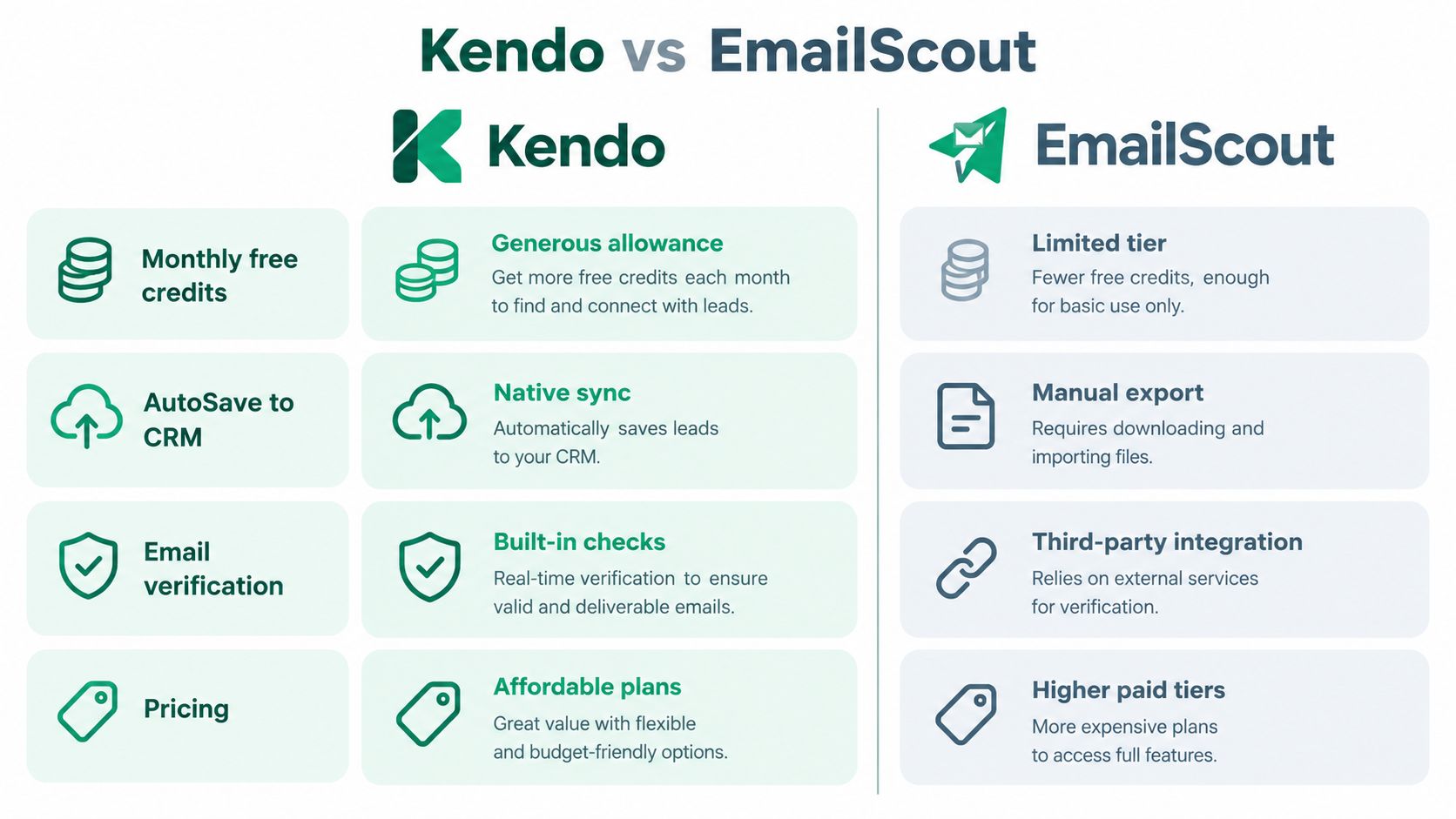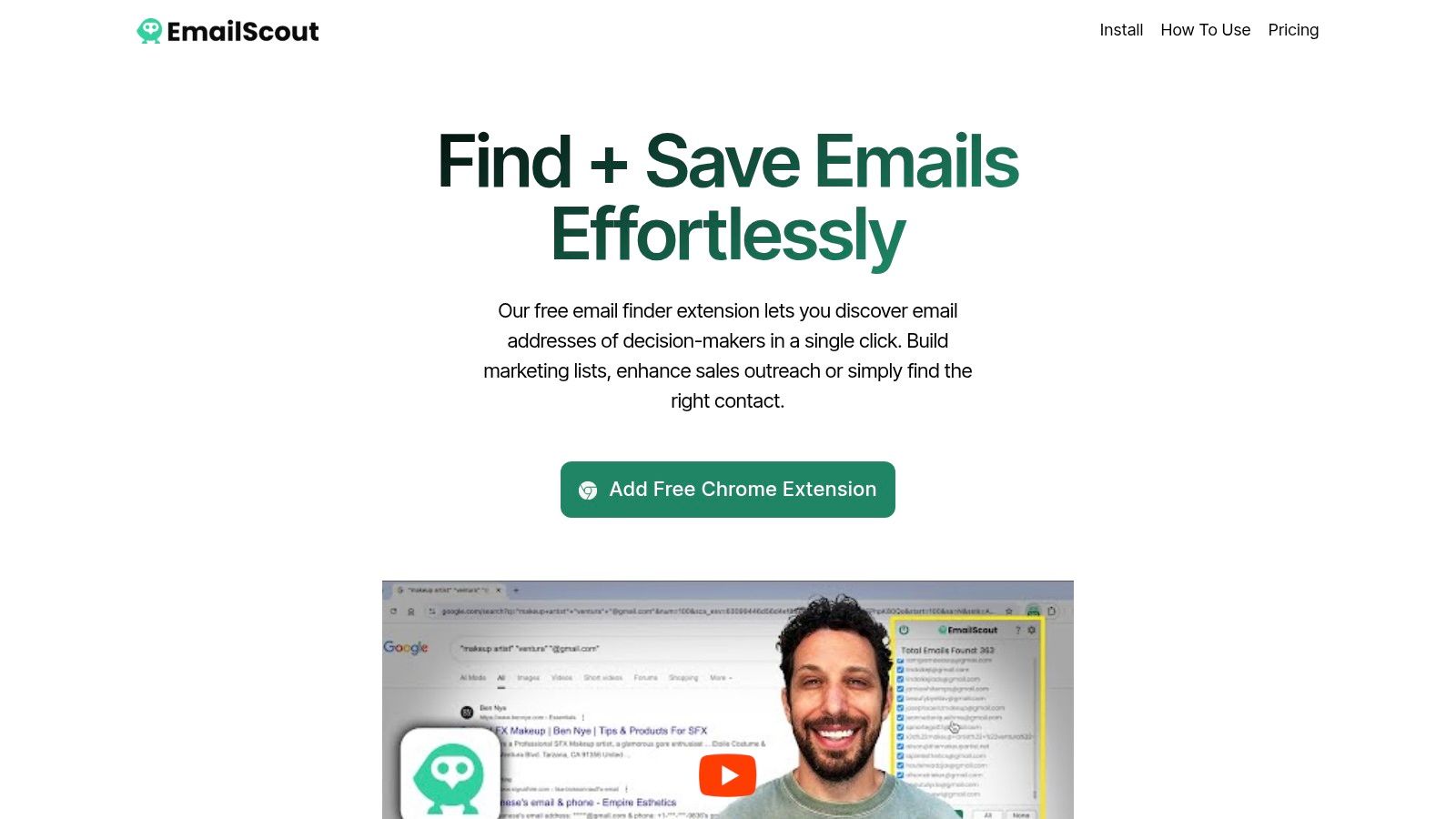
Tag: email finder

  • How to Look Up Email Addresses for Anyone

    How to Look Up Email Addresses for Anyone

    Whether you need a direct line for sales, networking, or a crucial introduction, you can either use a specialized tool like EmailScout for a quick find or roll up your sleeves with some clever manual detective work. Both methods will get you to the right inbox.

    Why Finding the Right Email Still Matters

    A professional woman typing on her laptop, focused on finding an email address

    In a world filled with social media DMs and chat pings, you might think email is old news. It's not. A direct email is still the gold standard for any serious professional conversation. It’s the difference between shouting into a crowded room and having a focused, one-on-one discussion.

    This is especially true when you're trying to reach someone specific. Sending a proposal or a networking request to a generic info@company.com address is like dropping it into a black hole. Finding the right person's email address dramatically increases the odds of getting a real response and starting a genuine conversation.

    The Power of a Direct Line

    Knowing how to look up email addresses isn't just a technical trick; it's a massive strategic advantage. The numbers don't lie. By 2025, the world will have around 4.83 billion email users, sending an estimated 392 billion emails every single day—and that figure keeps climbing.

    That incredible volume is precisely why a direct, personal email cuts through the noise. It bypasses gatekeepers and signals to the recipient that your message is worth their time.

    A well-crafted email sent to the right person is one of the most powerful tools you have. It shows you've done your homework, respect their time, and have a clear purpose—something other platforms just can't match.

    Choosing Your Approach

    I'm going to walk you through the two main ways to hunt down the emails you need. Each one is useful for different situations, and knowing both will make your outreach way more effective.

    • Automated Tools: First, we'll look at powerful platforms like EmailScout that can find verified email addresses in seconds. This is your go-to for building lists and scaling up your efforts.
    • Manual Techniques: Then, for those really tough-to-find contacts, we'll get into some old-school detective work. These are the clever strategies that rely on sharp observation and a bit of logic, not software.

    Of course, once you find that email, you need to use it effectively. Learning how to schedule your emails in Outlook for perfect timing is a great next step. Mastering these methods is a must for anyone serious about growing their network or their business.

    Using Email Finder Tools for Instant Results

    When you need an accurate email right now and don't have time to play guessing games, dedicated tools are the fastest way to get into the right inbox. Manual methods have their place, but email finders are built for one thing: speed. They can turn a tedious, hours-long search into a few simple clicks.

    Let's walk through a real-world scenario. Imagine you want to pitch a collaboration to the Head of Partnerships at a buzzy new tech company. Instead of digging through social media profiles or trying every possible name combination, you could use a tool like EmailScout to get a direct line in seconds.

    Finding a Single Email Address

    Most email finders work off a simple search. All you typically need are two things: the person's full name and the company they work for.

    So, for our example, you'd pop in "Jane Doe" and "TechCompany.com." The tool then scours its own massive database and public web data, cross-referencing everything it finds to deliver the most likely email address. Most will even give you a confidence score to show how certain they are about the result.

    Here's a quick look at what that process looks like inside a typical email finder.

    As you can see, the tool doesn't just give you an email—it shows you it's verified, saving you from a potential bounce. That instant feedback is what makes these tools so valuable for targeted outreach.

    Building Lists with Bulk Searches

    The real magic, though, happens with bulk searches. If you needed to contact the entire partnership team—not just Jane—you wouldn't look them up one by one. That would defeat the whole purpose.

    Instead, you’d use a bulk domain search.

    By just entering "TechCompany.com," the tool can pull a list of all known email addresses associated with that domain. From there, you can filter by job title or department to build a laser-focused outreach list in no time. For sales and marketing teams, this is a total game-changer.

    The core value of an email finder is its ability to compress time. What could take hours of manual research is often accomplished in under a minute, freeing you up to focus on crafting a compelling message instead of just finding the recipient.

    These tools have completely changed how we find professional contact info. With the global email user base projected to hit 4.6 billion by 2025, the need for efficient contact discovery is only growing. Platforms like EmailScout have become essential for anyone who needs to connect with the right people, fast.

    If you're trying to improve your own process for finding professional contacts, you might also want to look into the best AI recruiting software tools, as many of them offer advanced sourcing features.

    Choosing the right platform really depends on your specific needs, so it’s worth exploring our guide on the best email finder tools to see which one fits your workflow. A good tool integrates right into your daily tasks, making "how to look up an email" a problem you no longer have to solve.

    Mastering Manual Search Techniques

    When your automated tools come up empty, it’s time to roll up your sleeves and do a little digital detective work. Manual search techniques are the clever, no-cost strategies that often unearth the emails that software just can't find. It's less about brute force and more about smart, focused investigation.

    Think of it as piecing together a puzzle. You’ll be using advanced search operators, digging into company websites, and cracking common corporate email patterns. These methods take a bit more elbow grease, but they can be incredibly effective for tracking down those hard-to-reach contacts.

    Harnessing Advanced Search Operators

    Your first move should be a supercharged Google search. A standard query often won’t cut it, but by using specific operators, you can tell Google exactly what to look for and where. This is a foundational skill for anyone learning how to look up email addresses.

    A few powerful operators can narrow your search in a big way:

    • site: This little command restricts your search to a single website. For example, “John Doe” email site:company.com tells Google to only search for John Doe’s email on that specific company's domain.
    • filetype: You can hunt for specific file types, like PDFs or Word documents, which often contain contact info in press releases or annual reports. Try “Jane Smith” email filetype:pdf to see if her email is buried in any public documents.
    • " " (Quotes): Always put a name in quotes. This ensures Google searches for that exact phrase, which is crucial when you’re looking for a specific person.

    This simple infographic gives you a visual for the manual search process, from your first clue to the final result.

    Infographic about how to look up email

    The real takeaway here is that a structured process, where you combine different clues and search methods, is always going to beat random guessing.

    Decoding Corporate Email Patterns

    Most companies stick to a predictable formula for their email addresses. Once you figure out the pattern for one person, you can usually guess the email for anyone else on the team. It's a classic manual lookup tactic for a reason—it works.

    Start by looking for any publicly available email on their website, maybe for a press or sales contact. What kind of structure does it follow?

    Pro Tip: Keep an eye out for common formats. You'll find that over 70% of business emails fall into just a handful of patterns, making this an incredibly reliable manual technique.

    Here are some of the most common patterns you’ll run into:

    If you find an email like media@techcompany.com and you know an employee named Jane Smith works there, you can make an educated guess that her email is probably jane.smith@techcompany.com or jsmith@techcompany.com. This approach is surprisingly effective, especially with small to medium-sized businesses. For a deeper dive, check out our complete guide on finding email addresses by name.

    Leveraging Social and Professional Networks

    Sometimes the best clues aren't on the company website but on social media. Platforms like LinkedIn and even Twitter can be absolute goldmines if you know where to look.

    On LinkedIn, the first place to check is the "Contact Info" section on a person's profile—you'd be surprised how often their email is listed publicly. If not, look at their recent activity. Have they published an article or a document? These often include contact details.

    Over on Twitter, people sometimes write out their email in their bio like john at company dot com to trick spam bots. It’s a simple move, but one that plenty of people still use. When you combine these social media clues with the pattern-guessing method, you’ve got a powerful toolkit for finding almost any email without spending a dime.

    Email Lookup Ethics and Best Practices

    Knowing how to find an email address is one thing, but knowing what to do with it is what really counts. It’s easy to get caught up in the hunt for contact info, but the real skill lies in how you use it. Your approach determines whether you build a bridge or burn it down before you even get a reply.

    At the end of the day, it's about being a good human. That means respecting privacy and understanding the ground rules, like GDPR in Europe and the CAN-SPAM Act here in the States. These regulations aren't just bureaucratic red tape; they exist to keep communication professional and stop people from spamming each other into oblivion. The core idea is simple: be relevant, be respectful, and always give people an easy way out.

    Moving Beyond Spam

    Let's be honest, the average inbox is a warzone. Another generic, thoughtless email is just going to get deleted on sight. The goal here isn't to just fire another message into the digital void and hope for the best. It's to start a real, professional conversation.

    This is where the magic happens. Ethical outreach is effective outreach. It’s a complete shift in mindset from "what can I get from you?" to "what can I offer you?" A great first email is never about your needs; it’s about delivering immediate value to the person you're contacting.

    The most successful cold outreach feels warm. It achieves this by being personal, relevant, and respectful of the recipient's time and inbox. The aim isn't just to get a reply but to earn the right to have a conversation.

    Crafting a Professional First Contact

    So, what does a good first email actually look like? It has nothing to do with flashy templates or those aggressive, multi-day follow-up sequences. It's about being concise, personal, and genuinely helpful.

    Here are a few practices I swear by:

    • Lead with Value: Don't open by asking for a favor. Offer a genuine compliment on their latest project, share a relevant piece of data, or point them to a resource they might find useful. Show them you're not just another bot.
    • Personalize Your Message: Mention something specific. Did they write a blog post you enjoyed? Share an interesting take on LinkedIn? A quick, specific reference shows you've actually done your homework.
    • Keep It Concise: Nobody has time to read an essay from a stranger. Get straight to the point, be clear about what you're asking for, and make it incredibly easy for them to respond. Respect their time, always.

    The hard truth is that an estimated 3.4 billion fake or spam emails fly around the internet every single day. That's a lot of noise, and it's made people rightly skeptical of any unsolicited message.

    But when you get it right, email is still one of the most powerful tools out there. By 2025, email marketing is projected to pull in an incredible $36 for every $1 spent. This just goes to show how much value there is in building real, ethical connections. You can dig into more stats on email marketing ROI and security at Inboxally.com.

    Of course, none of this matters if your email never arrives. Before you even think about hitting send, you have to be sure the address is legit. A crucial final step is always running it through a verification tool. You can learn more about how our email address verification process works to make sure your thoughtfully crafted messages actually land in the right inbox, protecting your reputation and making all your effort worthwhile.

    Troubleshooting Common Lookup Challenges

    A person looking at a laptop screen with a frustrated expression, symbolizing an email lookup dead end.

    Even with the best tools and your sharpest detective skills, you're going to hit a wall sometimes. Learning how to look up email addresses isn't just about finding them; it's also about knowing what to do when you come up empty. Hitting a dead end isn't a failure—it's just part of the hunt.

    One of the most common hurdles? Finding only generic addresses like info@company.com or support@company.com. These are great for general questions, but for personal outreach, they're basically black holes. When this happens, it's a signal to pivot your strategy, not throw in the towel.

    Another classic challenge is looking for someone with a common name. Trying to pinpoint the right "John Smith" at a massive corporation can feel like searching for a needle in a haystack. This is where getting creative with cross-referencing becomes your secret weapon.

    Navigating Generic Email Addresses

    So you've only found a generic inbox. Your next move is to find a direct contact for anyone else at that company. Seriously, anyone will do. That one piece of information is often the key to cracking the company's email pattern, just like we talked about earlier.

    Once you have a solid guess at the pattern, you can build an educated guess for your target's email. But don't even think about hitting "send" yet. Guessing is risky without one crucial last step: verification.

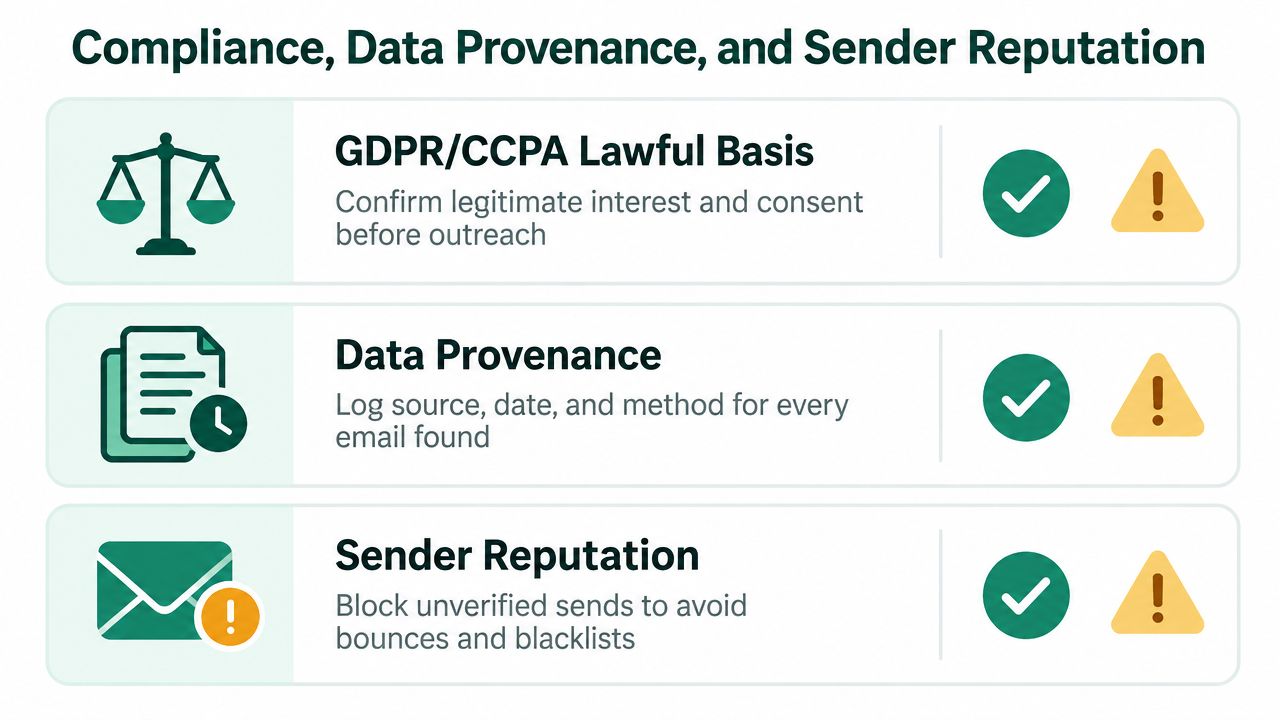
    An unverified email is a shot in the dark. Sending to a bad address doesn't just get you a bounce-back. Over time, it can actually damage your domain's reputation, making it harder for all your emails to get through.

    Handling Common Names and Verifying Your Finds

    If you're after a "Sarah Chen" in a company of thousands, you need more than just her name. This is where LinkedIn becomes your best friend. Look for a unique detail, like her specific job title ("Head of Product Marketing") or her department. Adding that to your search makes it exponentially more targeted.

    Once you have what you think is the right email, you absolutely have to verify it. This is non-negotiable.

    Here’s how you can do it:

    • Use a Free Verification Tool: Plenty of online tools will let you check a few emails for free. They work by pinging the server to see if the address is real, all without sending an actual email.
    • Check Social Profiles Again: Go back and double-check their professional profiles. You'd be surprised how often people list their direct email right in their bio.

    For instance, if you've pieced together sarah.chen@company.com, pop it into a verification tool. If you get a green light, your odds of reaching the right person just went through the roof. This simple check is what separates the amateurs from the pros, ensuring your carefully crafted message actually has a fighting chance of being read.

    Have Questions About Email Lookups? We've Got Answers.

    Even with the best tools, you're going to run into questions when looking up email addresses. It's a common task, but it definitely has its nuances. Let's clear up some of the most frequent ones we hear.

    My goal here is to give you the confidence to track down the contacts you need, all while staying effective and on the right side of the rules. Think of this as your go-to guide for those moments you're not quite sure what to do next.

    Is It Legal to Look Up Someone's Email Address?

    In a word, yes. Finding a publicly available email address is perfectly legal. The real question isn't about finding it, but about what you do with it. How you use that email falls under regulations like the GDPR in Europe and the CAN-SPAM Act in the U.S.

    The bottom line? Stick to legitimate, professional outreach. Make sure your message is relevant, and always, always give people an easy way to opt out. As long as you’re not blasting out unsolicited spam, you're in the clear.

    What's the Most Accurate Way to Find an Email?

    Honestly, the most reliable method isn't a single trick—it's a hybrid approach.

    For speed and accuracy, especially with corporate contacts, a solid paid tool is your best first move. These platforms have huge, verified databases that give you a massive head start.

    But don't stop there. I always cross-reference what the tool gives me with the person’s LinkedIn profile or the company website. The final, non-negotiable step? Run the address through an email verification service. This confirms it’s deliverable before you hit send, which is crucial for protecting your sender reputation.

    How Can I Find an Email Address for Free?

    You can absolutely find emails without spending a dime—it just requires a little more manual effort and creativity. It's all about piecing together the clues.

    Here are a few free methods that work surprisingly well:

    • Advanced Google Searches: Get familiar with search operators. For example, using site: lets you hunt within a specific website (e.g., "John Smith" email site:somecompany.com).
    • Social Profile Sleuthing: Check LinkedIn's "Contact Info" sections and Twitter bios. People often list their email publicly or in a bot-proof format like john at somecompany dot com.
    • Educated Guessing: Most companies use a standard format. Try common patterns like firstname.lastname@company.com or f.lastname@company.com. Once you have a guess, pop it into a free online verification tool to see if it pings as valid.

    The secret to successful free lookups is a mix of patience and verification. An educated guess is a powerful starting point, but only if you confirm it’s correct before sending your message.

    What Should I Do If I Can't Find an Email?

    Hit a dead end? Don't sweat it. If you've tried everything and still come up empty, it's time to pivot your strategy. This isn't a failure; it's just a signal to connect a different way.

    Instead of focusing on email, try sending a brief, professional message on LinkedIn. Another great move is to engage with their content on Twitter to get on their radar. If all else fails, a polite message through a general company contact form asking to be directed to the right person can work wonders.


    Ready to stop guessing and start connecting? EmailScout is a powerful email finder that streamlines your outreach, helping you build marketing lists and connect with key decision-makers in a single click. Find unlimited emails for free and supercharge your outreach with EmailScout today!

  • Top free email finder tools for 2025: Boost Outreach

    Top free email finder tools for 2025: Boost Outreach

    In the world of sales, marketing, and business development, a strong contact list is the foundation of any successful outreach campaign. Manually searching for professional email addresses is a time-consuming task that drains valuable resources. This is precisely the problem that email finders solve, automating the discovery of crucial contact information and allowing you to focus on building relationships.

    The good news is that you don't need a significant budget to access this powerful technology. We have thoroughly tested and analyzed the most effective free email finder tools available today to help you select the right platform for your specific goals. This guide moves beyond generic feature lists, offering a practical deep dive into each tool's free tier limitations, ideal use-case scenarios, and overall data accuracy. For a deeper dive into modern approaches, including artificial intelligence, in building effective outreach lists, consider reading about AI-Powered Lead Generation.

    Whether you're a freelancer building your first client list, a startup founder seeking investors, or a sales professional trying to hit your quota, this comprehensive breakdown will equip you to start prospecting effectively without any initial investment. Each entry includes detailed analysis, screenshots, and direct links so you can get started immediately.

    1. EmailScout

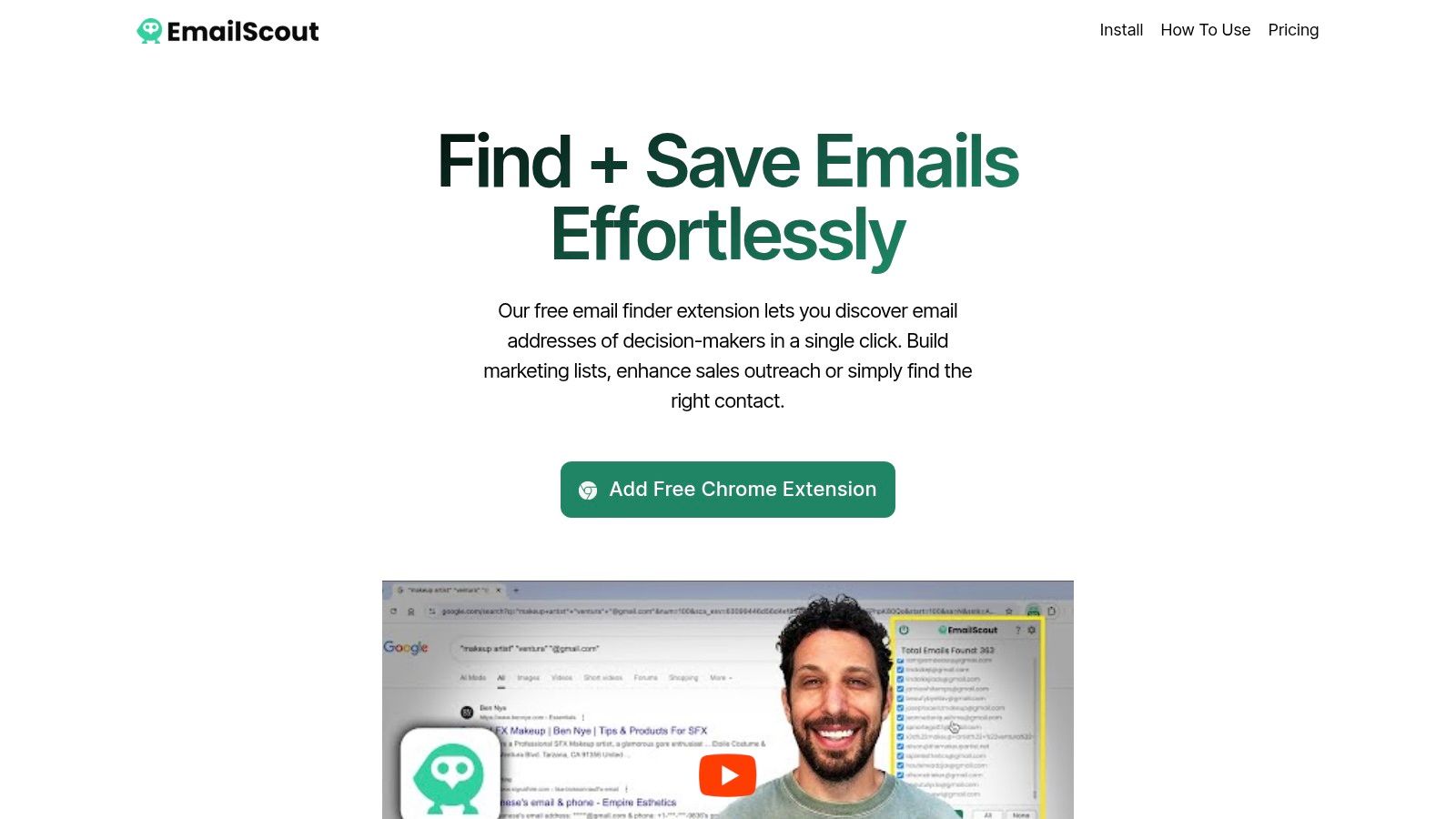
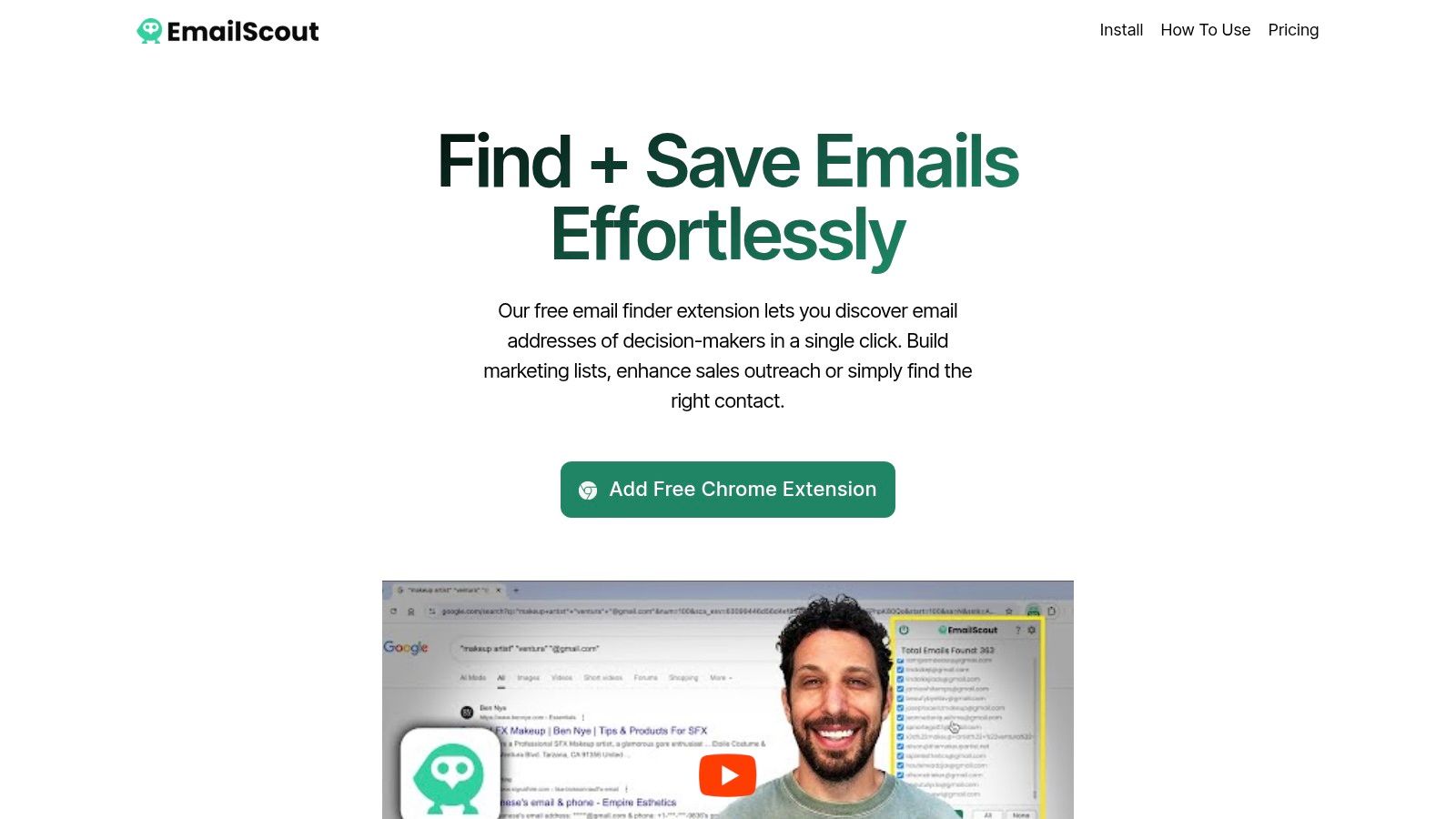
    EmailScout distinguishes itself among free email finder tools with its exceptionally generous free tier and streamlined, one-click Chrome extension workflow. It provides an immediate, no-cost solution for users who need to quickly gather publicly available email addresses directly from websites. Simply visit a site, click the extension icon, and export the discovered emails as a CSV or TXT file.

    This tool’s core strength lies in its simplicity and accessibility. Unlike many competitors that gate their core functionality behind paid plans or restrictive credit systems, EmailScout’s free version allows for unlimited manual email searches and exports. This makes it an ideal starting point for freelancers, startups, and small sales teams building their initial outreach lists without any financial commitment.

    EmailScout

    Key Features and Use Cases

    • One-Click Email Extraction: Instantly find and collect emails from any website’s public source code, perfect for quick lead generation.
    • Unlimited Free Tier: Its standout feature is offering unlimited manual searches and exports, providing significant value without a subscription.
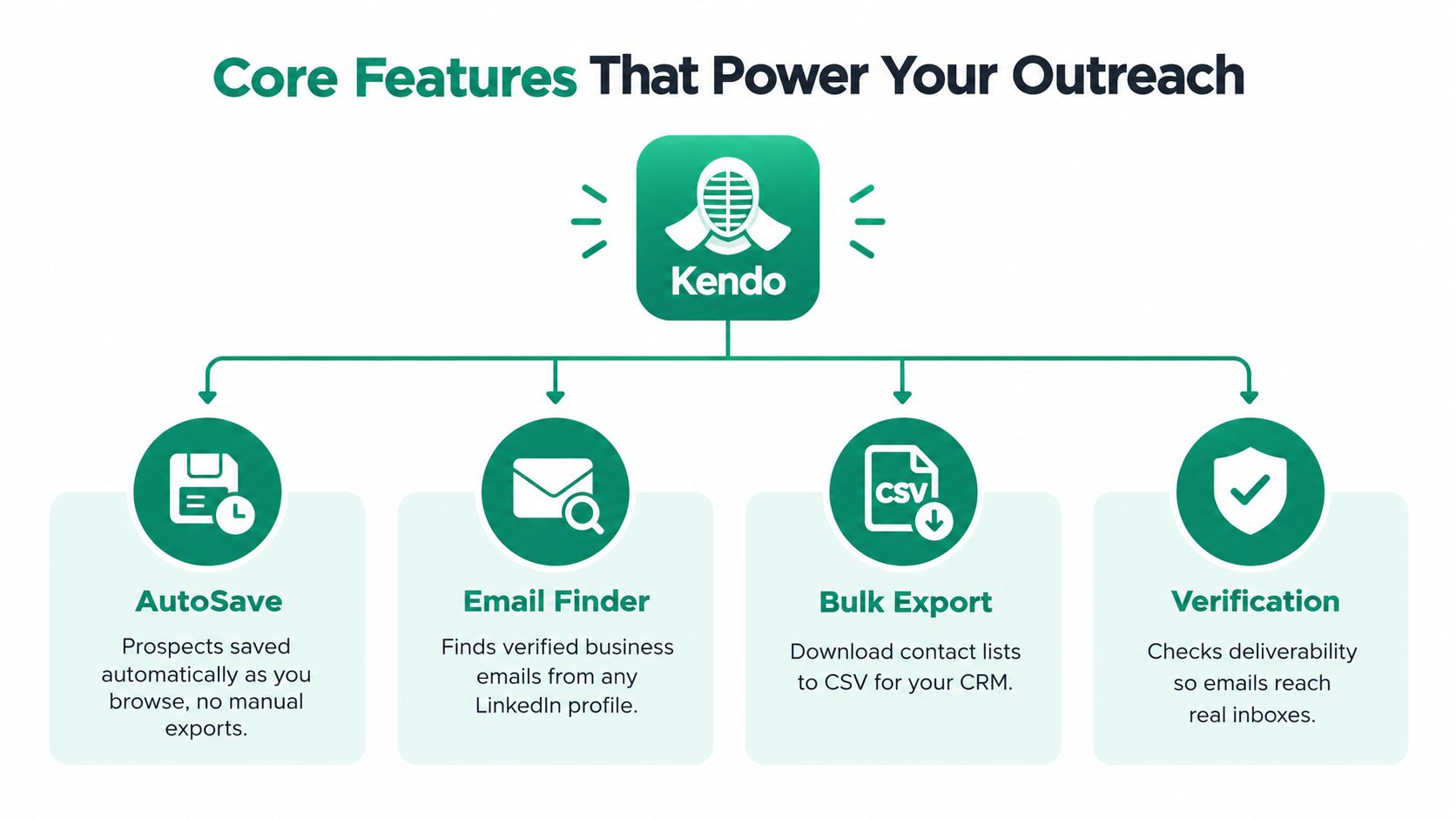
    • AutoSave (Premium): This feature automatically captures emails in the background as you browse, eliminating manual clicks and accelerating lead collection.
    • URL Explorer (Premium): A powerful bulk scraping tool that processes up to 1,500 URLs at once, ideal for high-volume prospecting campaigns.

    Pricing and Tiers

    EmailScout offers a clear path for users to scale their efforts. While the free tier is robust, the premium plans unlock powerful automation features. A no-credit-card trial is available, offering a risk-free way to test the AutoSave and URL Explorer capabilities with a 200 email per month limit. Premium plans start at an accessible $9/month for 5,000 emails, scaling up to 1,000,000 emails per month for enterprise-level needs.

    • Best for: Freelancers, sales professionals, and small teams needing a powerful, cost-effective tool to build initial lead lists quickly.
    • Website: https://emailscout.io

    2. Hunter

    Hunter is a dominant player in the B2B prospecting space and earns its spot as one of the best free email finder tools due to its generous free tier and transparent credit system. It’s an ideal starting point for anyone new to email outreach or needing to verify a small list of contacts without a financial commitment. The platform’s user interface is clean and straightforward, making it easy to jump right in.

    Hunter

    Its "Domain Search" feature is particularly effective for mapping out key contacts within a target company. You simply enter a company's domain, and Hunter returns all publicly indexed email addresses associated with it, complete with confidence scores. This is a powerful tool for building initial prospect lists for cold email campaigns.

    Key Features & Limitations

    What We Like:

    • Generous Free Plan: Offers 25 free searches and 50 free verifications per month.
    • Transparent Credits: Credits are typically only consumed when a verifiable email is found, which is a fair and user-friendly policy.
    • Integrations: A robust Chrome extension and Google Sheets add-on streamline the prospecting workflow significantly.

    Where It Could Improve:

    • Email-Only Focus: The platform does not provide phone numbers or other direct-dial data.
    • Limited Free Filters: Advanced search filters and bulk tasks are reserved for paid tiers.

    Hunter provides a solid foundation for email prospecting. For a deeper analysis of how its features compare, you can learn more about Hunter's capabilities in various email lookup scenarios.

    Website: https://hunter.io/pricing

    3. Snov.io

    Snov.io positions itself as more than just an email finder; it's an all-in-one cold outreach automation platform. This makes it one of the most versatile free email finder tools available, as its free "Trial" plan provides recurring monthly credits not just for finding emails, but for verifying them and even launching drip campaigns. It’s an excellent choice for users looking to manage a lightweight, end-to-end prospecting workflow from a single dashboard.

    Snov.io

    The platform's strength lies in its integrated toolset. You can use the Chrome extension to find emails on company websites or LinkedIn profiles, add them to a prospect list, verify their deliverability, and immediately enroll them into a multi-step email sequence. This seamless integration saves significant time compared to using separate tools for each step.

    Key Features & Limitations

    What We Like:

    • Recurring Free Credits: The free plan resets with 50 credits each month, allowing for continuous, low-volume prospecting.
    • All-in-One Platform: Includes an email finder, verifier, and drip campaign functionality even in the free tier.
    • Flexible Credits: Unused paid credits roll over to the next month, preventing waste.

    Where It Could Improve:

    • Gated Features: Advanced bulk search and export capabilities are reserved for paid subscriptions.
    • Add-On Costs: LinkedIn automation features require separate add-on purchases, which can increase the overall cost.

    Snov.io is a powerful suite for those who need more than just email discovery. To ensure your outreach is effective, you can explore how Snov.io helps validate email addresses.

    Website: https://snov.io/pricing

    4. Apollo.io

    Apollo.io is more than just an email finder; it's a comprehensive sales intelligence platform with one of the largest B2B contact databases available. It secures a top spot among free email finder tools because its free plan provides access to this vast dataset, integrating email finding, enrichment, and basic engagement features into a single workflow. The platform is designed for users who want to not only find contacts but also manage initial outreach within the same system.

    Apollo.io

    Its strength lies in its all-in-one approach. Users can leverage its powerful Chrome extension directly on LinkedIn to find verified emails and mobile numbers for prospects. This seamless integration allows for quick list-building and a more efficient prospecting process, making it ideal for sales professionals who need a robust tool without an initial investment.

    Key Features & Limitations

    What We Like:

    • Robust Dataset: Provides access to a massive database for finding both verified emails and direct-dial mobile numbers.
    • Clear Credit Logic: Credits are typically only consumed when a verified email is successfully revealed, ensuring you don’t waste your free allotment.
    • Workflow Integrations: The powerful Chrome and LinkedIn extension creates a smooth and efficient prospecting workflow.

    Where It Could Improve:

    • Variable Free Credits: The exact number of free credits offered can change, making it slightly less predictable than competitors with fixed plans.
    • Complex for Beginners: With features like sequencing and a dialer, the platform can be overwhelming for users who only need a simple email finder.

    Apollo.io is an excellent free option for users who anticipate needing a full suite of sales engagement tools in the future.

    Website: https://www.apollo.io/pricing/about-credits

    5. Lusha

    Lusha is a well-known B2B contact finder favored by sales development teams, and its inclusion in a list of free email finder tools is well-earned thanks to a generous free tier. The platform stands out by offering both email addresses and direct-dial phone numbers, all managed through a unified credit system that works across its web app, browser extension, and API. This makes it a versatile tool for multi-channel outreach.

    Lusha

    The user experience is smooth, particularly with its browser extension, which seamlessly overlays contact data on platforms like LinkedIn and company websites. Lusha’s unified credit system simplifies resource management, as you don't have to track different allowances for different features. A single credit reveals an email, making it straightforward to budget your free allowance for prospecting activities.

    Key Features & Limitations

    What We Like:

    • Generous Free Plan: Provides a notable monthly credit allotment for finding emails and phone numbers.
    • Unified Credit System: Credits work across the app, extension, and API, simplifying usage.
    • Credits Roll Over: Unused credits on monthly plans can roll over to the next month, up to a certain cap.

    Where It Could Improve:

    • Costly Phone Numbers: Revealing phone numbers consumes significantly more credits than emails.
    • Gated Features: API access and bulk data exporting capabilities are reserved for higher-tier paid plans.

    Lusha provides an excellent free starting point for teams that need both email and phone contact information for their outreach efforts.

    Website: https://www.lusha.com/pricing/

    6. RocketReach

    RocketReach is a well-established contact lookup platform known for its extensive database covering a wide range of industries and professional roles. It secures its place on this list of free email finder tools by offering a small but consistent monthly allowance of free lookups, making it a reliable option for users who need to find a few key contacts without any upfront cost. Its browser extension is a notable feature, allowing for quick profile lookups on social platforms like LinkedIn.

    RocketReach

    The platform provides both personal and professional email addresses, which can be valuable for multi-channel outreach strategies. While its free tier is primarily for testing its data accuracy and coverage, it's sufficient for entrepreneurs or freelancers with very low-volume prospecting needs. The interface is straightforward, focusing on quick searches and contact retrieval.

    Key Features & Limitations

    What We Like:

    • Broad Data Coverage: Offers access to a large database of professional and personal emails across various sectors.
    • Simple Free Trial: The recurring free monthly quota provides a simple way to test its accuracy and find a handful of contacts.
    • Browser Extension: The extension simplifies finding contact information directly from professional networking sites.

    Where It Could Improve:

    • Limited Free Tier: The number of free lookups is very restrictive and intended more as a trial than a functional free plan.
    • Pricing Confusion: Paid plans and credit policies can sometimes be unclear, with some users reporting variations in quotas.

    Website: https://rocketreach.co/

    7. Skrapp

    Skrapp carves out its niche by focusing heavily on LinkedIn integration, making it one of the most practical free email finder tools for sales professionals and recruiters. Its generous free plan and fair credit policy make it an attractive option for users who need a consistent monthly allowance of email lookups without an upfront investment. The platform is designed to seamlessly integrate into a LinkedIn-based prospecting workflow.

    Skrapp

    The core strength of Skrapp lies in its powerful browser extensions for LinkedIn Basic, Sales Navigator, and Recruiter. These tools allow users to find verified email addresses directly from profiles, saving significant time. The platform also includes a domain search feature to uncover emails associated with a specific company, broadening its utility beyond just social media prospecting.

    Key Features & Limitations

    What We Like:

    • Generous Free Plan: Provides 100 free email credits per month, which roll over if unused.
    • Fair-Credit Policy: Credits are only deducted for emails found with a "deliverable" status, not for invalid or unknown results.
    • Strong LinkedIn Integration: Excellent extensions make it a top choice for sourcing contacts directly from LinkedIn.

    Where It Could Improve:

    • Email-Only Focus: Does not provide direct-dial phone numbers or other contact data.
    • Limited Advanced Features: Deeper verification checks and automation capabilities are reserved for higher-tier paid plans.

    Skrapp is an excellent starting point for anyone whose prospecting is centered around LinkedIn. Its straightforward credit system and generous free tier offer substantial value for building targeted email lists.

    Website: https://skrapp.io/pricing

    8. Voila Norbert

    Voila Norbert positions itself as a straightforward and highly accurate email finder, earning its place among the best free email finder tools with a simple, results-oriented trial. The platform grants every new user their first 50 email finder credits completely free, allowing for a robust test drive of its core functionality. It operates on a "pay for results" model, which builds trust right from the start.

    Voila Norbert

    The user experience is clean and focused on a single task: finding the correct email address. You input a person's full name and their company domain, and Norbert gets to work. This simplicity is its strength, making it ideal for sales professionals or recruiters who need reliable contact data quickly without navigating complex dashboards or features they don't need.

    Key Features & Limitations

    What We Like:

    • Free Trial Credits: The initial 50 free search credits offer a genuine opportunity to test the tool's accuracy and workflow.
    • Pay-for-Success Model: Credits are only deducted for successful, verifiable email finds, which is a fair and transparent system.
    • Scalability: Supports bulk CSV uploads, API access, and integrations for users who decide to upgrade to a paid plan.

    Where It Could Improve:

    • One-Time Freebie: The 50 free credits are a one-time grant upon signup and do not refresh monthly like some competitors.
    • Paid-Only Features: Key tools for scaling outreach, such as bulk finding and verification, require a paid subscription.

    Voila Norbert is an excellent choice for users who value accuracy and want a no-risk trial to confirm a platform's effectiveness before committing.

    Website: https://www.voilanorbert.com/pricing/

    9. Seamless.AI

    Seamless.AI positions itself as a real-time search engine for B2B contacts, making it a powerful addition to our list of free email finder tools. Its AI-driven platform provides not only emails but also direct-dial phone numbers, offering a more comprehensive contact profile than many competitors. The free plan provides a set number of credits, allowing users to test its core search and enrichment capabilities before committing.

    Seamless.AI

    The platform’s strength lies in its real-time data verification, which aims to reduce bounce rates by checking contact information at the moment of search. Its Chrome extension is also highly effective for finding contact details directly from LinkedIn profiles or company websites, streamlining the prospecting workflow for sales and marketing professionals.

    Key Features & Limitations

    What We Like:

    • Multi-Channel Data: Provides both verified emails and direct-dial phone numbers, even on the free testing tier.
    • Real-Time Verification: The AI-powered engine verifies contact information in real-time to ensure accuracy.
    • Robust Chrome Extension: Enables easy prospecting directly from LinkedIn and corporate websites.

    Where It Could Improve:

    • Complex Credit System: The credit system and pricing can be confusing, often requiring a sales call for clarity.
    • Limited Free Tier: The free credits are primarily for evaluation and are quickly exhausted with active use.

    Website: https://seamless.ai/pricing

    10. GetProspect

    GetProspect is a powerful B2B platform that earns its spot by tightly integrating with LinkedIn, making it a go-to choice for sales and marketing professionals who source leads primarily from the social network. As one of the top free email finder tools, its free plan is a standout for offering recurring monthly credits that also roll over, providing excellent long-term value for users with modest, ongoing needs.

    GetProspect

    Its core strength lies in its LinkedIn extension, which allows users to find and save verified email addresses directly from LinkedIn profiles and search results. The platform follows a "pay only for valid emails" logic, ensuring you don't waste your limited credits on bad data. This transparent approach, combined with advanced filters and data export options, makes it a robust tool for building targeted lead lists.

    Key Features & Limitations

    What We Like:

    • Renewing & Rollover Credits: The free plan offers 50 monthly credits, and unused credits can roll over, which is a rare and valuable feature.
    • Transparent Credit Rules: The platform clearly defines how credits are used, charging only for successfully found and verified emails.
    • API Access: Even the free tier includes API access, allowing for custom integrations and automated workflows.

    Where It Could Improve:

    • Complex Interface: The UI and help documentation are geared more toward experienced users and can be less intuitive for beginners.
    • Limited Phone Credits: Finding phone numbers requires separate credits, which are very limited on lower-tier plans.

    GetProspect is an excellent free option for users who need a reliable LinkedIn-based email finder with fair credit policies.

    Website: https://getprospect.com/pricing

    11. SignalHire

    SignalHire is a recruitment-focused platform that doubles as a powerful free email finder tool for sales and marketing professionals. It provides a small but recurring free monthly credit allowance, making it suitable for users with very targeted, low-volume prospecting needs. The platform's standout feature is its versatile browser extension, which seamlessly integrates with professional networks like LinkedIn to find contact information directly on a prospect's profile page.

    SignalHire

    The user experience is straightforward, and the simple credit system applies across its entire suite of tools, including the main platform, extension, and API. This consistency makes it easy to understand and manage your usage without having to learn different rules for different features. While its primary audience is recruiters, the tool is equally effective for SDRs building highly specific contact lists.

    Key Features & Limitations

    What We Like:

    • Browser Extension: Works effectively across LinkedIn and other social networks to find emails and phone numbers in-context.
    • Simple Credit Model: A single credit type is used for finding emails, whether through the site, extension, or API.
    • Team-Friendly Paid Plans: Many paid plans have no per-seat limits, making them scalable for growing teams.

    Where It Could Improve:

    • Limited Free Tier: Only 5 free credits per month (10 if the extension is installed) is very restrictive.
    • Aggressive Upsells: Users may encounter prominent upsells, and phone numbers require purchasing separate credit packs.

    Website: https://www.signalhire.com/pricing

    12. ContactOut

    ContactOut is a powerful recruiting and sales intelligence platform that has carved out a niche as one of the most effective free email finder tools for LinkedIn-based prospecting. It excels at uncovering both work and personal emails, along with phone numbers, directly from social profiles, making it a favorite among recruiters and B2B sales professionals who need deep contact data. The recurring daily credits on its free plan provide a great way to test its capabilities or handle light, ongoing prospecting needs.

    ContactOut

    Its primary strength lies in its Chrome extension, which seamlessly integrates with LinkedIn, Sales Navigator, and Recruiter Lite. This allows users to find contact information for profiles with a single click, streamlining the process of building highly targeted outreach lists without ever leaving the LinkedIn ecosystem. The interface is clean and presents data clearly, which is a major plus.

    Key Features & Limitations

    What We Like:

    • Recurring Free Credits: The free plan offers a daily allowance of credits, which is great for consistent, low-volume use and testing.
    • LinkedIn Integration: The Chrome extension is robust and works across various LinkedIn platforms, making it highly efficient.
    • Rich Data: Often provides both work and personal emails, plus mobile phone numbers, offering multiple contact points.

    Where It Could Improve:

    • Limited Free Tier: Advanced features like CRM integrations and bulk exports are gated behind paid plans.
    • Pricing Variations: Pricing information can sometimes vary across different sections of their site, which can be confusing.

    ContactOut is a fantastic tool for users who live on LinkedIn. For a more detailed guide on leveraging such tools, you can discover different methods to find emails on LinkedIn.

    Website: https://contactout.com/

    Top 12 Free Email Finder Tools Comparison

    Product Key Features UX & Accuracy Value / Pricing Best For / USP
    EmailScout Chrome extension, one‑click finder, AutoSave, URL Explorer, CSV/TXT export Fast, simple workflow; finds publicly exposed addresses (verify deliverability) Unlimited free manual finds/exports; premium 5K–1M/mo from $9; trial 200/mo Freelancers/startups & small sales teams; instant list-building and bulk URL scrape
    Hunter Email Finder, Domain Search, Verifier, Chrome & Sheets add‑on Clear UI; reliable verification; transparent credit use Generous free plan; credits often charged only on success Verification-focused users; easy credit logic
    Snov.io Finder, Verifier, Bulk tools, Drip campaigns, trackers Multichannel sequencing; decent accuracy; Google integrations Recurring trial credits; paid plans for bulk & automation Teams needing outreach + sequencing
    Apollo.io Verified email & mobile reveals, enrichment, sequences, extensions Large dataset; robust integrations; charged for verified reveals Free testing credits; paid tiers for advanced engagement Scaling sales orgs needing enrichment + engagement
    Lusha Email & phone reveals, CRM integrations, unified credits Very simple UX; generous monthly credit allotment High free credits; phones cost more credits SDRs/recruiters needing phone + email lookups
    RocketReach Email & phone lookup, browser extension, bulk/API Wide coverage across roles/companies; testable with free quota Small recurring free allowance; paid plans vary Broad coverage and cross-checking contacts
    Skrapp LinkedIn & domain finder, verifier, LinkedIn extensions LinkedIn‑focused; fair credit policy; rollovers Free 100 credits/mo; affordable entry plans LinkedIn prospecting with fair credit rules
    Voila Norbert Pay‑for‑results finder, bulk CSV, API, Chrome Simple flow; only pay for successful finds 50 free one‑time credits; pay per valid result Pay‑per-result simplicity; good for ad‑hoc lookups
    Seamless.AI Email & phone, real‑time enrichment, Chrome extension Fast enrichment; includes phone data even on free tier Free test credits; paid pricing less transparent Teams wanting phone + email enrichment in real time
    GetProspect LinkedIn extension, database search, API, exports Power‑user UI; transparent per‑feature credit rules Recurring free credits; rollovers and team sharing LinkedIn-heavy prospecting with API/export needs
    SignalHire Email & phone finder, extension, team features, CSV export Recruiter-friendly; small free quota; team tools on paid tiers Free 5 (10 with extension); phones sold separately Recruiters and SDR teams needing team access
    ContactOut LinkedIn Chrome extension, daily free credits, exports Simple UI; mixture of work & personal emails Recurring daily free credits; paid for integrations Recruiters focused on LinkedIn sourcing and light daily use

    Choosing the Right Free Tool for Your Growth

    Navigating the landscape of free email finder tools can feel overwhelming, but as we've explored, the right choice ultimately hinges on your specific, day-to-day workflow. The "best" tool isn't a one-size-fits-all solution; it's the one that integrates seamlessly into your prospecting process and provides the most value within its free-tier limitations.

    By now, you should have a clear picture of the different models available. From the generous monthly credits offered by platforms like Hunter and Snov.io, ideal for structured, periodic outreach campaigns, to the robust, all-in-one CRM and engagement features of Apollo.io, perfect for teams looking to centralize their sales stack without an initial investment. Each tool offers a unique pathway to connecting with your ideal prospects.

    How to Make Your Final Decision

    To select the right tool, move beyond feature lists and focus on your operational needs. Ask yourself these critical questions:

    • What is my search volume? If you only need a handful of verified emails each month, a tool like Lusha or Voila Norbert might suffice. If you perform frequent, one-off searches, a tool with unlimited manual lookups like EmailScout offers unparalleled long-term value.
    • Where do I do my prospecting? Do you live on LinkedIn? A tool with a powerful Chrome extension, such as Skrapp or GetProspect, is non-negotiable. If you work from company websites, a domain search feature is your priority.
    • Do I need more than just emails? For roles that require direct-dial phone numbers and broader company intelligence, platforms like RocketReach, SignalHire, and ContactOut provide more comprehensive data, though their free credits are often more limited.
    • What is my long-term strategy? Consider the scalability of the tool. A free plan is a great entry point, but if you anticipate your needs growing, evaluate the paid tiers of your top contenders to ensure they align with your future budget and feature requirements.

    Final Takeaways and Next Steps

    The most powerful takeaway is that you don't have to rely on a single solution. A savvy professional can build a cost-effective "prospecting stack" by combining the strengths of multiple free email finder tools. Use one for its LinkedIn integration, another for its data accuracy, and a third for its generous credit allowance.

    Your immediate next step is to choose two or three tools from this list that best match your profile and sign up for their free plans. Spend a week actively using them in your real-world tasks. This hands-on experience is the only true way to gauge their accuracy, user-friendliness, and overall impact on your productivity. By testing them head-to-head, you'll quickly discover which free email finder tool will become an indispensable part of your growth engine.


    Ready to start finding verified emails without credit limits holding you back? While many tools restrict your monthly searches, EmailScout provides unlimited manual searches for free, forever. Get started with EmailScout today and experience the freedom of limitless, on-demand email lookups.

  • How to Find Email Address Fast: Proven Tips & Tools

    How to Find Email Address Fast: Proven Tips & Tools

    Before you even think about paying for a fancy tool, let's talk about the old-school way of finding an email address. It often comes down to smart guesswork, not expensive software.

    The most reliable, cost-free method is learning to predict common email patterns and then using a few simple search tricks to see if you're right. This is a foundational skill that sharpens your intuition and often works where automated tools give up.

    Mastering Manual Email Discovery Techniques

    Think of this as digital detective work. It’s a skill that pays off big time when you're going after high-value contacts or when the automated systems inevitably come up empty. These aren’t just backup plans; they're the bedrock of effective outreach.

    A person using a laptop with code on the screen, representing digital detective work

    The core idea is surprisingly simple: most companies use a standardized format for their email addresses. Your first job is to figure out what that pattern is.

    Predicting Common Email Formats

    Start by jotting down a list of the most likely email combinations for your target. Let’s say you’re trying to reach someone named Jane Doe who works at company.com.

    Your list of educated guesses should look something like this:

    • jane.doe@company.com (First.Last)
    • jdoe@company.com (First Initial + Last)
    • janed@company.com (First + Last Initial)
    • jane@company.com (First Name Only)
    • j.doe@company.com (First Initial.Last)

    This simple, methodical approach gives you a handful of strong possibilities. Now, the trick is to figure out which one is correct without sending a blind email that just bounces back.

    Use Advanced Google Searches

    Google is your best friend here. With a few advanced search operators, you can uncover publicly available emails that confirm a company's pattern. These are just simple commands you add to your search to get laser-focused results.

    For instance, you could try to find an email for another employee at the same company. A search like ("john smith" AND "email") site:company.com might pull up a press release or a blog post mentioning his contact details. Once you find a single valid email, you’ve probably cracked the code for everyone else.

    Another powerful technique is to search for your specific guesses. Try putting one of your predicted emails in quotes, like this: "jane.doe@company.com". If that exact email appears anywhere online—maybe in an author bio, on a conference speaker list, or a personal blog—you've got a direct hit.

    Key Takeaway: The goal isn't just to guess an email address but to find digital proof. A single confirmed email from a company often reveals the pattern for the entire organization, turning a difficult search into a simple one.

    Digging into Websites and Social Profiles

    Sometimes, the answer is hiding in plain sight. Don’t overlook these obvious—but often fruitful—sources:

    • Company 'About Us' or 'Team' Page: You'd be surprised how often key personnel have their contact info listed right here.
    • Author Bios on Blogs: If your contact has written articles for their company or another site, their email might be in their author bio.
    • Personal Websites or Portfolios: Many professionals have a personal site with a contact page. A quick search for their name plus "portfolio" or "website" can lead you straight to their inbox.

    These manual techniques build a powerful foundation. They take a bit of patience, but they are incredibly effective and cost you nothing, making them the perfect first step in any outreach campaign.

    Using Social Networks for Contact Clues

    Professional networks are the obvious first stop when you’re looking up someone’s career history, but they’re also a goldmine for contact information—if you know where to dig. You have to go beyond a simple profile glance to uncover the breadcrumbs people leave behind.

    A person's hand holding a phone displaying social network icons.

    This kind of digital detective work has become a vital skill. Back in 1997, finding an email was a simpler task with only about 10 million users out there. Fast forward to today, and with a projected 4.6 billion users globally by 2025, the sheer volume of online activity actually creates more chances to find what you're looking for.

    Uncovering Emails on LinkedIn

    LinkedIn is where most of us start, but it's easy to miss the hidden gems. Of course, the first place you should check is the "Contact Info" section on a person's profile. You might get lucky and find a direct email, but more often than not, it's either private or completely outdated.

    When that well is dry, it’s time to start looking at their activity. Pay close attention to:

    • Recent Posts and Articles: Professionals sometimes drop their contact details in their long-form posts or while replying to comments.
    • Group Discussions: Check the groups they’re active in. I’ve seen people share their email in a comment thread to move a conversation offline.
    • The Profile 'About' Section: A lot of people put a direct call-to-action right in their summary, something like, "Feel free to reach out to me at myemail@domain.com for collaborations."

    For a much deeper dive, you should check out our guide on https://emailscout.io/find-emails-on-linkedin/.

    Using Twitter for Contact Clues

    Twitter (or X, as it's now called) can be surprisingly useful for finding an email, especially if your target is active on the platform. The bio is your first port of call. Users often put their email right there, sometimes disguised to throw off spam bots (e.g., jane [at] company [dot] com).

    If their bio comes up empty, Twitter's advanced search is your next best friend. You can filter a specific user's entire tweet history for keywords that might give you what you need.

    Pro Tip: Try running search queries like (from:username) "email" or (from:username) "contact me". This is a quick-and-dirty way to sift through thousands of tweets and pinpoint any time they might have shared their contact info. It cuts through all the noise.

    This method takes a bit of patience, but it’s a great way to find publicly available information without being intrusive. It’s about being a smart researcher, not a spammy scraper.

    Look, manual searching is a fantastic skill to have in your back pocket. It's perfect when you're targeting that one C-level executive or a hard-to-find decision-maker. But let's be real—it has a ceiling.

    If your goal is to connect with dozens, or even hundreds, of potential leads, that manual detective work quickly becomes a massive time sink. It’s just not scalable. This is the exact moment you need to pivot and bring in an email finder tool.

    An illustration of a browser extension icon next to a contact list, symbolizing automation.

    These tools are built for one thing: speed and efficiency at scale. Instead of spending hours piecing together clues, you can pull a list of verified contacts in seconds. It’s the difference between trying to chop down a tree with a pocketknife and firing up a chainsaw.

    How Email Finders Completely Change Your Workflow

    Imagine you’re building a prospect list for a new sales campaign. Doing it by hand, you might find five to ten emails in an hour if you're really on a roll.

    Now, picture this: with an email finder extension like EmailScout, the process is totally different. You land on a target company’s website, click the extension icon, and it instantly scans the site and pulls up a list of employee emails tied to that domain.

    What just took you an hour now takes less than a minute.

    This shift from manual grunt work to automated discovery frees you up to focus on what actually matters—crafting personalized outreach that gets replies, instead of getting lost down a research rabbit hole.

    The Real-World Impact: An efficient tool doesn't just save you time; it multiplies your opportunities. Finding emails quickly means you can build bigger, more targeted lists, which directly leads to more conversations and, you guessed it, more conversions.

    The Tech Behind the Magic

    So how do these tools work? They aren’t just pulling names out of a hat. They use a sophisticated, multi-layered approach to find and confirm contact info with impressive accuracy. Behind the scenes, a few key things are happening.

    First, the tool scrapes publicly available data from across the web, looking for any mention of emails connected to a company's domain. Then, it uses pattern matching algorithms to figure out the most common email format the company uses (like first.last@company.com or f.last@company.com).

    The final step is the most important: a server verification check. The tool essentially pings the company's mail server to confirm a specific email address can receive mail, all without actually sending anything. This validation is what helps keep your bounce rate low and protects your sender reputation. If you want to see what's out there, you can check out a detailed breakdown of the best email finder tools on the market today.

    Manual vs. Automated: Which One Should You Use?

    Choosing the right approach comes down to your immediate goals. Neither method is better than the other; they're just different tools for different jobs. Knowing when to use each one is key to an effective outreach strategy.

    Here’s a practical comparison to help you decide which method is right for your situation, weighing the pros, cons, and ideal scenarios for each approach.

    Manual Search vs Email Finder Tools

    Attribute Manual Search Email Finder Tool (e.g., EmailScout)
    Speed Slow and methodical; best for individual targets. Extremely fast; ideal for building lists at scale.
    Scalability Very low; not feasible for hundreds of contacts. High; can find thousands of emails efficiently.
    Cost Free (requires only your time). Typically a subscription, with free tiers available.
    Accuracy Can be very high but requires manual verification. High, with built-in verification to reduce bounce rates.
    Best For Reaching a few high-value, hard-to-find individuals. Sales prospecting, marketing campaigns, and recruitment.

    Ultimately, a smart strategy often involves a mix of both. Use manual techniques for your top-tier, "whale" prospects and lean on an email finder tool to build out the rest of your pipeline with speed and efficiency.

    Navigating the Ethics of Email Outreach

    Finding a valid email address is just the first domino to fall. How you actually use that information is what separates a genuine connection from a one-way ticket to the spam folder—and a damaged brand reputation. It's time to shift your mindset from just collecting contacts to actually starting conversations.

    Responsible outreach isn't just a "nice-to-have" anymore; it's a core business necessity. Get it wrong, and you risk hurting your domain's sending authority, making it harder for any of your messages to get through. The goal is to be a welcome guest in someone's inbox, not an uninvited pest.

    Respecting Boundaries and Regulations

    You don’t need a law degree to navigate regulations like GDPR and the CAN-SPAM Act. At their heart, they boil down to basic principles of respect and transparency. The spirit of these laws is simple: protect people from communication they don't want.

    This infographic breaks down a simple, ethical workflow for your outreach.

    Infographic about how to find email address

    Following a process like this keeps your outreach respectful, compliant, and far more likely to get a positive response.

    From Collection to Conversation

    Here’s the real secret to ethical outreach: personalization. A generic, copy-pasted message blasted to a hundred people feels impersonal because, well, it is. Before you even think about hitting "send," ask yourself: what value am I offering this specific person?

    Mention something about their work, a recent project you admired, or a shared interest you noticed. It's a small step that proves you’ve done your homework and value their time.

    A personalized, value-driven first message is non-negotiable. It proves you see the recipient as a potential partner, not just another name on a list, which dramatically increases your chances of getting a reply.

    This human approach is more critical than ever, especially when you consider the sheer volume of digital noise. Projections estimate we'll see roughly 376.4 billion daily emails by 2025. And with spam making up 46% of all emails in 2023, your first impression has to immediately signal that you're legitimate and relevant. You can discover more email usage trends and projections to get a better sense of the landscape.

    Finally, always—always—provide a clear and easy way for people to opt out. Hiding the unsubscribe link is a shortsighted tactic that only leads to frustration and spam complaints. Making it simple to unsubscribe shows confidence and respects the recipient’s control over their own inbox. It's a simple courtesy that goes a long way in building long-term trust.

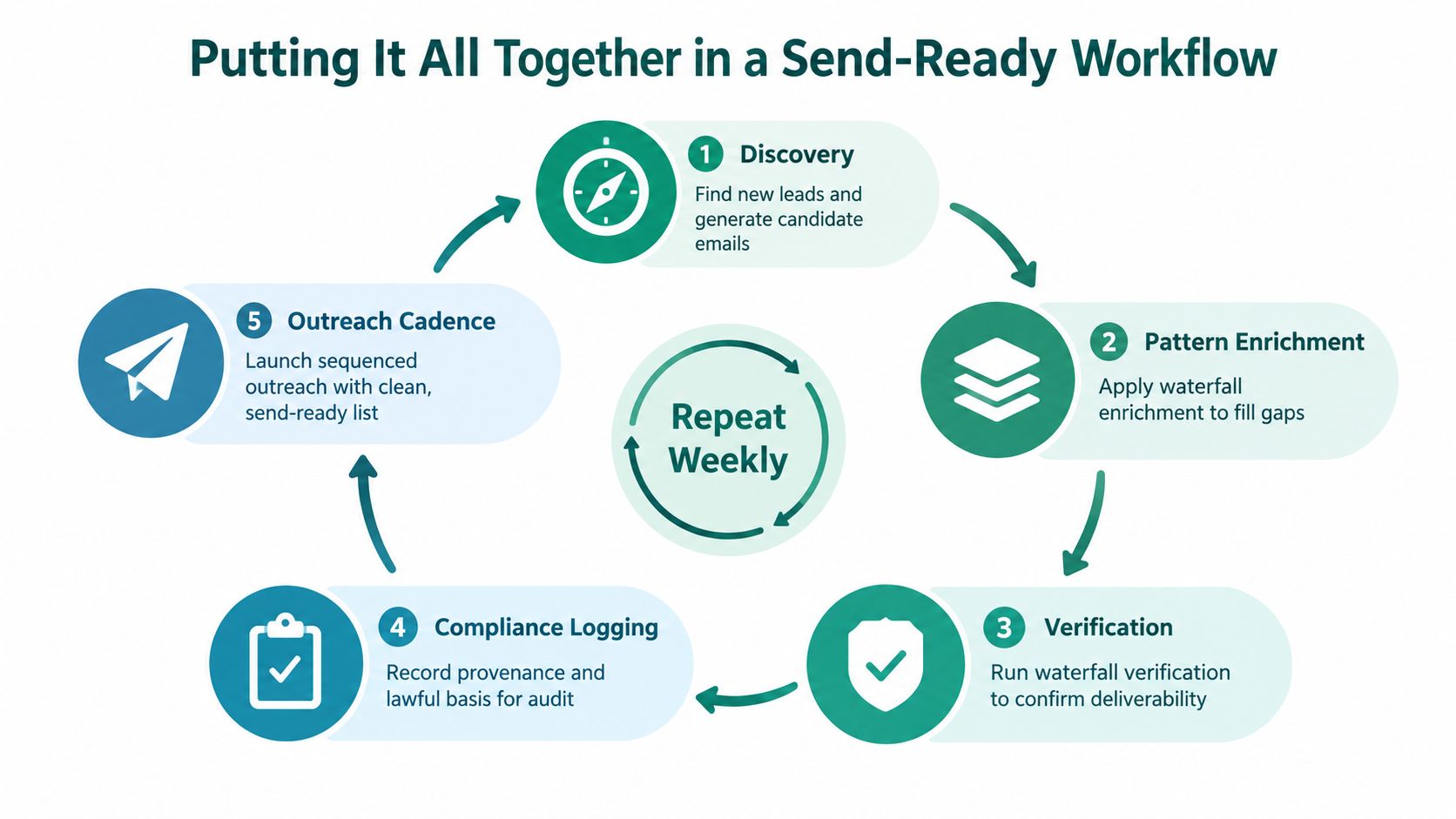
    Alright, let's put this into practice. Theory is great, but a repeatable workflow is what gets results.

    Imagine you need to connect with Sarah Jenkins, the Head of Marketing at a hot new tech startup called "Innovate Solutions." Your goal is to find her real email address so you can start a genuine conversation.

    https://www.youtube.com/embed/ZtN5a9s9lFQ

    I always recommend starting with the most direct, manual methods before jumping to any tool. It’s a layered approach that maximizes your chances of a quick win without wasting time.

    Starting With Smart Reconnaissance

    Your first move isn't guessing email patterns—it's gathering intel. A few minutes of strategic Googling can often give you everything you need right away.

    Try a few targeted searches for Sarah's name and her company:

    • "Sarah Jenkins" Innovate Solutions email
    • "S. Jenkins" contact site:innovatesolutions.com
    • "Sarah Jenkins" marketing "press release"

    These kinds of queries can turn up an author bio on the company blog or a mention in a news article where her contact details are listed outright. Seriously, this simple step can solve the puzzle in less than a minute.

    Next, I'd pivot over to LinkedIn for a bit of deeper digging. First, check Sarah’s profile and click on the "Contact Info" section. If that’s a dead end, scan her "About" summary—I’ve found that a surprising number of professionals just list their email right there.

    Still nothing? Take a look at her recent activity. Has she commented on a post or shared an article where she might have dropped her email to take a conversation offline? It happens more often than you think.

    Pivoting to Automated Tools

    If you’ve spent 10-15 minutes on your manual search and come up empty, it's time to work smarter, not harder. This is the perfect moment to bring in an email finder tool like the EmailScout Chrome extension.

    Instead of continuing the hunt yourself, you’d just navigate to the Innovate Solutions website and click the EmailScout icon in your browser.

    The tool instantly gets to work, scanning the domain, checking its own massive database, and running real-time verification checks. Within seconds, it will likely show you a list of employees, including "sarah.jenkins@innovatesolutions.com," conveniently marked as verified.

    This one click transforms a potentially long and frustrating search into a quick, decisive action. And knowing how to find the right email address this efficiently is a game-changer because of just how powerful this channel is.

    With a reported $36 return for every $1 spent, email marketing delivers an incredible 3,500% ROI. Your ability to locate the correct address directly fuels the success of your outreach. You can discover more email engagement statistics to really see its impact.

    Verification and Outreach Prep

    Once you have a promising email, the final step is to make sure it's valid and get your message ready.

    Even if a tool says an email is verified, I always suggest running it through a secondary verification service. It’s an extra layer of confidence that protects your sender reputation from bounces.

    With a confirmed email in hand, your focus shifts to crafting a compelling, personalized message. This is critical. Never send a generic template. Mention a recent company achievement you saw on LinkedIn or reference a blog post she wrote. It shows you’ve done your homework and are genuinely interested in starting a conversation, not just blasting out a sales pitch.

    This thoughtful approach is what turns a cold email into a warm introduction.

    Common Questions About Finding Emails

    Even with the best tools and a solid strategy, you're going to run into questions when you start hunting for email addresses. It just comes with the territory. Let's tackle some of the most common ones I hear so you can keep moving forward with confidence.

    Is It Actually Legal to Find and Email Someone?

    This is easily the number one question, and the answer isn't a simple yes or no—it's all about context. For most business-to-business outreach, finding a publicly listed email and sending a professional, relevant message is completely fine. Laws like CAN-SPAM in the US and GDPR in Europe are really designed to shut down shady, large-scale spam operations, not legitimate business communication.

    The whole game boils down to intent and respect. Is your message genuinely valuable to the person based on their professional role? If so, you're likely in the clear. Just make sure you always give them a dead-simple, one-click way to opt out. Good, ethical outreach isn't just about staying on the right side of the law; it's about building a reputation people trust.

    What Should I Do If I Just Can’t Find an Email Address?

    Hitting a brick wall is frustrating, but it’s definitely not the end of the road. When the usual methods come up empty, it's time to pivot.

    • Switch Up the Channel: A polite, professional message on LinkedIn or even Twitter can work wonders. You're not pitching them right there; you're just asking if they'd be open to a quick email.
    • Find a Colleague: Try to locate an email for someone else in the same department. A brief, respectful note asking if they could point you to the right person (or forward your message) is often very effective.
    • Engage with Their Work: Leave a thoughtful comment on their company's latest blog post or one of their LinkedIn articles. This gets your name on their radar in a natural, non-pushy way.

    Sometimes the best way in is the indirect route. Building a little bit of rapport on another platform can make your email feel a lot warmer and more welcome when you finally do find their address.

    How Accurate Are Email Finder Tools, Really?

    This varies a lot, but top-tier tools like EmailScout often hit accuracy rates well above 95% on their verified emails. They don’t just guess. The process involves cross-referencing public data, spotting common email patterns for that company, and even pinging the server to see if an address is live.

    That said, no tool is infallible. People change jobs, and companies restructure their email formats. A small margin of error is always possible. This is exactly why running your final list through a dedicated verification service is such a crucial last step. To see how that works, check out our guide on how you can validate an email address and keep your sender score high.


    Ready to stop guessing and find verified emails in seconds? EmailScout lets you pull contacts directly from company websites and LinkedIn profiles with a single click. It's time to connect with the right people.

    Find Unlimited Emails for Free with EmailScout

  • How to Find Business Email Address: Expert Tips & Tricks

    How to Find Business Email Address: Expert Tips & Tricks

    When you're trying to find a business email, it really boils down to three main plays: making an educated guess, getting creative with Google searches, and using a dedicated email finder tool. The real magic happens when you blend all three, letting you zip past the generic info@ black holes and land right in a decision-maker's inbox.

    Why Finding the Right Email Is a Game Changer

    Before we get into the nitty-gritty, let's talk about why this is so important. A direct email isn't just a contact detail; it's your private line to the people who matter. It's how you bypass gatekeepers and avoid those company-wide inboxes that feel like they're managed by no one at all.

    This one small step can completely change your outreach game from a shot in the dark to a well-aimed, strategic move.

    Think about it. A message you send through a website's contact form? It might get filtered, ignored, or just plain lost. A cold call? Good luck getting past the front desk. But a sharp, well-written email that lands directly in the right person's inbox? That gets attention. That invites a real response.

    The Strategic Advantage of Direct Access

    Knowing how to hunt down business email addresses gives you a serious leg up, no matter what your role is. Sales, marketing, recruiting, business development—it all starts with direct communication. It’s the only way to build real relationships and get things done.

    • Bypass Gatekeepers: You're talking straight to the person with the power to say "yes."
    • Improve Personalization: When you know who you’re writing to, you can craft a message that actually resonates instead of sending a one-size-fits-all template.
    • Increase Response Rates: It's simple, really. A personalized email sent to the right person is way more likely to be opened and answered.
    • Boost Campaign ROI: For marketers, a clean, accurate email list is everything. It means fewer bounces and better deliverability.

    This is especially critical in the B2B world, where building a solid pipeline is the name of the game. If you want to go deeper on this, we've got a whole guide on effective B2B lead generation strategies.

    The goal isn't just to send an email; it's to start a conversation. Finding the correct address is the first and most crucial step in making that happen, turning cold outreach into a warm introduction.

    Email's Enduring Importance

    Email just isn't going away. In fact, it's as dominant as ever in the professional world, which only makes accuracy more critical. There are over 4.6 billion email users across the globe, a number that proves this isn't some dying platform—it's the very backbone of how business gets done.

    This massive user base, as highlighted by The Frank Agency, confirms why getting your targeting right is so vital. When you secure a verified address, your message actually has a chance to be part of the conversation instead of just adding to the noise.

    Clever Manual Search Methods That Still Work

    While powerful tools can automate the hunt for contact information, some of the most effective techniques are completely free. All they require is a bit of clever detective work.

    Before you spend a dime, mastering these manual methods can yield surprising results and give you a solid foundation for any outreach campaign. These hands-on strategies are perfect when you just need to find one or two key contacts. It's all about combining educated guessing with strategic searching, turning a tough task into a solvable puzzle.

    The Art of the Educated Guess

    Most companies follow a predictable formula for their email addresses. If you know someone's first name, last name, and the company's domain, you can often piece together their email with a few logical attempts. This is where most manual searches begin.

    Start by listing out the most common combinations. This simple step is often all it takes.

    Some of the most prevalent patterns include:

    • First Name: john@company.com
    • First Initial, Last Name: jdoe@company.com
    • First Name, Last Initial: johnd@company.com
    • First Name.Last Name: john.doe@company.com
    • Full Name: johndoe@company.com

    Pro Tip: Pay attention to the company's culture. A modern tech startup might favor a simple firstname@ structure, while a more traditional corporation often uses a formal firstname.lastname@ format to avoid duplicates.

    Once you have a list of potential emails, don't just start firing off messages. Sending an email to the wrong address results in a hard bounce, which can hurt your sender reputation over time. Instead, use a few discreet methods to test your guesses first.

    Unlocking Clues with Advanced Google Searches

    Google is your best friend here, but you need to go beyond basic queries. By using advanced search operators, you can command Google to perform highly specific searches that uncover email addresses hidden in plain sight. These operators act like filters, narrowing millions of results down to just the ones that matter.

    For instance, if you're trying to find John Doe's email at "Acme Corp," you can combine operators to look for pages that mention his name and potential email patterns—but only on the company's website.

    Here’s a smart Google search query that can dig up hidden contact info:

    Image

    This kind of targeted command tells Google to look only within a specific site for pages containing both the person's name and the "@" symbol. It dramatically increases your chances of finding their email, often on old press releases, author bios, or staff directories you wouldn't find otherwise.

    Mining Professional and Social Networks

    Professional networking sites like LinkedIn are goldmines of information, even if they often hide direct contact details. You just need to know where to look for clues.

    1. Check the "Contact Info" Section: It sounds obvious, but you'd be surprised how many people forget. Sometimes, users list their professional email publicly right on their profile.

    2. Analyze Their Posts and Articles: Has your target published articles on LinkedIn? People often include their contact info in their author bio or at the end of a piece to encourage follow-up conversations.

    3. Look for Company-Wide Patterns: Find other employees from the same company. If you can find just one person's email address, you've likely discovered the pattern they use for everyone. For example, if you find s.jones@company.com, it’s a safe bet that your target, John Doe, is j.doe@company.com.

    This sleuthing work isn't limited to LinkedIn. People sometimes use professional handles on platforms like X (formerly Twitter) and may share their email in their bio. The key is to think like a detective and piece together small clues from multiple sources. It takes more effort than an automated tool, but it’s incredibly effective for precise, high-stakes outreach.

    Using Email Finder Tools for Speed and Scale

    Manual searching is great when you’re zeroing in on a few high-value contacts. But let’s be real—when you need emails for a bigger campaign or just don’t have hours to play digital detective, it's time to call in the specialists. This is where you trade the sniper rifle for a more strategic, wide-net approach.

    Email finder tools are built for one thing: finding accurate business emails, fast. They automate the entire discovery process, using powerful algorithms and massive databases to do in seconds what would take a person ages. For anyone in sales, marketing, or recruiting, these tools aren't just a nice-to-have; they’re a genuine force multiplier.

    How Email Finders Deliver Results

    So, what’s happening under the hood? These tools cross-reference tons of data points. They scan public web data, figure out common email patterns for specific companies, and check everything against their own databases to give you the most likely address.

    This automated approach gives you a few massive advantages:

    • Speed: You can find an email in an instant that might have taken you 30 minutes of digging.
    • Scale: Forget finding one email at a time. Now you can process entire lists of hundreds or even thousands of prospects.
    • Accuracy: Good tools come with built-in verification, which drastically cuts down your bounce rate and protects your sender reputation.

    For example, a tool like EmailScout can plug right into your browser. Here’s a look at how a simple interface can turn a name and a company into a verified contact.

    Image

    This screenshot shows you just how clean and direct modern email finders are. You pop in the details and get a result almost immediately. The real win is turning that scattered info into an actual, usable contact point for your outreach.

    Deciding between manual sleuthing and an automated tool often comes down to balancing your time against your budget and needs.

    Comparing Manual vs Automated Email Finding

    A breakdown of manual search techniques versus automated tools, helping you choose the right approach for your needs.

    Method Best For Speed Cost Accuracy
    Manual Searching High-value, targeted outreach; small lists; budget-conscious users Slow, can take minutes to hours per contact Free (but costs you time) Varies; high potential for error or outdated info
    Automated Tools Large-scale campaigns; building lists quickly; sales & marketing teams Extremely fast, seconds per contact or bulk processing Subscription-based (monthly/yearly) High, often includes real-time verification

    Ultimately, the best strategy often involves a mix of both. Use manual methods for your top-tier prospects and automate the rest to build scale.

    Choosing the Right Type of Tool

    Not all email finder tools are built the same. They usually fall into a few camps, and picking the right one depends entirely on how you work.

    1. Browser Extensions: These are easily the most convenient for day-to-day prospecting. They live in your browser and let you find an email directly from someone’s professional networking profile with a single click. EmailScout is a perfect example of this.

    2. Web Applications: These are more heavy-duty platforms that offer bulk email finding. You can upload a CSV file with names and company domains, and the app will go to work enriching that list with verified emails.

    3. API Integrations: For businesses that need to build email finding directly into their own CRM or other software, an API offers the most flexible and scalable solution.

    Your choice really comes down to your goals. A salesperson who needs to find contacts on the fly will love a browser extension. A marketer gearing up for a big campaign needs a bulk-finding web app. If you want a deeper dive, our guide on the best email finder tools breaks down the top players in the market.
    https://emailscout.io/best-email-finder-tools/

    When to Upgrade from Manual to Automated

    Knowing when to make the jump from manual methods to a dedicated tool is key to working smarter, not harder. While manual searching has its place, a few tell-tale signs suggest it’s time to invest.

    The decision to adopt an email finder tool isn't about replacing manual skills—it's about augmenting them. It's about recognizing that your time is better spent building relationships and crafting compelling messages than on repetitive search tasks.

    Think about making the switch if you’re running into these situations:

    • You need more than 10-15 contacts per week. The time you sink into manual searching starts to deliver diminishing returns pretty quickly.
    • Your outreach list is growing. Trying to manage and verify a large list by hand is not just slow, it's a recipe for mistakes.
    • Your bounce rate is too high. Automated tools with built-in verification give you a layer of quality control that guesswork just can't match.

    A great email finder doesn't just hand you a contact; it gives you confidence. It ensures your message has the best possible shot at landing in the right inbox, freeing you up to focus on what actually matters: making a connection. That’s how you turn contact discovery from a chore into a core part of your growth engine.

    The Non-Negotiable Step of Email Verification

    Image

    So, you've found a promising email address. That's a great start, but the job isn't done. Not even close.

    Sending an email to an unverified address is like shipping a package without confirming the destination exists. It's a gamble that almost never pays off, and it can create a mess of problems for you down the road. This final check is what separates amateur outreach from professional, results-driven communication.

    The High Cost of a High Bounce Rate

    When you send a message to a non-existent email, it "bounces" back. While a few bounces are inevitable, a high bounce rate is a massive red flag for email providers like Gmail and Outlook. It makes you look like a spammer, and that's when the real trouble starts.

    A poor sender reputation isn't just a technical problem—it can cripple your outreach efforts.

    • Your emails land in spam: Even messages to valid addresses get filtered out before they're ever seen.
    • Your delivery rates plummet: Fewer of your emails will even make it to the server, let alone the inbox.
    • You can get blacklisted: In the worst-case scenario, your entire domain can be blocked by providers, shutting down your email campaigns completely.

    A clean, verified email list isn't a "nice-to-have"; it's the bedrock of any successful outreach strategy.

    Layers of Email Verification

    What does it actually mean to verify an email? It’s not just a quick spell-check. A proper verification process involves multiple layers of validation to ensure an inbox is real, active, and ready to receive your message.

    Verification isn't just about avoiding a bounce. It’s a fundamental practice of digital hygiene that protects your sender reputation and ensures your carefully crafted messages have a chance to be read.

    Think of it like confirming a physical address. First, you check the street name and number, then the city and zip code, and finally, you confirm someone is actually there to get the mail.

    • Syntax Check: This is the most basic step, just making sure the email follows the standard name@domain.com format.
    • Domain Check: The next layer confirms the domain (@company.com) is real and has active mail servers configured to receive email.
    • SMTP Handshake: This is the gold standard. The system "pings" the mail server to ask if a specific inbox exists—all without actually sending an email. It’s the most reliable way to confirm deliverability.

    That final handshake gives you the highest level of confidence that your email will land where it's supposed to. If you want to dive deeper into the technical side, check out our complete guide on what email address verification involves.

    Manual Checks vs. Automated Services

    Sure, you could try to do some of this manually. There are free online tools that will ping an address for you. But these methods are slow, clunky, and simply can't perform the deep-level checks you need, especially when you're dealing with more than a handful of contacts.

    This is where automated services, often built directly into tools like EmailScout, are an absolute game-changer. They run through all the necessary checks in seconds, giving you a clear "valid," "invalid," or "risky" status for every contact. It's fast, it's accurate, and it protects your sender reputation from damage.

    Verification also plays a crucial role in security. Business email compromise (BEC) attacks are a massive threat, costing companies an average of $4.89 million per incident. These attacks, which accounted for 73% of all reported cyber incidents in a recent year, often start with a fraudulent email. Verifying your contacts is a small but critical step in making sure you’re talking to who you think you're talking to.

    At the end of the day, skipping verification to save a few seconds is a classic mistake. The potential damage to your sender score and the wasted time on bounced emails far outweigh the tiny effort it takes to get it right. It's the final, make-or-break step in finding a business email address the right way.

    Building a Repeatable Email Finding Workflow

    Knowing a few tricks to find an email is one thing. Building a repeatable system that you can rely on is what separates the pros from the amateurs. A solid workflow takes the guesswork out of the equation, saving you a ton of time and dramatically improving your accuracy. It turns a tedious chore into a predictable, almost automatic process.

    Let's walk through a workflow that I've seen work time and time again. It starts with the quickest, easiest checks and gradually moves to more advanced tactics, always ending with the most important step: verification.

    Start with the Low-Hanging Fruit

    Before you dive into any complex searches, always start with the basics. The goal here is pure efficiency—spend no more than a couple of minutes on these first checks.

    First, head straight to the company's website. The "About Us" or "Team" page is an absolute goldmine. You'd be surprised how often founders, executives, and other key people have their direct emails listed right there.

    Next, pop over to LinkedIn. Find your prospect's profile and look for the "Contact Info" section. It's often locked down, but sometimes you get lucky. These two steps alone can often land you a valid email in under five minutes.

    Escalate to Educated Guessing

    If the easy wins come up empty, it's time to play detective. Most companies use a standard email format, like firstname.lastname@company.com. If you can find just one person's email address from that company, you've likely cracked the code for everyone else.

    A quick Google search using a query like ("john smith" AND "email") site:company.com might pull up an email from an old press release or blog post. Once you find the pattern (e.g., jsmith@company.com or john.s@company.com), you can apply it to your target's name. This educated guess is right more often than not.

    My pro tip? Don't just settle for one guess. Come up with the top three to five most common formats. You'll use this short list in the final verification stage, which seriously boosts your chances of getting a hit.

    Deploy an Email Finder Tool When Needed

    When you've exhausted the manual methods or you need to find contacts at scale, it's time to bring in the heavy hitters. This is where a specialized tool like EmailScout becomes your best friend.

    Instead of sinking another 20 minutes into creative Google dorking, a good tool can often find and verify a contact in seconds. This isn't about giving up; it's about being smart with your time. If a quick manual search fails, an automated tool is simply the most efficient path forward.

    The Final, Crucial Step: Verification

    I can't stress this enough: never skip verification. It doesn't matter how you found the email—off a website, through a clever guess, or from a tool. Sending to unverified addresses is the fastest way to wreck your sender reputation and get your emails sent straight to spam.

    A proper verification process isn't just a simple check. It's a multi-stage technical handshake to confirm an email is actually deliverable.

    Image

    As you can see, a robust check confirms the email format is valid, checks that the domain has active mail servers, and then pings that server to see if the specific inbox actually exists. This is how you get the confidence you need before you hit "send."

    Ultimately, a tight workflow like this directly impacts your bottom line. With email marketing generating anywhere from $36 to $40 for every dollar spent, every verified contact counts. Finding the right email ensures your message lands in the right inbox, which is the first step to achieving that incredible ROI. The latest workplace email statistics just confirm how powerful this channel continues to be.

    Frequently Asked Questions

    When you're digging for email addresses, it’s natural to have questions about the rules, the best methods, and what to do when you hit a dead end. Getting these answers sorted out means you can move forward with confidence, making sure your outreach is both effective and above board. Let's tackle some of the most common questions people ask.

    Is It Actually Legal to Find and Use a Business Email?

    Yes, it is. In places like the United States, finding and using a publicly available business email for commercial outreach is perfectly legal. The important part isn't finding the email, but how you use it. This is where regulations like the CAN-SPAM Act come into play, setting clear rules for any commercial messages you send.

    Your outreach needs to be professional and compliant. That means you absolutely must:

    • Give people a clear, simple way to opt out of future emails.
    • Honor any opt-out request within 10 business days.
    • Include your real physical postal address in your message.
    • Never use tricky subject lines or misleading header info.

    Breaking these rules can bring some hefty penalties, so always make compliance a top priority.

    The spirit of these laws is all about transparency and respecting the person on the other end. You're not barred from reaching out; you just have to do it honestly and give them an easy way out if they're not interested.

    What's the Most Accurate Way to Find an Email?

    Honestly, the most reliable method is a two-step combo: use a great automated tool first, then follow up with a solid verification step. Just guessing patterns might work sometimes, but it's a recipe for a high bounce rate. A quality email finder is your best bet for a starting point, as it scans multiple public sources to pinpoint the most likely address.

    But here’s the thing—no tool is 100% perfect. That's why the final, non-negotiable step is to run that email through a verification service. This check confirms in real-time that the inbox exists and can actually receive mail, giving you the highest possible confidence before you click send.

    How Do I Find Emails for an Entire Company at Once?

    Trying to find emails for a whole company one by one is a massive time-sink. It's just not practical. For a job like that, a dedicated bulk email finder is really the only way to go.

    These services are built for scale. You can usually just upload a CSV file with a list of names and their company domains. The platform will then chew through that list and spit back verified email addresses for your contacts. It turns a task that could take you weeks of manual searching into something that takes just a few minutes—an absolute game-changer for any large sales or marketing push.

    What if I've Tried Everything and Still Can't Find an Email?

    If you've exhausted all your methods and come up empty, there's a good chance that email address is being kept private for a reason. Instead of banging your head against a wall, it's time to switch up your strategy and try a different channel.

    LinkedIn is a fantastic alternative. You can connect with the person and send a short, professional message explaining why you want to get in touch. Another smart move is to contact a colleague in the same department. Politely explain what you need and ask if they could either forward your message or point you to the right person.


    Ready to stop guessing and start connecting? EmailScout gives you the power to find verified business email addresses in a single click, directly from your browser. Try it for free and streamline your outreach today.

  • 12 Best Email Finder Tools for Sales & Marketing in 2025

    12 Best Email Finder Tools for Sales & Marketing in 2025

    In today's competitive landscape, connecting with the right decision-makers is the cornerstone of successful sales and marketing campaigns. Manually searching for email addresses is not just time-consuming; it's inefficient and often leads to dead ends. This is where email finder tools become indispensable, transforming your outreach process from a guessing game into a precise, data-driven strategy. But with a crowded market, how do you choose the right one?

    This guide cuts through the noise. We have meticulously analyzed the 12 best email finder tools available today, evaluating their unique strengths, ideal use cases, and practical limitations. We move beyond generic feature lists to provide a comprehensive resource designed for sales professionals, digital marketers, and business development teams who need reliable contact data to fuel their growth.

    Inside this detailed breakdown, you will find an honest assessment of top platforms like Hunter, Snov.io, Apollo.io, and RocketReach, among others. Each review includes a close look at key features, data accuracy, integration capabilities, and pricing structures to help you make an informed decision. We provide screenshots for visual context and direct links to get you started quickly.

    Whether you're a freelancer building a client list, a startup scaling its outreach, or an established enterprise refining its sales process, this guide will equip you to select the tool that perfectly aligns with your workflow, budget, and prospecting goals. Forget the guesswork; let's find the right tool to connect you with the contacts that matter most to your business. We will explore platforms built for bulk prospecting, those focused on hyper-targeted lead generation, and tools that integrate seamlessly into your existing sales stack.

    1. EmailScout

    EmailScout solidifies its position as one of the best email finder tools by combining powerful, high-volume data extraction with an exceptionally user-friendly Chrome extension. It's an ideal solution for sales professionals, marketers, and entrepreneurs who require a reliable stream of leads without a steep learning curve or prohibitive cost. The platform excels at simplifying the lead generation process, allowing users to effortlessly pull contact information directly from websites or Google search results with a single click.

    What truly sets EmailScout apart is its balance of accessibility and power. Its core value proposition lies in providing unlimited email searches even on its free plan, a feature that immediately lowers the barrier to entry for freelancers, startups, and budget-conscious teams. This allows anyone to start building targeted lists immediately.

    EmailScout

    Key Features & Use Cases

    EmailScout is more than just a simple scraper; its feature set is designed for efficiency at scale. The URL Explorer is a standout capability, empowering users to scan up to 1,500 URLs in a single batch. This is a game-changer for large-scale campaigns, such as a B2B SaaS company targeting a curated list of potential clients from a directory or a digital marketer building an outreach list from a series of industry blogs.

    Another powerful feature is AutoSave, which automatically captures emails in the background as you browse. This passive collection method is perfect for busy professionals who are constantly researching competitors or exploring new markets, ensuring no potential lead is missed.

    Analysis and Verdict

    Pros:

    • Generous Free Plan: Offers unlimited email searches and manual exports, making it perfect for getting started.
    • Automated Collection: The AutoSave feature streamlines lead gathering by capturing emails as you navigate the web.
    • Bulk Processing Power: URL Explorer is a massive time-saver for users needing to process large lists of domains simultaneously.
    • Affordable Scaling: Premium plans start at an accessible $9/month, providing a clear and cost-effective upgrade path.
    • Simple Integration: The Chrome extension is intuitive and integrates seamlessly into daily browsing habits.

    Cons:

    • Manual Exports on Free Tier: The free plan requires users to manually export lists after each search, which can slow down workflow.
    • Advanced Features May Be Overkill: Casual users may not need the high-volume capabilities offered in premium tiers.

    Ultimately, EmailScout is a versatile and robust choice that scales with your needs. It’s an indispensable tool for anyone serious about building targeted marketing lists and maximizing their outreach potential without complexity.

    Website: https://emailscout.io

    2. Hunter

    Hunter has long been a benchmark in the B2B prospecting space, establishing itself as one of the best email finder tools by combining simplicity with powerful data. Its core strength lies in its unified credit system, where one credit can be used for an email search, a verification, or as part of a bulk task. This approach simplifies resource management for sales and marketing teams.

    The platform excels at domain-level searches, allowing you to input a company website and receive a list of all publicly available email addresses associated with that domain. Each result is returned with a confidence score and source URLs, providing valuable transparency that many competitors lack.

    Hunter

    Key Features & Use Case

    Hunter is best suited for teams that need a reliable, all-in-one solution for lead generation and initial outreach. The integrated "Campaigns" feature allows users to send simple, personalized cold email sequences directly from the platform, complete with tracking and follow-ups. This makes it an excellent choice for startups or small sales teams looking to manage their entire top-of-funnel process without investing in separate, more complex sales engagement software. The robust API and integrations, including a popular Google Sheets add-on, also make it a favorite for teams that need to enrich data within their existing workflows.

    Pricing and Plan Structure

    Hunter offers a free plan with 25 monthly searches. Paid plans scale based on the number of "requests" (credits) you need per month:

    • Starter ($49/month): 500 monthly searches and 1,000 verifications.
    • Growth ($149/month): 5,000 monthly searches and 10,000 verifications.
    • Business ($499/month): 50,000 monthly searches and 100,000 verifications.

    All paid plans include team seats, allowing you to share credits across your organization.

    Pros:

    • Transparent credit usage and automatic verification reduce bounce rates.
    • Robust API and extensive third-party integrations.
    • Generous team/user credit-sharing model.

    Cons:

    • Shared credits across multiple features can be depleted quickly.
    • Higher volume plans can become pricey compared to competitors.

    Website: https://hunter.io/pricing

    3. Snov.io

    Snov.io positions itself as a comprehensive, all-in-one cold outreach automation platform, making it one of the best email finder tools for users who want to manage their entire prospecting and outreach workflow in a single place. Its strength lies in its integrated ecosystem, where you can find leads, verify their email addresses, and launch multichannel drip campaigns without ever leaving the platform. This unified approach eliminates the need to subscribe to and manage multiple disparate tools.

    The platform's versatility is a key differentiator, offering an Email Finder that works via domain, company name, or individual prospect names. Its powerful Chrome extension also allows users to capture leads directly from LinkedIn profiles and company websites, streamlining the lead generation process significantly.

    Snov.io

    Key Features & Use Case

    Snov.io is best suited for sales and marketing teams looking for a cost-effective, end-to-end solution that covers everything from lead discovery to conversion. The built-in Drip Campaigns feature is particularly robust, allowing for the creation of complex, automated email sequences with unlimited follow-ups. This makes it a powerful choice for businesses that need to scale their outreach efforts efficiently. The addition of an email warm-up tool helps ensure better deliverability, which is a critical component for anyone running cold email campaigns at volume.

    Pricing and Plan Structure

    Snov.io offers a forever-free plan with 50 monthly credits. Paid plans are structured by the number of credits and unique recipients you can contact:

    • Starter ($39/month): 1,000 credits and 2,000 unique recipients.
    • Pro ($99/month): 5,000 credits and 10,000 unique recipients.
    • Managed Service (From $3,999/month): A fully managed lead generation service.

    Unused credits from paid plans roll over to the next month, providing excellent value.

    Pros:

    • Comprehensive toolset covers prospecting, verification, and outreach.
    • Generous free plan with 50 credits per month.
    • Credits roll over on paid plans, ensuring you don't lose what you pay for.

    Cons:

    • The wide array of features can have a steeper learning curve for new users.
    • LinkedIn-specific automation features may require separate add-on purchases.

    Website: https://snov.io/pricing

    4. Apollo.io

    Apollo.io has evolved from a simple data provider into a comprehensive sales intelligence and engagement platform, making it one of the best email finder tools for teams wanting an all-in-one solution. Its primary strength lies in its massive B2B database, which offers not just email addresses but direct-dial phone numbers, company data, and buying intent signals. This integrated approach allows users to find prospects, enrich data, and execute outreach campaigns without leaving the platform.

    The platform distinguishes itself by combining lead discovery with powerful sales execution tools. Unlike many competitors that focus solely on data retrieval, Apollo.io includes a built-in sequencer, dialer, and analytics dashboard, effectively consolidating the a sales development representative's tech stack.

    Apollo.io

    Key Features & Use Case

    Apollo.io is best suited for sales development teams, particularly in the US market, who need a unified workflow for prospecting and outreach. The platform's built-in engagement features, like the email sequencer and power dialer, allow for high-volume, multi-channel outreach directly within the tool. As a comprehensive platform, Apollo.io is also highlighted as one of the best lead generation tools available. Native integrations with Salesforce and HubSpot ensure that all activity is synced back to the primary CRM, making it a powerful engine for top-of-funnel pipeline generation.

    Pricing and Plan Structure

    Apollo.io provides a generous free plan and scalable paid options. Credits are split between export credits (for sending data to a CRM) and mobile credits.

    • Free: 600 mobile credits and 120 export credits per year.
    • Basic ($59/month): 900 mobile credits and 600 export credits per year.
    • Professional ($99/month): 1,200 mobile credits and 1,200 export credits per year.

    Higher-tier plans unlock advanced features like intent data, call recording, and more integrations.

    Pros:

    • Comprehensive all-in-one platform for prospecting and outreach.
    • Generous free plan with access to core features.
    • Strong US market data coverage for emails and phone numbers.

    Cons:

    • The credit system for mobile vs. export can be confusing.
    • Key features like the dialer are locked behind more expensive tiers.

    Website: https://www.apollo.io

    5. RocketReach

    RocketReach has carved out a significant niche among the best email finder tools, particularly favored by recruiters and sales professionals who need more than just an email address. Its key differentiator is the ability to uncover both personal and professional contact details, including direct and mobile phone numbers, which provides a more holistic view of a prospect. The platform’s strength lies in its extensive database, which claims to have profiles on over 700 million professionals across 35 million companies.

    The user experience is streamlined through a powerful browser extension that works seamlessly on LinkedIn and other corporate websites. This allows for quick, on-the-fly lookups without disrupting your prospecting workflow. The tool's ability to pull multiple email formats and phone numbers for a single contact gives users a higher chance of successfully connecting.

    RocketReach

    Key Features & Use Case

    RocketReach is best for teams that require a multi-channel outreach strategy, extending beyond email to include phone calls. Recruiters find it invaluable for sourcing passive candidates by finding personal contact information, while sales teams use it to access direct dials and bypass gatekeepers. Its bulk lookup feature is also highly effective for enriching large lists of prospects with comprehensive contact data, making it a powerful tool for building targeted outreach campaigns from scratch or enhancing existing CRM records. The API allows for deeper integration into custom workflows and enterprise systems.

    Pricing and Plan Structure

    RocketReach offers individual and team plans with pricing that often varies. Phone number lookups are typically reserved for higher-tier plans.

    • Essentials ($39/month): 125 lookups/month (email only).
    • Pro ($99/month): 300 lookups/month (email & phone).
    • Ultimate ($249/month): 833 lookups/month (email & phone).

    Team and Enterprise plans offer pooled lookups and additional features. It's recommended to check their site for the most current regional pricing.

    Pros:

    • Excellent for finding both personal and professional emails, plus phone numbers.
    • Simple and intuitive browser extension for easy prospecting.
    • Team plans with pooled lookups are great for collaborative environments.

    Cons:

    • Access to mobile and direct phone numbers requires more expensive plans.
    • Pricing can be less transparent and may differ based on location.

    Website: https://rocketreach.co

    6. Lusha

    Lusha has carved out a strong niche in the B2B prospecting world by focusing on high-accuracy contact data, including both emails and direct phone numbers. Its credit-based system is straightforward, with clear policies on credit rollover that appeal to teams with fluctuating monthly needs. The platform is especially well-regarded for its browser extension, which seamlessly integrates with LinkedIn to provide contact details with a single click.

    This ease of deployment and simple user interface make it a popular choice for sales teams that need to get up and running quickly without a steep learning curve. The emphasis on both email and phone data positions it as a more comprehensive contact discovery tool compared to email-only solutions.

    Lusha

    Key Features & Use Case

    Lusha is best for sales development representatives (SDRs) and account executives who prioritize multi-channel outreach, particularly in the US B2B market. While finding an email costs a single credit, the platform’s value shines for those who also need direct-dial phone numbers to complement their email campaigns. Its CRM integrations allow for direct export of discovered contacts, streamlining the process of adding new leads into existing sales funnels. This makes it a powerful tool for teams focused on quickly building targeted prospect lists from platforms like LinkedIn and company websites.

    Pricing and Plan Structure

    Lusha offers a free starter plan with 5 credits per user per month. Paid plans scale based on credits per user and feature access:

    • Pro ($29/user/month): 40 credits per user per month.
    • Premium ($51/user/month): 80 credits per user per month.
    • Scale (Custom Pricing): Custom credit allowances, CRM integrations, and advanced analytics.

    Credit rollover is available on annual plans, which is a key differentiator.

    Pros:

    • High accuracy for both emails and direct-dial phone numbers.
    • Clear credit rollover policies and easy self-serve upgrades.
    • Simple to implement and use, especially the browser extension.

    Cons:

    • Phone numbers consume a significant number of credits.
    • Key features like CRM integrations are gated behind higher-tier plans.

    Website: https://www.lusha.com/pricing/

    7. Skrapp

    Skrapp carves out its niche as one of the best email finder tools by focusing on a value-driven, high-accuracy model. Its core differentiator is the promise to only charge credits for valid or catch-all email addresses, effectively eliminating waste on invalid or unfound contacts. This makes it an incredibly cost-efficient choice for teams conducting high-volume prospecting campaigns.

    The platform is heavily integrated with LinkedIn and Sales Navigator through its Chrome extension, allowing users to find verified email addresses directly from prospect profiles with a single click. This streamlined workflow is ideal for sales professionals who spend a significant amount of time building lead lists on these networks.

    Skrapp

    Key Features & Use Case

    Skrapp is best suited for individuals and teams that prioritize bulk email enrichment and lead generation directly from professional networks. Its strength lies in its ability to quickly process large lists of names and companies via its Bulk Email Finder, returning enriched data files ready for import into a CRM or outreach tool. The fact that credits roll over month-to-month provides flexibility for users with fluctuating prospecting needs, ensuring no investment is lost. While it lacks built-in email sending features, it excels as a pure data enrichment tool that integrates into a wider sales stack.

    Pricing and Plan Structure

    Skrapp offers a free plan with 100 credits/month. Paid plans are structured by the number of credits and user seats:

    • Starter ($49/month): 1,000 credits/month for 2 users.
    • Seeker ($149/month): 5,000 credits/month for 5 users.
    • Global ($299/month): 20,000 credits/month for 15 users.

    Annual subscriptions offer significant savings, and all paid plans include credit rollover.

    Pros:

    • Cost-efficient model that only charges for valid and catch-all results.
    • Excellent integration with LinkedIn and Sales Navigator for seamless prospecting.
    • Generous credit rollover and team sharing on paid plans.

    Cons:

    • Lacks integrated outreach and campaign management features.
    • Advanced integrations and API access are reserved for higher-tier plans.

    Website: https://skrapp.io/pricing

    8. Voila Norbert

    Voila Norbert positions itself as a friendly and highly accurate prospecting assistant, carving out a niche as one of the best email finder tools by focusing on simplicity and data quality. Its core appeal lies in its straightforward, credit-based system for finding leads, where users purchase a set number of credits upfront. This pay-as-you-go model is ideal for teams who prefer predictable spending without monthly subscription commitments.

    The platform is designed for one primary function: finding and verifying professional email addresses with high precision. It strips away the complexity of larger sales engagement platforms, focusing entirely on delivering reliable contact data. This lean approach makes it a fast and efficient tool for sales reps and marketers who need to quickly build targeted prospect lists.

    Voila Norbert

    Key Features & Use Case

    Voila Norbert is best suited for individuals or teams whose primary need is accurate email acquisition and verification, rather than a full-suite outreach tool. Its pay-as-you-go credit system for verification and enrichment allows users to only pay for the extra services they need, providing cost control. The Chrome extension is particularly useful for finding contacts on the fly while browsing LinkedIn or company websites. Its simple API and integrations with platforms like Zapier and Salesforce make it easy to enrich data within an existing tech stack. This focused functionality is perfect for those who want to master the basics of how to find anyone's email address without getting bogged down by superfluous features.

    Pricing and Plan Structure

    Voila Norbert offers prepaid, non-expiring credit packages for prospecting, with separate pay-as-you-go options for verification and enrichment.

    • Valet ($49/month): 1,000 leads.
    • Butler ($99/month): 5,000 leads.
    • Advisor ($249/month): 15,000 leads.
    • Counselor ($499/month): 50,000 leads.

    Verification is priced at $0.003 per email, and enrichment is $0.04 per email.

    Pros:

    • Straightforward, prepaid pricing model for prospecting credits.
    • Unlimited team member access even on lower-tier plans.
    • High emphasis on email accuracy and data quality.

    Cons:

    • Verification and enrichment services are priced separately from prospecting credits.
    • Lacks integrated outreach features like email campaigns found in competitors.

    Website: https://www.voilanorbert.com/pricing

    9. ContactOut

    ContactOut carves out its niche as a powerful email finder tool heavily optimized for LinkedIn, making it a favorite among recruiters and sales development representatives. Its primary strength lies in its ability to uncover personal email addresses and phone numbers directly from LinkedIn profiles via a seamless Chrome extension. The platform claims to have one of the largest databases of profiles, sourcing data from public records and its own AI-driven discovery engine.

    Unlike tools that focus solely on professional emails, ContactOut’s emphasis on finding personal contact details provides an alternative channel for outreach, which can be particularly effective in recruitment or highly competitive sales cycles. Its dedicated search portal also allows users to find candidates and leads outside of LinkedIn, adding another layer of versatility.

    ContactOut

    Key Features & Use Case

    ContactOut is best suited for recruiters and sales professionals who spend a significant amount of their prospecting time on LinkedIn. The platform’s ability to find both work and personal emails, along with mobile numbers, makes it invaluable for roles where direct and immediate contact is crucial. Higher-tier plans include features like data enrichment and direct integrations with Salesforce and various Applicant Tracking Systems (ATS), allowing teams to enrich their existing contact databases and streamline their hiring or sales workflows without manual data entry.

    Pricing and Plan Structure

    ContactOut offers several tiers, though custom pricing is common for larger teams.

    • Free Plan: Provides 40 credits per month.
    • Personal ($29/month): 1,800 credits per year for email discovery.
    • Professional ($99/month): 3,600 credits per year for email and phone numbers.
    • Recruiter & Teams: Custom pricing with advanced features like ATS/CRM integration and team management.

    Pros:

    • Excellent at finding personal emails and phone numbers from LinkedIn.
    • Strong focus on recruiting workflows with ATS integrations.
    • Generous free plan for occasional use.

    Cons:

    • "Unlimited" plans are subject to fair-use policies that can be restrictive.
    • Pricing for team and API plans requires contacting sales, lacking transparency.

    Website: https://contactout.com/pricing

    10. GetProspect

    GetProspect has carved out a niche as one of the best email finder tools by focusing on a "pay-for-verified" model, ensuring users only spend credits on valid, deliverable email addresses. Its core value proposition lies in its strong LinkedIn integration and transparent credit system, making it a reliable choice for sales teams and recruiters who source heavily from the professional network. The platform offers a multi-faceted approach, combining lead discovery with data enrichment and basic outreach functionalities.

    The tool’s powerful LinkedIn Chrome extension allows for one-click prospect capturing from profiles and search results, building targeted lists directly within your workflow. This efficiency, paired with its affordability, makes it an attractive option for teams that need to scale their lead generation efforts without a significant financial commitment.

    GetProspect

    Key Features & Use Case

    GetProspect is best suited for budget-conscious individuals or teams that require a high volume of verified B2B contacts, primarily sourced from LinkedIn. The ability to enrich CSV files and export data in multiple formats makes it highly adaptable for users who need to feed lead lists into external CRMs or sales engagement platforms. Its native integrations and team credit-sharing capabilities support collaborative prospecting efforts, allowing an entire team to work from a centralized pool of resources. While it includes basic email sending features, its primary strength is as a top-of-funnel data acquisition tool.

    Pricing and Plan Structure

    GetProspect offers a free plan with 50 valid emails per month. Paid plans are structured around the number of valid emails you can find:

    • Starter ($49/month): 1,000 valid emails and 2,000 verifications.
    • Growth ($99/month): 5,000 valid emails and 10,000 verifications.
    • Pro ($199/month): 20,000 valid emails and 40,000 verifications.

    It also offers separate, non-expiring credit packs for email verification, providing extra flexibility.

    Pros:

    • Transparent quotas that only charge for valid emails found.
    • Affordable and flexible verification packs that do not expire.
    • Excellent LinkedIn integration for efficient prospect sourcing.

    Cons:

    • Phone number credits are limited on lower-tier plans.
    • Outreach features are basic compared to dedicated sequencing tools.

    Website: https://getprospect.com/pricing

    11. Anymail Finder

    Anymail Finder carves out a unique niche among the best email finder tools by focusing on one simple promise: you only pay for verified, deliverable email addresses. This "pay-as-you-find" model eliminates the risk of wasting credits on invalid or risky contacts, making it a highly cost-effective solution for teams that prioritize data quality and deliverability above all else. Its system is straightforward: if an email isn't verified with a high degree of confidence, you don't get charged.

    The platform is built for directness, offering a powerful bulk finder, an API for integration, and a simple verifier. It stands out by not charging for duplicate searches within a 30-day period and allowing users to roll over unused credits, providing excellent budget control and flexibility for campaigns with fluctuating needs.

    Anymail Finder

    Key Features & Use Case

    Anymail Finder is best suited for users who have their own outreach or sales engagement platform and need a reliable, high-accuracy data source to fuel it. Its core strength is its direct approach to email address verification, which is baked into the discovery process itself. This makes it ideal for performance marketers and sales teams who measure success by deliverability and response rates, as it significantly reduces the chances of bounces that could harm sender reputation. The API is particularly useful for enriching existing CRMs or custom-built prospecting tools with verified contact data.

    Pricing and Plan Structure

    Anymail Finder offers a free trial with 20 verified emails. Paid plans are based on the number of verified emails you can find per month:

    • 1,000 Verified Emails ($49/month): Includes rollover for up to 2,000 credits.
    • 5,000 Verified Emails ($99/month): Includes rollover for up to 10,000 credits.
    • 10,000 Verified Emails ($149/month): Includes rollover for up to 20,000 credits.

    All plans include unlimited team members, a bulk finder, and API access.

    Pros:

    • Excellent cost control by only charging for verified, deliverable emails.
    • Generous credit rollover policy (up to 2x monthly cap).
    • Simple, uncluttered interface focused purely on data acquisition.

    Cons:

    • No built-in outreach or sequencing features.
    • Advanced searches, like finding decision-makers, can consume extra credits.

    Website: https://anymailfinder.com/pricing

    12. Clearbit (by HubSpot)

    Acquired by HubSpot, Clearbit has evolved from a popular email finder into an enterprise-grade data enrichment engine. It positions itself less as a standalone tool and more as a foundational data layer for your entire go-to-market strategy. Its core value lies in its ability to enrich existing records and reveal anonymous website traffic, turning partial data into actionable company and contact profiles.

    Clearbit’s strength is not just finding a single email but providing a comprehensive dataset, including firmographic, demographic, and technographic details. This makes it an indispensable asset for Revenue Operations teams aiming to automate lead routing, scoring, and personalization at scale.

    Clearbit (by HubSpot)

    Key Features & Use Case

    Clearbit is best suited for mature organizations that need high-quality data embedded directly into their CRM and marketing automation platforms, particularly HubSpot. Its APIs power features like form shortening, where a user only needs to enter their work email, and Clearbit populates the rest of their company data automatically. This deep integration makes it one of the best email finder tools for teams focused on building sophisticated, data-driven sales and marketing funnels rather than just performing manual lookups.

    Pricing and Plan Structure

    Clearbit operates on a sales-led, custom pricing model tailored to enterprise needs. There are no public pricing tiers. Prospective customers must contact their sales team for a quote based on usage, data volume, and specific product needs. Note that its popular free tools are being sunset as of April 30, 2025, solidifying its focus on the enterprise market.

    Pros:

    • Exceptional data quality for company and contact enrichment.
    • Deep, native integration with HubSpot and robust API support.
    • Powers advanced RevOps workflows like lead scoring and routing.

    Cons:

    • Significantly more expensive than SMB-focused tools.
    • No self-service or transparent pricing plans.
    • The sunsetting of its free tools limits accessibility for smaller teams.

    Website: https://clearbit.com

    Top 12 Email Finder Tools Comparison

    Tool Core Features User Experience & Quality Value Proposition Target Audience Price Points
    EmailScout Unlimited email search, AutoSave, URL Explorer (up to 1,500 URLs) User-friendly Chrome extension, quick access, AutoSave automated Free unlimited emails + affordable premium ($9+/mo) with bulk export Marketers, sales professionals, freelancers, entrepreneurs Free plan + premium from $9/month
    Hunter Domain & bulk search, email verification, campaigns, API Transparent credit usage, team sharing, solid integrations All-in-one prospecting & verification Teams needing integrated search & verification Paid plans, pricier for high volume
    Snov.io Email finder (bulk, domain, social), multichannel outreach, verifier 50 free monthly credits, comprehensive toolset Unified discovery to outreach platform Users wanting prospecting + outreach Free + paid, credits rollover
    Apollo.io Email & phone discovery, sequences, dialer, analytics, CRM integration Scalable, US-focused, complex pricing Full sales development workflow US sales teams, SDRs Free to enterprise pricing (complex)
    RocketReach Email & phone (mobile/direct on higher plans), bulk lookup, integrations Simple UX, team plans with pooled lookups Good for recruiters & sales teams Recruiters, sales pros Tiered pricing, unclear region-based costs
    Lusha Credit-based email/phone discovery, CRM integrations Clear credit rollover, easy team use Fast access for small US teams US B2B prospectors, small teams Credits-based, phones cost more
    Skrapp Pay for valid emails only, LinkedIn & Sales Navigator extensions Cost-efficient bulk use, credit rollover Affordable for high volume users Bulk email finders, budget users Credit-based, annual discounts
    Voila Norbert Email finder, verification, enrichment, API Simple prepaid credits, unlimited team members Basic email discovery & verification Users needing straightforward prospecting Pay-as-you-go credits
    ContactOut LinkedIn-centric email & phone finder, API, Salesforce integrations Strong recruiter focus, team controls Tailored for LinkedIn and recruiting Recruiters, ATS users Varies, team/API pricing on request
    GetProspect LinkedIn & domain search, verification, enrichment Transparent quotas, affordable verification Budget-friendly email finding Budget-conscious teams Pay-for-verified, affordable bundles
    Anymail Finder Pay only for verified emails, bulk finder & verifier, API Clear credit system with rollover Cost control for deliverability assurance Users prioritizing valid data Credit-based, pay per valid email
    Clearbit Data enrichment, firmographics, CRM integration (HubSpot) Enterprise-grade, strong support Embedded data for revenue ops teams Enterprise, Revenue Operations Sales-led pricing, no free plan

    Making Your Final Choice: Which Email Finder Is Right for You?

    Navigating the crowded market of email finders can feel overwhelming, but after breaking down the top contenders, a clear path forward emerges. The quest for the "best email finder tools" isn't about finding a single, universally perfect solution. Instead, it's about identifying the platform that aligns precisely with your unique operational needs, budget constraints, and strategic outreach goals.

    As we've explored, the landscape is diverse. All-in-one platforms like Apollo.io and Snov.io offer a complete sales engagement suite, bundling email finding with CRM capabilities, sequence automation, and analytics. These are powerhouses for sales and business development teams looking to consolidate their tech stack and manage the entire outreach lifecycle from a single dashboard. However, their complexity and higher price points might be overkill for individuals or teams with simpler needs.

    On the other end of the spectrum, specialized tools like Voila Norbert and Anymail Finder excel at one thing: finding verified emails with high accuracy. Their straightforward interfaces and pay-for-verified-email models offer a transparent, cost-effective approach for users who prioritize data quality above all else. Similarly, Hunter has established itself as a reliable industry standard, particularly for its domain search feature, making it a go-to for quick, company-level prospecting.

    Tailoring the Tool to Your Use Case

    Your final decision should be guided by your primary use case. A recruiter's needs differ significantly from a digital marketer's, and the ideal tool will reflect that.

    • For High-Volume Sales Prospecting: If your team sends hundreds or thousands of outreach emails weekly, you need a robust tool with bulk-finding capabilities, strong CRM integration (like Salesforce or HubSpot), and sequence automation. Apollo.io, Snov.io, and GetProspect are built for this scale.
    • For Precision-Based Recruitment: Recruiters often need highly accurate contact information for specific candidates, including phone numbers and social profiles. Tools like Lusha, ContactOut, and RocketReach excel here, providing rich, multi-channel contact data that is crucial for sourcing top talent.
    • For Budget-Conscious Startups and Freelancers: When every dollar counts, you need a tool that delivers maximum value without a hefty price tag. This is where EmailScout shines with its generous free plan offering unlimited searches. It removes the financial barrier to entry, allowing you to build lists and validate your outreach strategy without initial investment.
    • For Marketing and Link Building: Marketers looking for contacts for PR, content promotion, or collaboration will benefit from tools with strong browser extensions and simple interfaces. Hunter and Skrapp make it easy to quickly find contacts while browsing company websites or LinkedIn.

    Key Factors to Guide Your Decision

    Before you commit, create a checklist based on these critical factors. Rank them by importance to your workflow to clarify which tool is the best fit.

    1. Data Accuracy: What is the tool's verified email rate? Does it offer a confidence score? A tool with 98% accuracy is far more valuable than one with 70%, as it protects your domain reputation by reducing bounce rates.
    2. Integration Capabilities: Does the tool connect seamlessly with your existing CRM, sales engagement platform, or marketing automation software? Poor integration creates data silos and manual work.
    3. Pricing Model: Do you prefer a monthly subscription with a set number of credits (like Hunter or Lusha), a pay-as-you-go model, or a freemium offering? Calculate the cost per verified lead to understand the true ROI.
    4. Team Collaboration: If you're part of a team, does the tool offer shared credit pools, user management, and collaborative features? This is essential for maintaining consistency and managing budgets across an organization.
    5. Ease of Use: How intuitive is the platform? A complicated interface can slow down your prospecting efforts. Look for a tool with a clean UI and a minimal learning curve.

    Ultimately, choosing from the best email finder tools is a strategic investment in your growth engine. By carefully evaluating your needs against the features, pricing, and strengths we've discussed, you can select a partner that not only delivers accurate email addresses but also empowers your team to connect with the right people, at the right time, and drive meaningful results.


    Ready to start finding leads without the upfront cost? EmailScout offers one of the most generous free plans on the market, giving you unlimited email searches to kickstart your outreach. Sign up for free at EmailScout and see for yourself why it’s a top choice for startups and sales pros looking for the best email finder tools.

  • How to Find Anyone’s Email Address

    How to Find Anyone’s Email Address

    When you need to find someone's email address, it usually comes down to two paths: making a smart guess based on common patterns (think firstname.lastname@company.com) or firing up a specialized email lookup tool. Both are great places to start before you get into more complex tactics.

    Your Smart Starting Point to Find Any Email

    Before you even think about advanced tools or paid services, it's always best to start with the foundational strategies. These often get you the email you need in just a few minutes.

    Think of it as your first line of attack. You're combining a bit of clever guesswork with information that's already out there. The goal here is to solve the puzzle quickly without overcomplicating things. It’s all about efficiency. Most companies use predictable email formats, so a quick search can often confirm your hunch. If you're trying to reach someone at a startup, for instance, they'll often use a simple firstname@company.com structure.

    Laying the Groundwork

    First things first: gather the basics. You need their first name, last name, and the company they work for. With just these three pieces of info, you can start piecing together the most likely email combinations. This manual approach is surprisingly effective and costs nothing but a little bit of your time.

    Don't forget to check professional networks, either. A person's LinkedIn profile or even a company's "About Us" page can give you clues or sometimes the email address itself. People in public-facing roles often list their contact details right out in the open. For more targeted strategies, you can check out our guide on how to find company email addresses.

    The truth is, most professional email addresses aren't truly hidden; they're just not listed front and center. Your job is to connect the dots with publicly available data, turning the search into a simple puzzle instead of an impossible mission.

    To give you a better idea of where to spend your energy, let's look at how different methods stack up.

    Comparing Email Finding Methods

    This table offers a quick look at the most common email discovery methods, highlighting their effectiveness, time investment, and potential costs.

    Method Success Rate Time Commitment Cost
    Manual Guessing Low to Medium Medium Free
    Google Search Medium Medium Free
    LinkedIn Search Medium High Free (Time)
    Lookup Tools High Low Varies (Free to Paid)

    As you can see, while manual methods are a great start, specialized lookup tools consistently deliver the best results with the least amount of effort.

    Image

    Why Start Simple

    Kicking things off with these basic techniques helps you quickly grab the low-hanging fruit. With an estimated 4.83 billion email users worldwide by 2025, the amount of discoverable data is just massive.

    This sheer volume means that simple, pattern-based searches often work because they tap into the predictable structures that organizations use to manage their communications. This foundational approach ensures you only move on to more powerful tools when you really need to, saving you both time and money.

    Before you jump to paid tools and automated solutions, it’s worth mastering the art of the manual search. It’s a powerful, cost-free skill that feels a bit like digital detective work, often uncovering contact details that are hiding in plain sight.

    This old-school approach is perfect when you need to find that one key contact without burning through credits. Think of it as digital forensics—you're piecing together clues like a name, company, and job title to find what you need. It’s a foundational technique every sales pro or marketer should have in their back pocket.

    Image

    Go Beyond a Basic Google Search

    A simple search for "John Smith Acme Corp email" probably won't get you very far. This is where Google’s advanced search operators come in. These are little commands that let you filter out the noise and narrow your search results with incredible precision.

    Using operators, you can pinpoint emails mentioned on company websites, buried in press releases, or even hidden inside public documents.

    Here are a few of my go-to operators to get you started:

    • site:company.com "John Smith" — This is a game-changer. It forces Google to only search that specific company's website.
    • "John Smith" + "email" or "contact" — This simple combo tells Google to find pages that contain both the person's name and words like "email" or "contact."
    • filetype:pdf "John Smith" email — You'd be surprised how often contact details show up in PDFs like conference speaker lists or annual reports. This operator finds them.

    The secret to effective manual searching isn't just knowing what to look for, but how. Advanced operators transform Google from a blunt instrument into a precision tool for email hunting.

    Test Out Common Email Formats

    Okay, so you have a name and a company domain. Now what? You can start making some educated guesses. Most companies use a consistent pattern for their email addresses, and your job is to figure out that pattern.

    Let's say you're looking for Jane Doe at example.com. You can quickly test a few of the most common combinations.

    Common Email Permutations

    • First Name: jane@example.com
    • First Initial + Last Name: jdoe@example.com
    • First Name + Last Name: janedoe@example.com
    • First Name . Last Name: jane.doe@example.com

    This permutation process is surprisingly effective. But you can't just start firing off emails—a bounce could hurt your sender reputation. With over 4.2 million emails sent every second in 2024, making sure your outreach actually lands is more critical than ever. (EmailToolTester.com has some wild stats on this).

    The Art of Free Verification

    Guessing the email is only half the battle; now you have to confirm it’s legit without sending a risky, bounce-prone email.

    One of my favorite quick tricks is to use Gmail. Just open a new message, paste a guessed address into the "To" field, and hover your mouse over it. If a Google profile picture or contact card pops up, you’ve likely got a valid, active account. Bingo.

    For more certainty, though, a dedicated tool is the way to go. To get the full rundown on this, check out our guide on how to validate an email address for free.

    Tap into Public Information Sources

    Sometimes, the email you need isn't on the company website at all. It's somewhere else entirely. People often share their contact info on personal platforms or in other public-facing roles. Thinking outside the box here can pay off big time.

    Here are a few often-overlooked goldmines:

    1. Author Bylines: If your prospect writes for industry publications, their bio at the end of an article frequently includes a direct email.
    2. Personal Blogs or Websites: Many professionals run a personal site for a portfolio or side hustle, and there's almost always a contact page.
    3. Company "About Us" Pages: Don't just scan the leadership team. Look for press contacts, investor relations, or department heads—these sections often list direct email addresses.

    When you combine these manual tactics, you build a methodical process for discovery. Sure, it takes more legwork than an automated tool, but the satisfaction of finding that hard-to-get email for free is totally worth it.

    Using Social and Professional Networks

    When you're trying to track down someone's email address, social and professional networks are often your most direct path. Platforms like LinkedIn were literally built for professional networking, making them a goldmine for contact info—if you know where to look.

    These sites aren't just static digital resumes. They're living, breathing communities where people share updates, post articles, and sometimes, drop their contact details right out in the open. Your job is to approach it like a detective, piecing together the clues that lead to the right inbox.

    Image

    The trick is to think beyond the obvious. Sure, the "Contact Info" section is the first place everyone checks, but many professionals keep it private or haven't updated it in years. This is where a little creativity goes a long way.

    Digging Deeper on LinkedIn

    LinkedIn is the undisputed king of B2B prospecting, but just landing on a profile is rarely enough. Always start with the "Contact Info" section, as you might get lucky. If that’s a dead end, it’s time to get resourceful.

    A person's activity feed can be incredibly revealing. Take a minute to scroll through their recent posts, articles, and even their comments on other people's content. Did they just share a big project and invite questions? They might have included their email right in the post.

    Another spot people often miss is the "About" summary. It's common for consultants, freelancers, and business owners to put a call-to-action right in their bio, complete with an email address for inquiries. This simple manual check can save you a ton of time. For a deeper dive, our comprehensive guide covers more advanced techniques for how to find emails on LinkedIn.

    Uncovering Emails on Twitter (X)

    While LinkedIn is buttoned-up and professional, Twitter (now X) is all about conversation, and that casual vibe can work in your favor. Over the years, countless users have tweeted their email address, but they often disguise it to throw off spam bots. This is where X's advanced search becomes your secret weapon.

    Instead of just searching for their name, pop these specific queries into the search bar:

    • from:[username] "email me"
    • from:[username] "at domain dot com"
    • from:[username] name [at] domain
    • from:[username] contact OR reach

    These commands can unearth old tweets where someone shared their email in a bot-proof format like "jane [at] company dot com". It feels like a long shot, but you'd be surprised how often this works, especially for journalists, marketers, and tech folks who are active on the platform.

    Remember that people share information differently across platforms. The professional persona on LinkedIn might be more guarded, while the conversational tone on Twitter could lead to a direct share of contact information.

    Leveraging Company Pages and Groups

    Don't get tunnel vision focusing only on individual profiles. Company pages on LinkedIn are another fantastic resource. Head over to the company's page and click on their "About" section. You'll often find generic but useful contact emails like press@company.com or info@company.com.

    These might not be a direct line to your target, but a polite, well-worded request can get you there. A simple message like, "Could you please forward this to the person who handles marketing partnerships?" is often passed along to the right individual.

    LinkedIn Groups in your target's industry are also a fantastic, underutilized resource. When you become an active, helpful member of a group, you earn the ability to message other members directly, even if you aren't connected. This gives you a warm entry point to build a little rapport before asking for the best email to continue the conversation. It’s about networking, not just hunting for data.

    Putting Free Email Finder Tools to Work

    When your manual detective work hits a brick wall, it's time to bring in the machines. Free email finder tools are built to do the grunt work for you, scanning public data sources in seconds to unearth the contact info you need. A good tool can feel like a superpower, turning a frustrating hour-long search into a one-click find.

    These tools work by piecing together digital footprints. They analyze company websites, social media profiles, and massive databases to predict and verify email addresses with a surprisingly high degree of accuracy. Instead of you manually trying every possible name combination, the software does it for you—and often verifies it in real-time.

    Choosing the Right Free Tool for the Job

    Of course, not all free tools are created equal. Some are browser extensions that slide right into your workflow on sites like LinkedIn, while others are web apps where you'll need to plug in data yourself. The trick is finding one that fits how you work, whether you're hunting for a single contact or building out a larger prospect list.

    When you're sizing up a tool, here’s what to look for:

    • Monthly Credits: Most free plans will cap how many searches you can do each month. This can be anywhere from 5 to 50 credits, so think about your typical outreach volume.
    • Verification Accuracy: A great tool doesn't just find emails; it verifies them. You want something that promises a high deliverability rate to protect your sender reputation from bounces.
    • Ease of Use: The best tools are just plain intuitive. A browser extension like EmailScout is fantastic because it works right where you're already prospecting, like on a LinkedIn profile.
    • Data Provided: Some tools spit out just an email address. Others might give you more context, like job titles, company size, and social media links, which is always a plus.

    The goal isn't just to find an email address, but to find the right one. A quality free tool should deliver verified, up-to-date information that saves you time and prevents bounced emails, making your outreach far more effective from the start.

    A Practical Walkthrough with EmailScout

    Let's see how this works in the real world. Say you want to connect with a marketing manager at a specific tech company. You've tried the manual approach and come up empty. Time to call in a Chrome extension like EmailScout.

    The process couldn't be simpler. First, you just add the extension to your browser from the Chrome Web Store. Once it's installed, its little icon will pop up in your toolbar, ready for action.

    Next, head over to your prospect's LinkedIn profile. The EmailScout extension is smart enough to know you're on a profile page. Give the icon a single click, and it starts its search, cross-referencing the person’s name, company, and other public data to pinpoint their most likely email address.

    In seconds, the tool serves up a verified email. You haven’t had to guess a single format or open another tab. This is how you find an email address with maximum efficiency. With the average user juggling nearly 1.86 email accounts, as noted in these email usage statistics on porchgroupmedia.com, a dedicated tool is invaluable for homing in on the correct professional address.

    Comparing Top Free Email Finder Options

    While EmailScout is a powerhouse for its seamless LinkedIn integration, other tools have different strengths. Knowing what's out there helps you build a versatile toolkit for any situation that comes your way.

    Here’s a quick look at a few popular free options:

    Tool Best For Free Plan Limits Key Feature
    EmailScout LinkedIn Prospecting Unlimited Free Searches One-click email finding directly on LinkedIn profiles and websites.
    Hunter.io Domain-Based Searches 25 monthly searches Finding all emails associated with a specific company domain.
    FindyMail Bulk Verification 10 monthly credits Uploading a list of names and companies to find emails in bulk.

    This variety means you can use one tool for highly targeted, individual searches and another when you need to build a bigger list for a broad marketing campaign.

    Limitations of Free Tools to Keep in Mind

    As useful as free email finders are, they do have their limits. The most obvious is the cap on monthly searches. If you're in a high-volume sales or recruiting role, you might torch your free credits in the first week of the month.

    Also, while accuracy is generally high, no tool is perfect. You might occasionally get an unverified or outdated email address. That's why it's always a good habit to use the built-in verification features or run a particularly important email through a secondary checker.

    Ultimately, these tools are a fantastic starting point. They save countless hours and give you a massive leg up over purely manual methods. By folding a tool like EmailScout into your workflow, you can spend less time on the hunt and more on what really matters: crafting the perfect outreach message.

    Outreach Ethics and Best Practices

    Finding a valid email is a huge win, but it’s only the first step. How you use that information is what separates successful outreach from spam that gets you blacklisted. Just because you can find anyone's email address doesn’t mean you have an automatic pass to their inbox.

    Respectful, ethical outreach is the foundation of building real professional relationships. It’s about creating value, not just making a request. Ignoring this part can seriously damage your personal brand and your company's domain reputation, making all that hard work finding the email completely pointless.

    Image

    Navigating Email Regulations

    Before you hit "send," you need to know the rules of the road. Regulations like the GDPR (General Data Protection Regulation) in Europe and the CAN-SPAM Act in the United States aren't just legal jargon; they're frameworks designed to protect people from a flood of unwanted emails.

    Let's break them down simply:

    • GDPR: This requires you to have a lawful reason for handling someone's data (like their email). For cold outreach, this usually means having a "legitimate interest" that doesn't override the individual's rights. You also have to clearly identify yourself and provide an easy way to opt out.
    • CAN-SPAM Act: While less strict, it still has clear rules. You can't use misleading subject lines, you must include a physical address, and you have to honor opt-out requests quickly.

    These laws aren't meant to stop you from doing business. They exist to stop bad actors and make sure communication is transparent and respectful.

    Professional Outreach Versus Spam

    So, what's the real difference between a thoughtful cold email and a spam message? It all boils down to personalization and value.

    Spam is generic, irrelevant, and totally self-serving. Professional outreach is the exact opposite. Your goal is to show the recipient you've done your homework and have a genuine reason for contacting them specifically.

    The moment a recipient feels like they're just one name on a massive, impersonal list, you've lost. True outreach starts with seeing the individual, not just the email address.

    This is where your initial message becomes absolutely critical.

    Crafting a Welcome First Email

    Your first email sets the entire tone. It needs to be sharp, respectful of their time, and immediately prove you're not a spammer. A poorly crafted message will get deleted in seconds, but a great one can open doors.

    Key Components of a Great First Touch

    • A Compelling Subject Line: Make it specific and intriguing, but never clickbait. Instead of "Quick Question," try something like "Idea about [Their Company]'s recent launch."
    • A Personalized Opening: Immediately show you know who they are. Mention a recent article they wrote, a project they led, or even a comment they made on LinkedIn.
    • A Clear Value Proposition: Get to the point fast. Explain why you're reaching out and what's in it for them. How can you help them solve a problem or hit a goal?
    • A Simple Call-to-Action (CTA): Don't ask for a 30-minute meeting right away. That's a huge commitment. Instead, suggest a low-friction next step, like asking if they're the right person to speak with or if they'd be open to a brief follow-up.

    Remember, your initial email isn't a sales pitch—it's the start of a conversation. By leading with respect, personalization, and a clear purpose, you honor the effort it took to find their email and dramatically increase your chances of getting a positive response.

    Common Questions About Finding Emails

    Even with the best tools, you'll eventually hit a wall or run into a gray area. Finding an email address is one thing, but knowing what to do when your search comes up empty—or navigating the legal stuff—is what really separates the pros from the amateurs.

    Let's dig into some of the most common questions that pop up.

    What If All Methods Fail?

    You’ve tried every pattern, scoured LinkedIn, and even used a top-tier email finder, but still nothing. It's a frustrating spot to be in, but it’s definitely not a dead end. When a direct approach fails, it's time to get a little more creative.

    Instead of tunneling in on that one specific address, broaden your strategy:

    • Go for a General Inbox: An info@company.com or contact@company.com might feel like a long shot, but they're always monitored. A clear, concise message asking to be connected with the right person often gets you exactly where you need to go.
    • Connect on Social: A polite, professional DM on LinkedIn or X (formerly Twitter) can work wonders. The goal isn't to pitch right away, but simply to ask for the best way to get in touch about your topic.
    • Find a Colleague: Can't find the director's email? Try their manager or someone else on the team. A friendly note to a colleague in the same department can often get your message forwarded to the right person.

    When you can't find a direct email, the game changes. Your new goal isn't to uncover a hidden address—it's to find an open door to the right conversation.

    This pivot from a direct to an indirect approach shows you're resourceful and respectful, which honestly makes for a much better first impression.

    How Can I Verify an Email for Free?

    Finding a potential email is only half the battle. Firing off a message to a bad address tanks your sender reputation and can get you flagged as spam. You have to verify before you send.

    The good news? You can do it for free.

    One of the oldest tricks in the book is the Gmail hover method. Just pop the email into the "To" field of a new draft in Gmail. Hover your mouse over it. If a Google account profile picture or contact card shows up, you've likely found a valid, active address. It's a fantastic first-pass check.

    For a more technical confirmation, free email verification tools are your best bet. Plenty of services offer a handful of free checks each month. These tools run a deeper diagnostic to confirm the address can actually receive mail, which is crucial for keeping your bounce rate low.

    Is It Legal to Contact Someone This Way?

    This is the big one, and the answer isn't a simple yes or no. Generally speaking, it is legal to use someone's publicly available business email for professional outreach, as long as you play by the rules.

    The two main regulations you need to know are:

    1. GDPR (General Data Protection Regulation): This applies to EU citizens and requires you to have a "legitimate interest" for the contact. In simple terms, your outreach has to be relevant to their professional role.
    2. CAN-SPAM Act: In the U.S., this law demands that your message isn't misleading, includes your physical address, and provides a clear, simple way for the person to opt out.

    Here's the bottom line: don't be a spammer. If your outreach is personalized, relevant to their job, and you respect their right to say "no thanks," you're operating well within ethical and legal boundaries.


    Ready to stop guessing and start connecting? The EmailScout Chrome extension finds verified email addresses in a single click, directly on LinkedIn profiles and company websites. Find unlimited emails for free and build your outreach lists faster than ever.

    Get the EmailScout Extension for Free

  • Find Someone’s Email Address Free Proven Methods

    Find Someone’s Email Address Free Proven Methods

    You'd be surprised how easy it can be to find the right email. You can often find someone's email address for free by combining a few clever guesses with some quick social media checks and powerful Google search tricks. It’s a simple process of elimination that turns what seems like a huge task into something you can knock out in a few minutes.

    Why a Direct Email Is Still Your Best Opener

    In a world overflowing with social media DMs and generic contact forms, a direct email just hits different. It cuts right through the noise. Think of it as the difference between shouting into a crowded room and pulling someone aside for a one-on-one chat.

    For a freelance designer, it means your pitch lands directly in the creative director's inbox, not some generic info@ address. For a researcher, it means your collaboration request actually gets seen by the right academic, not an assistant.

    That direct line is your best shot at getting noticed. It skips the gatekeepers and automated filters, creating a real, personal connection from the very first hello. A well-crafted email to a specific person shows you’ve done your homework and you respect their time.

    The Power of a Personal Connection

    Just think about the sheer volume of digital noise we all deal with. By 2025, an estimated 4.83 billion email users will be firing off nearly 392 billion emails daily. In a sea that big, you have to stand out.

    A personalized email shows your recipient you see them as a person, not just another name on a spreadsheet. That small act of personalization can be the thing that turns a cold outreach into a warm conversation. You can dig into some detailed email statistics to see just how massive this opportunity really is.

    A direct email is more than just a message; it’s a strategic move. It shows you’re proactive, you understand the person's role, and it massively boosts your chances of actually getting a response.

    This guide is all about real-world situations, showing you how finding that one key email can unlock new opportunities. This isn't just about collecting addresses; it’s about building genuine connections for:

    • Sales and Business Development: Getting straight to the key decision-makers without playing telephone.
    • Networking and Collaboration: Connecting with peers, mentors, or future partners directly.
    • Job Seeking: Making sure your application lands in front of the actual hiring manager.

    Ultimately, the whole point is to start a real dialogue. A direct email is still the most professional and effective way to take that first step and make your effort count.

    Mastering the Art of the Educated Guess

    Sometimes the simplest method is the best one. Instead of relying on complex tools, you can often find someone's email address free just by making an educated guess. This isn't a shot in the dark; it's a logical process based on how most companies structure their professional email addresses.

    Most organizations stick to a predictable format for consistency, which plays right into your hands. All you need are two things: the person’s full name and their company's domain (like company.com). With that, you can start testing the most common combinations.

    Identifying Common Email Patterns

    The trick is to think like the IT admin who set up the company's email server. They need a scalable, consistent system. Luckily for us, that usually means combining first and last names in a handful of ways.

    You'll find that most professional emails follow one of these patterns:

    • First Name Initial + Last Name: jdoe@company.com
    • Full First Name + Last Name Initial: janed@company.com
    • First Name Only: jane@company.com
    • First Name + Last Name: janedoe@company.com
    • First Name . Last Name: jane.doe@company.com

    To give you a better idea of what to try first, here’s a quick reference table of common formats and how often you're likely to see them.

    Common Professional Email Address Formats

    Format Type Example Pattern Likelihood of Use
    First Name . Last Name jane.doe@company.com Very High
    First Initial + Last Name jdoe@company.com High
    First Name + Last Name janedoe@company.com High
    First Name Only jane@company.com Medium
    First Name + Last Initial janed@company.com Medium

    Start by testing the "Very High" and "High" likelihood patterns, as they cover the vast majority of businesses.

    It’s surprising how consistent these patterns are once you know what to look for. For a deeper dive, check out our complete guide on how to find company email addresses.

    Verifying Your Guesses Without Sending an Email

    Okay, so you have a list of potential addresses. Now what? You definitely don't want to send a real email to each one and risk a bunch of bounces, which can hurt your sender reputation.

    There’s a simple trick for this using nothing more than Gmail.

    Just open a "Compose" window and paste one of your guessed addresses into the "To" field. Now, hover your mouse over it without clicking. If a Google profile pops up with a picture or name, you've almost certainly found a valid, active account. This works because the address is tied to a Google Workspace or personal account.

    This Gmail hover trick is your secret weapon. It’s a fast, free way to confirm an email is active without ever hitting "send." No bounces, no risk.

    Getting your message into the right inbox from the get-go is critical, and the data below proves it.

    Image

    Email is still the king of business communication, but those low average response rates tell a story. They underscore just how important it is to be talking to the right person. This educated guess method is a fantastic starting point, but it does take a little patience and some trial and error to get right.

    Using Social and Professional Networks

    Sometimes, the best way to find someone's email address for free is to look where they’ve already shared it. Social and professional networks are often goldmines of contact info, but you need to know where to dig beyond the obvious "Contact" button.

    This isn't about being a creepy online stalker; it's about smart, ethical intelligence gathering. People often share their details more freely than you'd imagine, especially when they're networking, job hunting, or looking for new projects. The trick is to stop just viewing a profile and start scanning it for clues.

    Image

    Uncovering Emails on LinkedIn

    As the go-to professional network, LinkedIn is naturally the first place most people look. Checking the "Contact Info" section is a good first step, but it’s often empty or just lists an old personal address. The real gems are usually hidden a little deeper.

    Plenty of pros, particularly those in sales, marketing, or recruiting, stick their email right in their "About" section to make it easy for people to reach out. It’s a quick win that many people scroll right past.

    But don’t stop there. Take a look at your prospect’s recent activity. Have they posted a link to their personal blog, a guest article, or a SlideShare presentation? These external links often land on pages with a direct email address. For a more detailed walkthrough, check out our guide on how to find emails on LinkedIn.

    Don't just glance at a profile; analyze it. The "About" section and recent posts are often more revealing than the designated contact area. A person's activity is a trail of breadcrumbs that can lead you straight to their inbox.

    Smart Searches on Twitter and Niche Platforms

    Twitter (now X) can also be a surprisingly good source. Its advanced search function lets you zero in on specific tweets from a particular user. You can try searching for tweets from their handle that include words like "email," "contact," or "reach out."

    A simple search string like (from:username) "email me" can quickly pull up any time they've publicly shared their address. It's a long shot, but it only takes a few seconds to check.

    And don't just stick to the big-name networks. Think about where your target hangs out online professionally.

    • For developers: Check their GitHub profile. Many developers put a public email in their bio or even in their project commit logs.
    • For designers: Their Behance or Dribbble portfolios are prime spots. The "About" or "Contact" sections on these sites are designed to attract clients, so an email is almost always listed.
    • For academics: University websites or personal academic blogs are fantastic. Faculty pages and published papers nearly always include contact info for correspondence.

    This targeted approach turns a generic hunt into a precise investigation. You're simply using the right platform to find information that's already out there, saving you time and effort.

    Unlock Emails with Advanced Google Searches

    You’re on Google every day, but its real power is hiding just under the surface. Forget basic keyword searches for a minute. Advanced search operators can turn Google into an incredibly sharp tool to find someone's email address for free. These commands are like special filters, telling Google exactly what to hunt for and where.

    This isn't some complicated coding trick. It's about using simple, copy-and-paste search strings to pull out contact details that are hiding in plain sight. Suddenly, information buried in press releases, old company staff pages, or conference speaker bios is right at your fingertips.

    Image

    Crafting the Perfect Search Query

    The secret is to combine a person's name and their company with a few specific operators. Your best friend here is the site: operator, which locks your search into a single website. This is huge for cutting out all the irrelevant noise from the rest of the web.

    Let's imagine you need to find Jane Doe, a marketing manager at a company with the domain startupwidgets.com. A simple Google search might get you nowhere, but a targeted one can work wonders.

    Here are a few powerful search strings you can try right now:

    • "Jane Doe" email site:startupwidgets.com
    • "Jane Doe" contact site:startupwidgets.com
    • site:startupwidgets.com "Jane Doe" "@startupwidgets.com"

    The quotation marks are key—they tell Google to look for the exact phrase "Jane Doe," so you don't get results for just "Jane" or "Doe." That last example is especially slick; it searches the company's website for pages that mention Jane Doe’s full name and include an email address with the company's domain.

    Real-World Scenarios and Practical Tips

    Let's say you're trying to track down a speaker from a recent industry conference. Their email wasn't on the event page, but you know they published a whitepaper a while back.

    You could try a search like this: "Speaker Name" filetype:pdf email

    This query ignores normal web pages and hunts specifically for PDF documents containing the speaker’s name and the word "email." You'd be surprised how often academics, researchers, and experts include their contact info directly in their published work.

    The filetype: operator is an absolute game-changer. It's perfect for digging up emails in public documents like annual reports, research papers, or even old résumés that people forgot were public.

    And don't forget to get creative. If the person has a common name, add their job title or a city to narrow things down. Something like “John Smith” CEO “New York” contact can make all the difference. Small tweaks can turn a frustrating dead-end search into a quick win. It takes a little patience and detective work, but this manual approach can absolutely deliver.

    Time to Call in the Tech: Using Free Email Finder Tools

    When your educated guesses and manual searches just aren't cutting it, it’s time to bring in the technology. The absolute best way to find someone's email address for free without all the manual grunt work is to use a specialized email finder tool. These platforms are built to automate the whole discovery process, saving you a ton of time and, more importantly, dramatically lowering the odds of a dreaded bounce-back.

    So how do they work? Think of them as super-smart digital detectives. They cross-reference massive public databases, analyze common corporate email patterns, and often run real-time checks to see if an address is active. Instead of you sitting there trying out jane.doe@, jdoe@, and jane@ one by one, a good tool does it all in a blink.

    The best part? Many of the top services, including our own EmailScout, run on a "freemium" model. This means you get a certain number of free searches or "credits" to use every month, no credit card required. For a lot of freelancers, people on the job hunt, or small business owners, those free plans are often more than enough to get the job done.

    Image

    The process is usually dead simple: pop in a person's name, their company's website, and let the tool work its magic. It's a game-changer for anyone trying to build a targeted list without wasting hours.

    How These Tools Get It Right

    The tech behind these tools is getting smarter all the time. With the global number of email users expected to hit 4.8 billion by 2025, the need for fast and accurate discovery tools is pushing the market toward a projected value of $5.6 billion by 2032. These tools intelligently scan sources like LinkedIn and company websites while simultaneously checking if an address can actually receive mail.

    This built-in verification is a massive advantage. It helps protect your sender reputation by keeping your bounce rate low, ensuring your messages actually make it to the inbox.

    The real power of a free email finder isn't just about speed—it's about confidence. Knowing an email is verified before you hit "send" turns your outreach from a shot in the dark into a targeted strategy.

    Know the Limits of a Free Plan

    While free plans are fantastic, you have to be realistic. You're almost always going to be working with a monthly credit cap. Once you hit your limit, you either have to wait for the first of next month or think about upgrading.

    To squeeze every bit of value out of your free credits, here’s what I recommend:

    • Prioritize Your Targets: Don't burn through credits on low-priority contacts. Save them for the key decision-makers who can actually make a difference for you.
    • Combine Your Methods: Try the manual guessing and social media tricks first. Only fire up a tool when you're truly stuck or need to confirm a really important address.
    • Try Out Different Tools: Lots of services offer free plans. You can check out our breakdown of the best free email finder tools to see which one feels right for your workflow.

    If you're strategic about it, you can build a seriously effective outreach list without ever opening your wallet.

    Navigating Hurdles and Ethical Outreach

    So you’ve found an email. Great! But hold on—that’s just the first step, not the finish line.

    When you try to find someone's email address free, you’ll quickly slam into a few real-world roadblocks. I'm talking about outdated info, tricky "catch-all" addresses designed to swat your messages away, and disposable emails that are here today, gone tomorrow. Getting past these is what separates a successful outreach from a failed one.

    The digital world is messy. Contact information decays faster than you'd think. People switch jobs, companies rebrand, and email servers get shuffled around. An address that was gold last year might be a hard bounce today, which hurts your sender reputation and wastes all your hard work.

    The Challenge of Data Decay

    Keeping email data accurate is a constant battle. It’s a bigger problem than most people realize—some reports show that overall email validity rates dropped to as low as 62% in 2024.

    Why? A big reason is that at least 28% of email lists go stale every single year thanks to invalid addresses and those pesky catch-all inboxes. If you want to dive deeper, you can explore more data on email list decay to see just how quickly things change.

    This constant decay is exactly why just finding an address isn't enough. You need to be confident it’s still active and actually being read.

    Just because you found an email doesn’t mean it’s the right email. Always prioritize verified, up-to-date information to ensure your outreach efforts aren’t wasted on dead ends.

    The Golden Rule of Ethical Outreach

    Beyond all the technical stuff, there’s something way more important: ethics. Just because you can find an email doesn’t give you a free pass to spam it.

    Responsible outreach is all about respect, relevance, and consent. Let's be honest, unsolicited, generic messages aren't just ineffective; they're spam. Plain and simple.

    To make sure your message is welcomed, not just immediately deleted, stick to these core principles:

    • Be Relevant: Personalize your message. It’s not that hard. Show you’ve done a little homework and understand who they are and why your message is genuinely valuable to them.
    • Be Respectful: Keep it short, sweet, and professional. Never, ever use a deceptive subject line or misleading info.
    • Be Compliant: This is non-negotiable. Always follow regulations like GDPR and CAN-SPAM. That means including a clear and easy way for people to opt out of future emails.

    The goal here is to start a real conversation, not just shout into the void. When you focus on quality and ethics, you turn a cold email into a potential relationship. That’s how you make sure all this work actually pays off.

    Frequently Asked Questions

    Even with the best tools and techniques, a few questions always pop up. Let's tackle some of the most common ones you'll run into when you find someone's email address for free.

    Is Finding Someone's Email Legal?

    In short, yes. Finding publicly available email addresses is completely above board, as long as you use the information responsibly.

    The idea is to gather intelligence that people have already shared on a website, social profile, or another public document. It’s ethical detective work.

    Where you have to be careful is in how you use that email. You're on the hook for complying with anti-spam laws like CAN-SPAM in the US and GDPR in Europe. That means your outreach needs to be relevant, honest, and always give them an easy way to opt out.

    How Accurate Are Free Methods?

    Honestly, it's a mixed bag. The accuracy of free methods can really vary.

    When you're making educated guesses about email patterns, it’s a pure numbers game—you're bound to get some bounces if you don't verify the addresses. Social media can be just as tricky, often showing an old personal email instead of a current work one.

    Your best bet for accuracy is using an email finder tool that includes a verification step. This process checks if an email address is active and can receive mail, significantly reducing your bounce rate and ensuring your message actually gets delivered.

    Simply put, a tool with built-in verification is the most reliable path to quality data.

    What Should I Do if an Email Bounces?

    First off, don't sweat it. A bounced email isn’t the end of the road.

    Before you do anything else, just double-check the address for any obvious typos. You'd be surprised how often a simple mistake is the culprit.

    If it still bounces, it's time to circle back to the other methods. Try a different common email pattern, or head back to their LinkedIn profile to see if you missed a clue in their posts or bio. Sometimes, a quick advanced Google search can turn up an alternate address you didn't see the first time around. Persistence is key, just don't cross the line into being a pest.


    Ready to stop guessing and start connecting with verified emails in seconds? Try EmailScout for free and discover how easy it is to build your outreach list. Get started today at https://emailscout.io.

  • Find Email Address from Website: Easy Ways to Connect

    Find Email Address from Website: Easy Ways to Connect

    So, you need an email address from a website. You've got two main roads you can go down: the fast lane with an automated email finder tool, or the scenic route with manual discovery techniques.

    Neither one is universally "better." The right choice really boils down to your specific goal, how much time you have, and whether you're chasing one big fish or a whole school of them.

    Understanding Your Email Finding Options

    Let’s be real—choosing the right approach from the get-go makes all the difference. Think of it as picking the right tool for the job. You wouldn't use a sledgehammer to hang a picture frame, right?

    Automated tools, like our own EmailScout, are the sledgehammers. They're built for speed and scale. Let's say you need to find fifty marketing managers in the SaaS space. A good tool can scan their company websites and spit out a verified list in minutes. It turns hours of grunt work into a quick coffee break. This is the go-to for sales teams, marketers, or anyone needing a lot of contacts, fast.

    Then you have the manual methods. This is your precision toolkit. It’s the art of digital detective work. This is what you do when you need that one, hard-to-get email—maybe a specific journalist you want to pitch or a C-level executive for a partnership. It involves digging through a site’s contact page, cross-referencing on social media, and making educated guesses based on common email patterns. It’s slower, but for high-value targets, that extra effort pays off.

    A Quick Look at Your Options

    To make it even clearer, let's put these methods side-by-side. Think about what matters most for your current task. Is it speed? Accuracy? The number of contacts?

    A quick comparison can help you decide which path to take. We've put together a simple table to highlight the core differences.

    Email Finding Methods at a Glance

    Method Best For Speed Cost
    Automated Tools Building large lists, sales prospecting, market research Fast (minutes for hundreds) Varies (Freemium to Subscription)
    Manual Methods High-value targets, hard-to-find contacts, relationship building Slow (minutes per contact) Free (your time)

    As you can see, it’s a classic trade-off between time, money, and scale. There's no single right answer, just the right answer for your project.

    My Pro Tip: The best outreach strategies I've seen almost always use a hybrid approach. Start with an automated tool to scoop up all the low-hanging fruit. Once it’s done its job, switch to manual techniques for the high-priority contacts the tool couldn't snag. This gives you the best of both worlds—speed and accuracy.

    Using Email Finder Tools for Rapid Results

    Let's be honest, when you need to find email addresses from websites quickly and at scale, manual searching is a dead end. It’s slow, tedious, and just not practical.

    This is where automated email finder tools come in. They turn a task that could take hours into something you can knock out in a few minutes. For anyone in sales or marketing, that kind of efficiency is a huge win. You can spend your time actually crafting a great outreach message instead of getting stuck just trying to find who to send it to.

    How These Tools Magically Find Emails

    So, how do they work? These tools crawl websites and public data sources, looking for common email patterns (like firstname.lastname@company.com). The really good ones don't stop there. They also run real-time verification checks to make sure the emails are active and won't bounce. This is absolutely critical for protecting your sender reputation.

    When you're comparing tools, here are a few must-have features:

    • Bulk Search: You need the ability to upload a list of domains or names and get emails for all of them at once.
    • Built-in Verification: The tool should tell you if an email address is valid before you add it to your list.
    • Browser Extensions: This is a big one. A good extension lets you grab emails directly from a company's site or a LinkedIn profile with a single click.

    Image

    As you can see, this is way more than a simple surface-level scan. Automation digs deep into a website's code to pull out contact info you'd probably never find on your own.

    Putting Browser Extensions to Work

    One of the most powerful parts of any modern email finder is its browser extension. These little add-ons fit right into your workflow, letting you find contact information as you browse. No more switching between tabs or copy-pasting domains into a separate app.

    A great example is the extension from Hunter.io. You can land on any website, click the Hunter icon in your browser, and it instantly pulls up a list of publicly available emails associated with that domain. It's a massive time-saver. Even better, it includes a verifier to cut down on your bounce rate.

    With just one click, the extension can give you a list of names and verified email addresses, often with confidence scores to show you how likely they are to be correct.

    Key Takeaway: Using an automated tool isn't just about saving time. It's about adding a layer of data enrichment and verification that's nearly impossible to do by hand. The goal isn't just a big list; it's a high-quality list.

    Tools like our own EmailScout were built for exactly this purpose. If you're curious about how different options stack up, you might want to check out our guide on the best free email finder tool. Finding the right tool means you can build targeted outreach lists efficiently and with confidence.

    Mastering Manual Email Discovery Techniques

    While automated tools are incredible for speed, sometimes you need to roll up your sleeves and do some digital detective work. Mastering a few manual techniques lets you find those hard-to-reach, high-value contacts that automated systems might just skim over.

    It's a skill that pays off, especially when precision matters more than volume. This hands-on approach puts you in the driver's seat, letting you find an email address from a website with just a bit of clever thinking. It's perfect for when you need to be absolutely certain you’re reaching the right person.

    Image

    Uncover Emails with Advanced Search Queries

    Your first stop should be Google, but not with a basic search. Advanced search operators—sometimes called 'Google dorking'—can turn the search engine into a surprisingly powerful email discovery tool. By using specific commands, you can filter results to find emails hidden away in public documents, press releases, or deep within a company’s website.

    This method still works incredibly well. You can use specific queries like site:company.com "firstname.lastname@company.com" to test a suspected pattern or even a broader search like site:company.com "@company.com" to see what email addresses are publicly indexed on that domain.

    For a deeper dive, you can explore more methods for finding email addresses for free in our detailed guide.

    Decode Common Corporate Email Patterns

    Most companies follow a predictable formula for their email addresses. The trick is to figure out that pattern, and then you can often guess an individual's email with a high degree of accuracy. All you need is one or two examples to establish the company's preferred format.

    Look for these common structures:

    • First Name: john@company.com
    • First Initial + Last Name: jdoe@company.com
    • First Name + Last Name: johndoe@company.com
    • First Name . Last Name: john.doe@company.com

    So, if you see the CEO's email is jane.smith@techcorp.com, it's a safe bet that the Head of Marketing, Bill Jones, can be reached at bill.jones@techcorp.com. This simple logic is one of the most reliable ways to manually find an email address.

    Key Insight: Don't just settle on one guess. Create a short list of the most likely patterns for your target contact. This small extra step dramatically increases your chances of success, as you'll have multiple options to test and verify.

    Verify Your Guesses Without Sending an Email

    Once you have a list of potential email addresses, you need to verify them. Just sending a test email and hoping it doesn’t bounce is risky and can damage your sender reputation over time. Luckily, there are a few simple ways to check if an email is valid without sending anything.

    A great method is to use the password reset feature on major platforms like Google or Microsoft. If you plug a potential email like john.doe@company.com into the Google account recovery page and it says "No account found," you know that email isn't tied to a Google account.

    But if it proceeds to the next step, you have a strong confirmation that the address is active. This is a simple, effective, and completely free way to confirm your manual findings.

    Finding Email Clues Right on the Website

    Sometimes, you don't need any fancy tools. The email address you're after is often just hiding in plain sight, sitting right there on the company's website. You just have to know where to look.

    Think of it like a digital treasure hunt. You're not digging through code; you're just navigating the site like a normal visitor, but with a detective's eye for detail. This is a surprisingly effective first step, especially when you need a specific, high-value contact.

    Image

    Start with the Obvious Goldmines

    Your first move should always be checking the most logical places a company would list contact details. These pages are literally designed to help people get in touch.

    Start your search here:

    • Contact Us Page: This is the most straightforward spot. It might just have a generic info@ or support@ address, but you can also find direct lines to departments like sales or media inquiries.
    • About Us / Meet the Team Page: These pages are fantastic. They often list key people by name and title, and sometimes, you'll find their direct email addresses listed right alongside. At the very least, you'll get the names you need to make an educated guess later.

    Even if you only find one employee's email on these pages, you've struck gold. That single address reveals the company's email format (like firstname.lastname@company.com), which you can then use for other names you find.

    Pro Tip: Don't forget to check the website's footer. It's an often-overlooked spot that can hide links to press kits, media contacts, or investor relations pages—all excellent sources for direct email addresses.

    Dig Deeper into Content and Author Bylines

    If the main contact pages come up empty, your next step is to explore the content the company produces. This is where you can often find emails for the people behind the marketing, content, or PR.

    Head over to the company's blog. Most blogs feature author bylines at the top or bottom of their articles. These bylines can link to an author's profile page, which might just have the email address you need or a link to their professional social media.

    For example, you might find a great article written by "Jane Doe, Head of Marketing." Now you have a name and a title. A quick cross-reference on LinkedIn can confirm her role, and you can then use the company's email pattern to build her address. This multi-step process is a killer way to pinpoint specific decision-makers.

    If you want to dive even deeper into uncovering patterns and contacts, our complete guide on how to find company email addresses lays out even more strategies. This approach ensures you leave no stone unturned.

    Choosing the Right Email Finding Strategy

    Alright, you've got a couple of powerful options in your toolkit: automated tools and good old-fashioned manual detective work. So, which one do you use? The real skill isn't just knowing how to find an email, but when to use each method.

    Picking the right approach for finding an email on a website isn’t about what’s “best” overall, but what’s smartest for your specific situation. Getting this right from the start saves a ton of time, boosts your accuracy, and ultimately, gets you much better results.

    It usually boils down to three things: scale, speed, and budget. Each strategy offers a different blend of these, and knowing what you need is the first step.

    When to Go with Automated Tools

    Automated email finders are the undisputed champs when you need volume. Simple as that.

    If your goal is to build a list of 50, 100, or even 1,000 potential leads, trying to do it by hand is just not going to happen. You'll burn out long before you get anywhere close.

    Think about these kinds of situations:

    • Large-Scale Sales Prospecting: Your sales team needs to reach out to dozens of marketing managers in the tech industry. An automated tool can pull that list together in minutes, not days.
    • Broad Marketing Campaigns: You're launching a new product and need to get the word out to a wide net of industry bloggers and journalists.
    • Tight Deadlines: You've got a time-sensitive announcement and need a full media contact list by the end of the day.

    Automation is all about efficiency. The email scraping market is on a massive growth trajectory, expected to hit a value of $1.2 billion by 2027. This trend shows just how vital these tools have become for businesses needing to scale up their outreach. If you want to dig deeper into this trend, Scrupp.com has some great insights on the tools leading the charge.

    When Manual Methods Are Just Better

    On the flip side, manual methods really shine when you need precision and a personal touch. Sometimes, a single, high-value contact is worth more than a hundred generic leads combined.

    Manual is the way to go when you're:

    • Targeting C-Suite Executives: Finding the direct email for a CEO or VP often takes a bit of finesse that automated tools can sometimes miss. A human eye can spot clues that software might overlook.
    • Building Strategic Partnerships: When you’re trying to connect with one specific person for a major collaboration, the extra effort of finding their email manually can actually show how serious you are.
    • Verifying That One Critical Contact: For that one person you absolutely have to reach, you want to be 100% certain the email is right. Manually double-checking gives you that final layer of confidence.

    My Two Cents: The most effective outreach strategies I've seen almost always blend both approaches. Use a tool like EmailScout to do the heavy lifting and quickly build out the bulk of your list. Then, switch over to manual techniques to track down those few high-priority contacts the software couldn't nail down. This hybrid model gives you the best of both worlds—the speed of automation and the accuracy of human research. It's about working smarter, not harder.

    Frequently Asked Questions About Finding Emails

    Diving into the world of email outreach always brings up a few big questions. From the legal side of things to just making sure your messages don't vanish into the ether, it pays to know the ropes. Let's tackle some of the most common ones I hear.

    The first question is usually about the rules. Is it actually okay to find someone's email on their website and reach out? The short answer is yes, but it comes with responsibility. The CAN-SPAM Act in the U.S. is the main rulebook for commercial email, and it applies just as much to B2B outreach as it does to B2C marketing.

    The law isn't about how you found the email; it's all about how you use it. The key points are pretty simple, really.

    • Be Honest: Your "From" name, subject line, and the content of your email can't be deceptive.
    • Give an Opt-Out: You absolutely must include a clear way for people to unsubscribe from future emails.
    • Share Your Location: A valid physical postal address has to be in your email.

    Ignoring these rules can get incredibly expensive. We're talking penalties of up to $53,088 for each email that violates the act. It's just not worth the risk.

    What If I Can't Find a Direct Email?

    Okay, so you've done your homework. You’ve scoured the "Contact Us" page, pored over the "Meet the Team" section, and even tried a few common email patterns. Nothing. It's a classic roadblock, but it’s definitely not a dead end.

    When you can't find a direct line, your next best bet is often the company's general contact form or a generic email like info@company.com. I know it feels like shouting into the void, but those inboxes are usually monitored closely.

    Your mission here is to make it dead simple for whoever reads that email to forward it to the right person. Keep your message short, to the point, and clearly state who you're trying to reach and why. Something like, "Could you please forward this to the person who handles marketing partnerships?" works wonders.

    A Practical Tip: LinkedIn is your ace in the hole here. If an email is truly un-findable, a quick, professional InMail message is a great alternative. Just mentioning that you tried to find their email first shows you've put in the effort.

    Ensuring Your Emails Get Delivered

    Finding the right email is just step one. The real win is getting it delivered and opened. Poor deliverability can quickly get your domain flagged as spam, which is a complete disaster for any kind of outreach.

    The absolute most important thing you can do is email verification. Never, ever send to a list you haven't verified. A high bounce rate—which is what happens when you send to bad addresses—is a massive red flag to email providers. Using a tool that has verification baked in is a must.

    Beyond that, if you're using a new email account, you need to warm it up. Start by sending a few emails a day and slowly ramp up the volume. This is how you build a good sender reputation. And finally, personalize your messages. Generic, copy-paste emails are practically begging to be marked as spam, which only hurts your deliverability in the long run.


    Ready to stop guessing and start connecting? EmailScout helps you find verified email addresses in a single click, so you can build accurate outreach lists and focus on what matters most. Try it for free today at https://emailscout.io.

  • How to Find Email Addresses Quickly & Easily

    How to Find Email Addresses Quickly & Easily

    When it comes to finding an email address, you've got two main paths: old-fashioned detective work or using a specialized tool. If you're just looking for one person's email, your best bet is often a quick, educated guess. It sounds simple, but you'd be surprised how often it works.

    Your Starting Point for Finding Any Email

    Image

    Before you fire up any software or start stringing together complex search queries, stop. The most effective starting point is often the simplest. Think like a detective—start with the most obvious clues. For email hunting, that means looking at how a company typically structures its email addresses and making a smart guess.

    This manual approach is surprisingly effective, particularly for small to medium-sized companies where email formats are usually pretty consistent. The idea isn't to guess randomly but to test a few logical patterns that cover the vast majority of corporate email conventions.

    Decoding Common Email Patterns

    Most companies don't get creative with their email syntax. They stick to a handful of predictable, easy-to-manage formats. Once you know these, you can generate a short list of potential addresses to test. This is a foundational skill that helps you understand how to find email addresses without needing a tool for every single search.

    The real power of this method is its speed for single, high-value contacts. Instead of running a broad search, you can zero in on a few likely candidates and often find the right address in under a minute.

    This strategy works because it's based on how businesses actually operate. The global email user base has exploded to around 4.6 billion people, with the average person juggling about 1.86 email accounts. With that many inboxes out there, predictable patterns are essential for any organization trying to manage its communications. You can dig into more insights about global email usage statistics on EmailToolTester.

    The Most Frequent Formats to Test

    So, what are the most common patterns to try? It all comes down to combining a person's first name, last name, and their company's domain. Your initial list of guesses should always include these high-probability formats.

    I've put together a quick reference table with the patterns I always test first. These are the workhorses of corporate email formats and will give you the highest chance of a quick win.

    Common Email Patterns to Test First

    Pattern Example When It Works Best
    firstname.lastname@company.com john.smith@acmecorp.com Extremely common in large corporations and tech companies.
    flastname@company.com jsmith@acmecorp.com A popular choice for companies with lots of employees.
    firstname@company.com john@acmecorp.com Often used in smaller businesses, startups, or for executives.
    firstname_lastname@company.com john_smith@acmecorp.com Less common, but still used by some established organizations.

    By systematically running through these, you create a solid, repeatable process for that first step of email discovery. Once you have a few good guesses, the next step is to quickly see if they're valid, which we'll get into next. This simple, no-cost technique should always be your first move.

    Mastering Advanced Search Engine Techniques

    Image

    When your first few educated guesses for an email address don't pan out, it's time to dig a little deeper. Search engines like Google are more than just a box for simple questions; they're massive databases you can command with surprising precision. By using advanced search operators, you can slice through the noise and zero in on the exact pages or documents holding the email you need.

    This isn't about some complex coding wizardry. It's about learning a few simple commands that tell Google exactly what to look for—and what to ignore. Best of all, this method is completely free and often uncovers contact details hiding in plain sight. It’s a core skill for anyone serious about how to find email addresses without paying for expensive tools.

    Combining Operators for Precision Searching

    The real magic happens when you start layering these commands together in a single search. Combining operators creates a highly specific instruction that dramatically shrinks your pool of results. It’s the difference between asking a detective to "find John Smith" and telling them to "find John Smith, the accountant, who was mentioned in this company's press release."

    Let's say you're trying to track down the email for a Project Manager named "Jane Doe" who works at "Innovate Solutions" (innovatesolutions.com). Here's how you'd combine a few key operators to pinpoint her contact info.

    • site: This is your most valuable operator. It restricts your search to a single website, so you're only looking in the right place.
    • " " (Quotation Marks): Putting a name or phrase in quotes tells Google to search for that exact sequence of words. Absolutely essential for names.
    • intitle: or intext:: These are great for finding keywords within a page’s title or its main body text.
    • filetype:: This one is a gem. It lets you hunt for emails inside specific documents like PDFs or spreadsheets, which are often goldmines for contact lists.

    By mixing and matching these, you turn a vague search into a targeted mission.

    Actionable Search Strings You Can Use

    Theory is fine, but let's get to what actually works. Below are the exact search strings I use all the time. Just copy, paste, and swap the placeholder details with your target's information.

    Scenario: Find Jane Doe's email at innovatesolutions.com.

    1. Search the company site for her name and the word "email":
      site:innovatesolutions.com "Jane Doe" email

      This simple query is often enough to pull up contact pages, team bios, or blog posts where she's mentioned along with her email address.

    2. Confirm a guessed email address format:
      site:innovatesolutions.com "jane.doe@innovatesolutions.com"

      If you've already guessed a common pattern, this is a super-fast way to confirm if that exact email appears anywhere on the company's website.

    3. Search for her contact details within specific documents:
      site:innovatesolutions.com "Jane Doe" filetype:pdf

      This is my personal favorite for finding emails hidden in press releases, conference speaker lists, or company whitepapers. These documents are often less guarded with contact info than the main website pages.

    This method is about more than just finding an email; it's about finding context. Uncovering an email in a press release about a product launch gives you a perfect, relevant reason to start your outreach message.

    Don't be afraid to experiment. By trying different combinations, you can adapt your search to almost any situation. For instance, adding intitle:"contact" or inurl:"team" can further narrow your search to pages that are highly likely to contain the info you need.

    Remember, persistence is key here. Your first query might come up empty, but a small tweak to the next one could be the key that cracks the code. These techniques transform you from a passive searcher into an active investigator, giving you the power to find almost any publicly available email address out there.

    Uncovering Emails on Professional Networks

    Image

    When your Google searches hit a dead end, your next move should be the places where professionals hang out online. Platforms like LinkedIn and X (formerly Twitter) are more than just places to network—they're basically public databases, often with contact info shared directly by the users. You just have to know where to look.

    Most people barely scratch the surface, but with a little clever digging, you can track down email addresses that people have willingly shared. These self-published emails are often the most accurate ones you'll find, making this a seriously reliable technique.

    The Overlooked LinkedIn Contact Info Section

    The most direct way to find an email on LinkedIn is also the one most people completely forget. Every profile has a dedicated "Contact info" section, but it’s tucked away. This little link can be a goldmine, holding everything from personal websites and phone numbers to, of course, email addresses.

    Here’s how to find this hidden gem:

    • Go to your target's LinkedIn profile.
    • Look right under their name and headline for a blue link that says "Contact info".
    • Click it. A pop-up will show you all the contact details that person has shared with their network.

    It’s just one click, but it can end your search right then and there. And since the person provided the info themselves, you can bet it's accurate. For a more detailed walkthrough, check out our guide on how to find emails directly on LinkedIn.

    Searching for Obfuscated Emails on X (Twitter)

    Over on X, professionals often share their email addresses but try to disguise them from automated bots. They do this by "obfuscating" the email—writing it in a way that people can understand but scrapers can't easily read. This creates a perfect opening for a smart searcher.

    Instead of jane.doe@company.com, someone might tweet, "My email is jane dot doe at company dot com." Your job is to spot these patterns.

    This technique works because you're thinking like a human, not a machine. You're anticipating how someone would cleverly disguise their email in a public forum and using that insight to find what bots miss.

    You can do this using Twitter’s advanced search or by just typing a query into the main search bar. Try searching your prospect’s name or handle along with phrases like:

    • (at) (dot)
    • "email is"
    • "contact me at"

    For example, a search like "from:username (at) (dot)" will pull up any tweets from that user where they’ve used this common trick.

    Leveraging Personal Websites and Portfolios

    A lot of professionals link out to their personal website, blog, or portfolio right from their social media profiles. This is a massive clue that you shouldn't ignore. These sites are usually less formal than a corporate page and are much more likely to have direct contact information.

    Once you land on their personal site, head straight for the "Contact" or "About Me" page. That’s the most common spot for an email address. If you come up empty, don't give up just yet. The email could be hiding in the website's footer.

    The real power of this method is that you're following a digital trail left by the person you're trying to find. The massive popularity of major email providers helps here, too. For instance, the global user base for Gmail alone is projected to hit over 2.5 billion active users in 2025. This means you'll frequently find personal Gmail addresses on these sites, which can be invaluable for direct communication.

    Using Specialized Email Finder Tools

    I get it. Manual methods like pattern guessing and fancy Google searches are powerful. They can feel like a superpower. But they have a hard limit. When you need to track down emails for dozens, or even hundreds, of people, doing it by hand just isn't sustainable. It's at this point that specialized email finder tools stop being a "nice-to-have" and become absolutely essential.

    These platforms are built to do one thing and do it exceptionally well: deliver accurate, verified contact info at scale. Instead of spending an hour playing detective for a single email, you can get a reliable one in seconds. For anyone in sales, marketing, or recruiting, that time saved translates directly into more outreach and, ultimately, better results.

    The Real-World Workflow of an Email Finder

    Let's look past the feature list and see how a tool like EmailScout actually works day-to-day. The real magic is how it handles different needs, whether you're zeroing in on one high-value prospect or building out a massive list.
    For starters, you have the single search. You've got a key decision-maker in your sights—let's say a marketing director at a specific tech company. You just plug in their first name, last name, and the company domain. The tool then instantly scours its own database and public sources, cross-references everything, and spits out a verified email. It's that combination of speed and confidence you just can't get manually.

    But where these tools really earn their keep is with the bulk upload feature. Imagine you have a spreadsheet with 200 potential leads, but all you have are names and company names. You can upload that file directly, and the tool will enrich your list by finding and verifying the email for each person. This automates what would otherwise be days of mind-numbing work.

    Why Verification Status Matters (A Lot)

    Finding an email is only half the job. If you send a message to a bad address, it doesn't just disappear—it actively hurts your sender reputation. A high bounce rate is a red flag to email providers, making it more likely your future emails will get sent straight to the spam folder. This is why verification isn't optional; it's a critical step.

    Good email finders don't just find; they validate. They give you clear, simple statuses that tell you if an address is safe to contact. Think of these as your guide to keeping your sender score healthy.

    This image breaks down the complex, multi-step process that a solid verification system uses to confirm an email's deliverability.

    Image

    As you can see, it's way more than a simple syntax check. It involves actually pinging servers and running deliverability tests to make sure the inbox is real and active.

    You'll typically see statuses like these:

    • Valid: The green light. This email address is active and safe to send to.
    • Risky or Accept-All: The server is set up to accept all incoming mail, so it’s impossible to be 100% sure the specific user exists. Proceed with caution.
    • Invalid: The big red stop sign. The email address doesn't exist. Never send to these—it will cause a hard bounce and damage your reputation.

    Understanding these statuses is everything. If you prioritize 'Valid' emails, you’ll see higher deliverability, protect your domain, and make your outreach campaigns far more effective.

    Email Finding Methods At a Glance

    To put it all into perspective, here's a quick comparison of the different ways you can find emails, from manual guesswork to sophisticated tools.

    Method Speed Cost Accuracy Best For
    Manual Guessing Slow Free Low Finding 1-2 emails when you know the company pattern.
    Advanced Search Moderate Free Moderate Uncovering a few hard-to-find public emails.
    Social Media Slow Free Variable Finding emails for freelancers or solopreneurs.
    Email Finder Tool Fast Paid High Scaling outreach and finding verified emails in bulk.

    While free methods have their place, the table makes it pretty clear: when you need speed and accuracy at scale, nothing beats a dedicated tool.

    When Is It Time to Pay for a Tool?

    The decision to invest in a paid email finder usually comes down to simple math. While there are some great free plans to get you started, a subscription becomes a no-brainer when outreach is a core function of your role.

    Think about it this way: how much is your time worth? If a tool costs $50 per month but saves you 10 hours of manual searching, you've essentially bought back that time for just $5 an hour. For most professionals, the ROI is massive and immediate. If you're just starting out, you can explore some of the best free email finder tool options to test the waters.

    The true value of these tools isn't just about finding an email address. It’s about the accuracy, the built-in verification, and the power to scale your efforts without burning out. When your success hinges on connecting with the right people, a specialized tool is one of the smartest investments you can make.

    Verifying Emails Before You Hit Send

    Finding an email address feels like a win, but don't hit "send" just yet. Firing off a message to a bad address is more than just a waste of your time—it actively hurts your sender reputation.

    A high bounce rate is a massive red flag for email providers like Google and Microsoft. It makes you look like a spammer, which can get your future messages sent straight to the junk folder or, worse, get your entire domain blacklisted. Think of verification as essential insurance for your outreach efforts.

    Why a Clean Email List Is Non-Negotiable

    A clean, verified list is the bedrock of any successful outreach campaign. It's not just about dodging bounces; it’s about making sure your messages land in front of real, active people. This has a direct line to your open rates, reply rates, and overall ROI.

    The numbers don't lie. By 2025, an estimated 4.83 billion people were active email users, sending a mind-boggling 392 billion emails every single day. With that much traffic, email providers are getting incredibly strict. You can see more on the growth of global email usage on CloudHQ's blog. A verified list is your proof that you're a legitimate sender, not just adding to the noise.

    Practical Ways to Confirm an Email

    You have a few options for confirming an email is deliverable, from quick, free tools to the powerful features built into professional platforms. What you choose usually comes down to scale.

    If you're just checking one or two high-value contacts, a free online email verifier is a great place to start. These tools run a quick check to see if the address looks valid and if the domain is set up to receive mail. They're not foolproof, but they’ll catch obvious typos and bad formats in a heartbeat.

    Verification is about more than just deliverability. It’s a mark of professionalism that shows you've done your due diligence before reaching out, which builds a foundation of trust from the very first interaction.

    When you're dealing with a whole list of prospects, checking them one by one is a nightmare. This is where a professional platform makes all the difference. An integrated tool like EmailScout doesn't just find emails; it automatically validates them as part of the process. For a closer look at what goes on behind the scenes, check out our guide on how to validate an email address.

    Beyond Deliverability: The Ethics of Outreach

    Knowing an email works is the technical part. The human part—how to reach out ethically and effectively—is just as important. Just because you can contact someone doesn't always mean you should, and how you do it matters.

    Your first message should never, ever feel like a generic blast. Personalization is everything. Mention a recent article they published, a company win you saw on LinkedIn, or a mutual connection. It shows you've actually done your homework.

    Here are a few best practices to keep in mind:

    • Be Transparent: Say who you are and why you're emailing. A sketchy subject line or a vague purpose is a one-way ticket to the trash folder.
    • Respect Privacy Laws: Always be mindful of rules like GDPR and CAN-SPAM. Make sure your outreach is genuinely relevant to their professional role.
    • Provide a Clear Opt-Out: Every single email needs a simple, one-click way for someone to unsubscribe. Don't hide the link—it's a terrible practice that will wreck your reputation.

    Following these principles isn't just about staying compliant; it's about building trust. When people feel respected, they're far more likely to actually listen to what you have to say. Combine a verified email with a thoughtful approach, and you'll make sure your outreach is both delivered and well-received.

    Common Questions About Finding Emails

    Even with the best tools, you're bound to run into a few questions when you're digging for email addresses. It’s a process with plenty of nuances, from the legal stuff to what to do when you just can't find anything.

    I've put together answers to the most common questions we hear. Think of this as your go-to guide for those "what if" moments, giving you straightforward advice to keep your outreach moving forward—the right way.

    Is It Legal to Find and Use Emails for Outreach?

    This is the big one, and the short answer is yes, but you have to play by the rules. Using a publicly available business email for professional outreach is generally fine under regulations like CAN-SPAM in the US and GDPR in the EU.

    These laws aren't a free pass, though. To stay compliant, your outreach needs to meet a few key criteria:

    • Legitimate Interest: Your message has to be relevant to their job. Pitching a new marketing tool to a marketing director? Perfect. Trying to sell them a personal loan? Not okay.
    • Transparency: Be upfront about who you are and why you're reaching out. Don't even think about using misleading subject lines or hiding your identity—that’s a huge red flag.
    • Easy Opt-Out: Every single message must have a clear and simple way for them to unsubscribe. No hoops to jump through.

    Following these rules isn't just about dodging fines; it’s about building trust and protecting your sender reputation.

    What Is the Most Accurate Way to Find an Email?

    Honestly, there’s no single "best" way. The right method really depends on the situation. For my money, the most reliable approach is combining a few smart techniques and then verifying the result. A quality paid tool like EmailScout usually gives you the best mix of speed and accuracy, since it checks multiple public and private data sources.

    But if you're after a single, high-value contact, you can get just as accurate with a manual approach. Figure out the company's likely email pattern and use a search operator to see if you're right. For instance, if you guess jane.doe@company.com, you can pop site:company.com "jane.doe@company.com" into Google to see if that exact address shows up anywhere on their site.

    No matter how you find an address, here’s the golden rule: always run it through an email verification tool before you hit send. This one last check ensures it's deliverable and saves your sender score from getting crushed by bounces.

    How Can I Find Email Addresses for an Entire List?

    When you’ve got a long list of people, manual methods just won't cut it. You'd be clicking around for days. This is where bulk search software becomes your best friend.

    The process is usually pretty simple:

    1. Get Your List Ready: You’ll need a CSV file with columns for first name, last name, and company name (or their website domain).
    2. Upload It: Drop your file into the email finder's bulk search or "enrichment" feature.
    3. Let It Run: The tool takes over from there, scanning its databases to find and verify the email addresses for everyone on your list.

    This is, without a doubt, the most efficient way to scale up your sales or marketing outreach. It turns a task that could take weeks of grinding into a job that’s done in minutes.

    What If I Still Cannot Find an Email?

    It happens. Sometimes an email is deliberately kept under wraps, or maybe the person is new to the company and hasn't shown up in any directories yet. When you’ve tried everything and come up empty, it’s time to stop chasing a ghost and pivot.

    Your best move is often to change your point of contact. Send a short, polite message to a general inbox like contact@company.com or info@company.com and ask if they can point you to the right person.

    Another great option is to connect with them on a professional network like LinkedIn. A personalized connection request explaining why you want to connect is far more effective than endlessly searching for an email that might not even be public.


    Ready to stop guessing and start connecting? EmailScout gives you the power to find verified email addresses in seconds, right from your browser. Start finding unlimited emails for free today with EmailScout and turn your prospects into connections.

  • 12 Best Email Lookup Tool Options for 2025 (Reviewed)

    12 Best Email Lookup Tool Options for 2025 (Reviewed)

    In today's competitive landscape, reaching the right decision-maker directly can make or break a deal. Generic outreach is dead; personalized communication is key, but getting that crucial email address without spending hours on manual searches is a significant challenge. The right technology doesn't just save time, it multiplies your opportunities.

    An effective email lookup tool is the engine behind successful sales prospecting, targeted marketing campaigns, and meaningful networking. It cuts through the noise, delivering accurate contact information directly into your workflow, and a single verified email can be the difference between a closed deal and a bounced message. The core problem these platforms solve is bridging the gap between identifying a key prospect and actually initiating a conversation.

    This guide is designed to help you navigate the crowded market and identify the best email lookup tool for your specific goals. We'll move beyond marketing claims to provide an in-depth, practical analysis of 12 leading solutions, including Hunter, Apollo.io, ZoomInfo, and Lusha. We evaluate their core strengths, hidden limitations, and ideal use cases. Each review includes screenshots and direct links to help you see the platform in action.

    Whether you're a solo founder building your first contact list or a sales leader equipping a global team, you'll find the insights needed to make an informed decision. This resource will help you stop guessing and start connecting with the people who matter most to your business's growth.

    1. EmailScout

    EmailScout stands out as a premier and remarkably accessible choice for professionals seeking the best email lookup tool. It operates as a powerful yet intuitive Chrome extension, seamlessly integrating into your daily workflow to uncover valuable email contacts directly from websites and Google search results. Its primary strength lies in its ability to automate and simplify the often tedious process of lead generation.

    For sales teams, digital marketers, and entrepreneurs, EmailScout transforms browsing into a productive data-gathering activity. The extension’s core function allows you to extract publicly available email addresses with a single click, immediately populating a clean, manageable list. This efficiency is a significant advantage for anyone building outreach campaigns from scratch.

    EmailScout

    Key Features and Practical Applications

    EmailScout's feature set is designed for both initial outreach and large-scale campaigns, making it a versatile tool.

    • Generous Free Plan: Unlike many competitors, EmailScout offers unlimited email discoveries and exports on its free tier. This makes it an ideal starting point for freelancers, startups, or anyone wanting to test its capabilities without financial commitment.
    • AutoSave (Premium): This feature is a game-changer for passive lead collection. Once enabled, it automatically captures emails from every page you visit, building a substantial contact list in the background with zero manual effort.
    • URL Explorer (Premium): For massive data extraction projects, the URL Explorer allows you to input up to 1,500 URLs at once. It then systematically visits and scrapes emails from these pages, an invaluable tool for market research or building hyper-targeted lists.

    Pricing and Overall Value

    EmailScout’s pricing model is structured to support growth. The free plan provides foundational tools, while Premium plans start at an affordable $9 per month for 5,000 emails. This scales up to enterprise-level packages that can handle one million emails monthly, ensuring the tool remains cost-effective as your outreach needs expand. The ability to export findings as CSV, TXT, or to the clipboard adds to its practical utility.

    Pros:

    • Unlimited email finding and exports on the free plan
    • AutoSave feature provides hands-free list building
    • URL Explorer is excellent for bulk extraction and scaling
    • Highly affordable and flexible pricing tiers
    • Simple, user-friendly Chrome extension

    Cons:

    • Advanced automation features (AutoSave, URL Explorer) require a paid subscription
    • Effectiveness is limited to publicly visible emails on web pages

    Website: https://emailscout.io

    2. Hunter

    Hunter is a highly reputable and well-established player in the email lookup space, making it one of the best email lookup tool options for sales professionals and marketers. It excels at finding professional email addresses associated with a specific company domain. Its straightforward interface and powerful browser extensions for Chrome, Firefox, and Edge allow you to find email addresses directly from a company's website or a LinkedIn profile, streamlining your prospecting workflow significantly.

    Hunter

    The platform offers a suite of tools including a single Email Finder, a bulk Domain Search, and an Email Verifier to ensure your outreach lists are clean. A standout feature is the built-in Campaigns tool, which allows you to send cold email sequences directly from the platform. For those looking to integrate email finding into their existing processes, Hunter offers a robust API and a convenient Google Sheets add-on. Its transparent, credit-based system is easy to understand, and its free plan is perfect for occasional users.

    Key Features & Pricing

    • Core Tools: Email Finder, Domain Search, Email Verifier, and Bulk Search.
    • Integrations: Native browser extensions, a Google Sheets add-on, and a full-featured API.
    • Unique Offering: A built-in "Campaigns" feature for sending cold email sequences.
    • Pricing: Starts with a free plan offering 25 monthly searches. Paid plans begin at $49/month for 500 monthly searches and 1,000 verifications. A key benefit is that all paid plans include unlimited team members (seats), making it cost-effective for larger teams.

    Pros:

    • Generous free plan for light usage.
    • Unlimited seats on all paid plans.
    • User-friendly interface and seamless browser extensions.

    Cons:

    • Primarily focused on B2B; less effective for finding personal or generic emails.
    • Credits can be consumed quickly with large-scale bulk searches.

    Visit Hunter

    3. Apollo.io

    Apollo.io transcends being just an email finder; it's a comprehensive go-to-market platform designed for sales and marketing teams who need an all-in-one prospecting solution. While its core strength is a massive B2B database, its email lookup capabilities are seamlessly integrated into powerful sequencing, lead scoring, and analytics tools. This makes it an incredibly efficient and one of the best email lookup tool choices for users looking to manage the entire outreach lifecycle, from finding a contact to closing a deal, within a single ecosystem.

    The platform is distinguished by its deep filtering capabilities and flexible credit system. The robust Chrome extension allows for one-click prospecting on LinkedIn and company websites, feeding contacts directly into your customized outreach sequences. A unique benefit is its credit refund policy; Apollo automatically refunds credits for any emails that bounce when sent through its native sequencer, ensuring you only pay for valid data. This integrated workflow from discovery to outreach makes it a favorite for teams aiming for high-velocity sales.

    Key Features & Pricing

    • Core Tools: B2B database with advanced filters, Email and Phone Number Finder, robust Chrome Extension, and a fully integrated Sequencer.
    • Integrations: Deep integration with Salesforce, HubSpot, and other major CRMs, plus a comprehensive API.
    • Unique Offering: Refunds credits for bounced emails sent via Apollo. A single credit can reveal a business, personal, or any available email for a contact.
    • Pricing: Offers a generous free plan with 60 email credits per year. Paid plans start at $49/user/month, providing significantly more credits and features. Pricing tiers are not all public and may require a sales consultation for enterprise needs.

    Pros:

    • All-in-one platform combining prospecting, engagement, and analytics.
    • Flexible credit logic can provide multiple email types for one credit.
    • Credit refunds for bounced emails reduce wasted spend.

    Cons:

    • Can be more complex than standalone email finders.
    • Credit costs for phone numbers (direct dials) can add up quickly.
    • Some advanced features are locked behind higher-tier plans.

    Visit Apollo.io

    4. ZoomInfo (SalesOS)

    ZoomInfo is an enterprise-grade B2B intelligence platform that goes far beyond simple email lookups. Positioned as a go-to-market (GTM) solution, it offers one of the most comprehensive databases of company and contact information, particularly for the US market. Its power lies not just in finding emails but in providing a complete profile, including direct-dial phone numbers, company firmographics, buying intent signals, and organizational charts, making it an indispensable tool for established sales and marketing teams.

    ZoomInfo (SalesOS)

    The platform, known as SalesOS, integrates deeply into existing workflows with a robust Chrome extension and native integrations for popular CRMs like Salesforce and HubSpot. This allows for seamless data enrichment and prospecting directly within the systems your team already uses. While its extensive features and data depth make it a top-tier email lookup tool, its enterprise focus means it operates on a different pricing model than many competitors, requiring annual contracts and custom quotes tailored to specific data needs and team sizes.

    Key Features & Pricing

    • Core Tools: Extensive B2B contact and company database, advanced search filters, data enrichment, and intent data signals.
    • Integrations: Powerful Chrome extension ("ReachOut") and deep native integrations with major CRM and marketing automation platforms.
    • Unique Offering: Provides a full suite of GTM intelligence, including direct dials, org charts, and technographics, not just emails.
    • Pricing: Custom quote-based pricing on annual contracts. There are no public monthly plans, and pricing is geared towards mid-market and enterprise teams. Access is often based on a system of view/export credits.

    Pros:

    • Extremely high data accuracy and depth, especially for US-based contacts.
    • Comprehensive feature set including intent data and direct-dial numbers.
    • Seamless integration with existing sales and marketing stacks.

    Cons:

    • Pricing is not transparent and can be a significant investment.
    • Annual contracts make it inaccessible for individuals or small businesses.
    • The credit system for exports and views can be complex to manage.

    Visit ZoomInfo

    5. Lusha

    Lusha has established itself as a leading contender for the title of best email lookup tool, particularly for sales and recruiting teams who need accurate B2B contact data, including direct dial phone numbers. Its primary strength lies in its powerful Chrome extension, which integrates seamlessly with LinkedIn, Salesforce, and company websites, allowing users to reveal contact information with a single click. This streamlined workflow makes it incredibly efficient for building targeted prospect lists on the fly.

    Lusha

    The platform operates on a straightforward credit-based system and places a strong emphasis on data privacy and compliance with GDPR and CCPA. Beyond just email finding, Lusha provides access to mobile numbers, company firmographics, and technology stacks, making it a comprehensive intelligence tool. Lusha is often featured among the best lead generation tools because it goes beyond simple email lookups to enrich contact profiles with valuable context for outreach. Its free plan offers a handful of credits each month, providing a great starting point for individuals.

    Key Features & Pricing

    • Core Tools: Chrome Extension for one-click lookups, API for programmatic access, Bulk Enrichment, and CRM integrations.
    • Integrations: Connects directly with major CRM and sales platforms like Salesforce, HubSpot, and SalesLoft.
    • Unique Offering: Strong focus on providing both verified emails and direct-dial phone numbers for contacts.
    • Pricing: A free plan is available with 5 credits per month. Paid plans start at $39/user/month for 480 annual credits. Credits are used for revealing contacts, with phone numbers costing significantly more credits than emails.

    Pros:

    • Excellent for finding both email addresses and direct phone numbers.
    • Simple credit system and a very fast, efficient workflow via the browser extension.
    • Strong commitment to data compliance (CCPA/GDPR).

    Cons:

    • Phone numbers are expensive, consuming a large number of credits per reveal.
    • Advanced features like CRM integrations are reserved for higher-tier plans.

    Visit Lusha

    6. RocketReach

    RocketReach is a popular and robust email lookup tool, trusted by major companies for its extensive database of professional and personal contact information. It’s designed to help both individuals and large teams streamline their prospecting and outreach efforts. The platform offers a user-friendly Chrome extension that allows users to find contact details directly from company websites, LinkedIn profiles, and other web pages, making it a highly efficient part of any workflow.

    RocketReach

    The platform is more than just an email finder; higher-tier plans also provide direct phone numbers, adding another layer to your outreach strategy. RocketReach features advanced search filters, bulk lookup capabilities, and CRM integrations to keep your data synchronized. A key differentiator is its credit system, which separates "lookups" (finding contact info) from "exports" (saving it to a list or CRM). While its pricing can seem complex, the low-friction signup with free lookups is a great way to test its data quality before committing.

    Key Features & Pricing

    • Core Tools: Individual and bulk email lookups, phone number search, and company information.
    • Integrations: Chrome/Edge browser extensions, a robust API on higher tiers, and various CRM integrations.
    • Unique Offering: Provides both professional and personal emails, along with direct phone numbers on Pro/Ultimate plans.
    • Pricing: Starts with a free trial of 5 lookups. Paid plans like Essentials (email only) begin around $39/month (billed annually) for 125 lookups. Pro and Ultimate plans add phone lookups and higher credit limits. Pricing and limits often vary based on the billing term (monthly vs. annual).

    Pros:

    • Generous free lookups to test data accuracy before purchase.
    • Provides both email and phone numbers, offering more contact options.
    • Extensive database with high accuracy rates.

    Cons:

    • The credit system distinguishing between "lookups" and "exports" can be confusing for new users.
    • Exact pricing is sometimes unclear until you proceed to the checkout page.

    Visit RocketReach

    7. Snov.io

    Snov.io positions itself as more than just an email finder; it's an all-in-one cold outreach automation platform. This makes it an ideal candidate for the best email lookup tool for sales teams and marketers who want a unified solution for prospecting and outreach. Its strength lies in its comprehensive suite of tools, which includes an email finder, a verifier, a drip campaign sender, and even a free sales CRM, all managed from a single dashboard.

    Snov.io

    The platform provides powerful Chrome extensions, including an Email Finder for company websites and a LI Prospect Finder for sourcing leads directly from LinkedIn. A key differentiator is its credit system, where credits are universal and can be used for email searches, verifications, or campaign recipients. This flexibility, combined with its strong feature-to-price value, makes it particularly attractive for startups and small to medium-sized businesses looking to scale their outreach without a massive budget.

    Key Features & Pricing

    • Core Tools: Email Finder, Email Verifier, Email Drip Campaigns, Sales CRM, and Technology Checker.
    • Integrations: Chrome extensions for website and LinkedIn prospecting, plus integrations with Pipedrive, Zapier, and more.
    • Unique Offering: A flexible credit system usable across multiple tools and an included email warm-up feature on higher-tier plans.
    • Pricing: Offers a free, renewable monthly plan with 50 credits. Paid plans start at $39/month for 1,000 credits and 2,000 email recipients. All paid plans include unlimited users (seats), offering exceptional value for teams.

    Pros:

    • Excellent all-in-one value with CRM and outreach tools included.
    • Unlimited seats on paid plans makes it highly scalable for teams.
    • Flexible credit system can be used across different features.

    Cons:

    • Advanced features like LinkedIn automation may require separate add-on costs.
    • Data accuracy and coverage can be inconsistent for certain niche industries.

    Visit Snov.io

    8. VoilaNorbert

    VoilaNorbert positions itself as a friendly and highly accurate email finder, focusing on a simple, effective approach that makes it a strong contender for the best email lookup tool. Its core strength lies in its transparency and "pay-only-for-found" logic, where you are not charged a credit for searches that don't yield a valid email address. This fair-use policy, combined with a clean user interface, makes it particularly appealing for users who prioritize accuracy and predictable costs in their prospecting efforts.

    VoilaNorbert

    The platform offers a focused set of tools, including a single email finder, bulk verification, data enrichment, and a simple outreach tool called "Sequences" for sending basic email campaigns. VoilaNorbert also provides a convenient Chrome extension for finding emails on the fly from websites and LinkedIn profiles. Its API and bulk worker options on paid plans cater to more demanding, high-volume needs, allowing for seamless integration into custom workflows. The free trial of 50 credits is a great way to test its accuracy firsthand.

    Key Features & Pricing

    • Core Tools: Email Finder, Email Verifier, Data Enrichment, and Bulk Search.
    • Integrations: Chrome extension, a full-featured API, and various native integrations.
    • Unique Offering: A fair "pay-only-for-found" credit system and a simple "Sequences" outreach module.
    • Pricing: Starts with a free trial of 50 credits. Paid plans begin at $49/month for 1,000 leads and scale up. Pay-as-you-go options are also available, and credits on annual plans roll over, a significant benefit for users with fluctuating monthly needs.

    Pros:

    • You only pay for successfully found emails.
    • Simple, user-friendly interface.
    • Credits on annual plans roll over month-to-month.

    Cons:

    • Primarily focused on B2B emails; less effective for personal emails.
    • Outreach features are less advanced than dedicated sales engagement platforms.

    Visit VoilaNorbert

    9. ContactOut

    ContactOut positions itself as a powerful recruiting and sales intelligence platform, excelling at finding personal and work emails with impressive accuracy, particularly from LinkedIn profiles. It is widely regarded as one of the best email lookup tool choices for sourcing professionals who need direct contact details, including phone numbers, which many other tools do not provide. Its primary strength lies in its powerful Chrome extension, which integrates seamlessly with LinkedIn and company websites, allowing users to uncover contact information with a single click.

    ContactOut

    The platform is more than just a finder; it includes a comprehensive search portal for building targeted lists, an email campaigns feature for outreach, and a Google Sheets add-on called ContactSheets for enriching data in bulk. This makes it a versatile solution for users who want to manage a significant portion of their outreach workflow within one ecosystem. The combination of high match rates for both personal and professional emails, plus the inclusion of phone numbers, makes it a unique and valuable asset for sales and recruitment teams.

    Key Features & Pricing

    • Core Tools: Chrome Extension, Search Portal, List Building, Email Campaigns, and API access.
    • Integrations: Deep LinkedIn integration via its extension and a Google Sheets add-on for bulk enrichment.
    • Unique Offering: High success rate in finding personal emails and direct dial phone numbers, not just professional addresses.
    • Pricing: Offers a free plan with a generous allotment of credits. Paid plans are available, but pricing for team and API access is not transparent and requires contacting their sales team for a custom quote.

    Pros:

    • Excellent data coverage and speed, especially for LinkedIn prospecting.
    • Free daily credits allow for consistent trial usage.
    • Easy installation and user-friendly extension.

    Cons:

    • Pricing is not fully transparent, particularly for team or API plans.
    • The strong focus on personal emails may raise data compliance considerations depending on your region.

    Visit ContactOut

    10. UpLead

    UpLead positions itself as a premium B2B data provider, making it a strong contender for the best email lookup tool for teams that prioritize accuracy above all else. Its core value proposition is a 95% data accuracy guarantee, which ensures that outreach efforts are directed at real, verified contacts. This commitment to quality data extends beyond emails to include mobile direct dials, making it a comprehensive solution for sales and business development professionals who need multiple touchpoints.

    UpLead

    The platform offers an impressive array of over 50 search filters, including technographics (what software a company uses) and buyer intent data on higher-tier plans. This allows for highly targeted prospecting. Users can find contacts through its web platform or a convenient Chrome Extension that works over company websites and LinkedIn profiles. Its seamless CRM integrations and data enrichment capabilities help maintain a clean and up-to-date database, solidifying its place for data-driven teams.

    Key Features & Pricing

    • Core Tools: B2B Prospecting Database, Data Enrichment, Chrome Extension, Real-time Email Verification.
    • Integrations: Direct integrations with popular CRMs like Salesforce, HubSpot, Zoho, and more.
    • Unique Offering: Includes advanced data points like technographics and buyer intent data on higher plans.
    • Pricing: Starts with a free trial of 5 credits. The Essentials plan begins at $74/month for 170 credits per month (billed annually). Credits roll over, and all plans include a single user seat.

    Pros:

    • Industry-leading 95% data accuracy guarantee.
    • Advanced filtering with technographics and intent data.
    • Provides mobile direct dials in addition to verified emails.

    Cons:

    • Monthly credit allowances on lower-tier plans can be limited.
    • Some of the most powerful features are gated behind more expensive plans.

    Visit UpLead

    11. Anymail Finder

    Anymail Finder distinguishes itself with a unique, cost-effective pricing model: you only pay for verified, deliverable email addresses. This makes it a strong contender for the title of best email lookup tool, especially for users who prioritize budget predictability and data accuracy. The platform guarantees a 97%+ delivery rate for the emails it provides, ensuring that credits are not wasted on addresses that are likely to bounce. It is designed for efficiency, allowing users to find emails individually by name and domain or in bulk for larger campaigns.

    Anymail Finder

    The platform's core philosophy is that users should not pay for uncertain results. Any email classified as risky or that cannot be found is provided free of charge, which is a significant advantage over many competitors. Anymail Finder offers both a powerful API for developers looking to integrate email finding into their own applications and a simple bulk finder for sales and marketing teams. The combination of its pay-for-performance model and robust technical tools makes it a highly practical choice for data-driven outreach efforts. Learn more about the importance of this process in our guide to email address verification.

    Key Features & Pricing

    • Core Tools: Single and Bulk Email Finder, API access.
    • Integrations: Robust API for custom integrations and a Zapier connection.
    • Unique Offering: Pay-only-for-valid-emails model where you are not charged credits for risky or unfound emails.
    • Pricing: Offers a free trial with 20 verified emails. Paid plans start at $49/month for 1,000 verified emails. Annual plans offer the best value with a large upfront credit allocation and the ability to roll over unused credits up to 2x the annual amount.

    Pros:

    • Excellent value with its "pay-for-verified-emails-only" system.
    • Generous credit rollover on annual plans.
    • Powerful API is ideal for large-scale data enrichment projects.

    Cons:

    • Monthly plans are less cost-effective per credit compared to annual commitments.
    • Lacks the built-in sales engagement features (e.g., email sequencing) of all-in-one platforms.

    Visit Anymail Finder

    12. Dropcontact

    Dropcontact is a privacy-first, EU-based email lookup tool that sets itself apart by generating and validating emails in real-time rather than pulling from a static database. This approach makes it a standout option for teams highly conscious of GDPR and data privacy. The platform is designed to find, verify, and enrich B2B contact information directly within your workflow, ensuring you have the most current data without relying on stored, potentially outdated lists.

    Dropcontact

    Beyond its single and bulk email finder, Dropcontact's core strength lies in its deep CRM integration and data enrichment capabilities. It can automatically correct and enrich contact data within HubSpot, Pipedrive, and Salesforce, adding verified professional emails, job titles, and company information. This makes it an invaluable tool for maintaining a clean and powerful CRM. Its pricing model is straightforward, where a single credit covers the entire find, verify, and enrich process.

    Key Features & Pricing

    • Core Tools: Real-time email finding, data enrichment (job title, company info), and email verification.
    • Integrations: Native integrations with HubSpot, Pipedrive, and Salesforce for seamless CRM enrichment.
    • Unique Offering: GDPR-compliant, database-free approach that generates emails on-demand.
    • Pricing: Standalone finder plans start at €24/month for 1,000 credits. CRM enrichment is priced separately, starting at €49/month. A free trial is available to test the platform.

    Pros:

    • Excellent for GDPR compliance and data privacy.
    • One credit conveniently covers finding, verifying, and enriching a contact.
    • Powerful, native CRM integrations for automated data cleaning.

    Cons:

    • Primarily focused on B2B contacts; less effective for personal emails.
    • CRM enrichment plans are priced separately from the standalone lookup tool.

    Visit Dropcontact

    Top 12 Email Lookup Tools Comparison

    Product Core Features User Experience/Quality Value Proposition Target Audience Price Points
    EmailScout Unlimited free email finds; AutoSave; URL Explorer (bulk) User-friendly Chrome extension; seamless Free unlimited emails; affordable premium plans Marketers, sales pros, entrepreneurs From $9/month for 5K emails
    Hunter Email finder, verifier; browser & Sheets add-ons; campaigns Clear pricing; good data quality Generous annual discounts; native integrations Marketing, sales teams Credits-based, free plan available
    Apollo.io Email/phone lookup; Chrome extension; credit refunds Deep workflows; strong documentation Flexible credits; all-in-one prospecting Sales, marketing professionals Credit system, pricing varies
    ZoomInfo (SalesOS) Large US B2B data; intent & enrichment; CRM integrations Enterprise-grade; broad product suite High coverage for mid/enterprise Enterprises, mid-market Quote-based, annual contracts
    Lusha Email/phone lookup; Chrome extension; API access Simple credit system; fast workflow Compliance-focused; free monthly credits Salespeople, recruiters Credits-based, free plan
    RocketReach Email+phone lookup; bulk options; API access Easy signup; public pricing references Team & solo plans; multiple pricing tiers Solopreneurs, teams Tiers vary, some pricing opaque
    Snov.io Email finder, verifier, warm-up; campaigns Strong value; unlimited exports Competitive pricing; free trial Startups, SMBs Credit-based, free trial
    VoilaNorbert Email finder/verifier; pay-only-for-found; sequences Clear pricing; simple interface No charge if email not found Small teams, SMBs Pay-as-you-go, free 50 credits
    ContactOut LinkedIn-focused; email+phone; Google Sheets add-on Fast, high LinkedIn coverage Free daily credits; strong sourcing Recruiters, sales pros Pricing not fully transparent
    UpLead Verified emails; intent data; CRM integrations Transparent pricing; 95% verification guarantee Strong accuracy and filters SMBs, professionals Per-credit pricing, annual discounts
    Anymail Finder Pay only for valid emails; bulk finder; API access High delivery rate; budget predictable Credit rollover; cost-effective for large scale Developers, verification teams Pay-for-valid, annual plans better
    Dropcontact Real-time email finding & enrichment; CRM integration Privacy-by-design; GDPR compliant One credit for find + verify + enrichment GDPR-conscious teams, CRM users Pricing mainly in euros

    Finding Your Connection: The Final Verdict

    Navigating the crowded landscape of email verification and discovery platforms can feel overwhelming. After dissecting a dozen of the top contenders, from comprehensive sales intelligence giants like ZoomInfo to agile, specialized finders like VoilaNorbert, a clear pattern emerges: the best email lookup tool is not a one-size-fits-all solution. Instead, it is the one that seamlessly integrates into your unique workflow, respects your budget, and most importantly, delivers the accurate data you need to forge meaningful professional connections.

    Your choice should be a strategic one, directly tied to your primary objectives. Are you a solo entrepreneur or a small startup focused on lean growth? A tool with a generous free tier and scalable features, like EmailScout or Hunter, provides a powerful yet cost-effective entry point. Are you part of a large sales organization that requires deep company insights, org charts, and buying intent signals? In that case, an investment in a robust platform like ZoomInfo or Apollo.io becomes a critical competitive advantage.

    Key Takeaways and Decision-Making Framework

    To simplify your decision, let's distill our findings into actionable insights. Your ideal tool likely excels in one of these key areas:

    • For All-in-One Sales Engagement: If you need a platform that not only finds emails but also manages sequences, tracks engagement, and enriches CRM data, Apollo.io and Snov.io are standout choices. They centralize the entire top-of-funnel process, saving valuable time by keeping everything under one roof.
    • For High-Accuracy and Direct Dials: When your strategy relies heavily on phone outreach alongside email, accuracy is paramount. Lusha and ContactOut have built their reputations on providing reliable mobile numbers and direct dials, making them indispensable for sales development representatives who need to get decision-makers on the phone.
    • For Bulk Enrichment and Data Cleansing: If your primary need is to enrich large existing lists of leads or clean your CRM data, tools like UpLead and Dropcontact offer powerful, API-driven solutions. Their focus is less on manual lookups and more on automated, high-volume data processing.
    • For Unmatched Value and Automation: For users who demand efficiency and robust features without a hefty price tag, EmailScout carves out a unique position. Its unlimited free plan removes the barrier to entry, while its innovative automation features like AutoSave and URL Explorer drastically reduce manual prospecting time, making it a powerful contender for the title of best email lookup tool for productivity-focused users.

    Actionable Next Steps: Putting Your Knowledge to Work

    Reading reviews is just the first step. The true test comes from real-world application. We strongly recommend you identify the top two or three tools from this list that align with your specific use case and budget. Sign up for their free trials or utilize their free credit allowances.

    Create a small, targeted list of 20-30 prospects you want to reach. Run this same list through each of your chosen platforms. This hands-on comparison will give you a definitive answer on:

    1. Data Accuracy: Which tool returned the most valid and verified emails?
    2. User Experience: Which interface felt the most intuitive and efficient for your workflow?
    3. Speed and Performance: How quickly could you build your target list?
    4. Feature Utility: Did the supplementary features (like social media links or technology lookups) provide tangible value?

    Choosing the right tool is more than a software decision; it's a strategic investment in your outreach effectiveness. It’s about minimizing bounces, maximizing deliverability, and ultimately, spending less time searching and more time connecting. The perfect tool will feel like an extension of your team, empowering you to build your network and drive growth with confidence.


    Ready to experience the next level of prospecting efficiency? EmailScout offers an unlimited free plan to help you find the verified email addresses you need without any upfront cost. Stop guessing and start connecting today by trying the EmailScout Chrome extension.