Tag: b2b lead generation

  • How to Generate B2B Leads for Predictable Growth

    How to Generate B2B Leads for Predictable Growth

    Generating B2B leads isn't something you can just jump into. You need a solid strategy first. It all starts with defining your Ideal Customer Profile (ICP), getting inside their heads to understand their biggest problems, and then finding them where they hang out—usually on channels like LinkedIn or through targeted content. This initial legwork is what makes your outreach hit the mark instead of falling flat.

    How to Build Your Lead Generation Foundation

    A person at a desk building a foundation for a project with colorful blocks, symbolizing the start of a B2B lead generation strategy.

    Before you even dream of sending that first cold email or launching an ad campaign, you absolutely need a blueprint. Trying to generate B2B leads without one is like building a house with no plans. You'll waste a ton of time and money, and the whole thing will probably collapse.

    That essential blueprint is your Ideal Customer Profile (ICP).

    Too many teams stop at the surface level, defining their ICP with basic stuff like company size or industry. That’s a start, but it’s not enough. A real ICP digs way deeper. You need to pinpoint the specific operational headaches, professional goals, and critical buying triggers that push your best-fit customers to look for a solution.

    The secret to great lead generation isn't about reaching more people. It’s about reaching the right people with a message that resonates so deeply it feels like you've read their minds. Your ICP is the key that unlocks that connection.

    Uncovering Actionable Customer Insights

    To build an ICP that actually works, you have to get out of your own head and do some real research. This isn't just about crunching data; it's about understanding the human behind the job title.

    The best place to start? Talk to your happiest current customers. Interview them. Ask them about their daily grind, the metrics they live and die by, and what finally made them say, "I need help with this." These conversations are pure gold for uncovering the exact language and pain points you should be using in your marketing.

    Next, figure out where these people congregate online. This means you need to:

    • Find their communities: Are they hanging out in specific LinkedIn Groups, Slack channels, or niche industry forums?
    • See what they consume: What blogs, podcasts, or newsletters do they trust to stay sharp?
    • Watch their interactions: Who are they following on social media? What problems are they complaining about in public posts?

    This level of detail turns your ICP from a stale document into a dynamic, actionable guide for your entire team. For a great breakdown of what a modern B2B lead generation strategy looks like, the Interactive LeadGen Blog has some excellent context.

    Putting in this work upfront ensures every email you send and every ad you run is aimed at the right person with the right message. You can find more details in our complete guide to https://emailscout.io/lead-generation-best-practices/.

    Mastering LinkedIn for High-Quality B2B Leads
    A professional interacting with their network on a laptop, symbolizing LinkedIn's power for B2B lead generation.

    Let's be clear: LinkedIn is no longer just an online resume. It's the undisputed powerhouse for B2B professionals. When you figure out how to generate quality leads on the platform, you unlock a steady, predictable stream of opportunities.

    The numbers don't lie. A staggering 89% of B2B marketers now turn to LinkedIn for lead generation, making it the top channel for getting in front of key decision-makers.

    The trick is to stop thinking of it as just a profile. Your presence on LinkedIn—both personal and for your company—needs to become an inbound lead magnet. It's about establishing instant credibility and shifting away from spammy outreach toward building real relationships that actually grow your business.

    Optimize Your Profile to Attract, Not Just List

    Your personal profile is your digital storefront. It needs to be dialed in for your Ideal Customer Profile (ICP), not for recruiters. This means your headline and "About" section should speak directly to your ideal client's problems and frame you as the person with the solution.

    For instance, ditch a generic headline like "Sales Manager at XYZ Corp." Try something client-focused instead: "Helping SaaS Founders Reduce Churn with Data-Driven Onboarding Strategies." That small change immediately tells a potential lead what you can do for them. Fill your profile with the kind of keywords your ICP would use when searching for answers.

    Your LinkedIn profile isn’t about what you’ve done; it’s about what you can do for your next client. Frame every section through the lens of solving their specific problems.

    Pinpoint Decision-Makers with Precision

    Connecting with random people is a complete waste of time. The real magic of LinkedIn is in its powerful search filters, especially if you're using a tool like Sales Navigator. This is how you drill down and find the exact people who hold the purchasing power at your target companies.

    Get granular with your search filters based on your ICP:

    • Job Title: Look for specific roles like "VP of Marketing" or "Director of Operations."
    • Industry: Zero in on the sectors you serve best, like "Financial Services" or "Healthcare Technology."
    • Company Size: Filter for businesses that fall into your ideal customer's headcount range.
    • Geography: Pinpoint leads in specific regions or cities you're targeting.

    Once you have a solid list, don't just hit "connect" with a blank request. That first message is your first impression. Reference a recent post they shared, a mutual connection, or an article their company just published. Your goal is to show you’ve actually done your homework.

    After they accept, grabbing their email for a more formal conversation is a great next step. Check out our guide on https://emailscout.io/how-to-find-emails-on-linkedin/ to make that process a breeze.

    To really stand out, think beyond text. Creative content formats can make a huge difference. You can find some excellent strategies to create engaging videos from LinkedIn content that will help you cut through the noise. By combining a polished profile with targeted, thoughtful outreach, you build a powerful system for generating B2B leads right from the world's biggest professional network.

    Driving Inbound Leads with Strategic Content

    A person at a desk analyzing charts and content on a screen, symbolizing a strategic approach to inbound B2B lead generation.

    Outreach is great for getting in front of people, but a solid inbound strategy is what brings qualified leads straight to your doorstep. Think of it as building a content engine that actually solves problems for your ideal customers, turning your brand into the go-to authority.

    When you get this right, you stop chasing leads. Instead, you build a powerful asset that attracts them 24/7. The idea is to create genuinely useful resources that your prospects are already searching for. This builds a foundation of trust and warms them up for a sales call long before they ever talk to a real person.

    Choosing the Right Content Formats

    Let’s be honest, not all content works for B2B. Your prospects are busy professionals. They want deep, data-driven insights, not fluffy listicles. To really generate B2B leads, you have to focus on formats that prove your expertise and offer real value.

    Here are the heavy hitters that consistently deliver for B2B:

    • Data-Rich Case Studies: These are probably your best sales tool. A killer case study is pure social proof—it shows exactly how you solved a specific, painful problem for a real client, complete with all the juicy, measurable results.
    • In-Depth Whitepapers and Ebooks: When your ideal customer is deep in research mode, a comprehensive whitepaper or ebook can become their bible. This is your chance to go deep on a topic and establish your company as a true thought leader.
    • Engaging Webinars: Whether live or on-demand, webinars give you a direct, interactive line to your audience. They're perfect for demoing your product, answering questions on the fly, and capturing leads who are clearly showing high interest.

    A great piece of B2B content doesn't just talk about a problem; it hands over a framework for solving it. When you give away that kind of value for free, prospects start seeing you less like a vendor and more like a partner they can't live without.

    Optimizing Content for Discovery

    Creating amazing content is just step one. If no one can find it, it might as well not exist. This is where search engine optimization (SEO) comes into play. Your ideal customers are on Google every single day, searching for solutions. You need to be there when they look.

    Start by figuring out the exact keywords and phrases your prospects use when they’re trying to solve a problem your product addresses. Get specific. Instead of a broad term like "project management software," you'll get far more traction with a long-tail keyword like "how to improve cross-functional team collaboration."

    This little shift in strategy makes a huge difference. It ensures you attract visitors with a specific, urgent need, meaning you get a more qualified audience that’s already in problem-solving mode.

    The numbers back this up. An overwhelming 85% of B2B marketers rely on content marketing to pull in and nurture leads. To get even more granular, it’s worth looking at what specific channels are driving the best results.

    Comparing B2B Lead Generation Channels by Effectiveness

    This table highlights the most effective B2B lead generation channels as reported by marketers, helping you prioritize your efforts and budget.

    Channel Reported Effectiveness (by B2B Marketers)
    Webinars 32%
    SEO / Organic Traffic 23%
    Email Marketing 18%
    Social Media Marketing 14%
    Paid Search (PPC) 8%
    Events (Virtual/In-Person) 5%

    As you can see, webinars are a powerhouse, with 32% of marketers calling them their top lead source. SEO and organic traffic follow closely behind at 23%. This data makes it clear that investing in high-value, discoverable content is a winning strategy.

    By blending high-impact content with smart SEO, you create a dependable system that consistently brings in quality inbound leads and fuels a predictable growth engine for your business.

    How to Build a Scalable Cold Outreach System

    Let's be real—effective B2B lead gen isn't about firing off random emails and hoping for the best. It's about building a repeatable, predictable system. A truly scalable process moves past one-off messages into a structured sequence that actually engages people without driving them crazy.

    The entire system is built on one thing: accurate data. You could write a Pulitzer-worthy email, but if it lands in the wrong inbox (or a spam filter), it’s worthless. This is why getting your hands on verified contact info for your ideal customers is an absolute must. Don't skip this part.

    Crafting a Multi-Touchpoint Sequence

    A single email is just too easy to ignore. A thoughtful, multi-channel sequence, on the other hand, shows you're serious and professional. The best strategies I've seen blend email, LinkedIn, and maybe even a quick phone call to create multiple shots on goal.

    Think about it—your prospects are busy. They might miss your email but see that LinkedIn connection request. By showing up in a few different places, you dramatically increase the odds of being seen and getting a response.

    Here’s a simple but incredibly effective sequence to start with:

    • Day 1 (Email & LinkedIn): Kick things off with a highly personalized email. The same day, pop over to their LinkedIn profile for a quick view and send a connection request. Keep the note short and non-salesy.
    • Day 3 (Email): Follow up, but make it valuable. Send them a link to a relevant case study or a quick tip related to a problem their company is likely facing.
    • Day 5 (LinkedIn): If they accepted your connection request, find a recent post of theirs and leave a thoughtful comment. This is a low-key way to stay on their radar.
    • Day 7 (Email): Time for the "break-up" email. Keep it short, polite, and professional. Let them know you won't be following up again but you're around if they ever need help.

    This multi-touch approach is respectful of their time and gives your message a real chance to break through the noise. It’s a system that keeps you organized and prevents good leads from slipping through the cracks.

    The Art of the Follow-Up

    It’s shocking how many people give up after just one or two attempts. The data is clear: most responses come after multiple follow-ups. The secret is to add value each time, not just ping them with "Did you see my last email?"

    The psychology of a great follow-up is simple: be helpfully persistent, not annoyingly repetitive. Each message should offer a new piece of value or a different perspective, showing that you've put thought into their specific business challenges.

    Of course, that initial outreach message has to land perfectly to even open the door. Getting that first email right is absolutely critical for the rest of your sequence to work. For a much deeper look into this, our guide offers solid advice on how to write cold emails that get replies.

    At the end of the day, a scalable system is about having a defined process, not just relying on charm. By mapping out your steps, using the right tools to find contacts, and creating a value-packed follow-up sequence, you build a powerful B2B lead generation engine that just works.

    Measuring Success and Optimizing Your Funnel

    Landing a steady stream of B2B leads is a great start, but it's only half the battle. If you can't measure what's working—and what's tanking—you’re basically flying blind. To build a predictable growth engine, you have to stop guessing and start treating your lead generation like a science.

    That means looking past feel-good numbers like website visits or social media likes. Those are vanity metrics. They don’t tell you if you're actually making money. The real goal is to zero in on a few key performance indicators (KPIs) that tie your marketing efforts directly to revenue.

    Identifying Your Core Lead Generation KPIs

    You need to cut through the noise and focus on the metrics that truly show the health of your sales funnel. These numbers will become your guide for every decision you make.

    Start by tracking these essentials:

    • Lead Conversion Rate: This is the percentage of leads who take the action you want them to, like booking a demo. It’s a dead-simple way to see how well your offer is landing.
    • Cost Per Lead (CPL): How much are you spending to get one single lead? Just divide your total campaign cost by the number of leads you got. A low CPL means you’re running an efficient machine.
    • Customer Acquisition Cost (CAC): This one takes it a step further. CAC is the total cost to land a new paying customer, including all your sales and marketing spend. It gives you the full picture of your ROI.

    Keeping a close eye on these three metrics helps you spot bottlenecks fast. For example, if you have tons of leads but a terrible conversion rate, something is likely wrong with your landing page or your follow-up game. A high CAC? You might be overspending on a channel that isn't pulling its weight.

    The point of tracking metrics isn't just to fill up a spreadsheet. It's about getting answers. The data should give you the confidence to know exactly what you'll get back if you invest one more dollar into a specific channel.

    Creating a Continuous Optimization Loop

    Once you have your core metrics dialled in, it's time to start A/B testing. This is where the magic happens. You simply create two versions of one thing—an email subject line, a CTA button, a headline—and see which one performs better. Even tiny improvements from these tests can stack up into massive gains over time.

    This infographic breaks down a simple, scalable outreach process that you can measure and optimize at every single stage.
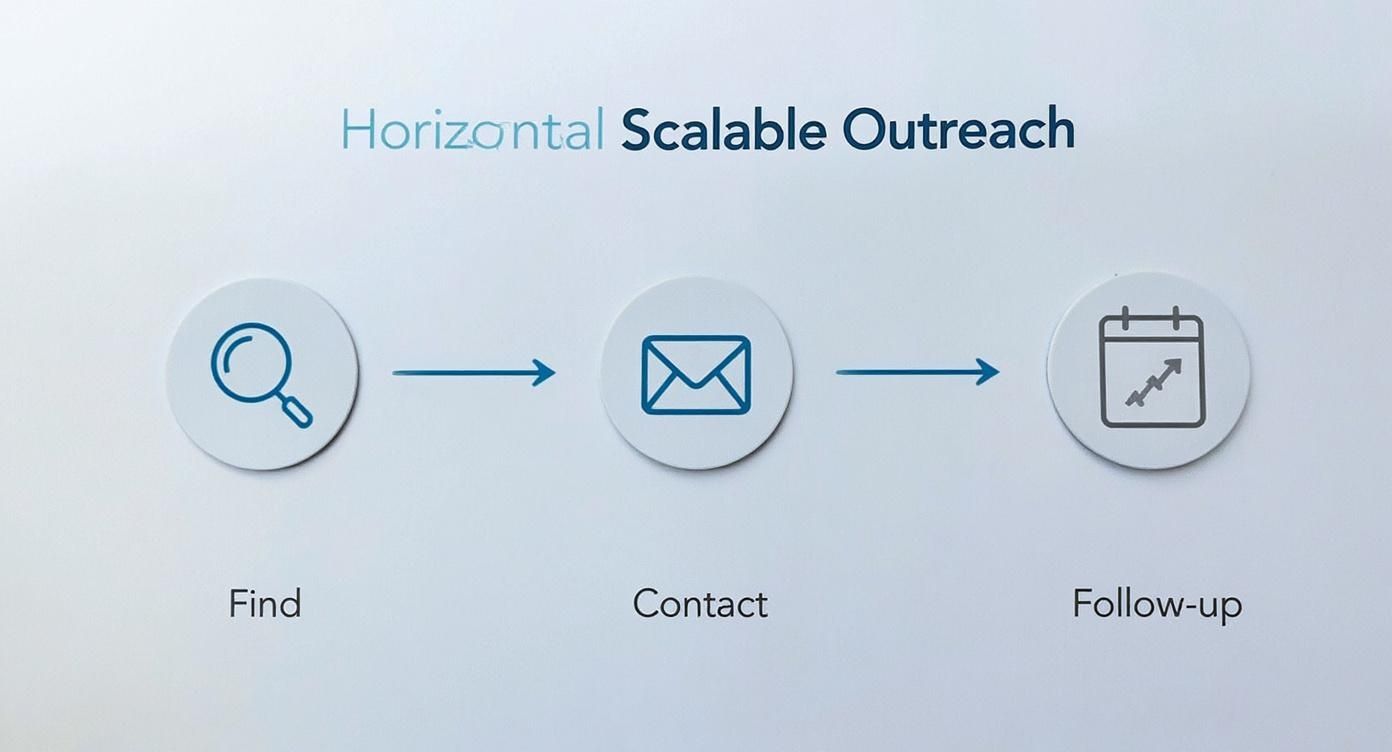
    Infographic about how to generate b2b leads

    As you can see, the process is broken into three key steps: Find, Contact, and Follow-up. Each one is a clear opportunity to measure what you're doing and make it better.

    Set up a simple dashboard—even a Google Sheet works—to see your data clearly. This makes it easy to spot trends and figure out where you can improve. When you consistently track your numbers, test new ideas, and go all-in on what works, you transform lead generation from an unpredictable art into a data-driven science.

    Got Questions About B2B Lead Gen? We’ve Got Answers.

    When you're deep in the trenches of B2B lead generation, a few common roadblocks always seem to pop up. Whether you're building your strategy from scratch or just fine-tuning what you already have, getting these fundamentals right can be the difference between a stalled pipeline and a flood of opportunities.

    Let's tackle one of the biggest questions I hear all the time: "How many follow-ups are too many?"

    Honestly, most teams stop way too soon. The data doesn't lie—most positive replies happen after the fourth or even fifth touchpoint. But here's the catch: it's not about the number, it's about the value. Each follow-up has to bring something new to the table, not just be a carbon copy of your first email.

    The secret to great follow-ups is helpful persistence, not annoying repetition. If every email offers a fresh insight or a new way to solve your prospect's problem, you earn the right to keep showing up in their inbox.

    Another massive pain point is lead quality. It’s easy to get a long list of names, but turning those names into actual conversations? That's a different game entirely.

    MQL vs. SQL: Know The Difference or Waste Your Time

    This is where so many teams drop the ball. Mixing up a Marketing Qualified Lead (MQL) with a Sales Qualified Lead (SQL) is a recipe for a frustrated sales team and a ton of wasted effort.

    • Marketing Qualified Lead (MQL): Think of this as someone who's shown some interest. They downloaded your latest ebook or signed up for your newsletter. They're curious, but they are not ready for a sales call. These folks need more nurturing.
    • Sales Qualified Lead (SQL): This is someone who's raised their hand and shown real buying intent. Maybe they requested a demo or filled out your "contact sales" form. These leads need to go straight to your sales team, no detours.

    Finally, there’s always the debate about which channel is "best." While the right answer always depends on your specific customer profile, some channels just consistently deliver.

    For instance, a whopping 32% of B2B marketers point to webinars as their top channel for netting high-quality leads. Why? Because they’re interactive and let you showcase your expertise in real-time, which builds trust faster than almost anything else.

    At the end of the day, generating B2B leads that actually convert comes down to focusing on quality conversations, understanding where each lead is in their journey, and picking channels that let you build real authority. Nailing these basics will put you on the fast track to a predictable and scalable pipeline.


    Ready to stop guessing and start finding the right contacts in one click? EmailScout is the powerful Chrome extension that helps you discover verified email addresses of decision-makers effortlessly. Build your marketing lists and supercharge your outreach for free. Get started with EmailScout today.

  • 12 Best Free Lead Generation Tools for Your Business in 2025

    12 Best Free Lead Generation Tools for Your Business in 2025

    Finding high-quality leads is the lifeblood of any growing business, but filling your sales pipeline shouldn't empty your wallet. The right set of free lead generation tools can automate prospecting, build targeted contact lists, and engage potential customers without the hefty price tag often associated with premium software. Today, an incredible array of freemium and permanently free platforms offers the core functionality you need to kickstart and scale your outreach efforts effectively.

    This guide cuts through the noise to deliver a detailed breakdown of the best free options available. We move beyond generic feature lists to provide an honest assessment of each tool’s strengths and, just as importantly, its limitations. You will discover practical use cases, see real-world screenshots, and get direct links to platforms like HubSpot, Apollo.io, and Hunter.io.

    Our goal is simple: to help you build a powerful, cost-effective growth stack. Whether you're a startup founder, a marketer on a tight budget, or a sales professional looking for an edge, this comprehensive resource will equip you with the free lead generation tools needed to find, connect with, and convert your ideal customers. Let’s dive into the platforms that can transform your prospecting from a costly chore into a streamlined engine for growth.

    1. EmailScout

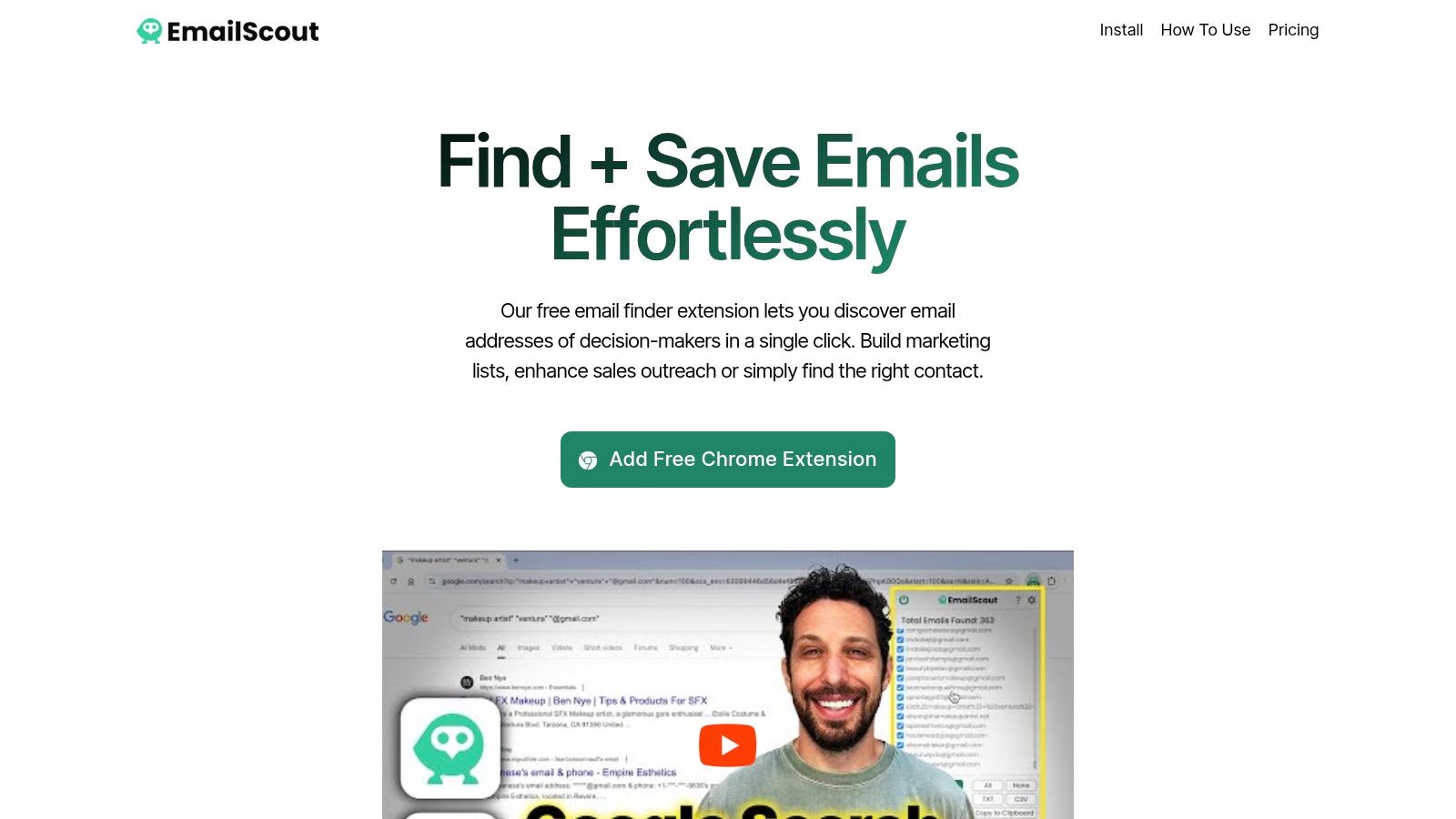
    EmailScout distinguishes itself as a premier choice among free lead generation tools by offering a truly unlimited free plan for its core function: email discovery. This powerful Chrome extension integrates directly into your browser, allowing you to instantly find and export email addresses from any website you visit. Its standout feature is the absence of monthly search or export limits on the free tier, a significant advantage over competitors that often impose strict caps.

    EmailScout

    The user interface is exceptionally clean and intuitive, requiring virtually no learning curve. For sales professionals, marketers, and founders building initial outreach lists, EmailScout provides an unparalleled, cost-free starting point for building highly targeted contact lists directly from company websites, blogs, or online directories.

    Key Features and Use Cases

    • Unlimited Free Email Discovery: Unlike most tools, the free version doesn’t restrict how many emails you can find or export. This is ideal for startups and freelancers who need to build extensive prospect lists without a budget.
    • Seamless Chrome Integration: It operates as a simple, one-click extension. When you land on a target website, just click the EmailScout icon to instantly reveal all discoverable email addresses, which you can then export to a CSV file.
    • Advanced Bulk Processing (Premium): For scaling up, the premium plans unlock the URL Explorer, which extracts emails from up to 1,500 URLs simultaneously, and AutoSave, which passively collects emails as you browse.

    Practical Tip: Use EmailScout while researching industry blogs or competitor websites. You can quickly gather contacts for networking, partnership opportunities, or targeted marketing campaigns without ever leaving your browser.

    While its free offering is robust, the tool's effectiveness depends on emails being publicly available in the site's source code. For more advanced, automated, and large-scale lead generation, upgrading to a paid plan (starting at an affordable $9/month) is necessary to access its full potential.

    • Best for: Sales teams, digital marketers, and entrepreneurs needing a simple, effective, and completely free tool for initial list building.
    • Website: https://emailscout.io

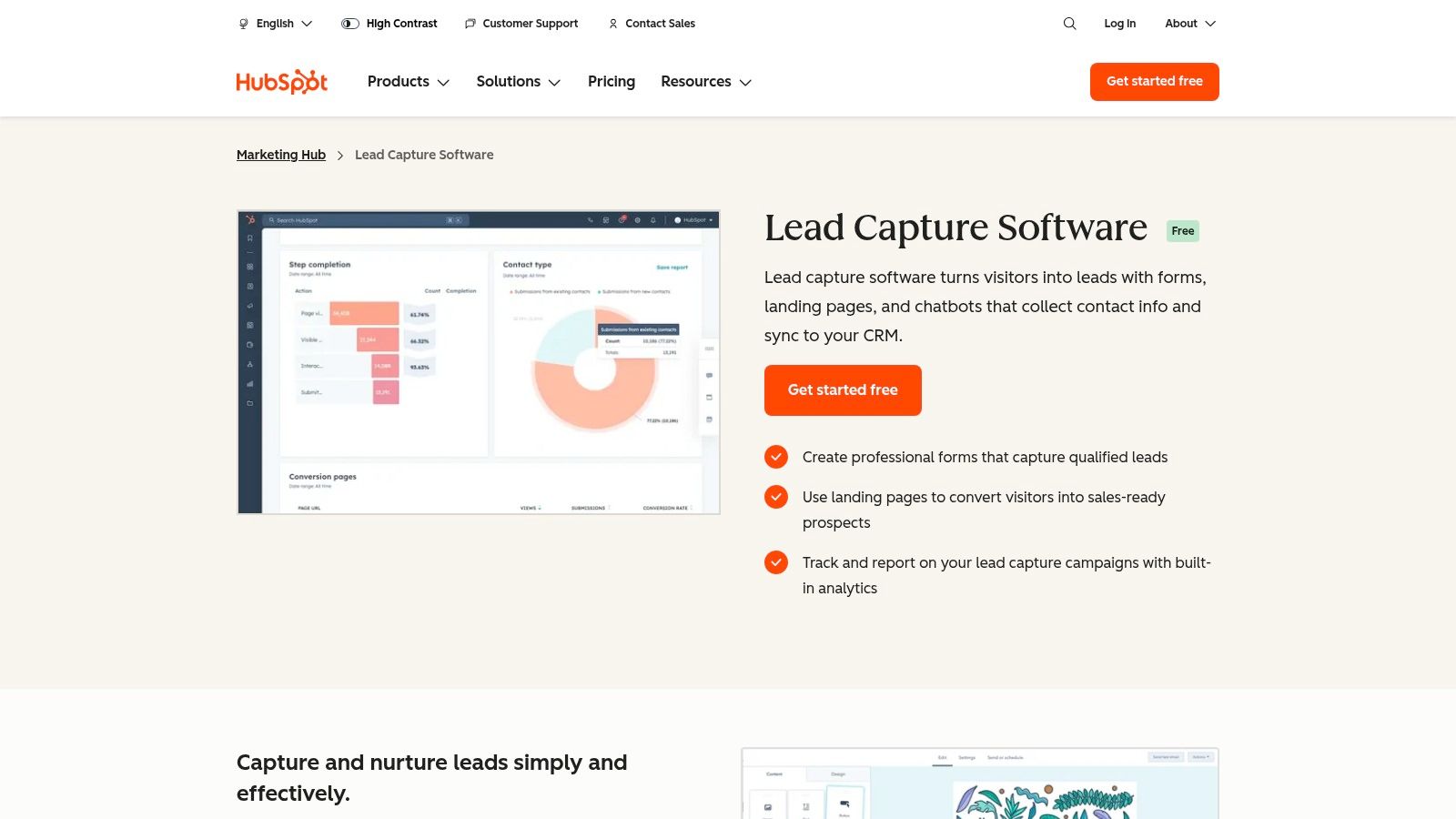
    2. HubSpot Free Marketing + CRM

    HubSpot’s free platform is a powerhouse for businesses seeking an integrated system right from the start. Instead of patching together various free lead generation tools, HubSpot offers a unified solution where lead capture is directly connected to a robust, permanently free CRM. This means every lead from a form, pop-up, or live chat session is automatically organized and tracked in one central database.

    The real strength here is the seamless data flow. You can build simple landing pages, embed forms on your site, and deploy a chatbot without ever leaving the HubSpot ecosystem. This integration eliminates the manual work of exporting and importing contacts, giving you a complete view of a lead's journey from their very first interaction.

    HubSpot Free Marketing + CRM

    Key Features & Use Case

    • Best For: Startups and small businesses that want an all-in-one marketing and sales foundation without an initial investment. It’s perfect for users who anticipate scaling and want a smooth upgrade path.
    • Integrated Tools: Access free forms, pop-ups, landing pages, and live chat that all feed directly into the free CRM.
    • Contact Management: The CRM stores up to 1,000,000 contacts and provides detailed activity timelines for each lead.

    Pros & Cons

    Pros Cons
    Unified Data: Marketing and CRM data are connected from day one. HubSpot Branding: Free tools include "Powered by HubSpot" branding.
    Scalability: Easy to upgrade to paid plans for advanced features. Limited Automation: Complex workflows require a paid subscription.
    Generous Free Tier: A powerful set of tools without a time limit. Basic Reporting: Advanced analytics are reserved for paid tiers.

    Get started with HubSpot's free tools: HubSpot Free Marketing + CRM

    3. Mailchimp (Free plan)

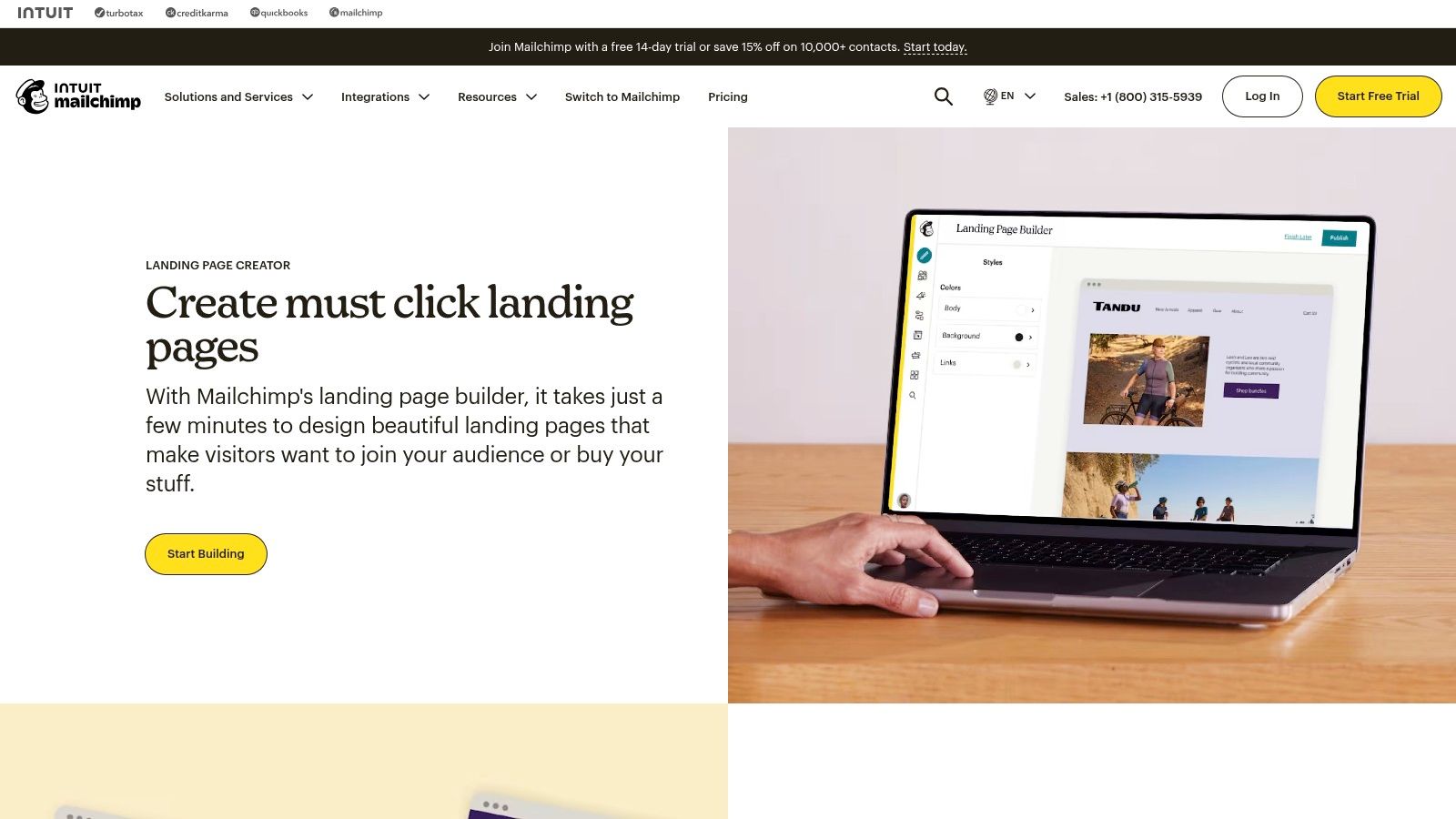
    Mailchimp is a household name in email marketing, and its free plan offers a solid entry point for businesses focused on building an audience. It provides the essential tools for lead capture, primarily through landing pages and signup forms, making it one of the most straightforward free lead generation tools to get started with. The platform is designed for simplicity, allowing users to create and publish professional-looking assets without technical expertise.

    The core advantage of Mailchimp's free tier is its user-friendly interface combined with a suite of basic lead management features. You can design a dedicated landing page for a specific campaign or embed a pop-up form on your website, with all new subscribers feeding directly into a single audience list. This simplicity makes it ideal for users whose main goal is to collect email addresses and begin nurturing them right away.

    Mailchimp (Free plan)

    Key Features & Use Case

    • Best For: Solopreneurs, content creators, and small businesses who need a simple, reliable way to build an email list through landing pages and forms. It's perfect for those just starting with email marketing.
    • Lead Capture Tools: Includes free landing pages and pop-up/embeddable signup forms to capture visitor information.
    • Design & Management: Features a drag-and-drop editor with templates for easy design, plus basic audience management and reporting tools.

    Pros & Cons

    Pros Cons
    Very Easy Setup: Guided by extensive tutorials and a mature ecosystem. Strict Contact/Send Limits: Capped at 500 contacts and 1,000 sends/month.
    Native Landing Pages: Create and publish landing pages at no cost. Limited Automation: Advanced features like A/B testing are paid.
    Excellent User Experience: The platform is known for its clean UI. Mailchimp Branding: Free assets include Mailchimp's logo.

    Get started with Mailchimp's free plan: Mailchimp

    4. Brevo (formerly Sendinblue)

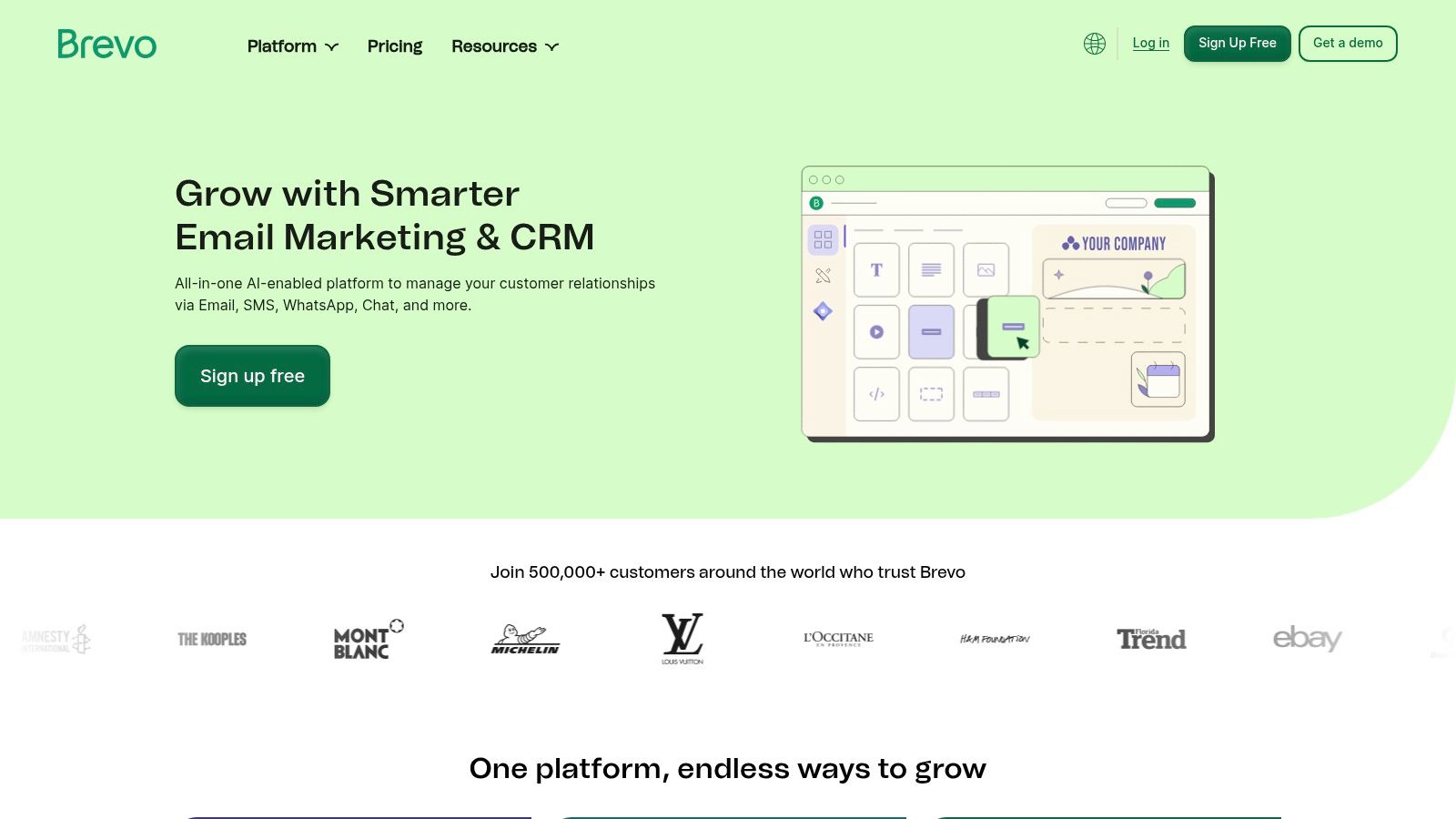
    Brevo (formerly Sendinblue) stands out in the crowded field of free lead generation tools by offering a generous multi-channel platform. While primarily known for email marketing, its free plan provides a solid foundation for businesses wanting to engage leads through consistent communication. Its main strength lies in a high daily sending limit, making it ideal for nurturing new leads without an immediate financial commitment.

    This approach allows startups and small businesses to build their initial email lists and run small, consistent campaigns from day one. Instead of just capturing leads, Brevo helps you immediately begin the nurturing process, turning a static list into an engaged audience.

    Brevo (formerly Sendinblue)

    Key Features & Use Case

    • Best For: Small businesses and solo entrepreneurs focused on building and nurturing an email list as their primary lead generation follow-up strategy.
    • Generous Sending Limit: The free plan allows you to send up to 300 emails per day (9,000 per month) to an unlimited number of contacts.
    • Multi-Channel Ready: While advanced channels are paid, the platform is built to integrate SMS and WhatsApp marketing as your business grows.

    Pros & Cons

    Pros Cons
    High Daily Email Limit: Excellent for daily or frequent newsletters. Daily Sending Cap: The 300/day limit can be restrictive for larger sends.
    Transactional Emails: Supports essential emails like password resets. Key Features Gated: Landing pages and advanced automation require an upgrade.
    Scalable Platform: Offers a clear path to add more marketing channels. Brevo Branding: Free emails include Brevo's logo in the footer.

    Get started with Brevo's free tools: Brevo

    5. MailerLite (Free plan)

    MailerLite shines as a free lead generation tool by bundling powerful email marketing capabilities with essential lead capture features. While many platforms separate these functions, MailerLite’s free plan allows you to create sign-up forms and pop-ups that feed directly into your email nurture sequences. This creates a smooth pathway from initial interest to ongoing engagement without needing multiple tools.

    Its strength lies in its user-friendly interface and the inclusion of a drag-and-drop website and landing page builder, even on the free tier. You can launch a simple lead magnet page, capture subscribers, and immediately begin sending automated welcome emails. This makes it an incredibly efficient solution for creators and small businesses focused on building an audience from day one.

    MailerLite (Free plan)

    Key Features & Use Case

    • Best For: Content creators, bloggers, and small businesses who need an easy-to-use tool to capture leads and nurture them through email marketing without a budget.
    • Generous Free Tier: Includes up to 500 subscribers and a high limit of 12,000 monthly emails, which is more than enough for those just starting out.
    • Integrated Builders: Comes with free website, landing page, and pop-up builders to create lead capture points quickly.

    Pros & Cons

    Pros Cons
    All-in-One Simplicity: Combines lead capture with email automation. MailerLite Branding: The free plan includes mandatory branding on assets.
    High Email Send Limit: 12,000 emails per month is generous for free. Limited Support: Free users have access to email support for 30 days only.
    User-Friendly Interface: The platform is clean and intuitive to navigate. Basic Automation: Complex, multi-step automations require a paid upgrade.

    Get started with MailerLite's free plan: MailerLite (Free plan)

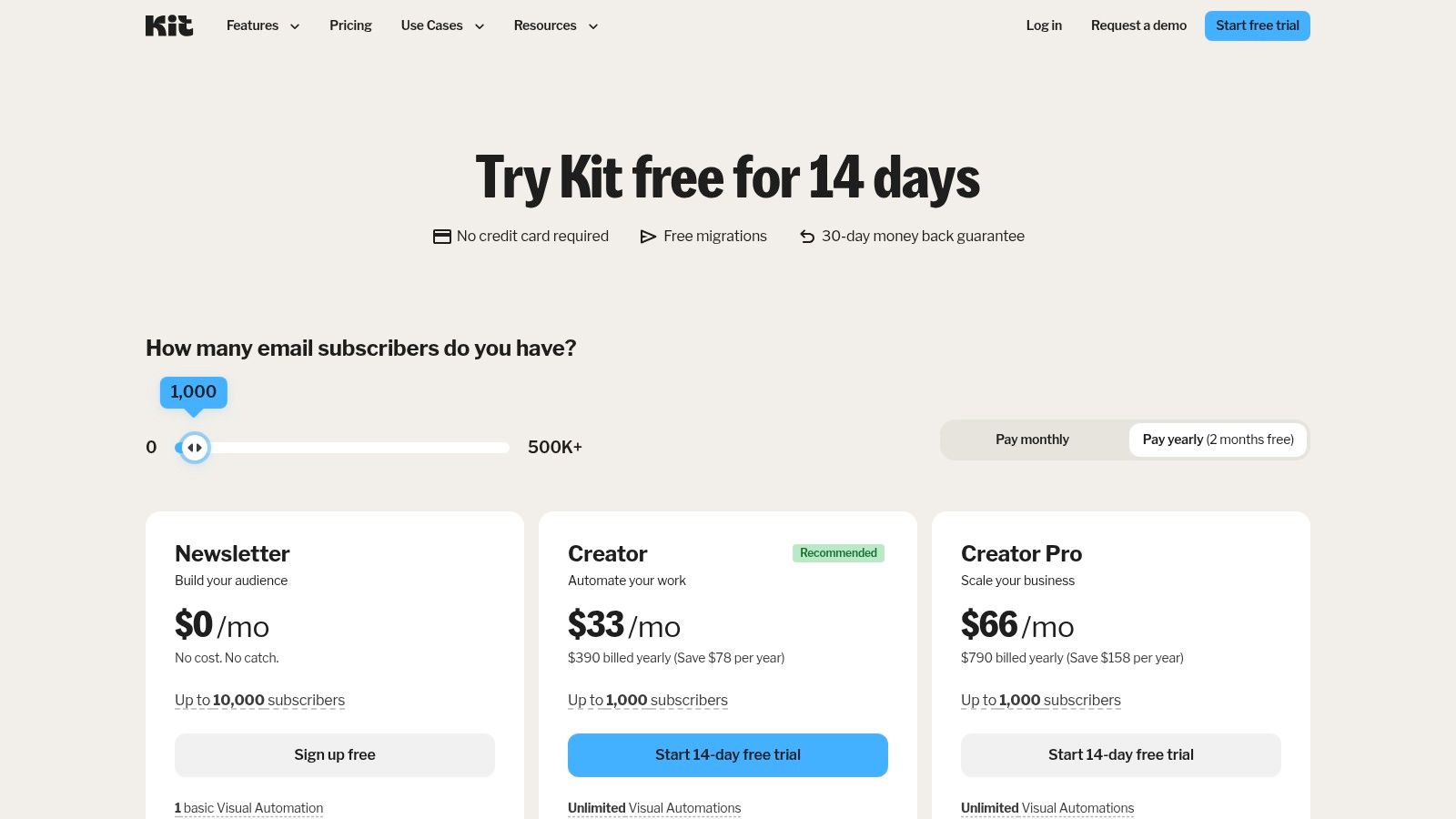
    6. Kit (formerly ConvertKit) – Newsletter Free plan

    Kit, which was formerly known as ConvertKit, stands out in the email marketing space with one of the most generous free plans available, specifically tailored for creators and small businesses. Its primary strength lies in allowing users to build a substantial audience foundation without immediate cost. The platform lets you create unlimited landing pages and forms, making it one of the top free lead generation tools for capturing subscribers from your website, social media, or other channels.

    This creator-centric approach means the platform is designed not just for list-building but also for monetization from day one. Even on the free plan, you can sell digital products or run paid newsletters, directly connecting your lead generation efforts to revenue. This integrated functionality makes it an excellent choice for those wanting to quickly build and monetize an audience. To get the most out of it, understanding how to build an email list effectively is key.

    Kit (formerly ConvertKit) – Newsletter Free plan

    Key Features & Use Case

    • Best For: Content creators, freelancers, and authors who need to build and engage a large email list before investing in a paid tool. It's ideal for those focused on direct monetization.
    • Generous Subscriber Limit: The free plan supports up to 10,000 subscribers, a significantly higher limit than most competitors.
    • Unlimited Lead Capture: Build as many landing pages and forms as you need to support various campaigns and traffic sources.

    Pros & Cons

    Pros Cons
    High Subscriber Limit: Accommodates significant list growth for free. Limited Automation: Complex funnels and sequences require a paid plan.
    Creator-Centric Tools: Built-in monetization and segmentation. Basic Analytics: Advanced reporting is reserved for paid subscriptions.
    Simple, Clean Interface: Easy to navigate and use for beginners. No A/B Testing: Free users cannot A/B test email subject lines.

    Get started with Kit's free plan: Kit (formerly ConvertKit) – Newsletter Free plan

    7. Zoho CRM (Free Edition)

    Zoho CRM's Free Edition offers a surprisingly robust customer relationship management system for small teams. Unlike many free lead generation tools that focus solely on capture, Zoho provides the infrastructure to manage leads from acquisition through the entire sales pipeline. It’s built for businesses that need a central database to track interactions, manage contacts, and maintain momentum with new prospects.

    The key advantage is its focus on core CRM functionalities for up to three users at no cost. You can create web-to-lead forms to embed on your website, ensuring new inquiries are automatically funneled directly into your CRM. This direct integration streamlines the process of tracking a lead's journey from their first point of contact, making it a powerful foundation for building a structured sales process.

    Key Features & Use Case

    • Best For: Small businesses or startups with up to three team members who need a dedicated, free CRM to organize and track leads without the cost.
    • Web-to-Lead Forms: Capture visitor information directly from your website and auto-populate it into the leads module in your CRM.
    • Core CRM Functionality: Includes essential modules for leads, contacts, accounts, and deals, plus document storage and mobile app access.

    Pros & Cons

    Pros Cons
    Generous Free Tier: A full-featured CRM for three users is a great value. Complex Interface: Can feel overwhelming for absolute beginners.
    Scalability: Integrates with the extensive Zoho ecosystem as you grow. Gated Features: Marketing automation and advanced tools are paid.
    Direct Lead Capture: Web forms feed leads directly into the system. Limited Customization: Free plan has restrictions on customization.

    Get started with Zoho CRM's free tools: Zoho CRM (Free Edition)

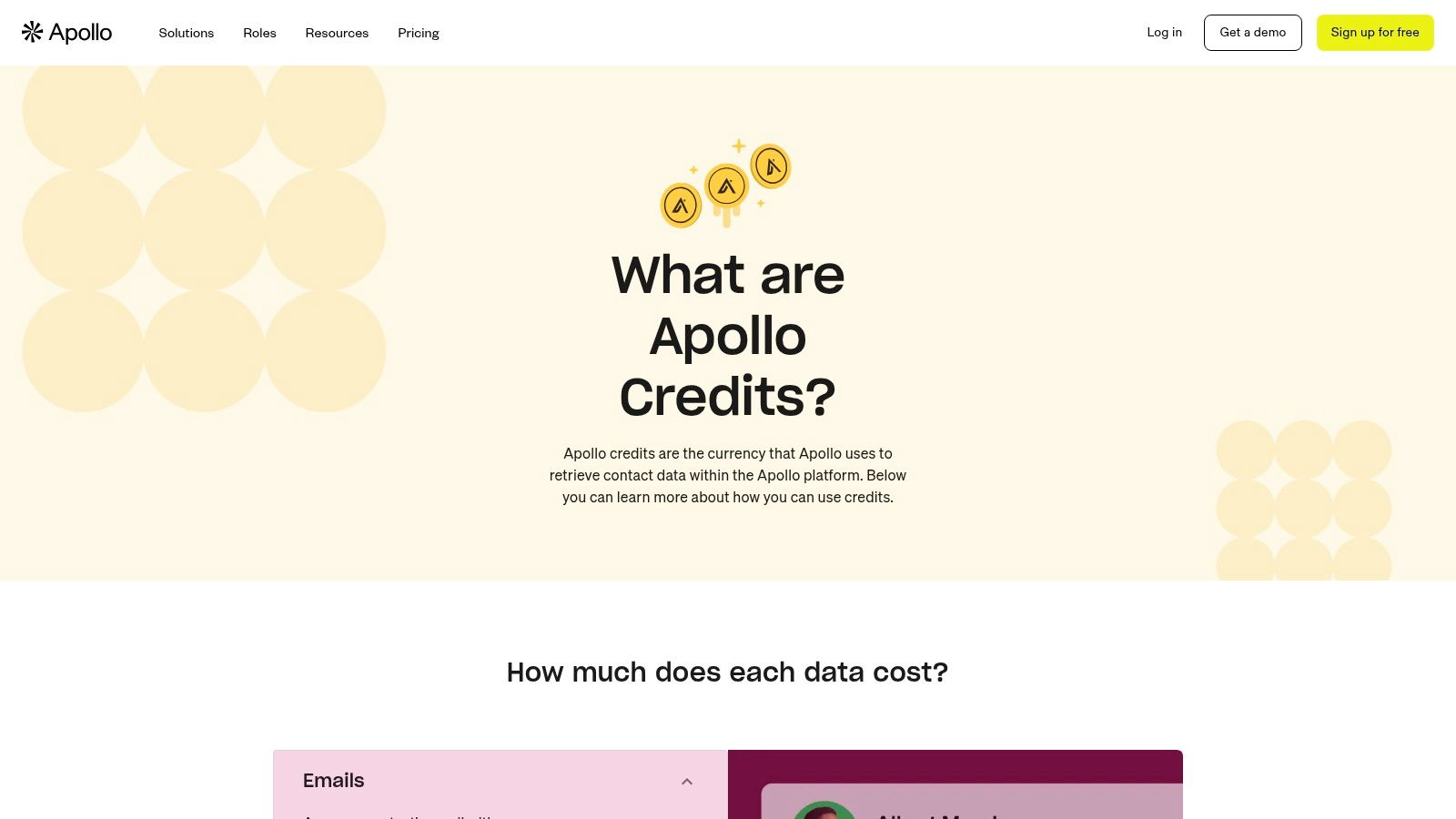
    8. Apollo.io (Free plan)

    Apollo.io stands out in the B2B space by combining a massive contact database with sales engagement tools, all accessible on a limited free plan. Instead of just providing data, it allows you to find ideal prospects using advanced filters and then directly engage them with email sequences. This makes it an end-to-end solution for highly targeted outbound prospecting.

    The platform's strength lies in its integrated workflow. You can use the Chrome extension to find contact information directly on LinkedIn, verify emails, and enroll prospects into an outreach sequence without switching tabs. While the free credits are limited, they offer a powerful way for teams to test outbound strategies and generate initial high-value leads before committing to a paid plan.

    Apollo.io (Free plan)

    Key Features & Use Case

    • Best For: B2B sales teams, freelancers, and startups looking to execute targeted outbound campaigns with a high degree of precision. It's ideal for validating a new market or outreach message.
    • Contact Data Reveal: Access a vast B2B database and use free credits to unlock verified email addresses and direct-dial phone numbers for key decision-makers.
    • Basic Sequencing: Create and send automated, multi-step email sequences to engage prospects and book meetings directly from the platform.

    Pros & Cons

    Pros Cons
    Large B2B Database: Access to millions of verified contacts and companies. Limited Free Credits: The free tier is restrictive for high-volume outreach.
    Integrated Outreach: Find and engage leads within a single platform. Steep Learning Curve: Can be complex for beginners to master all features.
    Transparent Credit System: Clearly see the cost of each data reveal. Aggressive Upselling: Frequent prompts to upgrade to a paid plan.

    Get started with Apollo.io's free plan: Apollo.io Free Plan

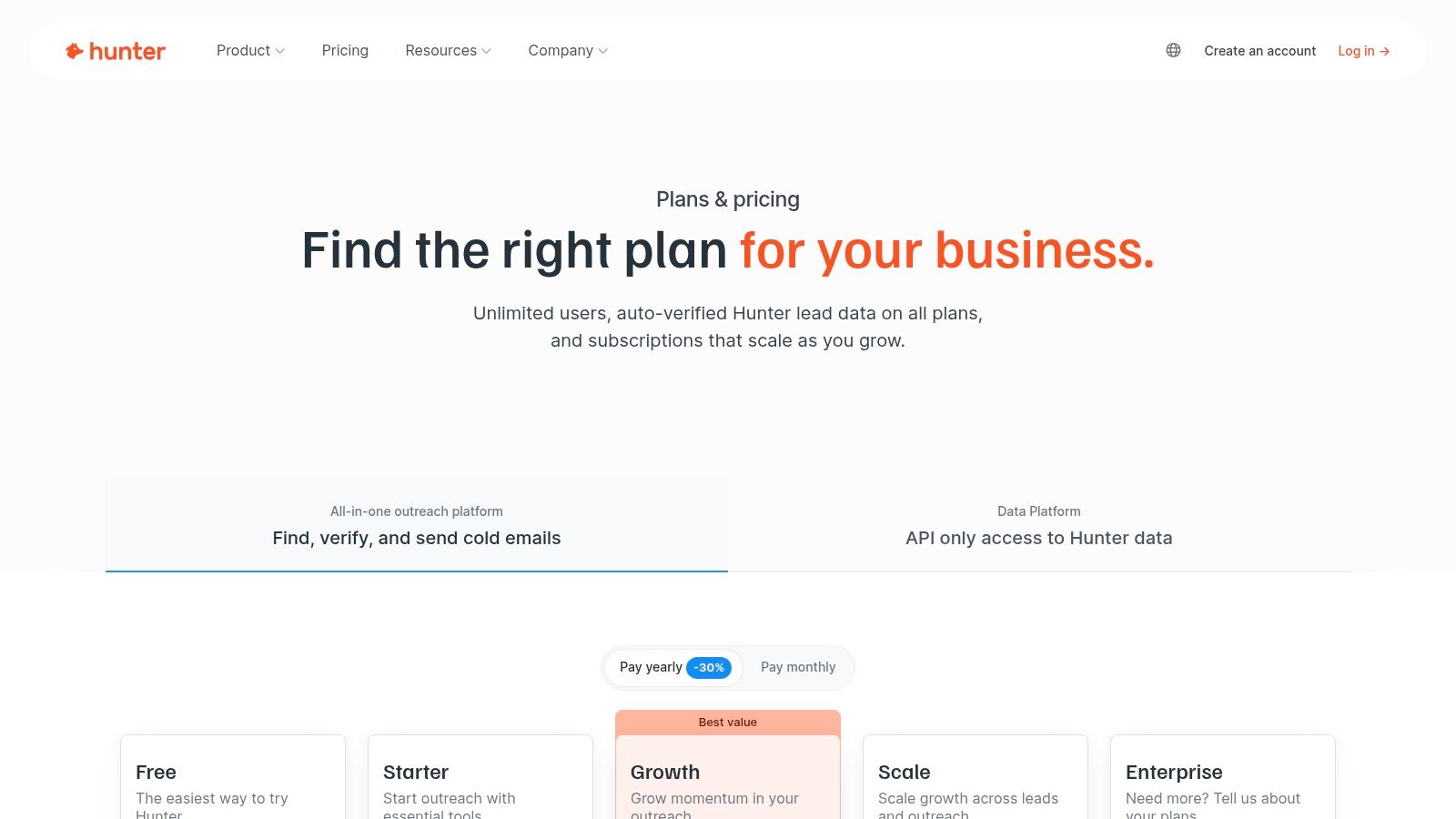
    9. Hunter.io (Free plan)

    Hunter.io is a highly focused B2B tool designed for one core purpose: finding and verifying professional email addresses. It's an essential resource for sales and marketing teams building targeted outreach lists from scratch. Instead of guessing email formats, you can use its powerful Domain Search to uncover the common email pattern for a company and find specific contacts, making it one of the most efficient free lead generation tools for cold outreach.

    The platform operates on a simple credit-based system, providing a monthly allowance for searches and verifications. This straightforward approach allows users to quickly integrate email discovery into their prospecting workflow using tools like its handy browser extension or Google Sheets add-on, streamlining the process of building clean, reliable lead lists.

    Hunter.io (Free plan)

    Key Features & Use Case

    • Best For: B2B sales reps, recruiters, and marketers who need to build targeted cold email lists with verified contact information. It's a great starting point for anyone looking to master the techniques of finding professional emails.
    • Free Credits: The free plan includes 25 monthly searches and 50 monthly verifications.
    • Core Tools: Includes Domain Search, Email Finder, and an Email Verifier to ensure list accuracy.

    Pros & Cons

    Pros Cons
    High Accuracy: Provides reliable data with confidence scores. Strict Credit Limits: Free usage is very limited for volume outreach.
    Simple to Use: The interface is clean and incredibly user-friendly. B2B Focused: Less effective for finding generic or personal emails.
    Reduces Bounce Rates: Built-in verification cleans lead lists. Limited Campaign Features: Not a replacement for a full email service provider.

    Get started with Hunter's free plan: Hunter.io

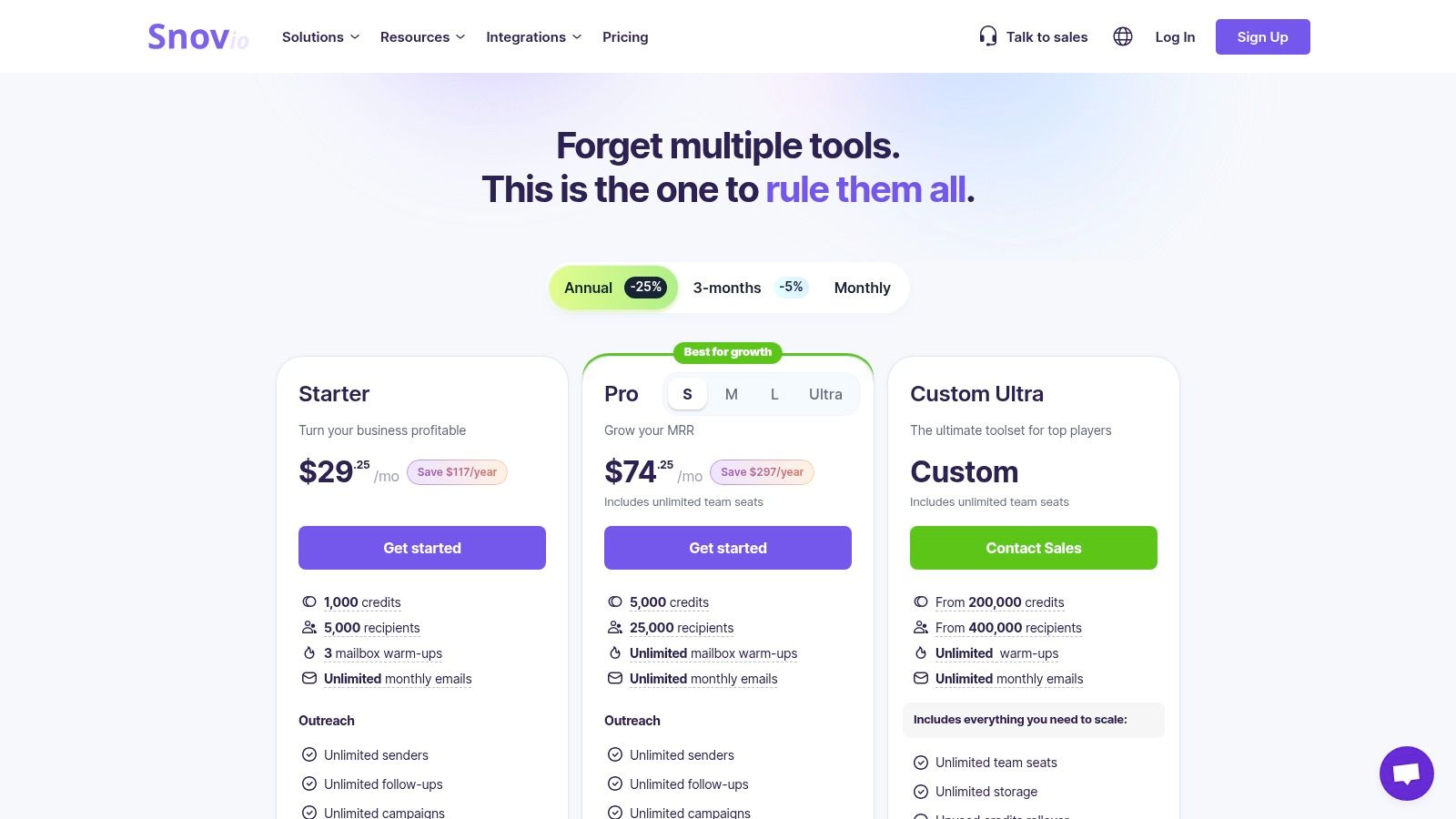
    10. Snov.io (Free trial + forever-free Chrome tools)

    Snov.io is an SMB-friendly prospecting and outreach platform that offers a unique hybrid approach to its free tools. Its free trial provides a monthly credit allowance that can be used across its entire suite, from finding prospects to verifying email addresses. This flexibility lets you test its core lead generation capabilities without commitment.

    The real long-term value lies in its forever-free Chrome extensions. Even after the trial credits are used, the Email Tracker and Technology Checker remain fully functional. This makes Snov.io a valuable tool for continuous, albeit lightweight, sales intelligence and outreach monitoring long after you've evaluated its primary paid features.

    Snov.io (Free trial + forever-free Chrome tools)

    Key Features & Use Case

    • Best For: Sales teams and freelancers who need a flexible tool for B2B prospecting and want to test various functions like email finding and verification before committing to a paid plan.
    • Flexible Credits: The free plan provides monthly credits usable for prospect searches, email finding, and verification services.
    • Forever-Free Extensions: Includes a free Chrome Email Tracker and a Technology Checker to see what software a website uses.

    Pros & Cons

    Pros Cons
    Versatile Credit System: Use your free allowance on what you need most. Production Features Require Subscription: The free plan is for trial purposes.
    Useful Free Extensions: The tracker and checker add value indefinitely. LinkedIn Automation is a Paid Add-on: Not included in standard plans.
    Simple User Interface: Easy to navigate for finding and managing prospects. Low Credit Limit: The free monthly credit allowance is limited.

    Get started with Snov.io's free tools: Snov.io

    11. Lusha (Free Plan)

    Lusha provides B2B sales and marketing teams with a direct line to accurate contact data, making it one of the most efficient free lead generation tools for targeted prospecting. Its core function is to reveal verified email addresses and direct phone numbers for decision-makers while you browse professional networks like LinkedIn or company websites via its browser extension. This eliminates the guesswork and lengthy research often involved in finding the right person to contact.

    The platform operates on a credit-based system, offering a limited number of free credits each month. This model allows users to test the quality of the data and the simplicity of the workflow without any financial commitment. For small teams or individual prospectors, the free tier is an excellent way to supplement their outreach efforts by getting crucial contact details for high-priority leads on demand.

    Lusha (Free plan)

    Key Features & Use Case

    • Best For: Sales professionals and recruiters who need to quickly find direct contact information for specific B2B prospects they've identified online.
    • Credit System: The free plan provides monthly credits to reveal contact details (emails and phone numbers), which are consumed per successful lookup.
    • Browser Extension: Seamlessly integrates with LinkedIn and other sites, allowing you to find contact data with a single click without leaving your prospect’s profile.

    Pros & Cons

    Pros Cons
    High-Quality Data: Known for providing accurate, direct-dial phone numbers and verified emails. Limited Credits: The free monthly allowance can be used up quickly, especially for phone numbers.
    Simple Workflow: The browser extension makes contact discovery incredibly fast and intuitive. Export Limitations: Saving and exporting lists of contacts is a feature reserved for paid plans.
    No Time Limit: The free plan and its monthly credits are available indefinitely. API Access: Integration via API requires a premium subscription.

    Get started with Lusha's free plan: Lusha (Free plan)

    12. G2 – Free Lead Generation Software category (comparison)

    Instead of a single tool, G2's dedicated category for free lead generation software acts as a powerful discovery engine. It provides a comprehensive, filterable directory where you can find and compare dozens of tools based on real user reviews. This meta-tool is invaluable for quickly shortlisting options that offer genuine free-forever plans or substantial freemium tiers, saving you the effort of visiting countless pricing pages.

    The platform's strength lies in its aggregated peer feedback and side-by-side comparison tables. You can quickly see how different free lead generation tools stack up in terms of user satisfaction, specific features, and ease of use. This allows you to identify not just popular options, but niche solutions that might be a perfect fit for your specific lead capture strategy, all validated by a community of real-world users.

    Key Features & Use Case

    • Best For: Marketers and business owners in the research phase who want to compare a wide array of free tools using verified user reviews and data-driven comparisons.
    • Curated Directory: A constantly updated list focused specifically on lead generation software that offers a free plan or a free trial.
    • User-Sourced Insights: Access thousands of in-depth reviews, ratings, and feature comparisons from a community of verified business software users.

    Pros & Cons

    Pros Cons
    Saves Research Time: Aggregates top free-tier options in one place. Includes Free Trials: "Free" can include time-limited trials, so verify.
    Authentic User Reviews: Provides honest feedback and real-world insights. Sponsored Listings: Top-ranked results may be influenced by vendors.
    Side-by-Side Comparisons: Easily compare features across multiple tools. Can Be Overwhelming: The sheer number of options can be daunting.

    Explore the directory on G2: G2 Free Lead Generation Software

    Free Lead Generation Tools Feature Comparison

    Product Core Features User Experience / Quality Value Proposition Target Audience Price Points / Limits
    EmailScout Unlimited free email searches, AutoSave, URL Explorer Intuitive Chrome integration, bulk export Unlimited free usage, scalable premium Marketers, sales pros, freelancers Free unlimited; Premium from $9/month (up to 5K emails)
    HubSpot Free Marketing + CRM Lead capture forms, pop-ups, chatbots, CRM Unified data, easy CRM-marketing sync All-in-one free lead capture & basic CRM Businesses needing integrated CRM Free tier with branding and limits
    Mailchimp (Free plan) Landing pages, pop-ups, templates, basic reports Easy setup, drag-drop editor Established email marketing tool Small lists, email marketers 500 contacts, 1,000 emails/month free
    Brevo (formerly Sendinblue) Email, SMS, transactional emails Multi-channel messaging, reporting Generous daily sending limits SMBs starting multi-channel marketing 300 emails/day free
    MailerLite (Free plan) Email marketing, landing pages, pop-ups, automation Built-in site hosting, drag-drop builder Large email volume on free plan Early-stage lead capture & nurturing 500 subscribers, 12,000 emails/month free
    Kit (formerly ConvertKit) Unlimited landing pages/forms, newsletters Creator-focused, tagging & segmentation High subscriber limit for free Creators, newsletter builders Up to 10,000 subscribers free
    Zoho CRM (Free Edition) Lead/contact mgmt, web-to-lead forms Mature CRM, mobile apps Free CRM for small teams Small teams seeking CRM Free for 3 users
    Apollo.io (Free plan) Contact reveal credits, basic sequences Large B2B database, credit transparency Limited free credits for prospecting B2B sales teams, outbound pros Limited credits, upgrades needed for scale
    Hunter.io (Free plan) Email finder, verifier, 50 monthly credits Simple, reliable verification Trusted B2B email discovery B2B lead generation 50 free credits/month
    Snov.io (Free trial + Chrome) Prospecting credits, email tracking, multi-channel Flexible credit usage, useful free tools Free extensions for lightweight use SMBs, sales outreach Free trial and forever-free Chrome tools
    Lusha (Free plan) Email/phone reveals via credits, CRM integrations Straightforward workflow Steady credit rollover for contact reveals B2B sales and recruiting Monthly credits with paid tier upgrades
    G2 – Free Lead Generation Directory, user ratings, feature comparisons Helps shortlist tools with free tiers Saves research time, peer feedback Buyers searching lead generation tools Free to access, varies by product

    Building Your Free Lead Generation Stack

    Navigating the landscape of free lead generation tools can feel overwhelming, but as we've detailed, the goal isn't to find a single, perfect solution. Instead, the most effective strategy is to build a customized, cost-effective "stack" that addresses your unique business challenges. By strategically combining different platforms, you can create a powerful, end-to-end system for identifying, engaging, and nurturing prospects without spending a dime on software.

    The journey from a blank slate to a robust lead generation engine begins with a clear diagnosis of your primary bottleneck. Are you struggling with outbound prospecting and finding accurate contact information? Tools like Apollo.io, Hunter.io, and EmailScout are designed to solve that exact problem. Or perhaps your website traffic isn't converting? In that case, an all-in-one platform like HubSpot Free or a dedicated form and pop-up builder from MailerLite can help capture those valuable inbound leads.

    Assembling Your No-Cost Toolkit

    Think of this process like assembling a toolkit. You wouldn't use a hammer for every job, and the same logic applies here. A potent and completely free stack could look like this:

    • For Prospecting: Use a specialized tool like EmailScout or Lusha to find and verify the email addresses of key decision-makers in your target market.
    • For Lead Capture: Implement HubSpot Free on your website to manage contacts, create forms, and even deploy a live chat widget to engage visitors in real-time.
    • For Nurturing: Connect your captured leads to an email marketing platform like Mailchimp or Brevo to send automated welcome sequences and newsletters, building a relationship over time.

    Key Considerations for Success

    Before you dive in, remember that "free" often comes with limitations. Be mindful of contact caps, feature restrictions, and usage limits. The most successful approach is to start small. Identify your single biggest lead generation hurdle right now and select one or two free lead generation tools from this list that directly address it. Master their core functionalities, integrate them into your daily workflow, and measure their impact. As your business grows and your needs evolve, you can strategically expand your stack.

    Ultimately, the power of these tools lies not in their price tag, but in their application. By being deliberate and strategic, you can build a formidable lead generation machine that fuels your sales pipeline and drives significant growth. The path to a consistent flow of qualified leads is well within reach, and it starts with taking that first, informed step today.


    Ready to kickstart your outbound prospecting? EmailScout offers a powerful and accurate email finder and verifier to ensure your messages land in the right inbox every time. Sign up for EmailScout to start finding qualified leads for free and build your outreach list with confidence.

  • Boosting Your Cold Email Response Rate

    Boosting Your Cold Email Response Rate

    So, what’s a “good” cold email response rate?

    Honestly, it’s not as simple as picking one magic number. A solid benchmark to aim for is anything over 10%, with most campaigns landing somewhere around the 5% mark.

    Think of it like this: if you’re just starting out, even a 1% response rate is a foothold. It’s data. It tells you something is happening, but your targeting or messaging probably needs a serious tune-up. On the flip side, if you're consistently hitting 20% or more, you're in elite territory. That means your personalization, offer, and timing are all working in perfect harmony.

    A low rate isn’t a failure—it’s a diagnostic tool. It’s your campaign telling you, "Hey, let's fix this!"

    What Do the Numbers Really Mean?

    To get a better handle on where you stand, it helps to think in tiers. This gives you a realistic snapshot of your campaign’s health and shows you what to aim for next. Analyzing different email response rates is the fastest way to understand what's working and what isn't.

    Here’s a quick reference guide to see how your campaigns stack up against industry standards.

    Cold Email Response Rate Benchmarks

    Performance Tier Response Rate What This Means
    Needs Work 1-4% You're getting started, but something's off. Your targeting might be too wide, or your message just isn't connecting. This is a common starting point with lots of room to grow.
    Average 5-9% You're hitting the industry standard. Your campaign has a decent foundation, but you can definitely boost results by tweaking your subject lines, personalizing more, or strengthening your CTA.
    Excellent 10-19% Now we're talking! Your outreach is sharp and effective. You know your audience, your offer is compelling, and your emails are grabbing attention.
    Elite Performer 20%+ You've cracked the code. Your emails feel like they were written just for the recipient. They're valuable, perfectly timed, and start real conversations.

    Keep in mind, the game is getting tougher.

    Recent B2B data shows the average reply rate has dipped to about 5.1%, down from the 7-8% we saw just a few years ago. With around 95% of all cold emails getting completely ignored, a generic, spray-and-pray approach just doesn't cut it anymore.

    How to Accurately Measure Your Response Rate

    Image

    Before you can start improving your numbers, you have to know what they actually are. It's a common trap to use a flawed calculation, which gives you a false sense of either security or failure. You end up trying to fix things that aren't even broken.

    The good news? The formula for this is dead simple. There's only one right way to do it.

    To figure out your true cold email response rate, you just need three pieces of information: the total number of emails you sent, how many of those bounced back, and the number of unique replies you got.

    The Essential Calculation

    This is the only formula you should ever use. It’s simple, but every single part is crucial for getting an honest look at your campaign's performance.

    (Unique Replies / (Total Emails Sent – Bounced Emails)) * 100 = Your Response Rate

    So, why is subtracting those bounced emails so important?

    Think of it like sending physical mail. If you send out 100 letters but 20 come back stamped "wrong address," you didn't really try to reach 100 people—you only actually reached 80. The exact same logic applies here.

    Your campaign’s success should only be judged by the emails that actually landed in a real inbox. Bounces are a deliverability problem, not a messaging problem. With roughly 17% of emails bouncing on average, ignoring them will seriously skew your results and hide how well your message is really connecting. You can learn more about how bounces impact your metrics at infraforge.ai.

    Measuring What Truly Matters

    Let’s be honest, just getting a reply isn’t the goal. Getting the right kind of reply is. A high response rate packed with "unsubscribe" or "not interested" messages isn't a win. It's just noise.

    This is why you have to segment your replies to understand what’s actually working.

    Start tracking different types of responses:

    • Positive Replies: These are the gold. Prospects showing interest, asking for more info, or booking a meeting.
    • Neutral Replies: This could be someone saying, "I'm not the right person, but try my colleague Jane Doe."
    • Negative Replies: These are the straightforward "no thanks" or requests to be removed from your list.

    When you separate them out, you get a much clearer picture of your campaign's health. A 5% positive response rate is worlds better than a 10% overall rate that’s mostly rejections.

    Why Your Cold Emails Are Getting Ignored

    Image

    So, you’ve built your list, crafted what you thought was the perfect message, and hit “send.” And now… crickets.

    It’s one of the most frustrating feelings in sales and marketing. But here’s the thing: the reason your emails are disappearing into a void almost always comes down to a few fundamental mistakes. You’re not just sending a message; you’re interrupting someone’s day. To get a response, you have to earn it.

    Think of their inbox like a crowded, noisy party. A generic, self-serving opener is like shouting into the void—you’ll be ignored. But a thoughtful, relevant comment can start a genuine conversation. If your response rate is in the gutter, your approach is failing that crucial first-impression test.

    Most of the time, it boils down to one of these three core issues.

    Your Message Is Irrelevant

    This is, by far, the biggest killer of cold email campaigns. An irrelevant email isn’t just about offering the wrong product. It’s a message that screams, "I haven't done my homework."

    It feels like junk mail because it’s completely disconnected from the recipient's world—their role, their challenges, and their goals.

    Research backs this up. A 2024 analysis of over 11 million emails found that while decision-makers actually prefer cold email, a staggering 95.9% of messages go unanswered. The main culprit? A whopping 71% of people cited a lack of relevancy as the number one reason they hit delete. You can read the full research on the state of cold email at hunter.io.

    An email only becomes relevant when it solves a problem the recipient is actually thinking about. Pitching social media management to a CFO worried about quarterly financial reporting is a complete waste of everyone’s time.

    The Email Feels Impersonal and Automated

    Personalization is so much more than just dropping in a {{first_name}} tag. Real personalization shows you’ve invested a moment to understand who you’re actually talking to. It’s the difference between a mass-produced flyer and a handwritten note.

    When an email is clearly a generic template blasted to hundreds of people, it triggers an immediate mental spam filter. Prospects can spot these a mile away.

    • Generic Compliments: "I love what your company is doing." (Doing what, exactly?)
    • Vague Openings: "I came across your profile and was impressed." (Impressive how?)
    • No Real Context: The message has zero reference to their recent work, a company announcement, or a shared connection.

    This lack of specific detail signals that the sender is just playing a numbers game. It tells the recipient you don't actually care about starting a conversation—you just want to make a sale.

    You Haven't Established Any Trust

    Let's be honest, you’re a stranger asking for someone's time and attention. In the world of communication, trust is everything. If your email looks unprofessional or even a little sketchy, you’ll never earn it.

    Your domain, your email signature, and the clarity of your ask all build your credibility. A message from a generic Gmail account with a fuzzy call-to-action is an immediate red flag. You have to present yourself as a legitimate professional who has a clear, valuable reason for reaching out.

    Proven Strategies to Get More Replies

    Okay, so you know why your emails might be getting ignored. That’s the first step. Now, let's get into the good stuff—the actionable strategies that turn that silence into actual conversations.

    Boosting your cold email response rate isn’t about a single magic bullet. It's about methodically tuning up every single piece of your outreach.

    From the second your email hits their inbox to the final call-to-action, every word counts. The goal is to make opening, reading, and replying feel like the most natural thing in the world for your prospect. We'll break down exactly how to do that.

    Craft an Irresistible Subject Line

    Your subject line has one job and one job only: get the open. Think of it as the bouncer at the club. If it's boring, generic, or looks spammy, your email is getting kicked to the curb (or the archive folder) instantly.

    To make your subject line pop, you need to either spark curiosity or show immediate relevance. Forget the clickbait. Just give a tiny hint of the value waiting inside.

    • Weak: "Quick Question" (Vague, overused, and immediately forgettable.)
    • Strong: "Question about [Recipient's Company] podcast" (Specific, relevant, and shows you've done some homework.)
    • Weak: "Introduction from [Your Name]" (No one cares. It's all about them, not you.)
    • Strong: "[Mutual Connection] suggested I reach out" (Boom. Instant trust and social proof.)

    A great subject line feels personal and professional all at once. It tells the reader that giving you a few seconds of their time won't be a waste.

    Personalize Beyond the First Name

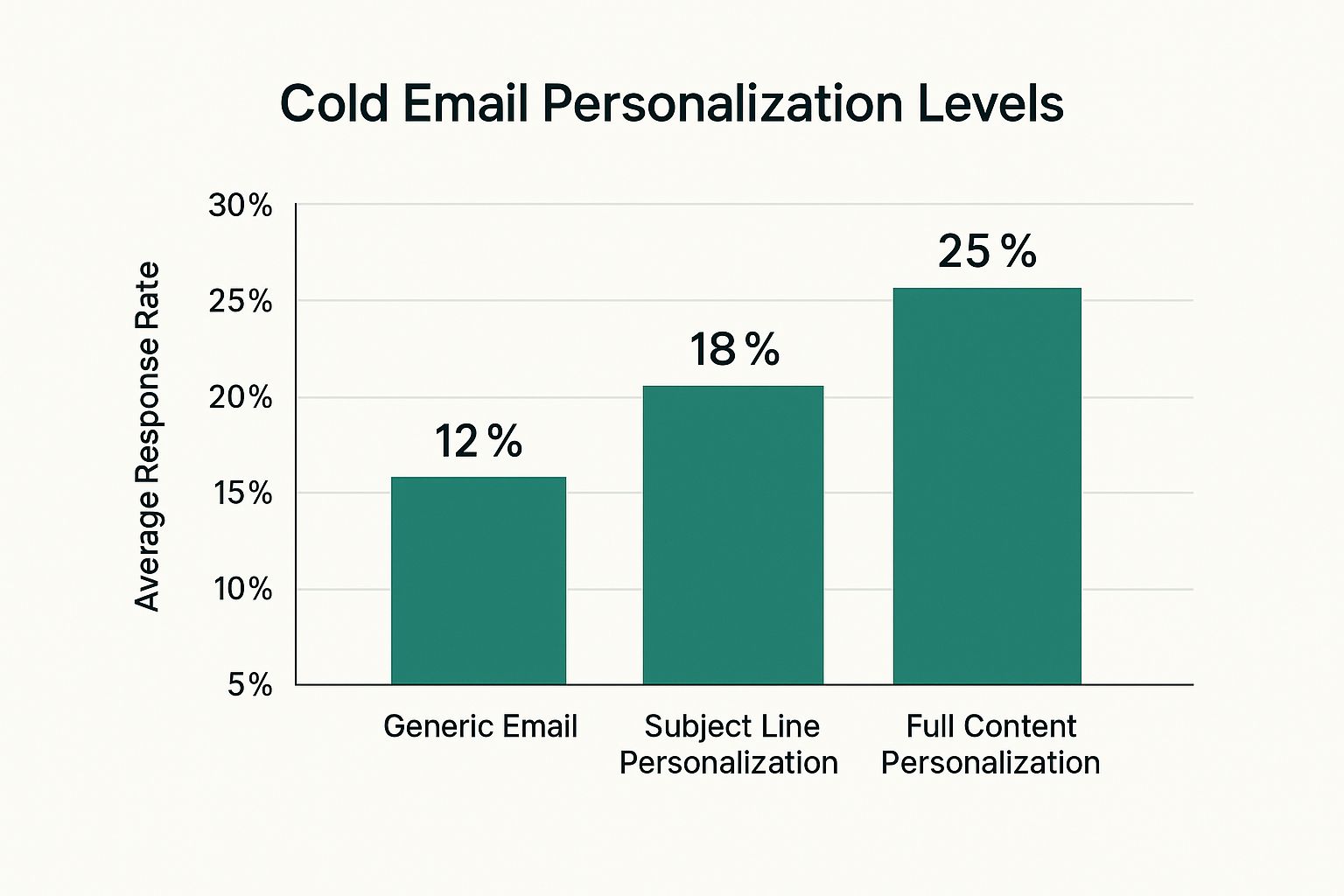
    Look, true personalization is so much more than just dropping a {{first_name}} tag in your template. It's about proving you have a legitimate, specific reason for contacting them—and not the other 100 people on your list. This is easily the most powerful lever you can pull to jack up your response rate.

    Sending a highly personalized message shows you've invested time and respect their position. It instantly changes your email from an annoying interruption into a potential opportunity.

    This is where you bring in the "custom snippets"—those specific, recent, and relevant details that make each email feel unique. It proves you're a human, not a robot blasting out emails. The payoff for this effort is huge.

    Image

    The numbers don't lie. A little bit of genuine personalization can easily double your response rate compared to a generic message.

    To make this crystal clear, here’s how different levels of effort play out.

    Personalization Levels and Expected Impact

    Personalization Level Example Expected Response Rate Impact
    Basic (Low Effort) Using their first name and company name. Low. Better than nothing, but barely.
    Intermediate Referencing their job title or industry. Moderate. Shows you're targeting the right role.
    Advanced (High Effort) Mentioning a recent LinkedIn post, a quote from a podcast they were on, or a recent company award. High. This is the gold standard and gets replies.

    Dedicating a few extra minutes to find that advanced, high-effort snippet is almost always worth the return you'll get in replies.

    Write a Compelling Email Body

    You got the open. Congrats! Now the body of your email has to deliver on the promise your subject line made. This is where you connect their world to your solution. The biggest mistake people make here is talking endlessly about themselves, their company, and their list of features.

    Don't do that. Frame the entire message around the recipient.

    Start by showing you get it—you understand their world. You can learn a lot more about this in our full guide on how to write cold emails that people actually look forward to reading.

    Here's a simple, effective framework:

    1. The Hook: Kick things off with your personalized snippet. "Saw your LinkedIn post on scaling sales teams…"
    2. The Problem: Touch on a relevant pain point. "…and it made me think about how tough it is to keep lead quality high during a growth spurt."
    3. The Value Prop: Gently introduce your solution without a hard sell. "We help B2B tech companies like yours solve this by…"
    4. The Call-to-Action (CTA): Make the next step incredibly easy and low-friction.

    This structure keeps the focus squarely on them and builds a natural bridge from their problem to your solution.

    Use a Smart Follow-Up Strategy

    Here's a hard truth: most replies don't come from the first email. Not even close.

    Campaigns with 4-7 emails in a sequence see a reply rate that is three times higher than campaigns that give up after 1-3 emails. A polite, persistent follow-up strategy isn't optional; it's essential for a healthy response rate.

    But "following up" does not mean sending the same email again with "Just checking in" tacked on top. Gross. Each follow-up needs to add a little more value or offer a new angle.

    • Follow-Up 1 (2-3 days later): A simple, polite bump. That's it.
    • Follow-Up 2 (4-5 days later): Share a relevant case study, blog post, or a surprising stat.
    • Follow-Up 3 (1 week later): Reframe your value prop. Try a different angle that might resonate more.

    Put these strategies into practice—a killer subject line, deep personalization, a recipient-focused body, and a smart follow-up sequence—and you’ll stop being an annoyance in their inbox and start becoming a powerful conversation starter.

    Mastering the Technical Side of Email Deliverability

    Image

    Here's a hard truth: even the most persuasive, perfectly written email is worthless if it lands in the spam folder. Boosting your cold email response rate isn't just about clever copy. It’s about getting the technical stuff right—the behind-the-scenes setup that trips up most outreach campaigns before they even get a chance to start.

    Think of your email domain like a person trying to get through airport security. To get past the gate, they need a passport and an official ID. Technical email settings are your domain’s passport. They prove to email providers like Gmail and Outlook that you are who you say you are.

    Without that authentication, your emails look sketchy. They get flagged as suspicious and sent straight to the junk pile. Nailing these fundamentals ensures your messages actually hit the inbox, giving them a fighting chance to get read.

    Setting Up Your Domain's Passport

    You don’t need to be a developer to get this right. There are three key records that work together to build trust with mail servers and protect your reputation as a sender.

    • SPF (Sender Policy Framework): This is like a public list of authorized senders for your domain. It tells the world, "Only these specific mail servers are allowed to send emails on my behalf."
    • DKIM (DomainKeys Identified Mail): Think of this as a tamper-proof seal on a physical letter. DKIM adds a unique digital signature to every email, proving that the message wasn't faked or altered on its way to the recipient.
    • DMARC (Domain-based Message Authentication, Reporting & Conformance): This is the security guard that checks both the sender list (SPF) and the seal (DKIM). DMARC gives instructions to receiving servers on what to do if an email fails these checks, which protects your domain from being used by spammers.

    Setting these up is a one-time task, but it makes a massive difference in your deliverability.

    Building Your Sender Reputation

    Just like a person has to build up their credit score over time, a new email account needs to establish its sender reputation. You can’t just fire up a brand-new email and blast out 500 messages on day one. That’s exactly what spammers do, and it’s a surefire way to get your account flagged immediately.

    The process of gradually increasing your sending volume is called "warming up." It shows ISPs that you're a legitimate user, not a spam bot, by mimicking human behavior over time.

    This means starting with just a handful of emails each day and slowly increasing that number over several weeks. A solid warm-up routine is non-negotiable if you're serious about your emails actually landing in front of people.

    On top of that, keeping a clean email list is critical for your reputation. You need to get in the habit of using a tool to validate an email address before you hit send. This weeds out the bad or risky contacts, which keeps your bounce rate low and signals to email providers that you're a responsible sender.

    Moving Beyond Email with Multi-Channel Outreach

    A killer cold email strategy is a fantastic engine for growth, but it works even better when it’s not flying solo. If you really want to crank up your cold email response rate, you have to start thinking beyond the inbox and embrace a multi-channel game plan.

    This just means blending your emails with smart, timely touchpoints on other platforms—and for most of us, that means LinkedIn.

    Think about it like this: if you meet someone once at a big conference, they’ll probably forget you by the time they get home. But if you run into them a few times over the course of the event, a bit of familiarity starts to set in. You’re not a stranger anymore.

    The same principle applies here. By engaging with a prospect’s content or connecting with them on LinkedIn before your first email even hits their inbox, you stop being a random name. This one move can turn a cold outreach into a much warmer one, seriously boosting the odds they’ll actually open and reply to your message.

    A Simple Multi-Channel Sequence That Works

    Getting this all set up doesn't have to be some complex, over-engineered process. The real goal is just to create a series of light, professional interactions that build recognition without coming across as pushy or desperate.

    Here’s a proven sequence you can steal and adapt right away:

    • Day 1: The LinkedIn Touchpoint. Kick things off by simply viewing their LinkedIn profile. After that, find a recent post they shared and leave a genuine, thoughtful comment or give it a like. This is your first, no-pressure signal that you exist.

    • Day 3: The First Email. Two days later, it’s time to send your highly personalized cold email. Now, when they see your name, there’s a flicker of recognition, making your subject line infinitely more compelling.

    • Day 5: The Connection Request. Finally, send a LinkedIn connection request. Keep the note short and sweet: "Really enjoyed your recent post on [Topic]. Thought it would be great to connect."

    This approach flips the script, turning your outreach from a single shot in the dark into a well-timed, thoughtful campaign.

    A multi-channel strategy is built on a simple truth: your prospects don't just live in their inbox. By meeting them where they are, you build the kind of rapport and trust that every real business relationship is founded on.

    This layered approach does more than just boost your immediate response rate. It helps you build a stronger, more engaged network for the long haul. You’ll find yourself shifting from a mindset of just "sending emails" to one of genuinely starting conversations.

    Common Questions About Cold Emailing

    When you're fine-tuning your cold email game, a few questions always seem to pop up. Getting them answered is the key to breaking through the roadblocks that keep your campaigns from really taking off.

    How Long Should I Wait Between Follow-Ups?

    This is the big one, and the answer is all about finding that sweet spot. Timing is everything. If you follow up too quickly, you come across as pushy and aggressive. But if you wait too long, you lose all the momentum you built.

    The best approach is to create slightly irregular intervals—it just feels more human. A good rule of thumb is to wait 2-3 days after your first email. After that, start stretching it out. Send the next one 4-5 days later, and then maybe wait a full week for the one after that. This keeps you on their radar without clogging up their inbox.

    The goal of a follow-up isn't to demand a reply. It's a gentle, professional reminder that adds a bit more value with each touchpoint, showing persistence without being a pest.

    The real key here is sticking with it. The data doesn't lie: campaigns that include 4-7 emails in a sequence can see triple the reply rate compared to campaigns that give up after just one or two messages. Don't quit too early, because most of your best replies are hiding in those later follow-ups.


    Ready to find the right contacts and build your outreach lists in seconds? EmailScout is a powerful email finder that helps you connect with decision-makers effortlessly. Find unlimited emails for free and streamline your sales outreach. Learn more at emailscout.io.

  • What Is B2B Lead Generation Explained

    What Is B2B Lead Generation Explained

    So, what exactly is B2B lead generation?

    At its core, it’s the process of finding and attracting other businesses that could be a great fit for your products or services. Forget about casting a wide net and hoping for the best. This is about being a strategic matchmaker, connecting your company with other companies that are actively looking for the very solutions you provide. It’s the engine that fuels a predictable pipeline of future customers.

    What B2B Lead Generation Is Really About

    Image

    Let's move past the textbook definition. Think of B2B lead generation as the art of guiding potential customers on a journey. It’s far more than just grabbing a name and an email address. The real goal is to build awareness, earn trust, and nurture interest until a prospect is not just ready, but genuinely willing to have a conversation with your sales team.

    This entire journey is often mapped out as a sales funnel.

    The B2B Lead Generation Funnel

    It all starts at the top of the funnel, where a complete stranger might stumble upon your brand through a helpful blog post or a social media update. As they move toward the middle, their interest deepens. They might sign up for a webinar or download a detailed case study, signaling they're looking for more specific answers.

    By the time they reach the bottom, they're ready for a one-on-one demo or consultation. They've gone from a curious onlooker to a sales-ready opportunity.

    A successful B2B lead generation strategy doesn't just find potential customers; it builds a bridge between their business challenges and your solutions, creating a foundation for a long-term partnership.

    The whole system is designed to turn that initial spark of curiosity into a real business relationship. Without a steady stream of qualified leads, even the most talented sales teams will struggle. That’s why about 50% of marketers see lead generation as a top priority.

    On average, companies bring in around 1,877 leads each month, with the typical cost per lead sitting at roughly $198. But it's not always easy—a staggering 97% of prospects ignore cold calls, which just goes to show how critical it is to use smarter, value-first strategies. You can dive into more lead generation statistics to see just how the industry is shifting.

    To help you get a quick handle on these ideas, here’s a simple breakdown of the core concepts.

    B2B Lead Generation Key Concepts at a Glance

    This table sums up the essential components that make up the B2B lead generation process.

    Concept Description
    Lead A potential business customer who has shown interest in your product or service.
    Lead Qualification The process of determining if a lead is a good fit and likely to become a paying customer.
    Sales Funnel A visual representation of the journey a prospect takes from initial awareness to making a purchase.
    Marketing Qualified Lead (MQL) A lead that marketing has deemed more likely to become a customer compared to others.
    Sales Qualified Lead (SQL) A lead that the sales team has accepted as ready for a direct sales follow-up.

    These terms form the building blocks of any effective lead generation system.

    Ultimately, understanding B2B lead generation means seeing it for what it is: a repeatable, predictable system for growing revenue. It’s not just about filling your pipeline with names—it's about filling it with genuine opportunities.

    Navigating the B2B Lead Generation Funnel

    Every potential business customer goes on a journey, starting as a total stranger and ending as a confident buyer. The best way to map this path is with the B2B lead generation funnel. Think of it as a guide for your marketing—it helps you deliver the right message at the right time to build trust and keep things moving.

    Instead of hitting prospects with one big sales pitch, the funnel breaks the process down into logical stages. Each stage matches a prospect's awareness and interest level, letting you tailor your approach to meet them where they are. This is how you turn a flicker of curiosity into a sales-ready relationship.

    Top of the Funnel (TOFU): Building Awareness

    The journey starts at the Top of the Funnel (TOFU). At this point, your audience probably isn't even looking for your specific solution. They just know they have a problem or a challenge and are starting to research it. Your goal here isn’t to sell; it's to educate and attract.

    This is the widest part of the funnel, designed to cast a broad net. The content you create here should be easy to find and focused on answering common questions or hitting on industry pain points. The goal is simple: establish your brand as a helpful, knowledgeable resource.

    Some of the most effective TOFU strategies include:

    • SEO-Optimized Blog Posts: Articles that answer your audience's burning questions and show up when they search on Google.
    • Informative Ebooks and Whitepapers: Deep-dive guides that offer serious value in exchange for an email address.
    • Engaging Social Media Content: Posts, infographics, and short videos that grab attention and get your brand name out there.
    • Helpful Checklists and Templates: Practical tools that solve a small, immediate problem for your audience.

    The infographic below shows how different strategies fit into the customer's journey.

    Image

    As you can see, the content has to change as you nurture leads from initial awareness all the way to a final purchase decision.

    Middle of the Funnel (MOFU): Nurturing Interest

    Once someone engages with your TOFU content—say, by downloading that ebook—they slide into the Middle of the Funnel (MOFU). Now, they know who you are and have shown a real interest in the problem you solve. Your job is to build on that trust and position your solution as a top contender.

    MOFU content gets more specific. You’re no longer just talking about their problem; you're showing them how to solve it, with your company’s expertise front and center. This is where you start to separate the casual lookers from the serious potential buyers.

    In the middle of the funnel, you shift from being an educator to becoming a trusted advisor. This is your chance to really show what you know and build the confidence a prospect needs to take you seriously.

    Effective content for this stage includes:

    • Detailed Case Studies: Real-world stories of how you helped businesses just like theirs hit their goals.
    • Expert-Led Webinars: Live or on-demand sessions that go deep on a specific topic and showcase what your product can do.
    • Email Nurturing Sequences: A series of automated emails that deliver more value and keep your brand on their radar.

    If you're looking to sharpen your game here, exploring different B2B outreach tactics can give you great ideas for connecting with prospects at this critical stage.

    Bottom of the Funnel (BOFU): Driving Action

    Finally, the prospects who stick with you reach the Bottom of the Funnel (BOFU). These are highly qualified leads. They get their problem, they see your company as a potential fix, and now they're just weighing their options. Your goal is to turn their interest into a commitment.

    The content and offers here are direct and all about your product. You need to give them a rock-solid reason to choose you over anyone else. This usually means showing a clear return on investment and making it incredibly easy for them to sign on the dotted line.

    BOFU offers typically include:

    • Free Trials or Product Demos: A hands-on test drive that lets them see the value for themselves.
    • Personalized Consultations or Assessments: One-on-one calls to talk through their specific needs and how you can meet them.
    • Pricing Sheets and Implementation Guides: The nitty-gritty details they need to make a final, informed decision.

    By carefully matching your strategies to each stage of the B2B lead generation funnel, you create a smooth, logical path that turns strangers into customers.

    Proven B2B Lead Generation Strategies and Channels

    Knowing what a B2B lead generation funnel looks like is one thing. Actually filling it with high-quality prospects is a completely different beast. It demands a smart, well-rounded strategy that pulls from both inbound and outbound playbooks.

    Think of it like fishing. Inbound methods are all about creating the perfect, irresistible habitat to attract fish to you. Outbound is about actively casting a line to catch the specific fish you want. A truly successful plan doesn’t pick a side—it blends them to create a constant, predictable stream of opportunities.

    Mastering Inbound Lead Generation

    Inbound marketing is the art of becoming a magnet for your ideal customers. It’s all about building such a strong, helpful online presence that when businesses start looking for solutions, they find you first. This approach is powerful because it builds trust right from the very first interaction.

    Here are the cornerstones of a killer inbound strategy:

    • Content Marketing: This is the engine that drives everything. When you create blog posts, whitepapers, and videos that genuinely solve your audience's biggest problems, you stop being just a vendor and start becoming a thought leader. Great content doesn't just attract visitors; it educates them and walks them through their buying journey.

    • Search Engine Optimization (SEO): SEO is what makes sure your amazing content actually gets discovered. By optimizing your website and articles for the keywords your prospects are typing into Google, you capture high-intent traffic. These are people actively looking for what you sell, and they're landing right on your digital doorstep.

    • Social Selling: Platforms like LinkedIn aren't just for résumés anymore; they're bona fide channels for generating leads. Sharing insightful content, jumping into industry discussions, and building real connections can position your team as the go-to advisors in your space.

    The core idea behind inbound is simple: provide value before you ask for anything in return. When you consistently help your audience, you earn their trust and, eventually, their business.

    This approach is definitely a long game. It takes time to build momentum, but the leads it brings in are often much more qualified and easier to convert because they've already seen the value you provide. For a deeper look, you can explore various lead generation guides that dig into these concepts.

    Executing Effective Outbound Strategies

    While inbound builds that solid foundation, outbound strategies give you a direct, targeted way to fill your pipeline right now. Outbound is all about identifying your ideal customers and reaching out with a message that resonates. When you do it right, it’s not about spam—it’s about precision.

    This is where you take control of the conversation.

    • Targeted Digital Advertising: Platforms like Google Ads and LinkedIn Ads are a game-changer. They let you put your message directly in front of key decision-makers, targeting them by job title, industry, company size, or even online behavior. It ensures every dollar you spend is aimed at the most relevant audience.

    • Personalized Email Outreach: Cold email gets a bad rap, but personalized outreach is a different world. Instead of a generic blast, it involves researching a prospect's real pain points and crafting a message that speaks directly to their needs. A well-written, relevant email can open doors that would otherwise stay shut.

    • Account-Based Marketing (ABM): ABM cranks the targeting up to eleven. Instead of going after individual leads, you treat an entire high-value company as a "market of one." This means creating hyper-personalized campaigns for key accounts, with sales and marketing working together to land those major deals.

    LinkedIn, in particular, has become a powerhouse for B2B marketers. In fact, a whopping 40% of B2B marketers now see it as their most effective channel for finding top-tier leads. Its tools, like Lead Gen Forms, hit an average conversion rate of 13%—more than five times higher than what you'd see on a typical landing page.

    At the end of the day, the strongest lead generation machine combines the pull of inbound with the push of outbound. By creating valuable content that attracts prospects and proactively reaching out to your ideal customers, you build a robust and predictable system to fuel real business growth.

    Advanced Tactics for Attracting High-Value Leads

    Image

    Once your foundational inbound and outbound strategies are humming along, it’s time to get a little more sophisticated. The goal shifts from catching more leads to attracting the right ones. This is where advanced tactics come in. They’re all about precision and focusing your energy on the accounts that can truly move the needle.

    You’re basically graduating from broad-stroke marketing to surgical, high-impact campaigns. Two of the most powerful approaches you can use are Account-Based Marketing (ABM) and leveraging intent data. These methods help you find and engage your dream clients with messages so relevant, they feel like they were written just for them.

    Adopting an Account-Based Marketing Mindset

    Think of traditional lead generation like fishing with a wide net. You cast it out and catch a bunch of stuff, but then you have to spend ages sorting through it all to find the keepers.

    Account-Based Marketing (ABM) is the complete opposite. It’s like spear fishing. You identify a specific, high-value fish, aim carefully, and focus all your energy on landing that one target.

    Instead of shouting your message to a broad audience, ABM treats a single company as its own market. Your sales and marketing teams have to work together, creating hyper-personalized campaigns designed to click with key decision-makers at that specific account. You aren't just sending an email; you're crafting an entire experience for one company.

    The real power of ABM is its focus. By zeroing in on best-fit accounts, you stop wasting money on leads that were never going to convert and seriously boost your chances of closing big, important deals.

    This targeted approach gets results. It's why ABM has become such a dominant strategy in the B2B world. When done right, it can increase pipeline conversion rates by up to 14%. It also leads to a 28% improvement in account management and boosts the conversion of marketing-qualified leads into sales-accepted leads by 25%. You can dig deeper into top B2B lead generation trends to see how this strategy keeps evolving.

    So, how does it work in practice? A solid ABM campaign usually involves these steps:

    • Define Your Ideal Customer Profile (ICP): Get crystal clear on what your dream clients look like. Think about industry, company size, revenue, and even the tech they use.
    • Build a Target Account List: Create a shortlist of high-value companies that are a perfect match for your ICP.
    • Map Out the Key People: Figure out who the decision-makers, influencers, and potential roadblocks are inside each company.
    • Create Personalized Content: Develop messages and offers that speak directly to the specific problems and goals of that one company.
    • Run Coordinated Campaigns: Launch your campaign across multiple channels—email, social media, ads—making sure the message is consistent and personal everywhere.

    To truly understand how ABM flips the traditional model on its head, it helps to see a side-by-side comparison.

    Traditional Lead Generation vs Account-Based Marketing

    The table below breaks down the fundamental differences between casting a wide net and spear fishing.

    Aspect Traditional Lead Generation Account-Based Marketing (ABM)
    Approach Volume-based (wide net) Quality-based (spear fishing)
    Targeting Broad audience based on personas Specific, named accounts
    Focus Attracting individual leads Engaging the entire buying committee
    Metrics Cost per lead, lead volume Account engagement, pipeline velocity
    Sales & Marketing Often operate in separate silos Tightly aligned and collaborative
    Outcome Quantity of leads Quality of high-value opportunities

    As you can see, ABM is a strategic shift. It prioritizes deep engagement with a few key accounts over shallow interactions with many.

    Leveraging the Power of Intent Data

    Now, what if you could know which businesses were actively researching solutions like yours right now? That's the magic of intent data. It’s basically a collection of online behavioral clues—like content downloads, article views, and specific search queries—that signal a company is in an active buying cycle.

    Think of it as digital body language. A prospect might not have filled out your contact form, but their online activity is a giant flare telling you they're in the market. Tapping into this data lets you find warm prospects before your competitors even know they exist.

    There are a few smart ways to use intent data:

    1. Prioritize Your Outreach: Aim your sales team's efforts at accounts showing strong buying signals. Your response rates will thank you.
    2. Personalize Your Messaging: If you know what topics a company is researching, you can tailor your emails and ads to match their interests perfectly.
    3. Discover New Opportunities: Uncover potential leads that weren't on your radar but fit your ICP and are actively looking for a solution.

    When you combine the laser focus of ABM with the predictive power of intent data, you create a seriously formidable lead generation machine. You’re no longer just sitting back and waiting for leads to find you; you're proactively identifying and engaging your best future customers at the exact moment they need you.

    Measuring Your B2B Lead Generation ROI

    Launching a B2B lead generation strategy without tracking its performance is like driving with your eyes closed. You might be moving, but you have no idea if you're headed in the right direction. To really get better, you have to measure what’s working, what isn’t, and how much it all costs.

    This isn’t about chasing vanity metrics like page views or social media likes. It’s about focusing on the key performance indicators (KPIs) that prove you're making a real impact on the business and justify every dollar you spend. When you can draw a straight line from your lead gen activities to actual revenue, you build a powerful case for your strategy.

    Essential Metrics for B2B Success

    To get a clear picture of your return on investment, you need to track a handful of core metrics. These KPIs cut through the noise and tell you the real story of your campaign's health and profitability.

    Here are the non-negotiable metrics every B2B marketer should have on their dashboard:

    • Cost Per Lead (CPL): This one is as straightforward as it gets. It tells you exactly how much you're spending to get a single lead. Just divide your total campaign cost by the number of leads you generated. A low CPL means you’re running an efficient machine.

    • Marketing Qualified Lead (MQL) to Sales Qualified Lead (SQL) Conversion Rate: Not all leads are created equal. This metric tracks the percentage of leads marketing hands over to sales that actually get accepted as real opportunities. A high conversion rate here is a sign that marketing is delivering high-quality, well-nurtured leads that the sales team loves.

    • Lead-to-Close Ratio: This is the ultimate bottom-line metric. It measures what percentage of your leads actually turn into paying customers. This KPI shows how effective your entire funnel is, from the very first touchpoint to the final signed contract.

    Tracking these numbers gives you a data-driven foundation to make smarter decisions and tune your campaigns for maximum impact.

    Calculating Your Return on Investment

    Beyond individual metrics, you need to see the bigger financial picture. Two crucial calculations connect your lead generation efforts directly to long-term business value.

    Measuring ROI isn't just a reporting task; it's a strategic imperative. It transforms your marketing from a cost center into a documented revenue driver, giving you the clarity needed to scale your most successful initiatives.

    First up is Customer Acquisition Cost (CAC). This is the total cost of your sales and marketing efforts needed to land one new customer. It includes everything—ad spend, salaries, software, you name it. The formula is simple: Total Sales & Marketing Costs / Number of New Customers Acquired.

    Next is Customer Lifetime Value (CLV). This metric forecasts the total revenue you can expect from a single customer over the entire time they do business with you. It highlights the long-term value of the customers you’re bringing in. A simple way to estimate it is: (Average Annual Revenue per Customer x Customer Relationship in Years) – Customer Acquisition Cost.

    The golden rule here is that your CLV should be significantly higher than your CAC. A healthy ratio, often cited as 3:1 or better, signals a sustainable and profitable business model.

    Finally, none of this matters if your data is a mess. Bad data can skew all your metrics, leading you to the wrong conclusions. This is why it’s so important to understand how to validate an email address effectively, because clean contact lists are the bedrock of reliable outreach and accurate ROI calculations. By prioritizing data quality, you ensure every number you track is a true reflection of your performance.

    Common B2B Lead Generation Mistakes to Avoid

    Even a killer B2B lead generation strategy can fall flat if you’re making a few common, avoidable mistakes. Honestly, knowing what not to do is just as important as knowing which strategies to run with. Success often comes down to steering clear of the simple errors that drain your budget and stuff your pipeline with junk leads.

    Too many companies jump straight into tactics without getting the foundation right. This leads to a messy, disjointed mess where marketing generates leads that sales can’t close, and genuinely interested prospects fall through the cracks because the follow-up is a disaster.

    Targeting a Poorly Defined Audience

    This is one of the biggest mistakes I see: casting a net that’s just way too wide. Without a crystal-clear Ideal Customer Profile (ICP), you end up creating content and ads that try to speak to everyone. The result? They resonate with no one. This approach might get you a high volume of contacts, but they’re low-quality leads that just create more work for your sales team, not more revenue.

    For instance, a SaaS company selling project management software might target "all small businesses." That's way too vague. A much smarter approach is to target "tech startups with 20-50 employees who have recently hired a project manager." Now that lets you create specific, hard-hitting messaging.

    A vague audience is the enemy of effective B2B lead generation. When you try to be everything to everyone, you become nothing to anyone, and your ROI suffers dramatically.

    Do yourself a favor and invest time in building a detailed ICP. Base it on firmographic data and, more importantly, the traits of your absolute best customers. A precise target is the bedrock of every successful campaign.

    Failing to Nurture Leads Properly

    Another massive error is thinking lead generation is a one-and-done deal. So many businesses focus all their energy on just capturing a name and email, then immediately toss that cold lead over to sales for a hard pitch. This is a recipe for failure. Just look at the research—37.1% of marketers say generating high-quality leads is their biggest challenge, and this is a huge reason why.

    Someone who just downloaded a whitepaper is almost never ready for a sales call. They need to be nurtured. You have to build trust and educate them with valuable content.

    Here’s how to fix it:

    • Implement Lead Scoring: Start assigning points to leads based on what they do (like visiting your pricing page) and who they are. This helps you spot who is actually sales-ready.
    • Create Nurturing Workflows: Set up automated email sequences that deliver relevant case studies, webinar invites, and helpful articles over time. It keeps you top-of-mind without being pushy.
    • Align Content to the Funnel: Make sure you have content that speaks to people at every stage, not just the top-of-funnel awareness phase.

    Misalignment Between Sales and Marketing

    Finally, nothing will sabotage your lead gen engine faster than a disconnect between your sales and marketing teams. When these two departments are stuck in their own silos, they end up with conflicting goals and different definitions of what a "good" lead even is. Marketing might be high-fiving over hitting a record MQL number, while the sales team is complaining that every single lead is junk.

    All that friction just leads to wasted money and missed opportunities. The fix is to create a Service Level Agreement (SLA). This document clearly defines who is responsible for what, the exact criteria for a Sales Qualified Lead (SQL), and the handoff process. When sales and marketing work as one unified team, the whole funnel just works better. It's that simple.

    B2B Lead Generation FAQs

    As you start putting all this theory into practice, you'll probably run into a few common questions. Let's clear up some of the usual points of confusion so you can build your lead gen plan with confidence.

    What’s the Difference Between a Lead and a Prospect?

    Think of it like dating. A lead is anyone who’s shown a flicker of interest—maybe they downloaded your ebook or signed up for a webinar. They’re at the very top of your funnel, but you don't know much about them yet.

    A prospect, on the other hand, is a lead you've actually vetted. Your team has qualified them and confirmed they fit your Ideal Customer Profile (ICP). They have the budget, the authority, and a real need for what you’re selling. They're the ones you're ready to ask on a second date.

    How Long Does B2B Lead Nurturing Take?

    This is the classic "it depends" answer, but for good reason. The B2B sales cycle is notoriously long, and nurturing is a marathon, not a sprint. For a simple, low-cost SaaS tool, you might be looking at a nurturing cycle of just a few weeks.

    But for complex, big-ticket enterprise solutions, you should be prepared for a nurturing process that spans six to twelve months—sometimes even longer. The goal is to consistently deliver value and build trust without trying to rush the relationship.

    What’s the Best First Step for a Small Business?

    If you're a small business just dipping your toes into B2B lead generation, do this one thing first: define your Ideal Customer Profile (ICP). Seriously, don't spend a single dollar on ads or an hour creating content until you know exactly who you’re trying to talk to.

    Once you have your ICP nailed down, pick one or two channels where that audience actually hangs out. For many, that means creating genuinely helpful blog content optimized for SEO and building a real presence on LinkedIn. Start small, figure out what works, and then you can scale.


    Ready to supercharge your outreach and find decision-makers in a single click? EmailScout helps you build targeted marketing lists and enhance your sales pipeline effortlessly. Find unlimited emails for free and start connecting with the right contacts today at https://emailscout.io.