Category: Uncategorized

  • 7 Welcome Email Example Strategies That Work in 2025

    7 Welcome Email Example Strategies That Work in 2025

    The welcome email is your digital handshake. It sets the tone for your entire relationship with a new subscriber, lead, or customer. With average open rates soaring above 80%, this first impression is a critical opportunity you simply cannot afford to waste.

    A generic "thanks for subscribing" no longer makes an impact. To build lasting engagement and convert interest into action, you need a strategy that welcomes, guides, and provides immediate, tangible value from the very first interaction. A strong welcome email doesn't just confirm a subscription; it validates your new contact's decision to connect with you.

    In this comprehensive guide, we move beyond basic templates to dissect seven powerful welcome email example strategies. You will learn the specific tactics behind each approach, from crafting hyper-personalized greetings to building story-driven narratives that forge an instant connection. We will break down what makes each example effective and provide actionable takeaways you can implement immediately.

    Get ready to transform your onboarding process. By the end of this article, you’ll have a clear framework for creating a high-performing welcome email that turns new subscribers into your most loyal advocates.

    1. The Personal Welcome

    The Personal Welcome email is a powerful strategy that moves beyond a generic greeting to create an immediate, one-to-one connection with a new subscriber. This approach leverages user-provided data, such as their name, interests, or signup source, to craft a message that feels uniquely tailored. Instead of a one-size-fits-all template, this welcome email example makes the recipient feel seen and valued from the very first interaction.

    Brands like Netflix and Spotify excel at this. When you sign up for Netflix and select your favorite genres, your welcome email often highlights movies or shows from those exact categories. Similarly, a local gym might send a welcome email that references the specific fitness class you expressed interest in during registration, creating instant relevance.

    Strategic Breakdown

    The core principle is to use personalization to build rapport and demonstrate that you understand the subscriber's needs. This isn't just about using their first name; it's about reflecting their choices back to them, validating their decision to sign up.

    Key Tactic: Collect one or two key pieces of preference data during the signup process. This could be their primary goal, favorite product category, or specific interest. Use this data point immediately in the welcome email to create a "wow" moment.

    The following bar chart visualizes the significant performance uplift seen in personalized welcome emails compared to their generic counterparts.

    Infographic showing key data about The Personal Welcome

    As the data clearly shows, personalization directly boosts engagement metrics while significantly reducing the likelihood of a new subscriber churning out.

    Actionable Takeaways

    • Reference the Signup Source: Mention how they joined your list. For example, "Thanks for signing up after our webinar on content marketing!"
    • Use Dynamic Content: Insert product or content recommendations based on the preferences they shared.
    • Include a Human Touch: Add a photo and a brief note from your founder or a key team member to make the connection more personal.

    This method works exceptionally well for businesses that offer a wide range of products or content, as it helps guide the new user toward the most relevant options immediately. You can find more tips on crafting an effective first message by learning how to write a compelling introductory email.

    2. The Value-Packed Welcome Series

    The Value-Packed Welcome Series is a sophisticated strategy that extends the initial greeting into a multi-part sequence designed to build trust and demonstrate expertise. Instead of a single email, this approach delivers a drip campaign of educational content, exclusive resources, or practical tips over several days. This welcome email example shifts the focus from an immediate sale to nurturing a long-term relationship by providing genuine value upfront.

    Industry leaders like HubSpot and ConvertKit have perfected this model. When you subscribe to HubSpot’s blog, you don't just get a confirmation; you begin a mini-course on inbound marketing. Similarly, ConvertKit offers an email marketing masterclass series, positioning them as an authority and proving their product's value before you ever log in.

    Strategic Breakdown

    The core principle here is to educate and empower the new subscriber, establishing your brand as a credible, helpful resource. This method systematically builds a foundation of trust, making a future sales pitch feel like a natural next step rather than an unwanted intrusion. The sequence is carefully paced to maintain engagement without overwhelming the recipient.

    Key Tactic: Structure your welcome series like a mini-course or a resource library. Plan a clear content theme for each email in the sequence, with each message building upon the last to solve a specific problem for your new subscriber.

    The series format allows you to introduce different facets of your brand, from your educational content to your community and, eventually, your core product. It turns a cold lead into a warm, engaged prospect who understands your value proposition.

    Actionable Takeaways

    • Pace Your Emails: Space your emails 2-3 days apart initially to maintain momentum without flooding their inbox.
    • Focus on a Single CTA: Each email should have one clear call-to-action, such as "Read the Guide" or "Watch the Tutorial."
    • Mix Content Strategically: Blend educational content with soft-sells. For instance, an email teaching a concept can subtly mention how your tool simplifies its execution.

    This method is ideal for SaaS companies, course creators, and service-based businesses whose products require some level of user education. To ensure your valuable content reaches its audience, you can learn more about the importance of email address verification.

    3. The Social Proof Champion

    The Social Proof Champion is a welcome email strategy designed to build instant trust and credibility by showcasing the positive experiences of existing customers. Instead of telling new subscribers how great your brand is, this approach shows them through testimonials, user-generated content, reviews, and community statistics. This welcome email example leverages the powerful psychological principle that people are more likely to adopt a behavior if they see others doing it.

    Brands like Glossier and Peloton master this by integrating authentic customer stories directly into their onboarding. Glossier often features photos of real customers using their products, while Peloton highlights member achievements and impressive community metrics. This immediately validates a new subscriber's decision to join, reducing potential buyer's remorse and building a sense of belonging from day one.

    Infographic showing key data about The Social Proof Champion

    Strategic Breakdown

    The goal of this welcome email is to quell any doubts a new subscriber might have by surrounding them with positive social signals. By presenting evidence that many others have made the same choice and are happy with it, you make the path to conversion feel safer and more compelling. This builds confidence and transforms a new lead into a community member.

    Key Tactic: Feature a specific, relatable customer quote or a powerful statistic in your welcome email. For example, a SaaS company could state, "Join 50,000+ marketers who save 10 hours a week with our tool," to instantly frame the value through the lens of a thriving community.

    As the data illustrates, integrating social proof elements like testimonials and reviews can dramatically increase conversion rates by building trust early in the customer journey.

    Actionable Takeaways

    • Showcase Real Customers: Use authentic photos and quotes from your actual users instead of stock images and generic praise.
    • Highlight Impressive Numbers: Feature statistics like your total number of customers, 5-star reviews, or successful projects completed.
    • Link to Your Community: Include prominent links to your social media channels where new subscribers can see more user-generated content and interaction.

    This method is particularly effective for direct-to-consumer brands, subscription services, and software companies where community and user trust are critical drivers of growth. You can learn more about building this type of community by exploring strategies for customer engagement.

    4. The Interactive Welcome

    The Interactive Welcome email transforms the new subscriber experience from a passive reading session into an active, engaging activity. This strategy embeds interactive elements like quizzes, surveys, polls, or clickable carousels directly into the email, encouraging immediate participation. Instead of just telling subscribers what to do next, this welcome email example invites them to play a role, making the onboarding process more memorable and fun.

    Brands like Stitch Fix and BuzzFeed are masters of this approach. Stitch Fix often integrates a "style quiz" into its welcome flow, gathering crucial preference data from day one. Similarly, BuzzFeed might feature a mini-quiz or poll that reflects its signature content style, turning a simple greeting into a brand-aligned experience that captures user attention.

    The Interactive Welcome

    Strategic Breakdown

    The core principle is to leverage gamification and curiosity to boost engagement and collect valuable zero-party data. By making the interaction simple and rewarding, you lower the barrier to participation and encourage subscribers to share their preferences willingly, which fuels future personalization efforts.

    Key Tactic: Embed a single, high-impact interactive element that aligns with your brand's core value. For an e-commerce brand, this could be a "pick your favorite" image poll; for a SaaS company, it might be a quick survey about their primary goal.

    The goal is to gather data while providing an enjoyable experience, creating a positive feedback loop where subscribers feel understood and are more receptive to future communications.

    Actionable Takeaways

    • Integrate a Simple Quiz: Ask 2-3 fun, multiple-choice questions to help segment your new subscriber immediately.
    • Use Clickable Surveys: Embed a one-click poll or rating scale to gather quick feedback on their interests or expectations.
    • Provide Fallback Options: Always include a simple link to the interactive element on a landing page for email clients that don't support embedded features.

    This method works best for brands aiming to build a deeply personalized user journey from the very first email. While this approach is for warm leads, you can discover different strategies for initial outreach by exploring examples of effective cold emails.

    5. The Exclusive Insider Welcome

    The Exclusive Insider Welcome email transforms a simple subscription into an exclusive membership. This strategy immediately makes new subscribers feel like VIPs by granting them access to special perks, such as early product launches, member-only discounts, or content not available to the general public. This welcome email example is designed to create a powerful sense of belonging and privilege from the very first interaction.

    Brands like Nike and Sephora master this approach. Nike often welcomes new subscribers with a gateway to exclusive product drops on their SNKRS app, while Sephora’s Beauty Insider program immediately offers points and access to special events. These emails don’t just say "welcome"; they say "welcome to the inner circle," which is a far more compelling proposition for a new fan of the brand.

    Strategic Breakdown

    The core principle is to use exclusivity as a value proposition to reinforce the subscriber's decision. By offering something they can't get elsewhere, you instantly increase the perceived value of being on your email list and reduce the likelihood they will unsubscribe. It frames the relationship as a two-way street where their attention is rewarded with tangible, exclusive benefits.

    Key Tactic: Offer a specific, immediate, and exclusive benefit in the welcome email itself. Avoid vague promises of future perks and instead provide instant gratification, such as a link to a hidden sale page or a code for an exclusive discount.

    This approach effectively shifts the dynamic from a passive subscription to an active, privileged membership, encouraging long-term loyalty.

    Actionable Takeaways

    • Create a Sense of Urgency: Combine exclusivity with scarcity. For example, "You have 48-hour early access to our new collection before anyone else."
    • Segment Your Insiders: Create different tiers of exclusivity. A new subscriber might get a 10% discount, while a repeat customer gets invited to a private online event.
    • Clearly State the Benefits: Use a bulleted list to outline all the perks they now receive as an "insider," reinforcing the value of their subscription.

    This method works exceptionally well for e-commerce, fashion, and lifestyle brands where community and status are powerful motivators. By making subscribers feel special, you build a loyal audience that is more likely to engage and purchase. You can learn more about crafting these high-value offers by exploring loyalty program strategies.

    6. The Story-Driven Welcome

    The Story-Driven Welcome email shifts the focus from an immediate sale to building a deep, emotional connection with the new subscriber. This strategy uses compelling narrative to share a brand's origin, mission, or core values. Instead of a standard product-focused message, this welcome email example invites the user into a larger story, making them feel like part of a community with shared beliefs.

    Brands built on a strong ethos, like Patagonia and TOMS Shoes, master this approach. Patagonia’s welcome email often dives into its environmental activism, sharing its mission to save our home planet. Similarly, TOMS uses its first email to explain its one-for-one giving model, instantly aligning the new subscriber with the brand's social impact. This transforms a simple signup into a meaningful affiliation.

    Strategic Breakdown

    The core principle here is to connect with subscribers on a human level by sharing the "why" behind your brand. A powerful story resonates far more than a discount code, building long-term loyalty and turning customers into advocates. It frames their future purchases not just as transactions, but as contributions to a cause they believe in.

    Key Tactic: Identify the single most compelling element of your brand's story, whether it's an origin story, a powerful mission, or a core value. Craft a concise and authentic narrative around that one point to create an immediate emotional hook.

    This approach is particularly effective for mission-driven businesses or brands with a unique founding story that differentiates them in a crowded market. It sets the foundation for a relationship based on shared values rather than just price.

    Actionable Takeaways

    • Focus on the "Why": Clearly articulate your mission or the problem you set out to solve. Let new subscribers feel the passion behind your brand.
    • Show, Don't Just Tell: Use authentic images of your founders, your team in action, or the community you support to make the story more tangible and believable.
    • Connect Your Story to the Customer: Frame your narrative in a way that shows how the subscriber's involvement helps advance the mission. For example, "By joining us, you're now part of the movement to…"

    This method works exceptionally well for brands that want to build a strong, loyal community and differentiate themselves beyond their products or services. It establishes an identity that customers are proud to associate with.

    7. The Quick-Start Guide Welcome

    The Quick-Start Guide Welcome email is a critical onboarding tool for SaaS products, complex services, or any offering with a learning curve. This approach goes beyond a simple greeting to provide new users with a clear, step-by-step roadmap for getting started. By guiding users toward their first "aha!" moment, this welcome email example is designed to reduce friction, boost activation rates, and demonstrate immediate value.

    Companies like Slack, Canva, and Dropbox have perfected this model. Slack’s welcome email famously guides new users to create their first channel and send a message, while Canva provides links to beginner tutorials and popular templates. These emails are structured to help users achieve a quick, meaningful win, which significantly increases their likelihood of becoming long-term, active customers.

    The Quick-Start Guide Welcome

    Strategic Breakdown

    The core principle here is to combat user overwhelm by focusing on the most critical first actions. Instead of listing every feature, you curate a small set of high-impact steps that lead to the product's core value proposition. This builds momentum and user confidence right from the start.

    Key Tactic: Identify the 3-5 essential actions a new user must take to experience your product's value. Structure your welcome email around these steps, using clear calls-to-action, visuals like GIFs or screenshots, and links to short tutorials for each one.

    This video from Notion demonstrates how to structure onboarding to guide users through initial setup and feature discovery, a key principle of the Quick-Start Guide.

    Actionable Takeaways

    • Focus on First Wins: Frame your steps as achievements. For example, use "Create Your First Design" instead of "Learn About Our Editor."
    • Use Visual Aids: Incorporate screenshots, short GIFs, or embedded videos to demonstrate exactly how to complete each step.
    • Set Clear Expectations: Include an estimated time commitment for the initial setup to make it feel more manageable (e.g., "Get started in just 5 minutes!").
    • Offer Further Support: Provide a clear link to a help center, a live demo registration, or a support chat for users who need more assistance.

    This method is indispensable for technology companies and any business where user adoption is tied to understanding how to use the product effectively. It transforms the first interaction from a simple welcome into a productive, value-driven onboarding session.

    Welcome Email Styles Comparison

    Welcome Email Type Implementation Complexity Resource Requirements Expected Outcomes Ideal Use Cases Key Advantages
    The Personal Welcome Medium to High – requires data and variations Robust data collection and management Strong emotional connection, higher engagement Small to medium lists, personalized brands High open rates, personalized experience
    The Value-Packed Welcome Series High – multi-email setup and content creation Significant content development needed Builds trust and authority, long-term engagement Educational brands, content-driven products Educates customers, higher lifetime value
    The Social Proof Champion Medium – requires ongoing testimonial updates Consistent collection of reviews and UGC Builds trust, reduces purchase hesitation Established brands with user base Immediate credibility, reduces buyer anxiety
    The Interactive Welcome High – advanced tech and testing required Advanced ESP, AMP or interactive HTML support Higher engagement, collects data for personalization Brands with tech-savvy audiences Active subscriber engagement, memorable emails
    The Exclusive Insider Welcome Medium – content and offer management Creation of exclusive offers and segmentation Creates value and urgency, drives early purchase Loyalty programs, premium/retail brands Builds loyalty, differentiates brand
    The Story-Driven Welcome Medium – compelling narrative creation Storytelling expertise and authentic content Emotional connection, trust through transparency Mission-driven brands, lifestyle products Builds brand personality and authenticity
    The Quick-Start Guide Welcome Medium – detailed onboarding content Up-to-date tutorials, videos, and support Reduces confusion, accelerates product adoption SaaS, complex product onboarding Faster user success, reduces support requests

    Putting Your Welcome Email Strategy into Action

    We've journeyed through a diverse landscape of high-performing welcome emails, dissecting seven powerful strategies that transform a simple sign-up into a meaningful brand relationship. From the immediate connection of The Personal Welcome to the practical guidance of The Quick-Start Guide, each welcome email example serves a distinct strategic purpose. The core lesson is clear: your first email is not merely a transactional confirmation; it's a strategic first impression that sets the tone for the entire customer lifecycle.

    The most effective approach isn't about copying a template verbatim. It's about understanding the underlying psychology of each strategy and adapting it to your unique brand voice and audience needs. Your goal is to choose the path that best delivers on the promise you made when a user subscribed.

    Synthesizing the Core Strategies

    To bring these concepts together, let's distill the most critical takeaways from the examples we explored:

    • Clarity is Paramount: Whether you're guiding users with a quick-start checklist or telling a compelling brand story, your primary goal must be immediately obvious. A confused subscriber is a lost subscriber.
    • Deliver Value Instantly: The best welcome emails don't just say hello; they provide immediate utility. This could be a discount, a valuable resource, a dose of social proof, or exclusive access.
    • One Email, One Goal: Resist the temptation to ask for everything at once. The Social Proof Champion focuses on building trust, while The Interactive Welcome aims for engagement. Define your primary objective and build the email around that single call to action.
    • Personalization Goes Beyond a Name: True personalization, as seen in The Personal Welcome, uses data to create a relevant, one-to-one experience. It demonstrates that you understand the subscriber's context and needs from the very beginning.

    Your Actionable Next Steps

    Mastering the art of the welcome email is an ongoing process of testing and refinement. Instead of feeling overwhelmed by options, start with a focused, deliberate plan. First, define the single most important feeling or action you want a new subscriber to experience. Is it excitement? Trust? Empowerment?

    Next, select the one welcome email example strategy from this article that aligns most closely with that goal. Don't try to merge multiple concepts at once. If your product has a learning curve, the Quick-Start Guide Welcome is a logical choice. If you're building a community, the Exclusive Insider Welcome will resonate more deeply.

    Finally, commit to measuring performance. Track your open rates, click-through rates, and subsequent conversion actions. This data will be your guide, telling you what's working and where you have opportunities to iterate. Your first version won't be your last. The goal is to build a powerful, automated asset that consistently turns new leads into loyal customers, setting a strong foundation for long-term growth and brand affinity.


    Before you can send the perfect welcome email, you need to be certain you're reaching the right person. EmailScout provides powerful email finding and verification tools to ensure your carefully crafted messages land in the inboxes of key decision-makers, not the spam folder. Build a higher quality list and give your outreach strategy the foundation it needs to succeed by visiting EmailScout today.

  • 7 Winning Examples of Cold Emails That Get Replies in 2025

    7 Winning Examples of Cold Emails That Get Replies in 2025

    Cold emailing often feels like shouting into the void. Despite the effort, an overwhelming majority of outreach emails are ignored, deleted, or marked as spam. The reason is simple: they lack personalization, fail to offer immediate value, and follow a generic, self-serving structure. They ask for time without first earning attention.

    But what if you could craft emails that decision-makers actually want to read and reply to? It's not about a magic formula; it's about a repeatable method. This guide breaks down the proven strategies behind successful cold outreach, moving far beyond ineffective, copy-paste templates. We will dissect powerful examples of cold emails, exploring the psychology, structure, and specific tactics that make them work so effectively.

    You won't just see what to write; you will understand why it works. We’ll analyze several distinct approaches, from leveraging mutual connections to providing value upfront. By the end, you'll have a replicable framework to not only find the right contacts but also to engage them meaningfully. This is how you turn a truly cold lead into a warm conversation, opening doors that were previously locked shut.

    1. The Mutual Connection Email

    Leveraging a shared connection is arguably the most effective way to transform a cold email into a warm introduction. This approach, often called a referral email, immediately breaks down the recipient's natural skepticism by borrowing credibility from a trusted mutual contact. Instead of being an unknown sender, you become a recommended professional, dramatically increasing your chances of getting a response.

    The core principle is simple: social proof. When a prospect sees a familiar name, it triggers an immediate sense of obligation and curiosity. This is why it’s one of the best examples of cold emails for securing high-value meetings. The key is to get permission from your mutual contact first, ensuring the introduction is both genuine and expected.

    Example Template & Breakdown

    Here’s a practical template that puts this strategy into action.

    Subject: Introduction from [Mutual Connection's Name]

    Hi [Prospect's Name],

    My name is [Your Name], and I'm the [Your Title] at [Your Company].

    Our mutual connection, [Mutual Connection's Name], suggested I reach out to you. I was speaking with them recently about our work helping B2B SaaS companies streamline their lead qualification process, and they mentioned you were looking for innovative ways to improve your sales funnel efficiency.

    At [Your Company], we developed a platform that automates [specific task], helping teams like yours cut down on manual data entry by up to 40%. Given your role as [Prospect's Title] at [Prospect's Company], I thought our approach might be relevant.

    Would you be open to a brief 15-minute chat next week to explore if this could be a good fit?

    Best,

    [Your Name]

    Strategic Analysis

    • Immediate Credibility: The subject line and opening sentence instantly establish trust. Naming the mutual connection upfront ensures the email gets opened and read.
    • Contextual Relevance: The email explains why the connection was made, linking the referrer's suggestion directly to the prospect's potential needs.
    • Clear Value Proposition: It quickly pivots from the introduction to a concise and data-backed value proposition ("cut down on manual data entry by up to 40%").
    • Low-Friction Ask: The call-to-action is a simple, time-boxed request ("brief 15-minute chat"), making it easy for the prospect to say yes.

    Before you can send an email like this, you'll need the right contact information. If you're struggling to find verified addresses, you can discover more about how to find anyone's email address.

    The following summary box highlights the key reasons this email strategy is so powerful.

    Infographic showing key data about The Mutual Connection Email

    As the data shows, the combination of a trusted referrer and the inherent accountability it creates makes this approach a top performer in any outreach campaign.

    2. The Problem-Solution Email

    This classic approach works by directly addressing a specific pain point the recipient likely experiences in their role. It demonstrates that you've done your research, understand their challenges, and have a relevant solution. By leading with empathy and insight, you immediately position yourself as a valuable consultant rather than just another salesperson.

    The goal is to make the prospect feel understood. When you accurately diagnose a problem they are facing, it creates an instant connection and builds credibility. This is why it’s one of the most effective examples of cold emails for B2B SaaS, consulting, and marketing agencies, as it frames the conversation around value from the very first sentence.

    The Problem-Solution Email

    Example Template & Breakdown

    Here’s a template designed to pinpoint a specific business challenge.

    Subject: A thought on improving [Prospect's Company]'s user onboarding

    Hi [Prospect's Name],

    I was reviewing the user journey for [Prospect's Company] and noticed that new sign-ups must complete a 7-step setup process. Based on our work with other SaaS platforms, we've found that multi-step onboarding flows like this can sometimes lead to a 30% drop-off rate before a user ever reaches the "aha!" moment.

    At [Your Company], we help businesses like yours simplify this process. We recently helped [Similar Company] redesign their onboarding and they increased new user activation by 22% in the first month.

    I have a couple of specific ideas for streamlining your flow that I’d be happy to share.

    Do you have 15 minutes next Tuesday or Thursday for a quick call?

    Best,

    [Your Name]

    Strategic Analysis

    • Hyper-Specific Observation: The email opens with a precise, researched observation ("7-step setup process"). This proves you aren't just sending a generic blast.
    • Problem Agitation: It quantifies the potential negative impact ("30% drop-off rate"), making the problem feel more urgent and tangible.
    • Relevant Social Proof: The solution is introduced through a success story with a similar company ("increased new user activation by 22%"), making the value proposition credible and concrete.
    • Value-First Ask: The call-to-action offers immediate value ("I have a couple of specific ideas… to share"), which incentivizes the prospect to agree to a meeting.

    3. The Compliment and Question Email

    Opening a cold email with a genuine compliment is a powerful way to disarm the recipient and demonstrate that you’ve done your homework. This approach immediately sets you apart from generic, mass-blasted emails by showing you value the recipient’s work. By following the praise with a relevant, insightful question, you create a natural bridge to a business conversation.

    This method builds rapport before you ever make a pitch. The compliment must be specific and recent, such as referencing a recent company achievement, a well-written blog post, or a successful product launch. This authenticity makes it one of the most effective examples of cold emails for engaging busy decision-makers who appreciate being seen for their accomplishments.

    The Compliment and Question Email

    Example Template & Breakdown

    Here is a template demonstrating how to combine sincere praise with a strategic question.

    Subject: Big fan of your recent [Achievement]

    Hi [Prospect's Name],

    I just wanted to say congratulations on your recent Series B funding. Scaling a tech company in this climate is incredibly impressive, and your team's work on [Specific Project or Product] is clearly paying off.

    As you prepare to scale operations, I was curious how you're planning to maintain your award-winning customer support quality with a rapidly growing user base. It's a challenge many companies in your position face.

    My team at [Your Company] specializes in helping post-funding SaaS businesses implement scalable customer success platforms without sacrificing personalization. We’ve helped partners like [Similar Company] reduce their ticket resolution time by 30%.

    Would you be open to a quick 15-minute call next week to discuss some of the strategies we've seen work?

    Best regards,

    [Your Name]

    Strategic Analysis

    • Flattery with a Purpose: The email starts with a specific, timely compliment ("Series B funding") that feels genuine, not generic. This builds immediate goodwill.
    • Insightful Question: The question ("how are you planning to maintain…quality") is thoughtful and directly ties their recent success to a common business challenge, positioning you as a strategic thinker.
    • Pivots to Value: It smoothly transitions from the question to a solution-oriented value proposition, backed by a relevant data point ("reduce…resolution time by 30%").
    • Problem-Aware CTA: The call-to-action offers a discussion around "strategies," which is more appealing than a generic sales pitch, making it an easy "yes" for a leader focused on growth challenges.

    4. The Research-Heavy Personalized Email

    In a world of automated outreach, demonstrating genuine effort is a powerful differentiator. This approach involves deep, specific research into the recipient's company, recent achievements, or public commentary. It proves you've invested time to understand their world before asking for theirs, immediately elevating your email from spam to a bespoke communication.

    The goal is to move beyond generic compliments and connect your value proposition directly to a recent, relevant event. By referencing a specific podcast appearance, a company milestone, or a quote from an article, you create an undeniable and authentic hook. This makes it one of the most effective examples of cold emails for targeting high-value prospects or executives who are inundated with generic requests.

    Example Template & Breakdown

    Here’s a template demonstrating this highly personalized strategy.

    Subject: Your recent interview on the "Growth Unpacked" podcast

    Hi [Prospect's Name],

    My name is [Your Name], and I'm the [Your Title] at [Your Company].

    I was listening to your interview on the "Growth Unpacked" podcast last week and was really impressed by your point about the challenges of scaling customer support while maintaining a human touch. Your focus on proactive engagement over reactive ticket-handling is a philosophy we share.

    At [Your Company], we help B2B tech leaders like you solve this exact problem. Our platform uses AI to identify at-risk customers and provides your team with actionable insights to engage them proactively, reducing churn by an average of 18%.

    Given your priorities at [Prospect's Company], I thought our approach might resonate. Would you be open to a 15-minute call to discuss how we could help your team get ahead of customer issues?

    Best,

    [Your Name]

    Strategic Analysis

    • Ultra-Specific Hook: The subject line and opening sentence are hyper-personalized and timely, guaranteeing the prospect’s attention and demonstrating genuine interest.
    • Intelligent Connection: The email doesn't just mention the research; it connects the prospect's stated challenge directly to the sender's solution, creating a logical bridge.
    • Clear, Relevant Value: The value proposition ("reducing churn by an average of 18%") is concise and directly tied to the problem discussed in the podcast interview.
    • Respectful Call-to-Action: The ask is low-commitment and frames the conversation around the prospect's already-stated goals, making it an easy "yes."

    Before you can send an email this targeted, you'll need the right contact information to ensure it reaches the decision-maker's inbox. If you need help finding accurate addresses for key executives, you can discover more about how to find anyone's email address.

    5. The Value-First Email

    The Value-First email flips the traditional sales model on its head. Instead of asking for something, you give something away freely, positioning yourself as a helpful expert rather than just another salesperson. This strategy is built on the principle of reciprocity; by providing genuine value upfront, you create a positive impression and make the recipient more inclined to engage with you later.

    This approach is highly effective because it disarms the prospect's natural defenses. You aren't pitching a product or requesting a meeting. You are simply sharing a valuable resource, like an industry report, a custom insight, or a helpful tool. This makes it one of the most powerful examples of cold emails for building long-term relationships and establishing thought leadership. The initial goal isn't a sale, but to become a trusted resource.

    Example Template & Breakdown

    Here’s a practical template that demonstrates how to lead with value.

    Subject: A few thoughts on [Prospect's Company]'s content strategy

    Hi [Prospect's Name],

    I’m a big admirer of the work your team at [Prospect's Company] is doing, especially your recent [mention a specific project or piece of content].

    As the [Your Title] at [Your Company], I spend a lot of time analyzing marketing trends in the [Prospect's Industry] space. I was looking at your main competitor, [Competitor's Name], and noticed they are gaining significant traction with video testimonials on LinkedIn.

    I put together a brief, one-page document outlining three actionable video strategies that could help you capture some of that market share. It’s not a sales pitch, just some ideas I thought you'd find useful.

    You can view the document here: [Link to resource]

    Hope it helps!

    Best,

    [Your Name]

    Strategic Analysis

    • No Initial Ask: The email's power lies in what it doesn't do. It doesn't request a meeting or a call, which completely removes pressure from the recipient.
    • Highly Personalized Value: The value provided isn't generic. It’s a customized insight based on research into the prospect's company and their direct competitors.
    • Builds Authority and Trust: By offering free, expert advice, you immediately establish credibility and position yourself as a helpful authority in your field.
    • Creates a "Reason to Follow Up": This email perfectly sets the stage for a future conversation. You can later follow up to ask what they thought of the insights, making the next email much warmer.

    Crafting an email that provides value without selling can be a delicate balance. To perfect this approach, you can explore detailed guides on how to write cold emails that convert.

    The following summary box highlights the key reasons this email strategy is so powerful.

    As the data shows, leading with genuine helpfulness not only builds goodwill but also creates a foundation for future, more direct sales conversations.

    6. The Broken Link Building Email

    This strategy, a cornerstone of modern SEO, turns a website maintenance issue into a valuable opportunity. Instead of asking for something outright, you start by giving something valuable: a heads-up about a broken link on their website. By identifying a non-functioning link on a prospect's page, you create an immediate opening to offer your own relevant content as a superior replacement.

    The principle here is reciprocity. You provide a helpful fix for their website, which makes them far more likely to consider your suggestion. This approach is one of the most effective examples of cold emails for content marketers and SEO specialists looking to earn high-quality backlinks, as it solves a real problem for the recipient while achieving your goal.

    Example Template & Breakdown

    Here is a template that demonstrates how to execute this technique effectively.

    Subject: Broken link on your [Page Title] page

    Hi [Prospect's Name],

    I was doing some research on [Topic] today and came across your excellent article: [Link to Their Article].

    I noticed that the link pointing to "[Anchor Text of Broken Link]" is no longer working and leads to a 404 error page. It's the one that originally pointed to this URL: [Dead URL].

    I actually just published a comprehensive guide on a similar topic: [Link to Your Content].

    It might make a great replacement for the broken link, and I thought it could be a helpful resource for your readers.

    Either way, hope this helps you clean up the page!

    Best,

    [Your Name]

    Strategic Analysis

    • Value-First Approach: The email immediately offers value by pointing out a technical issue. This positions you as a helpful expert rather than a self-serving marketer.
    • Specific and Actionable: It clearly identifies the exact location of the broken link and the dead URL, making it easy for the website owner to verify and fix.
    • Seamless Pivot: The transition from identifying the problem to suggesting a solution (your content) is natural and non-aggressive.
    • No-Pressure CTA: The call-to-action is soft. By framing the suggestion as a helpful option, you reduce friction and avoid sounding demanding, which increases the likelihood of a positive response.

    This video from Ahrefs provides a great visual walkthrough of the broken link building process.

    By leading with a helpful gesture, this type of cold email builds goodwill and dramatically increases your chances of securing a valuable backlink.

    7. The Short and Direct Email

    In a world of overflowing inboxes, brevity is a superpower. This minimalist approach respects the recipient's time by getting straight to the point in two or three sentences, making it one of the most effective examples of cold emails for reaching busy executives and decision-makers. It cuts through the noise by eliminating fluff and focusing on a single, compelling idea.

    The core principle is to trade elaborate introductions for immediate value. By condensing your entire pitch into a powerful, data-driven statement and a simple call-to-action, you make it incredibly easy for the recipient to understand your offer and make a quick decision. This high-impact, low-friction method is designed for a fast 'yes' or 'no', maximizing efficiency for both parties.

    The Short and Direct Email

    Example Template & Breakdown

    Here is a template that embodies the short and direct philosophy.

    Subject: Quick question about [Prospect's Company]

    Hi [Prospect's Name],

    My name is [Your Name]. I help [industry] companies like yours reduce customer acquisition costs by up to 25% using a proprietary data enrichment framework.

    Would you be open to a 15-minute call next week to see how we do it?

    Best,

    [Your Name]

    Strategic Analysis

    • Radical Brevity: The email is extremely short and can be read and understood in under 10 seconds. This respects the recipient's time and increases the likelihood of a response.
    • Punchy Value Proposition: It leads with a specific, quantifiable outcome ("reduce customer acquisition costs by up to 25%"). This immediately answers the "what's in it for me?" question.
    • Laser-Focused Ask: The call-to-action is a simple, singular request for a brief meeting. There are no confusing options or multiple links, making the next step clear.
    • Low Cognitive Load: By removing unnecessary details, the email makes it easy for the prospect to process the information and decide whether to engage.

    This direct approach relies on having the correct contact information to ensure deliverability. To improve your campaign's success rate, you should understand the importance of email address verification.

    The following summary box highlights the key reasons this email strategy is so powerful.

    Strategy Key Benefit Best For
    Brevity Respects recipient's time, boosts replies Busy C-level executives, decision-makers, and high-volume outreach
    Direct Value Communicates ROI immediately Products/services with a clear, quantifiable benefit
    Simple CTA Makes it easy to say yes Securing initial meetings, gauging interest, and starting conversations
    Confidence Projects authority and self-assurance Sales professionals and founders who are confident in their offering

    As the data shows, the combination of a concise message and a clear value proposition makes this approach a standout performer for professionals who value efficiency.

    7 Cold Email Types Comparison

    Email Type Implementation Complexity Resource Requirements Expected Outcomes Ideal Use Cases Key Advantages
    The Mutual Connection Email Medium Requires research on network Higher open and response rates, instant trust When shared connections exist Builds credibility quickly, lowers spam risk
    The Problem-Solution Email Medium to High In-depth industry research Demonstrates expertise, creates urgency B2B outreach with clear pain points Highly relevant, easy to personalize at scale
    The Compliment and Question Email Medium Significant research time Positive impression, encourages dialogue Building rapport and low-pressure sales Creates genuine interest, fosters conversation
    The Research-Heavy Personalized Email High Extensive detailed research Extremely high relevance and credibility High-value prospects with big deals Shows serious intent, reduces spam perception
    The Value-First Email Low to Medium Content creation Builds goodwill and trust, long-term relationships Brand building and awareness efforts Low pressure, positions sender as helpful
    The Broken Link Building Email Medium Technical SEO and link tools High success in link-building, mutual benefit SEO/content marketing Immediate value, builds industry relationships
    The Short and Direct Email Low Minimal Quick reads, higher engagement Busy executives and decision-makers Concise, confident, easy to respond to

    From Template to Triumph: Your Next Steps in Cold Email Mastery

    We’ve navigated through a diverse landscape of cold email strategies, from leveraging mutual connections to offering upfront value and conducting deep-dive research. The common thread weaving through all these powerful examples of cold emails is not a magic formula but a fundamental mindset shift: from sender-centric broadcasting to recipient-focused conversation starting.

    The goal was never to hand you a script to copy and paste. Instead, these templates are strategic frameworks, blueprints you can deconstruct and rebuild to fit your unique voice, industry, and prospect. The most successful cold outreach is born from this process of adaptation, not blind adoption.

    Your Action Plan for Effective Outreach

    True mastery comes from implementation and refinement. Moving forward, focus your efforts on these three critical pillars:

    1. Personalization with Purpose: Ditch generic compliments and surface-level observations. The Research-Heavy and Compliment-and-Question examples demonstrate that powerful personalization connects your solution directly to a specific, observable detail about their work, a recent company achievement, or an articulated challenge. Your research should always serve the purpose of building a relevant bridge to your value proposition.

    2. Strategic Variability: Don't become a one-trick pony. The Short and Direct email works wonders on a busy C-level executive, while the Value-First approach is perfect for building trust with a technical manager. Your ability to choose the right strategy for the right audience is what separates amateurs from professionals. Use these examples as a menu of options, not a single recipe.

    3. Ruthless Iteration: Your first cold email campaign will not be your best. Your tenth will be better, and your hundredth will be a finely tuned machine. Track your open rates, reply rates, and positive response rates. Test subject lines, opening sentences, and calls to action relentlessly. Every email you send is a data point that can inform a more effective strategy tomorrow.

    Ultimately, the power of a great cold email lies in its ability to make the recipient feel understood and respected. It signals that you’ve done your homework, you value their time, and you have a genuine reason for being in their inbox. This is how you transform a cold lead into a warm conversation and, eventually, a valuable partnership. The journey from template to triumph is paved with genuine curiosity, strategic thinking, and a commitment to continuous improvement.


    Ready to ensure your perfectly crafted emails land in the right inbox? The best templates in the world are useless if they never get delivered. Use EmailScout’s powerful email finder and verification tools to get accurate, up-to-date contact information, so your strategic outreach always reaches its target. Start finding verified emails today with EmailScout.

  • How to Write Cold Emails That Get Replies

    How to Write Cold Emails That Get Replies

    Let's be honest, writing a great cold email has very little to do with the actual writing. The real magic happens before you even think about typing a subject line.

    The secret isn't some killer template or a clever turn of phrase. It’s about ditching the generic, copy-paste approach and doing a bit of old-fashioned, personalized research. That’s what makes your message feel like it was written for one person, and one person only.

    The Real Work Happens Before You Write

    Too many people get hung up on finding the perfect opening line. But the truth is, successful outreach is built on a solid foundation of prep work. This is what separates an email that feels insightful and relevant from one that gets sent straight to the trash.

    This isn't just a box to tick off a list; it’s the engine that powers your whole campaign. Without it, you’re just more noise in an already deafeningly loud inbox.

    Think about it: cold email is still the top choice for decision-makers in the US, with 71% saying they prefer it over a LinkedIn message or a phone call. But with reply rates hovering around a measly 4.1%, something is clearly broken. That gap is where relevance and personalization live.

    First, Define Your One Clear Goal

    Before you even look up a single contact, you need to know exactly what you want them to do. Trying to do too much in one email just creates confusion, and a confused mind always says no. Remember, you're not trying to close a deal here—you're just trying to start a conversation.

    Keep your objective simple, specific, and incredibly easy to act on. Pick just one:

    • Book a quick 15-minute intro call.
    • Get a referral to the right person.
    • Gauge interest in seeing a case study.
    • Get feedback on a new idea.

    Focusing on a single goal makes it easy for your prospect to respond. A vague ask like "let me know your thoughts" is work. A specific question like, "Are you the right person to chat about this?" is a simple yes or no.

    Become a Detective, Not a Seller

    Once you have your goal, it's time to put on your detective hat. Your mission is to find a genuine, timely reason to get in touch. This is your "hook," and it’s what proves you've actually done some homework.

    This goes way beyond just finding a name and a job title. You need to understand what's happening in their world right now. Start by digging into their recent digital footprint. This is how you turn a generic pitch into a relevant message that feels like it was meant for today.

    And if you get stuck finding their actual email address during this phase, our guide on how to find company email addresses can help you out.

    Your Research Checklist

    Plan to spend a solid 5-10 minutes on each high-value prospect. Don't just skim their profile; you're looking for little details that reveal their priorities and what they’ve been up to lately.

    Where to Look:

    • LinkedIn Profile: The "Activity" tab is pure gold. See what they've recently posted, liked, or commented on. It’s a direct window into what’s on their mind.
    • Company Press Releases: Did they just launch a product, land a round of funding, or announce a big partnership? Mentioning this shows you’re actually following their company’s story.
    • Industry News & Podcasts: Have they been quoted in an article or interviewed on a podcast? Referencing an insight they shared is a killer way to build instant rapport.
    • Job Postings: If a company is suddenly hiring a "Head of Customer Success," that's a huge signal about their current priorities. You can frame your entire pitch around solving the challenges that come with that kind of growth.

    When you do this level of prep work, the email almost writes itself. You’ll have a solid, relevant foundation that makes your message stand out and, most importantly, earn a reply.

    Crafting an Unforgettable First Impression

    Image

    Let's be real: your subject line and the first sentence are the gatekeepers to your entire cold email. You could have the most valuable, game-changing offer in the world, but it means absolutely nothing if they never even click open. This is your one shot to cut through the inbox noise.

    Think of your subject line as a headline. Its only job is to be interesting enough to make someone stop scrolling. You aren't trying to sell your product here; you're just trying to spark enough curiosity to earn that click.

    Writing Subject Lines That Demand an Open

    The best subject lines I've ever seen are short, specific, and feel personal. Anything that sounds generic or salesy is an instant red flag that gets your email deleted or, even worse, flagged as spam. You want it to sound like it came from a human, not an automation tool.

    Here are a few angles that consistently work well:

    • The Quick Question: A simple, relevant question is a killer way to get an open. Something like, "Question about [Their Company]'s new launch?" is direct, shows you're paying attention, and makes them want to know what you're asking.

    • The Mutual Connection: This is the gold standard. If you have a shared connection, lead with it. A subject line like "Referred by Jane Doe" is probably the most powerful you can write because it instantly borrows credibility.

    • The Hyper-Personalized Reference: Mention something specific you found in your research. A subject like "Your recent podcast on SaaS growth" immediately proves you've done your homework and aren't just blasting out a generic template.

    Just remember one crucial rule: no clickbait. Your subject line has to be an honest preview of your email's content. If you mislead someone, you'll lose their trust before you even get a chance to earn it.

    Hooking Them with a Powerful Opening Line

    Okay, they opened it. Now the clock is ticking. You have about three seconds to convince them to keep reading. This is where your opening line has to shine. Forget stale greetings like "I hope this email finds you well"—it’s a complete waste of prime digital real estate.

    Your first sentence needs to immediately answer their unspoken question: "Why me, and why should I care?" This is the perfect spot to deploy the research you did earlier.

    A strong opening line demonstrates immediate relevance. It shows you're not a spammer but a thoughtful professional who has taken the time to understand their world. This simple act of personalization is what separates emails that get replies from those that get deleted.

    Let's walk through a few real-world scenarios to see how this plays out.

    Scenario 1: The Company Milestone

    • Research: You see on their blog that they just won a big industry award.
    • Weak Opening: "My name is John, and I work for a company that helps with…"
    • Strong Opening: "Hi Sarah, saw the great news about your team winning the Innovator of the Year award—congratulations on the well-deserved recognition."

    Scenario 2: The Shared Experience

    • Research: You notice on their LinkedIn that you both worked at the same company years ago.
    • Weak Opening: "I came across your profile and wanted to reach out."
    • Strong Opening: "Hi Mark, I noticed we both spent some time in the trenches at Acme Corp back in the day. Hope you're doing well."

    Scenario 3: The Insightful Observation

    • Research: You read an article where they were quoted talking about challenges with scaling customer support.
    • Weak Opening: "Are you looking to improve your customer support?"
    • Strong Opening: "Hi Emily, I just read your interview in Tech Weekly and your point about the difficulty of maintaining personal support during rapid growth really resonated."

    See the difference? Each of the strong examples immediately creates context and shows that the email was written specifically for them. That alone makes them far more likely to stick around and read what you have to say next.

    Building a Message Focused on Their World

    You got them to open the email. Now what?

    The body of your email has one simple job: deliver value, and do it fast. This is exactly where most cold emails completely fall apart. They bait you with a great subject line and then switch into a robotic, self-absorbed sales pitch about company awards and product features, killing any connection they just built.

    The best cold emails I've ever seen—and sent—are built entirely around the recipient's world. You have to force yourself to shift from a "what I want to sell" mindset to a "what problem can I help them solve" mindset. This is the heart of the "What's In It For Them" (WIIFT) principle, and it needs to be the filter for every single word you write.

    Don't talk about your product; talk about their goals. Don't list your features; highlight tangible outcomes that matter to them.

    Frame Your Solution as Their Advantage

    Your research should have given you a few solid clues about their current priorities or challenges. Now it’s time to connect the dots between your offer and what they actually care about. The trick is to be incredibly concise and benefit-driven.

    Nobody has time to wade through dense paragraphs. Break your value proposition down into short, scannable points that are easy to absorb at a glance. Bullet points are perfect for this.

    For instance, don't send this:

    "Our software provides a comprehensive suite of analytics tools, including real-time performance tracking, user segmentation capabilities, and automated reporting features to optimize your workflow."

    This is much, much better:

    "I saw your team is hiring several new SDRs. Based on my work with similar fast-growing teams, I thought you might find this interesting. We help sales leaders:

    • Cut new rep ramp-up time by 30% in their first quarter.
    • Get a clear view of which outreach sequences are actually driving pipeline.
    • Automate tedious reporting so they can spend more time coaching."

    See the difference? The second version hits on potential pain points—training new hires, proving ROI, and saving time—and frames the solution as a direct win for the manager. It’s all about them.

    This approach is what separates the emails that get a reply from those that get deleted.

    Image

    As you can see, personalization isn't just a nice-to-have; it's the single most critical factor in getting someone to hit "reply."

    Build Trust with a Touch of Social Proof

    Once you’ve dangled a compelling benefit, you need to quickly show them you're credible. Why should they believe you? This is where a quick dose of social proof comes in. A brief, relevant data point or name-drop can make your claims feel real and trustworthy.

    You don't need to paste in a whole case study. A single, powerful sentence is usually more effective. Your only goal here is to give them just enough evidence to feel confident you can actually deliver on your promise.

    Here are a few ways I like to weave in social proof:

    • Mention a similar client: "We recently helped [Similar Company in Their Industry] achieve a 15% increase in qualified demos using this exact approach."
    • Reference a mutual connection: "Jane Doe from your marketing team suggested I reach out."
    • Share a key stat: "Companies using our framework typically see a reduction in customer churn within the first 60 days."

    This small addition transforms your email from a simple claim into a believable solution. It shows you’ve done this before and you understand their world.

    Remember: The goal of a cold email isn't to close a deal. It's just to start a conversation. Every single element, from your value prop to your social proof, is designed to build just enough interest and trust to earn a simple reply.

    Make Your Data Matter

    Sprinkling in data can make your message much more powerful, but only if you use it with purpose. Vague market statistics are just noise. The numbers that really grab attention are the ones that relate directly to the results they could get.

    Think about the quantifiable impact of your solution.

    • Does it save time? ("…reduce report generation time by 5 hours per week")
    • Does it make money? ("…boost conversion rates by 22%")
    • Does it cut costs? ("…lower customer acquisition costs by 18%")

    Using specific, bolded numbers makes your claims tangible and easy to process in a split second.

    The gulf between generic and personalized outreach is massive. This data table helps put the difference in perspective.

    Impact of Personalization and Campaign Size on Response Rates

    This table illustrates the significant difference in cold email response rates based on the level of personalization and the total number of recipients in a campaign.

    Campaign Type Typical Recipient Count Average Response Rate
    Low-Personalization, High-Volume 1,000+ 1% – 5%
    Segmented, Light Personalization 250 – 1,000 5% – 15%
    Highly-Personalized, Small Batch 10 – 50 20% – 50%+

    The numbers don't lie. While the average cold email response rate hovers around 4.1%, you can see that highly personalized campaigns targeting small, well-researched lists can achieve response rates between 40% and 50%. You can learn more about how campaign size impacts these rates.

    This proves that abandoning the "spray and pray" model in favor of a quality-first approach is the surest way to start a real dialogue.

    Make It Easy for Them to Say Yes

    Even the most well-researched, persuasive email will fall flat if the final step is unclear or demanding. You’ve done all the hard work to build rapport and show them you’re for real; now you have to make it incredibly simple for them to take the next step. This is where you gently guide them toward a reply.

    Too many cold emails end with a high-friction request like, "Do you have 15 minutes to chat next week?" This immediately puts the burden on the recipient. Now they have to check their calendar, find a time, and coordinate with you. It feels like work, and frankly, most busy people will just archive your email instead of taking on another task.

    The Low-Friction Call to Action

    Your goal is to propose a next step that requires the absolute minimum effort. Instead of asking for a meeting, you should aim for a simple "yes" or "no" response. This is often called an interest-based CTA. You're not asking for their time; you're just gauging their interest.

    This approach removes the pressure and makes replying feel effortless. Think about it: firing off a one-word response from a phone is much easier than pulling up a calendar to schedule a call.

    Here are a few low-friction CTAs that work wonders:

    • "If this sounds interesting, would you be open to me sharing a brief one-page summary of how we helped [Similar Company]?"
    • "Are you the right person to discuss this with? If not, could you point me in the right direction?"
    • "Would you be open to a quick look at the case study I mentioned?"

    Each of these questions can be answered with a simple "yes," "no," or a quick name. They start a conversation without demanding a chunk of the recipient's valuable time.

    A great Call to Action doesn't ask for a meeting. It asks for permission to continue the conversation. By making the next step small and simple, you dramatically increase your chances of getting a response.

    This is a critical part of learning how to write cold emails that actually get results. Before you hit send, always ask yourself: "How much work am I asking them to do?" If the answer is anything more than "hit reply and type one word," you need to simplify your ask.

    Perfecting Your Professional Signature

    After your CTA, the final piece is your signature. This is your digital business card, and it should reinforce your credibility without adding a bunch of clutter. A messy, overstuffed signature can make your carefully crafted email look unprofessional or, even worse, like spam.

    The key is to keep it clean, professional, and functional. You only need the essentials that prove you're a real person and make it easy for them to learn more about you if they want to.

    Your signature should include just four key elements:

    1. Your Full Name: This one’s non-negotiable.
    2. Your Title and Company: Clearly state your role and where you work.
    3. A Link to Your Website: Let them see what your company does.
    4. A Link to Your LinkedIn Profile: This is crucial for building trust. It lets them put a face to your name and check out your professional background.

    That’s it. Resist the urge to add your phone number, physical address, social media icons, or a cheesy quote. Each extra element is a distraction that pulls attention away from your CTA. And while you're at it, double-check that the email address you're sending from is the right one. If you need help verifying contact info, our guide on how to find anyone's email has some useful strategies.

    Here’s a quick comparison of a bad signature versus a good one:

    Cluttered Signature (Avoid This) Clean Signature (Use This)
    John "The Closer" Doe
    Sales Ninja at Solutions Corp
    Call me: 555-123-4567
    123 Main Street, Anytown, USA
    "The future belongs to those who believe…"
    John Doe
    Account Executive, Solutions Corp
    Website | LinkedIn

    The clean version is professional, scannable, and gives them everything they need without being overwhelming. It supports your message instead of distracting from it, making it far more likely they'll focus on your CTA and hit "reply."

    Mastering the Art of the Follow-Up

    Image

    Sending that first cold email is really just kicking things off. The hard truth is that most of them won't get a reply. It's not because they don't care—it's because they're swamped. Your email probably landed while they were in a meeting, putting out a fire, or just buried under a mountain of other messages.

    This is where a little polite persistence goes a long way. The real conversation often starts on the second or third email, but the trick is to be helpful, not a pest. Think of each follow-up as another chance to provide value and gently remind them why you reached out.

    The Value-First Follow-Up Strategy

    Let's get one thing straight: the absolute worst follow-up you can send is the dreaded, "Just checking in to see if you saw my last email." It adds zero value and immediately makes you sound like a nuisance. All it does is make the other person feel guilty for not responding.

    Instead, every single follow-up needs to offer something new. Your goal is to be a resource, not just another salesperson demanding their time. This simple shift in approach shows you respect their schedule and keeps you on their radar in a positive way.

    Try one of these value-add approaches for your next follow-up:

    • Share a new insight: Got a quick, relevant data point or an interesting observation about their industry? Share it.
    • Provide a helpful resource: Send a link to a recent article, a podcast episode, or a case study that speaks to their challenges.
    • Reframe your value: Briefly highlight how your solution solves a different problem than the one you mentioned in your first email.

    The golden rule of the follow-up is simple: never show up empty-handed. Each message should be a small gift of value, making it easier and more compelling for them to eventually reply.

    Timing Your Follow-Up Sequence

    Persistence is key, but so is patience. Hitting someone's inbox every day is the fastest way to get your emails sent straight to spam. A well-paced sequence shows you're a professional who respects their time. While there’s no one-size-fits-all formula, a proven cadence gives your emails the best shot at getting seen without becoming annoying.

    Here’s a simple, effective schedule to start with:

    1. Email 1: The initial outreach with your personalized hook and core value prop.
    2. Email 2 (2-3 days later): Follow up with a new piece of value, like a link to a relevant blog post.
    3. Email 3 (4-5 days later): Come at it from a different angle. Maybe a short case study or a different benefit.
    4. Email 4 (7 days later): Time for the "break-up" email. Politely let them know you’re closing the loop and won’t follow up again unless they reply.

    This staggered approach gives them breathing room and shows you mean business. And it works—an analysis found that campaigns with follow-ups are 2 to 3 times more likely to get a reply.

    Scaling Personalization with Modern Tools

    Writing thoughtful, unique follow-ups for every single prospect can feel impossible, especially when you're trying to scale. This is where email automation tools, when used correctly, can be a game-changer. You can set up a sequence of emails that sends automatically until you get a response.

    The secret is to avoid sounding like a robot. Use custom fields to keep that personal touch alive. By including placeholders for {{firstName}}, {{companyName}}, or even a {{customCompliment}}, you can automate the process without losing the personalization that makes cold outreach effective in the first place.

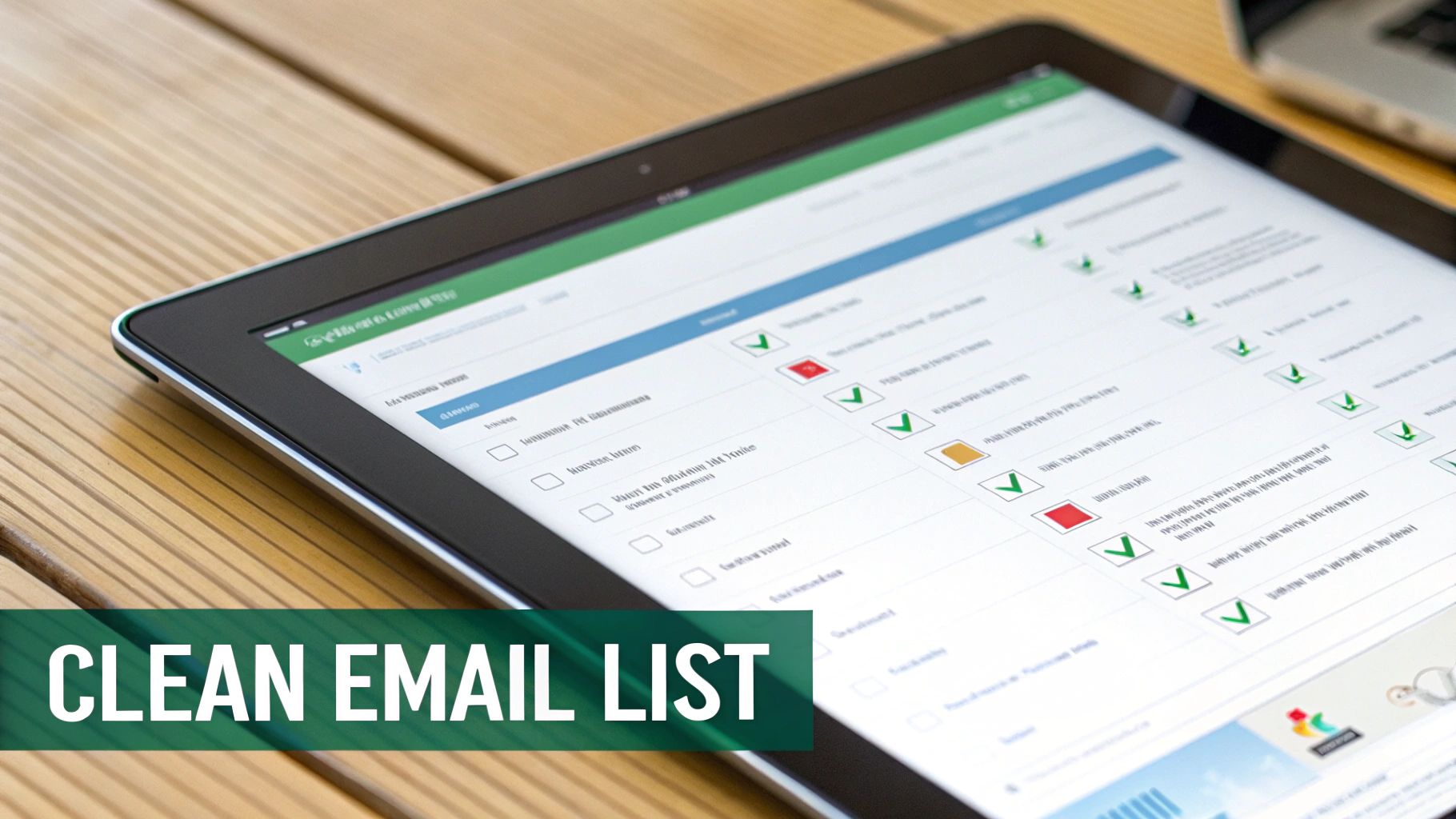
    Just make sure your email lists are squeaky clean. Our guide on how to validate an email address effectively can help you keep bounces low and protect your sender reputation.

    When you combine a value-first strategy with smart automation, you build a follow-up machine that’s both efficient and effective—dramatically increasing your odds of starting a real conversation.

    Your Questions on Cold Email Answered

    Even when you've got a solid plan, a few nagging questions always seem to pop up as you get deeper into writing cold emails. It happens to everyone.

    Let's clear up some of the most common sticking points. Think of this as your go-to reference for those finer details that can make or break a campaign. Getting these right often separates a successful outreach from one that falls flat.

    What Is the Ideal Length for a Cold Email?

    Keep it short. The sweet spot is almost always between 50 and 125 words.

    Remember, you're interrupting someone's day. Busy professionals don't read essays from strangers—they scan, and they decide in seconds whether to keep reading or hit delete. Show you respect their time by getting straight to the point. A quick, personalized opener, your core value prop, and a simple call to action are all you need.

    Long paragraphs are the enemy of cold email. They're a one-way ticket to the trash folder.

    How Many Follow-Up Emails Should I Send?

    Persistence is key, but there’s a big difference between being persistent and being a pest. A sequence of 2-3 follow-up emails is the gold standard in the industry. It shows you’re serious without coming across as desperate or annoying.

    The trick is to make every follow-up count. Don't just nudge them. Each message should offer a new piece of value or reframe your offer in a new light. If you hear nothing back after 3-4 total emails, it's time to move on. Push any further, and you risk getting marked as spam.

    The purpose of a follow-up isn't to ask, "Did you see my last email?" It's to provide another piece of value—a new insight, a relevant resource, or a different angle—that gives them a fresh reason to engage.

    What Are the Best Times to Send Cold Emails?

    While there's no single "magic" time that works for everyone, the data does show some clear trends. The best days of the week are typically Tuesday, Wednesday, and Thursday.

    As for the time of day, aim for the morning. Sending between 8 AM and 10 AM in your prospect's local time zone usually works best. This is when most people are settling in, clearing their inbox, and are most receptive to new messages.

    But here’s the real secret: test it for yourself. Pay close attention to your own open and reply rates. Your audience might be different. A great email sent at a "good enough" time will always beat a mediocre email sent at the "perfect" time.

    How Can I Avoid Landing in the Spam Folder?

    Staying out of the spam folder is non-negotiable. This comes down to a mix of technical setup and the actual content of your message.

    Here’s what you need to lock down for good deliverability:

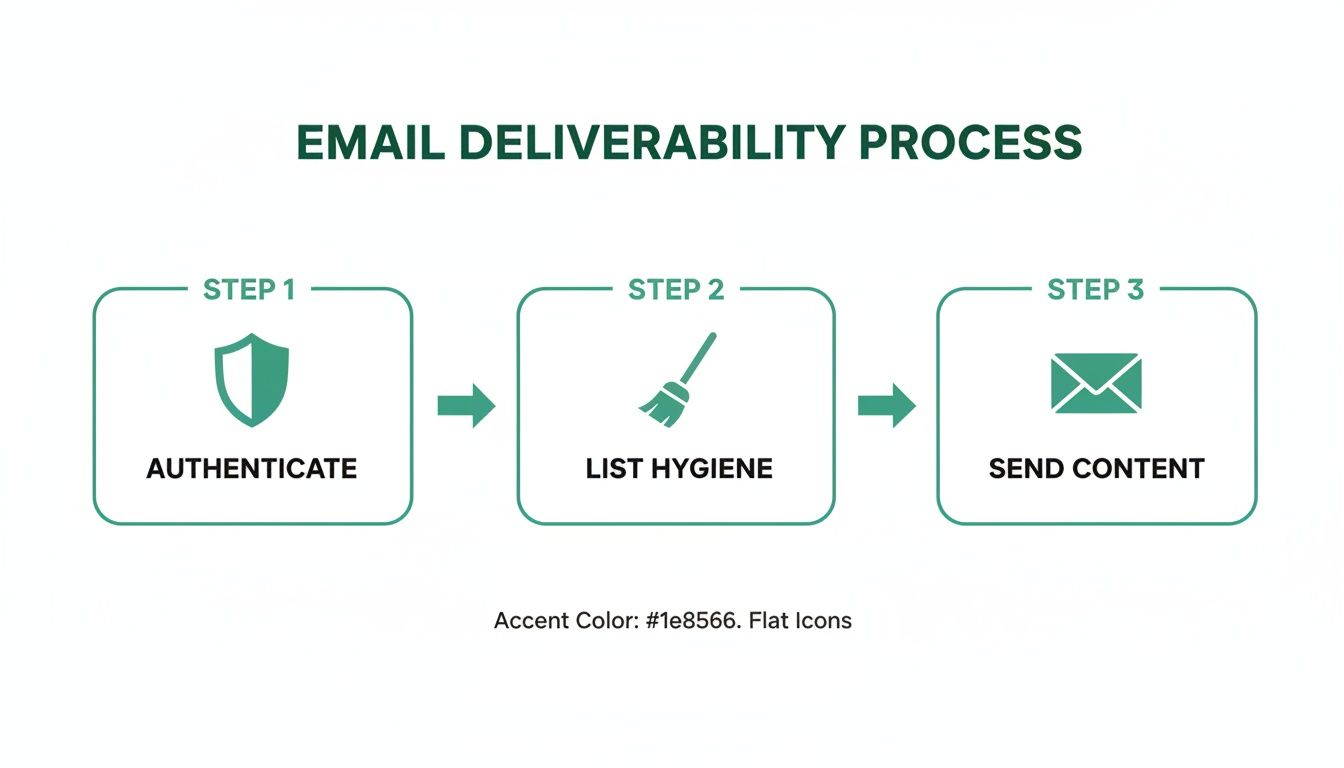
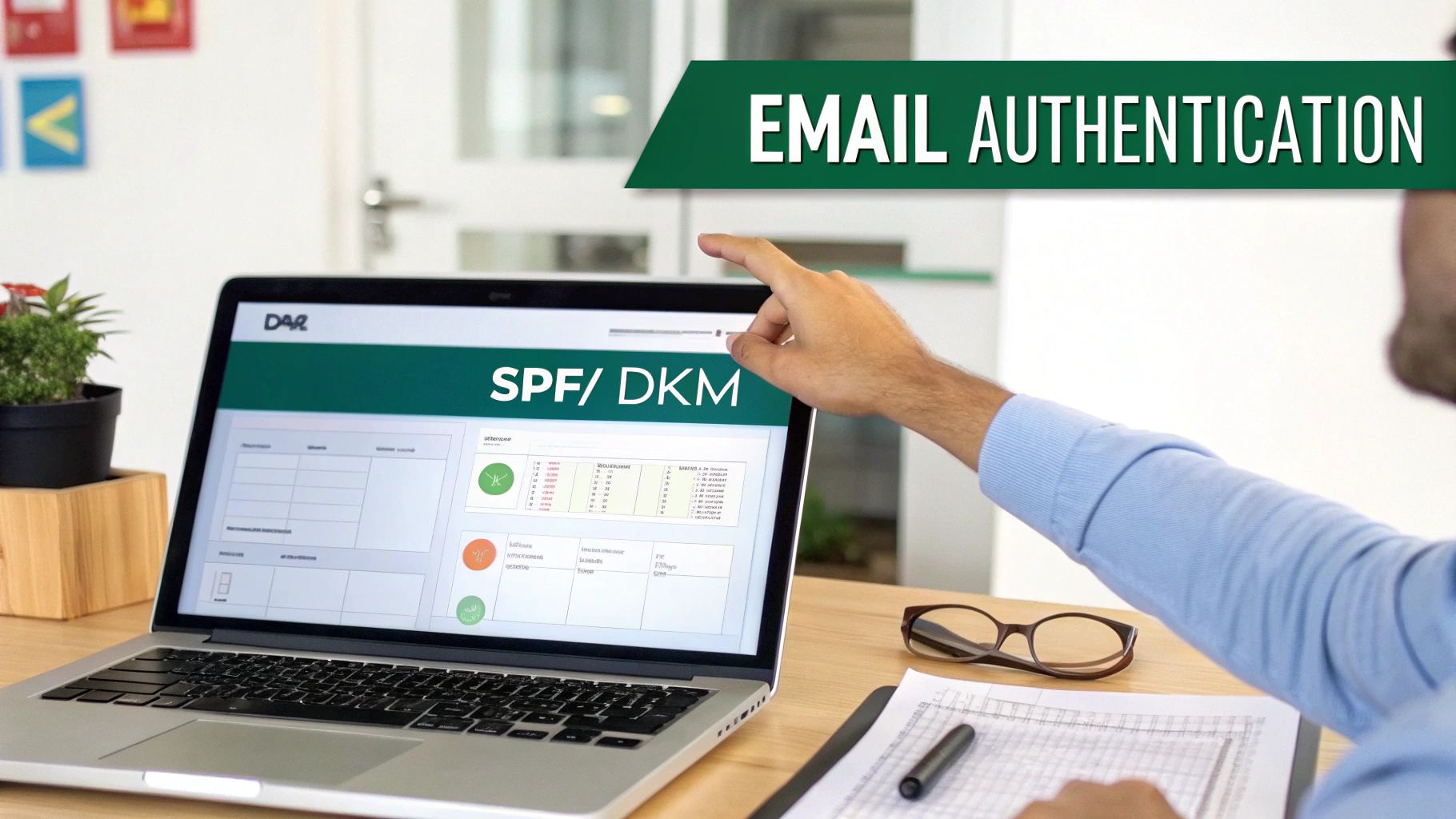
    • Authenticate Your Domain: This is a must. Make sure your email account has SPF, DKIM, and DMARC records set up correctly. Think of these as a digital passport that proves to email providers that you are who you claim to be.
    • Avoid Spam Trigger Words: You know the ones. Words like "free," "guarantee," "act now," or just littering your email with exclamation points will set off alarm bells for spam filters.
    • Send to Targeted Lists: This is the most important one. Sending a relevant, personalized email is your best defense. When people don't engage with your emails, it signals to providers that your messages are unwanted—and that’s the fastest way to land yourself in the spam folder for good.

    Ready to build highly targeted prospect lists without the manual grind? EmailScout helps you find the right decision-makers in a single click, so you can focus on writing emails that get replies. Find unlimited emails and streamline your outreach for free at EmailScout.io.

  • Your Customer Acquisition Cost Calculator & Guide

    Your Customer Acquisition Cost Calculator & Guide

    A simple customer acquisition cost calculator gives you a quick snapshot of what you spend to bring on a new customer. It’s a great first step, but the real magic happens when you understand why that number is so important and how you can actually start improving it.

    Why Ignoring Your CAC Is Costing You Money

    Let's be real—nobody gets into business to stare at spreadsheets. But getting a handle on your Customer Acquisition Cost (CAC) is often the one thing that separates sustainable growth from just spinning your wheels. It’s what moves you from, "I think this marketing campaign is working," to "I know it's working, and here's the data to prove it."

    Flying blind on this metric is like driving a car without a fuel gauge. Sure, you're moving forward, but you have absolutely no idea when you're about to run out of gas.

    Image

    The Real-World Impact of an Unknown CAC

    When you don’t have a solid grasp on your CAC, a bunch of sneaky problems start bubbling up, quietly chipping away at your profits. You might feel like cash flow is always tight or that your marketing campaigns seem ridiculously expensive, but you can’t quite put your finger on why.

    This kind of uncertainty leads to some seriously costly mistakes:

    • Wasted Ad Spend: You keep pouring money into marketing channels that feel like they should be working but aren’t actually delivering a positive return.
    • Poor Strategic Decisions: You end up making big calls on pricing, product updates, or expansion based on gut feelings instead of cold, hard data.
    • Scaling an Unprofitable Model: This is the most dangerous one. Aggressively growing a business where it costs more to get a customer than that customer is actually worth is a fast-track to going under.

    Knowing your CAC shines a bright light on these issues. It turns those vague worries into clear, actionable insights and shows you which marketing efforts are your real profit engines and which are just budget drains.

    Navigating the Rising Tide of Acquisition Costs

    Figuring out your CAC is more critical now than ever before. Why? Because getting new customers is way more expensive than it was a decade ago.

    In fact, customer acquisition cost has shot up by a staggering 222% since 2013, mostly because of skyrocketing digital ad costs and way more competition. To put that in perspective, brands lost an average of $9 per new customer back in 2013. That number has now tripled to an estimated loss of $29. You can discover more insights about these rising acquisition costs and see what they mean for businesses today.

    This trend makes one thing crystal clear: marketing efficiency isn't just a "nice-to-have" anymore. It's an absolute must for survival.

    "Understanding your CAC isn't just a marketing exercise; it's a fundamental business health check. It tells you if your growth engine is sustainable or if you're burning through cash with every new customer you bring on board."

    The First Step to Taking Control

    So, where do you start? The first thing you need to do is pull together all the costs tied to your sales and marketing. This isn't just about your ad spend—it includes salaries, software tools, freelance fees, and anything else you spend to win new business.

    Here's a quick look at the typical costs you'll need to round up.

    Core Components of Your CAC Calculation

    Cost Category Specific Examples Why It's Included
    Marketing & Ad Spend Google Ads, Facebook Ads, content promotion, sponsorships These are the most direct costs of reaching potential customers.
    Salaries Salaries for marketers, sales reps, and support staff The people executing your strategy are a significant part of the cost.
    Tools & Software CRM (e.g., HubSpot), email marketing platform (e.g., Mailchimp), analytics tools The tech stack that powers your acquisition efforts has a price tag.
    Creative & Content Freelance writers, designers, video production, agency fees Creating the assets you use to attract customers is a direct expense.
    Overhead A portion of office rent or utilities allocated to the sales/marketing team These operational costs support the team's ability to acquire customers.

    Gathering this data is the foundational step. While our simple calculator can give you a quick answer, a truly strategic approach means digging into each of these components. This guide will walk you through exactly how to track down these numbers and use them to make smarter, more profitable decisions for your business.

    Finding the Right Numbers for an Accurate CAC

    Your customer acquisition cost calculation is only as good as the numbers you put into it. It’s the classic "garbage in, garbage out" scenario. To get a CAC you can actually trust for big-picture decisions, you have to become a bit of a data detective.

    This means hunting down the right figures from every corner of your business. It might sound daunting, but it's really just about systematically gathering all your sales and marketing expenses over a specific period—whether that’s a month, a quarter, or a full year. The goal is to be thorough so the final number reflects what you truly invested to win each new customer.

    Tracking Your Direct Ad Spend

    This is usually the easiest part of the equation. Your direct ad spend is simply the money you pay platforms to get your message in front of potential customers.

    You'll want to log into each advertising platform you use and pull the total spend for your chosen time frame. Don't guess—get the exact figures.

    • Google Ads: Head over to your account's billing section to find precise invoices for any month or custom date range.
    • Meta (Facebook & Instagram) Ads: Your Ads Manager has a dedicated billing section that details all payments and campaign spending.
    • LinkedIn Ads: The Campaign Manager provides detailed reports on what you've spent over any period you select.
    • Other Platforms: Whether it’s TikTok, X (formerly Twitter), or a niche industry platform, find their reporting dashboard and export your total spend.

    Once you have these numbers, pop them all into a spreadsheet. This is the first major piece of your total cost puzzle.

    Accounting for People and Salaries

    Your team's time is one of your biggest—and most frequently forgotten—expenses. Leaving out salaries will give you a dangerously low and misleading CAC. You have to account for the people whose work directly contributes to winning new customers.

    This means calculating the portion of salaries for your:

    1. Sales Team: Include base salaries, commissions, and any bonuses paid out during the period. If a sales rep also manages existing accounts, you might only attribute a percentage (say, 75%) of their salary to acquisition.
    2. Marketing Team: This covers your content writers, SEO specialists, social media managers, and paid ad managers. Their jobs are fundamentally geared toward attracting new business.

    For example, if your marketing manager earns a $72,000 annual salary ($6,000/month) and you're calculating CAC for a single quarter, you would add $18,000 to your costs. Do this for every relevant team member.

    Factoring in Tools and Overhead

    The tech stack that powers your acquisition engine isn't free. These recurring software costs are a direct part of what you spend to attract and convert leads. Missing them will absolutely skew your calculation.

    Make a list of all the sales and marketing tools you pay for. Here’s a quick checklist to get you started:

    Add up the monthly or quarterly costs for these tools and add them to your total expenses. This ensures your customer acquisition cost calculator reflects the full investment needed to keep your marketing operations running. It’s these small, recurring costs that often get overlooked but add up fast, impacting the final accuracy of your CAC.

    Using the CAC Formula to Get Real Answers

    Okay, you’ve gathered your data. Now it’s time to move past simple data entry and start digging for real, actionable answers. The basic formula for customer acquisition cost is refreshingly simple: Total Sales & Marketing Costs / New Customers Acquired.

    But the real magic happens when you understand the nuances packed into each half of that equation.

    What you count as a "Total Cost" can change everything. Same goes for defining a "New Customer"—it’s not always as clear-cut as it seems. Getting these definitions right is the key to calculating a CAC that actually reflects the health of your business and helps you make smarter decisions. This is where a simple math problem turns into a strategic analysis.

    Keeping your workflow organized is a huge help. A clear picture of your process, from grabbing the data to the final calculation, prevents things from getting messy.

    Image

    This visual really drives home the need for a step-by-step approach. It ensures you’ve checked off all the relevant costs and customer data before you land on that final number.

    Defining Your Total Costs

    This is where so many businesses trip up. It’s incredibly tempting to just plug in your direct ad spend because that number is easy to find. But doing that will give you a dangerously low—and completely inaccurate—CAC.

    Let’s look at how this plays out in the real world:

    • For a SaaS Company: Your costs aren't just ad spend on Google and LinkedIn. You have to include the salaries for your sales development reps, commissions for your account executives, and even the subscription fees for your CRM, email automation tool, and demo software.
    • For an E-commerce Store: This means tallying up your Meta ad spend, influencer marketing fees, the cost of your Shopify Plus subscription, email marketing platform fees, and the salaries for your marketing team.
    • For a B2B Service Agency: You need to factor in any agency fees if you outsource marketing, salaries for your business development team, the costs of attending industry conferences, and even the expenses tied to producing case studies or white papers. Our guide on B2B lead generation strategies offers more context on these kinds of expenses.

    The main idea? Be brutally honest about every single dollar you spend with the goal of bringing in new customers.

    Nailing Down Who Counts as a New Customer

    The other side of the equation—New Customers Acquired—demands strict, consistent definitions. The biggest headache here is usually attribution. How can you be 100% sure which marketing effort sealed the deal?

    Was it that first ad they clicked? The email newsletter they opened last week? The sales call they finally took? For most businesses, it's a mix of all of the above.

    Key Takeaway: For a clean CAC calculation, you must decide on a consistent attribution model. It doesn't matter as much whether you choose "first touch" (crediting the very first interaction) or "last touch" (crediting the final one before conversion). What matters is that you stick with it. Consistency is more important than finding a "perfect" model.

    You also need a clear definition of what "new" actually means. Are you including returning customers who haven't bought anything in a year? Or is it strictly first-time buyers? Just set a rule and apply it across the board.

    The Power of Calculating CAC per Channel

    An overall CAC gives you a nice, high-level health check. But the real strategic power is unlocked when you calculate it for each individual marketing channel. This is how you find your goldmines.

    The formula is just a small tweak:
    Total Channel-Specific Spend / New Customers from that Channel

    Let's say you're running two main campaigns for your e-commerce business this month:

    • Google Ads: You spend $5,000 and get 100 new customers.
    • Instagram Influencers: You spend $3,000 and get 25 new customers.

    Let's do the math:

    • Google Ads CAC: $5,000 / 100 = $50
    • Instagram CAC: $3,000 / 25 = $120

    That insight is invaluable. It tells you immediately that your Google Ads are more than twice as efficient at bringing in customers. This doesn't necessarily mean you should ditch Instagram entirely, but it’s a massive blinking sign that you could reallocate your budget for much better returns.

    This channel-specific approach is what turns a simple metric into a powerful tool for optimizing every dollar you spend on marketing.

    What a Good CAC Actually Looks Like

    So, you've plugged your numbers into a customer acquisition cost calculator and now you're staring at a number. A CAC of $50, $200, or even $1,000 is pretty meaningless on its own. It's like knowing your car’s top speed without knowing if you’re driving on a racetrack or in a school zone.

    The number itself isn't the point. What really matters is how that number stacks up against the value a customer brings to your business over their entire relationship with you. This simple comparison is the key to knowing if your marketing is building a sustainable business or just burning through cash.

    Image

    The Most Important Ratio in Your Business

    To give your CAC some much-needed context, you have to pair it with another critical metric: Customer Lifetime Value (LTV). LTV is the total revenue you can reasonably expect from a single customer account.

    When you put these two numbers together, you get the LTV:CAC ratio. This one ratio is the ultimate health check for your business model. It answers the most fundamental question: for every dollar I spend to get a customer, how many dollars do I get back?

    This ratio is your North Star. A strong LTV:CAC ratio means you have a scalable, profitable business. A weak one is a major red flag that something in your strategy—be it pricing, marketing, or your product itself—needs a serious overhaul.

    Why a 3:1 Ratio Is the Gold Standard

    For most businesses, especially in the SaaS and subscription world, a 3:1 LTV:CAC ratio is the benchmark for a healthy, sustainable model. Put simply, for every dollar you spend to acquire a customer, you should generate at least three dollars in lifetime value.

    This isn't just some arbitrary number. A 3:1 ratio generally means you have enough margin to cover your acquisition costs, pay for operational overhead (like R&D and support), and still walk away with a healthy profit.

    • Below 1:1: You're losing money on every new customer. You’re paying more to get them than they will ever give you back. Time to hit the brakes.
    • A 1:1 ratio: You’re breaking even. It's not a disaster, but there's no profit left over to reinvest in growth.
    • A 5:1 ratio or higher: This is fantastic, but it can sometimes mean you're underinvesting in marketing. You might have an opportunity to grow even faster.

    Understanding this ratio gives you a clear framework for judging your marketing performance and making smarter decisions about your budget.

    Understanding Your LTV to CAC Ratio

    The LTV:CAC ratio isn't just a number; it's a direct signal from your business telling you what to do next. This table breaks down what different ratios are really telling you.

    LTV:CAC Ratio Business Health Indicator Recommended Action
    Less than 1:1 Unsustainable Stop spending immediately. Re-evaluate your entire acquisition strategy and unit economics.
    1:1 Breaking Even Not profitable. Focus on optimizing campaigns, increasing LTV, or reducing acquisition costs.
    3:1 Healthy & Profitable You have a solid business model. This is the ideal target for most SaaS and subscription businesses.
    5:1+ High Growth Potential Excellent. Consider investing more aggressively in your marketing channels to accelerate growth.

    Seeing your ratio laid out like this makes it clear that a "good" CAC is all about balance. The goal is to find that sweet spot where you're acquiring customers profitably without leaving growth opportunities on the table.

    Context Is Everything: The Industry Matters

    A "good" CAC is completely relative. A $200 CAC could be a massive win for a B2B software company whose average customer sticks around for three years, paying them $5,000 in total. That’s a phenomenal 25:1 LTV:CAC ratio.

    But that same $200 CAC would be an absolute catastrophe for an e-commerce t-shirt shop where the average customer only buys two $30 shirts, for an LTV of just $60. You’d be looking at a money-losing 0.3:1 ratio.

    Acquisition costs vary wildly from one industry to the next, which directly shapes how companies think about their marketing spend. For instance, benchmarks in consumer goods show average CACs ranging from $53 in food and beverage to $91 in jewelry, where lifetime values are often 4 to 10 times higher. You can discover more insights on industry acquisition costs to see how you stack up.

    This is why looking at your CAC in a vacuum is useless. It’s only when you analyze it through the lens of your specific industry and business model that it becomes a powerful tool for making smart decisions.

    Proven Strategies to Lower Your Acquisition Cost

    Once you have a firm grasp on your Customer Acquisition Cost, the next logical step is to start shrinking that number. Lowering your CAC isn't just about saving money—it’s about making your entire marketing engine more efficient and profitable. The goal is simple: get more customers for every dollar you spend.

    This isn't about slashing budgets blindly. It's about making smarter, more targeted improvements that deliver a bigger impact. We'll skip the generic advice and focus on specific, actionable tactics you can start implementing right away.

    Optimize Your Landing Page Conversion Rates

    One of the fastest ways to lower your CAC is to get more value from the traffic you already have. Think about it: you're already paying to get visitors to your site. The key is to convert a higher percentage of them into paying customers. This is where landing page optimization becomes your best friend.

    A small lift in your conversion rate can have a massive impact on your acquisition cost.

    Here’s a quick scenario:

    Imagine you spend $2,000 on a Google Ads campaign that drives 1,000 visitors to your landing page. If your page has a 2% conversion rate, you'll get 20 new customers.

    • Your CAC: $2,000 / 20 customers = $100

    Now, let's say you run some A/B tests. You rewrite the headline, simplify the form, and add a compelling customer testimonial. These changes boost your conversion rate to just 3%.

    • With the same $2,000 ad spend and 1,000 visitors, you now get 30 new customers.
    • Your New CAC: $2,000 / 30 customers = $66.67

    That's a 33% reduction in your customer acquisition cost without spending a single extra dollar on ads. You simply made your existing assets work harder for you.

    Sharpen Your Ad Targeting

    Pouring money into ads that reach the wrong audience is one of the quickest ways to inflate your CAC. The more precisely you can target your ideal customer profile, the less you'll waste on clicks from people who were never going to buy from you anyway.

    Think of it like fishing. You can cast a huge, wide net and catch a lot of things you have to throw back, or you can use the right bait in the right spot to catch exactly what you're after.

    To refine your targeting, you should:

    • Use Negative Keywords: Actively tell Google Ads which search terms you don't want to show up for.
    • Leverage Lookalike Audiences: Use your existing customer list to find new people on platforms like Meta who share similar characteristics.
    • Drill Down on Demographics: Get specific with age, location, job titles, and interests to ensure your message resonates.

    By tightening your targeting, you reduce irrelevant clicks, which in turn lowers your cost-per-click and, ultimately, your overall CAC.

    A lower cost-per-click is a direct lever you can pull to improve your CAC. If each click costs you less, and your conversion rate stays the same, your cost to acquire a new customer will inevitably go down.

    Build a Simple Customer Referral Program

    Why spend a fortune finding new customers when your happiest existing customers can do it for you? A referral program turns your loyal user base into a powerful, low-cost acquisition channel. It’s one of the most effective strategies because it relies on social proof and trust.

    A recommendation from a friend is far more powerful than any ad you could ever create. In fact, people are four times more likely to buy when referred by a friend.

    Here’s a straightforward referral model to get you started:

    1. Offer a Double-Sided Incentive: Give a reward to both the referrer and the new customer. For example, "Give $20, Get $20."
    2. Make It Easy to Share: Provide a unique referral link that customers can easily share via email or social media.
    3. Promote It: Don't hide your referral program. Mention it in your email newsletters, on your order confirmation pages, and within your app.

    The cost of the referral incentive is typically far lower than what you would have spent acquiring that customer through paid advertising. A well-executed referral program can become a predictable and highly efficient source of new business, a critical part of any strategy focused on best practices for lead generation.

    Common Questions About Calculating CAC

    Even with a solid formula in hand, you’re bound to run into some practical questions when you start calculating your customer acquisition cost. Nailing these details is what separates a vanity metric from a genuinely useful tool for your business strategy. Let's clear up some of the most common questions that pop up.

    How Often Should I Calculate My CAC?

    There’s no single "right" answer here—it really comes down to your sales cycle and how fast your marketing moves. But here are some solid guidelines I’ve seen work well.

    Most businesses, especially in e-commerce or SaaS, should start by calculating CAC monthly. This gives you a great rhythm for spotting trends and lets you react quickly if a campaign starts going off the rails.

    If you’re in B2B with a much longer sales cycle, a quarterly calculation often makes more sense. It smooths out the big swings you might see from month to month, where a few large deals could throw your numbers way off.

    And of course, always calculate CAC on a per-campaign basis. This is non-negotiable. It’s the only way to know the direct impact of a specific marketing push and decide where your budget should go next.

    What Are the Most Common Calculation Mistakes?

    It’s surprisingly easy to get a misleading CAC, and it usually comes down to a few common slip-ups. The absolute biggest mistake is only including ad spend in your costs. This will give you a dangerously rosy picture of your performance. You have to include everything: salaries, commissions, software tools, and any agency or freelance fees.

    Another classic error is not having a consistent definition of a "new customer." Is it a first-time buyer only? Does it include returning customers who buy a new product? You need to set a firm rule and stick to it every single time you run the numbers. Otherwise, you can't make a true apples-to-apples comparison.

    The point of a customer acquisition cost calculator isn’t just to get a number—it’s to get an honest number. Tossing every relevant expense into the mix is the only way to get a figure you can actually trust for strategic planning.

    How Is CAC Different From CPA?

    This one trips people up all the time. While they sound similar, Customer Acquisition Cost (CAC) and Cost Per Acquisition (CPA) measure two very different things.

    CPA (Cost Per Acquisition) is the granular, tactical metric. It measures the cost of a specific action, which isn't always a paying customer. Think of it as the cost to get a lead, a webinar sign-up, or an app download.

    CAC (Customer Acquisition Cost) is the big-picture, strategic metric. It tells you the total cost to bring an actual paying customer through the door. Basically, CPA tracks campaign performance, while CAC tracks the health of your entire business model.

    Can I Have a Negative CAC?

    Not in the traditional sense, no. You’ll always spend something—even if it's just your time—to get a customer, so the cost can't technically be negative.

    However, you can achieve a "net-negative" CAC, which is the holy grail of efficient growth. This happens when a new customer's referrals generate more immediate profit than what it cost you to acquire them in the first place. For example, say your CAC is $50. If that new customer refers two friends who each bring in $30 of profit right away, you’ve instantly made back your initial investment and more. That’s when you know your viral or referral engine is really humming.


    EmailScout helps you find the right people to contact, making your outreach efforts more efficient and helping you lower your acquisition costs. Start finding emails for free with EmailScout today!

  • 12 Best Cold Email Software Platforms for 2025

    12 Best Cold Email Software Platforms for 2025

    Cold email is more than just sending messages; it's a strategic system for lead generation, personalization, and automated follow-up. The right software is the engine that powers this system, but choosing one is a significant challenge. With dozens of platforms promising sky-high open rates and streamlined workflows, how do you find the best cold email software for your specific needs?

    This guide cuts through the marketing noise to deliver a practical analysis of the top 12 platforms available today. We move beyond generic feature lists to provide an in-depth look at what makes each tool unique. You'll find detailed rundowns of platforms like Instantly, lemlist, and Smartlead, complete with screenshots, direct links, and clear pricing breakdowns.

    Our focus is on real-world application. We'll explore ideal use cases, from solo entrepreneurs needing a simple Gmail-based tool to large agencies managing high-volume, multi-channel campaigns. We'll also explain why a foundational tool like EmailScout for accurate contact data is a critical first step for any successful outreach strategy. By the end of this resource, you will have a clear understanding of which platform aligns perfectly with your goals, team size, and budget, enabling you to make a confident, informed decision.

    1. EmailScout

    EmailScout solidifies its position as a top-tier tool, not as a full-suite cold email platform, but as a crucial first step in the process: powerful, high-volume email sourcing. It operates as a seamless Chrome extension, designed to drastically reduce the time spent on lead generation by extracting publicly available email addresses directly from websites and Google search results. This makes it an indispensable asset for sales teams and marketers who need to build targeted lists quickly.

    The platform distinguishes itself with an exceptionally generous free plan, offering unlimited email searches and exports, a feature rarely seen in competing tools. This allows users to build substantial contact lists without any initial investment. For those needing to scale their efforts, EmailScout’s premium features, like AutoSave and URL Explorer, provide a significant boost in efficiency, making it one of the best cold email software components for list building.

    EmailScout

    Key Features & Use Cases

    • URL Explorer: This is EmailScout's standout feature for bulk prospecting. Users can input up to 1,500 URLs at once to perform a mass extraction of email contacts. This is ideal for marketers analyzing competitor backlinks or sales teams targeting companies from a conference attendee list.
    • AutoSave Functionality: For continuous prospecting, the AutoSave feature automatically collects and saves email addresses in the background as you browse different websites. This passive collection method is perfect for building a lead repository with minimal manual effort.
    • Unlimited Free Searches: The free tier is genuinely useful. It allows for unlimited one-click email extractions from any webpage or SERP, along with unlimited CSV exports, providing significant value for freelancers and startups.

    Pricing and Value

    EmailScout’s pricing structure is highly accessible. The free plan covers essential needs, while premium plans start at an affordable $9 per month. This tiered approach allows the tool to scale with your business, from initial prospecting to large-scale outreach campaigns.

    Website: https://emailscout.io

    2. Instantly

    Instantly has cemented its place as a leader in the cold email software space, primarily by focusing on unlimited scalability. Its core differentiator is allowing users to connect and warm up an unlimited number of sending accounts on its paid plans, a feature that is invaluable for agencies and high-volume outreach teams looking to maximize their sending capacity without incurring per-mailbox fees. This model supports aggressive scaling efforts directly.

    Instantly

    The platform separates its offerings into Outreach, Leads, and CRM, allowing users to build a package that fits their specific needs. While the base plan is cost-effective for its features, a significant drawback is that total costs can escalate quickly with add-ons and tier jumps for higher sending volumes. For teams that already have their lead sources sorted, Instantly's outreach platform is a powerful, specialized tool. If you need help sourcing contacts first, you can learn how to find anyone's email address here.

    Key Details & Pricing

    • Best For: Agencies and sales teams needing to scale outreach across many inboxes.
    • Key Feature: Unlimited sending accounts and email warmup.
    • Pricing: Starts at $30/month (billed annually) for the Growth plan, which includes 1,000 active leads and 5,000 monthly emails.

    Website: https://instantly.ai

    3. lemlist

    lemlist has carved out a niche in the cold email software market by championing hyper-personalization across multiple channels. It goes beyond standard mail merges by allowing users to dynamically insert custom text, images, and even landing pages into their emails, creating a unique experience for each recipient. This makes it an ideal platform for SDR teams and marketers who prioritize quality and creativity over sheer volume in their outreach efforts.

    lemlist

    The platform integrates email, LinkedIn actions, and cold calls into unified sequences, providing a true multichannel sales engagement experience. A major advantage is that its email warm-up tool, lemwarm, is included in its mid and upper-tier plans. However, the per-user pricing model can become expensive for larger teams, and the built-in lead finder credits are limited by plan tier. For those who need more robust lead generation, you can use an email finder tool to build targeted lists before importing them into lemlist for personalized outreach.

    Key Details & Pricing

    • Best For: Sales teams focused on highly personalized, multichannel outreach campaigns.
    • Key Feature: Advanced personalization with dynamic images, text, and video.
    • Pricing: Starts at $32/user/month (billed annually) for the Email Starter plan. Multichannel plans with LinkedIn and Call steps start at $50/user/month.

    Website: https://www.lemlist.com

    4. Smartlead

    Smartlead positions itself as a robust solution for agencies and power users, focusing on unlimited accounts and a centralized management hub. Like some competitors, it offers unlimited sending accounts and warmup on all plans, but it stands out with its integrated infrastructure provisioning. This allows users to purchase and set up domains, mailboxes, and dedicated servers directly within the platform, creating a full-stack outreach environment from a single dashboard.

    Smartlead

    This all-in-one approach is highly attractive for agencies wanting to manage client accounts and scale outreach without juggling multiple vendors. However, the advanced features introduce a steeper learning curve, especially for those new to deliverability and email infrastructure. While the base plans are generous, the total cost can grow with infrastructure add-ons. For those seeking one of the best cold email software options with built-in scalability, Smartlead is a strong contender, though success often depends on mastering its more technical aspects.

    Key Details & Pricing

    • Best For: Agencies and advanced users who need to manage outreach infrastructure and client accounts.
    • Key Feature: Unlimited sending accounts with a centralized inbox and integrated infrastructure add-ons.
    • Pricing: Starts at $29/month (billed annually) for the Basic plan, which includes 2,500 active leads and 12,500 monthly emails.

    Website: https://www.smartlead.ai

    5. Woodpecker

    Woodpecker is a veteran in the cold email software market, earning its spot through a relentless focus on deliverability and reliability. Its key differentiator is a built-in, real-time catch-all email verification system, designed to protect sender reputation by minimizing bounces before a campaign even starts. This emphasis on technical execution makes it a trusted choice for users who prioritize inbox placement and long-term domain health over flashy, less essential features. The platform is robust, offering both individual and agency-focused plans with features like inbox rotation and white-label reporting.

    Woodpecker

    While its feature set is comprehensive, the user interface is geared more towards experienced outreach professionals and may present a steeper learning curve for complete beginners. Woodpecker's pricing structure is transparent but can become costly for teams sending very high email volumes, especially when factoring in add-ons. However, for those who value stability, excellent deliverability tools, and reliable support, Woodpecker remains one of the best cold email software options available for scaling campaigns safely and effectively.

    Key Details & Pricing

    • Best For: Solo users and agencies prioritizing deliverability and sender reputation.
    • Key Feature: Integrated real-time catch-all email verification and free warmup.
    • Pricing: Starts at $29/month per slot for the Cold Email plan, which includes 500 contacts and 2,000 emails sent.

    Website: https://woodpecker.co

    6. Mailshake

    Mailshake positions itself as a straightforward, email-first sales engagement platform that has expanded into multichannel outreach. It’s known for its simple per-user pricing model and an easy onboarding process, making it a strong contender for teams that want to get up and running quickly. The platform combines core cold email features like automated sequences and A/B testing with tools for social selling and phone calls, aiming to be an all-in-one solution for sales reps.

    Mailshake

    A key advantage of Mailshake is its inclusion of unlimited email warmup and verification credits in its plans, which simplifies deliverability management. Proper email address verification is crucial, and having it bundled is a significant plus. However, a notable drawback is the lack of a free trial, requiring an upfront commitment. The starter plan also has a relatively low sending cap, which might be restrictive for higher-volume campaigns, pushing users toward the more expensive Sales Engagement plan to unlock full potential.

    Key Details & Pricing

    • Best For: Sales teams looking for an easy-to-use, multichannel outreach tool with clear pricing.
    • Key Feature: Unified platform for email, phone, and social outreach with unlimited warmup included.
    • Pricing: Starts at $58/user/month (billed annually) for Email Outreach, which includes 5,000 recipients per month.

    Website: https://mailshake.com

    7. GMass

    GMass stands out by operating entirely within the Gmail and Google Workspace ecosystem. It functions as a powerful Chrome extension, transforming your standard inbox into a capable mail merge and cold email machine. This native integration is its greatest strength, offering a virtually non-existent learning curve for anyone already familiar with Gmail's interface. It’s an ideal choice for individuals and small teams who want to run outreach campaigns without ever leaving their primary email client.

    GMass

    The platform is surprisingly robust for a Gmail extension, offering features like automated follow-up sequences, A/B testing, and a unique "Spam Solver" to help diagnose deliverability issues. However, its biggest limitation is its complete dependence on Google's infrastructure; you are bound by Gmail's sending limits and reputation constraints. This makes it less suitable for high-volume, multi-inbox campaigns that require the scalability of a standalone platform, but perfect for streamlined outreach within a single Google account. GMass is one of the best cold email software options for a quick start.

    Key Details & Pricing

    • Best For: Solo entrepreneurs and small teams deeply integrated with Google Workspace.
    • Key Feature: Native Gmail integration via a Chrome extension for a seamless workflow.
    • Pricing: Starts at $25/month for the Standard plan, which includes unlimited campaigns and contacts, limited by your Gmail account's daily sending capacity.

    Website: https://www.gmass.co

    8. Reply.io

    Reply.io positions itself as a comprehensive multichannel sales engagement platform, making it a strong contender for teams that want to move beyond email-only outreach. Its core strength lies in unifying email sequences with tasks across LinkedIn, SMS, calls, and even WhatsApp. This integrated approach allows users to build more sophisticated and varied touchpoints into their campaigns, increasing the chances of engagement without juggling multiple tools.

    Reply.io

    The platform includes unlimited email warmup and mailbox rotation, ensuring deliverability remains high even at scale. One significant advantage is the inclusion of B2B data credits with its plans, which helps teams build their lead lists directly within the platform. However, its broad feature set can present a steeper learning curve for beginners, and the fact that LinkedIn automation is a separate add-on can increase the total cost for users who rely heavily on that channel.

    Key Details & Pricing

    • Best For: Sales teams looking for an all-in-one, multichannel engagement solution.
    • Key Feature: Unified sequences across email, LinkedIn, calls, SMS, and WhatsApp tasks.
    • Pricing: Starts at $49/user/month (billed annually) for the Starter plan, which includes 1,000 data credits and unlimited contacts.

    Website: https://reply.io

    9. Snov.io

    Snov.io positions itself as a comprehensive, all-in-one platform for prospecting and cold outreach. Its main advantage lies in its flexible, credits-based system that integrates lead generation, email verification, and drip campaigns into a single workflow. This model allows users to manage their entire top-of-funnel process without juggling multiple subscriptions, making it a strong contender among the best cold email software for those who need more than just a sending tool.

    Snov.io

    The platform’s strength is its versatility. You can use credits to find emails with its Chrome extension, verify a list of contacts, or send outreach sequences. While this flexibility is powerful, the credit and recipient-based model can have a slight learning curve. A notable drawback is that its LinkedIn automation capabilities, while available, are sold as a separate add-on, which can increase the overall cost for users heavily reliant on that channel.

    Key Details & Pricing

    • Best For: Individuals and small teams looking for an integrated prospecting and outreach solution.
    • Key Feature: A flexible credits system for email finding, verification, and sending.
    • Pricing: Starts at $30/month (billed annually) for the Starter plan, which includes 1,000 credits and 5,000 unique recipients.

    Website: https://snov.io

    10. QuickMail

    QuickMail is a versatile outreach platform that combines email and LinkedIn automation, making it a strong contender in the multi-channel sequence space. Its primary appeal lies in its aggressive entry-level pricing and transparent limits, which cater well to solo users and small agencies testing the waters of cold outreach. The platform allows for scaling with unlimited sender accounts on its higher-tier plans, a key feature for growing teams.

    QuickMail

    The platform is known for its straightforward, outreach-focused interface, avoiding the complexity of a full-blown CRM. One of its standout offerings is the free AutoWarmer tool (via MailFlow integration), which helps maintain sender reputation. While the starter plan is quite limited in volume, the generous 14-day free trial, which doesn't auto-charge, provides a risk-free way to evaluate if it's the right fit. This makes it a great piece of best cold email software for those just starting out.

    Key Details & Pricing

    • Best For: Solo entrepreneurs and small agencies needing a low-cost, multi-channel entry point.
    • Key Feature: Multi-channel sequences (Email & LinkedIn) with a very low starting price.
    • Pricing: Starts at $49/month for the Basic plan, which includes 1,000 contacts and 3,000 emails per month.

    Website: https://quickmail.com

    11. Saleshandy

    Saleshandy positions itself as a robust cold email platform designed for high-volume outreach, particularly for sales teams and agencies. Its standout feature is the integration of deliverability tools and optional infrastructure provisioning, allowing users to manage their entire sending setup from one place. This includes purchasing domains, mailboxes, and dedicated IPs directly within the app, simplifying a complex but crucial part of scaling cold email campaigns.

    The platform supports connecting unlimited sending accounts on all plans, with sender rotation enabling multiple accounts per sequence to maximize sending volume and protect domain reputation. While the core outreach features are comprehensive, some of the most powerful tools, like the Inbox Radar deliverability testing suite and white-labeling for agencies, are available as add-ons or on higher-tier plans. This makes Saleshandy an excellent piece of cold email software for teams who value an all-in-one approach to sending and deliverability management.

    Key Details & Pricing

    • Best For: Teams and agencies needing a unified platform for outreach, deliverability, and sending infrastructure management.
    • Key Feature: Optional in-app infrastructure purchasing and an integrated deliverability testing suite (Inbox Radar).
    • Pricing: Starts at $27/month (billed annually) for the Outreach Starter plan, which includes 2,000 total contacts and 6,000 monthly emails.

    Website: https://www.saleshandy.com

    12. Apollo

    Apollo has carved out a unique space in the sales engagement market by combining a massive B2B contact database with a robust outreach engine. Its core value proposition is consolidating lead sourcing and sales sequencing into a single platform, eliminating the need for separate tools. This makes it a powerful all-in-one solution for teams that want to find prospects and engage them through multi-channel sequences without juggling subscriptions.

    The platform supports sequences that integrate email, phone calls, and manual tasks, all fueled by its extensive database featuring intent data and enrichment capabilities. While this integrated approach is its greatest strength, the platform can feel more complex than a dedicated cold email tool. For teams looking to build a streamlined prospecting workflow, learning how to implement lead generation best practices within Apollo is key to maximizing its value.

    Key Details & Pricing

    • Best For: Sales teams and startups wanting an all-in-one platform for prospecting and outreach.
    • Key Feature: Integrated B2B database with multi-channel sales sequencing.
    • Pricing: A free plan is available. Paid plans start at $49/user/month (billed annually), with customized pricing for enterprise needs.

    Website: https://www.apollo.io

    Top 12 Cold Email Software Comparison

    Product Core Features User Experience / Quality Value Proposition Target Audience Price Points
    EmailScout Unlimited free email search, AutoSave, URL Explorer (bulk scan) Easy install, intuitive Chrome extension Free unlimited usage + affordable premium Marketers, sales pros, freelancers Free plan; Premium from $9/month
    Instantly Unlimited accounts, warmup, tiered sending limits Scales massively, clear docs High-volume sending without per-mailbox fees Agencies, large-scale senders Tiered pricing; add-ons increase cost
    lemlist Email + LinkedIn sequences, personalization, CRM integration Modern UX, warmup included Deep personalization, multichannel outreach SDR teams, personalization-focused Per user; plans capped lead credits
    Smartlead Unlimited warmup/accounts, centralized inbox, API, infrastructure add-ons Agency-friendly, analytics included High quotas, full-stack provisioning Agencies, email infrastructure users Add-ons raise overall cost
    Woodpecker Catch-all verification, warmup, agency panel Deliverability-first, reliable uptime Scales solo to agency level Agencies, outreach pros Per user; add-ons may add cost
    Mailshake Email sequences, dialer, LinkedIn, CRM integrations Easy onboarding, unlimited warmup Clear pricing, multi-channel features Sales teams, outreach beginners No free trial; plans capped sends
    GMass Gmail-native, sequences, verification, Spam Solver Fast setup, Google Workspace friendly Low entry price, unlimited campaigns on paid Solo users, Google Workspace teams Low price; limited by Gmail limits
    Reply.io Email+LinkedIn+calls+SMS, warmup, anti-spam suite Flexible pricing, 14-day trial Multichannel, scalable teams Teams expanding outreach channels Usage-based pricing; LinkedIn add-on
    Snov.io Email finder & verifier, unlimited campaigns, LinkedIn add-on Credits model, affordable starter Flexible credit system, all-in-one Small teams, credit-based users Starter affordable; add-ons extra
    QuickMail Email + LinkedIn sequences, free AutoWarmer Low starting price, simple interface Transparent limits, multiple senders Solo users, agencies Low entry; trial with no auto-charge
    Saleshandy Warmup, sender rotation, deliverability testing Agency features, onboarding required Deliverability focus, white-label options Teams, agencies Varies; add-ons for advanced tools
    Apollo Large B2B database, multichannel sequences Enterprise features, robust reporting Combines data and outreach in one tool Enterprise, data-driven teams Startup pricing; complex billing

    Making Your Final Decision on Cold Email Software

    Navigating the landscape of the best cold email software can feel overwhelming, but the right choice ultimately hinges on your unique strategic needs. We've explored a dozen powerful platforms, from all-in-one sales behemoths like Apollo and Reply.io to specialized sending powerhouses like Instantly and Smartlead. Each tool offers a distinct pathway to reaching your audience, but the core principles of successful outreach remain constant: precision targeting, genuine personalization, and technical deliverability.

    Your final decision should be a direct reflection of your operational priorities. Are you a startup or a solo entrepreneur focused on scrappy, high-volume campaigns? The unlimited email accounts offered by Instantly or Smartlead provide an unmatched foundation for scaling your outreach without ballooning costs. Conversely, are you part of a sales team that values creative, highly personalized campaigns designed to stand out in crowded inboxes? Lemlist’s innovative features, like dynamic image and video personalization, give you the creative edge needed to capture attention and start conversations.

    Key Factors for Your Final Selection

    Before you commit, re-evaluate your choice against these critical factors:

    • Team Size and Collaboration: Does the platform support the number of users you need? Consider features like shared inboxes, team-level analytics, and role-based permissions. Tools like QuickMail and Woodpecker are built with agency and team collaboration in mind.
    • Technical Complexity: Are you comfortable managing multiple domains and advanced warmup settings, or do you need a simpler, more guided experience? Platforms like Mailshake and GMass offer a lower barrier to entry for those new to cold outreach.
    • Integration and Workflow: How well does the software fit into your existing tech stack? Check for native integrations with your CRM, lead sources, and other sales tools. A seamless workflow prevents data silos and saves valuable time.
    • Budget vs. Long-Term Value: Don't just look at the monthly price. Consider the cost per send, the value of included features like email verification, and the potential ROI from a higher-performing campaign.

    The Foundation of Every Successful Campaign

    Ultimately, the most sophisticated sending tool is only as effective as the list it's sending to. Poor data quality leads to high bounce rates, damaged domain reputation, and wasted effort. No amount of A/B testing or clever copywriting can save a campaign sent to outdated or incorrect email addresses. This is why the first step in building a successful cold email machine isn't choosing your sender; it's securing a reliable source of accurate contact information. This foundational step ensures your carefully crafted messages actually land in front of the right people. Choosing the best cold email software for your needs is crucial, but it's only half the battle.


    Ready to build the high-quality lead lists that fuel successful campaigns? Start for free with EmailScout to find verified email addresses from any professional network or website with a single click. Equip your chosen sending platform with the accurate data it needs to drive real results. Get your first 50 credits on us at EmailScout.

  • 12 Best Lead Generation Tools for Unstoppable Growth in 2025

    12 Best Lead Generation Tools for Unstoppable Growth in 2025

    In today's competitive landscape, a steady stream of high-quality leads is the lifeblood of any successful business. Manually prospecting, capturing, and nurturing potential customers is a slow, inefficient process that drains valuable resources. The right technology transforms this challenge into a strategic advantage, automating repetitive tasks and empowering your team to focus on building relationships and closing deals.

    This comprehensive guide cuts through the noise to reveal the 12 best lead generation tools designed to fuel your growth. We'll move beyond generic feature lists and dive deep into practical use cases, honest limitations, and critical implementation advice. Our goal is to help you build a powerful, scalable lead generation engine tailored to your specific needs.

    Each tool profiled includes a detailed breakdown, screenshots, and direct links to help you evaluate your options quickly. Whether you need to find accurate contact data with tools like Apollo.io and EmailScout, build high-converting landing pages with Unbounce, or manage your entire funnel with HubSpot, you'll find the perfect solution here. Let’s find the right tools to supercharge your sales pipeline.

    1. EmailScout

    EmailScout distinguishes itself as a premier email discovery tool, offering a potent and remarkably accessible solution for professionals aiming to enhance their outreach. This Chrome extension is engineered for efficiency, enabling users to instantly extract email addresses from any website or Google search results with a single click. Its clean, intuitive interface integrates directly into your browsing workflow, drastically reducing the time spent on manual prospecting.

    For teams building targeted lists, EmailScout is one of the best lead generation tools available, striking an ideal balance between powerful features and ease of use. It’s a standout choice for anyone from freelancers to enterprise sales teams who need to connect with key decision-makers quickly and reliably.

    EmailScout

    Key Strengths & Use Cases

    EmailScout’s primary advantage lies in its generous free plan, which provides unlimited email searches and exports without a monthly cap. This makes it an invaluable asset for startups and small businesses operating on tight budgets.

    For power users, the premium plans unlock sophisticated automation features. The AutoSave function automatically collects and saves emails as you browse, eliminating repetitive manual work. The URL Explorer is a game-changer for large-scale campaigns, allowing you to paste up to 1,500 URLs to extract verified email contacts in bulk.

    Best For:

    • Sales Professionals: Quickly find direct contact information for prospects on corporate websites or LinkedIn.
    • Digital Marketers: Build targeted email lists for content promotion or outreach campaigns.
    • Entrepreneurs & Startups: Generate initial lead lists without significant upfront investment.

    Implementation & Pricing

    Getting started is simple: install the Chrome extension, and you can begin finding emails immediately. To maximize efficiency, learn more about strategies for finding company email addresses on EmailScout.io.

    Plan Key Features Pricing
    Free Unlimited manual searches & exports $0/month
    Premium AutoSave, URL Explorer, 5,000 emails/month Starts at $9/month
    • Pros: Unmatched free plan with unlimited searches, affordable and scalable premium options, user-friendly one-click operation, powerful bulk extraction tools.
    • Cons: Automation features like AutoSave and URL Explorer are reserved for paid plans; the free version requires manual exports per site.

    Website: EmailScout.io

    2. HubSpot – Marketing Hub (plus Breeze Intelligence add-on)

    HubSpot’s Marketing Hub is a comprehensive platform designed to unify every aspect of the marketing and sales funnel, from initial attraction to final conversion. More than just a collection of features, it’s an ecosystem that connects lead capture tools like forms, pop-ups, and live chat directly to a powerful CRM. This tight integration means every lead interaction is tracked, scored, and seamlessly passed to sales, making it one of the best lead generation tools for businesses seeking a single source of truth.

    HubSpot – Marketing Hub (plus Breeze Intelligence add-on)

    The platform’s strength lies in its scalability. A free tier allows startups to build a solid foundation, while paid plans unlock sophisticated visual automation workflows, A/B testing, and advanced reporting. The Breeze Intelligence add-on further enhances this by providing data enrichment and buyer intent signals, helping you prioritize the most engaged prospects. While a fantastic all-in-one solution, be mindful that professional-tier plans require onboarding fees, and costs can increase significantly based on your contact list size and user seats.

    Feature Highlights Best For Pricing
    All-in-one CRM, marketing, sales, & service platform Teams needing a scalable, unified system for growth. Free plan exists.
    Visual automation workflows and lead scoring Automating nurturing sequences and identifying sales-ready leads. Starts at $800/mo
    Breeze Intelligence add-on for enrichment and intent Businesses prioritizing high-quality, intent-driven leads. (Professional)
    Website: https://www.hubspot.com

    3. LinkedIn Sales Navigator

    LinkedIn Sales Navigator transforms the world’s largest professional network into a precision-guided prospecting tool. It moves beyond standard LinkedIn searches by offering an advanced filtering engine that allows sales professionals to pinpoint ideal customer profiles with unparalleled accuracy. By leveraging real-time data on job changes, company growth, and shared connections, it provides the context needed to turn a cold outreach into a warm conversation, making it one of the best lead generation tools for B2B social selling.

    The platform’s true power lies in its AI-driven insights and activity alerts, which notify you of key buying signals and opportunities to engage. Higher-tier plans introduce features like TeamLink for identifying warm introduction paths and CRM integrations for a seamless workflow. While its data is incredibly current, be aware that exporting leads can be restrictive without third-party tools, and key features like CRM sync are locked behind the most expensive plan. For those looking to maximize their outreach efforts, it's possible to scrape LinkedIn contacts from Google Search to build targeted lists.

    Feature Highlights Best For Pricing
    Advanced lead & account search with 50+ filters B2B sales teams needing highly specific prospect targeting. Starts at $99/mo
    Real-time alerts on lead and company activity Identifying timely engagement opportunities and buying signals. (Core)
    TeamLink for warm intro visibility & CRM sync Sales organizations focused on relationship-based selling. (Advanced Plus)
    Website: https://business.linkedin.com/sales-solutions/sales-navigator

    4. ZoomInfo – SalesOS

    ZoomInfo’s SalesOS is an enterprise-grade B2B intelligence platform built for sales and marketing teams that need highly accurate and extensive contact and company data. It excels at providing direct-dial phone numbers, verified email addresses, and detailed organizational charts, making it a go-to resource for outbound prospecting. The platform’s true power is unlocked when combining this data with its advanced features like buyer intent signals and website visitor identification, which helps teams prioritize accounts actively researching their solutions.

    ZoomInfo – SalesOS

    This tool is a powerhouse for account-based marketing (ABM) and high-volume sales development representative (SDR) workflows. Native integrations with major CRMs and sales engagement platforms like Salesforce and Outreach streamline the process of exporting contacts and enriching existing records. While its data breadth is a significant advantage, ZoomInfo comes with a high price tag, often requiring a substantial annual commitment and negotiation. The lack of transparent pricing means its total cost can be a significant investment best suited for mid-market and enterprise-level organizations looking for one of the best lead generation tools to fuel their growth at scale.

    Feature Highlights Best For Pricing
    Large North American contact and company database Outbound sales teams needing accurate direct dials and emails. Quote-based;
    Buyer intent signals and organizational charts ABM campaigns and identifying key decision-makers within accounts. requires annual
    WebSights visitor identification and automation Uncovering and engaging anonymous, high-intent website visitors. commitment.
    Website: https://www.zoominfo.com

    5. Apollo.io

    Apollo.io streamlines prospecting by combining a massive B2B contact database with a full suite of sales engagement tools. It’s a powerful platform where you can find verified emails and direct dials for over 275 million contacts, then immediately enroll them in automated email sequences or call them directly from the platform. This tight integration of data and action makes it one of the best lead generation tools for sales teams who need to move quickly from prospect identification to outreach without switching between multiple applications.

    The platform’s real value is its all-in-one nature at an accessible price point. A generous free tier gives small teams a running start, while paid plans unlock buying intent data, a power dialer, and A/B testing for sequences. The Chrome extension is particularly effective, allowing users to find contact data directly on LinkedIn profiles and company websites. However, teams must carefully manage their credit usage, as limits apply, and the highest quality data is often concentrated in the US market. Advanced features like call recording are also reserved for higher-tier plans.

    Feature Highlights Best For Pricing
    Access to 275M+ contacts with advanced filters SMB and mid-market sales teams needing integrated data and outreach. Free plan exists.
    Email sequencing with A/B testing and a power dialer Automating cold outreach and improving outbound efficiency. Starts at $49/user/mo
    Data enrichment and CRM synchronization Keeping sales data accurate and up-to-date across platforms. (billed annually)
    Website: https://www.apollo.io

    6. Lusha

    Lusha is a B2B contact data provider designed for sales and marketing professionals who need direct, accurate contact information. It operates on a simple, credit-based model, allowing users to reveal direct dials and email addresses for prospects with a click. Its primary strength lies in its browser extension, which integrates seamlessly with LinkedIn and company websites, making it one of the best lead generation tools for enriching prospect lists in real time without leaving your workflow.

    Lusha

    The platform is exceptionally easy to adopt, offering a free plan with monthly credits that lets individuals test its accuracy and utility. Paid plans scale predictably, providing more credits and features like team administration and CRM integrations with platforms like Salesforce and HubSpot. While its global contact coverage may be less extensive than some enterprise-level databases, Lusha's focus on ease of use and providing direct phone numbers makes it a powerful asset for teams looking to accelerate their outreach efforts efficiently.

    Feature Highlights Best For Pricing
    Credit-based contact reveals (direct dials & emails) Sales teams needing to quickly find direct prospect information. Free plan exists.
    Chrome extension for LinkedIn and company websites Building and enriching prospect lists directly from the browser. Starts at $29/mo
    CRM and Sales Engagement Platform integrations Streamlining data transfer and automating outreach workflows. (per user)
    Website: https://www.lusha.com

    7. Hunter.io

    Hunter.io specializes in one core function and executes it with precision: finding and verifying professional email addresses. Rather than offering a broad suite of multi-channel tools, it provides a streamlined and effective solution for building targeted email lists. Its Domain Search feature allows you to uncover all the email addresses associated with a specific company, making it incredibly efficient for account-based marketing or sales prospecting efforts. This focus on email-first outreach makes it one of the best lead generation tools for teams that prioritize compliant and high-deliverability campaigns.

    Hunter.io

    The platform is praised for its transparent pricing and generous free plan, which includes 25 monthly searches and 50 verifications. Paid plans are flexible, offering monthly subscriptions or yearly credit bundles that don't expire. While it excels at email discovery and even includes a lightweight outreach campaign feature, its scope is intentionally narrow. It does not provide phone numbers or deep social data, and its database, while robust, may be smaller than larger, more expensive data vendors. This makes it ideal for startups, freelancers, and sales teams needing an affordable, accurate, and easy-to-use email prospecting tool.

    Feature Highlights Best For Pricing
    Domain Search, Email Finder, & Email Verifier Sales and marketing teams focused on targeted email outreach. Free plan exists.
    Built-in outreach with sequences and tracking Running simple, effective cold email campaigns without a new tool. Starts at $49/mo
    Chrome extension, Google Sheets add-on, and API access Integrating email finding directly into existing workflows. (for 1,000 credits)
    Website: https://hunter.io

    8. RocketReach

    RocketReach serves as a powerful contact lookup service designed for sales professionals and recruiters who need accurate email addresses and phone numbers on demand. Its core function is to enrich contact data, turning a name and company into a detailed profile with verified contact information. The platform operates on a simple credit-based system, making it a flexible tool for ad-hoc enrichment tasks without locking users into a complex, feature-heavy sales engagement suite.

    RocketReach

    The platform’s real strength lies in its extensive database and user-friendly Chrome extension, which allows for quick lookups directly from LinkedIn profiles or company websites. While it excels at providing raw contact data, it's less of a workflow tool compared to all-in-one solutions. Its integrations with major CRMs and sales platforms like Salesforce and HubSpot, available on higher-tier plans, help bridge this gap. A key consideration is that unused credits don't roll over monthly, so teams must accurately forecast their usage to maximize value from what can be one of the best lead generation tools for data acquisition.

    Feature Highlights Best For Pricing
    Person & company search with Chrome extension Sales teams needing quick contact info from LinkedIn or websites. Starts at $53/mo (billed annually)
    Bulk lookups and API access Automating data enrichment for large lists or custom applications. (On Ultimate plan)
    Direct CRM and sales engagement platform integrations Seamlessly syncing enriched contact data into existing workflows. (On Pro & Ultimate plans)
    Website: https://rocketreach.co

    9. lemlist

    lemlist is a multichannel cold outreach platform that excels at blending automation with deep personalization. It goes beyond standard email sequences by integrating LinkedIn actions and calls, allowing you to create comprehensive outreach campaigns that engage prospects across different touchpoints. Its standout feature is an unwavering focus on deliverability, with built-in tools like lemwarm to warm up email accounts and ensure your messages land in the primary inbox, not the spam folder.

    lemlist

    The platform empowers users to craft highly personalized messages at scale using custom variables, including personalized images and videos. While its built-in lead database offers a convenient starting point, its real power is in nurturing cold leads effectively. The free tier is quite limited, and users must be cautious with LinkedIn automation to stay within the platform's guidelines. For sales and marketing teams serious about cold outreach, lemlist is one of the best lead generation tools for turning cold contacts into warm opportunities.

    Feature Highlights Best For Pricing
    Multichannel sequences (Email, LinkedIn, Calls) Sales teams building multi-touch, personalized outreach campaigns. Free plan exists.
    lemwarm for email warm-up and high deliverability Users prioritizing inbox placement for cold email campaigns. Starts at $59/mo
    Dynamic personalization with custom images and text Creating memorable, high-impact messages that stand out. (per user)
    Website: https://www.lemlist.com/pricing

    10. Unbounce

    Unbounce is a conversion optimization platform laser-focused on turning traffic into leads. Its core strength is a powerful drag-and-drop landing page builder that empowers marketers to create, launch, and test high-converting pages without touching a line of code. By decoupling landing pages from the core website, teams can move with incredible speed, running campaigns and A/B testing variations to maximize lead capture from paid ads, social media, or email marketing efforts.

    Unbounce

    The platform goes beyond just pages, offering pop-ups and sticky bars to capture leads across any website. Higher-tier plans introduce AI-powered Smart Traffic, which automatically directs visitors to the page variant most likely to convert for them, optimizing performance on the fly. While it excels at on-site conversion, it's not an outbound tool and lacks data enrichment features. Pricing is based on traffic and conversion volume, so costs will scale alongside your success, making it one of the best lead generation tools for performance marketers.

    Feature Highlights Best For Pricing
    Drag-and-drop builder with over 100 templates Marketers needing to quickly launch and test campaign-specific landing pages. Starts at $74/mo
    Unlimited landing pages, pop-ups, and sticky bars Maximizing conversion opportunities from existing website traffic. (billed annually)
    AI Smart Traffic optimization (Optimize plan) Businesses looking to automate conversion rate optimization for paid traffic.
    Website: https://unbounce.com/pricing/

    11. G2 – Lead Generation Software Category

    Instead of being a singular tool, G2's Lead Generation Software category is a marketplace that empowers you to find the right tool for your specific needs. It serves as a comprehensive discovery platform, aggregating hundreds of the best lead generation tools in one place. By leveraging its vast collection of verified user reviews, feature comparisons, and satisfaction scores, you can perform side-by-side evaluations to see how different platforms stack up based on real-world user experiences rather than just marketing claims.

    The platform's true value lies in its granular filtering options, allowing you to narrow down choices by company size, pricing models, and specific features. This helps you create a shortlist that aligns with both your budget and technical requirements. While G2 is an invaluable research asset, be aware that sponsored listings appear at the top, and it's wise to cross-reference pricing information directly with vendor sites, as it can sometimes be outdated. It's a great starting point for understanding your options before diving into your own lead generation best practices.

    Feature Highlights Best For Pricing
    Category filters by company size, features, & pricing Teams conducting in-depth, comparative research on software options. Free to use.
    Verified user reviews and satisfaction scores Evaluating real-world performance and user satisfaction.
    Pricing snapshots and detailed buyer’s guides Creating a shortlist of tools that fit your budget and needs.
    Website: https://www.g2.com/categories/lead-generation

    12. Salesforce AppExchange – Marketing/Lead Capture Apps

    For organizations already embedded in the Salesforce ecosystem, the AppExchange isn't just a marketplace; it's an essential extension of their CRM. It offers a curated collection of hundreds of marketing and lead capture applications designed for seamless, native integration. This eliminates the common friction of connecting third-party tools, as apps installed from the AppExchange can directly create, route, and enrich leads within Salesforce, making it one of the best lead generation tools for maximizing an existing Salesforce investment.

    Salesforce AppExchange – Marketing/Lead Capture Apps

    The platform's value lies in its centralized governance and procurement. Teams can find, trial, and purchase vetted solutions for everything from chat and events to data enrichment, all within a familiar environment. Users can filter by Salesforce edition, price, and compliance to find the perfect fit. While this provides unparalleled integration for Salesforce users, the value is diminished for those outside the ecosystem, and app quality can vary, so careful review of ratings and piloting is highly recommended.

    Feature Highlights Best For Pricing
    Hundreds of pre-vetted, installable marketing apps Teams already using Salesforce seeking native integrations. Varies by app.
    Deep CRM hooks for lead creation, routing, & attribution Centralizing lead data and streamlining sales handoffs. Free & paid apps.
    Filters by Salesforce edition, price, and ratings Finding compatible and trusted lead generation solutions.
    Website: https://appexchange.salesforce.com/category/marketing/

    Lead Generation Tools Feature Comparison

    Product Core Features / Capabilities User Experience / Quality Metrics Value Proposition Target Audience Price Points
    EmailScout Unlimited free email searches, AutoSave, URL Explorer User-friendly, one-click email discovery Free unlimited searches, affordable premium Marketers, sales pros, freelancers Free; Premium from $9/mo
    HubSpot – Marketing Hub + Breeze Marketing automation, CRM, lead scoring, enrichment add-on Scalable platform with rich resources All-in-one marketing & sales platform Growing businesses, enterprises Free tier; paid tiers scale with contacts/seats
    LinkedIn Sales Navigator Advanced search, AI insights, warm intro visibility Largest B2B network, up-to-date data Direct outreach with warm intros Sales teams targeting B2B prospects Subscription-based, tiered pricing
    ZoomInfo – SalesOS Large contact database, buyer intent, org charts, CRM sync Enterprise-grade data & integrations Comprehensive data for ABM & SDR workflows Mid-market & enterprise sales teams High cost, negotiated pricing
    Apollo.io Prospecting database + sales engagement tools Clear upgrade paths, integrated data & engagement Data plus email sequencing and dialer SMBs, mid-market sales teams Free tier; paid plans with credits
    Lusha Credit-based email & phone reveals, Chrome extension Easy start with free credits, team controls Simple credit model with CRM integrations Small to medium teams Free plan; paid credits monthly
    Hunter.io Email discovery, verification, outreach sequences Transparent pricing, improves deliverability Email-first prospecting with verifier Email prospectors, small businesses Credit-based, yearly bundles
    RocketReach Email & phone lookup, bulk export, API, CRM integrations Competitive per-contact cost, simple credit model Ad-hoc enrichment focused on emails & phones Teams needing quick data access Credit-based, no rollover
    lemlist Multichannel sequences; LinkedIn, calls, deliverability tools Strong email deliverability, personalization features Balances automation with personalization Outreach teams focused on cold campaigns Paid plans, limited free tier
    Unbounce Landing pages, pop-ups, AI traffic optimization Fast launch without coding, clear traffic limits Conversion optimization platform Marketers focusing on lead capture Paid plans based on traffic volume
    G2 – Lead Generation Software User reviews, comparisons, buyer guides Fresh user insights, extensive vendor info Marketplace for lead-gen software evaluations Software buyers & decision makers Free
    Salesforce AppExchange Salesforce compatible lead capture & enrichment apps Native integrations, centralized procurement Extensive app ecosystem for Salesforce users Salesforce users & admins Free and paid apps available

    Choosing the Right Tool to Fuel Your Pipeline

    Navigating the vast landscape of lead generation software can feel overwhelming, but the journey to finding the perfect solution starts with a clear understanding of your unique business needs. This comprehensive review of the best lead generation tools demonstrates that there is no single "best" platform, only the one that is best for you. The ideal choice hinges on your specific goals, the scale of your operations, and how a new tool will integrate into your existing technology stack.

    We've explored a wide spectrum of solutions, from all-encompassing platforms like HubSpot and ZoomInfo that offer end-to-end sales and marketing intelligence, to highly specialized tools. For instance, Unbounce excels at converting website traffic through optimized landing pages, while lemlist revolutionizes cold outreach with personalized, multi-channel campaigns. Similarly, platforms like LinkedIn Sales Navigator are indispensable for B2B teams focused on relationship-building and social selling.

    How to Make Your Final Decision

    Your primary bottleneck should be your guiding star. Is your team struggling with finding accurate contact data? Tools like Apollo.io, Lusha, or RocketReach are designed to solve precisely that problem. Are you focused on scalable email verification and prospecting without a hefty price tag? A powerful, user-friendly tool like EmailScout delivers exceptional value.

    Before committing to any platform, consider these critical factors:

    • Integration Capabilities: How well will the tool connect with your current CRM, email marketing software, and other essential systems? A seamless integration prevents data silos and streamlines your workflow.
    • Scalability: Will this tool support your growth? Look for pricing plans and feature sets that can evolve with your team as you expand your lead generation efforts.
    • User Experience (UX): A powerful tool is useless if your team finds it difficult to use. Prioritize platforms with an intuitive interface to ensure high adoption rates and a quick return on investment.
    • Total Cost of Ownership: Look beyond the monthly subscription fee. Factor in any implementation costs, training requirements, and potential add-ons to understand the full financial commitment.

    Your Next Steps to a Fuller Pipeline

    The most effective way to validate your choice is through direct experience. Nearly every tool on this list offers a free trial or a limited free plan. Use these opportunities to test the core functionalities that matter most to your team. Assign a small pilot project to a few team members and gather their honest feedback on the workflow and the quality of the results.

    Ultimately, the best lead generation tools are not just software; they are strategic investments that empower your team to work smarter, not harder. By carefully aligning a tool's strengths with your specific challenges, you can build a robust, predictable, and high-quality sales pipeline that fuels sustainable business growth.


    Ready to kickstart your prospecting with unmatched accuracy and efficiency? EmailScout provides a powerful and affordable solution for finding and verifying professional email addresses, making it one of the most accessible and effective lead generation tools for teams of all sizes. Start for free on EmailScout and see how quickly you can build your ideal prospect list.

  • 10 Lead Generation Best Practices for 2025

    10 Lead Generation Best Practices for 2025

    In today's competitive market, a steady stream of qualified leads is the lifeblood of any growing business. Simply casting a wide net and hoping for the best is an outdated strategy that wastes time and resources. The real challenge lies in consistently attracting the right prospects, engaging them effectively, and guiding them through a seamless conversion process. A haphazard approach leads to an unpredictable pipeline and leaves sales teams scrambling to meet their targets.

    This guide provides a definitive blueprint to overcome that challenge. We have compiled 10 essential lead generation best practices designed to build a robust and sustainable sales pipeline. Forget generic advice; we are diving deep into actionable strategies that deliver tangible results. From creating compelling lead magnets and mastering SEO to implementing sophisticated account-based marketing and leveraging automation, each point is a critical component of a modern growth engine.

    Throughout this comprehensive listicle, we will provide practical steps, real-world examples, and specific tool recommendations to help you execute these tactics flawlessly. You'll learn how to optimize every touchpoint in your outreach, ensuring your efforts are both efficient and effective. We will also explore how tools like EmailScout can be integrated to precisely target and connect with the key decision-makers who can truly move the needle for your business. Let's explore the foundational strategies that will fill your pipeline and drive revenue growth.

    1. Content Marketing and Lead Magnets

    Content marketing is the strategic foundation of modern lead generation, and lead magnets are its most powerful tool. Instead of directly asking for a sale, this approach focuses on providing genuine value upfront. By creating and offering high-quality, relevant resources like eBooks, whitepapers, or checklists, you attract potential customers who are actively seeking solutions to their problems.

    This method shifts the dynamic from an interruption to a welcome exchange. Prospects willingly provide their contact information, such as an email address, in return for content that helps them. This not only generates a lead but also positions your brand as a credible, trustworthy authority in your industry. It's a fundamental strategy for building an audience and nurturing relationships over time, making it one of the most effective lead generation best practices available.

    How to Implement This Strategy

    Implementing a lead magnet strategy involves more than just creating a PDF. It requires a thoughtful, user-centric approach.

    • Identify a Core Problem: Pinpoint a specific, urgent pain point your target audience faces. Your lead magnet should offer a direct, actionable solution to this single problem.
    • Create High-Value Content: Develop a resource that is genuinely useful. Companies like HubSpot excel at this by offering comprehensive marketing templates and guides that users can immediately apply to their work.
    • Design Compelling Landing Pages: Create a dedicated, distraction-free landing page for your lead magnet. Use a clear call-to-action (CTA) and a simple form to maximize conversions.
    • Promote Across Channels: Share your lead magnet on social media, in your email newsletter, through blog posts, and even via paid advertising to reach the widest possible audience.
    • Nurture New Leads: Once someone downloads your resource, don't stop there. Follow up with a targeted email nurture sequence that provides additional value and guides them further down the sales funnel.

    The following infographic highlights key data points on the effectiveness of well-executed lead magnets.

    Infographic showing key data about Content Marketing and Lead Magnets

    As the data shows, a highly targeted lead magnet can achieve impressive conversion rates while simultaneously building brand authority. This combination makes it an indispensable tactic for sustainable growth.

    2. Search Engine Optimization (SEO) for Lead Generation

    Search Engine Optimization (SEO) is a powerful, long-term strategy that turns your website into a passive lead generation engine. It involves optimizing your site and content to rank highly in search engine results for keywords your ideal customers are using. This organic approach attracts high-intent prospects who are actively seeking answers and solutions that your business provides.

    Unlike paid advertising, SEO captures leads at every stage of the buyer's journey, from initial awareness to the final decision. By consistently appearing as the solution to their queries, you build immense credibility and trust. This makes SEO one of the most sustainable and cost-effective lead generation best practices for building a predictable pipeline of inbound inquiries.

    How to Implement This Strategy

    A successful SEO strategy requires a systematic approach that aligns content with user intent and technical performance. It's about more than just keywords; it's about creating a comprehensive user experience.

    • Target High-Intent Keywords: Focus on long-tail keywords that signal a user is close to making a purchase or inquiry, such as "best CRM software for small business" instead of just "CRM."
    • Create Topic Clusters: Build your authority by developing comprehensive content hubs around your core services. For example, Ahrefs creates extensive educational content covering all aspects of SEO, naturally attracting their target audience.
    • Optimize for Local Search: If you serve a specific geographic area, optimize your Google Business Profile and create location-specific pages to attract local customers actively searching for your services.
    • Embed Clear CTAs: Every piece of optimized content, from blog posts to service pages, must have a clear and relevant call-to-action (CTA) that guides the visitor on what to do next, like "Request a Demo" or "Download Our Guide."
    • Prioritize Technical Health: Ensure your website has fast page load speeds, is mobile-friendly, and has a logical structure. A poor user experience can negate even the best content efforts.

    3. Social Media Lead Generation

    Social media lead generation leverages platforms like LinkedIn, Facebook, and Instagram to identify and convert prospects where they actively spend their time. This strategy moves beyond simple brand awareness, using a mix of organic content, paid advertising, and direct engagement to capture leads directly within the platform.

    Social Media Lead Generation

    This approach is effective because it meets customers in a familiar, low-friction environment. Instead of directing them off-site, you can use features like Facebook Lead Ads or LinkedIn's lead gen forms to collect their information seamlessly. This makes it an essential part of modern lead generation best practices, allowing you to build a community, generate leads, and nurture relationships simultaneously.

    How to Implement This Strategy

    A successful social media strategy requires more than just posting updates; it demands a targeted, platform-specific approach to engage and convert your audience.

    • Choose the Right Platforms: Focus your efforts where your target audience is most active. B2B companies often find success on LinkedIn, while B2C brands may thrive on Instagram or Facebook.
    • Utilize Native Lead Forms: Leverage built-in tools like Facebook Lead Ads or LinkedIn Lead Gen Forms. These pre-filled forms simplify the submission process for users, dramatically increasing conversion rates.
    • Engage Before You Pitch: Join relevant groups, respond to comments, and participate in industry conversations. Building rapport and providing value first makes your eventual outreach feel more genuine and less intrusive.
    • Combine Organic and Paid Efforts: Use organic content to build authority and community, while using paid ads to target specific demographics with high-intent offers. Companies like Hootsuite effectively use this mix to promote their guides and webinars.
    • Showcase Social Proof: Share customer testimonials, case studies, and user-generated content to build trust. Positive reviews and success stories are powerful motivators that can turn a follower into a lead.

    4. Email Marketing and Nurturing Campaigns

    Email marketing is the engine that drives consistent lead nurturing, turning initial interest into long-term customer relationships. Instead of a one-off interaction, this approach uses strategic email sequences to guide prospects through their buying journey. It keeps your brand top-of-mind by delivering value-packed content, personalized offers, and relevant information directly to their inbox.

    This strategy excels at building trust and demonstrating expertise over time. By segmenting your audience and sending targeted messages, you can address specific needs and pain points, making each communication feel personal and relevant. This transforms your email list from a simple directory into a powerful asset for converting leads, making it one of the most reliable lead generation best practices for sustainable growth.

    How to Implement This Strategy

    A successful email nurturing strategy is more than just sending a weekly newsletter; it requires deliberate planning and automation to be effective.

    • Segment Your Audience: Group contacts based on their interests, behaviors (e.g., pages visited, content downloaded), and demographic data. This allows for highly personalized messaging. ActiveCampaign excels at creating complex behavioral automation workflows for this purpose.
    • Develop Nurture Sequences: Create automated email series for different segments. Common examples include welcome series for new subscribers, educational content sequences for early-stage leads, and abandoned cart reminders for e-commerce, a tactic perfected by platforms like Klaviyo.
    • Provide Consistent Value: Ensure every email offers something useful, whether it's an insightful article, a helpful tip, or an exclusive resource. Avoid making every message a sales pitch to maintain engagement.
    • Use a Clear Call-to-Action (CTA): Each email should have a single, clear objective. Whether you want them to read a blog post, book a demo, or make a purchase, guide them with an obvious and compelling CTA.
    • Test and Optimize: Continuously test elements like subject lines, send times, and content formats. Analyze open rates, click-through rates, and conversion data to refine your approach and improve performance.

    5. Landing Page Optimization

    Landing page optimization is the art and science of designing a web page with a single, focused goal: converting visitors into leads. Unlike a homepage with dozens of links and distractions, a dedicated landing page is built to support a specific marketing campaign. It guides a visitor toward a single call-to-action (CTA), dramatically increasing the likelihood they will complete the desired action, such as filling out a form or signing up for a trial.

    This strategy is one of the most crucial lead generation best practices because it directly impacts conversion rates. By removing navigation menus, sidebars, and other competing elements, you create a frictionless path from click to conversion. Every element on the page, from the headline to the form fields, is strategically chosen and tested to persuade the visitor to act, maximizing the return on your advertising spend and content marketing efforts.

    How to Implement This Strategy

    Effective landing page optimization is a continuous process of testing and refinement, not a one-time setup. A data-driven approach is essential for achieving the best results.

    • Design for a Single Goal: Ensure every element on the page supports one action. If the goal is an eBook download, the headline, copy, images, and CTA should all reinforce that objective. Tools like Unbounce and Leadpages offer templates designed for specific conversion goals.
    • Craft a Compelling Value Proposition: Your headline and subheadings must immediately answer the visitor’s question: "What's in it for me?" Clearly and concisely communicate the primary benefit of your offer.
    • Optimize Your Form: Keep forms as short as possible. Only ask for the information you absolutely need. Each additional field increases friction and can cause a potential lead to abandon the page.
    • Incorporate Trust Signals: Add social proof like testimonials, customer logos, case study links, or security badges (e.g., for privacy). These elements build credibility and reduce hesitation.
    • Test and Iterate: Continuously A/B test different elements. Test your headlines, CTA button copy and color, images, and even the length of your form. Platforms like Instapage and Optimizely make this process simple.

    The following infographic illustrates the key components of a high-converting landing page.

    Landing Page Optimization

    As shown, a well-optimized landing page aligns its message with the ad or link that brought the visitor there, creating a seamless and persuasive user experience that is fundamental to successful lead generation.

    6. Account-Based Marketing (ABM)

    Account-Based Marketing (ABM) flips the traditional lead generation funnel on its head. Instead of casting a wide net to capture as many leads as possible, ABM is a focused strategy where marketing and sales teams work together to target a specific set of high-value accounts. It involves creating hyper-personalized campaigns and content designed to resonate deeply with the key stakeholders at each target company.

    This approach treats each target account as a market of one, ensuring that all outreach is highly relevant and tailored to their specific needs and pain points. By concentrating resources on the accounts most likely to convert, businesses can achieve higher engagement rates, larger deal sizes, and a more significant return on investment. This makes it one of the most effective B2B lead generation best practices for companies aiming to land enterprise-level clients.

    How to Implement This Strategy

    A successful ABM strategy requires deep alignment between sales and marketing and a commitment to personalization at scale. It's about quality over quantity, focusing intensely on the right prospects.

    • Identify and Select High-Value Accounts: Begin by creating a detailed Ideal Customer Profile (ICP). Use this profile, along with firmographic and intent data, to build a list of target accounts that are the best fit for your solution.
    • Align Sales and Marketing: Both teams must agree on the target accounts, messaging, and goals. This alignment is critical for a cohesive experience, as seen with platforms like 6sense and Demandbase that facilitate this collaboration.
    • Create Account-Specific Content: Develop content and messaging that speaks directly to the challenges and goals of each target account. This could include personalized case studies, industry reports, or tailored sales presentations.
    • Launch Coordinated Campaigns: Use a multi-channel approach to engage key stakeholders within each account. Companies like Terminus specialize in running orchestrated campaigns across display ads, social media, and email to surround the buying committee.
    • Measure and Optimize: Track engagement across the entire account, not just individual leads. Measure metrics like account penetration, pipeline velocity, and deal size to gauge the effectiveness of your ABM efforts. For a deeper dive into similar B2B strategies, you can learn more about B2B lead generation on emailscout.io.

    7. Webinars and Virtual Events

    Webinars and virtual events are powerful, interactive platforms for lead generation that allow you to connect directly with a captive audience. By offering educational content, live Q&A sessions, or product demonstrations, you provide immense value in real-time. This format is ideal for showcasing deep expertise and building genuine relationships at scale.

    This approach transforms lead generation from a passive activity into an engaging experience. Attendees register with their contact details in exchange for access to exclusive insights, positioning your brand as an industry authority. It's a highly effective strategy for attracting qualified leads who are actively interested in your subject matter and solutions, making it a cornerstone of modern lead generation best practices.

    How to Implement This Strategy

    A successful webinar requires more than just a presentation and a webcam. It demands strategic planning, promotion, and follow-up to maximize its lead-generating potential.

    • Choose a High-Impact Topic: Focus on solving a specific, urgent problem for your target audience. Use customer feedback, keyword research, or sales team insights to identify pain points that will draw registrations.
    • Promote Extensively: Begin promoting your event at least 2-3 weeks in advance across all channels. Use email marketing, social media posts, paid ads, and partner collaborations to build a strong list of registrants.
    • Incorporate Interactive Elements: Keep your audience engaged throughout the event. Use live polls, Q&A sessions, and chat features to encourage participation and gather valuable feedback directly from potential customers.
    • Follow Up with All Registrants: Your work isn't over when the webinar ends. Create a segmented follow-up sequence for both attendees and those who registered but couldn't make it, sharing the recording and relevant resources to continue the conversation.
    • Offer an Exclusive Incentive: Encourage attendance and action by providing a special offer only for webinar participants. This could be a discount, an extended trial, or a free consultation.

    The following video provides further insights into creating webinars that not only educate but also convert attendees into qualified leads.

    By delivering tangible value and fostering direct interaction, webinars create a prime opportunity to guide interested prospects further down the sales funnel.

    8. Referral and Partner Programs

    Referral and partner programs are a powerful way to leverage your existing network of satisfied customers and strategic allies to drive growth. This approach transforms your happy customers, industry partners, and affiliates into a proactive, incentivized sales force. They generate leads through trusted, word-of-mouth recommendations, which are often more effective than traditional advertising.

    This strategy works because it's built on trust. A lead that comes from a known and respected source is inherently warmer and more qualified. By rewarding both the referrer and the new customer, you create a self-sustaining cycle of advocacy. This makes referral marketing one of the most cost-effective and highest-converting lead generation best practices for scaling a business.

    How to Implement This Strategy

    A successful referral or partner program requires more than just asking for introductions. It needs a clear structure, compelling incentives, and robust tracking to be effective.

    • Make Referring Effortless: The process should be incredibly simple. Provide referrers with a unique link or a simple form. Dropbox famously achieved 3900% growth by offering extra storage space through a one-click referral system.
    • Offer Meaningful Incentives: Reward both the referrer and the new lead. This dual-sided incentive, like Airbnb's travel credit system, encourages participation from all parties.
    • Equip Your Partners for Success: Provide your partners with a toolkit containing marketing materials, brand guidelines, and key messaging. HubSpot's partner program excels by offering agencies co-marketing resources and sales training.
    • Track and Optimize Performance: Use dedicated software like ReferralCandy or Ambassador to monitor which channels and individuals are driving the most valuable leads. This data is crucial for refining your program.
    • Celebrate Top Referrers: Publicly acknowledge and reward your most successful advocates. This recognition fosters loyalty and motivates others to increase their referral efforts, creating a virtuous cycle of lead generation.

    9. Lead Scoring and Qualification

    Not all leads are created equal, and lead scoring is the systematic process of separating high-potential prospects from the merely curious. This method involves assigning numerical values to leads based on their attributes and behaviors, such as demographic data, company information, and engagement with your brand. The higher the score, the more "sales-ready" the lead is considered to be.

    This data-driven approach allows your sales and marketing teams to work in perfect alignment. Instead of wasting valuable time chasing every inquiry, your sales team can focus its energy exclusively on leads that demonstrate a strong interest and fit your ideal customer profile. This prioritization is a cornerstone of efficient lead generation best practices, ensuring resources are allocated where they will have the greatest impact and dramatically shortening the sales cycle.

    How to Implement This Strategy

    Effective lead scoring requires a collaborative effort between marketing and sales to define what makes a lead valuable. A well-designed model provides clarity and streamlines the handoff process.

    • Define Your Criteria: Work with your sales team to identify the key demographic and behavioral indicators of a high-quality lead. This could include job title, company size, website pages visited, or content downloads.
    • Assign Point Values: Assign positive scores for desirable actions (e.g., requesting a demo) and negative scores for disqualifying ones (e.g., a student email address). For instance, a "VP of Marketing" might get +15 points, while a visit to the pricing page gets +10.
    • Set Scoring Thresholds: Establish clear score thresholds that define when a lead is considered Marketing Qualified (MQL) and ready to be passed to the sales team. This ensures a smooth and consistent handoff.
    • Utilize Automation Platforms: Implement scoring within your CRM or marketing automation platform. Tools like HubSpot, Marketo, and Salesforce Pardot have robust, built-in lead scoring functionalities that can automate this entire process.
    • Review and Refine Regularly: Lead scoring is not a "set it and forget it" task. Continuously analyze which leads convert to customers and adjust your scoring model to improve its accuracy over time.

    10. Marketing Automation and CRM Integration

    Marketing automation and CRM integration create a powerful, unified system for managing the entire customer lifecycle. By connecting your marketing automation platform (like HubSpot or ActiveCampaign) with your Customer Relationship Management (CRM) software (like Salesforce), you build a seamless bridge between your marketing and sales teams. This synergy ensures that every lead is captured, nurtured, and tracked efficiently, eliminating manual handoffs and data silos.

    This integrated approach automates repetitive tasks such as lead scoring, email follow-ups, and data entry, freeing up your teams to focus on high-value activities. When a lead takes a specific action, like downloading a resource, the automation platform can nurture them with a personalized email sequence. Once they reach a certain engagement level, their data and history are seamlessly passed to the CRM for the sales team to take over, fully informed. This alignment is a cornerstone of modern lead generation best practices, turning scattered data into actionable intelligence.

    How to Implement This Strategy

    Successfully merging these two systems requires a strategic approach to ensure data flows correctly and workflows are effective from day one.

    • Choose Compatible Platforms: Select marketing automation and CRM tools that offer robust, native integrations. Platforms like HubSpot offer an all-in-one solution, while others like Marketo and Salesforce are designed to work together seamlessly.
    • Map the Customer Journey: Define the exact stages a lead moves through, from initial contact to becoming a customer. Use this map to build your automation workflows, specifying the triggers and actions for each stage.
    • Ensure Data Hygiene: A successful integration relies on clean data. Implement a process for regular database maintenance and consider using tools for email address verification to keep your contact lists accurate and improve deliverability.
    • Start with Simple Workflows: Begin with basic automation rules, such as a welcome email series for new subscribers or a notification to sales when a lead visits the pricing page. Add complexity as your team becomes more comfortable with the system.
    • Train Both Teams: Ensure both marketing and sales departments understand how the integrated system works, what the data means, and what their respective roles are in the process. Proper training prevents misunderstandings and maximizes the ROI of your technology stack.

    Lead Generation Best Practices Comparison

    Lead Generation Method Implementation Complexity Resource Requirements Expected Outcomes Ideal Use Cases Key Advantages
    Content Marketing and Lead Magnets Medium to High (time-intensive content creation) Significant content development and promotion Builds brand authority; qualified leads; improves SEO B2B/B2C with specific buyer personas needing education Cost-effective; long-term asset; trust-building
    Search Engine Optimization (SEO) High (technical and ongoing) SEO expertise; content creation Sustainable organic traffic; high-intent lead capture Businesses targeting organic search visibility Low cost per lead over time; compound ROI
    Social Media Lead Generation Medium (platform-specific strategies) Content creation; paid ads; engagement Direct engagement; platform-specific conversions B2B (LinkedIn), B2C (Facebook, Instagram) Real-time interaction; advanced targeting
    Email Marketing and Nurturing Campaigns Medium (automation and content required) Email platform and content teams High ROI; personalized nurturing; measurable results Businesses with existing lists or inbound leads High ROI; automation at scale; direct communication
    Landing Page Optimization Medium (design and testing cycles) Design, copywriting, analytics Increased conversion rates; better campaign ROI Campaign-specific traffic sources Higher conversion; clear ROI tracking
    Account-Based Marketing (ABM) High (personalization and alignment) Marketing and sales coordination Higher deal sizes; shorter sales cycles Enterprise B2B with high-value accounts Focused resources; strong relationships
    Webinars and Virtual Events Medium to High (prep and tech setup) Hosting platform; content experts High engagement; valuable lead capture Thought leadership; product demos; educational content Direct interaction; scalable; repurposable content
    Referral and Partner Programs Medium (program setup and management) Incentives and tracking tools Higher quality leads; lower acquisition costs Customer networks and partner channels High conversion; self-sustaining growth
    Lead Scoring and Qualification High (data-driven model setup) Analytics and CRM integration Prioritized leads; improved sales efficiency Teams with CRM data needing lead prioritization Better sales focus; data-driven decisions
    Marketing Automation and CRM Integration High (complex setup and learning) Software investment; training Streamlined nurturing; improved productivity Businesses scaling personalized communications Scalable personalization; consistent follow-up

    From Strategy to Success: Activating Your Lead Generation Engine

    You've just navigated ten of the most powerful and effective lead generation best practices available to modern businesses. From the magnetic pull of a well-crafted lead magnet and the long-term pipeline value of SEO, to the targeted precision of Account-Based Marketing and the engaging power of webinars, each strategy represents a vital gear in your growth machinery. However, the true path to a full pipeline and predictable revenue doesn't come from simply knowing these tactics; it comes from implementing them with intention, consistency, and a commitment to continuous improvement.

    The journey from a passive approach to an active, thriving lead generation engine can feel daunting. The key is to avoid analysis paralysis and take decisive, focused action. Rather than attempting to overhaul your entire marketing and sales operation overnight, select one or two strategies from this list that align perfectly with your current business goals, available resources, and target audience.

    Building Your Action Plan: The First 90 Days

    To transform these concepts into tangible results, start by mapping out a clear plan. Your initial focus should be on building momentum and securing early wins that can justify further investment and team buy-in.

    • For Businesses Needing Quick Wins: If your primary goal is immediate pipeline growth, prioritize strategies like optimizing your high-traffic landing pages or launching a targeted social media lead generation campaign. These initiatives can often produce measurable results in a shorter timeframe.
    • For Businesses Focused on Long-Term, Sustainable Growth: If your focus is on building a foundational system, start with SEO and content marketing. While these efforts take longer to mature, they create an invaluable asset that generates high-quality, inbound leads for years to come.
    • For Businesses Targeting High-Value Accounts: If your sales cycle is complex and involves multiple stakeholders, an Account-Based Marketing (ABM) pilot program is the logical starting point. Focus on a small, well-defined list of target accounts to refine your approach before scaling.

    The Unifying Thread: Data-Driven Optimization

    Regardless of the path you choose, a common theme weaves through all of these lead generation best practices: the critical importance of data and technology. Your success hinges on your ability to identify the right prospects, understand their needs, and engage them with personalized, relevant messaging at the perfect moment.

    This is where the integration of your CRM, marketing automation platforms, and powerful data enrichment tools becomes non-negotiable. Implementing lead scoring helps your sales team focus their energy on the most qualified opportunities, preventing wasted effort on prospects who aren't ready to buy. Likewise, automating nurture sequences ensures that no lead falls through the cracks, keeping your brand top-of-mind until they are sales-ready.

    Ultimately, mastering lead generation is not a one-time project; it is an ongoing discipline. It requires a mindset of perpetual testing, learning, and refinement. A/B test your landing page headlines, analyze your email open rates, track your webinar attendance, and constantly ask: "How can we make this process more efficient and more effective?" By embracing this iterative process and consistently applying the foundational strategies we've covered, you will move beyond sporadic lead acquisition and build a truly predictable, scalable system that fuels your business's growth for the long haul.


    Ready to supercharge your outreach and ensure every email reaches a real, verified decision-maker? Stop wasting time on bounced emails and start building a high-quality lead list with EmailScout. Find and verify professional email addresses in seconds, directly integrating one of the most crucial lead generation best practices into your workflow. Try EmailScout for free today and connect with the people who matter most.

  • What Is B2B Lead Generation Explained

    What Is B2B Lead Generation Explained

    So, what exactly is B2B lead generation?

    At its core, it’s the process of finding and attracting other businesses that could be a great fit for your products or services. Forget about casting a wide net and hoping for the best. This is about being a strategic matchmaker, connecting your company with other companies that are actively looking for the very solutions you provide. It’s the engine that fuels a predictable pipeline of future customers.

    What B2B Lead Generation Is Really About

    Image

    Let's move past the textbook definition. Think of B2B lead generation as the art of guiding potential customers on a journey. It’s far more than just grabbing a name and an email address. The real goal is to build awareness, earn trust, and nurture interest until a prospect is not just ready, but genuinely willing to have a conversation with your sales team.

    This entire journey is often mapped out as a sales funnel.

    The B2B Lead Generation Funnel

    It all starts at the top of the funnel, where a complete stranger might stumble upon your brand through a helpful blog post or a social media update. As they move toward the middle, their interest deepens. They might sign up for a webinar or download a detailed case study, signaling they're looking for more specific answers.

    By the time they reach the bottom, they're ready for a one-on-one demo or consultation. They've gone from a curious onlooker to a sales-ready opportunity.

    A successful B2B lead generation strategy doesn't just find potential customers; it builds a bridge between their business challenges and your solutions, creating a foundation for a long-term partnership.

    The whole system is designed to turn that initial spark of curiosity into a real business relationship. Without a steady stream of qualified leads, even the most talented sales teams will struggle. That’s why about 50% of marketers see lead generation as a top priority.

    On average, companies bring in around 1,877 leads each month, with the typical cost per lead sitting at roughly $198. But it's not always easy—a staggering 97% of prospects ignore cold calls, which just goes to show how critical it is to use smarter, value-first strategies. You can dive into more lead generation statistics to see just how the industry is shifting.

    To help you get a quick handle on these ideas, here’s a simple breakdown of the core concepts.

    B2B Lead Generation Key Concepts at a Glance

    This table sums up the essential components that make up the B2B lead generation process.

    Concept Description
    Lead A potential business customer who has shown interest in your product or service.
    Lead Qualification The process of determining if a lead is a good fit and likely to become a paying customer.
    Sales Funnel A visual representation of the journey a prospect takes from initial awareness to making a purchase.
    Marketing Qualified Lead (MQL) A lead that marketing has deemed more likely to become a customer compared to others.
    Sales Qualified Lead (SQL) A lead that the sales team has accepted as ready for a direct sales follow-up.

    These terms form the building blocks of any effective lead generation system.

    Ultimately, understanding B2B lead generation means seeing it for what it is: a repeatable, predictable system for growing revenue. It’s not just about filling your pipeline with names—it's about filling it with genuine opportunities.

    Navigating the B2B Lead Generation Funnel

    Every potential business customer goes on a journey, starting as a total stranger and ending as a confident buyer. The best way to map this path is with the B2B lead generation funnel. Think of it as a guide for your marketing—it helps you deliver the right message at the right time to build trust and keep things moving.

    Instead of hitting prospects with one big sales pitch, the funnel breaks the process down into logical stages. Each stage matches a prospect's awareness and interest level, letting you tailor your approach to meet them where they are. This is how you turn a flicker of curiosity into a sales-ready relationship.

    Top of the Funnel (TOFU): Building Awareness

    The journey starts at the Top of the Funnel (TOFU). At this point, your audience probably isn't even looking for your specific solution. They just know they have a problem or a challenge and are starting to research it. Your goal here isn’t to sell; it's to educate and attract.

    This is the widest part of the funnel, designed to cast a broad net. The content you create here should be easy to find and focused on answering common questions or hitting on industry pain points. The goal is simple: establish your brand as a helpful, knowledgeable resource.

    Some of the most effective TOFU strategies include:

    • SEO-Optimized Blog Posts: Articles that answer your audience's burning questions and show up when they search on Google.
    • Informative Ebooks and Whitepapers: Deep-dive guides that offer serious value in exchange for an email address.
    • Engaging Social Media Content: Posts, infographics, and short videos that grab attention and get your brand name out there.
    • Helpful Checklists and Templates: Practical tools that solve a small, immediate problem for your audience.

    The infographic below shows how different strategies fit into the customer's journey.

    Image

    As you can see, the content has to change as you nurture leads from initial awareness all the way to a final purchase decision.

    Middle of the Funnel (MOFU): Nurturing Interest

    Once someone engages with your TOFU content—say, by downloading that ebook—they slide into the Middle of the Funnel (MOFU). Now, they know who you are and have shown a real interest in the problem you solve. Your job is to build on that trust and position your solution as a top contender.

    MOFU content gets more specific. You’re no longer just talking about their problem; you're showing them how to solve it, with your company’s expertise front and center. This is where you start to separate the casual lookers from the serious potential buyers.

    In the middle of the funnel, you shift from being an educator to becoming a trusted advisor. This is your chance to really show what you know and build the confidence a prospect needs to take you seriously.

    Effective content for this stage includes:

    • Detailed Case Studies: Real-world stories of how you helped businesses just like theirs hit their goals.
    • Expert-Led Webinars: Live or on-demand sessions that go deep on a specific topic and showcase what your product can do.
    • Email Nurturing Sequences: A series of automated emails that deliver more value and keep your brand on their radar.

    If you're looking to sharpen your game here, exploring different B2B outreach tactics can give you great ideas for connecting with prospects at this critical stage.

    Bottom of the Funnel (BOFU): Driving Action

    Finally, the prospects who stick with you reach the Bottom of the Funnel (BOFU). These are highly qualified leads. They get their problem, they see your company as a potential fix, and now they're just weighing their options. Your goal is to turn their interest into a commitment.

    The content and offers here are direct and all about your product. You need to give them a rock-solid reason to choose you over anyone else. This usually means showing a clear return on investment and making it incredibly easy for them to sign on the dotted line.

    BOFU offers typically include:

    • Free Trials or Product Demos: A hands-on test drive that lets them see the value for themselves.
    • Personalized Consultations or Assessments: One-on-one calls to talk through their specific needs and how you can meet them.
    • Pricing Sheets and Implementation Guides: The nitty-gritty details they need to make a final, informed decision.

    By carefully matching your strategies to each stage of the B2B lead generation funnel, you create a smooth, logical path that turns strangers into customers.

    Proven B2B Lead Generation Strategies and Channels

    Knowing what a B2B lead generation funnel looks like is one thing. Actually filling it with high-quality prospects is a completely different beast. It demands a smart, well-rounded strategy that pulls from both inbound and outbound playbooks.

    Think of it like fishing. Inbound methods are all about creating the perfect, irresistible habitat to attract fish to you. Outbound is about actively casting a line to catch the specific fish you want. A truly successful plan doesn’t pick a side—it blends them to create a constant, predictable stream of opportunities.

    Mastering Inbound Lead Generation

    Inbound marketing is the art of becoming a magnet for your ideal customers. It’s all about building such a strong, helpful online presence that when businesses start looking for solutions, they find you first. This approach is powerful because it builds trust right from the very first interaction.

    Here are the cornerstones of a killer inbound strategy:

    • Content Marketing: This is the engine that drives everything. When you create blog posts, whitepapers, and videos that genuinely solve your audience's biggest problems, you stop being just a vendor and start becoming a thought leader. Great content doesn't just attract visitors; it educates them and walks them through their buying journey.

    • Search Engine Optimization (SEO): SEO is what makes sure your amazing content actually gets discovered. By optimizing your website and articles for the keywords your prospects are typing into Google, you capture high-intent traffic. These are people actively looking for what you sell, and they're landing right on your digital doorstep.

    • Social Selling: Platforms like LinkedIn aren't just for résumés anymore; they're bona fide channels for generating leads. Sharing insightful content, jumping into industry discussions, and building real connections can position your team as the go-to advisors in your space.

    The core idea behind inbound is simple: provide value before you ask for anything in return. When you consistently help your audience, you earn their trust and, eventually, their business.

    This approach is definitely a long game. It takes time to build momentum, but the leads it brings in are often much more qualified and easier to convert because they've already seen the value you provide. For a deeper look, you can explore various lead generation guides that dig into these concepts.

    Executing Effective Outbound Strategies

    While inbound builds that solid foundation, outbound strategies give you a direct, targeted way to fill your pipeline right now. Outbound is all about identifying your ideal customers and reaching out with a message that resonates. When you do it right, it’s not about spam—it’s about precision.

    This is where you take control of the conversation.

    • Targeted Digital Advertising: Platforms like Google Ads and LinkedIn Ads are a game-changer. They let you put your message directly in front of key decision-makers, targeting them by job title, industry, company size, or even online behavior. It ensures every dollar you spend is aimed at the most relevant audience.

    • Personalized Email Outreach: Cold email gets a bad rap, but personalized outreach is a different world. Instead of a generic blast, it involves researching a prospect's real pain points and crafting a message that speaks directly to their needs. A well-written, relevant email can open doors that would otherwise stay shut.

    • Account-Based Marketing (ABM): ABM cranks the targeting up to eleven. Instead of going after individual leads, you treat an entire high-value company as a "market of one." This means creating hyper-personalized campaigns for key accounts, with sales and marketing working together to land those major deals.

    LinkedIn, in particular, has become a powerhouse for B2B marketers. In fact, a whopping 40% of B2B marketers now see it as their most effective channel for finding top-tier leads. Its tools, like Lead Gen Forms, hit an average conversion rate of 13%—more than five times higher than what you'd see on a typical landing page.

    At the end of the day, the strongest lead generation machine combines the pull of inbound with the push of outbound. By creating valuable content that attracts prospects and proactively reaching out to your ideal customers, you build a robust and predictable system to fuel real business growth.

    Advanced Tactics for Attracting High-Value Leads

    Image

    Once your foundational inbound and outbound strategies are humming along, it’s time to get a little more sophisticated. The goal shifts from catching more leads to attracting the right ones. This is where advanced tactics come in. They’re all about precision and focusing your energy on the accounts that can truly move the needle.

    You’re basically graduating from broad-stroke marketing to surgical, high-impact campaigns. Two of the most powerful approaches you can use are Account-Based Marketing (ABM) and leveraging intent data. These methods help you find and engage your dream clients with messages so relevant, they feel like they were written just for them.

    Adopting an Account-Based Marketing Mindset

    Think of traditional lead generation like fishing with a wide net. You cast it out and catch a bunch of stuff, but then you have to spend ages sorting through it all to find the keepers.

    Account-Based Marketing (ABM) is the complete opposite. It’s like spear fishing. You identify a specific, high-value fish, aim carefully, and focus all your energy on landing that one target.

    Instead of shouting your message to a broad audience, ABM treats a single company as its own market. Your sales and marketing teams have to work together, creating hyper-personalized campaigns designed to click with key decision-makers at that specific account. You aren't just sending an email; you're crafting an entire experience for one company.

    The real power of ABM is its focus. By zeroing in on best-fit accounts, you stop wasting money on leads that were never going to convert and seriously boost your chances of closing big, important deals.

    This targeted approach gets results. It's why ABM has become such a dominant strategy in the B2B world. When done right, it can increase pipeline conversion rates by up to 14%. It also leads to a 28% improvement in account management and boosts the conversion of marketing-qualified leads into sales-accepted leads by 25%. You can dig deeper into top B2B lead generation trends to see how this strategy keeps evolving.

    So, how does it work in practice? A solid ABM campaign usually involves these steps:

    • Define Your Ideal Customer Profile (ICP): Get crystal clear on what your dream clients look like. Think about industry, company size, revenue, and even the tech they use.
    • Build a Target Account List: Create a shortlist of high-value companies that are a perfect match for your ICP.
    • Map Out the Key People: Figure out who the decision-makers, influencers, and potential roadblocks are inside each company.
    • Create Personalized Content: Develop messages and offers that speak directly to the specific problems and goals of that one company.
    • Run Coordinated Campaigns: Launch your campaign across multiple channels—email, social media, ads—making sure the message is consistent and personal everywhere.

    To truly understand how ABM flips the traditional model on its head, it helps to see a side-by-side comparison.

    Traditional Lead Generation vs Account-Based Marketing

    The table below breaks down the fundamental differences between casting a wide net and spear fishing.

    Aspect Traditional Lead Generation Account-Based Marketing (ABM)
    Approach Volume-based (wide net) Quality-based (spear fishing)
    Targeting Broad audience based on personas Specific, named accounts
    Focus Attracting individual leads Engaging the entire buying committee
    Metrics Cost per lead, lead volume Account engagement, pipeline velocity
    Sales & Marketing Often operate in separate silos Tightly aligned and collaborative
    Outcome Quantity of leads Quality of high-value opportunities

    As you can see, ABM is a strategic shift. It prioritizes deep engagement with a few key accounts over shallow interactions with many.

    Leveraging the Power of Intent Data

    Now, what if you could know which businesses were actively researching solutions like yours right now? That's the magic of intent data. It’s basically a collection of online behavioral clues—like content downloads, article views, and specific search queries—that signal a company is in an active buying cycle.

    Think of it as digital body language. A prospect might not have filled out your contact form, but their online activity is a giant flare telling you they're in the market. Tapping into this data lets you find warm prospects before your competitors even know they exist.

    There are a few smart ways to use intent data:

    1. Prioritize Your Outreach: Aim your sales team's efforts at accounts showing strong buying signals. Your response rates will thank you.
    2. Personalize Your Messaging: If you know what topics a company is researching, you can tailor your emails and ads to match their interests perfectly.
    3. Discover New Opportunities: Uncover potential leads that weren't on your radar but fit your ICP and are actively looking for a solution.

    When you combine the laser focus of ABM with the predictive power of intent data, you create a seriously formidable lead generation machine. You’re no longer just sitting back and waiting for leads to find you; you're proactively identifying and engaging your best future customers at the exact moment they need you.

    Measuring Your B2B Lead Generation ROI

    Launching a B2B lead generation strategy without tracking its performance is like driving with your eyes closed. You might be moving, but you have no idea if you're headed in the right direction. To really get better, you have to measure what’s working, what isn’t, and how much it all costs.

    This isn’t about chasing vanity metrics like page views or social media likes. It’s about focusing on the key performance indicators (KPIs) that prove you're making a real impact on the business and justify every dollar you spend. When you can draw a straight line from your lead gen activities to actual revenue, you build a powerful case for your strategy.

    Essential Metrics for B2B Success

    To get a clear picture of your return on investment, you need to track a handful of core metrics. These KPIs cut through the noise and tell you the real story of your campaign's health and profitability.

    Here are the non-negotiable metrics every B2B marketer should have on their dashboard:

    • Cost Per Lead (CPL): This one is as straightforward as it gets. It tells you exactly how much you're spending to get a single lead. Just divide your total campaign cost by the number of leads you generated. A low CPL means you’re running an efficient machine.

    • Marketing Qualified Lead (MQL) to Sales Qualified Lead (SQL) Conversion Rate: Not all leads are created equal. This metric tracks the percentage of leads marketing hands over to sales that actually get accepted as real opportunities. A high conversion rate here is a sign that marketing is delivering high-quality, well-nurtured leads that the sales team loves.

    • Lead-to-Close Ratio: This is the ultimate bottom-line metric. It measures what percentage of your leads actually turn into paying customers. This KPI shows how effective your entire funnel is, from the very first touchpoint to the final signed contract.

    Tracking these numbers gives you a data-driven foundation to make smarter decisions and tune your campaigns for maximum impact.

    Calculating Your Return on Investment

    Beyond individual metrics, you need to see the bigger financial picture. Two crucial calculations connect your lead generation efforts directly to long-term business value.

    Measuring ROI isn't just a reporting task; it's a strategic imperative. It transforms your marketing from a cost center into a documented revenue driver, giving you the clarity needed to scale your most successful initiatives.

    First up is Customer Acquisition Cost (CAC). This is the total cost of your sales and marketing efforts needed to land one new customer. It includes everything—ad spend, salaries, software, you name it. The formula is simple: Total Sales & Marketing Costs / Number of New Customers Acquired.

    Next is Customer Lifetime Value (CLV). This metric forecasts the total revenue you can expect from a single customer over the entire time they do business with you. It highlights the long-term value of the customers you’re bringing in. A simple way to estimate it is: (Average Annual Revenue per Customer x Customer Relationship in Years) – Customer Acquisition Cost.

    The golden rule here is that your CLV should be significantly higher than your CAC. A healthy ratio, often cited as 3:1 or better, signals a sustainable and profitable business model.

    Finally, none of this matters if your data is a mess. Bad data can skew all your metrics, leading you to the wrong conclusions. This is why it’s so important to understand how to validate an email address effectively, because clean contact lists are the bedrock of reliable outreach and accurate ROI calculations. By prioritizing data quality, you ensure every number you track is a true reflection of your performance.

    Common B2B Lead Generation Mistakes to Avoid

    Even a killer B2B lead generation strategy can fall flat if you’re making a few common, avoidable mistakes. Honestly, knowing what not to do is just as important as knowing which strategies to run with. Success often comes down to steering clear of the simple errors that drain your budget and stuff your pipeline with junk leads.

    Too many companies jump straight into tactics without getting the foundation right. This leads to a messy, disjointed mess where marketing generates leads that sales can’t close, and genuinely interested prospects fall through the cracks because the follow-up is a disaster.

    Targeting a Poorly Defined Audience

    This is one of the biggest mistakes I see: casting a net that’s just way too wide. Without a crystal-clear Ideal Customer Profile (ICP), you end up creating content and ads that try to speak to everyone. The result? They resonate with no one. This approach might get you a high volume of contacts, but they’re low-quality leads that just create more work for your sales team, not more revenue.

    For instance, a SaaS company selling project management software might target "all small businesses." That's way too vague. A much smarter approach is to target "tech startups with 20-50 employees who have recently hired a project manager." Now that lets you create specific, hard-hitting messaging.

    A vague audience is the enemy of effective B2B lead generation. When you try to be everything to everyone, you become nothing to anyone, and your ROI suffers dramatically.

    Do yourself a favor and invest time in building a detailed ICP. Base it on firmographic data and, more importantly, the traits of your absolute best customers. A precise target is the bedrock of every successful campaign.

    Failing to Nurture Leads Properly

    Another massive error is thinking lead generation is a one-and-done deal. So many businesses focus all their energy on just capturing a name and email, then immediately toss that cold lead over to sales for a hard pitch. This is a recipe for failure. Just look at the research—37.1% of marketers say generating high-quality leads is their biggest challenge, and this is a huge reason why.

    Someone who just downloaded a whitepaper is almost never ready for a sales call. They need to be nurtured. You have to build trust and educate them with valuable content.

    Here’s how to fix it:

    • Implement Lead Scoring: Start assigning points to leads based on what they do (like visiting your pricing page) and who they are. This helps you spot who is actually sales-ready.
    • Create Nurturing Workflows: Set up automated email sequences that deliver relevant case studies, webinar invites, and helpful articles over time. It keeps you top-of-mind without being pushy.
    • Align Content to the Funnel: Make sure you have content that speaks to people at every stage, not just the top-of-funnel awareness phase.

    Misalignment Between Sales and Marketing

    Finally, nothing will sabotage your lead gen engine faster than a disconnect between your sales and marketing teams. When these two departments are stuck in their own silos, they end up with conflicting goals and different definitions of what a "good" lead even is. Marketing might be high-fiving over hitting a record MQL number, while the sales team is complaining that every single lead is junk.

    All that friction just leads to wasted money and missed opportunities. The fix is to create a Service Level Agreement (SLA). This document clearly defines who is responsible for what, the exact criteria for a Sales Qualified Lead (SQL), and the handoff process. When sales and marketing work as one unified team, the whole funnel just works better. It's that simple.

    B2B Lead Generation FAQs

    As you start putting all this theory into practice, you'll probably run into a few common questions. Let's clear up some of the usual points of confusion so you can build your lead gen plan with confidence.

    What’s the Difference Between a Lead and a Prospect?

    Think of it like dating. A lead is anyone who’s shown a flicker of interest—maybe they downloaded your ebook or signed up for a webinar. They’re at the very top of your funnel, but you don't know much about them yet.

    A prospect, on the other hand, is a lead you've actually vetted. Your team has qualified them and confirmed they fit your Ideal Customer Profile (ICP). They have the budget, the authority, and a real need for what you’re selling. They're the ones you're ready to ask on a second date.

    How Long Does B2B Lead Nurturing Take?

    This is the classic "it depends" answer, but for good reason. The B2B sales cycle is notoriously long, and nurturing is a marathon, not a sprint. For a simple, low-cost SaaS tool, you might be looking at a nurturing cycle of just a few weeks.

    But for complex, big-ticket enterprise solutions, you should be prepared for a nurturing process that spans six to twelve months—sometimes even longer. The goal is to consistently deliver value and build trust without trying to rush the relationship.

    What’s the Best First Step for a Small Business?

    If you're a small business just dipping your toes into B2B lead generation, do this one thing first: define your Ideal Customer Profile (ICP). Seriously, don't spend a single dollar on ads or an hour creating content until you know exactly who you’re trying to talk to.

    Once you have your ICP nailed down, pick one or two channels where that audience actually hangs out. For many, that means creating genuinely helpful blog content optimized for SEO and building a real presence on LinkedIn. Start small, figure out what works, and then you can scale.


    Ready to supercharge your outreach and find decision-makers in a single click? EmailScout helps you build targeted marketing lists and enhance your sales pipeline effortlessly. Find unlimited emails for free and start connecting with the right contacts today at https://emailscout.io.

  • A Guide to Email Address Verification

    A Guide to Email Address Verification

    So, what exactly is email address verification?

    Think of it as a quality control check for your contact list. It's the process of making sure an email address is not only real and active but also capable of actually receiving your messages. It’s about ensuring you're talking to real people.

    Why Email Verification Matters

    Image

    Imagine you printed thousands of flyers for a big promotion and paid to have them delivered. Later, you find out that a huge chunk of them were just dumped in vacant lots or mailed to non-existent buildings. That's exactly what happens when you send emails to an unverified list.

    Email address verification is your digital postal inspector. It filters out all the junk—the typos, the fakes, and the old, abandoned addresses—before you ever click "send."

    This isn't just about keeping a tidy list. It’s a core business strategy.

    Every single time an email bounces (meaning it's returned as undeliverable), it sends a bad signal to Internet Service Providers (ISPs) like Gmail and Outlook. Rack up too many bounces, and your sender reputation gets damaged. That's the score ISPs use to decide if you're a trustworthy sender. A low score sends your campaigns straight to the spam folder, where they'll never be seen.

    Protecting Your Marketing Investment

    Email marketing is a powerhouse. When it works, it really works, delivering an average ROI of $36 for every $1 spent. But there's a catch: around 20% of marketing emails never even make it to the inbox. That's a massive amount of lost revenue from missed sales and ignored offers.

    Email verification closes that gap, pushing your deliverability up and making sure your hard work actually reaches real customers.

    Running a clean email list solves some of the most persistent problems in email marketing. Here’s a quick breakdown of the issues it tackles head-on.

    Core Problems Solved by Email Verification

    Problem Impact on Your Business How Email Verification Helps
    High Bounce Rates Damages your sender reputation, causing more emails to land in spam folders. Removes invalid, fake, and inactive addresses that cause hard bounces.
    Wasted Marketing Budget You pay to send emails to addresses that will never be seen. Focuses your spend on real, reachable contacts, maximizing your ROI.
    Inaccurate Campaign Data Skewed metrics (open/click rates) give you a false picture of campaign performance. Provides a clean baseline, so your analytics reflect genuine user engagement.
    Low Engagement Sending to a mix of good and bad emails dilutes your overall engagement rates. Ensures your messages reach an active audience, naturally boosting opens and clicks.
    Risk of Blacklisting Repeatedly sending to bad addresses can get your domain or IP blacklisted by ISPs. Maintains a healthy sender profile, keeping you in the good graces of email providers.

    Ultimately, a clean list ensures your efforts connect with a genuine audience. This leads to some powerful benefits that directly pad your bottom line:

    • Improved Campaign Performance: When emails hit real inboxes, your open rates, click-through rates, and other engagement metrics climb. It’s that simple.
    • Reduced Marketing Costs: You stop throwing money away on dead-end addresses. Every dollar is spent trying to reach a real person.
    • Enhanced Sender Reputation: A low bounce rate is a huge green flag for ISPs. It tells them you’re a legitimate sender, which is crucial for long-term deliverability.
    • Better Data Accuracy: A clean list gives you a much clearer picture of who your audience is and how they behave, leading to smarter segmentation and personalization.

    In essence, email address verification isn't an expense—it's an investment in the health and effectiveness of your entire email marketing program. It protects your brand's credibility and maximizes the ROI of every campaign you launch.

    By taking the time to manage your email quality, you're building a much stronger foundation for all your customer communications. If you want to dive deeper, you can learn more in our guide on how to validate an email address effectively. It’s a simple step that makes a world of difference for anyone using email to grow their business.

    How Email Verification Works Behind the Scenes

    Ever wonder what actually happens when you verify an email address? It might seem like a black box, but the process is a surprisingly clever, multi-step check that filters out bad data before it can infect your contact list.

    Think of it like a bouncer at an exclusive club. First, they glance at your ID to make sure it’s a real, properly formatted driver's license—not a library card. That's the first quick check. Then, they look you up on the guest list. Finally, they might radio inside to confirm the person who invited you is actually there.

    Email verification works the same way, using a layered approach to separate the good contacts from the digital dead ends.

    The Initial Syntax Check

    The very first thing a verification tool does is a simple syntax check. This isn't about whether the email is real, but whether it looks like a proper email address in the first place. It's like proofreading a sentence for basic grammar.

    An automated system scans each address for a few key things:

    • The "@" Symbol: Is there one—and only one—"@" symbol?
    • A Valid Domain Format: Does the part after the "@" look like a real domain (company.com)? Or does it have obvious errors like spaces or multiple dots in a row?
    • Illegal Characters: Are there any weird characters that just don't belong in an email address?

    This basic step is the first line of defense. It instantly catches common typos and formatting mistakes, like john.doe@gmail com (missing a dot) or jane doe@yahoo.com (contains a space), cleaning up the most obvious errors from sloppy data entry.

    Verifying the Domain and Mail Server

    Once an email passes the syntax test, it’s time for a deeper look: domain verification. Just because an address is formatted correctly doesn't mean the domain actually exists or is set up to receive mail. This step is like checking if the street address on a letter corresponds to a real building.

    The system pings the domain (gmail.com, outlook.com, etc.) to confirm it’s a legitimate, registered domain. More importantly, it checks for special records that tell the world, "Hey, we have a mail server here, and it’s open for business!" If those records are missing or broken, any email sent to that domain will just vanish into the void.

    This is a critical filter. It weeds out addresses from defunct companies, misspelled domains, or fake ones made up on the spot. It confirms the email’s "destination" is a real, working mail system.

    The infographic below shows how these steps fit together to protect your email deliverability.

    Image

    This simple flow—collect, verify, confirm—is the backbone of a healthy list, stopping bad data before it ever gets a foothold in your system.

    The SMTP Handshake: The Final Check

    The last and most powerful step is the SMTP (Simple Mail Transfer Protocol) handshake. This is the real magic of email verification. It’s a live, direct communication with the recipient's mail server to see if a specific mailbox actually exists.

    Think of it as calling a company's main phone line and asking the operator, "Do you have a Jane Doe working here?" without ever being connected to Jane herself. The verification tool essentially does the same thing.

    1. The tool connects to the mail server for company.com.
    2. It politely says hello.
    3. It then asks the server, "Are you able to deliver a message to jane.doe@company.com?"

    The server’s response is a simple "yes" or "no." A "yes" means the mailbox is active and ready to go. A "no" means that specific user doesn't exist. The best part? No email is ever actually sent, so the check happens without cluttering anyone's inbox or letting them know you checked.

    This final handshake offers the highest level of accuracy, confirming not just that the domain is real, but that the individual mailbox exists and is waiting to receive your message.

    The Business Impact of a Clean Email List

    Image

    It’s one thing to understand the mechanics of email verification, but the real power comes from its direct impact on your business. A clean, verified email list isn't just a "nice to have" or some administrative chore. It’s a powerful asset that directly fuels profitability, protects your brand, and sharpens your marketing intelligence.

    Think of your list hygiene as the foundation of your entire email marketing strategy.

    If that foundation is weak—riddled with invalid or risky addresses—everything you build on top of it will start to crumble. But a strong, clean foundation ensures every campaign you launch has the best possible chance to succeed.

    Protect Your Sender Reputation

    Your sender reputation is basically a credit score for your email domain. Internet Service Providers (ISPs) like Gmail, Outlook, and Yahoo are always watching. When you send messages to invalid addresses that hard bounce, it flags your sending behavior as sloppy, or worse, spammy.

    Every bounce chips away at your reputation. A damaged score makes it far more likely that ISPs will just route your emails straight to the spam folder, where they’ll almost certainly be ignored. An email address verification process acts as a security guard for your reputation, filtering out these harmful addresses before they ever cause damage.

    The consequences of a poor reputation are serious and can take months to repair.

    By proactively cleaning your list, you send a clear signal to ISPs that you are a legitimate, trustworthy sender. This single practice is one of the most effective ways to secure a direct path to your audience's inbox.

    Maximize Your Campaign ROI

    Every single email sent to a non-existent address is wasted money. It doesn't matter if you pay per send or per contact; you’re pouring resources into a dead end. Verifying your list ensures your marketing budget is spent targeting real, reachable people.

    This focus on quality over quantity has a direct effect on your return on investment (ROI). With better deliverability, more of your carefully crafted messages actually reach their intended audience.

    This naturally leads to higher open rates, more click-throughs, and, ultimately, more conversions. When your analytics reflect genuine engagement from a valid audience, you can make smarter decisions about future campaigns, further optimizing your spend. Accurate data from a clean list is essential for anyone serious about growth, and our guide on how to find company email addresses can help you start with quality contacts from day one.

    Reduce Costs and Improve Metrics

    Maintaining a clean list gives you immediate financial and analytical wins that ripple across your marketing operations. The impact is both direct and indirect, creating a more efficient and effective system.

    • Lower Service Costs: Most email marketing platforms charge based on subscriber count or send volume. Removing thousands of useless contacts can significantly lower your monthly bill.
    • Enhanced Engagement Metrics: When you stop sending to unengaged or invalid addresses, your open and click-through rates instantly improve. This gives you a much clearer picture of how your content is really performing.
    • Avoid Blacklisting: Repeatedly sending to bad addresses can land your domain on an email blacklist—a digital "do not send" list that can cripple your marketing efforts. Regular verification is your best defense.

    The digital world is flooded with junk. With roughly 160 billion spam emails sent daily—making up 46% of all email traffic—ISPs are more aggressive than ever in filtering content. Proper email verification ensures your legitimate communications don't get caught in the crossfire. Ultimately, a commitment to list hygiene translates directly into a healthier, more profitable email program.

    How to Choose the Right Email Verification Method

    Not all email verification strategies are built the same, and picking the right one comes down to what you need to accomplish. You wouldn't use a sledgehammer to hang a picture frame, right? In the same way, you shouldn't use a bulk cleaning tool when all you need is a quick check on a single, important email.

    Understanding the three main methods—single, bulk, and real-time—is the key to building an efficient and cost-effective system. Each one serves a different purpose, from getting an instant green light at signup to deep cleaning a massive, aging database.

    Making the right choice means you can apply the perfect amount of precision exactly when you need it most. This helps you stop problems before they start and fix the ones that have already crept in, which directly impacts your data quality and marketing success. Let's break down each option so you can figure out which is the right fit.

    Single Email Verification for Quick Checks

    Think of single email verification as your go-to spot-check. It’s designed to validate just one email address on the fly. This is perfect for a sales pro who just got a hot new lead or a support team member who needs to confirm a customer's contact details before sending over critical info.

    The biggest plus here is speed and simplicity. You just copy and paste an email into a tool and get an instant verdict: valid, invalid, or risky. It’s incredibly handy for those one-off situations where you need immediate confidence in an address without the hassle of processing a whole list.

    • Best Use Case: Verifying a single, high-priority contact before you send a personalized outreach email or an important document.
    • Example: A B2B salesperson meets a promising lead at a conference. Before adding them to the CRM, they use a single verification tool to instantly confirm the address is good to go.

    Bulk Email List Cleaning for Database Hygiene

    When you're sitting on a list of hundreds, thousands, or even millions of subscribers, bulk email list cleaning is your best friend. This process involves uploading your entire contact database to a verification service, which then scrubs the whole thing from top to bottom.

    It sniffs out and flags all sorts of problems, like invalid addresses, duplicates, typos, and those pesky temporary or "disposable" emails. The whole point is to give your database a refresh, making sure it's clean and healthy before you launch a big campaign. This is more important than you might think—industry data shows that email lists naturally decay by about 22.5% every year as people switch jobs or abandon old accounts.

    Think of regular bulk cleaning as a deep clean for your house. You don’t do it every day, but it’s absolutely essential for keeping things healthy and hygienic in the long run.

    This method is perfect for quarterly or semi-annual maintenance or for cleaning up a newly acquired list before you ever hit "send."

    Real-Time API Verification for Proactive Quality Control

    The most proactive approach you can take is real-time API verification. An API (Application Programming Interface) wires a verification service directly into your tools—like your website signup forms, checkout pages, or CRM.

    Instead of cleaning up bad data after it's already in your system, this method stops it from ever getting in. When a user types their email into a form, the API checks it in milliseconds, before they even click submit. If it spots a typo like john@gmil.com, it can instantly prompt the user to fix it.

    This is the gold standard for maintaining a pristine list because it nips errors in the bud, right at the source.

    Choosing Your Verification Method

    To make things even clearer, here’s a quick comparison to help you choose the best method for your needs.

    Method Best For Pros Cons
    Single Verification Immediate, one-off checks of high-value contacts. Fast, simple, and perfect for quick validation. Not scalable for large lists; inefficient for bulk tasks.
    Bulk List Cleaning Periodically refreshing an existing, large email database. Comprehensive cleaning; improves overall list health. A reactive process; doesn't prevent new bad data.
    Real-Time API Preventing bad data from entering your system at capture points. Proactive and automated; maintains a constantly clean list. Requires technical integration into forms and apps.

    In the end, many businesses find a hybrid approach works best. They use a real-time API to keep new signups clean while running periodic bulk cleanings to catch anything that might have slipped through. This one-two punch offers the most robust defense for your email strategy.

    How to Select the Best Email Verification Tool

    Image

    Choosing the right email verification service can feel like a shot in the dark. With so many providers all making the same big promises, how do you actually pick one that fits your business? It really boils down to looking past the marketing fluff and focusing on a few core things that directly impact your results, security, and wallet.

    Think of it like hiring a key employee. You wouldn't just look at a flashy resume and call it a day. You'd check their references, see how they vibe with your team, and make sure their skills are the real deal. Applying that same mindset here will help you land a tool that delivers solid results and actually works with your existing setup.

    Focus on Accuracy and Detection Methods

    The single most important metric for any email address verification tool is accuracy. A service that misses bad addresses—or even worse, incorrectly flags your good contacts—is just creating more problems. Look for providers who are upfront about their accuracy rates, ideally claiming 98% or higher.

    But don't just take their word for it. Dig into how they get that number. Modern tools do way more than basic syntax and SMTP checks. They use some pretty sophisticated logic to spot the trickier threats.

    • Spam Trap Detection: This is huge. It identifies addresses used by internet service providers to catch spammers in the act.
    • Catch-All Server Identification: This flags domains that accept any and all emails sent to them, which makes it impossible to know if a specific mailbox is real.
    • Disposable Email Recognition: This weeds out all those temporary, throwaway addresses from services like Mailinator that people use to sign up for things they don't care about.

    A tool that nails these more nuanced issues offers a much deeper layer of protection for your sender reputation.

    Evaluate Integrations and Workflow Compatibility

    An email verification tool shouldn't be a lonely island. To be truly useful, it has to plug right into your current marketing and sales stack. Before you sign up, double-check that it offers solid integrations with the platforms you already rely on, like your CRM, email marketing service, or lead capture forms.

    A powerful API is a great sign of a tool’s flexibility. It lets you build verification right into your processes, like checking emails in real-time as someone types them into your website forms. That proactive approach is so much better than cleaning up a messy database after the fact. If you're building a list from scratch, our guide on how to find a business email address can help you start with quality contacts from day one.

    The goal is automation. A great tool works quietly in the background, keeping your data clean without you or your team having to constantly mess with it.

    Scrutinize Security and Pricing Transparency

    You’re handing over your customer data, and that’s a big deal. Make sure any provider you're looking at is compliant with privacy rules like GDPR and is crystal clear about its security measures. Your customer list is a massive asset, and your verification partner needs to treat it that way.

    Finally, look for pricing that’s straightforward and predictable. Stay away from services with confusing credit systems or sneaky hidden fees. The best providers have clear, scalable plans that grow with you, whether you're paying per check or on a monthly plan. This transparency saves you from surprise bills and helps you budget properly for this essential service. With the market valued at around USD 0.8 billion in 2023, it's clear that businesses are investing heavily in these tools, especially as AI continues to boost accuracy and efficiency.

    Integrating Verification Into Your Daily Workflow

    Truly successful email verification isn't a project you just check off a list. It’s a habit. It’s about shifting from reactive, one-off cleanups to a proactive workflow that protects your marketing day in and day out.

    Think of it as routine maintenance for your single most valuable communication channel. This ongoing practice keeps your list healthy, your sender reputation safe, and your campaign data razor-sharp. The goal is simple: bake list hygiene directly into your daily operations so that clean data is the default, not a chore you dread.

    Start Verification at the Point of Capture

    The single most effective way to keep a clean list is to stop bad data from getting on it in the first place. Your first line of defense is right at the source: your website forms, landing pages, and checkout process.

    Implementing a real-time email address verification API is the gold standard here. This tech works in milliseconds, checking an email for validity the moment a user types it. It instantly catches typos (like user@gmil.com) and flags them, prompting the user for a correction before they can even hit "submit."

    This proactive approach nails several key goals at once:

    • Reduces Entry Errors: It immediately stops common human errors from polluting your database.
    • Improves User Experience: It helps legitimate users fix simple mistakes, ensuring they actually get your confirmation emails and newsletters.
    • Blocks Bad Actors: It acts as a bouncer, filtering out fake or disposable addresses before they ever make it onto your list.

    Schedule Regular List Cleaning

    Even with perfect real-time verification, email lists naturally decay. People switch jobs, abandon old accounts, or just move on. This is precisely why scheduling regular, full-list scrubs is a non-negotiable part of a healthy workflow.

    For most businesses, a quarterly deep clean is a solid starting point. If you have a high-volume list that grows at a rapid pace, you might even want to bump that up to monthly.

    Think of this as a regular health checkup for your database. By proactively finding and removing decayed contacts, you prevent your deliverability and engagement metrics from slowly bleeding out without you even noticing. This simple, scheduled task is your best defense against long-term list degradation.

    Segment Based on Verification Status

    Here’s a powerful strategy that often gets overlooked: segmenting your contacts based on their verification results. After you run a bulk cleaning, your verification service will categorize each address into different buckets. Don't let that data go to waste—use it.

    Here’s a practical way to break it down:

    1. Valid: These are your keepers. Continue sending to them as you normally would.
    2. Risky or Unknown: These are often "catch-all" addresses where the tool couldn't get a definitive answer. Don't delete them, but don't treat them like your valid contacts either. Isolate this group and maybe send a low-risk re-engagement campaign to see who bites.
    3. Invalid: These addresses are confirmed dead ends. Get them off your active sending list immediately. No questions asked. Keeping them around only hurts your sender reputation.

    By weaving these practices into your workflow, email verification stops being a task and becomes a seamless part of your marketing engine—one that consistently protects your deliverability and maximizes your ROI.

    Common Questions About Email Verification

    Even when you've got the hang of the basics, some practical questions always pop up when you start putting an email verification strategy into action. Let's tackle a few of the most common ones to help you keep your email list clean and effective.

    How Often Should I Verify My Email List?

    There’s no magic number here. The best frequency for cleaning your email list really depends on how fast it’s growing. Think of it like a garden—a small, slow-growing herb patch needs weeding a lot less often than a huge vegetable garden that’s expanding every week.

    For most businesses, doing a deep clean once a quarter is a great rule of thumb. It's often enough to catch bad emails before they do real damage to your sender reputation. But if you're in a high-growth mode and pulling in thousands of new subscribers every month, you’ll want to bump that up to a monthly bulk verification to stay ahead of trouble.

    Can Email Verification Guarantee 100 Percent Deliverability?

    Not quite. While email verification is a massive step in the right direction, it can't guarantee 100% deliverability all by itself. It’s a critical piece of the puzzle, but it's not the whole puzzle.

    Imagine you're sending physical mail. Verification is like making sure the address is correct and the building actually exists. That's huge, but it doesn't control whether the mail carrier likes the look of your envelope or what they think of all the other mail you've sent in the past.

    Email verification gives you a major advantage by getting rid of the biggest roadblock: invalid addresses. But other things—like your email content, sender reputation, and how engaged your audience is—also play a big part in whether your message hits the inbox or gets tossed in the spam folder.

    Is Email Verification Compliant With GDPR?

    Yes, it absolutely supports GDPR compliance, but it doesn't do the whole job for you. Regulations like GDPR are big on data accuracy, and that’s exactly what verification helps you with. By regularly cleaning your list, you’re taking a clear, proactive step to make sure the personal data you’re holding is correct.

    However, verification just confirms an email address is valid—it doesn't confirm the user actually gave you permission to email them. That responsibility for getting and managing consent is still squarely on your shoulders. Using an email address verification tool is a best practice that works hand-in-hand with your consent management to build a marketing program that's both compliant and respectful.


    Ready to stop guessing and start connecting with real customers? EmailScout provides powerful, easy-to-use tools to find and verify email addresses, ensuring your outreach hits the mark every time. Start finding unlimited emails for free today.