Category: Uncategorized

  • How to Find Clients as a Freelancer: A Proven Playbook

    How to Find Clients as a Freelancer: A Proven Playbook

    Most freelancers don't have a client problem. They have a system problem.

    Work arrives in bursts. You get busy, stop marketing, finish the project, and then stare at a quiet inbox wondering where the next client went. That cycle creates bad decisions. You lower your rates, chase random leads, and say yes to work that doesn't fit.

    The fix isn't another grab bag of tactics. It's building a repeatable process for how to find clients as a freelancer that keeps running when you're busy. Good freelancers treat client acquisition like delivery work. It goes on the calendar, it follows a process, and it gets reviewed.

    Breaking the Feast-or-Famine Cycle for Good

    The feast-or-famine pattern usually starts with reactive behavior. You market only when work is low. Then urgency creeps into every message you send. Prospects can feel that.

    A steadier business comes from a simple shift. Stop thinking in terms of "Where can I get a client today?" Start thinking in terms of What weekly actions produce conversations every month?

    A young professional working on a laptop at a desk with a rising arrow graphic overlaid

    Treat client acquisition like operations

    Freelancers often separate delivery from sales as if sales is optional overhead. It isn't. It is part of the job.

    The strongest shift is operational. You define who you want to work with, build a list, reach out consistently, follow up, and track what happens. That turns lead generation from mood-based activity into routine work.

    Practical rule: Never let a full project load become the reason you stop prospecting completely. Slow the pace if needed, but keep the machine on.

    In this realm, business thinking matters. Agency operators have to build systems that produce demand instead of waiting for it, and many of the same principles apply to solo freelancers. If you want a useful outside perspective on that discipline, Earlybird AI's insights for agency owners are worth reading because they focus on process, positioning, and repeatable growth.

    What a working system looks like

    A practical freelance acquisition machine has a few moving parts:

    • Positioning: You know what kind of client you serve and what problem you solve.
    • Prospecting: You maintain an active list of companies or buyers worth contacting.
    • Outreach: You start conversations across email, LinkedIn, marketplaces, and referrals.
    • Conversion: You turn interest into calls, proposals, and signed work.
    • Review: You track what's producing replies and what isn't.

    The result isn't perfect predictability. Freelance work never becomes completely linear.

    But it does become much less chaotic.

    Define Your High-Value Client and Niche

    Freelancers lose a lot of time by targeting "anyone who needs my service." That sounds flexible, but in practice it makes everything harder. Your messaging gets vague. Your samples feel scattered. Your outreach reads like it could have been sent to anyone.

    Niche selection fixes that. It doesn't box you in. It gives your offer enough shape that the right clients can recognize themselves in it.

    Why specialization speeds up client acquisition

    Most advice about finding freelance clients stays broad. Network more. Post content. Apply to jobs. Ask for referrals. That advice isn't wrong, but it usually skips the most important key factor: who you are trying to sell to.

    According to this analysis on vertical specialization for freelancers, current client acquisition guides often miss specialization strategy, even though research in B2B sales shows that vertical specialization can increase close rates by 40-60% and reduce sales cycles. That's a major edge for freelancers willing to narrow their focus.

    If you're a generalist copywriter, you're competing with everyone. If you're a copywriter for B2B SaaS onboarding emails, e-commerce retention flows, or private equity portfolio websites, your outreach gets sharper fast.

    Build a simple ICP

    Your ideal client profile doesn't need to be a long branding exercise. It needs to answer a few useful questions:

    • Industry fit: Which vertical already values your skill? SaaS, healthcare, e-commerce, local services, agencies, creators, professional services.
    • Company size: Small firms move fast. Larger firms may have more budget but more layers.
    • Buyer role: Who feels the pain first? Founder, head of marketing, sales leader, operations lead.
    • Problem pattern: What issue do you solve repeatedly? Low conversion, weak messaging, inconsistent pipeline, poor outbound setup, slow design turnaround.
    • Trigger event: What makes them ready to buy now? Hiring growth, a new launch, stale website copy, poor response to outreach, lack of internal capacity.

    A quick way to tighten this is to study companies in one category and compare them. Tools used for market validation can help you see common patterns in offers and audience needs. That's where GoldMine AI for early validation can be useful as a research shortcut when you're pressure-testing a niche before building outreach around it.

    You can also use a structured guide to identify your target audience clearly before you write a single pitch.

    The more specific your niche, the easier it becomes to spot fit, write relevant outreach, and quote with confidence.

    A niche should make outreach easier

    Don't choose a niche because it sounds trendy. Choose one because it improves execution.

    A strong niche does three things:

    1. It makes prospecting faster. You know where to look and who to contact.
    2. It improves messaging. You can describe pains in the client's language.
    3. It supports better pricing. Specialists usually get compared on relevance, not just on raw hourly cost.

    If your current positioning makes prospecting feel random, that's your signal. Narrow the field until the right prospects become obvious.

    Build Your Multi-Channel Prospecting Engine

    Relying on one client source is risky. Platforms change. Referrals slow down. Content takes time. Outbound can stall if your targeting is weak.

    A stronger setup uses several channels that support each other. One channel creates immediate opportunity. Another creates passive lead flow. A third gives you direct access to buyers you want most.

    According to this freelancer client acquisition data, 73% of freelancers use online marketplaces like Upwork and Fiverr to secure projects, while over 60% report that referrals from past clients and industry contacts are a powerful source of new work. That tells you something important. The practical model isn't choosing one camp. It's combining visible platform presence with relationship-based lead flow.

    A diagram illustrating a multi-channel prospecting engine for freelancers featuring active platforms, passive streams, and personal branding strategies.

    Channel one works now

    Marketplaces and service platforms are useful when you need active demand. Buyers are already looking. That's the main advantage.

    To make them work, tighten the basics:

    • Profile clarity: Lead with the outcome you help create, not a vague list of skills.
    • Portfolio relevance: Show work that matches the category of project you want next.
    • Proposal discipline: Respond selectively instead of chasing every listing.
    • Speed: The best-fit opportunities usually reward fast, clear replies.

    This isn't a forever-only channel for most freelancers. But it can be an efficient piece of a wider engine.

    Channel two compounds quietly

    Referrals often come from work you've already delivered, but they don't happen automatically. You have to stay remembered.

    A few habits help:

    • Close projects cleanly: Deliver on time, communicate well, and leave the client with confidence.
    • Stay visible: Check in occasionally with former clients and collaborators.
    • Make referrals easy: Remind people what kind of work you want more of.
    • Keep a contact list: Past clients, peers, and former coworkers are part of your pipeline.

    One useful way to strengthen this side of prospecting is warm outreach through your network and LinkedIn relationships. Embers' warm lead generation approach is a solid example of how to start conversations from familiarity instead of always beginning cold.

    Channel three gives you control

    The most valuable prospecting channel is the one you own. That means list building and direct outreach.

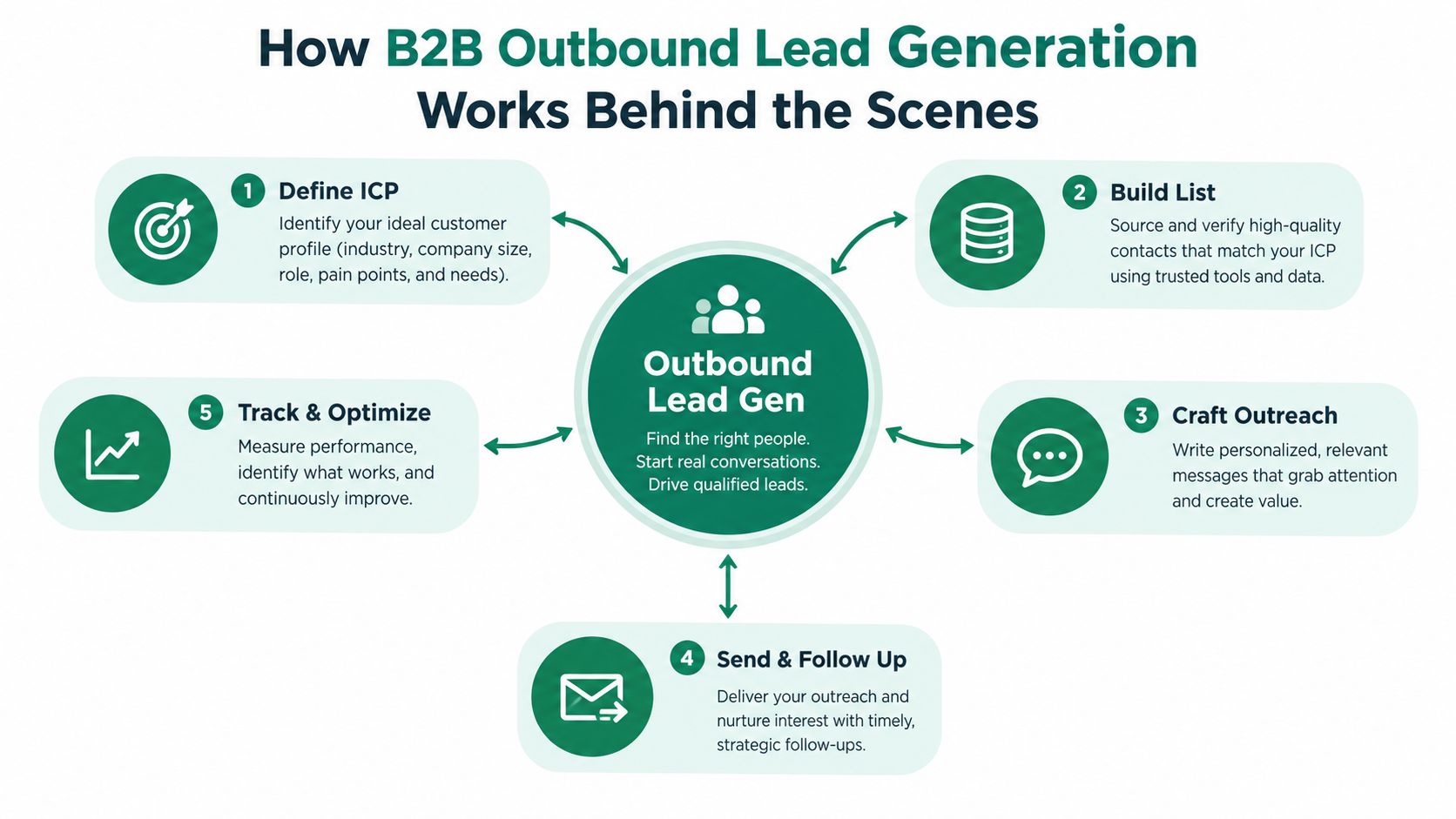
    Instead of waiting for someone to post a project, you identify companies that fit your niche, build a lead list, and contact decision-makers directly. That gives you control over volume, relevance, and timing.

    If you want a clean structure for that process, this guide on how to build a sales pipeline is useful because it frames prospecting as a sequence, not a one-off task.

    A healthy pipeline usually has a mix of inbound interest, relationship-driven leads, and targeted outbound. If one slows down, the others keep the business moving.

    Execute a Winning Outreach Sequence

    Most freelancers know they should reach out. Fewer know how to do it without sounding generic, needy, or spammy.

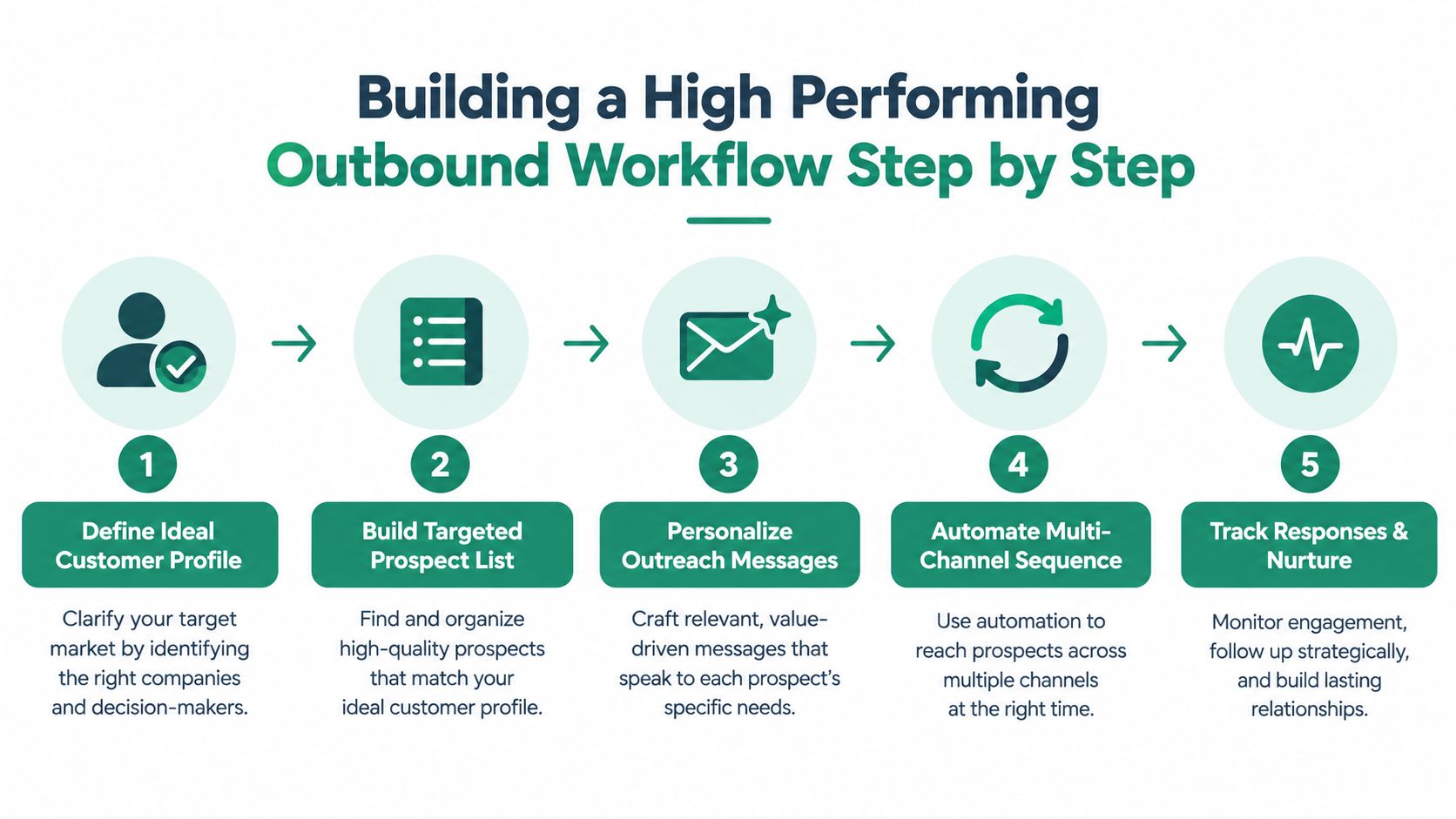
    The biggest mistake is sending one message and calling it outreach. Real outreach is a process. You pick a narrow group of prospects, learn enough to sound relevant, contact them through more than one touchpoint, and follow up long enough to be remembered.

    A person holding a tablet displaying a professional contact management app for freelance outreach.

    Start with a controlled target list

    According to this client acquisition framework for freelancers, an effective approach involves building a segmented list of 50-100 prospects and running a multi-touch contact sequence over 4+ weeks. That same framework notes that using an email finder such as EmailScout can reduce the time spent identifying decision-makers, which makes it easier to keep outreach consistent.

    That matters because outreach breaks down when list-building takes too long.

    A practical list should include:

    • Company name
    • Industry or niche
    • Decision-maker name
    • Role
    • Reason they're a fit
    • Date of first contact
    • Follow-up status
    • Notes from research

    You don't need deep research on every account before you start. You do need enough context to avoid generic messaging.

    Personalize around business context

    Many freelance guides still underplay a core skill in outbound: personalization. This cold outreach gap analysis for freelancers points out that many guides don't explain how freelancers should structure and personalize cold email outreach, what to track, or how to find verified emails efficiently.

    Good personalization isn't flattery. It is relevance.

    Use details like:

    • Recent activity: product launch, hiring push, content update, site redesign
    • Role-specific pain: founders care about growth, marketers care about conversion, operators care about process
    • Visible opportunity: unclear messaging, weak case studies, inactive email program, underused outbound

    Bad personalization says, "I saw your website and loved it."

    Good personalization says, "Your landing page explains features clearly, but the call to action asks for a demo before the value is established."

    Use a multi-touch sequence

    One email rarely does the job. People miss messages, get pulled into meetings, or need context before replying. A sequence solves for timing without turning you into a pest.

    Here is a simple starting point.

    Day Channel Action
    1 Email Send a short first message tied to one clear business issue you noticed
    3 LinkedIn View profile, connect if appropriate, and keep the note brief
    5 Email Follow up with a sharper angle or a specific observation
    8 LinkedIn Engage with a relevant post or company update if one exists
    10 Email Send a final low-pressure message asking whether this is relevant now

    A good first email usually has four parts:

    1. Why them
    2. What you noticed
    3. What you think needs attention
    4. A small next step

    Keep it short. Respect the reader's time.

    If you need examples for that first touch, this article on how to reach out to potential clients gives a useful structure for opening conversations without overexplaining.

    Outreach works better when every message has one job. Start a conversation. Don't cram your whole portfolio, biography, and pricing into the first email.

    Follow up like a professional

    Follow-up isn't nagging when it adds context. It becomes annoying when every message says the same thing.

    A second or third touch can do one of these instead:

    • Mention a more specific issue you found
    • Share a relevant sample
    • Ask whether someone else owns that area internally
    • Offer a narrower next step, such as feedback on one page or campaign

    Freelancers who win outbound usually aren't magical copywriters. They're consistent operators who send targeted messages, keep good records, and stay in motion long enough for timing to work in their favor.

    Write Proposals That Turn Leads Into Projects

    Once a prospect replies, many freelancers lose momentum by sending a flat quote or a vague summary of services. That forces the client to figure out the value on their own.

    A stronger proposal does one thing well. It connects the client's problem to a scoped solution and makes the next step easy.

    A close-up of a person's hand using a red pen to write on a document about proposals.

    Start with the client's situation

    The best proposals don't begin with your credentials. They begin with the client's goals, constraints, and pain points as you understand them.

    A solid structure looks like this:

    • Current situation: What the client is dealing with now
    • Problem summary: What isn't working or what needs improvement
    • Recommended approach: The work you'll do and why it fits
    • Scope: Deliverables, boundaries, timelines, assumptions
    • Investment: Clear pricing and payment terms
    • Next steps: What happens after approval

    This approach reduces confusion. It also shows that you listened.

    Sell outcomes, not task lists

    Clients don't buy "five emails," "three pages," or "monthly design support" in the abstract. They buy movement on a business problem.

    That doesn't mean you promise outcomes you can't guarantee. It means you frame the work around the reason it matters.

    For example, instead of writing:

    • homepage rewrite
    • email sequence
    • messaging guide

    Write:

    • rewrite the homepage so the value proposition is clearer to qualified buyers
    • build an email sequence that supports lead follow-up after demo requests
    • create a messaging guide so future campaigns stay consistent

    That shift changes how your proposal is read. You're no longer selling labor alone. You're selling a clearer path from problem to action.

    If a proposal reads like a menu of freelance tasks, the client will compare you on price. If it reads like a business recommendation, the client will compare you on judgment.

    A useful walkthrough on structuring freelance proposals is below.

    Handle pricing with confidence

    Rate conversations get easier when the scope is clear. Trouble starts when freelancers answer "What's your rate?" before they understand the job.

    You don't need to dodge the question. You need to anchor it properly.

    A simple response is: pricing depends on scope, timeline, complexity, and the outcome the client is trying to achieve. Then give a range if you have enough context, or propose a short discovery call if you don't.

    Project fees usually protect freelancers better than vague hourly estimates when the work is tied to a defined outcome. They also reduce the chance that clients compare you to someone cheaper who is offering a different level of thinking.

    Keep the next step frictionless

    End with one clear path forward. Approve, revise, or schedule a call.

    Don't make the client hunt for your recommendation. State which option you recommend and why. Shorter proposals often win because they reduce decision fatigue.

    Track Your Efforts and Optimize for Growth

    A client acquisition system only improves if you measure it. Otherwise, every bad week feels mysterious and every good week feels accidental.

    Most freelancers don't need a full CRM at the start. A spreadsheet is enough if you update it consistently. The goal is to identify where the pipeline stalls.

    Track the few numbers that matter

    Keep your tracking simple. Focus on activity and movement.

    Useful fields include:

    • Outreach sent: How many first-touch messages went out this week
    • Replies received: Positive, neutral, and negative
    • Conversations booked: Calls, email threads, or discovery chats
    • Proposals sent: Opportunities serious enough to price
    • Wins: Signed work
    • Channel source: Marketplace, referral, niche community, direct outreach, LinkedIn

    This helps you diagnose the problem quickly.

    If outreach volume is low, that's an activity issue. If volume is healthy but replies are weak, your targeting or message may be off. If replies happen but proposals don't close, the issue may sit in discovery, scoping, or pricing.

    Measure channel quality, not just volume

    Not every lead source deserves equal attention.

    According to this review of freelancer case studies in niche communities, data from 150+ freelancer case studies shows that niche communities such as industry Slack groups and Discords generate higher-quality leads with shorter sales cycles than general social media networking. That's a strong reminder to track where good clients come from, not just where you spend time.

    A simple review question helps: which channel produces the cleanest path from first contact to paid work?

    The channel with the most activity isn't always the channel with the most value. Track both.

    Review weekly and adjust one variable

    Don't rebuild your whole process every time results dip. Review once a week and adjust one thing at a time.

    Examples:

    • Tighten the niche if replies are broad but weak
    • Improve subject lines if emails aren't getting opened
    • Add a follow-up touch if initial interest goes cold
    • Refine proposal structure if calls happen but deals stall

    Freelancers who treat this like an ongoing operating system usually make calmer decisions. They stop guessing. They can see where the bottleneck is.

    Your Client Acquisition Questions Answered

    How many outreach emails should I send each week

    Send as many as you can personalize well and follow up on consistently. Quality matters first. A smaller list with strong fit is better than blasting a huge list with generic copy.

    What should I do if nobody replies

    Check three things in order. First, is the targeting right. Second, is the message tied to a real business issue. Third, did you follow up enough times to be seen. A quiet campaign usually means the list or angle needs work, not that outbound never works.

    How do I handle rejection without burning bridges

    Reply briefly, thank them, and move on. If the response is polite, keep the door open for later. Freelance sales has a long memory. Today's "not now" can become next quarter's project.

    Should I focus on cold email or marketplaces

    Use the channel that fits your stage and workload, but don't depend on one forever. Marketplaces can create immediate opportunities. Direct outreach gives you more control over who you work with. A mixed approach is usually more stable.

    What should I personalize in cold outreach

    Keep it practical. Personalize around company context, buyer role, and a visible problem you can help solve. Many guides miss this part. As noted in the earlier cold outreach discussion, freelancers often need a clearer framework for finding verified emails, structuring outreach, and tracking what improves response quality.

    When should I scale the process

    Scale after you have a working baseline. If your targeting is sloppy, more volume just creates more noise. Once a clear niche, message, and follow-up pattern are producing conversations, then increase volume carefully.


    If you want a simpler way to build targeted lead lists and find decision-maker contact details while you research prospects, EmailScout fits naturally into a freelance outreach workflow. It helps turn prospecting from a manual chore into a repeatable process, which is exactly what breaks the feast-or-famine cycle.

  • How to Generate Leads Without Cold Calling: How to Generate

    How to Generate Leads Without Cold Calling: How to Generate

    If you're still generating pipeline by dialing strangers, you already know the pattern. Most calls go unanswered. The few conversations you do get start with friction. Your team spends energy interrupting people who didn't ask to hear from you, and even when the offer is solid, the channel works against you.

    That doesn't mean prospecting is dead. It means the old assumption is wrong. Cold calling isn't a required rite of passage for growth anymore. There are better ways to generate leads, and they work because they combine attraction, warm outreach, and automation into one system instead of treating them like separate tactics.

    The practical shift is simple. Stop thinking in terms of daily call volume. Start building a lead engine that creates familiarity before outreach, gives buyers a reason to respond, and moves interested prospects into a repeatable follow-up flow. If you want a side-by-side look at that shift, this comparison of cold calling vs cold emailing is a useful reference point.

    The End of the Cold Call Era

    Cold calling still has edge cases where it can work. But for most B2B teams, freelancers, agencies, and startups, it creates more drag than benefit. Buyers screen calls. They research on their own. They check your profile, your website, your content, and your credibility before they give you time.

    The bigger problem is operational. Cold calling doesn't compound well. A rep can make more calls tomorrow, but yesterday's activity rarely keeps working. By contrast, a strong article, a useful webinar, a smart LinkedIn interaction, or a well-built email sequence can keep producing conversations after the initial effort is done.

    Cold calling asks for attention before trust exists. Modern lead generation earns trust first, then asks for the meeting.

    That changes how to generate leads without cold calling. The question isn't which single replacement tactic to pick. The effective playbook is integrated:

    • Inbound assets bring the right people in.
    • Warm outreach turns awareness into conversations.
    • Automation handles follow-up so nothing useful gets dropped.
    • Partnerships and referrals expand reach through existing trust.

    Many organizations fail here because they isolate one piece. They publish content but never follow up. They send outreach but don't warm the prospect first. They collect leads but don't build a nurture system. The result is random activity instead of a pipeline.

    What works is tighter than that. You create something prospects want. You engage where they already spend time. You move the conversation to email when it's appropriate. You track what gets replies, meetings, and revenue. That's a much better use of effort than forcing another block of calls onto the calendar.

    Build a Lead Magnet with Inbound Marketing

    Inbound marketing isn't just "post content consistently." That's vague advice, and vague advice produces mediocre leads. A real inbound system starts with a lead magnet that solves a specific problem for a specific buyer, then connects that asset to search, social distribution, and follow-up.

    Content marketing earns its place because it can produce better economics than outbound. According to Warmly's lead generation statistics, content marketing generates 3x more leads at a 62% lower cost than traditional outbound methods like advertising or direct mail. The same source notes that companies that blog actively see 13x more leads, and 74% of marketers report content marketing as highly effective for lead generation.

    A funnel diagram illustrating an inbound lead magnet strategy with four stages: attraction, conversion, nurture, and close.

    Start with one painful problem

    The fastest way to waste time in inbound is to create broad, polished content that nobody needs. Good lead magnets usually come from a narrow pain point your buyer already talks about in sales calls, demos, onboarding, or support.

    A few examples:

    • For agencies: a proposal template, intake checklist, or pricing framework
    • For SaaS sales teams: a sequence library, qualification worksheet, or objection handling guide
    • For freelancers: a client onboarding pack, audit template, or project scoping document
    • For B2B founders: a short webinar on fixing one costly workflow bottleneck

    The format matters less than the relevance. A simple checklist tied to urgent pain will beat a generic ebook every time.

    A useful filter is this. If a prospect downloads it, can you infer what they need? If the answer is no, the asset is too generic. The lead magnet should also tell you something about buying intent.

    Use the content stack that feeds the magnet

    Your lead magnet needs feeder content. That usually means ungated assets that answer the questions buyers search before they're ready to book a call. The job of blog posts, short videos, social posts, and educational threads is to attract attention and direct people toward the next step.

    SEO and list building align. Write around real decision points, not vanity topics. Then place a relevant call to action inside the content so readers can move into your funnel naturally. If you're building that system from scratch, this guide on how to build an email list is a practical place to start.

    Use a simple map:

    Buyer stage Best asset What it should do
    Problem aware Educational blog post Clarify the issue and frame the cost of ignoring it
    Solution aware Webinar, guide, checklist Show a workable path and collect contact details
    Consideration Case-based email sequence or demo invite Reduce friction and move the lead toward a meeting

    This structure prevents a common mistake. Teams often ask cold traffic to book a call too early. Most prospects aren't ready for that on first touch. They are willing to consume something useful if it helps them make a decision.

    Add light amplification, not random promotion

    Many businesses treat distribution as an afterthought. They publish the asset and hope it ranks or gets shared. That usually isn't enough. Good inbound teams amplify what already has traction.

    That can include:

    1. Organic social posts that extract one useful lesson from the lead magnet
    2. Short email sends to your existing list
    3. Retargeting ads that bring visitors back to the download page
    4. Sales follow-up prompts for prospects who engaged but didn't convert

    Practical rule: Don't pay to promote weak content. Promote the piece that already gets engagement, replies, or time on page.

    The point of inbound isn't to replace outreach. It's to make outreach easier. When someone has seen your point of view, read your article, or registered for your webinar, your message lands differently. You're no longer another stranger asking for time. You're a familiar name attached to something useful.

    Master Warm Outreach on LinkedIn and Email

    The best outreach today doesn't feel cold, even when it's the first direct contact. It starts in public, where buyers can see who you are, what you talk about, and whether you're worth responding to. For most B2B teams, that starts on LinkedIn.

    LinkedIn performs well because it gives you context before you message. According to SalesBread's guide on generating leads without cold calling, LinkedIn outreach sees a 45% connection request acceptance rate and a 19.98% reply rate to messages. The same source notes that about half of cold email campaigns have reply rates under 10%, and refining prospect lists using buyer patterns can boost reply rates by 3x.

    A young man with glasses working on his laptop while sitting at a wooden desk.

    The workflow that gets replies

    Many LinkedIn users misuse LinkedIn by sending a pitch in the connection request. That usually creates resistance immediately. A better sequence is slower and more deliberate.

    Here's the pattern that works better in practice:

    • Identify the right account first
      Start with a clear ideal customer profile. Industry, company size, role, buying trigger, and operational pain matter more than broad job titles.

    • Warm the contact before messaging
      Read their recent posts, company updates, comments, or hiring activity. You're looking for a relevant angle, not a gimmick.

    • Send a connection request with context
      Keep it short. Mention the shared topic, a post they made, or the business issue you both care about.

    • Follow with a value-first message
      Don't ask for the meeting in the first line. Offer a useful observation, a resource, or a concise point tied to their current situation.

    • Move to email when the context supports it
      Email works better after you've created recognition on LinkedIn.

    If you need the operational piece for that handoff, this walkthrough on finding emails from LinkedIn covers the mechanics.

    A simple warm email sequence

    Once the prospect recognizes your name from LinkedIn, email becomes more effective because it's no longer a blind interruption. The structure can stay simple.

    Email 1
    Subject line tied to the observed issue. Mention the LinkedIn interaction naturally. Point to one relevant problem and one useful idea.

    Email 2
    Follow up with a short proof point from your own work, process, or perspective. Keep it educational. No long pitch.

    Email 3
    Offer a low-friction next step. A brief call, a teardown, a walkthrough, or feedback on their current setup.

    Example:

    Noticed your team is hiring more AEs. Usually that's the point where list quality starts affecting reply quality. I had one idea on tightening prospect selection before more volume gets added. Happy to send it over if useful.

    That works because it's specific. It references something real. It doesn't force a meeting request before value has been established.

    Deliverability is part of outreach quality

    Even strong messaging fails if your emails land in spam. That's not a copy problem. It's an infrastructure and sending practice problem. If your campaigns underperform for no obvious reason, this guide on how to stop email from going to spam in Gmail is worth reviewing before you blame the sequence.

    The key trade-off in warm outreach is speed versus relevance. You can blast a large list with generic copy, or you can narrow the audience and write messages that sound like they were meant for the recipient. The second approach usually creates fewer sent emails and more real conversations. That's the metric that matters.

    Leverage Partnerships and Referral Networks

    The easiest lead to win is often the one that arrives with trust already attached. That's why partnerships and referral networks deserve more attention than they usually get. Many businesses spend too much time trying to reach strangers and not enough time building relationships with businesses that already serve the same buyers.

    A close-up view of several people stacking their hands together to show unity and community support.

    Social selling and partnerships overlap. In B2B, social selling strategies can produce 48% larger deals on average, and businesses actively using social platforms are twice as likely to generate leads as non-users. Those figures come from the same research cited earlier, and they matter here because referral ecosystems run on visibility, credibility, and repeated interaction.

    Choose sister services, not lookalike competitors

    The strongest referral partners usually sell adjacent services to the same customer. A web designer and a copywriter. A CRM consultant and a RevOps freelancer. A paid media agency and a landing page specialist.

    Bad partnerships are easy to spot:

    • Direct overlap leads to territorial behavior
    • Weak client fit creates referrals that never close
    • One-sided value turns the arrangement into a chore
    • No shared process means opportunities disappear into inboxes

    Good partnerships feel operational, not theoretical. Each side knows who the fit is, when the referral should happen, and how handoff works.

    The right partner doesn't just know your target market. They encounter your ideal buyer at the moment your service becomes relevant.

    Structure the relationship like a workflow

    If you want referrals consistently, don't leave the arrangement at "let's keep each other in mind." That's polite, but it doesn't produce much.

    Build a simple agreement around:

    Area What to decide
    Ideal referral What company, buyer, and problem count as a fit
    Timing At what stage the intro should happen
    Handoff method Email intro, shared form, CRM entry, or joint call
    Follow-up Who owns the next step and when status gets updated

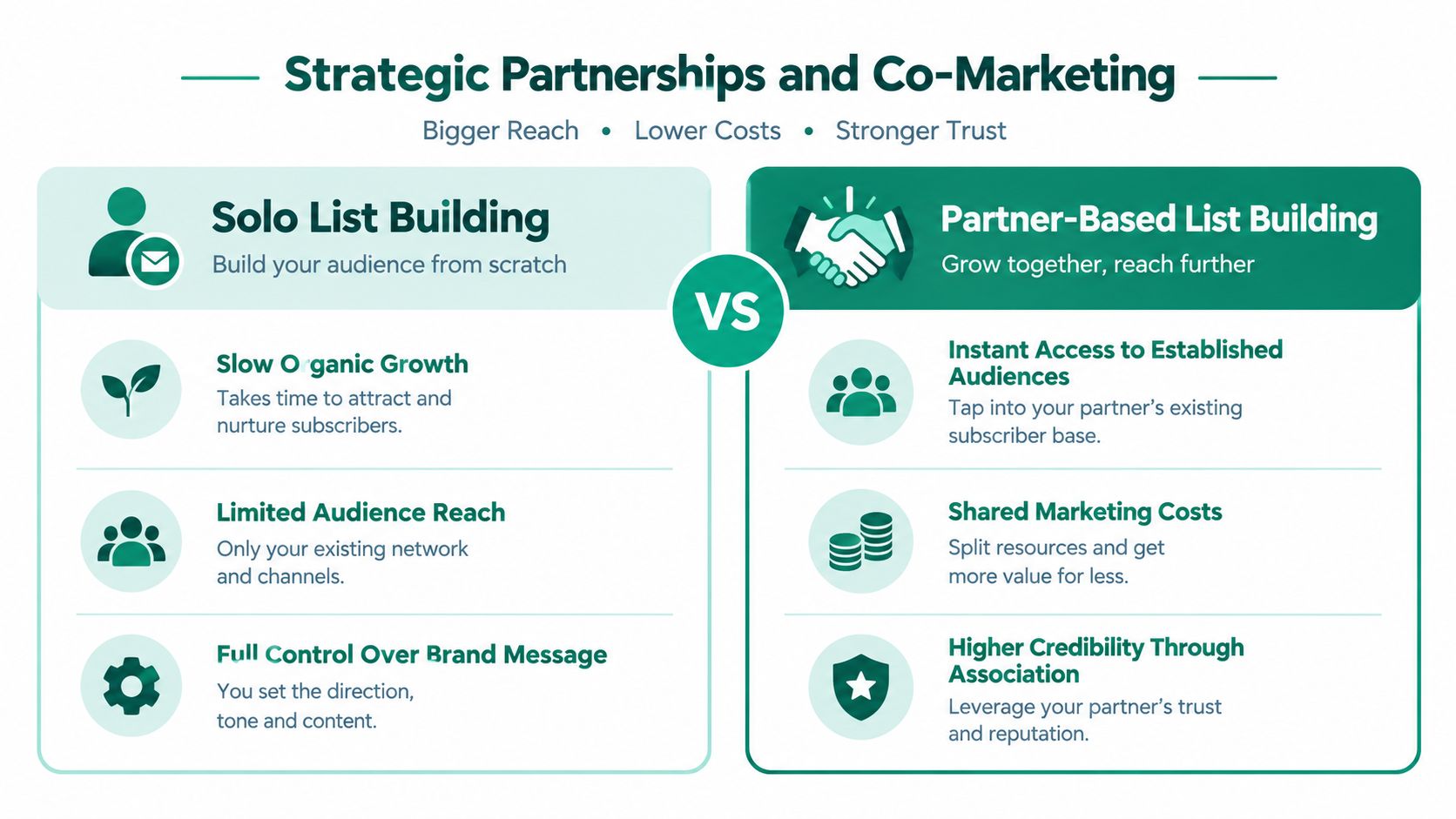
    You can also create shared assets. Co-branded webinars, workshop sessions, mini-guides, or newsletter swaps work well because they create value for both audiences without forcing a sales pitch.

    A practical way to deepen this is to build with partners in public. Comment on their posts, refer to their work when it's relevant, and invite them into useful content. Partnership pipelines are built through repeated trust signals, not one outreach message.

    A short discussion on strategic lead generation can help frame that broader approach:

    The trade-off is time. Partnerships don't usually produce instant volume. They produce better-fit leads and stronger conversion conditions over time. For most firms, that's a trade worth making.

    Automate and Measure Your Lead Generation Engine

    Once inbound, warm outreach, and referrals start producing attention, the next bottleneck appears fast. Follow-up gets messy. Lists get outdated. Good prospects slip through because nobody owns the sequence after the first touch.

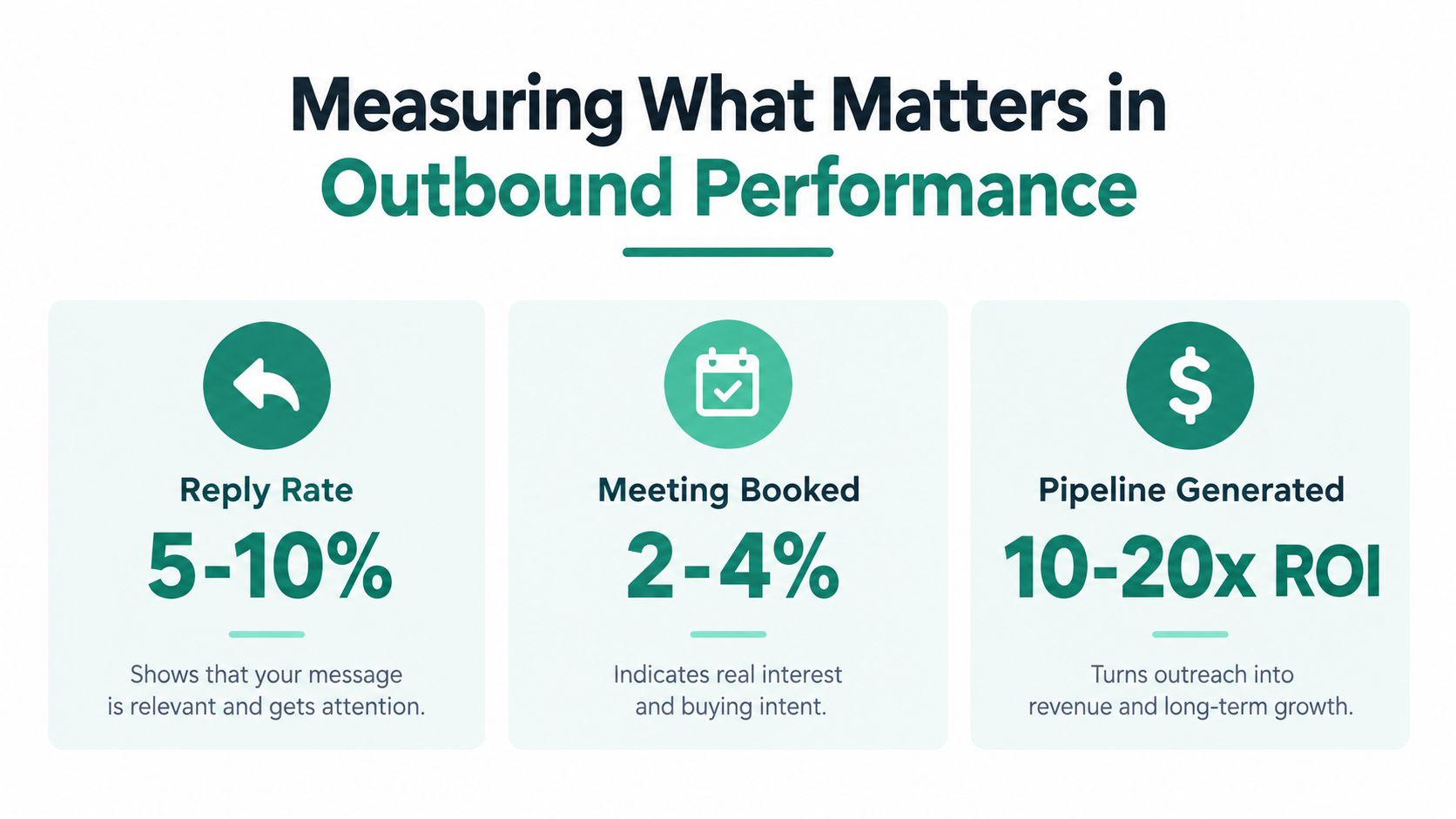
    That is where automation earns its keep. A well-executed automated email drip campaign built on a verified list can reach 20-30% open rates and 5-10% reply rates in B2B. With personalization, it can drive a 24% lead-to-meeting conversion and an average ROI of 42:1, according to DemandScience's sales without cold calling research.

    A person using a desktop computer to analyze business data charts and performance metrics on screen.

    Build the stack around clean handoffs

    The mistake small teams make is overbuying software before they have a working workflow. Start lean. You need four things:

    1. A source of prospects
      This can come from inbound conversions, LinkedIn research, partner lists, or account research.

    2. A way to find and verify emails
      One option is EmailScout, which provides a Chrome extension for finding decision-maker emails and features like URL Explorer for pulling contacts from multiple websites or LinkedIn profiles.

    3. A sequencing tool
      Lemlist, Reply.io, Mailchimp, or another ESP can handle segmented drip campaigns.

    4. A place to track outcomes
      CRM stages matter more than vanity metrics. You need to know who replied, who booked, and who converted.

    If you're comparing tooling categories before building your stack, this Formzz B2B lead generation guide is a solid overview of where different platforms fit.

    Use source-based segmentation

    Not every lead should enter the same sequence. Someone who downloaded a guide needs different messaging than someone you engaged on LinkedIn. The fastest way to lower reply quality is to flatten every contact into one generic campaign.

    A useful segmentation model looks like this:

    • Inbound leads get education-first follow-up tied to the asset they engaged with
    • Warm social leads get recognition-based messaging that references the prior interaction
    • Partner referrals get fast, personal responses with explicit context from the introducer
    • Cold-but-qualified lists get tighter personalization and smaller sends

    Automation handles the repetitive work without making the messages feel robotic. The system should carry context forward, not strip it away.

    Keep the sequence short, clear, and measurable

    Most B2B teams don't need fancy branching logic at the start. They need a clear sequence and disciplined measurement.

    A basic campaign structure:

    Step Purpose What to watch
    Email 1 Introduce the issue and relevance Opens and first replies
    Email 2 Add a useful angle or asset Reply quality
    Email 3 Present a low-friction CTA Meetings booked
    Email 4 and beyond Follow-up only if the contact remains relevant Drop-off and unsubscribe signals

    Track performance by segment, not just campaign-wide averages. If one audience replies and another ignores you, that tells you more than a blended dashboard ever will.

    Operator note: If your sequence only performs when you increase volume, your targeting is probably weak. Better lists usually solve more problems than better copy.

    What to measure and what to ignore

    Open rates matter, but only as an early signal. Reply rates matter more. Meeting rates matter more than that. The only dashboard worth trusting connects lead source to downstream pipeline.

    Watch for:

    • Reply quality
      Are prospects asking questions, deflecting, or ignoring the offer?

    • Lead-to-meeting movement
      This tells you whether the message and CTA align.

    • Source performance
      Inbound, LinkedIn, referrals, and purchased intent lists behave differently.

    • Sequence fatigue
      If later emails create weak engagement, trim them.

    What doesn't help is overreacting to one campaign. Good lead generation systems improve through iteration. Subject lines, CTAs, segments, and offer framing all need testing. The teams that win here aren't the ones sending the most. They're the ones learning fastest from the responses they get.

    Your Path to Sustainable Growth

    If you want to know how to generate leads without cold calling, the answer isn't one tactic. It's a system.

    Inbound attraction brings in people who are already problem aware. Warm outreach turns familiarity into conversations that don't feel forced. Partnerships and referrals widen your reach through borrowed trust. Automation keeps the process moving after the first click, comment, or reply.

    That shift changes the job. You're no longer hunting one lead at a time by interrupting strangers. You're building assets, relationships, and workflows that keep producing opportunities. The front-end effort is higher than making another round of calls, but the payoff is better because the work compounds.

    Start small if you need to. Publish one useful asset. Build one warm LinkedIn workflow. Set one follow-up sequence. Ask one partner for a structured referral conversation. Then tighten what works.

    The goal isn't to avoid effort. It's to stop wasting effort on channels that create friction before trust exists.


    If you're building this kind of pipeline, EmailScout can fit into the workflow as the email discovery step between prospect research and outreach. Use it to find decision-maker emails while browsing LinkedIn or company sites, then move those contacts into the segmented follow-up system you already run.

  • Best Chrome Extensions for Digital Marketers: 2026 Toolkit

    Best Chrome Extensions for Digital Marketers: 2026 Toolkit

    You open Chrome to review a competitor’s landing page, then end up with 14 tabs, six SEO overlays, two email finders, and conflicting data on the same screen. That is the point where extensions stop helping and start slowing the work down.

    The problem is not a lack of tools. It is a lack of a system. A useful extension handles one job well. A useful stack helps you move from research to qualification to outreach without resetting your workflow every five minutes.

    That is the lens for this guide. Instead of treating each extension as a separate recommendation, it shows how to combine them for real marketing tasks. Use Ahrefs SEO Toolbar or MozBar to judge a page fast. Add Similarweb to estimate traffic patterns. Check Wappalyzer to see what the site is built on. Then use EmailScout or Hunter to find the right contact once the opportunity looks real.

    Chrome is still where a lot of day-to-day marketing work happens. Research, prospecting, tag checks, SERP reviews, competitor teardown sessions, all of it starts in the browser. If you want to keep that workflow tight, it helps to build a small stack with clear roles instead of installing every extension that looks useful.

    If you also care about keeping your browser efficient outside marketing tasks, this list of Chrome extensions for productivity is a useful companion. The same rule applies here. Fewer tools, used in the right sequence, beat a crowded toolbar every time.

    organic growth for indie hackers gets harder when your process is bloated. The right setup cuts wasted clicks, reduces context switching, and makes it easier to spot which pages, keywords, and companies are worth your time.

    1. EmailScout

    EmailScout

    If your job includes finding the right person to contact, EmailScout is the fastest tool in this list to get moving with. It’s lightweight, simple, and built for one practical task. Pull public email addresses from the site you’re visiting without forcing you into a heavy workflow.

    That matters because speed changes behavior. Junior marketers often skip outreach research because the setup feels annoying. EmailScout fixes that. You install it, pin it, open a site, click once, and see what public emails it can find.

    Where it fits best

    EmailScout works well for marketers, founders, freelancers, and SDR-style operators who want a low-friction way to build contact lists from pages they’re already visiting. It can also pull emails from Google search results, which is useful when you’re prospecting across many sites in one session.

    Its biggest practical advantage is ease of use. The free tier allows unlimited email searches and exports, and the premium side adds AutoSave, URL Explorer for bulk extraction from up to 1,500 URLs, and scalable volume options. There’s also a premium trial without a credit card, which is the right way to test this kind of tool before you commit.

    Practical rule: Use EmailScout for discovery, not blind trust. If an email is scraped from public page source, treat it as a lead, then validate before sending.

    A few things don’t work as well. Email quality depends on what the site exposes publicly. If a company hides contact details well, you won’t magically get executive emails from nowhere. And because there’s no prominent third-party validation or broad social proof highlighted on the site, I’d pair it with a verification step before any serious outbound push.

    Best tool stack for targeted outreach

    Here’s where EmailScout becomes more useful than a standalone finder:

    • Step 1. Find the company: Use Wappalyzer to identify the site’s stack and decide whether it fits your target profile.
    • Step 2. Check business relevance: Use Similarweb’s browser extension to gauge whether the site looks worth your time.
    • Step 3. Pull contacts fast: Use EmailScout to collect public emails from the site or search results.
    • Step 4. Export and segment: Export to CSV or TXT, then sort by role, brand fit, or campaign angle.

    If you want a broader roundup of browser-based workflow tools, EmailScout also has a useful list of Chrome extensions for productivity.

    The trade-off is straightforward. EmailScout is excellent when you want speed and bulk-friendly discovery. It’s weaker if you expect built-in verification, deep CRM logic, or enterprise-grade enrichment inside the extension itself.

    2. Ahrefs SEO Toolbar

    Ahrefs SEO Toolbar

    Ahrefs SEO Toolbar is what I use for fast SERP triage. It’s not the tool for deep analysis inside the browser alone. It’s the tool for deciding, within seconds, whether a keyword, page, or competitor deserves more time.

    The value is simple. You see useful page and SERP-level SEO context where you’re already working. That cuts out the constant back-and-forth between search results and a separate research platform.

    What it does well

    The toolbar is strongest when you already have an Ahrefs subscription. That’s when the proprietary metrics and richer overlays start to justify the install. Without that account, it still has utility, but it feels more limited.

    Use it for:

    • Quick SERP filtering: Spot stronger domains and obvious outliers before opening ten tabs.
    • On-page checks: Review headings, meta details, and basic technical elements quickly.
    • Technical triage: Inspect HTTP headers and redirect chains without leaving the page.

    The downside is that it can feel heavy on busy SERPs, and a lot of what makes Ahrefs valuable sits behind the paid product. If you’re trying to stay lean, you may want to compare no-cost backlink analysis tools before making Ahrefs your default stack.

    Best tool stack for keyword qualification

    Pair Ahrefs SEO Toolbar with Keywords Everywhere. Use Ahrefs first to judge the current SERP and page strength. Then use keyword overlays to decide whether the query has enough commercial or content value to pursue.

    If you’re doing outreach to sites you discover during SEO research, keep this list of lead generation tools handy. It’s a natural handoff from research to prospecting.

    3. MozBar

    MozBar

    You have a SERP full of potential targets, a shortlist due in 20 minutes, and no time to open every site in a full SEO platform. MozBar is useful in that moment. It gives a fast first pass on page and domain strength, then lets you move the weaker prospects out of the way.

    That speed is the reason it still gets installed. The trade-off is obvious too. MozBar helps with screening, not decision-making.

    Where MozBar still earns its keep

    MozBar works best in prospecting workflows where the goal is to sort pages fast, not prove final value. I use it to scan SERPs, open only the candidates that look promising, and sanity-check whether a site belongs in a link list, outreach list, or competitor set.

    Use it for:

    • Fast authority checks: Compare domains and pages before you spend time reviewing them one by one.
    • Link inspection: Highlight follow, nofollow, internal, and external links on the page.
    • Basic on-page review: Pull title tags, meta data, and other page-level elements without digging through source code.

    The limitation is metric confidence. Domain Authority is familiar, but it should never be the only filter. A weaker site can still be the right outreach target if it has a relevant audience, real traffic, and a page that gets indexed and updated.

    Best tool stack for outreach prospecting

    MozBar is more useful when you pair it with another extension instead of treating it as the whole workflow.

    A practical stack looks like this:

    1. Start with MozBar to scan the SERP or a resource page and remove obvious low-value domains.
    2. Use Similarweb Browser Extension on the sites that survive the first pass to check whether they show signs of meaningful traffic.
    3. Open Hunter for Chrome only after a site clears both checks and is worth contacting.

    That sequence matters. MozBar saves time at the top of the funnel. Similarweb helps avoid outreach to dead sites. Hunter comes in after you know the domain is worth the effort.

    If you use MozBar that way, it stays useful. If you use it as your final judge, it will lead you into bad picks.

    4. Keywords Everywhere

    Keywords Everywhere

    You search a term, open three competing pages, and need an answer fast. Is this topic worth a content brief, a landing page, or a paid test? Keywords Everywhere helps answer that inside the SERP instead of forcing you into a separate platform for every check.

    That matters because keyword research breaks down when the workflow gets slow. This extension keeps volume, CPC, competition signals, and related terms visible while you work. For day-to-day search review, that speed is its core value.

    Best use case

    Keywords Everywhere works best at the front of content planning. Use it to judge whether a topic has enough demand to justify work, whether the query has commercial intent, and whether there are nearby variations worth grouping into the same asset.

    I use it as a filter, not a final decision-maker. It helps narrow the field quickly. Then the heavier tools come in once a keyword proves it deserves more attention.

    The trade-offs are straightforward:

    • Credits need management: Leave every data module on, and usage climbs faster than expected.
    • SERP data is only part of the picture: You still need page-level and domain-level context before you commit to a target keyword.
    • It works best in a stack: The extension is strongest when it feeds the next step in your review process.

    Tool stack for content planning

    This is one of the better tool-stacking extensions in the list because it fills the first gap. It tells you whether a search term is worth investigating before you spend time analyzing the sites ranking for it.

    A practical workflow looks like this:

    1. Start with Keywords Everywhere to check search demand, CPC, and related queries directly in Google.
    2. Open Ahrefs SEO Toolbar on the top-ranking pages to review titles, headers, links, and page-level SEO basics.
    3. Use SEOquake if you want a second pass on on-page structure or quick page diagnostics before drafting the brief.

    That sequence saves time. Keywords Everywhere helps you choose the query. Ahrefs SEO Toolbar and SEOquake help you judge whether the current SERP is beatable, weakly optimized, or crowded with pages that already match search intent well.

    If you install it with that workflow in mind, Keywords Everywhere earns its place fast. If you expect it to replace full keyword research and competitive analysis, it will come up short.

    5. Similarweb Browser Extension

    You open a potential partner site, the design looks polished, and the pitch list starts growing. Before you add anyone to outreach, check whether the site has enough real market presence to matter. That is the job Similarweb handles well.

    The extension gives a quick read on estimated traffic, engagement signals, traffic sources, and top geographies right in the browser. For digital marketers, that speed matters more than perfect precision in the first pass. You are trying to qualify a site, not build a board report.

    That trade-off matters. Similarweb’s numbers are modeled estimates, so use them to sort and prioritize. Do not use the extension alone for budget forecasts, partner pricing decisions, or executive reporting.

    Where it fits in a real workflow

    Similarweb is strongest at the top of a review process. It helps answer the first question fast: should this domain stay on the list?

    Use it for decisions like these:

    • Is this publisher large enough to justify outreach?
    • Is this competitor operating at our scale or in a different tier?
    • Does this affiliate candidate get meaningful traffic from the channels we care about?

    That is where tool-stacking makes the extension more useful than it looks on its own.

    A practical stack for competitor and outreach research looks like this:

    1. Start with Similarweb to screen the domain for traffic level, channel mix, and country fit.
    2. Open Wappalyzer to see what CMS, analytics, ad tech, or ecommerce stack the company is running. That often tells you how mature the operation is.
    3. Use Ahrefs SEO Toolbar or MozBar to review authority and search-facing strength before you assume the traffic is coming from SEO.
    4. Use EmailScout or Hunter only after the site clears the quality check and belongs on your outreach list. If you are comparing contact discovery options, this breakdown of email finder tools for outreach workflows is a useful next step.

    That order saves time and keeps bad prospects out of the pipeline. Junior marketers often start by hunting for a contact, then try to justify the lead after the fact. Reverse it. Qualify the domain first, then find the person.

    Similarweb earns its place because it helps you make that first cut quickly. Just keep its role narrow. It is a screening tool, not the final source of truth.

    6. Hunter for Chrome

    Hunter for Chrome

    You open a solid prospect site, the company fits your ICP, and the page gives you no clear path to the right person. That is the exact moment Hunter earns its spot.

    Hunter for Chrome is built for one job. Find work emails tied to a domain fast enough that research does not stall. It stays useful because the workflow does not end at discovery. You can check the address, sort contacts by role, and move the record into your outreach stack without adding three other tools.

    That makes Hunter stronger in a tool stack than as a standalone extension. I use it after the site has already passed the quality screen. Similarweb can tell you whether the company is worth your time. Wappalyzer can show whether the business looks mature enough to buy. Hunter answers the next question, which is who should get the email.

    Where Hunter fits best

    Hunter works well for B2B teams doing targeted outreach into SaaS, agencies, ecommerce brands, publishers, and other companies with visible domain footprints. If your list includes tiny local businesses, solo operators, or obscure niche sites, coverage gets less predictable.

    That trade-off matters. Teams burn credits when they use Hunter too early in the process or on low-fit domains.

    Use cases where it tends to pull its weight:

    • Finding likely decision-makers from a company domain
    • Checking whether a contact format is valid before outreach
    • Pulling outreach prospects into Sheets or CRM workflows
    • Speeding up list building after account qualification is already done

    Its limits are straightforward:

    • Credit-based pricing gets expensive at volume
    • Coverage varies by industry and company size
    • Shared inboxes or generic role accounts are not always useful for outbound

    Field note: Hunter is usually productive when the company has a clear web presence and a real team page footprint. It gets weaker when you are fishing through thin sites with almost no public signals.

    A practical tool stack for outreach

    A junior marketer’s mistake is starting with contact discovery. Start with fit, then move to people.

    A cleaner sequence looks like this:

    1. Qualify the company first with Similarweb or Ahrefs SEO Toolbar.
    2. Check the tech stack with Wappalyzer if the offer depends on platform fit.
    3. Use Hunter to pull likely contacts once the account is worth pursuing.
    4. Cross-check other options with this comparison of email finder tools for outreach teams if you need broader coverage or different pricing.
    5. Write the email based on the page and role, not just the domain.

    That last step is where teams usually miss. Good contact data only helps if the message is relevant. For a solid messaging framework, this effective B2B cold email guide is worth keeping next to your prospecting workflow.

    Hunter stays in a lot of marketers’ browsers for a reason. It saves time after you have done the harder part, which is choosing the right account before you chase the contact.

    7. SEOquake

    SEOquake is one of the best “leave it installed and use it when needed” extensions. It’s free, broad, and good at spot audits.

    I wouldn’t use it as my only SEO tool if rankings and content are central to the business. I would absolutely keep it around for quick page inspection, SERP overlays, keyword density checks, and side-by-side URL comparisons.

    Where SEOquake wins

    Its strength is range. You can open a page and get a fast sense of structure, metadata, links, and basic audit signals without leaving the browser.

    That makes it good for:

    • Content gap review
    • Quick on-page audits
    • Competitor page comparisons
    • Sanity checks before publishing

    The weakness is depth. You’ll hit the ceiling quickly if you want robust backlink intelligence or enterprise-level keyword analysis. But as a no-cost audit layer, it’s hard to complain.

    Tool stack for cold outreach prospecting

    SEOquake is surprisingly useful in outreach prep. Use it to inspect a target site’s pages before you email them. You can identify weak title tags, thin content, messy internal linking, or other visible opportunities, then tailor a more relevant pitch.

    If your role mixes SEO and outbound, this modern B2B cold email guide is worth reading alongside your tooling setup.

    If your outreach message starts with something generic, the extension stack didn’t fail. The research process did.

    8. Ubersuggest SEO and Keyword Discovery

    You’re reviewing a search result, spot a keyword angle that looks promising, and need a fast read before you commit a writer or budget. Ubersuggest is useful in that moment. It adds keyword and page context directly in Google, which makes it a practical first-pass SEO extension for marketers who need answers quickly.

    Its value is speed, not depth.

    For solo marketers, founders, and in-house generalists, that is often enough. You can scan search volume, CPC, competition signals, related terms, and rough page-level estimates without opening a full platform. That helps when you’re triaging content ideas, checking whether a term is worth testing, or pressure-testing a brief before it gets assigned.

    I use it for three jobs:

    • Quick keyword screening before content planning
    • SERP review while comparing angles and search intent
    • Early validation before I move a topic into a heavier SEO workflow

    The trade-off is straightforward. Ubersuggest helps with prioritization, but I would not rely on it alone for a high-stakes content bet in a competitive category. Once the stakes go up, the extension works better as the first layer in a stack, not the final source of truth.

    How to stack it with other extensions

    Ubersuggest is more useful when you pair it with MozBar’s Chrome Web Store listing. Ubersuggest gives you the keyword read. MozBar helps you judge whether the pages ranking are beatable based on site and page authority.

    That combo is practical for content planning. Start in Google with Ubersuggest to screen the term. Then use MozBar to check the strength of the ranking pages. If the keyword looks decent but the SERP is packed with strong domains, move on. If the term is viable and the authority gap is manageable, put it into your content queue.

    For lean teams, that workflow is often enough to avoid wasting time on topics that look attractive in isolation but are unrealistic once you inspect the SERP properly.

    9. Wappalyzer

    Wappalyzer

    You open a prospect’s site before a call and need three answers fast. What platform are they on, what tools are installed, and whether your pitch should focus on migration, integration, or fixing what they already have. Wappalyzer gives you that first read in seconds.

    That makes it useful for more than curiosity. It sharpens judgment at the top of the workflow.

    Why it matters in practice

    Wappalyzer identifies a wide range of technologies used on a site, including CMS platforms, analytics tools, ecommerce systems, and marketing tags, as noted in MeasureSchool’s review of Chrome extensions for digital marketers. For marketers, that means less guessing during research and better decisions before outreach starts.

    I use it in three situations:

    • Prospecting: Check whether an account fits the platforms your team supports.
    • Competitive research: See which tools competitors rely on, then compare that against their traffic, UX, and funnel setup.
    • Message shaping: Write outreach around the stack that is already in place instead of sending a generic pitch.

    The trade-off is simple. Wappalyzer is strong for direction, but not every detected technology is current, complete, or relevant to your offer. Some tags are legacy. Some platforms appear on a subdomain but not the core buying experience. Treat it as a fast research layer, then verify the details on the site itself before you build a campaign around them.

    How to stack it for technographic outreach

    This is one of the most practical tool stacks in the article because each extension answers a different qualification question.

    Start with Wappalyzer to identify the stack. Open Similarweb to check whether the account has enough traffic or market presence to justify time. Use Hunter or EmailScout to find a real contact once the company clears that bar. Then run SEOquake or the Ahrefs SEO Toolbar to spot visible SEO or site issues you can reference in your email.

    That sequence works because it filters bad targets early. You are not scraping a list and hoping for relevance. You are checking fit, validating priority, finding a contact, and building an angle from evidence on the site.

    For junior marketers, this is the main lesson. Wappalyzer is rarely the whole workflow. It is the first move in a stack that turns surface-level research into targeted outreach.

    10. Meta Pixel Helper

    Meta Pixel Helper

    A campaign goes live, traffic starts landing, and the retargeting audience stays flat. Nine times out of ten, the problem is not the ad. It is tracking.

    Meta Pixel Helper is the fast check for that problem. It shows whether a Meta pixel is installed on the page and which browser-side events are firing, so you can catch broken PageView, Lead, Purchase, or custom event setups before wasted spend turns into bad reporting.

    What it’s good for

    Use it during launch QA, landing page handoff, checkout testing, and after any CMS, theme, or tag manager change. It is faster than digging through network requests every time you need to confirm whether the page is sending the right signal.

    The extension is most useful in a stack, not on its own. Open Meta Pixel Helper to confirm the Meta event fires on the page. Then use your broader tag debugging process to check whether GA4, Google Ads, or other tags are also firing as expected. That side-by-side check matters because a page can look fine inside Ads Manager while still breaking attribution across the rest of your reporting setup.

    The practical limitation

    Meta Pixel Helper only shows part of the picture. If your team uses Conversions API, server-side GTM, or backend event forwarding, the extension will not validate the full implementation path.

    Treat it as a browser-level QA layer. It tells you what the page is sending from the front end. It does not confirm that deduplication, server events, or downstream match quality are configured correctly.

    One practical workflow works well here. Check the page with Wappalyzer if you need to confirm the site is running on Shopify, WordPress, or a custom stack that may affect tracking behavior. Then use Meta Pixel Helper to test event firing on key pages. If something is off, review the implementation in Tag Manager or the site theme before paid traffic scales.

    Good paid media teams verify events before budget starts spending.

    Top 10 Chrome Extensions for Digital Marketers, Quick Comparison

    A quick comparison only helps if it also shows fit. The right extension depends on the job in front of you, and the strongest setups usually come from stacking two or three tools together instead of expecting one extension to handle the whole workflow.

    Use this table to choose faster. Then build around tasks like keyword research, competitor review, list building, and tracking QA.

    Product Core features Target audience Pricing / Value Unique selling point Limitations
    EmailScout (recommended) One click Chrome email finder, CSV/TXT export, AutoSave, URL Explorer (bulk) Marketers, sales teams, founders, freelancers Free unlimited searches/exports. Premium from about $9/mo (5K) to enterprise. Trial with no credit card Generous free tier, plus AutoSave and bulk URL scraping for higher-volume prospecting Scrapes public sources. No native deliverability verification. Limited social proof
    Ahrefs SEO Toolbar SERP/page metrics, one click on-page and HTTP checks, SERP enrichment SEOs and analysts who use Ahrefs Free toolbar. Most metrics require Ahrefs subscription Trusted backlink and keyword data when paired with an Ahrefs account Proprietary metrics are gated. Can feel heavy on large pages
    MozBar DA/PA, link metrics, link highlighting, on-page inspection SEOs and competitive researchers Free. Moz Pro for premium features Widely used authority metrics for quick side-by-side comparisons Some features sit behind Moz Pro. Occasional compatibility issues
    Keywords Everywhere Search volume, CPC, competition, trends across sites, bulk uploads Keyword researchers, content marketers Freemium credit model, packs last 1 year Low barrier to entry, with multi-site overlays and bulk support Credits can run down quickly. Not a full SEO suite
    Similarweb Browser Extension Estimated traffic, engagement, channel mix, geo breakdown Competitive intel, prospect qualification, market sizing Free extension. Advanced data and features are paid Fast directional traffic and channel insight for market checks Data is modeled. The extension joins a contributory network
    Hunter for Chrome Domain/email finder, email verification, CRM/Sheets integrations, Sequences B2B marketers, sales teams, list builders Free tier with credits. Paid plans for higher volume Built-in verification plus integrations and outreach tools Accuracy varies by niche. Paid credits are needed at volume
    SEOquake (Semrush) SERP overlay, on-page audit, keyword density, URL/domain compare SEOs needing fast spot audits and triage Free Broad, lightweight feature set for quick audits Less detailed than paid suites. Occasional UI lag
    Ubersuggest (Chrome) Volume, CPC, competition overlays, traffic estimates, keyword ideas Content marketers and beginners in SEO Free with daily limits. Subscription for deeper access Easy free SERP-side metrics and content prompts Data is directional. Daily limits apply
    Wappalyzer Detects CMS, e-comm, analytics, frameworks, lead lists and API (paid) Technographic targeting, sales ops, dev teams Free limited tier. Paid plans for API and teams Fast snapshot of a site’s tech stack for personalization Can miss obfuscated or custom tech. Paid plans are expensive
    Meta Pixel Helper Detects Meta Pixels, real-time events, warnings/errors Performance marketers, developers validating pixels Free Official Meta tool for quick pixel validation Does not show server-side (CAPI) events. Use with Events Manager

    A few pairings are worth calling out.

    For SEO triage, use Ahrefs SEO Toolbar with Keywords Everywhere. One gives you page-level and SERP context. The other helps you judge whether the query is worth targeting before you open a full suite.

    For competitive outreach, Similarweb plus Wappalyzer plus EmailScout is a practical stack. Check whether the site is getting meaningful traffic, identify the platform or ecommerce setup, then pull contact data for the right person. That sequence saves time and cuts down on low-value prospecting.

    For link building or partnerships, Hunter and MozBar work well together. Hunter helps find and verify contacts. MozBar gives a quick authority check so you do not spend outreach effort on weak domains.

    For launch and tracking checks, Wappalyzer plus Meta Pixel Helper is a clean combination. Confirm the site setup first. Then verify whether the browser-side Meta events are firing where they should.

    The shortcut here is simple. Choose extensions by workflow, not by feature count.

    Final Thoughts

    A good extension stack earns its keep on a normal workday. You open a competitor’s site, check traffic quality, identify the CMS or ecommerce platform, pull a contact, and verify whether tracking is installed. If that takes five tabs and three paid tools, the process is too heavy. If it takes two minutes inside the browser, you will use it.

    That is the standard to judge these extensions by. Speed, clarity, and fit with the job in front of you.

    The strongest setup is usually a small stack built around one workflow. For SEO research, that might mean Ahrefs SEO Toolbar, Keywords Everywhere, and SEOquake. For outbound or partnerships, Wappalyzer, Similarweb, and EmailScout or Hunter make more sense. For paid media QA, Meta Pixel Helper should be installed before campaign launch, not after a reporting problem shows up.

    Chrome works well for this because so much marketing work starts in the browser. Research happens there. Prospecting happens there. Landing page checks, tag validation, and quick competitor reviews happen there too.

    The common failure point is tool overload. Junior marketers often install every extension they see recommended, then end up with cluttered SERPs, slower page loads, and three different tools showing slightly different numbers. That creates hesitation, and hesitation slows execution. Pick one extension per job where possible, then add a second only if it answers a different question.

    A practical setup usually looks like this:

    • SEO and content research: Ahrefs SEO Toolbar, Keywords Everywhere, SEOquake
    • Competitor and account research: Similarweb, Wappalyzer
    • Outreach and list building: EmailScout or Hunter
    • Tracking checks: Meta Pixel Helper

    That stack covers the work most digital marketers do every week without turning Chrome into a mess.

    One more point matters if you manage a team. Do not hand a junior marketer ten tools and expect good output. Give them a sequence. Start with the traffic check, move to the tech stack, then contact discovery, then validation. That is where tool-stacking becomes useful. It turns a pile of extensions into a repeatable process.

    If outreach is part of your workflow, EmailScout is an easy tool to test early. It handles quick contact discovery from websites and search results, and it is useful when speed matters more than running a full prospecting platform.

    Use fewer extensions. Combine them in the right order. That is how these tools save time instead of adding noise.

  • What Is a Drip Email Campaign: A 2026 Guide

    What Is a Drip Email Campaign: A 2026 Guide

    A drip email campaign is a series of automated, pre-written emails sent to specific contacts over time based on triggers or a set schedule, and most effective programs run 3 to 7 emails. In practice, this approach consistently outperforms one-off blasts in key use cases, including automated welcome emails that reached a 3% conversion rate and cart abandonment emails that reached 2.39%.

    You’ve probably been in this spot already. You’ve built a fresh lead list, your sales team wants meetings, marketing wants pipeline, and everyone agrees “we should follow up.” Then the follow-up turns into a random batch of one-off emails, sent too late, with no clear path for what happens next.

    That’s where drip campaigns matter. Instead of relying on manual reminders and scattered outreach, you create a structured sequence that keeps the conversation moving without forcing a rep or marketer to rebuild the process every time. For B2B teams, that means less guesswork, better timing, and a cleaner handoff from list-building to real pipeline generation.

    What Is a Drip Email Campaign and Why Does It Matter

    A drip email campaign is an automated series of emails sent to a defined group of contacts over time. The emails go out based on a schedule, a trigger, or both. The goal is simple. Move someone from initial interest to a meaningful next step without requiring manual follow-up every time.

    That’s what separates a drip from a blast. A blast sends the same message to a broad audience once. A drip sends a sequence designed for context. One contact gets a welcome message after subscribing. Another gets a follow-up after downloading a guide. A third gets a re-engagement email after going quiet.

    In B2B, that difference is huge. Most prospects don’t book a meeting from the first touch. They need a reason to care, a sequence that respects their timing, and content that matches where they are in the buying process.

    Why teams keep using drips

    The model isn’t new. It became mainstream with marketing automation in the early 2010s, and it stuck because it works. In the data cited by MoEngage’s overview of drip email campaigns, automated welcome emails reached a 3% conversion rate, cart abandonment emails reached 2.39%, and standard programs typically use 3 to 7 emails.

    Even outside ecommerce, the pattern holds. The same source notes that real estate emails average a 19.17% open rate, with top performers reaching 35-40%, and optimized drips can produce click-through rates that are 119% higher.

    For a busy team, that matters because consistency beats improvisation. If you want a practical breakdown of the systems behind it, this guide on email marketing automation fundamentals is a useful companion.

    Practical rule: If your follow-up depends on someone remembering to send the next message, you don't have a system yet.

    Why this matters more in B2B than most guides admit

    Most articles explain drips through ecommerce examples. Those are valid, but they don’t fully prepare a sales or demand generation team for B2B reality. In B2B, you’re not just trying to recover a cart or welcome a subscriber. You’re trying to earn a reply, start a conversation, and turn a found contact into an active opportunity.

    That changes the standard for success. A good B2B drip doesn’t just generate opens. It creates progression.

    The Anatomy of a Modern Drip Campaign

    A modern drip campaign works a lot like a GPS. The system doesn’t just know the destination. It also reacts to where the contact is right now, what they’ve already done, and which route makes sense next.

    An infographic showing the five key components that make up a modern automated drip email marketing campaign.

    If that logic isn’t built in, the campaign usually feels robotic. Contacts get the wrong email at the wrong moment, or worse, they get emails that ignore what they already told you with their behavior.

    Trigger starts the journey

    Every drip starts with an event. That could be a form submission, a content download, a demo request, a page visit, or a link click. According to Salesforce’s explanation of drip marketing, drip programs operate on a trigger-based automation model where user actions initiate the sequence, and engagement drops when there’s too much delay between the trigger and the send.

    In plain terms, speed matters. If someone downloads a buying guide today and your first follow-up arrives next week, the relevance is already fading.

    Sequence delivers the story

    The sequence is the set of pre-written emails. Many teams often oversimplify this aspect. They write a chain of “just checking in” emails and call it a nurture flow. That usually fails because repetition isn’t a strategy.

    A real sequence has progression. Each email should do one job:

    • Email one acknowledges the trigger and frames the value.
    • Email two adds context, proof, or education.
    • Email three asks for a specific next step.
    • Later emails branch based on engagement, interest, or silence.

    That’s why list structure matters before the campaign even begins. This practical guide to how to segment email lists is worth reviewing before you build workflows.

    Logic decides what happens next

    The most useful drip campaigns don’t run in a straight line. They use simple conditions.

    If the prospect clicked a pricing link, they might get a sales-oriented follow-up. If they opened but didn’t click, they may need more education. If they replied, the sequence should stop. If they ignored several messages, the cadence should change or pause.

    Good automation doesn’t send more email. It sends the next right email.

    Segmentation keeps the campaign relevant

    B2B teams gain or lose their competitive edge in this area. A founder at a startup, a director at a mid-market company, and an enterprise operations lead might all fit your ideal customer profile, but they shouldn’t get the same message sequence.

    The trigger starts the workflow. Segmentation decides whether the message fits the person receiving it.

    Strategic Drip Campaigns for Sales and Marketing

    The easiest way to understand drip strategy is to stop thinking in terms of “email sequence” and start thinking in terms of business jobs. Different campaigns exist to move different contacts through different moments.

    Some are marketing-led. Some are sales-led. The strong programs usually connect both.

    Common drip campaign types and goals

    Campaign Type Primary Goal Target Audience
    Welcome series Introduce the brand and set expectations New subscribers or new leads
    Lead nurturing Educate and build trust over time Prospects not ready to buy yet
    Re-engagement Restart stalled interest Inactive contacts or cold leads
    B2B prospecting sequence Turn a found contact into a conversation Decision-makers and targeted accounts
    Onboarding sequence Help new customers take key early actions New users, clients, or customers

    Where B2B teams use drips differently

    A welcome series in B2B might begin after someone downloads a report or signs up for a webinar. The first email confirms what they requested. The second gives related context. The third asks whether they want to discuss the issue with someone on your team.

    A lead nurture sequence works when interest is real but timing isn’t. Think of a prospect who engaged with a product page, joined a mailing list, or interacted with several thought leadership emails but hasn’t booked a demo. That contact doesn’t need pressure. They need relevance.

    Then there’s the B2B prospecting drip. This is the one most generic guides skip. A sales team finds a target account, identifies a decision-maker, and starts outreach with a sequence customized for that role, company type, and likely pain point. The goal isn’t a click. It’s a reply, a call, or a booked meeting.

    A practical way to choose the right sequence

    If the contact knows who you are, run a nurture or onboarding flow.

    If the contact has shown intent, trigger a behavior-based follow-up quickly.

    If the contact is a cold but relevant decision-maker, use a prospecting sequence with clear business context and a narrow call to action.

    That broader journey matters because email doesn’t work in isolation. If you want a simple refresher on how sequences support pipeline movement, this breakdown of how to improve business growth with funnels helps frame where drips fit.

    The strongest B2B drip campaigns feel less like promotion and more like guided momentum.

    What works better than generic “touch points”

    Teams often over-focus on quantity. They ask how many follow-ups to send before they’ve decided why each one exists.

    A better planning model is:

    1. Define the moment the contact is in.
    2. Match the message to that moment.
    3. Decide the next action you want.
    4. Stop the sequence when a human conversation starts.

    That last point matters. In B2B sales, automation should create openings for reps, not trap prospects in a machine.

    Best Practices for High-Impact Drip Sequences

    Most weak drip campaigns don’t fail because automation is flawed. They fail because the strategy behind the automation is lazy. The list is too broad, the copy is too generic, and the cadence treats every contact the same.

    A professional woman looking at a monitor displaying a flow chart of a digital marketing strategy.

    For B2B teams, the fix usually isn’t “send more.” It’s “send with more precision.”

    Segment before you write

    If you write the sequence first and segment later, you usually end up forcing one message across very different contacts. That creates soft mismatch. The email isn’t obviously wrong, but it doesn’t feel made for the recipient either.

    The better workflow is to define the audience first:

    • By role such as founder, sales leader, operations lead, or marketer
    • By company context such as industry, size, or growth stage
    • By intent signal such as downloaded content, replied before, or visited a high-value page
    • By sales stage such as cold, warm, active evaluation, or dormant

    The background research for this topic also points to a major reason segmentation matters: retaining existing customers costs less than acquiring new ones, so re-engagement and expansion drips deserve serious attention. In practice, that same principle applies in B2B prospecting. Relevance lowers waste.

    Personalization should change substance, not just the greeting

    A first-name token isn’t a personalization strategy. B2B buyers respond when the email reflects their context. That might mean referencing their role, the category of problem they likely manage, or the reason they’re receiving this sequence in the first place.

    The most effective drips usually personalize at three levels:

    • Audience fit so the sequence matches the segment
    • Message fit so the email addresses a likely pain point
    • Timing fit so the send matches the action or stage

    If deliverability is slipping while you scale, review fundamentals before you add more automation. This guide on how to improve email deliverability is a good checkpoint.

    Cadence should respect buyer attention

    A common mistake is stacking emails too tightly because the team is anxious for results. Another is spacing them so far apart that the sequence loses momentum. Good cadence reflects intent. High-intent triggers deserve a faster response. Lower-intent educational flows can breathe more.

    Field note: Fast follow-up after a real signal usually beats a polished sequence that starts too late.

    A short walk-through can help if your team is building from scratch:

    Copy should earn the next action

    Good drip copy doesn’t sound like a sequence. Each email should feel complete on its own while still belonging to a larger journey.

    A few practical standards help:

    • Open with context: Remind the reader why they’re hearing from you.
    • Keep one message per email: Don’t pile product tour, social proof, and meeting ask into one send.
    • Use one CTA: A confused reader usually does nothing.
    • Write for replies when the goal is pipeline: In B2B, conversation is often the conversion.

    The biggest trade-off is scale versus specificity. The more segments you build, the more work the system takes to maintain. But broad, generic drips often cost more in missed opportunity than they save in execution time.

    Measuring Success and Avoiding Common Pitfalls

    Drip campaigns need more than launch dates and copy approval. They need inspection. If you don’t know what the key numbers mean, you can’t tell whether the problem is the audience, the offer, the timing, or the list itself.

    The benchmarks for core drip metrics are useful because they keep teams honest. Based on the KPI benchmarks summarized by Contempo Themes, drip campaigns commonly track 15-28% open rates, sales-focused drips often convert in the 2-5% range, optimized click-through rates can be 119% higher than single emails, abandoned cart sequences reached 18.54% conversions, and unsubscribe rates should stay below 0.5%.

    What each metric is really telling you

    Open rate is an early signal. It tells you whether the subject line, sender identity, and inbox placement are doing their job. If opens are weak across the board, don’t rush to rewrite the body copy first.

    CTR helps you evaluate interest in the content and offer. In a sales context, though, you should be careful not to overvalue clicks. Some B2B sequences are designed to generate replies or meetings instead of link activity.

    Conversion rate is where campaign intent becomes clear. If your sequence exists to book demos, drive trials, or start sales conversations, conversion is the metric that matters most.

    Unsubscribes tell you whether the sequence is creating friction. A low unsubscribe rate doesn’t guarantee success, but a rising one often means your targeting, cadence, or messaging is off.

    Common problems and their likely causes

    Symptom Likely Cause
    Low opens Weak subject lines, poor sender reputation, or inbox placement problems
    Opens but few clicks or replies Message doesn’t connect to the recipient’s intent
    Clicks but weak conversions CTA is unclear or landing experience doesn’t match the email
    Rising unsubscribes Over-emailing, poor segmentation, or irrelevant content

    If one part of the funnel drops sharply, inspect the handoff before you rewrite the whole campaign.

    Mistakes teams make over and over

    Some issues show up so often they’re predictable:

    • Using one sequence for every lead source: A webinar lead and a cold prospect don’t need the same follow-up.
    • Ignoring list hygiene: Bad data distorts every metric after it.
    • Letting automation run past a human response: Once a prospect replies, the sequence should stop.
    • Treating spam placement like a mystery: It usually leaves clues in the pattern.

    If your numbers suddenly collapse, don’t guess. Use a structured inbox check. This guide on how to check if emails are going to spam gives a practical starting point.

    A simple review habit

    Review each sequence at the level of the specific trigger and segment, not just at the account-wide level. Averages hide weak workflows. One high-performing nurture sequence can make a poor prospecting flow look acceptable if you only look at blended reporting.

    Fuel Your Drip Campaigns with High-Quality Leads

    A B2B drip campaign often fails before the first email goes out. The sequence may be well written, the timing may be right, and the CTA may be clear. If the contacts entering that workflow are the wrong people, missing context, or grouped too loosely, the campaign produces activity instead of meetings.

    List-building and automation belong in the same planning process. Good sequencing starts with lead quality, role accuracy, and clean segmentation.

    A creative visual representation of golden liquid pouring onto a geometric object for marketing concepts.

    Build the list with campaign logic in mind

    Start with the motion you want to create. A founder evaluating tools, a VP of Sales looking at pipeline risk, and a marketing leader trying to improve lead handoff will not respond to the same message. If the sequence needs different proof points, objections, or CTAs by role, collect and label contacts that way before they ever reach your automation platform.

    The same rule applies to account context. Industry, company size, and buying stage shape the email you should send and the offer you should make. In B2B, that matters more than broad engagement metrics because the ultimate goal is qualified conversations with decision-makers.

    A practical option at the sourcing stage is EmailScout, an email finder Chrome extension used to identify decision-maker email addresses and build targeted outreach lists. Its value in a drip workflow is straightforward. It helps teams gather contacts with enough structure to assign the right sequence from day one.

    Create a clean handoff from sourcing to sequence enrollment

    A simple process works well:

    1. Set account filters such as industry, team size, geography, and role seniority.
    2. Find the relevant contacts inside those accounts.
    3. Tag each record before import with the fields your sequences depend on.
    4. Send records into your CRM or automation tool without losing those tags.
    5. Enroll each contact in the matching flow based on role, source, and intent.

    Teams usually lose precision at step five. They spend time finding the right buyers, then push everyone into one generic nurture track. That breaks the connection between prospecting and automation, especially in B2B programs built to generate replies, booked meetings, and pipeline.

    Keep CRM structure aligned with your drips

    Your CRM needs to support these decisions clearly. Lifecycle stage, lead source, account ownership, reply status, and segment tags should determine who enters a sequence, who pauses, and who gets routed to sales for direct follow-up.

    If your team is tightening that operational side, this CXO guide to CRM strategy is a solid reference for thinking through lead management and process design.

    The practical standard is simple. Every contact should enter a drip with enough context for the message to match the buyer, the account, and the next step you want.

    If you’re building B2B outreach and need a cleaner way to source decision-maker contacts before they enter your automation, take a look at EmailScout. It helps teams find business email addresses, organize prospect lists, and feed better-targeted contacts into the drip campaigns that generate replies, meetings, and real sales conversations.

  • How to Tag a Company on LinkedIn: A 2026 Guide

    How to Tag a Company on LinkedIn: A 2026 Guide

    You already know the feeling. You build a clean target list, write a thoughtful cold email, and still land in the same place as everyone else. Another unread message in a crowded inbox.

    That’s why smart outreach teams don’t start with email anymore. They start by showing up where the account already pays attention. If you’re learning how to tag a company on linkedin, the actual value isn’t the mechanic. It’s what that tag does before your first email goes out.

    Why Tagging Companies on LinkedIn Is a Sales Superpower

    Most reps treat LinkedIn tagging like a social feature. It’s better viewed as a warm-up touch in a cold outreach sequence.

    When you tag a company, you’re not just dropping a name into a post. You’re using LinkedIn’s company classification system, which supports 24 main industry categories and 148 subcategories for company segmentation, as outlined in LinkedIn industry tags. That matters because company pages on LinkedIn sit inside a structured B2B ecosystem, not a random social feed.

    A practical sales implication follows from that. If your target account already has a page, category, and audience context on LinkedIn, a relevant tag can put your message in front of the company before you ever ask for a meeting. That’s a much cleaner first touch than sending a cold email with zero context.

    For outreach teams building a modern sequence, this overlaps with broader social media lead generation tactics. The best campaigns don’t isolate channels. They use social activity to make later outreach feel familiar instead of abrupt.

    A good tag does one job first. It proves your post is about them, not at them.

    Why this works better than a blind first email

    A tag can signal three things quickly:

    • Relevance: You’re discussing the company in context, not blasting a generic pitch.
    • Visibility: The company has a chance to see the mention before a rep reaches out directly.
    • Familiarity: Your name or brand appears once before the inbox touch.

    That’s the same logic behind social selling on LinkedIn. Buyers respond better when the first email feels like a continuation of a visible interaction, not a random interruption.

    What tagging is not

    Tagging isn’t a shortcut to pipeline on its own. It won’t rescue weak messaging, bad targeting, or lazy follow-up.

    It also isn’t permission to tag every logo on your list. When reps do that, they create noise. The stronger move is to tag one account because the post specifically mentions their tool, announcement, partnership, workflow, or market issue.

    That’s where tagging becomes a sales superpower. Not as a vanity move. As the opening move.

    How to Tag a Company in Posts and Comments

    The mechanics are simple. The details decide whether the tag works.

    A person holding a smartphone showing the interface for tagging a company in a LinkedIn post.

    LinkedIn company tags become clickable, bolded mentions that trigger notifications to the tagged organization, according to this explanation of LinkedIn mentions. If you only type the company name as plain text, you lose the notification piece. That’s the difference between a visible mention and a passive reference.

    Tagging a company in a post

    On desktop, open the LinkedIn post composer and type @ followed by the company name. As you type, LinkedIn shows a dropdown. Select the correct company page from that list.

    On mobile, the flow is similar. Start a post, type @, begin entering the company name, then tap the right company page when it appears.

    Practical rule: Don’t type the full company name and hope LinkedIn converts it later. Pick the page from the dropdown while writing the post.

    Use this pattern every time:

    Type @
    Start typing the company name
    Wait for the dropdown
    Select the correct company page
    Finish the post and publish

    That selection step is what activates the tag.

    Tagging a company in a comment

    Comments work well when you want a lighter first touch. The process is the same:

    1. Open the post you want to comment on.
    2. Type @ and begin the company name.
    3. Choose the company page from the dropdown.
    4. Publish the comment.

    A comment tag works best when you’re adding something useful. For example, if someone discusses CRM cleanup, tagging a relevant company in a thoughtful comment can feel natural. Tagging a company under an unrelated post usually looks clumsy.

    What to look for before you publish

    The right tag should appear as a resolved company mention, not plain text. If it isn’t clickable in the composer after selection, stop and redo it.

    A few checks help:

    • Check the icon: Company pages are distinct from personal profiles in the dropdown.
    • Check the exact page: Many brands have regional or duplicate-looking pages.
    • Check the final formatting: A proper company tag should resolve cleanly before you hit publish.

    A quick walkthrough can help if you want to see the flow in action:

    What works in practice

    The highest-quality tags usually show up in posts like these:

    • Tool mentions: You reference a platform you used.
    • Partner mentions: You discuss a webinar, event, or collaboration.
    • Industry commentary: You connect a company to a real trend or observation.
    • Customer-facing insight: You praise a useful workflow, campaign, or update.

    What doesn’t work is tagging a company and then writing a pitch disguised as a post. Buyers can spot that immediately.

    When You Can't Find a Company to Tag

    Sometimes you do everything right and the company still doesn’t appear. That’s not always your fault.

    A person sitting at a desk looking concerned at a laptop displaying a company not found error.

    There are real technical limits here. Circleboom’s LinkedIn tagging FAQ notes that a company page may fail to appear because of privacy restrictions or naming variations. For sales teams building account lists, that creates a practical filtering problem. Some companies are easier to work into a tagging strategy than others.

    Run this quick diagnostic

    Start with the obvious and move outward.

    • Search the exact page name: The company may brand itself differently on LinkedIn than on its website.
    • Try a shorter variation: Remove legal suffixes, region labels, or punctuation.
    • Look for the official page manually: If you can’t find an active LinkedIn page at all, there may be nothing to tag.
    • Check for parent or regional pages: Some brands operate under separate market-specific pages.
    • Test in comments as well as posts: If the page still won’t resolve, it may not be taggable in the way you need.

    If the company never appears in the dropdown, stop forcing it. Treat that account as non-taggable and move on.

    Why this matters for outreach quality

    A sales team wastes time when it assumes every target company can be tagged. The cleaner workflow is to verify this early while building your prospect set.

    If your team is gathering accounts for outreach, it helps to pair LinkedIn verification with a stronger company research process such as finding contacts at companies. That way, you’re not relying on one channel to do all the work. If the page can’t be tagged, you still need the right people and the right email path.

    What not to do

    Don’t manually fake a tag by typing the company name without resolution and assuming it’s close enough. It isn’t.

    Don’t keep retrying the same broken page during campaign execution either. Once a company proves difficult to tag, note it in your list and use another warm-up tactic like commenting on leadership posts, engaging with employees, or referencing the brand in plain text without expecting a notification.

    From Mention to Meeting A Strategy for Tagging

    Random tagging is social clutter. Strategic tagging can support pipeline.

    A four-step marketing funnel infographic illustrating a strategic process for LinkedIn business engagement and lead generation.

    The numbers point in one direction. Posts with one to two relevant company tags can see 1.8–2.3× higher organic reach, while tagging more than three companies can lower engagement by 15–20%, according to Snov.io’s guide to tagging companies on LinkedIn. For outreach, the lesson is simple. Relevance wins. Volume hurts.

    The tagging playbook that actually helps email outreach

    The best use of a company tag is to create a visible, credible first touch. A useful pattern looks like this:

    1. Post something with actual value.
    2. Tag one relevant company.
    3. Watch for signals such as reactions or comments.
    4. Follow with an email that references the interaction.

    That sequence gives your email context. Instead of “just checking if you saw my note,” your message can say you recently mentioned their company in a post about a workflow, trend, or tool and wanted to share a more specific idea.

    Good tagging versus bad tagging

    Good example

    You post a short breakdown of how B2B teams handle outbound research more efficiently. You mention one company whose product or campaign fits the example. The post teaches something. The tag makes sense.

    Bad example

    You publish a vague post about “pioneering leaders changing the future of sales,” then tag four unrelated companies and add a pitch in the comments. That reads like bait.

    Tag because the post would be weaker without the company mention. If removing the tag improves the post, it shouldn’t be there.

    LinkedIn Tagging Etiquette Do's and Don'ts

    Do Don't
    Tag one company when the post directly references its product, team, announcement, or market activity Tag a list of target accounts just to get noticed
    Add a useful angle such as a lesson, workflow, or observation Turn the post into a disguised sales pitch
    Use tags in comments when a lighter touch fits better than a full post Force a company tag into unrelated conversations
    Verify the exact page before publishing Assume plain-text company names work the same way as real tags
    Follow up with a relevant email after engagement appears Expect one tag to replace a proper outreach sequence

    What content earns the right to tag

    Three post types usually work well:

    • Operational insight: Share a lesson from a campaign, process, or tool stack.
    • Market commentary: Respond to a product release, hiring pattern, or category shift.
    • Customer education: Explain a problem the company helps solve, without overhyping it.

    What matters is intent. A company tag should feel like acknowledgment, not extraction.

    Why this improves email outcomes

    When a prospect sees your name attached to a useful public post before your email arrives, you’ve reduced the “who is this?” problem. You haven’t closed a deal. You’ve earned a little recognition.

    That’s often enough to make a follow-up email feel warmer, more specific, and more credible than a standard cold open.

    Connecting LinkedIn Tags to Your Sales Tools

    A LinkedIn tag by itself is just activity. It becomes useful when it feeds a system.

    A 3D visualization illustrating sales automation integration between LinkedIn, email platforms, CRM, and task management systems.

    One unresolved question in sales outreach is whether tagging a company page reliably reaches the right decision-makers or just disappears into company notifications. This guide on tagging people and companies in LinkedIn posts highlights that gap. That’s why smart teams don’t treat the tag as the finish line. They treat it as signal generation.

    Build a simple workflow around the tag

    Here’s a practical operating model:

    • Start in LinkedIn: Publish a post that tags one company in a relevant context.
    • Log the touch in your CRM: Note the post URL, the date, and any engagement.
    • Watch for account signals: Reactions, comments, profile views, and employee engagement all matter qualitatively.
    • Send the email with context: Reference the public post naturally, not as a gimmick.
    • Create a follow-up task: If someone from the account interacts, route that to the owner.

    This works because each step gives the next one more context.

    Make the handoff cleaner

    If you’re working from LinkedIn into outreach, keeping your contact data organized matters. A process for exporting LinkedIn connections can help teams keep relationship data usable instead of scattered across personal accounts and browser tabs.

    Measurement matters too, especially if LinkedIn activity feeds paid or retargeting workflows. Teams that care about attribution often use tools that support cleaner tracking and QA, including resources on automated pixel monitoring, so campaign touches don’t disappear into messy reporting.

    The tag creates awareness. The CRM preserves the signal. The email converts the attention into a conversation.

    What the best teams do differently

    They don’t ask whether tagging alone “works.” That’s the wrong standard.

    They ask better questions:

    • Did this tag create visible account activity?
    • Did anyone from the company engage?
    • Did the next email feel more contextual?
    • Did the rep have a stronger reason to follow up?

    That’s the right lens for how to tag a company on linkedin in a sales environment. The tag is not the pitch. It’s the first breadcrumb in a multi-touch sequence that feels informed instead of cold.


    If you want to turn LinkedIn activity into usable outreach lists, EmailScout helps you find decision-maker emails faster and keep momentum after the social touch. Use it to move from company-level awareness to person-level outreach without breaking your workflow.

  • Find Email Instagram: Your 2026 Guide to Outreach Success

    Find Email Instagram: Your 2026 Guide to Outreach Success

    You’ve got a shortlist of Instagram accounts you want to contact. Maybe they’re creators in your niche, founders who post regularly, or local businesses with active communities. You open profile after profile, scan bios, tap links, and hit the same problem over and over. The right person is clearly there, but their email isn’t easy to grab, and when you do find one, you’re not sure it still works.

    That’s the main challenge behind find email instagram. Finding an address is only part of the job. The harder part is finding one that’s current, relevant, and safe to use in outreach without wrecking deliverability.

    Most guides stop at “check the bio” or “use a scraper.” That’s incomplete. Good outreach starts with discovery, but it only works when discovery is paired with verification, context, and compliance discipline. If you skip those pieces, you build lists that bounce, trigger spam complaints, or waste your team’s time.

    Why Instagram Is a Goldmine for Business Outreach

    Instagram isn’t just a branding channel anymore. It’s a contact discovery layer for sales teams, agencies, freelancers, and partnerships managers who need to reach people where they already publish signals about their business.

    The reason is simple. Instagram has over 3 billion monthly active users, and the 25 to 34 and 18 to 24 age groups make up approximately 63% of its total users, according to Hootsuite’s Instagram statistics roundup. That matters because those audiences include founders, operators, creators, and buyers in active spending years. The platform also posts an average engagement rate of 0.50%, higher than Facebook and X in the same source, which makes it useful for lead generation, not just awareness.

    A lot of outreach teams miss what that means in practice. Instagram compresses several signals into one place. You can see what someone sells, how they position it, which audience they serve, and whether they’re active enough to justify reaching out. In many cases, you can also see whether they prefer DMs, email, or a website form.

    What makes Instagram different

    Other channels often hide context. LinkedIn can tell you a job title. A company website can tell you what a business claims to do. Instagram often shows the live version. It tells you how people talk to customers today.

    That’s why marketers and creators spend time improving the profile itself. If you’re managing your own account, it helps to create a polished Instagram link page so visitors have a clean path from profile view to contact action.

    Practical rule: If a profile looks active, commercial, and externally linked, it’s usually worth checking for contact data. If it looks abandoned or purely personal, move on fast.

    Who benefits most from Instagram email discovery

    • Sales reps who target founder-led brands and service businesses
    • Agencies pitching social, creative, or paid media services
    • Partnership teams looking for creators, affiliates, or collab opportunities
    • Freelancers who need direct access to decision-makers without waiting on DMs
    • Startups building early outbound lists from niche communities

    The big advantage is intent. People on Instagram often reveal what they care about through content, captions, and profile structure. That gives you better raw material for outreach than a cold list built with no context.

    Finding Emails Manually on Instagram Profiles

    Manual research still matters. Even if you plan to automate later, learning how to inspect a profile by hand helps you judge quality fast and avoid scraping junk.

    A hand holds a smartphone displaying a social media profile with the text Manual Search overlaid.

    The manual path has three main checkpoints. Bio, contact button, linked website. Most useful emails surface through one of those.

    Check the bio first

    Start with the obvious. Many creators and small businesses still place an email directly in the bio, especially when they want sponsorships, wholesale inquiries, bookings, or press requests.

    Don’t just look for a standard address. Look for patterns:

    • Named inboxes like founder@, hello@, partnerships@, or press@
    • Role clues that hint at where the contact lives, such as “for collabs email”
    • Text fragments split by emojis or line breaks that make the address less visible on first glance

    If there’s no direct address, read the wording. “DM for inquiries” tells you they may not want email outreach. “Contact below” usually means the email is behind a button or website.

    Tap the contact button

    Business and creator profiles sometimes expose an email through the built-in contact options. On mobile, this can be faster than trying to infer the right website page.

    Here’s what to pay attention to:

    1. Open the email action if available. Don’t assume the visible label tells the full story. Some profiles hide the exact address until you tap.
    2. Confirm the business relevance. A generic support inbox may work for customer service but not for partnerships or sales.
    3. Watch for stale clues. If the contact opens a draft addressed to a personal mailbox that doesn’t match the brand, treat it cautiously.

    If you need a quick reference on how account email settings work from the user side, Sup Growth's Instagram email guide is useful context. It helps explain why what appears publicly on a profile may change over time.

    Inspect the linked website like a researcher

    The website link is usually where manual prospectors either get the win or waste time. The trick is to look in the right places, in the right order.

    Use this scan order:

    Page area What to look for Why it matters
    Homepage header or footer contact@, hello@, sales@ Many brands place the primary inbox globally
    Contact page direct email, form owner, support routing Best chance of finding a maintained inbox
    About or team page founder names, role-based contacts Better for personalized outreach
    Press or partnership page media or collaboration inbox Often the right route for creators and brands

    When no email is visible, don’t give up immediately. Check whether the site pushes all requests into a form. Forms are slower, but they can still reveal names, departments, and valid role labels you can use elsewhere.

    A manual search works best when you’re qualifying a small, high-value list. It breaks down fast once you need volume.

    When manual search is worth it

    Manual lookup is strongest in a few cases:

    • High-ticket outreach where each contact matters
    • Niche creator partnerships where profile context affects the pitch
    • Early-stage targeting when you’re still learning how a market presents itself on Instagram

    It’s weak when you need broad coverage, fast turnaround, or list consistency across hundreds of profiles.

    Using Email Finders to Automate Discovery

    A common outreach failure starts like this. A team pulls a large Instagram list, grabs every email it can find, and launches a campaign before checking source quality, consent rules, or whether those addresses still accept mail. Volume goes up. Reply rates do not.

    A four-step infographic illustrating an automated email discovery workflow for finding business emails from Instagram profiles.

    Teams searching find email instagram usually need one of two setups. They either want a browser extension for profile-by-profile research, or they need a larger workflow that can process a list at scale. The right choice depends on list size, how much profile context you need before extracting, and how much compliance review your process can support.

    Automation changes the economics of prospecting. Instead of spending time copying emails out of bios and contact pages, you can use tools that scan public profile data and linked websites far faster, as shown in REACH’s guide on how to automate Instagram email discovery. That speed matters, but only if the output is clean enough to send to and collected in a way your team can defend.

    Browser tools for controlled prospecting

    For many outreach teams, the browser-extension route is the practical starting point. Open a profile, run the tool, review the result, and decide whether the account belongs in your list before you export anything.

    EmailScout fits that workflow. It scans public profile signals and linked sites while you browse, which is useful when you still want human judgment in the loop. If you’re comparing options, this guide to email finder tools for outreach workflows is useful for judging extraction method, export options, and whether a tool supports verification or just discovery.

    Browser-based discovery works best in a few cases:

    • you want to review profiles individually
    • your team writes personalized outreach, not bulk-first campaigns
    • you need better fit judgment before adding a contact
    • you want a lighter setup than a full scraper stack

    It is slower than bulk collection. It is also usually cleaner.

    High-volume workflows need tighter controls

    At larger scale, the work changes. You are no longer just finding emails. You are managing targeting logic, extraction rules, rate limits, storage practices, and outreach risk.

    That is where many Instagram scraping projects go wrong. The technical side gets attention, but list quality and lawful use do not. If your process collects outdated addresses, personal inboxes with no business relevance, or contact data from the wrong jurisdictions without a clear basis for outreach, the campaign can create legal and deliverability problems long before anyone replies.

    A practical high-volume workflow usually includes three decisions.

    Start with narrow targeting

    Good automation starts with a disciplined input list. That might be a set of business hashtags, a vetted creator segment, competitor audiences, or a named account list built from prior research.

    Broad inputs create messy outputs. If you scrape a generic interest category and plan to clean it later, you usually end up exporting a pile of irrelevant profiles, duplicate companies, and inboxes that were never good prospects.

    Set extraction rules before you run the job

    Experienced operators do not collect every string that looks like an email. They define what counts as a usable contact. That often means prioritizing business domains over free mail providers, flagging role accounts separately from named contacts, and recording where the address was found, bio, contact button, or linked site.

    That source context matters. An address pulled from a brand’s contact page is usually more defensible for outreach than one guessed from a name pattern or copied from an old directory.

    Before going deeper, it helps to see a visual walk-through of the automation process:

    Build for compliance, not just output

    Instagram email discovery sits close to privacy rules in the EU and California. Public does not always mean risk-free. If you are collecting contact data for outreach, your team should know what lawful basis it relies on, what records it keeps, how opt-outs are handled, and when a profile should be excluded entirely.

    This is one of the biggest trade-offs in automation. More scale means more responsibility. A small, well-qualified list built from public business contact points often performs better than a huge export full of stale or weakly relevant addresses.

    What each approach is good at

    Approach Strong fit Main constraint
    Manual review plus light automation high-value lists where context matters slower throughput
    Browser extension targeted outreach with human review still depends on public data quality
    Full scraping workflow large campaigns with proven targeting more setup, more compliance exposure, more cleanup

    A useful rule is simple. Automate collection only after you know what a good prospect looks like, where a valid business email is usually published, and which contacts your team should never message.

    The strongest systems are selective, not just fast.

    Verifying and Enriching Your Instagram Contacts

    A found email is only the starting point. Before it goes into a campaign, it needs two checks. First, can it receive mail. Second, is it the right contact for the offer you plan to send.

    The distinction is important because Instagram-sourced contacts often look cleaner than they are. A bio can show an inbox that no one monitors anymore. A linked site can list a generic address that routes to support, not partnerships. If you skip verification, you trade speed for higher bounce rates, weaker domain health, and wasted manual research.

    A hand holds a magnifying glass over a digital contact list displayed on a tablet screen.

    Why verification matters more than extraction

    Extraction gives you possibilities. Verification tells you what is safe to use.

    That matters even more with Instagram because profile data changes fast. Creators swap managers. Small brands replace personal inboxes with role accounts. Old addresses stay visible long after they stop accepting mail. Public availability does not make a contact current, accurate, or safe to use at scale.

    Verification should answer a few practical questions before send day:

    • Does the address still accept mail?
    • Is the domain legitimate and active?
    • Is the inbox tied to a person, a team, or a catch-all mailbox?
    • Does the contact match the business you believe you are reaching?

    If you want a repeatable pre-send process, this email address verification workflow is a useful reference for cleaning Instagram-sourced lists before launch.

    Enrichment turns a contact into a prospect

    Verification protects deliverability. Enrichment improves relevance.

    The goal is not to pile on data. The goal is to add enough context to write an email that sounds informed without crossing into creepy or unnecessary collection. Teams encounter difficulties under GDPR and CCPA by gathering far more than they need, keeping it too long, and being unable to explain why each field was collected.

    The enrichment fields that help are usually simple:

    • Role context, such as founder, creator, partnerships lead, or marketing manager
    • Brand context, pulled from the profile name, linked site, or visible offer
    • Commercial clues, such as sponsorships, UGC, ecommerce, local services, or affiliate activity
    • Outreach fit, based on whether your offer clearly matches what the account is promoting

    In practice, a small amount of clean context beats a giant spreadsheet. If an Instagram profile promotes product launches and retail partnerships, that is enough to shape a relevant opener. You do not need twenty scraped fields to write one good sentence.

    A practical quality filter

    Before a contact enters an outbound sequence, run a simple screen:

    Check Good sign Warning sign
    Source found on a brand site or business profile copied from unclear third-party pages
    Relevance tied to a clear business use case no obvious link to your offer
    Inbox type named or department-specific mailbox random personal address with no context
    Personalization data enough info for a custom opener no signal beyond username

    I also separate contacts into three buckets. Ready to send, verify manually, and do not use. That one step cuts down bad sends fast, especially on lists built from creator and small business profiles where ownership changes often.

    More contacts do not help if fewer of them are real. Data quality beats list size every time.

    What teams usually get wrong

    Outbound teams often treat verification as a technical checkbox and enrichment as a nice extra. In reality, both steps decide whether the campaign has a chance.

    A weak process usually looks the same. Someone exports a list, keeps every address that looks valid, adds broad personalization fields, and sends. Then the account sees bounces, low replies, and complaints from contacts who were never the right person to begin with.

    A stronger process is stricter. Verify the mailbox. Keep only the context needed for a relevant message. Drop stale, generic, or mismatched records early. That protects sender reputation, keeps your list more compliant, and gives your outreach a better chance of reaching the right inbox.

    Understanding the Ethics of Instagram Email Outreach

    A lot of Instagram email outreach fails before the first message lands. Not because the copy is weak, but because the list itself is unstable or the sender ignores compliance basics.

    A balance scale weighing a white padlock against a white speech bubble on a green background.

    Most advice for finding Instagram emails is thin. It treats scraping as the finish line. It isn’t. If the address is outdated, collected without enough care, or routed to the wrong person, you create a deliverability problem, not a pipeline.

    According to Influencers Club’s discussion of Instagram email finder risks, 40% to 60% of scraped emails can become invalid within six months due to API changes and profile updates. The same source says a 2025 study found only 28% of Instagram bio emails deliver successfully long-term, and that this can lead to 15% to 25% higher spam complaints. Those are serious operational risks, especially for teams sending at scale.

    The compliance problem isn’t theoretical

    Instagram profiles change constantly. Creators switch managers. Brands replace generic inboxes. Personal addresses get abandoned. What looked public and current when you collected it may no longer be valid when you send.

    That affects more than bounce rate. It affects whether your outreach is fair, expected, and legally defensible.

    Here’s the practical reading of GDPR and CCPA concerns for Instagram-sourced outreach:

    • You need a legitimate reason to contact someone. Public doesn’t automatically mean open season.
    • You need relevance. A good offer sent to the wrong inbox is still bad outreach.
    • You need an exit path. Recipients should be able to opt out easily.
    • You need restraint. Repeated messages to stale or mismatched contacts create unnecessary risk.

    The safest way to think about public emails

    A public address is a signal of availability, not blanket permission.

    That means you should ask:

    1. Is this clearly a business contact point?
    2. Does my offer relate to what the profile or business does?
    3. Would a reasonable person expect this kind of message at this address?
    4. Can I identify who I am and stop contacting them if asked?

    If the answer is shaky, don’t send.

    Outreach that ignores consent signals and relevance usually fails twice. First in the inbox, then in sender reputation.

    Common risky habits

    Some patterns consistently cause trouble:

    • Emailing scraped generic aliases without checking whether anyone monitors them
    • Sending mass templates to creator inboxes that were meant for partnerships only
    • Treating every public bio email as evergreen
    • Skipping verification because the address “looks real”
    • Using aggressive follow-up on contacts who never showed business intent

    None of those improve outcomes. They just increase noise.

    Ethical outreach is also better outreach

    People respond when the email feels earned. That usually means the sender did basic homework, matched the offer to the account, and wrote a message a real person would tolerate.

    A practical ethical standard looks like this:

    Practice Better approach
    Broad scraping with no review review fit before sending
    Generic opener mention a real post, product, or positioning cue
    No opt-out include a clear stop option
    Old list reuse re-check contacts before each campaign

    The short version is simple. If you want sustainable outbound from Instagram, you can’t separate discovery from responsibility. The list has to be fresh, the contact has to be relevant, and the message has to respect the recipient’s context.

    Quick-Start Outreach Templates and Best Practices

    Once you’ve found and qualified a contact, speed matters. Don’t sit on the list so long that the data ages out. Send while the profile context is still fresh in your notes.

    The biggest mistake here is over-writing. Instagram-origin outreach works best when it sounds like you visited the profile and knew why you reached out.

    Template for B2B sales outreach

    Subject: Quick idea after seeing your Instagram

    Hi [First Name],

    I came across your Instagram while researching [niche/category]. I noticed you’re focused on [specific offer, product line, or audience cue from profile].

    I work with teams that want help with [clear problem you solve]. Based on what you’re posting, I think there may be a fit around [specific angle tied to their business].

    If it’s relevant, I can send a short idea adapted to your current setup.

    Best,
    [Your Name]

    Why it works:

    • It references observed context. The opener proves this wasn’t random list blasting.
    • It doesn’t over-claim. You’re offering an idea, not forcing a meeting.
    • It keeps the ask light. That lowers resistance for first contact.

    Template for creator or influencer collaboration

    Subject: Collaboration idea tied to your Instagram content

    Hi [First Name],

    I found your Instagram through [niche/topic], and your content around [specific content theme] stood out.

    I’m reaching out because I think there’s a strong fit between your audience and [brand, product, or offer]. The reason I thought of you specifically was [brief, genuine reason connected to their posts or positioning].

    If collaborations are something you’re open to, I’d be glad to share a concise concept and see if it matches what you’re looking for.

    Thanks,
    [Your Name]

    This one works for a different reason. It respects the creator’s positioning instead of treating them like ad inventory.

    Best practices that improve replies

    Use these rules on every campaign:

    • Reference one concrete signal. Mention a recent post theme, offer, audience angle, or profile statement.
    • Keep the first email narrow. Don’t attach a long proposal unless they ask for it.
    • Match the inbox type. A partnerships email should get a collaboration pitch, not a sales script.
    • Write like a person. Short sentences beat marketing language.
    • Stop if there’s no fit. Not every found email should be used.

    If you want more cold outreach formats to adapt, this collection of cold email examples for different use cases is a useful starting point.

    Short, specific emails outperform vague enthusiasm. Relevance does more work than clever copy.

    One final point. Personalization doesn’t mean writing a novel. It means proving you selected them on purpose. One sentence can do that if it’s real.


    If you’re building Instagram outreach lists regularly, EmailScout gives you a practical way to find email addresses from public profile data and linked websites while you browse. It’s useful when you want a faster workflow than manual checking, but still need enough context to qualify contacts before you send.

  • What is a go to market strategy: A Complete Guide (2026)

    What is a go to market strategy: A Complete Guide (2026)

    A go-to-market strategy is a detailed action plan for launching a product that defines how you’ll reach target customers, convert demand, and build a competitive advantage. Companies with a well-defined GTM strategy are 30% more likely to succeed in launching products and gaining market traction.

    You’re probably in one of two situations right now. You’ve built something useful and need a launch plan that won’t waste months on the wrong audience, or you already launched and realized that “post on LinkedIn, run some ads, email a list” isn’t a strategy.

    That gap is where organizations often get stuck. The product may be solid. The team may be capable. But if sales targets one segment, marketing writes for another, and product ships for a third, the launch drifts. A GTM strategy fixes that by forcing clear choices early: who the product is for, what problem it solves, why the offer is better than alternatives, how buyers will discover it, and what signals tell you the launch is working.

    A lot of founders treat GTM like a big-company artifact. It isn’t. It’s the operating plan that turns a product into revenue. If you want a second perspective on SaaS launch planning, SubmitMySaas's strategy guide is a useful companion read.

    Your Blueprint for a Successful Product Launch

    A product launch rarely fails because nobody worked hard. It fails because the team answered the wrong questions too late.

    A strong GTM strategy gives you a blueprint before money, attention, and team time start leaking. It connects product decisions to customer reality. It tells marketing what to say, sales who to pursue, and product which use cases matter first. That alignment matters because companies with a well-defined GTM strategy are 30% more likely to succeed in launching products and achieving market traction, according to Amoeboids' GTM metrics analysis.

    What is a go to market strategy in practical terms? It’s the plan that answers:

    • Who buys first: Your initial segment, not everyone who could someday use the product.
    • Why they switch: The pain point strong enough to trigger action.
    • How they buy: Self-serve, sales-assisted, partner-led, or a mix.
    • What success looks like: The metrics that prove the launch is creating repeatable demand.

    Practical rule: If your team can’t describe the first customer segment in one sentence, you’re not ready to launch.

    The most useful GTM plans aren’t bloated decks. They’re decision documents. They help you say no to low-value channels, broad messaging, and feature requests from non-ideal buyers. They also make trade-offs visible. If you go self-serve, onboarding has to carry more weight. If you go outbound, targeting quality matters more than volume. If you sell through partners, enablement becomes part of the product experience.

    That’s why a GTM should feel less like a presentation and more like a blueprint. It doesn’t guarantee success, but it sharply improves your odds and gives the team a shared map when launch week gets noisy.

    The Core Components of a GTM Strategy

    A GTM strategy works like a house. If the foundation is weak, the walls crack later. If the roof is missing, everything underneath gets exposed. Most bad launches don’t fail from a single dramatic error. They fail because one or two core pieces were left vague.

    A diagram outlining the seven core components of a go-to-market strategy for business success.

    Target audience and ICP

    Your ideal customer profile, or ICP, is the foundation. In B2B, that usually includes company type, team size, role, workflow pain, urgency, and buying context. It’s not a generic persona like “marketers” or “sales teams.” It’s a narrower statement about who gets value fastest and buys with the least friction.

    If your ICP is still fuzzy, this guide to what an ideal customer profile looks like helps make it concrete. For a broader process on narrowing audiences, AdStellar AI’s marketers playbook for audience identification is also practical.

    A weak ICP sounds broad:

    • Too vague: “Small businesses that need growth”
    • Still broad: “B2B teams doing outbound”
    • Useful: “Small outbound teams at SaaS companies that need fast contact discovery without complex enrichment workflows”

    That level of precision changes everything downstream. Your homepage gets sharper. Your outreach gets more credible. Your pricing becomes easier to frame.

    Value proposition and messaging

    The value proposition is the promise. Messaging is how that promise gets translated for buyers in different contexts.

    Founders often lead with features because they know the product too well. Buyers care more about outcomes. A useful test is simple: can a prospect understand the practical benefit in a few seconds?

    Good messaging usually answers four things:

    1. What the product is
    2. Who it’s for
    3. What pain it removes
    4. Why it’s a better fit than alternatives

    Buyers don’t reward the most detailed explanation. They respond to the clearest path from pain to outcome.

    Your messaging also has to survive channel changes. A homepage headline, outbound email, demo narrative, and sales deck shouldn’t sound like four different companies wrote them.

    Pricing and packaging

    Pricing is part revenue model, part positioning. It shapes who buys, how fast they buy, and what kind of sales motion you need.

    A low-friction price often supports self-serve adoption. More complex or higher-commitment products usually need sales support, procurement handling, or deeper onboarding. Packaging matters just as much. If tiers are confusing, buyers hesitate. If the jump between plans feels arbitrary, expansion gets harder.

    A practical pricing review should answer:

    Question Why it matters
    What does the buyer get at each tier? Prevents confusion at decision time
    What triggers an upgrade? Supports expansion and account growth
    Does pricing match perceived value? Improves conversion quality
    Does the model fit the sales motion? Keeps acquisition economics realistic

    Distribution channels and demand generation

    Distribution decides where the product meets the market. That can include outbound sales, SEO, partnerships, communities, product marketplaces, paid acquisition, or direct product adoption.

    Many first GTM plans often unravel due to this issue. Teams pick channels based on familiarity instead of buyer behavior. A channel should earn its place because your target customer already pays attention there or because the channel fits the way the product is bought.

    For example, a founder-led outbound motion can work early when the ICP is narrow and the message is still being refined. SEO can work when the problem is actively searched. Partnerships can work when trust transfer matters. Marketplace distribution can work when discovery is tightly tied to the platform.

    Sales and marketing motion

    Sales motion is how a buyer becomes a customer. Marketing motion is how that buyer becomes interested enough to enter the process. In a healthy GTM, those two motions reinforce each other.

    Misalignment usually shows up fast:

    • Marketing chases reach, sales needs fit
    • Sales asks for leads, product needs feedback
    • Product ships features, messaging never updates

    Your GTM should define the handoff points clearly. What qualifies a lead? When does a human step in? What content supports each stage? What objections keep surfacing?

    Metrics and unit economics

    Metrics keep your GTM honest. Vanity metrics can make a weak launch look busy. Real GTM metrics tell you whether the motion is repeatable.

    In B2B SaaS, an optimized GTM strategy should keep LTV:CAC above 3:1, and CAC is calculated as (Sales Costs + Marketing Costs) / Number of Customers Acquired, according to Harvard Business School Online’s GTM framework.

    The exact metric set depends on the business, but these are the usual workhorses:

    • CAC: Shows what it costs to acquire a customer
    • LTV: Shows the long-term revenue value of a customer
    • Conversion rate: Shows where deals stall or improve
    • Retention and churn: Show whether the market values the product after purchase
    • Pipeline quality: Shows whether the team is attracting buyers who can close

    Team alignment and ownership

    The final component is ownership. Every GTM element needs a responsible team or person. If messaging belongs to everyone, it belongs to no one. If sales feedback isn’t captured, product keeps shipping in the dark.

    A useful GTM document names owners for target segment, messaging, launch channels, qualification criteria, and reporting cadence. That sounds operational because it is. Strategy without ownership becomes opinion.

    Popular GTM Models for Modern Businesses

    Most companies don’t choose between “having a GTM” and “not having one.” They choose a go-to-market model that shapes how they acquire customers. The right model depends on product complexity, buyer behavior, pricing, and how quickly users can experience value.

    Sales-led growth

    A sales-led model works best when the product needs explanation, the deal has multiple stakeholders, or the buyer expects a guided purchase process. Think enterprise software, implementation-heavy tools, or products tied to a clear business case.

    The upside is control. Your team can qualify harder, handle objections directly, and tailor the pitch to the account. The downside is that sales-led growth is slower to scale and more expensive to run if your targeting is loose.

    This model fits when:

    • The product is complex: Buyers need demos, security reviews, or custom rollout plans.
    • The contract value justifies human involvement: A rep can spend time because the account value supports it.
    • The buyer wants consultation: The purchase is strategic, not impulse-driven.

    Product-led growth

    A product-led growth model lets the product do much of the selling. Users sign up, try the product, and reach value before they talk to anyone. Freemium products, free trials, and self-serve onboarding often sit here.

    This model has gained real momentum. PLG models grew 30% in B2B SaaS adoption from 2023-2025, according to Cognism’s go-to-market strategy overview.

    PLG works well when setup is simple and the path to value is short. It struggles when the product needs heavy onboarding or the buyer can’t evaluate the tool without internal approval. A lot of teams force PLG because it sounds efficient, then discover their onboarding isn’t strong enough.

    If users can’t understand the value on their own, a product-led motion becomes a churn-led motion.

    Channel-led growth

    A channel-led model relies on partners, marketplaces, resellers, or integrations to drive adoption. This can work when buyers already trust the channel and prefer to purchase through an existing relationship or platform.

    The strength of channel-led growth is its multiplying effect. You can extend reach without building every customer relationship from scratch. The risk is dependency. If partner enablement is weak or incentives aren’t clear, the channel goes quiet.

    A simple comparison helps:

    Model Best fit Main strength Main risk
    Sales-led Complex or high-touch products Control over the buying process Higher acquisition cost
    Product-led Self-serve, easy-to-try tools Lower friction to adoption Weak onboarding kills conversion
    Channel-led Trust-driven or ecosystem-based products Faster distribution leverage Less control over execution

    Many strong GTM strategies are hybrid. A SaaS company might use product-led onboarding for small teams, then route larger accounts into sales. Another might win users through integrations but expand through direct account management. The mistake isn’t mixing models. The mistake is mixing them without deciding which one leads.

    How to Build Your GTM Plan Step by Step

    A GTM plan gets clearer when you treat it like a set of decisions, not a brainstorm. Founders usually know too much about the product and too little about how buyers will move. The job here is to turn assumptions into a working launch plan.

    A professional woman pointing to a GTM Blueprint diagram on a digital display in a modern office.

    Step one define the first market you want to win

    Don’t start with total market size. Start with the first segment you can reach, sell to, and learn from.

    Write a short statement that answers:

    • Who is the buyer
    • What problem is urgent
    • What context makes them ready to act
    • Why your product fits now

    Good early segments are narrow enough that patterns emerge quickly. You want conversations that sound similar. If every prospect has a different problem, your market definition is too broad.

    A practical worksheet prompt:

    • Industry or use case
    • Team size or maturity
    • Role of buyer
    • Current workaround
    • Trigger event that creates urgency

    Step two write the message before you build the campaign

    Writing copy often occurs after choosing channels. That’s backward. Messaging should come first because it determines what kind of campaign can work at all.

    Draft three core statements:

    1. A one-line positioning statement
    2. A pain-focused value proposition
    3. A short objection-handling line

    For example, a weak line says the product is “an advanced platform.” A stronger one says who it helps and what task it makes easier. The goal isn’t clever language. It’s useful language.

    Field test: If a prospect replies with “tell me more,” the message created curiosity. If they reply with pricing questions or use-case questions, the message likely reached the right level of specificity.

    If you want a planning structure to organize messaging, channels, and execution owners, Sight AI marketing template is a solid starting point.

    Step three choose the buying path

    Now decide how the buyer will move from awareness to purchase. At this stage, your GTM model becomes operational.

    Ask:

    • Will people buy self-serve?
    • Do they need a demo first?
    • Will outbound create the first pipeline?
    • Do partners or marketplaces matter early?

    A common early-stage path in B2B SaaS looks like this:

    Stage Buyer action Team response
    Problem aware Searches, reads, asks peers Publish sharp educational content
    Interested Clicks, signs up, responds to outreach Route into demo or self-serve trial
    Evaluating Compares alternatives Provide proof, use cases, objection handling
    Buying Requests access or approval Reduce friction, clarify pricing and onboarding

    The point is to remove ambiguity. If your team doesn’t know the intended path, leads get handled inconsistently.

    Step four pick channels with discipline

    Channel selection is where GTM plans often become expensive hobbies. Teams add SEO, paid social, partnerships, outbound, events, webinars, creator outreach, and communities before a single one is working.

    Pick a few channels that match buyer behavior and your internal capacity. Then define the role of each one.

    A disciplined early mix might look like:

    • Outbound: Fast learning on pain points and buyer language
    • Content: Educates the market and supports sales conversations
    • Founder-led social: Builds trust and sharpens positioning in public
    • Partnerships or integrations: Useful if the buyer already lives inside another platform

    Don’t ask, “Which channels exist?” Ask, “Where will this specific buyer pay attention before they buy?”

    After you’ve chosen channels, map reporting to revenue speed. Pipeline Velocity is calculated as (# of Opportunities * Avg Deal Size * Win Rate) / Avg Sales Cycle Length, and Highspot’s GTM guide highlights it as a core way to measure how quickly your motion turns interest into revenue.

    Step five define KPIs that reveal truth

    A launch needs a scoreboard, but not every metric belongs on it. Early GTM metrics should tell you whether the market understands the offer, whether the audience is right, and whether the buying path has friction.

    Good launch KPIs usually include:

    • Qualified conversations
    • Response quality
    • Conversion by stage
    • Sales cycle movement
    • Retention signals after onboarding

    Avoid stuffing the dashboard with metrics that only show activity. Reach without relevance wastes time. Clicks without progression don’t validate the plan.

    A useful operating rhythm is to review:

    • Weekly: Message response, channel quality, objections
    • Monthly: Conversion flow, sales velocity, retention trends
    • Quarterly: Segment fit, pricing fit, expansion path

    This walkthrough is worth watching if you want another practical perspective on building the plan and turning it into execution.

    Step six build the launch calendar

    A GTM plan needs timing. Not a bloated project plan. A simple launch calendar.

    Use milestones such as:

    1. ICP and message approved
    2. Sales and marketing assets ready
    3. Channel launch dates set
    4. Feedback capture process active
    5. Post-launch review booked

    The review meeting matters as much as the launch date. Real GTM execution improves after contact with buyers. If you don’t create a feedback loop on the calendar, the team will keep defending assumptions instead of updating them.

    Accelerating Your Launch with Modern Tools

    A GTM plan starts on paper, but traction starts in the market. That means your early execution speed matters. Once you know the audience, message, and channel, the next challenge is operational: how fast can your team turn an ICP into real outreach without lowering quality?

    That’s where modern tools change the pace of execution. Good tools don’t replace strategy. They compress the time between deciding who to target and reaching them.

    Screenshot from https://emailscout.io/

    The real bottleneck is usually list quality

    Founders often think they have a messaging problem when they really have a targeting problem. They launch outreach to a vague list, get weak replies, and start rewriting copy. In practice, the first fix is often better audience selection and better contact discovery.

    For outreach-heavy GTM plans, the workflow usually looks like this:

    • Identify the account type
    • Find the right role inside that account
    • Collect usable contact data
    • Organize contacts by segment and use case
    • Start outreach with a message tied to that segment

    That process sounds simple until a team tries to do it manually across dozens of sites, profiles, and company pages.

    Why browser-based workflows matter

    Browser extensions can be powerful in the early GTM phase because they align with how founders, sales teams, and marketers operate. Instead of exporting from one system, cleaning in another, and pasting into a third, the team can build lists while researching, browsing, and validating targets.

    That matters even more for products that depend on extension distribution or marketplace discovery. For browser-extension GTM strategies, marketplace visibility is a key challenge, and 60% of sales tools fail due to this issue, according to Coursera’s go-to-market strategy article. So the launch plan can’t stop at “build the extension.” It has to include marketplace presence, niche integrations, and direct outreach to create initial momentum.

    A practical outreach stack often includes:

    • Lead discovery tools: To capture decision-maker contacts during account research
    • Enrichment tools: To add company, role, or firmographic context
    • CRM or list manager: To keep segmentation clean
    • Sequencing tools: To test copy and follow-up structure

    If you’re evaluating stack options, this roundup of data enrichment tools for sales teams is useful for comparing where enrichment fits versus pure contact discovery.

    Fast outreach only helps if the list reflects your actual ICP. Speed applied to bad targeting just scales noise.

    What works in the first outreach cycle

    The first outreach wave isn’t about max volume. It’s about signal collection. You want to learn which segment responds, which pain points resonate, and which objections repeat.

    A practical first pass looks like this:

    1. Build a small, tightly defined list
    2. Group contacts by shared problem
    3. Send messaging tied to one use case
    4. Track replies by segment, not just overall
    5. Refine before broadening the campaign

    That loop is where modern tools earn their keep. They shorten the setup time between hypothesis and market feedback. When the GTM plan says “target operations leaders at agencies” or “reach SDR managers at SaaS companies,” the team needs a repeatable way to find those people and act on the plan quickly.

    That’s the bridge between theory and execution. A GTM strategy tells you where to go. The right workflow tools help you get there before the market moves on.

    Common GTM Pitfalls and How to Avoid Them

    A weak GTM doesn’t usually collapse in one obvious moment. It slips. Sales says leads are bad. Marketing says traffic is up. Product says adoption will improve after the next release. Meanwhile, nobody is working from the same definition of success.

    That’s why execution failure is so common. Approximately 70% of GTM strategies fail due to weak cross-functional coordination, and 90% of businesses report struggling to execute their strategies effectively, according to InsightMark Research’s GTM adoption analysis.

    A professional analyzing a Go-To-Market roadmap strategy displayed on a computer screen in a bright office.

    Pitfall one siloed execution

    This is the biggest one. Marketing optimizes for lead flow, sales optimizes for close rate, and product optimizes for feature delivery. Each team can hit its own target while the launch still underperforms.

    The fix is shared operating definitions:

    • One ICP
    • One messaging framework
    • One qualification standard
    • One weekly review of objections and conversion flow

    If teams debate definitions in launch week, the GTM was never aligned.

    Pitfall two broad targeting dressed up as ambition

    A lot of first GTM plans say the same thing in different words: “This product could help many types of customers.” That sounds ambitious, but it makes outreach weaker, content blurrier, and onboarding harder.

    Use a narrower wedge first. Win a segment that has a clear pain, short path to value, and language you can mirror back in copy and demos.

    A focused launch creates better learning than a broad launch. Narrowing the first market doesn’t reduce opportunity. It makes the opportunity easier to capture.

    Pitfall three vanity metrics

    Teams under pressure often default to metrics that look active. Website visits, impressions, and social engagement can be useful context, but they don’t tell you whether the GTM motion is working.

    A better question is: did this activity create qualified movement? If not, treat it as background noise until it proves otherwise.

    Pitfall four ignoring post-launch feedback

    The launch isn’t the finish line. It’s contact with reality.

    Watch for these warning signs:

    • Sales keeps hearing the same objection
    • Users sign up but don’t reach value
    • Prospects understand the feature, not the payoff
    • Retention weakens after initial interest

    When those signals appear, don’t protect the original plan. Update it. Good GTM teams revise segment definitions, reposition the value proposition, and tighten the buying path without drama.

    Pitfall five underestimating operational friction

    Even a solid strategy breaks when handoffs are messy. Leads sit unworked. Messaging versions drift. Notes from customer calls never reach product. Follow-up timing becomes inconsistent.

    A simple prevention checklist goes a long way:

    Risk Prevention
    Sales and marketing misalignment Shared weekly pipeline review
    Weak message-market fit Centralized objection log
    Incomplete customer picture Standardized ICP fields in CRM
    Slow response to feedback Fixed post-launch review cadence

    The teams that avoid GTM failure aren’t more optimistic. They’re more disciplined about alignment, feedback, and operational cleanup.

    From Plan to Profit

    A go-to-market strategy isn’t a deck for investors or a launch checklist you forget after release. It’s the working plan that connects product, message, channels, and revenue.

    When teams ask what is a go to market strategy, the practical answer is simple. It’s the set of decisions that tells your company who to target first, how to reach them, why they should care, and what has to happen for the launch to become repeatable. Without that, even good products drift into scattered execution.

    The useful version is never static. It gets sharper as customers respond, objections repeat, and the team sees where the buying path breaks. If you want to keep building after launch, these startup customer acquisition strategies offer a practical next step.

    Start narrower than you want. Track the signals that matter. Tighten the plan as the market answers back.

    GTM Strategy FAQs

    Is a GTM strategy the same as a marketing plan

    No. A marketing plan is one part of the broader GTM motion. GTM includes target segment, positioning, pricing, channels, sales motion, and launch metrics.

    How often should a GTM strategy be updated

    Update it whenever the market gives you new information worth acting on. In practice, teams should review it after launch, after meaningful customer feedback, and when a channel or segment clearly underperforms.

    Do small businesses and freelancers need a GTM strategy

    Yes. They usually need a lighter one, but they still need one. A solo operator can waste just as much time on the wrong audience and weak messaging as a larger team.

    What’s the first thing to build in a GTM plan

    Start with the initial customer segment. If you don’t know who should buy first, every later decision gets weaker.


    If you're ready to turn your GTM plan into actual outreach, EmailScout helps you find decision-maker emails, build targeted prospect lists, and move faster from ICP definition to first contact. It’s a practical fit for founders, sales teams, marketers, and freelancers who need to launch outreach without wasting time on manual contact research.

  • 10 Startup Customer Acquisition Strategies for 2026

    10 Startup Customer Acquisition Strategies for 2026

    You launch, a few early users trickle in, and the signal looks promising. Then the pipeline gets messy. Demo requests come from poor-fit accounts, paid tests burn cash before you learn enough, and referral growth never turns into a system. At that point, customer acquisition stops being a marketing topic and becomes the operating problem.

    Start with the constraint that matters. A pre-seed founder with limited cash should not copy the channel mix of a Series A team with a sales pod and paid budget. A growth-stage company should not rely on the same manual tactics that helped it find its first 20 customers. Stage changes the job. Budget changes the tool set.

    Use two filters before choosing any channel.

    First, match acquisition to startup stage. Pre-seed and seed teams need fast feedback loops, direct buyer conversations, and channels that expose weak positioning quickly. Series A teams need repeatability, cleaner attribution, and a tighter handoff between marketing and sales. Growth teams need scale, channel specialization, and stronger efficiency controls.

    Second, match acquisition to budget. Low-budget channels reward focus, operator time, and strong messaging. Medium-budget channels reward process, content production, and tighter conversion tracking. High-budget channels only make sense once you know your audience, your economics, and the conditions that produce qualified pipeline.

    The market has also gotten less forgiving. CAC is up across many channels, targeting is less precise than it used to be, and weak execution gets exposed faster. Startups that treat acquisition like a bag of tactics usually learn the expensive way.

    This guide is built to prevent that. It breaks 10 startup customer acquisition strategies through the filters that matter most in practice: stage and budget. That makes it easier to decide what to test first, what to avoid for now, and where to put the next dollar or hour.

    Use it like an operator, not a browser. Pick the channels that fit your stage, your budget, and your sales motion. Then execute them well. If outbound is one of your first bets, start with a proven framework for writing cold emails that get replies.

    1. Cold Email Outreach

    A founder sends 40 well-targeted emails on Monday, gets 6 replies by Thursday, and learns more about the market than a month of passive traffic would have revealed. That is why cold email stays useful. It creates direct contact with buyers and exposes weak positioning fast.

    It also changes by stage and budget. Pre-seed and seed teams with a low budget should use it to learn. Series A teams should use it to build a repeatable outbound motion. Growth teams should use it with tighter segmentation, cleaner data, and stricter rules around account selection and deliverability.

    Here is the key trade-off. Cold email is cheap in cash and expensive in discipline. Teams that treat it like a volume game usually burn domains, waste good leads, and blame the channel instead of the process.

    A professional working on a laptop at an office desk overlooking a city skyline during daytime.

    Match cold email to stage and budget

    Start with the setup that fits your company now, not the one you hope to need later.

    1. Pre-seed and seed, low budget: Run founder-led outreach. Keep lists small. Write plain emails. Ask for a simple next step, such as a 15-minute call or a quick yes or no on relevance. The goal is message-market feedback, not scale.

    2. Series A, medium budget: Split campaigns by persona, industry, and problem. One sequence for operations leaders is not the same as one for sales managers. One pain point per sequence is enough if the targeting is right.

    3. Growth, higher budget: Treat outbound like infrastructure. Use verified data, clear ownership, reply handling rules, domain management, and reporting by segment. Broad blasts create noise. Tight targeting creates pipeline.

    A few execution rules improve results across every stage:

    • Use verified contacts: Build the list before writing copy. If LinkedIn is part of your prospecting workflow, use a process for finding work email addresses from LinkedIn profiles.
    • Protect deliverability: Set up SPF, DKIM, and a separate sending domain. Warm inboxes gradually and keep sending patterns steady.
    • Write short emails: Lead with relevance, not biography. Ask for a small next step.
    • Use triggers when possible: Funding events, hiring, job changes, and new initiatives give the email a reason to exist.

    Practical rule: If your cold email needs three paragraphs to explain the problem, your positioning is still too vague.

    Cold email remains attractive for startups because it gives you control. You do not need to wait for organic search to rank or paid campaigns to stabilize. You need a sharp list, a credible point of view, and enough process to protect your domain while you learn what the market responds to.

    2. LinkedIn Sales Navigator & Outreach

    Some channels are built for speed. LinkedIn is built for signal. You can see job titles, company changes, hiring activity, posted opinions, and mutual context before sending a single message. That makes it useful for seed startups with a medium budget, Series A teams building a real pipeline, and growth companies running account-based programs.

    The mistake is treating LinkedIn like email with profile photos. It isn’t. Buyers respond differently there. They expect relevance, not volume.

    A simple way to improve response quality is to warm the account before outreach. Comment on a prospect’s post. Save target accounts. Watch for role changes. Then send a concise connection request tied to something specific. After that, move the conversation into email when appropriate.

    A practical workflow helps:

    • Start with a narrow search: Filter by role, geography, company size, and recent activity.
    • Prioritize active prospects: People who post, hire, or comment give you easier openings.
    • Bridge to email carefully: This walkthrough on how to find emails on LinkedIn helps when you want a warmer follow-up outside the platform.

    Use this video if your team is still learning the basics of list building and outreach cadence.

    Where LinkedIn fits best

    Pre-seed founders should use it manually. No automation. You need message feedback more than scale.

    Series A teams can combine Sales Navigator with CRM discipline. Save searches for your highest-fit accounts and track every touchpoint. Growth-stage teams should align sales and marketing around the same target account list so content, ads, and outreach reinforce each other.

    Buyers often ignore a first message. They rarely ignore a sequence of familiar touches that all point to the same clear problem.

    3. Content Marketing & Organic SEO

    A founder publishes two blog posts, sees no traffic after a month, and writes off SEO. That call is usually premature. Content marketing works on a slower clock than outbound, but the payoff can last for years if you target the right searches and publish with buying intent in mind.

    This channel fits seed and Series A startups especially well. You already know the problem you solve, your buyers are searching for answers, and you need an acquisition engine that does not depend on paying for every click. Pre-seed teams can still use it, but only if the category is clear enough to support search demand. Growth-stage companies should treat SEO as a scaling system, not a side project.

    The trade-off is straightforward. Content takes longer to produce, rank, and refine. In return, a useful page can keep attracting qualified buyers long after the publishing cost is gone. Paid acquisition gives speed. Organic search gives durability.

    A laptop showing a blog post draft about organic traffic alongside a notepad with SEO keywords.

    What to publish first

    Start with content tied to revenue, not broad brand topics.

    Founders often waste early cycles on trend pieces, opinion essays, and generic thought leadership. Those formats can help later. They rarely help first. Early-stage SEO should answer the specific questions buyers ask when they are comparing options, fixing a problem, or trying to implement a solution.

    Use this order:

    1. Pain-point articles: Write pages around expensive, urgent problems your buyer wants solved now.
    2. Comparison pages: Cover alternatives, category comparisons, and "X vs Y" searches.
    3. Use-case pages: Show how your product fits a job, team, or workflow.
    4. Templates and checklists: Give the reader something practical they can apply today.

    If you sell to SDR leaders, publish content around reply rates, list quality, sequencing mistakes, and tool evaluation. If you sell to operations teams, publish implementation guides, process templates, and integration advice. Match the topic to the work your buyer is already doing.

    Stage and budget filter

    This channel only works if you match the program to your stage and budget.

    Pre-Seed, Low Budget:
    Write one high-intent article each week. Founders should handle topic selection themselves because early message-market fit matters more than publishing volume. Focus on five to ten topics that sit close to conversion.

    Seed or Series A, Medium Budget:
    Build topic clusters around repeat buying themes. Bring in a freelance editor or subject-matter writer if needed, but keep product and customer insight in-house. Add basic SEO discipline: internal content briefs, search intent review, refresh cycles, and clear CTAs.

    Growth, High Budget:
    Run content like a portfolio. Update winners, expand clusters, improve internal linking, and create supporting assets for sales enablement. Do not measure success by post count. Measure pipeline influence, assisted conversions, demo intent, and non-brand organic growth.

    Execution rules that keep SEO from turning into a content treadmill

    • Pick keywords with commercial intent: Prioritize searches that signal evaluation, implementation, or problem solving.
    • Use subject-matter expertise: Generic AI-assisted summaries rarely rank well for hard B2B problems, and they convert even worse.
    • Add a clear conversion path: Every article should point to a next step such as a demo, template, product page, or email capture.
    • Refresh what works: Updating a page that already has traction usually beats publishing another weak article.
    • Distribute every piece: Send it to prospects, customers, communities, and your sales team. Ranking takes time. Distribution closes the gap.

    Ahrefs and HubSpot earned authority by publishing material buyers returned to because it helped them do the job better. That is the bar. Write for the person trying to solve a real problem this week, then organize your content strategy by startup stage and budget so the effort matches what your team can sustain.

    4. Product Hunt & Community Launch

    Product Hunt is not a business model. It’s a launch event. That distinction matters.

    Used well, it’s a strong fit for pre-seed and seed startups that need early adopters, concentrated feedback, and social proof. Used badly, it becomes a vanity spike that sends a lot of curious visitors who never return. The teams that benefit most prepare for what happens after launch day, not just for the ranking itself.

    For low-budget teams, Product Hunt works as a high-impact awareness moment. For medium-budget teams, it can support a broader launch sequence that includes email outreach, founder posting, community seeding, and follow-up nurture. For growth-stage companies, it’s usually best reserved for major feature launches or new product lines.

    Launch for conversations, not applause

    Treat the page like a conversion asset. Clear screenshots. A direct tagline. A first comment that explains who the product is for, what problem it solves, and why now. Then stay present. Founders who disappear during launch day waste the best part of the channel, which is live buyer feedback.

    Before launch, line up three things:

    • A tight onboarding path: Don’t send traffic to a generic homepage if a use-case page converts better.
    • A follow-up sequence: Everyone who signs up needs education fast.
    • A simple ask: Trial start, demo request, workspace invite, or template download. Pick one.

    Product Hunt works best for products with obvious utility and a fast time to value. Tools like Figma, Notion, and Zapier fit that pattern because prospects can understand the benefit quickly. If your product needs six calls and procurement approval, use Product Hunt for awareness and learning, not for immediate revenue expectations.

    Launch day is rented attention. Your onboarding decides whether you keep any of it.

    5. Strategic Partnerships & Channel Partnerships

    Partnerships are one of the most underused startup customer acquisition strategies because they require patience, clarity, and mutual value. They don’t give the instant feedback of paid ads or outreach. But once they work, they can create distribution that feels far more durable than campaign-based acquisition.

    This channel usually fits seed startups with a focused niche, Series A teams with clearer positioning, and growth companies that already know who influences their buyers. Budget matters less than credibility. A small startup can win partnerships if the fit is obvious and the value exchange is concrete.

    Think about companies your buyers already trust. If you sell to sales teams, that might be a CRM consultant, a RevOps agency, or a workflow tool with an adjacent use case. If you sell to ecommerce teams, it might be a platform app, analytics provider, or lifecycle agency.

    How to build a partnership pipeline

    Don’t start by asking for referrals. Start by showing overlap. Explain who you serve, where your product helps, and what the partner gains if customers use both products together.

    A strong first pass usually includes:

    • Partner shortlist: List complementary companies with overlapping buyers and non-competing offers.
    • Specific proposal: Offer co-marketing, integration ideas, referral structure, or bundled value.
    • Named owner: One person should run partner communication, enablement, and follow-up.

    Pre-seed founders should begin with warm intros and simple collaborations like webinars or guest content. Series A teams can formalize referral motions and integration partnerships. Growth teams should build partner onboarding, assets, and performance reviews the same way they manage other channels.

    Slack and Zapier became harder to ignore partly because they embedded themselves in ecosystems buyers were already using. That’s the bigger lesson. Good partnerships don’t just send leads. They place your product inside an existing workflow or trust network.

    6. Webinars & Virtual Events

    Webinars work when you stop treating them like product demos in disguise. Buyers sign up for insight, not for a fifty-minute sales pitch with a Q&A at the end. When the topic is sharp and the speaker is credible, webinars can create qualified conversations at every stage from seed through growth.

    For seed startups on a low or medium budget, webinars are a good way to borrow authority by inviting a customer, operator, or niche expert. For Series A teams, they become a repeatable mid-funnel channel. Growth-stage companies can use them to support launches, educate larger segments, and accelerate pipeline already in motion.

    The strongest topics sit at the intersection of urgency and competence. Choose a problem your team can teach well and your audience already cares about solving. “How to improve outbound targeting for RevOps teams” is stronger than “A webinar about our platform.”

    Build the post-event system first

    Most webinar ROI is won after the live session. If the follow-up is weak, the event underperforms no matter how many people registered.

    Set up these pieces before promotion starts:

    • Registration page: Promise a specific outcome, not vague learning.
    • Live CTA: Offer one clear next step, such as a template, audit, trial, or meeting.
    • Follow-up paths: Separate attendees, no-shows, and engaged viewers into different email tracks.

    I’ve seen early teams get better results from a focused workshop with the right audience than from a polished event aimed at everyone. Relevance beats production quality. A tactical session with a founder and one good customer can outperform a bigger, more expensive panel.

    Use webinars when your sales cycle benefits from education. Skip them if your audience wants immediate self-serve value and has little patience for scheduled events.

    7. Referral Programs & Word-of-Mouth

    A founder ships a referral program, adds a discount, and waits for growth. Nothing happens. The usual problem is simple. The product has not created a moment people want to talk about yet.

    Referrals work after users get a clear result fast and can explain that result in one sentence. Until then, incentives add cost without adding much distribution. Start there.

    Two men sitting at a table discussing business opportunities while looking at a mobile phone screen.

    Use the right referral approach for your stage and budget

    This channel looks different at each stage. Founders should filter it by product maturity and available budget, not treat it like a standard growth checklist item.

    Pre-Seed, low budget: Skip formal referral software. Find your strongest activation or success moment, then ask satisfied users a direct question: “Who else on your team has this problem?” Keep it manual. The goal is to learn which outcomes create enough conviction that people naturally recommend you.

    Seed, low to medium budget: Build a simple referral path with email prompts, share links, or a lightweight in-product invite. Do not overbuild rewards yet. First prove that users are willing to refer at all, and identify which trigger produces the best response.

    Series A, medium budget: Add tracking, clearer rewards, and lifecycle timing. This is the point where referrals can become a repeatable acquisition motion, especially if your product has collaborative use cases or obvious team expansion paths.

    Growth, medium to high budget: Layer referrals into the product, customer marketing, and account expansion plays. Team-based invites, partner introductions, customer advocacy, and formal rewards can all work here. Paid acquisition can support this too, but treat it as amplification after the core referral motion works. If you need support on that side, use experienced PPC management rather than trying to force ads to cover weak product advocacy.

    Build the referral loop in this order

    1. Identify the referral moment. Ask after the user gets a real outcome, such as completing a workflow, saving time, or hitting a target.
    2. Match the reward to the product. Credits, extra usage, premium access, or team benefits usually work better than generic prizes.
    3. Reward both sides. Give the referrer and the new user a reason to act now.
    4. Reduce sharing friction. Use prefilled invites, short links, and a clear CTA.
    5. Track quality, not just volume. Measure activation, retention, and revenue from referred users.

    The trade-off is straightforward. A bigger incentive can raise referral volume, but it can also lower quality if people share for the reward instead of fit. Early-stage teams should bias toward relevance and timing. Later-stage teams can test incentive size once the baseline behavior is already healthy.

    Word-of-mouth follows the same rule. Design for it. Make the product easy to describe, give customers a reason to mention it, and create shareable wins people want credit for passing along. That is how referrals become a real acquisition channel instead of a widget nobody uses.

    8. Paid Advertising (Google Ads, LinkedIn Ads, Facebook Ads)

    You launch a campaign on Monday, pay for clicks all week, and end Friday with traffic but no clear learning. That is how paid ads burn early-stage startups. The problem usually is not the platform. It is weak targeting, vague positioning, or a landing page that asks cold traffic to do too much.

    Use paid acquisition by stage and budget.

    Pre-seed and seed teams with low budgets should treat ads as a testing tool, not a scaling channel. Run small campaigns to validate one audience, one message, and one conversion action. Series A teams with medium budgets can put spend behind channels that already show conversion from outbound, SEO, or founder-led sales. Growth-stage teams with larger budgets should separate paid into clear jobs: protect branded search, capture high-intent demand, retarget engaged visitors, and support sales with account-specific campaigns.

    Start with audience clarity. If the team cannot define who should click, paid spend turns into expensive noise. Tighten the target first with a clear ideal customer profile definition, then match the platform to buyer intent.

    Match the platform to the job

    Use Google Ads for active demand. Search works best when prospects already know the problem and are looking for options, pricing, alternatives, or a solution category.

    Use LinkedIn Ads for narrow B2B audiences where a single qualified demo can justify higher CPMs. That trade-off is common in Series A and growth-stage SaaS.

    Use Facebook and Instagram when creative does the heavy lifting, the audience is broader, and the offer can convert without a long sales conversation.

    Do not spread a small budget across all three.

    A better operating model is simple:

    1. Pick one primary channel. Put 70 to 80 percent of spend into the platform that best matches intent and deal size.
    2. Build one clean conversion path. Ad, landing page, CTA, and follow-up should all push toward the same action.
    3. Test one variable at a time. Change the audience, the offer, or the creative. Do not change all three at once.
    4. Review down-funnel metrics. Track qualified demos, activation, pipeline, or revenue. Click-through rate alone is not enough.
    5. Cut losers fast. If a campaign brings cheap traffic but poor-fit leads, stop it and reallocate spend.

    Outside help can speed this up, but only if the operator understands unit economics and funnel design. Good PPC management matters because paid programs usually break at the handoff points. The keyword does not match the offer. The ad promises one thing and the page asks for another. Sales follows up too late. Those are execution failures, not platform failures.

    Paid ads expose weak positioning fast. That is useful if the team is ready to learn and adjust. It is expensive if the team expects the channel to create demand that does not exist yet.

    9. Account-Based Marketing (ABM)

    ABM makes sense when a small set of accounts could materially change the business. If your average deal is meaningful, multiple stakeholders influence the sale, and generic lead gen floods the pipeline with low-fit contacts, ABM is often the cleaner move.

    This is usually not a pre-seed strategy unless the founder is already selling into a narrow enterprise niche. It fits Series A and growth-stage B2B startups far better, especially those with medium to high budgets and a sales process built around larger contracts.

    The operating principle is simple. Pick accounts deliberately. Treat each one like its own market. Coordinate outreach, content, ads, and sales follow-up around that account instead of hoping random leads eventually map back to pipeline.

    Keep the account list tight

    Founders often ruin ABM by choosing too many accounts too early. Start with a manageable set and go deep. You need account research, stakeholder mapping, specific messaging, and coordinated follow-up.

    Your baseline process should include:

    • Clear ICP definition: If your targeting is fuzzy, your ABM program will be expensive noise. This guide on what is an ideal customer profile is a useful starting point for tightening selection.
    • Stakeholder mapping: Identify economic buyers, users, champions, and blockers.
    • Message variation: The CFO, operator, and team lead should not receive the same value proposition.

    ABM works best when sales and marketing stop acting like separate departments. Marketing should help create account-specific relevance. Sales should feed objections and account intelligence back into the system. Platforms like 6sense, Terminus, and Demandbase can help with orchestration, but they won’t rescue a weak target list or unclear positioning.

    For startups moving upmarket, ABM can prevent a lot of wasted activity. Fewer accounts. Better research. Higher relevance.

    10. Community Building & Thought Leadership

    A founder joins the same Slack groups, shows up in a few niche webinars, shares useful teardown posts every week, and answers hard questions without pitching. Six months later, that founder gets invited into buying conversations before any outbound sequence starts. That is what this channel can do when it is run with discipline.

    Community and thought leadership work across every startup stage, but the format should match your stage and budget. Pre-Seed and Seed teams with low budgets should borrow distribution first. Join existing communities, contribute useful expertise, and build recognition with a narrow audience. Series A teams can support that effort with a newsletter, small virtual events, and a founder or operator-led content cadence. Growth-stage companies with more budget can add dedicated community programs, customer councils, member events, and advocacy systems that feed both acquisition and retention.

    Treat community like a trust engine, not a side project.

    The mistake is building around the company name too early. Strong communities form around a shared job, problem, or identity. RevOps leaders want working sessions with other RevOps leaders. Security teams want implementation patterns from peers. Early-stage founders want honest operating advice from people one or two steps ahead, not polished brand content.

    Start with a narrow operating model:

    1. Choose one audience. Pick a role, company stage, or specific problem area. Broad communities lose relevance fast.
    2. Set one recurring format. Run office hours, teardown calls, AMAs, workshops, or curated roundtables. Consistency matters more than volume.
    3. Make members visible. Feature customer workflows, operator lessons, and peer examples. If every post points back to your brand, participation drops.
    4. Capture insight. Turn recurring questions into posts, event topics, sales enablement, and product feedback.
    5. Define a business path. Track signups, activated members, referrals, influenced pipeline, and expansion signals. If you do not measure contribution, the program turns into busy work.

    Thought leadership follows the same rule. Publish material that helps buyers do the job better. Skip generic opinions. Share operating lessons, failure points, benchmarks from your own customer base, and clear points of view on trade-offs. A useful framework or teardown will outperform a stream of broad trend commentary.

    Budget changes the playbook. Low-budget teams should use founder time and existing platforms. Medium-budget teams should add editing support, event production, and community ops. High-budget teams can support the motion with ambassador programs, private groups, in-person meetups, and original research. The channel gets stronger as the audience starts teaching each other, not just consuming your content.

    Community can lower dependence on rented reach because it gives you direct relationships, direct feedback loops, and a warmer path into pipeline. If you want acquisition impact, make the space worth returning to. Useful communities create repeat attention first. Pipeline follows.

    10-Strategy Startup Acquisition Comparison

    Strategy Implementation complexity Resource requirements Expected outcomes Ideal use cases Key advantages
    Cold Email Outreach Low–Medium, list, templates, deliverability setup Small budget, outreach tools, time for personalization Fast lead generation, low response rate, measurable metrics Early-stage B2B outreach to decision-makers, SMB acquisition Cost-effective, scalable, direct control of messaging
    LinkedIn Sales Navigator & Outreach Medium, search setup, engagement cadence Paid subscription, time for engagement, CRM integration Targeted prospect discovery, relationship-driven pipeline ABM, professional services, enterprise prospecting Rich profile data, warmer outreach, professional context
    Content Marketing & Organic SEO Medium–High, strategy, SEO, consistent production Ongoing content creation, SEO expertise, time Long-term inbound traffic, authority, compounding ROI Brand building, SaaS with longer funnels, inbound lead gen Sustainable growth, high-quality self-qualified leads
    Product Hunt & Community Launch Medium, pre-launch planning, assets, moderation Team bandwidth for launch day, PR materials, audience prep Short-term visibility spike, signups, press and feedback New product launches, developer tools, early-adopter acquisition Massive single-day exposure, social proof, media attention
    Strategic Partnerships & Channel Partnerships High, negotiation, legal, onboarding Business development time, legal/contracts, co-marketing resources Access to partner audiences, shared revenue channels Market expansion, integrations, reseller/affiliate models Credibility via association, shared costs, scalable distribution
    Webinars & Virtual Events Medium, content prep, technical setup, promotion Speakers, webinar platform, promotion budget Highly qualified leads, engagement, content for repurposing Product demos, thought leadership, lead nurturing campaigns High engagement, authority building, strong lead capture
    Referral Programs & Word-of-Mouth Low–Medium, program design and tracking Incentives, referral tracking tools, customer base High conversion rates, low CAC, viral growth potential Products with strong PMF, consumer and B2B SaaS Best conversion and LTV, low acquisition cost, trusted referrals
    Paid Advertising (Google/LinkedIn/Facebook) Medium–High, campaign setup and optimization Ad spend, creative assets, analytics and PPC expertise Immediate traffic and scalable leads, variable ROI Demand capture, scaling growth, high-intent keyword targeting Quick visibility, precise targeting, measurable performance
    Account-Based Marketing (ABM) High, account research, multi-channel orchestration Cross-functional time, ABM tools, personalized content Larger deal sizes, higher win rates, clear account ROI Enterprise B2B, high-value accounts, long sales cycles High ROI per account, tight sales-marketing alignment
    Community Building & Thought Leadership High, ongoing engagement and content programs Community managers, content/events, long-term time investment Long-term retention, organic referrals, brand authority Niche markets, platforms seeking product moat, creator-led businesses Strong retention, durable competitive advantage, earned credibility

    From Strategy to Execution: Your Acquisition Roadmap

    A founder with six months of runway does not need more channel ideas. They need a clear sequence of bets. The mistake I see most often is simple: teams spread effort across too many acquisition plays, collect weak signals, and call the result a strategy.

    Start with your stage and budget, then match that to your current constraint.

    1. Pre-Seed or Seed, low budget: pick direct, learn-fast channels such as cold email, LinkedIn outreach, founder-led content, or manual partnerships. The goal is conversations and message clarity.
    2. Seed to Series A, medium budget: add systems that compound, such as SEO, webinars, structured referrals, and small paid tests. The goal is repeatability.
    3. Series A and beyond, higher budget: scale channels that already convert, then layer in ABM, partnerships, and paid distribution with tighter segmentation. The goal is efficient volume, not volume for its own sake.

    Run one primary channel for the next 90 days. Keep one secondary channel only if it directly supports the first. For example, content can support outbound. Webinars can support ABM. Partnerships can support distribution in a narrow market.

    Budget does not fix a weak motion. It increases the cost of bad decisions.

    Build your operating plan around a few practical steps:

    1. Define the bottleneck. Need discovery calls fast? Use outbound. Need trust and education? Use content or webinars. Need to win a short list of high-value accounts? Use ABM or partnerships.
    2. Set one success metric and two supporting metrics. For outbound, track positive replies, meetings, and qualified pipeline. For content, track qualified conversions, rankings on buyer-intent topics, and assisted pipeline. For paid, track lead quality, sales acceptance, and conversion to opportunity.
    3. Set a weekly cadence. Review messaging, volume, conversion points, and sales feedback every week. Do not wait until the end of the quarter to find out the channel is off track.
    4. Protect focus. If a channel has not had enough volume, time, or iteration to produce a clear signal, do not abandon it because another tactic looks interesting on LinkedIn.

    As noted earlier, acquisition has become less forgiving. That is why disciplined startups put more weight on channels that improve with learning, such as SEO, referrals, product-led loops, first-party data, and tightly targeted outbound. Broad top-of-funnel spend can work, but only after the economics and message are stable.

    Channel choice should follow business reality. If LTV is still unclear, avoid a model that depends on expensive paid acquisition. If positioning keeps changing, hold back on scale until the message stops drifting. If the buyer needs education, choose channels that teach. If the buyer already knows the problem, prioritize channels that capture intent quickly.

    Tie acquisition to activation and onboarding. A strong channel can look weak if new users do not reach value fast enough. A strong product can stay invisible if the acquisition motion brings in the wrong audience. Treat these as one system, especially at Pre-Seed and Seed, where each misaligned lead wastes time your team cannot afford to lose.

    For outbound, partnerships, webinars, or ABM, start by building a target account list you can work. Tools can help with this step. If your process depends on finding decision-makers and organizing prospecting work, EmailScout is one option for contact data and list building. Use the tool that fits your stack, but keep the workflow simple enough that the team uses it.

    If you want a broader planning reference, this overview of SaaS marketing strategies is a useful companion. Then execute. Pick the channel that fits your stage. Match it to your budget. Work it hard for a quarter, measure what matters, and adjust from evidence instead of impulse.

    If outbound, partnerships, or ABM are on your list, try EmailScout to find decision-maker emails, build prospect lists, and support a more repeatable outreach workflow.

  • What Is Permission Based Email Marketing? A 2026 Guide

    What Is Permission Based Email Marketing? A 2026 Guide

    You’ve got a spreadsheet full of prospects, a sales target that won’t wait, and a familiar temptation. Upload the list, write a broad pitch, hit send, and hope enough replies come back to justify the effort.

    That approach usually burns the list faster than it builds pipeline.

    Permission based email marketing works differently. You don’t treat an inbox like open territory. You earn the right to keep showing up there. That shift matters because email only performs when recipients expect your message, recognize your brand, and see clear value in staying subscribed. It also matters because the inbox is increasingly controlled by filters, authentication checks, and compliance rules that punish sloppy sending.

    If you’re asking what is permission based email marketing, the practical answer is simple. It’s email marketing sent to people who have knowingly agreed to receive it, usually through a signup form, checkbox, confirmation process, or another verifiable action. That consent turns email from interruption into an asset.

    The business case is strong. 77% of consumers prefer permission-based promotional emails over other channels according to CodeCrew’s 2025 email marketing analysis. That preference tells you something important. People don’t hate marketing email. They hate irrelevant email they didn’t ask for.

    Your Gateway to the Inbox Not the Spam Folder

    Finding contacts is not typically the struggle. The difficulty lies in the actions taken once a contact is acquired.

    A list of names and email addresses feels like progress, but it isn’t a marketing asset until the people on that list have given you a reason to contact them repeatedly. If you skip that step, you end up with the classic blast-and-pray cycle. Low engagement, rising complaints, weak domain reputation, and a team that thinks email “doesn’t work” when the underlying issue is the sending model.

    Permission changes the equation. It gives recipients context. It gives mailbox providers positive signals. It gives your team a cleaner path from first touch to ongoing nurture.

    Practical rule: Finding an address gives you a route to a person. It does not give you permission to add them to a marketing program.

    That distinction is where a lot of companies go wrong. They blur sales outreach and email marketing into one bucket, then wonder why performance stalls. One-to-one outreach can open a conversation. Marketing email needs verifiable consent, clear expectations, and a value exchange that makes continued contact welcome.

    A good permission-first program also tends to be better organized. Teams define why someone subscribed, what content they expect, and how often they’ll hear from you. If you want a useful companion resource on structure, segmentation, and campaign planning, these effective email marketing strategies are worth reviewing alongside your own workflow.

    Deliverability sits underneath all of this. Even strong copy won’t save a weak sending setup. If your campaigns land in junk, the list quality and permission process need attention, along with technical setup. This guide on improving email deliverability is a practical place to tighten that side of the system.

    Building Relationships Not Just Lists

    Permission based email marketing is less about collecting addresses and more about building an exchange both sides understand.

    When someone gives you access to their inbox, they’re inviting you into a private space. Treat that like being invited into someone’s home. You don’t walk in shouting offers. You show up with a reason to be there, you respect boundaries, and you leave if you’re no longer wanted.

    An infographic titled Permission Marketing explaining core philosophy, inbox analogy, key benefits, and how it works.

    The value exchange that makes permission work

    Subscribers don’t opt in because they love forms. They opt in because they expect something useful in return.

    That value can take different forms:

    • Education: A newsletter that teaches something practical, not one that recycles product updates.
    • Access: Webinars, templates, research summaries, or product insights they can’t get elsewhere.
    • Utility: Alerts, onboarding help, product usage tips, or curated recommendations.
    • Commercial value: Discounts, launch access, or subscriber-only offers when that fits the brand.

    If the value is vague, permission gets weak. A form that says “subscribe for updates” often attracts less committed subscribers than one that says exactly what the person will receive and how often.

    For teams building from scratch, this matters as much as traffic generation. A bigger list isn’t automatically a better list. A smaller list with clear expectations often produces healthier engagement because every signup had context. A practical starting point is a focused signup workflow tied to one audience problem. This resource on how to build an email list is useful if your forms, offers, and list structure still feel too broad.

    Explicit permission and implied permission

    Not all consent is equal.

    Explicit permission is the gold standard for marketing. The contact takes a clear action that says, in effect, yes, send me marketing emails. That can happen through a checkbox, a written consent field, or a confirmed subscription.

    Implied permission is looser. It may come from an existing business relationship, a recent purchase, or another direct interaction where email contact is reasonably expected. In practice, implied permission can support limited communication in some contexts, but it’s weaker for ongoing marketing because the recipient may not expect campaign-style email.

    The strongest lists are built on actions a subscriber took deliberately and can be verified later.

    That’s why experienced teams prefer clear opt-ins over assumptions. If someone downloaded a guide, signed up for a newsletter, or confirmed a subscription, you can shape a welcome flow around that intent. If someone only handed over a business card or appeared in a database, the path is less certain and the risk is higher.

    Choosing Your Opt-In Strategy

    The debate usually comes down to two options. Single opt-in gets people onto the list quickly. Double opt-in adds a confirmation step before they’re fully subscribed.

    On paper, single opt-in looks easier. In practice, the trade-off is list quality.

    Double opt-in processes significantly enhance deliverability and engagement by verifying subscriber ownership and intent, reducing spam complaints by up to 90% compared to single opt-in methods, according to Bloomreach’s guidance on permission-based email marketing.

    What each process actually looks like

    With single opt-in, a person fills out a form and is immediately added to your active marketing list. That lowers friction. It also means typos, fake addresses, bot signups, and accidental submissions can enter the database without a second check.

    With double opt-in, the person fills out the form, receives a confirmation email, and clicks a verification link to activate the subscription. That extra click filters out weak or invalid signups and creates a stronger record of consent.

    Here’s the side-by-side view.

    Factor Single Opt-In (SOI) Double Opt-In (DOI)
    Subscriber path Form submit adds contact immediately Form submit triggers confirmation, then contact is activated after click
    Friction Lower Higher
    List growth speed Faster at the top of funnel Slower, because some people won’t confirm
    Data quality More vulnerable to typos, fake entries, and bots Cleaner because the address owner must confirm
    Consent record Weaker Stronger and easier to defend
    Deliverability impact Can degrade if poor-quality signups accumulate Usually better because intent is verified
    Best fit Low-risk scenarios where speed matters more than precision Most serious marketing programs that prioritize quality and compliance

    When single opt-in still makes sense

    Single opt-in isn’t automatically wrong. It can work when the source is tightly controlled, the offer is straightforward, and the audience already has high intent. Some publishers and ecommerce brands use it because every extra step reduces completed subscriptions.

    But you need controls around it. That means form protection, clear copy, immediate welcome emails, and regular list cleaning. Without those safeguards, the extra volume often becomes noisy volume.

    Why experienced teams lean toward double opt-in

    Double opt-in forces a small commitment upfront. That’s usually a good thing.

    You’re not just asking whether someone can type an address into a form. You’re asking whether they want the relationship enough to confirm it. That one action screens for intent. It also gives your team cleaner data, fewer bad addresses, and fewer future arguments about whether consent was granted.

    If your brand depends on trust, list quality matters more than raw signup count.

    For B2B teams, double opt-in is especially useful after high-value lead capture such as reports, webinars, and demo-adjacent content. It creates a cleaner divide between casual interest and real subscription intent.

    Why Permission Drives Unbeatable ROI

    Permission-first email performs better because every part of the system gets easier. The audience is warmer. The content is more relevant. The complaints are lower. Deliverability becomes more stable because mailbox providers see signals that recipients want the messages.

    That shows up commercially. Permission-based email marketing yields ROI of 10:1 to 36:1 on average, with elite programs over 50:1, according to Campaign Monitor’s email marketing benchmarks guide.

    A person using a tablet to analyze a bar chart showing positive ROI growth trends over time.

    Where the financial gain comes from

    Permission doesn’t create ROI by itself. It improves the conditions that make ROI possible.

    • Better inbox placement: People who opted in are less likely to ignore, complain about, or distrust your mail.
    • Stronger engagement: Subscribers already know why they’re hearing from you, so the content starts with context.
    • Lower waste: You send fewer messages to people who were never likely to care.
    • More durable performance: Healthy list practices preserve domain reputation over time.

    Those gains compound. A permissioned list is easier to segment by interest, source, lifecycle stage, and product intent. That lets you send fewer generic campaigns and more relevant ones. Relevance is where email starts pulling ahead of broader channels that can’t match the same level of direct, opted-in attention.

    What works and what doesn't

    What works is consistency. A clear signup promise, a welcome sequence that delivers what was promised, regular cadence, and segmentation that reflects real behavior.

    What doesn’t work is pretending frequency can replace relevance. If someone opted in for a guide on one problem and you immediately switch to broad promotional blasts, permission erodes quickly. The inbox remembers bad first impressions.

    Another common failure is chasing short-term list growth at the cost of long-term list health. Teams do this when they add every lead source into one master list and call it “scale.” It isn’t scale if half the audience never asked to be there.

    Navigating Global Email Compliance Laws

    Permission is good marketing practice, but it also sits at the center of compliance. Once you send at scale across regions, legal requirements stop being a side note and start shaping how your forms, records, and unsubscribe flows must work.

    A stylized globe featuring network connection lines with the text Global Laws on a dark background.

    The core laws marketers run into most often are CAN-SPAM in the United States, GDPR in the European Union, and CASL in Canada. They don’t say exactly the same thing, but they all push you toward the same operational habits. Identify yourself clearly. Don’t mislead recipients. Give people a real way to opt out. Keep records that show why you’re emailing them.

    What each framework means in practice

    CAN-SPAM is often misunderstood as a free pass for broad outreach. It isn’t. It requires accurate sender information, non-deceptive subject lines, and a working opt-out mechanism. If your unsubscribe process is buried, confusing, or ignored by your team, you’re creating risk.

    GDPR sets a higher bar around consent and data handling. If you’re marketing into the EU, the standard is stricter. Consent must be specific, informed, and freely given in contexts where consent is the legal basis.

    CASL is also demanding, particularly around express consent. Canadian rules make many marketers rethink casual list imports because “we had the address” isn’t enough on its own.

    For a useful side-by-side overview of privacy frameworks and how they affect digital operations more broadly, Divimode's GDPR CCPA guide is a helpful reference.

    The safest operating model

    The easiest way to work across borders is to hold your list building process to the highest practical standard rather than the lowest legal minimum.

    That means:

    • Use clear signup language: Tell people what they’re subscribing to.
    • Keep consent records: Save the source, date, and mechanism of opt-in.
    • Make unsubscribing easy: Don’t hide the exit.
    • Separate one-to-one outreach from marketing: A sales intro is not the same thing as adding someone to a newsletter.
    • Review old lists carefully: Legacy data is where compliance problems often hide.

    A short legal explainer can help teams align on the basics:

    Compliance gets easier when your operational habits are permission-first from the start, not patched in after the list is built.

    That mindset also reduces internal confusion. Marketers, SDRs, RevOps, and founders stop arguing about edge cases because the rule becomes simple. If the person didn’t clearly opt in to marketing, don’t add them to marketing automation.

    Actionable Strategies for a Healthy Email List

    A healthy list doesn’t happen because the signup form is live. It comes from a series of small operational choices that protect trust after the opt-in.

    The strongest programs work on two layers at once. First, they give people a clear reason to subscribe. Second, they maintain the technical and segmentation discipline that keeps wanted mail landing where it should.

    A laptop screen displaying a list of plant care needs including water, light, and soil.

    Build the list with intent

    Lead magnets still work when they solve a concrete problem. Generic “join our newsletter” asks usually underperform because they don’t tell the subscriber what they’re getting.

    Good offers tend to be specific:

    • Short guides: Useful when they answer one pressing question for one audience segment.
    • Templates and checklists: Strong for operators who want immediate application.
    • Webinars and live sessions: Best when the topic is narrow and the speaker has practical credibility.
    • Free tools or calculators: Strong because utility creates instant value.

    Form copy matters as much as the asset. State what the subscriber will receive, how often you’ll send it, and whether they can choose topics. If your list covers multiple interests, don’t force every new subscriber into one generic stream. Start segmenting at the point of capture when possible.

    Maintain the list like infrastructure

    Deliverability has a technical side, and teams ignore it at their own expense. Email authentication protocols (SPF, DKIM, DMARC) form the technical backbone of permission-based marketing, boosting inbox placement from 70-80% (unauthenticated) to 95-99% by preventing spoofing-induced spam traps, according to Apollo’s analysis of permission-based email marketing.

    That matters because mailbox providers don’t judge your campaigns only by content. They also evaluate whether your sending identity is trustworthy and properly configured.

    A practical maintenance routine usually includes:

    1. Authenticate the sending domain before scaling volume.
    2. Watch engagement by segment rather than only at the account level.
    3. Remove or suppress chronically inactive contacts instead of endlessly mailing them.
    4. Use preference centers so subscribers can reduce frequency or narrow topics rather than leaving entirely.

    Segment for relevance, not for show

    A lot of teams say they segment when what they really do is sort people by industry once and never revisit it.

    Useful segmentation is tied to why the person subscribed and what they did after that. Someone who downloaded an operations template shouldn’t receive the same sequence as someone who asked for product updates. A recent customer also shouldn’t stay in the same nurture as a top-of-funnel subscriber.

    Field note: Segmentation only helps when it changes the content, cadence, or call to action.

    That’s why practical segments usually revolve around source, interest, lifecycle stage, and engagement status. If a segment won’t change what you send, it’s probably administrative, not strategic.

    For marketers looking to tighten the commercial side of this process, this guide on boosting email marketing ROI offers useful ideas on turning cleaner list practices into stronger campaign outcomes.

    Responsibly Using Email Finders Like EmailScout

    Many teams get confused. They use an email finder, discover a valid business address, and assume they’ve solved both contact discovery and permission.

    They’ve only solved discovery.

    A found contact can be useful for one-to-one outreach. It does not automatically belong in your newsletter, nurture sequence, or promotional automation. That line matters ethically, operationally, and legally.

    The responsible workflow

    The clean approach looks like this:

    • Identify a relevant contact based on role, company fit, and actual reason to reach out.
    • Send a personalized one-to-one message tied to a specific business problem or opportunity.
    • Offer something valuable in that first exchange, such as a relevant resource, insight, or invitation.
    • Ask for the opt-in explicitly if the person wants ongoing updates, reports, or content.
    • Move them into marketing only after that consent is clear and recorded.

    If your team uses prospecting tools, this distinction keeps your outreach aligned with permission-based marketing instead of undermining it. You can still find business emails for targeted prospecting. The key is what you do next.

    What good outreach sounds like

    A responsible first message doesn’t read like a disguised newsletter signup. It reads like a thoughtful business email from one person to another. It references something real about the company, role, or context. It offers a relevant next step. It doesn’t bury the recipient in promotional copy.

    If the conversation develops, then you can invite the contact to subscribe to a specific stream. That invitation should be explicit. For example, you might ask whether they’d like to receive your monthly industry brief, product education series, or research updates. Once they say yes through a verifiable action, the relationship changes from found contact to permissioned subscriber.

    What fails is taking scraped, sourced, or discovered emails and bulk-adding them to marketing software. That shortcut usually creates weak engagement and stronger resistance. It also teaches your team the wrong lesson about email. The issue isn’t the channel. The issue is skipping consent.

    Making Permission Your Most Valuable Marketing Asset

    Permission based email marketing isn’t a formality. It’s the operating model that makes email sustainable.

    When you earn consent clearly, set expectations well, authenticate your sending setup, and respect the difference between outreach and marketing, the rest of the channel gets easier. Deliverability improves. Segmentation gets sharper. Compliance becomes more manageable. Your list turns into an asset instead of a liability.

    That’s the definitive answer to what is permission based email marketing. It’s a trust-based system for turning interest into durable attention.

    Teams that treat permission as a constraint usually keep chasing replacement leads. Teams that treat permission as an asset build a list that keeps producing value over time.


    If you're building prospect lists and want a cleaner way to identify the right decision-makers before earning permission properly, EmailScout can help you find business contacts efficiently. Use it as the start of the process, then follow the workflow in this guide to turn discovered contacts into opted-in subscribers the right way.