

So, what exactly is a Marketing Qualified Lead (MQL)?
Think of it this way: an MQL is a potential customer who has moved beyond just casual browsing. They've interacted with your marketing in a way that signals genuine interest in what you offer. They aren't just a random visitor anymore; they've taken specific actions that show they’re much more likely to become a customer.
Defining the Modern Marketing Qualified Lead

Imagine your sales funnel is like a physical store. Thousands of people walk past your shop window—that's your website traffic. Some of them pause to look inside, becoming prospects. But the MQL is the person who actually steps through the door and starts looking closely at a specific product.
An MQL has shifted from being a passive observer to an active participant. They've digitally raised their hand to show they're looking to solve a problem your business can fix. This is the critical first step in filtering that massive pool of potential leads down to a manageable list of real opportunities for your sales team.
Core Characteristics of an MQL
What turns a simple contact into a Marketing Qualified Lead? It really boils down to a combination of who they are and what they do. These two pillars are the foundation for any solid MQL definition:
- Demographic Fit: This is all about whether the lead matches your Ideal Customer Profile (ICP). We're talking about things like their job title, company size, industry, and even location. Do they look like the kind of customer you typically do business with?
- Behavioral Engagement: This is where you see their intent. A prospect who downloads your whitepaper on cold email strategies, signs up for a webinar about scaling sales, or keeps coming back to your pricing page is sending some pretty strong signals. You can find more insights about MQL statistics on salesgenie.com.
To make it even clearer, here’s a quick checklist to help identify an MQL.
Quick MQL Identifier Checklist
This table breaks down the core traits and actions that separate an MQL from the crowd.
| Characteristic | Description | Example Action |
|---|---|---|
| Problem-Aware | They've identified a need or pain point that your product/service can address. | Searching for "how to improve email open rates." |
| Information Seeker | They are actively consuming content to better understand their problem and potential solutions. | Downloading an eBook on email marketing. |
| Fits ICP | Their professional profile (company size, industry, role) aligns with your target customer. | A marketing manager at a 100-person SaaS company. |
| Shows Intent | Their online behavior indicates they are moving closer to a buying decision. | Visiting your pricing or demo request page. |
| Engages Repeatedly | They've had multiple touchpoints with your brand over a period of time. | Opening several newsletters and clicking links. |
This checklist isn't exhaustive, but it provides a great starting point for spotting leads who are warming up.
An MQL isn't ready for a marriage proposal from your sales team, but they've enthusiastically agreed to a first date with your brand. Their actions show curiosity and a willingness to learn more.
Why This Distinction Matters
Creating a crystal-clear definition of an MQL is absolutely essential for getting your sales and marketing teams on the same page. Without it, you get chaos. Marketing might just throw any name who fills out a form over the fence, burying the sales team in low-quality leads. That's a recipe for wasted time and friction between departments.
But when both teams agree on the specific criteria that make someone an MQL, the whole machine runs smoother. Marketing knows exactly what to aim for, focusing on nurturing leads until they show the right behaviors. In return, sales gets a steady flow of prospects who are genuinely warmed up and actually open to a conversation.
MQLs, SQLs, and Prospects: What’s the Difference?
When you're trying to build a sales pipeline, you’ll hear a lot of acronyms thrown around. It can get confusing, fast. But getting a firm grasp on the difference between a Prospect, a Marketing Qualified Lead (MQL), and a Sales Qualified Lead (SQL) is absolutely essential for a sales process that actually works.
Think of these labels as mapping a person's journey, from just browsing to being ready to buy.
Let's use a simple analogy: a car dealership. A Prospect is someone who drives past the lot and slows down a bit to see what's there. They're aware of you, but that's about it. No real action taken.
An MQL is the person who actually pulls into the lot, gets out of their car, and starts walking around a specific model. They might peek at the sticker price, open a door, or kick the tires. They've signaled clear interest, which makes them the perfect focus for marketing to nurture.
The Critical Leap to Sales Qualified Lead
The real magic happens when an MQL becomes an SQL. This is where you see genuine buying intent kick in. Back at our dealership, the Sales Qualified Lead (SQL) is the person who walks into the showroom and asks a salesperson for the keys to take a car for a spin. That one action says they're serious and ready for a real sales conversation.
The biggest difference is their readiness to talk to sales. Marketing’s job is to warm up prospects and turn them into MQLs using helpful content. But once an MQL signals they’re getting serious—by requesting a demo or asking for a quote—they graduate to an SQL, and it’s time for the sales team to step in. To make sure this all flows smoothly, you have to know how to qualify sales leads correctly at every step.
This handoff is where so many companies stumble. Without a crystal-clear, agreed-upon definition, marketing ends up tossing unqualified leads over the fence, and sales starts ignoring leads that might have been gold.
Defining the Handoff Point
Getting the distinction right is what makes a sales and marketing machine hum. Each stage needs a clear owner and a specific goal.
- Prospect: Basically, anyone who fits your target audience. (This is top-of-funnel marketing’s playground.)
- MQL: A prospect who has actually engaged with your marketing and looks like your ideal customer. (Marketing owns nurturing them.)
- SQL: An MQL who has been vetted and is confirmed ready for a direct sales conversation. (Sales owns this lead and works to close it.)
At its core, the difference comes down to intent. An MQL knows they have a problem and is looking for solutions. An SQL has finished their research and is now actively deciding which vendor to buy from.
Defining what makes an MQL is only half the battle; you have to be just as clear about what makes an SQL. For a closer look at that side of the coin, we've got a whole guide on what makes a lead sales-qualified.
This alignment ensures your sales reps spend their valuable time on leads who are actually ready to talk business, which sends efficiency and conversion rates through the roof. Without it, your sales team just ends up chasing down people who only wanted to download a free eBook.
Building an Effective MQL Scoring Model
So, how do you actually tell the difference between a genuinely interested lead and someone who's just window shopping on your website? The answer is a solid lead scoring model.
Think of it as a credit score for your potential customers. We assign points based on who they are and what they do. A higher score means they're a better fit and more engaged—a clear signal that they might be a Marketing Qualified Lead (MQL) ready for a closer look.
Without a scoring system, your marketing team is essentially flying blind, guessing which leads to pass over to sales. This often leads to sales reps wasting time on conversations with people who aren't ready to buy, which creates friction and kills momentum. A smart model automates this whole qualification process, ensuring a steady stream of high-quality leads.
This idea of systematically identifying MQLs really started to gain traction in the early 2010s with the rise of inbound marketing. The pioneers of the space developed the first lead scoring models around 2012, giving businesses a structured way to separate the hot prospects from the general website traffic.
This diagram shows exactly how a lead moves from being a simple prospect to an MQL, and then finally to a Sales Qualified Lead (SQL). Your scoring model is what manages this entire journey.
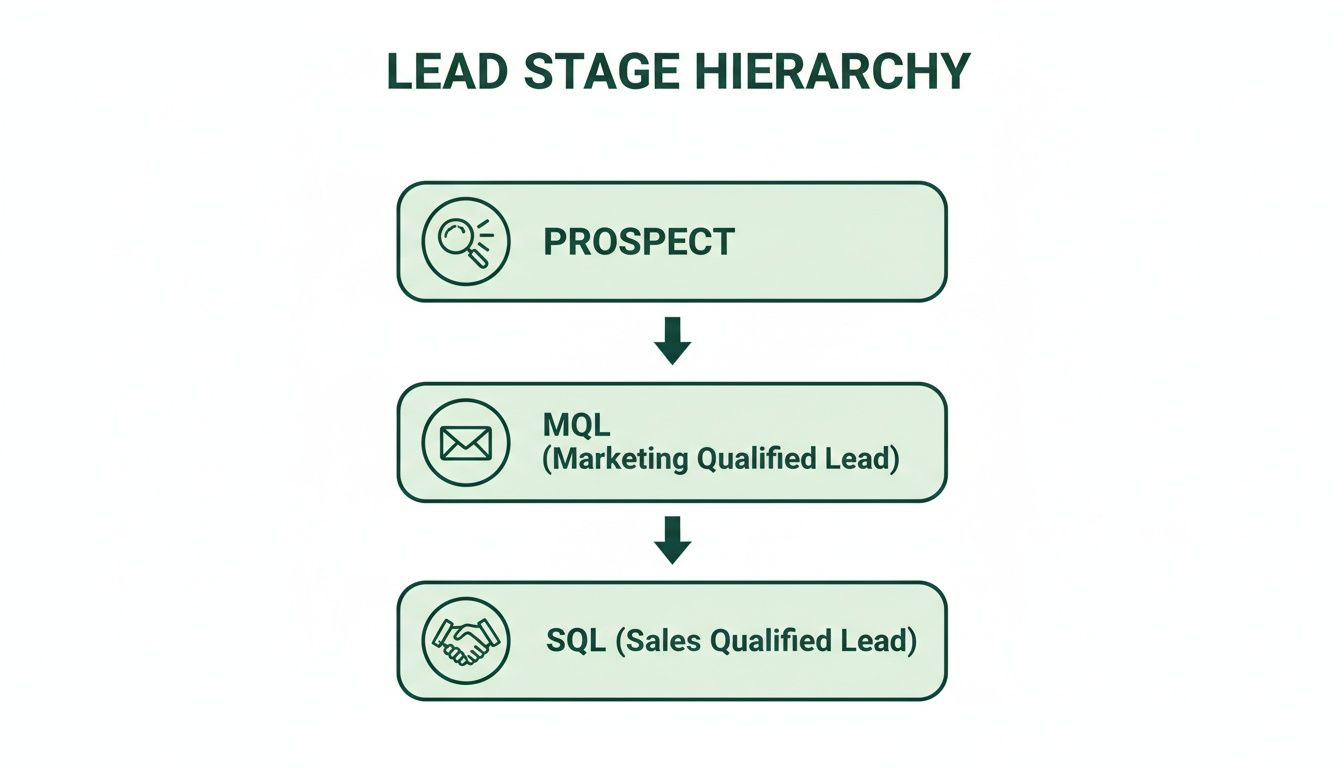
As you can see, the MQL is that critical middle step. It’s the point where marketing has identified real interest, but sales hasn’t yet confirmed they have a true intent to buy.
Explicit vs. Implicit Scoring Data
A good scoring model is built on two types of data: explicit and implicit. You need to understand both to accurately pinpoint your best leads.
Explicit data is the information a lead gives you directly. It’s the hard, factual stuff you get from form submissions and database fields. Think of it as their professional ID card.
- Job Title: A "Director of Marketing" might get +10 points, but a "Student" could get -20 points.
- Company Size: If you sell to businesses with 100-500 employees, a lead from a company that size could earn +15 points.
- Industry: A lead from a target industry like SaaS might get +10 points.
Implicit data, on the other hand, is all about behavior. It’s the digital body language you observe when a lead interacts with your brand. This information is pure gold because it reveals their level of interest and intent. Our guide on how to qualify sales leads dives much deeper into reading these behavioral cues.
Implicit scoring is like being a detective. You’re not just taking their word for it; you're piecing together clues from their actions to understand their true level of interest.
Assigning Points to Actions
Here’s where you bring it all together. A practical lead scoring model assigns point values to specific behaviors, with high-value actions getting more points.
This table shows a simple, yet effective, way to structure your scoring.
Sample Lead Scoring Model
| Scoring Category | Criteria / Action | Points Awarded |
|---|---|---|
| Explicit Data (Demographics) | Job Title: C-Suite/VP | +20 |
| Job Title: Director/Manager | +15 | |
| Company Size: 100-500 Employees | +15 | |
| Industry: Target (e.g., SaaS, FinTech) | +10 | |
| Implicit Data (Behavior) | Requested a Demo | +25 |
| Visited the Pricing Page (3+ times) | +15 | |
| Downloaded a Case Study | +10 | |
| Attended a Webinar | +10 | |
| Subscribed to Newsletter | +2 |
By combining scores from both explicit and implicit data, you can set an MQL threshold. For instance, you might decide that any lead who scores 75 points or more is automatically flagged as an MQL and sent to the sales team.
This data-driven approach takes the guesswork out of the equation. It's how you build a predictable, repeatable engine for generating leads that your sales team will actually love.
Creating a Seamless MQL to SQL Handoff
Defining a Marketing Qualified Lead is a huge first step, but the real test is getting that lead over to the sales team without fumbling the ball. This handoff is where so many great opportunities just evaporate, usually because of a simple lack of speed and clarity. A clunky, manual process creates delays that can kill a deal before it even gets started.
Speed is everything. In major B2B markets where sales cycles can stretch on for an average of 84 days, every single moment is critical. Research consistently shows that companies that contact leads within an hour are a staggering seven times more likely to have a real conversation and get them qualified.
The best way to make sure the transition from MQL to SQL is smooth and fast is to lean on workflow marketing automation. Good automation takes the human error out of the equation, instantly routing a lead to the right sales rep the second they cross that MQL threshold.
Establishing the Rules of Engagement with an SLA
The smartest thing you can do is formalize this whole process with a Service Level Agreement (SLA) between your marketing and sales departments. Think of it as a written agreement that removes any and all guesswork from the handoff. It's the playbook both teams agree to run.
A solid MQL-to-SQL SLA needs to spell out a few things very clearly:
- The exact criteria for an MQL to become an SQL. This could be hitting a certain lead score or taking a high-intent action, like requesting a demo.
- The maximum time sales has to follow up. This should be measured in minutes or hours, never days.
- The minimum number of contact attempts sales needs to make before they can send a lead back to marketing for more nurturing.
- The process for recycling leads that just aren't quite ready to talk sales yet.
An SLA is basically a contract of mutual accountability. It makes sure marketing is sending over quality leads and that sales is jumping on them right away, creating a system that’s both transparent and incredibly efficient.
Equipping Sales with Essential Context
When an MQL finally lands in a sales rep’s lap, they need more than just a name and an email. The handoff has to include all that rich, contextual data marketing has been gathering. This is the intel that lets a rep have a relevant, personalized conversation from the very first hello.
This critical data packet should include:
- The specific content they downloaded (e.g., "eBook on AI for sales").
- Which webinars they actually attended.
- Key pages they visited on your site, like the pricing or case studies pages.
- Any information they volunteered in a form.
Having this context is the difference between a cold call and a warm, informed conversation. It dramatically increases the odds of turning that hard-won Marketing Qualified Lead into an actual paying customer.
Accelerating MQL Generation with EmailScout
Defining a Marketing Qualified Lead and setting up scoring models are crucial first steps, but theory doesn't fill your pipeline. To actually get a steady flow of high-quality MQLs, you have to be proactive and find prospects who fit your Ideal Customer Profile (ICP). This is where you can really put the top of your funnel into overdrive.
The whole thing starts by getting crystal clear on who your best customers are. Once you nail down your ICP, you can jump over to professional networks like LinkedIn and start building a list of people who match that profile—think job titles, company sizes, and industries. This gives you a super-targeted pool of potential leads.
But a list of names is just the beginning. The next move is turning that list into people you can actually talk to.
Find Verified Emails Instantly
This is exactly where the EmailScout Chrome extension becomes your best friend. As you're browsing profiles, you can find verified email addresses with just one click. Forget about spending hours digging around for contact info; you get what you need instantly, which is the fuel for any great lead nurturing campaign.
You can see just how easy it is to grab verified lead information right from your browser.
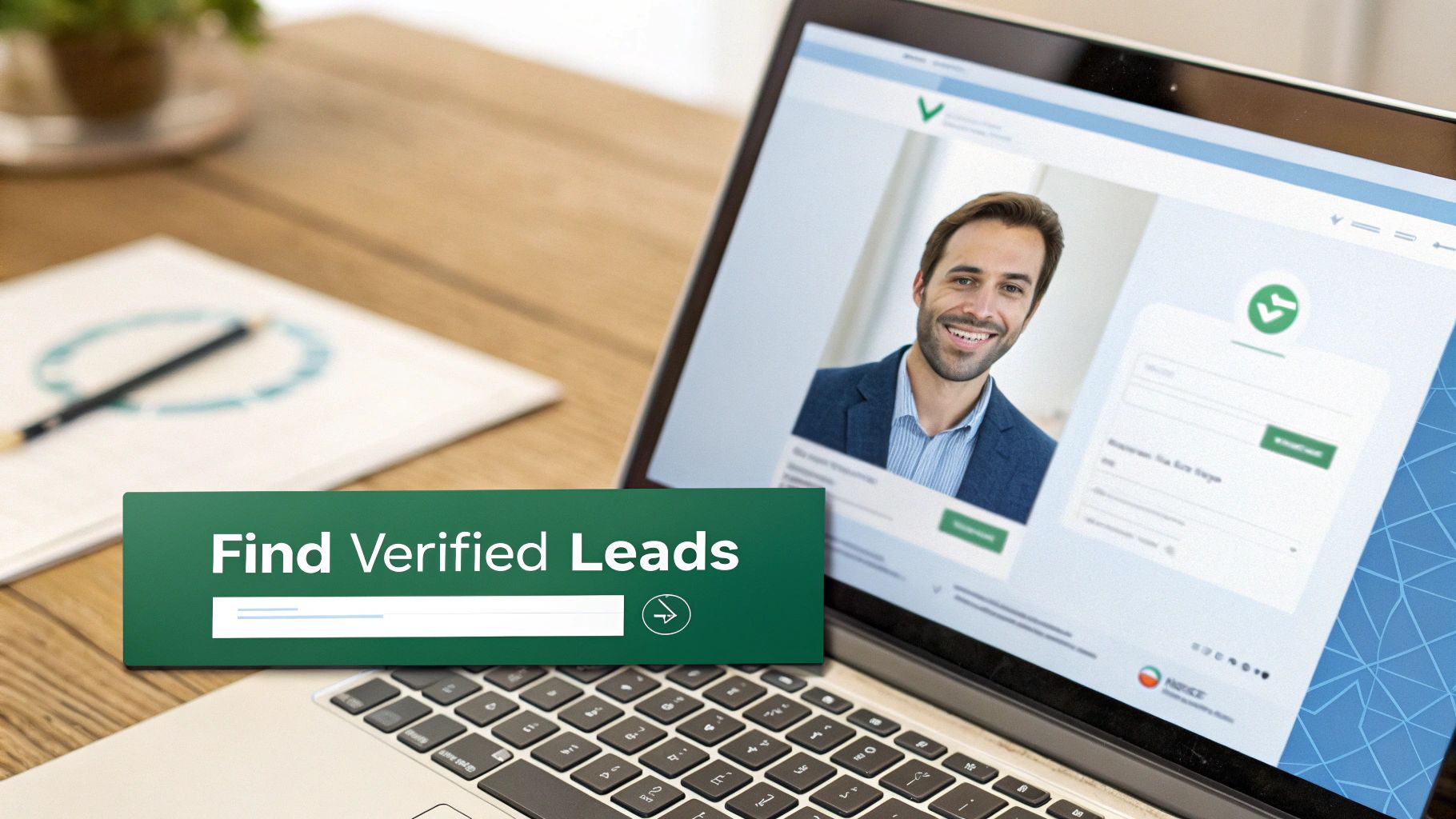
This simple workflow flips prospecting from a slow, grinding task into a lean, efficient lead generation machine.
When you can build lists of ideal prospects this quickly, you give your marketing team a massive head start. They can immediately drop these contacts into targeted email sequences, content funnels, and webinar invites. You can even find business emails for your campaigns using other smart strategies to make your process even sharper.
This whole approach flips the traditional MQL model on its head. Instead of just waiting for leads to wander over to you, you're actively identifying and engaging the exact people you want as customers. That dramatically shortens the path to generating a marketing qualified lead.
At the end of the day, EmailScout provides the critical starting point for any serious MQL strategy. It lets you fill the top of your funnel with precision, making sure your nurturing efforts are spent on prospects who have the best shot at becoming valuable, long-term customers. This targeted approach naturally leads to higher engagement, better qualification rates, and a much more predictable revenue pipeline.
Avoiding Common MQL Program Pitfalls
Getting a Marketing Qualified Lead program off the ground is a huge milestone. But even the sharpest strategies can backfire if you're not watching out for a few common traps. Knowing what to avoid is just as important as knowing what to do, and it’s the key to making sure your MQL engine actually drives growth instead of just creating headaches.
One of the first places people trip up is setting the qualification threshold. It’s a classic Goldilocks problem.
If you set the MQL score too low, you’ll end up firehosing your sales team with lukewarm leads who just aren’t ready for a real conversation. This is a fast way to burn through their time, erode their trust in marketing, and crush morale. But if you set the bar too high, you’ll starve your reps of opportunities and create a pipeline bottleneck that grinds everything to a halt.
Misalignment Between Sales and Marketing
Honestly, the single most destructive pitfall is a disconnect between sales and marketing. When these two teams are stuck in their own silos, they inevitably come up with completely different ideas of what a "good lead" actually is. Marketing ends up celebrating a high MQL count while the sales team is complaining about lead quality. Sound familiar?
This misalignment is almost always the root cause of poor conversion rates. Don't just take my word for it—data from MarketingSherpa shows that a staggering 79% of MQLs never turn into sales. A big reason for this is a broken handoff process caused by that very disconnect. You can discover more insights about MQL statistics to get the full picture.
The fix? You have to get both teams in the same room, regularly. Call it a "smarketing" meeting (sales + marketing) and use that time to:
- Review lead quality: Go over the MQLs you recently passed to sales. Talk openly about which ones converted and, more importantly, which ones didn't and why.
- Refine the MQL definition: Use the real-world feedback from sales to constantly tweak your lead scoring and qualification rules. This isn't a one-and-done task.
- Set shared goals: Get both teams aligned around a single revenue target. Ditch the separate MQL or sales quotas and make everyone responsible for the same bottom-line number.
Neglecting Lead Nurturing
Another massive mistake is giving up on leads who don't quite hit the MQL threshold or get rejected by sales. Just because someone isn't ready to buy right now doesn't mean they're a lost cause. In three or six months, they could be your best customer. Tossing these prospects aside is like throwing future revenue straight into the trash.
A "no for now" from sales should not mean "goodbye forever" from the company. These leads have already shown interest; your job is to keep that interest alive until their timing is right.
Instead of forgetting them, build dedicated nurturing tracks. Send them genuinely helpful content, invite them to your next webinar, and just stay on their radar. By keeping that relationship warm, you make sure that when they are finally ready to talk, your company is the first one they call.
Your MQL Questions, Answered
Even with a solid plan in place, a few common questions always seem to pop up around Marketing Qualified Leads. Let’s tackle them head-on to help you sharpen your strategy and get better results.
How Long Does It Take for an MQL to Become an SQL?
This is a classic "it depends" scenario. The timeline really hinges on your industry and how complex your sales cycle is. For a lot of B2B companies, the journey from MQL to a Sales Qualified Lead (SQL) takes somewhere between 30 to 90 days.
But if you're in high-value enterprise sales, don't be surprised if that stretches to six months or even longer. Those buyers are doing some serious research.
The real key isn’t speed—it’s sustained nurturing. A lead moves on their own timeline. Your job is to stay top-of-mind with great content, so when they’re finally ready to talk, you’re the first one they call.
What Is a Good MQL to SQL Conversion Rate?
A healthy MQL-to-SQL conversion rate usually lands somewhere around 13% to 15% for most B2B industries.
If your rate is dipping below 10%, that's often a red flag. It might mean your MQL criteria are too loose, and you're sending undercooked leads over to the sales team. On the flip side, an unusually high rate could mean your definition is too strict, and you're probably leaving perfectly good opportunities on the table.
What Is the Best Way to Generate More MQLs?
While you should have a few channels working for you, content marketing is an absolute powerhouse for bringing in MQLs. The data shows it generates three times as many leads as old-school marketing tactics, and it costs 62% less to do it. You can read the full research about marketing qualified lead statistics to see the numbers yourself.
By creating genuinely helpful resources—think eBooks, webinars, and detailed blog posts—you naturally attract people who are actively looking for the solutions you provide.
A few other strategies that work wonders are:
- Targeted SEO: Get your site ranking for the exact keywords your ideal customers are typing into Google.
- Personalized Email Marketing: Nurture the contacts you already have with content that speaks directly to their needs and online behavior.
- Social Media Engagement: Don't just post—build a community and share content that pulls people back to your website's lead capture forms.
At the end of the day, a multi-channel approach that delivers consistent value is the most reliable way to keep your pipeline full of high-quality MQLs.
Ready to fill the top of your funnel with high-intent prospects? With EmailScout, you can instantly find verified email addresses for your ideal customers, giving your marketing team the fuel they need to generate a steady stream of MQLs. Start finding unlimited emails for free at https://emailscout.io.