Tag: email templates

  • 7 Proven Credit Acceptance Email Templates for 2026

    7 Proven Credit Acceptance Email Templates for 2026

    A credit acceptance email is more than a simple notification; it's a critical conversion point that can define a new customer relationship. Sending a generic, uninspired approval message is a missed opportunity. The best credit acceptance email strategies don't just inform-they engage, build trust, and drive immediate action. They transform a transactional moment into a relational one, reducing buyer's remorse and accelerating the customer journey from applicant to active user.

    In this guide, we'll dissect 7 powerful credit acceptance email templates, each designed for a specific business scenario. We will move beyond basic structure to analyze the strategic psychology behind each example. You will get actionable takeaways, A/B testing ideas, and compliance tips to help you craft emails that not only get opened but also deliver measurable results.

    Whether you're in B2B finance, e-commerce, or SaaS, these replicable frameworks will help you maximize the value of every approval. You'll learn how to write a credit acceptance email that secures the relationship, encourages immediate use of the approved credit, and sets the stage for long-term customer loyalty and value. Let's get started.

    1. Professional Credit Line Approval Confirmation

    This email is the cornerstone of the B2B credit process. It serves as the official, formal notification that a prospect's application for a credit line has been reviewed and approved. More than just a simple "yes," this credit acceptance email acts as the crucial bridge between a successful application and an activated, revenue-generating account. It's the moment you convert a prospect into a client, making clarity and professionalism paramount.

    This communication is particularly vital for fintech companies, B2B lenders, and SaaS providers offering payment plans. For instance, a fintech platform like Stripe Capital uses this email to confirm that a business now has access to funds, detailing the specific credit limit and repayment terms. Similarly, a trade credit provider sends this confirmation to suppliers, officially greenlighting a new B2B purchasing relationship.

    Example Template & Analysis

    Subject: Action Required: Your Credit Line of $[Credit_Limit] with [Your_Company_Name] is Approved

    Hi [First_Name],

    Great news! Following our review of your application, we are pleased to confirm that your business, [Company_Name], has been approved for a revolving credit line of $[Credit_Limit].

    Your account is ready for activation. To begin using your funds, please log in to your dashboard and accept the terms:

    [Link to Account Dashboard]

    This credit line is active for the next 12 months, with a variable APR starting at [Interest_Rate]%. Please note that this offer must be activated by [Activation_Deadline_Date] to remain valid.

    We are excited to support your business growth. If you have any immediate questions, please reply to this email or visit our FAQ page.

    Best regards,

    The [Your_Company_Name] Team


    Strategic Breakdown

    • Action-Oriented Subject Line: The subject line immediately communicates the good news and the specific credit amount, grabbing the recipient's attention. Including "Action Required" creates a sense of importance.
    • Direct Value Proposition: The opening sentence delivers the approval news without delay, reinforcing a positive outcome.
    • Clear Call-to-Action (CTA): The button-like link to the account dashboard is a clear, single directive. This minimizes friction and guides the user to the next essential step: activation.
    • Urgency and Key Terms: Mentioning the activation deadline and key terms like the APR sets clear expectations and encourages prompt action. For a deeper understanding of how to craft professional and effective emails, you can review some foundational principles on writing a professional email. This helps ensure your tone matches the significance of the message.

    2. Quick-Win Credit Acceptance with Immediate Incentive

    This conversion-focused email capitalizes on the excitement of approval by immediately attaching a time-sensitive incentive. It’s designed not just to inform but to compel a first purchase, transforming a newly approved account into an active, revenue-generating one. This credit acceptance email combines the good news of credit approval with a bonus, creating a powerful psychological nudge that accelerates customer activation and boosts initial order value.

    A laptop on a wooden desk displays a credit card graphic and an 'ACTIVATE BONUS' button, with a card reader nearby.

    This strategy is highly effective for e-commerce, B2B suppliers, and fintech apps. For example, a B2B marketplace like Wayfair Business Credit might offer bonus credit on a new customer's first order to encourage immediate procurement. Likewise, a SaaS company could pair credit approval with an extended premium trial, giving the user a risk-free way to experience the full product suite funded by their new credit line.

    Example Template & Analysis

    Subject: Your [Your_Company_Name] Credit is Approved + Get a 10% Bonus!

    Hi [First_Name],

    Fantastic news! Your credit application with us has been approved, and we’ve unlocked a $[Credit_Limit] line for your business, [Company_Name].

    To celebrate, we're giving you a 10% bonus credit on your first purchase made within the next 7 days.

    Claim Your 10% Bonus Now
    [Link to Start Shopping / Your Dashboard]

    This special offer expires on [Offer_Expiration_Date], so don't miss the chance to get more for your money.

    We look forward to being your trusted partner.

    Cheers,

    The [Your_Company_Name] Team


    Strategic Breakdown

    • Benefit-Driven Subject Line: The subject line pairs the approval news directly with the incentive ("+ Get a 10% Bonus!"), making it irresistible to open.
    • Dual-Value Opening: It immediately confirms the credit limit and introduces the bonus, layering two pieces of good news for maximum positive impact.
    • Action-Oriented CTA: The link text, "Claim Your 10% Bonus Now," focuses on the benefit rather than a generic action like "Login." This frames the next step as gaining a reward.
    • Clear Urgency: Stating the exact expiration date creates a clear and firm deadline. A 7-day window is short enough to drive immediate action without feeling overly pressured. This makes it an ideal credit acceptance email for driving fast conversions.

    3. Relationship-Building Credit Acceptance with Account Manager Assignment

    This approach transforms a standard transaction into the beginning of a long-term partnership. Instead of just delivering good news, this credit acceptance email introduces a dedicated human contact, an account manager, who will serve as the client's guide and advocate. It immediately signals that your company values relationships over simple transactions, positioning the credit line as a tool for mutual growth.

    This strategy is particularly effective for high-value B2B relationships. Enterprise software companies like Salesforce use this model to assign a Customer Success Manager, ensuring a smooth onboarding and adoption process. Likewise, professional services firms can pair credit approval with an introduction to a senior advisor, adding a layer of premium, personalized service from day one.

    Example Template & Analysis

    Subject: Your [Your_Company_Name] Credit Line is Approved + Meet Your Account Manager

    Hi [First_Name],

    Welcome to [Your_Company_Name]! We are thrilled to let you know that your application has been approved for a credit line of $[Credit_Limit].

    To make your experience as seamless as possible, we’ve assigned a dedicated Account Manager, [Account_Manager_Name], to support your business. [Account_Manager_Name] will be your primary contact for any questions and will help you get the most out of our partnership.

    You can schedule a brief 15-minute introductory call with [Account_Manager_Name] here:

    [Link to Account Manager's Calendar]

    In the meantime, you can activate your account by logging into your new dashboard.

    We look forward to helping you achieve your goals.

    Best regards,

    The [Your_Company_Name] Team


    Strategic Breakdown

    • Dual-Purpose Subject Line: The subject line combines the approval news with the introduction of a personal contact. This creates intrigue and highlights the value-add of having a dedicated manager.
    • Immediate Relationship Framing: The email opens by welcoming the client and quickly introduces the account manager. This shifts the focus from a purely financial transaction to a supportive partnership.
    • Low-Friction CTA: Providing a direct calendar link for a short "15-minute" call removes scheduling friction and makes the next step feel easy and manageable. This is a key element of a strong welcome sequence, and you can explore more techniques in our guide to welcome email examples.
    • Personalized Touch: Assigning a named individual makes the interaction feel human and less automated. It assures the new client they won't be just another number in a CRM.

    4. Mobile-First Credit Acceptance with One-Click Activation

    In an increasingly mobile world, this email is designed for speed and simplicity. It’s an optimized credit acceptance email built for smartphones, prioritizing minimal friction and immediate action. The entire experience, from opening the email to activating the credit, is designed to be completed in just a few taps, making it ideal for younger demographics and mobile-first businesses.

    A hand holds a smartphone displaying a green screen with 'One-Click ACTIVATE' and a checkmark.

    This approach is common with modern fintech apps like Chime and Revolut, where the user journey is seamless and app-centric. Buy Now, Pay Later services such as Klarna and Afterpay also depend on this model for instant purchasing power approvals. The goal is to convert approval into activation before the user’s attention moves elsewhere.

    Example Template & Analysis

    Subject: ✅ Your $[Credit_Limit] offer is ready to use!

    Hey [First_Name],

    You're approved! A credit line of $[Credit_Limit] is now available in your [Your_Company_Name] account.

    Tap below to activate it instantly:

    [One-Click Activation Button/Link]

    Once activated, you can start using it right away. This offer is valid until [Activation_Deadline_Date].

    Questions? We’re here to help.

    Cheers,

    The [Your_Company_Name] Team


    Strategic Breakdown

    • Mobile-First Subject Line: The use of an emoji (✅) makes the subject line stand out in a crowded mobile inbox. It immediately signals a positive, successful outcome.
    • Minimalist Body Copy: The email gets straight to the point. Short sentences and generous white space make it easy to scan on a small screen without needing to scroll extensively.
    • Prominent, Single CTA: The large, clear activation button is the undeniable focal point. The copy "Tap below to activate it instantly" is direct and action-oriented, perfectly suited for a mobile user experience.
    • Implicit Urgency: While including a deadline, the primary driver for action is the sheer simplicity of the process. The path of least resistance is to tap the button, which is a powerful psychological nudge. For more on creating effective calls-to-action, exploring different CTA strategies can provide valuable insights.

    5. Educational Credit Acceptance with Usage Guidelines

    This approach transforms a standard credit approval notification into a valuable educational asset. Instead of just confirming the credit line, this credit acceptance email serves as an onboarding tool, teaching customers how to use their new credit responsibly and effectively. By positioning your company as a trusted advisor from the start, you build brand authority and foster long-term loyalty.

    This strategy is particularly effective for companies aiming to empower their customers, not just transact with them. For example, a credit card issuer like Capital One sends guides on responsible spending to new cardholders. Similarly, a B2B supply platform might educate new clients on how to use their trade credit to achieve volume discounts, positioning the credit line as a strategic growth tool.

    Example Template & Analysis

    Subject: Welcome to [Your_Company_Name]! Here's How to Make the Most of Your New Credit Line

    Hi [First_Name],

    Congratulations on your approval for a credit line with [Your_Company_Name]! We are excited to partner with you.

    To help you get started on the right foot, we’ve put together a quick guide on using your new credit to its full potential. Responsible usage can help you build a stronger financial foundation for [Company_Name].

    A few key tips:

    • Understand Your Billing Cycle: Payments are due on the [Day] of each month.
    • Track Your Spending: Use your dashboard to monitor your balance and stay within budget.
    • Aim for Early Payments: Paying early or more than the minimum can positively impact your business's credit profile.

    We're here to support your success. If you have any questions, explore our Merchant Education Center or reply to this email.

    Best regards,

    The [Your_Company_Name] Team


    Strategic Breakdown

    • Value-First Subject Line: The subject line combines a warm welcome with a clear benefit: "Here's How to Make the Most of Your New Credit Line." This immediately frames the email as a helpful resource.
    • Empowering Tone: The opening language focuses on partnership and "getting started on the right foot," establishing a supportive, non-transactional relationship.
    • Rich Media Integration: Embedding a short, educational video provides an engaging and easily digestible format for complex information, catering to visual learners and increasing time spent with the brand.
    • Actionable, Scannable Tips: The bulleted list offers quick, practical advice that is easy to read and apply. This format respects the recipient's time while delivering crucial information. For ongoing communication, ensuring your messages reach the intended recipient is critical; a key first step is to validate an email address before adding it to your nurturing sequences.

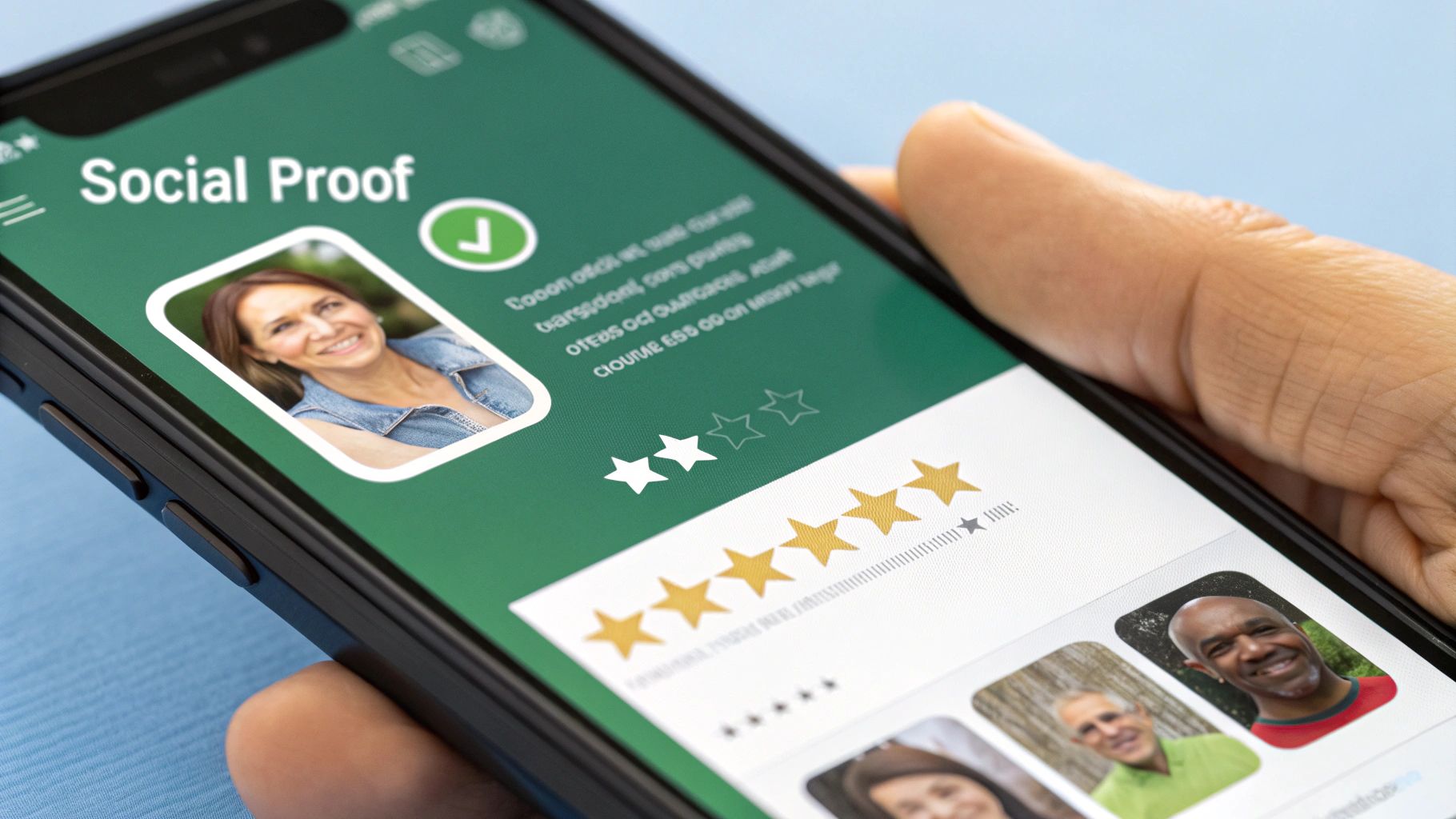
    6. Social Proof Credit Acceptance Featuring Success Stories

    This persuasive email goes beyond a simple approval notice by integrating social proof to build immediate trust and encourage the new client to make their first purchase. By featuring testimonials, case studies, or success metrics, this credit acceptance email validates the client’s decision and reduces any lingering hesitation. It transforms a transactional message into a powerful piece of marketing collateral that welcomes, reassures, and motivates.

    A framed 'CUSTOMER SUCCESS' sign with two gold stars, alongside other decorative frames and a plant on a wooden shelf.

    This strategy is particularly effective for B2B SaaS companies, e-commerce platforms, and fintech services that want to drive activation and initial usage. For example, a SaaS platform might embed a G2 review widget directly in the email. Likewise, an e-commerce platform can highlight best-selling products purchased by other new credit account holders, guiding the user’s first step. It's about showing the client they are joining a successful community.

    Example Template & Analysis

    Subject: Welcome to the Club! Your $[Credit_Limit] Credit Account is Approved

    Hi [First_Name],

    Congratulations! Your application was successful, and we are thrilled to approve a credit account for [Company_Name] with a limit of $[Credit_Limit].

    You’re in great company. Businesses like yours use our credit line to achieve incredible results. Just last month, our clients reported a 25% average increase in inventory turnover.

    "The credit line was a game-changer. We were able to stock up for our peak season without any cash flow stress." – Jane Doe, CEO of a similar company

    To get started, simply accept the terms in your new dashboard:

    [Link to Your Account Dashboard]

    We can't wait to see what you achieve.

    Best regards,

    The [Your_Company_Name] Team


    Strategic Breakdown

    • Inclusive Subject Line: "Welcome to the Club!" creates an immediate sense of belonging and community, which is more engaging than a standard notification.
    • Data-Backed Social Proof: Including a specific, impressive statistic ("25% average increase in inventory turnover") provides tangible evidence of value and helps the new client visualize their own potential success.
    • Relevant Testimonial: The block-quoted testimonial acts as a peer recommendation. Describing the source as a "similar company" makes the story relatable and authentic, reinforcing the message that this is the right choice for them. To effectively integrate customer testimonials, consider various powerful social proof examples that boost conversions for inspiration.
    • Simplified CTA: The call-to-action is straightforward and framed as the final, simple step to join the ranks of other successful customers, minimizing friction and encouraging immediate action.

    7. Compliance-First Credit Acceptance for Regulated Industries

    This is a critically important credit acceptance email designed for businesses operating under strict regulatory oversight, such as financial services, healthcare, and investment platforms. It carefully balances the positive news of approval with the necessity of providing comprehensive legal disclosures and compliance documentation. The goal is to inform the customer of their new credit status while ensuring the communication is legally sound and audit-proof.

    This email is essential for any company where credit approval is governed by regulations like those from the SEC, FDIC, or CFPB. For example, a mortgage lender must present approval terms alongside detailed disclosures required by law. Similarly, healthcare financing providers like CareCredit must clearly outline patient rights and payment obligations. This approach protects both the business and the consumer by prioritizing transparency and legal adherence from the very first interaction.

    Example Template & Analysis

    Subject: Important Information Regarding Your [Product_Name] Account Approval

    Dear [First_Name],

    Congratulations! We have completed the review of your application, and we are pleased to inform you that you have been approved for a [Product_Name] with [Your_Company_Name].

    Summary of Key Terms:

    • Credit Limit: $[Credit_Limit]
    • Annual Percentage Rate (APR): [Interest_Rate]%
    • Account Number (Last 4 Digits): XXXX-XXXX-XXXX-[Last_4_Digits]

    Before you can begin using your account, you must review and acknowledge the following important documents:

    1. Credit Agreement and Terms of Service: [Link to PDF/Secure Page]
    2. Privacy Policy & Your Rights: [Link to PDF/Secure Page]

    Please review these documents carefully. Your use of the account will signify your agreement to these terms. For any questions related to compliance, please contact our support team at [Compliance_Contact_Email/Phone].

    We look forward to serving you.

    Sincerely,

    The [Your_Company_Name] Compliance Team


    Strategic Breakdown

    • Compliance-Focused Subject Line: The subject line uses words like "Important Information" and "Regarding Your Account" to signal a formal, official communication, setting the right tone for a regulated transaction.
    • Structured Disclosure: The email presents key terms in a summarized, easy-to-read format before directing the user to full legal documents. This progressive disclosure makes the information more digestible.
    • Actionable Compliance Links: Instead of a single CTA, it provides clearly labeled links to each required document. This organizes the legal requirements and can be tracked to prove the customer was given access to the information.
    • Dedicated Compliance Contact: Including a specific contact for compliance questions demonstrates transparency and provides a direct channel for legal inquiries, building trust. For businesses in these industries, ensuring your emails adhere to data privacy laws is critical. Understanding regulations like CCPA compliance helps build a trustworthy and legal communication strategy.

    7-Point Credit Acceptance Email Comparison

    Template Implementation complexity Resource requirements Expected outcomes Ideal use cases Key advantages
    Professional Credit Line Approval Confirmation Low–Medium (2–3 hr setup; template + optional CRM) Email template, basic legal review, CRM integration Clear approval, faster activation, fewer follow-ups B2B sales, fintech startups, commercial lending Builds trust, professional onboarding, automatable
    Quick-Win Credit Acceptance with Immediate Incentive Medium (4–6 hr includes incentive structuring) Promotional budget, inventory/control, tracking, segmentation High immediate conversions and revenue spike E‑commerce, SaaS trial conversions, growth startups Urgency-driven conversions, accelerates first purchase
    Relationship-Building Credit Acceptance with Account Manager Assignment Medium–High (5–8 hr workflow & training) Dedicated account managers, CRM, scheduling tools Lower churn, higher LTV, more upsell opportunities Enterprise SaaS, professional services, high‑ticket sales High‑touch onboarding, stronger loyalty, personalized support
    Mobile-First Credit Acceptance with One-Click Activation Medium (3–4 hr responsive build; app linkage) Mobile design, app deep‑links, SMS fallback, testing Faster activation, higher mobile conversion rates Fintech, gig marketplaces, mobile‑first payment platforms Fast, low‑friction UX, reduced abandonment on mobile
    Educational Credit Acceptance with Usage Guidelines High (8–12 hr content creation & design) Content creators, video/webinar assets, resource library Reduced defaults, improved engagement and LTV Fintech building trust, B2B platforms, edtech Educates users, positions brand as advisor, long‑term value
    Social Proof Credit Acceptance Featuring Success Stories Medium (6–10 hr for collection/design) Testimonials, case studies, creative assets, segmentation Increased trust and conversions, reduced buyer's remorse SaaS with strong customers, e‑commerce, lending platforms Validates approval, leverages FOMO, builds credibility
    Compliance-First Credit Acceptance for Regulated Industries High (12–16 hr incl. legal reviews) Legal team review, detailed disclosures, audit logging Regulatory protection, transparent disclosures, lower legal risk Banks, healthcare financing, investment platforms, insurers Mitigates compliance risk, provides audit trail, builds trust

    Turning Your Approval Email into a Strategic Asset

    Throughout this guide, we've deconstructed seven distinct templates, moving far beyond the simple "you're approved" message. The core idea is to reframe the credit acceptance email not as a final step in a transaction, but as the first, critical step in a long-term, profitable customer relationship. A standard notification does its job, but a strategic one builds momentum.

    The examples provided demonstrate that a single email can achieve multiple business goals simultaneously. From assigning a dedicated account manager to build immediate rapport, to including social proof that validates the customer's decision, each element works to deepen the connection. This is your first post-commitment interaction, making it the perfect moment to reinforce your brand's value and set clear expectations.

    From Notification to Opportunity

    The most significant takeaway is that your credit acceptance email is a high-leverage asset. It arrives at a peak moment of customer excitement and trust. Your goal is to capitalize on that positive sentiment.

    Here are the essential action points to remember:

    • Segment Your Approach: A one-size-fits-all email is a missed opportunity. Use the templates as a starting point, tailoring them to different customer segments. A quick-win incentive might be perfect for a B2C customer, while a compliance-first, educational approach is better suited for a regulated B2B industry.
    • Clarify the Next Step: Ambiguity kills momentum. Whether it's "Click to Activate," "Schedule Your Onboarding Call," or "Browse Your Personalized Catalog," your call-to-action must be singular, obvious, and easy to execute.
    • Test and Measure: Don't assume what works. A/B test your subject lines, the placement of your CTA, and the type of value-add you include (e.g., usage guidelines vs. a case study). Track metrics beyond open rates; focus on activation rates and the time to first purchase.

    Building a Foundation for Loyalty

    Mastering the credit acceptance email has a direct impact on customer lifetime value. A well-crafted message reduces buyer's remorse, accelerates product adoption, and makes the customer feel seen and valued from day one. It transforms the approval from a simple line of credit into a genuine business partnership.

    Strategic Insight: The most effective credit acceptance emails make the customer feel smart for choosing you. They confirm the decision was right by immediately delivering value, guidance, and a clear path to success.

    By implementing these strategies, you stop sending simple notifications and start deploying strategic assets. You move from being a mere provider to a proactive partner invested in your customer's success. This shift is what separates forgettable transactions from memorable, long-lasting brand loyalty. Your next approval email is more than just good news; it's your best chance to make a powerful first impression that lasts.


    Before you send that next crucial email, ensure it's going to the right person. EmailScout provides real-time email verification to confirm your contacts are valid, reducing bounce rates and protecting your sender reputation. By cleaning your lists with our API, you guarantee that your perfectly crafted credit acceptance email lands in the correct inbox, every time. Visit EmailScout to improve your deliverability and maximize the impact of every message.

  • 8 High-Converting Email Subject Line for Follow Up Templates for 2026

    8 High-Converting Email Subject Line for Follow Up Templates for 2026

    In the crowded landscape of digital communication, a generic "Checking in" email is destined for the trash folder. The difference between a reply and radio silence often comes down to the first five to seven words your prospect reads: the email subject line for follow up. A well-crafted subject line piques curiosity, establishes relevance, and earns the click that opens the door to a conversation. It's the single most important element determining whether your message is opened or archived without a second thought.

    This comprehensive guide moves beyond obvious advice, providing a strategic arsenal of 8 proven follow-up templates designed for specific scenarios. We will break down the psychology behind each approach, offer actionable examples, and demonstrate how to personalize your outreach for maximum impact. To truly address why your follow-up emails are being ignored and implement effective solutions, it's crucial to understand comprehensive email marketing best practices. Mastering these fundamentals provides the foundation upon which powerful subject lines are built.

    Here, you'll learn not just what to write, but why it works. We’ll explore templates covering everything from gentle reminders and curiosity-driven questions to leveraging social proof and creating urgency. By the end of this article, you will have a clear playbook to transform your follow-up strategy from an afterthought into your most powerful conversion tool. You'll be equipped with specific, actionable subject lines that ensure your messages not only get seen but also get the responses you need to move conversations forward.

    1. The Gentle Reminder with Value Add

    The "Gentle Reminder with Value Add" is a classic yet powerful strategy for a follow-up email. Instead of simply "bumping" the previous message to the top of the inbox, this approach re-engages your contact by offering something genuinely useful. This method shifts the perception of your follow-up from a self-serving nudge to a helpful, thoughtful gesture, making it a highly effective email subject line for follow up communications.

    This technique works because it respects the recipient's busy schedule while demonstrating your continued interest and expertise. By providing an additional resource, insight, or piece of data, you reinforce your value proposition and give them a compelling reason to open your message and reply.

    Why This Approach Is Effective

    This subject line strategy excels in B2B sales and professional networking, where building relationships is as crucial as closing deals. It acknowledges that decision-makers are inundated with emails. A pushy "just checking in" can be easily ignored, but a subject line promising new, relevant information sparks curiosity.

    The key is to frame your follow-up as an act of service. You’re not just asking for a response; you're contributing to their success. This builds goodwill and positions you as a helpful expert rather than just another vendor.

    Subject Line Examples

    Here are a few templates you can adapt:

    • "Quick resource I thought you'd find useful, [Prospect Name]"
    • "Following up: Thought this case study might help"
    • "One more thing I came across for [Company Name]"
    • "A helpful article about [Their Industry Challenge]"

    Actionable Tips for Implementation

    • Personalize the Value: Use a tool like EmailScout to find the prospect's direct email and LinkedIn profile. Research their company's recent announcements or industry trends to find a truly relevant article, case study, or tool to share.
    • Keep It Concise: The subject line should be short and direct. Adhering to the best practices for subject line length, aim for under 50 characters to ensure it's fully visible on mobile devices.
    • Time It Right: Send this follow-up 3-5 days after your initial email. This gives them enough time to have seen your first message without letting the conversation go cold.
    • Focus on Them: The value you add should directly address a pain point or goal you've identified. For example, if you know they're focused on reducing customer churn, send them a report on retention strategies.

    Key Insight: The goal of the value-add is to make the recipient feel like you’re invested in their success, not just in making a sale. This small shift in focus can dramatically increase your reply rates. For more on this, explore these email subject line best practices to master the fundamentals.

    2. The Curiosity-Driven Question Format

    The "Curiosity-Driven Question Format" leverages a powerful psychological trigger to boost open rates. Instead of stating your purpose, you pose a direct and relevant question that piques the recipient's interest. This strategy transforms a standard follow-up into an engaging conversation starter, making it an incredibly effective email subject line for follow up situations where you need to re-capture attention.

    This technique works because human brains are naturally wired to seek answers to questions. An intriguing question in the inbox creates an "information gap" or a "curiosity gap," compelling the recipient to open the email to find the context and, ideally, provide an answer. It immediately shifts the dynamic from a one-way broadcast to a potential two-way dialogue.

    Why This Approach Is Effective

    This subject line is a game-changer for digital marketers and sales professionals, especially in cold outreach sequences. After an initial email goes unanswered, a direct question can cut through the noise far more effectively than a generic "checking in." It feels personal and prompts the recipient to think, which is the first step toward getting a response.

    The key is to ask a question that is both thought-provoking and directly related to the value you can provide. It shows you've done your homework and are genuinely interested in their specific situation, positioning you as a potential problem-solver from the very first interaction.

    Subject Line Examples

    Here are a few templates you can adapt:

    • "Quick question about [Company Name]'s approach to [topic]"
    • "What's your biggest challenge with [industry problem]?"
    • "How are you handling [current trend] at [Company Name]?"
    • "Are you open to exploring [specific opportunity]?"

    Actionable Tips for Implementation

    • Reference Specific Details: Use a tool like EmailScout to find the prospect's direct email and research their company's recent initiatives or their role. A question like, "Quick question about your recent expansion into APAC," is far more compelling than a generic one.
    • Link to Your Value: Ensure the question directly relates to your solution. If you sell SEO services, a great question would be, "How are you preparing for Google's next algorithm update?"
    • Avoid Simple Yes/No: Frame open-ended questions that encourage a more detailed response. Instead of "Are you happy with your software?," try "What's one thing you'd change about your current software?"
    • Time It Right: This follow-up works best 48-72 hours after the initial email. This timing is soon enough to be relevant but gives them space so it doesn't feel like you're pestering them.

    Key Insight: The goal of a curiosity-driven question is to make the recipient pause and think. A well-crafted question demonstrates that you understand their world and makes them want to engage in a conversation, significantly increasing your chances of getting a reply.

    3. The Social Proof and Authority Builder

    The "Social Proof and Authority Builder" is a highly persuasive follow-up strategy that leverages the power of credibility. Instead of just asking for a response, this approach builds immediate trust by showcasing successful results, well-known clients, or industry validation. This technique transforms a standard follow-up into a compelling business case, making it an incredibly effective email subject line for follow up communications, especially in competitive markets.

    This method works by tapping into a core psychological principle: people trust what others are already using and endorsing. When a prospect sees that their peers, competitors, or respected industry leaders are getting value from your solution, it reduces perceived risk and significantly increases their interest in engaging with you.

    A laptop on a wooden desk displays various logos with a prominent green overlay stating 'TRUSTED BY LEADERS'.

    Why This Approach Is Effective

    This subject line strategy is particularly potent for B2B SaaS, enterprise sales, and any service where proven results are a primary decision-making factor. Decision-makers, especially at larger companies, are risk-averse. A subject line that immediately presents evidence of success with a similar company provides a powerful reason to open the email and learn more.

    The key is to present your credibility concisely and directly within the subject line. You’re not just following up; you’re offering proof that you solve real problems for businesses they recognize. This positions you as a low-risk, high-reward partner and a leader in your field.

    Subject Line Examples

    Here are a few templates you can adapt:

    • "How [Competitor] increased their pipeline 40% (case study)"
    • "Following up: We just helped [Well-known Company] achieve [Specific Result]"
    • "Used by leaders like [Brand 1], [Brand 2], and [Brand 3]"
    • "Following up: 3 of your competitors are seeing results with us"

    Actionable Tips for Implementation

    • Identify Relevant Peers: Use a tool like EmailScout to find your prospect's direct contact information and research their company. Identify their key competitors or industry peers to use as social proof.
    • Quantify Your Results: Always include specific, quantifiable metrics in the subject line when possible. "Increased pipeline 40%" is far more compelling than "helped increase pipeline."
    • Get Permission: Before name-dropping clients in your outreach, ensure you have explicit permission to use their name and results in your marketing materials.
    • Target Precisely: Make sure the social proof is highly relevant to the prospect's industry, size, or specific challenge. A case study from an unrelated sector will have little to no impact.

    Key Insight: Social proof shortens the trust-building cycle. By leading with evidence that others have already succeeded with your help, you bypass initial skepticism and move the conversation directly to value. To build this into your initial outreach, you can learn more about how to write cold emails that convert.

    4. The Time-Sensitive and Scarcity-Based Template

    The "Time-Sensitive and Scarcity-Based Template" leverages urgency to prompt an immediate response. By highlighting a limited-time offer, expiring access, or a closing deadline, this approach encourages prospects to act quickly rather than deferring their decision. This makes it a compelling email subject line for follow up when you need to accelerate the sales cycle or re-engage an unresponsive contact.

    This technique is effective because it taps into the psychological principle of loss aversion, the idea that people are more motivated by the fear of missing out than by the prospect of gaining something. A well-crafted scarcity-based subject line can cut through inbox noise by signaling that immediate attention is required to secure a valuable opportunity.

    A clock, books, a pen, and a calendar on a desk with 'LIMITED TIME OFFER' text.

    Why This Approach Is Effective

    This subject line strategy is particularly powerful in sales scenarios where a specific promotion, event, or enrollment period is ending. It creates a clear and legitimate reason for following up and gives the recipient a concrete deadline for action. Instead of a vague "checking in," you are providing crucial information that impacts their ability to benefit from your offer.

    The key to success is authenticity. The scarcity must be real and the deadline firm. Misleading prospects with fake urgency can damage your credibility and lead to high unsubscribe rates. When used ethically, it's a highly effective tool for converting leads who are on the fence.

    Subject Line Examples

    Here are several templates you can adapt:

    • "Last spots available: [Offer] ending Friday"
    • "Your exclusive access expires in 48 hours"
    • "[Resource/Offer] available for [Company Name] through [Date] only"
    • "Only 3 remaining: [Limited offer]"

    Actionable Tips for Implementation

    • Use Genuine Scarcity: Only apply this tactic when there is a real deadline or limited availability. Prospects can easily detect false urgency, which will harm your reputation.
    • Be Specific: Include the actual date or a specific timeframe (e.g., "ending tomorrow," "closes at 5 PM EST") in the subject line to make the deadline feel more tangible and immediate.
    • Segment Your Lists: Use a tool like EmailScout to build segmented lists of prospects who have shown interest but haven't converted. Targeting them with a time-sensitive follow-up is more effective than a broad blast.
    • Use Sparingly: Overusing urgency-based subject lines can lead to email fatigue and may trigger spam filters, impacting your overall deliverability. Save this tactic for truly critical moments in your sales cadence.

    Key Insight: The power of this approach lies in its ability to create a clear "why now" for the recipient. By framing the follow-up around a legitimate deadline, you transform your message from an interruption into a timely and valuable notification.

    5. The Personal Connection and Warm Outreach Bridge

    The "Personal Connection and Warm Outreach Bridge" is a powerful strategy that leverages a shared relationship, experience, or interest to make your follow-up feel familiar and welcome. Instead of a cold touchpoint, this approach immediately establishes common ground, significantly lowering the recipient's guard. It transforms an ordinary message into a relevant conversation, making it a highly effective email subject line for follow up when you need to stand out.

    This technique works by tapping into the principle of social proof and familiarity. A mention of a mutual contact, a shared event, or a common interest instantly makes you more credible and your email more relevant. It signals that you've done your homework and are not just another mass emailer, giving the recipient a compelling reason to engage.

    A smiling woman hands a document to a smiling man in a bright office hallway, suggesting a warm introduction.

    Why This Approach Is Effective

    This subject line strategy is incredibly effective in networking, sales development, and partnership outreach. It closes the gap between a cold email and a warm introduction. When a recipient sees a familiar name or reference, it triggers a sense of obligation and curiosity that a generic subject line simply can't match.

    The key is to make the connection feel genuine and immediate. You are not just name-dropping; you are contextualizing your outreach based on a shared reality. This builds instant rapport and frames your follow-up as a continuation of a pre-existing professional network, rather than an unsolicited interruption.

    Subject Line Examples

    Here are several templates you can adapt:

    • "[Mutual Contact] suggested I reach out"
    • "Following up from our chat at [Event Name]"
    • "I noticed we both follow [Industry Expert] on LinkedIn"
    • "Your colleague, [Colleague's Name], and I were talking about you"

    Actionable Tips for Implementation

    • Find Common Ground: Use EmailScout's URL Explorer to review a prospect's LinkedIn profile or other social media. Look for shared connections, groups, alma maters, or industry influencers they follow.
    • Be Specific and Authentic: Don't just mention a connection; add context. For example, "[Mutual Contact] and I were discussing [Topic], and she mentioned you were the expert."
    • Verify the Connection: Before mentioning a mutual contact, ensure the connection is strong enough to be meaningful. A brief confirmation with the mutual contact can strengthen your approach.
    • Act Quickly: If the connection is from a recent event or introduction, send your follow-up within 48 hours. This ensures the interaction is still fresh in their mind.

    Key Insight: A shared connection is the fastest way to build trust in a cold outreach scenario. It borrows credibility from a known source, making your message feel like a referral rather than a solicitation. To learn more about re-engaging contacts who don't reply, you can review these strategies on how to follow up on an email after no response.

    6. The Soft Re-Engagement and "I May Have Missed You" Template

    The "Soft Re-Engagement" approach is a humble and effective strategy that gives your contact the benefit of the doubt. Instead of assuming they ignored you, this method frames your follow-up as a helpful attempt to resurface a message that likely got lost in a crowded inbox. This polite framing makes it a disarming and successful email subject line for follow up communications, particularly when some time has passed.

    This technique works by lowering the recipient's guard. It acknowledges their busy schedule and removes any potential pressure or guilt associated with not responding. By taking a gentle, understanding tone, you make it easier for them to re-engage with the conversation without feeling like they are being chased or called out.

    Why This Approach Is Effective

    This subject line strategy is perfect for a second or third follow-up, especially after a period of 5-7 days or more of silence. It’s a low-pressure way to bring your original message back to their attention. The humility in phrases like "I may have gotten lost" or "circling back" is relatable and often prompts a courteous response, even if it's just to say the timing isn't right.

    The key is to position yourself as considerate of their workload. You're not demanding an answer; you're simply checking if the original message was seen. This approach preserves the relationship and keeps the door open for future communication, making it a valuable tool in any long-term sales or networking sequence.

    Subject Line Examples

    Here are a few templates you can easily adapt:

    • "Just circling back on this, [Prospect Name]"
    • "I may have gotten lost in your inbox"
    • "Sorry if this slipped through – quick follow-up"
    • "Resurfacing this for [Company Name] when timing is better"

    Actionable Tips for Implementation

    • Time It Strategically: Use this approach for your second or third follow-up, typically 5-7 days after your last email. It's often most effective later in a cadence (e.g., the 4th or 5th touch) when other methods haven't elicited a reply.
    • Keep It Humble and Short: The subject line's power is in its brevity and modest tone. Avoid anything that sounds demanding. The goal is to be respectfully persistent, not pushy.
    • Offer an Alternative: In the email body, consider offering a different way to connect. You could say, "If email isn't best, feel free to connect with me on LinkedIn." Use EmailScout to find their profile link quickly.
    • Introduce a New Angle: While the subject line is soft, the email body can add new value or a slightly different angle to your original proposition. This gives them a fresh reason to consider your offer.

    Key Insight: This approach is rooted in empathy. By assuming the best (that your email was simply missed), you create a positive, no-pressure environment that encourages the recipient to hit "reply" and re-engage.

    7. The Data-Driven and Specific Achievement Template

    The "Data-Driven and Specific Achievement Template" is an advanced strategy that leverages recent, specific accomplishments of your prospect or their company to initiate a follow-up. Instead of a generic check-in, you lead with a timely and relevant observation, proving you've done your homework. This highly personalized approach makes your email subject line for follow up feel less like a sales pitch and more like a well-informed conversation starter.

    This technique is effective because it immediately signals that your message is not a mass email. By referencing a specific funding round, product launch, or award, you connect your outreach to their current reality. It shows genuine interest in their business, which builds rapport and opens the door for a meaningful discussion about how you can contribute to their ongoing success.

    Why This Approach Is Effective

    This subject line strategy is a cornerstone of modern Account-Based Marketing (ABM) and sales development. It's particularly powerful when contacting C-suite executives or key decision-makers who value relevance and efficiency. Mentioning a tangible achievement validates their hard work and grabs their attention far more effectively than a standard follow-up.

    The key is to connect their recent win to your value proposition seamlessly. You're not just congratulating them; you're using their success as a natural bridge to a relevant business conversation. This positions you as a strategic partner who understands their growth trajectory, not just a vendor pushing a product.

    Subject Line Examples

    Here are several templates you can customize:

    • "Congrats on the [Award/Funding] – a quick thought"
    • "Your recent [News/Launch] caught my attention…"
    • "After your [Announcement], I thought of this"
    • "Inspired by [Company]'s recent milestone"

    Actionable Tips for Implementation

    • Set Up Alerts: Use Google Alerts for the company's name and monitor their LinkedIn page for announcements. This ensures your information is timely; reference achievements within two weeks of them happening.
    • Find the Right Contact: After identifying a key announcement, use a tool like EmailScout to find the direct email addresses of the relevant decision-makers involved, such as the Head of Product for a new launch.
    • Bridge to Value: In the email body, explicitly connect their achievement to a challenge or opportunity your solution addresses. For example, "With your recent funding secured for expansion, scaling your support team will be critical…"
    • Cite Your Source: Briefly mention where you saw the news (e.g., "I saw on LinkedIn that…"). This adds a layer of authenticity to your outreach.

    Key Insight: Personalization based on achievement demonstrates effort and relevance at a glance. It tells the recipient, "This email was crafted specifically for you," which is the most powerful way to cut through inbox noise and earn a response.

    8. The Alternative or Next Step Proposal Template

    The "Alternative or Next Step Proposal" template is a psychologically astute strategy that reframes the conversation. Instead of asking a yes-or-no question like "Are you interested?", it presents two or more clear pathways forward, subtly assuming the recipient's engagement. This makes it an incredibly effective email subject line for follow up because it simplifies the decision-making process for your contact.

    This technique is rooted in choice architecture, guiding the recipient toward a positive action rather than leaving the conversation open-ended. By presenting specific, tangible options, you move the dialogue from a question of interest to a question of logistics, significantly increasing the likelihood of getting a concrete next step on the calendar.

    Why This Approach Is Effective

    This subject line strategy works best after some initial engagement has been established, such as a reply to a previous email or a brief interaction. It projects confidence and momentum. By asking "Which works better?" instead of "Does anything work?", you take control of the process and make it easy for the prospect to say yes to one of your suggestions.

    It's a powerful tool for sales development representatives (SDRs) and account executives aiming to convert warm leads into meetings. The approach minimizes cognitive load for the busy professional; they don't have to think about what to do next because you’ve already laid out the most logical options for them.

    Subject Line Examples

    Here are a few templates you can adapt:

    • "Quick call Tuesday or Thursday this week?"
    • "Would a 15-min call or demo work better for you?"
    • "Option A vs. Option B for [Company Name]?"
    • "Following up: quick call or case study first?"

    Actionable Tips for Implementation

    • Qualify First: Use this approach in your second or third follow-up, but only after the prospect has shown some initial interest. It can seem too assumptive if used in a first-touch cold email.
    • Limit the Choices: Offer only two, or at most three, specific options. Providing too many choices can lead to decision paralysis, defeating the purpose of the technique.
    • Be Specific: Make your options clear and distinct. Instead of "sometime next week," offer "Tuesday at 2 PM or Thursday at 10 AM." This removes ambiguity and friction.
    • Tailor the Options: Use a tool like EmailScout to understand the prospect's role. For a technical leader, you might offer a product demo versus a technical deep-dive. For a C-level executive, you might propose a strategic overview call versus a high-level business case.

    Key Insight: The power of this template is in its assumption of continued conversation. You're not asking for permission to proceed; you're collaborating on the best way to do it, which subtly shifts the dynamic in your favor.

    8 Follow-Up Email Subject Lines Comparison

    Template Implementation complexity Resource requirements Expected outcomes Ideal use cases Key advantages
    The Gentle Reminder with Value Add Medium — needs a thoughtful follow-up Moderate — prospect research, small content/resource Better opens and goodwill; slower conversions B2B sales follow-ups to busy decision‑makers Helpful tone increases opens and brand perception
    The Curiosity-Driven Question Format Low–Medium — craft a compelling, relevant question Low–Moderate — targeted research to ensure relevance High open and reply rates; increased engagement Industry-specific outreach, SDRs, digital marketers Generates curiosity-driven replies and high engagement
    The Social Proof and Authority Builder Medium — assemble and present proof carefully High — case studies, testimonials, permissions Strong credibility with executives; boosts trust Enterprise outreach, premium positioning, competitive markets Raises perceived authority and differentiates offering
    The Time-Sensitive and Scarcity-Based Template Low — simple to write but must be precise Low–Moderate — genuine offers, list segmentation Fast responses and quicker decisions; risk if misused Limited-time promotions, closing offers, competitive sales Urgency drives immediate action and conversions
    The Personal Connection and Warm Outreach Bridge High — verify and reference real connections High — network research, LinkedIn verification Higher response and conversion; builds relationships Account-based outreach, partnerships, warm intros Humanizes outreach and significantly improves trust
    The Soft Re-Engagement / "I May Have Missed You" Template Low — brief, polite messaging Low — timing strategy and minimal updates Low-risk reopens; slower conversion recovery Later touches in sequences, low-engagement leads, long gaps Polite, non-pushy reintroduction that preserves reputation
    The Data-Driven and Specific Achievement Template High — requires accurate, timely personalization High — in-depth research tools and time per prospect Very high personalization and engaged replies; limited scale High-value accounts, ABM, executive outreach Demonstrates relevance and effort; strong engagement
    The Alternative or Next Step Proposal Template Low–Medium — prepare clear, relevant options Low — define 2–3 meaningful next steps Higher conversions by reducing decision friction Warm leads, follow-ups after initial interest Moves conversation forward; simplifies decision for prospect

    Putting It All Together: Your Blueprint for Unignorable Follow-Ups

    We've explored a comprehensive arsenal of strategies, moving far beyond generic templates to dissect the psychology behind an effective email subject line for follow up. From the value-packed gentle reminder to the decisive breakup email, the common thread is a relentless focus on the recipient. Your inbox is a battlefield for attention, and winning requires more than just showing up; it demands a strategy built on relevance, personalization, and respect for your prospect's time.

    The eight core templates covered in this guide are not just plug-and-play phrases. They are strategic frameworks. Each one serves a unique purpose, whether it's re-igniting a conversation with a curiosity-driven question or building undeniable credibility with a data-backed achievement. The true power lies not in memorizing these lines, but in understanding why they work and when to deploy them.

    Synthesizing the Core Principles

    Mastering the follow-up is an exercise in strategic empathy. To ensure your messages are opened, read, and acted upon, constantly revisit these foundational pillars:

    • Value Over Volume: Every single email must offer something of value. This could be a new resource, a relevant case study, a helpful insight, or simply a solution tailored to a pain point you've identified. Never send a "just checking in" email without a value-add.
    • Personalization is Paramount: Generic outreach is the fastest path to the trash folder. Reference previous conversations, mention their company's recent achievements, or connect on a personal interest. This is where tools that provide accurate contact and company data become indispensable, forming the bedrock of genuine connection.
    • Clarity and Brevity Reign Supreme: Your subject line must be instantly understandable and compelling. Use strong action verbs, keep it concise (ideally under 50 characters), and ensure it accurately reflects the email's content. A clear, direct subject line respects the reader's time and builds trust.

    Your Actionable Next Steps

    Knowledge without implementation is just potential. To turn these insights into tangible results, commit to the following steps starting today:

    1. Audit Your Current Sequences: Review your existing follow-up templates. Where are you being too generic? Where can you inject more value, curiosity, or personalization based on the templates we've discussed?
    2. Select Two Templates to A/B Test: Don't try to change everything at once. Choose two distinct approaches, like "The Gentle Reminder with Value Add" and "The Curiosity-Driven Question," and run a controlled test on a segment of your audience.
    3. Track Everything: Monitor your open rates, reply rates, and conversion rates for each variation. Data is your most honest feedback. Let the numbers guide your strategy and tell you what resonates most with your prospects.
    4. Build a Personalization Habit: Before sending any follow-up, spend just two minutes researching the person or their company. Find one specific detail you can use to make your outreach stand out. This small investment of time yields disproportionately large returns.

    Ultimately, a powerful email subject line for follow up is the key that unlocks the door to a conversation. It’s your single best chance to cut through the noise and earn a moment of your prospect's attention. By moving from a mindset of "checking in" to one of "adding value," you transform your follow-up process from a tedious task into your most powerful tool for building relationships and driving revenue. The blueprint is now in your hands; it's time to start building.


    Ready to supercharge your personalization efforts? Finding the right decision-maker is the critical first step before you can even write the perfect subject line. EmailScout provides the verified email addresses and company data you need to ensure your message always lands in the right inbox. Stop guessing and start connecting by visiting EmailScout to fuel your outreach strategy today.

  • No Response Follow Up Email Strategies That Work

    No Response Follow Up Email Strategies That Work

    A no response follow up email is your secret weapon for turning radio silence into a real conversation. Think of it as a brief, strategic nudge sent after your first email goes unanswered, designed to gently resurface in your recipient's inbox and dramatically boost your chances of getting a reply.

    Why Your Follow-Up Email Is Your Strongest Tool

    Let's get real for a moment: most first emails are just the opening act. An ignored email isn’t a dead end—it's an opportunity. The modern inbox is an absolute battlefield for attention. With the average professional getting hit with over 120 emails a day, it’s just plain easy for a good message to get buried.

    A smart follow-up acknowledges this reality. Thoughtful persistence isn't annoying; it's genuinely helpful. Decision-makers are busy, and they often welcome a gentle reminder because your first email might have just shown up at the wrong time or slipped through the cracks.

    The Power of Professional Persistence

    Sending a follow-up isn't about being pushy. It’s about being professional. It shows you value the potential connection and are confident in what you’re offering. I like to think of it less as a "reminder" and more as a simple continuation of the conversation.

    The single biggest mistake in outreach is giving up too soon. Silence is rarely a definitive 'no.' More often, it's just a 'not right now.' A well-crafted follow-up is what bridges that gap.

    This simple act of circling back can completely change your engagement rates. The data doesn't lie. Most replies don't come from the first message. In fact, one study I often refer back to found that over 50% of all replies to cold email campaigns were triggered by follow-up emails, not the initial outreach. If you want to dive deeper, learning more about these compelling cold email statistics really drives home the impact of persistence.

    Before we get into the templates, let's look at the numbers and what they mean for your strategy.

    The Impact of Following Up At a Glance

    This table breaks down why a solid follow-up strategy is non-negotiable for anyone serious about outreach. The stats make a clear case for not giving up after one try.

    Metric Key Statistic What This Means For You
    Replies from Follow-Ups 50%+ Over half of your potential conversations are waiting in your follow-ups. Skipping them means leaving the majority of your results on the table.
    Campaign Success Up to 27% reply rate Campaigns with 4-7 follow-ups significantly outperform those with only 1-3. Persistence pays off directly in your reply rates.
    Inbox Overload 120+ emails/day Your first email is easily missed. A follow-up gives you a second (or third) chance to be seen by a busy prospect.
    Giving Up Too Soon 44% of salespeople Nearly half of salespeople give up after just one follow-up, creating a massive opportunity for those who are willing to be more persistent.

    The takeaway here is simple: if you're not following up, you're competing with less than half of your potential.

    This isn’t about just blasting more emails into the void. It’s about building a thoughtful sequence that adds a little more value with each touchpoint. Every follow-up is a fresh chance to:

    • Provide Context: Briefly and politely remind them why you reached out.
    • Offer New Value: Share a relevant article, a quick tip, or a powerful case study.
    • Simplify the Ask: Make your call to action even clearer and easier to act on.

    When you adopt this mindset, you can turn that initial silence into a genuine conversation and massively improve your odds of getting that all-important reply.

    Mastering the Timing and Cadence of Your Follow Ups

    When you send a follow-up is just as crucial as what you write. I’ve seen incredible messages fall flat simply because the timing was off. The real art is finding that sweet spot between being helpfully persistent and just becoming an inbox pest.

    Silence doesn't always mean "no." Sometimes, your email just got buried. Other times, the person saw it but got pulled into a meeting. A well-timed no response follow up email respects their busy schedule while gently popping your message back to the top of their list.

    The Critical First Follow Up Window

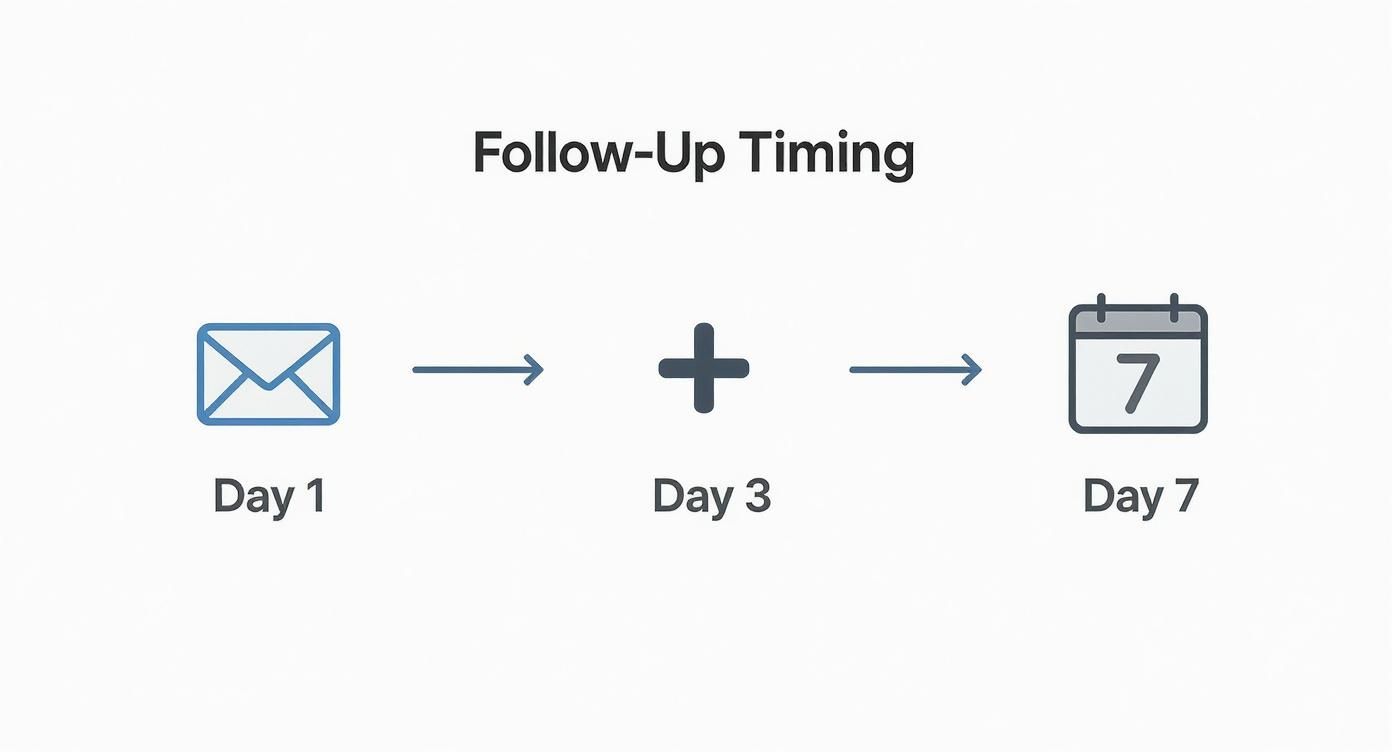
    The timing of your very first follow-up is the most important one. Jump the gun, and you look desperate. Wait too long, and they've already forgotten your original email. Through years of trial and error, I've found the ideal window is 2-3 business days after your initial outreach.

    This short pause gives them enough time to read and process your message without letting it get lost in the digital abyss. It establishes a professional rhythm that says you're on top of things, but not pushy.

    Silence is rarely a hard 'no.' More often, it's a 'not right now.' Your follow-up timing is what helps you determine the difference and stay top-of-mind for when 'right now' happens.

    The data backs this up, too. That little window between emails can make a huge difference. For instance, waiting three days before that first nudge can boost reply rates by a whopping 31%. But if you delay for more than five days, you're looking at a 24% drop in responses. You can dig into more of these fascinating cold email statistics and their impact to see for yourself.

    Building a Professional Follow Up Cadence

    One follow-up is good, but a planned-out sequence is what separates the pros from the amateurs. You need a cadence—a schedule for your follow-up attempts. This keeps you from sending random, one-off messages and makes every touchpoint feel deliberate.

    A rookie mistake is firing off follow-ups too close together. A much better strategy is to gradually increase the time between each email. This approach keeps you on their radar without completely overwhelming them.

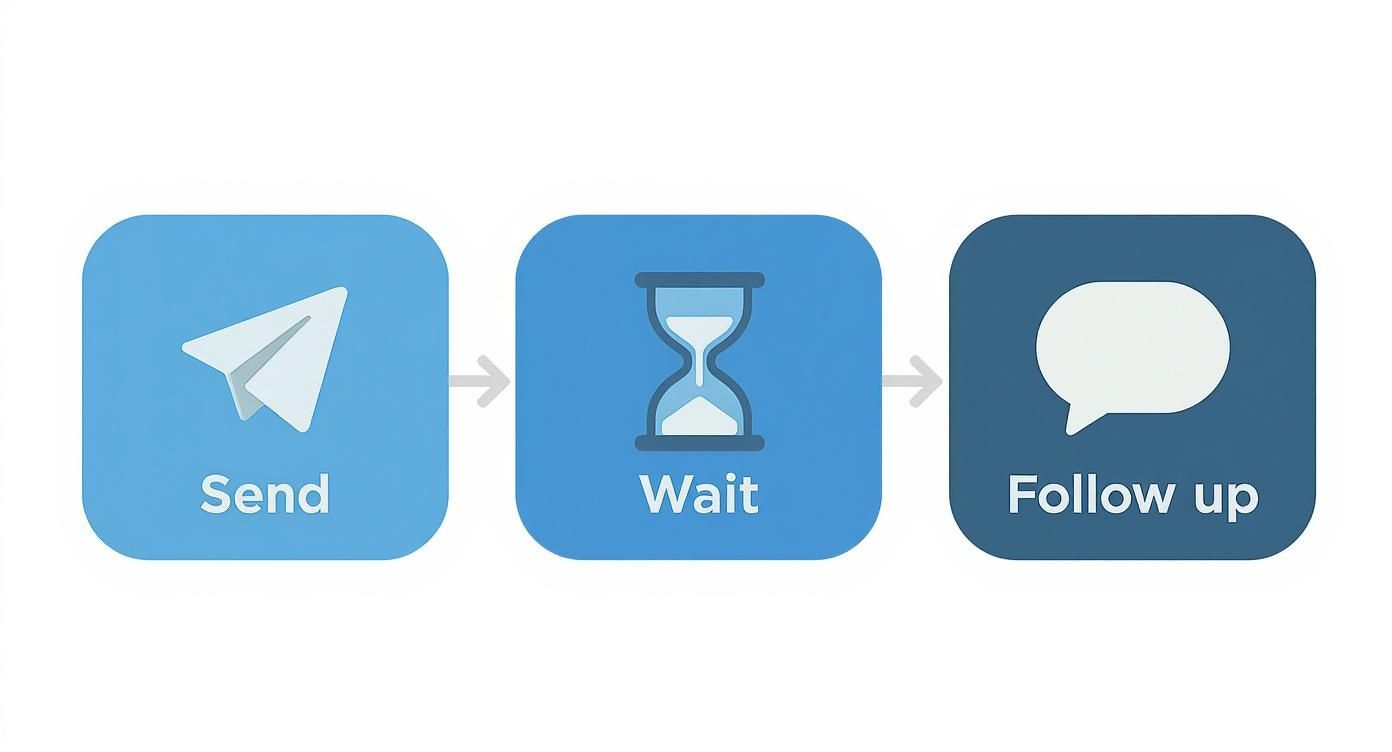
    This simple visual breaks down the core rhythm: send, wait, then follow up.

    An infographic showing a three-step process: Send (paper airplane), Wait (hourglass), and Follow up (speech bubble).

    The key thing to remember is that the 'wait' period isn't just a passive delay; it's an active part of your strategy.

    Here’s a practical, multi-touch cadence that I've seen work wonders for B2B sales and general outreach:

    • Follow-Up 1: Send 3 days after the initial email.
    • Follow-Up 2: Send 5 days after the first follow-up.
    • Follow-Up 3: Send 7 days after the second follow-up.

    If you get radio silence after three attempts, it's usually best to press pause on that sequence. This schedule gives your contact plenty of breathing room while still giving you multiple, well-spaced chances to connect. It strikes that perfect balance, making sure your no response follow up email lands with professional grace every time.

    Field-Tested Follow Up Email Templates That Get Replies

    We’ve all been there. Staring at a sent email, waiting for a reply that never comes. The temptation to just send a generic "just checking in" is strong, but it's also a fast track to the trash folder. Let's ditch that approach.

    To help you get unstuck, I’ve pulled together a few of the exact, field-tested templates I use every day. Think of them less as copy-paste formulas and more as battle-tested frameworks. They’re built on real human psychology to re-engage your prospect without being annoying.

    Of course, the golden rule is to never be generic. A little personalization goes a long way in showing you’ve actually done your homework. Use these templates as your starting point, but always add your own voice.

    A flat lay of a workspace with a laptop, notebook, pen, and a 'FOLLOW UP TEMPLATES' speech bubble.

    Template 1: The Quick Bump

    This is your first move, usually 2-3 days after your initial email goes unanswered. It's designed to be light, polite, and respectful. The whole point is to assume they’re just swamped—because most people are.

    It works because it isn’t demanding. It’s a simple nudge that brings your original message right back to the top of their inbox.

    Subject: Re: [Original Subject Line]

    Hi [First Name],

    Just wanted to quickly follow up on my email about [briefly mention original topic].

    I know how easy it is for things to get buried in a busy inbox. Just wanted to gently bump this to the top for you.

    Best,
    [Your Name]

    This template is all about being low-pressure. It gives them context without making them dig through their inbox, making it super easy to fire back a quick reply. If you need some inspiration for that first email, these https://emailscout.io/cold-email-example/ offer a great look at what actually gets opened.

    Template 2: The Value-Add

    Okay, so the quick bump didn't work. Time for a new tactic. Instead of asking for their time again, you’re going to give them something useful. This move instantly repositions you from a salesperson to a helpful resource. It's a perfect play for your second or third follow-up.

    Subject: A resource for [Their Company Name]

    Hi [First Name],

    Following up on my last note about [original topic].

    I actually came across this [article/case study/report] today and immediately thought it might be relevant to your work on [mention a specific project or goal of theirs]. It has some great insights on how to [achieve a specific positive outcome].

    No reply needed, just thought it might be helpful.

    Cheers,
    [Your Name]

    The real magic here is in its selflessness. By saying "no reply needed," you remove all the pressure, which—paradoxically—often makes people want to reply out of genuine appreciation.

    Template 3: The Breakup Email

    You've sent a few polite, value-driven follow-ups, but you're still hearing crickets. It's time to close the loop with the "breakup" email. This one works surprisingly well because it taps into a powerful psychological trigger called loss aversion.

    By politely signaling you're going to stop contacting them, you create one last chance for them to act if they ever had even a flicker of interest.

    Subject: Closing the loop

    Hi [First Name],

    I've reached out a few times about [original topic] but haven't heard back, so I'll assume this isn't a priority for you at the moment.

    I won't follow up on this again, but please don't hesitate to reach out if things change down the road.

    All the best,
    [Your Name]

    This approach is pure professionalism. It shows you respect their time and inbox, leaving the door open on a positive and memorable note. For more ideas on handling different follow-up situations, check out these 7 Sample Follow-Up Email After No Response Templates.

    Choosing Your No Response Follow Up Email Template

    To make it even clearer, here’s a quick breakdown of when to pull each template out of your toolkit.

    Template Name Best For Key Goal Tone
    The Quick Bump First follow-up (2-3 days after) Gentle reminder & easy reply Polite & brief
    The Value-Add Second or third follow-up Build credibility & offer help Resourceful & generous
    The Breakup Email Final follow-up (after 3-4 attempts) Prompt a final decision Professional & respectful

    Having a few distinct plays like this for your no response follow up email strategy is a game-changer. It lets you create a thoughtful sequence that adapts to the silence, rather than just hitting "send" on the same boring message again and again.

    Common Follow-Up Mistakes That Land You in Spam

    Even a perfectly crafted no response follow up email can misfire and tank your sender reputation if you’re not careful. Let’s be honest, many follow-ups are doomed from the start, loaded with rookie mistakes that get them instantly deleted—or worse, flagged as spam. Avoiding these common traps is just as crucial as knowing what to write in the first place.

    When your email lands in the spam folder, it's not just a wasted effort. It actively hurts your chances of reaching anyone's inbox down the road. The goal is to be persistent without being a pest, and that's a fine line to walk.

    Computer screen displaying 'AVOID SPAM' and an email icon, with crumpled paper on a wooden desk, symbolizing email management.

    Vague Subject Lines and Lazy Language

    Want a one-way ticket to the trash folder? Use a lazy, generic subject line. Phrases like "Just checking in" or "Following up" scream low effort and offer zero value to the person reading it. They give no context and force the recipient to do the mental gymnastics of remembering who you are and what you wanted.

    Just as bad is using passive-aggressive or guilt-tripping language.

    Avoid phrases like, "Just bumping this to the top of your inbox." It can come across as entitled and impatient, which is rarely a good look.

    The solution is simple: always reply in the same thread to keep the conversation history intact. And for your subject line? Add a new piece of information or a clear question to make it worth their while to open.

    The Failure to Personalize and Add Context

    Blasting out a generic, impersonal follow-up is another huge mistake. An email that just repeats the same request without adding anything new feels automated and spammy. You have to remind them of the original context and then give them a fresh angle or a new piece of value.

    It's shocking how few sales pros actually follow up, especially when the data proves it works. Industry benchmarks show that a staggering 48% of reps never even send a second message, and 44% give up after just one attempt. This massive drop-off is a huge opportunity for anyone willing to follow up thoughtfully. You can dig into more of these B2B cold email statistics on martal.ca.

    Here are a few common slip-ups that will absolutely destroy your deliverability:

    • Forgetting Context: You don't reference the original email or your last conversation.
    • No New Value: You're just nagging them with the same ask over and over.
    • Incorrect Contact Info: You're sending messages to outdated or wrong email addresses, causing high bounce rates.

    Ultimately, a massive number of follow-up failures happen before you even hit "send." Blasting emails to unverified addresses is one of the fastest ways to destroy your domain's reputation. We put together a guide on how to verify emails before you start your outreach—it’s a crucial step to protect your deliverability.

    Using EmailScout to Supercharge Your Outreach

    Let's be honest. All the clever templates and perfect timing in the world are completely worthless if your emails just land in a dead inbox. A truly great no response follow up email strategy starts long before you ever write a single word—it begins with a clean, verified list of contacts.

    This is exactly where having the right tool becomes your biggest advantage.

    Plugging a platform like EmailScout into your workflow isn't just a nice-to-have; it's a foundational move to protect your sender reputation and actually get a return on your outreach. Every email sent to an invalid address spikes your bounce rate, which email providers see as a huge red flag.

    Too many bounces will absolutely tank your domain's credibility. Before you know it, even your valid emails struggle to get through. It's the silent killer of so many outreach campaigns.

    Verify Before You Send

    The single most effective way to boost your follow-up success is to guarantee deliverability from the jump. That means verifying every single email address before it ever touches your sequence.

    Using an email verification tool is like basic digital hygiene. It scrubs your list of typos, old contacts, and those tricky catch-all addresses that almost always bounce. This one simple step has a massive impact on your campaign's health and ensures your carefully written messages actually have a chance of being seen by a real decision-maker.

    The EmailScout dashboard gives you a clean, at-a-glance view of this whole process.

    This interface lets you quickly upload lists, check verification results, and manage your contacts without any fuss, making that pre-campaign cleanup dead simple.

    Find Accurate Contact Information

    Beyond just verifying addresses, real success comes from contacting the right person. A follow-up sent to a generic info@company.com inbox is a shot in the dark. One sent directly to the department head? That’s how you start a conversation.

    Your outreach is only as good as your contact data. Spending a few extra minutes to find the direct email of a key decision-maker can be the difference between a closed deal and a deleted email.

    Tools like EmailScout were built to solve this exact problem. They help you pinpoint the correct contacts inside a target company and give you their direct email addresses. If you're looking to build hyper-targeted lists, you can learn more about how to find business emails with precision on our blog.

    When you combine accurate contact discovery with pre-send verification, you create a powerful one-two punch. This ensures your no response follow up email sequence not only dodges the spam folder but lands right in the inbox of the person who can actually say "yes." It's a proactive approach that saves you time, protects your sender score, and dramatically boosts the effectiveness of your entire outreach effort.

    Your Follow-Up Email Questions, Answered

    Even with the best templates, you'll run into situations that feel a bit tricky. When it comes to the no response follow up email, there isn't always a single right answer. This is where experience comes in handy.

    I've rounded up some of the most common questions we get, with practical advice to help you navigate those gray areas and send every follow-up with confidence.

    How Many Follow-Ups Is Too Many?

    Ah, the million-dollar question. While there's no magic number, a good rule of thumb for most cold outreach is 3-5 follow-ups spread out over a few weeks. If you send fewer, you’re probably giving up too soon. Any more than that, and you're venturing into annoyance territory, which is a quick way to get marked as spam.

    The real key, though, is to add value every single time. If all you're doing is sending "just checking in" pings, even two follow-ups will feel like too many. But if each message offers a new resource, a relevant case study, or a fresh insight, a longer sequence can feel helpful and natural.

    A good follow-up sequence shouldn't feel like a countdown. It should feel like a series of helpful nudges. When you run out of genuine value to add, it's time to send the breakup email and close the loop.

    What’s the Best Day and Time to Send a Follow-Up?

    The technically correct answer is "it depends," but we've seen enough data to spot some pretty clear trends. For most B2B communication, the sweet spots are during standard work hours.

    • Best Days: Tuesday, Wednesday, and Thursday consistently win. Mondays are a mad dash of catching up from the weekend, and people are often checked out by Friday afternoon.

    • Best Times: Mid-morning (around 10 AM) and early afternoon (around 2 PM) tend to perform best. This timing helps you avoid the morning inbox tsunami and the end-of-day scramble to wrap things up.

    Of course, use your judgment. Think about your prospect's world. An email to a restaurant owner might land better outside of the lunch and dinner rush, while a contact at a global tech company might be online at all hours.

    Should I Send a New Email or Reply in the Same Thread?

    Always, always, always reply in the same thread. I can't stress this one enough. It's a non-negotiable for sending a no response follow up email.

    Keeping the conversation in one place provides instant context. Your prospect doesn't have to go digging through their inbox to remember who you are or what you were talking about. You're making their life easier, which dramatically boosts your chances of getting a reply.

    Starting a new email for every follow-up shatters the conversational flow. It feels disjointed and, frankly, can come across like a brand new, unsolicited email each time—a surefire way to get ignored or flagged.


    Ready to make sure every follow-up has the best chance of landing in the right inbox? EmailScout helps you find and verify accurate contact information for key decision-makers, so your perfectly crafted messages never go to waste. Start building cleaner, more effective outreach lists today.

  • 6 Powerful Cold Email Example Templates for 2025

    6 Powerful Cold Email Example Templates for 2025

    In a world of overflowing inboxes, the line between a deleted email and a game-changing opportunity is razor-thin. Standard, generic outreach is dead. To succeed, you need more than just a template; you need a strategy. This guide breaks down six battle-tested cold email frameworks designed to cut through the noise and command attention.

    We will move beyond just showing you a cold email example; we'll dissect the psychology behind why they work. Each section offers a deep strategic analysis and actionable takeaways you can apply immediately to your own campaigns. Forget the frustration of sending emails into the void. The difference between a 0.5% reply rate and a 15% reply rate isn't luck, it's the framework.

    This article is your playbook for turning cold outreach into a predictable source of leads and partnerships. You will learn how to structure your message for maximum impact by exploring proven models, including:

    • The Problem-Agitation-Solution (PAS) Formula: Tapping into a prospect's core pain points.
    • The Mutual Connection Referral: Leveraging shared relationships for instant credibility.
    • The Before-After-Bridge (BAB) Method: Painting a clear picture of transformation.
    • The Value-First Teaching Email: Offering immediate insight to build trust.
    • The Personalized Compliment Approach: Using genuine praise to open doors.
    • The Social Proof and Curiosity Email: Creating intrigue with powerful results.

    By the end, you'll have a complete set of tools to craft compelling emails that don't just get opened, they get replies and start meaningful conversations. Let's transform your outreach from a shot in the dark to a predictable pipeline of opportunities.

    1. The Problem-Agitation-Solution (PAS) Cold Email

    The Problem-Agitation-Solution (PAS) framework is a classic copywriting formula that translates with powerful effect into cold email outreach. Instead of leading with your product or service, this approach focuses entirely on the recipient's world. It works by first identifying a highly relevant pain point, then amplifying the negative consequences of that problem, and finally, presenting your solution as the most logical and effective resolution.

    This method is highly effective because it taps into a fundamental psychological trigger: humans are more motivated to avoid pain than to gain pleasure. By first establishing common ground around a shared problem, you build instant rapport and demonstrate that you understand their challenges. This makes your eventual pitch feel less like a sales attempt and more like a helpful suggestion.

    The Strategic Breakdown of PAS

    The PAS framework is more than a simple template; it's a strategic sequence designed to guide a prospect from a state of passive awareness to active interest. It’s a perfect cold email example for audiences who may not be actively searching for a solution but are definitely experiencing the symptoms of a problem.

    • Problem: Start by clearly and concisely stating a specific problem you know your target audience faces. This requires diligent research. For instance, instead of saying "trouble with marketing," a more effective problem statement would be, "Noticing that your e-commerce brand's Cost Per Acquisition on Meta ads has increased by over 30% this quarter?"
    • Agitate: This is where you gently twist the knife. The goal is to connect the problem to real-world, negative business outcomes. This step highlights the consequences of inaction. For example, "This often leads to squeezed profit margins and forces a choice between cutting ad spend or sacrificing profitability, both of which stall growth."
    • Solution: Now, you introduce your product or service as the clear, simple answer. The focus should be on the outcome, not the features. Instead of listing software capabilities, say, "Our clients use our AI-powered ad tool to cut their CPA by an average of 40% in the first 60 days, letting them scale their ad spend profitably."

    Visualizing the PAS Framework

    The power of this framework lies in its logical, step-by-step flow, which guides the prospect's thinking from problem to solution. The following infographic illustrates this simple yet highly effective three-step process.

    Infographic showing key data about The Problem-Agitation-Solution (PAS) Cold Email

    This visualization highlights how each stage builds upon the last, creating a compelling narrative that naturally positions your offer as the hero of the story.

    When to Use the PAS Model

    This model is exceptionally powerful when you have a deep understanding of your ideal customer's pain points. It is particularly well-suited for:

    • Targeting niche industries: When you can identify a specific, pervasive challenge within a particular vertical (e.g., supply chain inefficiencies for manufacturers).
    • Introducing disruptive solutions: If your product solves a problem people have accepted as "the cost of doing business," PAS can reframe it as an urgent, solvable issue.
    • Audiences with clear performance metrics: Roles like HR managers (employee retention rates), marketing heads (ad performance), or operations leaders (efficiency metrics) are perfect for this data-driven approach.

    By focusing on the prospect's pain first, the PAS framework ensures your email earns their attention and positions your solution as an indispensable asset rather than just another product.

    2. The Mutual Connection Referral Email

    The Mutual Connection Referral Email is one of the most effective ways to bypass the "cold" in cold outreach. This approach leverages a shared professional relationship, a mutual acquaintance, or a common background to immediately establish a foundation of trust and credibility. Instead of appearing as a random stranger in the inbox, you arrive with an implicit endorsement from a trusted source, which dramatically increases your chances of getting a positive response.

    This method works because it taps into the power of social proof and referral psychology. A recommendation, even a soft one, from someone the recipient knows and respects, instantly lowers their guard. It’s a powerful strategy that transforms a standard outreach into a warm introduction, making your message feel more like a friendly tip and less like a sales pitch. This makes it an incredibly powerful cold email example for breaking into well-guarded networks.

    The Mutual Connection Referral Email

    The Strategic Breakdown of a Referral Email

    A referral email's success hinges on its ability to quickly and clearly establish the mutual connection and transition smoothly into your reason for reaching out. It's less about a formula and more about leveraging a human connection authentically. This approach is a cornerstone of effective networking and is central to many modern sales prospecting techniques. You can learn more about how this fits into a broader outreach strategy and explore other sales prospecting techniques on emailscout.io.

    • The Opener: Lead immediately with the mutual connection's name in the subject line or the first sentence. For example: "Subject: Introduction via [Mutual Connection's Name]" or "Hi [Prospect Name], [Mutual Connection's Name] suggested I get in touch."
    • Contextualize the Connection: Briefly explain your relationship with the mutual connection. This adds another layer of credibility. A simple line like, "I've been working with Jane on her marketing strategy for the past year," is much more effective than just name-dropping.
    • The Ask: State your purpose clearly and concisely. Since you've already established trust, you can be more direct. For example, "She mentioned you were looking to improve your team's project management workflow, and I had a few ideas I thought would be helpful."

    Visualizing the Referral Framework

    The power of this framework comes from its simplicity and its reliance on a trusted third party to bridge the gap. The following infographic breaks down the core components that make this approach so effective.

    Infographic showing key data about The Mutual Connection Referral Email

    This visualization shows how the mutual connection acts as a critical bridge, turning a cold outreach into a warm, trusted introduction from the very first line.

    When to Use the Referral Model

    This model is your go-to strategy whenever a mutual connection exists, no matter how distant it may seem. It is especially powerful for:

    • High-Value Targets: When trying to reach C-level executives or key decision-makers who have strong gatekeepers and crowded inboxes.
    • B2B Partnerships and Sales: Ideal for forging strategic alliances or selling high-ticket services where trust is a primary decision-making factor.
    • Networking and Career Advancement: Leveraging alumni networks or past colleagues is a classic and highly effective way to open doors for new opportunities.

    Before using this method, always ask your mutual connection for permission to use their name. This not only shows professional courtesy but also gives them a heads-up, strengthening the referral if the prospect decides to verify.

    3. The Before-After-Bridge (BAB) Email

    The Before-After-Bridge (BAB) framework is a powerful storytelling technique that leverages the prospect's aspirations. Instead of focusing solely on pain points, this model paints a vivid picture of two distinct worlds: the prospect's current, less-than-ideal reality (Before) and their desired, successful future (After). Your product or service is then introduced as the simple, direct path connecting these two states (the Bridge).

    This method excels because it taps into the human desire for transformation and progress. By articulating a future state that aligns with the prospect's goals, you shift the conversation from fixing a problem to achieving an ambition. This makes your outreach feel less like a sales pitch and more like a partnership in their success.

    Infographic showing key data about The Before-After-Bridge (BAB) Email

    The Strategic Breakdown of BAB

    The BAB framework guides a prospect on a journey from their current challenges to a future of desired outcomes. It's a fantastic cold email example for services or products that deliver a clear and measurable transformation, making it ideal for inspiring action rather than just solving an immediate issue.

    • Before: Start by describing their current situation in a way that shows you understand their world. Use language and metrics they recognize. For example, "Right now, your team likely spends 10+ hours a week manually reconciling project data across Asana, Slack, and your CRM."
    • After: Paint a picture of what their world could look like. This should be specific, aspirational, and focused on tangible benefits. For instance, "Imagine a world where all that data is automatically synced into a single dashboard, giving you a real-time view of project profitability and freeing up your team to focus on high-value tasks."
    • Bridge: This is where you concisely introduce your solution as the vehicle for this transformation. The key is to present it as the logical link between Before and After. For example, "That's exactly what our integration platform does. We connect your tools in under an hour, creating the unified workflow you're looking for."

    Visualizing the BAB Framework

    The strength of this framework is its clear, linear narrative that appeals to a prospect's ambition. It creates a compelling story where the prospect is the hero and your solution is the tool that enables their triumph. The following infographic illustrates this simple yet highly effective three-step process.

    The Before-After-Bridge (BAB) Email

    This visualization highlights how the framework creates a gap between the prospect's current reality and their potential future, positioning your offer as the essential "bridge" they need to cross it.

    When to Use the BAB Model

    The BAB model is most effective when your solution provides a clear, demonstrable transformation. It's especially well-suited for:

    • Consulting and Coaching Services: When you are selling expertise that leads to personal or business transformation (e.g., a fitness coach helping executives improve their health).
    • SaaS and Technology Products: If your software automates a manual process or provides new capabilities that unlock significant efficiency gains (e.g., workflow optimization).
    • High-Value B2B Services: For offerings that help businesses scale, increase revenue, or fundamentally change how they operate (e.g., a marketing agency promising to double lead generation).

    By focusing on the aspirational 'After' state, the BAB framework turns a simple outreach into an inspiring vision, compelling prospects to learn how you can help them achieve their goals.

    4. The Value-First Teaching Email

    The Value-First Teaching Email flips the traditional sales model on its head. Instead of asking for a meeting or a sale, this approach focuses on providing genuine, actionable value to the recipient with no immediate expectation of reciprocation. It operates on the principle of generosity, establishing your credibility and authority by teaching the prospect something useful about their own industry or challenges.

    This method is highly effective because it immediately changes the dynamic from a sales pitch to a professional consultation. By offering a valuable insight, a new statistic, or a helpful tip, you demonstrate your expertise and build trust before ever mentioning your product or service. The goal is to make the recipient think, "This person really knows what they're talking about."

    The Strategic Breakdown of Value-First

    The Value-First Teaching email is a long-term play, designed to build a relationship and position you as a go-to resource. This cold email example is perfect for winning over skeptical or high-value prospects who are tired of generic sales pitches. It’s about giving before you ask.

    • Lead with an Insight: Start by sharing a valuable piece of information. This could be a new industry trend, a surprising statistic from a recent report, or a common mistake you see others in their role making. For example, "Saw a recent report that B2B SaaS companies using interactive demos in their outreach are seeing a 2x increase in meeting booked rates."
    • Connect it to Their World: Briefly explain why this insight matters specifically to them. Make the connection clear and direct. For example, "Given your role leading sales development at [Company Name], I thought this might be a relevant tactic for hitting your Q4 targets."
    • Offer Without an Ask: The key is to provide the value freely. Instead of asking for a meeting, you simply offer the information. The call-to-action is subtle, often just your name and title, implying that you are the source of this valuable knowledge. A simple closing like, "Hope this helps," is often all that's needed.

    Visualizing the Value-First Framework

    The power of this framework lies in its selfless, educational approach, which builds a foundation of trust and authority before any sales conversation begins.

    This visualization shows how leading with genuine value creates a positive impression, differentiating you from the competition and making future outreach more welcome.

    When to Use the Value-First Model

    This model is a powerful strategy when you are playing the long game and want to establish a reputation as a trusted advisor, not just a vendor. It is particularly well-suited for:

    • Targeting senior executives: High-level decision-makers value their time and appreciate concise, high-impact insights over a hard sell.
    • Complex or high-ticket sales: When the sales cycle is long and requires significant trust and education, this approach lays the perfect groundwork.
    • Highly competitive markets: In a crowded inbox, providing pure value is the best way to stand out and earn the recipient's attention for future conversations.

    By prioritizing the prospect's education over your own sales agenda, the Value-First Teaching email builds a strong foundation of trust that can lead to more meaningful and successful business relationships.

    5. The Personalized Compliment and Insight Email

    The Personalized Compliment and Insight approach is a sophisticated cold email strategy that pivots on genuine, well-researched admiration. Instead of starting with a problem or your product, this method opens with a specific and authentic compliment about the prospect's recent work, an award, a company milestone, or even a insightful piece of content they published. This immediately disarms the recipient, creates a positive emotional connection, and proves you’ve invested time in understanding their world.

    This technique is effective because it moves beyond generic flattery. It demonstrates a high level of personalization and respect, making the recipient more receptive to the subsequent insight or value proposition. By leading with a sincere compliment, you shift the dynamic from a cold pitch to a peer-to-peer conversation, signaling that you are a thoughtful professional, not just another automated sender.

    The Strategic Breakdown of the Compliment and Insight

    This framework is less of a rigid formula and more of an art form, requiring diligent research and a knack for connecting dots. It's an excellent cold email example for high-value targets where a standard template would fall flat. The goal is to build rapport first, then seamlessly bridge that goodwill to a relevant business conversation.

    • Personalized Compliment: Start with a specific, timely, and genuine compliment. Vague praise like "I love your work" is ineffective. Instead, be detailed: "I was impressed with your recent keynote on AI in supply chain management at the XYZ conference, especially your point about predictive analytics reducing spoilage by 15%."
    • Insightful Bridge: This is the crucial transition. You must connect their achievement to a relevant observation or opportunity that you have unique insight into. For example, "Your point on predictive analytics is spot-on. We've seen companies that implement this struggle with data integration from legacy systems, which often caps the potential savings."
    • Solution (The Soft Pitch): Introduce your value proposition not as a hard sell, but as a logical extension of the insight you just shared. Frame it as a way to enhance their success. For example, "We developed a lightweight API that helps companies like yours sync legacy data in real-time, unlocking that full 15% in savings you mentioned."

    Visualizing the Compliment and Insight Framework

    The power of this framework lies in its human-centric, relationship-first approach, which builds a foundation of trust before any business is discussed. The following graphic illustrates how this personalized strategy unfolds.

    The Personalized Compliment and Insight Email

    This visualization shows how a genuine compliment serves as the entry point, leading to a relevant insight that naturally positions your offer as a valuable next step in the prospect's journey. For a deeper dive into the nuances of crafting such messages, you can learn more about how to write effective cold emails on emailscout.io.

    When to Use the Compliment and Insight Model

    This model is a high-effort, high-reward strategy that is best reserved for your most important prospects. It excels in situations such as:

    • Account-Based Marketing (ABM): When targeting key decision-makers at high-value accounts, this level of personalization is almost mandatory to break through the noise.
    • Executive Outreach: C-level executives receive hundreds of emails. A well-researched compliment about a recent funding round, acquisition, or feature in a major publication will stand out.
    • Building Strategic Partnerships: When the goal is collaboration rather than a direct sale, leading with admiration for a potential partner's work sets a collaborative and respectful tone.

    By prioritizing authentic praise and relevant insight, this email strategy shows you're not just trying to sell something; you're trying to build a meaningful business relationship based on mutual respect and value.

    6. The Social Proof and Curiosity Email

    The Social Proof and Curiosity email is a credibility-driven approach that leverages impressive results, customer success stories, or notable client names to build immediate trust. It then pivots to create powerful curiosity, making the prospect wonder how they could achieve similar outcomes. This method combines the psychological principles of social validation and intrigue, proving your value before you even make a direct pitch.

    This technique is effective because it shortcuts the trust-building process. Instead of asking a prospect to believe your claims, you're showing them tangible proof of your success with companies just like theirs. By leading with a specific, impressive result, you frame the conversation around proven value, which dramatically increases the likelihood of getting a response.

    The Strategic Breakdown of Social Proof and Curiosity

    This framework is more than just name-dropping; it’s a strategic sequence designed to make a prospect feel like they are missing out on a proven advantage. This cold email example is ideal for prospects who are motivated by competitive success and tangible, data-backed results.

    • Social Proof: Start with your most compelling, relevant piece of social proof. This should be a specific, metric-driven result achieved for a similar company. For example, "We recently helped [Competitor or Similar Company Name] increase their qualified lead flow by 250% in Q2."
    • Connect and Personalize: Briefly connect this success to the prospect's world. Show them you've done your research and understand their position. A simple line like, "Given your role leading growth at [Prospect's Company], I thought this might be on your radar," works perfectly.
    • Create Curiosity: This is the crucial step. Instead of explaining how you did it, you create a knowledge gap that entices them to reply. Frame the "how" as a unique process or insight. For example, "We accomplished this using a unique 3-step outreach system we developed for B2B SaaS firms."
    • Call to Action (CTA): The CTA should be a low-friction offer to close the curiosity gap. Avoid asking for a 30-minute demo. Instead, offer to share the specific strategy, "Happy to share the one-page strategy brief we used if you're interested."

    Visualizing the Social Proof and Curiosity Framework

    The power of this framework lies in its sequence: prove your value first, then make the prospect curious about the secret behind that value. The following infographic illustrates this effective two-part process.

    This visualization highlights how a strong foundation of proof makes the curiosity-driven CTA almost irresistible, directly impacting your cold email response rate.

    When to Use the Social Proof and Curiosity Model

    This model is exceptionally powerful when you have a library of strong case studies and quantifiable results. It is particularly well-suited for:

    • Competitive Markets: When targeting companies in a competitive industry, showcasing results you achieved for one of their rivals is a powerful motivator.
    • B2B SaaS and Agencies: If you have clear, metric-based results (e.g., increased revenue, reduced costs, improved efficiency), this model provides a perfect showcase.
    • Consulting Services: Consultants can use this to reference successful transformation projects at similar companies, establishing immediate authority and relevance.

    By leading with undeniable proof and then creating an information gap, this email strategy shifts the dynamic from a cold pitch to a valuable insider opportunity.

    Cold Email Strategies Comparison Table

    Email Type Implementation Complexity Resource Requirements Expected Outcomes Ideal Use Cases Key Advantages
    PAS Cold Email Medium Requires problem research 15-25% response rate B2B sales with known industry problems Creates emotional urgency, proven high conversion
    Mutual Connection Referral Email Low to Medium Needs extensive network mapping 30-50% response rate High-value prospects needing trust High open rates, builds immediate credibility
    Before-After-Bridge (BAB) Email Medium Requires understanding goals 18-28% response rate Growth-focused prospects Inspires action via positive future vision
    Value-First Teaching Email High Significant expertise needed 8-15% immediate; higher long-term Complex B2B sales requiring authority Builds trust, positions as thought leader
    Personalized Compliment & Insight Email High Intensive research per prospect 25-40% response rate High-value accounts justifying personalization Creates positive emotional response, highly personal
    Social Proof and Curiosity Email Medium Requires client data and permission 20-35% response rate Prospects benefiting from demonstrated results Builds credibility quickly, drives curiosity

    From Templates to Triumphs: Your Next Steps in Cold Email Mastery

    We have journeyed through a strategic arsenal of six distinct cold email frameworks, moving from the classic Problem-Agitation-Solution model to the curiosity-piquing Social Proof approach. Each cold email example we deconstructed serves not as a rigid script to be copied, but as a flexible blueprint designed for adaptation. The core lesson is this: the most successful outreach is never a one-size-fits-all affair. It’s a calculated, empathetic, and value-driven communication tailored to a specific individual.

    The true power of these templates is unleashed when you stop seeing them as templates and start viewing them as strategic conversation starters. The underlying principles of personalization, value, and relevance are the constants that bridge the gap between your inbox and your prospect's attention.

    Synthesizing the Strategies: From Theory to Action

    The journey from a blank draft to a booked meeting hinges on your ability to internalize the core lessons from each cold email example and apply them dynamically. Let's distill the most critical, cross-functional takeaways that will elevate your entire outreach strategy.

    • Empathy is Your Engine: Every effective framework, from PAS to the Personalized Compliment, is rooted in understanding the prospect's world. Before writing a single word, you must have a clear hypothesis about their challenges, goals, or recent achievements.
    • Value is Your Currency: Whether you're teaching a new concept (Value-First), offering a solution (BAB), or providing social validation (Social Proof), your email must give something of value before you ask for something in return. This builds trust and earns you the right to their time.
    • Specificity is Your Superpower: Vague compliments and generic problem statements are the hallmarks of spam. The difference between an ignored email and a celebrated one often comes down to a single, specific, and well-researched detail that proves you've done your homework.

    Mastering these concepts transforms your cold emailing from a numbers game into a strategic discipline. You’re no longer just sending emails; you’re building bridges, solving problems, and initiating valuable business relationships. The ultimate goal is to make your message feel less like an interruption and more like a welcome, relevant, and timely intervention.

    Your Action Plan for Implementation

    Knowledge without action is merely potential. To turn the insights from each cold email example into tangible results, you need a clear, repeatable process. Here are your next steps to implement what you've learned and start seeing a real impact on your reply rates.

    1. Prospect Persona Deep Dive: Before your next campaign, refine your Ideal Customer Profile (ICP). What are their primary KPIs? What industry news are they reading? What are their biggest professional frustrations right now? Answering these questions is the foundation of effective personalization.
    2. Framework Selection: Review your prospect list. Which framework aligns best with each segment? Is there a strong mutual connection you can leverage? Did their company just achieve something worth complimenting? Match the cold email example to the context for maximum impact.
    3. The "One-Sentence" Personalization Test: For every email you write, challenge yourself to include one sentence that could not possibly apply to any other prospect. This single, hyper-personalized line is often the element that commands a reply.
    4. Track, Test, and Iterate: Don't just send and forget. Track your open rates, reply rates, and conversion rates for each template. A/B test your subject lines and calls to action. Data, not assumptions, should guide the evolution of your outreach strategy.

    By systematically applying these steps, you build a powerful feedback loop. Each campaign becomes an opportunity to learn, refine your approach, and get closer to mastering the art and science of cold outreach. You're not just executing a task; you're building a scalable engine for growth, one thoughtful, strategic email at a time.


    The most brilliant cold email example is useless if it never reaches the right person's inbox. EmailScout eliminates the guesswork by helping you find the verified email addresses of key decision-makers in seconds, directly from their LinkedIn profile or company website. Stop wasting time on research and start building connections with the people who matter by trying EmailScout today.

  • 7 Welcome Email Example Strategies That Work in 2025

    7 Welcome Email Example Strategies That Work in 2025

    The welcome email is your digital handshake. It sets the tone for your entire relationship with a new subscriber, lead, or customer. With average open rates soaring above 80%, this first impression is a critical opportunity you simply cannot afford to waste.

    A generic "thanks for subscribing" no longer makes an impact. To build lasting engagement and convert interest into action, you need a strategy that welcomes, guides, and provides immediate, tangible value from the very first interaction. A strong welcome email doesn't just confirm a subscription; it validates your new contact's decision to connect with you.

    In this comprehensive guide, we move beyond basic templates to dissect seven powerful welcome email example strategies. You will learn the specific tactics behind each approach, from crafting hyper-personalized greetings to building story-driven narratives that forge an instant connection. We will break down what makes each example effective and provide actionable takeaways you can implement immediately.

    Get ready to transform your onboarding process. By the end of this article, you’ll have a clear framework for creating a high-performing welcome email that turns new subscribers into your most loyal advocates.

    1. The Personal Welcome

    The Personal Welcome email is a powerful strategy that moves beyond a generic greeting to create an immediate, one-to-one connection with a new subscriber. This approach leverages user-provided data, such as their name, interests, or signup source, to craft a message that feels uniquely tailored. Instead of a one-size-fits-all template, this welcome email example makes the recipient feel seen and valued from the very first interaction.

    Brands like Netflix and Spotify excel at this. When you sign up for Netflix and select your favorite genres, your welcome email often highlights movies or shows from those exact categories. Similarly, a local gym might send a welcome email that references the specific fitness class you expressed interest in during registration, creating instant relevance.

    Strategic Breakdown

    The core principle is to use personalization to build rapport and demonstrate that you understand the subscriber's needs. This isn't just about using their first name; it's about reflecting their choices back to them, validating their decision to sign up.

    Key Tactic: Collect one or two key pieces of preference data during the signup process. This could be their primary goal, favorite product category, or specific interest. Use this data point immediately in the welcome email to create a "wow" moment.

    The following bar chart visualizes the significant performance uplift seen in personalized welcome emails compared to their generic counterparts.

    Infographic showing key data about The Personal Welcome

    As the data clearly shows, personalization directly boosts engagement metrics while significantly reducing the likelihood of a new subscriber churning out.

    Actionable Takeaways

    • Reference the Signup Source: Mention how they joined your list. For example, "Thanks for signing up after our webinar on content marketing!"
    • Use Dynamic Content: Insert product or content recommendations based on the preferences they shared.
    • Include a Human Touch: Add a photo and a brief note from your founder or a key team member to make the connection more personal.

    This method works exceptionally well for businesses that offer a wide range of products or content, as it helps guide the new user toward the most relevant options immediately. You can find more tips on crafting an effective first message by learning how to write a compelling introductory email.

    2. The Value-Packed Welcome Series

    The Value-Packed Welcome Series is a sophisticated strategy that extends the initial greeting into a multi-part sequence designed to build trust and demonstrate expertise. Instead of a single email, this approach delivers a drip campaign of educational content, exclusive resources, or practical tips over several days. This welcome email example shifts the focus from an immediate sale to nurturing a long-term relationship by providing genuine value upfront.

    Industry leaders like HubSpot and ConvertKit have perfected this model. When you subscribe to HubSpot’s blog, you don't just get a confirmation; you begin a mini-course on inbound marketing. Similarly, ConvertKit offers an email marketing masterclass series, positioning them as an authority and proving their product's value before you ever log in.

    Strategic Breakdown

    The core principle here is to educate and empower the new subscriber, establishing your brand as a credible, helpful resource. This method systematically builds a foundation of trust, making a future sales pitch feel like a natural next step rather than an unwanted intrusion. The sequence is carefully paced to maintain engagement without overwhelming the recipient.

    Key Tactic: Structure your welcome series like a mini-course or a resource library. Plan a clear content theme for each email in the sequence, with each message building upon the last to solve a specific problem for your new subscriber.

    The series format allows you to introduce different facets of your brand, from your educational content to your community and, eventually, your core product. It turns a cold lead into a warm, engaged prospect who understands your value proposition.

    Actionable Takeaways

    • Pace Your Emails: Space your emails 2-3 days apart initially to maintain momentum without flooding their inbox.
    • Focus on a Single CTA: Each email should have one clear call-to-action, such as "Read the Guide" or "Watch the Tutorial."
    • Mix Content Strategically: Blend educational content with soft-sells. For instance, an email teaching a concept can subtly mention how your tool simplifies its execution.

    This method is ideal for SaaS companies, course creators, and service-based businesses whose products require some level of user education. To ensure your valuable content reaches its audience, you can learn more about the importance of email address verification.

    3. The Social Proof Champion

    The Social Proof Champion is a welcome email strategy designed to build instant trust and credibility by showcasing the positive experiences of existing customers. Instead of telling new subscribers how great your brand is, this approach shows them through testimonials, user-generated content, reviews, and community statistics. This welcome email example leverages the powerful psychological principle that people are more likely to adopt a behavior if they see others doing it.

    Brands like Glossier and Peloton master this by integrating authentic customer stories directly into their onboarding. Glossier often features photos of real customers using their products, while Peloton highlights member achievements and impressive community metrics. This immediately validates a new subscriber's decision to join, reducing potential buyer's remorse and building a sense of belonging from day one.

    Infographic showing key data about The Social Proof Champion

    Strategic Breakdown

    The goal of this welcome email is to quell any doubts a new subscriber might have by surrounding them with positive social signals. By presenting evidence that many others have made the same choice and are happy with it, you make the path to conversion feel safer and more compelling. This builds confidence and transforms a new lead into a community member.

    Key Tactic: Feature a specific, relatable customer quote or a powerful statistic in your welcome email. For example, a SaaS company could state, "Join 50,000+ marketers who save 10 hours a week with our tool," to instantly frame the value through the lens of a thriving community.

    As the data illustrates, integrating social proof elements like testimonials and reviews can dramatically increase conversion rates by building trust early in the customer journey.

    Actionable Takeaways

    • Showcase Real Customers: Use authentic photos and quotes from your actual users instead of stock images and generic praise.
    • Highlight Impressive Numbers: Feature statistics like your total number of customers, 5-star reviews, or successful projects completed.
    • Link to Your Community: Include prominent links to your social media channels where new subscribers can see more user-generated content and interaction.

    This method is particularly effective for direct-to-consumer brands, subscription services, and software companies where community and user trust are critical drivers of growth. You can learn more about building this type of community by exploring strategies for customer engagement.

    4. The Interactive Welcome

    The Interactive Welcome email transforms the new subscriber experience from a passive reading session into an active, engaging activity. This strategy embeds interactive elements like quizzes, surveys, polls, or clickable carousels directly into the email, encouraging immediate participation. Instead of just telling subscribers what to do next, this welcome email example invites them to play a role, making the onboarding process more memorable and fun.

    Brands like Stitch Fix and BuzzFeed are masters of this approach. Stitch Fix often integrates a "style quiz" into its welcome flow, gathering crucial preference data from day one. Similarly, BuzzFeed might feature a mini-quiz or poll that reflects its signature content style, turning a simple greeting into a brand-aligned experience that captures user attention.

    The Interactive Welcome

    Strategic Breakdown

    The core principle is to leverage gamification and curiosity to boost engagement and collect valuable zero-party data. By making the interaction simple and rewarding, you lower the barrier to participation and encourage subscribers to share their preferences willingly, which fuels future personalization efforts.

    Key Tactic: Embed a single, high-impact interactive element that aligns with your brand's core value. For an e-commerce brand, this could be a "pick your favorite" image poll; for a SaaS company, it might be a quick survey about their primary goal.

    The goal is to gather data while providing an enjoyable experience, creating a positive feedback loop where subscribers feel understood and are more receptive to future communications.

    Actionable Takeaways

    • Integrate a Simple Quiz: Ask 2-3 fun, multiple-choice questions to help segment your new subscriber immediately.
    • Use Clickable Surveys: Embed a one-click poll or rating scale to gather quick feedback on their interests or expectations.
    • Provide Fallback Options: Always include a simple link to the interactive element on a landing page for email clients that don't support embedded features.

    This method works best for brands aiming to build a deeply personalized user journey from the very first email. While this approach is for warm leads, you can discover different strategies for initial outreach by exploring examples of effective cold emails.

    5. The Exclusive Insider Welcome

    The Exclusive Insider Welcome email transforms a simple subscription into an exclusive membership. This strategy immediately makes new subscribers feel like VIPs by granting them access to special perks, such as early product launches, member-only discounts, or content not available to the general public. This welcome email example is designed to create a powerful sense of belonging and privilege from the very first interaction.

    Brands like Nike and Sephora master this approach. Nike often welcomes new subscribers with a gateway to exclusive product drops on their SNKRS app, while Sephora’s Beauty Insider program immediately offers points and access to special events. These emails don’t just say "welcome"; they say "welcome to the inner circle," which is a far more compelling proposition for a new fan of the brand.

    Strategic Breakdown

    The core principle is to use exclusivity as a value proposition to reinforce the subscriber's decision. By offering something they can't get elsewhere, you instantly increase the perceived value of being on your email list and reduce the likelihood they will unsubscribe. It frames the relationship as a two-way street where their attention is rewarded with tangible, exclusive benefits.

    Key Tactic: Offer a specific, immediate, and exclusive benefit in the welcome email itself. Avoid vague promises of future perks and instead provide instant gratification, such as a link to a hidden sale page or a code for an exclusive discount.

    This approach effectively shifts the dynamic from a passive subscription to an active, privileged membership, encouraging long-term loyalty.

    Actionable Takeaways

    • Create a Sense of Urgency: Combine exclusivity with scarcity. For example, "You have 48-hour early access to our new collection before anyone else."
    • Segment Your Insiders: Create different tiers of exclusivity. A new subscriber might get a 10% discount, while a repeat customer gets invited to a private online event.
    • Clearly State the Benefits: Use a bulleted list to outline all the perks they now receive as an "insider," reinforcing the value of their subscription.

    This method works exceptionally well for e-commerce, fashion, and lifestyle brands where community and status are powerful motivators. By making subscribers feel special, you build a loyal audience that is more likely to engage and purchase. You can learn more about crafting these high-value offers by exploring loyalty program strategies.

    6. The Story-Driven Welcome

    The Story-Driven Welcome email shifts the focus from an immediate sale to building a deep, emotional connection with the new subscriber. This strategy uses compelling narrative to share a brand's origin, mission, or core values. Instead of a standard product-focused message, this welcome email example invites the user into a larger story, making them feel like part of a community with shared beliefs.

    Brands built on a strong ethos, like Patagonia and TOMS Shoes, master this approach. Patagonia’s welcome email often dives into its environmental activism, sharing its mission to save our home planet. Similarly, TOMS uses its first email to explain its one-for-one giving model, instantly aligning the new subscriber with the brand's social impact. This transforms a simple signup into a meaningful affiliation.

    Strategic Breakdown

    The core principle here is to connect with subscribers on a human level by sharing the "why" behind your brand. A powerful story resonates far more than a discount code, building long-term loyalty and turning customers into advocates. It frames their future purchases not just as transactions, but as contributions to a cause they believe in.

    Key Tactic: Identify the single most compelling element of your brand's story, whether it's an origin story, a powerful mission, or a core value. Craft a concise and authentic narrative around that one point to create an immediate emotional hook.

    This approach is particularly effective for mission-driven businesses or brands with a unique founding story that differentiates them in a crowded market. It sets the foundation for a relationship based on shared values rather than just price.

    Actionable Takeaways

    • Focus on the "Why": Clearly articulate your mission or the problem you set out to solve. Let new subscribers feel the passion behind your brand.
    • Show, Don't Just Tell: Use authentic images of your founders, your team in action, or the community you support to make the story more tangible and believable.
    • Connect Your Story to the Customer: Frame your narrative in a way that shows how the subscriber's involvement helps advance the mission. For example, "By joining us, you're now part of the movement to…"

    This method works exceptionally well for brands that want to build a strong, loyal community and differentiate themselves beyond their products or services. It establishes an identity that customers are proud to associate with.

    7. The Quick-Start Guide Welcome

    The Quick-Start Guide Welcome email is a critical onboarding tool for SaaS products, complex services, or any offering with a learning curve. This approach goes beyond a simple greeting to provide new users with a clear, step-by-step roadmap for getting started. By guiding users toward their first "aha!" moment, this welcome email example is designed to reduce friction, boost activation rates, and demonstrate immediate value.

    Companies like Slack, Canva, and Dropbox have perfected this model. Slack’s welcome email famously guides new users to create their first channel and send a message, while Canva provides links to beginner tutorials and popular templates. These emails are structured to help users achieve a quick, meaningful win, which significantly increases their likelihood of becoming long-term, active customers.

    The Quick-Start Guide Welcome

    Strategic Breakdown

    The core principle here is to combat user overwhelm by focusing on the most critical first actions. Instead of listing every feature, you curate a small set of high-impact steps that lead to the product's core value proposition. This builds momentum and user confidence right from the start.

    Key Tactic: Identify the 3-5 essential actions a new user must take to experience your product's value. Structure your welcome email around these steps, using clear calls-to-action, visuals like GIFs or screenshots, and links to short tutorials for each one.

    This video from Notion demonstrates how to structure onboarding to guide users through initial setup and feature discovery, a key principle of the Quick-Start Guide.

    Actionable Takeaways

    • Focus on First Wins: Frame your steps as achievements. For example, use "Create Your First Design" instead of "Learn About Our Editor."
    • Use Visual Aids: Incorporate screenshots, short GIFs, or embedded videos to demonstrate exactly how to complete each step.
    • Set Clear Expectations: Include an estimated time commitment for the initial setup to make it feel more manageable (e.g., "Get started in just 5 minutes!").
    • Offer Further Support: Provide a clear link to a help center, a live demo registration, or a support chat for users who need more assistance.

    This method is indispensable for technology companies and any business where user adoption is tied to understanding how to use the product effectively. It transforms the first interaction from a simple welcome into a productive, value-driven onboarding session.

    Welcome Email Styles Comparison

    Welcome Email Type Implementation Complexity Resource Requirements Expected Outcomes Ideal Use Cases Key Advantages
    The Personal Welcome Medium to High – requires data and variations Robust data collection and management Strong emotional connection, higher engagement Small to medium lists, personalized brands High open rates, personalized experience
    The Value-Packed Welcome Series High – multi-email setup and content creation Significant content development needed Builds trust and authority, long-term engagement Educational brands, content-driven products Educates customers, higher lifetime value
    The Social Proof Champion Medium – requires ongoing testimonial updates Consistent collection of reviews and UGC Builds trust, reduces purchase hesitation Established brands with user base Immediate credibility, reduces buyer anxiety
    The Interactive Welcome High – advanced tech and testing required Advanced ESP, AMP or interactive HTML support Higher engagement, collects data for personalization Brands with tech-savvy audiences Active subscriber engagement, memorable emails
    The Exclusive Insider Welcome Medium – content and offer management Creation of exclusive offers and segmentation Creates value and urgency, drives early purchase Loyalty programs, premium/retail brands Builds loyalty, differentiates brand
    The Story-Driven Welcome Medium – compelling narrative creation Storytelling expertise and authentic content Emotional connection, trust through transparency Mission-driven brands, lifestyle products Builds brand personality and authenticity
    The Quick-Start Guide Welcome Medium – detailed onboarding content Up-to-date tutorials, videos, and support Reduces confusion, accelerates product adoption SaaS, complex product onboarding Faster user success, reduces support requests

    Putting Your Welcome Email Strategy into Action

    We've journeyed through a diverse landscape of high-performing welcome emails, dissecting seven powerful strategies that transform a simple sign-up into a meaningful brand relationship. From the immediate connection of The Personal Welcome to the practical guidance of The Quick-Start Guide, each welcome email example serves a distinct strategic purpose. The core lesson is clear: your first email is not merely a transactional confirmation; it's a strategic first impression that sets the tone for the entire customer lifecycle.

    The most effective approach isn't about copying a template verbatim. It's about understanding the underlying psychology of each strategy and adapting it to your unique brand voice and audience needs. Your goal is to choose the path that best delivers on the promise you made when a user subscribed.

    Synthesizing the Core Strategies

    To bring these concepts together, let's distill the most critical takeaways from the examples we explored:

    • Clarity is Paramount: Whether you're guiding users with a quick-start checklist or telling a compelling brand story, your primary goal must be immediately obvious. A confused subscriber is a lost subscriber.
    • Deliver Value Instantly: The best welcome emails don't just say hello; they provide immediate utility. This could be a discount, a valuable resource, a dose of social proof, or exclusive access.
    • One Email, One Goal: Resist the temptation to ask for everything at once. The Social Proof Champion focuses on building trust, while The Interactive Welcome aims for engagement. Define your primary objective and build the email around that single call to action.
    • Personalization Goes Beyond a Name: True personalization, as seen in The Personal Welcome, uses data to create a relevant, one-to-one experience. It demonstrates that you understand the subscriber's context and needs from the very beginning.

    Your Actionable Next Steps

    Mastering the art of the welcome email is an ongoing process of testing and refinement. Instead of feeling overwhelmed by options, start with a focused, deliberate plan. First, define the single most important feeling or action you want a new subscriber to experience. Is it excitement? Trust? Empowerment?

    Next, select the one welcome email example strategy from this article that aligns most closely with that goal. Don't try to merge multiple concepts at once. If your product has a learning curve, the Quick-Start Guide Welcome is a logical choice. If you're building a community, the Exclusive Insider Welcome will resonate more deeply.

    Finally, commit to measuring performance. Track your open rates, click-through rates, and subsequent conversion actions. This data will be your guide, telling you what's working and where you have opportunities to iterate. Your first version won't be your last. The goal is to build a powerful, automated asset that consistently turns new leads into loyal customers, setting a strong foundation for long-term growth and brand affinity.


    Before you can send the perfect welcome email, you need to be certain you're reaching the right person. EmailScout provides powerful email finding and verification tools to ensure your carefully crafted messages land in the inboxes of key decision-makers, not the spam folder. Build a higher quality list and give your outreach strategy the foundation it needs to succeed by visiting EmailScout today.