Tag: email deliverability

  • Your Guide to the Snovio Email Verifier in 2026

    Your Guide to the Snovio Email Verifier in 2026

    Imagine this: you've spent weeks crafting the perfect outreach campaign, only to watch it fall flat. The culprit? A bad email list. This is where an email verifier comes in, acting as a crucial quality control check to make sure your messages actually land in front of real people. Tools like the Snovio Email Verifier are built to prevent this exact scenario.

    What Is Email Verification and Why It Matters

    Sending an email that never arrives is like mailing a letter to a non-existent address—it’s a total waste of time, effort, and money. At its core, effective email address verification is the simple process of confirming that an email address is valid and can actually receive messages. It’s a foundational step for anyone serious about their sales or marketing.

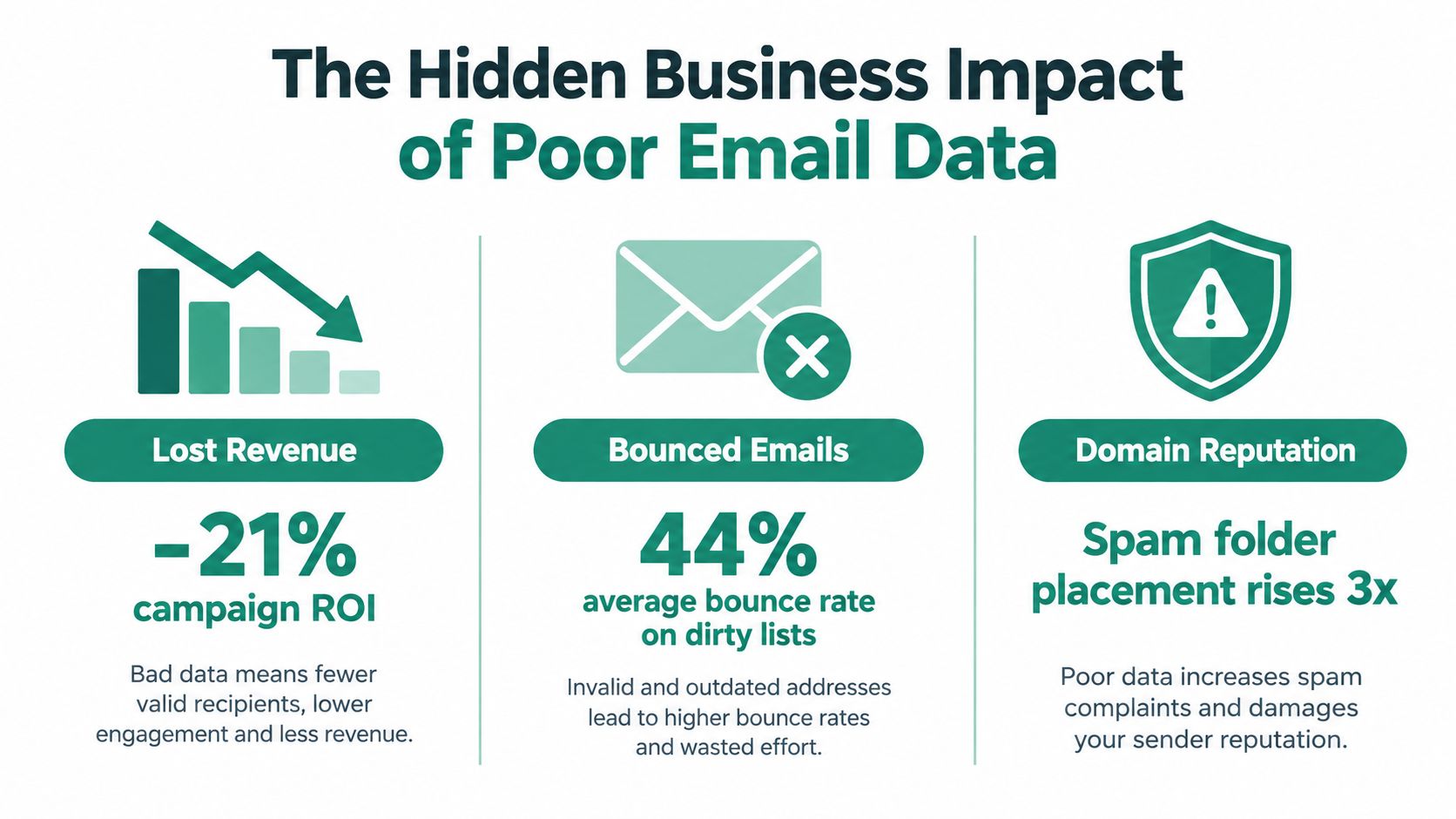
    Without this check, you're just guessing. You risk sending emails to addresses that are misspelled, outdated, or completely fake. This leads directly to a high bounce rate, which is just the percentage of your emails that fail to get delivered. A few bounces might not seem like a big deal, but they add up fast and can crush your sender reputation.

    The Cost of a Dirty Email List

    Internet Service Providers (ISPs) like Gmail and Outlook are always watching your bounce rate. If it's consistently high, they'll start to think you're a spammer. Before you know it, they're flagging your messages or even blocking your entire domain. That means even your legitimate emails to real, interested prospects could end up in the spam folder, never to be seen.

    The consequences are serious. Invalid addresses can cause bounce rates as high as 18-35%, tanking your sender reputation and deliverability. Fixing that damage can take months, which makes proactive verification a non-negotiable part of modern outreach.

    It helps to know what you’re up against. There are two main types of bounces:

    • Hard Bounces: These are permanent failures. The email address is invalid, doesn't exist, or was typed incorrectly. These are the worst offenders and do the most damage to your sender score.
    • Soft Bounces: These are temporary hiccups. Maybe the recipient's inbox is full, their server is down for a bit, or your email is too large. While they're less critical, a pattern of soft bounces can also hurt your reputation over time.

    The Growing Need for Verification

    The simple fact is, keeping a clean email list is no longer optional. This has fueled a massive demand for reliable tools. The global email verification software market is projected to rocket from USD 1.28 billion in 2026 to USD 2.46 billion by 2035. This explosive growth shows just how essential verification has become for any business that wants to protect its sender reputation and get a real return on its campaigns.

    At the end of the day, using a tool like the Snovio Email Verifier isn't just about cleaning up data. It's about protecting your brand, boosting your campaign performance, and making sure your message actually gets heard. For a deeper dive into best practices, this comprehensive guide on how to validate email addresses offers some invaluable insights.

    How the Snovio Email Verifier Actually Works

    So, you've got a list of emails. How does a tool like Snovio’s Email Verifier actually figure out which ones are good, and which ones will just bounce back? It’s not some kind of black magic. It’s a methodical, step-by-step inspection that checks every email's vital signs without ever having to send a single message.

    Think of it like a meticulous quality control line at a factory. Each email address gets put through a series of tests, and it has to pass each one to get a final stamp of approval. Understanding this process is key, because it helps you make sense of the results and build campaigns that actually land in the inbox.

    This process is designed to prevent the exact kind of disaster scenario you see below, where a bad list sinks an entire campaign before it even starts.

    A flowchart illustrating an email outreach failure flow from campaign to bad list to bounces.

    As you can see, a low-quality list is a direct path to deliverability headaches and wasted effort. So let's pull back the curtain and look at the specific checks that prevent this from happening.

    Stage 1: The Syntax Check

    The first checkpoint is the most basic one: the syntax check. This is like a quick spell-check for email addresses. The verifier scans each one to make sure it follows the fundamental rules of email formatting. Does it have an "@" symbol? Is there a domain name with a proper extension like ".com" or ".net"?

    An address like "john.smith@gmail" is going to fail right away because it’s missing the ".com". Likewise, an address with a space, like "john smith@gmail.com", will get flagged and tossed out. It’s a simple first pass, but you’d be surprised how many obvious typos and formatting errors it catches.

    Stage 2: The Domain and MX Record Check

    Once an email gets past the syntax police, the verifier moves on to check its domain—the part after the "@" symbol. It needs to confirm that the domain is real and, more importantly, that it's set up to receive email. This is done by looking for its Mail Exchange (MX) records.

    Think of MX records as the mailing address for a company's email server. If a domain doesn't have MX records, it's like a building without a mailbox. There's simply nowhere for the mail to go.

    For instance, if you're checking info@abccompany.com, the tool will look up the MX records for abccompany.com. If none exist, the server can't receive email, so the address is immediately marked as invalid. This step is a lifesaver for filtering out emails from fake or defunct companies, stopping a hard bounce in its tracks. Most high-quality email validation software excels at this critical check.

    Stage 3: The SMTP Handshake

    This is where the real magic happens. The SMTP handshake is the final, most sophisticated test in the verification process. The tool essentially simulates sending an email right up to the last second, without ever actually delivering it. It's like knocking on the digital door of the recipient's mail server to politely ask if someone is home.

    Here's a simple breakdown of the conversation:

    1. Connection: The verifier opens a line of communication with the recipient's mail server.
    2. Greeting: It introduces itself, acting just like a legitimate mail server would.
    3. Inquiry: It then asks the server, "Hey, do you have an inbox for user@domain.com?"

    The server's response is the moment of truth. If it replies with a clear "Yes, that user exists," the address is marked Valid. If the server says "Nope, no one here by that name," the address is marked Invalid.

    Sometimes, the server plays coy and gives a vague answer. These are often "catch-all" servers that accept all mail, making it impossible to confirm a specific inbox. These addresses are usually flagged as Risky, because their deliverability can't be 100% guaranteed.

    A Deep Dive into Snovio's Features and Pricing

    Digital tablet displaying a 'Features & Pricing' page, on a wooden desk with office supplies.

    Now that we’ve covered how email verification works under the hood, let’s see what the Snovio Email Verifier actually brings to the table. Picking the right tool always comes down to your unique needs, budget, and daily workflow. Snovio markets itself as a complete outreach platform, and its verifier is a huge piece of that puzzle.

    Snovio gives you a few different ways to verify emails, designed for everything from a quick one-off check to cleaning massive lists. This flexibility is a big part of its appeal, making it a solid choice for freelancers, small businesses, and even large enterprise teams.

    Core Verification Features

    The Snovio platform is more than just a single tool; it gives you multiple ways to scrub your contact data. Each method is built for a specific job, so you can easily fit verification into your existing process.

    The Snovio Email Verifier offers several core functionalities, each tailored to different verification needs.

    Snovio Email Verifier Feature Breakdown
    Feature Description Best For
    Single Email Verification Instantly checks the validity of one email address pasted into the tool. Sales reps needing to confirm a high-value lead before outreach.
    Bulk Email Verification Processes an entire list of contacts from an uploaded file (.csv, .xls, .xlsx, or .txt). Marketers cleaning an old email list or validating a new one before a campaign.
    API Verification Integrates directly into your apps or forms to check emails in real-time as they are entered. Businesses wanting to block bad data at the source on sign-up or contact forms.

    This breakdown shows how Snovio provides the right tool for the right situation, whether you're cleaning an old database or building a new one from scratch. While Snovio is a strong contender, it's always good to know what else is out there, like how to integrate Briteverify into your marketing stack.

    How Snovio's Pricing Works

    Snovio uses a credit-based system, which is pretty standard in this space. Instead of paying for each verification, you buy a monthly plan that gives you a certain number of credits. These credits are universal and can be used across all of Snovio’s tools, from its email finder to its drip campaigns.

    The most important thing to know is that one credit equals one email verification. This straightforward 1:1 ratio makes it super easy to figure out your usage and pick the right plan.

    Snovio has several plans, including a free one that gives you a small number of credits each month. This is perfect for trying out the platform or for users who only have a few emails to check. From there, the paid plans scale up, giving you more credits and extra features like team seats and better integration options.

    The email verification market is booming, expected to grow from just under USD 500 million in 2026 to a staggering USD 1,278.47 million by 2035. This huge jump shows just how critical these tools have become for avoiding the 35% bounce spikes that dirty data can cause.

    If you’re just getting started and want to see how Snovio’s free plan stacks up against others, check out our guide to the best free email verification tools.

    How Accurate is Snovio's Verifier?

    Accuracy is everything when it comes to an email verifier. Snovio advertises a high accuracy rate, which it backs up with a multi-step process that includes the syntax checks, domain analysis, and SMTP handshakes we talked about earlier.

    Snovio’s tool gives you a clear and simple result for every email address:

    • Valid: The email address is real, and it's safe to send to.
    • Risky (Unverifiable): The email server has a "catch-all" setting, which means it accepts mail for any address at that domain. You can't be 100% sure the specific user exists, so there’s a higher risk of a bounce.
    • Invalid: The email is fake, has a typo, or the domain is no longer active. Sending to this will guarantee a hard bounce.

    By sorting your list into these simple categories, the Snovio Email Verifier helps you make smart decisions. You can protect your sender reputation, improve your deliverability, and make sure your outreach campaigns actually land in the inbox.

    Using Snovio in Your Daily Workflow

    A person types on a laptop displaying 'Clean Lists Daily' and an email icon, alongside a monitor with checked lists.

    Knowing a tool's features is one thing, but the real magic happens when you see it in action. Integrating the Snovio Email Verifier into your daily work isn't just about cleaning a list now and then. It’s about building a solid process that keeps your sender reputation safe and makes your outreach as effective as possible. Think of it as a proactive strategy, not a reactive fix.

    Let's step away from the technical specs and look at how real professionals are using Snovio to get actual results. These examples show how a simple verification tool can turn into a powerful asset for growth when you know how to use it.

    The Sales Lead Prepping a Campaign

    Meet Alex, a sales lead who runs cold outreach campaigns with his team every single week. Before they started using Snovio, their bounce rates were a constant nightmare, often getting their email accounts temporarily blocked. Now, verification is a non-negotiable first step for every campaign.

    Here’s Alex’s simple but effective workflow:

    1. List Compilation: The team pulls together a prospect list from different sources.
    2. Bulk Verification: Alex uploads the entire list to the Snovio Email Verifier for a bulk check.
    3. Segmentation: He then filters the results. All Invalid emails are immediately removed, and the Risky ones are set aside for a separate, lower-priority campaign.
    4. Campaign Launch: The main outreach only goes to Valid addresses, guaranteeing maximum deliverability and almost no bounces.

    By following this process, Alex not only protects his team's sender score but also makes sure their carefully crafted messages actually land in front of the right people.

    The Marketer Protecting the Database

    Now, let’s look at Maria. She's a digital marketer in charge of growing her company's newsletter. New subscribers sign up every day, but typos and fake emails were polluting her database and throwing off her engagement stats. Her solution was to automate verification right at the source.

    Maria uses Snovio’s API to plug the verifier directly into her website's sign-up form. When someone types in their email, it’s checked instantly in the background. If the email is invalid, a polite message pops up asking the user to double-check it for typos.

    This real-time verification acts as a gatekeeper, ensuring that only clean, deliverable emails enter her marketing database from day one. It keeps her list pristine, her open rates high, and her analytics accurate.

    The Founder Maximizing Outreach ROI

    Finally, there's Sam, a startup founder who just bought a lead list to get his sales efforts off the ground. That list was a big investment, and he couldn't afford to waste a dime on dead-end contacts. Before sending a single email, he ran the entire list through Snovio’s bulk verifier.

    The results gave him a crystal-clear picture of the list's quality. He was able to scrub thousands of invalid contacts right away, which instantly boosted the ROI on his purchase. For sales teams and marketers, slashing bounce rates is the name of the game in cold emailing, and a reliable Snovio email verifier delivers real, measurable wins.

    Market data shows that verification tools can cut bounce rates by 18% to 35% and reduce spam complaints by nearly 12%. For a founder like Sam, those numbers translate to a much more efficient and cost-effective path to growth. You can dig into these industry trends and see how the market is projected to hit USD 26,500 million by 2032 in this email verification software market analysis.

    How EmailScout Complements Your Outreach Strategy

    While an amazing tool like the Snovio Email Verifier is a must-have for keeping your lists clean, it really only solves half of the outreach puzzle. A perfectly validated list is worthless if it's empty. Before you can even think about verification, you have to find people to contact—and that's exactly where EmailScout comes in.

    Think of it like this: EmailScout is your prospecting machine, and an email verifier is your quality control inspector. They aren’t competitors at all; they’re partners that complete your outreach workflow. The process always starts with generation, moves to validation, and ends with outreach.

    EmailScout was built from the ground up to handle that critical first step: finding the people you need to talk to. It's designed to build massive lead lists quickly, giving you the raw materials to fuel your sales and marketing engines.

    Building Your Lead Pipeline with EmailScout

    EmailScout runs on a simple but powerful idea: make lead generation easy and accessible for everyone. The main tool is a simple Chrome extension that does the heavy lifting while you browse the web. You can visit a company’s website, a LinkedIn profile, or an online directory, and with a single click, find the email addresses of key decision-makers.

    This reveals a fundamental difference in focus when you compare it to the Snovio Email Verifier. While Snovio’s power lies in analyzing an existing list, EmailScout’s strength is in creating that list from thin air.

    The synergy is obvious. You use EmailScout to generate a huge volume of potential leads at scale, often for free. Then, you run that brand-new list through a verifier to get it primed for high-deliverability outreach.

    This two-step process means you can build ambitious campaigns without being held back by the cost of finding new contacts. EmailScout’s free plan offers unlimited email finding, empowering you to build the biggest list possible before you spend a dime on verification credits.

    EmailScout's Tools for Effortless Lead Generation

    To help you build lists at scale, EmailScout provides a few key features designed for pure efficiency. These tools work together to turn prospecting from a mind-numbing manual chore into a simple background process.

    Here are the core parts of the EmailScout platform:

    • Chrome Extension: The main engine that finds emails on any website you visit. It's built for simplicity, so you can grab contacts without breaking your flow.
    • URL Explorer: This powerful feature lets you paste a list of website URLs and pull all available emails from them in one go. It’s perfect for prospecting a batch of target companies fast.
    • AutoSave: As you browse, this feature can automatically find and save contacts in the background. It builds your lead list for you without you even having to click a button.

    These features are all pointed toward a single goal: helping you find as many relevant contacts as you can, as quickly as possible.

    To make the distinction crystal clear, this table shows how EmailScout and Snovio fit into your strategy.

    EmailScout vs. Snovio Platform Focus

    Aspect EmailScout Snovio
    Primary Function Lead Generation (Finding Emails) List Hygiene (Verifying Emails)
    Core Benefit Build large prospect lists for free Clean existing lists to improve deliverability
    Ideal Workflow Stage Top-of-funnel prospecting Mid-funnel campaign preparation

    Once you understand this difference, you can build a much more powerful and cost-effective outreach machine. Start with EmailScout to generate a massive, targeted list of potential leads. After you have your raw list, run it through a trusted service like the Snovio Email Verifier to scrub it clean, making sure every single email you send has the best possible chance of landing in the inbox.

    Frequently Asked Questions About Email Verification

    As you start using tools like the Snovio Email Verifier, you’ll naturally run into some specific questions. The world of email verification has its own lingo and best practices, and getting these details right can be the difference between a good campaign and a great one. Think of this as your go-to guide for clearing up any lingering confusion.

    We're going to tackle some of the most common questions people have, giving you clear, no-fluff answers. Whether you're wondering about accuracy, what to do with 'risky' emails, or how often you should be cleaning your lists, you'll find what you need to use verification tools with complete confidence. Let's dig in.

    What Level of Accuracy Can I Expect?

    This is the big one. You're paying a service to tell you which emails are good, so you want to know it's getting it right. Most top-tier email verifiers, Snovio included, aim for an accuracy rate of 98% or higher for the emails they flag as Valid or Invalid. This high level of confidence comes from the multi-step process we covered earlier, from syntax checks all the way to SMTP handshakes.

    But no tool can be 100% perfect, 100% of the time. The internet is a moving target. Servers go down temporarily, email policies change without warning, and some domains are deliberately set up to make them hard to check. So even with a 98% accuracy rate, you might still see an occasional valid-looking email bounce.

    The key takeaway is that verification drastically reduces your bounce rate, but it can't eliminate it entirely. The goal is to get your bounce rate well below the 3% threshold that email service providers consider acceptable.

    A quality verifier gets you there by knocking out the vast majority of bad emails before you ever hit send.

    Invalid vs. Risky: What Is the Difference?

    Understanding the difference between an 'Invalid' and a 'Risky' (or 'Unverifiable') status is crucial for a smart sending strategy. They aren't the same, and you need to handle them very differently.

    • Invalid: This is a dead end. The verifier has confirmed with a high degree of certainty that the address doesn't exist. It could be a typo, a closed account, or a totally fake domain. You should always remove invalid emails from your list immediately. Sending to them guarantees a hard bounce and directly damages your sender reputation.

    • Risky (Unverifiable): This is the gray area. A risky status usually means the email address is on a "catch-all" server. These servers are set up to accept mail for any address at that domain, which makes it impossible for a verifier to confirm if a specific user's inbox actually exists. The address might be good, but it also might not be.

    Sending to risky emails is a calculated gamble. They won't all bounce, but they have a much higher bounce rate than valid emails. The best practice is to segment them into a separate, lower-priority campaign or just avoid them altogether if you want to play it safe.

    How Often Should I Verify My Email List?

    The simple answer? Probably more often than you think. An email list isn't a static file; it's a living database that decays over time. People change jobs, companies go out of business, and email accounts get shut down. Industry data suggests that B2B email lists can decay at a rate of over 20% per year.

    That means a list you cleaned just six months ago could already have a pretty significant number of bad contacts hiding in it.

    Here’s a practical schedule to follow:

    • New Leads: Verify them immediately. Whether they come from a sign-up form, a list you bought, or manual prospecting, check them before they ever touch your main database. This is your first line of defense.
    • Active Campaign Lists: Verify them right before you launch a major campaign. This ensures you're working with the freshest data and gives your deliverability the best possible shot.
    • Entire Database: Do a full database scrub at least once or twice a year. This clears out all the natural decay that builds up over time and keeps your long-term list hygiene in check.

    Regular verification isn't a one-and-done task. It's an ongoing maintenance process that protects your most valuable marketing asset.

    Is Verification for Cold Lists and Customer Lists the Same?

    While the technical process of checking an email is the same no matter where it came from, why you're doing it can change depending on the list. Both cold prospect lists and existing customer lists benefit from verification, but for slightly different reasons.

    For cold outreach lists, verification is an absolute non-negotiable. These lists are often pulled from all over the place and have a much higher chance of containing old or flat-out wrong information. Sending a cold campaign to an unverified list is one of the fastest ways to get your domain blacklisted.

    For your existing customer or subscriber list, verification is more about maintaining a healthy relationship and getting accurate analytics. Even your most loyal customers change jobs or abandon old email addresses. Cleaning your customer list regularly ensures your newsletters and updates are actually reaching them. This keeps your engagement metrics clean, your sender reputation strong, and ensures your open and click-through rates reflect genuine interest, not just delivery problems.


    A clean list is the foundation of any successful outreach, but finding the right people to email is the critical first step. EmailScout excels at this, helping you build massive lead lists for free. Use our powerful Chrome extension to find unlimited contacts, then run them through a verifier to create a high-performance outreach engine.

    Start building your lead list today at https://emailscout.io.

  • Validate Email Api: A Quick Guide to validate email api for Clean Lists

    Validate Email Api: A Quick Guide to validate email api for Clean Lists

    An email validation API is your first line of defense against bounces. It’s a simple service that verifies if an email address is real and can actually receive messages before you ever hit "send." For anyone in sales or marketing, this is a must-have tool. It works in real-time to clean your lists as you build them, protecting your sender reputation from the get-go.

    Why an Email Validation API Is Non-Negotiable

    Man working on laptop with email analytics dashboard, showing 'Protect Sender Reputation' text.

    Just "cleaning your list" every so often is old advice. The real problem is the domino effect a single bad email can have on your entire outreach strategy. When an email bounces, it’s not just a failed delivery; it’s a negative mark on your record with Internet Service Providers (ISPs) like Gmail and Outlook.

    A high bounce rate—and it doesn’t take much, even just creeping above 2%—is a huge red flag. It tells ISPs that you have poor data hygiene, which makes you look like a spammer. This tanks your sender reputation, an invisible score that dictates whether your emails land in the inbox or get sent straight to junk. Once that reputation is damaged, even your perfectly legitimate emails to valid contacts will struggle to get seen.

    The Real-World Impact of Bad Data

    Let’s look at a common scenario. A startup is launching its first big cold outreach campaign. They’ve scraped a list of 5,000 prospects and are ready to go. But without validating that list, 15% of those emails are duds—full of typos, old addresses, and fake sign-ups.

    That first send results in 750 hard bounces. Instantly, their sending domain is flagged as spammy. Every campaign after that one underperforms, with open rates diving as their emails are rerouted away from the primary inbox. This is exactly what a validate email api is designed to prevent.

    A high bounce rate is the fastest way to get your domain blacklisted. It tells email providers you aren't managing your data, making you look like a spammer even when your intentions are good.

    Beyond a Simple Syntax Check

    A good API does a lot more than just look for an "@" symbol. It runs a whole series of checks to give you a clear picture of an email's quality.

    Here’s a quick breakdown of the most common checks you'll see and why each one is important.

    Core Email Validation Check Types

    Check Type What It Verifies Why It Matters
    Syntax Check Checks if the email address format is correct (e.g., user@domain.com). The most basic check. Catches obvious typos and formatting errors instantly.
    MX Record Check Confirms the domain has a Mail Exchange (MX) record to receive emails. If there's no MX record, the domain can't accept email at all. A definite bounce.
    SMTP Check Pings the recipient's mail server to see if the specific mailbox exists. This is the most reliable way to confirm a user account is active without sending an actual email.
    Disposable Email Identifies temporary, "throwaway" addresses from services like 10minutemail. These contacts are worthless for building relationships and often used to bypass sign-up forms.
    Role-Based Email Flags generic addresses like info@, support@, or sales@. While valid, these rarely reach a decision-maker and typically have low engagement.
    Catch-All Server Detects domains configured to accept email for any address, valid or not. These are risky. You can't be sure the person exists, which can still hurt your metrics.

    These checks work together to give you a comprehensive verdict on each email, allowing you to build lists with confidence.

    The market for these APIs is growing for a reason. With daily global email volume projected to hit 392 billion in 2025, deliverability is everything. Without proper validation, average deliverability rates are stuck at 83.1%, meaning nearly one in six emails simply vanishes.

    For sales and marketing pros using email outreach tools, an API is critical for hitting the 95%+ inbox placement rates that top performers expect. By automating these checks, you can focus on what matters—crafting great messages for a clean, engaged audience. This is a foundational step if you want to how to improve email deliverability and see a real return on your campaigns.

    How to Choose the Right Email Validation API

    Picking a validate email api can feel like a chore. Dozens of providers pop up in a search, and they all seem to make the same promises. But not all validation services are built the same, and the one you choose impacts everything from your budget to your sender reputation. Let's cut through the marketing fluff and focus on what really matters.

    Your first and most important checkpoint is accuracy. You'll see claims of 99% accuracy everywhere, but that number can be seriously misleading. The true test of a great API is how it handles the tricky stuff, like "catch-all" servers designed to accept mail for any address at a domain. A top-tier service won't just mark these as "valid"—it will give you a more nuanced response, flagging them as "risky" so you can make a smarter decision.

    A good way to set your expectations is to play around with a high-quality email verifier tool first. This gives you a solid baseline for the kinds of features and accuracy you should look for in a professional-grade API.

    Evaluate Speed and Performance

    Next up is speed. If you're verifying emails in real-time on something like a signup form, you can't afford to make users wait. A slow API will cost you conversions. A good benchmark to aim for is a response time under 500 milliseconds. Anything more, and you risk frustrating potential customers.

    For cleaning big email lists in bulk, raw throughput is what you should be looking at. Ask potential vendors how they handle massive files. Do they offer asynchronous processing? This is a huge plus, as it prevents your own application's resources from being tied up while you wait for a giant job to finish.

    Scrutinize Documentation and Support

    Let’s be honest, even the most powerful API is worthless without clear instructions. Before you even think about committing to a provider, take a deep dive into their API documentation.

    • Is it well-organized? You should be able to find what you need without a headache.
    • Are there code examples? Good docs will provide copy-and-paste snippets for popular languages like Python, JavaScript, and PHP.
    • Is error handling explained? The documentation should clearly list all possible error codes and tell you exactly how to handle them.

    A great API with poor documentation is a recipe for frustration. The quality of the developer resources often reflects the quality of the product and the company's commitment to its users.

    Support is just as critical. What happens when you run into a problem you can't solve? See if you can easily find a way to contact a real human. Look for multiple support channels (email, chat, phone) and check out reviews that specifically mention how responsive their team is.

    Understand the Pricing Models

    API pricing usually comes in a few different flavors. The right one for you really just depends on how you plan to use it.

    1. Pay-As-You-Go: You pay a tiny amount for each API call. This is perfect for startups or anyone with unpredictable, low-volume needs.
    2. Subscription Tiers: You pay a flat monthly fee for a certain number of validations. These plans almost always offer a lower cost-per-validation, making them ideal for businesses with consistent, high-volume traffic.
    3. Freemium: Lots of services give you a free tier with a limited number of validations each month. This is your best friend for testing an API's accuracy and speed before you pull out your credit card.

    One final check: always look for compliance with data privacy laws like GDPR. Make sure the provider has a clear, transparent policy on how they handle your data. Choosing an API that's secure, fast, and well-documented is the first step toward building a healthy and effective email program.

    Putting the API to Work with Your First Code Snippets

    Alright, you've picked a service and have your API key ready. Now for the fun part: making your first API call. This is where you see the magic happen, turning a concept into something real that you can actually use in your own projects. It’s surprisingly simple and usually only takes a few lines of code.

    We're going to walk through how to build a basic request, authenticate it with your key, and fire it off to the validation endpoint. Most email validation APIs are RESTful, which just means you’ll be making standard HTTP requests—the same kind your browser uses to load websites every day.

    The API economy has exploded, with the global market expected to hit $12.54 billion by 2026. This isn't just a random statistic; it shows how fundamental these kinds of integrations are for modern businesses. For a tool like EmailScout, a solid API backend is what allows for real-time validation, making sure every email it finds is clean and ready for outreach.

    Making a Request with Python

    Python is a fantastic starting point for API work, mostly because its requests library makes things so simple and clean. The main ingredients are the API endpoint URL, your API key, and the email you want to check.

    First, if you don't already have the requests library, you’ll need to install it. Just run this in your terminal: pip install requests.

    With that sorted, you can use a snippet like the one below. Take a look at how we pass the API key in the headers (for security) and the email as a parameter right in the URL.

    import requests
    import json

    Your API key and the email to validate

    API_KEY = "YOUR_API_KEY_HERE"
    email_to_validate = "test@example.com"

    The endpoint for the validation service

    api_url = f"https://api.emailvalidationprovider.com/v1/validate?email={email_to_validate}"

    Set up the headers for authentication

    headers = {
    "Authorization": f"Bearer {API_KEY}"
    }

    Make the GET request

    try:
    response = requests.get(api_url, headers=headers)
    response.raise_for_status() # This will raise an exception for HTTP errors

    # Print the JSON response from the API
    validation_result = response.json()
    print(json.dumps(validation_result, indent=2))
    

    except requests.exceptions.HTTPError as err:
    print(f"HTTP error occurred: {err}")
    except Exception as err:
    print(f"An error occurred: {err}")

    Making a Request with JavaScript

    If you're working on the front-end—like validating an email address right on a signup form—JavaScript's fetch API is your go-to. This code works perfectly in a browser or even in a Node.js environment. The setup is almost identical to the Python example: define your credentials, build the request, and handle whatever comes back.

    This example uses an async function, which is super important. It keeps your webpage from freezing up while it waits for the API to respond.

    // Your API key and the email to validate
    const apiKey = "YOUR_API_KEY_HERE";
    const emailToValidate = "test@example.com";

    // The endpoint for the validation service
    const apiUrl = https://api.emailvalidationprovider.com/v1/validate?email=${emailToValidate};

    // Set up the headers for authentication
    const headers = {
    'Authorization': Bearer ${apiKey},
    'Content-Type': 'application/json'
    };

    // Make the async GET request using fetch
    async function validateEmail() {
    try {
    const response = await fetch(apiUrl, {
    method: 'GET',
    headers: headers
    });

    if (!response.ok) {
      throw new Error(`HTTP error! status: ${response.status}`);
    }
    
    const validationResult = await response.json();
    console.log(JSON.stringify(validationResult, null, 2));
    

    } catch (error) {
    console.error('There was a problem with the fetch operation:', error);
    }
    }

    validateEmail();

    Pro Tip: Never, ever hardcode your API keys directly into your scripts like this for production code. Always use environment variables to keep them secure. It’s a critical security habit that prevents your keys from getting leaked if your code ends up in a public repository.

    With these examples, you're ready to validate an email directly inside your own applications. The next step is to understand what all the data in the API's response actually means.

    Decoding API Responses and Handling Errors

    Getting a response from the API is only half the battle. The real magic happens when you know how to interpret what the validate email api is telling you. That JSON object you get back is a goldmine of information, but you need to know which nuggets to look for to clean your list effectively.

    A solid API response won't just give you a simple "good" or "bad." It breaks down the quality of an email into several key pieces of data. While the specific field names can differ a bit from one provider to another, the core concepts are always the same. Your most important field is typically called status, which gives you the final verdict.

    What the Key Status Fields Mean

    You'll usually encounter three primary statuses, and each one signals a different action for your outreach list:

    • Valid: This is a green light. The API is highly confident the email address exists and can receive messages. Keep these contacts.
    • Invalid: This is a dead end. The address is confirmed to be nonexistent, maybe due to a typo or a deleted account. Sending to it will cause a hard bounce, so get it off your list immediately.
    • Risky: Welcome to the gray area. The API couldn't get a definitive "yes" or "no." This often happens with "catch-all" domains, which are set up to accept mail for any address, making it impossible to confirm if a specific user inbox actually exists.

    For a deeper dive, look for a sub_status field. This adds crucial context, flagging things like disposable emails (from temporary inbox services) or role-based accounts like info@ or support@. A role-based email might be valid, but it’s probably not going to reach a specific person. You might want to pull those out of your main cold outreach campaigns.

    Pro Tip: Don't automatically trash "risky" or "catch-all" contacts. A better approach is to segment them into a separate, low-stakes campaign. Send them a soft engagement email first to test the waters without risking your primary sender reputation.

    To make this crystal clear, here’s a quick reference for the most common statuses you'll see and what you should do with them.

    Interpreting Common Validation Statuses

    API Status Meaning Recommended Action
    Valid The email address is active and can receive mail. Safe to send. Keep on your primary mailing list.
    Invalid The email address does not exist. Remove immediately to avoid a hard bounce.
    Risky / Catch-all The server accepts all mail, so the specific address can't be confirmed. Segment and test with a low-priority campaign.
    Disposable The email is from a temporary, throwaway service. Remove. These are low-quality contacts.
    Role-Based An address for a function, not a person (e.g., sales@, admin@). Segment out of personalized campaigns. May be useful for general inquiries.

    Understanding these statuses ensures you're not just cleaning your list, but you're doing it intelligently.

    Graceful Error Handling for a Stable Integration

    Let's be realistic—not every API call will go according to plan. Networks glitch, keys get mistyped, and servers have bad days. Your application needs to be built to handle these hiccups gracefully instead of crashing. A fundamental first step is to always check the HTTP status code of the response before you even try to read the JSON data.

    This simple flowchart shows the logic your code should follow for every single API call.

    A flowchart illustrating an API integration decision tree: Send Request, then check if successful. If yes, Use Data; if no, Handle Error.

    As you can see, every request leads to a fork in the road: you either get usable data or an error that your application needs to manage.

    Here are a few common HTTP status codes you absolutely need to build logic for:

    • 401 Unauthorized: Nine times out of ten, this means your API key is wrong, expired, or just missing. Your code should log this and fire off an alert so you can check your credentials.
    • 429 Too Many Requests: You’ve hit your plan's rate limit. The standard best practice here is to implement an "exponential backoff." Basically, you pause for a brief moment (like 1 second) and retry. If it fails again, you double the wait time before trying again, and so on.
    • 5xx Server Error: This means something went wrong on the API provider's side. It's usually temporary. Your app should be smart enough to pause requests to that service for a little while and then try again later.

    By building in solid logic to handle both successful responses and error codes, you make your integration far more reliable and ensure you get the maximum value out of your data cleaning process.

    Advanced Integration Tips for Better Performance

    A modern desk setup with two computer screens displaying code, a coffee cup, keyboard, and mouse.

    Alright, once you’ve got the basics running, it's time to level up. A simple, one-off check is fine for a contact form, but you need professional-grade performance and security when you're validating emails at scale without dragging down your entire application.

    A classic bottleneck is trying to validate a big list one-by-one, where your app just waits for each response before sending the next request. This synchronous approach ties up resources and makes for a clunky user experience. The fix? Asynchronous requests and batch processing. Most API providers worth their salt offer batch endpoints for this exact reason. You can bundle hundreds of emails into a single request and get a consolidated result, slashing network overhead and speeding everything up.

    Secure Your API Keys Properly

    This is a big one, so listen up. It's incredibly tempting to just paste your API key right into your code to get things working. Don't do it. If that code ever ends up in a public repository like GitHub, your key is exposed, and anyone can start racking up charges on your account.

    The professional move is to use environment variables. This keeps your sensitive credentials completely separate from your application's source code. It’s the standard for a reason.

    Here’s a quick breakdown of why it matters:

    Method Security Risk Best For
    Hardcoding Very High Never, ever in production. Maybe a quick local test.
    Environment Variables Low The industry standard for any production app.

    Making this small shift is non-negotiable for any serious integration. For a deeper dive, check out our guide on best practices for email address validations.

    Respecting Rate Limits and Monitoring Usage

    Every validate email api has rate limits—a ceiling on how many requests you can make in a certain timeframe. If you ignore them, you’ll get temporarily blocked, which can easily break your application. The goal is to build your integration to work with these limits, not fight them.

    If you hit a 429 Too Many Requests error, your code shouldn't just crash. It should be smart enough to implement an exponential backoff strategy. This means it pauses for a moment (say, one second) and tries again. If it fails a second time, it doubles the wait time before the next attempt, and so on.

    Don’t just set it and forget it. A simple logging system that tracks your API calls and costs can save you from a surprise bill and help you catch performance problems before they snowball.

    At the end of the day, a clean list is what drives a high ROI. Email marketing benchmarks show that while deliverability can hit 98%, getting into the actual inbox averages a tougher 83.1%. A well-integrated API closes that gap. It's how you get the kind of engagement that leads to the 36:1 to 40:1 ROI email marketing is famous for. By putting these advanced tips into practice, you'll build an integration that's not just functional, but also robust, secure, and efficient.

    Common Questions About Email Validation APIs

    Even with a solid plan, jumping into a new technology always brings up a few questions. Let's walk through some of the most common ones I hear about using a validate email API to make sure your integration goes off without a hitch.

    How Accurate Are These APIs, Really?

    This is the big one. Top-tier services usually claim 98-99% accuracy, but it’s crucial to know what that actually means in the real world. That high number comes from a layered approach: they run syntax checks, verify the domain exists, and then perform a direct SMTP handshake with the mail server.

    But here’s the thing: no API can ever be 100% perfect. You'll run into "catch-all" servers designed to accept mail for any address, which can be tricky to validate definitively. The real goal isn’t perfection; it’s about drastically cutting your bounce rate by flagging the huge majority of invalid, disposable, and risky emails. And at that, these APIs are incredibly effective.

    An API's value isn't just finding 'valid' emails, but also in identifying the 'risky' ones. This nuanced insight allows for smarter list segmentation and protects your sender reputation from gradual decay.

    Real-Time vs. Bulk Validation

    People often ask about the difference between real-time and bulk validation. They’re two sides of the same coin, solving different problems that are equally important.

    • Real-time validation is for checking a single email address instantly. Think of it as your bouncer at the door—perfect for signup forms or CRM entry fields. It stops bad data from ever getting into your system. Most APIs respond in less than a second, so it doesn't slow down the user experience.
    • Bulk validation is your spring-cleaning tool for existing lists. You can upload a whole file (like a CSV) or hit a batch endpoint to process thousands or millions of emails at once. This is absolutely essential for keeping your established databases healthy and effective.

    At the end of the day, a good validation API has a massive positive impact on your sender reputation. When you clean your list before sending, you minimize bounces. Email providers notice this and see you as a responsible sender, which improves your reputation and gives your messages a much better shot at landing in the inbox.


    Ready to build cleaner, more effective outreach lists from day one? Try EmailScout and integrate powerful, real-time email finding and validation directly into your workflow. Get started for free at https://emailscout.io.

  • A Guide to Email Validation Software for Modern Outreach

    A Guide to Email Validation Software for Modern Outreach

    Ever sent an email campaign and felt like you were just shouting into the void? You’re not alone. Email validation software is the tool that stops you from talking to a wall. It’s a simple, automated check to see if an email address is real, active, and can actually receive your messages.

    Think of it as a bouncer for your email list. It checks IDs at the door, ensuring only real, interested people get in, so you don't waste your time (and money) on digital ghosts.

    What Is Email Validation Software and Why Does It Matter

    Woman working on laptop at desk with notebook and pen, overlay text says 'Avoid Bounces'.

    Imagine your sales team spends a whole week crafting the perfect cold outreach emails, only to watch them bounce back one by one. It’s more than just a bummer; it’s a huge waste of resources and a direct hit to your sender reputation.

    An unvalidated email list is like using a map from 1995 to find new customers. You're going to hit dead ends, run out of gas, and probably give up before you ever reach your destination.

    Email validation software is the modern-day GPS for your campaigns. It scrubs your contact lists, flagging addresses that are misspelled, fake, or just plain dead. It’s a preventative measure that’s absolutely critical for any team counting on email to bring in revenue. Without it, you’re just flying blind.

    The True Cost of an Unvalidated Email List

    The table below breaks down the real-world damage that a "dirty" list can do to your sales and marketing efforts. It's not just about a few bounced emails; the consequences are far-reaching and can undermine your entire outreach strategy.

    Problem Area Impact on Sales & Marketing How Validation Helps
    Damaged Sender Reputation ISPs (like Gmail) see you as a spammer, sending your emails directly to the junk folder. Protects your sender score by ensuring you only send to valid, active inboxes.
    High Bounce Rates A bounce rate over 2% triggers alarms with email providers, hurting future deliverability. Drastically reduces hard bounces by removing invalid addresses before you send.
    Wasted Budget & Time Every bad email costs money (if you pay per send) and wastes your team's valuable time. Maximizes ROI by focusing resources only on contacts who can actually be reached.
    Inaccurate Campaign Data Low open and click rates from undelivered emails make your analytics completely unreliable. Provides a clean data set for accurate performance measurement and smarter decisions.

    Ultimately, sending emails to a bad list isn't just ineffective—it actively works against you by making it harder to reach the right people down the road. It's a compounding problem that only gets worse with every campaign you launch.

    A Foundation for Growth

    Clean data is the bedrock of any successful outreach. It’s impossible to overstate how crucial email validation is for effective lead generation in sales, where a valid email is the first step to starting a real conversation.

    Think about it: if your contact list is full of typos and dead ends, your entire sales engine is sputtering on bad fuel.

    By putting an email validation software in place from the get-go, you ensure every single lead has the potential to turn into a customer. This isn't just a "nice-to-have" tool anymore; it’s a foundational piece of a healthy, predictable revenue pipeline.

    How Email Validation Works Under the Hood

    Ever wonder what actually happens when you click “validate”? It’s not magic. It’s a lightning-fast, multi-step process that good email validation software runs in the background. Think of it as a digital detective examining every clue to figure out if an email address is real and reachable.

    This whole process is designed to be quick, accurate, and completely invisible to you. Each check builds on the last, creating a thorough filter that weeds out bad data before it can ever mess up your outreach campaigns. Let's pull back the curtain and see how it works, step-by-step.

    Step 1: The Syntax Check

    The first thing any validation tool does is a basic syntax check. This is like a quick proofread of the email address itself, making sure it follows the standard format everyone knows. It’s a simple but crucial first gate that catches obvious typos right away.

    The tool inspects the address for a few key things:

    • The "@" Symbol: It confirms there is one—and only one—"@" symbol. An address like johndoe.email.com or john@@doe.com would fail instantly.
    • The Local Part: This is everything before the "@". The software scans for illegal characters, like spaces or certain symbols that just aren't allowed.
    • The Domain Part: This is what comes after the "@". It ensures the domain name (example.com) looks right and ends with a valid top-level domain like .com, .org, or .net.

    This initial scan is super fast and weeds out addresses that are just plain wrong from the start. You can learn more about spotting some of these issues yourself in our guide on how to verify if an email address is valid.

    Step 2: The Domain and MX Record Check

    Once an email gets the green light on syntax, the software digs a little deeper. It checks if the domain itself is real and, more importantly, if it’s actually set up to receive emails. This is like checking if the city and post office for a letter exist on a map before you send it.

    First, the tool looks up the Domain Name System (DNS) records for the domain. If the domain (example.com) doesn't exist or has expired, the email is immediately flagged as bad. No point going any further.

    If the domain is live, the software then looks for a specific DNS record called a Mail Exchanger (MX) record.

    An MX record is basically the address of the mail server in charge of handling all incoming emails for that domain. If a domain doesn't have a valid MX record, it means there's no "post office" to deliver the email to. The address is undeliverable.

    Step 3: The SMTP Handshake

    This is the final and most sophisticated part of the process. The SMTP handshake, or ping, is like walking up to someone’s front door and knocking to see if they're home—but without actually opening the door or leaving the package.

    The validation software starts a conversation with the recipient's mail server using the Simple Mail Transfer Protocol (SMTP). It mimics the first few steps of sending an email without ever actually sending it. The server’s response tells the software everything it needs to know. If the server says, “Yep, john.doe has an active mailbox here,” the email is marked as valid.

    If the server responds with an error saying the user is unknown, the address is flagged as invalid. This real-time check gives you the highest level of confidence that an inbox is active and ready to receive your message.

    Detecting Disposable and Role-Based Accounts

    Modern email validation software doesn't stop at just "valid" or "invalid." It also flags specific types of emails that, while technically deliverable, might be duds for your sales and marketing efforts.

    • Disposable Email Addresses: These are temporary, throwaway inboxes from services like mailinator.com. People use them to sign up for things without giving away their real email. They’re usually abandoned quickly and are totally useless for building relationships.
    • Role-Based Email Addresses: These are emails for a job function, not a person—think info@, support@, or sales@. While they work, they often have low engagement and probably won't reach the specific decision-maker you're looking for.

    Spotting these accounts lets you clean up your lists and make sure your personalized messages are actually reaching a real person. This kind of detailed analysis is a big reason the email deliverability tools market, valued at USD 1.2 billion in 2024, is projected to hit USD 1.9 billion by 2030. Businesses everywhere are realizing they need smarter tools to get past spam filters and see a real return on their B2B marketing.

    The Tangible ROI of Email Validation

    Alright, enough with the technical jargon. Let's talk about what really matters: the bottom-line results. Bringing email validation software into your workflow isn't just another business expense; it's a direct investment in growing your revenue. For any team that lives and breathes by email, a clean list is the fastest way to better performance, healthier pipelines, and a return on investment you can actually predict.

    Think of it like this: sending emails to a list you haven't verified is like running a paid ad campaign with no targeting. You're just throwing money and time into the void, hoping you hit someone who cares. A lot of that effort is completely wasted on an audience that will never even see your message. Validation is what sharpens your aim, making sure every dollar and every minute you spend is focused on real people you can actually reach.

    This chart breaks down the simple, three-step process that a validation tool uses to protect your outreach.

    A clear flowchart illustrating the three-step email validation process: Syntax, Domain, and Handshake.

    Each of these stages acts as a gatekeeper. It filters out the bad addresses so your messages have the best possible chance of landing in a real person's inbox.

    While both sales and marketing see huge benefits, the specific ROI looks a little different for each. Here's a quick comparison of where each team gets the most value.

    Email Validation ROI for Sales vs Marketing Teams

    Metric/Benefit Impact for Marketing Teams Impact for Sales Teams
    Deliverability & Reputation Preserves sender score, ensuring emails land in the primary inbox, not spam. Fewer bounced emails mean their personal or team domain stays in good standing.
    Engagement Metrics Provides accurate open, click, and conversion rates for true campaign analysis. Focuses on leads who are actually reachable, making engagement stats meaningful.
    Lead Quality Ensures marketing qualified leads (MQLs) are based on real, contactable people. Guarantees that sales qualified leads (SQLs) have valid contact points.
    Productivity & Efficiency Reduces wasted ad spend and resources on nurturing non-existent leads. Eliminates wasted time personalizing outreach to prospects who don't exist.
    Cost Savings Lowers the cost per lead by ensuring marketing efforts reach their intended audience. Reduces Customer Acquisition Cost (CAC) by increasing rep efficiency and close rates.

    Ultimately, a clean list is the foundation for a healthy pipeline, whether you're warming up leads with content or sending one-to-one outreach to close a deal.

    Better Performance for Marketing Teams

    For marketers, the impact of a clean list is almost instant. The moment you stop sending emails to dead addresses, your entire campaign funnel starts to look healthier. High bounce rates are a massive red flag for Internet Service Providers like Gmail and Outlook, and they will absolutely tank your sender reputation, pushing all your future emails straight to spam.

    By slashing your bounce rate, you protect that reputation. This directly leads to:

    • Higher Deliverability: Way more of your emails actually make it to the inbox.
    • Improved Open and Click Rates: When more people see your email, more people engage with it. Simple as that.
    • Accurate Campaign Analytics: Your metrics finally start telling the real story of user interest, without all the noise from failed deliveries.

    This simple change turns marketing from a guessing game into a data-driven operation. You can finally trust your numbers, make smarter decisions, and prove your team's value to the rest of the company.

    When your database is accurate, you can report more reliably on the state of your customer relationships. A validated list means your team can finally measure what truly matters—real engagement from real people.

    Increased Efficiency for Sales Teams

    If you're in sales, you know time is money. Every minute you spend chasing a bad lead is a minute you could have spent talking to a real prospect and closing a deal. Email validation kills that wasted effort before it even starts.

    Imagine a sales rep who spends a few hours personalizing outreach for ten different prospects, only to discover three of the emails bounce back immediately. That's 30% of their time down the drain. With email validation, they know every single person on their list is a real, contactable human being.

    This one check gives sales productivity a serious boost:

    1. More Conversations: Reps connect with more people, which naturally leads to more meaningful sales conversations.
    2. Healthier Sales Pipeline: The pipeline is filled with qualified, reachable leads instead of digital ghosts.
    3. Lower Customer Acquisition Cost: When your team is more efficient, you spend less time and money acquiring each new customer. Feel free to play with the numbers using this customer acquisition cost calculator.

    You don't just have to take my word for it—the market trends tell the same story. The cloud-based email security software market, which includes these validation tools, is projected to grow from USD 6.24 billion in 2026 to USD 11.22 billion by 2031. It's clear that businesses no longer see validation as a "nice-to-have," but as a fundamental piece of a winning revenue strategy.

    How to Choose the Right Email Validation Tool

    With a market flooded with options, picking the right email validation software can feel like a chore. The secret is to ignore the flashy marketing and focus on what actually helps your team get its job done. A little homework upfront ensures you end up with a partner, not just another piece of software.

    Think of it like hiring a new team member. You’d check their references, see how they play with others (your other software), and make sure they fit the budget. The same logic works here. The right tool will slide right into your workflow, feeding you reliable data without making more work for anyone.

    Core Features to Evaluate

    Before you sign on any dotted lines, make a checklist of your non-negotiables. While every business is a bit different, some features are universally important if you want to see a real return on your investment. Start here to narrow down the field.

    • Accuracy Guarantees: Look for services promising at least 98% accuracy. High accuracy is the whole point—it keeps your bounces low and your sender reputation safe.
    • Bulk Processing Speed: If you’re cleaning massive lists, speed is everything. A solid tool should chew through tens of thousands of emails in minutes, not hours. Your team shouldn't be stuck waiting around.
    • Integration Capabilities: Your validation tool can't be a lone wolf. Check for native connections to your CRM (like Salesforce or HubSpot), marketing platforms, and sales tools to keep everything running smoothly.

    The goal is to find a solution that feels like a natural extension of your existing tech stack. A well-integrated tool automates data hygiene, making clean lists the default standard for your entire organization.

    Understanding Security and Compliance

    In today's world, data privacy isn’t just a feature—it’s a deal-breaker. A trustworthy email validation software has to handle your customer data with extreme care. This is especially true if you market to people in regions with tough data protection laws.

    Make sure any vendor you consider is compliant with rules like GDPR and CCPA. That means they need clear policies on how they handle, encrypt, and store data. Never upload your valuable contact lists to a platform without confirming it meets these critical security standards. If you're not sure where to start, you can check out some of the best free email verification tools known for their reliability.

    Finding the Right Pricing Model

    Email validation services generally come in two flavors, each built for different needs. Figuring out how you'll use the software is the key to picking the most cost-effective option.

    1. Pay-As-You-Go (Credits): Perfect for teams with sporadic needs. You buy a chunk of credits (say, for 10,000 verifications) and use them as you go. It’s great for one-off list cleaning or occasional checks without a monthly bill.
    2. Subscription (Monthly/Annual): If you're constantly pulling in new leads and need real-time validation (like on your website signup forms), a subscription is usually the smarter financial move. These plans give you a set number of validations for a lower per-email cost.

    When looking at your options, it helps to see where they fit in the broader world of marketing SaaS companies, since validation is a cornerstone of any good marketing stack. By thinking through how often and how much you’ll be validating, you can choose a plan that saves you money and supports your growth.

    Integrating Validation into Your Daily Workflow

    Person validating data on a smartphone and laptop simultaneously, highlighting real-time validation.

    Getting email validation software is a great first step, but the real magic happens when it blends seamlessly into your team's everyday routine. The goal isn’t to add another chore to the list; it’s to create a self-cleaning data system that works quietly in the background.

    This means moving away from the occasional, massive list-scrubbing project. Instead, you'll adopt a proactive approach where every new contact gets verified the moment it enters your system.

    Whether a lead comes from a web form or a prospecting tool, validation should be the first gate it passes through. By making this a standard part of your process, you ensure your sales and marketing teams are always working with the freshest, most accurate data possible.

    A Practical Workflow for Sales Teams

    For sales reps who live in their lead-finding tools, weaving in a validation step can completely change their prospecting game. Instead of just exporting contacts and hoping for the best, a quick check guarantees every outreach effort has a real chance of landing. This one move saves hours and protects their sender reputation from a high bounce rate.

    Here’s a simple, four-step process they can follow:

    1. Export Your Prospect List: Once you've gathered potential leads with a tool like a Chrome extension, export the whole list as a CSV or Excel file.
    2. Run a Bulk Validation: Upload that file directly into your email validation software. The tool will churn through the list in minutes, flagging each email as valid, invalid, or risky.
    3. Filter for Quality: After the analysis, filter the results to show only the contacts marked "valid" or "deliverable." This is your golden list.
    4. Import Clean Contacts: Finally, import this clean CSV file into your CRM or outreach platform. Now your team can start personalizing campaigns for contacts they know they can actually reach.

    This simple workflow turns a messy, unreliable list into a high-potential asset in minutes.

    The Power of Real-Time Automation

    While bulk cleaning is perfect for fixing old lists, the smartest strategy is to stop bad emails before they even get in. This is where automation comes in, working 24/7 to keep your database pristine with zero manual effort.

    By blocking bad emails in real time at the point of capture, you ensure every new lead is a real opportunity. This keeps your data clean from day one, which means your team can report more accurately on everything from customer relationships to campaign performance.

    Two key methods make this happen:

    • API on Signup Forms: By connecting a validation API to your website’s contact or demo forms, emails are checked the instant someone types them. If a user enters a fake address or makes a typo, they get an immediate prompt to fix it. This stops bad data at the front door.
    • Workflow Automation Tools: Platforms like Zapier or Make can act as a bridge between your lead sources (like LinkedIn Lead Gen Forms or webinar signups) and your validation tool. A simple "zap" can automatically send every new lead for validation before adding it to your CRM or email marketing list.

    Setting up these automations puts your list hygiene on autopilot, maximizing your team's efficiency and protecting your sender reputation without constant oversight.

    Common Mistakes to Avoid with Email Validation

    Using email validation software is a huge leap forward for your data quality, but it's not a magic wand. Knowing what not to do is just as important as knowing the right steps. If you steer clear of a few common pitfalls, you’ll get the maximum value from your efforts and avoid accidentally hurting your own deliverability.

    One of the biggest mistakes is treating validation as a one-and-done task. Contact data goes stale—it’s a natural process as people change jobs or abandon old accounts. A list you cleaned six months ago is almost certainly collecting bad addresses already.

    Data decay isn't a possibility; it's a certainty. A study from MarketingSherpas found B2B data decays at a rate of 2.1% per month, which adds up to a staggering 22.5% per year. Regular re-validation is essential maintenance, not a one-off project.

    This means you need to schedule periodic cleanups of your entire database. Every quarter is a good rule of thumb.

    Misinterpreting Validation Results

    Another frequent error is mishandling the results your software spits out, especially the "risky" or "accept-all" categories. These aren't just junk addresses; they point to a specific server setup. An accept-all server is configured to report every email as valid during a check, making it impossible to confirm if the inbox actually exists without sending a real email.

    Simply deleting these contacts or lumping them in with your verified ones are both bad moves. Here’s a better way to handle them:

    • Segment Them: Create a separate list just for these "risky" contacts.
    • Send Cautiously: Kick off a low-volume, high-value campaign to this segment first.
    • Monitor Bounces: Watch the bounce rate like a hawk. Any address that hard bounces gets removed immediately.

    This careful approach lets you salvage potentially good leads without wrecking your sender reputation. Ignoring this nuance is a missed opportunity and a big risk to your deliverability.

    Believing Validation Is a Cure-All

    Finally, it’s a mistake to think email validation is the only thing that matters for deliverability. While it's a critical foundation, it's just one piece of a much bigger puzzle. You can have a 100% valid list and still land in the spam folder if other parts of your strategy are weak.

    Think of it this way: validation just confirms the address on the envelope is correct. But the postal service still looks at who sent the letter (your sender reputation) and whether the contents look suspicious (your email content). Top-tier deliverability requires a balanced approach that includes sending engaging content, maintaining a consistent sending schedule, and managing your sender reputation right alongside using email validation software.

    Common Questions About Email Validation

    Even after you get the hang of it, a few practical questions always pop up when you're rolling out a new tool. I've gathered the most common ones I hear about email validation software to give you some straightforward answers and help you get started confidently.

    Nailing down these details is key to making sure your validation strategy actually works and keeps working for you.

    How Often Should I Clean My Email List?

    This is probably the number one question I get. The short answer? It depends. Are you dealing with brand-new leads or an existing database you've had for a while?

    For any new lead, you should validate it immediately. The best way to do this is with a real-time API that checks the email right at the point of capture, like when someone fills out a form on your website.

    For your existing lists, you'll want to run a full validation check every three to six months. Why so often? B2B data decays at a staggering rate of over 22% per year as people switch jobs or companies. Regular upkeep is the only way to fight that natural decline.

    What's the Difference Between Email Validation and Verification?

    You’ll often see these terms used interchangeably, but there's a slight difference that’s good to know.

    • Email Validation is the technical, behind-the-scenes process. It's about checking if an address is formatted correctly (syntax), if the domain is real, and if the server is set up to receive mail (SMTP handshake).
    • Email Verification is a bit broader. It sometimes includes steps to confirm the person behind the email is real, usually by asking them to click a confirmation link sent to their inbox.

    Most tools you'll find on the market perform technical email validation. That's the process that protects your sender reputation and keeps your bounce rate low.

    Can Email Validation Guarantee 100% Deliverability?

    Nope, and you should be very skeptical of any service that claims it can. Email validation is a critical first step, and it massively improves your chances of landing in the inbox by confirming an address is active and can receive mail. But it's not a silver bullet.

    Final deliverability also hinges on other important factors.

    Think of it this way: validation makes sure the mailing address on the package is correct. But it doesn't guarantee the mailman will deliver it if your reputation is shot or the package itself looks sketchy. Your sender score and email content are just as important.

    What Does an "Accept-All" or "Risky" Status Mean?

    You'll run into these eventually. An "accept-all" or "risky" status means the recipient's mail server is playing it coy. It’s set up to tell validation tools that every email address at that domain is valid, even if it’s not. This makes it impossible for email validation software to know for sure if a specific inbox actually exists.

    The safest bet here is to segment these contacts. Instead of dumping them into your main campaign, send to them cautiously in smaller batches and keep a close eye on the bounce rate.


    Ready to build a clean, high-performing email list from day one? Discover how EmailScout can find and verify the contacts you need to grow your business. Get started for free at EmailScout.io.

  • Validate an Email: Proven Methods to Verify Addresses Quickly

    Validate an Email: Proven Methods to Verify Addresses Quickly

    You've been there, right? You craft the perfect email, hit send, and then… bounce. It's a gut-punch moment for any marketer or salesperson. But when you take the time to validate an email, you're doing more than just cleaning a list. You're actually protecting your domain, building a solid sender reputation, and giving your message a fighting chance to be seen.

    Why You Must Validate an Email Before Sending

    Man in glasses working on a laptop, with an 'AVOID BOUNCES' banner and coffee on a desk.

    Sending emails without validating them first is like throwing marketing dollars out the window. You pour time and creativity into a message that might never even arrive. The fallout is much bigger than a simple "undeliverable" notification—it directly impacts your bottom line and how credible your brand appears.

    Think about it from the perspective of an Internet Service Provider (ISP) like Gmail or Yahoo. When they see a ton of your emails bouncing, they don't see a mistake. They see a spammer. This tanks your sender score, the very thing that decides if your next campaign lands in the inbox or gets buried in the spam folder.

    Once your reputation is damaged, it's a tough climb back. Consistently sending to bad addresses can even get your domain or IP blacklisted, which is a total shutdown of your outreach efforts.

    The Staggering Financial Cost of Bad Data

    The sheer volume of email is mind-boggling, with projections hitting over 392.5 billion emails sent daily by 2026. In a world this crowded, bad data isn't just a nuisance; it's a massive financial drain.

    In the US alone, businesses lose an unbelievable $59.5 billion yearly just from undelivered emails. That's about $164 million evaporating every single day because invalid addresses made it onto a list.

    Every bounced email represents a lost opportunity. It’s a missed connection with a potential lead, a failed update to a loyal customer, or an unheard announcement for a new product.

    These aren't just abstract statistics. For a startup hustling for its first 100 customers or a sales team on a deadline, every undelivered message hurts. Skipping email validation is an active choice to burn through your budget and hamstring your revenue potential.

    Protecting Your Most Valuable Asset: Your Sender Reputation

    The immediate financial loss is bad enough, but the long-term damage to your sender reputation is even worse. A healthy sender score is the bedrock of any successful email strategy. This is why a core reason to validate emails is to implement proven strategies to improve email deliverability and make sure you consistently hit the inbox.

    Here’s why validation is non-negotiable today:

    • ISP Scrutiny: The big email providers are cracking down. They’re watching your bounce rates and engagement like a hawk to filter mail. Proactive validation proves you’re a sender they can trust.
    • Campaign Performance: It's simple math. Clean lists get better results. Better open rates, click-throughs, and conversions all begin with a successful delivery.
    • Resource Efficiency: Why pay your email service provider to send messages to addresses that don't exist? Validation focuses your spending on real people who might actually become customers.

    At the end of the day, validating an email isn't just a technical task; it's a foundational business practice. It turns your email list from a potential liability into one of your most powerful assets. For a deeper dive, check out our guide on how to improve email deliverability for more practical advice.

    The Manual Toolkit for Email Validation

    A laptop shows 'Regex MX' and a checkmark for email validation; with 'MANUAL EMAIL CHECKS' text and desk items.

    Before you jump straight to automated tools, it’s worth getting your hands dirty with the manual techniques. Understanding how these checks work gives you a much better feel for what’s happening behind the scenes of any professional validation service. Think of these as the foundational skills for making a quick, initial judgment on an email's quality.

    The simplest, most immediate way to validate an email is to just look at its structure. Is there an "@" symbol? Does it end with a domain like ".com" or ".org"? This first glance is all about catching obvious typos before you waste time on deeper checks.

    Checking Syntax with Regular Expressions

    A Regular Expression, better known as Regex, is basically a powerful search pattern made of a specific sequence of characters. It’s the go-to method for confirming an email’s format follows the established rules. While a Regex pattern can look like alphabet soup at first, it's just a set of instructions for a computer to follow.

    For example, a typical email validation Regex is looking for a few key things:

    • The Local Part: It checks for a valid string of characters (letters, numbers, some symbols) before the "@".
    • The Separator: It makes sure there's one—and only one—"@" symbol.
    • The Domain: It confirms a domain name follows the "@" and is separated by a dot.
    • The Top-Level Domain (TLD): It looks for a TLD like ".com" or ".net" that's at least two characters long.

    You don't need to memorize the code, but understanding the logic is key. Proper syntax is the first hurdle any email has to clear. If you want to dive deeper into what makes a valid structure, our guide on email address formats breaks it all down.

    Verifying the Domain and MX Records

    So, the email's format looks good. The next logical question is: does the domain (company.com) even exist, and can it actually receive mail? This is where a Domain Name System (DNS) lookup comes in. You’re essentially asking the internet if the domain is a real, registered address.

    But a real domain doesn't automatically mean it has a functioning email server. For that, you have to check its Mail Exchange (MX) records.

    An MX record is a special DNS entry that points to the mail servers set up to handle email for that domain. If a domain has no MX records, it can't receive mail. It's like having a street address but no mailbox.

    This two-step process is a huge part of manual validation. First, you confirm the domain is real, then you find its MX records. This alone will weed out a ton of bad addresses from misspelled or completely fake domains.

    SMTP Pinging: The Digital Handshake

    The final manual trick is the SMTP ping. This is as close as you can get to knowing if a specific mailbox is real without actually sending an email. The whole process is about starting a "conversation" with the recipient's mail server.

    Think of it like a digital handshake. Your system connects to their server and starts the standard email protocol (SMTP), but you hang up right before the message is sent.

    Here’s a simplified breakdown:

    1. Connection: Your system connects to the server listed in the MX records.
    2. Greeting: It introduces itself with a "hello" (HELO command).
    3. Sender Info: It gives a "from" address (MAIL FROM).
    4. Recipient Check: It then asks if the specific address you're testing exists (RCPT TO).

    That last step is the moment of truth. The server's response tells you what you need to know. A positive reply is a good sign the address is valid, while an error usually means it’s not.

    The Limitations of Manual Checks

    While these methods are great for learning, they hit a wall pretty quickly in the real world. Manually trying to validate an email one by one is painfully slow and just isn't practical for more than a few addresses.

    Even more importantly, most modern mail servers have defenses that can trip you up:

    • Blocking: Servers will often block repeated connection attempts from the same IP, thinking your validation checks are a spam attack.
    • Catch-All Servers: Some domains are set to accept email for any address, whether it exists or not. This makes the SMTP ping useless because you'll always get a false positive.
    • Greylisting: A server might temporarily reject your connection and tell you to try again later—a major headache to manage manually.

    These roadblocks are exactly why automated services were created. They use networks of servers and smart logic to get around these issues, giving you a far more accurate and reliable result. Manual checks are fantastic for understanding the "why," but automation is essential for actually getting the job done right.

    Using Automated Services for Professional Validation

    When you're serious about email outreach, manual checks just don't cut it. They’re fine for spot-checking an address here and there, but they quickly hit a wall when you need to handle real volume or get a truly accurate picture of your list's health. This is the point where you stop working harder and start working smarter.

    Automated email validation services—both real-time APIs and bulk upload tools—are the professional standard for a reason. They are specifically designed to bypass the limitations of manual efforts, using sophisticated algorithms and huge networks to get around IP blocks, interpret complex server responses, and deliver a reliable verdict on an email's status.

    The Clear Advantages of Automation

    The benefits of switching to an automated service go way beyond just saving time. These platforms run a whole battery of tests in seconds—something that would be impossible to replicate by hand. This deeper analysis is what separates a decent, clean list from a truly elite one that boosts your deliverability.

    Here’s what you gain:

    • Speed and Scale: You can validate an email list with tens of thousands of contacts in the time it would take to manually check a few dozen. This turns list hygiene from a dreaded, one-off project into a practical, repeatable process.
    • Advanced Detection: These tools are smart enough to spot risky addresses that manual checks always miss, like the disposable or temporary emails people use to sign up for free trials and then abandon.
    • Role-Based Account Identification: They can also flag those generic, role-based accounts like info@, support@, or sales@. While often valid, these emails usually have low engagement and are best segmented away from your main campaigns to keep your metrics sharp.

    A clean email list is the foundation of a strong sender reputation. Automated services are the most effective tools for building and maintaining that foundation, directly impacting your ability to land in the primary inbox.

    Think about a startup about to launch its first major campaign to 10,000 prospects. Sending to a raw, unverified list would be a disaster. A high bounce rate right out of the gate could permanently damage their new domain's reputation with giants like Gmail and Outlook. By running the list through a bulk validation service first, they can scrub thousands of bad addresses, protecting their sender score from day one.

    Beyond a Simple "Valid or Invalid" Check

    Professional services give you a much more nuanced view of your list's health. Instead of a simple pass/fail, you get detailed status codes that help you make smarter decisions about who to email and who to avoid. This is crucial for managing risk and maximizing your inbox placement.

    This is especially true when you're collecting leads through online forms. A real-time API can check an email the instant a user types it in, preventing a simple typo from ever polluting your database. When you're collecting data this way, it's always a good idea to follow best practices for creating order forms that convert with robust validation to make sure you’re capturing quality information from the start.

    This proactive approach is non-negotiable in today's email landscape. Inbox placement can swing wildly—from a solid 89.1% in Europe to under 30% for some unlucky senders. With global email volume projected to hit 392.5 billion messages daily by 2026, the stakes are higher than ever. It's no surprise the Email Verification Tools sector is expected to more than double, growing from $149.75M to $322.68M by 2035.

    Choosing the Right Validation Tool

    Not all validation services are built the same. Some are powerhouse tools for cleaning massive lists in bulk, while others specialize in lightning-fast API integrations for real-time checks. Picking the right one really depends on your specific workflow and needs.

    To make things clearer, let's compare the manual techniques we've discussed with professional automated services.

    Manual vs Automated Validation Methods

    The difference becomes obvious when you see them side-by-side. Manual methods are a good learning exercise, but automated tools are built for business results.

    Feature Manual Validation Automated API/Service
    Speed Extremely slow, one by one Extremely fast, thousands per minute
    Accuracy Low to moderate; blocked by many servers High; uses advanced logic and networks
    Checks Performed Basic syntax, MX, simple SMTP Syntax, DNS/MX, deep SMTP, catch-all, disposable, role-based
    Best For Quick spot-checks, educational purposes Bulk list cleaning, real-time verification, ongoing hygiene

    Ultimately, for most businesses, a hybrid approach is the most effective strategy. You might use a bulk service to scrub your entire database every quarter and rely on a real-time API to instantly verify all new sign-ups as they happen.

    To help you get started without a big upfront cost, we've put together a list of the best free email verification tools. They offer a fantastic way to test the waters and see the immediate impact on your data quality.

    Integrating Validation Into Your Daily Workflow

    Let's be honest, list cleaning is a chore nobody looks forward to. But what if you never had to do a massive cleanup project again?

    Truly effective list hygiene isn't a massive task you tackle once a quarter. It’s a continuous, proactive habit you build directly into how you find and capture leads. Instead of letting bad emails pile up, the goal is to stop them from ever getting on your list in the first place.

    This is a fundamental shift from a reactive mindset to a proactive one. It means you validate an email the moment you find it, ensuring every new contact is vetted before it can contaminate your lists or hurt your sender reputation. This approach saves countless hours down the road and keeps your data quality consistently high.

    Building Pre-Vetted Lists From the Start

    Think about the old way of building a prospect list. You'd find a bunch of contacts, dump them in a spreadsheet, and maybe—weeks later—run that list through a bulk validator. It’s inefficient. A much better workflow integrates validation right into the discovery phase.

    This is exactly what tools like EmailScout are designed for. They don’t just find emails; they make validation an immediate, almost unconscious step in your process.

    For instance, you might be browsing a company’s website or a LinkedIn profile. When you find a decision-maker's email, you can verify it on the spot. This creates a powerful feedback loop where you're only spending time and energy on leads you know are deliverable.

    The most successful outreach teams don't just clean their lists; they build clean lists from day one. Integrating real-time validation into your prospecting workflow is the single biggest step you can take to ensure high deliverability and protect your domain.

    Automating Validation During Lead Generation

    The secret to making this stick is automation. Manually checking every single email is a recipe for boredom and mistakes. By using features designed to handle this for you, validation becomes a seamless part of your daily routine.

    Consider a couple of practical ways this works:

    • AutoSave with Immediate Checks: Imagine enabling an 'AutoSave' feature while you browse. Every email you uncover is automatically captured and validated in the background. You can focus on your research, confident that the data being saved is already clean.
    • Exploring URLs for Valid Contacts: With a 'URL Explorer' feature, you can drop in a list of company websites. The tool then scours these sites for contacts and validates them at the same time. What you get back is a list of verified, deliverable emails, not just raw data that needs another round of cleaning.

    This flow turns what used to be a multi-step chore into a simple, automated process.

    Flowchart illustrating an automated email validation process with steps for uploading, validating, and downloading.

    As the diagram shows, a high-quality list is just a few automated steps away. You go from raw data to a campaign-ready asset with minimal manual effort. When you build your workflow around tools that give you this immediate feedback, you completely change your relationship with data quality.

    Ultimately, integrating validation isn't about adding another task to your to-do list. It's about using smarter tools and processes that do the heavy lifting for you. This proactive strategy ensures every lead has the highest possible chance of delivery, protecting your sender score and maximizing the impact of every single email you send.

    Understanding Your Validation Results

    A tablet displays 'Catch-All' validation results with 'Valid' and 'Risky' labels on a wooden desk.

    So you've run your email list through a validator. Now what? Getting a file back full of different status codes can feel a bit overwhelming, but this is where the real work begins. Learning to interpret these results is what turns a simple list into a powerful outreach strategy.

    It's about more than just a simple "valid" or "invalid" verdict. The nuances are where you get a real edge. Each status tells a story about that email address, and knowing how to read that story is absolutely critical for protecting your sender score and making your campaigns pop.

    The Clear-Cut Cases: Valid and Invalid

    Let's start with the easy ones. A valid status is the green light you’ve been hoping for. It’s your validator’s way of saying the syntax is correct, the domain is real, and the mailbox is active and ready to receive your email. These are your gold-star contacts.

    An invalid status is just as straightforward, but it's a hard stop. This means the email failed a fundamental check—maybe a typo, a domain that no longer exists, or a mailbox that’s been shut down. These are dead ends. Get them off your list immediately to avoid damaging bounces.

    The Ambiguity of Catch-All Addresses

    This is where things get a bit more interesting. A catch-all (or accept-all) status is one of the most common—and debated—results you'll see. It means the company's mail server is set up to accept email for any address at that domain, even if the specific mailbox doesn’t exist.

    Because of this setup, a standard check can't confirm if jane.doe@company.com is a real person. The server will accept the message either way, but it could still bounce later if the mailbox is fake. That's a huge risk to your deliverability.

    So, how do you handle them?

    • Segment Carefully: Never, ever mix catch-all addresses with your clean, "valid" contacts. Create a completely separate segment for them.
    • Use for Lower-Priority Campaigns: Test the waters by sending to your catch-all segment only when a campaign isn't mission-critical. This lets you see the real bounce rate without torpedoing your sender score during a major launch.
    • Monitor Bounces Aggressively: If you do email a list of catch-alls, watch your bounce reports like a hawk. Any address that hard bounces needs to be removed from all future sends, no exceptions.

    Sending to catch-all addresses is always a calculated risk. By isolating them, you can still attempt outreach while shielding your primary sender reputation from any potential fallout.

    Decoding Risky and Unknown Statuses

    The "risky" and "unknown" categories add another layer of complexity. Think of these as yellow flags from your validation service—warnings about potential issues that aren't quite an "invalid" death sentence.

    A risky email might be a temporary or disposable address, the kind people use for sign-ups and then abandon. It could also be a role-based address like info@ or support@. While technically valid, these often have terrible engagement and are more likely to get your emails marked as spam.

    An unknown result usually just means the recipient's mail server was down or didn't respond during the validation check. The service simply couldn't get a clear yes or no.

    Here’s my practical playbook for these:

    1. Isolate Risky Emails: Just like with catch-alls, pull your risky addresses into their own segment. Frankly, they're often not worth emailing unless you have a very high tolerance for low engagement.
    2. Re-Validate Unknowns: The issue with "unknown" emails is often temporary. It’s a good practice to run them through your validator again in a day or two. You’ll often get a more definitive status the second time around.
    3. Prioritize Your Best Leads: At the end of the day, focus your primary efforts on your "valid" segment. This is how you guarantee you're starting with the highest quality list possible, giving every campaign the best shot at success.

    Answering Your Top Email Validation Questions

    Even with the best tools, you're bound to have questions as you dive into email validation. That's completely normal. Let's tackle some of the most common ones I hear, so you can clean your lists with confidence.

    Think of this as your go-to cheat sheet for the tricky parts of email hygiene.

    How Often Should I Validate My Email List?

    This is a big one, and there are really two parts to the answer. First, you absolutely need to validate new emails the second you get them. Using a real-time validation API on your signup forms is the best way to stop bad data from ever polluting your database.

    For the emails you already have, a good rule of thumb is to re-validate your entire list every 3-6 months. Why so often? Email lists degrade faster than you'd think—industry data shows they can decay by over 20% every year. People change jobs, ditch old providers, or just abandon accounts. Regular cleaning is the only way to fight that "list rot" and keep your sender reputation safe.

    Can Email Validation Guarantee 100% Deliverability?

    In a word: no. It's really important to get this straight. No service on earth can guarantee 100% deliverability, and you should run from any company that claims it can. Validation is all about stacking the odds in your favor, not about achieving a perfect outcome.

    Here’s what a validation service actually does: it confirms an email address is technically able to receive mail at that moment. It checks the syntax, confirms the domain is real, and pings the server to see if the mailbox exists. What it can't do is see into the future. It can't predict if a recipient's inbox will be full tomorrow, if their server will have a temporary outage, or if your specific email gets flagged by a spam filter.

    Think of email validation like getting a green light before a road trip. It confirms the car works and the highway is open, but it can’t stop you from hitting unexpected traffic or a sudden rainstorm. It just makes a successful journey far more likely.

    What Is a Catch-All Email Address?

    A "catch-all" is a mail server set up to accept email for any address at its domain, even if that specific mailbox doesn't actually exist. This is a problem because it makes a standard SMTP check useless—the server just says "yes" to everything, so you can't tell if the user is real.

    Sending to these is a gamble. You're flying blind, and they often hide invalid addresses that will eventually bounce back at you. The smart move is to segment them. Keep them separate from your A-list of verified contacts and maybe use them for lower-priority campaigns where a few bounces won't tank your core sender reputation.

    Are There Privacy Concerns with Email Validation?

    This is a totally fair question. The short answer is that responsible email validation is fully compliant with privacy laws like GDPR. The real issue isn't the validation itself, but how you got the email in the first place. As long as you collected that contact legally with their consent, validation is just a routine part of good data hygiene.

    The process is purely technical. You're checking the integrity and accuracy of your data, not sending marketing messages or digging into personal info. In fact, most privacy laws require you to maintain accurate data, so you could argue that regular validation is a responsible step toward compliance.

    Understanding these details helps you move from just "cleaning a list" to building a truly strategic outreach program.


    Ready to build clean, pre-vetted lists from day one? Stop cleaning lists and start building them right with EmailScout. Integrate powerful, real-time validation directly into your prospecting workflow. Try it today and see the difference. Find unlimited emails for free with EmailScout.

  • How to Verify an Email the Right Way

    How to Verify an Email the Right Way

    Sending emails to a list you haven't verified is a bit like setting off on a road trip without a map or a full tank of gas. You might get somewhere, but you're just as likely to end up stranded. To make sure your messages actually land in front of real people, you absolutely have to verify an email list. This means running checks for basic formatting errors, making sure the domain is real, and even pinging the mail server to see if a specific inbox exists.

    Why You Must Verify Your Email Lists

    A man types on a laptop, verifying a list with email icons and text 'VERIFY YOUR LIST' on a green wall.

    Skipping email verification isn't a small mistake—it's a critical error that can sabotage your entire email marketing strategy. Every single email you send to a bad address results in a hard bounce, and you better believe the big Internet Service Providers (ISPs) like Gmail and Outlook are watching.

    A high bounce rate is a huge red flag. It tells them you're probably sending low-quality mail, which is a fast track to getting your sender reputation trashed. Once that happens, your emails start getting routed directly to spam folders or, even worse, blocked completely.

    Imagine a small business pouring its heart and budget into a new campaign, only for 30% or more of its emails to bounce right back. It's a massive waste of time, money, and potential customers.

    The True Cost of a Dirty List

    The fallout from a bad list goes way beyond just deliverability issues. It's about getting a real return on your investment and protecting your brand's name.

    Here's what you're really risking:

    • Wasted Budget: Most email service providers charge based on your list size. Every dead contact on that list is money straight down the drain.
    • Skewed Analytics: High bounce rates throw off all your important metrics, like open and click-through rates. You can't tell what's working if your data is a mess.
    • Blacklist Risks: Keep sending to bad addresses, and you could end up on a public blacklist. That's a major warning sign to all ISPs and makes it incredibly difficult to get any email delivered.

    Let's be blunt: neglecting your list hygiene is one of the fastest ways to kill your email program. Verification isn't just another task on your to-do list; it's the foundation that keeps your sender reputation safe and gives your campaigns a fighting chance.

    A Growing Market Underscores Its Importance

    The demand for reliable verification tools has exploded for a reason. It's so vital that the global email verification tools market hit a value of USD 0.8 billion in 2023 and is on track to reach USD 2.1 billion by 2032.

    This trend makes one thing crystal clear: the most successful companies know that clean data isn't optional. It's the bedrock of effective marketing.

    At the end of the day, understanding https://emailscout.io/how-to-check-a-valid-email-address/ is just the starting point. To truly win at email marketing, you need to combine that knowledge with proven strategies to build email lists that actually convert.

    Understanding the Layers of Email Verification

    Colorful boards leaning against a white brick wall, one green board says 'VERIFICATION LAYERS' with icons.

    When you run an email through a verification tool, you’re not just getting a simple "yes" or "no." It's more like a multi-stage inspection. Each step in the process acts as a filter, designed to catch specific kinds of problems.

    Think of it like peeling back the layers of an onion. Each layer reveals more about the true quality and deliverability of an email address. Let's pull back the curtain and see exactly what's happening at each stage.

    Before diving into the individual steps, it's helpful to see how these checks build on one another. Each layer provides a progressively deeper level of validation, starting from the most basic format check to a direct conversation with the mail server.

    Here’s a quick breakdown of what each layer is responsible for:

    Verification Layer What It Checks Problem It Solves
    Syntax & Formatting The structure of the email address itself. Catches obvious typos and formatting errors.
    Domain & DNS If the domain exists and can receive mail. Weeds out emails at non-existent or inactive domains.
    Account Type Analysis The nature of the email account. Flags risky addresses like disposable or role-based emails.
    SMTP Handshake Whether the specific user mailbox exists. Provides the final confirmation of deliverability, catching fakes.

    This tiered approach ensures that by the end of the process, you have a clear and reliable picture of whether an email is safe to send to.

    The First Filter: Syntax and Formatting

    The very first thing any verifier does is a basic grammar check. It scans the address to make sure it follows the universal rules for how an email should be structured. This is the bouncer at the door—if the fundamentals are wrong, it goes no further.

    This initial check looks for simple but critical components:

    • The "@" Symbol: Is there one, and only one?
    • Local Part and Domain: Is there something before the "@" (like "john.smith") and something after it (like "example.com")?
    • Valid Characters: Are there any illegal characters, like spaces, that just don't belong in an email address?

    This step is great for catching obvious typos like john.smith example.com or johnsmith@example com, but it's really just scratching the surface. An address can have perfect syntax and still be a dead end.

    The Second Filter: Domain and Mail Server Check

    Once an email passes the syntax test, the tool starts investigating its domain. Just because the domain part—like example.com—is formatted correctly doesn’t mean it's a real website or that it’s even set up to handle email.

    This is where things get a bit more technical. The verifier does a DNS (Domain Name System) lookup to confirm the domain is registered and active. More importantly, it looks for MX (Mail Exchange) records. These are basically public signposts that tell the internet which mail servers are in charge of that domain's email.

    If a domain has no valid MX records, it's a dead end. No matter what comes before the "@" symbol, there is physically no way for an email to be delivered. This check alone eliminates a massive number of bad addresses.

    The Third Filter: Analyzing the Account Type

    With the domain confirmed, the focus shifts to the part before the "@"—the part that identifies the user. This layer isn't just about whether the account can get mail, but whether you should be sending to it. It’s all about spotting potential risks to your sender reputation.

    This includes flagging addresses like:

    • Role-Based Accounts: These are emails like info@, support@, or sales@. While they're often real, they're usually managed by teams, not individuals. They tend to have low engagement and high complaint rates.
    • Disposable or Temporary Emails: These are the bane of any clean list. This check identifies addresses from known throwaway email services, preventing them from polluting your data.

    Catching these high-risk accounts allows you to segment them out or remove them entirely, protecting your campaigns from the damage they can cause.

    The Final Handshake: SMTP Verification

    This is the last and most important test. An SMTP check is where the verification service has a direct, polite "conversation" with the recipient's mail server. It perfectly simulates the first step of sending an email—without ever actually sending one.

    It’s a bit like calling a business to ask if a specific person works there. The verification tool connects to the mail server and asks, "Hey, do you have a mailbox for john.smith?" The server's response is a clear "yes" or "no."

    This final handshake is what confirms whether a specific user account actually exists. It's the ultimate test that separates a truly valid email from one that's going to hard bounce, giving you the highest possible confidence before you hit send.

    Choosing the Right Email Verification Toolkit

    So, what's the right way to verify an email? The honest answer is: it depends entirely on your situation. A single "best" method simply doesn't exist. The needs of a freelance writer with a small, high-value client list are worlds apart from what a high-growth SaaS company requires for its massive marketing database.

    Picking your toolkit really comes down to a balancing act between three things: the size of your list, how often you’re checking emails, and of course, your budget. Figure out where you stand on those three points, and you can find a solution that gives you the accuracy you need without overcomplicating things or breaking the bank.

    Manual Spot Checks for Small Scale Needs

    If you're only dealing with a handful of important contacts, a quick manual check is often all you need. Think of it as your go-to for double-checking an email from a hot new lead before you pop it into your CRM, or confirming a contact right before a big sales demo. It’s simple, effective, and costs nothing but a few minutes of your time.

    Usually, this just involves two simple steps:

    • A quick visual scan: Look for obvious typos. You'd be surprised how often jane.doe@gamil.com slips through.
    • A simple "ping" test: Send a friendly, low-stakes intro email. If it doesn’t bounce back, you’re likely good to go.

    The catch? This approach hits a wall fast. It’s completely impractical for more than a few addresses at a time and won't flag more subtle problems like role-based or disposable email accounts.

    Single-Use Web Tools for Quick Verifications

    What if you need a more reliable answer for a single email, but you're not ready to commit to a paid service? This is where free online verification tools really shine. They're perfect for quickly validating that one important email you found online or confirming a single entry from a web form.

    You just paste the email into a search box and get an instant verdict on its deliverability. It’s a fast, no-fuss way to get a clear answer. If you're looking for some solid options, you can check out some of the best free email verification tools available and see which one you like best.

    The main limitation here is volume. Most free tools cap how many emails you can check per day, making them totally unsuitable for cleaning even a small list. They’re built for one-off precision, not bulk work.

    Bulk Services and APIs for Serious Volume

    For anyone managing a list that runs into the hundreds or thousands, a dedicated bulk verification service is non-negotiable. These platforms are built from the ground up to chew through large files (like a CSV export) in minutes, putting every single address through a comprehensive, multi-step verification gauntlet.

    This is the standard playbook for marketers cleaning their newsletter lists, sales teams validating lead databases, or really anyone prepping for a large-scale email campaign. And the market reflects this reality. The bulk email verification service sector was already valued at USD 1.04 billion in 2024 and is on track to hit USD 2.5 billion by 2035—a pretty clear signal of just how vital this has become. You can dig into more of the market data over at wiseguyreports.com.

    Now, for developers or businesses that want to stop bad emails before they even start, a verification API (Application Programming Interface) is the ultimate play. By integrating an API directly into your signup forms or apps, you can verify emails in real-time. This instantly blocks typos and fake addresses before they ever get into your database, keeping your lists clean from day one.


    To help you decide, here's a quick breakdown of how these methods stack up against each other.

    Verification Method Comparison

    Method Best For Pros Cons
    Manual Checks A handful of high-value contacts Free, quick for single emails Doesn't scale, error-prone
    Web Tools Quick one-off verifications Fast, easy to use, usually free Daily limits, not for lists
    Bulk Services Lists of 100+ emails Highly accurate, fast at scale Subscription or credit-based cost
    API Integration Real-time verification on forms/apps Proactive, keeps lists clean Requires development resources

    Ultimately, the best method is the one that fits your workflow. A hybrid approach often works best—using an API for signups, a bulk service for quarterly list cleaning, and a free web tool for those random one-offs.

    A Practical Guide to Cleaning Your Email List

    Alright, let's move from theory to action. Cleaning your email list isn't just a technical chore—it's one of the smartest strategic moves you can make to jack up your campaign performance. The whole process is pretty straightforward, starting with getting your data in order and ending with a clean list that protects your sender reputation.

    First things first, you'll need to export your contacts from whatever platform you're using, whether it's HubSpot, Mailchimp, or another CRM. The goal is to get a clean, single-column file with just the email addresses. The gold standard here is a CSV (Comma-Separated Values) file, as pretty much every verification service out there is built to handle it.

    As you get your list ready, it’s a good idea to look into various data cleaning tools that can automate some of the grunt work. They can help with basic formatting and cleanup before you even upload your list for the real verification process.

    Depending on the size of your list, your approach will change. A handful of emails? You might check them manually. A few thousand? You'll need a dedicated service.

    Three options for email verification: manual, web tool, and bulk service with icons.

    As your list grows, you can see how leaning on a bulk service becomes less of a luxury and more of a necessity for both speed and accuracy.

    Decoding Your Verification Results

    Once your CSV is uploaded and the verification tool has done its thing, you’ll get a report back. This is where the magic happens. Knowing how to read these results is what separates a successful campaign from a one-way ticket to the spam folder.

    Your list will be broken down into a few key categories, and each one demands a different response.

    • Valid: Green light. These email addresses are real, active, and safe to send to.
    • Invalid: Red light. These are either flat-out fake or have typos. They will cause a hard bounce, so they need to go. Immediately.
    • Catch-All (or Accept-All): This is your yellow light. These emails are tied to domains that accept everything sent to them, so it's impossible to know for sure if the specific user exists. Sending to them is a bit of a gamble.
    • Spam Trap: This is a major hazard. These are bait emails set up by ISPs to catch spammers. Hitting just one can get your domain blacklisted, tanking your deliverability overnight.

    Taking Action on Each Segment

    Now for the final step: deciding what to do with each of these segments. Acting quickly and decisively here is crucial for protecting your sender score before you hit "send" on your next campaign.

    Here’s a simple game plan:

    1. Keep All "Valid" Emails: These are your money-makers. They stay right where they are.
    2. Delete All "Invalid" and "Spam Trap" Emails: Don't think twice. These addresses offer zero value and pose a massive risk. Get them out of your database for good.
    3. Segment "Catch-All" Emails Carefully: This is where you need a bit of finesse. Instead of trashing them, move them to a separate, low-priority list. You could try sending a low-risk re-engagement campaign to this group to see who bites. If you get no engagement, it’s time to let them go.

    By sticking to this workflow, you're doing more than just tidying up a list; you're actively managing and protecting your sender reputation. A disciplined approach gives your emails the best possible shot at landing in the inbox, which means better results and a better return on your effort.

    Integrating Real-Time Verification into Your Workflow

    Periodically cleaning your email list is a great defensive move, but the best strategy is to play offense. A proactive approach means you stop bad emails from ever getting into your database in the first place. This is where real-time verification completely changes the game.

    By integrating a verification API directly into your most critical entry points—signup forms, lead capture pages, checkout flows—you essentially set up an intelligent gatekeeper. This system instantly checks an email address the moment a user types it, giving them immediate feedback.

    This simple step is incredibly powerful. It catches common typos (john.doe@gamil.com) and blocks intentionally fake or disposable email addresses before they can pollute your data. The result? A database that stays pristine from day one, saving you a ton of time and resources on future cleanup.

    How API Verification Works

    Think of an API (Application Programming Interface) as a messenger between your website and an email verification service. When someone enters their email and hits "submit," your form sends that address to the verification service through the API.

    In a fraction of a second, the service runs its checks and sends back a simple response: valid or invalid. Your website then uses this answer to either accept the submission or prompt the user to fix their email. The whole thing is seamless and totally invisible to the user, creating a better experience while protecting your data quality. You can even use a simple tool to see how an email validity checker works behind the scenes.

    This instant feedback loop is a huge win. It doesn't just keep your list clean—it actually helps improve conversions by letting legitimate users fix simple mistakes that might have caused them to give up and leave.

    The security benefits are also a big deal. Real-time verification acts as a crucial first line of defense against security risks. Innovations in this area, like integrating blockchain technology, are making verification even more secure and efficient.

    For instance, one case study with a large financial institution showed that implementing a blockchain-based email verification system cut costs tied to email security breaches by 25%. This just goes to show how modern verification techniques can help protect against phishing and other fraudulent activities. To see more trends in email verification, you can explore the insights on the future of email discovery on superagi.com.

    Common Questions About Email Verification

    Jumping into email verification always brings up a few key questions. If you're wondering about the nitty-gritty details, you're in the right place. Let's tackle some of the most common things people ask.

    Verification Or Validation: What Is The Difference?

    People throw these terms around interchangeably, but there's a real difference that matters for your deliverability.

    Think of it like this:

    • Validation is the first, basic sniff test. It just checks the email's format. Does it have an "@" symbol? Is there a domain like ".com"? It confirms the syntax is correct, nothing more.
    • Verification is the real deal. It’s the process of actually checking with the mail server to see if that specific inbox exists and is ready to receive emails.

    So, while every verified email has been validated, not every validated email is actually deliverable. If you want a genuinely clean list, you need full verification.

    How Often Should I Clean My Email List?

    There isn't a one-size-fits-all answer, but a solid rule of thumb is to scrub your entire list at least every three to six months.

    You might need to do it more often, though. Consider a more frequent cleaning schedule if you:

    • See rapid list growth: The more people signing up, the more typos and fake emails you'll get.
    • Work in B2B: People switch jobs all the time. B2B email lists can decay at a shocking rate—some studies show as high as 22.5% per year.
    • Notice your bounce rate creeping up: A sudden jump in bounces is a red flag. It's time for an immediate cleanup.

    Does Verification Guarantee 100 Percent Deliverability?

    Simply put, no. And any service that promises 100% deliverability isn't being straight with you.

    Verification is a crucial step that massively boosts your chances of hitting the inbox. It confirms an address is real and can accept mail. But it can't account for things like your sender reputation, email content getting flagged, or a recipient's server suddenly blocking you.

    Think of verification as getting you to the front door. Whether you're invited inside still depends on other factors.

    What Should I Do With Catch-All Emails?

    Ah, catch-alls. These are the tricky ones. A catch-all server is set up to accept any email sent to its domain, so you can't be sure if jane.doe@company.com is a real person's inbox or just a black hole.

    Sending to them is a risk. Some might be perfectly fine, but many are low-engagement addresses or even spam traps in disguise.

    The smartest move is to treat them with caution. Segment all your catch-all addresses into a separate list. Send them a low-stakes engagement campaign—something that doesn't risk your sender reputation. If you get zero opens or clicks, it's safest to just remove them from your active mailing lists for good.


    Ready to stop guessing and start sending with confidence? EmailScout provides the powerful tools you need to verify email addresses in real-time or in bulk, ensuring your lists are clean and your campaigns hit their mark. Find unlimited emails for free with EmailScout today!

  • How to Verify Emails and Protect Your Sender Score

    How to Verify Emails and Protect Your Sender Score

    Sending an email to a bad address isn't just a waste of time—it's actively working against you. Every invalid email you send damages your sender reputation, tanks your deliverability, and poisons your campaign data with junk metrics.

    Think of verification as an essential filter. It’s a multi-step process that checks if an email looks right, if its domain can actually receive mail, and finally, if the specific mailbox exists. It's the only way to make sure your messages have a real shot at reaching a real person.

    Why Email Verification Is a Must for Modern Marketing

    Professional man using laptop computer to verify email addresses with analytics dashboard display

    Hitting "send" on an email campaign is like launching a rocket; you need a valid destination for it to land. One of the most common—and costly—mistakes I see businesses make is ignoring the health of their email list. When you send to a list riddled with bad addresses, your bounce rate skyrockets.

    Those bounces are more than just failed delivery notices. They’re huge red flags for Internet Service Providers (ISPs) like Gmail and Outlook. A consistently high bounce rate tells them you're not managing your contacts responsibly, and your sender reputation plummets. Once that's damaged, your emails are far more likely to get routed straight to the spam folder, even for the people who actually want to hear from you.

    Protecting Your Marketing Investment

    Every single email you send costs you something—time, resources, and often, actual money. Sending to addresses that don't exist means you’re paying for clicks that will never happen from leads that aren't real.

    This completely skews your analytics, making it impossible to know how your campaigns are really doing. You might scrap a campaign you think is underperforming when the real problem is that a huge chunk of your emails never even made it to a valid inbox.

    This is where the nuts and bolts of email address verification become so important. Industry data shows that over 20% of emails people enter into forms have typos, syntax errors, or domain issues. That means for every 100 emails you collect, you can bet at least 20 are dead on arrival.

    To get a quick grasp on what's happening under the hood, let's break down the core components of the verification process.

    The Core Pillars of Email Verification

    Verification Layer What It Checks Why It Matters
    Syntax Check Verifies the email's format (e.g., name@domain.com). Catches obvious typos and formatting errors instantly.
    Domain/DNS Check Confirms the domain exists and is configured to receive email. Stops you from sending to non-existent or misspelled domains.
    MX Record Lookup Finds the mail exchange (MX) server responsible for the domain. Ensures there's an actual mail server ready to accept messages.
    SMTP Probing Pings the mail server to see if the specific mailbox exists. The final, most accurate check to confirm a user is real.

    These checks work together to give you a clear picture of an email's validity before you ever hit send.

    The Real-World Consequences

    A dirty email list causes real operational headaches, not just poor deliverability. A solid verification strategy is a key part of any robust email communications security policy. Neglecting it leads to a cascade of problems:

    • Wasted Resources: Your email provider probably charges you based on list size or send volume. Cleaning your list means you stop paying for contacts that don't exist.
    • Inaccurate Data: Bad emails create a ton of noise in your analytics. This leads to bad marketing decisions based on skewed metrics like open and click-through rates.
    • Blocked Sender IP: In the worst-case scenarios, ISPs can temporarily or even permanently block your sending IP. This can cripple your entire email marketing operation overnight.

    The goal isn't just to send emails; it's to ensure they have the best possible chance of being seen. Verification is the foundational step that makes every subsequent marketing effort more effective and profitable.

    Getting Your Hands Dirty: The Fundamentals of Manual Verification

    Before you jump into the world of automated tools, it's worth getting a feel for how manual email verification works. Think of it as learning the basics of car maintenance before relying on a mechanic; it gives you a much deeper understanding of what’s happening under the hood. This hands-on approach is perfect for a quick spot-check on a high-value lead or figuring out why a specific email bounced. It’s not built for cleaning a list of thousands, but it’s a foundational skill.

    The first, and most obvious, step is a quick visual once-over, what we call a syntax check. This is the low-hanging fruit of email verification. You're simply making sure the email address looks like an email address—that it follows the universal local-part@domain.com format. It's a common-sense check for typos and glaring errors that can save you from an instant bounce.

    Spotting the Obvious Typos

    You would be shocked at how often a simple typo is the real reason an email is invalid. This initial scan is your first line of defense, and it really just involves looking for a few key things.

    • The Missing '@' Symbol: This one’s a no-brainer. If the '@' isn't there, it's not a real email address. End of story.
    • Illegal Characters: Things like spaces, commas, or two dots in a row (..) just aren't allowed. For instance, jane doe@business.com is a guaranteed failure.
    • A Real Top-Level Domain (TLD): The part after the last dot (.com, .org, .io, etc.) has to be a legitimate TLD. An address like info@startup.cmo is a dead giveaway that something is wrong.

    This visual scan takes just a few seconds and can immediately filter out addresses that were messed up by simple human error during data entry. It’s the easiest manual check you can do.

    Looking Beyond a Simple Eye Test

    Okay, so the email looks right. What's next? You need to confirm that the domain is actually real and has been set up to receive mail. This moves us from a quick visual check to a slightly more technical, but still very straightforward, look at the domain's infrastructure.

    You don't need to be a network wizard for this part. There are dozens of free online tools that perform what's called an MX record lookup. An MX (Mail Exchange) record is just a signpost on the internet that tells everyone which mail servers handle emails for a specific domain.

    The Bottom Line: If a domain doesn't have an MX record, it's like a house without a mailbox. You can send all the letters you want, but they have nowhere to go. This check confirms the "mailbox" actually exists.

    Using a free online MX lookup tool is a piece of cake. You just pop in the domain part of the email (like business.com), and the tool will tell you if it found any MX records. If it spits back one or more mail servers, that’s a great sign the domain is ready for email. If it comes up empty, any email you send to that domain is 100% guaranteed to bounce.

    Knowing Where Manual Checks Fall Short

    While these manual steps are great for investigating a single email address, they have some pretty clear limits. For example, finding a valid MX record only tells you the domain can receive mail; it does not confirm that the specific person (jane.doe in jane.doe@business.com) actually has an inbox there.

    Trying to verify that individual mailbox manually is a whole other beast. It involves a risky process known as an SMTP ping, where you talk directly to the mail server. This is a technique that can easily get your own IP address blocklisted if you don’t know exactly what you’re doing. Honestly, it's a job best left to professional, automated services.

    So, manual verification has a very specific, and important, job. It's an awesome diagnostic tool. If a critical lead’s email bounced, a quick syntax and MX record check can often show you the problem—a simple typo or a dead domain—letting you fix it and save that connection. But when it comes to cleaning lists at any kind of scale, this method is just too slow and incomplete to get the job done right.

    Choosing the Right Bulk Email Verification Service

    When your email list grows beyond a few dozen contacts, checking them one by one just isn't realistic. The time it takes is one thing, but the risk of simple human error is another. This is the exact moment a dedicated bulk email verification service becomes a non-negotiable part of your toolkit.

    https://www.youtube.com/embed/oZiwgI3vtiY

    Think of it less as a cost and more as an investment in your sender reputation. Sending a single campaign to a big, dirty list can torpedo your sender score, hurting your deliverability for months to come. A good verification service is your insurance policy against that disaster.

    Understanding the Bulk Verification Workflow

    Using a bulk verifier is designed to be simple and efficient. You’re essentially handing off the complex, multi-step validation process to a platform built to do it at a massive scale.

    It usually boils down to a few key actions:

    1. Upload Your List: You'll export your email list from your CRM or email platform—typically as a CSV or TXT file—and upload it directly to the verification service.
    2. Let the Service Do Its Thing: Once uploaded, the platform runs a deep analysis on every single address. This goes way beyond a simple syntax check, diving into domain validation, MX record lookups, and even sophisticated SMTP handshakes to see if a mailbox actually exists.
    3. Analyze the Results: When it’s done, you get a detailed report that segments your list into clear, actionable categories.

    The real power of a bulk service is its ability to transform a messy, unpredictable list into a clean, reliable asset. It gives you the confidence to hit "send," knowing you've minimized bounce risks and maximized your chances of actually reaching people.

    This infographic lays out the core stages these services automate for you.

    Email verification process showing syntax validation, domain verification, and MX record check stages

    As you can see, each check builds on the last, starting with the basics and moving all the way to confirming the mail server is ready to accept your email.

    Comparing Manual vs Bulk Verification Methods

    So, when does it make sense to stick with manual checks versus investing in a service? This table breaks it down.

    Feature Manual Verification Bulk Verification Service
    Best For Very small lists (under 50 contacts) Lists of any size, especially 100+
    Speed Extremely slow; minutes per email Very fast; thousands of emails per minute
    Accuracy Prone to human error; basic checks only High accuracy (98%+) with multi-layer checks
    Checks Performed Syntax and maybe a quick domain check Syntax, domain, MX, SMTP, catch-all detection
    Cost "Free" in terms of money, but high in time Paid service, but saves significant time and money
    Scalability Not scalable at all Designed for massive scale

    Ultimately, while manual checks can work for a tiny handful of emails, any serious marketing or sales effort needs the power and reliability of a dedicated bulk service.

    Key Features to Look For in a Verification Provider

    Not all verification services are built the same. As you weigh your options, there are a few critical features that will directly impact your results, workflow, and data security.

    The demand for these tools is exploding. The global bulk email verification service market was valued at USD 1,042.9 million and is on track to hit USD 2,500 million by 2035. This growth shows just how vital data quality has become. You can read more about the market trends and what’s driving this demand.

    As you look for the right provider, here's what really matters:

    • Accuracy Guarantee: Look for services that promise 98% or higher accuracy. This shows they’re confident in their ability to correctly flag good and bad addresses.
    • Processing Speed: How fast can it churn through your list? For 100,000 emails, the difference between a few minutes and a few hours is huge, especially when you're up against a campaign deadline.
    • Detailed Status Codes: A great service gives you more than just "valid" or "invalid." You want granular results like "risky," "accept-all," and "unknown." These details help you make smarter decisions instead of just deleting potentially good contacts.
    • API Integrations: A real-time API is a game-changer. It lets you verify emails right at the point of capture—on your signup forms and pop-ups—stopping bad data from ever getting into your system in the first place.
    • Data Security and Compliance: You’re handing over customer data. Make sure the provider is GDPR compliant and has rock-solid security policies. They should never, ever resell or share your lists.

    Making Sense of the Verification Results

    Once your list is processed, you need to know what to do with the results. The categories are usually straightforward and give you a clear path for cleaning your list.

    Common Verification Statuses:

    • Deliverable: The green light. These emails are confirmed as valid and safe to send to.
    • Undeliverable/Invalid: These are definitely bad. The domain might not exist, the format is wrong, or the mailbox is confirmed as non-existent. Delete them immediately.
    • Risky/Accept-All: This is the tricky one. These emails belong to domains that accept all incoming mail, so the service can't be 100% sure the specific mailbox is real. The safest bet is to segment these contacts and send them a low-risk re-engagement campaign before mixing them back into your main list.
    • Unknown: Sometimes a server is down or unresponsive, so the tool can't get a clear answer. It’s usually best to set these aside and try verifying them again later.

    Picking the right bulk email verification service is a strategic move. By focusing on accuracy, security, and smart integrations, you can find a partner that not only cleans your list but also protects your sender reputation and makes your entire email marketing effort more effective.

    Catch Bad Emails at the Source with Real-Time Verification

    While cleaning an existing list is a great way to fix problems, the absolute best strategy is to stop bad emails from ever getting on your list in the first place. Think of it as having a bouncer at the door of your database, checking every email before it gets in.

    This is where real-time verification comes into play. By plugging an email verification API (Application Programming Interface) directly into your website’s signup forms, pop-ups, and checkout pages, you can validate an email the very instant a user types it. It's a small technical change that has a massive impact on your data quality over time.

    Person holding tablet displaying instant validation form with green checkmark and input fields

    How Real-Time APIs Work in Practice

    Let’s walk through a common scenario. A potential customer is excited to sign up for your newsletter but accidentally types john.doe@gmial.com instead of @gmail.com. We’ve all done it. Without real-time verification, that junk address goes straight into your CRM, and you've just lost a lead you thought you captured.

    But with a real-time API, the system instantly flags that typo the moment they hit "submit." It then pops up a friendly message like, "Did you mean @gmail.com?" This simple, immediate feedback loop lets the user quickly fix their mistake, ensuring you get a valid, deliverable email every single time.

    This proactive approach is a game-changer for a few reasons:

    • It improves the user experience. You're helping users fix a common mistake without forcing them to fill out the whole form again.
    • You maximize every lead. No more losing valuable signups to fat-finger errors.
    • It keeps your bounce rate low from day one. By stopping invalid emails at the source, you protect your sender reputation right from the start.

    Where to Integrate Real-Time Verification

    You can—and should—implement this instant check at any point where you collect email addresses. The goal is to place your "gatekeeper" at every possible entrance. Getting this right means understanding the nuts and bolts of checking if an email address is valid through these API calls.

    Here are the highest-impact places to start:

    1. Newsletter Signup Forms: This is your front line. Verifying here ensures your top-of-funnel leads are solid from the get-go.
    2. Contact and Demo Request Forms: For any sales-driven business, capturing a valid email is non-negotiable. A bad address here is a lost sale, plain and simple.
    3. E-commerce Checkout Pages: A typo during checkout means your customer won't get their order confirmation or shipping updates. That's a recipe for a bad customer experience and a support ticket.
    4. Free Trial or Account Signups: You need a real email for user activation, onboarding sequences, and all future communication.

    By verifying emails at the source, you're not just cleaning a list; you're building a fundamentally healthier marketing database from the ground up. This one proactive step will save you countless hours and headaches down the road.

    The Business Case for Being Proactive

    Putting a real-time verification API in place isn't just a technical tweak; it's a smart business decision with a clear ROI. You spend time and money acquiring every lead, and losing one to a simple typo is like throwing cash away.

    When you stop these errors instantly, you protect that investment. More importantly, you ensure that every new subscriber or customer has a smooth experience with your brand from their very first interaction. They get the welcome email they expected, the demo they requested, and the receipt they need. This builds trust and sets the stage for a great long-term relationship. It’s the single most effective way to learn how to verify emails because it automates good data hygiene before a problem ever starts.

    Moving Beyond Verification to Sender Authentication

    Person typing on laptop showing sender authentication security shield with lock icon on green screen

    Getting your email list squeaky clean is a huge win, but it only solves one side of the deliverability puzzle. While you’ve been busy checking your recipients, Internet Service Providers (ISPs) like Gmail and Outlook have been checking you.

    This is where sender authentication comes in. Think of it as your email's digital passport. It’s what proves to receiving mail servers that your email is legitimate and actually comes from you—not some scammer spoofing your domain. A clean list plus strong authentication is the one-two punch you need to truly crush your deliverability goals.

    Your Digital Passport Trio: SPF, DKIM, and DMARC

    Sender authentication sounds technical, but it really boils down to three records you set up for your domain: SPF, DKIM, and DMARC. Each plays a distinct role, and they're most powerful when you use them all together.

    • SPF (Sender Policy Framework): This is the foundational check. It’s simply a public list of all the servers and services authorized to send email for your domain. If a message shows up from a server that isn't on your list, ISPs get suspicious. Fast.

    • DKIM (DomainKeys Identified Mail): This adds a tamper-proof digital signature to every email you send. It’s a bit like a wax seal on a letter. Receiving servers use this encrypted signature to verify the message hasn't been messed with on its way to the inbox.

    • DMARC (Domain-based Message Authentication, Reporting, and Conformance): DMARC is the rulebook. It tells ISPs exactly what to do with emails that fail the SPF or DKIM checks—either stick them in spam or reject them completely. It also sends you reports, giving you a clear view of who's trying to send mail using your domain.

    By setting up these three records, you're sending a crystal-clear message to inbox providers everywhere: "I take security seriously, and you can trust messages from my domain." In the world of email, that trust is everything.

    Why Authentication Matters More Than Ever

    Let's be clear: proper sender authentication isn't just a "nice-to-have" anymore. It's a non-negotiable for anyone who wants to reliably reach the inbox. It has a direct impact on your sender reputation and is your single best defense against phishing and spoofing attacks.

    In fact, it’s estimated that nearly 89% of phishing attacks rely on faking a sender's identity to fool people. Without authentication, you're leaving your brand's reputation—and your deliverability—up to chance.

    For a deeper dive into protecting your reputation, a Practical Guide to Preventing Emails from Going to Spam offers some great strategies. And if you’re ever unsure about an address on your list, you can always run it through an email validity checker.

    Your Top Email Verification Questions, Answered

    Once you get the hang of email verification, the questions start getting more specific. It's one thing to know what it is, but another to know how to apply it smartly to your own lists and workflows. Let's tackle some of the most common questions that pop up.

    Think of this as the practical advice I'd give you over coffee. We'll cover how often you really need to clean your lists, the deal with "100% deliverability" promises, and what to do with those tricky "risky" emails.

    How Often Should I Verify My Email List?

    This really boils down to how you're getting emails in the first place. If you have a constant stream of new signups, your best bet is to play offense. A real-time verification API on your forms is the gold standard here—it catches bad data before it even has a chance to mess up your database.

    For the list you already have, a full-scale bulk verification every three to six months is a solid routine. People switch jobs, ditch old email providers, and let accounts go dormant all the time. This regular check-up stops that natural decay from tanking your sender reputation.

    Here's a pro-tip you can't ignore: if you have a segment of your list that hasn't heard from you in over six months, verify it before you hit send. Firing off a campaign to a cold, unverified list is the fastest way to get a huge bounce rate and land your domain on an ISP's naughty list.

    Can Email Verification Guarantee 100% Deliverability?

    Short answer: no. Be very wary of any service that claims it can. Email verification is a hugely important step, but it's just one piece of the deliverability puzzle.

    Here's what a good verification process actually does:

    • Confirms the email address has the right format (like name@domain.com).
    • Checks that the domain is real and set up to receive email.
    • Pings the server to see if that specific mailbox exists and is active right now.

    Doing this slashes your bounce rate, which signals to inbox providers that you're a legitimate sender who cares about list hygiene. But getting into the inbox depends on other things, too.

    What Else Matters for Deliverability?

    • Sender Reputation: Your sending history is like your credit score. Past bounce rates, spam complaints, and engagement all factor in.
    • Email Content: Spammy words, shady links, or a wall of images can get you sent straight to the junk folder.
    • Recipient Engagement: If people consistently ignore or delete your emails, their provider takes notice and might start filtering you out.

    Verification gets you to the right front door. But it's your reputation and great content that actually get you invited inside.

    What Is the Difference Between Risky and Undeliverable?

    When you get your results back from a verification tool, you’ll see more than just "valid" and "invalid." It's crucial to understand the difference between statuses like undeliverable and risky.

    An undeliverable (or invalid) email is a dead end. It’s a guaranteed bounce. The mailbox flat-out doesn't exist, the domain is fake, or there's a fatal typo. These need to be scrubbed from your list immediately. No second chances.

    A risky email is more of a gray area. You'll often see these labeled "accept-all" or "unknown." They belong to domains configured to say "yes" to any email sent their way, whether the specific mailbox is real or not. It's a catch-all setup some businesses use to avoid losing legitimate mail. Since the server always gives a green light, a verification tool can't be 100% sure the mailbox is active without actually sending something.

    So, what's the move?

    Don't delete "risky" emails, but don't keep them with your A-list either. The best play is to segment them out. Send this group a low-stakes, high-value re-engagement campaign. Anyone who opens or clicks can be safely moved back to your main list. The ones who don't engage can be phased out.

    Is It Legal to Use an Email Verification Service?

    Absolutely. Not only is it legal, but it's also considered a best practice for data hygiene under major privacy laws like GDPR and the CAN-SPAM Act.

    These regulations are all about consent and communication. You need permission to email someone, and you have to give them an easy way to opt out. What these laws don't do is stop you from making sure the data you're responsible for is accurate.

    Verification services perform purely technical checks with mail servers; they don't send an actual email to the person. It's a responsible way to manage the personal data people have entrusted you with.

    Just remember what verification can't do: it can't create consent where there is none. Cleaning a list you bought or scraped doesn't magically make it okay to email those people. Verification is for maintaining the quality of a list you already have permission to contact.


    Ready to take the guesswork out of your email outreach? EmailScout helps you find and validate the right contacts in a single click, ensuring your message always lands in the right inbox. Discover verified emails and build powerful marketing lists effortlessly. Get started with EmailScout today and supercharge your outreach.

  • Your Guide to an Email Validity Checker

    Your Guide to an Email Validity Checker

    Think of an email validity checker as a bouncer for your contact list. It's a simple tool that checks if an email address is real and can actually receive messages, stopping all the invalid, fake, or dead-end addresses before you ever hit send. This one step is crucial for keeping your sender reputation safe and getting the most out of your marketing budget.

    Why a Clean Email List Is Your Greatest Asset

    Your email list is the foundation of your entire digital marketing strategy. A solid, clean list can support every campaign you build, making sure your messages land where they're supposed to. But if that foundation is full of cracks and bad addresses, the whole thing gets wobbly.

    An email validity checker isn't just a nice-to-have tool; it's the guardian of your most valuable digital asset.

    Sending emails to a "dirty" list is like driving on a road riddled with potholes. Your carefully written messages bounce back, get lost, or just never show up. Every single bounce is a bad signal to Internet Service Providers (ISPs) like Gmail and Outlook, slowly chipping away at your sender reputation. A bad reputation means even your legitimate emails are more likely to end up in the spam folder, invisible to real, interested customers.

    The Hidden Costs of a Neglected List

    Letting your list hygiene slide comes with some very real costs that go way beyond a few undelivered emails. The fallout can seriously stunt your business's growth.

    • Damaged Sender Reputation: High bounce rates are a massive red flag for ISPs. Keep it up, and you could get your domain blacklisted, making it nearly impossible to reach anyone's inbox.
    • Wasted Marketing Spend: Every email sent to a bad address is money down the drain. This includes what you pay your email service provider and the time you spent creating the campaign.
    • Inaccurate Campaign Data: When a huge chunk of your list is invalid, your metrics—like open and click-through rates—are totally skewed. This makes it impossible to know what’s actually working.
    • Missed Revenue Opportunities: At the end of the day, a dirty list means you aren't connecting with potential customers. That's a direct hit to your bottom line.

    A clean email list is the cornerstone of effective communication. Proactive validation isn't a technical chore; it's a fundamental strategy for ensuring your message is heard, building trust with your audience, and driving sustainable business growth.

    The market is catching on. The global demand for these tools is booming, valued at USD 1.1 billion and expected to jump to USD 2.5 billion by 2032. This explosive growth, as noted on openpr.com, shows that smart businesses understand a clean list is non-negotiable.

    Of course, you can't clean a list you don't have. If you're just getting started, our guide on how to build an email list is the perfect place to begin. Using an email validity checker from day one ensures you build a healthy, high-quality foundation right from the start.

    How an Email Validity Checker Actually Works

    Ever wonder what goes on behind the scenes when you verify an email? It’s not magic, but a super-fast, multi-step process that feels like it. Think of an email validity checker as a digital bouncer for your contact list, running a series of quick, logical tests to see if an email address is real, active, and safe to engage with.

    Each check builds on the last, starting simple and getting progressively more complex. This layered approach is incredibly efficient at weeding out bad addresses at every stage. Let’s pull back the curtain and see how this digital detective work gets done.

    This flow chart gives a great visual of how a messy, ineffective list gets transformed into a clean, high-performing asset.

    Infographic about email validity checker

    As you can see, the checker is a crucial filter. It systematically kicks out the bad contacts, leaving you with a list you can count on.

    The Four Core Layers of Email Validation

    An email validity checker doesn’t just perform a single test; it runs a sequence of checks to determine if an address is deliverable. Each layer digs a little deeper, filtering out different types of invalid emails along the way. Think of it as a four-stage security checkpoint.

    Here’s a breakdown of what happens in those few seconds:

    Validation Layer What It Checks Analogy
    Syntax & Formatting Checks for the correct structure (e.g., name@domain.com). Like a spell-checker, it catches obvious typos and formatting mistakes.
    Domain & DNS Check Confirms the domain (@domain.com) exists and is set up to receive email. Checking to see if the recipient's city exists on a map and has a post office.
    SMTP Handshake Pings the mail server to see if the specific user mailbox exists. Knocking on the door to see if someone's home, without actually delivering the package.
    Final Analysis Identifies risky addresses like spam traps, disposable emails, and role accounts. The final security sweep that flags suspicious characters before letting them through.

    By combining these four layers, the checker can give you a highly reliable verdict on each email, protecting your sender reputation and boosting your campaign performance.

    Step 1: The Syntax and Format Check

    The first and most basic test is the syntax check. This is purely a structural review, like a grammar check for the email address itself. It confirms the address follows the universal format rules: a local part, the "@" symbol, and a domain. It's the first line of defense.

    For instance, an address like "johndoe@email.com" sails right through. But an entry like "johndoe-email.com" (no "@" symbol) or "john doe@email.com" (contains a space) gets flagged immediately. This simple screen catches all the obvious typos and formatting goofs right off the bat.

    Step 2: The Domain Verification

    Once an email has the right format, the next step is to check its domain—the part that comes after the "@". The tool looks up the domain (like gmail.com or yourcompany.com) to confirm a couple of critical things.

    First, does the domain even exist? And second, is it actually configured to receive email? This prevents you from sending a message to a domain that’s fake, expired, or just not set up for email. It's a fundamental check that stops bounces caused by non-existent destinations.

    Think of it this way: domain verification confirms the destination city for your email actually exists on the map. It tells you there's a valid postal service operating there before you even bother looking for a specific street address.

    This step alone filters out a huge number of bad addresses, especially those with misspelled or defunct company domains.

    Step 3: The SMTP Handshake

    Now for the most decisive test: the SMTP handshake. SMTP (Simple Mail Transfer Protocol) is the universal language mail servers use to talk to each other. This check is the digital equivalent of walking up to the recipient's front door and asking if they live there—all without actually ringing the doorbell.

    Here’s how it works in simple terms:

    1. The checker finds the mail server for the domain (e.g., gmail.com).
    2. It starts a conversation, basically saying, "Hey, I've got a delivery for johndoe@gmail.com."
    3. If the mailbox for "johndoe" exists, the server replies, "Got it, I'm ready." The checker then politely cuts the connection without sending anything.
    4. If the mailbox doesn't exist, the server will immediately say something like, "Sorry, no one by that name here."

    This "handshake" confirms the specific mailbox exists with an extremely high degree of accuracy. And since no email is ever sent, it’s a completely safe and non-intrusive way to verify an address.

    By combining these layers, an email validity checker provides a clear and confident verdict, giving you the power to keep your lists clean, effective, and primed for high deliverability.

    The Real Business Impact of Email Validation

    Sure, understanding the nuts and bolts of an email validity checker is interesting, but what does it actually do for your business? The real magic happens when you connect that technical process to tangible, bottom-line results.

    Using an email validator isn't just about tidying up a list. Think of it as a direct investment in your company's financial health, brand reputation, and overall agility. These three areas build on each other, creating a powerful flywheel effect that fuels real, sustainable growth.

    Let's break down how this simple act of digital hygiene translates into a serious return on your investment.

    Financial ROI: Protecting Your Bottom Line

    Every dollar you spend on marketing has to pull its weight. Sending campaigns to invalid or non-existent email addresses is the digital equivalent of setting a pile of cash on fire. An email validity checker plugs that hole in your budget, ensuring every cent is spent trying to reach a real person.

    Think about it this way: most email service providers charge based on your list size or send volume. If your list is bloated with 15-20% bad addresses, you're literally paying to send messages into a void.

    A clean email list guarantees your marketing budget is spent reaching actual, potential customers. By ditching the undeliverable addresses, you cut direct costs and boost the conversion potential of every single campaign.

    This isn't just about saving money; it's about making your sales funnel healthier and more predictable. When you improve email deliverability and avoid spam, you give your campaigns the best possible chance to drive revenue.

    Reputational ROI: Guarding Your Sender Score

    Your sender score is basically your credit score with Internet Service Providers (ISPs) like Gmail, Outlook, and Yahoo. It’s the key metric they use to decide if your emails belong in the inbox or the spam folder. And nothing tanks that score faster than a high bounce rate.

    Every time an email "bounces" from an invalid address, it sends a red flag to the ISP. A lot of bounces makes you look like a spammer who bought a shady, low-quality list. Before you know it, they'll start sending all your emails—even to your most engaged subscribers—straight to spam.

    This kind of damage can be tough to undo, effectively cutting you off from your audience. An email validity checker is your first line of defense, protecting your sender score by making sure your sends are clean and professional.

    Operational ROI: Sharpening Your Strategy

    Beyond money and reputation, a clean email list makes your whole operation smarter. When your campaign data is reliable, your team can finally make decisions with confidence. A list full of bad emails completely skews your metrics.

    Let's say you see a disappointing 10% open rate. Your first thought might be that your subject line was a dud. But what if 20% of your list was undeliverable from the start? Your actual open rate among real recipients was much higher, and that subject line might have been a winner.

    Bad data leads to bad decisions. Here’s how a clean list sharpens your operations:

    • Accurate Performance Metrics: Get a true read on what resonates with your audience with reliable open, click, and conversion rates.
    • Sharper Segmentation: Build targeted and effective audience segments without wasting effort on contacts who will never see your message.
    • Increased Efficiency: Free up your marketing team to focus on creating great content instead of constantly troubleshooting deliverability fires.

    Ultimately, knowing how to verify an email is a foundational skill. It pays dividends across your entire business, ensuring all your hard work is built on a solid foundation of clean, reliable data.

    Going Beyond Basic Email Verification

    A dashboard showing email verification results

    It’s easy to think all email validation tools are the same, but that’s far from the truth. While a basic check might tell you if an email address technically exists, a modern email validity checker does so much more. It digs deeper, moving past a simple "yes" or "no" to gauge the real quality and risk of every contact you have.

    This kind of advanced analysis is critical. Why? Because some emails that pass a basic check can still be incredibly toxic to your sender reputation. Think of it like this: a simple check confirms someone’s name and address exist. An advanced check is more like a background check—it reveals their history and flags potential problems you’d want to know about before reaching out.

    Uncovering Hidden Dangers with Spam Trap Detection

    One of the biggest threats lurking in your email list is the spam trap. These aren't regular inboxes. They're special email addresses set up by Internet Service Providers (ISPs) and anti-spam groups specifically to catch senders with sloppy list-building habits.

    Sending an email to a spam trap is like tripping a silent alarm. It sends an immediate signal to mailbox providers that you could be a spammer, and the consequences are severe. Your domain can get blacklisted, and your deliverability can tank almost overnight. An advanced validation tool is trained to spot the digital fingerprints of these traps, yanking them from your list before they can do any real damage.

    Identifying Risky Catch-all Servers

    Next up are catch-all servers. These are configured to accept emails for any address at a certain domain, even addresses that don't actually exist. At first, that might not sound so bad since your email won't bounce. But it creates a huge headache for marketers.

    The problem is you have no idea if your message landed in front of a real person or just vanished into a digital black hole. Sending to a bunch of unverified catch-all addresses kills your engagement rates, which is another major red flag for ISPs. A good email validity checker can identify these servers and mark the associated emails as "risky," letting you decide if they're worth keeping.

    An advanced email checker provides a more nuanced view of your list's health. It doesn't just tell you which emails are deliverable; it tells you which ones are valuable, helping you focus your efforts on genuine, engaged prospects.

    This screenshot from EmailScout's website shows you exactly what these nuanced results look like. It's not just a simple valid/invalid status.

    A dashboard showing email verification results

    The dashboard clearly breaks down emails into categories like "Valid," "Risky," and "Invalid." This gives you actionable intelligence, not just raw data.

    Weeding Out Disposable Email Addresses

    Disposable emails are exactly what they sound like: temporary, self-destructing inboxes. People use them to grab a freebie or sign up for a newsletter without handing over their real email address. For your business, these contacts have zero long-term value.

    While they might work for a few hours or days, they quickly become inactive and start causing bounces. Even worse, a list full of disposable addresses signals to ISPs that your lead generation quality is low, which can hurt your sender reputation over time. The best tools maintain massive, constantly updated lists of disposable email providers to make sure these temporary contacts get filtered out.

    Ultimately, going beyond a basic check is about understanding the difference between deliverability and quality. The right tool gives you a full risk assessment for every contact, helping you build a list that’s not just clean but genuinely valuable for growing your business.

    How AI Is Taking Email Validation to the Next Level

    Traditional email validation methods are solid, but they’re a bit one-dimensional. They work off a simple, rule-based system that answers one basic question: “Can this email address receive a message?” It’s a useful check, for sure, but it has its limits.

    The next leap forward is powered by Artificial Intelligence, which asks a much smarter question: "Is this email address not only deliverable but actually worth sending to?"

    AI models go way beyond the static checks of the past. Instead of just confirming an address format or pinging a server, they learn from massive datasets filled with billions of real-world email interactions. This lets them spot the subtle patterns and behaviors that signal the true quality and lifespan of an email address.

    Think of it this way: a standard email validity checker is like a bouncer checking IDs at a door. They confirm the ID is real and belongs to the person. An AI-powered checker, on the other hand, is more like an experienced event host. It doesn't just check the ID—it also gets a feel for the guest and predicts whether they'll be a great addition to the party.

    Predictive Accuracy and Deeper Insights

    This predictive power is where AI really shines. By analyzing historical data, AI can get ahead of "email decay"—that natural process where emails become invalid as people switch jobs or ditch old accounts. It can flag an address that, while technically valid today, shows all the signs of bouncing in the next few months.

    This forward-looking analysis gives you a much deeper level of insight. Instead of a simple valid or invalid stamp, an AI-powered email validity checker can assign a quality score, helping you focus on your most promising contacts.

    AI isn't just a buzzword here; it's a practical tool that delivers smarter, faster, and more predictive results. It turns list cleaning from a reactive chore into a proactive strategy for keeping your email performance at its peak.

    This shift is a big deal for any business relying on email marketing. By using AI, verification services can analyze user behavior and historical data to predict if an email will stay active long-term. They incorporate pattern recognition to optimize lists in real time, moving far beyond what older methods could do.

    Key AI-Powered Enhancements

    Bringing AI into email validation delivers some specific, game-changing advantages over the old way of doing things. It creates a much more robust and intelligent filter for your lists.

    • Smarter Ambiguity Resolution: AI is brilliant at sorting out ambiguous addresses, like those on "catch-all" servers. It looks at past engagement data for that domain to predict how likely it is a real person will see your message, giving you a more nuanced "risky" or "safe" rating.
    • Behavioral Pattern Recognition: AI models can identify email addresses tied to sketchy behavior, like frequent unsubscribes or super low engagement across different networks. This protects your sender reputation from contacts who are technically valid but toxic in practice.
    • Automated List Optimization: With its predictive muscle, AI can suggest which "risky" emails are worth keeping based on their engagement potential and which ones you should drop to prevent future bounces.

    To get a sense of the broader impact of artificial intelligence on business, it's worth reading up on innovative AI models like Gemini 2.0. By integrating these advanced capabilities, an email validity checker becomes more than a simple cleaning tool—it becomes an intelligent guardian of your email marketing ROI.

    Weaving Email Validation Into Your Daily Workflow

    An email validity checker is a game-changer, but only if you use it consistently. Think of it less like a special tool you pull out once a year and more like a core part of your daily operations. The real magic happens when you move from simply knowing about validation to actually embedding it into your workflow.

    When list hygiene becomes an automatic, ongoing process, you stop playing catch-up. Instead of reacting to bad data after it's already caused problems, you prevent it from piling up in the first place. This keeps your sender reputation protected around the clock and ensures you're always ready for your next campaign.

    The goal is simple: make clean data your default setting.

    A person working on a laptop with data charts in the background

    Building a Proactive Validation Strategy

    A solid strategy isn't just about cleaning the data you have; it's also about stopping bad data from ever getting in. It’s a one-two punch of proactive cleanup and preventative defense.

    1. Start with a Bulk Cleanup
    Before you even think about your next big campaign, run your entire existing email list through a bulk validation service. This gives you a clean slate. You'll immediately scrub years of accumulated typos, dead addresses, and other digital gunk. It's the single fastest way to boost your deliverability and get a clear picture of your list's true health.

    2. Turn On Real-Time Verification
    This is your front-line defense. The most effective way to keep your list pristine is to integrate a real-time validation API at every single point where someone can give you an email. We’re talking about:

    • Newsletter sign-up forms
    • "Contact Us" pages
    • Webinar registrations
    • Checkout pages

    This acts like a digital bouncer, instantly rejecting typos and fake emails before they can even set foot in your database.

    3. Schedule Routine Checkups
    Email lists aren't static. They decay over time as people switch jobs, change providers, or just abandon old accounts. To fight this natural erosion, get into the habit of cleaning your entire list every quarter. This scheduled maintenance catches any addresses that have gone bad since your last check, keeping your database fresh and potent.

    Email validation isn’t a one-time fix. It’s continuous data hygiene. By making it a routine part of your workflow, you build a resilient, high-performing marketing asset that consistently delivers results.

    How to Handle Different Verification Results

    A modern email validity checker doesn't just give you a simple "good" or "bad." The results are more nuanced, and knowing how to act on them is key to getting the most out of your list.

    What about contacts flagged as "risky" or "unknown"? Don't just delete them. A smart move is to create a separate segment for these addresses. Send them a low-stakes re-engagement campaign to test the waters without putting your main sender score on the line.

    If they open, click, or reply, great! You can move them back to your main list. If they bounce, you know it's time to remove them for good.

    To explore the different options out there, our guide on the best free email verification tools is a fantastic place to start your search. By pairing automated checks with intelligent segmentation, you create a powerful, self-sustaining system for keeping your email list in top shape.

    Common Questions About Email Validity Checkers

    Diving into email validation for the first time usually sparks a few questions. It's a non-negotiable part of modern marketing, but there are some common myths that can trip people up. Let's get you some clear, straightforward answers so you can make smarter moves with your email strategy.

    We’ll clear up some of the most frequent questions people have about using an email validity checker. This should help you understand its role, its limits, and how to get the most out of it.

    How Often Should I Validate My Email List?

    This is easily one of the most common questions, and the answer really depends on how you're growing your list. If you have sign-up forms that are constantly bringing in new leads, real-time validation is a must. Using an API to check emails the moment they're submitted stops bad data from ever poisoning your database.

    For the lists you already have, a full-on bulk cleaning every 3 to 6 months is a solid rule of thumb. Email addresses go bad all the time—people switch jobs, ditch old accounts—and this kind of routine maintenance keeps your list in top shape.

    Always, always run a full bulk validation before you kick off a major marketing or sales campaign. Think of it as a final check-up. This one step will do wonders for your deliverability and protect your sender score when it counts the most, ensuring you get a much better return on your efforts.

    Can an Email Checker Guarantee 100 Percent Deliverability?

    Nope, and you should be wary of any tool that promises it can. No service can guarantee 100% deliverability. What an email validity checker does is tackle the single biggest reason for poor deliverability: sending emails to addresses that don't exist. By getting rid of hard bounces, it gives you the strongest possible foundation to build on.

    But other things are at play when it comes to landing in the inbox. These include:

    • Your email content: Using spammy words or cramming your email with links can get you flagged by filters.
    • Sender history: Your domain's reputation, which you build over time, is a huge factor.
    • Recipient engagement: If people aren't opening or clicking your emails, ISPs take that as a sign that your content isn't wanted.

    A quality email validity checker is your best weapon for improving deliverability, but it’s just one part of a bigger email marketing puzzle.

    What Is the Difference Between Single and Bulk Verification?

    The main difference here is all about timing and scale. Both are vital for keeping your lists clean, but they're used for different jobs.

    Single email verification checks one address at a time, almost instantly. You'll typically see this used with an API on your website's sign-up forms. This is your first line of defense, stopping bad emails right at the door.

    Bulk email verification, on the other hand, lets you upload an entire list—whether it's a few hundred or a few million emails—and clean them all at once. This is your go-to for maintenance. It's perfect for scrubbing your existing databases or prepping a big list for a new campaign. The best workflows use both to keep their data spotless.


    Ready to see what a difference a clean list makes? EmailScout provides powerful, real-time email verification to shield your sender reputation and drive up your campaign ROI. Discover how our tools can scrub your lists and deliver better results. Get started with EmailScout.

  • How to Verify an Email Address and Boost Deliverability

    How to Verify an Email Address and Boost Deliverability

    Sending an email might seem harmless, but a single bad address can set off a costly chain reaction for your entire business. It's not just about a simple bounce. It's about actively damaging your sender reputation, torching your marketing budget, and ultimately, costing you real revenue.

    The true cost isn't just one failed delivery—it's the ripple effect that weakens your whole outreach strategy.

    The Real Cost of a Bad Email Address

    Every undeliverable email you send is a strike against your sender score. When ISPs like Google and Microsoft see high bounce rates, they start to flag your domain as spammy. This isn't an isolated problem. It means even your perfectly legitimate emails—the ones meant for real, paying customers—are more likely to get buried in the spam folder, never to be seen.

    Picture this: You’re launching a new product. You've spent weeks crafting the perfect announcement for your list of 10,000 subscribers. But, unbeknownst to you, 15% of those emails are invalid.

    Right off the bat, 1,500 contacts never get the message. But it gets worse. Because of those bounces, your sender reputation takes a hit, causing another 10% of your valid emails to be flagged as spam. Just like that, your big launch is invisible to a quarter of your audience.

    The Hidden Financial Drain

    The financial bleeding goes way beyond wasted effort. You pay for every contact in your CRM and for every email sent through your marketing platform. Sending campaigns to dead-end addresses is literally like paying for an ad on a billboard that doesn't exist.

    This directly inflates your customer acquisition cost without any chance of a return. You can quickly see how this impacts your bottom line with a simple customer acquisition cost calculator.

    "The financial impact isn't just about the money spent on sending to bad emails. It’s about the lost potential revenue from every prospect you fail to reach and every customer relationship that withers due to poor communication."

    Thinking about the impact of fixing data entry errors really drives this home. Even tiny inaccuracies in your email list can lead to significant financial leakage. These seemingly small mistakes pile up, creating a massive drain on your resources over time.

    Before we dive deeper, let's look at a quick comparison. It really puts into perspective what's at stake.

    Impact of Verified vs Unverified Email Lists

    Metric Verified List (Expected Outcome) Unverified List (Common Risk)
    Deliverability Rate High (98%+) Low, with high bounce rates (often 10-20% or more)
    Sender Reputation Strong, protected Damaged, leading to spam folder placement
    Campaign ROI Maximized, budget spent effectively Wasted budget, inflated customer acquisition costs
    Engagement Metrics Accurate open/click rates reflecting real interest Skewed and unreliable data
    Customer Reach Messages reach the intended audience consistently Key prospects and customers are missed
    Compliance Risk Lower risk of being flagged for spam complaints Higher risk of blacklisting and compliance issues

    As you can see, the difference isn't just a minor detail—it's fundamental to the success of your entire email marketing program.

    Why Verification Is a Strategic Investment

    There's a reason the market for email verification is absolutely booming. The global email verification market was valued at over $5.24 billion in 2023 and is on track to nearly double to $9.85 billion by 2031. This explosive growth shows just how mission-critical clean data has become for anyone communicating online.

    At the end of the day, verifying an email isn't just some technical box-ticking exercise. It's a core business strategy. It protects your brand, makes sure your marketing dollars are actually working for you, and keeps the lines of communication open with the people who matter most.

    Quick Manual Checks to Verify an Email

    An abstract image of a magnifying glass over a digital contact list, symbolizing email verification.

    Before you jump into a specialized tool, you can often verify an email yourself with a few simple tricks. These manual checks are surprisingly good for small lists and can instantly filter out the most obvious fakes without any software.

    First up, just give the email address a quick once-over for correct syntax. Every valid email has to follow the local-part@domain.com format. You'd be amazed how often you find glaring errors that tell you an address is bad right away.

    These mistakes pop up all the time, especially when people are typing them in by hand. Catching them early saves you the trouble of an immediate bounce.

    Common Syntax Errors to Spot

    • Missing "@" Symbol: This is the most basic one. An address like johndoe.domain.com just won’t work.
    • Spaces or Special Characters: Emails can't have spaces. Weird characters like () or [] are usually a red flag, too.
    • Multiple "@" Symbols: You only get one. An address like john@smith@domain.com is a guaranteed failure.
    • Fake or Typo Domains: Keep an eye out for obvious misspellings like john@gmil.com or something that's clearly made up, like jane@fakedomain123.xyz.

    Once the syntax looks solid, the next step is to see if a real person is actually tied to the address. A quick Google search can work wonders here.

    Just copy the email address and pop it into your search engine. If it’s been used publicly on a professional network, a personal blog, or an online portfolio, it will often show up. This little bit of sleuthing adds a layer of confidence that you’re not just sending your message into the void.

    Want to go deeper on this? You can explore our full guide on how to verify if an email address is valid.

    The Simple Ping Test

    Another hands-on method that works well is what I call the "ping test." It’s exactly what it sounds like: you send a low-key, non-promotional email to the address and see what happens. The trick is to keep it super simple and friendly so you don't set off any spam filters.

    A good ping test email looks personal and has zero marketing fluff. Something like, "Hi [Name], just confirming I have your correct email address. Thanks!" is perfect.

    If you get a hard bounce notification right back, you’ve got your answer. The address is no good and should be deleted from your list. If the email goes through without a bounce, it's very likely deliverable. While that doesn't guarantee a reply, this manual method is a great way to quickly verify an email for a small batch of high-value contacts.

    How to Choose the Right Email Verification Tool

    Once your contact list grows past a few dozen names, checking emails one by one just isn't an option anymore. At that point, an automated tool goes from being a nice-to-have to a flat-out necessity. It’s what stands between you and a damaged sender reputation.

    But with so many tools out there, how do you pick the right one? The trick is to ignore the flashy marketing and zero in on the core features that will actually solve your problems. You want a solid mix of accuracy, easy integrations, and a workflow that makes sense for you, whether you're capturing new leads on the fly or cleaning out an old, dusty database.

    Core Features That Actually Matter

    Let’s be honest, not all verification services are built the same. Some just do a quick, basic check, while others use a multi-layered approach that gives you results you can actually trust. When you verify an email list, you need to have confidence in the tool doing the work.

    Here are the non-negotiables you should be looking for:

    • Real-Time API Verification: This is your first line of defense. An API plugs right into your signup forms or checkout pages to block bad emails before they ever get into your system. No more typos or fake addresses polluting your database from day one.
    • Bulk List Cleaning: For all those existing contacts, you need a simple way to upload a CSV or connect your CRM for a deep clean. A good service will chew through large files quickly and give you back clear, actionable results.
    • Detailed Status Codes: A simple "valid" or "invalid" isn't enough. You need more detail, like "catch-all," "unknown," or "role-based" (think info@ or support@). This level of detail lets you make smarter decisions about who to email and who to leave alone.

    Don't forget about integrations. A great tool should feel like a natural part of your existing setup, plugging right into platforms like HubSpot, Mailchimp, or Salesforce. This way, the cleaning process is automated, and your data stays accurate without the headache of constantly exporting and importing files.

    Understanding How Verification Works

    It's also worth knowing a little about the tech behind the curtain. A basic syntax check just confirms an email is formatted correctly (e.g., name@domain.com). But the really effective services go much deeper. They use what’s called an SMTP handshake to actually talk to the recipient's mail server and confirm that a specific mailbox exists and is ready to receive mail.

    The best email verification tools combine multiple layers—syntax checks, domain validation, and SMTP verification—to hit an accuracy rate of 98% or higher. Anything less, and you're still putting your sender reputation on the line.

    The market for this technology is booming for a reason. In 2024, the email verification software market was valued at around $0.65 billion and is expected to climb to $0.71 billion by 2025. This growth is all about the demand for better marketing accuracy, and it’s fueling new innovations like AI-powered validation for even sharper results. You can find more details about this growing market on OpenPR.com.

    Ultimately, the right tool for you will strike a balance between features, accuracy, and a price that fits your budget. If you're just getting started and want to see what these tools can do, check out our guide on the best free email verification tools. Making the right choice here is an investment that pays for itself by protecting your deliverability and your most important marketing channel.

    So you’re staring down a massive, aging email list. It feels like a beast, I know. But cleaning it up is one of the most rewarding things you can do for your marketing. When you verify a bulk list, you're doing more than just hitting 'delete' on bad contacts—you're protecting your sender reputation and making sure every email you send actually counts.

    The process itself is surprisingly straightforward. It all starts with getting your data in one place.

    First things first, you need to export the entire list you want to clean from your CRM, email platform, or wherever it lives. Nearly every service will let you download this as a CSV file, which is the universal format for verification tools. A quick tip: if possible, export only the email address column. This keeps the file small and helps the tool run much faster.

    With your CSV in hand, you’ll upload it directly to your email verification service of choice. This is where the magic happens. The tool will put every single address through a gauntlet of checks, looking at everything from syntax to server responses. Depending on how big your list is, this can take a few minutes or a couple of hours. Go grab a coffee.

    This infographic lays out the decision-making process perfectly, whether you're tackling a huge database or just want to verify signups in real-time.

    Infographic about verify an email

    As you can see, the right strategy really depends on your specific goal, whether that's cleaning a high-volume list or protecting your new lead-gen forms from day one.

    Making Sense of the Results

    Once the tool finishes its scan, you’ll get a report that sorts all your contacts into a few key buckets. This isn't just a simple pass/fail grade. Think of it as a detailed roadmap for managing your list health from here on out.

    You'll generally see these four main categories:

    • Valid: These are the good ones. The emails are confirmed to exist, and they're safe to send to. This is the healthy core of your list.
    • Invalid: These are dead ends. The addresses are nonexistent, have typos, or belong to domains that no longer exist. They will always hard bounce and need to go.
    • Catch-All (Risky): These emails belong to servers that accept all incoming mail, so it’s impossible to know for sure if the specific inbox is real. Sending to these is a roll of the dice.
    • Unknown: The verification tool just couldn't get a clear yes or no from the email server. This can happen for a lot of reasons, like a temporary server glitch.

    Your Action Plan for Each Status

    Now for the most important part: taking action. Just having this data isn't enough. You need a clear plan for each segment to protect your deliverability.

    I've put together a simple table to guide you on exactly what to do with each verification status. This is the process we follow to keep our lists pristine and our sender score high.

    Your Action Plan for Verification Results

    Verification Status Description Recommended Action
    Valid Confirmed to be a real, active email address. Keep these contacts. This is your primary sending list.
    Invalid The email address does not exist or is malformed. Delete immediately. These will cause hard bounces and damage your reputation.
    Catch-All (Risky) The server accepts all emails, so validity can't be confirmed. Segment and send a low-risk re-engagement campaign. Remove non-responders.
    Unknown The server did not provide a definitive response. Treat like Catch-All. Isolate and test with a small, careful campaign or re-verify later.

    For invalid emails, the choice is simple: delete them permanently. There's zero benefit to keeping them, and they actively harm you with every hard bounce. For the catch-all and unknown groups, however, you need to be a bit more strategic.

    My go-to move for these risky contacts is to segment them into a separate list. Send them a single, low-stakes re-engagement campaign asking if they still want to hear from you. This helps you salvage any active users without putting your main sender reputation on the line.

    The demand for these services is exploding. Valued at $1.04 billion in 2024, the bulk email verification market is on track to hit $2.5 billion by 2035. This massive growth is all about the non-negotiable need for better deliverability. You can explore more about these market trends and their drivers to see where the industry is headed.

    Once you’ve cleaned house, just import the refined list back into your platform. You’re now ready to send campaigns with a whole new level of confidence.

    Integrating Verification into Your Daily Workflow

    To get email right, you have to shift your mindset. Thinking you can just verify an email list once and call it a day is a recipe for trouble. Real verification isn't a one-off project; it’s an ongoing discipline you weave directly into your daily operations.

    The goal is to stop reacting to a messy list and start proactively maintaining a clean one. This not only saves you massive headaches down the line but also keeps your list in peak condition, ready to deliver results when you need them.

    Hands down, the most powerful way to do this is by plugging a real-time verification API into every single spot where you collect an email address. Think of it as your digital bouncer.

    Stop Bad Emails at the Source

    Just think about all your entry points for a second. You've got signup forms on your blog, lead capture pop-ups, product checkout pages, and maybe even webinar registrations. Each one is an open door for a typo, a disposable email, or a completely fake address.

    A real-time API checks an email in milliseconds, right as the user types it in.

    • If a user types john@gmil.com, the API can instantly pop up a suggestion: "Did you mean john@gmail.com?" That simple fix prevents an immediate bounce.
    • If someone tries to use a known throwaway address like test@mailinator.com, the form can block the submission and ask for a permanent email instead.

    This approach stops 99% of bad data from ever polluting your database. You’re not just cleaning your list; you’re preventing it from getting dirty in the first place.

    By blocking invalid emails at the source, you’re doing more than just improving data quality. You’re also creating a better user experience by preventing frustrating sign-up failures and making sure people actually get their welcome emails or order confirmations.

    Schedule Your Deep Clean

    Even with a strong front-line defense, you still need to perform periodic deep cleans of your entire database. Email addresses don't last forever. People change jobs, abandon old accounts, or let their inboxes fill up.

    This natural process, called list decay, can quietly eat away at the quality of your list over time.

    A good, practical schedule is to run a bulk verification on your entire list at least once every quarter. This routine sweep catches any emails that have gone bad since they were first added. It’s simple maintenance that keeps your deliverability high and protects your sender reputation—just like an oil change for your car.

    By combining real-time API protection with scheduled bulk cleaning, you create a complete system. This two-part strategy ensures you verify an email at every stage of its lifecycle, from the moment of capture to long-term storage, keeping your list pristine and your marketing engine running smoothly.

    Common Questions About Email Verification

    Even with a solid plan, you're bound to have a few questions when you start verifying an email list. That's completely normal. Nailing the details is what separates a healthy, high-performing list from one that’s a constant source of deliverability headaches.

    Let’s tackle some of the most common questions we get. The answers should give you the confidence to manage your verification process without running into the usual pitfalls.

    How Often Should I Verify My Email List?

    This is a big one, and there's no single magic number. The best strategy is a two-part approach that blends immediate prevention with routine maintenance. This keeps your list clean from the start and stops it from decaying over time.

    Here’s how to think about it:

    • Real-Time Defense: Set up a verification API on all your signup forms, checkout pages, and lead capture points. This acts as a 24/7 gatekeeper, blocking bad emails the moment someone tries to enter them.
    • Periodic Deep Clean: You'll want to run a bulk verification on your entire list every 3-6 months. More than 20% of emails go bad every year as people switch jobs or just abandon old accounts, so this regular check-up is non-negotiable.

    A proactive, two-pronged approach is the gold standard. It stops you from constantly putting out fires and lets you maintain a pristine, high-performing list that’s always ready for your next campaign.

    What Is a Catch-All Email and Is It Safe?

    When you run a verification scan, you'll definitely come across "catch-all" emails. A catch-all is a server setting that accepts every single email sent to its domain, regardless of whether the specific mailbox actually exists. This setup makes them impossible to verify with 100% certainty.

    So, are they safe to send to? It’s a calculated risk.

    Catch-all addresses often have very low engagement. Worse, some are set up as spam traps designed to identify and block senders of unsolicited mail. Emailing them aggressively can slowly but surely tank your sender reputation.

    The smart move is to treat them with caution. Isolate these contacts on a separate list and maybe try a soft, low-risk re-engagement campaign. If you get no opens or clicks, your best bet is to remove them and protect your deliverability.

    Does Email Verification Guarantee 100 Percent Deliverability?

    No, but it's the single most important thing you can do to get close. Verification confirms that an email address is valid and can technically receive mail. Think of it as making sure the front door to the inbox exists and is unlocked.

    But true deliverability—the art of actually landing in the inbox instead of the spam folder—is a much bigger game. It depends on a ton of other factors, like your sender reputation, the quality of your email content, and even the recipient's own spam filter settings.

    Verification gets you to the door, but it’s your reputation and content that get you invited inside.


    Ready to stop guessing and start verifying? With EmailScout, you can integrate real-time verification to block bad emails at the source and clean your bulk lists with 98%+ accuracy. Start building a healthier, more effective email list today at https://emailscout.io.

  • How to Verify Email and Boost Deliverability

    How to Verify Email and Boost Deliverability

    Let's be clear: verifying an email means confirming that an address is real, active, and can actually receive messages. It’s not just about a quick syntax check. A proper verification process involves looking at the domain, checking for MX records, and even pinging the mail server to see if a specific inbox exists.

    Why Email Verification Is a Must-Have Strategy

    Before we get into the "how," it’s crucial to understand the "why." Email verification isn't just some technical chore you knock off a list; it's a fundamental part of a smart business strategy that directly impacts your bottom line.

    Think about it this way: an unverified email list is like a leaky bucket. No matter how much time and money you pour into your marketing campaigns, you're just going to lose resources, miss opportunities, and damage your brand's credibility.

    Imagine you're about to launch a huge sales campaign. You've spent weeks crafting the perfect message and designing slick graphics, ready for the revenue to start rolling in. But if a big chunk of your list is invalid, those emails will bounce right back. The fallout is fast and painful.

    • Damaged Sender Reputation: High bounce rates are a massive red flag for email providers like Gmail and Outlook. They start to think you're a spammer, which means all your emails—even the ones going to valid addresses—are more likely to end up in the junk folder.
    • Wasted Marketing Spend: Every single email sent to a dead address is money down the drain. This includes your email service provider costs and, just as importantly, the time and effort your team put into the campaign.
    • Inaccurate Analytics: A list full of bad data completely messes up your metrics. Your open rates, click-through rates, and conversion numbers become meaningless, making it impossible to know what's actually working.

    This visual breaks down the simple but powerful journey from a messy, low-performing list to a clean, high-performing one.

    Infographic about how to verify email

    Ultimately, being proactive with verification turns an unreliable list into a powerful asset that drives real engagement and ROI.

    The Growing Importance of Clean Data

    The demand for clean email data has absolutely exploded. The global email verification software market was valued at USD 1.2 billion in 2023 and is on track to hit USD 2.8 billion by 2032. Why the massive growth? Because businesses are finally realizing how essential it is to reduce bounce rates and protect their sender reputations.

    A clean email list isn’t a one-time achievement; it’s an ongoing commitment to data quality. Think of it as essential maintenance for your most valuable communication channel.

    When you start treating verification as an investment instead of a cost, everything changes. You protect your marketing ROI, make sure your messages actually reach real people, and stay on the good side of email providers. For a much deeper dive into this, check out this complete guide to email verification and how it impacts marketing.

    Before we jump into the tools, let's look at a few manual methods you can use. They won't work for a list of 10,000 emails, but they're great for one-off checks or understanding the process.

    Manual Verification Methods At a Glance

    Verification Method Primary Goal Complexity Level
    Syntax Check Catch obvious typos and formatting errors Low
    Domain/MX Lookup Confirm the domain exists and can receive mail Medium
    SMTP Ping Directly ask the server if the inbox exists High

    These manual steps give you a good sense of what's happening behind the scenes when an automated tool does the work. Now, let's explore each one.

    Performing Manual Email Verification Checks

    A person at a desk manually inspecting a list of emails on a computer screen.

    Before you jump into automated tools, it’s incredibly helpful to understand what’s actually happening under the hood. Getting your hands dirty with a few manual checks gives you a real appreciation for the complexities of email verification.

    These techniques are the fundamental building blocks of the entire process. While they aren't practical for massive lists, they’re perfect for investigating a single high-value contact or just learning the ropes. Let's break down three core methods.

    The Foundational Syntax Check

    First up is the simplest check of all: syntax. This is purely about looking at the structure of the email address itself. Every valid email has to follow a specific format, and any deviation is an immediate red flag.

    You’re basically hunting for obvious typos or formatting errors that would make an address undeliverable right out of the gate. All you need is a keen eye.

    Common syntax mistakes to watch for include:

    • Missing "@" symbol: An address like johndoedomain.com is an instant fail.
    • Multiple "@" symbols: Something like john@doe@domain.com will never work.
    • Spaces or invalid characters: Things like parentheses, commas, or spaces aren't allowed.
    • Consecutive dots: An address such as john..doe@domain.com is invalid.
    • Domain formatting issues: The part after the "@" can't start or end with a hyphen or a dot.

    Think of this as the proofreading stage. You wouldn't send a letter to an address with a jumbled street name. The same logic applies here, and it's the fastest way to weed out basic data entry mistakes.

    Investigating the Domain and MX Records

    Once an email passes the initial sniff test, the next step is to make sure its domain is legitimate and actually set up to receive mail. This is done with a domain and MX record lookup.

    An MX (Mail Exchanger) record is a type of DNS record that tells the internet where to deliver email for that specific domain. If a domain doesn’t have a valid MX record, it simply can’t get email. It’s like having a street address with no mailbox.

    You can use free online tools for this. Just pop in the domain (like "emailscout.io"), and it'll show you the MX records. If it comes back with valid results, you know the domain is set up for email. Of course, doing this for more than a handful of addresses gets old fast, which is why most people rely on a dedicated service to validate an email address for them.

    This check confirms the "building" (the domain) exists and has a "mailroom" (a mail server). But it doesn't tell you if your specific recipient has an "office" there. For that, we need to go one step further.

    The SMTP Ping: A Technical Handshake

    The final manual method is the most technical but also the most definitive: the SMTP ping. This process involves talking directly to the recipient's mail server to ask if an address exists, all without sending an actual email.

    It works like a digital handshake. Your system connects to the mail server from the MX records and starts a conversation using a series of commands. You essentially say, "Hi, I have a message for user@domain.com," and the server's response tells you what you need to know.

    Here are the typical server responses:

    • OK / 250: This is a green light. It means the email address is valid, and the server is ready to accept mail for it.
    • Invalid / 550: This is a hard no. The server is telling you that user doesn't exist. The email is bad.
    • Catch-All Server: This is the tricky one. Some servers are configured to accept mail for any address at their domain. It's a defense mechanism to stop spammers from guessing valid emails, but it makes definitive verification much harder.

    An SMTP ping gives you the clearest answer on whether an inbox is real, but it's a complex process best left to automated systems that can properly interpret all the nuances of server responses.

    Choosing Your Verification Approach

    A person comparing two options on a split-screen, representing manual vs. automated email verification.

    Knowing how to check an email address by hand is a great skill to have, but you’ll quickly hit a wall. It’s one thing to check a single email, but what happens when you have dozens, hundreds, or even thousands? It just doesn’t scale.

    This is where you hit a fork in the road. Do you stick with the free, hands-on method, or do you bring in an automated service to do the heavy lifting? The best choice really boils down to your specific needs, the size of your list, and frankly, how much you value your time.

    The Scalability Dilemma

    Let's get practical for a moment. Imagine you're a small business owner fresh from a trade show with a list of 200 new leads. Verifying each one manually is a slog, but it's doable. You might lose a few hours, but you can get it done without spending a dime.

    Now, picture a larger company with a subscriber database of 50,000. Trying to manually check that list isn't just a bad idea—it’s impossible. The time commitment would be insane, human error would creep in everywhere, and the final results would be questionable at best. This is where the line between manual and automated verification becomes crystal clear.

    For any real-scale operation, an automated email verification service isn't a luxury; it's a must-have. It turns a mind-numbing, error-prone chore into a fast, accurate, and strategic part of your workflow.

    When you’re weighing these options, it helps to think about implementing an email verification program that formalizes your strategy and tool choices based on these very factors.

    Speed, Accuracy, and Cost

    The trade-offs between manual checks and automated tools like EmailScout really come down to three things. Getting a handle on them will point you toward the right solution.

    • Speed: Manual verification is painfully slow. You're looking at minutes per email. In contrast, automated tools can rip through thousands of addresses in that same amount of time.
    • Accuracy: A quick manual check will catch typos and obviously fake domains. But it won't spot the trickier stuff like spam traps, disposable email addresses, or "catch-all" servers designed to accept any email you send. Automated services are built to sniff out these subtle threats with near-perfect precision.
    • Cost: Manual methods are "free" if you don't count your time. But time is money. Automated tools have a subscription fee, but the return on investment from saved hours, better deliverability, and a protected sender reputation usually pays for itself.

    To make the decision even easier, let's put these two approaches side-by-side.

    Manual Verification vs Automated Services

    A head-to-head comparison shows just how different these two methods are in practice. One is a quick-fix for tiny tasks, while the other is a professional solution built for results.

    Feature Manual Verification Automated Service (e.g., EmailScout)
    Ideal For One-off checks, very small lists (under 50) Lists of any size, ongoing list hygiene
    Time Investment High (minutes per email) Low (minutes for thousands of emails)
    Error Detection Basic syntax and domain issues only Detects spam traps, disposables, catch-alls
    Scalability Extremely poor Excellent
    Cost Free (but high time cost) Subscription-based (high ROI)

    At the end of the day, learning manual verification is more of an educational exercise. For any serious effort to keep your email list clean, healthy, and effective, automation is the only way to go.

    Using Automation to Verify Emails at Scale

    A clean dashboard showing an email list being processed, with clear status indicators like 'valid', 'invalid', and 'risky'.

    While manual checks are a great way to wrap your head around how email verification works, they just don't scale. Once your list grows beyond a few dozen contacts, checking each one by hand becomes a massive time sink.

    That’s where automation stops being a "nice-to-have" and becomes an absolute necessity. Tools built for this, like our own EmailScout, are designed to do the heavy lifting, turning what used to be a tedious manual task into a quick background process. You get the accuracy without the hours of mind-numbing work.

    The real magic of automation is its ability to chew through thousands of emails with a speed and consistency that a human just can't match. Instead of pecking away at individual lookups, you can just upload your entire list and get a full health report back in minutes.

    From List Upload to Actionable Results

    Getting started with a service like this is dead simple. You typically just upload a CSV or a plain text file of your email list. That's it. The platform takes it from there, putting every single address through a series of checks that go way deeper than anything you could do by hand.

    We're talking about more than just basic syntax and domain checks. Bulk verification services are your front-line defense against dormant accounts, fraudulent sign-ups, and other list-killers. Many now lean on AI and machine learning to spot tricky issues like spam traps, disposable email addresses, and shady domains—things that are nearly impossible to catch manually. In fact, the market for these cloud-based tools is growing precisely because they've gotten so smart.

    Once the gears stop turning, you get a clean, detailed breakdown of your list. It’s not just a simple "good" or "bad." You get the kind of nuanced results that let you make smart decisions about your data.

    Decoding Your Verification Results

    The real value isn't just in the speed; it's in the detailed feedback. A good verification tool will neatly segment your list into clear categories, giving you the exact info you need to clean house.

    You’ll see statuses like these:

    • Valid: Green light. The email is active and safe to send to.
    • Invalid: The address is flat-out wrong—it either doesn’t exist or has a typo. These need to be deleted immediately to stop bounces.
    • Catch-All: This one is tricky. The server is set up to accept all mail sent to that domain, so you can't be 100% sure the specific inbox exists. They're a bit of a gamble.
    • Risky or Unknown: The server timed out or the address is from a known disposable email provider. These have a much higher chance of bouncing.

    By breaking your list down like this, you can get strategic. You'll want to scrub all the invalid and risky contacts right away. For catch-all addresses, you might be more cautious and send them a gentle re-engagement campaign first.

    This kind of detailed insight is a complete game-changer for keeping your list healthy. While paid tools will always offer the most powerful features, you can get a feel for how it all works by trying out some of the best free email verification tools on the market.

    Ultimately, automation flips the script on email verification. It’s no longer a reactive chore you do after a campaign bombs but a proactive strategy to protect your sender score and get the most out of every email you send.

    Building a Long-Term List Hygiene Strategy

    Running your email list through a verifier is a great start, but it's not a one-and-done fix. If you want to see real, lasting results, you have to treat data quality as an ongoing commitment, not a one-off project.

    Think about it: your list is a living thing. People change jobs, ditch old inboxes, and make typos all the time. Your strategy has to keep up.

    The smartest move you can make is to stop bad emails from ever making it onto your list. This is where real-time API verification is a game-changer. By plugging a verification API right into your signup forms, you can check an address the second a user hits "submit," blocking invalid entries before they can ever pollute your database.

    Create a Policy for Ambiguous Results

    After you verify a list, you'll always find some results that aren't a clean "valid" or "invalid." These are the tricky ones, often flagged as 'catch-all' or 'risky.' A catch-all server is set up to accept mail for any address at that domain, which means you can't be sure the specific inbox actually exists.

    Figuring out what to do with these emails requires a clear plan:

    • High-Value Contacts: If a lead comes from a key target company, you might decide to keep the catch-all address. You’ll engage with it knowing the risk is higher, but the potential reward is worth it.
    • Newsletter Subscribers: For a general newsletter, you're better off quarantining or removing catch-all emails. Prioritizing deliverability over sheer list size is the smarter play here.
    • Risky Emails: Addresses flagged as risky, especially from disposable email services, should almost always be deleted on sight.

    This kind of proactive management is a must for anyone serious about growing their audience. For a deeper dive, check out our guide on how to build an email list that stays clean right from the start.

    Schedule Regular List Maintenance

    Even with the best preventative measures, lists decay over time. It's a natural process called email churn. The only way to fight it is by scheduling regular, full-list verifications.

    For most businesses, running a full cleaning every quarter or twice a year is a solid rhythm. It helps you catch old and inactive emails before they start hurting your deliverability.

    Your email list is a dynamic asset; it needs continuous maintenance to retain its value. Regular cleanings are the best way to protect your sender reputation and maximize ROI.

    The world of email verification is always changing, right alongside digital communication itself. The eDiscovery market, which includes these tools, is expected to jump from USD 14.27 billion in 2024 to USD 22.5 billion by 2029, thanks to growing privacy rules and security needs. You can learn more about the future of email verification at superagi.com. Building a long-term hygiene strategy is how you stay ahead of the curve.

    Unpacking Common Email Verification Questions

    As you start cleaning up your email lists, you're bound to run into a few recurring questions. I see them all the time. Getting these sorted out will help you build a much more solid and effective strategy for keeping your lists healthy. Let's dig into a few of the most common ones.

    How Often Should I Verify My Email List?

    This is probably the number one question people ask. There's no single magic number, since it really hinges on how fast your list is growing.

    A good baseline for most lists is a full cleaning at least quarterly. But if you're in high-growth mode and adding hundreds or thousands of new subscribers every month, you'll want to ramp that up. For fast-growing lists, verifying monthly is a much safer bet to stay ahead of natural email churn.

    What Can I Realistically Expect from Verification?

    Another big one: "Does verification guarantee 100% deliverability?"

    The short answer is no, but it gets you incredibly close. Think of it as clearing a massive roadblock. Verification dramatically boosts your deliverability by weeding out all the invalid, risky, and flat-out non-existent addresses that cause hard bounces and tank your sender score.

    But other factors are still in play once you hit "send." These include:

    • Your Content: Emails stuffed with spammy keywords or broken formatting can still get flagged by filters.
    • Sender Reputation: Your domain's entire sending history matters a lot to email providers.
    • Engagement Signals: If people aren't opening or clicking your emails, providers take that as a sign your content isn't wanted.

    Verification makes sure the mailing address is correct, but it's up to you to make sure the package is something the recipient actually wants to open.

    Email verification is the single most impactful action you can take to improve deliverability. But it’s one critical piece of a larger ecosystem that also includes your content, reputation, and audience engagement.

    What About Privacy and Security?

    Finally, people get (rightfully) concerned about data privacy when using a third-party service. It’s a huge deal. When you upload your list, you're handing over sensitive customer data.

    Any verification service worth its salt will have a crystal-clear privacy policy. Look for providers who are GDPR compliant and explicitly state they won't share, sell, or do anything with your data. Secure handling, including encryption both in transit and at rest, is absolutely non-negotiable.

    Always do your homework before uploading a single contact. It's the only way to know how to verify email addresses without putting user trust or security on the line.


    Ready to stop guessing and start cleaning your lists with confidence? EmailScout gives you a powerful, secure way to protect your sender reputation and make sure your messages land in front of real people. Find unlimited emails and keep your data clean with EmailScout today!