

Building rapport with your clients is about forging a genuine connection. It boils down to three simple, yet powerful, actions: showing authentic curiosity, practicing active listening, and nailing your consistent follow-through. Get these right, and you'll move your relationships beyond basic transactions, making clients feel valued and understood from the first "hello."
The Real Foundation of Client Relationships

It’s easy to think rapport is just about making small talk or being polite. But that’s just scratching the surface. Real rapport is the invisible currency of trust that turns a one-time customer into a long-term partner. It’s built on a simple truth: every client is a person with their own goals, pressures, and preferences—not just another entry in your CRM.
This shift in mindset pays off, big time. A landmark study from Bain & Company found that repeat customers spend a massive 67% more than new ones. That number alone shows that knowing how to build rapport with clients isn't just a "soft skill." It's a hardcore driver of sustainable revenue. Salesforce offers some great research on this if you want to dig deeper.
Understanding the Core Principles
Before we get into specific tactics for emails or video calls, you have to get the fundamentals down. These principles are universal. They work whether you're crafting a cold outreach message or sitting across from a CEO in a boardroom.
Think of them as the bedrock of any solid client relationship.
Core Pillars of Rapport Building
To really understand what makes these connections tick, let's break down the three core pillars. These are the non-negotiables for building trust and lasting partnerships.
| Pillar | Description | Key Action |
|---|---|---|
| Authentic Curiosity | A genuine desire to understand your client's world, beyond just the project details. | Ask thoughtful, open-ended questions that uncover their underlying challenges and motivations. |
| Active Listening | Going beyond just hearing words to truly internalize their message and concerns. | Paraphrase their points back to them ("So, if I'm hearing you correctly…") to confirm you understand. |
| Consistent Follow-Through | Building trust through reliability and keeping your promises, no matter how small. | If you say you'll send a summary by Friday, make sure it lands in their inbox on Friday. |
Mastering these pillars is what separates the average from the exceptional. It’s about proving your value through your actions, not just your words.
Why Rapport Is More Than a Transaction
In today's market, your competitors' products and services can look a lot like yours. What truly sets you apart is the relationship you build. A client who trusts you is more likely to forgive a minor slip-up, be open to your new ideas, and give you glowing referrals. They become advocates for you because they feel that personal connection.
Building strong rapport isn't about closing a single deal; it’s about opening a long-term partnership. It’s the difference between a client who buys from you once and one who sees you as an indispensable part of their success.
Ultimately, keeping all these personal details and interactions straight requires an organized system. To remember a client’s preferences or key details from your last chat, it’s a good idea to understand what is contact management and how it can back up your relationship-building efforts. When you focus on genuine connection over transactional tactics, you lay the groundwork for relationships that don’t just survive—they thrive.
Building Connections Through Digital Channels

In a world drowning in automated DMs and generic email blasts, making a real connection through a screen feels tougher than ever. The secret isn't just about personalization; it’s about creating a genuine moment that actually cuts through all that digital noise. This means going way beyond a simple {FirstName} tag and actually crafting a message that feels like it was written for one person and one person only.
This process starts before you even think about hitting "send." Just five minutes of research can arm you with an authentic, powerful conversation starter. Look for recent company news, a LinkedIn post they shared, or even a mutual connection. It’s a small bit of effort, but it instantly shows you’ve done your homework and you see them as a person, not just a prospect.
Crafting Emails That Actually Connect
Your opening line is your digital handshake. Instead of a bland, forgettable "Hope you're having a great week," hit them with something that immediately shows them why you're in their inbox. A strong opener is your proof that you aren't just spamming a list of hundreds.
Here are a few ways to open that build instant rapport:
- Reference Their Activity: "Hi [Name], I saw your recent post on LinkedIn about the challenges of scaling marketing teams and it really resonated with me."
- Mention Company News: "Congratulations to the team at [Company Name] on the recent product launch! The new [specific feature] looks incredibly useful."
- Show Genuine Curiosity: "I was reading your company's latest case study with [Their Client] and was seriously impressed by the results. I’m curious to learn more about how you approached that project."
Your closing line is just as important. It should do more than just end the email—it needs to invite a real response. Ditch passive phrases like "Let me know your thoughts." Instead, give them a clear and collaborative call to action that makes it easy to say yes.
Something like, "Would you be open to a brief chat next week to share how we achieved similar results for another SaaS company?" is far more effective. It's specific, low-friction, and gives them a clear next step.
The Art of the Value-Driven Follow-Up
The "just checking in" email is where rapport goes to die. It adds zero value and puts all the pressure on the client to get the conversation going again. A truly powerful follow-up strategy is all about giving, not taking. Your goal is to be a helpful resource, not just another nagging reminder in their inbox.
A great follow-up should feel like a thoughtful gesture, not a sales tactic. It reinforces that you're invested in their success, even if there's no immediate deal on the table.
Instead of a generic nudge, try one of these value-added approaches:
- Share a Relevant Resource: Find an article, podcast, or industry report that speaks directly to a problem they mentioned. Frame it simply: "Hi [Name], I came across this article on [Topic] and thought of our conversation. The section on [Specific Point] might be useful for you."
- Offer a Quick Insight: If you notice something relevant happening in their industry, share it. "Saw that your competitor just launched a new initiative. It made me think about your goals around [Their Goal] for this quarter."
- Make an Introduction: If you know someone who could genuinely help them, offering an intro is a powerful way to build trust and goodwill that pays dividends down the road.
This approach shows you're actively thinking about their business and its challenges. For more ideas, our guide on how to introduce yourself on email covers essential strategies for making that first contact count.
Finding the Right Contacts and Information
Of course, all this personalized outreach is a waste of time if you can't find the right person or any relevant information about them. This is exactly where a tool like EmailScout becomes a game-changer for anyone serious about building real client relationships. It helps you quickly find the correct email addresses for decision-makers, saving you from the frustrating guesswork.
By getting direct access to the right inbox, you ensure your carefully crafted message actually reaches its intended audience, making all your personalization efforts that much more effective.
Mastering Rapport on Voice and Video Calls

While emails get the conversation started, voice and video calls are where you really forge a human connection. A live chat goes far beyond text, letting tone, inflection, and body language build a much deeper level of trust. This is your chance to show a client you're more than just a vendor—you're a real, attentive partner who's invested in their success.
Making that jump from text to a live call can be incredibly powerful, but it also brings new challenges. Everything from your tone of voice to what’s sitting on the shelf behind you contributes to the client's impression. Getting these details right is a huge part of building rapport in real time.
The Power of Active Listening and Mirroring
I've learned that great communication on a call is less about what you say and more about how well you listen. Active listening isn't just waiting for your turn to talk; it's about being fully engaged and showing you understand.
One of the best ways to do this is with paraphrasing. After a client lays out a complex problem, take a second to repeat it back to them in your own words.
For instance, try saying something like, "Okay, so if I'm hearing you correctly, the real issue is the manual data entry slowing down your team, which messes up your quarterly reports. Do I have that right?" This simple step confirms you were paying attention and, just as importantly, makes the client feel completely heard.
Active listening isn't just waiting for your turn to speak. It's about making the other person feel like they are the most important person in the world during your conversation.
Another subtle but effective technique is mirroring. This isn't about straight-up mimicry. It's about subtly matching your client's pace and tone. If they speak slowly and thoughtfully, bulldozing through your points will create a disconnect. By matching their rhythm, you create a much more comfortable and collaborative vibe.
Optimizing Your Virtual Presence
With video calls being the new normal, your on-screen presence is your new handshake. A few small tweaks can completely change how you're perceived and make it much easier to build that crucial rapport.
Here are a few practical tips that have made a big difference for me:
- Look at the Camera: It feels weird, I know, but looking at your webcam is the digital equivalent of eye contact. It creates a much stronger feeling of connection than just looking at their face on your monitor.
- Set Up a Professional Background: A messy or distracting background kills the focus. Find a clean, simple, well-lit space. It signals that you're a professional and you're taking the call seriously.
- Mind Your Body Language: Non-verbal cues are still front and center on video. Sit up straight, nod when you're listening, and use natural hand gestures. These small actions show you're confident and engaged.
To really nail your virtual meetings, brushing up on some basic Zoom etiquette guidelines is always a good idea.
Setting the Right Tone from the Start
The first 30 seconds of any call set the stage for everything that follows. Don't just jump straight into business. A warm, collaborative opening can immediately put a client at ease.
Instead of a boring "Thanks for your time," try something more personal based on what you already know about them.
Example Opening:
"Hi [Client Name], great to connect today. I actually just saw that [recent project or news] you posted on LinkedIn—that looked like a fantastic initiative. I'm really looking forward to hearing more about how things are going and exploring how we might be able to help."
This kind of opener shows you've done your homework and are genuinely interested in their world, not just your own sales pitch. When you build this trust from the get-go, you'll find clients are far more open to your ideas. This groundwork is also a lifesaver later on, because truly understanding their perspective makes it much easier to learn how to handle sales objections in a way that actually strengthens the relationship.
Winning Clients in Person
There’s still nothing that beats a face-to-face meeting. You can send all the emails and have all the video calls you want, but the connection you make in person—a solid handshake, a shared laugh, attentive body language—just can't be faked or replicated through a screen.
These moments are high-stakes. They require more than just a quick scan of someone's LinkedIn profile. To make them count, you need a solid game plan for prepping, reading the room, and following up. The goal is to stop being a vendor and start being a partner.
The Prep Work Beyond the Profile
Showing up prepared means you did more than just learn their job title. Real preparation is about digging a little deeper to find genuine conversation starters that open the door to a real discussion. Before you walk in, put in the time.
- Look for shared connections: Did you go to the same college? Volunteer for a similar cause? Finding common ground is the fastest way to build that initial bridge.
- Note recent company wins: Mentioning a recent award, a new product launch, or some good press shows you’re actually paying attention to their world, not just your own sales goals.
- Plan your questions: Ditch the generic stuff. Prepare thoughtful, open-ended questions like, "I saw your company is expanding into a new market. What's been the most surprising challenge with that so far?"
This kind of prep sends a clear message: you respect their time and you're not there to deliver a one-size-fits-all pitch. It shows you’re invested from the get-go.
Reading the Room and Adapting on the Fly
Once you’re in the meeting, your ability to read body language is your superpower. It’s pretty easy to spot the signs. A client leaning in, making eye contact, and nodding? They’re engaged. Arms crossed, looking at their phone, or staring out the window? You’re losing them.
Don't be afraid to pivot. If you sense they’re tuning out, switch gears. You can say something like, "I get the sense this might not be the top priority right now. Maybe we could talk more about [different topic] you mentioned earlier?" This shows you’re listening and reacting to them, not just plowing through a script.
The best in-person meetings feel less like a presentation and more like a collaborative chat. Your job is to guide the conversation, not dominate it.
Turning Small Talk into Strategic Insight
Small talk gets a bad rap, but it’s a goldmine if you use it right. The trick is to listen for little openings that let you connect the casual chat back to their business challenges or shared interests.
Here’s a real-world example:
Let's say your client mentions they just got back from a family vacation.
- Generic Response: "Oh, that sounds nice." (Conversation ends there.)
- Rapport-Building Response: "That's awesome! It must be tough to unplug completely. A lot of leaders I talk to mention how hard it is to step away without worrying about [mention a relevant business pain point, like team productivity or project deadlines]."
See the difference? This response connects with them on a personal level while smoothly steering the conversation back to business. It proves you’re listening and making connections, turning small talk into a chance to uncover what they really need.
The Follow-Up That Cements the Relationship
The meeting isn't over when you walk out the door. A quick, personalized follow-up is absolutely critical to lock in the rapport you just built. Within 24 hours, send an email that does three simple things:
- Thank them. A simple thanks for their time and the great conversation goes a long way.
- Recap the highlights. Briefly mention the main points and next steps. This shows you were paying attention.
- Add a personal touch. Reference something from your chat. "P.S. – Hope you get a chance to try that restaurant we talked about!"
This final step reinforces the human connection you made and turns a single meeting into the foundation of a real, long-term client relationship.
Common Mistakes That Instantly Kill Rapport
Building rapport takes patience and genuine effort. Destroying it? That can happen in a heartbeat.
Even experienced pros can fall into subtle traps that sour a client relationship, undoing weeks of hard work with a single poorly timed pitch or a misguided assumption. The most damaging mistakes aren't always the loud ones, like showing up late. They're the quiet missteps that make a client feel unheard, disrespected, or like just another number.
Knowing what these pitfalls are is the first step to dodging them completely.
The Premature Pitch Problem
One of the fastest ways to shut down a conversation is the premature pitch. This is when you jump into your sales script before you’ve earned the right to. You get so excited about your solution that you completely skip the part where you're supposed to be understanding their problem.
Imagine a client is explaining a complex workflow issue, and you cut in with, "Oh, our software can fix that!" You might think you're being helpful, but what they hear is, "I don't really care about your situation; I just want to sell you something."
The moment a client feels like they're being sold to instead of listened to, the connection breaks. A great conversation is a two-way street, not a monologue about your product's features.
Instead of pitching, ask more questions. Dig deeper into their pain points. Show you're more invested in solving their problem than in closing your deal. The sale will come naturally once that trust is built. A huge part of this is learning the art of handling sales objections effectively without sounding defensive.
Making Unverified Assumptions
Assuming you know what a client needs without actually asking is another massive rapport-killer. It usually comes from a good place—you've worked with similar clients and you think you see a pattern. But every business is unique, and when you make assumptions, you make the client feel completely misunderstood.
For instance, you might assume a startup client is laser-focused on budget. But while cost is always a factor, their real priority might be speed-to-market or finding a solution that can scale aggressively. By leading with a discount, you signal that you haven't bothered to grasp their actual goals.
The fix is simple: always ask. Try using phrases like these:
- "From my experience, companies in your space often struggle with X. Does that ring true for you?"
- "What are the top one or two priorities for your team on this project?"
- "Could you walk me through what an ideal outcome would look like?"
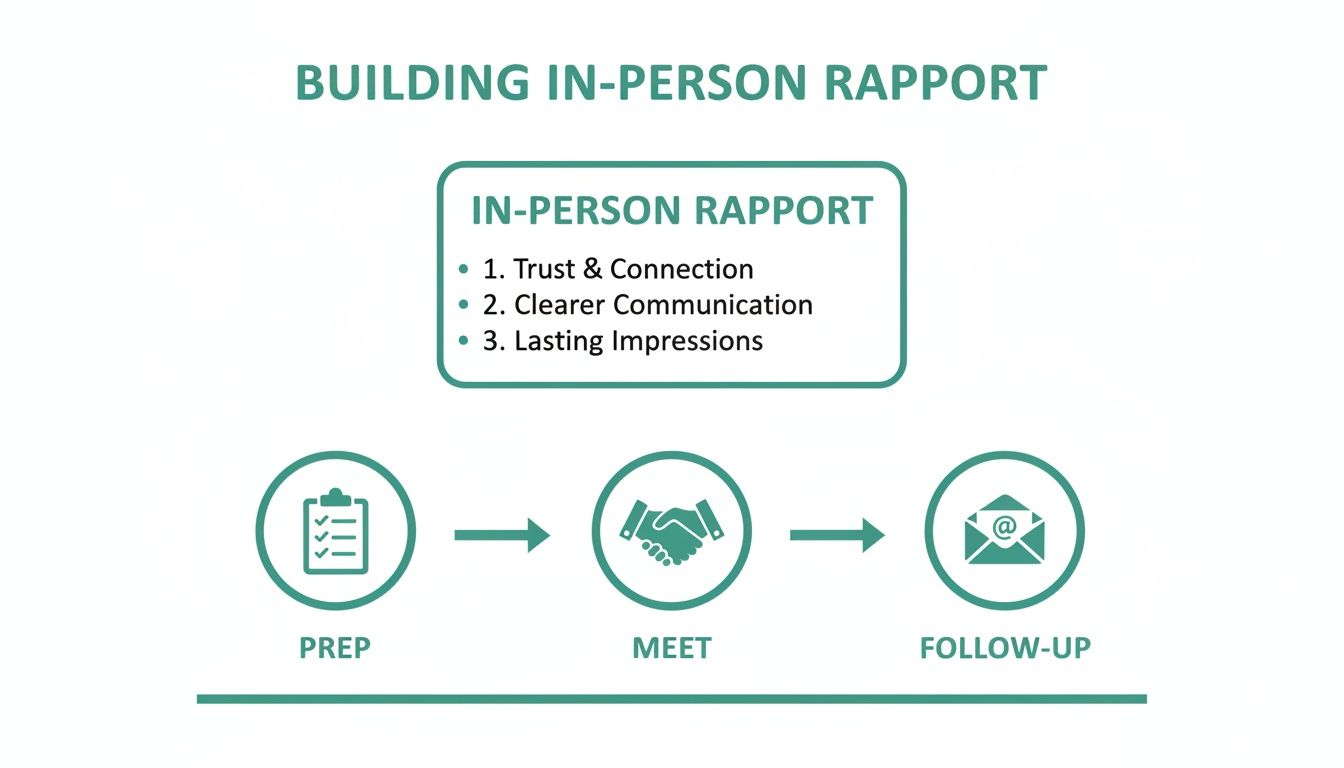
As you can see, every stage—from prep to follow-up—relies on listening and confirming, never assuming.
Minor Oversights and Broken Promises
Trust is built on consistency, and small broken promises can cause surprisingly big damage. If you say you'll send a meeting recap by EOD, send it. If you promise to look into a question and get back to them, set a reminder and follow through.
These little acts of reliability show you're dependable. When you drop the ball on the minor details, a client will naturally start to wonder if you can be trusted with the major ones. It's a silent erosion of confidence.
Staying organized is your best defense here. Use your calendar, CRM, or even a simple to-do list to track every single commitment you make. Each promise you keep reinforces the idea that you're a partner they can count on.
Sometimes seeing the contrast between a bad approach and a good one makes all the difference. Here are a few common communication traps and how to reframe them to build connection instead of killing it.
Rapport Killer vs Rapport Builder
| Rapport-Killing Mistake | Rapport-Building Alternative |
|---|---|
| Interrupting with a solution | Letting them finish, then asking clarifying questions to show you were listening. |
| Using generic industry jargon | Speaking in plain, simple language that's specific to their business. |
| Talking more than you listen | Following the 80/20 rule: let the client do 80% of the talking. |
| Over-promising to close the deal | Setting realistic expectations and being honest about limitations. |
| Forgetting personal details they shared | Referencing a small detail from a previous conversation to show you remember them. |
| Sending a generic follow-up email | Customizing your follow-up to mention specific points from your conversation. |
Turning these rapport-killing habits into rapport-building ones isn't about memorizing scripts; it's about shifting your mindset from "closing a deal" to "starting a relationship." That simple change makes all the difference.
Client Rapport FAQ
Even when you have a solid game plan, building strong client connections isn’t always a straight shot. You're going to hit rough patches, from contacts who go radio silent to moments where you have to rebuild trust after a mistake. Let's walk through some of the most common—and toughest—questions about building rapport in the real world.
How Do You Build Rapport With a Difficult Client?
Dealing with a tough or unresponsive client can be a serious test of patience. But it's also a prime opportunity to show what you're made of. The trick is to shift your thinking from "winning them over" to consistently providing value, even if you’re getting nothing back.
Instead of sending those "just checking in" emails that everyone hates, switch to a strategy of persistent, value-driven outreach. Every single touchpoint needs to offer them something genuinely useful, no strings attached.
- Share a Relevant Insight: Find an industry report or an article that speaks directly to their business goals. Send it over with a quick, personalized note like, "Came across this and thought of your team's focus on X."
- Offer a Small Win: Give them a quick tip or observation about their business they can use right away. This proves you’re invested in their success, not just your next invoice.
- Acknowledge Their Silence (Respectfully): It’s fine to call out their unresponsiveness, but do it with empathy. A simple line like, "I know you're incredibly busy, so I'll keep this brief," shows you respect their time.
The goal here is to become a helpful, reliable resource in their inbox. Over time, this consistent, no-pressure approach can cut through the noise and build a foundation of respect—the first real step toward genuine rapport.
What Is the Best Way to Repair Rapport After a Mistake?
Look, mistakes happen. It’s how you handle them that truly defines the relationship. Trying to sweep an error under the rug is the fastest way to kill trust. The only real path forward is to own it—immediately, transparently, and with a clear plan to make it right.
Hiding a mistake erodes trust twice—once for the initial error and again for the lack of integrity. Owning it, on the other hand, can paradoxically strengthen the relationship by demonstrating your commitment to accountability.
Here’s a simple, three-step framework for turning a blunder into a trust-building moment:
- Acknowledge and Apologize: The second you discover the issue, get in touch. Be direct and sincere. "I'm writing to let you know we made a mistake on X, and I sincerely apologize." No dancing around it.
- Explain What Happened (Briefly): Give a concise, jargon-free explanation of what went wrong. Don't point fingers. The focus should be on transparency, not excuses.
- Present the Solution: This is the most important part. Show up with a proactive plan to fix it. Detail the exact steps you’re taking and give them a solid timeline for when they can expect a resolution.
For instance, if you blew a deadline, you could say, "I take full responsibility for the delay. Here is our revised plan to get the project back on track, and I've reallocated resources to ensure we hit the new deadline of [Date]." This pivots the conversation from the problem to the solution and shows them you're in control.
How Can I Tell If My Rapport-Building Efforts Are Working?
Measuring something as fuzzy as "rapport" can feel like trying to nail Jell-O to a wall. But there are definitely signs you can look for, both in your day-to-day interactions and in the hard business metrics.
Start by noticing the small shifts in how you communicate. These are the qualitative signs that a real connection is starting to form.
Qualitative Signs of Strong Rapport
- They Start Reaching Out: The client begins contacting you for advice or to share updates without you having to ask first.
- The Conversation Gets Personal: They start sharing small, appropriate personal details or ask about your weekend.
- They Cut You Some Slack: When minor issues or delays pop up (and they always do), they're more understanding and flexible.
- You Get Positive, Informal Feedback: You’ll hear things like, "Thanks, you've made this process so much easier," out of the blue.
Beyond these gut feelings, you can also point to concrete business numbers that prove your relationship-building is paying off.
Key Business Metrics
- Client Retention Rate: This is the big one. Happy clients you have a great relationship with will stick around.
- Referral Rate: When a client truly trusts you, they become an advocate, sending new business your way without you even asking.
- Upsell and Cross-Sell Opportunities: Clients who see you as a trusted partner are way more open to hearing about other ways you can help them.
- Faster Response Times: As rapport grows, you'll often notice your emails get answered quicker and your calls get returned sooner.
By keeping an eye on a mix of these signals, you'll get a clear picture of how well you're connecting with clients and where you might need to adjust your approach.
Ready to build stronger client relationships from your very first email? EmailScout helps you find the right contact information for key decision-makers, so you can stop guessing and start connecting. Discover verified emails in a single click and make your personalized outreach count. Find unlimited emails for free with EmailScout.