Tag: outreach strategy

  • What is Outreach Marketing? Your Guide to Growth

    What is Outreach Marketing? Your Guide to Growth

    Think of it this way: instead of putting up a billboard and waiting for customers to call you, you pick up the phone and call them directly. That’s the essence of outreach marketing.

    It’s the simple, proactive art of reaching out to specific people or companies you want to connect with. You aren't just casting a wide net and hoping for the best; you're intentionally starting conversations to build relationships, generate leads, or score valuable backlinks.

    Outreach marketing is all about making the first move. It’s a direct approach to connect with a curated audience—think potential customers, influencers, or partners—to achieve a specific business goal.

    This is a fundamental shift from waiting for people to find you. You’re taking control and actively seeking out opportunities rather than passively waiting for them to arrive.

    A person in a suit walks past a 'PROACTIVE OUTREACH' sign in a bright event hall with attendees.

    Outreach Marketing vs. Inbound Marketing

    People often confuse outreach with inbound marketing, but they are two sides of the same coin. Inbound marketing focuses on drawing an audience in with valuable content, like blog posts or free tools. Outreach is about actively going out to find and engage that audience.

    To make it crystal clear, here’s a breakdown of how they differ.

    Characteristic Outreach Marketing Inbound Marketing
    Approach Proactive ("Push") Reactive ("Pull")
    Initiator The business/marketer The potential customer
    Audience Highly targeted, specific list Broad, general audience
    Communication Direct and personalized (e.g., email, call) Indirect (e.g., content, SEO)
    Goal Immediate action or relationship Long-term brand building and trust
    Example Tactic Sending a personalized email to a journalist Writing a blog post optimized for search engines

    While their methods are different, the most effective strategies often blend both. You can use inbound content as the reason for your outbound reach, creating a powerful one-two punch that drives incredible results.

    Let's be honest: the old "build it and they will come" mindset is a surefire way to go out of business. Relying on people to stumble across your brand organically is like setting up a brilliant shop on a deserted backstreet with no sign. You might have the best product in the world, but if no one knows you exist, does it even matter?

    This is where proactive outreach completely changes the game.

    Instead of sitting back and waiting for things to happen, you make them happen. You stop hoping for growth and start engineering it. This isn't just some marketing fluff; it's the fundamental reason outreach has become non-negotiable for anyone serious about getting ahead.

    Take the Wheel on Your Own Growth

    Picture this: you've just launched a game-changing piece of software. If you wait for that first big enterprise client to find you, you could be waiting for months—or even years. With a smart outreach plan, you can skip the line. You identify the top 100 companies that desperately need your solution, find the exact person in charge, and start a real conversation.

    This is how the biggest wins actually happen.

    • Landing High-Value Clients: Startups use it to sign their first major contracts, generating instant revenue and powerful case studies.
    • Building a Predictable Sales Pipeline: Sales teams go from a feast-or-famine cycle to a consistent flow of qualified leads they can count on.
    • Dominating Search Rankings: SEOs and marketers earn high-authority backlinks by reaching out to real editors and site owners—something that’s nearly impossible to achieve passively.

    This is the shift from being a passenger in your own business to getting in the driver's seat. You stop waiting for a lucky break and start creating your own opportunities.

    Forge Real Connections and Build Authority

    Outreach is about more than just quick wins. It’s one of the most powerful ways to build genuine authority in your space. When you consistently show up in people's inboxes with real value and personalized messages, you stop being a stranger and start becoming a trusted expert.

    When you make the first move, you're not just asking for a sale or a link. You're starting a relationship. You're showing potential clients, partners, and influencers that you’re serious enough to put in the effort, and that builds a type of credibility that passive marketing just can't buy.

    Every single personalized email and thoughtful follow-up helps build a powerful network of connections. Over time, that network becomes your greatest asset, spinning off referrals, partnership deals, and brand champions. You're no longer just another face in the crowd—you become a recognized and respected player in your field.

    Mastering The Channels Of Modern Outreach

    A laptop, smartphone, and headphones on a wooden desk with an 'OMNICHANNEL OUTREACH' banner.

    Real, effective outreach today goes way beyond firing off a single cold email. It's about having a real conversation, and that means showing up on the different platforms where your prospects actually spend their time. This is what separates campaigns that get ignored from the ones that drive results.

    Think about getting a friend’s attention. If a text doesn’t work, you might follow up or just call them. It’s the same idea in professional outreach—you use the right channel to get the message through.

    The point isn't to spam people from every direction. It’s about engaging them thoughtfully where they are most likely to listen.

    Weaving Together a Powerful Sequence

    While email is still the bedrock of any solid outreach plan, stopping there is a huge missed opportunity. The best-performing teams I've seen all weave multiple channels into one cohesive strategy. It creates a "surround sound" effect that makes your message feel more important and a lot harder to miss.

    A typical modern outreach sequence might look something like this:

    • Email: This is your foundation for sending detailed, value-packed messages. You can get a head start by learning how to craft effective cold email outreach that actually gets replies.
    • LinkedIn: Perfect for building professional credibility and warming up a contact. A simple profile view, connection request, or a quick InMail can make your name familiar before your email even lands.
    • Phone Calls: Best saved for high-value targets, a well-timed call can slice right through the digital clutter and get you into a meaningful conversation.
    • SMS: Use this one sparingly. It’s best for high-impact follow-ups, like confirming a meeting time or sending a quick reminder.

    When you combine these channels, you’re creating multiple touchpoints that build on each other. For instance, a LinkedIn connection request makes your name familiar, so when your email shows up a day later, it's more likely to get opened. We cover this approach in our complete guide to multichannel marketing.

    The reality of modern marketing is that a single channel is no longer enough. The most successful teams now blend email, social media touches, phone calls, and even SMS into their campaigns to maximize engagement.

    The data backs this up. Recent studies show that social outreach now drives more responses than email alone (42% vs. 26%). This really drives home the importance of diversifying how you connect with people and not putting all your eggs in one basket.

    The Secret To Making Your Outreach Feel Human

    In a sea of automated messages, real personalization is what separates an email that gets deleted instantly from a conversation that actually starts. It’s the secret to making your outreach feel human, not robotic.

    This goes way beyond just plugging a {FirstName} tag into a generic template. It’s about showing you’ve done your homework and have a genuine reason for reaching out to that specific person. Think of it as the difference between saying, "I have a solution for you," and, "I saw your company just launched a new green initiative, and I have an idea that could help your marketing team navigate the specific challenges that come with it."

    The Three Layers of Real Personalization

    To truly cut through the noise, your outreach needs to show you understand the person's world on a few different levels. Think of it like building a case for why your message is relevant, making it almost impossible to ignore. The best personalization pulls together insights about their role, their company, and their individual contributions.

    This flowchart breaks down how you can build a deeply personalized message, step-by-step.

    A flowchart showing the outreach personalization flow, detailing role, company, and individual factors.

    As you can see, the most effective outreach moves from broad assumptions about a job title to specific, individual-level details. This creates a much more compelling and relevant message. Learning how to build rapport with clients through these thoughtful touchpoints is what will dramatically improve your chances of starting a real dialogue.

    Why This Human-Centered Approach Wins

    Let’s be honest—blasting out generic emails might feel efficient, but the results are almost always poor. Why? Because they don't respect the recipient's time or intelligence. A personalized message, on the other hand, proves you've invested a little effort before asking for their attention. That simple act of preparation builds instant trust.

    This isn’t just a nice idea; the numbers back it up.

    Customized emails don't just feel better—they perform better. Data confirms they can yield 10% higher open rates and double the reply rates of generic templates. This investment pays off, as cold emails can generate an incredible $42 for every $1 spent, a return twice as high as cold calling.

    In fact, one study showed that personalized messages increased responses by a staggering 32.7%. It’s no surprise that 58% of sales teams now customize their scripts for every single prospect. The data, like this 2025 analysis from Outreach.io, all points to the same conclusion: genuine connection is the most powerful tool you have.

    Putting Your Outreach Strategy Into Action

    Alright, enough with the theory. Knowing what outreach is and why it works is one thing, but getting results comes from actually doing the work. This is where the rubber meets the road.

    We’re going to walk through how to build your outreach engine—a repeatable workflow that takes you from a broad strategy to connecting with the right people, consistently.

    Forget about spending hours manually digging for contact info. Modern tools can turn that grunt work into a few minutes of focused action. This frees you up to worry about what really matters: crafting a message that starts a real conversation, not just finding an email address.

    From Prospecting To A Ready-To-Use List

    Every great outreach campaign starts with a solid, targeted list. Instead of building it one contact at a time, you can automate a huge chunk of the process.

    For instance, with a simple browser extension like EmailScout, you can pop over to a decision-maker's LinkedIn profile, find their direct email with one click, and add them to your prospect list without ever leaving the page. Suddenly, a social media site becomes a powerful lead source.

    You can do the same thing with company websites, but at scale. Here’s a simple workflow:

    • URL-Based Search: Instead of one-off searches, grab a list of company websites you want to target and feed them into a tool like EmailScout's URL Explorer.
    • Automated Extraction: The tool gets to work, scanning those sites and pulling out all the email addresses it can find associated with those domains.
    • Instant List Building: In minutes, you’ve got a list of potential contacts from dozens of target companies, ready to be segmented and added to your outreach sequence.

    Overhead view of a person typing on a laptop next to an 'Outreach Playbook' banner, open book, and notebook.

    This is how you integrate powerful email-finding tools directly into your browser, making lead generation just another seamless part of your daily routine. The practical application of these features in your marketing and outreach efforts can slash the time you spend just looking for people to talk to.

    Outreach marketing has become a B2B sales powerhouse. Today, 43% of sales teams use a hybrid model blending inbound with proactive outbound efforts. This shift is powered by the need for personalized yet scalable outreach.

    Technology is what makes this balance possible. A staggering 74% of sales teams now use technology to help automate and personalize their email campaigns at scale. It’s clear that using the right tools isn't just a nice-to-have anymore—it’s a competitive requirement for any serious outreach strategy in 2026.

    How To Know If Your Outreach Is Actually Working

    It’s easy to get caught up in the busywork of outreach. You can fire off a flood of emails and feel productive, but if those emails aren't driving real-world results, it's just noise. True success isn't about how many emails you send; it's about making tangible progress toward your goals.

    This means you have to look past the "vanity metrics" that make you feel good but don't actually tell you anything. Open rates are a decent start—they show your subject line is working—but they don’t tell you if your message is actually landing. You need to dig deeper to see what’s really going on.

    Moving Beyond Vanity Metrics

    Think of it this way: sending 1,000 emails is an activity. Booking 10 qualified meetings from those emails is an outcome. To get a clear picture of your campaign's health, you need to focus on Key Performance Indicators (KPIs) that track outcomes, not just activity.

    These are the metrics that show your outreach is genuinely working:

    • Reply Rate: This is your first and most important sign of life. If people are taking the time to write you back, it means your message was compelling enough to break through the noise.
    • Positive Reply Rate: Not all replies are good news. Separating the "Let's talk" or "Tell me more" responses from the rejections is crucial. This metric isolates genuine interest.
    • Meetings Booked: For any sales-driven campaign, this is the north star. It marks the successful transition from a cold contact to a real business conversation.
    • Links Acquired: If you’re doing SEO or PR outreach, this is your bottom line. It directly measures your ability to earn valuable backlinks and media placements.

    A high open rate with a low reply rate is a classic red flag. It tells you that your subject line got their attention, but the email body completely failed to connect or offer enough value to earn a response.

    Using Data To Diagnose And Improve

    Your metrics aren't just a report card; they're a diagnostic tool. When you analyze the numbers, you can pinpoint exactly where your outreach funnel is leaking and start plugging the holes. This is where A/B testing becomes your best friend.

    You need to systematically test different parts of your campaign to see what truly resonates. For instance, try A/B testing your call-to-action. Does "book a demo" convert better than "learn more"? Test your core value proposition—do prospects respond more to cost savings or efficiency gains?

    By constantly testing and refining, you turn your outreach from a guessing game into a predictable, data-driven growth engine.

    Your Outreach Marketing Questions Answered

    Even the best-laid outreach plans run into a few practical questions along the way. Think of this as your field guide for tackling those common "what if" moments that can bring a great campaign to a halt.

    Let's clear up the most frequent sticking points, from finding the right inbox to knowing what to do when you just hear crickets.

    How Do I Find The Right Person To Contact?

    Sending your carefully crafted message to a generic info@company.com address is like shouting into the void. The real work—and the real results—come from reaching the specific person who can actually say "yes." If you want to talk about a marketing partnership, you need the Marketing Director, not someone in HR.

    Here’s how to zero in on the right decision-maker:

    • Use LinkedIn to pinpoint names and exact job titles at the companies you're targeting.
    • Once you have a name, use an email finder to get their direct work email.
    • Scan their profile for recent activity or projects. This not only confirms they're the right person but also gives you great material for personalization.

    How Many Times Should I Follow Up?

    Most replies don't happen on the first try, so following up is non-negotiable. The trick is to stay persistent without being annoying. A solid benchmark is to send 3 to 5 follow-ups, spaced a few days apart over a couple of weeks.

    Don't just "bump" your first email. Each follow-up is a new chance to provide value. Keep it short, and offer a different resource, a fresh insight, or a link to a relevant case study. You're respecting their time while giving them another compelling reason to reply.

    What If I Don't Get A Reply?

    Silence is just part of the game. Don't take it personally. If you've gone through your entire follow-up sequence and still haven't heard back, it’s time to respectfully move on.

    Simply mark that contact in your CRM or spreadsheet and circle back in 3-6 months. When you do, make sure you have a completely fresh angle or a new offer.

    Is This Just Spam?

    Absolutely not. There's a night-and-day difference between professional outreach and spam. Spam is irrelevant, generic, and blasted out to massive, unvetted lists.

    Real outreach is the polar opposite. It's highly targeted, personalized, and relevant to the person you're contacting. You're not just sending an email; you're starting a considered, one-to-one business conversation for a legitimate reason. The genuine research and intent behind your message are what set it apart.


    Ready to stop guessing and start finding the right contacts in seconds? EmailScout gives you the power to find verified email addresses directly from LinkedIn profiles and company websites, so you can build laser-focused prospect lists and start more conversations. Find unlimited emails for free at EmailScout.io.

  • 7 Best Sources for Email Outreach Templates That Actually Work in 2026

    7 Best Sources for Email Outreach Templates That Actually Work in 2026

    Crafting the perfect cold email can feel like a guessing game. You need a compelling subject line to get opened, a personalized message to get a response, and a strategic follow-up sequence to close the deal. Starting from a blank page for every campaign is inefficient and often ineffective. That's why having a solid collection of proven email outreach templates is critical for anyone in sales, marketing, or business development.

    This guide cuts straight to the chase. We’ve compiled the best resources for actionable, field-tested templates that get replies. Instead of offering generic advice, we are providing a direct look at the top platforms where you can find templates for nearly any scenario, from link-building and sales prospecting to networking and PR pitches. You’ll find options for every stage of your outreach funnel.

    Each entry in this list includes direct links, screenshots, and a clear breakdown of what makes their template library valuable. You'll discover:

    • Data-backed templates from platforms like lemlist and Apollo.
    • Extensive free libraries from industry leaders like HubSpot and Yesware.
    • Complete outreach playbooks and sequences from Mailshake.
    • Niche-specific templates from Hunter and Woodpecker.

    Our goal is to help you quickly find the right email outreach templates to build your campaigns, personalize them effectively, and start seeing better results immediately. Let’s dive into the resources that will stop your emails from ending up in the trash folder.

    1. HubSpot – Sales Email Templates and Builder

    HubSpot offers a robust, all-in-one solution for teams looking to standardize and scale their email outreach. It’s more than just a library of templates; it's a complete system integrated directly into the HubSpot Sales Hub, designed to build, share, and track high-performing emails. This makes it an ideal choice for sales and marketing teams that need to maintain consistency while personalizing communication at scale.

    The platform stands out by embedding its template functionality within a wider customer relationship management (CRM) ecosystem. This allows you to not only save and reuse effective messages but also to operationalize them within automated sales sequences. The tight integration means every open, click, and reply is tracked directly on the contact's record, giving you a full view of engagement history.

    Key Features and Benefits

    HubSpot’s approach focuses on making email outreach templates measurable and easy to deploy.

    • Integrated Template Builder: Create and save templates directly within your HubSpot portal, Gmail, or Outlook inbox. The builder supports personalization tokens that automatically pull data (like name, company, or job title) from your CRM contacts.
    • AI-Powered Assistance: The built-in AI can help you draft compelling copy, refine your subject lines, or generate entire emails from a simple prompt, which speeds up the creation process.
    • Team Sharing and Analytics: Templates can be organized into folders and shared across your entire team, ensuring everyone uses the most up-to-date and effective messaging. Performance analytics show which templates get the most opens and clicks, helping you identify and retire underperforming assets.
    • Downloadable Template Packs: Beyond the builder, HubSpot provides several downloadable packs filled with proven email outreach templates for various scenarios, including follow-ups, re-engagement, and closing deals.

    Pro Tip: When building a template in HubSpot, create a follow-up sequence at the same time. You can chain multiple templates together with set delays, automating your persistence without sacrificing personalization.

    Access and Pricing

    The core email template features are available for free within HubSpot's Sales Hub. You can create up to five templates on the free plan. However, to unlock unlimited templates, sequences, and more advanced reporting, a paid subscription to Sales Hub (starting at $15 per seat/month) is required. Some of the downloadable template packs are gated, meaning you’ll need to provide an email address to access them.

    While HubSpot's tools are powerful, their effectiveness depends on proper execution. For guidance on crafting messages that resonate, you can review some best practices for writing effective cold emails.

    Feature Pros Cons
    Integration Deeply connected with HubSpot CRM, Gmail, and Outlook. Analytics are most powerful when you're fully invested in the HubSpot ecosystem.
    Templates Highly customizable, shareable, and includes AI assistance. Some downloadable packs are gated behind an email capture form.
    Analytics Provides clear data on template performance (opens, clicks). Limited outside of the HubSpot CRM stack.

    Website: HubSpot Sales Email Templates

    2. Yesware – Free Template Library (+ in‑app Templates)

    Yesware offers a two-pronged approach for professionals seeking effective email outreach templates. It provides a public, copy-and-paste library for immediate use and an integrated template system within its Gmail and Outlook extensions. This makes it an excellent tool for sales reps and teams who want to quickly test messages and access performance insights directly from their inbox.

    Yesware – Free Template Library (+ in‑app Templates)

    The platform's strength lies in its tight integration with the user's existing email client. Unlike standalone libraries, Yesware embeds template creation, sharing, and reporting capabilities right where you work. This setup is particularly useful for teams using Salesforce, as it can connect template performance data directly to your sales pipeline, offering clear visibility on which messages are driving results.

    Key Features and Benefits

    Yesware's features are designed to make high-quality email templates accessible and their performance measurable.

    • Public Template Library: The website hosts a free library of email outreach templates organized by sales scenarios like prospecting, follow-ups, and breakup emails. Users can copy the text directly without needing to sign up.
    • In-App Template Management: Within the Yesware add-in for Gmail or Outlook, you can create, save, and organize your own templates. These can be shared in team libraries to ensure consistent messaging.
    • Performance Reporting: The platform tracks open and reply rates for each template sent, providing clear data on what works. This allows teams to iterate on their messaging and adopt the highest-performing templates.
    • Salesforce Integration: Yesware can automatically populate templates with data from Salesforce fields and sync engagement activity back to the appropriate records, bridging the gap between outreach and your CRM.

    Pro Tip: Use Yesware's A/B testing feature for templates. Create two versions of an email with different subject lines or calls-to-action. The platform can help you determine which variation performs better, allowing you to refine your approach with data.

    Access and Pricing

    The public template library on the Yesware website is completely free to access and use. To create, manage, and track templates within your inbox, you will need the Yesware extension. Yesware offers a free-forever plan with basic tracking features, but team template libraries and advanced reporting are part of its paid plans, which start at $15 per seat/month. The Salesforce integration is available on higher-tier plans.

    Feature Pros Cons
    Integration Operates directly within Gmail and Outlook; deep Salesforce connection. The most valuable features are tied to a paid Yesware subscription.
    Templates Free public library for quick use; robust in-app creation and sharing. The library is heavily focused on sales use cases, with fewer options for PR or link-building.
    Analytics Clear reporting on open and reply rates helps guide template iteration. Advanced analytics and CRM syncing require a premium plan.

    Website: Yesware Template Library

    3. Mailshake – Cold Email Templates + Outreach Playbooks

    Mailshake provides a direct and practical approach to email outreach, focusing on battle-tested templates and strategic playbooks. Rather than a complex software ecosystem, it offers a regularly updated collection of email outreach templates designed for immediate use. These resources are ideal for sales teams, link-builders, and PR professionals who need effective copy frameworks that get straight to the point.

    Mailshake – Cold Email Templates + Outreach Playbooks

    The platform’s strength lies in its clear, actionable guidance. Each template is presented with a rationale explaining why it works, giving you the strategic context needed for effective personalization. This educational component helps you understand the principles behind good outreach, making your campaigns smarter and more likely to avoid spam filters.

    Key Features and Benefits

    Mailshake's resources are built to improve outreach fundamentals, from the first email to the final follow-up.

    • Proven Template Library: Access a collection of 15–20+ proven cold email templates, each crafted for a specific goal like B2B sales, content promotion, or securing backlinks.
    • Downloadable Outreach Playbook: Beyond individual templates, Mailshake offers a comprehensive PDF playbook. This guide includes complete outreach sequences, cadence recommendations, and frameworks for structuring multi-touch campaigns.
    • Spam Avoidance Guidance: The templates and accompanying advice include best practices for deliverability, helping you craft messages that land in the primary inbox, not the promotions or spam folder.
    • Tool Agnostic: While the templates are designed to work seamlessly within Mailshake's own sending platform, they are provided in a format that can be copied and adapted for use in any email client or outreach tool.

    Pro Tip: Use the Mailshake playbook to structure a multi-step follow-up sequence. Combine two or three of their suggested templates into an automated series, but add a unique, manual personalization point to each one before sending.

    Access and Pricing

    The cold email templates and the core outreach playbook are available for free on the Mailshake blog, with no email gate or registration required. This open-access approach makes it a valuable resource for anyone looking to quickly improve their outreach copy. The primary cost is associated with using Mailshake's own email automation platform, which is a separate subscription-based service.

    The templates provide an excellent foundation, but their success still depends on the tool you use to send them. For a comparison of platforms that can help you deploy these strategies, check out this overview of the best email outreach tools available.

    Feature Pros Cons
    Guidance Practical, example-driven advice with clear rationale for each template. Effectiveness relies on the user's ability to personalize and execute well.
    Templates Spans diverse use cases including sales, content, and link-building. The playbook is a static PDF that may require editing before implementation.
    Accessibility Completely free and ungated on the Mailshake blog. Guidance is the main asset; templates themselves are not inherently unique.

    Website: Mailshake Cold Email Templates

    4. lemlist – Cold Email Templates Library (Data‑backed)

    lemlist takes a unique, data-first approach to email outreach by providing a library of templates derived from real, high-performing user campaigns. Instead of offering generic scripts, it presents proven examples complete with performance context and strategic breakdowns. This makes it a go-to resource for sales reps and marketers who want to understand the "why" behind an effective email, not just the "what."

    lemlist – Cold Email Templates Library (Data‑backed)

    The platform’s strength lies in connecting templates to actual campaign outcomes, including multi-step sequences and even multi-channel plays involving social media touchpoints. This gives you a more complete picture of how a single email fits into a broader outreach strategy. The templates cover a wide array of goals, from sales and link-building to event promotion and partnership outreach.

    Key Features and Benefits

    lemlist’s library is designed to inspire and educate, showing users what works in the real world.

    • Data-Backed Examples: Each template or sequence is often accompanied by an explanation of its performance or the strategic thinking behind its structure, giving you valuable insights into crafting your own messages.
    • Multi-Step Sequence Ideas: lemlist excels at providing not just a single email outreach template, but entire follow-up sequences. This helps you build a persistent, yet valuable, communication flow.
    • Blog Compendiums: The site features extensive blog posts that compile 20+ proven templates for specific scenarios, offering a deep dive into different angles and creative approaches.
    • In-App Integration: For lemlist users, these templates can often be directly duplicated into their own accounts, providing a fast track to launching a new campaign.

    Pro Tip: Don't just copy and paste a lemlist template. Instead, analyze its structure and tone. Identify the core elements that make it successful, such as a unique opening line, a compelling value proposition, or a low-friction call-to-action, and adapt those principles to your own voice and ideal customer profile.

    Access and Pricing

    The cold email template library and the accompanying blog content are available for free on the lemlist website. There are no forms or sign-ups required to view the examples, making it an accessible resource for anyone looking for inspiration. However, the one-click functionality to duplicate and use the templates is reserved for users of the lemlist platform, which offers paid plans starting at $39 per user/month.

    Feature Pros Cons
    Integration Easy to duplicate and iterate on templates directly within the lemlist platform. Functionality is limited if you are not a lemlist user.
    Templates Examples are connected to real campaign outcomes and multi-step sequence strategies. Templates often require significant editing to match your brand voice and ICP.
    Analytics Provides context on why a template works, but no direct performance data on your usage. No built-in analytics outside of the lemlist campaign manager.

    Website: lemlist Cold Email Templates

    5. Apollo – Cold Email Templates That Actually Get Replies

    Apollo offers a freely accessible collection of cold email templates with practical guidance that extends beyond just the initial message. It is designed for sales and business development teams who want to build and execute effective multi-step outreach campaigns. This resource is especially valuable for those already using the Apollo platform for prospecting, as it provides direct instructions for loading these templates into automated sequences.

    Apollo – Cold Email Templates That Actually Get Replies

    What makes this library different is its focus on the entire outreach process. Instead of just giving you email copy, Apollo maps out a complete follow-up strategy, including recommended timing between steps and advice on when to incorporate different calls to action. This makes it a great starting point for teams looking to build their first cold outreach playbook from scratch.

    Key Features and Benefits

    Apollo's approach is tactical, providing a blueprint for turning static copy into a dynamic outreach sequence.

    • Scenario-Based Templates: The templates are organized by common sales scenarios, such as reaching out after a mutual connection, referencing a recent company event, or providing industry-specific insights.
    • Step-by-Step Sequence Strategy: Each template set comes with a recommended follow-up cadence. It details the timing for multiple touchpoints, helping you stay persistent without overwhelming your prospects.
    • Practical Implementation Guidance: Apollo includes tips for using personalization tokens, tracking engagement, and knowing the right moment to insert a calendar link. It also offers direct instructions for loading the provided email outreach templates into Apollo's native sequencing tool.
    • Focus on Actionable Copy: The templates are concise and built around getting a response, with clear calls to action and logical justifications for the outreach.

    Pro Tip: Use Apollo's template guide as a foundation. A/B test their suggested follow-up timing. You might find that adding an extra day between emails two and three improves your results, and tracking these small adjustments is key to improving your cold email response rate.

    Access and Pricing

    The library of cold email templates and the accompanying strategic guide are available for free on the Apollo website. There is no paywall or email gate required to access the content. However, to use the templates within automated sequences as described, you would need an Apollo account. Apollo offers a free plan with limited credits and features, with paid plans unlocking more advanced capabilities for prospecting and outreach automation.

    While Apollo gives you the "how," understanding the "why" behind what makes a template successful is also important. For a deeper look into the metrics that matter, you can get insights on improving your cold email response rate.

    Feature Pros Cons
    Integration Smooth integration for users of the Apollo sales platform. The guidance is framed around Apollo's workflow and may require adaptation for other tools.
    Templates Provides actionable, stepwise guidance beyond just email copy. Has fewer examples for non-sales outreach like PR or link building.
    Accessibility The templates and strategic guide are completely free and ungated. Best used within the Apollo ecosystem to take full advantage of the sequence instructions.

    Website: Apollo Cold Email Templates

    6. Woodpecker – Cold Email Templates Gallery

    Woodpecker offers a straightforward and accessible gallery of cold email templates designed for speed and practicality. Unlike platforms that embed templates within a complex ecosystem, Woodpecker presents a simple, web-based library of over 70 editable examples. This makes it a fantastic resource for sales reps, recruiters, and marketers who need to quickly find, adapt, and deploy proven email outreach templates without a steep learning curve.

    Woodpecker – Cold Email Templates Gallery

    The platform’s core strength is its directness. Each template is presented in an on-page editor with inline tips, guiding you on how to customize specific sections like the opening line, value proposition, and call-to-action. This built-in guidance helps you maintain a natural tone while tailoring the message to your audience. The broad industry coverage, spanning from B2B sales to real estate and networking, provides a solid starting point for almost any outreach campaign.

    Key Features and Benefits

    Woodpecker’s gallery is built for rapid testing and implementation, removing friction between finding a template and sending it.

    • Categorized Template Library: With over 70 templates, the gallery is neatly organized into categories such as sales, link building, recruitment, and real estate, making it easy to find a relevant starting point.
    • On-Page Editor with Inline Tips: As you review a template, helpful suggestions appear next to each section. These tips offer advice on personalization and framing, helping you turn a generic template into a convincing message.
    • One-Click Export and Copy: You can either copy a template directly to your clipboard for use in any email client or export it straight into the Woodpecker cold email automation tool. This integration is ideal for users of the Woodpecker app.
    • Broad Vertical Coverage: The collection isn't limited to just SaaS or B2B sales. It includes specific templates for industries like real estate and professional services, as well as scenarios like networking and follow-ups.

    Pro Tip: Use Woodpecker’s templates as a structural guide, not a final script. The best results come from taking their framework and heavily personalizing the first sentence and the P.S. section. A custom opening about a recent company achievement or a shared connection will significantly boost your reply rate.

    Access and Pricing

    The entire gallery of email outreach templates is completely free to access and use. There are no gates or sign-up forms required to view, edit, or copy the templates. You can browse the full collection on their website without any commitment. The direct export feature is designed to work with the Woodpecker automation platform, which is a paid service with pricing that starts based on the number of contacts you engage.

    Feature Pros Cons
    Accessibility Completely free and open access, no sign-up required. Some templates can be lengthy and require trimming for better impact.
    Templates Broad coverage across many industries and use cases with inline editing tips. The convenience of the "export" feature is tied to being a Woodpecker app user.
    Usability Very fast to test; just copy, personalize, and paste into your email client. Lacks the deep analytics and team-sharing features found in integrated CRM platforms.

    Website: Woodpecker Cold Email Templates

    7. Hunter – Directory of 280+ Outreach Templates

    Hunter is best known for its email-finding tool, but it also provides a massive, no-frills directory of over 280 outreach templates. This resource is a goldmine for pure ideation, offering a wide assortment of starting points across sales, marketing, link-building, and public relations. It's designed for speed and simplicity, making it perfect for professionals who need to quickly find inspiration, test subject lines, or assemble different versions for A/B testing.

    Hunter – Directory of 280+ Outreach Templates

    Unlike integrated systems, Hunter’s directory presents templates as straightforward, copy-and-paste text blocks. This approach strips away complexity, allowing you to browse categories, find a relevant message, and immediately adapt it in your preferred email client or sending platform. The strength of this collection lies in its breadth, especially for niche use cases like SEO link-building and PR pitches, which are often overlooked by sales-focused platforms.

    Key Features and Benefits

    Hunter’s template library is built for efficiency and variety, helping you move from concept to campaign quickly.

    • Extensive, Searchable Directory: With over 280 templates, you can search by keyword or browse categories like “Sales,” “Recruitment,” “Networking,” and “Link Building.” This makes it easy to find relevant email outreach templates for nearly any scenario.
    • Simple Copy/Paste Format: There are no complex builders or integrations. Just find a template you like, copy the text, and paste it into your email tool. This simplicity is ideal for rapid iteration and testing.
    • Strong SEO and PR Focus: The directory contains a significant number of templates dedicated to link-building requests, broken link outreach, and journalist pitches, making it a valuable resource for digital marketers.
    • Free and Accessible: The entire template library is available for free without needing to sign up or provide an email address, offering immediate value.

    Pro Tip: Use Hunter’s directory to brainstorm subject lines. Scan the templates within a specific category and pull five different subject lines to run an A/B test. This can quickly reveal which angles resonate most with your audience before you even finalize the body copy.

    Access and Pricing

    The entire directory of over 280 templates is completely free and open to access on the Hunter website. You do not need a Hunter account to view, copy, or use the templates. This makes it one of the most accessible and immediate resources available for anyone needing quick outreach ideas.

    Since the templates are just text, you will need to pair them with a separate email sending tool (like Gmail, Outlook, or a dedicated sales automation platform) to send and track performance. The quality of the templates can vary, so personalization is essential.

    Feature Pros Cons
    Variety Huge selection makes it easy to find multiple starting points. Quality is inconsistent across the large set; significant editing is often needed.
    Accessibility Completely free and requires no signup for immediate access. No built-in analytics; must be used with a separate sending tool to track performance.
    Format Simple copy-paste functionality is fast and easy to use. Lacks personalization tokens or integration with a CRM.

    Website: Hunter Templates

    Top 7 Email Outreach Templates Comparison

    Tool Implementation complexity Resource requirements Expected outcomes Ideal use cases Key advantages
    HubSpot – Sales Email Templates and Builder Moderate — built-in builder, best with HubSpot CRM Free tier available; optimal with HubSpot CRM stack Reusable templates with engagement tracking and sequence enablement Sales teams using CRM-driven sequences and analytics CRM integrations, AI-assisted personalization, engagement analytics
    Yesware – Free Template Library (+ in‑app Templates) Low — Gmail/Outlook add-in, quick deploy Free public library; deeper value with Yesware paid + Salesforce Fast inbox testing and template performance reporting Inbox-driven sales teams that use Salesforce Rapid deployment from inbox; reporting tied to Salesforce
    Mailshake – Cold Email Templates + Outreach Playbooks Low–Moderate — downloadable playbooks; requires manual editing Minimal (PDF playbook and templates); personalization effort needed Practical cold outreach structure and spam-avoidance guidance B2B sales, link-building and PR teams needing cadences Example-driven templates and deliverable outreach playbooks
    lemlist – Cold Email Templates Library (Data‑backed) Moderate — in-app saving/sharing; data-backed examples Library accessible; best when paired with lemlist platform High-performing examples with sequence strategies and context Teams seeking performance-proven templates and multichannel plays Real campaign data, sequence strategies, easy duplication in-app
    Apollo – Cold Email Templates That Actually Get Replies Moderate — templates framed for Apollo workflows Free templates; optimized for teams using Apollo Actionable follow-up cadences and timing recommendations Teams using Apollo for prospecting and sequence-based outreach Stepwise guidance and smooth integration into Apollo sequences
    Woodpecker – Cold Email Templates Gallery Low — on-page editor, copy-to-clipboard or export to app Minimal to use; export benefits when using Woodpecker automation Rapid testing and quick personalization across industries Recruiting, real estate, networking, and sales outreach Large catalog (70+), inline customization tips, fast testing
    Hunter – Directory of 280+ Outreach Templates Low — searchable directory with copy/paste workflow Minimal (no built-in analytics); needs external sending tool for tracking Broad ideation, subject-line testing and many starting points Ideation, A/B testing, link-building and PR campaigns Huge variety (280+ templates) for fast idea generation

    Beyond the Template: Activating Your Outreach Strategy

    We've journeyed through a detailed collection of resources, from HubSpot’s integrated builders to Hunter’s extensive directory, each offering a solid foundation for your outreach campaigns. You now have a diverse arsenal of email outreach templates designed for sales, marketing, link building, and more. Yet, the true power of these templates is not in copying and pasting; it's in their adaptation. The most successful outreach professionals understand that a template is a starting point, not a final destination.

    The core lesson is that personalization, strategic follow-ups, and constant measurement are the pillars of effective communication. Whether you're a freelancer seeking new clients or a sales team pursuing enterprise deals, the underlying principles remain the same: connect with your recipient on a human level, provide clear value, and make your request easy to act upon. Each tool we explored, from Mailshake's playbooks to lemlist's data-backed examples, reinforces this idea.

    Key Takeaways for Immediate Application

    To turn this knowledge into results, focus on these critical actions. These are the steps that separate a forgotten email from a conversation starter.

    • Adapt, Don't Adopt: Never send a template as-is. The first step is always to find the personalization points. This means researching your contact's recent work, company news, or shared connections. A single, well-researched sentence is more powerful than a perfectly structured but generic email.
    • Segment Your Approach: The "Backlink Request" template for a SaaS marketer is fundamentally different from a "Sales Introduction" template for a B2B sales professional. Organize your chosen templates by their specific goal and target audience. This prevents sending the wrong message to the right person.
    • Master the Follow-Up Sequence: A single email is rarely enough. The real work often begins with the second or third touchpoint. Use the follow-up sequences provided by tools like Woodpecker and Apollo as a guide. Space them out, vary the messaging slightly, and always provide context by replying to the previous email.
    • Measure What Matters: Your open rate is just the beginning. The most important metric is your reply rate, followed by your positive reply rate. A/B test your subject lines, your call-to-action, and your opening lines to see what truly resonates with your audience.

    Choosing Your Toolkit: A Practical Decision Framework

    With options like HubSpot, Yesware, and Mailshake, selecting the right platform can feel overwhelming. Your decision should be guided by your specific operational needs, team size, and existing tech stack.

    Consider these factors:

    1. For Integrated Sales Teams: If your team already operates within a CRM like HubSpot, using their native template builder is a clear choice. It keeps all data, from email sends to deal progression, in one unified system.
    2. For High-Volume Cold Outreach: Startups and sales development teams focused on pure cold email will find immense value in platforms like Mailshake, lemlist, and Woodpecker. Their strengths lie in campaign automation, deliverability features, and performance analytics specifically for cold outreach.
    3. For All-in-One Prospecting: If you need a tool that handles not just templates but also lead discovery and verification, Apollo is a strong contender. It combines a massive B2B database with outreach automation, creating a single platform for the entire top-of-funnel process.
    4. For Quick Access and Inspiration: For those who simply want a reference library without committing to a full platform, Hunter's template directory and Yesware's free library are excellent resources. They are perfect for ideation and crafting one-off campaigns.

    Ultimately, the best email outreach templates are the ones you refine into your own unique voice. They become an extension of your brand and your personal approach to building relationships. Use the structures we’ve discussed as your guide, inject your own personality and research, and commit to the process of testing and improving. Your next great opportunity is just one thoughtful email away.


    Ready to put these email outreach templates into action but tired of manually searching for contact information? EmailScout finds verified email addresses and auto-fills them directly into your outreach tools, saving you hours of prospecting time. Start connecting with the right people faster by visiting EmailScout to supercharge your campaigns.

  • Your Guide to Using the Hunter Email Check for Better Outreach

    Your Guide to Using the Hunter Email Check for Better Outreach

    There's nothing more frustrating than spending time crafting the perfect outreach email, hitting send, and immediately getting a bounce-back notification. It feels like a total waste of effort. A quick Hunter email check is your best defense against this, confirming an email address is actually valid before you ever send a message.

    This simple step does more than just save you a headache; it protects your sender reputation and makes sure your emails have a fighting chance of being read.

    Why Accurate Email Verification Is Your Secret Weapon

    Let’s be real—a high bounce rate can completely sabotage your outreach efforts. When you send emails to a bunch of invalid addresses, email providers like Gmail and Outlook see that as a major red flag. They start to think you might be a spammer.

    Once your sender reputation takes a hit, even your legitimate emails to valid contacts are more likely to end up buried in the spam folder.

    A person works on a laptop showing charts and data, with a green banner overlay stating 'CLEAN EMAIL LIST', pointing at the screen.

    Think of a Hunter email check as an insurance policy for your email campaigns. It scrubs your list clean, which massively boosts your deliverability and keeps your domain in good standing.

    The Foundation of Successful Outreach

    A clean email list isn't some minor technicality—it’s the absolute bedrock of any good sales or marketing campaign. I’ve personally managed campaigns where list hygiene was the single biggest factor separating success from failure.

    When your list is verified, you can expect:

    • Higher Open Rates: More of your emails land in the primary inbox where they belong.
    • Better Sender Reputation: You steer clear of the penalties that drag down your deliverability.
    • Increased ROI: Your time and budget are spent engaging with real people, not dead ends.

    Beyond just getting your emails delivered, proper verification is a game-changer for improving response rates to cold outreach emails. The market absolutely reflects this value. The email finder and verification space, where Hunter is a major player, is on track to hit $5.6 billion by 2032. That growth is all thanks to the incredible ROI of email marketing, which simply can't exist without clean contact lists.

    A clean email list is your most valuable asset in digital outreach. Verifying it isn't an optional step—it's the core activity that makes every subsequent action more effective.

    Decoding Hunter’s Verification Statuses

    To really put Hunter to work, you need to know what its results are telling you. Each status gives you a clear signal on what to do next, turning that raw data into a practical game plan.

    If you want a deeper dive into the mechanics, our guide on how to verify emails is a great primer. But for now, let's break down the different statuses you’ll see after running a Hunter email check.

    Understanding Hunter Verification Statuses

    This table gives you a quick rundown of what each status means and what you should do with it.

    Status Icon Meaning Recommended Action
    Valid Hunter is highly confident the email address exists and is safe to send to. Go for it! This is a safe email to include in your campaigns.
    Accept All The server accepts all emails for the domain, so it's impossible to confirm if a specific inbox exists. Proceed with caution. There's a risk of a bounce. Best for low-volume, high-value outreach.
    Invalid The email address does not exist or has a syntax error. Remove immediately. Sending to this will result in a hard bounce and hurt your reputation.
    Unknown Hunter couldn't get a definitive response from the email server. Avoid sending. It's too risky. Treat these like invalid emails to be safe.

    At the end of the day, these statuses are your guide to maintaining a healthy list. Pay attention to them, and you’ll keep your sender reputation strong and your outreach effective.

    A Practical Walkthrough of Hunter’s Verification Tools

    Alright, enough theory. Let's get hands-on with Hunter's verification tools. This is where you turn a messy prospect list into a clean, outreach-ready asset. Hunter gives you two main ways to check an email: a quick, single check for one-off needs and a powerful bulk tool for processing entire lists.

    Performing a Quick Single Email Check

    The single email verifier is perfect for those quick, "just to be sure" moments. Think about it: you're about to email a crucial proposal to a high-value lead. The last thing you want is a bounce-back. This is exactly what the tool is for.

    Just head over to the "Verifier" section in your Hunter dashboard, paste the email into the search bar, and click "Verify." In seconds, you get a clear status: valid, invalid, or risky. This kind of instant feedback is a lifesaver for daily sales and networking, helping you sidestep simple mistakes before they can cause problems.

    I probably use the single verifier a dozen times a day. Before I add a new contact to my CRM or reply to an inbound query that looks a little off, a quick check gives me instant peace of mind and keeps my main database clean from the get-go.

    Mastering the Bulk Email Verifier

    Checking emails one by one just won't cut it for bigger outreach campaigns. That's when you bring in the workhorse: the Bulk Email Verifier. It’s built to clean hundreds or even thousands of contacts all at once.

    Let's imagine a real-world scenario. You have a list of 500 prospects for a new product launch and need to make sure your emails will actually land.

    Here’s how you’d tackle it:

    • Get your file ready. Your prospect list should be in a spreadsheet. Make sure you have one column just for email addresses. It’s also smart to have columns for first names, last names, and companies to make personalization easier down the road. Save the file as a CSV.

    • Upload the list to Hunter. Inside the Verifier section, you’ll see a "Bulk" tab. You can drag and drop your CSV file right onto the page or browse your computer for it. I recommend giving your list a specific name, like "Q3 Product Launch Prospects," to keep things organized.

    • Map your data columns. This is a critical step. After the upload, Hunter needs to know which column actually contains the email addresses.

    The interface shows you a preview of your spreadsheet and asks you to match your columns to Hunter's fields. The screenshot below shows you exactly what this looks like.

    As you can see, you just pick "Email" from the dropdown for the right column. Once you’ve mapped it, click "Next" and let Hunter get to work.

    The system will then process your entire list, running its checks on every single email. The time it takes will depend on how big your list is, but you’ll get an email notification as soon as it's done. From there, you can download your freshly cleaned list, now with a verification status for every contact.

    Decoding Hunter’s Verification Results for Smarter Outreach

    Getting a report back from a Hunter email check is just the first step. The real magic happens when you interpret that data to build a smart outreach strategy—one that protects your sender reputation and gets your message in front of your best leads. Simply splitting your list into "valid" and "invalid" just doesn't cut it. The details are where you'll find your edge.

    Think of it like a funnel. You pour your prospect list in, and Hunter helps you sort it all out, whether you're doing quick single checks or a massive bulk verification.

    This flowchart gives you a great visual of how that decision-making process typically works.

    Flowchart detailing Hunter's tools for prospect lists, email verification, and bulk lead finding.

    As you can see, you can run your entire list through a comprehensive bulk check or just pop in a few emails for a quick spot-check, depending on what you need at the moment.

    Understanding Confidence Scores and Statuses

    Beyond a simple "valid" or "invalid," Hunter gives you a confidence score from 0 to 100. This number is your best friend for managing risk. Across a ton of different datasets, Hunter has proven its reliability, hitting a 70% overall accuracy rate. It performs especially well with small business domains (71.3% accuracy) and large enterprise domains (69.7% accuracy). For a deep dive into the numbers, you can explore Hunter's own analysis of top email verifiers.

    These scores give you a clear path forward for segmenting your list:

    • 80-100% Confidence (Valid): These are the keepers. They have the lowest risk of bouncing, so you can confidently add them straight into your primary campaign lists.
    • 50-79% Confidence (Accept All): This is where things get a bit tricky. An "accept-all" server will technically accept any email you send to its domain, so it's impossible to know for sure if the inbox actually exists. I treat these with caution and put them in a separate segment for a small, low-risk test campaign.
    • Below 50% Confidence (Unknown): For most campaigns, the risk here is just too high. An "unknown" status means the server was cagey and didn't give a clear yes or no. The safest move is to exclude these to protect your sender score.

    The goal isn’t to hit a 0% bounce rate—that’s pretty much a fantasy. The real goal is to minimize risk intelligently. You want your most important messages to land without trashing your sender reputation in the process.

    Practical List Segmentation Strategies

    Once your bulk Hunter email check is done, it's time to segment. Don't just hit delete on the bad emails; organize the uncertain ones so you can still get value from them.

    I recommend creating separate lists right inside your email marketing platform. Here’s a simple, effective setup:

    1. Primary Campaign List: This is your A-list, containing only emails marked as "Valid" with high confidence scores. Use this for all your important outreach.
    2. Test Campaign List: This list is for all the "Accept All" emails. It's perfect for testing new subject lines or sending less critical announcements. Keep a close eye on the bounce rate here.
    3. Suppression List: Add every "Invalid" and "Unknown" email to this list. This ensures you never accidentally mail them again, which is crucial for long-term deliverability.

    This tiered approach lets you maximize your reach without putting your sender reputation on the line. For another perspective on keeping your lists clean, you can also learn about different methods for email address validations.

    Integrating Email Checks into Your Daily Workflow

    Let’s be honest, running a Hunter email check manually for every single contact is a huge waste of time. It just doesn't scale. The real magic happens when you build verification directly into your daily routine, making it an invisible, automatic step that protects your data quality from day one.

    Instead of cleaning up messy lists after the fact, you're being proactive. Think about it: a new lead comes in from your website's contact form and gets instantly verified before it even hits your CRM. That means your sales team only ever works with genuine, deliverable contacts, which is a massive boost for both productivity and morale.

    Automating Verification with Hunter’s API

    The most effective way to make this happen is with Hunter's API. An API (Application Programming Interface) is just a bridge that lets different software tools communicate. By plugging Hunter's API into your systems, you can automate email checks at all the important moments.

    For instance, you can set it up so that:

    • New CRM entries are instantly verified. When someone on your team adds a new contact to Salesforce or HubSpot, an API call can automatically trigger a Hunter email check in the background.
    • Website form submissions are pre-screened. Before a "Request a Demo" lead even gets created, the API can validate their email in real-time. If it's bad, you can ask them to fix it right on the spot.
    • Marketing automation workflows get smarter. Your marketing platform can use the verification status to segment new subscribers, automatically flagging or suppressing any invalid addresses.

    Connecting Hunter's API to our CRM was a game-changer. It eliminated the "garbage in, garbage out" problem overnight. Our sales team now trusts the data they're given, which has directly led to better engagement rates on initial outreach.

    If you’re ready to build these kinds of automated systems, learning how to validate emails with an API is the perfect next step.

    Streamlining List Building with Browser Extensions

    Beyond automating your backend systems, another high-impact strategy is using a browser extension for on-the-fly verification. This is my go-to tactic when I'm actively prospecting and building lists from scratch. The most efficient teams I've worked with have this baked into their research process.
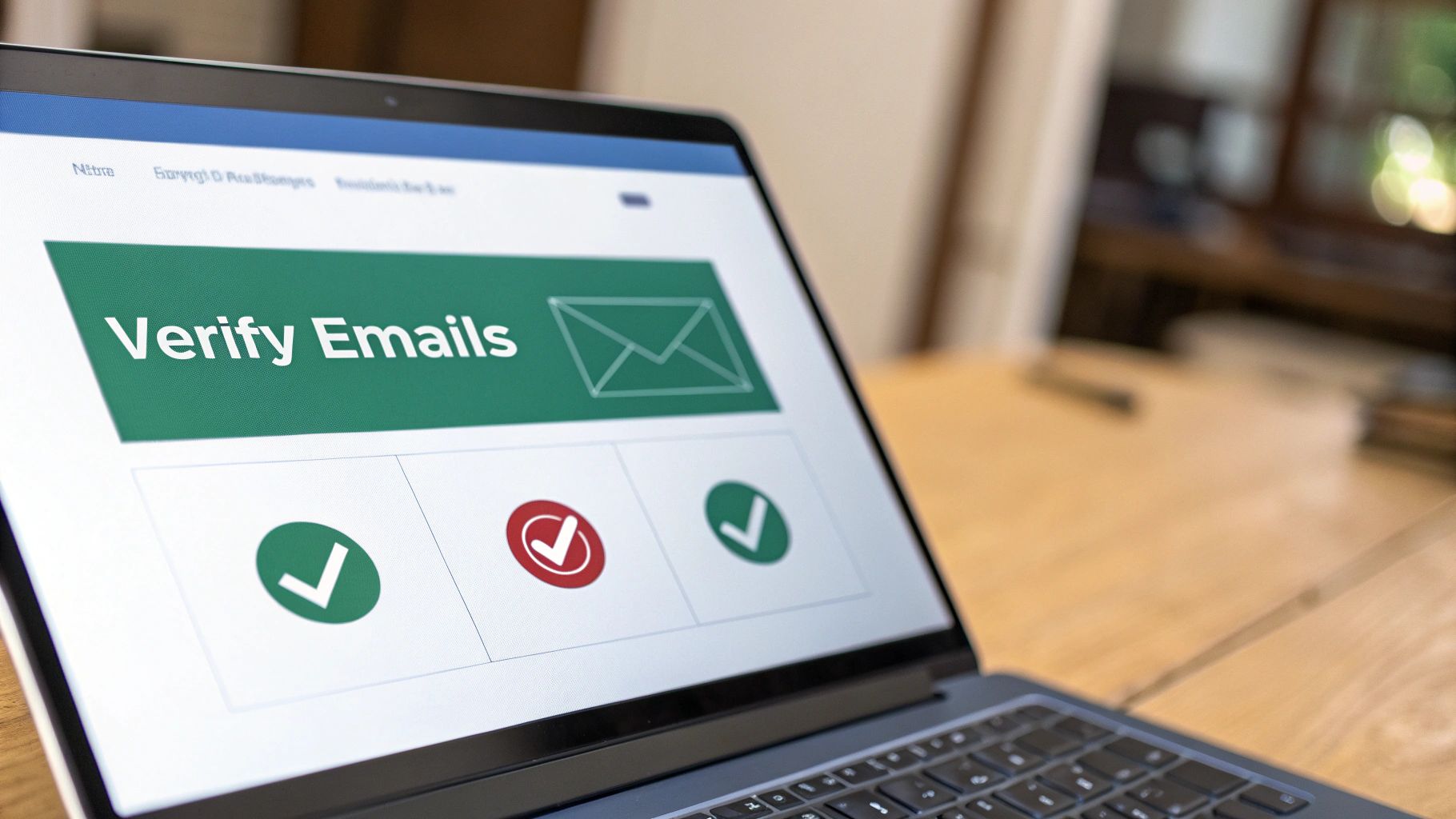
    As you’re browsing LinkedIn profiles or company websites, a good extension can find and verify an email address with a single click. This turns a clunky, multi-step chore into one smooth action. You’re not just finding a contact; you’re finding a verified contact.

    This approach helps you build a clean list from the very beginning, saving you from a massive bulk cleanup headache later on. It makes the Hunter email check an immediate, simple part of prospecting, not some task you have to remember to do later.

    Best Practices for Long-Term List Hygiene

    A clean email list isn't a one-and-done job. It's a continuous process. You have to treat your contact database like a valuable asset that needs regular upkeep, or its value will plummet. Over time, people switch jobs, companies rebrand, and perfectly good email addresses become dead ends.
    A smartphone on a stand displays an app, next to a green flipbook saying 'Maintain List Hygiene' on a wooden desk.

    Honestly, your email list is one of the most powerful tools your business has. It’s your direct line to prospects and customers. You wouldn't just ignore your company's financials, so why let your contact list fall into disrepair?

    Put List Verification on a Regular Schedule

    The single biggest mistake I see people make is verifying a list once and then forgetting about it for a year. Data decay happens way faster than you’d think. Some studies show B2B data degrades at a rate of over 2% every single month. After a year, nearly a quarter of your list could be totally useless.

    My advice? Run a full Hunter email check on your entire database at least once a quarter. If you have a really active list, like one you're using for daily sales prospecting, bump that up to a monthly scrub. This simple routine stops bad emails from piling up and destroying your sender reputation.

    This isn’t just busy work; it leads to real growth. Ahrefs, for example, used Hunter to find and verify prospect emails and saw a 25% increase in sales revenue. Dropbox experienced a 20% revenue lift just by keeping its outreach lists clean. These examples, often cited in reports comparing email finder tools, show a direct line between list maintenance and your bottom line.

    How to Handle Bounces and Unsubscribes

    What you do after you send an email is just as important as the prep work. Every hard bounce and unsubscribe is a direct signal from the internet, and ignoring those signals is a fast way to get flagged by email providers.

    Here’s how to manage them properly:

    • Automate Your Removals: Your first move should be to set up automation in your email platform. Create a rule that automatically removes any hard-bounced address from all your active lists. Don't put this off and try to do it manually.
    • Honor Unsubscribes Instantly: Make your unsubscribe process dead simple—one click and it's done. If someone can't figure out how to opt out, they’re much more likely to just hit the spam button, which is far more damaging to your sender score.
    • Keep an Eye on Soft Bounces: Soft bounces, like a full inbox or a temporary server glitch, are a different beast. I recommend tracking them. If an address soft-bounces three times in a row, it's time to treat it like a hard bounce and remove it.

    How you respond to a bounce or an unsubscribe reflects on your brand. A quick, no-hassle process shows you respect your contacts and is the mark of a pro.

    Always Remember Privacy and Compliance

    Finally, solid list hygiene is all about respecting people's privacy. Regulations like GDPR in Europe and CCPA in California aren't just legal hoops to jump through—they’re about building trust with your audience.

    Make sure you have a legitimate reason to contact someone, whether it's their explicit consent or a clear business interest. Regularly using a Hunter email check is a piece of this puzzle, as it ensures you’re contacting the right person at the correct address and minimizing data slip-ups. This isn’t just about dodging fines; it’s about building a reputation that people actually trust.

    Common Questions About the Hunter Email Check

    When you start using a tool like Hunter's email check, a few questions always come up. I’ve heard them from sales reps and marketers alike. Getting clear answers is key to using the tool effectively and trusting your results.

    Let's cut through the noise and tackle these common questions head-on.

    How Accurate Is the Hunter Email Check, Really?

    This is the million-dollar question. The short answer: no tool is 100% perfect. Email servers can be finicky. That said, Hunter is consistently one of the top performers out there, often hitting an accuracy rate of over 95% for valid emails.

    A few things can skew the results:

    • Server Setups: Some domains use "accept-all" servers. They'll give a green light to any email address at that domain, which makes it impossible to confirm if a specific person’s inbox actually exists.
    • Old Data: Emails go stale. People leave jobs, and inboxes get deactivated. Hunter’s real-time checks are a huge help, but the older an email is, the riskier it gets.
    • Server Downtime: Sometimes, a server is just temporarily offline or not responding. This can trigger an "unknown" status even if the email is perfectly fine.

    Even with these variables, running a Hunter email check is worlds better than sending emails into the void. It’s all about smart risk management.

    What Should I Do with 'Accept All' or 'Unknown' Emails?

    My approach here is simple and practical. Don't just toss these emails, but definitely don’t treat them like verified ones either.

    I treat "accept-all" emails as a calculated risk. The domain is real, but the specific inbox is a question mark. My go-to strategy is to segment these contacts into a separate list. I'll send them a low-stakes email first, like a newsletter. If the bounce rate is minimal, I’ll consider them for more direct outreach.

    For "unknown" emails, the best move is to get rid of them. This status means Hunter couldn’t get a straight answer from the server. If protecting your sender reputation is your top priority—and it should be—the risk of a hard bounce is just too high.

    An "accept-all" is a yellow light—proceed with caution. An "unknown" is a red light—stop and remove it to protect your sender score.

    Can I Use Hunter to Verify Free Email Addresses Like Gmail?

    Yep, absolutely. The Hunter email check is just as solid for free providers like Gmail, Yahoo, and Outlook as it is for corporate domains.

    The tool's job is to see if an inbox exists, period. It doesn't matter who the provider is. When you see a "webmail" tag in a report, it's just an FYI that it's a free account. It has no bearing on whether the email is valid or high-quality. The verification process is exactly the same.

    How Does a Tool Like EmailScout Compare for Building Lists?

    This is a great question because it highlights two different but complementary parts of the process: finding emails and cleaning them.

    Think of it this way:

    • A tool like EmailScout is built for the "discovery" phase. Its Chrome extension is perfect for grabbing new emails while you're browsing company websites or LinkedIn. It’s all about building a fresh prospect list fast.
    • A verifier like Hunter handles the "validation" phase. Once you have that list from a discovery tool, you run it through Hunter to make sure the emails are deliverable.

    The best workflow combines both. Use EmailScout to find the leads, then use Hunter to clean the list before you hit "send."


    Ready to build powerful prospect lists with just one click? EmailScout helps you find the right contacts effortlessly. Get started and find unlimited emails for free at https://emailscout.io.

  • Find email in linkedin: A Complete Playbook to Harvest LinkedIn Contacts

    Find email in linkedin: A Complete Playbook to Harvest LinkedIn Contacts

    If you want to find someone's professional email, you need to think of LinkedIn as more than just another social network. It's the world's biggest professional directory, hands down. The smartest approach is to blend a bit of old-school detective work with a powerful tool like EmailScout, which can pull a verified business email right from a LinkedIn profile in seconds. This combo turns LinkedIn from a place you just scroll through into a serious machine for generating high-quality leads.

    Why LinkedIn Is a Goldmine for Professional Emails

    Person viewing LinkedIn leads data dashboards on a laptop, with a smartphone displaying similar charts nearby.

    In the B2B game, context is king. Other social platforms are a chaotic mix of personal updates and professional posts, but LinkedIn was built specifically for business. People on the platform expect to be contacted about job opportunities, industry partnerships, and business solutions that can help them. This makes it the absolute best place for professional outreach.

    When you find an email through LinkedIn, you're getting more than just a contact detail. You're getting a direct line to a professional who is already engaged in their industry. The whole environment is set up for business, so your outreach feels less like a cold interruption and more like a relevant, professional conversation starter. That difference is what gets you replies.

    The Power of Professional Context

    The real value of an email found on LinkedIn is its direct link to a person’s professional life. You can immediately see their job title, their company, their entire work history, and even what they've been posting about. All this information lets you write incredibly personalized messages that speak directly to their role and what they care about.

    This is exactly why LinkedIn works so well for business development. Modern buyers are savvy—a staggering 82% of B2B decision-makers will check out a salesperson’s LinkedIn profile before they even think about taking a meeting. This shows a clear expectation that business conversations will start on the platform.

    Professionals on LinkedIn aren't just scrolling; they're actively participating. They share articles, join groups, and follow industry leaders, leaving behind a trail of intent data that is pure gold for anyone doing targeted outreach.

    Backed by Unbeatable Conversion Data

    The numbers don't lie. With over a billion members, LinkedIn is the undisputed champ for B2B engagement. It's not even close.

    When it comes to turning visitors into actual leads, LinkedIn's conversion rate is 2.74%. That’s almost four times higher than Facebook or Twitter. This massive difference is why figuring out how to find an email on LinkedIn is a must-have skill for anyone in sales or marketing today.

    On top of that, an incredible 46% of all social media traffic to B2B company websites comes straight from LinkedIn. It proves that users are actively looking for business solutions. If you want to dive deeper into why the platform is so dominant, check out the latest 2026 LinkedIn statistics report.

    Here’s a quick look at how LinkedIn stacks up against other major platforms when it comes to the quality of B2B leads.

    LinkedIn vs Other Platforms for B2B Lead Quality

    Metric LinkedIn Facebook Twitter
    Primary User Intent Professional networking, career growth, industry news Social connection, entertainment, personal updates Real-time news, public conversation, brand updates
    Lead Quality Very High (professional context, accurate job data) Low to Medium (less reliable professional data) Low (demographics are broad, intent is unclear)
    Data Richness High (job history, skills, connections, company info) Medium (interests, demographics, some job data) Low (interests, public comments, follows)
    Visitor-to-Lead Rate 2.74% 0.77% 0.69%
    B2B Website Traffic 46% of all social media-driven B2B traffic Significantly lower Significantly lower

    As you can see, the data speaks for itself. For anyone serious about B2B outreach, LinkedIn isn't just an option—it's the main event. The platform's professional focus and high-intent user base make it the most reliable source for finding emails that lead to real business conversations.

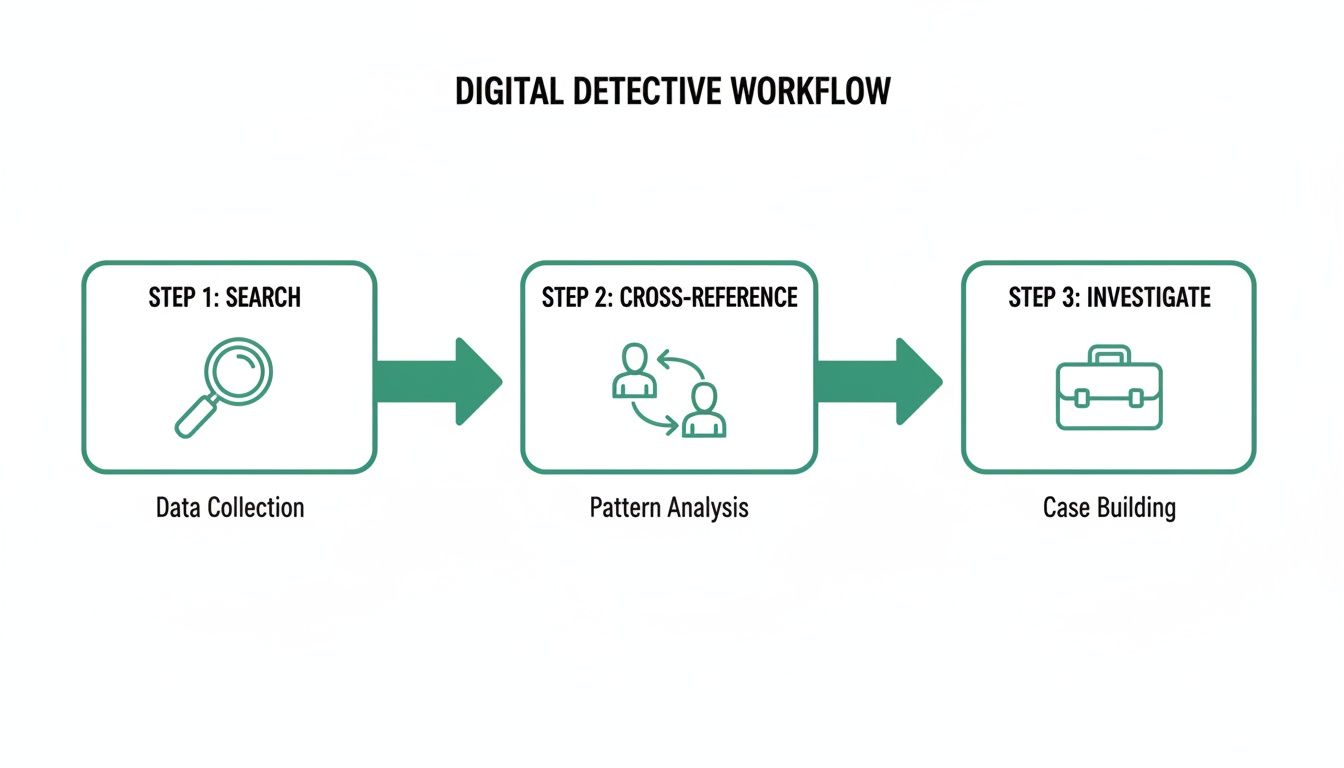
    Finding Emails Manually with Digital Detective Work

    Person typing on a laptop showing a LinkedIn profile, next to a 'Find Email' notebook.

    Before you let the fancy tools do all the work, it pays to learn the old-school manual techniques. Think of it as digital detective work—it builds a solid foundation and honestly, makes you appreciate the power of automation that much more.

    These hands-on methods are surprisingly effective and can often unearth an email when automated systems hit a dead end.

    The first place you should always check is the "Contact Info" section on a person's profile. It sounds basic, I know, but you’d be surprised how many people just list their email right there. It’s a quick win and should always be your first move.

    If that comes up empty, don't give up. The real detective work starts now. Scan their profile bio, read their "About" section, and scroll through their recent posts. Professionals often drop their contact details when promoting a webinar, a side project, or something they’re passionate about.

    Decoding Company Email Patterns

    One of the most reliable manual tricks is figuring out a company's email format. Most businesses use a consistent pattern, and once you crack the code, you can guess just about anyone's email with a high degree of accuracy.

    All you need is the person's full name and their company's domain (like company.com). From there, you just test the most common combinations.

    Here are the patterns I see most often:

    • First Name: john@company.com
    • First Name.Last Name: john.smith@company.com
    • First Initial Last Name: jsmith@company.com
    • First Name Last Initial: johns@company.com

    So, if you're looking for Jane Doe at Acme Corp (acmecorp.com), you'd start by testing jane.doe@acmecorp.com and jdoe@acmecorp.com. It feels like a bit of a guessing game at first, but you'll quickly develop an intuition for which formats are most common in certain industries.

    Verifying Your Educated Guesses

    Guessing an email is only half the battle. Sending a message to a bad address is a waste of time and, worse, it hurts your sender reputation. You need a way to check if your guess is right before you hit send.

    This is where free verification tools are a lifesaver. Services like MailTester let you plug in a potential email address, and they’ll do a quick check to see if an active inbox exists on that server. It’s fast and free.

    This simple verification step is crucial. It keeps your bounce rate low, which is a major signal email providers look at to identify spammers. A high bounce rate can get your entire domain blacklisted.

    Another slick trick is to just use Google. Wrap one of your guessed emails in quotation marks (e.g., "jane.doe@acmecorp.com") and search for it. If that exact email has ever appeared on a company website, press release, or conference speaker list, Google will usually find it. This not only verifies the address but also confirms it’s one they use publicly.

    Using Advanced Google Searches

    Beyond simple verification, Google can be a seriously powerful discovery tool if you know how to use it. With a few specific search operators—sometimes called "Google Dorking"—you can uncover contact info that’s hidden in plain sight.

    Try running these searches for your next high-value prospect:

    1. (“Jane Doe” AND email) site:acmecorp.com
      • This tells Google to search for the person's name and the word "email" but only on their company's website.
    2. “Jane Doe” “contact” “Acme Corp”
      • This looks for their name, the word "contact," and their company name anywhere on the web. It's great for finding directory listings or press mentions.
    3. “Jane Doe” filetype:pdf
      • This is a sneaky one. It often uncovers résumés, white papers, or academic articles where people list their contact info.

    These manual techniques take a bit more elbow grease, but they give you a much deeper understanding of the whole process. They're especially valuable when you're targeting a really important contact and need to be 100% sure you have the right info before reaching out.

    Automating Your Search with an Email Finder

    Look, manual methods are great for getting your feet wet, but they just don't scale. If you're trying to find emails for dozens—or even hundreds—of prospects on LinkedIn, the detective work quickly becomes a massive bottleneck. This is where automation, specifically a good email finder tool, completely changes the game. It turns a slow, manual grind into a fast, efficient process.
    An email finder is usually a Chrome extension that plugs right into your LinkedIn workflow. As you browse profiles, the tool hums along in the background, scanning data sources and using its own algorithms to pinpoint a person's business email. It’s a one-click fix that takes the guesswork out of the equation, letting you focus on what actually matters: building relationships and starting conversations.

    Getting Started with a LinkedIn Email Finder

    The first step is a breeze—just add the extension to your browser. It usually takes less than a minute. Once it's installed, you'll see a new icon or button pop up directly on LinkedIn profiles. There's no complicated setup; these tools are built to work right out of the box.

    When you land on a prospect's profile, the tool gets to work. You'll spot a new button, typically right near the person's name and headline. A single click on "Find Email" sends the extension off to its databases to retrieve the most likely business email for that contact.

    Here’s how cleanly an extension like EmailScout fits into a standard LinkedIn profile.

    Notice how the "Find Email" button is positioned right where you'd expect it. This intuitive design makes finding contact info a natural part of your prospecting routine, not some clunky, separate task.

    Understanding the Results

    After you click, the magic happens in seconds. The tool doesn't just spit out an email; it also gives you a verification status. This is the critical feature that separates a professional-grade tool from a basic scraper.

    • Valid: The system has confirmed the email address exists and is safe to send to.
    • Risky: This might be a "catch-all" server, meaning you can't be 100% sure it's valid without actually sending a message.
    • Invalid: The email is dead. Sending to it will get you a hard bounce.

    This immediate feedback is invaluable. It doesn’t just give you a contact detail—it protects your sender reputation by helping you avoid bad addresses. Once you have a valid email, you can save it directly to a prospecting list inside the tool's dashboard, keeping your lead gen efforts organized and moving. If you're looking to streamline even more of your LinkedIn activity, exploring the best LinkedIn schedulers can add another layer of efficiency to your outreach.

    The real power of an email finder isn't just speed; it's the combination of speed and accuracy. By finding and verifying emails at the same time, you eliminate wasted effort and give every email you send the best possible chance of landing.

    The data backs this up. The average LinkedIn message response rate is a solid 10.3%, which is about double the typical cold email response rate of 5.1%. This tells us that professionals on LinkedIn are receptive to outreach, making the emails you find there incredibly valuable. When you use a tool to get a verified email for an active LinkedIn user, you're tapping into a highly engaged audience.

    Ultimately, using a tool to find an email on LinkedIn isn't just a time-saver. It’s about working smarter, improving the quality of your data, and building a more effective outreach engine from the ground up. You can dig into a detailed comparison of the best email finder tools to see how different options stack up.

    Scaling Your Outreach with Bulk Email Lookups

    Finding one email at a time is fine, but it’s not going to fill your pipeline. To really build momentum, you have to move beyond single searches and start building large, targeted lists. This is where bulk email lookups completely change the game, turning the manual task of finding emails on LinkedIn into a streamlined, automated process.
    Instead of clicking profile by profile, you can use advanced features in tools like EmailScout to grab hundreds of verified contacts in just a few minutes. This frees you up to spend less time digging for data and more time writing personalized messages that actually get responses.

    It boils down to a simple, three-step process: install the tool, find the emails, and save your data.

    A three-step diagram illustrates the email discovery process: install software, find emails, save data.

    This workflow really shows the power of automation—it takes what used to be a tedious manual job and turns it into a few quick, repeatable clicks.

    Building Lists Passively with AutoSave

    One of the slickest ways to build lists at scale is with an AutoSave feature. Picture this: you're looking at a LinkedIn search results page with 25 perfect prospects. Instead of opening each profile one-by-one, AutoSave just works in the background, quietly finding and saving the verified email for every single person on the page.

    It's a massive time-saver. You can use it in a few really valuable situations:

    • LinkedIn Search Results: Run a super-specific search (like "Marketing Directors in the SaaS industry in California") and let AutoSave grab contact info while you scroll.
    • Company Employee Pages: Go to a target company's "People" tab on LinkedIn and turn on AutoSave to collect emails for their entire team. Perfect for account-based marketing.
    • Group Members: Find a LinkedIn group where your ideal customers hang out and pull member details to create a hyper-relevant outreach list.

    This turns your everyday LinkedIn browsing into a constant lead-gen activity, building you powerful lists with almost no extra effort.

    The key takeaway is that you're no longer actively hunting for each email. Instead, you're setting the criteria for your ideal prospect on LinkedIn, and the tool gathers the data for you as you explore.

    Processing Lists with the URL Explorer

    So, what if you already have a list of LinkedIn profiles? Maybe you got them from a conference attendee list, a CRM export, or some old research. Visiting each URL manually would take forever. This is where a URL Explorer becomes your new best friend.

    A URL Explorer lets you just paste a list of LinkedIn profile URLs directly into the tool. It then churns through the entire list in one go, finding the verified email for each profile and spitting out a clean, downloadable file.

    This is the best way to handle existing lead lists and enrich your data with accurate, verified email addresses. It closes the gap between having a list of names and having an actionable list of contacts ready for outreach. If you want to take your list building even further, you can learn more about using an email extractor for Chrome to really optimize your workflow.

    Pro Tips for Hyper-Targeted Bulk Lookups

    To get the most out of your bulk searches, remember that it’s not just about grabbing as many emails as you can. Quality always beats quantity.

    Before you run a bulk lookup, use LinkedIn's advanced filters—especially in Sales Navigator—to really narrow down your audience. Filter by things like:

    • Company Size: Zero in on businesses that fit your ideal customer profile.
    • Seniority Level: Target the decision-makers, like VPs, Directors, or C-suite execs.
    • Years in Current Role: Find people who are new to a role (and might be open to new ideas) or those with established authority.
    • Recent Activity: Look for people who have posted on LinkedIn in the last 30 days—they're more likely to be active and responsive.

    When you combine precise filtering with the power of bulk lookup tools, you can build huge, high-quality email lists that are ready for a successful outreach campaign. It's a strategic approach that ensures your efforts to find an email on LinkedIn lead directly to real business conversations.

    Keeping Your Outreach Smart and Compliant

    So you've found an email address on LinkedIn. Great. But that’s just the starting line. Simply firing off a message without a second thought is a rookie mistake that can tank your sender reputation for good.

    This is where smart, compliant outreach comes in. It’s the difference between landing in the inbox and getting blacklisted. The first step? Verifying every single email.

    A bounce isn't just a missed connection; it's a strike against you. Email providers like Google and Microsoft track these bounces. Rack up too many, and they'll start sending your messages straight to the spam folder—or worse, blocking you entirely.

    What Do Email Verification Statuses Mean?

    When you find an email, you'll see a status like 'Valid,' 'Risky,' or 'Invalid.' Knowing what these mean is critical for keeping your sender score healthy and your emails delivered.

    • Valid: This is your green light. The system has checked and confirmed the email address is live and ready to receive messages. These are the contacts you want to focus your energy on.
    • Risky: Think of this as a yellow light. It often flags "catch-all" email servers that are set up to accept any email sent to their domain. This makes it impossible to know for sure if jane.doe@company.com actually exists without sending something. Use these with caution, as they're more likely to bounce.
    • Invalid: Stop. This is a dead end. The address is confirmed to be nonexistent. Never, ever send to these addresses. It will trigger a hard bounce, which is the most damaging kind for your sender reputation.

    Staying on the Right Side of the Law

    Beyond the technical stuff, you have to think about anti-spam regulations. The big two are GDPR (for EU citizens) and CAN-SPAM (in the United States). They have different rules, but their core message is the same: be transparent and respect the person you're contacting.

    It all boils down to legitimate interest. You need a solid, business-related reason to be in their inbox. For instance, contacting a VP of Sales about a new CRM tool? That makes sense. Emailing them about a personal loan? That's spam. Once you’ve got your list, the next step is to write professional emails that get replies and start real conversations.

    Today’s B2B buyers are savvy. In fact, data shows that 82% of B2B buyers will look up a professional's LinkedIn profile before even agreeing to a meeting. This just goes to show how crucial it is for your outreach—and your own profile—to be polished and professional. They will be checking you out.

    The Ground Rules of Compliant Outreach

    Stick to these fundamentals to keep your campaigns clean, build a positive brand image, and stay out of trouble.

    1. Be Honest: Make it clear who you are and what your company does. No tricky subject lines or misleading sender names.
    2. Offer an Easy Out: Every single email needs a clear, simple way for someone to unsubscribe from future messages.
    3. Act on Opt-Outs Fast: When someone unsubscribes, you have to remove them from your list immediately. No exceptions.
    4. Include a Physical Address: The CAN-SPAM Act requires you to put a valid physical postal address in your email footer.

    When you pair a solid strategy to find emails on LinkedIn with a serious commitment to verification and compliance, you build an outreach machine that lasts. For more advanced strategies, you can also check out our guide on how to scrape emails from LinkedIn the right way. This approach doesn't just protect your brand; it builds the trust you need to get better response rates and have more meaningful conversations.

    Common Questions About Finding Emails on LinkedIn

    Diving into email discovery on LinkedIn always brings up a few key questions about legality, effectiveness, and staying on the right side of the platform's rules. Getting straight answers is the best way to build a prospecting strategy that actually works and doesn't land you in hot water.

    Let's clear up some of the most common concerns people have before they start. Knowing the landscape helps you move forward with confidence.

    Is It Legal to Find and Use Emails from LinkedIn?

    Yes, for legitimate business-to-business outreach, it's generally fine. The main thing is to comply with anti-spam laws like CAN-SPAM in the U.S. and GDPR in Europe. These rules aren't designed to stop you from doing business; they're there to make sure you do it respectfully.

    Your message needs to be relevant to the person's professional role, you have to say who you are, and every single email needs an easy opt-out link. At its core, compliant outreach is just about sending the right message to the right person.

    What Is a Realistic Success Rate for Finding Emails?

    If you're doing it all by hand, it’s a bit of a guessing game. Even with some solid detective work, you’ll probably only hit a 20-40% success rate, and that's after sinking a fair bit of time into it.

    This is where a dedicated tool completely changes the math.

    • Specialized Tools: A good email finder can boost your success rate to 70-90% for professionals with an active online presence. They do this by checking multiple data sources in an instant.
    • Instant Verification: They also confirm the email works on the spot, so you're not just getting an address—you're getting a working address.

    That jump in efficiency means you can focus on writing great outreach messages instead of just hoping your emails don't bounce.

    The real win with a professional tool isn't just finding more emails; it's finding the right emails. Getting verified, business-specific addresses is what protects your sender reputation and makes sure your messages actually land in the inbox.

    How Do I Avoid Getting My LinkedIn Account Restricted?

    This is a big one. Reputable email finders are built from the ground up to play nice with LinkedIn's terms of service. They mimic natural human behavior—like browsing a profile—instead of firing off aggressive, automated actions that get accounts flagged.

    To keep your account safe, stick with a tool that's laser-focused on one thing: finding contact information. Use it to supercharge your manual prospecting, not to automate your entire engagement strategy. This approach keeps your activity looking natural and your account in good standing.


    Ready to find verified emails on LinkedIn in a single click, safely and efficiently? EmailScout gives you the power to build targeted lists without the guesswork. Start for free and see the difference it makes.

  • A Modern Guide to Finding Contact Info for Sales

    A Modern Guide to Finding Contact Info for Sales

    Before you jump straight to automated tools, it’s worth mastering the art of manual contact discovery. Honestly, it gives you a serious edge. Learning how to dig into a company's digital footprint, use advanced search operators, and spot common email patterns can deliver surprisingly good results. Think of it less as a backup plan and more as building a solid foundation.

    Building Your Foundation for Contact Discovery

    Rushing to use an automated tool without understanding the basics is like trying to build a house without a foundation. Sure, you might get something up, but it won't be sturdy. When you master these manual techniques first, your entire outreach strategy becomes more resourceful. You'll be able to find almost anyone, even when the easy options come up empty.

    The fact is, email is still the king of professional communication. By 2025, nearly 4.5 billion people worldwide will be using it, sending over 376 billion emails every single day. That’s a massive opportunity for anyone trying to connect with the right people.

    Start With The Company Website

    Your first stop should always be the company's own website. It's the most direct and reliable source of information, and it often has exactly what you need if you just know where to click.

    • About Us and Team Pages: These pages are absolute goldmines. They often list key employees, their job titles, and sometimes even link directly to their professional profiles.
    • Press Releases or News Sections: Hunt for media contact info here. A press release might name the person in charge of communications, giving you a name and email to start with.
    • Blog Author Bios: If the company runs a blog, check out who’s writing the posts. Key team members often contribute, and their bios frequently include contact details or social links.

    By poking around these areas, you can quickly piece together the company's structure and pinpoint the person you need to reach. This groundwork is also a key part of figuring out who your ideal customer is, which you can learn more about in our guide on how to identify your target audience.

    Before moving on to more advanced methods, run through this quick checklist to make sure you've covered the basics on their website.

    Manual Contact Discovery Checklist

    This table breaks down the core manual steps you should take before firing up any automated tools. It’s a simple process, but it’s incredibly effective for building an initial profile of your target.

    Technique Where to Look Key Objective
    Team Page Review "About Us," "Our Team," "Leadership" pages Identify key personnel, titles, and reporting structures.
    Press Kit Mining "Press," "News," "Media" sections Find a dedicated media contact or communications manager.
    Author Bio Scan Company blog posts Discover subject matter experts and their direct contact info.
    Contact Page Check Main "Contact Us" page Look for departmental emails (e.g., sales@, info@) as a last resort.

    Once you've exhausted these direct sources, it's time to broaden your search without leaving the fundamentals behind.

    Using Advanced Search Operators

    Google is your best free tool for finding contact info, but you have to go beyond simple keyword searches. This is where advanced search operators come in. They act like special filters, letting you cut through the noise and uncover hidden gems.

    Key Takeaway: Using operators like site: and inurl: turns a generic search engine into a precision instrument. You can force Google to look for information only within a specific website or within documents containing certain keywords in the URL.

    For example, a quick search for "Jane Doe" site:company.com tells Google to only show you results for "Jane Doe" that appear on that specific company's website. This simple command can uncover team pages, blog posts, or staff directories you might have missed during your initial look.

    The whole manual process is often just this simple: inspect the website, run a targeted search, and then make an educated guess.

    A three-step flowchart illustrating manual contact search: website, Google search, and email guessing.

    This flowchart really shows how a systematic, step-by-step manual approach can quickly narrow down your search for the right person.

    The Art of The Educated Guess

    So what do you do when you have a name and a company domain, but no email? It's time for an educated guess, a technique also known as email permutation. Most companies use a consistent format for their email addresses, and figuring out that pattern is a huge step in learning how to find business emails on your own.

    Some of the most common patterns you'll see are:

    Jot down a list of these potential combinations. In the next section, we’ll get into how you can verify which of these addresses is the correct one—without sending a test email and getting a bounce. This manual prep work makes any automated tool you use later far more powerful and accurate.

    Using Digital Tools for Efficient Prospecting

    Mastering the manual techniques gives you a great foundation for finding contact info, but let's be honest—technology is what lets you do it at scale. Digital tools take the slow, methodical process of digging for details and turn it into a fast, efficient workflow. Instead of spending an hour hunting for a single email, you can uncover dozens in just a few minutes.

    The best tools plug right into your existing process, whether you’re scrolling through LinkedIn profiles or checking out company websites. This is all about working smarter, not harder, and building a lead-gen engine that doesn't add a bunch of friction to your day.

    Integrating Email Finders into Your Workflow

    The most practical way to get started is with a browser extension that works where you already are. An email finder like EmailScout installs directly into Chrome, putting powerful contact discovery tools just a click away. It's way more efficient than constantly flipping between tabs to use some separate web-based tool.

    Think about a real-world scenario. You land on the LinkedIn profile of a prospect who looks like a perfect fit. Instead of kicking off a manual search, a good extension will pop a button right there on the page. One click, and it finds and displays their verified professional email address.

    A person uses a laptop and magnifying glass to research decision-makers on an 'About Us' page.

    As you can see, the tool overlays the interface without getting in your way, giving you exactly what you need, right when you need it. This immediate access to data is what transforms passive browsing into active prospecting.

    Advanced Features for Bulk Discovery

    While one-click discovery is great for snagging individual prospects, you need more firepower to really scale your efforts. This is where features designed for bulk processing come into play. They let you shift from finding one email at a time to finding hundreds.

    Two powerful features you should look for are:

    • URL Explorer: This function lets you drop in a list of company website URLs and automatically pulls any available email addresses from each site. So, instead of manually visiting ten different "About Us" pages, you can run the whole list through the tool and get a single, consolidated report.
    • AutoSave Functionality: Imagine building a lead list without even trying. An AutoSave feature works quietly in the background, automatically grabbing contact information from the profiles you visit and adding it to a list you've designated. It’s passive lead generation at its finest.

    These kinds of advanced capabilities are built for high-volume prospecting. They’re absolutely essential for sales teams and marketers who need to build large, targeted lists on the fly.

    Comparing Your Tooling Options

    The market for email finders is crowded, and picking the right one can feel a little overwhelming. A lot of tools run on a credit-based system, where you pay for each email you find or verify. That model can work, but it gets expensive fast, especially if you're a startup or freelancer.

    Pro Tip: Keep an eye out for tools that offer a generous free tier or an unlimited model. This lets you scale your prospecting without constantly worrying about a running meter. Cost shouldn't be a barrier to finding valuable contact info.

    EmailScout, for instance, offers an unlimited free model, which really sets it apart from the credit-based crowd. This approach lets you find as many emails as you need without ever hitting a paywall—a massive advantage for anyone doing consistent outreach. When you're weighing your options, think about the balance between cost, features, and how easy it is to use. You can get a much deeper look in our full guide to the best email finder tools available today.

    Here’s a quick breakdown of the common pricing models you'll run into.

    Model Type How It Works Best For
    Credit-Based You buy a block of credits. Each email find or verification costs one or more credits. Teams with a predictable, fixed budget and lower-volume needs.
    Subscription Tier You pay a monthly fee for a set number of credits or features, with higher tiers offering more. Growing teams that need more features and a higher volume of searches.
    Unlimited Free The core email-finding feature is free and unlimited, with paid plans for premium features. Startups, freelancers, and anyone wanting to prospect without budget constraints.

    Ultimately, the goal is to find a tool that fits your workflow and your budget. By moving from manual methods to a tool-assisted process, you can dramatically crank up the speed and scale of your prospecting. That frees you up to focus on what really matters—building relationships and closing deals.

    Advanced Strategies for Hard-to-Find Contacts

    Sometimes, the easy way just doesn't work. When you're trying to reach a high-value executive, an elusive founder, or any decision-maker who keeps a low profile, you need to start thinking like a detective. The standard methods fail because these people often have gatekeepers or a minimal digital footprint on purpose.

    This is where you gain a serious edge by getting creative. It’s about digging deeper and looking in places your competition completely ignores. These tactics will help you uncover the direct lines of communication that you won't find on a company website or LinkedIn profile.

    A laptop on a wooden desk shows a business networking site, with text 'Automate Prospecting' in a green box.

    Go Beyond LinkedIn

    Look, LinkedIn is the go-to for a reason, but it's not the only game in town. High-level prospects often hang out in niche communities where they feel more comfortable sharing ideas—and sometimes, their contact info.

    Your mission is to find these digital watering holes. Think about industry-specific forums, private Slack communities, or even the comment sections on influential blogs. If your prospect runs a personal blog or has a GitHub profile, you’ve hit a goldmine. These are fantastic places to find a direct email they use for side projects or personal correspondence.

    Engaging on these platforms feels more authentic. You're not just another salesperson in their inbox; you're part of their community.

    Dig Into Public Company Documents

    Publicly traded companies—and even many large private ones—leave a breadcrumb trail of documents that most people never think to check. This information isn't hidden; it's just buried in plain sight.

    Here are a few places to start your search:

    • Press Releases: Always scan for the "Media Contact" section. It often lists the direct name, email, and phone number of a communications director or a PR rep who can get your message to the right person.
    • Investor Relations Reports: Annual reports and quarterly filings can name key executives. While a direct email is rare, you get a verified name to plug into your email permutation strategy.
    • Conference Speaker Lists: Has your target ever spoken at an industry event? Conference websites frequently publish speaker bios that include direct contact details or links to their personal websites.

    This approach takes a bit more patience, but the payoff can be highly accurate contact information for executives who are otherwise unreachable.

    Check WHOIS Data for Smaller Companies

    For smaller businesses and startups, a slightly more technical trick works wonders. Every domain name has a public record attached to it called WHOIS data, which lists the administrative and technical contacts for that domain.

    Sure, privacy services can sometimes hide this info, but it's always worth a look. A quick WHOIS search on a company's domain might just reveal the founder's email address. In a small organization where everyone wears multiple hats, this contact can often point you exactly where you need to go.

    Key Insight: The person who registered the company's domain is often a founder or an early, trusted employee. Reaching out to them can be a super effective backdoor approach.

    The sheer volume of online communication shows why verified information is so critical. With a projected 376 billion emails sent daily in 2025, your success depends on finding accurate decision-maker info among 4.6 billion users. This is where business development teams get a crucial advantage with tools like EmailScout's URL Explorer, which can pull emails from multiple pages at once. Considering many employees spend over two hours a day on email, cutting through the noise is everything. You can read more on these trends by exploring workplace email statistics and their impact.

    Ultimately, these advanced strategies are all about being resourceful and persistent. By combining a bit of digital sleuthing with creative thinking, you can find the contact info for almost anyone and start building the relationships that others can only dream of.

    Verifying Emails to Protect Your Sender Reputation

    That rush you get when you find what looks like the right email address? It's a great feeling, but it’s only half the job. Firing off a message to an unverified address is a gamble that can seriously backfire.

    Email verification isn't just a "nice-to-have" step; it's a non-negotiable part of any outreach strategy. Without it, your entire campaign could fall apart before it even gets off the ground.

    Every time you send an email that bounces, it’s a small red flag for email providers like Google and Microsoft. Let those bounces pile up, and your sender reputation takes a massive hit. Before you know it, even your emails to perfectly valid addresses are getting flagged as spam or blocked completely.

    The True Cost of a High Bounce Rate

    A high bounce rate is way more than just a failed delivery notice in your inbox—it's a direct threat to your domain's credibility.

    When email servers see a constant stream of failed deliveries coming from you, their algorithms start to assume you're a spammer using a junky, outdated list. As a result, they stop trusting you, and your chances of landing in anyone's primary inbox plummet.

    Think of your sender reputation like a credit score for your email domain. Each bounced email is a missed payment. Too many, and your score gets trashed, making it nearly impossible to get your messages delivered in the future.

    This means all the hard work you put into finding contacts and writing the perfect email could be for nothing. Your carefully planned campaign dies a quiet death in the spam folder, never seen by the people you need to reach.

    Understanding Different Types of Invalid Emails

    Not all bad emails are created equal. To clean up your lists, you need to know what you’re looking for. Some are simple typos, but others are more devious.

    • Syntax Errors: These are the easy ones to spot. Think john.doe@company (missing the .com) or jane@doe..com (with double dots). Most are simple mistakes.
    • Non-Existent Addresses: The address looks perfect, but the account was deleted ages ago or never even existed. These cause a hard bounce, which is especially damaging to your reputation.
    • Catch-All Servers: This is the tricky one. Some companies set up their servers to accept email sent to any address at their domain. You won't get a bounce, but your message often lands in an unmonitored black hole. It feels like a successful delivery, but it’s just a wasted effort.

    Learning to spot these different types is the first move toward building a clean, powerful contact list that actually gets results.

    Practical Verification Methods

    The good news is you don't have to risk a bounce to see if an email is valid. There are several ways to confirm an address's deliverability without sending a single thing.

    For those quick, one-off checks, plenty of free online tools let you paste in an email and get an instant verdict. They're perfect for when you've just tracked down a high-value prospect and need immediate confirmation before you hit "send."

    When you're working with a bigger list, a bulk verification service is your best friend. These platforms let you upload a whole spreadsheet of contacts and run a deep check on every single one. They’ll analyze the syntax, check the server responses, and flag risky addresses like catch-alls.

    For a closer look at the technical side of things, our guide on email address verification breaks it all down in more detail.

    Ultimately, building verification into your process is a must. Whether you're finding one email or a thousand, that extra step protects your reputation, boosts your deliverability, and gives your message a real shot at being read.

    Ethical Outreach and Data Privacy Practices

    So, you've mastered the art of finding contact info. That's a powerful skill, but it comes with some serious responsibility. How you actually use that information is just as important as how you found it.

    This isn't about finding legal loopholes. Ethical outreach is about building a sustainable strategy that creates positive, long-term relationships instead of just burning bridges with potential clients. When you access someone's data—even if it's publicly available—you need to handle it with respect. Following these principles doesn't just keep you out of legal trouble; it makes your outreach far more effective because it's built on a foundation of trust.

    Laptop screen displaying an email verification service with multiple checkmark icons on a wooden desk.

    Navigating Key Data Privacy Regulations

    You don't need to be a lawyer, but you absolutely have to know the rules of the road. The two big ones governing email outreach are the CAN-SPAM Act in the United States and the General Data Protection Regulation (GDPR) in the European Union.

    These laws set the ground rules for commercial emails. Ignoring them can lead to massive fines and a permanently torched sender reputation.

    Their core principles are pretty straightforward and all about protecting the recipient:

    • Be Honest: Your "From" name, subject line, and the message itself must be accurate. No trickery.
    • Provide an Exit: Every single email has to include a clear, easy-to-use unsubscribe link.
    • Identify Yourself: You must include your valid physical postal address somewhere in your email.

    To keep your outreach on the right side of the law, it's also smart to understand frameworks like ISO 27001 and specific regional rules, like the Australian Data Privacy Laws.

    Key Takeaway: Compliance isn't optional. Think of the unsubscribe link as a non-negotiable part of your email signature. It gives the recipient control and shows that you respect their inbox.

    Best Practices for Building Trust

    Staying compliant is just the bare minimum. Truly effective outreach goes a step further by focusing on practices that build genuine trust and rapport from the very first message. This is what separates a professional from a spammer.

    The goal is to start a conversation, not just blast a sales pitch into the void. This requires a shift in mindset from "what can I get?" to "what can I give?"

    Lead with Value and Personalization

    Generic, one-size-fits-all emails are a one-way ticket to the trash folder. Before you even think about hitting "send," ask yourself: what’s in it for them? Your first message should offer something genuinely useful.

    This could be anything from:

    • A helpful article relevant to a project they recently posted about.
    • An interesting observation you made about their company or industry.
    • A potential solution to a problem you've identified they might be facing.

    Real personalization shows you’ve done your homework. Mentioning a specific article they wrote, a recent company achievement, or a shared connection instantly proves this isn't another mass email. That respect for their time and work is what earns you a response.

    The incredible ROI of email marketing is built on this approach. Pros can see a 760% surge in revenue from well-built, targeted lists, but that only happens when you find the right people and approach them respectfully. With 82% of marketers using email, personalization is how you stand out. For anyone using a tool like EmailScout, that one-click email discovery can fuel campaigns with welcome email open rates as high as 80%—crushing the 20% average.

    Ethical Outreach Quick Guide

    The table below breaks down the clear difference between an ethical, effective approach and one that's destined to fail.

    Practice Ethical Approach (Do This) Unethical Approach (Avoid This)
    Personalization Reference specific details about their work or company. Using generic templates with only the name changed.
    Value Proposition Offer a useful insight or resource in your first email. Immediately asking for their time or money.
    Unsubscribe Include a clear, one-click unsubscribe link in every email. Hiding the opt-out link or requiring a login to unsubscribe.
    Transparency Clearly state who you are and why you are contacting them. Using misleading subject lines or a fake "From" name.

    At the end of the day, finding contact info is just the first step. When you combine your discovery skills with a solid commitment to ethical, value-first outreach, you turn a simple email address into a potential long-term business relationship built on mutual respect.

    Got Questions? We've Got Answers

    Even with the best tools and a solid game plan, you're going to hit a few snags trying to find someone's contact info. It happens to everyone. Here are some of the most common questions we get, along with some straightforward answers to help you get unstuck.

    What’s the Best Way to Find an Email for Free?

    Honestly, the most powerful free method is just a bit of clever detective work combined with a few free tools. It's a simple process that works surprisingly often, and it won't cost you a penny.

    First things first, you need to confirm the person's full name and their current company. A quick look at their LinkedIn profile is usually the most reliable way to do this.

    Next, head over to Google and use a specific search operator. Try a search like "[First Name] [Last Name]" email site:[companydomain.com]. You’d be surprised how often this uncovers an email address mentioned in a blog post, a press release, or a company bio.

    If that doesn't work, it's time to make some educated guesses based on common email patterns:

    • f.lastname@domain.com
    • firstname.lastname@domain.com
    • firstinitiallastname@domain.com

    Once you have a few possibilities, use a free email verifier or a tool like EmailScout's free extension to see if you've struck gold. This last step is key—it automates the verification and often finds the right email with a single click, saving you a ton of manual effort.

    How Do I Find Someone Who Isn’t on LinkedIn?

    When a prospect you really want to reach isn't on LinkedIn, it just means you have to get a little more creative. Think of it as looking for other digital footprints they’ve left behind. This is often how you find the contact info for decision-makers who fly under the radar.

    Your first stop should be the company's website. Dig into the "About Us," "Press," or "Media" pages. Key people who aren't big on social media are often listed there.

    If the company website is a dead end, broaden your search to other corners of the internet:

    • Industry Forums: Are they active in any niche online communities related to their work?
    • Event Speaker Lists: Check the websites for conferences, trade shows, or webinars where they might have spoken. Speaker bios are a goldmine for contact details.
    • Articles and Interviews: Search for their name alongside podcast interviews, articles, or white papers they've written.

    This kind of digging often uncovers direct contact info that isn’t listed anywhere else. It’s all about figuring out where they hang out online beyond the usual professional networks.

    Is It Legal to Email Someone for Business After Finding Their Info Online?

    Yes, it's generally legal to reach out for legitimate business reasons, but you must follow data privacy rules. The two big ones to be aware of are the CAN-SPAM Act in the United States and GDPR in the European Union.

    Staying compliant isn't that difficult, but it's non-negotiable. Your email can't be misleading, you have to be clear about who you are, and—this is the most important part—you must give them an easy, obvious way to opt out of future messages.

    The real key here is to stop thinking about it as just sending emails and start thinking about it as starting a valuable conversation. As long as your outreach is relevant, transparent, and respects their right to say "no thanks," you're on solid legal and ethical ground.


    Ready to stop guessing and start connecting? EmailScout lets you find verified email addresses with a single click, right from a social profile or website. Give it a try and find unlimited emails for free.

    Start Finding Contacts with EmailScout

  • How to Find Someone’s Email with 7 Proven Methods

    How to Find Someone’s Email with 7 Proven Methods

    You can try to find someone’s email the old-fashioned way—digging through company websites, social media profiles, and guessing common email patterns. Or, you can use a dedicated email finder tool to get verified results instantly.

    Honestly, the best approach is usually a mix of both. A little bit of manual detective work combined with the speed of automation gets you connected to the right person without wasting hours.

    Why Finding the Right Email Is a Game Changer

    Before we get into the "how," let's talk about the "why." Why is this one skill so important? In a world overflowing with digital noise, firing off a message to a generic "info@" address is pretty much the same as shouting into the void. It’s going to get lost, ignored, or filtered into oblivion long before it ever reaches a real person.

    Nailing down a specific person’s email address is your all-access pass to bypass the gatekeepers. It lets you drop a personalized message right into the inbox of a decision-maker—a potential client, a future business partner, or a key influencer. That direct line is where successful outreach begins.

    The Power of Precision Targeting

    Think about it in practical terms. A cold email sent to a generic inbox might get a 1% response rate, if you’re lucky. But a well-crafted message sent directly to the right person? I’ve seen those response rates jump to 10-20% or even higher. That’s not a small improvement; it's the kind of difference that can completely reshape a sales or marketing campaign.

    A targeted email does more than just deliver a message; it signals respect for the recipient's time by showing you’ve done your homework. It’s the first step in building a genuine professional relationship rather than just being another name in a crowded inbox.

    Once you see just how powerful direct email outreach is, you'll want to build a solid pipeline of contacts. You can discover top marketing lead sources to keep your campaigns fueled with fresh opportunities.

    Cutting Through the Digital Clutter

    Every single day, an mind-boggling 376.4 billion emails fly across the internet. That number is expected to hit 392.5 billion by 2026.

    This isn't just a fun fact; it's your competition. Your message is fighting for attention against an unprecedented amount of content. The people who master the art of finding direct emails will always, always outperform those who just spray and pray with mass, untargeted email blasts. Learning more about these email industry trends can give you a serious edge.

    Mastering the Manual Search: Your Inner Detective

    Before you even think about firing up an automated tool, it pays to roll up your sleeves and do a little old-fashioned digital detective work. Honestly, some of the best finds come from a few clever manual searches. It costs nothing but a few minutes of your time and builds a skill set you'll use constantly.

    The first, and most obvious, place to look is the company's website. I always head straight for the 'About Us,' 'Team,' or 'Contact' pages. You’d be surprised how often key employees are listed right there with their direct email addresses.

    This whole process is about finding the right person, not just any generic inbox.

    Infographic about find someone's email

    As you can see, getting your message directly to the decision-maker is what separates a successful outreach campaign from one that falls flat.

    Getting More Out of Google Search

    When the company website doesn't give you what you need, Google is your next stop. But don't just type in their name and hope for the best. You need to use specific search operators to tell Google exactly what you're looking for.

    Try a search string like this: site:company.com "Jane Doe" email. This simple command forces Google to search only on that company’s domain for Jane Doe’s name mentioned alongside the word “email.” You can swap "email" for "contact" or "reach" to see if that shakes anything loose.

    I’ve found this trick unearths contact info buried deep in old press releases, blog author bios, or forgotten team pages that aren't even in the main site navigation. It's a simple move, but it's incredibly effective.

    How to Make an Educated Guess (And Be Right)

    Okay, so direct searches came up empty. It’s time to make some smart, educated guesses. Most companies—especially larger ones—use a standardized format for their email addresses. Once you figure out the pattern, you can often predict anyone's email.

    Before you start guessing randomly, it helps to know which patterns are the most common. I've found that 90% of the time, a company will use one of the formats in this table.

    Common Email Address Patterns to Test

    Pattern Format Example (for John Smith at acme.com) Commonality
    First Name + Last Name johnsmith@acme.com Very High
    First Initial + Last Name jsmith@acme.com Very High
    First Name john@acme.com High
    First Name . Last Name john.smith@acme.com High
    First Name + Last Initial johns@acme.com Medium
    First Initial + Last Initial js@acme.com Low

    Once you have a few likely combinations, you need a way to verify them without just sending an email and praying it doesn't bounce. A quick hack is to use the compose window in Gmail. Type an address in the "To" field and just hover over it. If a Google profile pops up, you've almost certainly got a match.

    For a much deeper look into this, check out our full guide on finding email addresses by name, where we cover even more advanced strategies. Getting these manual techniques down gives you a massive advantage before you ever need an automated tool.

    Tapping into Social and Professional Networks

    Sometimes, the quickest way to an email address isn't a clever Google search—it's by going directly to where people hang out online.

    Professional and social networks are goldmines for contact info if you know where to look. Unsurprisingly, LinkedIn is the first place you should check. It sounds obvious, but you'd be surprised how many people forget to check the "Contact Info" section on a person's profile.

    If that’s a dead end, don't give up. The real gems are often hidden in plain sight. I've found emails buried in someone's bio, in their recent posts, or even in the comments section where they've told someone to "shoot me a note at [email]." You just have to be willing to do a little digging.

    Beyond the LinkedIn Profile

    Think of a LinkedIn profile as just the starting point. The real opportunities often show up in the content someone creates and shares.

    Keep an eye out for these:

    • Personal Websites: Does their profile link out to a personal blog or portfolio? Almost every single one has a contact page.
    • Published Articles: If they've written for places like Medium or other industry sites, their author bio at the bottom is a prime spot for an email address.
    • SlideShare Decks: Professionals love to upload their conference presentations. The last slide is almost always a "Thank You" or "Questions?" page, complete with their contact details.

    This kind of hands-on searching turns you from a passive browser into an active prospector. And if you're doing this for business, formalizing your approach with proven LinkedIn B2B lead generation strategies can seriously scale your efforts.

    Here's a pro tip: when you finally reach out, mention that specific article or presentation you found. It instantly shows you've done your homework and aren't just sending another generic spam message.

    Using Twitter's Advanced Search

    Don't sleep on Twitter, either. Its advanced search is surprisingly powerful for this.

    You can actually search for tweets from a specific user that contain words like "email" or "contact." Just pop (from:username) email into the search bar. You can even filter by date to make sure the information is recent and likely still valid.

    People often try to trick bots by writing out their email address—think "jane at company dot com" instead of the real thing. Make sure you search for those variations, too. It’s a simple trick, but it often uncovers emails that a standard search would miss entirely.

    Automating Your Search with an Email Finder

    Manual methods have their place, but let’s be real—your time is too valuable to spend hours playing digital detective when a machine can do the job in seconds. When you need to work efficiently, automation is the only way to go. This is where a good email finder tool completely changes the game.

    Imagine landing on a LinkedIn profile or a company’s team page and pulling a verified email address with a single click. No more guessing different name combinations or digging through endless Google searches. That's the real power of an email finder extension; it’s not just a shortcut, it’s a smarter and faster way to work.

    A laptop screen outdoors displaying a webpage titled 'One-Click Email' with a smiling man's photo.

    The image above gives you a glimpse of just how simple this can be. A tool like EmailScout overlays the contact info you need right on top of the websites you’re already using.

    Why Automation Beats Manual Searching

    While manual techniques are great for those tricky, one-off searches, they just don't scale. If your goal is to build a targeted list of 50 potential clients or 100 outreach prospects, trying to do it all by hand quickly becomes a massive bottleneck.

    Here’s where an automated tool gives you a clear edge:

    • Speed: What might take you an hour of manual digging can be done in just a few minutes. This frees you up to focus on what actually matters—crafting a great message and building relationships.
    • Accuracy: Reputable email finders don't just guess. They cross-reference massive databases and run real-time verification checks to confirm an address is active, which drastically cuts down your bounce rate and protects your sender reputation.
    • Integration: The best tools, like EmailScout, work as a browser extension. This means the functionality is baked right into your workflow, popping up on LinkedIn profiles and company sites exactly when you need it most.

    Using an email finder shifts your focus from the tedious task of searching to the strategic work of outreach. You can even explore a comparison of the best email finder tools to see how different options stack up.

    Practical Scenarios for Email Finders

    Let's move past the theory and look at how this plays out in the real world. The applications are pretty much endless, but a couple of key examples really highlight the power of these tools.

    An email finder isn't just about collecting addresses; it’s about creating opportunities at scale. It gives you the power to connect with the right people faster than your competitors can.

    For a sales rep, this kind of tech is a goldmine. They can browse the LinkedIn profiles of decision-makers at target companies and instantly grab their verified email addresses. Instead of burning half their day on prospecting, they can spend that time actually selling.

    In the same way, a marketer looking for collaboration opportunities can jump on the websites of potential partners and quickly pull contact info for the Head of Marketing or Partnerships Manager. This efficiency allows them to build a solid pipeline of potential collaborators without the manual grind. In both scenarios, the time saved translates directly into more opportunities and better results.

    Unlocking Advanced Email Finder Features

    Once you've got the hang of finding a single email, it's time to think bigger. The real power comes from scaling your efforts—moving from one-off searches to building entire prospect lists in minutes. This is where you graduate from the basic click-to-find function and dig into the features that separate the good tools from the great ones.

    Advanced features are built for one thing: efficiency at scale. We'll use EmailScout as our example to break down a couple of functions that can completely change how you work. These aren't just small add-ons; they're strategic tools for anyone serious about outreach.

    Build Lists Automatically with AutoSave

    Picture this: you're browsing through dozens of LinkedIn profiles for potential leads. Instead of clicking the EmailScout button on every single profile, what if you could just browse while the tool works silently in the background, building a lead list for you?

    That’s exactly what the AutoSave feature does.

    When you flip it on, EmailScout automatically grabs and saves the contact info from every profile you visit. You can scroll through a list of conference attendees or a company’s employee directory on LinkedIn, and the tool will quietly compile a list of verified emails. This is an incredibly powerful way to find someone's email without breaking your research rhythm.

    This isn't just a time-saver; it’s a fundamental shift in how you prospect. It turns passive browsing into an active, automated lead generation activity, allowing you to build a rich contact list with almost zero manual effort.

    By the time you're done looking around, a ready-made list is waiting for you, complete with names, job titles, and verified email addresses. A task that used to take hours is now just a background process.

    Extract Emails in Bulk with URL Explorer

    Now, let's take this a step further. What if you already have a list of target companies but need to find the right people inside them? Visiting each website one by one would be a massive time sink. This is where a bulk search feature like URL Explorer becomes your best friend.

    This tool lets you paste a list of company website URLs directly into EmailScout. It then gets to work, crawling each site to find and pull out all the public email addresses it can find.

    The process is incredibly straightforward:

    • Get your URLs ready: First, compile a list of the company websites you want to target (e.g., company-a.com, company-b.net, company-c.org).
    • Paste and go: Drop the entire list into the URL Explorer.
    • Export your contacts: In just a few minutes, you’ll have a comprehensive list of all the emails found, neatly organized and ready for your outreach campaign.

    This feature is a game-changer for marketers building media lists or sales teams targeting specific industries. Instead of hunting for individual contacts, you gather intelligence on entire organizations at once. It scales your ability to find someone's email from a single person to hundreds in one simple operation.

    Validating Emails and Practicing Ethical Outreach

    So you’ve found a potential email address. Awesome. But hitting "send" right away is a rookie mistake that can do more harm than good.

    Firing off an email to an unverified address is just asking for a bounce. A bounced email isn't just a failed attempt—it's a black mark against you. Email providers see those bounces and start thinking you're a spammer, which can torpedo your sender reputation and send all your future emails straight to the junk folder.

    This is why email verification is an absolute must. Before you even think about writing your first sentence, you need to confirm the inbox is live and can actually receive your message. It’s a simple check that protects your domain and gives your outreach a fighting chance.

    A laptop screen outdoors displaying 'Verify Emails' with green and red checkmarks.

    Don't underestimate the power of a valid email. When done right, email marketing can generate an incredible $36 for every $1 spent, making it one of the highest-ROI channels out there. And with mobile open rates hitting between 78-80%, you want to make sure your message lands in a real inbox. If you want to dive deeper into the numbers, you can discover more about these email statistics and see the full potential.

    Crafting a Respectful First Impression

    Once you have a verified email, the real work begins: ethical outreach. The goal isn't just to get a reply; it's to start a real conversation. Cold outreach gets a bad rap because too many people send lazy, generic, self-serving blasts. You can immediately set yourself apart by being respectful, personalized, and genuinely helpful.

    Your first email should feel like the start of a professional relationship, not a sales pitch. It needs to show you've done your homework and believe you can offer something genuinely useful to the recipient.

    If you're interested in the nuts and bolts, we have a detailed guide to validate an email address on our blog that walks you through the technical side of things.

    A Simple Template for Starting Conversations

    Forget those long, complicated templates you see online. The best first emails are often short, clear, and focused entirely on the other person. Your only goal is to see if there's interest and earn a reply.

    Here's a simple structure I've seen work time and time again:

    • Personalized Subject Line: Make it about them, not you. Mention a recent project, a mutual connection, or an article they wrote. Something like, "Loved your recent article on project management," works wonders.
    • Quick, Relevant Intro: Briefly say who you are and connect the dots for them. Why are you emailing them?
    • Offer Clear Value: In a sentence or two, what's in it for them? How can you help solve a problem they actually have?
    • Simple Call-to-Action: Keep it low-pressure. A simple question like, "Is this something you’re currently focused on?" is much better than asking for a 30-minute call.

    This approach shows you respect their time, proves you've done your research, and opens the door for a real dialogue.

    Common Questions About Finding Emails

    Let's be honest, diving into email outreach can feel a bit like the wild west. You've got questions, especially around the rules and what actually works. It's smart to get these sorted out before you start sending.

    Is This Actually Legal?

    Yes, but you absolutely have to play by the rules. It's not a free-for-all.

    In the U.S., the CAN-SPAM Act is the law of the land. The big takeaways are that your message can't be deceptive, and you must give people a clear and easy way to opt-out. Over in the E.U., GDPR is the main regulation, which means you need a "legitimate interest" to contact someone.

    The bottom line for both? Always be transparent and lead with genuine value.

    How Good Are These Email Finder Tools, Really?

    The good ones are surprisingly accurate. Top-tier tools don't just guess; they pull from multiple data sources and often run a real-time check to make sure the email address is live.

    No tool is perfect, of course, but you're looking at a 70-90% success rate for finding a verified email. That's a massive improvement over stumbling around in the dark.

    A reliable tool doesn’t just find an email; it validates it. This simple step protects your sender reputation and ensures your carefully crafted message actually has a chance to be read.

    How Do I Keep My Cold Emails from Landing in Spam?

    Landing in the inbox is half the battle. Here’s how you win it:

    • Start with a verified email. This is non-negotiable. Sending to dead addresses is a one-way ticket to the spam folder.
    • Personalize your subject line and message. Generic blasts scream "spam." Show you've done at least a little homework.
    • Ditch the spammy words. Avoid obvious triggers like "free," "guarantee," or using ALL CAPS.
    • Never send attachments on the first outreach. It’s a huge red flag for email providers.
    • Warm up your email account. If you're new to outreach, send emails slowly at first to build a good sender reputation over time. It's a marathon, not a sprint.

    Ready to stop guessing and start connecting? With EmailScout, you can find verified email addresses in a single click, directly from LinkedIn profiles and company websites. Try it today and build your ideal prospect list faster than ever. Get EmailScout for free.

  • How to Find Someones Email Address Like a Pro

    How to Find Someones Email Address Like a Pro

    So, you need to find someone's email address. The good news is, you can usually track it down with a bit of clever detective work. It’s often a mix of smart Google searches, understanding how companies structure their emails, and sometimes, using a specialized tool to do the heavy lifting for you.
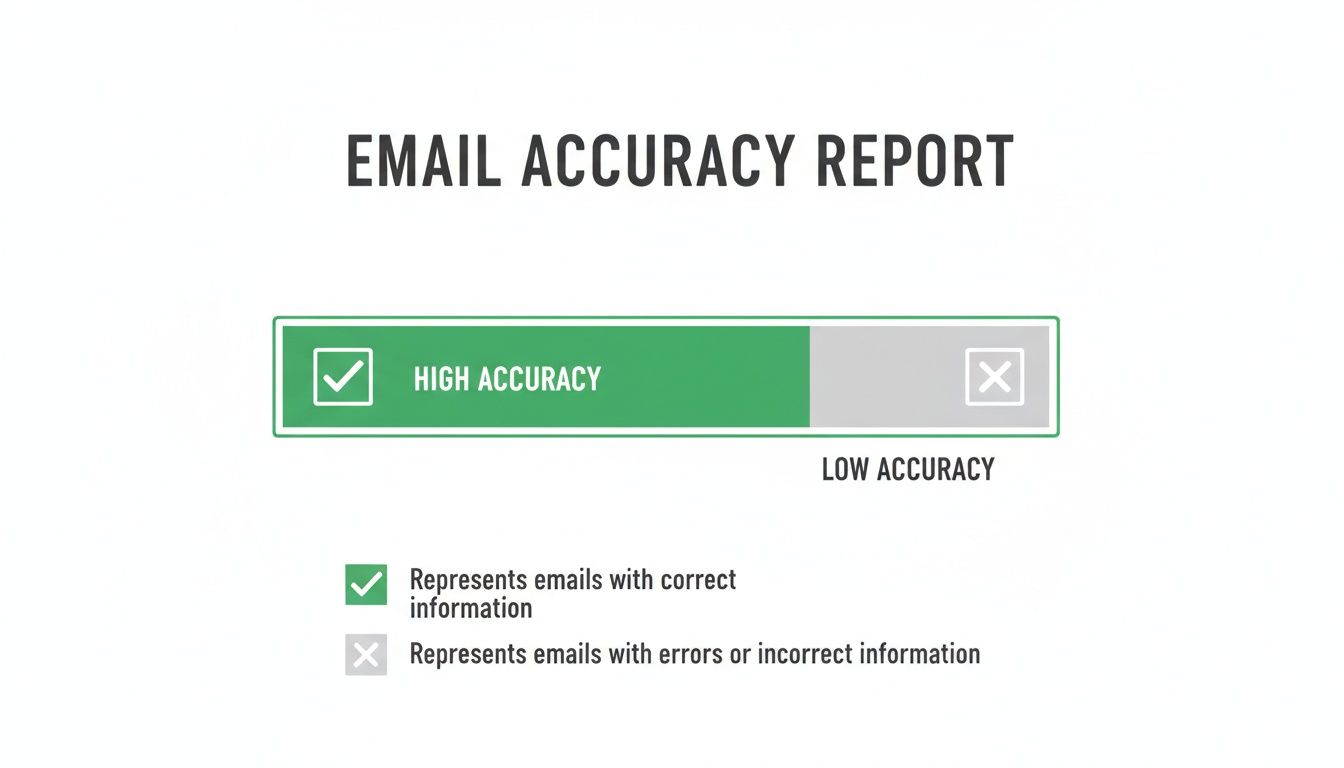
    Think of things like using a Google search operator (site:company.com "Jane Doe" email) or just trying common formats like jane.doe@company.com. More often than not, one of these tactics will get you where you need to go.

    Why Finding the Right Email Is Your Secret Weapon

    A person with glasses typing on a laptop showing an email interface, with office supplies on a wooden desk.

    Before we get into the "how," let's talk about the "why." This isn't just about collecting contact info; it’s about opening doors to real professional opportunities. A correct, verified email is a direct line to the person you want to talk to. No gatekeepers, no getting lost in a generic inbox—just your message, delivered.
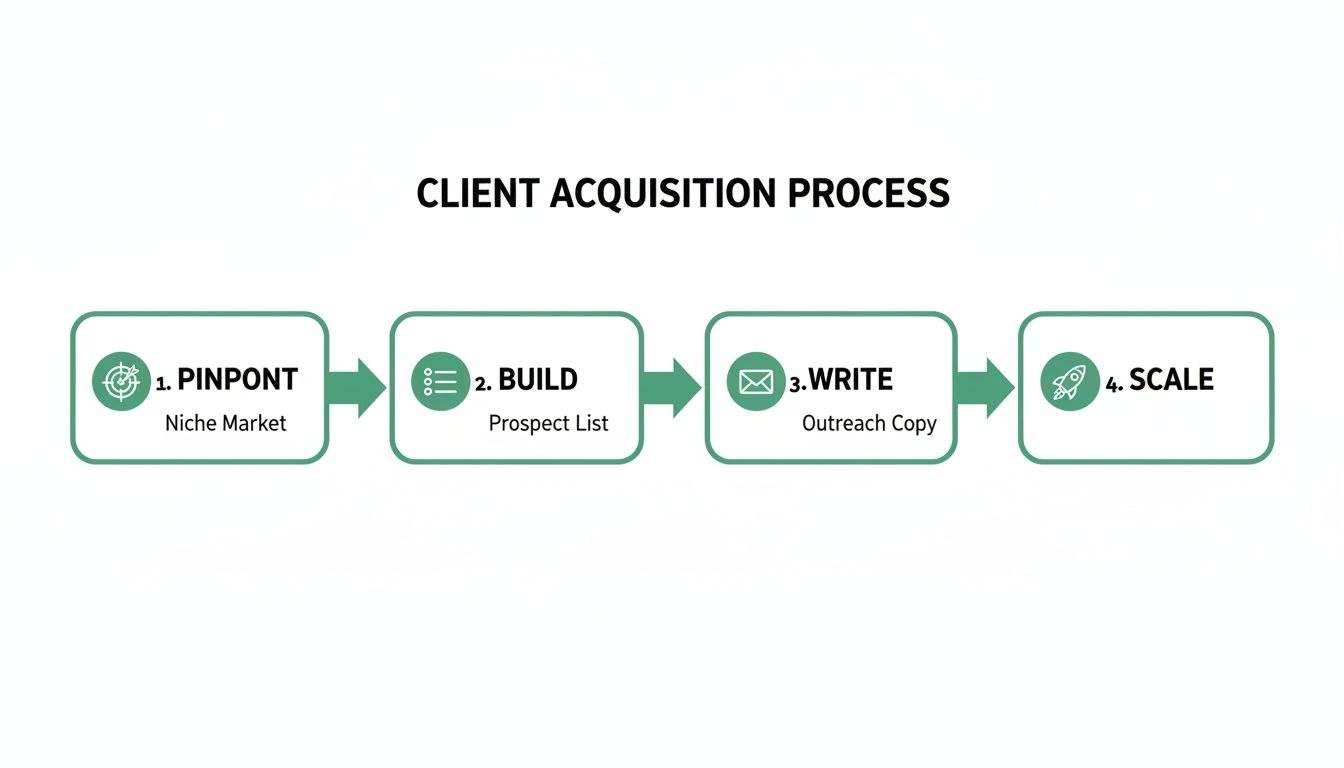
    This completely changes the outreach game. You're not just crossing your fingers and hoping your email to info@company.com gets forwarded. You’re having a one-on-one conversation. That level of precision is what separates a successful campaign from one that falls flat.

    Connecting Accuracy to Real-World Results

    Having the right email has a massive impact, whether you're in sales, marketing, or just trying to network. For sales teams, it means closing deals faster. For marketers, it means better engagement and ROI. For anyone building a professional network, it’s how you start a real conversation.

    The numbers back this up. Email marketing consistently delivers an insane return, often around $36 for every $1 spent. With over 80% of marketers leaning on email for lead generation, the quality of your list is everything. It directly fuels your entire pipeline.

    The real challenge today isn't sending more emails. It's getting the right emails to the right people, faster and more reliably.

    The Strategic Advantage of a Verified Contact

    A verified email isn't just a destination; it's a strategic edge. It means your hard work doesn't go to waste hitting dead ends. Every bounced email is a mark against your sender reputation, which makes it more likely your future messages will end up in the dreaded spam folder.

    Here’s exactly what a verified email helps you do:

    • Boost Deliverability: You sidestep hard bounces that can tank your domain's reputation.
    • Increase Open Rates: Your message actually lands in the right inbox, which dramatically improves the odds of it being read.
    • Build Credibility: Reaching out to the correct person shows you've done your homework and you respect their time.

    To really get a handle on how valuable this is for your outreach, it’s worth digging into an essential guide to email marketing. When you get this part right, finding emails stops being a guessing game and becomes a predictable system for growth.

    Smart Manual Search Tactics That Actually Work

    A person types on a laptop displaying 'Google Search Operators' on the screen, with a notebook on the desk.

    Before you pull out your credit card for a fancy tool, it's worth getting your hands dirty with some old-school manual searching. Honestly, you can find a surprising number of emails with nothing more than a bit of clever thinking and the search engine you already use every day.

    Think of it like being a detective. You're hunting for digital breadcrumbs—the little traces of contact info people leave behind, sometimes on purpose, sometimes by accident. For one-off searches, these no-cost techniques are incredibly effective.

    Mastering Google Search Operators

    Google is your best free tool, but most people barely scratch the surface of what it can do. The secret lies in using advanced search operators, which are simple commands that tell Google exactly what you want to find.

    Think of them as powerful filters. Instead of sifting through the entire internet, you're pointing Google to a specific website or a specific phrase. This kind of precision is how you uncover emails that are otherwise buried.

    Here are the operators I use most often for this:

    • site: This is your sniper rifle. It limits your search to just one website, which is perfect for digging into a specific company's domain.
    • intext: This command tells Google to look for a specific word or phrase inside the body of a webpage.
    • " " (Quotes): Slap quotes around a name, and Google will search for that exact phrase instead of the individual words. It's a game-changer.

    You can chain these operators together to create incredibly specific search queries. For example, a search like site:company.com intext:"Jane Doe" email tells Google to only look on company.com for pages that contain both the exact name "Jane Doe" and the word "email."

    This one simple string can instantly surface contact pages, team bios, or press releases where an email is listed. Don't forget to try a few variations of the person's name or title to be thorough. For a deeper dive, check out our full guide on finding email addresses by name.

    Digging into Social Media Bios and Posts

    Social media is another goldmine, especially for professionals who actually want you to contact them. A direct message is one thing, but an email often feels more direct and professional.

    LinkedIn is the obvious first stop. Always check the "Contact Info" section on a profile—you’d be shocked how many people just list their email publicly. If it’s not there, the hunt isn’t over.

    Scroll through their recent activity, paying close attention to their posts and comments. It's common for people in sales, consulting, or business development to drop their email in a comment when networking. You can even use the search bar within LinkedIn to look for their name plus terms like "email" or "reach me at."

    Twitter (now X) is also clutch. People often put their email right in their bio, sometimes tweaking the format to dodge spam bots (e.g., jane [at] company [dot] com). It’s also worth a quick scan of their past tweets and replies to see if they’ve ever shared it.

    Finding Emails on Company Websites

    Beyond just using a site: search on Google, company websites themselves hold a ton of clues. The real goal here is to figure out the company's email pattern. Once you find just one email address from that domain, you can usually guess everyone else's.

    Here are a few places I always check:

    1. "About Us" or "Team" Page: These pages are a great starting point. Even if your target isn't listed, a colleague's email can reveal the company's format (e.g., firstname.lastname@company.com).
    2. Press Releases or News Section: Scan these for a media contact. A PR manager’s email like jdoe@company.com is a massive clue about the company's default email structure.
    3. Author Bios on the Company Blog: If the person you're looking for has ever written for their company's blog, their bio at the bottom of the article is a prime spot for an email address. This is especially true for writers, marketers, and industry experts.

    Decoding Company Email Patterns for an Educated Guess

    When your initial manual searches turn up nothing, the next best move is to make a highly educated guess. This isn't just about throwing spaghetti at the wall to see what sticks; it's a methodical way of figuring out a company's internal logic for creating email addresses.

    The good news is that most organizations, from tiny startups to massive corporations, stick to a standardized pattern. Your job is to crack that code. Once you find the pattern for just one employee, you’ve likely figured it out for everyone.

    Finding the Core Email Structure

    Every email address is built from two simple parts: the employee's name and the company's domain. The first thing you need to do is lock down the correct domain. Usually, it's just companyname.com, but keep an eye out for variations like companyinc.com or country-specific domains like .co.uk.

    Once you've got the domain, the real work begins: figuring out the name variations. The goal here is to build a shortlist of the most likely email formats. Put yourself in the shoes of a system admin—they're going to use a simple, consistent formula to create emails in bulk.

    The Most Common Email Permutations to Test

    You could probably list dozens of possible combinations, but in reality, just a handful of formats cover the vast majority of corporate emails. Don't waste your time on obscure patterns.

    Start with these heavy hitters—they're the ones I always check first:

    • First Name: jane@company.com (More common at smaller, tight-knit companies)
    • First Initial + Last Name: jdoe@company.com
    • First Name + Last Initial: janed@company.com
    • First Name + Last Name: janedoe@company.com
    • First Name . Last Name: jane.doe@company.com (This is an extremely popular one)

    Pro Tip: Don't forget that companies sometimes have to adjust for common names. If a jane.doe@company.com already exists, the next Jane Doe might get something like jane.m.doe@company.com to avoid a duplicate.

    With your list of potential emails, you'll need to figure out how to test them. A quick way to generate these variations is by combining text strings for email pattern guessing in a spreadsheet.

    Use the Company Website to Confirm Your Theory

    The best way to know if your guess is on the right track is to find a real, publicly listed email from that company. Think of it as your Rosetta Stone. The company’s own website is the perfect hunting ground.

    Poke around in the places where they'd want a real human to be the point of contact:

    1. Press or Media Pages: These often list a media relations contact. You might find a generic press@company.com, but sometimes you'll strike gold with a specific person's email, like john.smith@company.com.
    2. Sales or Support Inquiries: Even a generic address like sales@company.com is a clue. It tells you the company probably doesn't use periods or special characters in its local-part (the part before the @).
    3. "Team" or "About Us" Pages: This is where the real treasure is. Even if your specific target isn’t listed, finding a colleague's email confirms whether the pattern is first.last or firstinitiallast.

    These little clues help you move from pure guesswork to a calculated, logical approach. For a deeper dive, check out our breakdown of common corporate email address formats to see the logic behind why companies choose certain patterns.

    How to Verify Your Guesses (Without Sending an Email)

    Okay, you've identified a likely pattern and crafted what you believe is the correct email. Now what? Whatever you do, don't send a test email. A hard bounce signals to email providers that you're sending to bad lists, which can seriously damage your sender score and future deliverability.

    Instead, use a free email verification tool. These services run a few simple checks behind the scenes without ever sending a message:

    • Syntax Check: Makes sure the format is valid (name@domain.com).
    • Domain Check: Confirms the domain actually exists and has a mail server.
    • Server Ping: This is the key step. The tool communicates with the mail server and asks if the mailbox (jane.doe) exists, getting a yes/no answer without sending anything.

    This final check is what gives you the confidence to hit "send" on your actual outreach, knowing your message has the best possible chance of landing in the right inbox. It’s the critical last step that turns a good guess into a verified lead.

    Using Email Finder Tools for Speed and Scale

    Manual searching and educated guesses work just fine for finding one or two emails. But when you need to contact dozens or even hundreds of prospects, that approach falls apart fast. It just doesn't scale.

    This is where dedicated email finder tools come in. They’re the force multiplier you need, turning a tedious, time-sucking manual task into a quick, automated process.

    These tools, usually browser extensions or web apps, work by scanning pages like a LinkedIn profile or a company’s “About Us” page. They then cross-reference the information they find with massive, constantly updated databases of professional contacts. In seconds, you get a verified email address.

    The Power of Single-Click Prospecting

    Picture this: you've landed on the LinkedIn profile of a key decision-maker you've been trying to reach. Instead of opening new tabs for Google searches or trying to guess email patterns, you just click a button.

    With a tool like the EmailScout Chrome extension, you can pull their verified contact info directly from the page you’re already on. That’s it.

    This completely smooths out the prospecting workflow. It gets rid of the friction and constant tab-switching that makes manual searching so draining. You can stay focused on finding good prospects while the tool does the grunt work of finding how to actually contact them.

    Given that global email usage is between 4.59 and 4.83 billion users—with an average of 1.86 email accounts per person—the odds of guessing the right address are slim. Trying to find the correct one out of over 8.3 billion accounts worldwide is a losing game for anyone who needs to move quickly.

    Beyond Individual Profiles with URL Explorer

    Finding an email from a single profile is great, but the real power comes from doing it in bulk. This is where a feature like a URL Explorer becomes your best friend. Instead of visiting pages one by one, you can feed it a whole list of sources.

    Let's say you have a list of 20 insightful blog posts written by industry experts you want to connect with for a roundup. Manually visiting each article, finding the author's name, and then starting a whole new search for their email would take all afternoon.

    With a URL Explorer, the process is way simpler:

    • Copy your list of blog post URLs.
    • Paste the entire list into the tool.
    • Click search and let it pull the authors' names and find their emails all at once.

    This approach is perfect for building targeted outreach lists from conference speaker pages, company team pages, or lists of content creators. It turns hours of mind-numbing research into a task that takes just a few minutes. If you're curious how different tools stack up, it's worth checking out a comparison of the best email finder tools on the market.

    Of course, finding the email is only half the battle. You need to be sure it's accurate, or your whole campaign could flop.

    Email accuracy report indicating high accuracy (green check) and low accuracy (grey X) with a descriptive legend.

    As you can see, relying on high-accuracy sources is non-negotiable. It has a direct impact on your deliverability and protects your sender reputation.

    Comparison of Email Finding Methods

    So, when should you go manual, and when should you fire up a tool? It really depends on your goal. Manual methods have their place, but for anything beyond a handful of contacts, the efficiency of a dedicated tool is undeniable.

    Method Speed Cost Scalability Best For
    Manual Searching Slow, one-by-one Free Very Low One-off searches, highly targeted individual outreach.
    Email Finder Tools Fast, bulk processing Subscription-based High Building lead lists, sales prospecting, PR & outreach campaigns.

    Ultimately, a good email finder saves you your most valuable resource: time. That time is better spent building relationships, not digging through search results.

    Automating Your Prospecting While You Browse

    The best email finders take things even further with passive automation. These features work quietly in the background, building your contact lists for you while you just go about your day browsing the web. A feature like AutoSave is a complete game-changer here.

    Here’s how it works in the real world:

    You’re a sales rep tasked with building a list of marketing managers in the software industry. Your daily routine is already packed with browsing LinkedIn profiles, company websites, and industry news.

    With AutoSave turned on, the email finder extension automatically spots and saves contact info from the relevant profiles you visit. You’re not clicking anything for each person; you’re just doing your research. The tool is silently building a lead list for you in the background. At the end of the day, you can export a clean, organized list without having wasted a single minute on data entry.

    This passive collection method turns every browsing session into a productive prospecting activity. You can build a rich pipeline of contacts with almost no active effort, ensuring no good lead slips through the cracks.

    This level of automation completely changes how you think about lead generation. It shifts you from an "active hunting" model to a "passive gathering" one. This frees you up to focus on what actually moves the needle—crafting personalized outreach and building relationships, not just finding the address to send your message to.

    Crafting Outreach That Earns a Reply

    So you’ve found their email. The real work starts now.

    Having a verified email address is like holding a key. How you turn it decides if the door opens or gets slammed shut. Your first message is everything—it's what turns a simple contact into a real conversation.

    Don’t be the person who sends a generic, self-serving email. That’s a one-way ticket to the spam folder. Good outreach is built on respect, value, and a bit of genuine effort. It's about proving you've done your homework before you ask for a single second of their time.

    The Power of Genuine Personalization

    Personalization isn’t just plugging {{first_name}} into a template. Anyone can do that. Real personalization shows you actually know who you're talking to and what they care about. It’s what separates an email that feels like a marketing blast from one that feels like it was written just for them.

    Before you type a single word, spend five minutes on them. Find a recent blog post they wrote, a project they just launched, or even an interesting comment they left on LinkedIn.

    Mentioning something specific shows you’re not a bot. For instance, a subject line like "Quick Question" is lazy and easy to ignore. But what about, "Loved your recent article on project management"? That immediately shows you’ve paid attention and establishes a relevant connection.

    Provide Value Before You Ask for Anything

    This is the golden rule of cold outreach: give before you get. Your first email needs to be all about them, not about what you want. Nobody owes you a reply, so you have to earn it.

    What does "value" look like? It can be simpler than you think:

    • Share a useful resource: Found an article, tool, or study that solves a problem you know they have? Send it over.
    • Offer a genuine compliment: Did you admire a specific piece of their work? Tell them, and explain why it caught your eye.
    • Provide a helpful insight: Maybe you noticed a small opportunity for them or a trend they'd find interesting. Share it constructively.

    The goal is to shift their mindset from, "What does this person want?" to "This person gets what I do and might actually be helpful." It’s a subtle change, but it makes all the difference in getting a positive response.

    Navigating Legal and Ethical Waters

    Once you decide to use that email, you’re stepping into a world with rules. Ignoring legal and ethical guidelines isn't just bad for business—it can get you hit with serious penalties and tank your company's reputation.

    You absolutely need to know about two key regulations:

    • CAN-SPAM Act: This is the U.S. law for commercial email. It's pretty straightforward: be honest about who you are, don't use misleading subject lines, and give people an easy way to opt out.
    • GDPR (General Data Protection Regulation): If you're contacting anyone in the EU, GDPR is a big deal. You need a "legitimate interest" to reach out, which means your reason for contacting them must be directly related to their professional role.

    The big idea behind these laws is consent and relevance. Never, ever add someone to a marketing newsletter without their explicit permission. Always include a simple unsubscribe link. Your initial email should feel like a targeted, professional inquiry, not an unsolicited sales pitch.

    Following these rules doesn't just keep you out of trouble; it shows respect and helps build the trust you need to start a real conversation.

    Questions We Hear All the Time

    When you're deep in the outreach game, a few questions always pop up about the right way to find and use someone's email. Let's tackle the most common ones we get, so you can move forward with total confidence.

    Is It Actually Legal to Find and Email Someone for Business?

    Yes, in most B2B situations, it's generally fine, but you absolutely have to play by the rules. Regulations like GDPR in Europe and the CAN-SPAM Act in the U.S. revolve around the idea of "legitimate interest."

    What does that mean? If your service or product is genuinely a good fit for someone's professional role, you usually have a solid reason to reach out. But that's not a green light to spam.

    The golden rule here is to be transparent and respectful. Always state who you are, make sure your message offers real value, and—this is non-negotiable—give them a crystal-clear, easy way to opt out. And whatever you do, never buy email lists. They're a cesspool of bad, non-compliant data that will wreck your sender reputation.

    What Should I Do If an Email Bounces?

    A bounce is a critical piece of feedback, and you need to act on it immediately. What you do next depends on the type of bounce.

    • Hard Bounce: This is a dead end. The email is invalid, doesn't exist, or has been shut down. You must delete it from your list right away. Repeatedly hitting dead-end addresses is a massive red flag to email providers and will tank your sender score, sending more of your emails straight to the spam folder.
    • Soft Bounce: This is just a temporary snag. The person's inbox could be full, or their company's server might be having a moment. It's usually okay to try resending in a day or two.

    But before you give up after a hard bounce, do a quick sanity check. Did you spell the name or domain correctly? It's shockingly easy to make a small typo. You could also try another common email pattern (like j.doe@ instead of jane.doe@) and run it through a verifier before hitting send again.

    How Do I Verify an Email Without Actually Sending a Message?

    This is exactly what email verification tools were built for. These services are your secret weapon for protecting your sender reputation. They run a series of technical checks to confirm an address is valid without sending a single email, so you never have to risk a hard bounce.

    Here’s a peek behind the curtain at how it usually works:

    1. Syntax Check: First, the tool makes sure the email looks right (it has an @ symbol, a valid domain, etc.).
    2. Domain & Server Check: Next, it confirms the domain is real and has a mail server (MX records) set up to receive emails.
    3. Mailbox Ping: This is the magic step. The service talks directly to the mail server and asks, "Hey, does this specific mailbox exist?" The server gives a simple yes or no, and no email is ever delivered.

    Running your emails through a verifier before you send your first message is just good outreach hygiene. It's what separates the pros from the amateurs. Most top-tier email finders have this built right in, making it a seamless step in your workflow to find someones email and actually connect with them.


    Ready to stop guessing and start connecting? The EmailScout Chrome extension gives you the power to find verified email addresses in a single click, right from LinkedIn profiles and company websites. Try it today and build your outreach lists faster than ever.

    Find unlimited emails for free at https://emailscout.io

  • How to Find Clients and Build a Predictable Pipeline

    How to Find Clients and Build a Predictable Pipeline

    Hoping for the best isn't a strategy. If you're tired of the feast-or-famine cycle, it's time to stop guessing and start building a real, repeatable system for finding clients.

    This playbook cuts through the generic advice and lays out a modern blueprint that actually works: Pinpoint your ideal customer, build a targeted list of decision-makers, write outreach that gets a response, and scale what's working.

    Forget waiting for referrals. This is about taking control and creating a predictable pipeline of high-quality leads.

    Beyond Luck: Finding Clients With a Modern Blueprint

    Let's be real. The old ways of finding clients—endless social media posts, networking events, and just hoping someone stumbles upon your website—are scattered and unreliable. It’s like waiting for lightning to strike. Sure, it might happen, but you can't build a sustainable business on maybes.

    We're going to shift from that passive, hopeful approach to active, strategic outreach. It’s about being intentional. It's about knowing exactly who you're contacting and why they should care, turning a game of chance into a predictable process.

    The Four Pillars of Client Acquisition

    This entire system boils down to four critical stages. Nail these, and you'll turn client acquisition from a frustrating art into a data-driven science.

    • Pinpoint Your Ideal Client: Before you write a single email, you have to know exactly who you're looking for. This goes way beyond basic demographics. What are their biggest headaches? What goals keep them up at night?
    • Build Targeted Lists: Once you have that crystal-clear picture, it’s time to find them. This is where you'll efficiently gather contact information for the right people at the right companies.
    • Write Compelling Outreach: A perfect list is worthless if your message falls flat. Crafting personalized, value-first emails is the key to starting actual conversations, not just getting ignored.
    • Scale Your System: Finally, you'll build a process to manage and grow your outreach. This is how you turn one-off campaigns into a consistent engine for new business.

    For a deeper dive, this actionable playbook on how to generate leads for B2B is packed with proven strategies.

    This simple flowchart breaks down the entire process.

    A clear flowchart outlining a four-step client acquisition process: pinpoint, build, write, and scale.

    Each step builds on the last, creating a logical flow from high-level strategy to day-to-day execution. Whether you’re a freelancer, an agency owner, or a B2B sales pro, you’re about to get a clear system for keeping your pipeline full.

    Pinpointing Your Ideal Client to Stop Wasting Time

    Chasing every possible lead is a surefire way to burn out fast. If you want to find the right clients, you have to first define, with crystal clarity, exactly who they are. This is where building an Ideal Client Profile (ICP) becomes the single most important thing you can do for your outreach.

    And I'm not talking about vague descriptions like "small businesses" or "startups." We need to get way more specific than that. A truly effective ICP is a detailed snapshot of the exact person, at the exact company, who desperately needs what you're selling and actually has the power to buy it.

    Moving Beyond Basic Demographics

    A powerful ICP digs past the surface-level data and gets into the human and business drivers behind a purchasing decision. The goal is to understand their world so intimately that your outreach email feels less like a cold pitch and more like a genuinely helpful tip from someone who gets it.

    To build out this profile, you need to answer a few key questions:

    • What are their biggest day-to-day frustrations? Think about the bottlenecks, the clunky processes, and the recurring headaches that are stopping them from hitting their targets.
    • What KPIs are they on the hook for? Are they trying to boost lead gen by 15% this quarter? Or maybe their main goal is cutting customer churn. Their performance metrics are your way in.
    • What’s their exact job title? Don’t just aim for "marketing." Are you after a "Marketing Director," a "VP of Demand Generation," or a "Content Marketing Manager"? Precision is everything.

    The sharper your ICP, the more effective every other step becomes. A well-defined profile means you’re not just spamming inboxes; you’re starting relevant conversations with people actively looking for the very solution you offer.

    A Real-World ICP Example

    Let's make this real. Say you run a B2B SaaS company with a project management tool built for content teams. A weak, fuzzy ICP would be something like "marketing teams at tech companies." That's way too broad to be useful.

    Now, here’s what a strong, actionable ICP looks like:

    • Company: E-commerce brands with 50-200 employees.
    • Target Title: Marketing Director or Head of Content.
    • Pain Points: They’re constantly blowing past content deadlines, the team is struggling with version control on creative files, and there’s zero visibility into project status, causing last-minute chaos.
    • Goals: They need to increase content output by 25% quarter-over-quarter and make the team more efficient to handle upcoming product launches.
    • Watering Holes: They follow top marketing influencers on LinkedIn and hang out in private Slack groups for e-commerce marketers.

    See the difference? Now you know exactly who to search for, which problems to mention in your emails, and even where to find them online. This kind of specificity turns a vague hunt for clients into a targeted mission.

    How to Uncover These Critical Details

    So, where do you find all this juicy information? It’s time to put on your detective hat. Professional networking platforms are your best friend here.

    LinkedIn is an absolute goldmine for this kind of research. You can search for specific job titles within certain industries and company sizes. Once you find them, dig into their profiles. Pay attention to the language they use, the skills they list, and the articles they share. It's a direct window into their priorities and pain points. For a deeper dive, our guide on how to identify a target audience lays out even more advanced strategies.

    By taking the time to build a detailed ICP upfront, you stop wasting cycles on prospects who were never going to be a good fit. Every email you send becomes more relevant, your messaging hits harder, and your chances of starting a real sales conversation go through the roof.

    Building High-Quality Prospect Lists Without the Grind

    Okay, so you've nailed down your Ideal Client Profile. You're no longer just guessing who to talk to. Now comes the fun part: turning that profile into a real, actionable list of companies and decision-makers who are a perfect match for what you offer. This is where your client search gets serious.

    Traditionally, this step was a soul-crushing grind. I'm talking about endless hours spent copying and pasting names from LinkedIn into a spreadsheet, followed by a frustrating hunt for contact info that often led nowhere. That kind of manual work doesn't just eat up your time; it completely kills your momentum before you even send the first email.

    Thankfully, the tools we have today have completely changed the game.

    From Manual Labor to Automated Precision

    Let's get one thing straight: the goal isn't just to build a list. It's to build a high-quality list, and to do it efficiently. Quality beats quantity every single time. A focused list of 100 perfect-fit prospects is worth infinitely more than a spray-and-pray list of 10,000 who probably don't need your help.

    This is where a tool like the EmailScout Chrome extension becomes your secret weapon. Instead of seeing list-building as a chore, you can turn it into a swift, almost effortless process. Imagine scrolling through a LinkedIn search for "Marketing Directors in SaaS" and having a tool quietly find and save their verified emails for you in the background.

    That's the leap from manual to automated. You let the tech do the heavy lifting, which frees you up to focus on what really matters—writing a killer outreach message.

    Harnessing Professional Networks Intelligently

    Professional networks are the primary hunting ground for B2B prospects. LinkedIn, in particular, is a goldmine with its powerful search filters. You can zero in on people by industry, company size, job title, and location—the very same criteria you just defined in your ICP.

    Here’s how to tackle it with a smart, tool-assisted workflow:

    1. Run a Targeted Search: Use LinkedIn's filters to get super specific. Think "Head of Content" at "E-commerce companies" with "51-200 employees."
    2. Activate AutoSave: With a tool like EmailScout, you flip on the AutoSave feature. As you scroll through the search results, the extension gets to work finding and verifying email addresses for the people on your screen.
    3. Build Your List on Autopilot: Every valid contact gets automatically dropped into a designated list. What used to take hours of tedious clicking and searching now takes a few minutes of casual scrolling.

    This approach completely transforms a boring task into an efficient data-gathering mission.

    Exploring Company Websites at Scale

    Sometimes, your best prospects are all in one place—a specific company's website. Maybe you’re targeting the entire marketing team at a fast-growing startup. Finding each person's email one by one is a huge time-sink.

    This is a perfect job for a URL Explorer feature. Instead of hunting down contacts individually, you just plug in the company’s domain (like company.com) and let the tool scan the entire site for any publicly available email addresses. It pulls every contact it can find, saving you a massive amount of time.

    Building a solid prospect list is the foundation of any great outreach campaign. When you get this part right, every email you write has the highest possible chance of landing in front of someone who can actually say "yes."

    This strategic approach to list-building is why email is still a dominant force. By 2025, there will be 4.6 billion global email users, and the ROI can be an incredible 3600%—that's $36 back for every dollar you spend. By automating the list-building, you tap into that power so much more effectively.

    Here’s a look at how you can pull emails directly from a website using the EmailScout extension.

    A modern desk with a laptop showing client profiles, a notebook, and a pen, under an 'Ideal Client' banner.

    With a simple interface like this, you can instantly see and save the emails found on any page, turning a company's "About Us" or "Team" page into a ready-made prospect list.

    These kinds of efficient sales prospecting techniques are absolutely essential for building a predictable pipeline of new clients. When you shift from manual drudgery to smart automation, you’re not just saving time—you’re building a stronger, more accurate foundation for your entire client acquisition strategy.

    Writing Outreach Emails People Actually Reply To

    Having a perfect list of verified emails is a huge win, but it’s only half the battle. An email address is just an entry point; a compelling message is what actually starts a conversation and helps you find clients.

    This is where we move past the cringey, self-absorbed templates that flood every inbox. Instead, we'll focus on writing outreach that people genuinely want to answer.

    The difference between an email that gets deleted and one that gets a reply often comes down to one thing: relevance. Your prospect doesn't care about your company's history or your long list of services. They only care about their problems. A great outreach email proves you understand their world before you ask for their time.

    A desk setup featuring a laptop with client profiles, a smartphone, and a 'Prospect List' sign.

    The Anatomy of a Reply-Worthy Email

    Every successful outreach email has a few core components working together. It’s not about finding some magic template, but rather understanding the principles behind why certain messages work.

    Get these right, and you'll have a framework for crafting effective emails every single time.

    • A Subject Line That Sparks Curiosity: Ditch the generic, salesy phrases like "Quick Question" or "Intro Call?" Instead, make it specific and intriguing. Mentioning a competitor, a shared connection, or a recent company event can work wonders.
    • An Opening Line That Shows You've Done Your Homework: The first sentence must prove this isn't a mass blast. Reference a recent LinkedIn post they wrote, a podcast they were on, or a new initiative their company announced. This instantly builds rapport.
    • A Value Proposition That Solves a Problem: Clearly and concisely connect what you do to a problem they are likely facing (based on your ICP research). Don't just list features; explain the outcome.
    • A Low-Friction Call to Action (CTA): Make it easy for them to say yes. Instead of "Are you free for a 30-minute demo next week?", try something softer like, "Is this a priority for you right now?" This opens a dialogue, not a calendar commitment.

    To make this even clearer, I've broken down these elements into a simple checklist.

    Key Outreach Email Components for Higher Response Rates

    This table acts as a quick reference to ensure every email you send is optimized to start a conversation, not just pitch a product.

    Email Component Purpose Best Practice Example
    Subject Line Grab attention and earn the open. "Your thoughts on the [Competitor] acquisition"
    Opening Line Show personalization and build rapport. "Just read your article on Forbes about scaling teams—great stuff."
    Value Proposition Connect your solution to their specific pain point. "Saw you're hiring SDRs. We help teams like yours cut ramp time by 50%."
    Call to Action (CTA) Make the next step easy and low-commitment. "Open to learning more if this is a focus for you?"

    Following this structure helps you move from a generic pitch to a message that feels like a one-to-one conversation.

    From Generic Pitch to Personalized Solution

    Let's look at the difference in action. Imagine you're pitching a social media management tool to the Head of Marketing at a growing B2C brand.

    The Generic (and Bad) Approach:

    Subject: Social Media Solution

    Hi Jane,

    I'm John from SocialPro. We offer an all-in-one social media scheduling, analytics, and reporting platform. Our tool helps businesses save time and increase ROI.

    Would you be open to a 15-minute demo next week to see how it works?

    Best,
    John

    This email is all about the sender and will be deleted in seconds. It shows zero research and provides no specific value.

    Now, let's try a personalized, problem-solving approach.

    The Personalized (and Good) Approach:

    Subject: Your recent Shopify Plus podcast episode

    Hi Jane,

    Loved your insights on the Shopify Plus podcast about scaling customer acquisition. Your point about leveraging user-generated content was spot-on.

    I noticed your team is manually collecting and posting customer photos on Instagram. Many marketing heads at brands like yours find this eats up about 10 hours a week that could be spent on strategy.

    We built a tool that automates this, freeing up your team to focus on bigger wins.

    Is improving that workflow a priority for you currently?

    Best,
    John

    See the difference? This version works because it's about them. It leads with a genuine compliment, identifies a specific, observable pain point, and connects the solution directly to that pain. The CTA is just a simple, low-pressure question.

    This is how you start a conversation. For a deeper dive, our guide on how to write cold emails that get replies is an excellent resource.

    The core of effective outreach is empathy. Put yourself in their shoes and ask: "Would I reply to this?" If the answer is no, start over.

    The numbers back this up. Email marketing can deliver an astonishing ROI of 3600%, and for sales teams, automated outreach boasts a 42.1% open rate. This proves that when done right, email is an incredibly powerful channel for finding new clients.

    The goal isn't just to send emails; it's to start conversations. By focusing on personalization, value, and a genuine understanding of your prospect's world, you'll write messages that don't just get opened—they get answered.

    Putting Your Outreach System to Work and Scaling Up

    A laptop on a wooden desk displays an email with a green banner reading 'REPLY-WORTHY EMAIL'.

    You’ve done the hard work. You've built a killer prospect list and figured out how to write a genuinely personal email. Now it’s go-time. This is where you start turning all that prep into a predictable pipeline of client conversations.

    But hitting "send" is just the starting line. A single, perfect email almost never breaks through the noise of a busy inbox. The real results come from what you do next.

    The magic is in the follow-up. A smart sequence keeps you on their radar without being annoying, showing persistence while adding a little more value each time you pop up. This is how you build a repeatable, scalable machine that consistently brings in new opportunities.

    Crafting a Follow-Up Sequence That Gets Replies

    Here’s a hard truth: most of your positive replies will come from a follow-up, not the first email. Your prospects are busy. Your message probably landed while they were putting out a fire or jumping into a meeting. A multi-touch sequence just gives them more chances to engage when the time is right.

    The trick is to avoid that cringe-worthy "just checking in" email. Nobody likes those. Instead, each follow-up needs to bring something new to the table.

    • Follow-Up 1 (2-3 days later): Come at it from a different angle. Briefly touch on a different pain point you solve or a benefit you didn't mention before.
    • Follow-Up 2 (4-5 days later): Share something genuinely useful. This could be a link to a case study, a helpful blog post you wrote, or an interesting industry report that shows you know your stuff.
    • Follow-Up 3 (about a week later): Send the "breakup" email. Politely close the loop and let them know you won't bother them about this again. You'd be surprised how often this creates a little urgency and gets a response.

    A thoughtful follow-up sequence shows you're serious about helping, not just serious about selling. It transforms your outreach from a single shot in the dark into a strategic campaign that builds familiarity and trust over time.

    Tracking the Numbers That Actually Move the Needle

    If you want to get better at outreach, you have to measure what you're doing. It’s super easy to get bogged down in vanity metrics like open rates, but let’s be honest—opens don’t pay the bills. You need to focus on the data that directly translates to business.

    These are the KPIs you should be obsessing over:

    • Reply Rate: This is your north star. It tells you if your message is interesting enough to even start a conversation. If this number is low, your subject lines, opening hooks, or your core offer needs a tune-up.
    • Positive Reply Rate: Of the people who reply, how many are actually interested? This number separates the polite "no, thanks" from the real leads.
    • Meetings Booked: This is the ultimate goal, right? Tracking this shows you how well you're turning initial interest into real sales opportunities.

    Focusing on these three metrics helps you pinpoint exactly where your process is breaking down. Low reply rate? Your emails need work. High reply rate but no meetings? Your call to action or how you handle the first response needs rethinking.

    Knowing When It's Time for Automation

    As you start getting traction, sending every email by hand becomes a bottleneck. Automation is how you scale, but you have to be smart about it. The goal is to automate the repetitive grunt work while keeping the personal touch that gets you replies in the first place.

    You should start thinking about automation once you're consistently sending 50-100+ personalized emails every week. At that point, a sales engagement platform can take over your follow-up sequences, making sure no prospect ever falls through the cracks. This frees you up to do what you do best: writing great first-touch emails and talking to interested people.

    To really put your growth on autopilot, you might even delegate remote appointment setting tasks to free up even more of your time for closing. Suddenly, you've got a powerful system that’s constantly generating leads and moving them down the pipeline. Your process goes from a bunch of manual tasks to a well-oiled machine that finds clients for you.

    Common Questions About Finding Clients

    As you dive into building an outreach system, you're bound to run into a few classic questions. I see them pop up all the time. Getting these sorted out early will save you a ton of headaches and help you sidestep the common mistakes people make when trying to find clients.

    Let's get right into the big ones.

    How Many Follow-Up Emails Should I Send?

    Everyone wants a magic number, but the truth is, there isn't one. What we do know from the data is that sequences with 3 to 5 follow-ups tend to hit the sweet spot.

    The real key here isn’t the number, but what you do with those follow-ups. Don't just send another "just checking in" email. Each message needs to add a little more value. Share a link to a relevant article, mention a recent win their company posted on LinkedIn, or offer a slightly different angle on their problem. Your goal is polite persistence, not pestering. Think of each email as another chance to be genuinely helpful.

    What Is the Best Time and Day to Send Outreach Emails?

    You've probably heard the old advice: "Send it on Tuesday at 10 AM." While that's a decent starting point, the honest-to-goodness answer is that it depends entirely on who you're trying to reach.

    A C-level executive might be clearing their inbox at 7 AM before the chaos starts, while a creative director might not really dig in until after lunch.

    Use the "best practice" times as your first guess, but then you have to test, test, and test again. Your own open and reply rates are the only data that matters. Let that be your guide to what actually works for your ideal client.

    How Can I Avoid My Emails Landing in Spam?

    Keeping your emails out of the spam folder is part technical, part behavioral. On the technical side, make sure your domain is set up correctly. But most of your deliverability comes down to good sending habits.

    Stay away from spammy trigger words like "free trial" or "guarantee," and don't go crazy with flashy formatting or a dozen images. Those are all red flags for spam filters.

    But the most important thing? Send personalized, relevant emails to people who might actually want to hear from you. When your recipients open and reply to your messages, it sends a powerful signal to email providers that you're one of the good guys. This positive engagement builds your sender reputation over time, which is what keeps you landing in the primary inbox.


    Ready to stop grinding and start building high-quality prospect lists in minutes? EmailScout gives you the tools to find verified emails, automate list-building, and connect with decision-makers effortlessly. Find unlimited emails for free.

  • A Modern Guide to Marketing and Outreach

    A Modern Guide to Marketing and Outreach

    Think of your growth strategy like a coastal harbor. Marketing is your lighthouse, a steady, powerful beacon that cuts through the fog. It broadcasts a consistent light, attracting ships from all over the sea and guiding them safely toward you.

    But what about the specific vessels you really want to connect with? That's where outreach comes in—it’s like sending a fleet of fast, targeted boats to meet those high-value ships directly, open a line of communication, and personally invite them to dock.

    A truly successful strategy needs both. You need the broad appeal of the lighthouse and the precision of the boats, all working in perfect harmony.

    Understanding Marketing and Outreach Today

    White lighthouse on stone jetty with boats in harbor representing attract and reach marketing concept

    Let's break down this powerful partnership. Modern growth isn't about choosing one or the other. It's about understanding how these two functions feed into each other to create something bigger. Marketing lays the essential groundwork, building your brand's reputation and generating inbound interest. Outreach then takes that foundation and turns passive interest into active conversations.

    For a clearer picture, let's look at them side-by-side.

    Marketing vs Outreach At a Glance

    Aspect Marketing (The Lighthouse) Outreach (The Boats)
    Core Function One-to-many communication to build awareness and attract. One-to-one or one-to-few communication to initiate conversations.
    Primary Goal Generate inbound leads, build brand authority, and warm up the market. Start direct relationships, book meetings, or secure partnerships.
    Typical Channels SEO, content (blogs, videos), social media, paid advertising. Cold email, LinkedIn messaging, direct mail, phone calls, event networking.

    This table gives you the high-level view, but the magic is in how they work together. Let's dig a little deeper.

    Marketing: The Foundation for Attraction

    At its core, marketing is a one-to-many game. The main goal is to create a magnetic pull toward your brand, making you a known, trusted, and even respected name in your industry. It’s all about casting a wide, but smart, net.

    Key marketing functions usually include:

    • Brand Building: This is your identity—your voice, your look, your reputation. It’s about being consistent and memorable.
    • Content Creation: You're not just selling; you're helping. Creating genuinely useful blog posts, videos, and guides that solve real problems for your audience is how you build trust.
    • Search Engine Optimization (SEO): Making sure that when someone googles a problem you solve, you're the one who shows up.
    • Paid Advertising: Running focused ad campaigns on platforms like Google or LinkedIn to get in front of the right eyeballs at the right time.

    These efforts are absolutely crucial because they warm up the market. A solid marketing presence means that when your outreach message lands, it’s met with a nod of recognition, not a confused "who are you?" It’s the difference between a cold call and a warm introduction.

    Outreach: The Engine for Connection

    So, if marketing is about drawing people in, outreach is about proactively going out to meet them. It's a highly targeted, one-to-one or one-to-few approach. You're not shouting to a crowd; you're starting a quiet conversation with specific people or companies that are a perfect fit for what you offer.

    The investment here is massive for a reason. Global advertising spend is projected to blast past $1 trillion for the first time in 2025. And get this—digital platforms are expected to make up around 73% of all of it. You can read more about these global digital ad spend statistics on innersparkcreative.com. This flood of spending just proves how vital it is to combine broad marketing with laser-focused outreach to get a real return.

    In essence, marketing makes your outreach more effective by building familiarity and credibility first. Without marketing, your outreach is just noise; without outreach, your marketing may never convert its full potential.

    Building Your Strategic Framework

    Person drawing strategic framework grid on whiteboard in modern office workspace for business planning

    Great marketing and outreach don't just happen. They're built, piece by piece, on a solid plan. Think of it like building a house—you wouldn't just start nailing boards together without a blueprint, would you? Your strategic framework is that blueprint. It makes sure every single thing you do is deliberate and moves you closer to your goal.

    Without a plan, it's easy to waste time and money chasing shiny objects or just throwing random tactics at the wall. This is a fast track to burnout and disappointing results. A good framework gets your whole team on the same page, clarifies what you’re trying to achieve, and gives you a playbook you can run again and again.

    This framework is held up by four key pillars. Nail each one, and you’ll have a powerful, cohesive strategy that turns ideas into action.

    Pillar 1: Define Your Ideal Audience

    Before you write a single word, you have to know exactly who you're talking to. And I mean exactly. This goes way beyond basic demographics like age or location. You need to create a detailed Ideal Customer Profile (ICP) and buyer personas so vivid they feel like real people.

    An ICP outlines the perfect company for your solution—think industry, company size, and revenue. Personas then zoom in on the actual people inside that company: the decision-makers, the users, and the influencers. What keeps them up at night? What are they trying to accomplish in their role? Where do they hang out online?

    Getting this right is the single most important step. To get a head start, check out our guide on how to identify your target audience for some practical steps. When you know your audience inside and out, your message will land because it speaks directly to their problems.

    Pillar 2: Choose Your Communication Channels

    Okay, you know who you're talking to. Now, where are you going to find them? A classic mistake is trying to be everywhere at once. It's a recipe for spreading yourself too thin. A much smarter approach is to pick the few channels where your ideal audience actually lives and breathes.

    For example, if you're trying to reach tech executives, you'll probably want to focus on LinkedIn and key industry publications. But if you’re targeting local restaurant owners, things like direct mail, local meetups, and hyper-targeted Facebook ads might be your best bet.

    Key Insight: The goal isn't to have a profile on every platform. It's to own the 2-3 platforms that matter most to your audience. Deep engagement in a few key channels will always beat a shallow presence across ten.

    To make your efforts count, you'll want to weave proven lead generation best practices into your channel strategy. This ensures that no matter where you show up, you're set up to capture and nurture potential customers.

    Pillar 3: Craft Your Core Message

    With your audience and channels locked in, it's time to figure out what to say. Your message is the bridge connecting your customer’s problem to your solution. It has to be sharp, persuasive, and consistent everywhere you post it.

    Your core message should instantly answer three questions from your customer’s point of view:

    • What problem do you solve for me? Focus on their pain, not your product features.
    • Why should I trust you? Bring the receipts—social proof, case studies, or hard data.
    • What should I do next? Give them a clear, simple call to action, like "Book a Demo" or "Download the Guide."

    Remember to adapt this message for each channel. A LinkedIn post needs to be punchy and professional, while a blog post can go much deeper. But the core value you're offering should always shine through. That consistency is what builds brand recognition and trust over time.

    Pillar 4: Establish a Sustainable Cadence

    The final pillar is all about rhythm. Cadence is the timing and frequency of your outreach and marketing. It’s about finding a sustainable pace that keeps you top-of-mind without annoying your audience or burning out your team.

    For outreach, this might look like a multi-step email sequence spread over two weeks. For marketing, it could be one deep-dive blog post a week and social media updates three times a week.

    There's no one-size-fits-all answer here; the right cadence depends on your industry and audience. The trick is to find a rhythm you can stick with. A few frantic posts followed by weeks of silence just doesn't work. A steady, predictable drumbeat of valuable content is what builds momentum and establishes you as a reliable voice in your space.

    Exploring High-Impact Marketing Channels

    Once you've nailed down your strategic framework, it's time to shift from planning to doing. Your strategy is the blueprint, but your marketing channels are the heavy machinery you'll use to actually build your business. Picking the right ones is everything.

    Think of it like choosing a vehicle. An F1 car is a monster on the track but totally useless off-road. A rugged Jeep can climb a mountain but won't win you any drag races. The goal isn't to find the "best" vehicle, but the best one for your specific journey.

    Mastering Personalized Email Outreach

    Email is still one of the most direct and powerful ways to reach people, but the game has completely changed. The days of blasting out generic, one-size-fits-all emails are long gone. Success today boils down to one thing: personalization at scale.

    Your mission is to make every single email feel like you wrote it just for that person, even if you’re contacting hundreds of prospects. This goes way beyond a simple {first_name} merge tag. Real personalization means referencing a recent company win you saw on their blog, a sharp point they made in a LinkedIn post, or a connection you both share. It instantly shows you've done your homework.

    Let's be real, doing this manually is a nightmare. This is where modern tools come in. Instead of spending hours hunting for contacts and writing one-off messages, specialized software does the heavy lifting. If you want to scale up your efforts without sounding like a robot, checking out the best cold email software is a smart move. These platforms help you manage your outreach sequences and track what’s working.

    The Golden Rule of Email Outreach: Never ask for a meeting in the first email. Your only job is to start a conversation. Offer some value, ask a smart question, or share a quick insight that makes them want to reply.

    Driving Engagement on Social Media

    Social media, especially a B2B powerhouse like LinkedIn, isn't just a megaphone for your latest blog post. It's a living, breathing place to build real relationships and show you know your stuff. Great social media outreach is less about selling and more about having genuine conversations.

    This takes a different mindset. Don't just dump links to your own content and log off. Get in the trenches and engage.

    • Comment Thoughtfully: Drop insightful comments on posts from industry leaders and potential customers. Go beyond "great post!" and actually add to the discussion.
    • Share Valuable Content: Be a source of good information. Share articles, studies, and news your audience will find useful, even if it's not yours.
    • Connect with a Purpose: When you send a LinkedIn connection request, always include a personalized note. Tell them why you want to connect—maybe you loved their comment on a post or you admire their work.

    This approach turns your profile from a digital billboard into a networking hub. You become a familiar, trusted name, which makes people far more likely to open your DMs when you do reach out directly.

    Attracting Prospects with Content and SEO

    While email and social are about pushing your message out, content and Search Engine Optimization (SEO) are all about the pull. This is your lighthouse strategy. You create valuable, helpful assets that draw your ideal customers right to your digital doorstep, 24/7.

    The whole game is about creating content that solves a real problem for your audience. We're talking in-depth blog posts, practical guides, compelling case studies, and informative webinars. The goal is to be the first place people turn to when they're searching for answers. SEO is what makes sure they find you instead of your competitors.

    The power of showing up in search results is staggering. In 2025, it's estimated that 93% of all online experiences will kick off with a search engine. Grabbing that top spot on Google can pull in nearly 39.8% of all organic clicks. SEO can drive over 1,000% more traffic than organic social media, but the competition is brutal—around 90% of webpages get zero organic traffic from Google. You can read more about why search marketing is so critical in digital strategies at abbeymecca.com. This isn't just a "nice to have" channel; it's a must for sustainable growth.

    Amplifying Reach Through Strategic Partnerships

    Finally, don't try to do it all alone. Strategic partnerships let you tap into an established audience that already knows, likes, and trusts someone else. It can be one of the fastest shortcuts to building credibility and generating high-quality leads.

    A good partnership is all about mutual value. You're looking for non-competing businesses that serve the same type of customer you do.

    Types of High-Impact Partnerships:

    1. Co-Hosted Webinars: Team up with another company to present on a topic you both know well. You each promote the event to your own audience, instantly doubling your reach.
    2. Guest Blogging: Write a killer article for a well-respected blog in your niche. This positions you as an expert and gets your name in front of a whole new, relevant audience.
    3. Referral Programs: Set up a formal system where you reward partners for sending qualified customers your way. This creates a powerful and scalable engine for new business.

    The best partnerships are built on genuine relationships, not just one-off deals. When you focus on delivering real value to your partner and their audience, you create a win-win that can put your marketing efforts into overdrive.

    Putting Your Outreach Plan into Action

    Alright, you’ve done the strategic heavy lifting. Now it’s time for the fun part: turning that blueprint into a real, relationship-building machine. A great outreach campaign isn't just a handful of random emails; it's a methodical process. Follow a clear workflow, and you can generate predictable results, turning complete strangers into your next best customers.

    To make this crystal clear, let's walk through a real-world scenario. Imagine we're a B2B SaaS company selling project management software. Our big goal? Get in front of VPs of Operations at mid-sized tech companies, book some demos, and bring them on board.

    This guide will show you exactly how it’s done, step by step.

    Step 1: Build Your Prospect List

    Everything—and I mean everything—hinges on the quality of your prospect list. The most perfectly written message sent to the wrong person is just spam. Your first job is to find the decision-makers who actually fit your Ideal Customer Profile (ICP).

    This used to be a painful, mind-numbing task that ate up days of manual research. Thankfully, tools like EmailScout have completely changed the game. With its Chrome extension, you can pull verified email addresses straight from LinkedIn profiles or company websites with a single click.

    For our SaaS company, the process is simple:

    1. Identify Target Companies: We start by listing 100 mid-sized tech companies (think 200-1,000 employees).
    2. Find the Right People: Using LinkedIn Sales Navigator, we filter for "VP of Operations" at those exact companies.
    3. Grab Their Contact Info: As we browse their profiles, we switch on EmailScout's AutoSave feature. It automatically finds and saves their verified emails to a list. What once took a week now takes minutes.

    This focused approach means every single person you contact is a potential fit, which dramatically boosts your odds of getting a good reply.

    Step 2: Create a Multi-Touch Sequence

    Let's be honest: one email almost never cuts it. VPs of Operations are busy people with overflowing inboxes. To break through that noise, you need a multi-touch sequence—a planned series of emails and social media interactions spread out over time. This shows professional persistence without being a pest.

    A solid sequence usually involves 5-7 "touches" over two or three weeks. The key is to mix up your channels.

    The Golden Rule: Be helpfully persistent, not just annoying. Every time you reach out, offer something new—a different insight, a useful resource, a fresh angle. Don't just send another "just checking in" email.

    For our SaaS company, the sequence might look like this:

    • Day 1 (Email): A super-personalized email that touches on a specific pain point for ops leaders, like the headache of managing cross-functional projects.
    • Day 3 (LinkedIn): Pop over to their profile. Did they share an interesting article? Leave a thoughtful comment. Add value before you ask for anything.
    • Day 5 (Email): Follow up with a short, punchy case study showing how a similar tech company streamlined their operations with your software.
    • Day 8 (LinkedIn): Send a connection request, but add a personal note referencing your earlier email.
    • Day 12 (Email): A final, brief email asking a simple question: "Is improving project efficiency on your radar for this quarter?"

    This multi-channel rhythm feels far more natural and human than a generic email blast.

    Step 3: Schedule and Launch the Campaign

    You have your list and your sequence. Time to hit "go." But don't just sit there hitting "send" all day. Consistency and timing are everything. Modern outreach platforms let you schedule the entire sequence ahead of time, ensuring messages land at the perfect moment.

    This workflow shows how all the pieces can fit together.

    Digital marketing workflow diagram showing progression from email to social media to SEO strategy

    As the diagram shows, a good email sequence doesn't live in a silo. It can spark conversations on social media and even support your larger SEO and content marketing goals.

    Automating the sending process frees you up for the most important work: engaging with prospects who actually reply. Once the campaign is live, your job is to manage the inbox, answer questions, and guide interested people to the next step—like booking that demo.

    Step 4: Track Your Results and Get Better

    Your first campaign is just the beginning. It's a test. The real pros know that the secret to long-term success is continuous improvement. You have to track your results, figure out what's working (and what's flopping), and use that data to make your next campaign even smarter.

    Keep your eye on these core metrics:

    • Open Rate: Are people even opening your emails? If this number is low, your subject line probably needs work.
    • Reply Rate: This is the big one. It tells you if your message is actually compelling enough to start a real conversation.
    • Meeting Booked Rate: How many of those conversations turn into demos or qualified sales calls? This is the ultimate measure of success.

    By watching this data, you can start running experiments. A/B test your subject lines. Try a different call-to-action. Change the timing between your follow-ups. Every campaign is a chance to learn and refine your approach, getting you closer to a repeatable system for growth.

    How to Measure and Optimize Your Strategy

    https://www.youtube.com/embed/mPiWWnJsVGw

    Kicking off a marketing and outreach campaign without tracking metrics is like sailing without a compass. Sure, you're moving, but you have no clue if you're headed in the right direction. A great strategy isn’t something you set and forget; it’s a living process that you constantly tune up with real data.

    Solid measurement means looking past the ego-boosting vanity metrics like social media likes or a spike in website traffic. Instead, you have to zero in on the Key Performance Indicators (KPIs) that actually signal business growth. These are the numbers that tell the real story of what’s working and what’s not.

    Identifying Your Core KPIs

    The KPIs that matter most are tied directly to your goals. A campaign built to spread brand awareness will track completely different numbers than an outreach campaign designed to book sales meetings. The trick is to separate the numbers that feel good from the numbers that drive smart decisions.

    For your broader marketing efforts, you’ll want to focus on metrics that show a clear return on what you're spending:

    • Customer Acquisition Cost (CAC): This is the bottom line. It's the total cost of your marketing and sales efforts divided by the number of new customers you won. It's the ultimate measure of efficiency.
    • Lead-to-Customer Conversion Rate: Out of all the leads you generated, what percentage actually became paying customers? This KPI reveals how well your entire funnel is performing from start to finish.
    • Return on Ad Spend (ROAS): For any paid ads, this shows exactly how much revenue you’re making for every single dollar you put in.

    When it comes to your targeted outreach activities, the focus gets much more direct and action-oriented:

    • Email Reply Rate: Honestly, this is often way more important than the open rate. A reply means your message was compelling enough to start a real conversation.
    • Meeting Booked Rate: This is the gold standard for most B2B outreach. How many of those positive replies turned into actual meetings on the calendar?
    • Sequence Completion Rate: How many prospects make it through your entire multi-step outreach sequence before they either convert or you disqualify them?

    Turning Data Into Actionable Insights

    Just collecting data is step one; the real magic happens when you start interpreting it. Think of yourself as a detective looking for clues. Every metric gives you a piece of the puzzle, helping you spot problems and test potential fixes.

    Let’s imagine you're seeing high email open rates but your reply rates are in the gutter. This is a classic problem. It tells you your subject line is doing its job—it's getting people to open the door. But the body of your email isn't hitting the mark. It’s not compelling enough to get a response.

    Key Takeaway: Your data tells a story. A high open rate with a low reply rate isn't a failure. It’s a very specific signal that your core message or call-to-action needs to be A/B tested and improved.

    To get truly granular, especially with paid ads, knowing how to measure your creative tests in Facebook Ads reporting is essential for fine-tuning your campaigns. This exact testing mindset applies to every channel you use.

    Adopting a Continuous Improvement Mindset

    Optimization isn’t a one-and-done task. It’s a constant cycle of measuring, analyzing, and tweaking. This is the mindset that separates the good campaigns from the truly great ones.

    Email marketing is still a powerhouse, delivering an average return of $44 for every $1 spent. But with 91% of users admitting they've unsubscribed from a brand's emails before, relevance is everything. If you see engagement start to dip, that’s your cue to refine your messaging or segment your audience more carefully.

    Here's a practical framework for putting continuous improvement into action:

    1. Establish a Baseline: First, track your current KPIs for a while to figure out what "normal" looks like.
    2. Form a Hypothesis: Look at your data and make an educated guess. For example, "I bet adding a specific customer case study to my email will boost my reply rate."
    3. Test Your Hypothesis: Run a controlled A/B test on a small segment of your audience to see what happens.
    4. Analyze the Results: Did the change actually move the needle in a positive way?
    5. Implement or Iterate: If the test was a success, roll the change out to your broader campaign. If not, it’s back to the drawing board with a new hypothesis.

    By keeping a close eye on the right metrics like CAC, you can make much smarter financial decisions about where to invest your time and money. If you need a hand getting a grip on this crucial number, you can use our simple customer acquisition cost calculator to get started. This data-driven approach takes the guesswork out of the equation and helps you build a predictable engine for growth.

    Common Questions About Marketing and Outreach

    Even with a solid plan, the real world of marketing and outreach has a way of throwing curveballs. This is where the rubber meets the road, and practical questions pop up. Think of this section as a quick-reference guide for those moments, helping you navigate the common hurdles and strategic forks in the road.

    We’ll tackle everything from getting started on a shoestring budget to knowing exactly when to pour fuel on the fire.

    How Do I Start with a Small Budget?

    Limited funds don’t mean you’re out of the game. It just means you have to be smarter. The key is to trade money for time and focus on high-leverage activities that build momentum. Forget about splashy ad campaigns for now—your best assets are sweat equity and creativity.

    Your initial focus should be on channels that reward genuine effort. This means creating truly helpful content that speaks directly to your audience’s biggest headaches and getting really, really good at one or two outreach channels.

    Here’s where you can start making an impact:

    • Content Creation: Start a blog. Write deep-dive articles that answer the exact questions your ideal customers are typing into Google. It's a long-term play that costs nothing but your time and positions you as an expert.
    • Manual Outreach: Don't blast out hundreds of generic emails. Instead, hand-pick 20-30 dream prospects. Do your homework, learn about their business, and write an incredibly personal email. One thoughtful reply is worth a hundred ignored templates.
    • Community Engagement: Figure out where your audience hangs out online. Is it a specific LinkedIn group, a niche forum, or a Slack community? Go there, participate authentically, answer questions, and build a reputation as someone who helps, not just sells.

    What Is the Right Balance Between Inbound and Outbound?

    Ah, the classic inbound vs. outbound debate. The truth is, there’s no magic formula. Finding the right mix depends entirely on your industry, how long you’ve been in business, and how complex your sales process is.

    For most early-stage companies, you have to lean heavily on outbound. You simply can't afford to wait for leads to discover you. You need to go out and generate those first conversations to get the ball rolling and validate your market. As your brand gets stronger and your content starts bringing people to you, you can slowly shift more resources toward your inbound engine.

    A healthy strategy works like a flywheel. Your initial outbound hustle lands your first customers. Their testimonials and case studies then become killer marketing assets. Those assets fuel your inbound engine, making all your future outreach that much more credible and effective.

    When Is the Right Time to Scale My Efforts?

    Scaling too early is a fantastic way to burn through cash with nothing to show for it. But waiting too long means leaving real growth on the table. The trick is to look for clear signals that what you're doing is actually working and can be repeated.

    Look for these green lights before you hit the accelerator:

    1. Predictable Results: Are you consistently hitting your targets? For example, are you booking a predictable number of demos every single month from your outreach? If your results are no longer random, you have a process you can scale.
    2. Positive ROI: Can you draw a straight line from the money you're spending to the money you're making? You need to know your Customer Acquisition Cost (CAC) and be certain that you’re getting more back in customer value than you’re putting in.
    3. Documented Playbooks: Have you written down your most successful email templates, outreach sequences, and workflows? If you could hand that playbook to a new hire and they could get similar results, you’re ready to grow.

    Once you’re seeing these signs, it’s time to start investing in tools to automate the grunt work, expand your team, and turn up the volume on your campaigns.


    Ready to scale your outreach and find the right contacts in minutes? EmailScout streamlines your entire prospecting workflow, from finding verified emails on LinkedIn to building targeted lists automatically. Stop guessing and start connecting. Try EmailScout for free today.