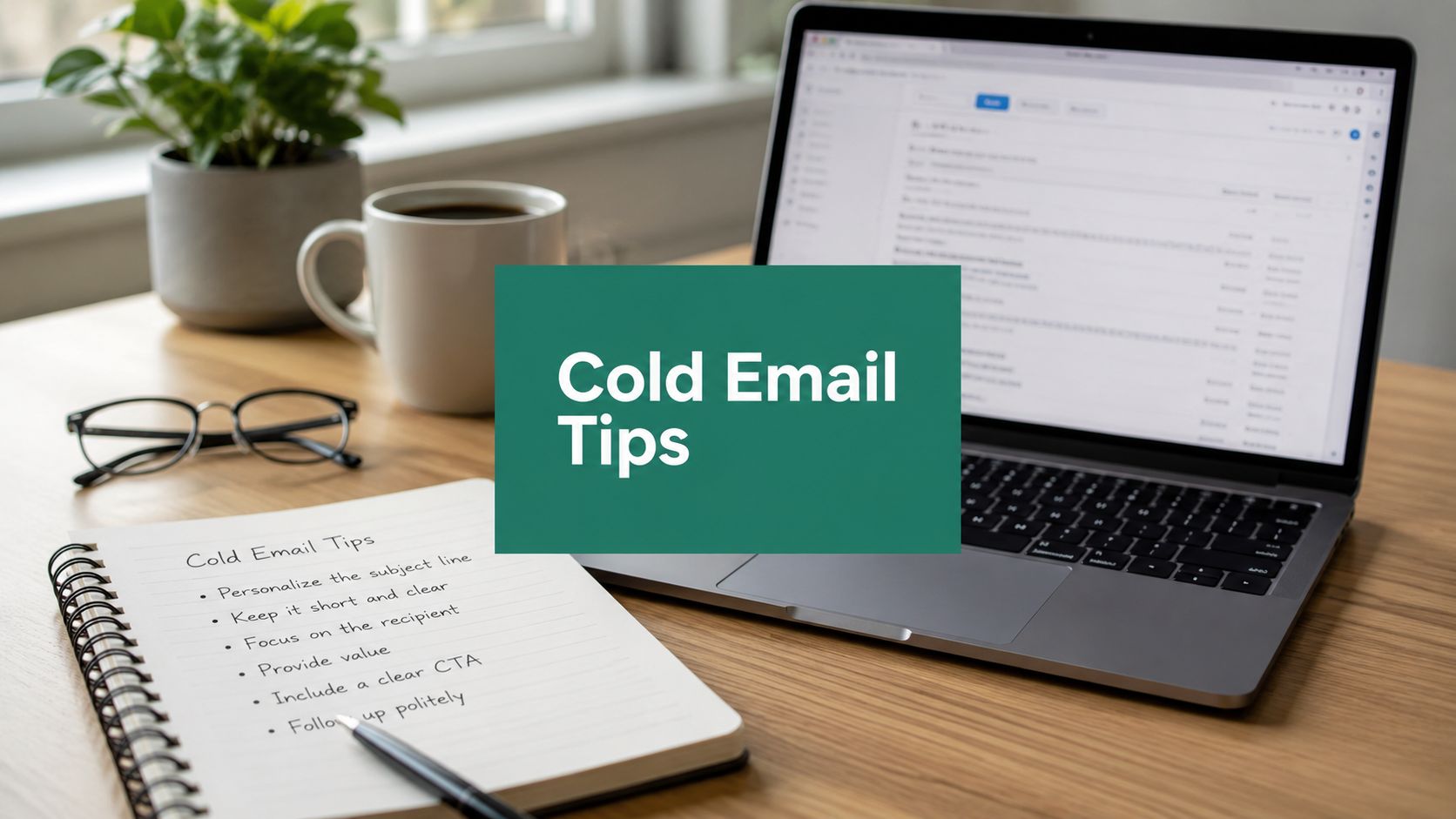
Tag: cold emailing

  • 10 Cold Email Best Practices for 2026

    10 Cold Email Best Practices for 2026

    Stop Getting Ignored: Your Cold Email Playbook

    If your cold emails are landing in spam, getting buried in crowded inboxes, or disappearing without a reply, you're not alone. The underlying issue is rarely a copy problem. Instead, it's a system problem. Senders target too broadly, send from shaky infrastructure, write emails that ask for too much, and follow up like persistence alone will fix weak relevance.

    Cold email still works, but the bar is higher. The global average cold email response rate in 2026 is 3.43%, with 5% considered good for a highly targeted campaign and 10%+ considered excellent, according to Woodpecker's roundup of benchmark data. That gap between average and excellent isn't luck. It's process.

    The teams getting replies usually have the basics dialed in. They build cleaner lists, use better timing, keep first touches short, and protect deliverability before they ever hit send. They also treat outreach like infrastructure, not a one-off experiment. If you need a deeper look at the technical side, this guide on cold email deliverability infrastructure is worth reviewing alongside your campaign setup.

    What follows is a practical workflow. Not theory, not recycled template advice. These are 10 cold email best practices that help turn ignored outreach into real conversations.

    1. Build Highly Targeted Email Lists with Verified Contacts

    A cold email campaign usually fails before the first message goes out. The list is too broad, the contact data is stale, or the buyer has no reason to care about the problem you solve.

    Start with the buying conditions, not the job title. If you're selling attribution software, "VP of Marketing" is too loose on its own. A better filter is VP Marketing, Director of Demand Gen, or RevOps lead at companies running paid acquisition across multiple channels, hiring into growth, or showing signs of reporting complexity. That gives you a list built around likely pain, not just seniority.

    A professional woman in a black shirt taking notes on a notepad while working on a laptop.

    Build the list and the campaign logic at the same time

    Good prospecting and good messaging are tied together. While researching accounts, capture the details you'll need later for subject lines, opening lines, and follow-up angles. That includes role, company size, region, recent trigger events, and the specific reason the account belongs in your sequence.

    EmailScout fits that workflow well because it lets you collect and organize contacts while you're already reviewing LinkedIn profiles, company pages, and niche directories. This walkthrough on building an email address list is a practical reference. If you also need ideas for how those segments should shape your message, these email subject line best practices pair well with your list-building process.

    A simple rule helps here. If you cannot answer "why this person, at this company, right now?" in one sentence, the contact probably should not be in the sequence.

    What to do in practice

    • Pull from more than one source. Use LinkedIn, company leadership pages, speaker lists, partner directories, and industry communities. One database rarely gives full coverage or current role changes.
    • Verify every address before launch. Format checks are not enough. Use a verifier that confirms mailbox validity so you cut bounce risk before the campaign starts.
    • Segment as you build. Tag by role, team, company size, geography, and pain point at the moment you add the contact. Cleaning this up later slows execution and usually leads to sloppy targeting.
    • Separate similar titles by context. A Demand Gen leader at a Series A startup has different priorities from the same title at a public company. Keep them in different sequences.
    • Store the research note with the contact. One line on the trigger or likely problem saves time when you write copy and makes follow-ups easier to vary.

    Broad lists create busywork. Tight lists create options.

    That trade-off matters more than teams admit. A smaller list of verified, high-fit contacts gives you better reply quality, cleaner deliverability, and clearer performance data. A large list of weak-fit records does the opposite. It lowers engagement, creates more bounces, and makes it harder to tell whether the problem is your targeting, your copy, or your setup.

    2. Personalize Subject Lines and Opening Lines

    You open your inbox on a Tuesday morning and scan from your phone. The emails that earn a second look feel specific right away. The rest look like bulk outreach and get cleared in seconds.

    That is the standard your subject line and opening line have to meet together. The subject creates a reason to open. The first sentence confirms that the email is relevant to this person, at this company, right now. If those two pieces are disconnected, reply rates drop fast even when the list quality is strong.

    A person using a smartphone to send emails, focusing on personalization in a modern office workspace.

    What good personalization looks like

    Use a concrete business trigger in the subject line:

    "Hiring across RevOps"
    "Question about your partner pipeline"
    "Saw the expansion into EMEA"

    Then carry the same thread into the opening line. If the subject mentions hiring, the first sentence should connect that hiring push to a likely bottleneck, such as lead routing, reporting gaps, or slower ramp time for new reps. If the subject references expansion, the opener should point to the operational strain that expansion usually creates.

    Weak cold emails frequently falter at this juncture. The sender finds one personalization detail, then opens with a generic pitch that could go to anyone. Good outreach keeps the context intact from subject line through call to action.

    A simple workflow helps. Pull one trigger from your prospecting research, write a subject line around it, then write an opening sentence that explains why that trigger matters. Teams that build outreach this way usually get cleaner testing data too, because they can tell whether the trigger, the offer, or the sequence is causing the result. If you are coordinating that message across later touches, this guide to sales cadence best practices is useful for keeping each follow-up aligned with the original angle.

    Question subject lines are worth testing, but use them carefully. A question can raise open rates when it sounds specific and grounded in real context. It can also feel lazy if the body copy does not answer the implied question quickly. These email subject line best practices are a useful reference if you need a starting framework.

    Write for the mobile preview first. Keep the subject line tight. Keep the first sentence plain and easy to scan. If the relevance is buried in line three, many buyers will never see it.

    Personalization should answer one question fast: why are you reaching out to this person right now?

    3. Maintain an Optimal Sending Cadence and Frequency

    A strong list and a relevant message can still underperform if the sequence feels rushed.

    Cadence is an operations problem as much as a copy problem. If timing is sloppy, prospects see repeated touches before they have a reason to respond. If timing is too loose, the thread loses context and reply rates drop. The goal is simple. Stay visible without becoming noise.

    Use a cadence your prospect would tolerate

    For B2B outreach, a practical starting point is one initial email, then two to four follow-ups spaced across roughly two weeks. Keep enough room between touches for the recipient to process the message, and use each follow-up to add a new reason to reply. Repeating the same bump every 24 hours usually hurts more than it helps.

    The sequence also has to match the rest of your workflow. If prospecting, list building, and outreach all run through different people, poor coordination creates accidental over-contact fast. This guide to sales cadence best practices is useful if you need a clearer structure for spacing touches across a full outbound sequence.

    Change the angle, not just the send date

    A follow-up should earn its spot in the inbox.

    Good cadence is not five versions of "just checking in." One touch can restate the problem. The next can add a short customer example, a relevant insight, or a different stakeholder angle. Another can lower friction with a simpler CTA. That approach keeps the thread fresh and gives you better read on what the account responds to.

    Keep these cadence rules in place

    • Send in the prospect's local time. Scheduling by your own time zone is a preventable mistake.
    • Protect spacing between touches. Daily follow-ups make the sequence look automated.
    • Coordinate at the account level. If an SDR, founder, and AE all email the same person in the same week, volume becomes the problem.
    • Cap the sequence before fatigue sets in. If there is no engagement after several well-timed touches, pause and revisit the list, offer, or targeting.

    The trade-off is speed versus sender reputation. Higher volume can create more chances quickly, but poorly spaced outreach drives complaints, unsubscribes, and silent filtering. Teams that treat cadence as part of the full cold email system, from verified contacts through authentication and follow-up design, usually get cleaner performance and fewer deliverability problems.

    4. Focus on a Value-First Approach Rather Than Immediate Sales Pitch

    A prospect opens your email between meetings and gives you five seconds. If the first line sounds like a demo request from a stranger, the thread is over.

    A value-first email gives the buyer a reason to keep reading. Lead with a specific problem, observation, or missed opportunity that fits their role. Then offer one useful next step that is easy to say yes to. That could be a short teardown, a benchmark, a relevant example, or a plain-language point of view on the issue you help solve.

    Start with the problem the buyer already owns

    Good cold email copy shows the prospect you understand the work on their desk. It does not dump product features into the first paragraph.

    If you're writing to a demand generation leader, this lands better:

    Your team is running paid, outbound, and partner channels. Attribution is likely getting messy once opportunities move across stages and owners.

    That opening works because it sounds like an operating issue, not a pitch. From there, offer something concrete and low friction.

    For example:

    "I noticed you're expanding partner-led acquisition. I have a simple framework for tracking partner-sourced pipeline cleanly across CRM stages. Happy to send it if helpful."

    That is easier to answer than "Do you have 15 minutes for a quick demo next week?"

    Offer value the prospect can use before a call

    The best cold emails reduce uncertainty. They help the buyer think more clearly about a problem, even if no meeting gets booked from that message alone.

    Useful offers usually fall into a few categories:

    • A short audit of a visible gap
    • A benchmark or framework tied to the prospect's role
    • A customer example with a similar motion, team structure, or market
    • A pointed recommendation based on a recent hire, launch, or strategic shift

    The full workflow matters. Strong targeting gives you the context to make a relevant observation. Clean infrastructure helps the email reach the inbox. Follow-up strategy gives you room to add more value across later touches instead of forcing the pitch into email one.

    Match the ask to the level of trust

    Cold outreach fails when the CTA asks for too much, too early.

    A direct meeting request can still work for simple offers or warm accounts. For higher-ticket services, technical products, or competitive categories, a smaller ask usually performs better. Ask permission to send the framework. Ask whether the problem is a priority. Ask if they want the two-minute version by email first.

    That trade-off matters. A harder CTA can produce faster yes or no signals, but it also creates more resistance. A lower-friction CTA often gets more replies and gives sales teams better openings for real conversations.

    5. Implement Proper Email Authentication and Warm-Up Protocol

    A lot of cold email programs fail before the first prospect opens anything. The copy can be solid, the list can be clean, and the offer can be relevant. If the sending setup is wrong, none of that matters because the email never reaches the inbox.

    Authentication needs to be in place before launch. Set up SPF, DKIM, and DMARC on a separate sending domain, not your main company domain. If your website runs on company.com, outbound is usually safer from a close variant such as trycompany.com or getcompany.com. That gives your team room to test new inboxes, switch sending tools, and fix reputation issues without putting the core domain at risk.

    Before you increase volume, make sure the basics are stable.

    Protect your main domain

    A separate sending domain is the safer setup for outbound. It contains risk. If a new rep sends too aggressively, or a bad list slips through verification, the fallout stays away from the domain your customers, investors, and inbound leads already know.

    Warm-up should be deliberate. Start with low daily volume, keep reply behavior natural, and increase gradually over time. Teams usually want to ramp faster than their infrastructure can handle. That trade-off is expensive. A rushed ramp can push messages into spam folders for weeks, while a slower start gives the mailbox provider time to trust the new sender.

    List hygiene matters here too. High bounce rates damage sender reputation fast, so verify contacts before each campaign and remove invalid addresses immediately. This is one reason the workflow matters across the whole program. Prospecting tools such as EmailScout help you build targeted lists, but deliverability still depends on verification, authentication, and controlled sending behavior after the list is built.

    Use this checklist before sending campaign one:

    • Use a separate sending domain: Keep prospecting traffic off your primary company domain.
    • Configure SPF, DKIM, and DMARC: All three should pass before any cold outreach goes live.
    • Warm inboxes slowly: Begin with light volume and increase in small steps.
    • Verify every list: Prevent avoidable bounces before they hurt domain reputation.
    • Monitor performance by mailbox: One weak inbox can drag down the rest of the sequence.

    Good infrastructure does not make a campaign persuasive. It does make persuasion possible.

    6. Keep Emails Short, Scannable, and Mobile-Optimized

    A prospect opens your email between meetings, glances at it on a phone, and decides in a few seconds whether it gets a reply or a delete. That is the actual reading environment for cold outreach.

    Short emails work because they reduce effort. The prospect should not have to hunt for the point, decode a long pitch, or scroll to find the ask. In a full outbound workflow, this matters just as much as list quality, authentication, and sequence design. EmailScout can help you find the right contacts, and your sending setup can get the message into the inbox, but the copy still has to be easy to process fast.

    A minimalist workspace featuring a notebook, pen, smartphone, and a cup of coffee on a wooden table.

    Write for skimming on a small screen

    The first-touch email should usually cover four things:

    Observation
    Problem implication
    Relevant outcome
    Soft CTA

    That structure keeps the message tight and gives the reader a clear path from context to response.

    A strong cold email usually does one job. It names one issue, ties it to one useful outcome, and asks one easy question. Once senders add company history, product detail, multiple links, and a calendar pitch, reply rates usually fall because the email asks for too many decisions at once.

    Plain text helps here. It loads cleanly on mobile, feels personal, and keeps attention on the message instead of the formatting.

    • Use short paragraphs: One to three lines is enough on mobile.
    • Keep one CTA: Reply, book, download, and visit-site should not compete in the same email.
    • Cut filler fast: If a sentence does not add context, proof, or relevance, remove it.
    • End with low friction: "Worth a quick look?" or "Open to a short conversation?" is easier to answer than a hard close.

    Prospects scan cold emails. Format the message so the main point and CTA are obvious within seconds.

    7. Leverage Social Proof and Authority Indicators

    Credibility matters, but weak social proof can hurt as much as no social proof.

    If your proof is vague, irrelevant, or exaggerated, buyers tune it out. "We help companies grow faster" says nothing. "We work with B2B SaaS teams dealing with messy attribution after channel expansion" gives context. The closer the proof matches the prospect's world, the more useful it becomes.

    Use proof that reduces uncertainty

    Strong authority signals include recognizable clients, relevant category expertise, a mutual connection, or a concrete operational result you can stand behind. If you don't have named clients, use specificity instead. Mention the type of company, use case, or business situation without forcing numbers you can't verify.

    For example:
    "We've helped in-house recruiting teams clean up outbound sourcing workflows."
    "We work with multi-location service businesses that need tighter lead routing."

    What doesn't work is stuffing the footer with logos and hoping that carries the message. In first-touch outreach, a quick line of relevant proof beats a mini sales deck every time.

    A useful rule is to place proof after relevance, not before it. Start with the prospect's problem. Then support your credibility. If you reverse that order, the email reads like self-promotion.

    Reality check: Social proof should calm skepticism, not steal the spotlight from the buyer's problem.

    8. Test, Measure, and Iterate Based on Performance Data

    A cold email program usually fails in one of three places. The list is off, the message misses, or the sequence stops before the prospect has a reason to respond. Performance data helps you find the actual problem instead of rewriting copy at random.

    Start with reply quality, not vanity metrics. Opens can still be useful for troubleshooting deliverability or subject line issues, but they rarely tell you whether the campaign deserves more volume. The metric that deserves weekly review is positive reply rate. Track it by segment, by sequence, and by email step.

    What to test first

    Run controlled tests. Change one variable at a time and keep the rest fixed long enough to spot a pattern.

    A practical order:

    • Targeting first: Send the same email to two clearly different audience slices.
    • Opening line second: Test a trigger-based intro against a problem-based intro.
    • Offer and CTA third: Once relevance is clear, adjust the ask.

    This order matters. If a segment opens but does not reply, the problem usually sits in audience fit, pain-point accuracy, or offer strength. It is rarely solved by swapping "open to chat?" for "worth a look?"

    Look at sequence performance, not just first-touch performance. In a healthy workflow, follow-ups often reveal which angle gets attention, especially after you have already handled list quality, authentication, and sending setup earlier in the process. That is also where automation helps. Ellie's 2026 email automation insights are useful for thinking through sequence logic, timing, and message branching without turning outreach into template spam.

    One more rule. Keep a simple testing log.

    Record the segment, dates, copy version, send window, and the result that mattered. After a few rounds, patterns show up fast. You will see which market segments answer, which hooks get ignored, and which follow-up email starts real conversations. That is how cold email improves. Small controlled changes, measured against reply behavior, then repeated.

    9. Segment Email Lists and Create Targeted Campaign Sequences

    A list can be accurate and still perform poorly if every prospect gets the same sequence.

    The fix is simple. Group contacts by buying context, then write the sequence for that context. Role is one layer, but it is rarely enough on its own. A founder at a 12-person SaaS company reads cold email differently than a VP at a 2,000-person healthcare firm, even if both own revenue.

    Build sequences around the buyer's context

    Start with four fields you can maintain:

    • role
    • industry
    • company stage or size
    • trigger or timing signal

    That gives you segments you can write for without turning campaign setup into a spreadsheet mess.

    The message should match the pressure that segment feels. Founders usually respond to speed, focus, and near-term upside. Department leaders often care about team capacity, execution risk, and whether your offer creates extra work. Enterprise stakeholders tend to ask different questions. Risk, rollout, approvals, and internal alignment often matter as much as the result itself.

    Write each sequence with those constraints in mind.

    A practical setup might look like this:

    • SaaS founders: direct first email, short proof point, quick yes or no CTA
    • RevOps leaders: operational pain in the opener, process improvement angle, example tied to pipeline efficiency
    • Agencies: client delivery pressure, margin protection, and fast implementation
    • Regulated industries: more specificity, clearer proof, less hype, and a lower-friction ask

    Keep the proof specific to the segment. A founder case study does little for a compliance-heavy team. The same goes for CTAs. Senior leaders often prefer a simple reply decision. Mid-level operators are more likely to engage with a practical resource or a concrete example.

    If you are building branching sequences instead of one straight line, this guide to mastering email automation is useful for mapping message paths by segment, trigger, and reply type without losing quality.

    A few rules keep segmentation useful instead of bloated:

    • Keep segments tight: "marketing leaders" is usually too broad to write sharp copy for
    • Change the proof: swap in the customer story, metric, or scenario that fits that segment's world
    • Adjust the ask: match the CTA to the contact's seniority, urgency, and likely decision process

    Good segmentation does not mean building 20 campaigns on day one. Start with the two or three audience groups that already show different pains, buying cycles, or objections. Then give each group a sequence that sounds like it was written for them, because it was.

    10. Develop a Relationship-Based Follow-Up Strategy

    A prospect opens your first email, gets pulled into meetings, and forgets it existed by noon. That does not mean the account is cold. It means your follow-up has to do more than repeat the original ask.

    Good follow-up strategy works across the full outreach system, not as an afterthought. You start with the right contacts, send from a properly configured domain, and then use follow-ups to build familiarity and relevance over several touches. In practice, that means each message should add one new reason to respond.

    Change the reason for replying

    The first email usually introduces the problem and your relevance. The follow-up should advance the conversation.

    Use a different angle each time:

    • a short proof point tied to the prospect's role
    • a practical observation about their current process
    • a missed cost or risk they may be carrying
    • a concise example of how another team handled the same issue
    • a lower-friction CTA than the original ask

    Many outbound teams lose replies at this point. They send the same note three times with a different subject line and call it persistence. Prospects read that as low-effort automation.

    Keep the sequence human

    Skip filler follow-ups like:

    • "Just bumping this"
    • "Checking if you saw my last email"
    • "Following up again"

    Write follow-ups that stand on their own. If someone reads only message three, it should still feel useful and clear.

    A simple pattern works well:

    1. Email 1: specific problem and clear relevance
    2. Email 2: proof point or short example
    3. Email 3: alternate angle, such as efficiency, risk, or revenue impact
    4. Email 4: softer close or breakup email with an easy reply path

    Keep the CTA light. Follow-ups perform better when the ask is easy to answer, such as "Worth a conversation?" or "Should I send the 3-point example?"

    Use the account, not just the inbox

    Relationship-based follow-up often means working the account from more than one direction. If one stakeholder ignores efficiency messaging, another may care about implementation speed, reporting, or risk reduction. The key is coordination. Keep the message consistent, but tailor the angle to the person's role.

    This is also where workflow matters. If you're building branching sequences based on opens, replies, persona, or account activity, this guide to mastering email automation is useful for designing follow-up workflows that stay human instead of robotic.

    One rule matters more than any template. Every follow-up must earn its place. If the message does not add context, clarity, proof, or a simpler next step, do not send it.

    Top 10 Cold Email Best Practices Comparison

    A cold email program works only when the whole system holds together. Good list quality cannot save a weak domain setup. Strong copy cannot fix poor targeting. The comparison below is useful for deciding where to focus first, based on your current bottleneck.

    Practice Implementation difficulty Resource requirements Expected outcomes Ideal use cases Key advantages
    Build Highly Targeted Email Lists with Verified Contacts Low to Medium Email finder and verification tools, access to company data, time for list building Lower bounce rates, better deliverability, stronger reply rates Initial prospecting, account-based outreach, targeted campaigns Accurate contacts at scale, better engagement, less wasted sending
    Personalize Subject Lines and Opening Lines Medium Prospect research, CRM or personalization tools, time per email Better open rates and replies, lower spam risk High-value prospects, warm outreach, relationship building Stronger relevance, more credibility, better first impressions
    Maintain an Optimal Sending Cadence and Frequency Low Scheduling or automation tools, analytics, time-zone data Better engagement, steadier deliverability, fewer complaints Large B2B campaigns, multi-touch sequences Protects sender reputation and improves timing
    Focus on a Value-First Approach Rather Than Immediate Sales Pitch Medium to High Industry knowledge, useful assets such as reports or case studies, research time Better response quality, stronger trust, more qualified leads Consultative sales, long sales cycles, enterprise outreach Builds interest without pushing too early
    Implement Proper Email Authentication and Warm-Up Protocol High DNS access, SPF, DKIM, and DMARC setup, warm-up tools, monitoring Better inbox placement, safer domain reputation, fewer blocks New domains or accounts, higher-volume sending programs Strong deliverability foundation and lower blacklist risk
    Keep Emails Short, Scannable, and Mobile-Optimized Low Short-form copywriting skills, mobile testing, simple templates Better read completion, clearer CTAs, stronger mobile performance High-volume cold outreach, mobile-heavy audiences Easier to read, faster to produce, easier to answer
    Use Social Proof and Authority Indicators Medium Case studies, testimonials, approved client names or logos, clear metrics More trust, better credibility, stronger reply rates Skeptical prospects, enterprise buyers, credibility gaps Reduces hesitation and supports your claims
    Test, Measure, and Iterate Based on Performance Data Medium Analytics and A/B testing tools, enough volume for valid reads, tracking process Ongoing improvement in opens, replies, and conversions Scaling campaigns, optimization, performance recovery Cuts guesswork and improves results over time
    Segment Email Lists and Create Targeted Campaign Sequences Medium Segmentation data, CRM or automation, multiple copy variants, setup time Better relevance, stronger response by segment, higher conversion rates Diverse audiences, ABM, role-specific outreach More precise messaging and better ROI
    Develop a Relationship-Based Follow-Up Strategy Medium Sequencing tools, varied content assets, scheduling, monitoring Higher cumulative response across later touches, better deal quality Long sales cycles, nurture sequences, multi-channel outreach Persistent outreach that still feels useful

    One practical way to use this table is to diagnose the constraint before changing copy. If reply rates are weak but opens are healthy, the issue usually sits in message relevance, offer quality, or follow-up structure. If opens are weak across the board, list quality, subject lines, or inbox placement usually deserve attention first.

    The trade-off is straightforward. The highest-impact fixes are not always the fastest to implement. Authentication, segmentation, and value-first messaging take more effort than shortening a template, but they tend to improve results across every campaign that follows.

    From Best Practices to Consistent Results

    Cold email doesn't improve because you found a better template. It improves because every part of the workflow gets tighter. The list is cleaner. The domain is safer. The copy is shorter. The timing is smarter. The CTA is easier to answer. That is what turns cold email best practices into actual pipeline.

    Most underperforming campaigns can be traced to one of three issues. The wrong people got the message. The right people got the wrong message. Or the message never reached the inbox consistently enough to matter. That's why the full system matters. Prospecting, verification, segmentation, infrastructure, copy, cadence, and follow-up all affect the result.

    The benchmark range makes this clear. Average reply performance sits low across the market, while well-run campaigns and top performers separate themselves through tighter execution. You don't need gimmicks to get there. You need discipline. Build smaller, more relevant lists. Verify every address you can. Send from authenticated infrastructure. Keep the first email short. Ask one simple question. Then follow up with a new reason to respond.

    There are also real trade-offs. Hyper-personalization can slow output if your ICP is still fuzzy. Aggressive scaling can burn a domain before you have message-market fit. Fancy formatting can make an email look polished while hurting inbox placement. Long sequences can create noise if every touch repeats the same pitch. Good operators know when to simplify.

    If you're fixing one thing first, fix list quality. Everything downstream gets easier when the audience is right. Messaging becomes clearer. Segmentation becomes obvious. Deliverability improves because bad addresses and poor-fit contacts stop dragging performance down. That's why prospecting tools matter most at the front of the process, not as an afterthought once the campaign is built.

    Tools like EmailScout help streamline that first critical step. You can identify decision-makers while researching, save contacts as you go, build targeted lists faster, and support verification workflows before launch. That kind of speed is useful, but the bigger advantage is consistency. When your prospecting workflow is organized, the rest of the outreach system gets more predictable.

    Treat cold email like an operating system, not a one-time blast. Tighten one layer at a time. Start with targeting. Lock down infrastructure. Improve the first line. Simplify the ask. Watch reply quality, not just volume. Teams that do that don't need to wonder whether cold email still works. They can see it in their inbox.


    If you're building prospect lists, verifying contacts, and trying to make outreach more efficient without turning it into spam, EmailScout is a practical place to start. It helps you find decision-maker emails while browsing, save leads automatically, and build cleaner lists for cold campaigns that have a real chance of getting replies.


  • 7 Proven Cold Email Template for Sales Examples to Boost Replies in 2025

    7 Proven Cold Email Template for Sales Examples to Boost Replies in 2025

    In sales, a cold email isn't just a message; it's your digital handshake, your first impression, and often your only shot at starting a valuable conversation. Yet, the vast majority of cold emails are deleted on sight. They're generic, self-serving, and completely disconnected from the recipient's actual business challenges. If your outreach efforts feel like you're shouting into a void, you've landed in the right place.

    This guide moves beyond simplistic, fill-in-the-blank scripts. We are providing a strategic breakdown of seven powerful cold email template for sales frameworks proven to get replies. For each one, we'll dissect the underlying psychology that makes it effective, pinpoint the exact scenarios where it shines, and give you actionable tactics to personalize it for maximum impact. You won't just get templates; you'll understand the science behind them.

    We will cover a range of proven approaches, including:

    • The Problem-Agitate-Solve (PAS) Framework
    • The Value-First Approach
    • The Pattern Interrupt Method
    • The Social Proof and Authority Template
    • The Question-Based Discovery Email
    • The Multi-Step Campaign Sequence
    • The Personalized Data-Driven Outreach

    By the end of this article, you will have a comprehensive playbook to transform your cold outreach from ignorable spam into a must-read message. You'll learn how to craft irresistible subject lines, structure compelling arguments, and build campaigns that open doors, book meetings, and generate real pipeline. Let’s get started.

    1. The Problem-Agitate-Solve (PAS) Cold Email Template

    The Problem-Agitate-Solve (PAS) framework is a classic copywriting formula that excels in cold outreach by tapping directly into a prospect's pain points. This powerful cold email template for sales works by first identifying a problem the prospect likely faces, then amplifying the negative consequences of that problem (agitation), and finally positioning your product or service as the ideal solution. It’s effective because it creates an emotional connection by validating the prospect's struggles before offering relief.

    A business man looking frustrated at his laptop, searching for a solution at his desk.

    This method moves beyond just listing features; it frames your offer as a necessary fix to a pressing issue, making it much more compelling.

    The PAS Template Breakdown

    Here’s a look at the structure and a practical example.

    Subject Line Options:

    • Question about [Prospect's Goal]
    • An idea for [Company Name]'s [Specific Department]
    • [Pain Point] at [Company Name]?

    Email Body:

    Hi [First Name],

    (Problem) Noticed on your LinkedIn that you manage the sales development team at [Company Name]. Many SaaS sales leaders I speak with are struggling to maintain personalized outreach at scale, especially since manual research for each prospect can take up to 20 minutes.

    (Agitate) This often leads to reps defaulting to generic templates, which kills reply rates and ultimately results in missed quotas and a shrinking pipeline. It's a frustrating cycle where more effort doesn't always equal better results.

    (Solve) We built EmailScout to solve this exact issue. Our AI-powered platform automates prospect research, finding unique personalization points in seconds, not hours. This allows your team to send highly relevant emails that actually get replies.

    Would you be open to a brief 15-minute chat next week to explore how we could help your team exceed its Q4 targets?

    Best,

    [Your Name]

    Strategic Analysis & Why It Works

    The PAS formula is a masterclass in emotional and logical persuasion. It works because it mirrors the prospect’s internal monologue about their business challenges.

    • Builds Instant Rapport: The "Problem" statement shows you've done your homework and understand their world. Referencing a specific, relevant challenge makes the email feel less like a generic blast and more like a peer-to-peer conversation.
    • Creates Urgency: The "Agitate" phase is crucial. By highlighting the negative consequences (missed quotas, wasted time), you transform a minor inconvenience into an urgent business problem that needs solving.
    • Provides Clear Value: The "Solve" section doesn't just list features; it presents your offering as the direct antidote to the pain you just agitated. The value proposition is crystal clear: we eliminate this specific negative outcome.

    Key Insight: The agitation step is the emotional engine of the PAS model. Without it, the "Problem" is just an observation and the "Solution" is just another sales pitch. Agitation connects the two by making the problem feel real and pressing.

    Actionable Takeaways

    To effectively implement this cold email template for sales, follow these steps:

    1. Deep Research is Non-Negotiable: Use tools like LinkedIn Sales Navigator or industry reports to identify a highly specific pain point relevant to your prospect's role and company.
    2. Keep Agitation Concise: Limit the agitation to one or two sentences. You want to highlight the pain, not dwell on it excessively, which can come across as negative or condescending.
    3. Bridge to the Solution Seamlessly: Use transition phrases like "We built [Product] to solve this," or "This is a common challenge we help with." This makes your solution feel like a natural next step.

    2. The Value-First Cold Email Template

    The Value-First approach flips the traditional sales script on its head. Instead of asking for a prospect's time, this cold email template for sales leads by giving something genuinely useful away for free. This strategy focuses on establishing credibility and building goodwill by providing valuable insights, resources, or advice relevant to the prospect's role or industry before making any request for a meeting. It’s effective because it disarms the recipient and positions you as a helpful expert, not just another salesperson.

    Two people's hands exchanging white documents over a counter with 'Lead With Value' on a green wall.

    This method makes your outreach memorable and welcome, paving the way for a more receptive conversation when you eventually make an ask.

    The Value-First Template Breakdown

    Here’s a look at the structure and a practical example.

    Subject Line Options:

    • Idea for improving [Company Name]'s [KPI]
    • A resource for your [Prospect's Department] team
    • Thought you'd find this useful, [First Name]

    Email Body:

    Hi [First Name],

    I was just reading your recent interview on TechCrunch about [Company Name]'s push into the enterprise market and was really impressed by your strategy.

    Based on your focus on reducing customer acquisition costs, I thought you might find this case study on how [Similar Company] cut their CAC by 22% useful. It details the specific outbound framework they implemented, which seems highly relevant to the goals you mentioned.

    You can access the full breakdown here: [Link to resource]

    No pitch or ask here, just thought it might spark an idea for your team.

    Best,

    [Your Name]

    Strategic Analysis & Why It Works

    The Value-First template operates on the principle of reciprocity. By providing a gift with no strings attached, you create a positive impression and a subtle social obligation.

    • Builds Instant Credibility: Sharing a relevant, high-quality resource demonstrates that you understand the prospect's challenges and have expertise in their field. It shows you've done your research beyond just their name and title.
    • Lowers Defensive Barriers: Since there's no immediate ask for a demo or a call, the prospect's natural "sales shield" doesn't go up. They are more likely to engage with the content because it feels like a genuine attempt to help.
    • Creates a Positive First Impression: This approach frames you as a giver, not a taker. It sets a collaborative tone for the relationship and makes your follow-up emails much more likely to be opened and read.

    Key Insight: True value isn't just a link to your latest blog post. It's a curated piece of information, insight, or tool that directly addresses a specific priority or challenge you've identified through research. The more tailored the value, the more powerful the impression.

    Actionable Takeaways

    To effectively implement this cold email template for sales, follow these steps:

    1. Identify a High-Value "Give": Your value offering could be a data-driven report, a concise case study, a free tool, or a quick analysis of a competitor. Ensure it's something the prospect can't easily find themselves.
    2. Connect the Value to a Trigger: Reference a specific company announcement, a recent hire, a post they shared on LinkedIn, or an industry trend to make your outreach timely and relevant.
    3. Resist the Urge to Pitch: The power of this template lies in its patience. The initial email should be purely about giving value. The "ask" for a meeting can come in a subsequent follow-up email after you've earned their attention.

    3. The Pattern Interrupt Cold Email Template

    The Pattern Interrupt template is designed to slice through the noise of a crowded inbox. This approach uses an unexpected opening, a surprising question, or unconventional formatting to break the recipient's routine of deleting sales emails. The goal is to jolt the prospect out of autopilot, grab their attention through novelty, and earn a few extra seconds of consideration for your pitch. It’s a bold cold email template for sales that works by being different.

    This method intentionally sidesteps traditional, formal introductions to create curiosity and compel the reader to continue. When done right, it feels refreshingly honest and direct.

    The Pattern Interrupt Template Breakdown

    Here’s a look at the structure and a practical example.

    Subject Line Options:

    • You're probably going to hate this email
    • Quick question about [Company Name]'s marketing
    • Wrong person?

    Email Body:

    Hi [First Name],

    You're probably going to delete this. Most people see an email from a stranger and hit delete in under three seconds.

    But on the off chance you're still reading, I noticed your team at [Company Name] just launched a new ad campaign on LinkedIn. Congrats. The problem is, driving traffic is only half the battle. Converting that traffic into qualified leads is where most B2B companies leak revenue.

    Our tool, ConvertFlow, helps companies like yours add interactive lead capture forms and personalized CTAs to their landing pages, typically boosting conversion rates by 40-50%.

    Worth a 10-minute chat to see if we can get you more leads from your existing ad spend?

    Best,

    [Your Name]

    Strategic Analysis & Why It Works

    The Pattern Interrupt template leverages psychology to gain an edge. It short-circuits the brain's filtering process and makes your email stand out.

    • Creates Instant Intrigue: The unconventional opening or subject line defies expectations. A subject like "You're probably going to hate this email" is so counterintuitive that it practically begs to be opened out of sheer curiosity.
    • Disarms the Prospect: By acknowledging the unsolicited nature of the email ("You're probably going to delete this"), you show self-awareness. This candid approach can lower the prospect's natural defensiveness and make them more receptive to your message.
    • Earns You More Time: The primary goal is to stop the immediate "scan and delete" habit. By being different, you earn a few crucial extra seconds of attention, giving your core value proposition a chance to land.

    Key Insight: A pattern interrupt's success depends on the pivot. The creative opening must be followed immediately by a concise, relevant, and high-value proposition. The novelty gets their attention; the substance keeps it.

    Actionable Takeaways

    To effectively implement this cold email template for sales, follow these steps:

    1. Align Interrupt with Value: Ensure your creative hook isn't just random. It should logically transition into the problem you solve. The element of surprise must serve a strategic purpose.
    2. Test Your Subject Lines Rigorously: What works for one audience may fall flat with another. A/B test your creative subject lines against more traditional ones to find what resonates. For more guidance, explore these email subject line best practices.
    3. Keep the Body Lean and Direct: After the interrupt, get straight to the point. The prospect gave you their attention; don't waste it with fluff. State the problem and your solution clearly and quickly.

    4. The Social Proof and Authority Cold Email Template

    The Social Proof and Authority template leverages a core psychological principle: people trust what others already trust. Instead of leading with a pain point, this powerful cold email template for sales establishes immediate credibility by showcasing impressive results, well-known clients, or industry recognition. It's designed to disarm skepticism and build trust from the very first sentence, making the prospect more receptive to your pitch.

    A framed 'PROVEN RESULTS' sign, a document with a checkmark logo, and a stack of brochures on a wooden desk.

    By using third-party validation, you shift the focus from "what we say about ourselves" to "what our success with others proves." This makes your outreach feel less like a cold pitch and more like an invitation to join an exclusive group of successful companies.

    The Social Proof Template Breakdown

    Here’s a look at the structure and a practical example.

    Subject Line Options:

    • Helping [Competitor Name] with [Result]
    • [Result] for companies like [Client Name]
    • Idea for [Company Name] (as seen in Forbes)

    Email Body:

    Hi [First Name],

    We recently helped [Similar Company/Client Name] in the [Prospect's Industry] industry reduce their customer support ticket volume by 35% in just 60 days using our AI-powered knowledge base.

    Given your role leading customer success at [Company Name], I thought you might be interested in achieving similar results. Our platform integrates directly with your existing help desk to deflect common inquiries and empower users to find answers instantly.

    Are you available for a quick 15-minute call next Tuesday to discuss how we could replicate this success for your team?

    Best,

    [Your Name]

    Strategic Analysis & Why It Works

    This template is effective because it bypasses the typical "who are you and why should I care?" barrier by providing an immediate, compelling reason to pay attention.

    • Borrows Credibility: Mentioning a successful client, especially a well-known brand or a direct competitor, instantly positions you as a proven, low-risk solution. It's a powerful shortcut to establishing authority.
    • Creates FOMO (Fear of Missing Out): When prospects see that similar companies or competitors are already benefiting from your solution, it creates a sense of urgency. They begin to wonder if they are falling behind by not using your service.
    • Provides Tangible Value: Leading with a specific, quantifiable result (e.g., "35% reduction in tickets") immediately demonstrates your value proposition. It’s not a vague promise; it’s a proven outcome.

    Key Insight: Social proof works best when it is highly relevant. Citing a huge enterprise client won't resonate with a small startup, and vice-versa. The power lies in showing the prospect that you solve problems for companies just like them.

    Actionable Takeaways

    To effectively implement this cold email template for sales, follow these steps:

    1. Curate Your Proof Points: Maintain a list of your best case studies, testimonials, and client logos. Segment them by industry, company size, and the specific problem they solved.
    2. Be Specific and Quantifiable: Vague claims like "we improve efficiency" are weak. Use hard numbers: "increased lead conversion by 42%" or "saved 20 hours per week."
    3. Ensure Relevance: Before sending, double-check that the social proof you're using is relevant to the prospect. Use a client from their industry, of a similar size, or who faced a similar challenge.

    5. The Question-Based Discovery Cold Email Template

    The Question-Based Discovery approach flips the traditional cold email on its head. Instead of leading with a pitch, this powerful cold email template for sales uses strategic, open-ended questions to engage the prospect in a conversation. This consultative method positions you as a curious expert rather than just another salesperson, encouraging the prospect to reflect on their own challenges and needs.

    This technique is highly effective because it prompts the prospect to articulate their own pain points, making your eventual solution feel like a natural and collaborative discovery, not a hard sell.

    The Question-Based Discovery Template Breakdown

    Here’s a look at the structure and a practical example.

    Subject Line Options:

    • Question about [Company Name]'s approach to [Process]
    • Your thoughts on [Industry Trend]?
    • Handling [Specific Challenge]

    Email Body:

    Hi [First Name],

    I was looking at the recent project announcements for [Company Name] and was impressed by your team's expansion into the APAC region.

    As you scale your customer support operations, I'm curious:

    1. How are you currently managing multilingual support requests to ensure consistent brand voice across different markets?
    2. What's the biggest bottleneck you've found when onboarding new support agents for region-specific products?

    Teams I work with in the enterprise software space often find these two areas become major hurdles during rapid international growth.

    Best,

    [Your Name]

    Strategic Analysis & Why It Works

    This template succeeds by shifting the focus from your product to the prospect's world. It’s a low-pressure way to start a high-value conversation.

    • Sparks Genuine Engagement: Unlike a pitch that can be quickly dismissed, a relevant question demands a cognitive response. It makes the prospect think, which is the first step toward a meaningful dialogue.
    • Positions You as a Consultant: Asking insightful questions demonstrates your expertise and genuine interest in their business. It frames the interaction as a peer-level discussion about industry challenges, not a sales transaction.
    • Qualifies the Prospect: The prospect's answer (or lack thereof) provides immediate insight into their awareness of the problem, their current priorities, and whether they are a good fit for your solution.

    Key Insight: People are more likely to engage when they feel their expertise is being sought. A well-crafted question respects the prospect's knowledge and invites them to share, lowering their defensive barriers.

    Actionable Takeaways

    To effectively implement this cold email template for sales, follow these steps:

    1. Ask Open-Ended Questions: Avoid simple yes/no questions. Use formulations like "How do you…", "What's your process for…", or "What's the biggest challenge with…" to encourage a detailed response.
    2. Limit Your Questions: Stick to one or two well-researched, highly relevant questions. Overwhelming the prospect with too many questions will kill your reply rate.
    3. Ensure Questions are Easy to Answer: Your questions should be specific enough to demonstrate knowledge but broad enough that the prospect can answer in a sentence or two without needing to consult data or colleagues.
    4. Connect Questions to a Trigger Event: Base your questions on recent company news, a new hire, a LinkedIn post, or an industry trend to make them timely and highly contextual.

    6. The Multi-Step Campaign Cold Email Template

    Most cold emails fail because they are treated as a one-shot attempt. The Multi-Step Campaign approach transforms outreach from a single lottery ticket into a strategic, value-driven conversation spread across several touchpoints. This powerful cold email template for sales is a sequence of 3-7 emails sent over a few weeks, with each message building on the last. It respects the prospect's busy schedule while creating multiple opportunities to capture their attention with different value propositions.

    This method acknowledges that timing is everything. A prospect who is too busy for your first email might find your second email, which shares a valuable case study, perfectly timed to address a new priority.

    The Multi-Step Campaign Template Breakdown

    Here’s a look at the structure of a 4-step sequence.

    Email 1: The Personalized Hook

    • Subject: Idea for [Prospect's KPI] at [Company Name]
    • Body: Start with a highly personalized observation about their company or role. Introduce a problem and a soft call-to-action, like asking if it's a priority.

    Email 2: Value-Add Follow-Up

    • Subject: Re: Idea for [Prospect's KPI] at [Company Name]
    • Body: Provide a valuable resource, like a relevant case study or a blog post that addresses their potential pain point. No hard ask, just building credibility.

    Email 3: The Direct Pitch

    • Subject: [Your Company] <> [Their Company]
    • Body: Now that you've established context and provided value, make your pitch. Clearly state your solution and how it directly solves their problem. Ask for a brief meeting.

    Email 4: The Breakup Email

    • Subject: Closing your file
    • Body: A final, polite message stating you won't follow up again. This often creates a sense of urgency and can trigger a response from prospects who were interested but busy.

    Strategic Analysis & Why It Works

    A multi-step campaign is effective because it mirrors natural human interaction, building trust over time rather than demanding it upfront.

    • Increases Impressions: In a crowded inbox, persistence pays off. This method ensures your name and company are seen multiple times, increasing brand recall and the likelihood of a response.
    • Delivers Value Incrementally: Instead of overwhelming the prospect with everything in one email, you deliver value in digestible pieces. This positions you as a helpful expert, not just another salesperson.
    • Adapts to Prospect's Timeline: Your first email might land on a busy day. Your third might arrive just as they begin researching solutions for the exact problem you solve. The sequence maximizes your chances of perfect timing.

    Key Insight: The power of a campaign isn't just in the follow-ups; it's in the narrative you build. Each email should logically connect to the last, telling a cohesive story about the prospect's problem and your solution.

    Actionable Takeaways

    To effectively implement this cold email template for sales, follow these steps:

    1. Map Your Sequence: Plan the purpose of each email before you write a single word. What value will each touchpoint provide? What is the CTA for each step?
    2. Vary Your Angles: Don't just "check in" or "follow up." Introduce new information in each email: a different pain point, a customer testimonial, a relevant industry stat, or a unique feature.
    3. Keep Threads Intact: Reply to your previous email to keep the entire conversation in one thread. This provides the prospect with immediate context without them having to search their inbox. For a deeper dive into follow-up strategies, you can explore more about how to write a follow-up email after no response.
    4. Automate Intelligently: Use sales engagement platforms to schedule the sequence, but ensure you are personalizing each step. Automation should handle the sending, not the thinking.

    7. The Personalized Data-Driven Cold Email Template

    The Personalized Data-Driven template transforms a cold email from a generic pitch into a highly relevant, one-to-one conversation. This powerful cold email template for sales is built on specific, timely data points about the prospect or their company, such as a recent promotion, a new funding round, or a strategic initiative mentioned in a press release. It immediately signals that the sender has done their research and has a legitimate reason for reaching out, instantly separating them from the noise.

    This approach proves you aren't just sending another blast. You've specifically chosen them for a reason, which dramatically increases the likelihood of getting a reply.

    The Personalized Data-Driven Template Breakdown

    Here’s a look at the structure and a practical example.

    Subject Line Options:

    • Congrats on the Series B funding!
    • Question about your recent [Product/Feature] launch
    • [Company Name] + [Your Company Name]

    Email Body:

    Hi [First Name],

    Congratulations on your recent promotion to VP of Sales at [Company Name]! It’s an exciting move, especially with the company’s push into the enterprise market this quarter.

    As you step into this new role, leaders are often tasked with scaling their sales team's efficiency without sacrificing the personalization that closes bigger deals. Juggling new KPIs while onboarding reps can make this a significant challenge.

    We help new sales leaders at companies like [Similar Company] solve this by automating personalized outreach. Our platform, EmailScout, integrates with your CRM to identify key data points and craft hyper-relevant messaging, so your team can focus on selling, not on manual research.

    Would you be open to a 15-minute call next week to discuss how you're planning to arm your team for the enterprise push?

    Best,

    [Your Name]

    Strategic Analysis & Why It Works

    This data-driven approach is effective because it’s rooted in genuine relevance and respect for the prospect's time. It flips the script from "What I want to sell you" to "I see what you're doing, and I have something that can help."

    • Breaks Through the Noise: Referencing a specific, recent event (like a promotion or funding round) acts as a pattern interrupt. It’s not a message that could have been sent to anyone, making it nearly impossible to ignore.
    • Demonstrates Genuine Interest: Thorough research shows you value the prospect as an individual and their company's journey. This builds immediate credibility and rapport before you even mention your product.
    • Creates a Natural Bridge: The data point isn't just a gimmick; it serves as the perfect, logical bridge to introduce your solution. The transition from their achievement to the problem you solve feels seamless and contextual.

    Key Insight: The data point is the "key" that unlocks the conversation. Without it, your email is just another locked door. A relevant piece of data proves you belong in their inbox and have something valuable to say.

    Actionable Takeaways

    To effectively implement this cold email template for sales, follow these steps:

    1. Become a Research Expert: Use tools like LinkedIn Sales Navigator, Crunchbase, and Google Alerts to monitor target accounts for "trigger events" like new hires, funding, product launches, or mentions in the news.
    2. Make the Connection Explicit: Don't just mention the data point and move on. Clearly state how that event relates to the challenge you solve. For example, "With your new funding, scaling operations is likely a top priority…"
    3. Keep It Fresh: Data gets stale quickly. A trigger event from six months ago has far less impact than one from last week. Prioritize recent, relevant information to maximize your email's impact. For more in-depth strategies, explore our guide on how to write cold emails that convert.

    7 Sales Cold Email Templates Compared

    Template Implementation Complexity Resource Requirements Expected Outcomes (Response Rate / Effect) Ideal Use Cases Key Advantages
    The Problem-Agitate-Solve (PAS) Cold Email Template Medium–High — needs tailored pain framing and restrained agitation Moderate research and personalization time per prospect 8–15% reported response rates; high emotional engagement SaaS addressing inefficiencies; recruitment; B2B service providers Strong emotional resonance; clear problem→solution flow
    The Value-First Cold Email Template High — requires creating genuinely useful content up front High: research, content/insight creation, possible assets/links 10–20% typical response rates; builds trust and credibility Enterprise sales, marketing agencies, consultancies Positions sender as expert; lowers spam perception; higher-quality leads
    The Pattern Interrupt Cold Email Template Medium — creative copywriting and careful balance needed Low–Moderate: creative testing, subject-line experimentation Typically higher open rates; response varies widely (attention-driven) Crowded inboxes; innovative audiences; startups seeking differentiation Cuts through clutter; memorable and highly attention-grabbing
    The Social Proof and Authority Cold Email Template Medium — assemble and present credible proof without boasting Low–Moderate: case studies, testimonials, metrics, collateral 15–25% reported response rates; reduces skepticism Competitive markets; enterprise sellers; brands with notable clients Builds instant credibility; reduces perceived risk; persuasive social proof
    The Question-Based Discovery Cold Email Template Medium — requires craft of insightful, open-ended questions Moderate: targeted research to craft relevant questions Increases engagement and qualifies leads; longer sales cycles typical Consultative sales; complex B2B deals; discovery-focused outreach Drives dialogue and discovery; shows genuine interest; improves qualification
    The Multi-Step Campaign Cold Email Template High — sequence design, timing, and orchestration required High: content for multiple touches, automation/tracking tools 25–40% reported response rates with proper execution; cumulative ROI Account-based outreach; long sales cycles; high-value lists Multiple entry points; narrative build; higher conversion through persistence
    The Personalized Data-Driven Cold Email Template Very High — extensive, prospect-specific research and tailoring Very High: tools (LinkedIn Navigator, Crunchbase), time per prospect 15–30% reported response rates; very high-quality conversations High-touch enterprise outreach; targeted executive-level outreach Highly relevant and hard-to-ignore; builds strong initial rapport and trust

    Your Next Steps: From Template to Trusted Advisor

    You now have a complete playbook of proven, powerful cold email templates for sales. We've dissected everything from the classic Problem-Agitate-Solve framework to sophisticated, data-driven approaches. Yet, the most critical takeaway isn't found in any single template.

    The true secret lies in understanding that a cold email template for sales is a starting point, not a final destination. These frameworks provide the structure, but your success will be defined by the personalization, strategy, and genuine human connection you weave into them. Think of them as blueprints for a conversation, not a script to be recited.

    Key Insights to Carry Forward

    As you move from reading this guide to actively implementing these strategies, keep these core principles at the forefront of your mind:

    • Context is King: The most effective cold email is one that feels like a warm introduction. This means understanding the prospect's industry, recent company news, and individual role-specific challenges. A template without context is just spam.
    • Clarity Over Cleverness: While a unique opening line can grab attention, your message's core value must be immediately clear. Prospects are busy and will not spend time deciphering a confusing or overly clever pitch. Be direct, be relevant, and be respectful of their time.
    • The Goal is a Conversation, Not a Close: The primary objective of your initial email is rarely to make a sale. It’s to earn a reply. Focus your call to action on starting a dialogue, such as asking a thoughtful question or offering a specific, high-value resource.

    Your Actionable Roadmap to Cold Email Mastery

    Memorizing templates is easy; mastering the art of outreach takes deliberate practice. Here are the precise steps you should take next to turn this knowledge into tangible results:

    1. Select Two Templates: Don't try to implement all seven at once. Choose two distinct templates from this guide that best align with your ideal customer profile and value proposition. For example, start with the Value-First Template for relationship-building and the PAS Template for prospects with a clear, urgent pain point.
    2. Define Your Personalization "Triggers": For each campaign, create a short checklist of personalization points you must find for every prospect. This could include a recent LinkedIn post, a quote from a podcast, a new company initiative, or a shared connection. This structured approach ensures every email is unique.
    3. Build Your Tech Stack for Efficiency: Manual research is the biggest bottleneck in personalized outreach. The time you spend hunting for accurate email addresses is time you aren't spending on strategy and writing compelling copy. Integrating a tool like an email finder is non-negotiable for scaling your efforts effectively.
    4. Track the Right Metrics: Go beyond just open and reply rates. Monitor metrics like positive reply rate (prospects who express interest), meeting booked rate, and conversion rates from your cold email efforts. This data will tell you which cold email template for sales is truly driving revenue.

    Ultimately, your journey is about evolving from a salesperson who sends emails into a trusted advisor who solves problems. Each template in this guide is a tool to help you build that bridge. It's about showing your prospect, from the very first interaction, that you have done your homework, you understand their world, and you are here to provide value, not just to sell a product.

    By combining these strategic frameworks with genuine curiosity and a commitment to personalization, you will not only fill your pipeline but also build a reputation as a resource your prospects are genuinely happy to hear from.


    Stop wasting hours on manual prospecting and ensure your perfectly crafted emails land in the right inbox. EmailScout helps you find verified email addresses with a single click, directly from LinkedIn or company websites, so you can focus on personalizing your cold email templates for sales, not just searching for contacts. Build your high-quality lead lists faster and start more conversations today by visiting EmailScout.