Tag: cold email outreach

  • Cold Email Outreach: The Complete Guide for 2026

    Cold Email Outreach: The Complete Guide for 2026

    You wrote the sequence. You checked the subject lines. You hit send. Then nothing happens.

    That's where cold email outreach is often declared broken. It isn't. The existing framework is.

    A weak campaign usually fails long before the first message goes out. The niche is too broad. The list is sloppy. The domain setup is shaky. The message asks for too much too early. Then the sender blames the template.

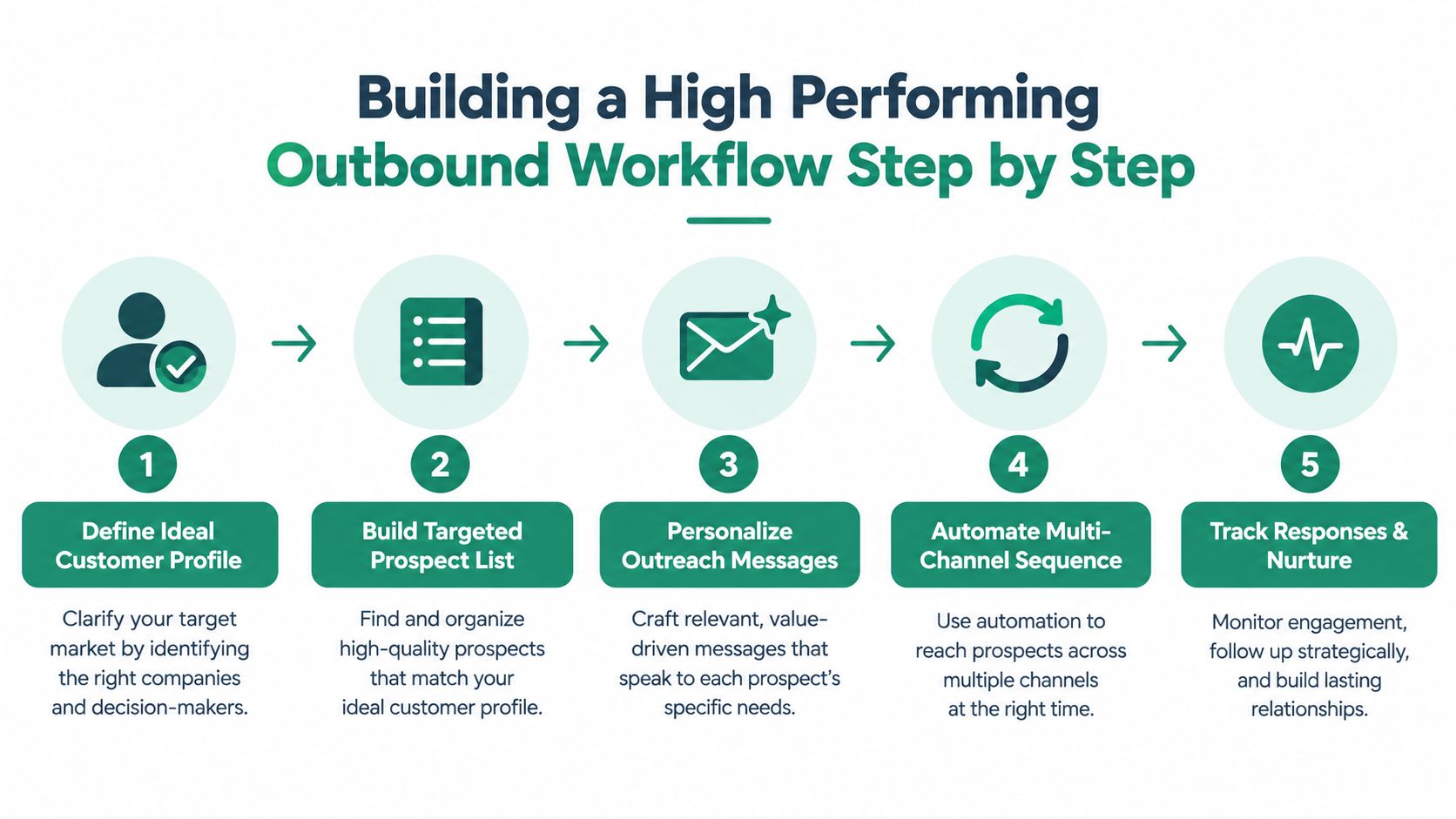
    Cold email still works, but it works as a structured prospecting system, not as a one-off copywriting exercise. Recent benchmarks put average cold email response rates at roughly 1% to 5%, with some roundups citing a 0.2% to 2% typical conversion range and roughly 1 deal won per 500 emails sent at the low end of performance, according to B2B Drum's cold email vs warm outreach benchmarks. That's not a channel for lazy volume. It's a channel for disciplined targeting, clean execution, and patient follow-up.

    The teams that get replies don't treat outreach like a blast. They treat it like pipeline engineering. They pick better markets. They build smaller, cleaner lists. They write emails for a response, not applause. And they keep going after the first non-reply.

    Introduction Beyond the Spam Folder

    If your inbox history is full of sent emails and empty of replies, you're not alone. Most cold email outreach campaigns feel dead on arrival because the sender focuses on the visible part of the process. The template, the subject line, the first sentence. Those matter, but they sit on top of a bigger machine.

    A frustrated man sits at his desk looking at a computer monitor showing an empty email inbox.

    Cold outreach is often mistaken for spam because people use it badly. They pull a giant list, send the same vague pitch to everyone, and hope someone bites. That approach burns domains, wastes time, and teaches the wrong lesson. The lesson isn't that cold email is dead. The lesson is that random outreach gets ignored.

    What cold email is actually for

    Cold email works best when you use it to start a relevant business conversation. Not to close the sale in one message. Not to dump your offer into a stranger's lap. Just to earn a reply from someone who plausibly cares.

    That shift changes everything. It changes how you choose prospects, how you write, how you follow up, and what you measure.

    Practical rule: If your email tries to do discovery, pitch, objection handling, and calendar booking all at once, it's carrying too much weight.

    The strongest programs are boring in the right way. They run on a repeatable process. They know who they're targeting. They know why that person should care. They know what signal counts as success. And they know silence after one email doesn't mean the account is dead.

    Why most campaigns fail systemically

    The common failure points are predictable:

    • Bad market choice. The offer is pointed at a crowded niche where everyone sounds the same.
    • Weak list building. Contacts don't match the problem you solve.
    • Poor infrastructure. Messages never really make it to the primary inbox.
    • Self-centered copy. The email talks about the sender, not the buyer.
    • No sequence discipline. One email goes out. Then the campaign stops.

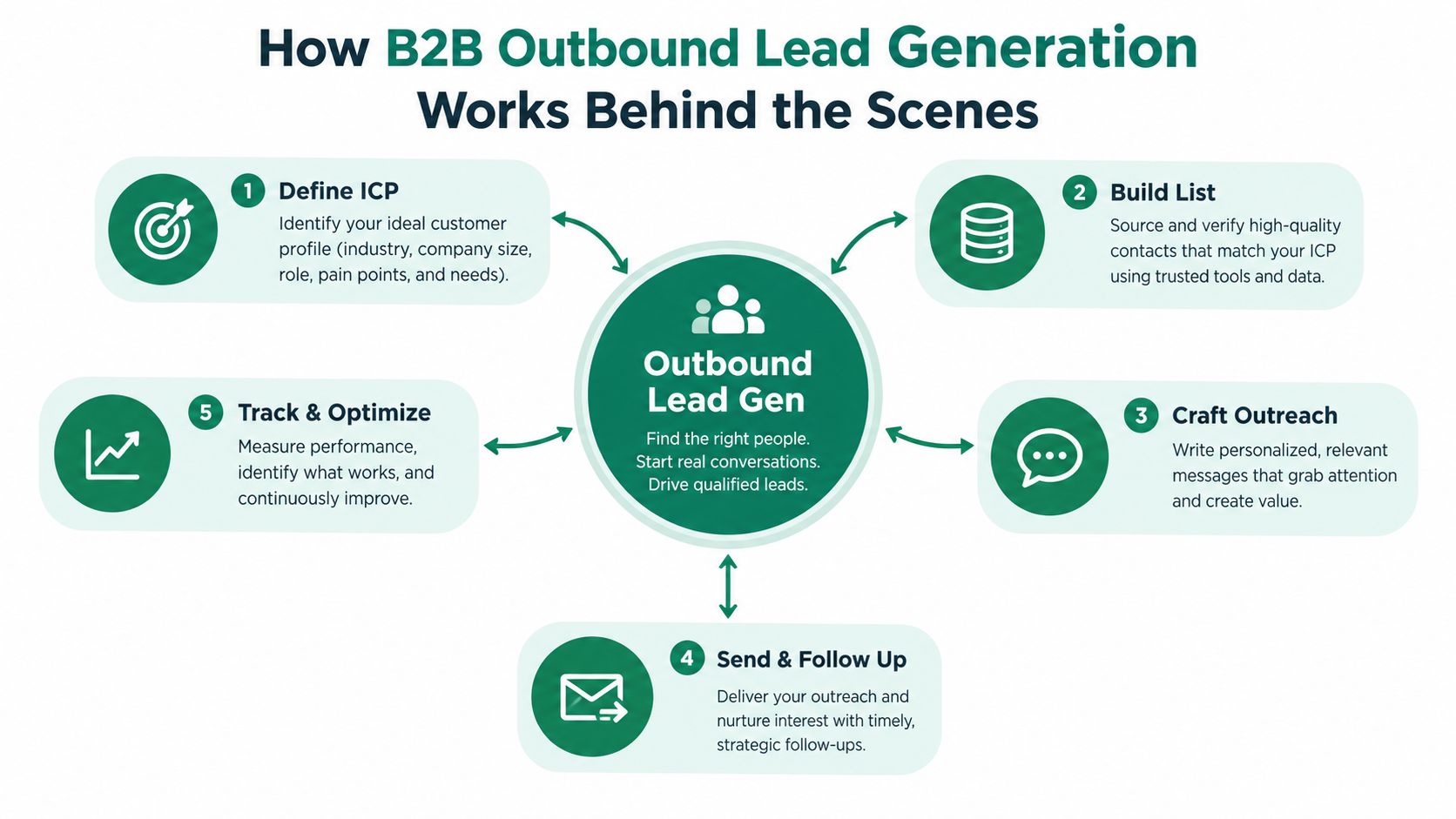
    Fix those five things and cold email outreach starts behaving less like a gamble and more like a managed sales process.

    Strategy First Designing Your Outreach Blueprint

    Most outreach problems are strategy problems wearing a copywriting costume.

    If you target the wrong market, even a good email underperforms. If you choose the right market, average copy can still create conversations. That's why the blueprint comes first.

    Start with pain, not industry labels

    A lot of teams define their ICP like this: “We sell to SaaS companies” or “We target agencies.” That's too loose to guide a real campaign. A usable ICP is built around a specific problem, owned by a specific person, inside a specific type of company.

    A better way to frame it looks like this:

    ICP element Weak version Strong version
    Market Healthcare Multi-location clinics with inconsistent lead follow-up
    Buyer Founder Ops leader who owns patient intake workflow
    Problem Needs growth Missed inbound demand and slow front-desk response
    Trigger General interest Recent expansion, hiring, or service-line launch

    That level of specificity sharpens everything downstream. Your list gets cleaner. Your first line gets easier to write. Your CTA gets more relevant.

    Why obscure niches often outperform obvious ones

    Many pursue the niches everyone talks about. SaaS. Agencies. E-commerce. Coaches. Those markets are full of noise.

    A more useful approach is to target narrower categories where the economics still work but competition is lighter. Practitioner guidance on niche selection explicitly recommends looking for markets with high lifetime value, lower lead costs, and more obscure industries because they're less likely to attract big agencies, as discussed in this niche selection commentary.

    That doesn't mean picking a niche nobody buys in. It means picking one where inboxes aren't flooded by the same pitch every day.

    Smaller markets often produce clearer messaging because the buyer's pain is easier to name.

    Questions worth answering before list building

    Before you find a single contact, write down the answers to these:

    1. What problem do we solve that creates urgency?
      If the problem is nice-to-have, replies slow down.

    2. Who feels that problem directly?
      Don't aim at “leadership” as a group. Name the role.

    3. What change makes this account timely?
      New locations, hiring, expansion, service changes, and operational bottlenecks all create angles.

    4. Why this niche instead of the crowded alternative?
      If your answer is “because there are a lot of companies there,” rethink it.

    The strategic trade-off nobody likes

    Narrow targeting reduces list size. It also improves relevance.

    A lot of senders get nervous when their target list shrinks from thousands of possible companies to a few dozen strong-fit accounts. That's usually progress, not a problem. Broad targeting feels productive because the spreadsheet grows fast. Narrow targeting tends to produce better conversations because the message lands with a real person who owns the issue.

    Cold email outreach gets easier when the market selection does half the work for you.

    Building a Laser-Focused Prospect List

    List quality decides whether your campaign has a chance. Not list size.

    A small list of true-fit prospects beats a giant list of “maybe” contacts because cold outreach punishes wasted sends. The cleaner your targeting, the easier it is to write something specific enough to deserve attention.

    Build the account list before the contact list

    Start with companies, not people. That keeps your targeting anchored to real fit instead of random job titles.

    Use a simple workflow:

    1. Filter for company fit
      Search by industry, business model, geography, and signs that the company likely has the problem you solve.

    2. Look for operational signals
      Hiring pages, service expansion, location growth, product launches, and public team changes all help.

    3. Only then identify stakeholders
      Find the person closest to the problem, not the most senior name you can scrape.

    If I'm selling a workflow fix, I'd rather email the operator who feels the pain than the founder who delegates it.

    Where to find prospects without buying junk data

    LinkedIn Sales Navigator is still useful because it helps narrow companies and roles fast. Google helps validate context. Company websites often reveal whether the target account really matches the story in your email.

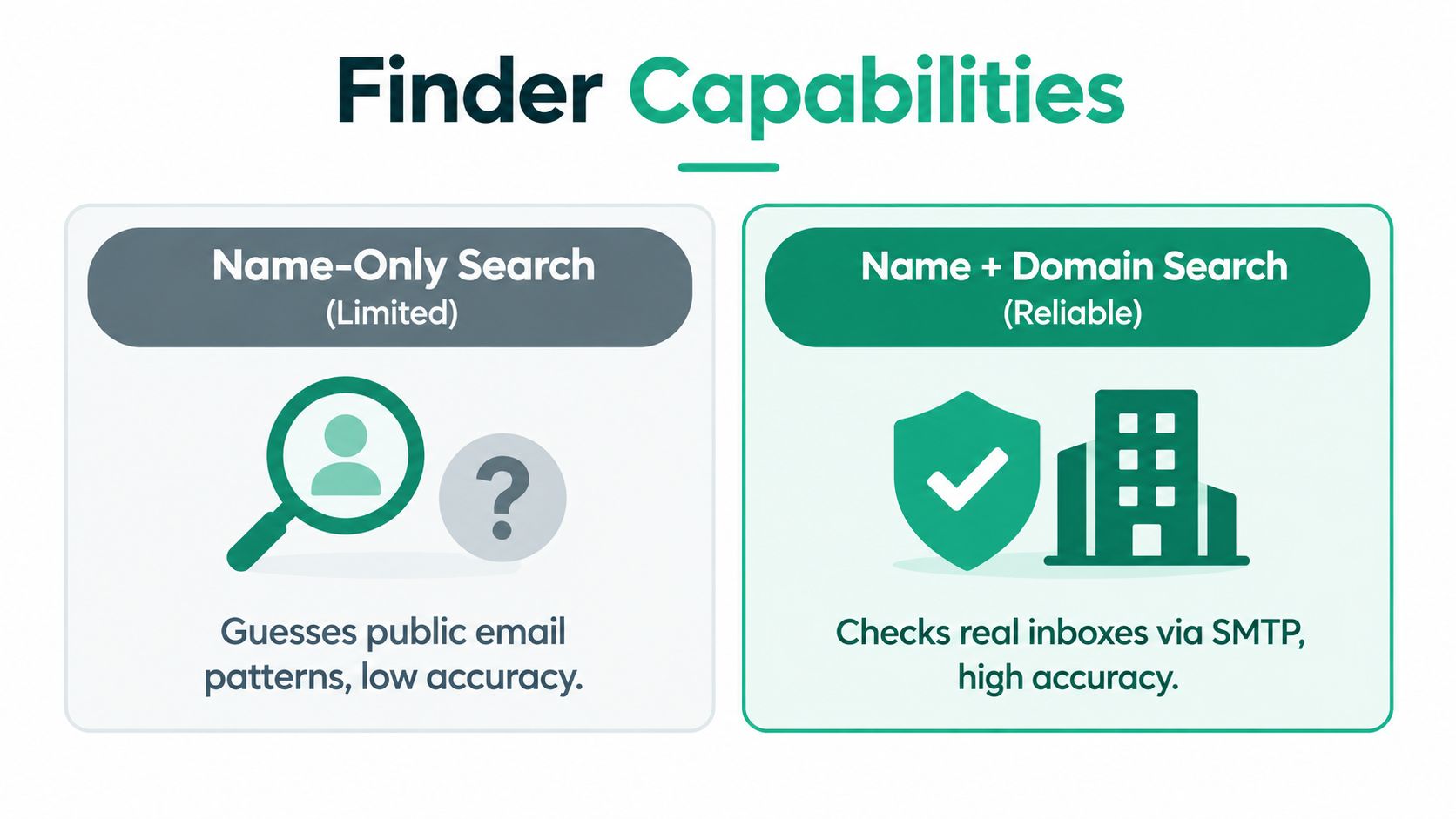
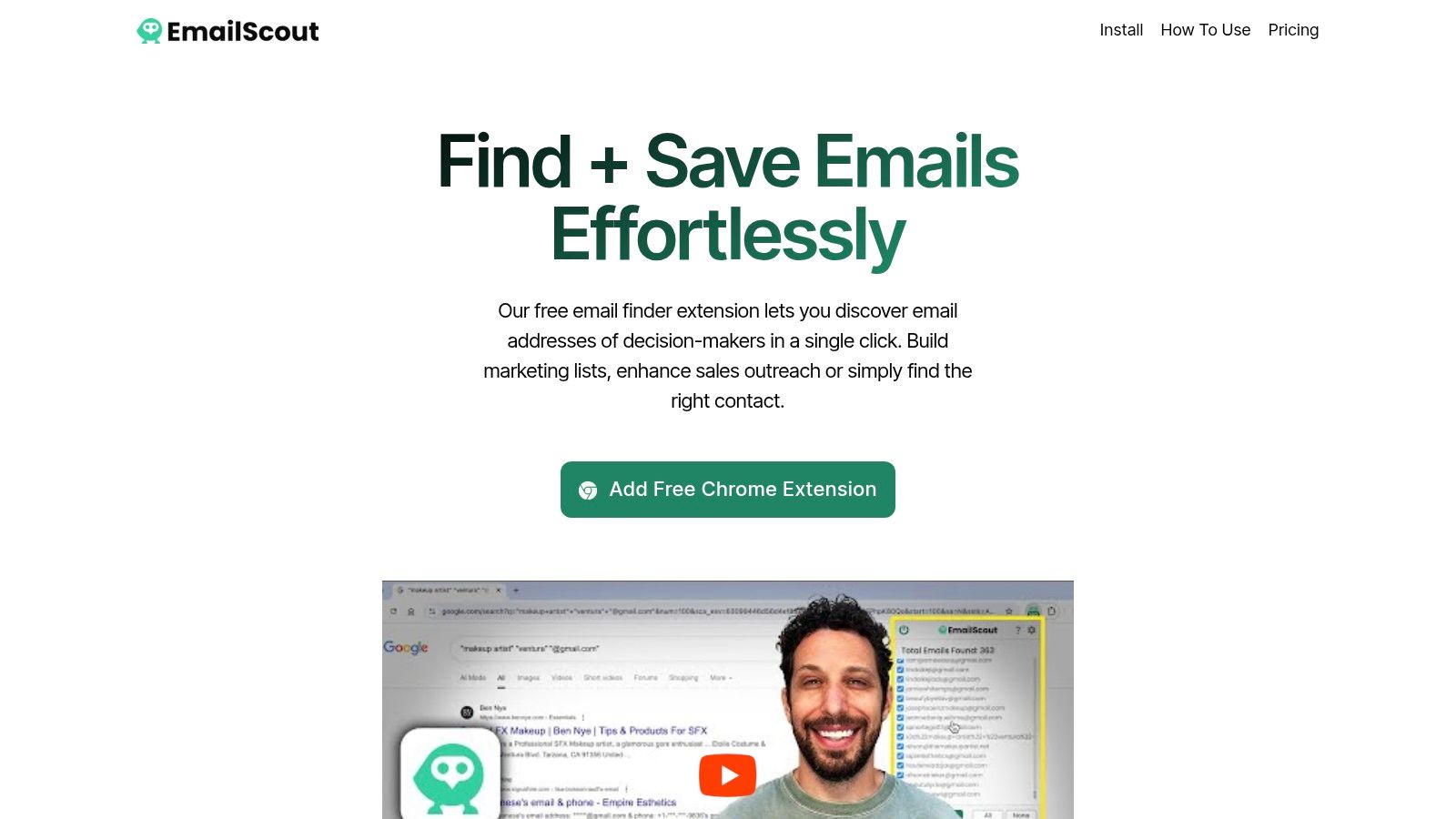
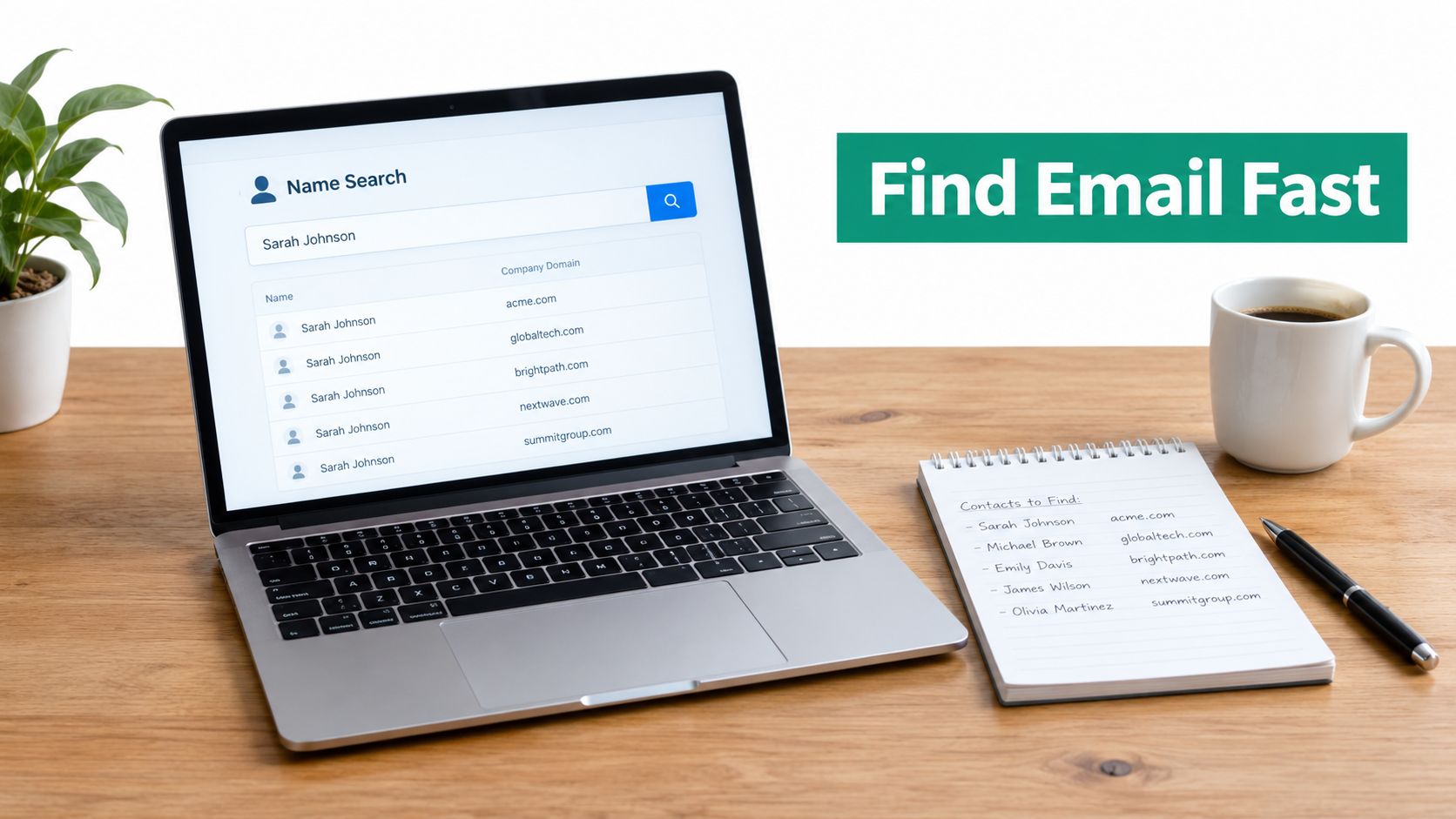
    When the contact search becomes the bottleneck, use a finder that works inside your normal research flow instead of exporting everything into a separate process. For example, EmailScout can pull contact information while you browse LinkedIn profiles or company sites, which makes it practical to build lists as you research, not after. If you need a walkthrough for domain-based prospecting, this guide on finding company email addresses is a useful reference.

    Screenshot from https://emailscout.io

    For edge cases, industry directories, conference speaker pages, association sites, and local business listings can surface prospects the major databases miss. If your audience overlaps with creator-led or local business categories, this resource on how to learn to scrape Instagram for business contacts can help expand lead research beyond standard B2B sources.

    A practical list-building workflow

    Use this sequence for each account:

    • Check the website first
      Confirm the company offers the service, serves the market, or has the structure your pitch assumes.

    • Choose one primary contact
      Pick the role most likely to own the problem. Avoid “spray the whole org chart” at this stage.

    • Capture one reason they fit
      Write a note you can use later. Expansion, a service page, a job post, a weak process, or a visible growth move.

    • Find a secondary contact
      Keep one backup stakeholder in the same account for later sequencing.

    • Store context with the email
      Don't just save addresses. Save why the person is on the list.

    That last point matters. A lot of teams have data, but not usable context. Then every email sounds generic because the sender forgot why the lead was selected in the first place.

    What a clean prospect row should include

    A prospect record doesn't need to be complex. It needs to be useful.

    Field Why it matters
    Company Keeps outreach account-based
    Contact name Needed for basic personalization
    Role Tells you whether the pain fits
    Email Required, but not sufficient
    Fit note Gives you your opening angle
    Secondary stakeholder Supports later follow-up if needed

    A list becomes valuable when every row explains why that person should hear from you.

    What doesn't work

    Three list-building habits create weak campaigns:

    • Buying giant generic lists. They look efficient and create bad targeting.
    • Targeting by title alone. A VP title doesn't mean they own your problem.
    • Skipping context collection. If you can't say why a lead belongs on the list, don't send.

    The fastest route to better cold email outreach is often to cut your list in half and improve every remaining row.

    Mastering Email Deliverability and Compliance

    A strong message sent from a weak setup still fails.

    It's common to spend more time rewriting copy than fixing infrastructure, even though inbox placement usually determines whether the copy gets a fair shot. Deliverability isn't glamorous, but it's where serious campaigns separate from hobby outreach.

    The authentication basics you need in place

    Every outreach domain should have SPF, DKIM, and DMARC configured correctly before you launch. Think of them as trust signals that help receiving providers validate that your messages are legitimate.

    You don't need to become a mail admin to understand the job of each one:

    • SPF tells receiving servers which senders are allowed to send on behalf of your domain.
    • DKIM adds a signature that helps prove the message hasn't been tampered with.
    • DMARC tells providers how to handle messages that fail checks and gives you visibility into problems.

    If that setup feels fuzzy, use a deliverability checklist before sending. This walkthrough on how to ensure emails reach the inbox is a practical companion to the process, and this resource on improving email deliverability covers the common setup issues outreach teams run into.

    Warm reputation before chasing scale

    New sending accounts need time to build trust. If you launch full-volume campaigns from a fresh setup, providers see unusual behavior and start filtering aggressively.

    A cleaner approach looks like this:

    1. Use a dedicated outreach domain
      Keep your main business domain separate from cold sending activity.

    2. Start slow
      Don't jump straight into heavy campaign volume.

    3. Watch signals
      If replies disappear and bounce or spam issues rise, pause and inspect setup before blaming copy.

    4. Keep behavior human
      Consistent sending patterns outperform sudden spikes.

    Compliance is part of deliverability

    Legal compliance isn't separate from performance. Sloppy compliance often looks spammy, and spammy behavior hurts inbox placement.

    At a minimum, make sure your messages include:

    • Accurate sender details
    • Truthful subject lines
    • A clear opt-out path
    • A valid business identity

    For EU prospects, relevance matters even more. Don't contact people who have no plausible business reason to hear from you. The tighter your targeting, the easier compliance becomes because the outreach is easier to justify.

    If you wouldn't be comfortable explaining why this specific person received your email, the list probably needs work.

    Common deliverability mistakes

    Here's what regularly sinks campaigns:

    Mistake What happens
    Sending from the main domain You risk broader brand damage
    Launching volume too fast Providers flag unusual behavior
    Ignoring authentication Trust drops before content is evaluated
    Reusing bad lists Invalid or irrelevant contacts hurt reputation
    Hiding opt-out options Recipients use spam complaints instead

    Cold email outreach gets dramatically easier once your setup stops working against you.

    Writing Cold Emails That People Actually Reply To

    Good cold emails don't sound clever. They sound relevant.

    Most bad emails fail because they ask a stranger to care about the sender's company before the sender has shown any understanding of the buyer's world. That's backwards. The buyer cares about their problem first.

    A professional infographic titled Cold Email Success explaining the benefits of starting conversations over pushing sales.

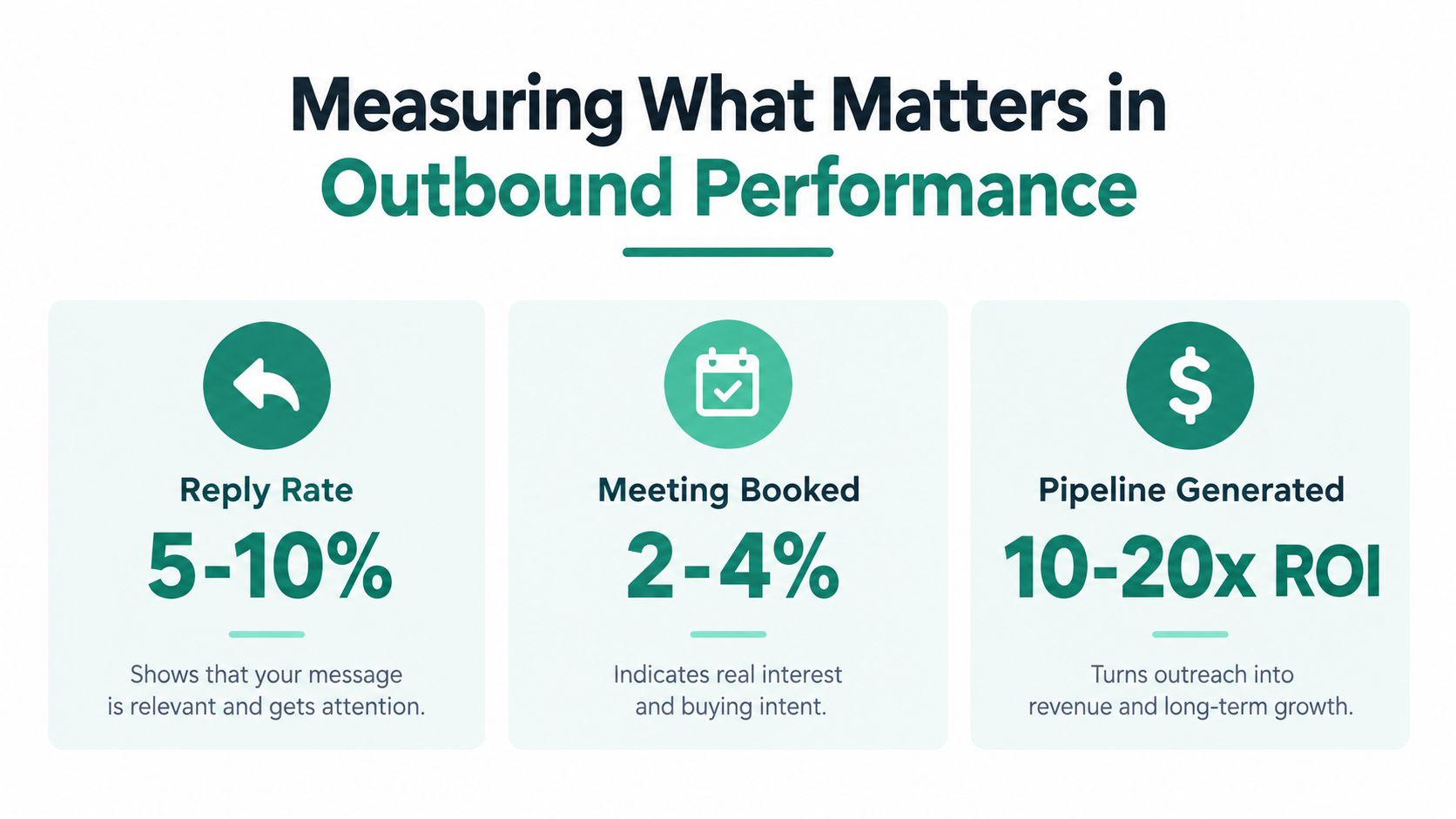
    The strongest benchmark in the provided sources shows an overall average reply rate of 3.43% across industries, while top performers exceed 10%, according to Instantly's cold email benchmark discussion. That gap is why serious teams optimize for reply rate, not open rate. Opens don't create pipeline. Replies do.

    What a reply-focused email looks like

    One expert playbook recommends keeping the first email under 125 words and adding new information in follow-ups instead of repeating the same ask, according to Salesmotion's cold outreach best practices. That fits what works in practice. Short emails are easier to process. Specific emails feel less automated. Low-friction asks earn more responses than calendar demands.

    A useful structure is simple:

    Part What it should do
    Subject line Signal relevance, not cleverness
    Opening Show why this person specifically got the email
    Body Name a problem or missed opportunity they likely care about
    CTA Ask for a small response, not a commitment-heavy meeting
    Signature Make the sender look real and reachable

    Subject lines that earn attention

    The subject line should help the recipient decide, fast, whether the message might matter. That usually means specificity beats curiosity.

    Good subject lines tend to reference one of three things:

    • Their company
    • A visible business situation
    • A problem category they likely recognize

    What usually fails:

    • Vague hype
    • Overly clever wording
    • Fake familiarity
    • “Quick question” style subject lines with no context

    Body copy that respects the reader

    The first line should prove you didn't pull their name from a random database. Mention something observable and relevant. A recent expansion. A process issue implied by their model. A public signal that connects to your offer.

    Then stay in their world.

    Bad body copy says:

    • who you are
    • how long you've been in business
    • what your service includes
    • why you're different

    Better body copy says:

    • what problem likely exists
    • why it tends to show up in companies like theirs
    • what kind of outcome is possible
    • whether it's worth discussing

    If you want a useful complement to this approach, Fypion Marketing's cold email advice has practical examples of keeping outreach direct and readable. For more structural guidance, this breakdown on how to write cold emails is also useful.

    Write the email so the recipient can understand it in one skim on a crowded morning.

    The CTA is where many emails die

    The worst CTA in cold outreach is the one that demands too much too soon.

    “Book a demo.”
    “Are you free for 30 minutes this week?”
    “Can I show you our platform?”

    Those asks assume interest that hasn't been earned yet.

    Lower-friction alternatives work better because they only ask the prospect to express interest, not commit to a process. Good CTAs sound like:

    • Is this something your team is dealing with?
    • Worth a conversation?
    • Open to seeing whether this is relevant?
    • Should I send a short breakdown?

    That kind of question gives the buyer room to engage without feeling trapped.

    A simple before-and-after

    Weak version
    Hi Sarah, I'm with a growth agency that helps businesses scale through cutting-edge outbound strategies. We work with many companies and would love to book time to show you our process.

    Stronger version
    Hi Sarah, I noticed your team is adding locations. That usually creates uneven lead follow-up across new sites. We help multi-location teams tighten response flow when demand starts spreading across branches. Is that a priority right now?

    Same offer. Different lens. One talks about the sender. The other starts with the buyer.

    The Art of the Follow-Up Sequencing and Cadences

    A rep sends a strong first email on Monday, gets no reply by Wednesday, and assumes the account is dead. That decision kills more pipeline than weak copy.

    Follow-up is not cleanup work after the opener. It is the campaign. Analysts at Martal's cold email statistics roundup found that short sequences can produce a large share of replies, longer sequences can lift response rates, and many sales reps still stop after a single send. The practical takeaway is simple. If the rest of your system is sound, niche selection, targeting, deliverability, and message-market fit, the sequence is where you collect the return.

    A four-step infographic illustrating an effective email follow-up process for successful sales outreach strategies.

    A cadence should create progression

    Good sequences behave like a sales process. Each touch has a job, and each one gives the buyer a reason to reconsider.

    Touch one frames the problem in plain language.
    Touch two adds context the first note did not include.
    Touch three changes the channel and makes the name more familiar.
    Touch four lowers the ask or reframes the cost of inaction.
    Touch five tests whether another stakeholder owns the issue.

    That structure matters because cold outreach usually fails at the system level, not the sentence level. Reps pick a weak niche, build a loose list, send one decent email, then repeat the same message four times. The sequence looks active but carries no new information. Buyers feel the repetition immediately.

    A workable cadence often looks like this:

    Touch Channel Purpose
    1 Email Introduce the issue and ask a low-friction question
    2 Email Add a new data point, trigger, or business consequence
    3 LinkedIn Put a name to the outreach without turning it into a pitch
    4 Email Reframe the problem for a different priority, such as revenue, speed, or risk
    5 Phone or voicemail Add a human layer and test whether the contact is active
    6 Email Send a short note with a simpler ask
    7 LinkedIn Light touch, such as a profile view or relevant content engagement
    8 Email Close the loop clearly and leave the door open

    The exact number matters less than the progression. Six useful touches beat eight recycled nudges.

    Each follow-up needs a reason to exist

    “Just bumping this” is usually wasted inventory.

    A follow-up earns attention when it adds one new element. That can be a sharper angle, a new trigger, a lighter ask, or a channel shift that changes how the message is received.

    Use changes like these:

    • New angle
      Email one focuses on slow lead response. Email two focuses on what happens downstream, missed demos, lower conversion, or poor territory coverage.

    • New trigger
      Mention a recent hiring push, expansion, pricing change, product launch, or leadership move found after the first email.

    • New ask
      Move from “open to a conversation?” to “should I send a two-paragraph summary?”

    • New stakeholder context
      Reframe the issue so it matters to operations, sales leadership, or marketing, depending on who is reading.

    This short demo is a useful companion if you want to see follow-up thinking in motion:

    Follow-up works when every touch adds context, reduces friction, or tests a new path into the account.

    Timing matters, but relevance matters more

    A rigid cadence sent to every prospect in every segment creates avoidable losses. A VP of Sales at a 500-person SaaS company does not behave like the owner of a regional services business. One account may need three business-day gaps between emails. Another may respond better to a phone call after the second touch because inbox competition is heavier.

    A practical rule is to keep the early touches closer together, then widen the spacing. That gives the sequence momentum without turning it into a daily nuisance. If a prospect opens several emails but never replies, test a lighter CTA or a different stakeholder. If the account shows no signs of life across multiple channels, end the sequence cleanly and revisit later with a new trigger.

    Single-contact outreach leaves deals sitting in the wrong inbox

    Many campaigns stall because the rep picked one plausible contact and treated that person like the entire buying committee.

    Practitioner guidance from Revenue Flow's guidance on cold email for agencies recommends finishing a full sequence with the primary contact, then reaching a secondary stakeholder if there is still no response. That is the right move in larger accounts. It respects the process, but it does not bet the whole campaign on one person noticing one thread.

    Use a simple handoff:

    1. Start with the person who appears to own the problem.
    2. Run the planned sequence without repeating the same message.
    3. If there is no response, contact a second stakeholder tied to the same business issue.
    4. Reference the problem and note that you previously reached out inside the account.
    5. Keep the tone neutral. The goal is access, not pressure.

    This works especially well when the pain is cross-functional. Sales ops, revenue leadership, and frontline managers may all care about the same issue for different reasons. A good outreach system accounts for that from the start instead of treating it like a fallback.

    Where sequences go wrong

    Two mistakes show up constantly.

    First, reps confuse persistence with repetition. Sending the same note four times is not a sequence. It trains the buyer to ignore the thread.

    Second, teams overbuild channel volume before they have message clarity. Email, LinkedIn, and phone can work well together, but only when each touch carries a distinct purpose. If every channel says the same thing in the same week, the account feels chased.

    Good cadence feels deliberate. It shows that the rep understands the problem, knows how the account is structured, and has a plan beyond one inbox and one subject line.

    Measuring What Matters Optimizing for Results

    A campaign can show strong open activity and still produce nothing for pipeline.

    That usually happens when the team measures the easiest signals instead of the useful ones. In cold email, optimization starts after launch, but only if the scorecard reflects the full system. List quality, message fit, offer clarity, and reply handling all show up in the numbers if you track the right ones.

    Response and conversion rates in cold outreach are usually modest. That is normal. The practical takeaway is simple. Small gains in the right metric can change campaign economics fast, especially when volume is controlled and the target market is narrow.

    The metrics that deserve attention

    Track results in layers, from inbox engagement to sales outcome:

    • Reply rate
      This is the first real signal that the list and the message match the problem.

    • Positive reply rate
      Separate interest from polite declines, referrals, objections, and opt-outs. A campaign with a healthy raw reply rate can still be weak if most replies go nowhere.

    • Meetings booked
      This shows whether the call to action is easy to answer and whether follow-up on replies is tight.

    • Opportunity rate
      Booked meetings matter less if they never turn into qualified pipeline. Add this metric if sales and SDR handoff data is available.

    • Performance by segment
      Break results out by niche, role, company size, and pain point. Aggregated data hides the pattern you need.

    Many outbound teams go off course when they compare campaign A against campaign B without controlling for segment quality. They then change copy when the actual issue sits upstream in account selection.

    A simple testing discipline

    Keep testing boring and controlled.

    Change one meaningful variable at a time across similar prospects. If the audience changes with the message, the result is hard to trust.

    Test element What to isolate
    Subject line Specific wording and level of specificity
    Opening line Research-led opener versus direct problem opener
    Value proposition One business pain at a time
    CTA Low-friction interest check versus direct meeting ask

    Use sample sizes large enough to matter. Do not call a winner after ten sends and one positive reply. Wait until you have enough volume inside the same segment to spot a real pattern.

    What teams usually misread

    A high open rate with weak replies usually points to a targeting or messaging issue. The subject line got attention, but the body did not earn a response.

    A decent reply rate with poor meeting conversion points somewhere else. The ask may be too big, the replies may be handled slowly, or the SDR may not know how to turn interest into a scheduled conversation.

    If every metric is soft, stop rewriting copy for a week and audit the system. Check the niche, list source, contact accuracy, domain health, and whether the offer is specific enough for that market. Campaigns rarely fail for one reason.

    The teams that improve fastest treat outreach like an operating system, not a template library. Better segmentation improves reply quality. Better reply handling improves meeting rate. Better measurement shows which part of the system needs work next.

    If you're building that workflow, EmailScout can support the list-building side by helping you find and verify prospect email addresses while you research accounts and decision-makers.

  • How to Write Cold Emails That Get Replies

    How to Write Cold Emails That Get Replies

    Let's be honest, writing a great cold email has very little to do with the actual writing. The real magic happens before you even think about typing a subject line.

    The secret isn't some killer template or a clever turn of phrase. It’s about ditching the generic, copy-paste approach and doing a bit of old-fashioned, personalized research. That’s what makes your message feel like it was written for one person, and one person only.

    The Real Work Happens Before You Write

    Too many people get hung up on finding the perfect opening line. But the truth is, successful outreach is built on a solid foundation of prep work. This is what separates an email that feels insightful and relevant from one that gets sent straight to the trash.

    This isn't just a box to tick off a list; it’s the engine that powers your whole campaign. Without it, you’re just more noise in an already deafeningly loud inbox.

    Think about it: cold email is still the top choice for decision-makers in the US, with 71% saying they prefer it over a LinkedIn message or a phone call. But with reply rates hovering around a measly 4.1%, something is clearly broken. That gap is where relevance and personalization live.

    First, Define Your One Clear Goal

    Before you even look up a single contact, you need to know exactly what you want them to do. Trying to do too much in one email just creates confusion, and a confused mind always says no. Remember, you're not trying to close a deal here—you're just trying to start a conversation.

    Keep your objective simple, specific, and incredibly easy to act on. Pick just one:

    • Book a quick 15-minute intro call.
    • Get a referral to the right person.
    • Gauge interest in seeing a case study.
    • Get feedback on a new idea.

    Focusing on a single goal makes it easy for your prospect to respond. A vague ask like "let me know your thoughts" is work. A specific question like, "Are you the right person to chat about this?" is a simple yes or no.

    Become a Detective, Not a Seller

    Once you have your goal, it's time to put on your detective hat. Your mission is to find a genuine, timely reason to get in touch. This is your "hook," and it’s what proves you've actually done some homework.

    This goes way beyond just finding a name and a job title. You need to understand what's happening in their world right now. Start by digging into their recent digital footprint. This is how you turn a generic pitch into a relevant message that feels like it was meant for today.

    And if you get stuck finding their actual email address during this phase, our guide on how to find company email addresses can help you out.

    Your Research Checklist

    Plan to spend a solid 5-10 minutes on each high-value prospect. Don't just skim their profile; you're looking for little details that reveal their priorities and what they’ve been up to lately.

    Where to Look:

    • LinkedIn Profile: The "Activity" tab is pure gold. See what they've recently posted, liked, or commented on. It’s a direct window into what’s on their mind.
    • Company Press Releases: Did they just launch a product, land a round of funding, or announce a big partnership? Mentioning this shows you’re actually following their company’s story.
    • Industry News & Podcasts: Have they been quoted in an article or interviewed on a podcast? Referencing an insight they shared is a killer way to build instant rapport.
    • Job Postings: If a company is suddenly hiring a "Head of Customer Success," that's a huge signal about their current priorities. You can frame your entire pitch around solving the challenges that come with that kind of growth.

    When you do this level of prep work, the email almost writes itself. You’ll have a solid, relevant foundation that makes your message stand out and, most importantly, earn a reply.

    Crafting an Unforgettable First Impression

    Image

    Let's be real: your subject line and the first sentence are the gatekeepers to your entire cold email. You could have the most valuable, game-changing offer in the world, but it means absolutely nothing if they never even click open. This is your one shot to cut through the inbox noise.

    Think of your subject line as a headline. Its only job is to be interesting enough to make someone stop scrolling. You aren't trying to sell your product here; you're just trying to spark enough curiosity to earn that click.

    Writing Subject Lines That Demand an Open

    The best subject lines I've ever seen are short, specific, and feel personal. Anything that sounds generic or salesy is an instant red flag that gets your email deleted or, even worse, flagged as spam. You want it to sound like it came from a human, not an automation tool.

    Here are a few angles that consistently work well:

    • The Quick Question: A simple, relevant question is a killer way to get an open. Something like, "Question about [Their Company]'s new launch?" is direct, shows you're paying attention, and makes them want to know what you're asking.

    • The Mutual Connection: This is the gold standard. If you have a shared connection, lead with it. A subject line like "Referred by Jane Doe" is probably the most powerful you can write because it instantly borrows credibility.

    • The Hyper-Personalized Reference: Mention something specific you found in your research. A subject like "Your recent podcast on SaaS growth" immediately proves you've done your homework and aren't just blasting out a generic template.

    Just remember one crucial rule: no clickbait. Your subject line has to be an honest preview of your email's content. If you mislead someone, you'll lose their trust before you even get a chance to earn it.

    Hooking Them with a Powerful Opening Line

    Okay, they opened it. Now the clock is ticking. You have about three seconds to convince them to keep reading. This is where your opening line has to shine. Forget stale greetings like "I hope this email finds you well"—it’s a complete waste of prime digital real estate.

    Your first sentence needs to immediately answer their unspoken question: "Why me, and why should I care?" This is the perfect spot to deploy the research you did earlier.

    A strong opening line demonstrates immediate relevance. It shows you're not a spammer but a thoughtful professional who has taken the time to understand their world. This simple act of personalization is what separates emails that get replies from those that get deleted.

    Let's walk through a few real-world scenarios to see how this plays out.

    Scenario 1: The Company Milestone

    • Research: You see on their blog that they just won a big industry award.
    • Weak Opening: "My name is John, and I work for a company that helps with…"
    • Strong Opening: "Hi Sarah, saw the great news about your team winning the Innovator of the Year award—congratulations on the well-deserved recognition."

    Scenario 2: The Shared Experience

    • Research: You notice on their LinkedIn that you both worked at the same company years ago.
    • Weak Opening: "I came across your profile and wanted to reach out."
    • Strong Opening: "Hi Mark, I noticed we both spent some time in the trenches at Acme Corp back in the day. Hope you're doing well."

    Scenario 3: The Insightful Observation

    • Research: You read an article where they were quoted talking about challenges with scaling customer support.
    • Weak Opening: "Are you looking to improve your customer support?"
    • Strong Opening: "Hi Emily, I just read your interview in Tech Weekly and your point about the difficulty of maintaining personal support during rapid growth really resonated."

    See the difference? Each of the strong examples immediately creates context and shows that the email was written specifically for them. That alone makes them far more likely to stick around and read what you have to say next.

    Building a Message Focused on Their World

    You got them to open the email. Now what?

    The body of your email has one simple job: deliver value, and do it fast. This is exactly where most cold emails completely fall apart. They bait you with a great subject line and then switch into a robotic, self-absorbed sales pitch about company awards and product features, killing any connection they just built.

    The best cold emails I've ever seen—and sent—are built entirely around the recipient's world. You have to force yourself to shift from a "what I want to sell" mindset to a "what problem can I help them solve" mindset. This is the heart of the "What's In It For Them" (WIIFT) principle, and it needs to be the filter for every single word you write.

    Don't talk about your product; talk about their goals. Don't list your features; highlight tangible outcomes that matter to them.

    Frame Your Solution as Their Advantage

    Your research should have given you a few solid clues about their current priorities or challenges. Now it’s time to connect the dots between your offer and what they actually care about. The trick is to be incredibly concise and benefit-driven.

    Nobody has time to wade through dense paragraphs. Break your value proposition down into short, scannable points that are easy to absorb at a glance. Bullet points are perfect for this.

    For instance, don't send this:

    "Our software provides a comprehensive suite of analytics tools, including real-time performance tracking, user segmentation capabilities, and automated reporting features to optimize your workflow."

    This is much, much better:

    "I saw your team is hiring several new SDRs. Based on my work with similar fast-growing teams, I thought you might find this interesting. We help sales leaders:

    • Cut new rep ramp-up time by 30% in their first quarter.
    • Get a clear view of which outreach sequences are actually driving pipeline.
    • Automate tedious reporting so they can spend more time coaching."

    See the difference? The second version hits on potential pain points—training new hires, proving ROI, and saving time—and frames the solution as a direct win for the manager. It’s all about them.

    This approach is what separates the emails that get a reply from those that get deleted.

    Image

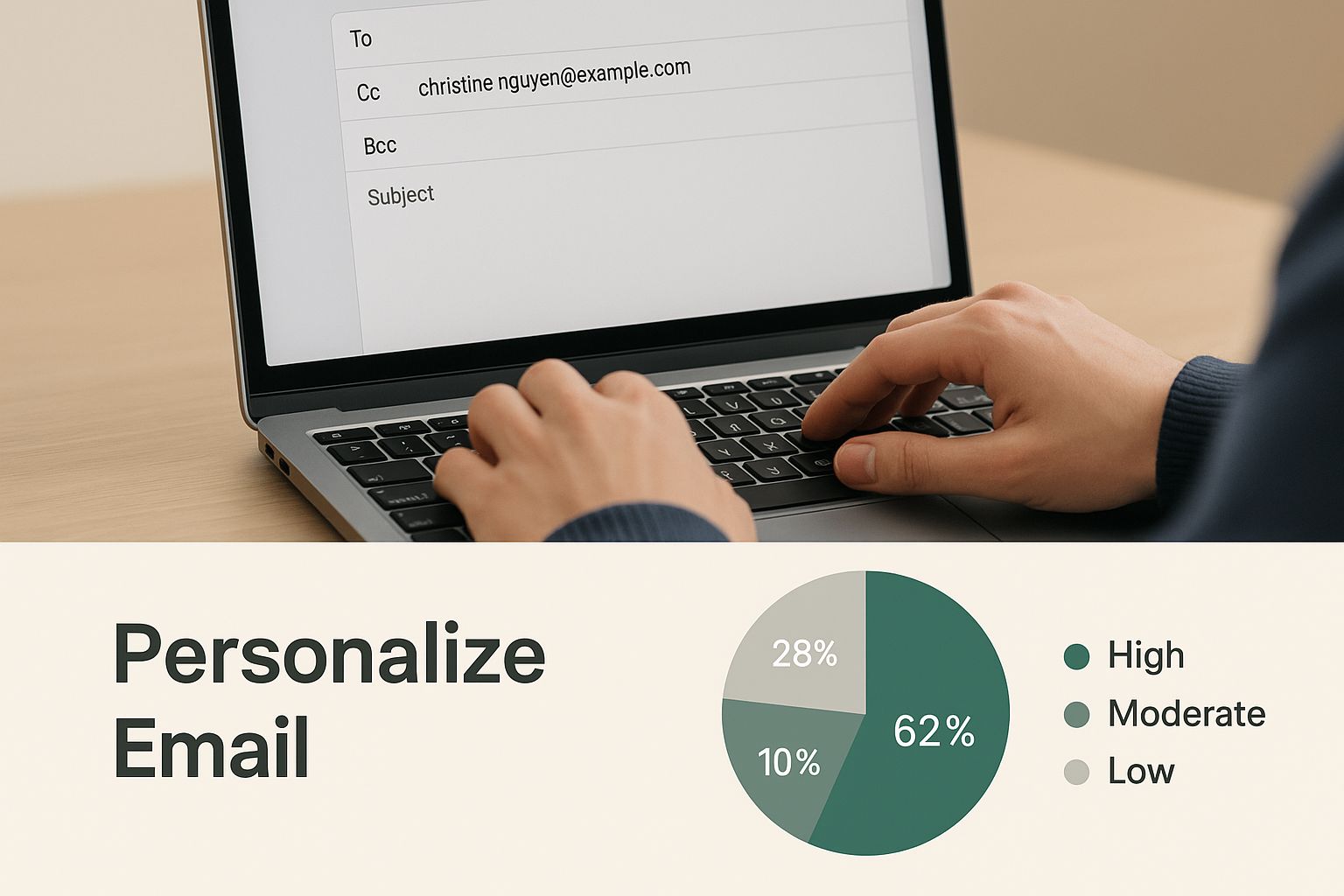
    As you can see, personalization isn't just a nice-to-have; it's the single most critical factor in getting someone to hit "reply."

    Build Trust with a Touch of Social Proof

    Once you’ve dangled a compelling benefit, you need to quickly show them you're credible. Why should they believe you? This is where a quick dose of social proof comes in. A brief, relevant data point or name-drop can make your claims feel real and trustworthy.

    You don't need to paste in a whole case study. A single, powerful sentence is usually more effective. Your only goal here is to give them just enough evidence to feel confident you can actually deliver on your promise.

    Here are a few ways I like to weave in social proof:

    • Mention a similar client: "We recently helped [Similar Company in Their Industry] achieve a 15% increase in qualified demos using this exact approach."
    • Reference a mutual connection: "Jane Doe from your marketing team suggested I reach out."
    • Share a key stat: "Companies using our framework typically see a reduction in customer churn within the first 60 days."

    This small addition transforms your email from a simple claim into a believable solution. It shows you’ve done this before and you understand their world.

    Remember: The goal of a cold email isn't to close a deal. It's just to start a conversation. Every single element, from your value prop to your social proof, is designed to build just enough interest and trust to earn a simple reply.

    Make Your Data Matter

    Sprinkling in data can make your message much more powerful, but only if you use it with purpose. Vague market statistics are just noise. The numbers that really grab attention are the ones that relate directly to the results they could get.

    Think about the quantifiable impact of your solution.

    • Does it save time? ("…reduce report generation time by 5 hours per week")
    • Does it make money? ("…boost conversion rates by 22%")
    • Does it cut costs? ("…lower customer acquisition costs by 18%")

    Using specific, bolded numbers makes your claims tangible and easy to process in a split second.

    The gulf between generic and personalized outreach is massive. This data table helps put the difference in perspective.

    Impact of Personalization and Campaign Size on Response Rates

    This table illustrates the significant difference in cold email response rates based on the level of personalization and the total number of recipients in a campaign.

    Campaign Type Typical Recipient Count Average Response Rate
    Low-Personalization, High-Volume 1,000+ 1% – 5%
    Segmented, Light Personalization 250 – 1,000 5% – 15%
    Highly-Personalized, Small Batch 10 – 50 20% – 50%+

    The numbers don't lie. While the average cold email response rate hovers around 4.1%, you can see that highly personalized campaigns targeting small, well-researched lists can achieve response rates between 40% and 50%. You can learn more about how campaign size impacts these rates.

    This proves that abandoning the "spray and pray" model in favor of a quality-first approach is the surest way to start a real dialogue.

    Make It Easy for Them to Say Yes

    Even the most well-researched, persuasive email will fall flat if the final step is unclear or demanding. You’ve done all the hard work to build rapport and show them you’re for real; now you have to make it incredibly simple for them to take the next step. This is where you gently guide them toward a reply.

    Too many cold emails end with a high-friction request like, "Do you have 15 minutes to chat next week?" This immediately puts the burden on the recipient. Now they have to check their calendar, find a time, and coordinate with you. It feels like work, and frankly, most busy people will just archive your email instead of taking on another task.

    The Low-Friction Call to Action

    Your goal is to propose a next step that requires the absolute minimum effort. Instead of asking for a meeting, you should aim for a simple "yes" or "no" response. This is often called an interest-based CTA. You're not asking for their time; you're just gauging their interest.

    This approach removes the pressure and makes replying feel effortless. Think about it: firing off a one-word response from a phone is much easier than pulling up a calendar to schedule a call.

    Here are a few low-friction CTAs that work wonders:

    • "If this sounds interesting, would you be open to me sharing a brief one-page summary of how we helped [Similar Company]?"
    • "Are you the right person to discuss this with? If not, could you point me in the right direction?"
    • "Would you be open to a quick look at the case study I mentioned?"

    Each of these questions can be answered with a simple "yes," "no," or a quick name. They start a conversation without demanding a chunk of the recipient's valuable time.

    A great Call to Action doesn't ask for a meeting. It asks for permission to continue the conversation. By making the next step small and simple, you dramatically increase your chances of getting a response.

    This is a critical part of learning how to write cold emails that actually get results. Before you hit send, always ask yourself: "How much work am I asking them to do?" If the answer is anything more than "hit reply and type one word," you need to simplify your ask.

    Perfecting Your Professional Signature

    After your CTA, the final piece is your signature. This is your digital business card, and it should reinforce your credibility without adding a bunch of clutter. A messy, overstuffed signature can make your carefully crafted email look unprofessional or, even worse, like spam.

    The key is to keep it clean, professional, and functional. You only need the essentials that prove you're a real person and make it easy for them to learn more about you if they want to.

    Your signature should include just four key elements:

    1. Your Full Name: This one’s non-negotiable.
    2. Your Title and Company: Clearly state your role and where you work.
    3. A Link to Your Website: Let them see what your company does.
    4. A Link to Your LinkedIn Profile: This is crucial for building trust. It lets them put a face to your name and check out your professional background.

    That’s it. Resist the urge to add your phone number, physical address, social media icons, or a cheesy quote. Each extra element is a distraction that pulls attention away from your CTA. And while you're at it, double-check that the email address you're sending from is the right one. If you need help verifying contact info, our guide on how to find anyone's email has some useful strategies.

    Here’s a quick comparison of a bad signature versus a good one:

    Cluttered Signature (Avoid This) Clean Signature (Use This)
    John "The Closer" Doe
    Sales Ninja at Solutions Corp
    Call me: 555-123-4567
    123 Main Street, Anytown, USA
    "The future belongs to those who believe…"
    John Doe
    Account Executive, Solutions Corp
    Website | LinkedIn

    The clean version is professional, scannable, and gives them everything they need without being overwhelming. It supports your message instead of distracting from it, making it far more likely they'll focus on your CTA and hit "reply."

    Mastering the Art of the Follow-Up

    Image

    Sending that first cold email is really just kicking things off. The hard truth is that most of them won't get a reply. It's not because they don't care—it's because they're swamped. Your email probably landed while they were in a meeting, putting out a fire, or just buried under a mountain of other messages.

    This is where a little polite persistence goes a long way. The real conversation often starts on the second or third email, but the trick is to be helpful, not a pest. Think of each follow-up as another chance to provide value and gently remind them why you reached out.

    The Value-First Follow-Up Strategy

    Let's get one thing straight: the absolute worst follow-up you can send is the dreaded, "Just checking in to see if you saw my last email." It adds zero value and immediately makes you sound like a nuisance. All it does is make the other person feel guilty for not responding.

    Instead, every single follow-up needs to offer something new. Your goal is to be a resource, not just another salesperson demanding their time. This simple shift in approach shows you respect their schedule and keeps you on their radar in a positive way.

    Try one of these value-add approaches for your next follow-up:

    • Share a new insight: Got a quick, relevant data point or an interesting observation about their industry? Share it.
    • Provide a helpful resource: Send a link to a recent article, a podcast episode, or a case study that speaks to their challenges.
    • Reframe your value: Briefly highlight how your solution solves a different problem than the one you mentioned in your first email.

    The golden rule of the follow-up is simple: never show up empty-handed. Each message should be a small gift of value, making it easier and more compelling for them to eventually reply.

    Timing Your Follow-Up Sequence

    Persistence is key, but so is patience. Hitting someone's inbox every day is the fastest way to get your emails sent straight to spam. A well-paced sequence shows you're a professional who respects their time. While there’s no one-size-fits-all formula, a proven cadence gives your emails the best shot at getting seen without becoming annoying.

    Here’s a simple, effective schedule to start with:

    1. Email 1: The initial outreach with your personalized hook and core value prop.
    2. Email 2 (2-3 days later): Follow up with a new piece of value, like a link to a relevant blog post.
    3. Email 3 (4-5 days later): Come at it from a different angle. Maybe a short case study or a different benefit.
    4. Email 4 (7 days later): Time for the "break-up" email. Politely let them know you’re closing the loop and won’t follow up again unless they reply.

    This staggered approach gives them breathing room and shows you mean business. And it works—an analysis found that campaigns with follow-ups are 2 to 3 times more likely to get a reply.

    Scaling Personalization with Modern Tools

    Writing thoughtful, unique follow-ups for every single prospect can feel impossible, especially when you're trying to scale. This is where email automation tools, when used correctly, can be a game-changer. You can set up a sequence of emails that sends automatically until you get a response.

    The secret is to avoid sounding like a robot. Use custom fields to keep that personal touch alive. By including placeholders for {{firstName}}, {{companyName}}, or even a {{customCompliment}}, you can automate the process without losing the personalization that makes cold outreach effective in the first place.

    Just make sure your email lists are squeaky clean. Our guide on how to validate an email address effectively can help you keep bounces low and protect your sender reputation.

    When you combine a value-first strategy with smart automation, you build a follow-up machine that’s both efficient and effective—dramatically increasing your odds of starting a real conversation.

    Your Questions on Cold Email Answered

    Even when you've got a solid plan, a few nagging questions always seem to pop up as you get deeper into writing cold emails. It happens to everyone.

    Let's clear up some of the most common sticking points. Think of this as your go-to reference for those finer details that can make or break a campaign. Getting these right often separates a successful outreach from one that falls flat.

    What Is the Ideal Length for a Cold Email?

    Keep it short. The sweet spot is almost always between 50 and 125 words.

    Remember, you're interrupting someone's day. Busy professionals don't read essays from strangers—they scan, and they decide in seconds whether to keep reading or hit delete. Show you respect their time by getting straight to the point. A quick, personalized opener, your core value prop, and a simple call to action are all you need.

    Long paragraphs are the enemy of cold email. They're a one-way ticket to the trash folder.

    How Many Follow-Up Emails Should I Send?

    Persistence is key, but there’s a big difference between being persistent and being a pest. A sequence of 2-3 follow-up emails is the gold standard in the industry. It shows you’re serious without coming across as desperate or annoying.

    The trick is to make every follow-up count. Don't just nudge them. Each message should offer a new piece of value or reframe your offer in a new light. If you hear nothing back after 3-4 total emails, it's time to move on. Push any further, and you risk getting marked as spam.

    The purpose of a follow-up isn't to ask, "Did you see my last email?" It's to provide another piece of value—a new insight, a relevant resource, or a different angle—that gives them a fresh reason to engage.

    What Are the Best Times to Send Cold Emails?

    While there's no single "magic" time that works for everyone, the data does show some clear trends. The best days of the week are typically Tuesday, Wednesday, and Thursday.

    As for the time of day, aim for the morning. Sending between 8 AM and 10 AM in your prospect's local time zone usually works best. This is when most people are settling in, clearing their inbox, and are most receptive to new messages.

    But here’s the real secret: test it for yourself. Pay close attention to your own open and reply rates. Your audience might be different. A great email sent at a "good enough" time will always beat a mediocre email sent at the "perfect" time.

    How Can I Avoid Landing in the Spam Folder?

    Staying out of the spam folder is non-negotiable. This comes down to a mix of technical setup and the actual content of your message.

    Here’s what you need to lock down for good deliverability:

    • Authenticate Your Domain: This is a must. Make sure your email account has SPF, DKIM, and DMARC records set up correctly. Think of these as a digital passport that proves to email providers that you are who you claim to be.
    • Avoid Spam Trigger Words: You know the ones. Words like "free," "guarantee," "act now," or just littering your email with exclamation points will set off alarm bells for spam filters.
    • Send to Targeted Lists: This is the most important one. Sending a relevant, personalized email is your best defense. When people don't engage with your emails, it signals to providers that your messages are unwanted—and that’s the fastest way to land yourself in the spam folder for good.

    Ready to build highly targeted prospect lists without the manual grind? EmailScout helps you find the right decision-makers in a single click, so you can focus on writing emails that get replies. Find unlimited emails and streamline your outreach for free at EmailScout.io.