

So, what exactly is clean makeup? Think of it like this: it's the beauty equivalent of choosing whole, fresh foods for your body instead of heavily processed junk. It’s a deliberate choice to focus on ingredient safety and transparency in your daily routine.
What Exactly Is Clean Makeup
At its heart, clean makeup is a philosophy. It’s all about creating cosmetics with ingredients that are non-toxic and genuinely good for your skin. While conventional products often have a laundry list of synthetic chemicals, clean formulas are defined more by what they leave out—parabens, phthalates, synthetic fragrances, and other questionable additives.
But it's not just about avoiding the "bad stuff." It's also about embracing beneficial, nourishing ingredients that actually work with your skin, not against it.
Imagine your skin is a sponge, soaking up a good portion of whatever you put on it. The whole idea behind clean makeup is that whatever it's absorbing should be as safe and wholesome as possible. It's a huge shift from just covering up imperfections to actively nurturing your skin with the products you use every single day.
The Driving Force Behind the Movement
So, why is this happening now? A big part of the push for cleaner options comes from the simple fact that the beauty industry isn't very tightly regulated. With fuzzy terms like "natural" and "eco-friendly" thrown around without any real standards, consumers have had to become their own advocates.
People are demanding to know what's in their products, and they want safer formulas. This movement is getting a massive boost from the power of social media influencers in shaping consumer behavior who are educating their followers and calling for better options.
And this consumer-led demand is making a real dent. The global clean beauty market was valued at about USD 8.25 billion in 2023 and is expected to skyrocket to around USD 21.29 billion by 2030. That kind of growth sends a clear message: shoppers are voting with their wallets for products they can actually trust. You can read more about these market trends on StellarMR.com.
The essence of clean makeup is empowerment. It's about giving you the knowledge and tools to make informed decisions about your health and wellness, transforming your beauty routine from a daily chore into a deliberate act of self-care.
Ultimately, choosing clean makeup means you’re no longer just a passive consumer. You become an active participant in your own well-being, carefully curating a collection of products that don't just make you look good, but make you feel good about what you’re putting on your body. This guide will give you everything you need to do just that.
How to Read a Makeup Label Like a Pro
Stepping into the world of clean makeup can feel a little like trying to learn a new language. You flip over a bottle of foundation, scan the tiny print, and see a wall of intimidating, multi-syllable words. It’s easy to feel lost, but you don’t need a chemistry degree to become a confident label reader.
Think of an ingredient list like a recipe—it’s always ordered from the largest quantity to the smallest. The first five or six ingredients usually make up the bulk of the entire formula. This simple rule is your first and most powerful tool for decoding what’s really inside that bottle.
Becoming your own label detective is the single most empowering step you can take on your clean beauty journey. It lets you see past the flashy marketing on the front of the package and get to the truth of what you're putting on your skin.
Breaking Down the Ingredient List
Instead of trying to memorize dozens of chemical names, it's way more effective to just understand the categories of ingredients to watch out for. These are the usual suspects that clean beauty advocates recommend avoiding due to potential health or skin concerns.
Here’s a quick rundown of what some of these ingredients do and why they get flagged:
- Preservatives (Parabens & Formaldehyde-Releasers): These are added to stop bacteria and mold from growing in your products. The problem is, some parabens (like methylparaben) are potential endocrine disruptors, meaning they can mess with your hormones. Formaldehyde is a known carcinogen.
- Plasticizers (Phthalates): Often sneakily hidden under the generic term "fragrance," phthalates are chemicals used to make plastics more flexible. In makeup, they help scents last longer and stop nail polish from chipping, but they are also linked to endocrine disruption.
- Fillers (Talc): Talc is used to absorb moisture and create that soft, silky texture in powders like blush and eyeshadow. The main concern here is that talc deposits can be contaminated with asbestos, a substance known to cause cancer.
- Foaming Agents (Sulfates): Sodium lauryl sulfate (SLS) and sodium laureth sulfate (SLES) create that satisfying lather in cleansers. Unfortunately, they're so good at their job that they can strip the skin of its natural oils, leading to irritation, dryness, and breakouts, especially for sensitive skin types.
Once you know these functional groups, you can spot the red flags much more easily. A confusing list suddenly becomes a clear set of information.
This decision tree infographic gives you a simple framework for figuring out if a product truly aligns with clean beauty principles, focusing on the gap between regulated terms and empty marketing buzzwords.
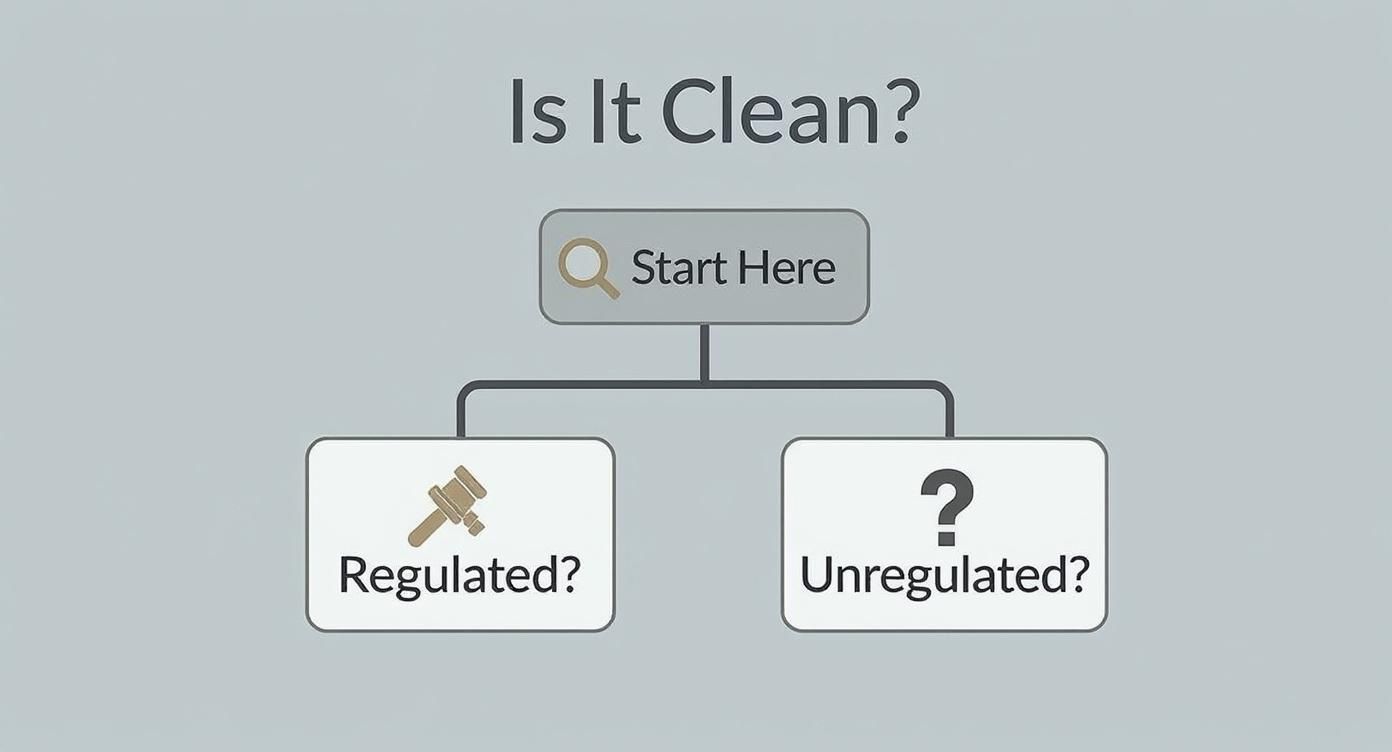
The visual makes it clear: a product's "clean" status often comes down to your own vigilance. So many marketing terms are unregulated, which puts the power back in your hands to read the label and decide for yourself.
The Challenge of Fragrance
One of the trickiest parts of reading any label is navigating the word "fragrance" or "parfum." Thanks to trade secret laws, companies don't have to disclose the individual chemicals that make up a specific scent. This one innocent-looking word can hide a cocktail of hundreds of synthetic chemicals, including phthalates and other potential allergens.
In the world of clean makeup, an undisclosed "fragrance" is almost always a major red flag. Truly transparent brands will either skip synthetic fragrances entirely or list the specific essential oils they use for scent, like "lavandula angustifolia (lavender) oil."
When you see "fragrance-free" on a label, it means no scents have been added at all. But "unscented" often means a masking fragrance was added to cover up the chemical smell of the other ingredients. For the cleanest option, fragrance-free is always the better choice.
Your Quick Reference Guide to Common Culprits
To make your next shopping trip a little easier, here's a quick guide to some of the most common ingredients to avoid, where they hide, and what cleaner alternatives you can look for instead. Think of it as a cheat sheet to help you audit any product and make a more informed choice.
Common Ingredients to Avoid in Conventional Makeup
| Ingredient to Avoid | Why It's a Concern | Often Found In | Look for This Instead |
|---|---|---|---|
| Parabens | Potential endocrine disruptors that can mimic estrogen in the body. | Foundations, concealers, lipsticks, and moisturizers. | Natural preservatives like grapefruit seed extract, vitamin E (tocopherol), or phenoxyethanol (in low concentrations). |
| Phthalates | Often hidden in "fragrance," these are also linked to hormone disruption. | Perfumes, nail polish, hairspray, and lotions. | Products that are "fragrance-free" or scented only with named essential oils. |
| Synthetic Fragrance | Can contain hundreds of undisclosed chemicals, including allergens and irritants. | Nearly all types of conventional makeup and skincare products. | Unscented products or those that list specific plant-based oils for aroma. |
| Talc | Can be contaminated with asbestos, a known carcinogen. | Face powders, eyeshadows, blushes, and bronzers. | Arrowroot powder, cornstarch, mica, or rice powder for a soft, absorbent finish. |
| Lead & Heavy Metals | Neurotoxins that can accumulate in the body over time; often contaminants. | Lipsticks (as color additives) and some eyeliners. | Brands that test for heavy metals and use natural mineral pigments like iron oxides. |
Armed with this knowledge, you can approach any ingredient list with confidence. It’s not about being perfect, it's about making progress. Each time you choose a product based on its formula rather than its marketing, you're taking a powerful step toward a healthier beauty routine.
Decoding Clean Beauty Seals and Certifications
Walking down the beauty aisle can feel like trying to crack a code. You'll see words like "natural," "eco-friendly," and "non-toxic" splashed across packaging, but here’s the problem: most of these terms aren’t regulated. This is where third-party certifications come in.
Think of these seals as an unbiased expert giving a product their stamp of approval. While any brand can make a claim on its label, a certification from a respected organization means it has been independently tested and verified against a strict set of standards. They cut right through the marketing fluff.
Learning to spot these logos is a total game-changer. It helps you quickly tell which brands are truly committed to safety and transparency, and which ones are just "greenwashing"—using vague claims to look better than they really are.
Key Certifications to Look For
Not all seals are the same. Each one focuses on a different part of what makes a product "clean," whether it's ingredient safety, organic content, or ethical sourcing. Knowing what each logo stands for helps you pick products that line up with what you care about most.
Here are a few of the most trustworthy certifications you'll find on clean makeup:
- EWG Verified™: This mark from the Environmental Working Group is a big one. It means the product avoids EWG's massive list of concerning ingredients and commits to full transparency. It’s pretty much the gold standard for health and safety.
- USDA Organic: This seal guarantees that at least 95% of a product's ingredients are certified organic. That means they were grown without synthetic pesticides or fertilizers. It’s one of the toughest certifications to get for natural sourcing.
- Leaping Bunny Certified: This is the go-to global standard for cruelty-free products. A Leaping Bunny logo ensures that no animal testing happened at any point in development—from the raw ingredients to the final formula.
Looking for these seals is your shortcut to making a confident choice. They offer a layer of proof that goes way beyond a brand's own promises.
Your most powerful tool is always the ingredient list. Certifications are an excellent guide, but understanding the ingredients themselves gives you the ultimate control over what you put on your skin.
Regulation and The Future of Clean Beauty
Things are slowly starting to change as more people demand safer products. In the U.S., the Modernization of Cosmetics Regulation Act (MoCRA) of 2022 was the first major FDA update since 1938. It brought in new safety rules for cosmetics, including clean makeup.
While some critics say the rules could be stronger, it’s a clear sign that regulators are paying more attention to product safety and environmental impact. You can find more details on the evolving sustainable beauty market on InsightAce Analytic.
Ultimately, decoding clean beauty comes down to combining your own knowledge with the credibility of these third-party seals. Use both, and you can build a makeup routine that you know is safe, effective, and truly right for you.
The Real-World Benefits of Going Clean
Switching to clean makeup is way more than just jumping on the latest trend. Think of it as a long-term investment in your skin’s health and your overall well-being. Sure, avoiding questionable ingredients is a great start, but the real magic is in the tangible results you can see and feel every day. It’s about ditching short-term cosmetic fixes for genuine, lasting skin vitality.
Let's break it down. Conventional makeup often acts like a temporary patch, covering up issues while potentially causing underlying irritation with harsh chemicals and synthetic fillers. Clean makeup, on the other hand, is like a nourishing meal for your skin. It’s packed with ingredients that actually soothe, hydrate, and protect, actively improving your complexion every time you wear it.
The benefits aren't just theoretical, either. So many people who make the switch report a noticeable drop in redness, sensitivity, and random irritation. When you remove common triggers like synthetic fragrances and harsh preservatives, you’re giving your skin a chance to finally calm down, rebalance, and just breathe.
Experience a Calmer, Clearer Complexion
One of the biggest wins people talk about after going clean is the impact on acne and breakouts. Traditional foundations are often loaded with silicones and comedogenic (pore-clogging) oils that can trap sweat, bacteria, and dead skin cells—basically creating a perfect storm for blemishes.
Clean foundations typically use breathable, non-comedogenic ingredients like jojoba oil or mineral pigments. These formulas give you beautiful coverage without suffocating your skin, which for many people, leads to a dramatic decrease in breakouts. It’s a simple change that can be a game-changer for acne-prone skin.
Beyond just preventing new blemishes, clean makeup often includes ingredients with bonus skin-loving properties:
- Soothing Botanicals: Things like chamomile and calendula are famous for their anti-inflammatory powers, helping to calm existing redness and irritation.
- Nourishing Oils: Plant-based oils such as sunflower or rosehip seed oil are rich in antioxidants and fatty acids that help strengthen your skin’s natural protective barrier.
- Pure Mineral Pigments: Using iron oxides for color instead of synthetic dyes reduces the risk of allergic reactions and sensitivity for a lot of people.
This "skin-first" approach is a huge reason the industry is booming. In fact, clean skincare alone made up 41.7% of the global clean beauty revenue in 2023, proving that people want products that are both effective and safe.
Long-Term Wellness and Environmental Impact
The perks of clean makeup go far beyond your reflection in the mirror. Every single day, we're exposed to a cocktail of chemicals from our environment, food, and personal care products. This cumulative exposure is often called our "body burden." By choosing clean makeup, you’re actively reducing the number of questionable chemicals your body has to deal with.
Choosing clean products is a powerful act of preventative care. By minimizing your daily exposure to potential endocrine disruptors and carcinogens, you are making a proactive choice for your long-term health and well-being.
On top of that, the clean beauty movement is all about a more sustainable and ethical way of doing things. Brands that are truly committed to clean principles often prioritize:
- Eco-Friendly Packaging: Using recyclable or biodegradable materials to cut down on waste.
- Sustainable Sourcing: Responsibly harvesting ingredients to protect biodiversity.
- Cruelty-Free Practices: Making sure no animal testing happens at any point.
When you support these brands, your purchase creates a positive ripple effect that contributes to a healthier planet. Understanding the bigger picture helps explain why so many people are drawn to these more conscious choices. You can explore more actionable beauty industry trends to see just how much sustainability is shaping the future. Making the switch isn't just a beauty decision—it's a lifestyle choice that aligns your daily routine with your values.
Building Your First Clean Makeup Kit
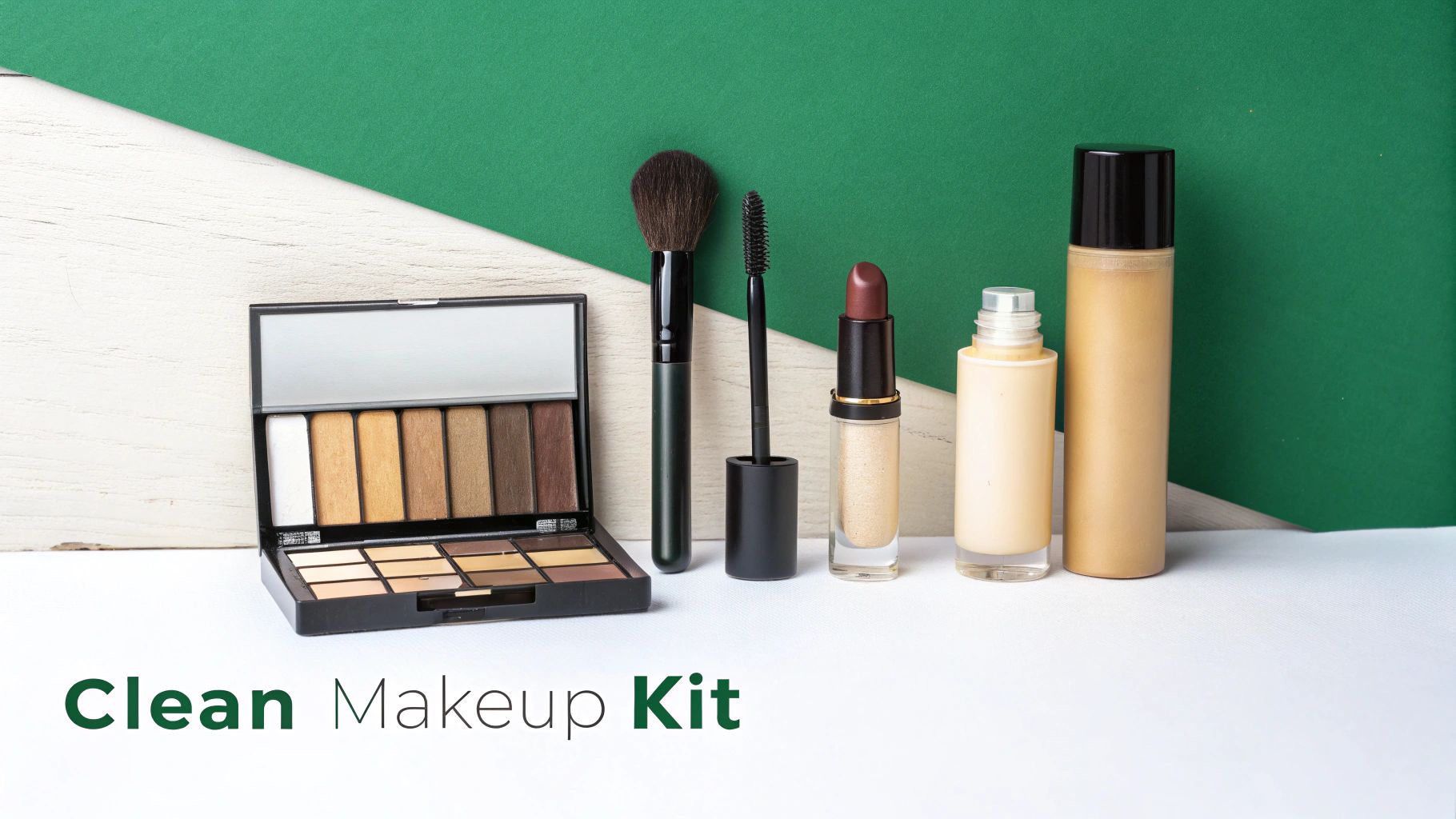
Ready to make the switch? The thought of going "clean" with your makeup is exciting, but it can also feel a little intimidating. The good news is you don't have to toss your entire makeup bag overnight.
A slow and steady approach is way more manageable and won't break the bank. Think of it less like a frantic purge and more like a thoughtful curation project. You'll simply replace your old products with cleaner, healthier options as they run out. It lets you discover what you truly love without feeling pressured to do a massive overhaul.
The whole point is to build a core collection of clean makeup that you genuinely enjoy using every day. It's a journey, not a race.
Start with a Simple Audit
First things first: take stock of what you already have. Grab your makeup bag and use your new label-reading skills to see what's really inside your current products.
You don't have to get rid of everything with a questionable ingredient right away. Just sorting your products into a "keep for now" pile and a "replace next" pile is a fantastic starting point. This quick inventory gives you a clear roadmap and turns an overwhelming task into a simple, actionable plan.
Prioritize Your First Swaps
So, where do you start? A great rule of thumb is to focus on products that cover the largest surface area of your skin or that you might accidentally ingest. These are the items that have the biggest impact on your daily exposure.
Consider swapping these out first:
- Foundation or BB Cream: This stuff sits on your skin all day, covering a lot of ground. Switching to a clean foundation can dramatically cut down your skin's exposure to pore-clogging silicones and synthetic preservatives.
- Lipstick or Lip Gloss: Let's be real, you end up eating a little bit of whatever you put on your lips. Choosing a clean lipstick ensures you aren't swallowing things like heavy metals along with your color.
- Mascara: The skin around your eyes is incredibly thin and absorbent. A clean mascara made without harsh chemicals can prevent irritation in this super-sensitive area.
Focusing on these key products delivers the most bang for your buck right away. It's an efficient way to kick off your clean beauty journey and often where you'll see the most immediate positive effects.
What to Look for in Key Categories
As you start shopping, knowing which beneficial ingredients to look for is just as important as knowing which ones to avoid. Clean makeup isn't just about what's left out; it's about what's put in.
Many of today's best clean formulas are basically skincare and makeup hybrids. They do more than just cover things up—they actively nourish your skin.
Look for foundations with ingredients like jojoba oil or sunflower seed oil. These mimic your skin's natural sebum, offering hydration that won't clog your pores. For lipsticks, seek out nourishing butters like shea butter or cocoa butter for a creamy, moisturizing feel that lasts.
The best clean makeup products do more than just provide color. They are formulated with high-performance botanicals and pure minerals that actively improve your skin's health and appearance over time.
This dual-purpose approach is what makes the transition so rewarding. You're not just applying makeup; you're actually caring for your skin.
Your Clean Makeup Starter Kit
To give you a more concrete idea of what to look for, I've put together a few examples of popular and effective products. Think of this table as a jumping-off point to help you recognize what high-quality clean makeup looks like on the shelf.
| Product Category | What to Look For | Example Product (Brand) | Key Clean Ingredient |
|---|---|---|---|
| Foundation | A lightweight, breathable formula with nourishing plant-based oils and mineral pigments for color. | INIKA Organic Serum Foundation | Baobab Seed Oil is rich in vitamins and helps promote skin elasticity. |
| Concealer | A creamy, hydrating formula that won't crease and includes soothing botanicals for delicate areas. | ILIA True Skin Serum Concealer | Vitamin C helps to brighten the under-eye area and protect against environmental stressors. |
| Mascara | A gentle, non-irritating formula that lengthens and defines without using harsh carbon black or coal tar. | Tower 28 MakeWaves Mascara | Castor Oil is known for nourishing and conditioning lashes to support healthy growth. |
| Lipstick | A pigmented, long-lasting formula that uses fruit pigments and moisturizing butters instead of synthetic dyes. | RMS Beauty Legendary Serum Lipstick | Kakadu Plum Seed Oil is a potent source of antioxidants that helps protect and hydrate lips. |
| Blush | A powder or cream blush made with natural mineral pigments and free of talc. | Mineral Fusion Blush | Pomegranate Oil provides antioxidant protection while adding a healthy, natural-looking flush. |
Building your first clean makeup kit is all about mindful selection. Each product you choose is a step toward a healthier routine that supports your skin and aligns with your values. Take your time, enjoy discovering new brands, and celebrate every conscious choice you make along the way.
Common Questions About Clean Makeup
Dipping your toes into the world of clean makeup is exciting, but it's totally normal to have a few questions pop up. Will the products actually work? Is this going to break the bank? Where do I even start?
We’ve rounded up the questions we hear most often and answered them straight up. Think of this as your practical guide to navigating the real-world side of clean beauty, designed to clear up any doubts and show you how simple and rewarding making the switch can be.
Does Clean Makeup Perform as Well as Conventional Brands?
Yes, absolutely. The old idea that "natural" makeup just doesn't cut it is officially a myth. A few years back, you might have found formulas that didn't have the pigment or staying power of the big mainstream brands, but the industry has come a long way since then.
Today, innovations in green chemistry are fueling a new generation of seriously high-performance clean makeup. Brands are using incredible botanical extracts, skin-friendly oils, and pure mineral pigments to create products that not only compete with conventional makeup but often blow it out of the water. You can easily find clean foundations with a flawless, lasting finish, lipsticks with vibrant color that won't budge, and mascaras that give you major volume. In fact, many pro makeup artists now prefer to stock their kits with clean brands for their superior performance and skin-loving ingredients.
The best clean makeup doesn't make you choose between results and safe ingredients. It delivers both, giving you a beautiful look with formulas that actively nourish your skin.
Is Clean Makeup More Expensive?
While there are definitely some luxe clean beauty brands out there, the market has exploded with amazing, affordable options. You can now find fantastic clean products right in the aisles of your local drugstore, Target, or Whole Foods.
It helps to think about cost in terms of value, not just the price tag. Many clean makeup formulas are basically skincare and cosmetics in one, packed with high-quality ingredients that actually improve your skin over time. For instance, a clean foundation might contain sunflower seed oil for moisture or vitamin C to brighten your complexion—perks you won't get from simple coverage.
When you add up the long-term benefits for your skin's health and the peace of mind from using non-toxic ingredients, the price often makes perfect sense. A great way to transition on a budget is to simply replace your old products with clean alternatives one by one as they run out.
How Can I Spot Misleading Greenwashing Claims?
"Greenwashing" is just a fancy term for when brands use fuzzy, eco-friendly marketing language to make their products seem safer or more natural than they really are. Your best defense is to become a smart, skeptical shopper.
Here are two easy ways to see past the marketing hype:
- Ignore the Front, Read the Back: Claims like "natural," "pure," or "eco-friendly" on the front of a package mean almost nothing because they aren't regulated. The real truth is always on the back, in the full ingredient list. Flip it over and scan for red-flag ingredients like parabens, phthalates, and the vague term "fragrance."
- Look for Trusted Third-Party Seals: Independent certifications are your shortcut to finding brands you can trust. Keep an eye out for official logos like EWG Verified, USDA Organic, or Leaping Bunny Certified. These seals are unbiased proof that a product has met strict standards for ingredient safety, organic sourcing, or cruelty-free practices.
By focusing on the ingredient list and credible certifications, you can confidently tell the difference between genuinely clean products and the fakes.
Where Are the Best Places to Shop for Clean Makeup?
Finding and buying clean makeup has never been easier, thanks to a ton of retailers who are committed to carrying safer products. Whether you like to shop in-store or online, there are great options everywhere.
Retailers dedicated to clean beauty have already done the vetting for you, so you can shop without worry:
- Specialty Stores: Places like Credo Beauty and The Detox Market have incredibly strict standards. If a product is on their shelves, you know it's been thoroughly checked for safety.
- Mainstream Retailers: Big stores now have curated clean beauty sections to make shopping simple. Look for the "Clean at Sephora" seal or browse the "Conscious Beauty at Ulta" program to find vetted brands easily.
- Accessible Options: You can also find a growing selection of clean makeup at stores like Whole Foods and Target, making it super convenient to grab non-toxic products during your regular shopping trips.
With so many trustworthy places to shop, you'll have no trouble finding clean makeup that fits your budget, style, and values.
Are you a sales professional, marketer, or entrepreneur looking to expand your network and generate leads more effectively? EmailScout is the tool you need. Our powerful Chrome extension helps you find the email addresses of key decision-makers with just one click, so you can build marketing lists and enhance your sales outreach effortlessly. Start finding unlimited emails for free and see how simple lead generation can be.
Discover more at https://emailscout.io